How to Make Kissing Balls for the Upcoming Holidays

Leave a comment

Container Crazy CT offers several classes and workshops year-round where Nature with Art are combined.

There are several classes offered every season, such as the annual Container Gardening Workshop in May and a Kissing Ball and Holiday Creations Workshop in December.

And this weekend is the Storing Tropical Plants Demo where steps will be demonstrated on how to overwinter plants such as Canna, Elephant Ears, Angel’s Trumpets, and banana plants.

During the months between the spring and winter, special guests artists are invited to hold various hands-on style classes with the the mission to educate, share, and create – and most importantly, have fun with friends.

On the drop down menu under the “Nature with Art Class Programs” from the top of this blog, you will find descriptions for each workshop scheduled in 2015 and upcoming in 2016.

Starting Early – Kissing Ball Workshop Dates

We realize that many of us don’t like to start thinking about Christmas or the Holidays until at least early November, but when you have workshops to setup, some things need to be ordered in October so we are ready when December arrives to make our wonderful holiday creations. This is why places like Hobby Lobby are stuffed with Christmas crafts already, where you may find decor to add to your kissing ball or wreath at the workshop.

Kissing Balls_0004

KISSING BALL & HOLIDAY CREATIONS WORKSHOPS

The December upcoming hands-on workshops have been scheduled. Seats are limited for the first big workshop date of December 5th, so register early. We gather to make beautiful holiday creations with a mix of fresh evergreens and socialize. It is a fun day and a great way to make your own kissing ball just in time to place it on your porch or hang it in a hallway.

Kissing Balls_0003

See How It’s Done

Kissing Balls Shown on TV by Cathy T. See how they are really fun to make and require a bit of time, but they are beautiful and unique when hand-made with your special touches – and the fresh evergreens smell wonderful – not to mention, when you hang them outdoors, the birds like to perch on them – so pretty when snow is falling upon the kissing balls. You can find steps on how to make Kissing Balls on the web, or watch the video linked above, but when you gather with a group – it makes the whole process extra special because you are with a large group of enthusiastic attendees, the mechanics and amazing greens are here for you, and you learn from Cathy T and attendees with their own unique ideas, such as adding lights to the balls. If you live in East Windsor or surrounding towns in Connecticut, come on down and join us – we have attendees all the way from New Haven joining us annually.

Kissing Balls_0005

Open Studio Days and Mini Session

Additionally, there are other opportunities to craft away and make beautiful round kissing balls with a wide mix of evergreens to adorn your home indoors and out. An Open Studio week is offered where you may schedule your own appointment to make an evergreen creation at a time convenient for you. Lastly, we have a Mini Session on December 12th. We also make square or round wreaths, candle centerpieces, and mail box swags at these workshops – you pick the one you want to make.

How to Register

All you need to do is fill out the Contact Form. Cost is $30-$45 (+ sales tax) based on item you select to make, and pre-payment is required. Once you sign-up here, you will receive the 2015 price list and details with instructions. Location of the workshops is East Windsor, Connecticut.

Kissing Balls_0001

CALENDAR OF WORKSHOPS

For a handy view by month, click on the CALENDAR menu.

An Attendee Listens to Cathy T's Instructions at the KB Workshop

An Attendee Listens to Cathy T’s Instructions at the KB Workshop

ARTISTS ARE INVITED TO TEACH

Artists are invited to teach and a page shows the Featured Artists for the upcoming season. If you are an artist utilizing any aspect of plants, nature, or the environment in your designs and would like to introduce your product along with DIY instructions for Container Crazy CT’s attendees, please contact her at 860-977-9473 or containercathy@gmail.com to arrange a date and discuss your ideas.  All classes are taught by professionals and artisans with years of experience to share with the interested attendees.

We hope you will join us.

Cathy Testa
ContainerCrazyCT
860-977-9473
containercathy@gmail.com

Go back

Your message has been sent

Warning
Warning
Warning
Warning

Warning.

Overwintering Red Banana Plants – Ensete ventricosum ‘Maurelii’

7 Comments

Hello Visitors,

Every year, several tropical plants from my container gardens and patio pots are overwintered. In this post, you will see how I helped a client, Laurie, who attended my May container garden workshops, dismantle her pots in September. She did an amazing job with watering and care all summer. Her plants grew very large and were extremely healthy, and now she knows how to store the root bases to attempt regrowing them next season. By the way, she wanted to dismantle her pots early because she was ready for the fall season and putting out mums on her deck. This process can be done much later however (end of October or early November) depending on how you wish to overwinter the plant.

A Client's Container Garden with Red Banana plant as a thriller

A Client’s Container Garden with Red Banana plant as a thriller

As you can see, her red banana plant in this pot grew quite large. It started as a small plant in May. This is a plant for planting zones 9-10 so it is not hardy in Connecticut but it is a great specimen to grow in pots – it grows large fast and the root base can be stored over the winter.

Take note the other plant on its left side is an Asclepias (Butterfly Weed) and during the summer it bloomed orange red flowers next to the rich red coloring of the big banana plant. The height of the butterfly weed worked well next to this very big red banana plant.

By this time in September, the Asclepias formed seed pods. The blooms on this plant are a major source of food for Monarchs.

Cathy T uses a bow saw to say "Timber!"

Cathy T uses a bow saw to say “Timber!”

You will see how I used a bow saw to cut off the top of the plant. It’s pretty straight forward, make a clean cut, do it about 15″ from the base, and let it fall. The hard part is making the cut because the plant is so beautiful. A bow saw works terrific for this – it slices thru just like you would a giant stalk of celery which is how this plant grows, pushing through new shoots/stalks of leaves from its center. Don’t cut it down too low – this can damage that growing center. Some people will make the cut even higher, more on that in the Oct 17th demo (see info below).

Top Removed

Top Removed

Even though I am smiling for the photo, my client was not. She cringed. I asked if she was okay and she said it is so hard to see it taken down. I don’t blame her. She did a great job of watering and watching her plants.

Red banana root base

Red banana root base

Can you guess what this is? It is the root base of the red banana plant. It was a bit of a job to get it out of the soil but after we did, we put it upside down to allow excess water to drain from it. The water collects in the center, and this root base is quite fleshy too. You want to air dry it a bit (few hours or 1/2 a day) to get a lot of this moisture drained out – but you do not want it bone dry either. Then it gets stored in peat in a box. More on that to be shown later.

ContainerGardenTakeDown_0038

Laying down a tarp or old blanket is a good idea when you do your work of dismantling your container gardens because there will be a lot of foliage to take away to your compost bin.

Brugmansia (Angel’s Trumpet)

Next was the Brugmansia (Angel’s Trumpet) which is another beautiful, fast growing, showy tropical plant with 6-10″ gorgeous trumpet shaped flowers, also hardy to zones 9-11. It must be dealt with “before frost” in the fall. However, as noted above, the red banana plant may be left out until frost hits it if you store it as shown above.

Brugmansia with Coleus

Brugmansia with Coleus

This picture doesn’t do it justice. For a first time container gardener, my client did an amazing job with this plant too. She and her husband enjoyed the highly scented pink trumpet shaped flowers in the evening. You have a few choices with this plant in regards to overwintering it in Connecticut. You may take it inside (if you have space) and treat it as a houseplant. Or you may store it in your unheated basement that remains cold but not below freezing. It will drop leaves and look unsightly, but rest assured, when you take it back out next season, it will boom again. You may also cut back this plant hard too if you wish to reduce it in size for space considerations. However, if you leave it tall, you have the added bonus of it being much taller next season. We decided to cut Laurie’s back a bit.

Brugmansia trimmed back with loppers

Brugmansia trimmed back with loppers

Brugmansia (Angel’s Trumpet) is a plant which can grow to the size of a small tree in the right conditions in the ground. It will bloom all the way into November if you wish to keep it going. It will grow a bit smaller in containers, or a big bigger in really big pots. It’s a keeper on my plant list.

Canna on deck

Canna on deck

Next was the beautiful pot of two Canna plants on her mini deck. Her husband graciously carried the pot to a better working location for us after we cut back all the stalks. Again, Laurie whimpered as we did so. The next photo shows what the pot looked like after all was cut off.

Canna with tops off

Canna with tops off

Her blooms were rising so high which is something Laurie commented about as we worked. She was impressed, and did see hummingbirds visiting the blooms this summer. And again, the plants were stunning. It was sad to see them go but the plus side is after storing the rhizomes, they will be ready to be regrown next season.

Rhizomes removed from Canna pot

Rhizomes removed from Canna pot

Here’s a test for you? How many rhizomes do you see above?

I count 17 at least – this means she now has 17 new plants from one potting!

Private Sessions

It took some time to dismantle three large container gardens but we enjoyed every minute. This service of showing you how the process is done and working with you is available up until our frost date, so if you wish to hire me for a private take down session, send me an email soon at containercathy@gmail.com or fill out the contact form below (private sessions are $25 and held at your home).

Castor Bean at End of My Driveway

Castor Bean at End of My Driveway

To close today’s post on overwintering plants from container gardens and patio pots, I’m sharing a photo of my castor bean plant at the end of my driveway (noted in yesterday’s post). It is Giant Zanzibariensis and provides quite a show – it grew to a monster size. The seeds are collected as a way to regrow it next season. More on that later.

And lastly, I wanted to share a photo of my Crocosmia since I referenced it yesterday and planted it into the ground this week from my blue pot. The best thing about this plant is how the hummingbirds visited it often. They loved the red blooms and would chirp away. It was replanted in a very large container which is almost the size of a smaller garden bed for next year’s enjoyment – so this year on the deck, next year in the garden – recycling the good way.

Crocosmia

Crocosmia

Overwintering Demo

On October 17th, Saturday at 10:30 am, the overwintering process will be demonstrated. If interested in attending, see the links on this blog under the “Nature with Art Programs.”

Workshops and Classes

Every season, Container Crazy CT offers workshops and classes. Some are plant related, some are arts related. This spring, we had a wonderful windchime making class. This May was repeated Container Garden Workshops. And every winter is the annual Holiday Kissing Ball and Evergreen Creations workshop where you may learn how to make them with fresh evergreens! Don’t miss out – we are always adding programs.

Red banana plant in my backyard

Red banana plant in my backyard

Cathy Testa
http://www.containercrazyct.com
860-977-9473
containercathy@gmail.com
About this blog:

Container Crazy CT is about sharing the passion of growing plants in container gardens and about combining nature with art. Cathy Testa offers classes and workshops and regularly shares information about growing plants in pots. She is located in the Broad Brook section of East Windsor, CT. To learn more, click the tabs on the top of this blog site. Cathy Testa also speaks at garden clubs, women’s groups, farmers markets, and special events. See Garden Talks above if interested in having her speak to your group.

Go back

Your message has been sent

Warning
Warning
Warning
Warning

Warning.


Overwintering Canna Plants from Container Gardens

19 Comments

Hello Visitors,

As noted yesterday, I am beginning to disassemble, dismantle, and take apart my container gardens and patio pots.

As I do, I will share with you the photos and steps in the event you can not attend my demo on Oct 17th, Saturday.

Yesterday, I took apart one pot of Canna plants. I selected the tall red one, figuring it would be easy to show you what I do.

Canna plants may be kept in the pot and stored inside, but today’s post shows you how to store the rhizomes.

Rhizomes

Rhizomes are the storage organs which are swollen stems under the soil that usually grow horizontally, below the soil about 6-8″ from the top of the soil line in the pot.

Mature rhizomes may be cut into sections to produce more plants, but you don’t need to do that step now. Just remove them from the soil and store them in peat moss.

Other Overwintering Options

Option #2: If you have a nice sun room in your home, you have the option of continuing to grow your Canna in the pot. However, I find if you keep your Canna plants in the same container for several years in a row, they start to get crowded and tend to not bloom or flourish as much.

Option #3: A third option is to leave the Canna plants in the pot and move it to an unheated basement where it remains cool all winter, but not below freezing. The plant will go dormant and may be revived the following spring after spring frost. In this case, however, you will need to watch for insects and water it sparingly so the soil does not go completely dry during the winter.

Canna Rhizome Removal

Tools: Clean pruners, loppers, or if you are not a full time gardener with various garden tools, use a long kitchen knife (like one you would use to cut bread).

When: You may wait until the Canna plants get hit by our fall frost later in October, and many references will say wait until it gets hit by frost. However, I’ve stored rhizomes in fall before frost and all works out fine as well.

Canna Australia in a Tall Red Pot

Canna Australia in a Tall Red Pot

Cleaning: Using sharp, clean tools is important to prevent pests and diseases from being transmitted to your plants or storage organs (rhizomes). It is also a good practice to wear gloves and wash your hands as you work, and wash your pots when you are done dismantling everything.

The Steps

Step One: Cut the stalks at the base, leave a little 5-6″ stub if you want. Most important – make a CLEAN cut. Do not tear, pull, tug or make a jagged like cut – the cleaner cut the better. If the stems are thin, pruners work. If not, I like using loppers for a clean cut. If you use a kitchen knife, remember to make the slice/cut as clean as possible.

Clean Cut at Base

Clean Cut at Base

ContainerGardenTakeDown_0022

ContainerGardenTakeDown_0020

Step Two: Remove other plants in the pot and save as needed or toss. Then remove the root ball. Usually, if the pot does not have a edge on the top rim, it slides out just by turning it over or rolling it on a table (unfortunately, for this red pot, I had to work at removing some soil inside to get it out).

ContainerGardenTakeDown_0024

ContainerGardenTakeDown_0018

You can see a rhizome poking out of the soil here in this photo above. This can help to locate where they are but you will not always see this in every case.

Step Three: Cut off (slice off) the bottom half of the soil mass. Be careful to not cut the rhizomes which should be about 6-8″ from the top of the soil line.

ContainerGardenTakeDown_0016

ContainerGardenTakeDown_0021

Step Four: I placed my hand to show about the distance from the top of the soil to where the rhizomes are in the soil. Start to remove the soil away from the rhizomes using your hands or tools. If you use tools, try to not damage the rhizomes accidentally — but if you do – don’t panic. Rhizomes are often cut into sections for propagation, it won’t kill them if you break one by accident.

ContainerGardenTakeDown_0017

Step Five: Pull the stems a bit apart, they may break away freely, meaning the rhizomes will separate. Take one stem in one hand, and another in the other hand and pull them away from each other, you will see how they break away. Then clean off as much as the soil as you can. You may use a garden hose to wash them off with sprays of water, but I don’t always do this because then the rhizomes get super wet. In this case, I did to show you how they looked.

ContainerGardenTakeDown_0015

Step Six: Trim off the stem stalks. I do this because any fleshy material stored has the potential to rot in the box of peat moss. I even trim the roots if they are super long with sharp pruners. Then let them air dry a bit (couple hours).

The last step is putting them in a container (box) with peat which I will show in tomorrow’s post.

ContainerGardenTakeDown_0023

In this particular case, the rhizomes were on the small side, but that doesn’t matter. Each piece you save is another new plant for next year.

Crocosmia (perennial)

This summer, I put a Croscosmia perennial in a blue pot. The hummingbirds adored this plant’s blooms. It was amazing to see them zip by every day. So, you have choices with perennials too on what to do with them if you grew them in your container gardens and patio pots.

They may be removed now and put into the ground to have in your garden or if you have a garage, some perennials will come back if you store the whole pot with the un-removed plant over the winter in the garage.

You may also bury pots with perennials in the ground, but I don’t like that idea because the pot will get dirty and probably worn out more – but this is an option. This information was noted on the container garden workshop handouts in May as well (for those attendees reading this information).

Before I cut back all the foliage from the Crocosmia perennial, which was tattered by the end of the summer, I collected the seeds from this plant for next season. They may be scattered in your garden or stored for next season.

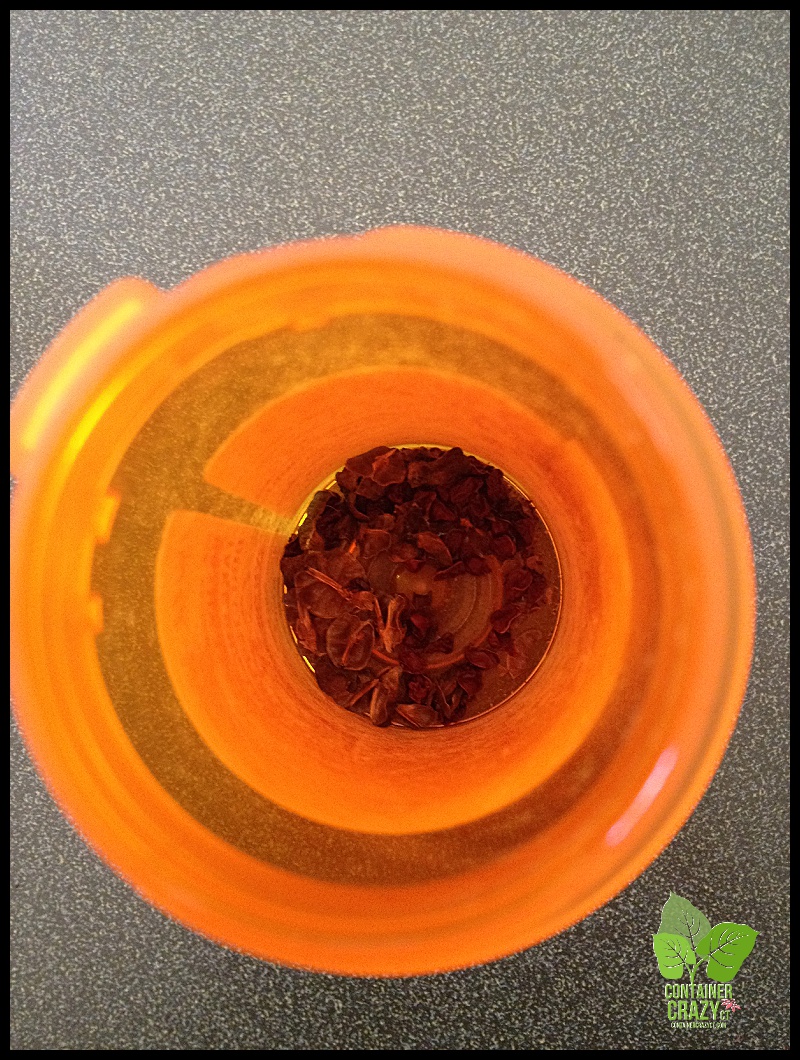
I put seeds in prescription bottles. Its a great way to recycle the bottles and the label is available – with a quick sharpie marker, I write the plant’s name and date, and store the seeds in a cool, dark place until next spring.

ContainerGardenTakeDown_0009

ContainerGardenTakeDown_0012

The seeds are stored in pill bottles as shown above.

ContainerGardenTakeDown_0010

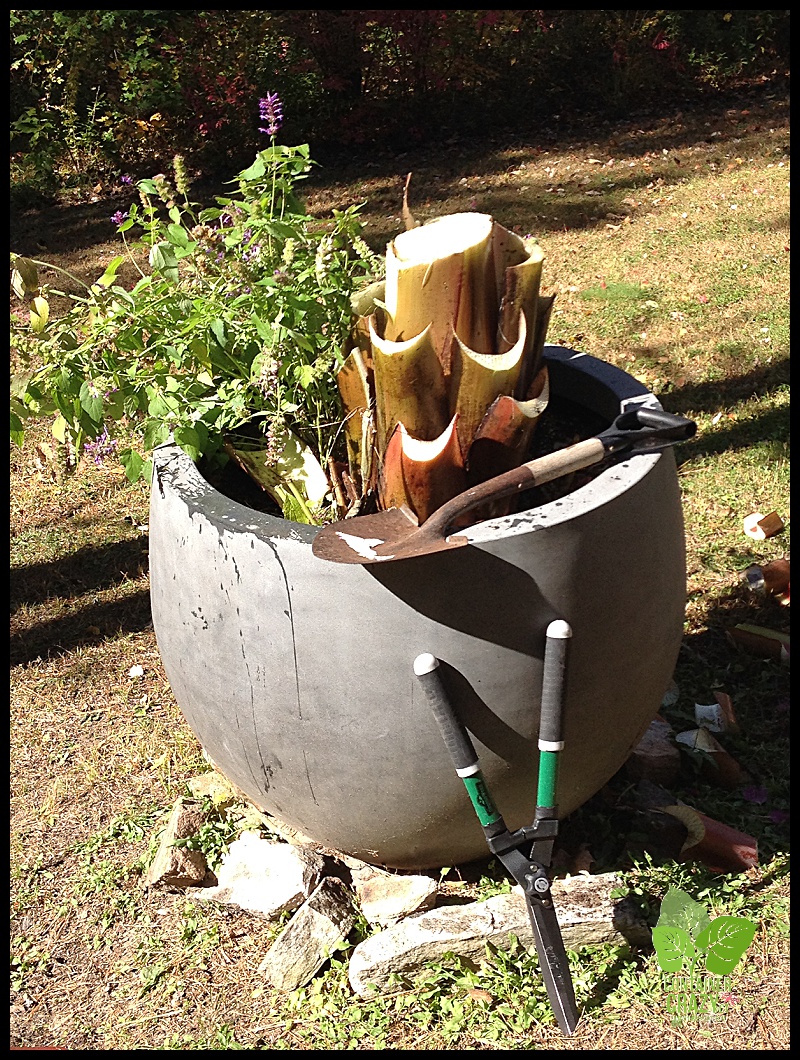
The root ball was removed from the blue pot. I decided to plant it in my big cement planter after doing a bunch of cutting back of the existing perennials in the cement planter, which also has some huge castor beans growing.

ContainerGardenTakeDown_0011

Then I put some stones around the Crocosmia to help me remember I moved it there. Even if I don’t keep it in this spot permanently, it is now saved for next season.

Crocosmia Blooms from a Prior Season

Crocosmia Blooms from a Prior Season

I love my big cement planter because the soil is so healthy and easy to work in, and dig in. Yesterday, I noticed some worm castings in the soil. This is what they look like below. It a sign the little critters in the soil are doing a great job of keeping the soil healthy. Worms increase air and water movement in the soil and help break down organic matter when they eat, leaving these worm castings behind which help the plant’s growth.

Worm Castings in Soil

Worm Castings in Soil

As noted in yesterday’s post, I sometimes put old soil balls/masses from dismantled containers into “big” pots or into gardens as a filler in the base – this is one example. The soil in this big cement planter is from former container gardens, and the worms moved in quickly. The soil is rich now.

ContainerGardenTakeDown_0013

Begonia from Tubers (see yesterday's post!)

Begonia from Tubers (see yesterday’s post!)

By the way, yesterday I wrote about storing tubers from tuberous Begonias. Here’s a photo of the plant from this summer (see above) which I found this morning in my files.

Note: The details about appropriate storing temperature, methods, and specifics by type of plant for overwintering various plants will be covered in the demo session on October 17th. If I were to write all the details here, this would be a very long post – and I’m wordy enough! But this shows you the basics. It is fairly easy to overwinter plants but there are other tips to be learned.

Keep tuned in – more tomorrow…

Cathy Testa
860-977-9473
containercathy@gmail.com

ContainerGardenTakeDown_0025

The Container Garden Take Down Process Begins

5 Comments

Hello Visitors,

I’m posting some misc photos this week of the work I will be doing here and there as I take apart my container garden plants. This is for the friends and workshop attendees who are probably ready to do the same – and I hope the information is helpful to you. As always, ask questions if you have them!

Tuberous Begonia

For the first time, I grew a tuberous begonias from tubers. They were started in early March indoors by placing the tuber’s hollow side up in moist peat. They must be kept warm and carefully watered to not over water or under water (keep moist). Shoots began to form, but it took a while for the plant to kick in and later produce blooms, but it was worth the wait.

Three of the plants were gorgeous and showed off orange flowers shaped like peony flowers (male flowers) and rose shaped flowers (female flowers) on the same plant. The stalks of these types of begonias are very fleshy and one plant leaned over from the weight of the plant by the end of summer, and from the force of the wind during last weekend’s rain storm.

I chopped off the top of the plant using clean pruners, and then tipped over the pot and got the soil base out carefully on a table. It was fairly simple to locate the storage tuber. I will allow it to dry a bit on newspaper then it will be stored over the winter in a cool dark place. These tubers should be checked to make sure they don’t dry out during this process in the winter months.

Tubers of these types of begonias must be dug up before our fall frost hits and dried slowly before storing them in peat moss at about 45 degrees F. Wish me luck – I hope to grow even more of these plants next spring!

Showing Steps of Taking Down a Tuberous Begonia

Showing Steps of Taking Down a Tuberous Begonia

Recycling the Soil

Recycling Soil for a Year or Two

Recycling Soil for a Year or Two

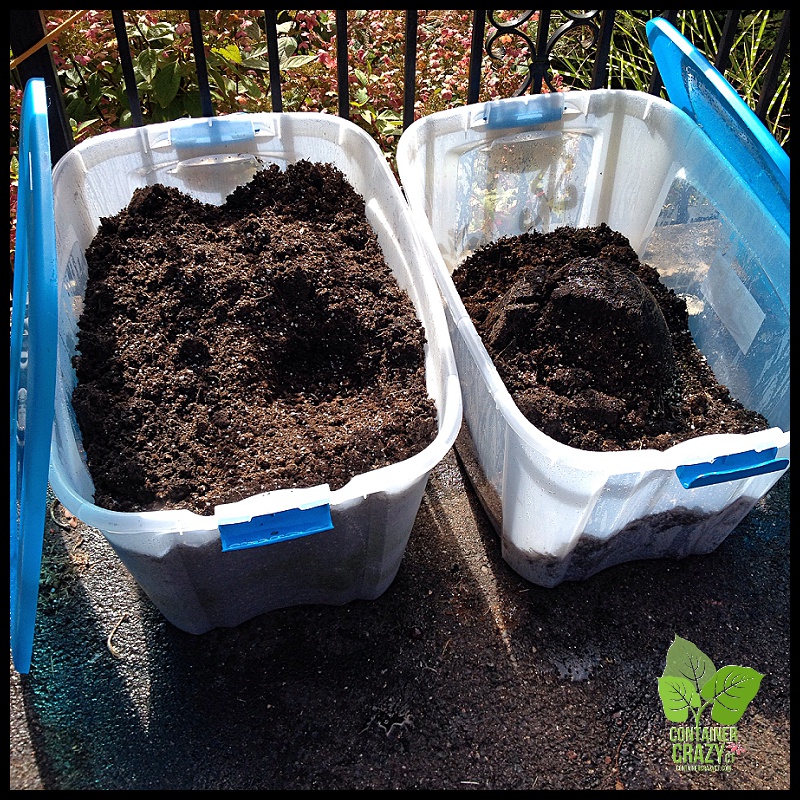
If you have attended my workshops in May on container gardening, you heard me go over the soil-less mixes and what I find has worked well over the years. I’ve also mentioned that reusing soil mix is not recommended, at least not for many, many years – and especially when you keep the mix in the pot with the plant. It just doesn’t retain water well or hold nutrients as nicely when it is worn out – BUT you can use it for a year or two, or put it into a compost pile, or sometimes – I will put it in a huge pot (like my big black pot with my red banana plant – see prior post on that). Putting it into bins like shown above is helpful. I remove all the foliage and make sure none of that it is the soil bin, and I put the cover on, but I also remove the cover from time to time to let it breath as the water condensates. These bins will be moved into my garage or growing room soon to stay over the winter and will be reused next year.

Castor Bean

Castor Bean Seed Pods

Castor Bean Seed Pods cut away from a huge plant!

If you are my neighbor or you drive down my road – you have definitely noticed the crazy size of my Castor Bean plants (Ricinus) at the end of my driveway.

A woman pulled in one day, drove down my long driveway to inquire what the heck was growing there. “She had to know,” she said.

This plant made me laugh every single time I left or returned home. It is massive! I’ll share pictures of it later.

This plant is easy to grow from seed. I got my seeds from Comstock Ferre in Old Wethersfield, CT this year. The plants reached about 12 feet tall at the end of my driveway. I also grew some in the ground in my backyard.

The leaves of this giant would be perfect to make leaf castings for birdbaths! This huge tropical can be impressive and comical, as mine was this season.

Just yesterday, I thought I better chop down one because it is becoming a hazard. It is blocking the view of oncoming cars as we leave our driveway.

As I cut it down with big loppers, my neighbor yelled out, “Cathy, What did you feed that THING?!”

Ironically, I gave it the ‘liquid blue’ only 3 times the entire summer, and it was only to the one growing in the pot. The other two grown by it’s side in the ground did not get watered or fertilized at all.

The potted one got watered daily however. I would fill a bucket in my car with water every time I drove out and stop to pour the bucket of water in the potted castor bean plant.

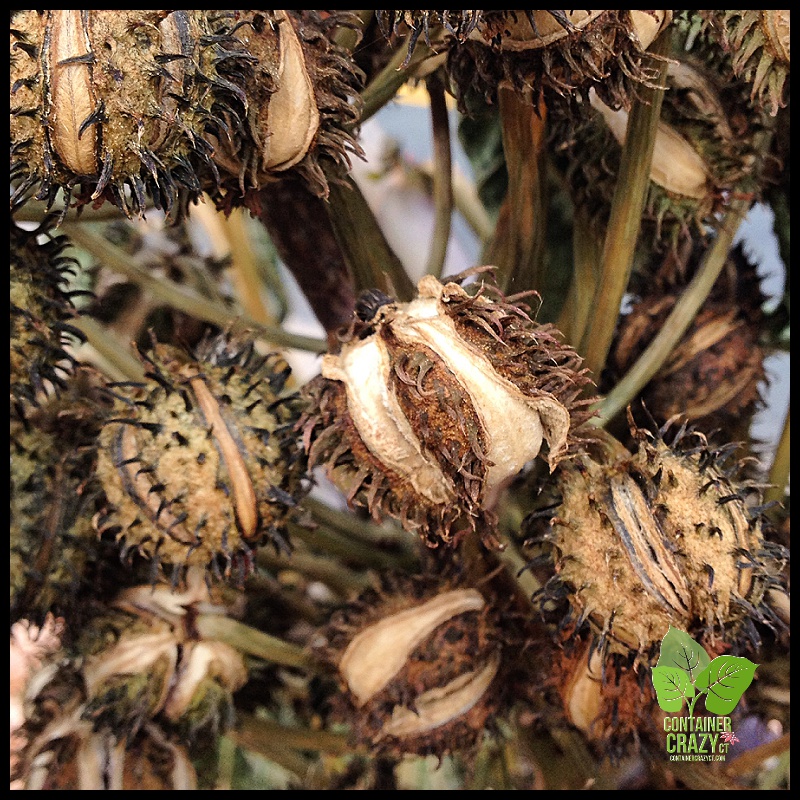
This plant gets huge stalks, which resemble bamboo. Its odd alien like flowers turn into seed pods with burrs on them, as shown in this one clump I chopped off yesterday. It did compete with other plants in the bed part though – my white lavender plants and bee balm were hurting later in the summer as the castor bean plants took over.

Castor beans do well in full sun – which the mailbox specimens were in most of the day, but they can take part sun too. The only other thing is that bed was filled with compost when it was edged with stone, so that is another reason why the plants probably did very well in the ground there too – good soil base.

And it is a fast grower, so if you decided to give it a try next year – take note of where you place it for it will take up space and compete for nutrients and moisture of other plants in the same bed.

Also, take note – all plant parts are poisonous. It is not overwintered by plant parts – but you may save the seeds to regrow them again next year. Or just see me in May.

Red Banana Plant with Two Coleus

Red banana plant with two types of Coleus

Red banana plant with two types of Coleus (Alabama on right, Icky Fingers? on left)

Okay, so I don’t always instantly remember the cultivar names, but on the right side is Coleus ‘Alabama’, which I love. And on the left side, it looks similar to the cultivar, ‘Icky Fingers’. These plants can be saved by taking tip cuttings and rooting them in water, then potting them up to save a small portion for reuse the following season. Or they may be cut back somewhat, dug up, put in a pot and grown as a houseplant over the winter by a semi-sunny window.

As for the red banana plant, I will be showing how to store what I call the “root base” of these plants at the October 17th session. This banana is a look-alike (not a true banana plant) but who cares, right?! This plant is gorgeous when it grows large especially. The leaves are broad and this cultivar ‘Maurelii’ (red Abyssinian banana) are reddish and lush colored with trunks of red coloring. They are relatives to Musa (true bananas) and I grow, overwinter, and sell these every year, obtaining stock from a local Connecticut grower.

These plants grow tall and large in our warm summers in big pots but must be overwintered since they are not hardy. You can move it indoors (if you have the space somewhere) — And remember, if you do move it indoors as a houseplant – do it before frost. Once it is hit by frost, the leaves turn black and to mush.

Or you can dig up the fleshy root base to store it over the winter in a cool place, just like you do with canna rhizomes. You can even store it in its container, if it didn’t grow too large, in a cool dark place until our spring arrives.

The steps on how I do this will be shown at my informal session on October 17th, Saturday. It is also shown on my blog post, step by step, from last October. I recognize you may want to take apart your’s at home now, so sharing all in advance as well.

Begonia ‘Gryphon’

Begonia 'Gryphon' Zones 9-11 - A Winner!

Begonia ‘Gryphon’ Zones 9-11 – A Winner

This begonia, at the base of this container garden, impressed me this season as a container garden filler. I ordered them from a local CT grower for spring, and sold this plant at my May workshops – and it turned out to be very impressive.

The leaves grew bigger than my hand, and the dark green leaves with little bits of white were showy – and healthy, all season. It was very reliable – and low maintenance. I just loved it.

It is considered a tropical plant – for zones 9-11, but is wonderful in our patio pots in during summer seasons. This type is best saved as a house plant. I will dig it out carefully with soil around its roots, and re-pot it into a nice pot to keep inside this winter. It should be kept by a brightly lit window area; not full harsh sun, but bright area inside the home. Be aware of drafts by windows in winter as well.

Lining Them Up

Lining them up

Lining them up

Besides moving 3 wheel barrel full loads of compost, which sat on my driveway all summer, I moved the pots which were carried down from my deck last week by my nephew and his friend to be lined up like soldiers. Somehow, they look taller here than they did on the deck all summer. I will decide which to tackle today and which to keep as demo’s for the workshop on the 17th.

Check-in tomorrow to see what gets done this afternoon.

Thanks,

Cathy Testa
containercathy@gmail.com
(860) 977-9473

Go back

Your message has been sent

Warning
Warning
Warning
Warning

Warning.


What Should I Do with My Container Gardens and Patio Pots right now?

1 Comment

You – like me – probably thought you better move in some of your deck pots as a result of the gusty winds and cooler temperatures hitting us right now.

I decided to spontaneously text my brother and nephew yesterday –> “Want to make a quick $20 bucks? I need some help moving my big pots from the deck.”

He immediately responded with, “How about right now?”

Well, long story short – It was a blessing they happened to be free at that very moment for about 30-40 minutes. They came right over. I quickly got my garden gloves on and moved some debris from an ornamental grass I had left lying on the ground in the way.

As soon as they arrived, Ross and Joe started picking up some of the medium sized pots in their arms and walked them to an indoor location for me.

I was washed over with relief as I watched them walk down my deck stairs with the pots hovering over the shoulders and my big plants bobbin’ over their heads.

When Joe picked up the Agave in my urn, I kept repeating – “BE CAREFUL, it is a weapon and the spines on the tips could take your eyes out.”

When showing Ross one of my prized plants – I pointed out a stem while indicating it is easily damaged. “I really don’t want it to break,” I said. He was super careful.

“Don’t drop the pots hard when you put them down – This can cause the pot to crack especially for pots that are thinner resin pots.” Another statement I was saying quickly because these two young guys were moving fast.

Ross asked several questions along the way. “Wow, what is this purple plant?” he asked.

“That is Persian Shield, and it is called, Strobilanthes,” I replied.

Strobilanthes (Persian Shield) is a purple plant - the color is fading due to cooler temps.

Strobilanthes (Persian Shield) is a purple plant – the color is fading due to cooler temps.

Ross then started taking photos with his phone before he picked up the next pot.

Tall pot toppled over already from gusty winds.

Tall pot toppled over already from gusty winds.

After all was moved into an enclosed growing space or onto my driveway for ease of taking them apart later, the guys wanted to pose by my big red banana plant in the backyard. This plant will be part of my overwintering demo in two weeks (and may be published in a catalog. More on that later.).

What To Do with Your Pots Right Now

Some of your tropical plants in container gardens and patio pots (banana plants, Canna, elephant ears) are still safe out there however. The temperatures are in the 40’s to 50’s degree range, and with the 30-35 mile hour winds, it will feel like we are hovering in the mid to lower 50’s. It will feel cold but we are not getting frost.

The gusty winds will tear leaves of big banana plants probably and the cooler temps will make some of the leaves start to turn yellow. Plus, all the cold rain will cause dampness around your plants. This will make your pots heavier as the soil gets soaked.

Some of your tall pots may fall over from the winds. My tall red pots with towering Canna plants already did – so if you are concerned with breakage of pots or plants, move those to a sheltered location.

Even though, I am offering a session on October 17th to demonstrate how I store the root bases of red banana plants, and how to store Canna rhizomes and elephant ear corms (bulbs), I’m shooting off some tips right now quickly.

Ross and Joe with the Stemmed Plant in Center

Ross and Joe with the Stemmed Plant in Center

Tip # 1:

Get help – if possible. The best part of my 3 amigo’s spontaneously helping me yesterday is they refused payment when they were done. I almost cried. I suggested some cocktail treats – and they responded with, “Yah, let’s go to Broad Brook Brewery soon.” If you can’t get help, use a handtruck to move heavy pots – and take your time. Try not to rush, bend those knees, etc. If a friend is helping you, please remind them to be careful to not rush – this results in hurting your back or straining something when moving heavy pots.

Coleus 'Dipt in Wine' is stunning still, taking cuttings of the tips with stem and leaves will save them.

Coleus ‘Dipt in Wine’ is stunning still, taking cuttings of the tips with stem and leaves will save them if you don’t have a growing location inside.

Tip #2:

Coleus – If you have some in pots, take some tip cuttings and put in water in a cup or vase. This is a way to save a bit of the plant. It will root eventually and you may pot it up in a small house plant pot to keep over the winter.

Agave in Urn - Watch those spines by your head, Joe!!

Agave in Urn – Watch those spines by your head, Joe!!

Tip #3:

For succulents – as I have said in the past, move them inside the house. They will get wet now for sure – and it can rot the tender foliage because the temperatures have dropped down. Get them inside the warmth by a window and let the soil dry out.

By garage, will be taken apart this month at my session.

By garage, will be taken apart this month at my session.

Tip #4:

Move your big pots into a garage if you don’t have time to tend to them right now. They won’t get totally soaked by the rain if you plan to dissemble them later this month.

Alocasia was moved inside, see the leaves turning color - they want to stay warm.

Alocasia was moved inside, see the leaves turning color – they want to stay warm.

Tip #5:

Leave the pots right where they are outside. It is colder out but not a frost situation yet. The plants will change color and look a bit off, but if you are planning to chop the foliage down to remove the underground parts from the soil for storing over the winter, then it is okay if the foliage gets a bit of cold damage. However, if you want to take it in as a house plant, I say do it now.

Fern and Colocasia (Elephant Ear) moved inside.

Fern and Colocasia (Elephant Ear) moved inside.

Reminder: I’m primarily speaking about Canna, Banana plants, and Elephant Ears for this post for those in container gardens in my CT Zone (Broad Brook/East Windsor). The cold temps will signal the plants that dormancy time is coming. If you want to keep any of these as inside house plants – moving them in now is a good time to do so because the foliage will get damaged a bit from the cold and winds. We may see warmer days again, but the plants won’t get as stressed if moved inside. If you want to store the root bases, storage organs, corms, bulbs, or rhizomes, it is okay if the plants get hit by frost later this month. (Angel Trumpet (Brugmansia) plants should not be hit by frost.)

The big red banana plant (Ensete) to be part of demo day.

The big red banana plant (Ensete) to be part of demo day.

That’s all for now. If I think of anything else later, I will add it on. If you have questions about a specific plant, just fill out this contact form below.

Go back

Your message has been sent

Warning
Warning
Warning
Warning

Warning.

Thank you,

Cathy Testa
860-977-9473
containercathy@gmail.com

Earlier photo of the big red banana plant (Ensete genus)

Earlier photo of the big red banana plant (Ensete)


NEXT UP: How to Overwinter or Store Plants from Your Container Gardens

Leave a comment

In about five weeks or so from today, it will be time to disassemble and clean-up your container gardens and patio pots, which includes overwintering or storing your plants to reuse/regrow the following year.

Smaller Pots

I already started doing some of this work – starting with smaller pots and window boxes that had lettuce and cucumbers growing in them. My first step is removing any tidbits of stems from the soil, pulling it away with my hands. Then I dump the soil on a table and break it up with my hands. The soil gets placed into a big plastic bin because I plan to grow more lettuce, parsley, basil, and kale this fall and winter in my growing room – so I will reuse this soil. I think it is important to break up the soil to revive the air spaces. Big plastic bins work well for these types of pots for me for the soil storage. They are easy to move and keep things tidy. The empty window boxes and small pots get washed a bit by using my garden hose, and if they don’t clean up easily, a bit of soapy water is used. Cleaning is an important step in the process to avoid any disease transmittal and to maintain the life of your containers and window boxes.

Tropical Plants

In October, either before our frost hits plants or immediately after, I put away my Canna and Banana plants (Note: Some tropical plants should not be hit by frost before moving them inside or storing the storage organs or root bases). I plan to demo my process of storing plants from container gardens and patio pots on October 17th and will be offering it as a demo day. Anyone whom wishes to witness the process is welcome to come to my house at 10:30 am. A small attendance fee applies. If for some reason the cold weather arrives earlier however, this may get moved to October 10th – I will keep you posted if you sign up (see the Contact Form below).

Seeing is Believing

Seeing is believing, and seeing is learning. Many friends prefer to see how this process is done to learn it – but you may also read the how to’s in my prior posts. For example, when I stored my red banana plant one year, every step was documented with photos (and yes, this is the same red banana plant I’ve been posting photos of this summer, growing in my big black pot this year). It was a very cold day at the end of October when I documented the process, requiring a thick pull over and warm gloves, but I enjoyed every minute regardless, because it was worth it. This particular plant has been regrown in a container for the past 4 years. It just keeps getting bigger and showier.

STORING MY BIG RED BANANA PLANT POST

Holding an leaf and cut off top of my red banana plant.

Holding an leaf and cut off top of my red banana plant.

Perennials in Pots

This year’s theme for my Container Garden Workshops in May was perennials in pots. So, if you have some in your containers, you may start any time from now until the end of October to start moving them from your pots to your gardens. Transplanting perennials is best done in the spring so they have time to establish, but it will work out fine if done in the fall for many hardy and tougher perennials – I’ve done this many times with container plants – and they survive. There are other ways to overwinter them (leave in the pot and move to a sheltered spot such as your garage, or sink pots into the ground). But you may do this now or up to end of October before the ground starts to get too cold to work in. I’ve moved perennials even in early November with success. More will be discussed on the demo day too.

Base of Canna Roots

Base of removed soil mass from a big pot

Succulents

One thing I have emphasized in my workshops is moving succulents (cacti like plants, Jade plants, Agaves, Aloe, etc.) into the home before it gets too cold during October. Think of days when we start getting some cold rain falls and the nights begin to get cooler. I find when the foliage of cacti like plants or succulents get hit by cold wet rain and the soil stay damp, they start to rot. Sometimes I move them inside before this type of weather pattern begins in the fall. While these plants may still survive a bit of chill before it gets really cold, it leads to trouble. For example, I have a beautiful Jade plant in my red head planter, I plan to move it in soon.

Red Head with Jade

Red Hed with Gem Dangling – Gets Moved Inside before Chills – Photo by Joyful Reflections Photography of Ellington, CT.

Save Your Pots for Winter Decor

Another good tip is pots with soil are handy in the winter if you wish to stuff them with live evergreen cuttings and stem tips as a winter themed decoration on your deck for the holidays. So, empty all the plants, but leave the soil in the pot, store it, and when the “Holiday Kissing Ball and Evergreen Decorations” workshop comes up in early December, you will find this ‘soil filled pot’ handy to insert your green decor. The 2015 dates for these fun holiday workshops are December 5th and 12th. See the link for all the details or click on Nature with Art Class Programs on the blog’s top menu bar.

Barrels in-front of Joe's Fine Wine & Spirits by Cathy T

Evergreens in a big container garden for holiday displays

October Demo Information

If you can’t make the demo day noted above (and see more information below), you also have the option of hiring me by appointment to show you how to disassemble and save your container garden plants. We will work together.

Have Me Do It for You

And the thought occurred to me recently, if you wish to hire me to do it for you – feel free to ask! As I know days are busy and you may have difficulty getting to the task yourself. But book me soon, time is running out fast. An hourly rate applies (see below).

Instagram screen of my big red banana plant

Instagram screen of my big red banana plant above photo.

Storing Tropical Plants Demo/Workshop

Date: Saturday, October 17th, 2015
(Note: If frost arrives early – this date “could get moved” to the weekend prior, October 10th)

Time: 10:30 am to 11:30 am (end time may run over a bit)

Location: 72 Harrington Road, Broad Brook, CT 06016

Cost: $8 per person (pay at session)

In this session, Cathy T will walk her property and demonstrate how to take down tropical plants from various container gardens to show you how to store (over winter) the plants for reuse the following season. You will learn which tools to use, what products to store them in, and misc tips on the how-to’s.

If you wish to see the process to learn the hands-on how to, this session is for you – and especially for attendees of Cathy T’s May Container Garden Workshops.

Plants to Be Demonstrated: Red banana plant (Ensete), Canna, Elephant Ears (Colocasia), and Angel Trumpet (Brugmansia).

A cart filled with tops of summer plants after the summer season is over

A cart filled with tops of summer plants after the summer season is over

Private Appointments:

Available at $25 per hour where I work with you to store your plants from your container gardens. To schedule, email containercathy@gmail.com.

To sign up, complete the form below:

Go back

Your message has been sent

Warning
Warning
Warning
Warning

Warning.

Infographic – The Devil’s Greenhouse – Shows Poisonous Plants

Leave a comment

The Devil’s Greenhouse – A Great Title of a Great Infographic
by Ava’s Flowers

Infographic - The Devil's Greenhouse

An Infographic caught my eye this morning via a Tweet. This one is posted on Avas Flowers website at http://www.avasflowers.net/infographic-the-devils-greenhouse.
Would you think Foxglove or Lily of the Valley has poisonous plant parts or scary flowers? Both are common and used in gardens. However, don’t let the fact plants are poisonous scare you though – unless you plan to learn the chemistry behind them to cause harm, or eat them as an appetizer to your meals – I think there is nothing to fear and many of these plants are interesting looking and dramatic in container gardens, BUT – of course, if you have animals and they are chewers of plants, there is cause for concern and you should always investigate any plant they may be tempted to eat. This Infographic depicts many and you may find it helpful.

For more of Infographics I find helpful – See my Pinboard:

Cathy Testa
http://www.ContainerCrazyCT.com
Located in Broad Brook section of East Windsor, CT

A plant blogger obsessed with container gardening, patio pots, and combining nature with art for outdoor living.

Cathy T in Hawaii, spotted big elephant ears on road side, pulled over! A plant that is poisonous if not cooked properly.

Cathy T in Hawaii a few years ago, when she spotted big elephant ears on a road side in an area with invasive plants, and of course – pulled over to get this photo. Some parts of elephant ears (the tubers) are edible – but it must be cooked properly. Don’t eat any plant without investigating and getting advise from an expert – otherwise, grow it in a pot for its beauty and dramatic affects.

The Mystery of the Missing Sea Pumpkin

Leave a comment

This spring, I got into seed starting. I don’t sow seeds often really, I generally go for liner or starter plants, but this year it just kind of happened because I had more growing room to do so.

Comstock Ferre in Old Wethersfield, Connecticut is a great place to get various seeds. One afternoon, I decided to go browse their amazing selection. If you haven’t been there yet – they have loads of various seeds in big wooden displays – it kind of feels like a candy store as you look thru each tray or drawer.

Of course, I had to go for the unusual plants. I purchased seeds for a climbing spinach for example which sold out at the market this season because it was interesting. It is called Malabar. I also got various types of lettuce seeds and seeds for unusual plants like giant castor beans.

One particular seed packet which caught my attention were seeds of Italian sea pumpkins from Chioggia (Squash Marina di Chioggia). The seed packet is labeled by Baker Creek Heirloom Seeds from Mansfield, Missiouri. The pumpkins are a blue-ish color and shaped like turbans, so I thought – cool, I want to try these.

Pumpkins and Gourds in Pots

Pumpkins and Gourds in Pots

My attempt of growing them in containers failed.The pots were not large enough, the soil dried out too fast, and the animals visiting my deck ate all the flowers! But before the hungry critters munched on them, I enjoyed the plant’s bright vivid yellow flowers very much, and so did the bees. One plant was situated near some blue flowering Plumbago trailing from another patio pot. The blue flowers next to the yellow pumpkin blooms were bright and pretty.

IMG_4570 IMG_4571

Flowers of pumpkins - bright yellow

Flowers of pumpkins and gourds – so vivid and bright yellow – a delight for my eyes!

By mid-summer, the pumpkin plants in my patio pots got powdery mildew on the foliage – so later, after it was getting worse, I decided to cut them all down and give up growing them in my patio pots.

Luckily, I had also given two seedlings plants to my Dad in early June from my success of growing them from seeds. He has an exceptional vegetable garden and I told him about the pumpkins and asked he grow a few in his gardening space. He said he would take only two seedlings because they take up a lot of space in the garden, which most people know – pumpkin and squash vines spread.

This month, he and my Mom took me to their garden on separate occasions to see two of the sea pumpkins which started growing and are hidden below the large leaves on one plant. It took a little while to locate them.

I think they are BEAUTIFUL. One is especially pretty with a center pattern, and the other is a lighter green color.

Sea pumpkins in my father's garden, August 2015

Sea pumpkins in my father’s garden, August 2015

This whole process made me think how I could never master a big vegetable garden like my Dad does (because I’m too lazy and prefer gardening in containers and patio pots), but how I loved growing plants from seed and sharing them with him to grow in his garden. In fact, growing plants to share, sell, or put in containers is truly my passion, well, if you know me, you know this.

Back to my father. He grows amazing vegetables every season, even as he approaches his mid-80’s. He’s an incredible inspiration and probably why I am fascinated by plants and nature. When we were kids, he didn’t explain much to me on the how to’s – he would just hand me a packet of seeds and say, “Put these in the holes in the soil.”

I remember, and I think I wrote about this before, how big his hands were and how tiny mine were, and thinking at that moment, “No wonder Dad is asking me to sow the seeds, his hands are too big to handle them.”

Bert, my Dad, in the garden getting some fresh goodies for me.

Bert, my Dad, in the garden getting some fresh goodies for me.

We never lacked fresh food in summers when we were growing up. And because I live only a few miles from my parent’s home, I have the pleasure of seeing them routinely when they quickly come by my house to drop off some tomatoes, blueberries, zucchini, cucumbers, etc from Dad’s garden. This is truly a blessing. Each and every time I bite into a fresh tomatoe from a garden, it flushes warm feelings of my Dad’s tomatoes and his love of growing them into my soul.

My Mom told me I could have the two sea pumpkins growing when they are ready – which kind of surprised me cause she likes them too. My brother, who lives next door, asked me what type of pumpkin they are as well and if they are good for eating and baking. He’s admiring them also.

The especially pretty one in the garden

The especially pretty one in the garden

This week my Mom called me to say the pumpkin (the especially pretty one) has gone missing. My reply was she must be having trouble spotting it because of all the foliage. When I saw my Dad a day later, I asked him if the pumpkin is really missing, and he replied that he couldn’t find it either.

Geesh, I thought – “Who would take that pumpkin?!” Seriously. An animal couldn’t have dragged it away, it is getting rather large now.

Another shot

Another shot – Sea Pumpkin in my Father’s Garden on August 2015

I texted Jimmy, my brother, that evening. He texted back that he would check for me. He grows some of his vegetable plants in Dad’s garden too, so he is out there daily when harvesting his peppers.

He was able to locate the sea pumpkins and said if they had gone missing, he wouldn’t know who took them. I was relieved he found them, and excited to hear from Jimmy the vines grew another ten feet. As my Dad noted to me earlier in the season, pumpkins take up a lot of space. His plants are growing healthy and strong.

I placed the packet on the leaf

I placed the packet on the leaf

This pumpkin is noted on the seed packet label as one of the most beautiful and unique of all squash and “a perfect variety for market gardeners.” And it is edible, but I think I will be keeping them for display as part of my autumn decorations. The fruit will weight about 10 lbs each when they are ready.

By the way, my father said there are plenty more flowers on the two plants, so there should be plenty more pumpkins coming – so long as they don’t go missing again.

Cathy Testa
860-977-9473
containercathy@gmail.com
Me in Dad's hay field

Me in Dad’s hay field – He had some help this year with baling the hay – we usually have square bales – but this year they are round, so I had to take a photo…

Watering your Container Gardens and Patio Pots on Very Hot Days

4 Comments

During my Container Garden Workshops, held in May every season, I go over watering tips. It is a science and an art – and folks get a little concerned about how to water. One of the best tips is to stick your finger into the soil a few inches down or up to your knuckle, and if it is moist AND the plants look fine, you are probably okay. If the soil is dry and it’s a very hot summer day, it is time to water.

However, we are now in the month of August, and the soil in your patio pots may be a little harder/firmer, the plants may have consumed the soil mass somewhat, and this month can be one of the hottest points of the season, thus our watering routine becomes a little trickier.

To make your plants last well into autumn, it is important to remember to water appropriately when we experience “very hot days” that are well into the 90’s – such as the past two days we just experienced.

Here are 10 tips for those types of hot days at the end of the season:

Join the Early Birds – Get up early to water, if possible. As soon as it is light enough outside to see (providing you are an early riser like the birds) – water your plants before the sun fully rises. On hot days, like we just had which were up to 90 degrees outside, as soon as the sun was above the tree tops, it got hot quickly. So out I went in my PJs to water. There are so many woods around my property, the neighbors did not get frightened, thankfully. If you are able to do the watering routine early, it will keep you cool, plus watering in the morning is usually best for the plants too. It enables the plants to take up what they need before the soil moisture evaporates as the day warms up.

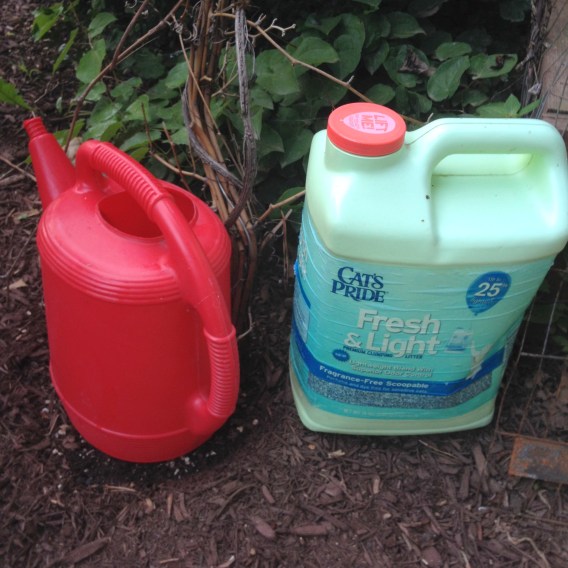
Skip the Heavy Watering Can – Attach a watering wand to your garden hose and drag it to your container garden locations. It is way easier than using a watering can which requires constant refilling and carrying. Also, while you are at it, if you have any extra watering cans or water bottles, place them near your pots and fill them with water at the same time for the next day’s watering to save a step or water on the fly. Another good choice is installing a rain barrel on your deck or patio to capitalize on rain water harvesting to use for watering your plants. I like to recycle the big cat litter jugs as containers to hold water when I need to water container gardens not reachable by the garden hose. They are large and easily washed out before the first use.

Fill watering cans or recycled jugs and set aside to have next day for watering on the fly

Fill watering cans or recycled jugs and set aside to have next day for watering on the fly

Relocate the Plants to Shade – I actually did this on Tuesday; I moved a couple of my big pots to a shadier location because it was that hot out. It helps with water loss from the soil and the shade will cool the leaves of the plants. Use a hand-truck if you have one to do the moving of the pot in order to avoid injury to yourself. It may be a pain to consider moving your pots, but in my case, it was worth it for one or two.

Use Your Eyes – Look for any plants which are potentially distressed, as in weeping, leaning over, or have leaves which are dropping or wilting. They may be experiencing drought or lack of moisture in the soil. Treat those plants like 911 candidates. When we have high heat like this – go water them first because when moisture in the soil has reached a point where it cannot meet a plant’s need, the plant may die. In these situations, the plants cannot easily recover from their water loss. In the trade, this is known as a ‘permanent wilting point’.

Dip in the Pool – Not the plants but YOU if possible. Okay, perhaps this a luxury because you may not have a pool or the time before heading to work, but if you have a lot of patio pots and container gardens, make sure to take a break to cool yourself off too if you start to sweat profusely out there – I know I did even early on Tuesday morning. Make sure you are hydrated first, or take a break by going inside if you get too hot after visiting all your plants.

Capitalize on Patio Umbrellas – Open a few up if you have them near your patio pots to cast some shade above them. Even the most heat and sun loving plants will appreciate this on hot days like we’ve just had. Especially if it is very sunny out too. While most sun loving plants can take it – if we have a super heat wave, the shade of the umbrellas doesn’t hurt for a day or two.

Snip Off Scorched Leaves – If you have some leaves with dry brown brittle areas, or leaf scorch on the edges, use your “clean” sharp pruners and snip them off. No sense in having a plant expend energy on a bad looking leaf with damage. Plus, around this time of year, August, many plants may look a little tattered anyways, so do some cleanup if you can at the same time as watering.

Water Your Feet – If the sun is so hot, the surface of the deck or paved area where you may have placed some of your patio pots and container gardens is too hot to handle barefoot, water your feet as you walk around – it may not help the plants but it will help you stay cool and feels good. Kind of like your own watering treat!

Direct water to soil, not on foliage of plants

Direct water to soil, not on foliage of plants

Water the Soil, not the Leaves – One of the most important tips is to direct your watering wand or watering can to the soil, not the leaves. Sometimes if the hot sun hits a leaf surface with water droplets sitting upon them, it can magnify the situation and cause brown spots on your leaves from burning/magnification. Also, water sitting on leaves on humid days can lead to fungal problems or diseases. Showering the tops of your plants will not get the moisture penetrated into the soil mass where it is most needed.

Gazing Ball Cracked, Watch Out for Hot Days and Cool Water on Glass Decor

Gazing Ball Cracked, Watch Out for Hot Days and Cool Water on Glass Decor

Watch Out for Glass Décor – A gazing ball cracked in one of my container gardens when the cool water hit the hot glass surface on a very hot day while watering recently, and it, unfortunately, cracked. This was a first for me so maybe a bit of caution there for any glass décor on an extremely hot sunny days in your patio pots and container gardens.

A cart filled with tops of summer plants after the summer season is over

A cart filled with tops of summer plants after the summer season is over

By the way, if the soil is shrinking away from the sides of your pots – you may be under watering in general; the soil is too dry, or if you are watering a pot which has held the plants for several years (as done with many house plants), maybe it is time to re-pot it with new fresh potting mix soil for potted plants.

Old Potting Soil Is Hard to Rewet

Potting mixes cannot hold moisture well after several years and are difficult to get moist (rehydrate) again over time. If you see crust on the top of your soil, this is usually a sign it is time for an updated soil environment for the plants. The soil has become like an unusable sponge that just won’t retain water anymore, it is exhausted. Take the time to repot it – you will be impressed with the results.

Yellowing Leaves on the Bottom of the Plant Can Be From Ovewatering

Conversely, if the bottom leaves of your plants are turning yellow, this can be a sign of over watering. Overwatering is not better, there needs to be a balance. And if your plants are in a shady cool location, they may require less watering routines, such as every other day instead of every day for those in hot sunny locations. And of course, the type of pot can make a difference in rate of evaporation (e.g., clay is very porous and dries out faster, black pots heat up faster in the sun, glazed pots can get hot too, etc.)

Watering Draining From the Bottom for Hanging Baskets

Many references will say to water your pots until the water drains from the bottom, but I don’t agree on this necessarily for really BIG pots (approximately 25” or over in diameter with about a 2 ft. depth or deeper.) Big pots hold a lot of soil mass, it won’t drain from the bottom immediately as you are watering, like you would see with a hanging basket.

When watering your hanging baskets, watering until it drains from the bottom is needed because they dry out fast. For really big pots, you want sufficient moisture but drowning them is not the answer.

Allow the Soil to Dry Somewhat Between Watering – Let it Breathe

Also, another important note is you should allow the soil to dry between watering routines. There needs to be a balance because the plant’s roots need both water and oxygen. If the soil is constantly wet all day long, this can lead to problems, even root rot over time. Think wet feet in sneakers, not a good situation. Good soil mix specifically for container gardens and patio pots helps to provided the balance in the root area from the start of the season, which is one of the “Cathy T’s 5 MUST DO’s for Success“.

Bottom line, there is a ‘yin and yang’ to watering plants, but you will get it sooner or later – and more of this is covered every year in my workshops because it is something of utmost importance to my attendees and the plants in their beautiful container gardens.

As the fall approaches when the days start to cool and are shorter, the watering routine is reduced and eventually subsides. You won’t need to water every day as you have been doing in the summer months. Things will calm down and soon it will be the time to take down your container gardens.

Storing Tropical Plants Demo in October

By the way, my demo day on how to take down plants for winter storage is posted under the “Nature with Art Class Programs” on this blog’s menu bar. It will be held Saturday, October 17th, at 10:30 am to 11:30 am in the Broad Brook section of East Windsor, CT. You may sign up via the links above where you will find the “contact form” or by visiting my business Facebook page. Private sessions at your home are available also. The session is listed under the EVENTS. Just click to sign up.

Thank you,

Cathy Testa
960-977-9473
containercathy@gmail.com

P.S. Watch out for spiders – They seem to be hanging around quite a bit lately!

Spider Hanging Around on Faucet

Spider Hanging Around on Faucet

Next Up: Free Pond Tour on August 15 – Hosted by ContainerCrazyCT

Leave a comment

Pond Tour 2015


PLEASE NOTE: THIS TOUR IS BEING CANCELLED DUE TO WEATHER PREDICTION OF RAIN AND DUE TO LOW SIGN-UPS. WE HOPE TO OFFER IT ANOTHER TIME HOWEVER. THANK YOU FOR UNDERSTANDING! CATHY T

It is hard to believe July is half over – or half full depending on how you look at it – but this is also a good time to remind everyone of the free “Walk and Tour Home Garden Tour” scheduled on Saturday, August 15th at 2-3 pm. We will be visiting a homeowner’s beautiful pond gardens and hearing a bit of how she acquired new bee hives for the first time.

These featured tours are designed to be very informal, and a way to share and learn from everyday homeowners with a particular plant or gardening passion. Our host, Rhonda, will share with us how she created her pond gardens, what plants she uses, and other tips based on her personal experience. Come see her ponds, fish, plants, and enjoy an hour walk and talk at an Enfield, CT location.

If you wish to join us – Please sign up via the Contact Form located under the “Nature with Art Class Programs” menus on this blog. We will send you the address once we receive your info – or you may email: containercathy@gmail.com.
Don’t forget to click on the menu bars above showcasing ContainerCrazyCT’s services and container garden workshops offered seasonally.

Thank you – Cathy T