Xanthosoma Surprise

2 Comments

I had ordered more of the upright giant like elephant’s ear (taro) tubers to grow this spring but some of them gave me problems. There were some soft spots on them but I planted some anyhow and waited to see the outcome.

It took a long time for them to sprout and they grew slowly. Later, however, I noticed two tubers I planted in starter nursery style pots were forming clumps and the leaves looked different than what was to be expected for the tubers I ordered. It turned out two of the tubers were not the type of elephant’s ears I had ordered. They turned out to be a surprise. The company sent me the wrong tubers.

Xanthosoma (zan-tho-SO-muh)

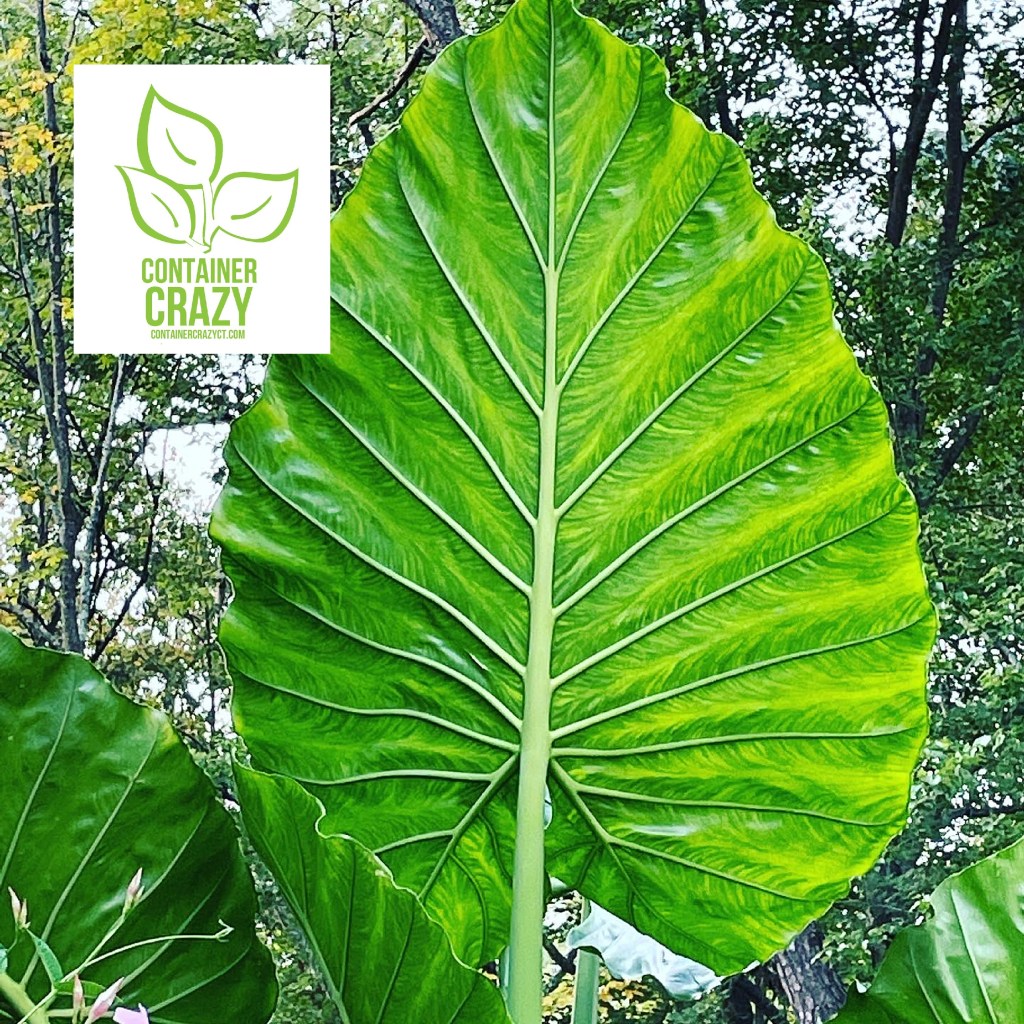
Thus, it looks like I have a new name to memorize! Maybe I will call it Xant for short when I point it out to friends. Upon researching the plant and looking it over, I am pretty sure it is an Xanthosoma. The leaves are shaped with an indentation in the middle (like a shield). It is definitely not the Alocasia (an upright type) I was expecting yet it turned out to be a nice surprise to add to my collection of elephant’s ear plants.

I looked over the veins on the leaves as they were forming and a vein runs along the outside edge of the foliage, a distinct difference compared to my large giant upright elephant’s ears which do not have this particular vein pattern. I’m happy that a mistake was made by the company where I purchased the tubers from because now I have two of these gorgeous plants started. They also form a nice mass or clump of stalks with many leaves.

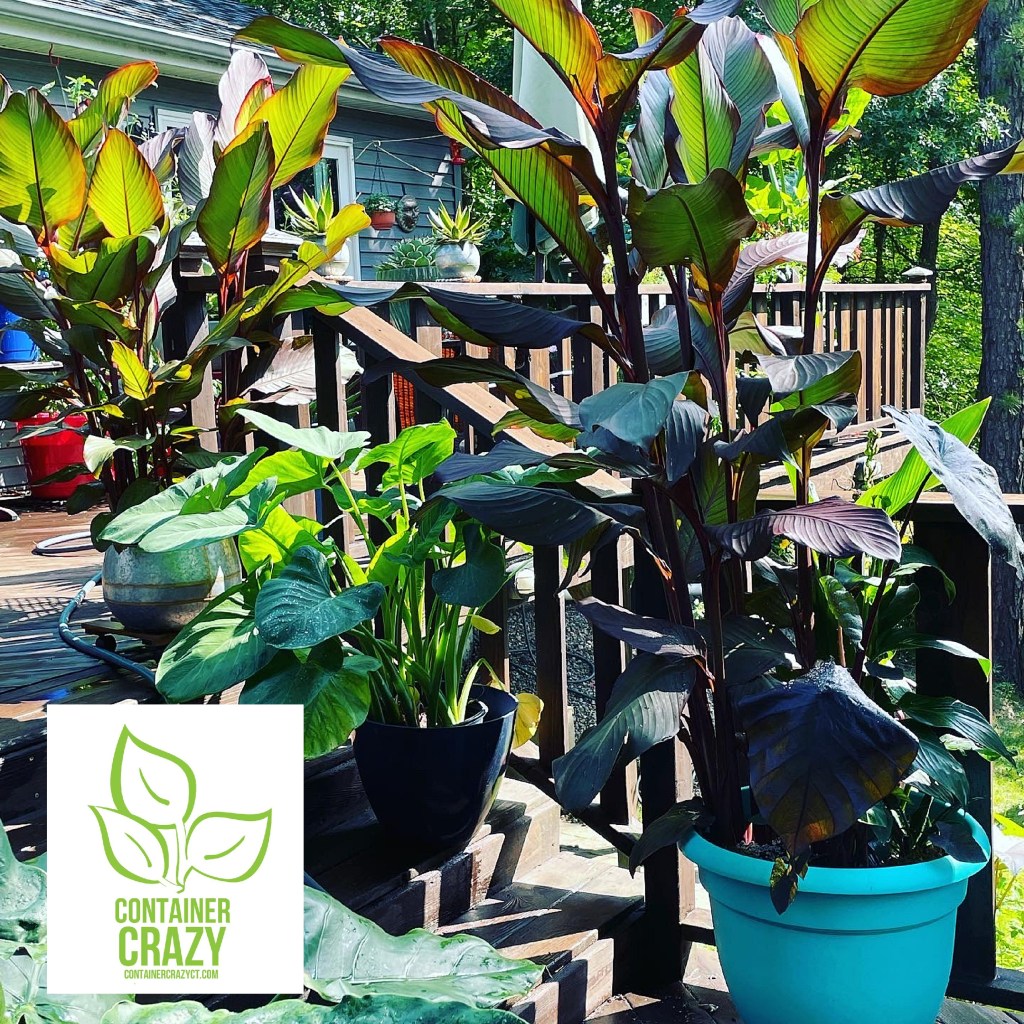
Xanthosoma in the center on the steps

The location where I put two potted plants of these received part sun all summer since putting them outdoors after our spring frost. I love the way it added to the tropical vibe between the tall canna lily plants. I usually pot ALL my plants into large patio pots with fresh soil but I just inserted the Xanthosoma in a decorative pot (blue one) rather than repot it, and I made the mistake of using an outer decorative blue pot with no drain holes, so every time we had a downpour of rain (often this year in 2021), I would have to take the inner nursery pot used to start the tubers out and pour the rain water out of the outer pot which didn’t drain.

Close up of Leaves – Believe it is an Xanthosoma elephant’s ear plant
Rain drops on the leaves

This is considered a tuberous perennial hardy in zones 9-11. It grows about 2-3 feet tall and I will store it the way I do most of my other elephant’s ear plants, by either digging out the tubers and storing in my basement in boxes, or taking the whole plant into my greenhouse for the winter. I probably will put one plant in the greenhouse to see how it tolerates lower temps and store the other via the tuber method.

During the summer, I started to fertilize it weekly and the soil was kept on the moist side all summer because of our routine rainfalls this season, which is what this plant prefers (moist soils). Hopefully, I will be successful at re-growing this variety next season. Eventually the foliage color improved and got darker, etc.

Zingiberaceae (zin-ji-bah-RAY-see-aye)

Oh gosh, another long name to memorize! This also is a new plant I tried this season, but not a mistake, a purchase from a local nursery. I saw it and immediately had to have it. It is a ginger plant (variegated with the yellow and green leaves) and I knew it would fit in with my tropical plant vibe.

I know I have the plant tag somewhere in my office. I will have to locate it. I’ve read that gingers are cold-hard in zone 7b, but we are in zone 6, so I have to figure out how to over winter it. Isn’t it gorgeous?!

Variegated Ginger Plant

Of all the new plants on my deck, this one is my favorite and a must keep. I don’t have room for it in the house and I am not sure yet if it will tolerate my low-temp greenhouse for the winter. I am considering dividing and and storing half by digging up the rhizomes and perhaps keeping half of the plant in tact, repot and put it in the greenhouse.

When I first got this plant, I planted it in a big blue planter but it wasn’t happy. The leaves would roll up and seemed to be coiling up from the sun’s heat. So I moved it and it still wasn’t happy mid deck where sun would hit it mid-day. Then I moved it further to the end where there is plenty of shade, and it thrived. It appears to do best in part shade. It also did not like drying out so I kept the soil moist. I always put time released or slow release fertilizer into my potted plants, but I also started to give it a balanced liquid fertilizer every couple weeks or so when I was pouring fertilizer on my other deck blooming plants. It definitely enjoyed that and took off. It is healthy and huge and I just love it. It did not flower however this season.

A Ginger Plant – Early Morning Photo
It’s Happy Place, where there was shade most of day except very early am’s.

Learning how to overwinter plants is often a trial and error process. Over the years, I have been very successful with overwintering various tropical plants. These two above will be new ones for me.

Another Agave

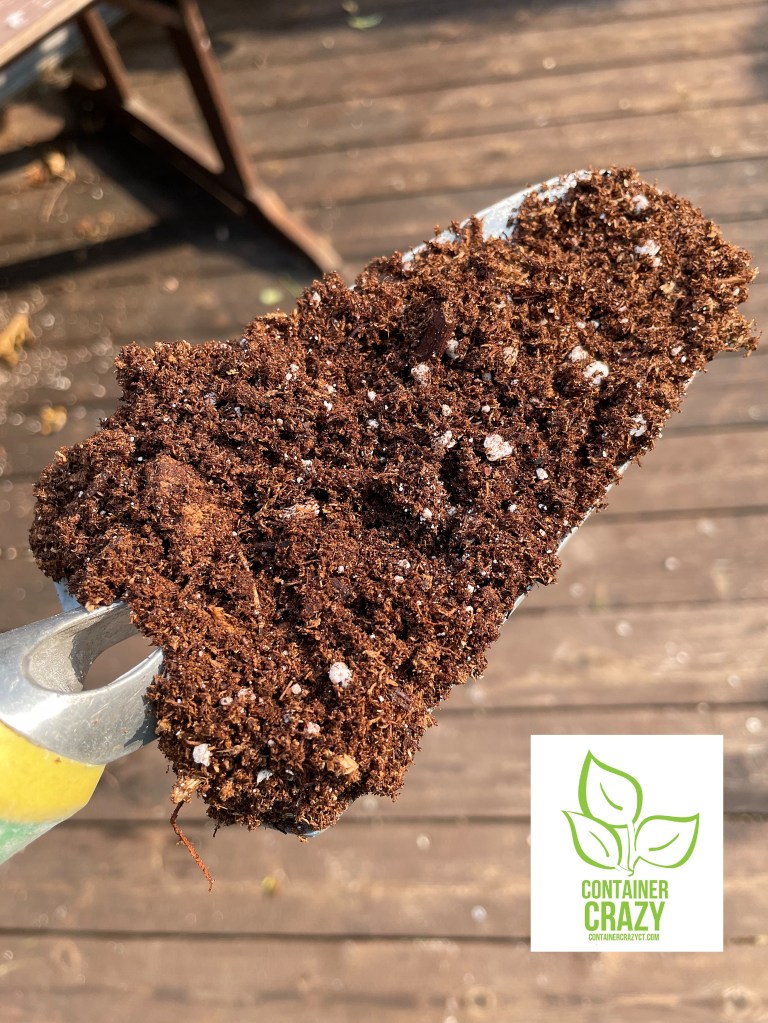
I also decided to repot an agave (another one) yesterday. It was in a green tall glazed pot and the pot was so extremely heavy, I knew the soil was staying way too wet. I wondered why, it had a drain hole and so I took the whole plant out and saw the soil was a very dark rich black color, so I think I may have put it compost. Again, rushing is not a good thing. I probably was rushing, grabbed some compost and planted it in that despite knowing agaves need well draining soil. That soil just retained way too much moisture, so I repotted it into a lower pot yesterday, adding perlite to professional potting mix, and put it in the greenhouse. This is a photo I took of it. You can tell the lower leaves are off color – a bit yellow – showing signs of just too much moisture. It should recover now.

Another Agave Repotted

I usually don’t get bothered by mosquitoes on my deck or in the yard, but this year, they are on killer attack. It has been difficult to work outside without getting dive bombed by them. They have bit me on the ear lobes, on my face and fingers, and legs. Why do I mention that, I’m not sure, but it makes me wonder how on earth landscapers do it all in this wet weather. For me, my motivations is the love of plants and how it makes me feel every time I look at them. Looking at my two new plants offered me curiosity and relaxation and I certainly want to do my best to keep them so I may regrow them next season.

What is next?

I will probably ask my husband to help me this weekend to move some of my bigger pots into the greenhouse so I don’t hurt myself! And we use the hand-truck and it is not too difficult. As mentioned prior, I’m doing some work early. I’ve already disassembled my tomato planters and I threw out some herbs too. I had to literally talk myself into taking out the herbs because some still looked okay but I had to repeat to myself, take them out – you will be too busy later. I also took down a long shelf style planter with several Mangaves and Agaves and moved them into the greenhouse and put the long two tiered planter in my home. My home doesn’t get enough sunlight for all of the plants, so the planter will be used for something else, we will see!

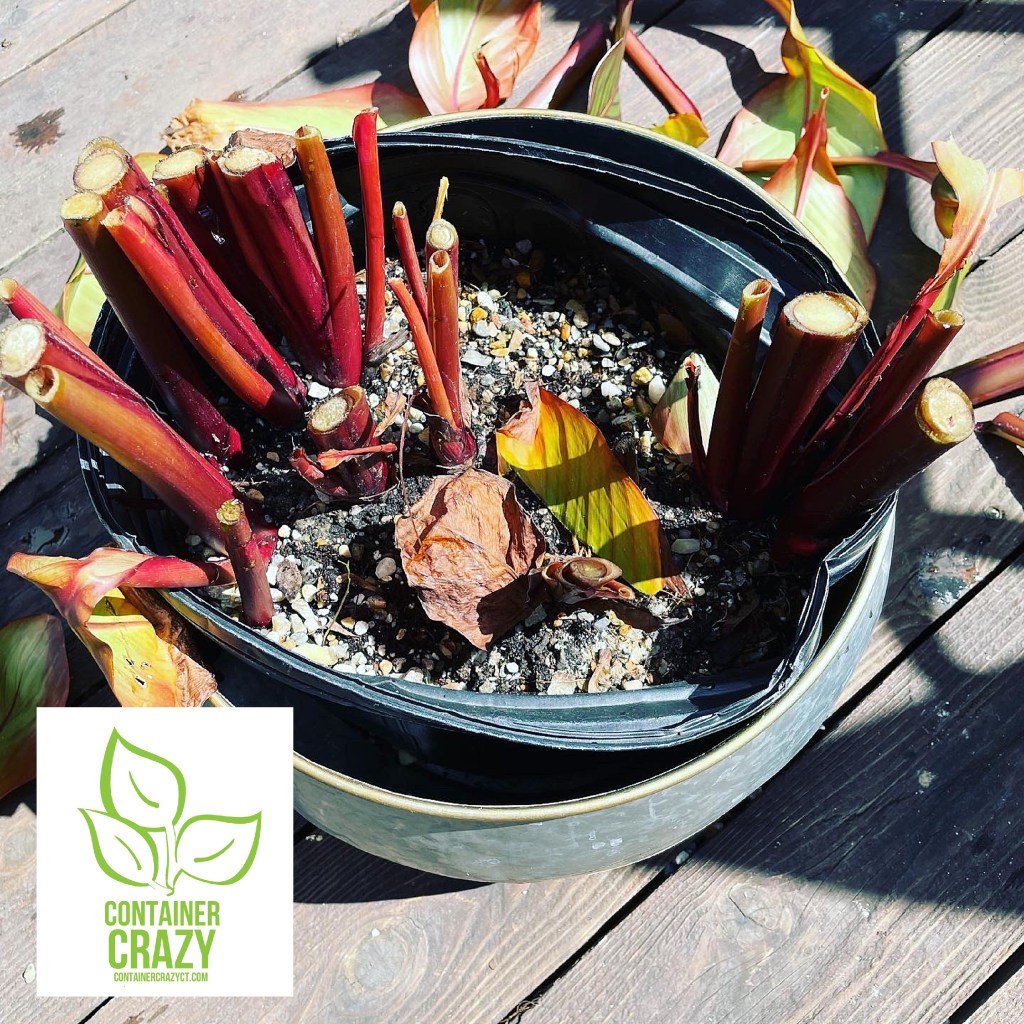
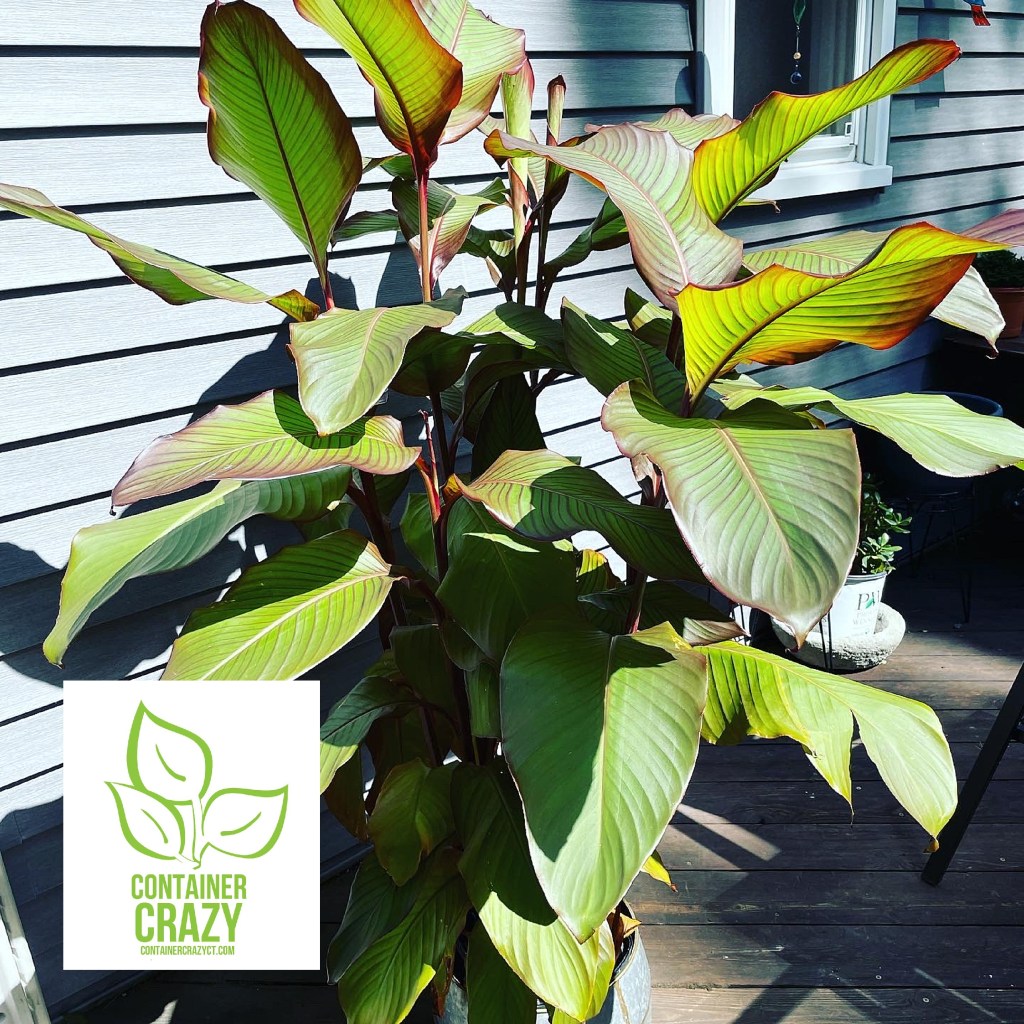
Next to do will be to disassemble some of my canna lily plants. I really need to take apart the rhizomes and un-crowd the pots. When you leave them in a clump year after year (if you store them that way), eventually they get too pot bound and won’t produce flowers. I also collect seeds this time of year from my Canna lily plants.

I’m also collecting Datura seeds for a new one I planted this season, it has purple upright flowers. Since collecting the seeds for this plant is new to me, we will see if I’m successful. The key is to wait till the seeds are fully ripened, and also to do some research. Each type of plant is different. I read you can put paper bags over the Datura seed pods and let them crack open and the seeds will fall into the bag. I didn’t use this method (yet), but it is a good idea – IF IT DOESN’T RAIN, which it did again last night. This means more mosquitoes! Ack.

One thing I just love about tropical plants is how fast they grow. They really make a show in one season. Years ago when my friends would visit, they would rush to my deck to look at all my plants and see what I had out. However, now I notice they just know I will have lots of plants and don’t seem as “surprised” as they used to, plus many have learned some tricks from me and have tropical plants of their own now. I guess they just expect Cathy T’s deck is always over loaded with plants – and I actually cut back this year. Giggle!

Well, I’m kind of rambling. Sorry about that. Hope this post is helpful or enjoyable – which ever is best for you!

Cathy Testa
Container Gardener
Connecticut
860-977-9473
Lots of photos on my Instagram under Container Crazy CT
Date of this post: 9/10/2021
Today’s Weather: Mostly Sunny 68-70 degrees F
This weekend – sunny all weekend –YIPEE!!!

Overwintering Agaves Early

2 Comments

This will be a quick post. I am trying to document how I overwinter various plants from the outdoors to the indoors in my area of Connecticut as I work on them. This week we are having gorgeous weather, thus I am getting a head start on my plants at home because I will be busy the rest of the month working on clients’ plants.

Agave (ah-GAH-vay)

These plants are considered succulent perennials hardy in zones 9-11, some maybe hardy in zones 7-6, but in my case, I treat them as non-hardy plants and move them into a lower temperature greenhouse for the winter. The greenhouse is not heated right now because it is still warm enough outside, but by mid-October, we could get frosts and my agaves should not be subjected to any frosts.

During the summer, my agave plants are in full sun locations on my outdoor deck in individual pots. Some are super heavy and require a hand-truck to move them to my greenhouse, while others I can manage to lift and carry in my arms in the pot, although it requires a bit of muscle power to do so.

I usually allow the soil to dry in the pot as much as possible but we had so much rain and moisture this year, some of them are still holding damp to moist soils. However, it is best to move them indoors when the soil is dry if possible.

Over the winter, I suggest you do not water them at all and allow them to stay on the dry side. If the soil stays wet and you move them indoors, they may get root rot (especially if you are moving them into a house with air conditioning still on and in a non sunny situation).

Inspect the Plant

Steps

  1. Let the soil dry out as much as possible before you decide to move in your agave plant. As noted above, wet soggy soils only invites problems (i.e., root rot, insects that like moisture, and fungus sometimes)
  2. Inspect the plant for insects. Use the methods below to blow away any insects, debris, etc.
  3. Lift to inspect roots if possible (optional)
  4. Wash the outside of the pot with mild soapy dish water if possible

Inspect

Usually my agaves do not have any insect issues on the succulent foliage. You may find a spider in there (a good one), a cricket hiding between the foliage, maybe even a tree frog sitting on the plant! They seem to like one of my bigger agaves. I find one or two tree frogs every year hanging on them earlier in the season. Before moving them inside, check them over for any potential insects or debris (like fallen tree leaves or twigs, etc.). Ways you can handle the inspection are by:

Using a leaf blower to blow anything off of it.
Using a hose with a harsh spray to blast the leaves with water to dislodge any debris.
Use a little brush to brush away items caught between the leaves.

Lift from pot to look at roots – optional and if possible

This agave is in a plastic pot inserted within a glazed pottery pot. I decided to lift the plant out and inspect under. Yes, the soil is still moist, but otherwise, the roots look fine. When I lifted it up, a tiny cricket insect jumped out – so it is helpful to check and get all those little hiding bugs a chance to get out before they move into your home or greenhouse.

You can see here the plant is pushing out a side shoot (pup) which will eventually form another baby agave. Overall, the roots look fine, but the soil is staying so wet, I decided not to reinsert the plastic pot into the glazed pottery pot when I moved it into the greenhouse. This will allow the air to help dry out the situation. Also, right now, the greenhouse is nice and sunny and warm. It will help to dry out the soil.

Overall this agave showed no major concerns. It is now safe in my sunny greenhouse to await the cooler days of fall and then eventually winter where it will be protected until next year. I have written about overwintering agave plants before. To locate the posts, type the word ‘Agave’ in the search box on this site.

Thank you for visiting. Let me know if you have any questions.

Cathy Testa
Container Gardener
860-977-9473
containercathy@gmail.com

Protect Pots from Rain

Leave a comment

In most cases, we adore the days of rainfall during the summer because it offers a break from watering our container gardens and patio pots, but this year, 2021, we got our fair share of rainstorms and too much at times.

I found that soil remained wet too long in some cases. It stressed our tomatoes, however, most tropical like plants love the rain. For some of my succulents, it was just too soggy. They did fine, but with today’s expected downpours (due to Hurricane Ida remnants passing over Connecticut today, tonight, and tomorrow), once again my succulent plants (agaves, jades, echeverias, etc.) will get more rain pounded on them as they sit in their patio pots. They haven’t had lots of dry periods this season, so the soil has stayed more on the “moist” side than dry side for days.

Because of this, I decided yesterday to move some of my plants onto a deck table with a patio umbrella so they won’t get blasted again. Yes, it is a bit of a PIA (pain in the a**) to move them, but I just don’t want that soil water logged at this point as we transition into September.

I will most likely move some of them to my greenhouse too. I am only doing this as part of my overwintering process early because I have a busy month coming up and this is my only week to get come chores done early. So again, plants may stay outdoors for quite some time, even into early October “for some types of plants.” However, when it comes to my succulents, I don’t like them to stay in a water logged state too long. Fortunately, this weekend’s forcast looks fantastic. It is predicted to be in the mid-70’s with sun from Friday to Saturday (yes!). But it looks like more rain on Labor Day! Rain rain rain this year.

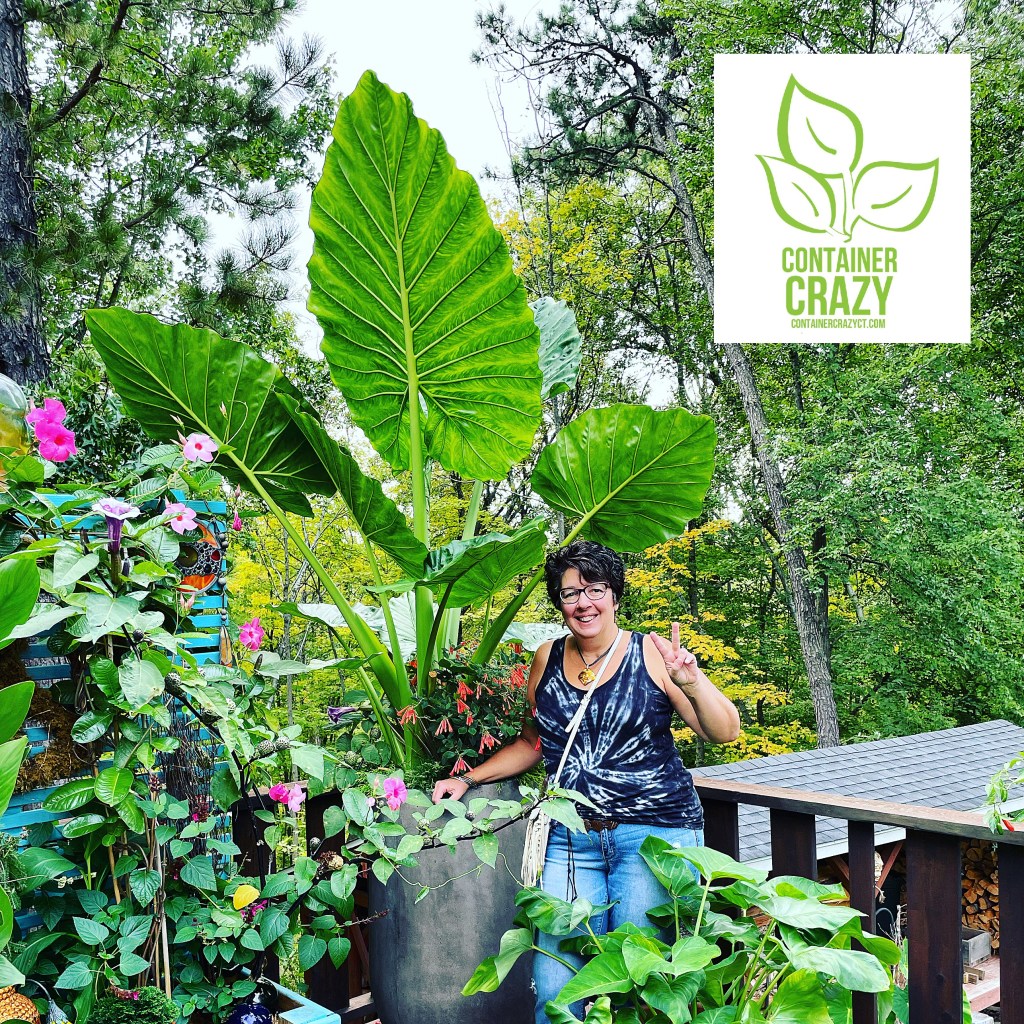
Plants not poorly affected by rain are my tropical plants, such as this upright Alocasia, which I adore. Tropical plants add a real feel of a jungle or rain forest, and I love having that look on my deck because it makes me feel like I’m in Hawaii. If you can’t be somewhere tropical, might as well try to get that feeling at your home.

This plant is showy and grows extremely large leaves. I took the time to measure the biggest leaf yesterday. It is 3 feet height and 3 feet wide with a 3 foot long stalk. In fact, it was hard to hold up the ruler as I tried to take a few photos of it yesterday.

These plants are accustom to dealing with tons of rain fall cause they are from the tropics and are used to it – it is in their genetics, basically. That is cool. With all the strong rainstorms we had this summer, the leaves just kind of tussled around and didn’t break or even tear. Also, the leaves have the ability to shed water droplets and also the texture of the Alocasia leaves allow the water to run off quickly.

Members of the Alocasia, Colocasia, and Xanthosoma are always on my plant list. They grow huge. I love the heart-shaped elephant ear leaves and enjoy looking at them every single day. In fact, my jungle look is at the end of my house by my bedroom, so I see this via a slider door and have watched hummingbirds visit quite a bit this year as they go to the orange tubular flowers below this Alocasia shown above.

Another plant which has done well despite the rain is my Mandevilla. In fact, the Mandevilla twined around one of the stalks of the Alocasia this summer as it reached out for places to twine as it grew. This one is called, Alice Du Pont, and it is a plant which I overwintered last year in my basement in the pot. I took it out early to start growing in my greenhouse and then planted it in a big raised bed like planter on my deck. I fed it bloom booster water soluble food about once a week for a time in the middle of the summer and it has bloom beautifully. It is considered a tropical vine and works well when trying to create that jungle look with some trumpet like gorgeous hot rose colored flowers.

These tropical plants will grow well into early fall. I perform a combo of overwintering techniques from mid September till mid-October. Some are stored in their small pots in my basement or greenhouse, some are taken down (foliage and tops cut off) and tubers or rhizomes below are stored in boxes in my unheated but not freezing basement. And some are kept going by harvesting seeds and sowing them next season. The Mandevilla (and Dipladenia) can be a little tricky to overwinter and get growing again. It helps that I can start them early in the greenhouse. I started some others and they did not take off or produce as many blooms. You can’t win them all in the world of nature. There are just so many factors which are out of your control. Like rain for example, but then again, rain is a helper at times as well. Mandevilla are stored as dormant plants in a dark place at about 40 degrees F over the winter. The soil should not completely 100% dry out but stay more on the dry side than wet.

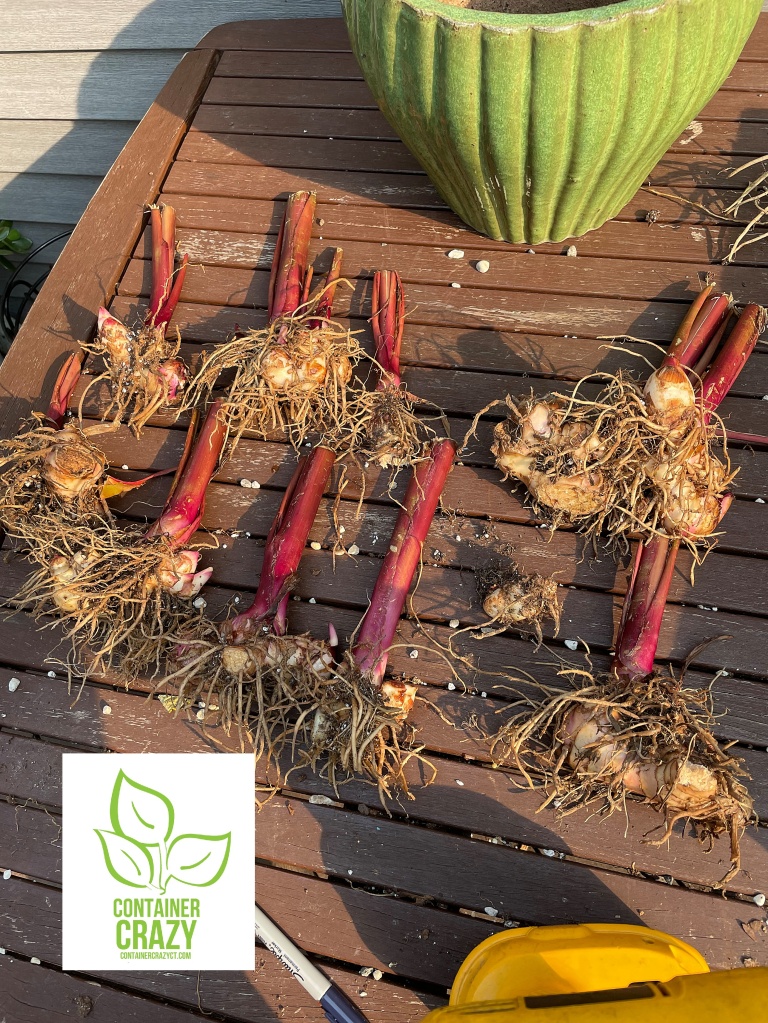
As for the Alocasia noted above, also known as Elephant’s Ear or Taro, I’ve dUg them up and divided off any side shoots as well as put the tubers in boxes in my unheated basement. I’ve detailed the steps in prior blog posts on this site. This spring, I did encounter a problem. Some of my tubers were soft in spots which usually doesn’t happen. I know what I did wrong. I used “new boxes and bins” and neglected to drill some air holes in the covers. I was rushing because I was busy. I planted them anyways in spring but they were really slow to grow AND I was worried the rotted parts would ruin the whole process. Some made it and some others were tossed. The tubers must be stored in a dry cool place, away from any chances of freezing, and after the plants go dormant for the winter. I hope I will be more successful this year. Time to get the drill out!

This photo is of my Ensete (red banana plant) with Castor Bean plant (left) and another type of elephant’s ear on the right. It is the first time in years that I did not directly plant the Ensete into the large square big cement planter. I planted it into a big pot and set it into the big cement planter. I got a little lazy and busy, but it is doing just fine. It still grew massive leaves and looks super healthy. I added compost to the soilless potting mix in the black pot. I grew the castor bean from seeds of last year and the elephant ear from a stored tuber. I won’t be working on these plants until early October.

Well, I think it is time to go work in the light rain before the harsh rain arrives later today and will be pounding overnight. We have seen a lot of flooded areas around here, ditches over flowing, damp lawns, and run off. We even got a huge sink hole down the road from rain this season. It is at least 6 feet deep. We are lucky compared to the people in NOLA. I can’t imagine what they are going through and they are in our thoughts.

One last thing – other methods for dealing with rain (drain holes are a must in pots, elevating the pots with plant saucers or trays, moving them under tables, and spacing them out so air flow circulates around the patio pots after the rainstorm, and maybe even a fan. Yes, I put a fan on my tomato plants this summer, it was that wet out there!)

Cathy Testa
860-977-9473
9/1/2021
Today’s temps: 66 degrees F (100% rain at 10 am); 60% rain tomorrow (Thursday)
Container Crazy CT
Broad Brook, CT

Another huge pot with Canna Lily, Amaranth (from seed), and annuals – will blog on these later!

Is it time to consider moving plants indoors?

3 Comments

This morning, I noticed a question pop up on one of my plant posts asking when I move my tropical plants indoors? And when do I start to store my Canna Lily rhizomes?

I have written a few times about my overwintering plants processes on this blog website.

To search for the posts, use the “red box” on the right side of the blog site, under the banner picture on top, to enter search words such as:

Overwintering
Overwintering Plants
Canna Lily
Ensete
Red Banana Plant
Bringing Plants Indoors
3 Signs it is Time to Move your Plants in
Elephant Ears
Colocasia
Alocasia

Typing any of those key words should lead you to some of my past blog articles about my process.

Basically, tomorrow is the first day of September, and we still have plenty of time to enjoy our gorgeous plants outdoors on our patios, decks, and special places. I usually start to consider doing some of my outdoor work to move plants indoors around September 15th (for houseplants primarily).

If you have a busy schedule like mine in fall, or you wish to get a head start on your outdoor patios, you could potentially start moving in plants by mid-September. Some of these tips are outlined in the articles on my blog, as noted above. However, many plants may wait until early October. It depends on the type, the temps, and the condition of the plants. I basically have these types: succulents, agaves, canna lily, elephant ears, mandevilla, herbs, cacti, jades, houseplants, red banana plants, castor beans, and…, did I miss any?

I think, in my area of Connecticut (Zone 6), I usually begin around September 15th. I may start to harvest seeds which are ready (ripe) on some of my tropical plants, such as my Canna Lily plants. Look for dry papery pods on the plants and find the round hard seeds within them. Store them appropriately in cool dark places. I use old prescription pill bottles to store my harvested seeds.

I may start to inspect some of my outdoor houseplants (ZZ Plant, Jades, Mother In Law tongue plants, etc.) and spray them for insects (if needed) and/or wash the outside of the patio pots with dish soap water before I move them inside my house, one by one, over time. I usually like to move plants inside the home when the soil has had a chance to dry out too. I do not like moving them in when the soil is soaking wet – that only invites insects and other problems due to the lack of air circulation in the home compared to outdoors, and perhaps you have cool temps in your home due to air conditioning running. The soil may remain too wet indoors if the soil is soaked when you move them into a home.

Your herbs may be booming still, or perhaps they look ratty tatty and it is time to harvest the last of them. It is really dependent upon the conditions at your home and the exposure they get. My herbs are little on the sad side, but I’m gathering them up as much as I can when I cook each dinner every evening. They will stay a while longer on my deck. I could let them just go to blah, and throw the whole root ball out with plants later. No rush on the herbs right now. Again, all of my plants are in patio pots and large container gardens. They are not in the earth (gardens of the ground), so this process is plants in pots.

And my hot peppers are booming at this time (8/31/2021), so I take those in and freeze some or use them up in salsa’s, tomato sauces, etc. Yesterday, my husband accidentally chopped up one of my ripened to orange colored Jalapeños in his work salad. Good thing he can take hot spicy food! Our tomatoes are fading now and I probably will start cleaning up those big pots to get a head-start on my outdoor deck work.

I usually like to start moving my succulents into my greenhouse before any cold snaps and extremely wet conditions. This could start anywhere from 9/25 on. Last year, we actually had a firm hard frost on Halloween weekend, but we also got some quick cold frosty like temps over night before Halloween, on certain nights towards the end of October, before Halloween. I do not like my succulents to be soaking wet and cold before moving them in. Again, for the reasons noted above. Same with my agaves. The thing is with global warming and all our weather changes, it seems to be slightly different every year. I think frosts came earlier the year before.

Older photo but a succulent like this I may move in sooner than later.

Many large and showy tropical plants (like my Ensete, canna lily, and elephant ears) may be touched by frost on the foliage “if you are storing the underground tubers, rhizomes, corms” or whatever you want to call the underground storage organ from these plants.” But some of the work is just easier if done before frosts because the soil is not cold yet, and damp. I usually leave my showy tropical plants out in my big patio pots till early October. However, this year, I plan to be out of town the last week of September, which really makes me have to think ahead. Anyhow, they are fine to stay out if you want to do so. Or fine to start earlier towards end of September or early October to get a head start. If you don’t need a head start, just watch the weather for frosts in October. Also, if you are moving the whole plant intact, not cutting it down, leaving it in the pot – you must move it in before frost for any tropical plants like the canna lily, elephant ears, mandevillas, and banana plants, etc.

Another thing I might do early is start taking some cuttings of various succulent plants to propagate. It can take a long time to get those started, so I may take some healthy cuttings now. I inspect them for any insects first, make sure it is a healthy plant to propagate from, and follow my usual process for that at this time of year as well. I do not use damaged or unhealthy plants for any cuttings I may take. It just invites problems.

And lastly, I still have not cleaned all my spring and summer empty stock piled nursery pots! ACK! I started it a month or so ago and have some cleaned and piled nicely organized in my greenhouse – but the darn humidity really got to me this year. I just lost my motivation to tackle the rest of big pile of pots I need to clean and store for reuse every season. I still have to work on that. I try to do that now because it is more work for me in the spring when I start all over again.

So anyhow, one last big tip – always note on your wall calendar when your area of CT received light frosts and the hard frost of autumn so that the following season, you may recall when you did what. Watch the weather and think ahead so you are not caught rushing. And refer to this blog site for prior tips. I’ve posted for many years my processes and have shown videos too. You may find some of my prior videos of when I took down some of my big tropical plants on my Facebook page under Container Crazy CT.

Thank you for visiting my plant blog again!

Cathy Testa
860-977-9473
Located in the Broad Brook section of East Windsor, CT
Dated: 8/30/2021
Weather today: Cloudy, 66 degrees F at 7:32 am, into the 80’s today.
Observation: Hummingbirds are visiting my feeders a great deal this week, and some bees too.
Wed-Thursday: Lots of rain (A-GAIN!!)
Rest of month: 75 days, 57 nights (per my weather app)
In Bloom: My canna lilies, my mandevillas – they look amazing and still showy!
Looking large and lush: My Alocasias and My Ensete – huge leaves right now.
Pods on my Datura, Canna Lily for some, and Castor Bean plants (starting not ripe yet)


A Bowl of Tomatoes

Leave a comment

One year, many years ago, I went on vacation with my husband and some friends to Cancun, Mexico. We adventured from our hotel via taxis one afternoon and stopped at a mini local market. I was so into the market, looking at all the handmade items, jewelry, knickknacks, and I then saw beautiful hand-made pottery type bowls in super colorful patterns on the inside of the bowl with a wonderful terra color to the outside of the bowls. I bought one immediately, and the man selling them did the sign of the cross with his hands after I paid him cash, and he said a prayer right in front of me. He was so thankful for my purchase. I remember thinking, wow, I wish I could buy at least 5 more of these gorgeous bowls, but they wouldn’t fit in my suitcase!

Here is the bowl filled with various tomatoes and peppers from my container gardens this year. Aren’t the colors of the bowl and fruit just amazing? It is a good way for me to display the fruit as a reference for next year when I grow the starter plants from seed again. That is my main goal usually is to show what the fruit looks like, and comment on how they tasted.

This year, again, I’ve said has been a very humid and very wet summer in Connecticut. My plants didn’t do as well as last year, but alas, I got enough fruit to give my opinion on them. If only they grew better, I would have a lot more to eat, and so would Steve, my husband.

What is this Pepper?

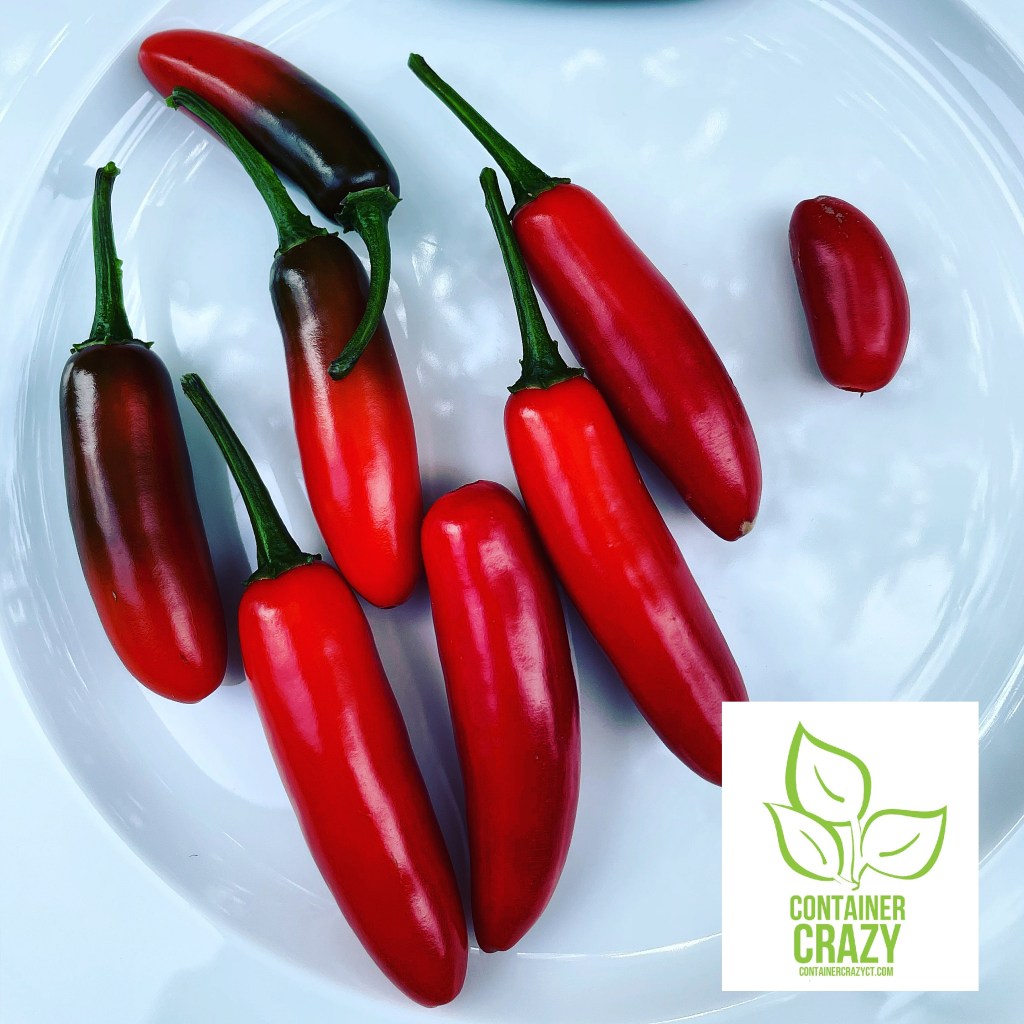
Okay, who out there can help me? I obtained seed packets which are a mix of chili peppers. When I sowed them, I thought, “Wait, how will I know which is which when I go to sell the starter plants?!” Because it is a mix, I won’t know until I try these out and see them grow and produce peppers.

I ended up with 3-4 patio pots of the pepper plants on my deck and had to wait and see. One plant produces the pepper shown above, it turns black from a green color. One day, I tossed one on my grill whole, roasted it, and we tasted it. It was very yummy! Then I did that again a month later with some more of the black ones, and they were a lot hotter than the prior picked black peppers. The heat turned up the longer they stayed on the plant.

The Green Ancho Poblanos Peppers

This one above, is on a different plant (not the same as the ones that turn black). Look at the top – how it kind of indents. I has a different shape than the ones that have been turning black on the other pepper plant on my deck. I was able to find this green one described as:

Ancho Poblano represent the golden mean of the pepper universe. They’ve got some spice, but you can easily chomp right into them. They’ve got some genuine pepper flavor, but it’s muted a bit by the heat. They’re great fresh, cooked, pickled, dried, or blistered in fire when fully ripe. They grow abundantly on bushes that reach nearly three feet tall. Plant early, though, if your goal is to maximize the number of ripe pods you get; they do require a fairly long growing season.

I agree, they have some heat. At first I questioned if they were Habaneros cause the seed packet contained some of those as well, but I thought, that can’t be possible. The Habaneros I purchase in grocery stores are not nearly as large, but these green ones are hot. My husband is the taste tester, and it is always comical to see him take a big bite, chew, and then the expression on his face! At first, he was like, “Oh, they are mild,” then a few chews after, he says…, “OH NO, they are HOT!!”, and he then spit some out. LOL.

Habaneros (green stage – to turn yellow)

This week, I finally spotted a pepper that is the size of the Habaneros on another plant on my deck. I thought, “Ah-ha! Here it is!” Steve hasn’t taste tested it yet. It is supposed to turn yellow so I will let you know. So basically, all the seeds in this packet are a mix. It also includes a red pepper (small oval long shape) that starts green, and I think this is a Serrano pepper.

Serranos Hot Peppers

Well, I am thinking these are Serranos, but I’m not 100% positive. Steve still has yet to taste these. I think I will make some salsa this weekend with tomatoes and some of these peppers to give them a try. These red peppers are abundant on a small plant in a pot on my deck. The plant looks like a Christmas tree with all the green and red peppers right now.

Thus, again, the confusion lies in the fact the seed packet has a mix of Pica Chile various species of hot pepper plants. It has been fun to witness what is produced, but the only downfall is I don’t know what I will get but I will definitely start these mixes again from seed next year for people who enjoy the adventure of seeing what types of hot peppers they will be able to use in their cooking from their plants!

The Bowl from Cancun with a Mix of Tomatoes and Peppers

Starting from my logo on the left, lets go clock wise! At the clock noon position, is a Goldie (obvious from the golden yellow color), Ancho Poblanos (green pepper, mild to hot) 1 pm, Habaneros (green small sitting on-top of some red Matchbox peppers and Tiny Tim tomatoes), a Mandurang Moon tomato at 6 pm, another green Ancho Poblanos, and then the black peppers (name unknown) at the 9-10 pm position of a clock. There are others in there, such as Paul Robeson tomatoe and a StoneRidge, and a Cherokee Purple.

Granted, some of the fruit doesn’t look perfect, some cracking from too much moisture this season (lots and lots of rain storms), and all that – but overall, they still taste amazing.

Hot Matchbox Peppers

This one is definitely a Matchbox hot pepper (pointy tip) in a different pot and not from the “mix of variety seed packet.” It is from a separate packet and I’ve grown them before, they are super compact, perfect in small pots, and product lots of hot red peppers, starting from green color.

Cherokee Purple

I’m pretty sure this is the Cherokee Purple. It looks very similar to the Paul Robeson tomatoes. Paul Robeson are orangey purple green beefsteaks, and I am taste testing both. Both the Cherokee and PR’s are just amazing. My only disappointment is I wish I had more of the plants on my deck or in a garden. I did restrain myself this season, I can only keep up with so much watering, I thought. Then it poured like heck this summer. Things got over watered by nature.

Paul Robeson Tomato

The PR’s are noted to resist cracking and have exceptional flavor. They just look very similar to the Cherokee and sometimes I forget which I took a photo of later when I start to blog and post about them.

Goldie

Speaking of tomatoes which resist cracking, I would say by observation this season, Goldies fit that description as well. They are blemish free and absolutely perfect looking yellow golden tomatoes. I wrote about them in my prior post this month. It is an heirloom and sweet golden flesh. They do melt in your mouth. Oh I hope next year will be better growing season cause I want these again for sure!!!

The Mandurang Moon tomatoes are about the size of cherry tomatoes and a pale yellow. I thought when I cooked with them in a sauce, it intensified the flavor of this tomato. They are also perfect, no blemishes, and firm. The plant stays shorter with stalky center stems and leaves that look like potato plant leaves. I blogged about these earlier as well on this site.

The bowl with a mix

Others in this bowl are some Tiny Tim tomatoes (super compact plant) and some StoneRidge. More on those later.

It is interesting to note that even though I felt like my plants suffered, I still was able to enjoy the fruit – enough for two. We add one to sandwiches, roast a couple to put next to steaks from the grill or corn, and add some to salsa’s, whatever. It was just enough to test the varieties and take notes here so I will remember come spring 2022 when I do this all over again!

Thank you and enjoy your weekend. It is supposed to cool down tomorrow after a very humid day today!

Cathy Testa
Written Aug 27 2021
Container Crazy CT
Located in Broad Brook/East Windsor, CT

860-977-9473
containercathy@gmail.com

I sell starter plants in the spring time, I install container gardens and patio pots for clients, I dabble in holiday items such as succulent topped pumpkins in the fall, and fresh greenery wreaths and kissing balls in the holiday winter season. I ponder what is next, what should I continue but I do know, I really LOVE growing the tomato plants from seed, so that is a keeper on my to-do lists! Thank you for visiting, Sorry about the typo’s or grammar errors, I have to rush out to water before the humidity kicks in! Cathy T.

Time to Talk Tomatoes

Leave a comment

This year (2021) was not the best tomato year for me in regards to my plants. At first, they were massive, perfect, free of blemishes or issues, and then we had many repeat rainstorms with abundant rain falls and winds strong enough to bend a metal patio umbrella pole in half on my deck. Most of the tomatoes ripened slower than usual and stayed green for a long time. But some did start to ripen enough for me to to have a few tomatoes and start taste testing. On my list are the following new types I grew this year from seed.

GOLDIE TOMATO

Goldie Heirloom Tomatoes

When my husband sliced one onto a plate last night before dinner, he shook his head with approval and said, “These are good.” I replied with “Yes, and I sure will grow these again next season, hopefully with better weather.”

Reasons I love these Goldies are: They are blemish free (except they seem to have a bit of a sunken stem center but a friend shared her fruit photo from the plant she got from me and has the same look, so this is normal), they are a wonderful large size (perfect for sandwiches) and I LOVE the bright yellow color. The intense yellow color looks amazing with other colors of red or purple hued tomatoes and dark green basil leaves on a plate. This is an heirloom to keep on my growing list for next year. The fruit is sweet, soft, and has a nice texture. I still have seed packets available and if interested in buying some packets, reach out – at least you will have them in your seed stock pile for next season, or you may purchase the starter plants from me next year. I am definitely growing these again.

Friend’s Photo of a Goldie Tomato
Perfect Complextion! LOL!

The Goldie tomato plants are indeterminate and grow to about 6 feet high. The packets indicate they become “richly orange gold” but we had picked them on the golden yellow side. I noticed a green one I placed on my window sill just yesterday is starting to turn yellow already in one day.

CHEROKEE PURPLE TOMATO

The next amazing heirloom I grew from seed, which is a winner for taste and beauty in my book, is the Cherokee purple. It grows a purple-hued tomato with green shoulders. These started to ripen before the Goldies, and the seed packet indicates they are an early-producer. The fruit turns a blush deep purple and shoulders stayed green which is normal. They are super pretty when sliced and placed on the plate!

Cherokee Purple Tomato

Again, I wish my plants performed better because we would have had a larger harvest, but at least, I am able to “taste test” these for next year’s growing. It is also an indeterminate plant like the Goldie, and grows to about 5 feet tall. You definitely need good supports on the plant for the wonder fruit. If I was a restaurant owner, these would have to be in my kitchen garden. They are gorgeous.

Cherokee Purple Tomato
PAUL ROBESON TOMATO

PAUL ROBESON TOMATO

The Paul Robeson Tomato, named after a famous African-American opera singer, linguist, athlete, and civil rights champion, looks very similar to the Cherokee Purple tomato. It has an orange-green color with purple streaks or patterns. It is a beefsteak size. It resists cracking (which seems to be the case with the Goldie and Cherokee Purple as well) and also is an a tall grower, reaching six feet high. I have one on my counter right now and will taste test it today. The seed packet indicates it has a intense sweet smoky flavor.

Because the season’s growing was impaired, I don’t feel I am getting the true taste of these, because if we had a sunnier warmer summer, I can only imagine how much more intense the flavor would be. I started to ask people who bought plants from me how their plants are doing. Some said amazing, some said, not so good due to weather. However, I also asked, should I grow them again next year? And they all resoundingly replied, “Heck Yah!” This made me happy because I grew a real lot of tomato starts this season and I don’t want folks to be discouraged.

If you love tomatoes home grown, you can’t help but try again and again every season to grow them. It is addicting and you need to be an optimist, or one that can sooth their disappoints with a glass of vino! LOL, JK. But sometimes I think, can I handle another year that wasn’t as expected? Can I do it again? Well, let me tell you, just one tomatoe answered that question to be yes. The flavors can not be beat on these homegrown heirloom tomatoes. Hands-down. Unless you are able to find a big grower locally, you will not find these types of home grown taste in a typical grocery store.

OXHEART TOMATO

I only grew a few of the Oxhearts this season and sold them to friends as starter plants, and I didn’t keep one for me. I kind of regretted that in ways, but then again, I have only so much room on my deck. So, a couple who did grow the plants from me gave me one Oxheart last weekend when we met up for a kayaking day. I was so happy to take it home and saved it for a sandwich.

OXHEART TOMATO

These Oxhearts are heavy, nearly seedless, soft to the touch, and really unique and amazing to eat. I mean they just taste so amazing, and for as long as I live, I will never regret growing and eating some of these. I have an Uncle up north in New Hampshire, and he has the most amazing vegetable gardens you have ever seen. I sent him a packet last year and said, grow these. He has been measuring his fruits from his Oxheart plant raving about the sizes. Wait till he tastes them!

NEXT YEARS VARIETIES

I know I will repeat the tomatoes noted above for next year. I will probably get tempted to order another new heirloom seed stock but for now, I have plenty to get my juices flowing in early spring of 2022. I will post again on the other tomatoes I started and grew and a few hot pepper plants soon. In the meantime, today, we witness rain again – all day, but you know what, it will water my new grass seed in a part of my yard, so that is good!

As I’m typing this – there goes the fire sirens in Broad Brook. This means something is happening. Lightening is flashing by my window and the thunder is booming. I better post this before I loose power at the house!

Cathy Testa
Tomato Grower
Container garden Installer
Holiday Decor and Gifts
Blogger
Kayaker
860-977-9473
containercathy@cathytesta

http://www.WorkshopsCT.com
http://www.ContainerGardensCT.com
http://www.ContainerCrazyCT.com (you are here now).

Storm Proof Tomatoes

Leave a comment

Is there such a thing as a storm proof tomato? I thought of this after several strong rainstorms here in my area of Connecticut. My dwarf plants and compact tomato plants did not get any damage from the winds.

Cathy T’s Deck 2021 – Tomatoes before storms, early in the season

I put tomato plants on a table this year. My thinking was squirrels would be less likely to jump up if they were a little higher. And I placed a couple pots on the deck floor (red ones shown above) as well. The strategy somewhat worked, along with the fact my cat roams this area, but something did damage my plants besides the rainstorms experienced earlier, because I would find tops bent. I think a squirrel got onto my roof and jumped down onto them.

Before storms and before damage from squirrel jumping onto them!

I placed three tomato plants towards the front of the table, two heirlooms and one dwarf in the center. Behind those big pots are two compact Tiny Tim tomato plants. They did not get any damage and are loaded with tons of green tomatoes.

A few Tiny Tim tomatoes ripening first week of August 2021

Tiny Tim Tomato plants are a perfect small container or patio pot size. They grow small grape-like fruit and are much smaller than typical cherry tomato fruit sizes. The plant grew perfectly, no blemishes on the foliage, and lots of green tomatoes forming, but due to our rainy season, it is taking a while for them to ripen. I am hopeful however, each bite counts.

Tiny Tim Plant

The seed packet indicates this variety will struggle if planted directly into the earth. It is perfect for small containers (mine pot is 14″ diameter and 11″ deep) and it grew perfectly. This one is great for window boxes or to put on a table as a centerpiece. Great with children too. I would have been eating these earlier in the season, but our weather reduced ripening quickly. Placing them behind the big pots helped to hide them from potential tomato robbers too.

Mandurang Moon Tomato

The other tomato plant which survived windy rainstorms was the Mandurang Moon Tomato, which is a dwarf, but certainly doesn’t look that way in the photos. It has grown quite tall, about 4.5 ft or so, but it did get toppled over by a squirrel jumping on it from my house roof top. I have to trim back some trees by my deck so they don’t have a way to get on the roof.

Color of Mandurang Moon Tomato Fruit

The color of these Mandurang Moon’s are a very pale yellow. The plants are disease resistant and the stem is very strong. The stem on dwarfs are thicker and this helped it from being bent by any windy rainstorms this season. Again, lots of fruit for a while now but not ripening very quickly due to our poor weather. Hopefully we still have a chance at some sunny weather to keep things warm for our tomato plants (technically it is time and temp, not necessarily sun to help them ripen).

Every bite counts

It’s been disappointing to not have many ripened fruit (yet), but every bite counts. Above is a photo of the Tiny Tim and Mandurang Moon fruit. Nice snackers.
Green Tomatoes

It is a little heartbreaking to see all these fruits on my plants stay green. I just noticed one on my Stoneridge turning this week. Maybe there is still hope. Above is either the Goldie tomato (heirloom with sweet golden flesh – usually!) or the Cherokee Purple – I can’t remember which when I took this photo.

A friend’s Cherokee Purple

I’ve been worried that this year’s bad weather will discourage my tomato plant buyers next year, but one person sent me this photo of her Cherokee Purple starting to ripen. She told me their plants are huge and she is pleased. That was good news because this year, I grew a lot of starter plants! I love doing so and plan to do so again next year, providing everyone will still be interested!

My Growing 2021

I’m not kidding when I say, I think I grew about 400 tomato plants this year! Crazy! But most of them sold and I think I tossed out about 30 (after offering them out for free to any non-profit like garden places). I just could not keep up with them, so I will have to cut back a bit next season, if I can.

Ancho Poblanos Peppers

This was the first year I attempted growing a mix of peppers – one of which is Ancho Poblanos. It is amazing the rich shiny deep black color which evolves from the prior stage of green color. I just placed a few on my grill one day while also cooking some chicken, and they were so delicious! I am excited about these and plan to grow more of these from seeds next season.

Grilled Ancho Poblanos 2021

I also like to grow hot pepper plants, which I put some of the Matchbox Peppers in the same pot with my Tiny Tims. And I grew Serranos for the first time this season in small pots. One small plant is loaded with the Serranos – all green right now. I have to figure out the best way to preserve them. Still wondering when they will turn red, but the plant is healthy.

Lots of Serranos on the plant – still green (8/6/21)
Stoneridge Tomatoes

My Stone Ridge tomato plant has lots of big fruit now too – about 2 are just starting to change color. I am not sure how the flavor will be as it seems all is behind schedule this season. The plant is extremely tall (over 6 ft) and still producing flowers. It can grow to 8 feet tall and is a big indeterminate plant.

Growing in Spring

So, this year’s lesson, the dwarf and compact plants survived the gusty rain storms, but the rain fall slowed down the ripening of our tomato fruit. Mother Nature never ceases to provide a new twist on the season’s challenges. She keeps us in check always!

Have a great weekend!

Cathy Testa
Container Gardener and Installer
Grower of Tomato Starts
Blogger
Kayaker (when not busy!)
Plant Gift Creator

860-977-9473
containercathy@gmail.com
http://www.ContainerCrazyCT.com
http://www.WorkshopsCT.com
http://www.ContainerGardensCT.com

Taking Some Me Time

2 Comments

Four things I love enjoying during the summer are: kayaking, tomatoes, fishing, and nature. They seemed to go hand in hand this summer as we took off on our adventures.

We usually don’t take vacations in early June, but did this year, primarily because the COVID world cancelled our prior trips of 2020. We have been fishing and kayaking here and there.

I thought I’d share just a couple photos of things I did during some “me time,” in between tending to plants and my container gardens.

Kayaking!

First, I absolutely love kayaking. It connects me with nature and the sounds of nature. We were fortunate to be invited to kayak with friends on a tidal fed river. It was so serene. I love being below the huge marsh grasses, following the path, and seeing the birds along the way.

Birds!

The birds are usually around the corner and stand there watching us float by. I like the fact they are not too afraid of us, unless you get super close, then they fly off. We got off at points where the water was low enough to walk on very soft mud and sand. It kind of felt like a mud foot massage!

Fishing…Well, what do I know about fishing? Not much, I’m an amateur, but I enjoy casting out over and over again. It is so relaxing. As a kid, I would fish outback behind my parents property on the Scantic River. Yes, I did hunt for worms at night with a flashlight with my brother in those days, but worms – yuck. I stick to fishing lures now. For 2 years, I caught absolutely nothing but this year, I’ve been lucky a few times and caught largemouth bass fishing from my kayak. In this photo, we went to a pier before kayaking for the day, and I didn’t catch anything but fresh air and sunshine, and enjoyed every moment.

Tomatoes!

Is this the most amazing tomato cage setup you’ve ever seen?! I love it – our friend built this for his tomatoes, peppers, and herbs. I’m in awe of it also because of the scenery behind it. Can you imagine?

We also kayaked by North Myrtle at a location called Cherry Grove. It was with a tour group and this gave us a wonderful introduction to this area. Again, despite hearing a golf course lawn mower on part of the path, it was absolutely beautiful, calm, and relaxing. I especially like when we come upon wild life, turtles, birds, and an occasional fish jumping out of the water.

And here on am on the 4th of July weekend, which was mostly wet and raining. I was doing my best to try to convince myself rain does not matter, let the festivities continue. It has been very wet for my tomatoes this year in Connecticut, they were growing perfectly, but the soil has gotten water logged, yet they have many green tomatoes on them, but I am waiting to see how the ripening process will go this summer. In the meantime, I just keep trying to enjoy moments in the summer. I hope you are too.

Happy Friday,

Cathy Testa
Container Garden Designer
Tomato freak – grew 400 tomatoes this year.
Kayaking lover
Nature lover
Fishing Amateur
860-977-9473
containercathy@cathytesta

Earlier this season, when I had my greenhouse filled with tomato starter plants!

Sacred Basil and How it Grows

2 Comments

Last year, I sowed some sacred basil seeds for the first time. It is also known as Tulsi or Holy basil. Latin name: Ocimum tenuiflorum (Ocimum sanctum). I thought it would be an interesting plant to offer my clients for their herb gardens. However, I discovered not too many people of my circle of plant lovers were familiar with Tulsi basil. And neither was I.

Fast Grower

What I discovered is it is a fast grower from seed. It wasn’t long before it would fill my pots or cell trays when I started them from seed. It also has an unusual fragrance, even when it is small and just sprouting from the soil in my seedling trays. The seed producer describes it as, “Pretty, heavenly-scented basil used in teas and Ayurveda.” The seed must be sown early indoors or may be directly sown into gardens.

Attracts Beneficial Insects

I did grow some on a balcony garden last season and it grew lovely and lush in a large pot. I also grew some in my containers at home around a couple tomato plants. Wow, I was stunned at how beautiful, large, and lush the plants grew. I also grew some in big pots on my driveway, and every single time I went by those plants while they were blooming, bees were visiting them constantly. I thought, hmmm, this is a good pollinator attractor. Also, herbs tend to attract beneficial insects, which also helps your garden. The blooms last a long time and the plant stands firm, upright, bushy, and full. I thought if I could I would line my driveway with them and let the bees go crazy enjoying those blooms.

Long-Lasting Blooms

The blooms remind me of catmint, a soft blue. I can’t find the darn photo of when it was lush and full on my driveway, but let me assure you, it grows tall and bushy. If you look up the plant online, you will see it in gardens and find many people describing it’s benefits as a tea. It is similar in growth to regular basil but it grows much faster, as I witnessed in my own pots. It has a strong flavor and scent. You may add it to your water but chewing it directly, I read at least on one site per my research, should not be done. It is that strong.

Dried for teas

Tulsi basil can be dried and saved for months. Something I wanted to do – but did I? No, cause I was too busy tending to plants. LOL. But bottom line, if not for teas, I think it makes a splendid container plant, garden plant (perhaps on a border), and is easy to grow. If you want a full, lush, tall plant in a container, this is the one. I think it was about 1.5 feet tall, if I remember correctly. And I could envision it as a big stand or as a border along a walkway, just covered with bees. It is a long-lasting plant as well, all the way into the fall, it performed wonderfully.

Summer growers

Basils are grown outdoors in hot weather and struggle if it is still cool spring outdoors. You should wait till all chances of frost have passed and when the temps are right for basils. Don’t rush this one outdoors in early spring. They prefer well-drained soils and full sun, and a little shade is okay too. I always plant various basils in my herb planters on my deck every year. I can’t tell you the amount of times I snip from it. It is heaven. Why not mix up your selection of basils and add Tulsi basil to it?

Health benefits

See the links posted below of the various health benefits and research about this plant. The last link has information on how to make the tea.

Well, that is my Tulsi talk for the day! I still have some seed packets available if interested, please let me know. Also, if you know of a really good site that shows how to use, prepare, and store this type of basil, I’d love to hear about it. I can not find much about it in my current herbal books in my home office.

Have a great day,

Cathy Testa
860-977-9473
containercathy@gmail.com
Broad Brook, CT
Zone 6b
Always Learning, Always Loving Plants

Here’s a few links to more articles about Tulsi basil for your reference:

https://www.healthline.com/health/food-nutrition/basil-benefits#brain-benefits

https://www.ncbi.nlm.nih.gov/pmc/articles/PMC4296439/

https://www.webmd.com/vitamins/ai/ingredientmono-1101/holy-basil

https://food.ndtv.com/food-drinks/5-reasons-why-you-should-sip-on-tulsi-tea-holy-basil-everyday-1806434

Tomatoes Outdoors; The Hardening Off Process

6 Comments

Usually I start hardening off my tomato starts in mid-May, but when a good weather day comes along in April, as it will today per the weather stations last night on tv, I will begin my tomato exercise program where I pull some trays from the greenhouse and put them outdoors to get some natural sunlight during the day.

Today’s weather in CT (4/28/21) is predicted to be mostly sunny, in the mid-70’s by mid-afternoon, and sunny for the first part of the day, followed by clouds in the afternoon.

per my iPhone app

Location

Years before, I had a slope to deal with and placed them on the ground, now I have a small deck floor area which makes everything level. This helps tremendously. I will put them on portable tables, bins turned over, the wood floor, and on shelves I may have picked up here and there at tag sales or as road side finds. I also have a small drafting table outside which is usually in the greenhouse. It makes a perfect potting station for me. When not being used for potting things up, I put trays on that too.

Flats on a turned over watering bin

Weather

Big factor! If it is too windy and cool, I won’t put them out. I also use my weather app on my iPhone. I find this is the most reliable source of hour to hour weather predictions. I also bring a patio umbrella to the area so it is not direct sun for the delicate tomato leaves. And make sure that umbrella is stable. The last thing you want is for it to fall over from wind on your delicate plants! There is a big tree near this staging area, but remember, the trees are not leafed out yet so why I get the umbrella setup as well.

Timing

It is about 47 degrees F outside right now as I write this and cool, with rain from last night. I’m not going to put them out this morning, I’m waiting till it warms up a bit. I’m just particular that way – my tomato plants are my babies! So time of day is just as important as the location and predicted weather for the day.

Care

How your seedlings are cared for is super important this time of year. Spending months prior, seeding the seeds, monitoring the growth, carefully watering the seedlings, and inspecting all along the way. The last thing you want to worry about is damaging them during the hardening phases outdoors. So, I am sure to select the bigger of the seedling plants to go outside and I limit it to only a couple times a day. This makes for a great exercise program, going in and out of the greenhouse, bending and lifting trays, reorganizing only to move it all back inside a few hours later.

Hardening Off – Cathy T’s tomatoes on a long tray

Hardening Off Weeks

Usually the best time to start hardening off seedlings is a week or two before when you plan to transplant them into your container gardens, grow bags, patio pots, or gardens. This will acclimate the tender plants gradually for a couple hours every day. However, as noted above, this year, I’m doing some of this early on good days only and carefully monitoring them. I won’t do this on a day that I am not here to watch over them (literally, LOL). It is very important to make sure the place where you do this process outdoors is protected, to do this on non-windy days, and away from any potential problems.

Watering

Another important factor is to make sure you are watering appropriately, monitoring what is drying out, and pay attention to watering needs while hardening off plants. Watering is a tricky thing. You get a sense of how to balance the dry cycles (where the soil gets the oxygen it needs for the roots) and moisture cycles. Watering plants is best in the mornings, but you also don’t want to over water them. After a while, you get a sense of what is working and how the plants respond. It is definitely a science and an art. It also can be intuitive if you have a green thumb or are obsessed with plants, or it is an exact science. In fact, some big growers actually weigh the plants at different parts of the day and do this all by exact numbers and creating graphs! As for myself, I sometimes will observe if the soil looks dry on the top, feel the tray or pots for their moisture weight, know when I last watered, and in some cases, may take a seedling out to look at the roots and moisture. You want the moisture to be lower so the roots grow downward (versus wet on the top of the soil profile, which would not encourage downward root growth).

Plant Size

Some of my plants are in 5″ squares and others are still in 3″ round pots. I typically select only the larger seedlings for hardening off a bit early. The more delicate small ones I would not risk doing this early. It also helps to give the plants some natural air circulation by placing them outside in a protected location. I’m actually still potting up seedlings, even some which are still in the seedling starter trays. So, there are several different sizes and stages to my seedlings.

Showing Roots

I feel especially impatient this year because it felt like a long winter. I can’t wait to put all my plants outdoors permanently but we must hold back. If you try to cross the finish line too early, you risk all the hard work you put into starting the plants from seed in the first place. But hopefully all goes according to plan with no problems so you can look forward to eating big yummy juicy fresh tomatoes, like this one shown below from last year!

Tomato Plant Growing on Cathy T’s deck last year

Thank you for visiting. Please feel free to ask questions.

Cathy Testa
860-977-9473
containercathy@gmail.com
Container Garden Designer
Small Time Grower
One-Woman Owned Business
Plant Enthusiast
Location: Broad Brook, Connecticut
Post dated: April 28, 2021