Overwintering Canna Plants from Container Gardens

19 Comments

Hello Visitors,

As noted yesterday, I am beginning to disassemble, dismantle, and take apart my container gardens and patio pots.

As I do, I will share with you the photos and steps in the event you can not attend my demo on Oct 17th, Saturday.

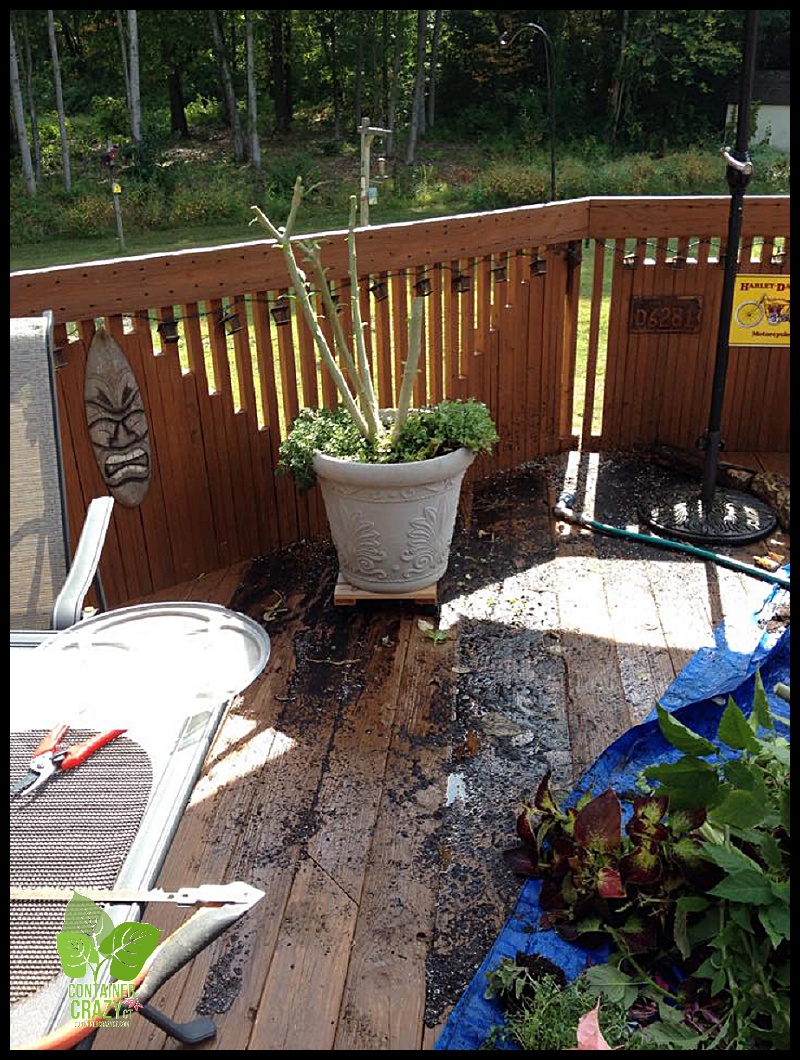
Yesterday, I took apart one pot of Canna plants. I selected the tall red one, figuring it would be easy to show you what I do.

Canna plants may be kept in the pot and stored inside, but today’s post shows you how to store the rhizomes.

Rhizomes

Rhizomes are the storage organs which are swollen stems under the soil that usually grow horizontally, below the soil about 6-8″ from the top of the soil line in the pot.

Mature rhizomes may be cut into sections to produce more plants, but you don’t need to do that step now. Just remove them from the soil and store them in peat moss.

Other Overwintering Options

Option #2: If you have a nice sun room in your home, you have the option of continuing to grow your Canna in the pot. However, I find if you keep your Canna plants in the same container for several years in a row, they start to get crowded and tend to not bloom or flourish as much.

Option #3: A third option is to leave the Canna plants in the pot and move it to an unheated basement where it remains cool all winter, but not below freezing. The plant will go dormant and may be revived the following spring after spring frost. In this case, however, you will need to watch for insects and water it sparingly so the soil does not go completely dry during the winter.

Canna Rhizome Removal

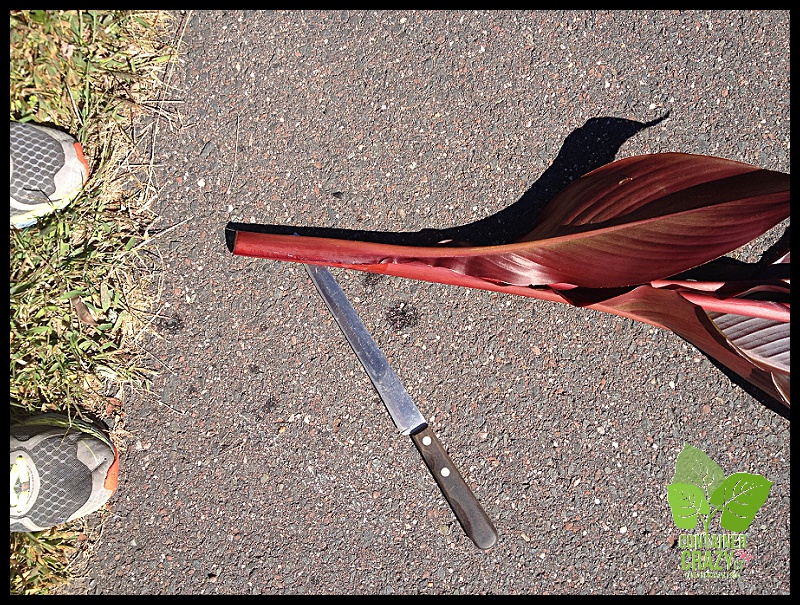
Tools: Clean pruners, loppers, or if you are not a full time gardener with various garden tools, use a long kitchen knife (like one you would use to cut bread).

When: You may wait until the Canna plants get hit by our fall frost later in October, and many references will say wait until it gets hit by frost. However, I’ve stored rhizomes in fall before frost and all works out fine as well.

Canna Australia in a Tall Red Pot

Canna Australia in a Tall Red Pot

Cleaning: Using sharp, clean tools is important to prevent pests and diseases from being transmitted to your plants or storage organs (rhizomes). It is also a good practice to wear gloves and wash your hands as you work, and wash your pots when you are done dismantling everything.

The Steps

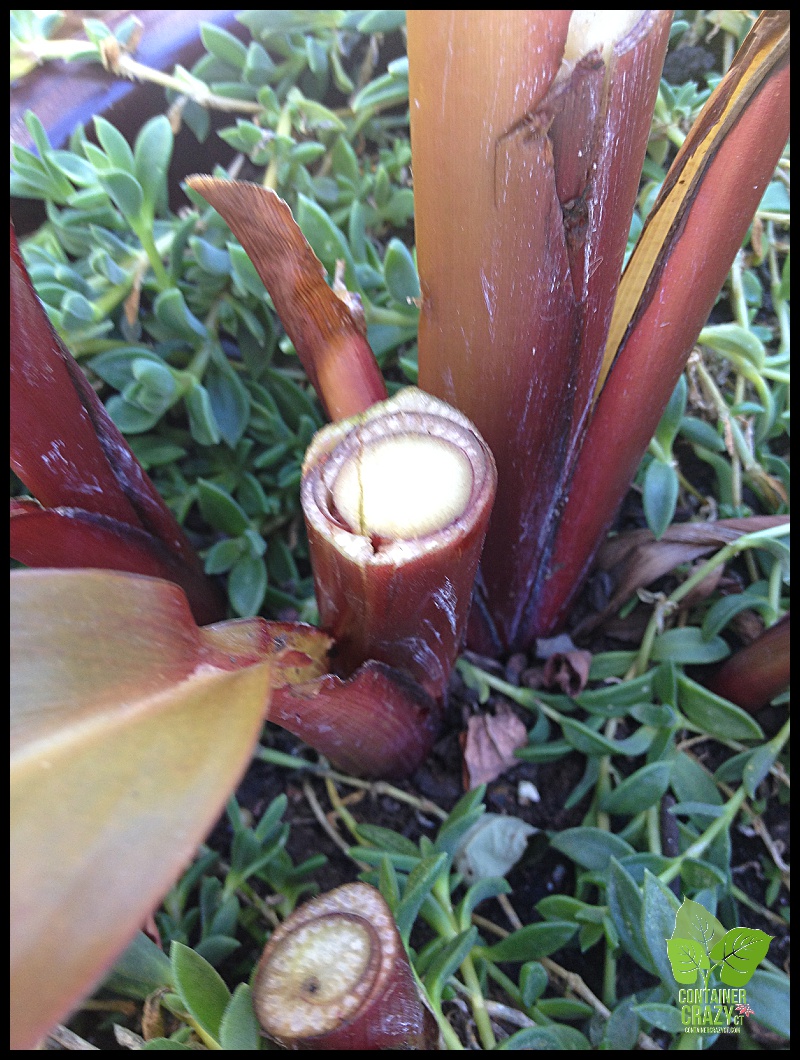
Step One: Cut the stalks at the base, leave a little 5-6″ stub if you want. Most important – make a CLEAN cut. Do not tear, pull, tug or make a jagged like cut – the cleaner cut the better. If the stems are thin, pruners work. If not, I like using loppers for a clean cut. If you use a kitchen knife, remember to make the slice/cut as clean as possible.

Clean Cut at Base

Clean Cut at Base

ContainerGardenTakeDown_0022

ContainerGardenTakeDown_0020

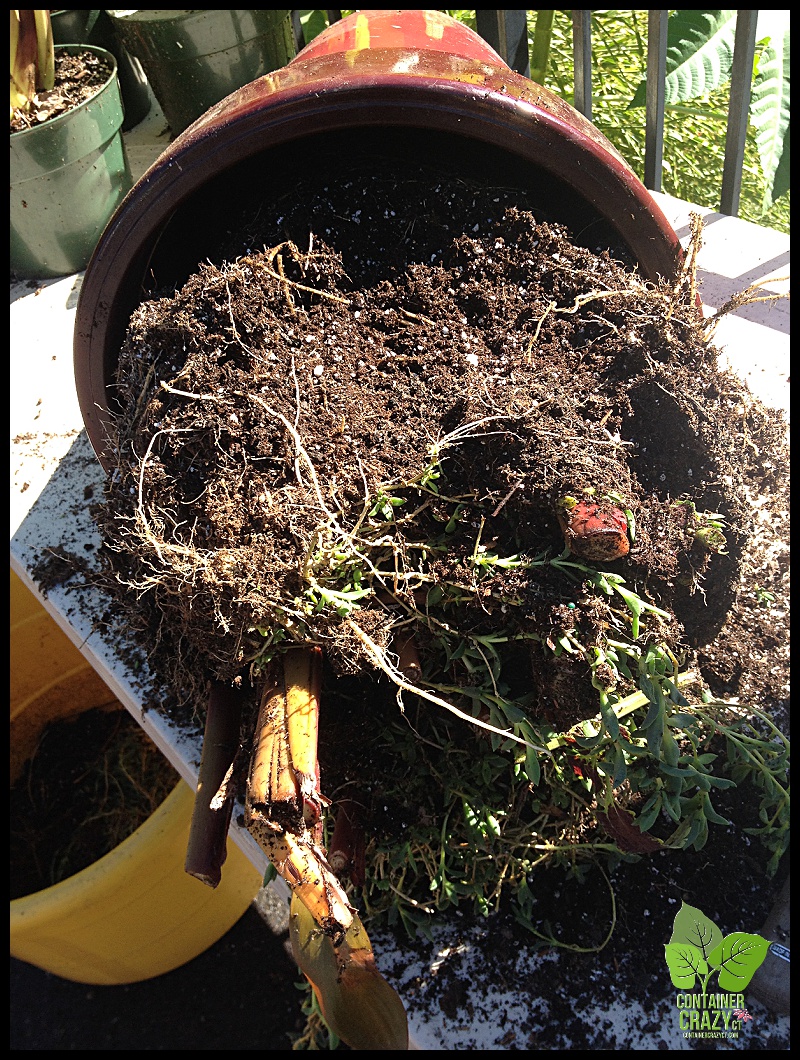
Step Two: Remove other plants in the pot and save as needed or toss. Then remove the root ball. Usually, if the pot does not have a edge on the top rim, it slides out just by turning it over or rolling it on a table (unfortunately, for this red pot, I had to work at removing some soil inside to get it out).

ContainerGardenTakeDown_0024

ContainerGardenTakeDown_0018

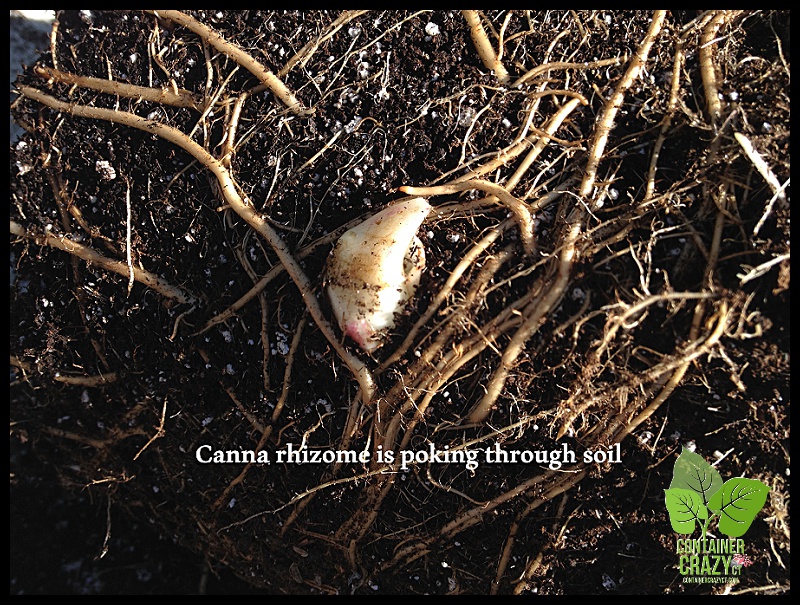
You can see a rhizome poking out of the soil here in this photo above. This can help to locate where they are but you will not always see this in every case.

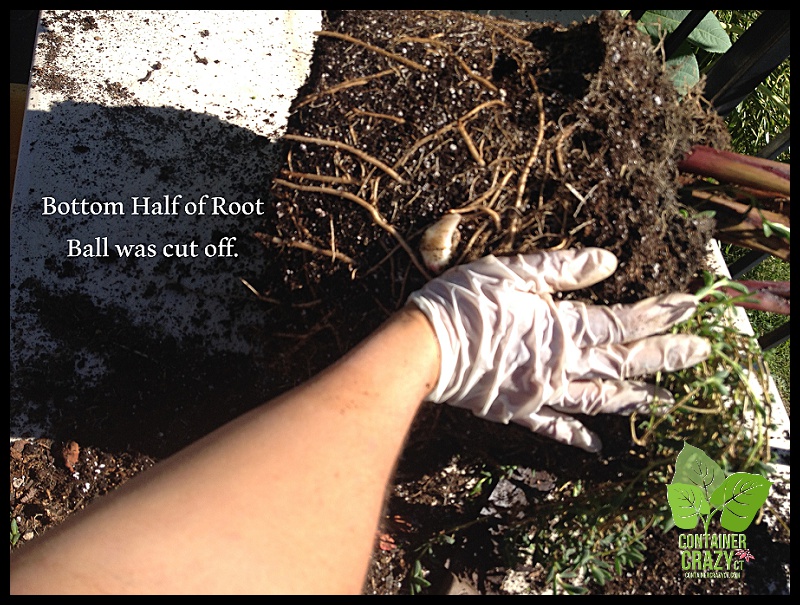
Step Three: Cut off (slice off) the bottom half of the soil mass. Be careful to not cut the rhizomes which should be about 6-8″ from the top of the soil line.

ContainerGardenTakeDown_0016

ContainerGardenTakeDown_0021

Step Four: I placed my hand to show about the distance from the top of the soil to where the rhizomes are in the soil. Start to remove the soil away from the rhizomes using your hands or tools. If you use tools, try to not damage the rhizomes accidentally — but if you do – don’t panic. Rhizomes are often cut into sections for propagation, it won’t kill them if you break one by accident.

ContainerGardenTakeDown_0017

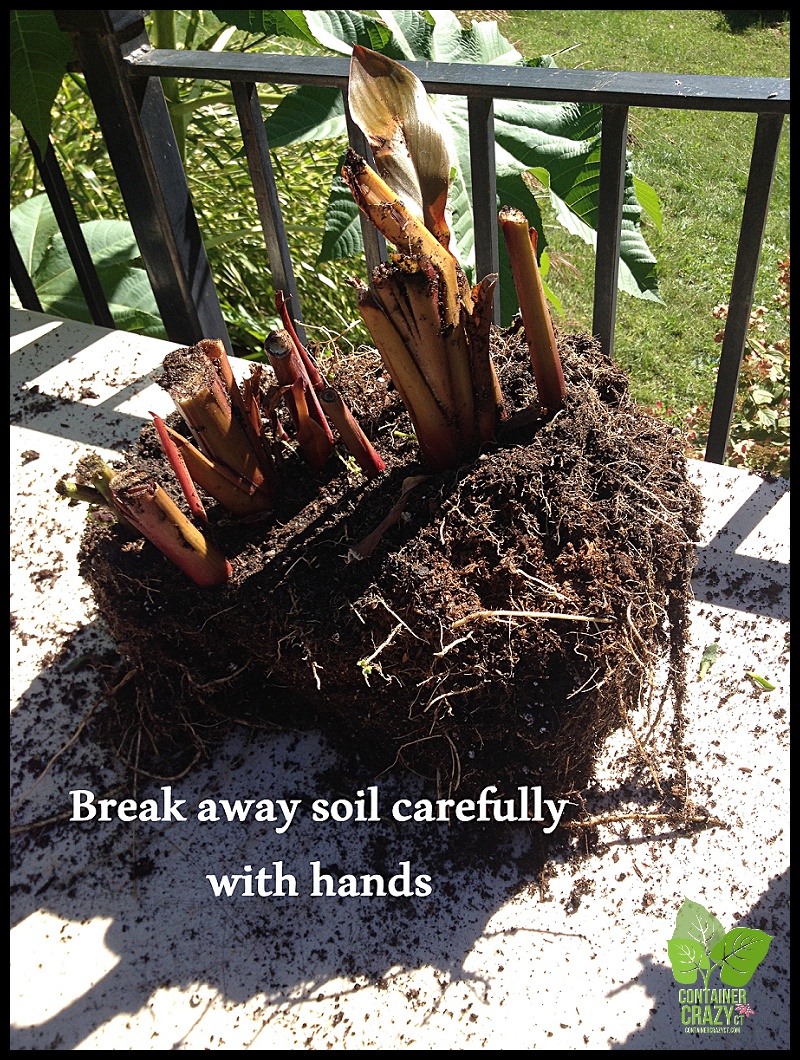
Step Five: Pull the stems a bit apart, they may break away freely, meaning the rhizomes will separate. Take one stem in one hand, and another in the other hand and pull them away from each other, you will see how they break away. Then clean off as much as the soil as you can. You may use a garden hose to wash them off with sprays of water, but I don’t always do this because then the rhizomes get super wet. In this case, I did to show you how they looked.

ContainerGardenTakeDown_0015

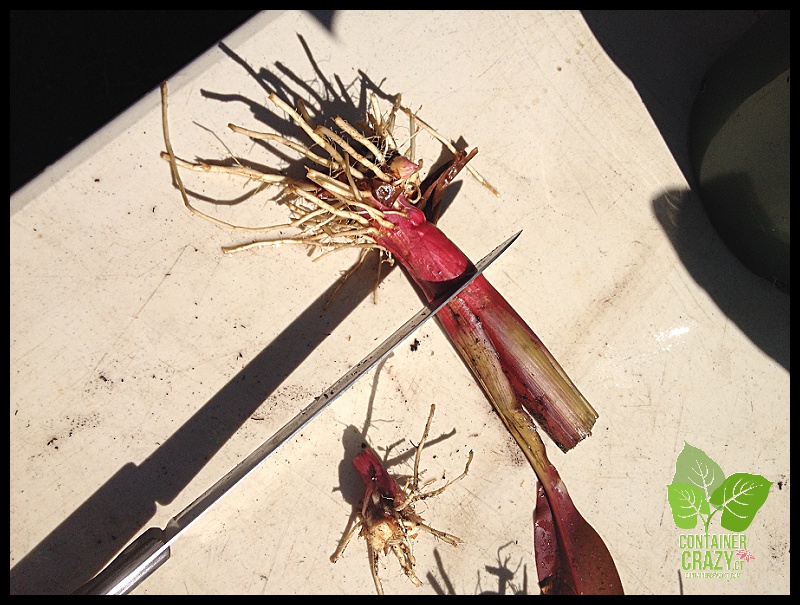
Step Six: Trim off the stem stalks. I do this because any fleshy material stored has the potential to rot in the box of peat moss. I even trim the roots if they are super long with sharp pruners. Then let them air dry a bit (couple hours).

The last step is putting them in a container (box) with peat which I will show in tomorrow’s post.

ContainerGardenTakeDown_0023

In this particular case, the rhizomes were on the small side, but that doesn’t matter. Each piece you save is another new plant for next year.

Crocosmia (perennial)

This summer, I put a Croscosmia perennial in a blue pot. The hummingbirds adored this plant’s blooms. It was amazing to see them zip by every day. So, you have choices with perennials too on what to do with them if you grew them in your container gardens and patio pots.

They may be removed now and put into the ground to have in your garden or if you have a garage, some perennials will come back if you store the whole pot with the un-removed plant over the winter in the garage.

You may also bury pots with perennials in the ground, but I don’t like that idea because the pot will get dirty and probably worn out more – but this is an option. This information was noted on the container garden workshop handouts in May as well (for those attendees reading this information).

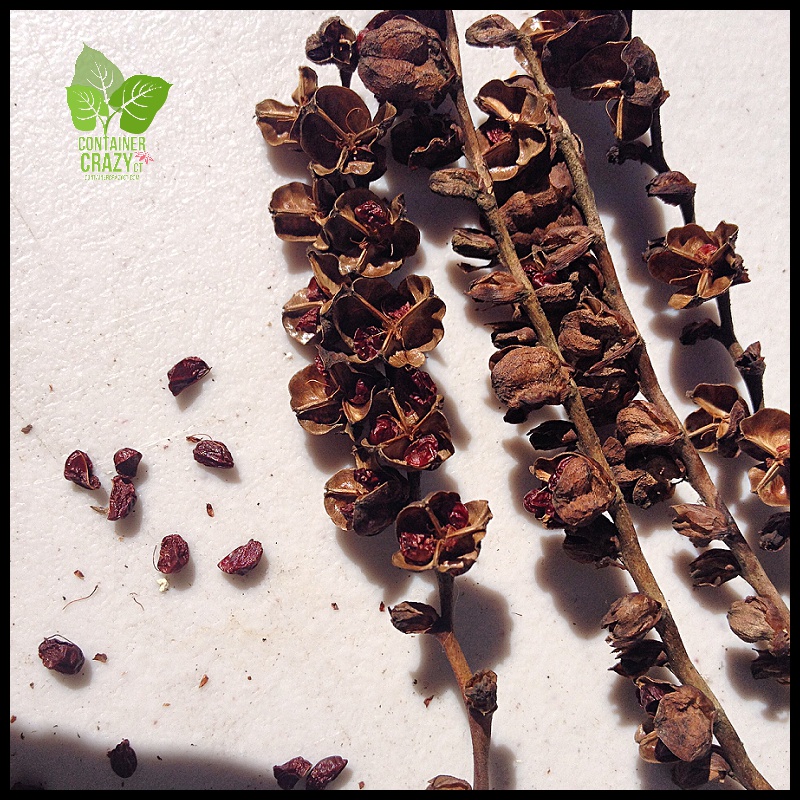
Before I cut back all the foliage from the Crocosmia perennial, which was tattered by the end of the summer, I collected the seeds from this plant for next season. They may be scattered in your garden or stored for next season.

I put seeds in prescription bottles. Its a great way to recycle the bottles and the label is available – with a quick sharpie marker, I write the plant’s name and date, and store the seeds in a cool, dark place until next spring.

ContainerGardenTakeDown_0009

ContainerGardenTakeDown_0012

The seeds are stored in pill bottles as shown above.

ContainerGardenTakeDown_0010

The root ball was removed from the blue pot. I decided to plant it in my big cement planter after doing a bunch of cutting back of the existing perennials in the cement planter, which also has some huge castor beans growing.

ContainerGardenTakeDown_0011

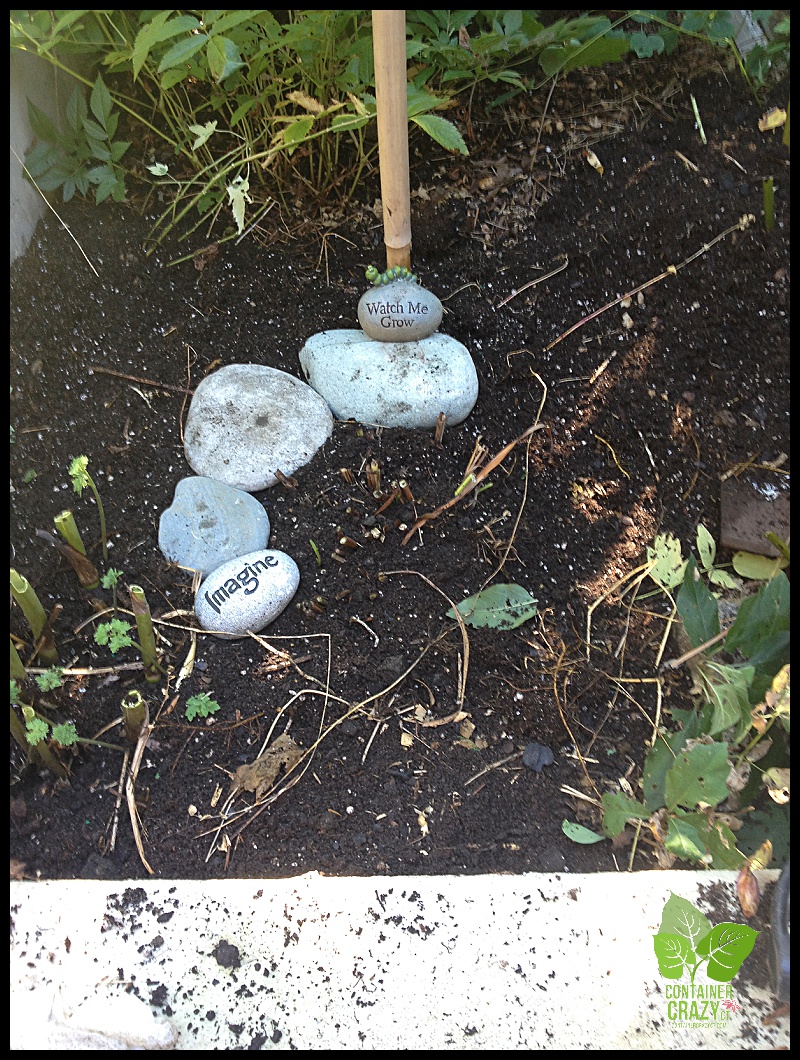
Then I put some stones around the Crocosmia to help me remember I moved it there. Even if I don’t keep it in this spot permanently, it is now saved for next season.

Crocosmia Blooms from a Prior Season

Crocosmia Blooms from a Prior Season

I love my big cement planter because the soil is so healthy and easy to work in, and dig in. Yesterday, I noticed some worm castings in the soil. This is what they look like below. It a sign the little critters in the soil are doing a great job of keeping the soil healthy. Worms increase air and water movement in the soil and help break down organic matter when they eat, leaving these worm castings behind which help the plant’s growth.

Worm Castings in Soil

Worm Castings in Soil

As noted in yesterday’s post, I sometimes put old soil balls/masses from dismantled containers into “big” pots or into gardens as a filler in the base – this is one example. The soil in this big cement planter is from former container gardens, and the worms moved in quickly. The soil is rich now.

ContainerGardenTakeDown_0013

Begonia from Tubers (see yesterday's post!)

Begonia from Tubers (see yesterday’s post!)

By the way, yesterday I wrote about storing tubers from tuberous Begonias. Here’s a photo of the plant from this summer (see above) which I found this morning in my files.

Note: The details about appropriate storing temperature, methods, and specifics by type of plant for overwintering various plants will be covered in the demo session on October 17th. If I were to write all the details here, this would be a very long post – and I’m wordy enough! But this shows you the basics. It is fairly easy to overwinter plants but there are other tips to be learned.

Keep tuned in – more tomorrow…

Cathy Testa
860-977-9473
containercathy@gmail.com

ContainerGardenTakeDown_0025

What Should I Do with My Container Gardens and Patio Pots right now?

1 Comment

You – like me – probably thought you better move in some of your deck pots as a result of the gusty winds and cooler temperatures hitting us right now.

I decided to spontaneously text my brother and nephew yesterday –> “Want to make a quick $20 bucks? I need some help moving my big pots from the deck.”

He immediately responded with, “How about right now?”

Well, long story short – It was a blessing they happened to be free at that very moment for about 30-40 minutes. They came right over. I quickly got my garden gloves on and moved some debris from an ornamental grass I had left lying on the ground in the way.

As soon as they arrived, Ross and Joe started picking up some of the medium sized pots in their arms and walked them to an indoor location for me.

I was washed over with relief as I watched them walk down my deck stairs with the pots hovering over the shoulders and my big plants bobbin’ over their heads.

When Joe picked up the Agave in my urn, I kept repeating – “BE CAREFUL, it is a weapon and the spines on the tips could take your eyes out.”

When showing Ross one of my prized plants – I pointed out a stem while indicating it is easily damaged. “I really don’t want it to break,” I said. He was super careful.

“Don’t drop the pots hard when you put them down – This can cause the pot to crack especially for pots that are thinner resin pots.” Another statement I was saying quickly because these two young guys were moving fast.

Ross asked several questions along the way. “Wow, what is this purple plant?” he asked.

“That is Persian Shield, and it is called, Strobilanthes,” I replied.

Strobilanthes (Persian Shield) is a purple plant - the color is fading due to cooler temps.

Strobilanthes (Persian Shield) is a purple plant – the color is fading due to cooler temps.

Ross then started taking photos with his phone before he picked up the next pot.

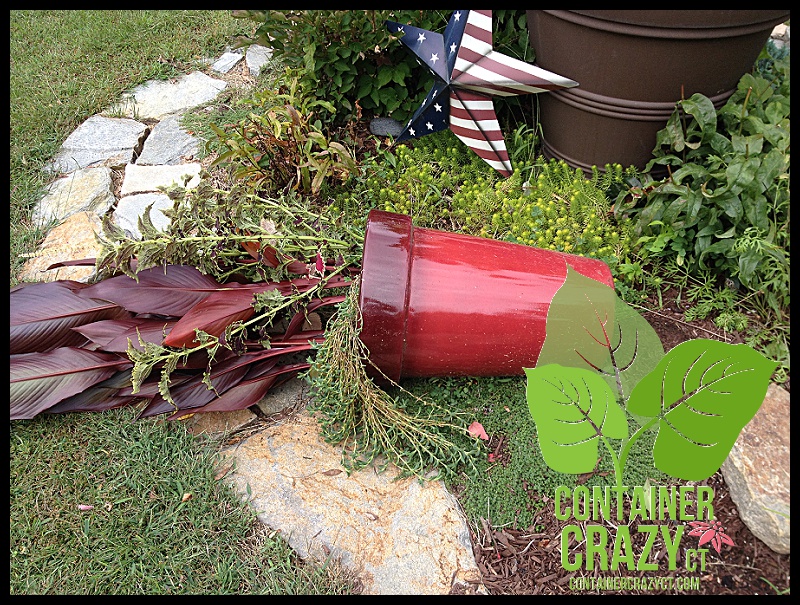
Tall pot toppled over already from gusty winds.

Tall pot toppled over already from gusty winds.

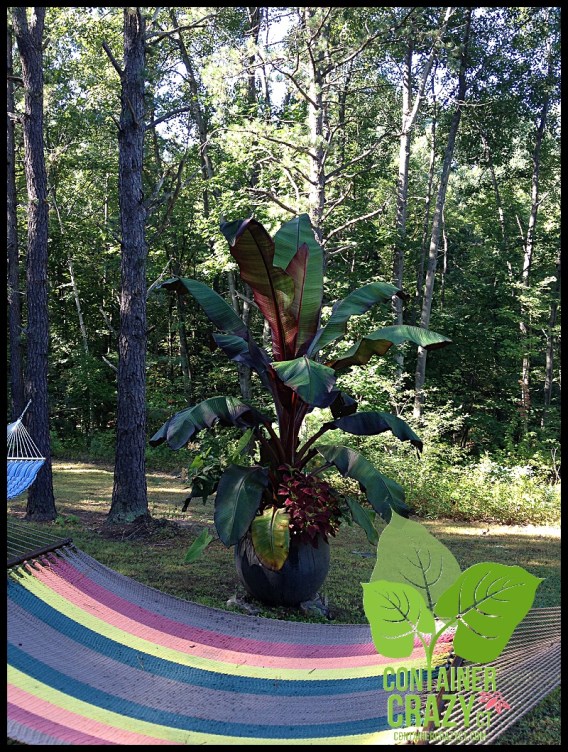
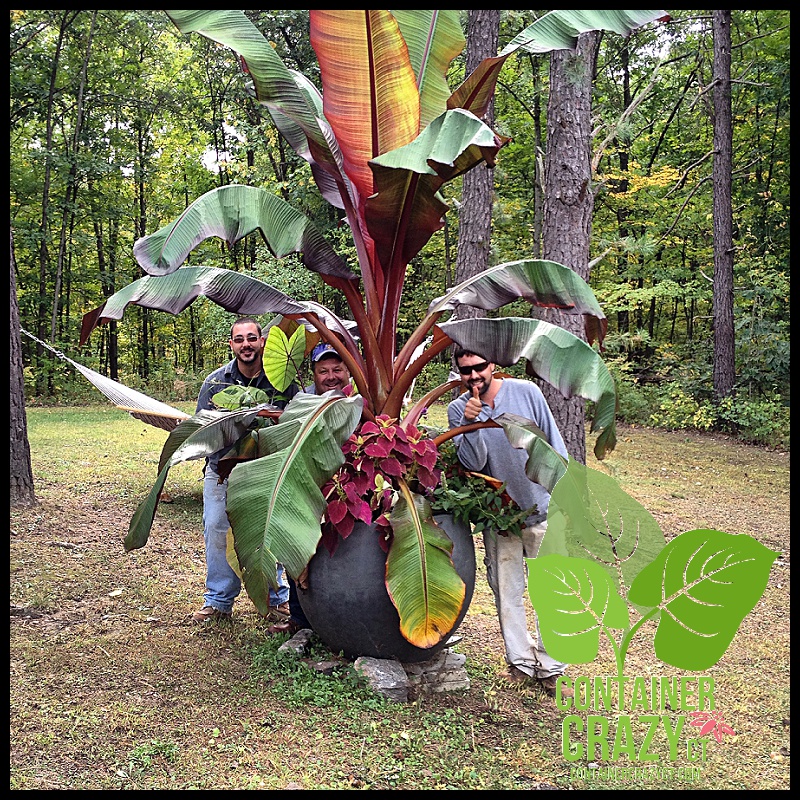
After all was moved into an enclosed growing space or onto my driveway for ease of taking them apart later, the guys wanted to pose by my big red banana plant in the backyard. This plant will be part of my overwintering demo in two weeks (and may be published in a catalog. More on that later.).

What To Do with Your Pots Right Now

Some of your tropical plants in container gardens and patio pots (banana plants, Canna, elephant ears) are still safe out there however. The temperatures are in the 40’s to 50’s degree range, and with the 30-35 mile hour winds, it will feel like we are hovering in the mid to lower 50’s. It will feel cold but we are not getting frost.

The gusty winds will tear leaves of big banana plants probably and the cooler temps will make some of the leaves start to turn yellow. Plus, all the cold rain will cause dampness around your plants. This will make your pots heavier as the soil gets soaked.

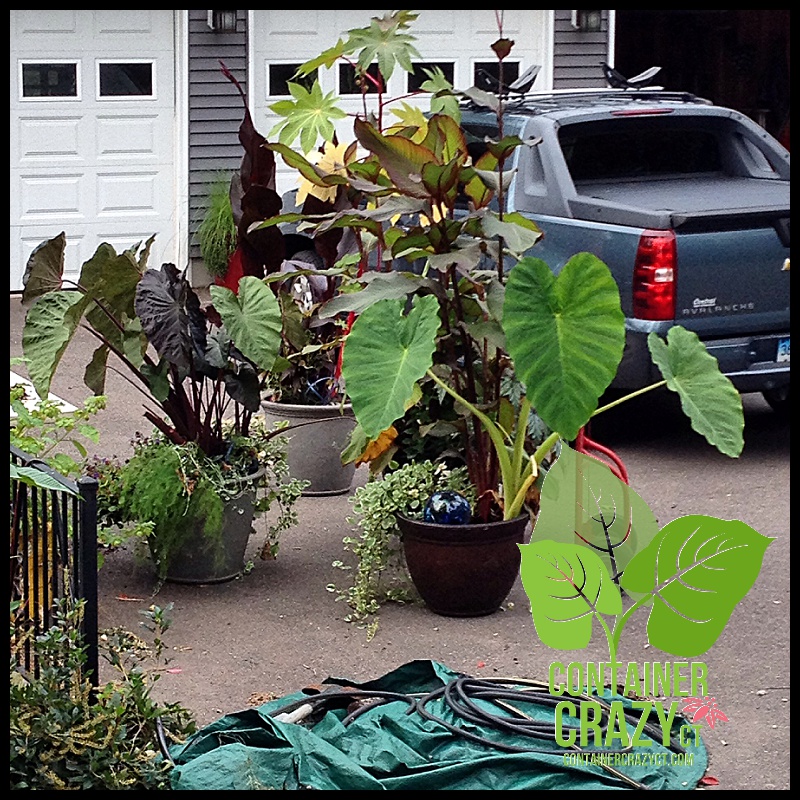
Some of your tall pots may fall over from the winds. My tall red pots with towering Canna plants already did – so if you are concerned with breakage of pots or plants, move those to a sheltered location.

Even though, I am offering a session on October 17th to demonstrate how I store the root bases of red banana plants, and how to store Canna rhizomes and elephant ear corms (bulbs), I’m shooting off some tips right now quickly.

Ross and Joe with the Stemmed Plant in Center

Ross and Joe with the Stemmed Plant in Center

Tip # 1:

Get help – if possible. The best part of my 3 amigo’s spontaneously helping me yesterday is they refused payment when they were done. I almost cried. I suggested some cocktail treats – and they responded with, “Yah, let’s go to Broad Brook Brewery soon.” If you can’t get help, use a handtruck to move heavy pots – and take your time. Try not to rush, bend those knees, etc. If a friend is helping you, please remind them to be careful to not rush – this results in hurting your back or straining something when moving heavy pots.

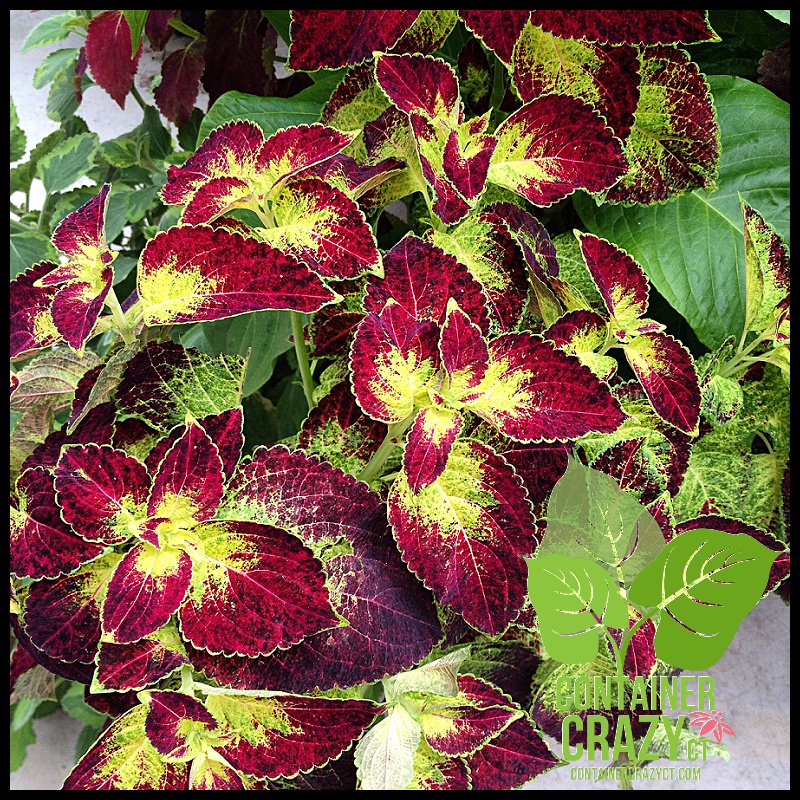
Coleus 'Dipt in Wine' is stunning still, taking cuttings of the tips with stem and leaves will save them.

Coleus ‘Dipt in Wine’ is stunning still, taking cuttings of the tips with stem and leaves will save them if you don’t have a growing location inside.

Tip #2:

Coleus – If you have some in pots, take some tip cuttings and put in water in a cup or vase. This is a way to save a bit of the plant. It will root eventually and you may pot it up in a small house plant pot to keep over the winter.

Agave in Urn - Watch those spines by your head, Joe!!

Agave in Urn – Watch those spines by your head, Joe!!

Tip #3:

For succulents – as I have said in the past, move them inside the house. They will get wet now for sure – and it can rot the tender foliage because the temperatures have dropped down. Get them inside the warmth by a window and let the soil dry out.

By garage, will be taken apart this month at my session.

By garage, will be taken apart this month at my session.

Tip #4:

Move your big pots into a garage if you don’t have time to tend to them right now. They won’t get totally soaked by the rain if you plan to dissemble them later this month.

Alocasia was moved inside, see the leaves turning color - they want to stay warm.

Alocasia was moved inside, see the leaves turning color – they want to stay warm.

Tip #5:

Leave the pots right where they are outside. It is colder out but not a frost situation yet. The plants will change color and look a bit off, but if you are planning to chop the foliage down to remove the underground parts from the soil for storing over the winter, then it is okay if the foliage gets a bit of cold damage. However, if you want to take it in as a house plant, I say do it now.

Fern and Colocasia (Elephant Ear) moved inside.

Fern and Colocasia (Elephant Ear) moved inside.

Reminder: I’m primarily speaking about Canna, Banana plants, and Elephant Ears for this post for those in container gardens in my CT Zone (Broad Brook/East Windsor). The cold temps will signal the plants that dormancy time is coming. If you want to keep any of these as inside house plants – moving them in now is a good time to do so because the foliage will get damaged a bit from the cold and winds. We may see warmer days again, but the plants won’t get as stressed if moved inside. If you want to store the root bases, storage organs, corms, bulbs, or rhizomes, it is okay if the plants get hit by frost later this month. (Angel Trumpet (Brugmansia) plants should not be hit by frost.)

The big red banana plant (Ensete) to be part of demo day.

The big red banana plant (Ensete) to be part of demo day.

That’s all for now. If I think of anything else later, I will add it on. If you have questions about a specific plant, just fill out this contact form below.

Go back

Your message has been sent

Warning
Warning
Warning
Warning

Warning.

Thank you,

Cathy Testa
860-977-9473
containercathy@gmail.com

Earlier photo of the big red banana plant (Ensete genus)

Earlier photo of the big red banana plant (Ensete)


There’s some cool historic stuff at the Farmers Market in East Windsor, CT

Leave a comment

The East Windsor Farmers’ Market is fairly new but its being held in a place which is not. Located at the Connecticut Trolley Museum, the market tents circle around the front lawn area of the museum grounds. The CT Trolley Museum is a showcase of historical exhibits showing how electric trolleys evolved and visitors enjoy a display of various trolleys in their main building.

Father’s Day is Opening Day

This weekend, Fathers get a free ride on the trolleys in honor of Father’s Day on June 21st. The old trolleys travel down a wooded street starting from the main parking lot area of the grounds for a few miles distance, and many of the trolleys are open-aired which makes for a fun breezy ride while you hear about the trolley museum’s history.

BackTrax Band at the Market

BackTrax Band at the Market

Opening Day Features BackTrax Band

On the opening market day which is this Sunday, June 21st, the BackTrax Band will be playing. Most of the band members are from the East Windsor area and they started playing together in late 1990’s.  They practice in a local family owned barn on a farm in town and move into the bars or venues like the markets to play for anyone interested in enjoying classic rock, country, and oldies.  So while you shop the market and browse the trolley museums features, you will hear some great music.

Great Seats to Eat, Listen, Relax

Great Seats to Eat, Listen, Relax

There are plenty of picnic tables at the market as well, so why not pack a lunch – or better yet – get lunch right there. This year’s market will feature many new foods – homemade pies, veggie samplings, and even some great hot dogs or Thai food. It is a nice place to enjoy some quality time with family and support your local enthusiasts.

Cathy T last year at the market featured succulent plants

Cathy T last year at the market featured succulent plants

Free Container Gardening Talk on June 28th

Another bonus, on the second weekend of the market, which is June 28th, I will be offering a free container gardening talk at noon. Look for me near the picnic tables.

My talk will cover a quick explanation of perennials and tropical plants, along with edibles, which all work in container gardens and why you should use them – These plants offer many benefits. Plus, we will go over the steps for success with container gardening and other tidbits you may not realize which will help or harm your patio pot and container gardens’ overall appearance and health, along with some design techniques and the right soil mix to use to control the growth of your creations.

A great place to walk your dog is at the market!

A great place to walk your dog is at the market!

Lately, I’ve been getting various bug questions about container gardens – there are reasons why some insects maybe showing up in your patio pots from time to time – and ways you can manage them or prevent them from happening again. I will share insight on this as well.

Usually by this time of year, many people have finished potting up their deck pots but this season’s weather has resulted in a somewhat slow start up – Our nights have been cooler and days not as hot for the start of summer – some container plants are slow to get going, thus, this visit is a great chance to get any last minute plants you may want to assemble in time for the July 4th celebrations. I will have various plants available or you may attend just to hear my talk, which I hope you do.

Address of the Trolley Museum is 58 North Road (Rt. 140).

Address of the Trolley Museum is 58 North Road (Rt. 140).

Whatever the reason for your visit to the market – to hear music, gets some fresh locally grown food, take a trolley ride, or hear some tips on container gardening – we hope you, especially those of you local to our town, will come support the market by attending and purchasing locally grown produce from the East Windsor market vendors.

Note: The market hours are 11 am to 2 pm.

Looking forward to see you there.

Cathy Testa
http://www.ContainerCrazyCT.com
860-977-9473
containercathy@gmail.com


The “Don’t Do This” List for when you Plant your Container Gardens and Patio Pots

8 Comments

During my container garden workshops, I’ve seen some things attendees will do as they start to assemble their container gardens and pots. It is not intentional on their part. They are so excited to get started selecting plants and putting them into their container gardens after my talk that they will move quickly and do some little things I try to catch them on before they continue. It reminds me of things they should not be doing because it can harm the plants or make the container look unbalanced.

So, I decided to create this list – and will share it at my future workshops too. Here are the things you should not do as you put together your container gardens and patio pots.

#1) Do not fill the pot to the rim with soil mix.

Filling the pot with soil mix up to the rim of the container will cause the soil to spill out when watering, or the water might roll off the top somewhat. There should be about a 2-3” space from the top of rim to the top of soil line. If the water is not flowing well into the soil, it will not permeate down to reach the plants’ roots, plus it looks a little odd to have the plants sitting at the very top of the pot. Aesthetically, they are better placed a few inches down. Additionally, the base of the plants are somewhat protected if they are not exposed at the very top – reducing things like toppling over due to wind, etc.

#2) Do not press down hard on the soil after you have inserted the plants into the container.

Out of habit or belief the plants should be pressed firmly into the soil, I’ve seen attendees do this at my workshops. They will push down on the soil, sometimes very hard, after they inserted the plant into the pot. This is not a good idea because you are compressing the soil which may reduce the air pockets required for oxygen in the soil to be used by the plant’s roots. Unless the plant is very top heavy or was root bound (thus a little weighty on the bottom), avoid pressing down hard on the top of the soil after planting. If you need to press, do so lightly and gently. You don’t want to smash the roots or crush the base of the plant by pushing down hard onto the soil.

Dont Do Photos for Blog Post3

#3) Do not grab the plant by the leaves and tug it from the starter pot.

When you take the plant out of its growing pot to put it into your container garden, use one hand to place over the soil at the stem base, and the other hand to turn it over carefully so it slides out of the growing pot. Try to not pull or tug at the plant by its leaves or stems. If the plant has been growing in the pot for a while, it may not slide out easily. Squeeze the growing pot a little to loosen it up or roll it gently on a table. Conversely, if the plant has been recently potted up in its growing pot, the soil may fall away from the root ball as you take it out because the roots have not grown into the new soil yet. Be careful to not damage the plant or its root system as you remove it to put in your container garden. If the plant is extremely root bound, and it is impossible to remove it from the starter pot, cut the pot at the bottom about 1” from the base to remove the closed end of the pot, and then push the plant’s root ball and soil through to remove it. A Hori-Hori garden knife or a razor knife works well for the cut.

Dont Do Photos for Blog Post 2

#4) Do not put a plant with circling roots directly into the container garden.

When roots are tightly circling around the root ball, this is referred to as girdling. The plant has been in the growing pot for a while, and the roots have nowhere to go except to encircle the root ball as it hits the sides of the inner pot. Do not put plants with tightly bound girdled roots directly into your container garden without first detangling the roots by hand if possible. If the roots are so tightly bound (really tight like they are hard to pull away or tease apart), you may use a clean sharp knife or pruners to cut them apart by cutting here and there. The roots need to be released, so to speak, to move freely and easily into the new fresh soil of your container garden.

Dont Do Photos for Blog Post

#5) Do not put the plants into bone dry potting mix.

When you container garden, you should lightly moisten the soil mix before you put your plants into your container garden or patio pot. Otherwise, the moisture in the starter pot will be drawn into the dry soil in the container garden thus taking it away from the plant’s roots. If the soil mix is dry, use your watering wand to moisten it – the key is to moisten, though – not to waterlog the soil, or turn it into mush. Just wet it a bit and then take your hands and mix it around lightly so the moisture is distributed. This will help the plants to adjust easily from their growing pot to their new beautiful soil environment.

Dont Do Photos for Blog Post4

#6) Do not put dry plants into the container garden without giving it a drink first.

It is a good habit to water your plants in their growing pots before putting them into your container garden or patio pots – preferably the night before, or the morning of, or at least a ½ to 1 hour before you assemble your container garden if its soil is “bone dry” in the growing pot. Another tip – be sure to water everything in after you finished assembling your container garden – but the key is, again – don’t over water. You want everything to settle into its new environment in a well-balanced slightly moist but not waterlogged state. Do not walk away before doing this final step. And direct the water at the soil line, not on the foliage if possible, with your watering wand or watering can.

#7) Do not put your plants in full harsh sun right away.

If your plants were grown in a greenhouse and not transitioned to the outdoors yet, you need to “harden-off” your plants. This term means to move the plants, or better yet, ‘transition’ the plants into the great outdoor sunlight carefully – otherwise, they may burn. Be sure to harden them off first if grown in a greenhouse by placing them in shade to part shade for a day or two. In many cases, hardening off is not required if the plants you purchased were already outside at the nursery. You will know if your plants were not hardened off first when you see the leaves turn white if you put them directly into sun – as is the case with houseplants or plants you overwintered inside, they must be hardened off first as well when you move them outside.

Dont Do Photos for Blog Post5

And finally, another tip – when I plant my container gardens, I tend to make pockets in the soil mix to insert each plant. In other words, I don’t fill the pot half way with soil (like I’ve seen done), place or position all the plants, and then backfill around the roots. I personally believe the pocket method makes the plants more comfortable and allows the roots to make easy contact with the new soil in the container. But that’s being a little picky perhaps – all I know is this method has worked for me for years.

To see photos of the above “Don’t Do’s”, please visit my Instagram feed or Pinterest boards where I show examples, or better yet, take one of my workshops in the future to learn and see hands-on more tips by ContainerCrazyCT.

Thank you,

Cathy Testa
860-977-9473 (cell)
containercathy@gmail.com

Herbs are Perfect for Container Gardens and Patio Pots

Leave a comment

Herbs are perfect fits for container gardens and patio pots. They require 3 big things to grow well: lots of sun, great air circulation, and well-drained soil that needs to dry somewhat between watering. Growing herbs in containers helps you meet all their growing needs. In addition, herbs offer many health benefits. These will be talked about on Saturday, May 30th, during the special “Meet Your Herbs” day at the Ellington Farmers Market.

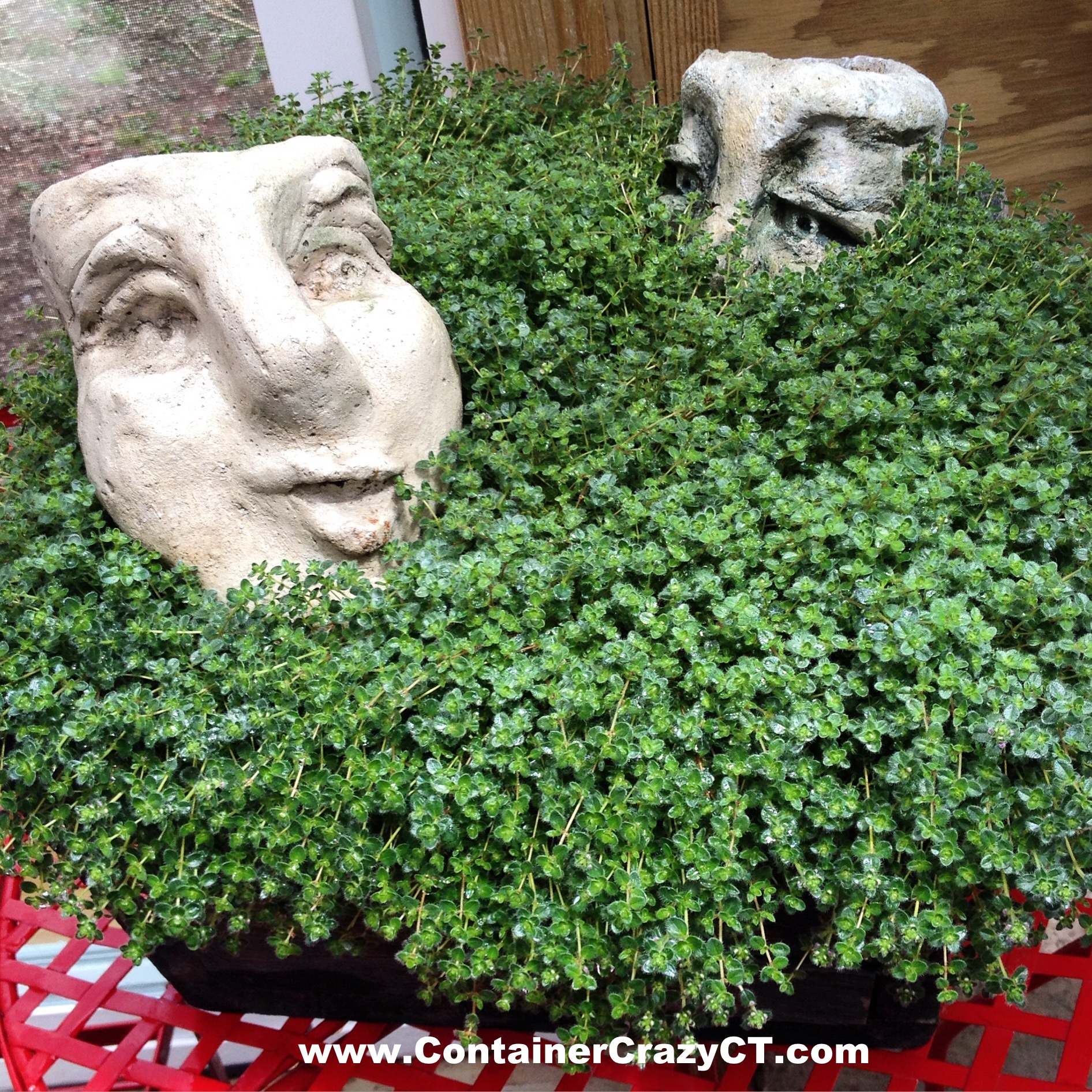
Thyme grows really well in a container

Thyme grows really well in a container

Perennial herbs will return in container gardens and patio pots. After the season is over and the plants go dormant, all you need to do is store the container or pot in an sheltered unheated outdoor location. Some perennial herbs are tougher than others and their pots may remain outdoors all winter – they will come back again in spring.  Cathy Testa will be talking about them during her free talk at this weekend’s market (9:30-10:30 at the square gazebo) on mixing herbs in container plantings.

Wooden Pot is Well Suited for Thymus

Wooden Pot is Well Suited for Thymus

Thyme is a great example of a perennial herb which thrives in container gardens. And there are so many varieties to choose from with various flower colors from white, pink, lavender, etc. Thymus praecox ‘Albus’ has emerald green mats with white flowers in June. Thymus praecox ‘Coccineus’ has a dense look to its growth and is deer resistant as with many other thymes. Thymus praecox ‘Ruby Glow’ is ruby-colored and blooms in spring to early summer – it is very vivid!

Scented Thymes

There are thymes with wonderful scents, such as Spicy Orange Thyme (Thymus x ‘Orange Spice’) with the scent of orange and a strong orange flavor. These are used often in teas and for cooking. ‘Archer’s Gold’ Lemon Thyme (Thymus citriodorus ‘Archer’s Gold’) is low growing and has deep golden yellow foliage in the spring and fall with lemon scents. Anytime I run my fingers across these plants, it evokes a sense of well, smelly goodness!

Creeping Thymes

Thymes also creep, sprawl and somewhat hang as they grow fuller in container gardens. In fact, I came up with the term “sprawler” to add to the well-known thriller, filler, spiller for container garden design techniques and discuss what a sprawler is at my container garden workshops. Creeping lemon thyme is variegated mats of lavender flowers and a great aromatic smell – imagine using it as a groundcover or lawn instead of grass! Awe, mowing is moved to a new scented high in this case.

Woolly Thymes

Many thymes offer a textural softness to your container gardens – they are covered with fine hairs with fuzzy foliage that is soft such as Thymus praecox ‘Hall’s Woolly’. The one in the photo on this blog post is fuzzy and soft too. It is Thymus ‘Longwood’ from Longwood Gardens in PA – it is an improved cultivar of woolly thyme. The pale-pink flowers on it are beautiful and attract butterflies. This is its second year in the wooden pot.

How They’ve Been Used – Not Just for Cooking!

Thyme is a member of the mint family (Lamiaceae) and leaves have been used for so many purposes in cooking and for even “embalming the dead” – yup, just read that in the book referenced below, that thyme was used by ancient Egyptians.

And it is easy to grow – especially in Container Gardens and Patio Pots. Depending on variety, there are many thymes which will survive our planting zones because they are perennial and hardy. The time to plant it in the ground is spring or fall, but in containers – pretty much anytime is time for thyme. And, you may harvest it all summer long through the fall. It can be used fresh or dry – or just for the pure enjoyment of its visual attributes.

Thyme also has been used for antiseptic properties – for coughs and the ability for it to kill germs – by using “thymol” found in thyme compounds – another great tip spotted in the book referenced below.

Thyme is just one example of herbs in container gardens – but there’s many more which Cathy T will be sharing on Saturday during the market at 9:30 am. We hope we will see you there.

Container Crazy CT

Reference: “Simple Home Remedies You Can Grow – Power Plants” by Frankie Flowers and Bryce Wylde.

Round Two – Container Garden Workshop in Broad Brook on May 23rd

Leave a comment

During this busy month of gardening preparations, this is a short quick post to first say THANK YOU to the wonderful attendees of Workshop No. 1 on May 16th.

It did not rain, we had tons of fun, it moved so fast, and everyone’s container garden creations with tropical plants, perennials, and annuals are beautiful.

And the second reason for this post is to remind anyone interested in Workshop No.2 on May 23rd.

Hands-On and Fun

Hands-On and Fun

To Register, fill out the Contact Form below
or text at 860-977-9473

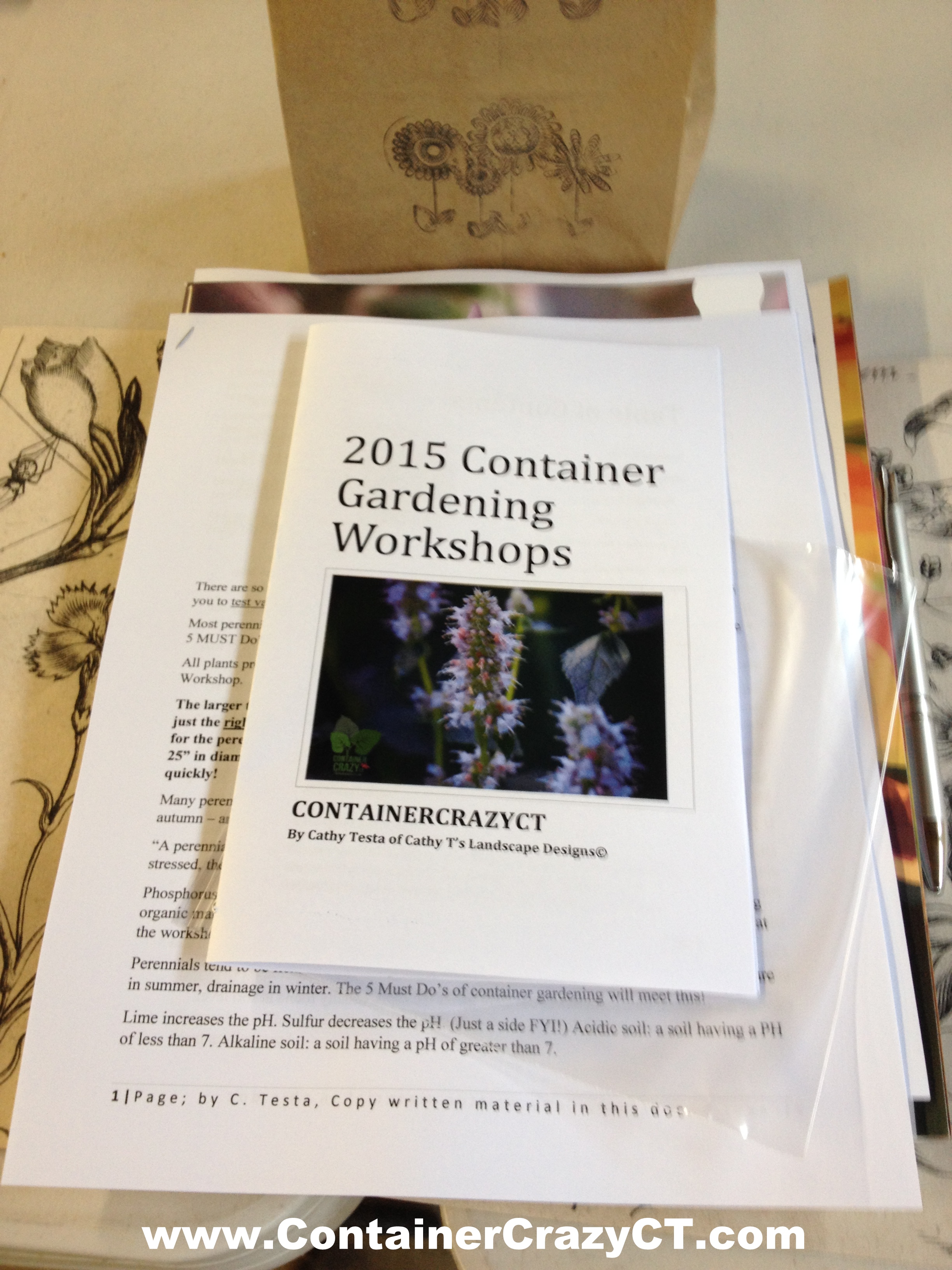
Each Attendees Receives Instructional Booklets and Plant Catalogues

Each Attendees Receives Instructional Booklets and Plant Catalogs – Plus a GIFT bag

It’s DIY, Educational, Plant Filled, and about Potting Passion!

Cathy T shows how to work with color echos in your pots.

Cathy T shows how to work with color echos in your pots.

We Make Big Pots – for Big Statements!

Beautiful Creation by Attendee Donna at last week's class - Love the dark tones and textures!

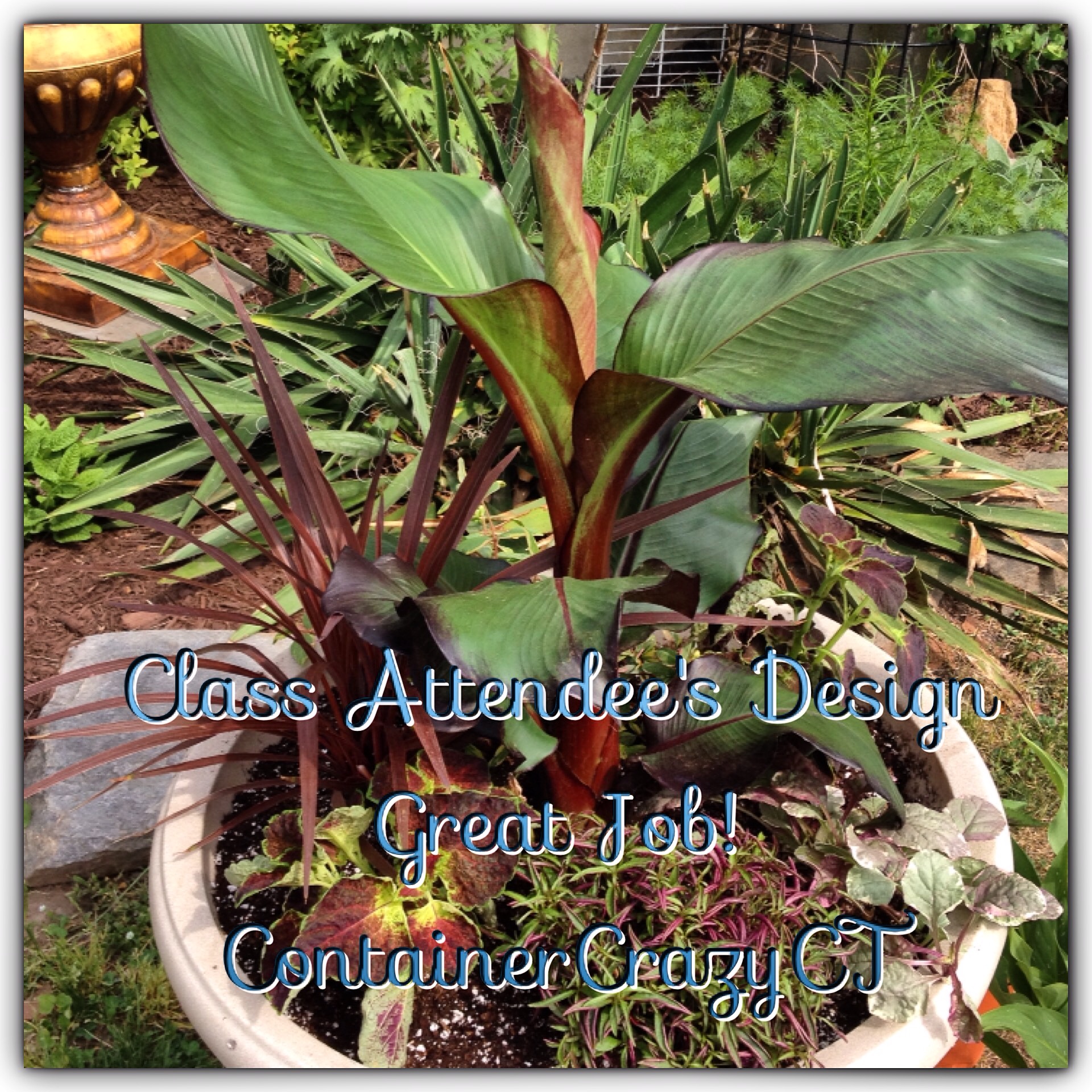
Beautiful Creation by Attendee, Donna, at last week’s class – Love the dark tones and textures!

Cathy T talks about why Big Pots are important for Container Gardening

Cathy T talks about why Big Pots are important for Container Gardening

Attendees Get into the Zone - The Pot Planting Zone

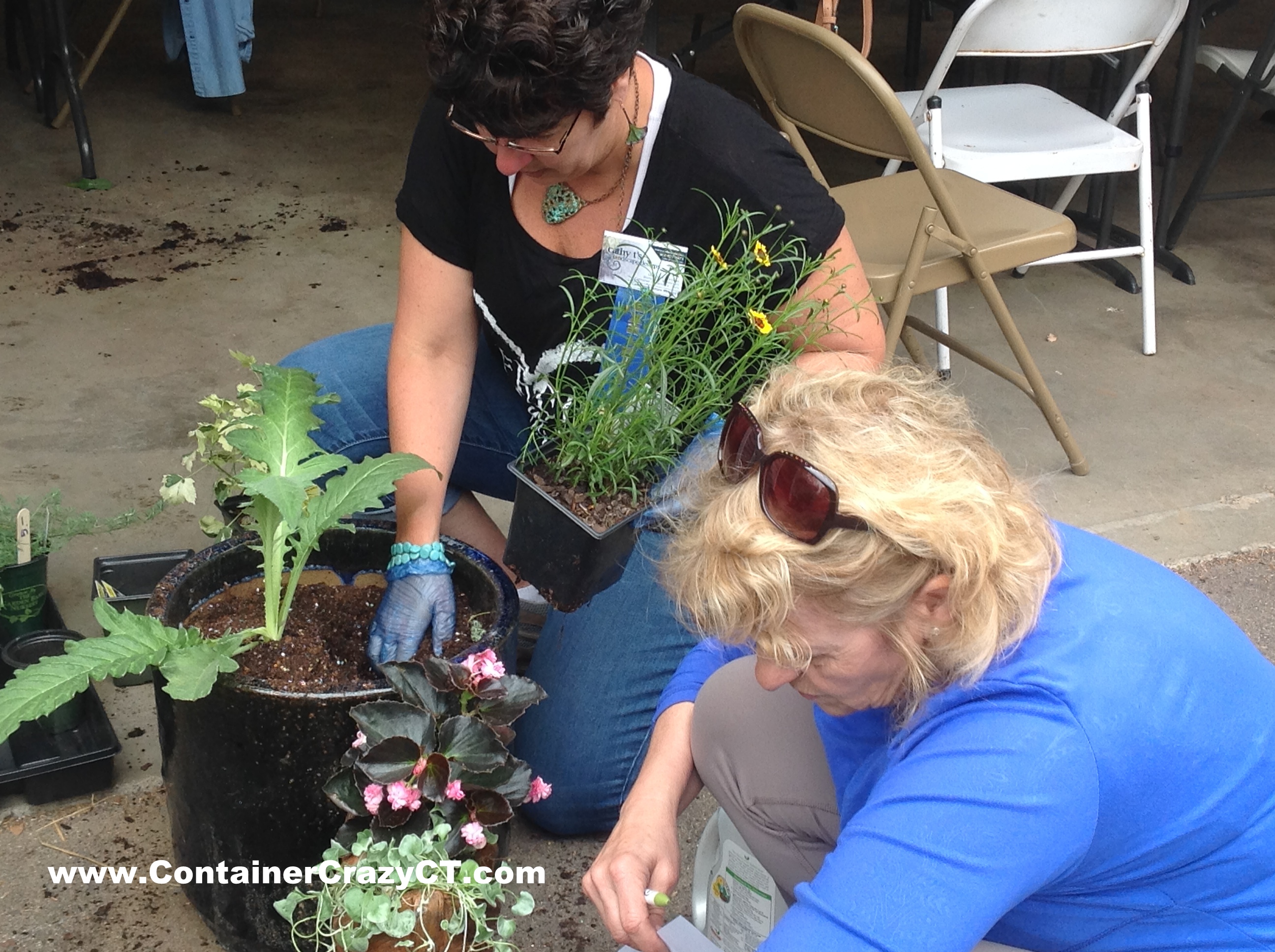
Attendees Get into the Zone – The Pot Planting Zone

Talk about FOCUS! :)

Talk about FOCUS! 🙂

Awaiting Delivery After Class - So Pretty

Awaiting Delivery After Class – So Pretty

More photos will be posted in the near future – Stay Tuned.  Enjoy your Containers and Patio Pots!

Cathy Testa

Container Crazy CT

Go back

Your message has been sent

Warning
Warning
Warning
Warning

Warning.

For More Information:

CLASS DESCRIPTION

Reasons to Use Perennials in Pots

Leave a comment

One more day until Container Crazy CT’s workshop on container gardening with powerful perennials and tropical plants. The lucky ladies signed-up are in for a treat! Want to join us? There are just a few seats remaining for tomorrow’s hands-on workshop. You get instruction, tips, and insider info as you pot up your beautiful container gardens and patio pots.

You may wonder why should you use perennials in pots in the first place? Well, here’s just a few of the bene’s:

MORE LIKE A TRUE GARDEN

Perennial plants give your container gardens and patio pots a true garden feel when combined with other blooming annuals and textural plants. How many times have your seen a garden stuffed with only annuals? Not very often I am sure – and it would be too much color in my opinion, and a huge waste because annuals won’t winter over or return. Perennials give your container gardens and patio pots the feel of a true garden in a pot.

A mix of perennials and annuals with a thriller topical - Looks like a garden in a pot!

A mix of perennials and annuals with a thriller topical – Looks like a garden in a pot!


ARE LESS DEMANDING AND FUSSY

Perennials are less demanding because they are a little bit tougher. They don’t need to be deadheaded, cleaned up, or pampered on a routine basis or throughout the growing season over and over again. You basically clean them up after their flower cycle during a set period of time based on their particular bloom cycles, whereas annuals need this attention regularly because they bloom constantly. You can spend more time enjoying perennials than pampering them.

Stachy monieri 'Hummelo' has textural foliage and is a tough perennial

Stachy monieri ‘Hummelo’ has textural foliage and is a tough perennial

NOT AS MUCH WATERING

Some perennials don’t require as much watering as delicate and fussy annuals do in the season. With the right soil environment and growing space in a pot from the start, you can pretty much expect the perennial to proceed with what it is used to doing – growing and blooming on queue for you. Learn what is right to use to grow the best powerful perennials in container gardens at the workshop.

EXTENDS YOUR SEASONS

Perennials can take colder temperatures than annuals, so many perennials may be put out earlier than annual plants, giving you an early start to container gardening outdoors in the spring. And perennials may be left out later when fall arrives as well, allowing them to go dormant in the pot before overwintering them. There are many ways to do this which we discuss in Container Crazy CT’s workshops.

Stachys monieri 'Hummelo' - Easy to transition to the garden

Stachys monieri ‘Hummelo’ – Easy to transition to the garden

BLOOMS ARE EVER CHANGING

Perennial’s blooms are ever changing, they don’t sit idle. Perennials tend to be like the “star cast members” in a patio pot and container garden. They add interest and change up your container garden display sequentially. Imagine having some color in your pot from a perennial plant that blooms through spring, then a different perennial in the pot sends up its blooms in July and continues to September, and meanwhile a mid-summer perennial plant bloomed in the pot. You have action happening all the time.

Bloom open on perennial 'Hummelo' while foliage carries a strong textural design.

Blooms open on perennial ‘Hummelo’ while foliage carries a strong textural design.

FOLIAGE FOR LONG LASTING TEXTURE

Perennial offer a wide array of showy textures and colors in their foliage, and some are known for being fantastic foliage candidates to mix up your design in your pots. The color of the foliage stays true as it grows and shows. Embrace the foliage – it is what makes your design stable and long-lasting. When a perennial isn’t blooming, it is working in your container as a foliage feature, whereas most annuals do nothing if they are not in bloom. Foliage is architecture in your pot.

Digiplexis 'Berry Canary' is Berry Nice Indeed, makes a beautiful flowering filler or thriller in a pot! Zone 7 plant.

Digiplexis ‘Berry Canary’ is Berry Nice Indeed, makes a beautiful flowering filler or thriller in a pot! Zone 7 plant. There will be some tropicals at the workshop too ! Let’s mix it up.

SOLO CANDIDATES ARE LITERALLY ONE AND DONE

If you like it super simple, pick a stunning pot and plant it up with one perennial which will grow wider, taller and fuller in your pot as it progresses from season to season. That is ‘One and Done’ baby! You only have to overwinter the pot and roll it back out to your favorite spot outdoors every spring.

SIMPLE STEPS TO OVER WINTERED MORE WAYS THAN ONE

They can be over wintered in the pot to regrow every season when stored properly, and there are several ways to do so, which we will go over in Container Crazy CT’s workshops this May. Because perennials return, they are reusable without repaying the following season. Unlike annuals which get tossed, perennials are here to stay in your pots and gardens – no replanting required. They act in a double-duty fashion, and we explain all of this in our workshops.

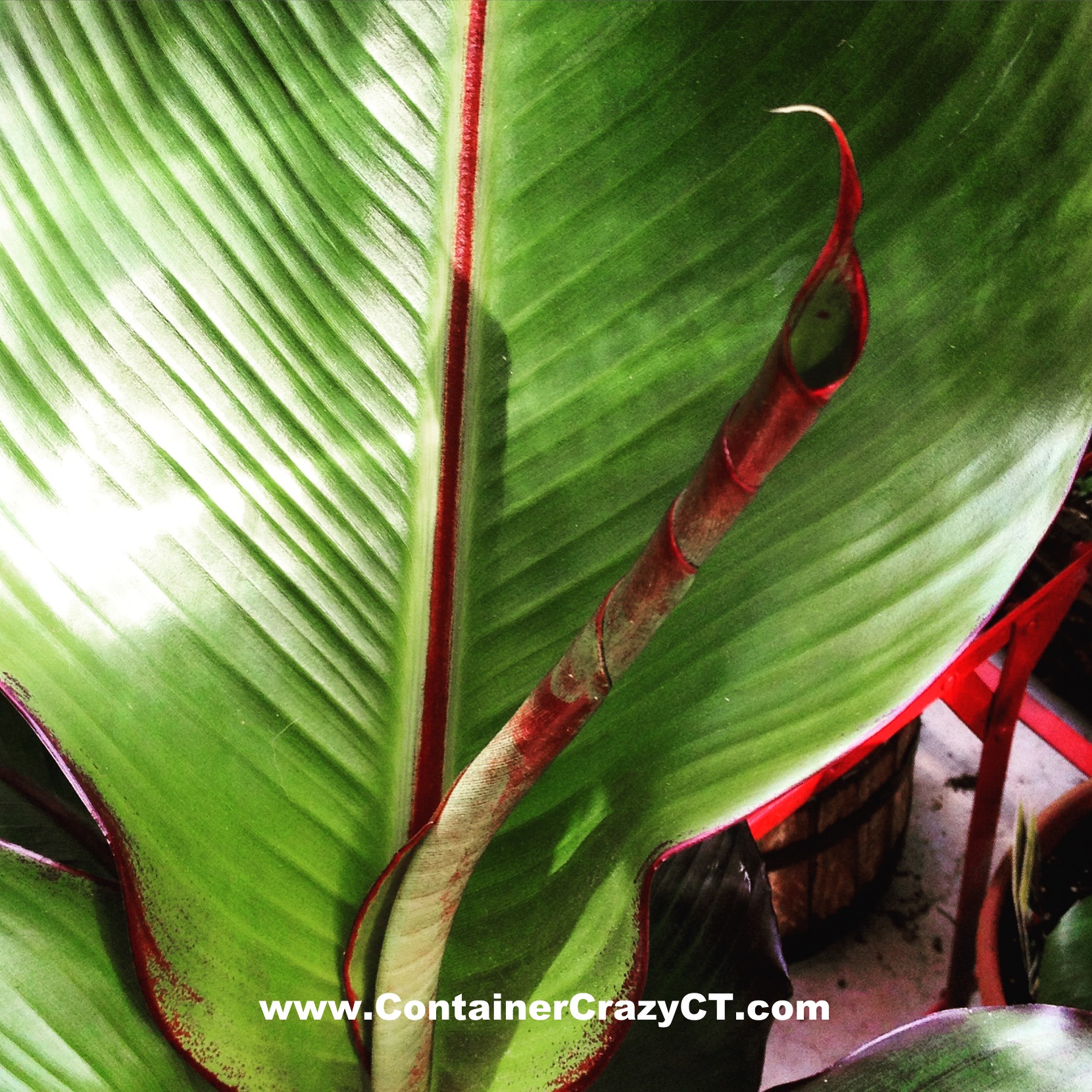
Ensete (Red Banana) is unrolling - getting ready for the Workshop tomorrow!

Ensete (Red Banana) is unrolling – getting ready for the Workshop tomorrow!

Container Garden Workshop – Session One

Saturday, May 16th – Tomorrow
11 am (start time); end time anywhere between 2-3-4 pm (up to you!)
Cost: $15 to register + price of plants purchased at class for your container/patio pot – we have lots.
To register, call 860-977-9473 or text
Rain: No worries, we have coverage for us and our plants

IMG_1909

Happy Friday Everyone,

Cathy Testa
860-977-9473
containercathy@gmail.com

Container Gardening Workshops in Broad Brook, CT – May 16 and May 23

1 Comment

Workshop Photo Flyer

Cost: Only $15 pp (plus the cost of the plants you decide to select at the workshop)

Registration is Required.

Fill Out the Contact Form below to sign-up.

For Details, visit our Menu Pages above on this blog or view these prior posts:

MAY CLASS DETAILS

WORKSHOP INTRO

WORKSHOP DETAILS – PRIOR BLOG POST

We hope you will join us!

Cathy Testa of ContainerCrazyCT

Go back

Your message has been sent

Warning
Warning
Warning
Warning

Warning.

Why Attend a Container Gardening Workshop about Perennials?

2 Comments

Cathy Testa of Container Crazy CT located in Broad Brook offers a service that brings the plants and education directly to you in one spot on the day of her classes and workshops. The workshops are convenient – You don’t have to travel from store to store to get a great selection of plants – and you get Cathy T’s advice and knowledge as you pick and choose the plants you want to pot up at the workshop.

What makes this class different is a lot of effort goes into getting everything ready for just for you – think of Cathy T’s workshops as a personalized class service for you. She hand selects the plants from local reputable growers based on experience of prior use, her classroom is a place you can get dirty and not worry about it or need to clean up after, and it is fun!

You also get to chance to meet other plant and garden people local to your area, make new friends, and enjoy a day with no true work on your part.  Just think, you show up, plant, learn, and take home your patio pots – there is no need to put away that heavy soil, sweep up the floor, or deal with empty trays to recycle.

Purple Power

Delosperma (Ice Plant) cascades over the rim of this pot – A beautiful perennial with drought tolerance and lots of blooms; it is a wonderful filler and spiller in container gardens – and it returns!

What are the best perennials to use in container gardens?

Maybe you haven’t considered using perennials in pots, maybe you don’t know what they are, or maybe you have. One thing is for sure, Cathy T has used various perennials in container gardens and patio pots over the years due to her experience as a local professional container designer – and she will tell you which have worked and which haven’t – some return easily, some are a little trickier, but either way, she will share with her knowledge of powerful perennials at this class.

Perennials offer lots of design benefits from being truly architectural in pots to providing continuous or cycle of blooms. They can be powerful in container gardens, and you will hear about each one available during the Container Gardening Workshop in May and how to capitalize on their features. Tropical plants are part of the workshops too. There are ways to reuse perennials and tropical plants in patio pots again and again. You will learn how to grow them, store them, and over winter them for use every year which is covered during the Container Garden Workshops in May.

Flamingo Pink

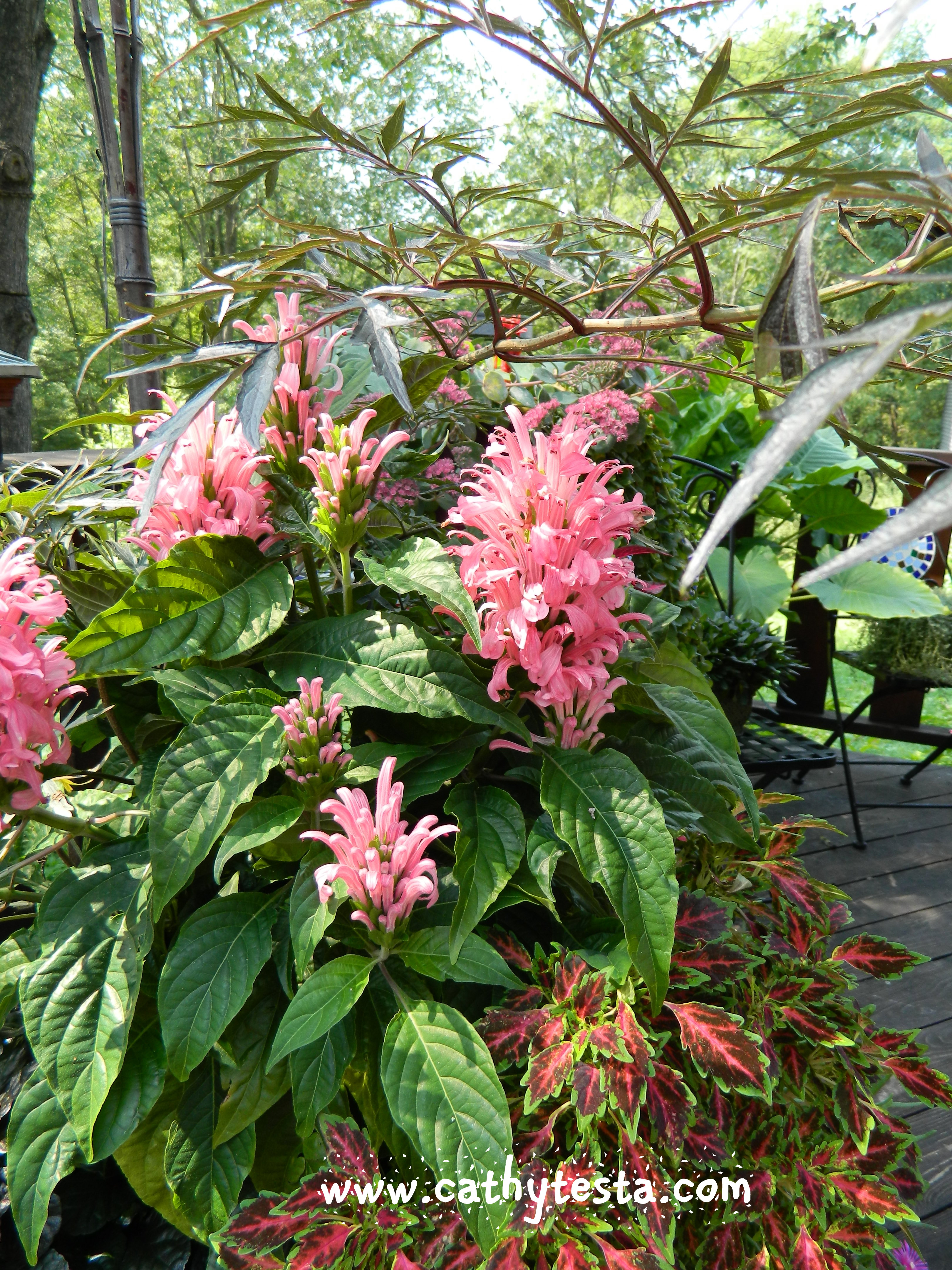
Justicia carnea with pink blooms in a container garden – Attracts hummingbirds and as tropical plant in our CT Zone – It is very showy along side Coleus annual and a hardy shrub above.

Ever have trouble getting help when it’s busy?

Getting attention and help on your perennial questions is sometimes difficult to obtain when you visit a busy garden center as the doors swing open for spring, especially this year – after our snowy winter and slow warm up of spring, everyone is anxious to get going. By attending Container Crazy CT’s personalized workshop, you get help and attention in a setting that is not over crowded or too busy. It is not everyone that is willing to share their background story on plants or what is going on in the industry – but Cathy T often does at her workshops and classes. Get the inside scoop by signing up for the workshop – and you will learn from the other attendees in class as well because many of them have their own experiences with plants or they may be new attending for the first time and want to learn what you have tried, even as a beginner, or if you are more seasoned – either way, it is an open forum at the classes.

Examples of things you will learn at this class:

  • Specific details about each perennial and tropical available at the workshops
  • How to plant perennials in the appropriate soil in pots
  • Design and color tips to choose showy combinations with perennials and tropicals
  • Cathy T’s Five Must Do’s for Success with Container Gardening
  • Ways to overwinter key perennials and tropical plants
  • How to capitalize on troublemaker perennials and make them stars in pots
  • What to know about growing perennials and tropical plants

 PERENNIAL PLANT PICTURES

  • Visit ContainerCrazyCT’s special Pinboard highlighting the selected perennials and tropical plants which will be available at ContainerCrazyCT’s May Container Garden Workshops on May 16th and May 23rd. This will give you a preview and some amazing inspiration!

Three Ways to Sign Up:

  1. Complete the Contact Form below
  2. Visit ContainerCrazyCT’s Events Page
  3. Email containercathy@gmail.com

Cost: $15 per person plus the cost of plants selected at the workshop (sales tax applicable). You only need to send your registration payment, bring the pots of your choice, and enjoy! Sign-up before the seats are filled, space is limited.

Go back

Your message has been sent

Warning
Warning
Warning
Warning

Warning.

We hope you will join us!

Cathy Testa

More details may be found here:

MAY CLASS (BIG CONTAINER GARDEN WORKSHOPS)

CONTAINER GARDEN WORKSHOP INTRODUCTION

MAY WORKSHOP IN THREE WEEKS (PRIOR POST)

Cathy Testa Summer 2014

Cathy Testa Summer 2014

Petasites japonicus (butterbur) – Awakens in a Pot every Spring

16 Comments

Did you know that some plants are big time troublemakers in the garden (invasive, prolific spreaders, aggressive) but they are amazing STARS in patio pots and container gardens?

My blog page titled “Troublemakers Turned Stars” talks about which troublemaker garden plants you may use in container gardens. And, it starts with this plant:

Petasites japonicus (butterbur)

Two pots, one on a table behind the other

Two pots, one on a table behind the other

Its key feature: HUGE ruffled green leaves reaching 32″ wide.  It prefers shade and may be used in water gardening because it likes moisture – lots of it. In fact, in a container garden, you need to provide it with a nice long watering to soak the soil well daily in the heat of hot summers.

Why it’s a star in container gardens and patio pots:  Because of its huge leaves.  I like lush foliage, so this one is a keeper. And because you can overwinter it very easily in a big container garden or patio pot just by moving it into a sheltered location after the season is over towards the end of Autumn.

My storage location for this plant growing in large patio pots is my little shed or unheated garage. I’ve been moving pots with Petasites in it for 3+ years now at the end of the season to store them over the winter.  It is best to cut back all the foliage after it gets hit by a light frost in Autumn.

In the Spring, roll it back out, position it somewhere to show the big leaves off which follow its flowering cycle. This plant is interesting. It shoots out flower buds first and leaves start coming out in various places in the pot after.

Here is a photo below taken this month of the flower pods rising. Once you have this pot outdoors, be sure to cut off the flower heads before they start to set seed because you do not want it to be carried by wind to your landscape to take hold because in the ground, this baby spreads like wildfire and is hard to control. You don’t want it in places where it will take over the landscape unless you know how to control it very carefully. And one way to control a plant like this is to use it in container gardens and patio pots.

Petasites japonicus, variegatus

Petasites japonicus, variegatus

Why it’s a troublemaker:  This plant has rhizomes at the base, and they grow rapidly via a spreading habit.  In the garden, they would easily take over an area and invade. They can be a problem to remove.  In fact, in a container garden, sometimes the roots will creep up to the top of the pot or out of the bottom of the pot’s drainage holes.  They are ambitious. One way to provide extra reinforcement is to sit the pot on top of another as shown here.

Place the Pot with Petasites on top of another

Place the Pot with Petasites on top of another

Moved into the shed for winter after a haircut

Moved into the shed for winter after a haircut

Caution:  If you decide to use this plant in a container garden, be aware when it flowers, the seeds can self-sow in the garden. Sometimes, I’ve kept mine raised above the ground on an elevated deck, so this has not been an issue. Or again, as shown above, situate it on top of another pot filled with soil so if the roots escape, they will go into the soil in the pot below it.

At the end of the season, rolling these back into a sheltered location such as a garage, shed, or other space is plenty of protection to keep it alive in a dormant state until the climate and conditions are favorable for reappearance each spring.

This is why I love using perennials which return every year in pots – they save you money – and become treasured specimens.  In many cases, troublemaker perennial plants are great candidates for container gardening.

To see more about Petasites japonicus, click HERE.  It is a blog posting I wrote a couple years back with more photos of the plant’s flowers, root structure, and habit.

A Returning Petasites for Several Years

A Returning Petasites for Several Years

The leaves on this plant grow to dish plate size which make them very showy. When you put them away at the end of the season, it is helpful to moisten the soil so there is a bit of moisture, and visit it maybe once during the winter to put some snow on top to melt into the soil – this is what has worked for me.

Variegated Petasites (butterbur)

Variegated Petasites (butterbur)

Here’s a variegated Petasites I scored last year from The Garden Barn and Nursery in Vernon, CT. I’m glad to see the variegation on the leaves returning right now in my blue pot. After a few years, this pot may require a refresh of new potting soil – and a division of the plants.

Perennials like this are wonderful candidates in container gardens, and reasons why perennials will be discussed at this year’s Container Garden Workshops on May 16th and May 23rd, 2015. To learn more about the workshops in Broad Brook, CT, see HERE.

Detailed information about the plant and characteristics can be located HERE at the Missouri Botanical Garden website.

Stay tune for more about “Troublemakers Turned Star” plants for container gardens and patio pots.

Cathy Testa

IMG_9042 (1)