Salvias – Plant Them if You Want Hummingbirds

1 Comment

Salvias are definitely a favorite by the hummingbirds visiting my surroundings at home. I have 2 male hummingbirds and I’ve seen one female hummingbird so far. Every evening, one visits my Salvia blooms between 5 and 6 pm.

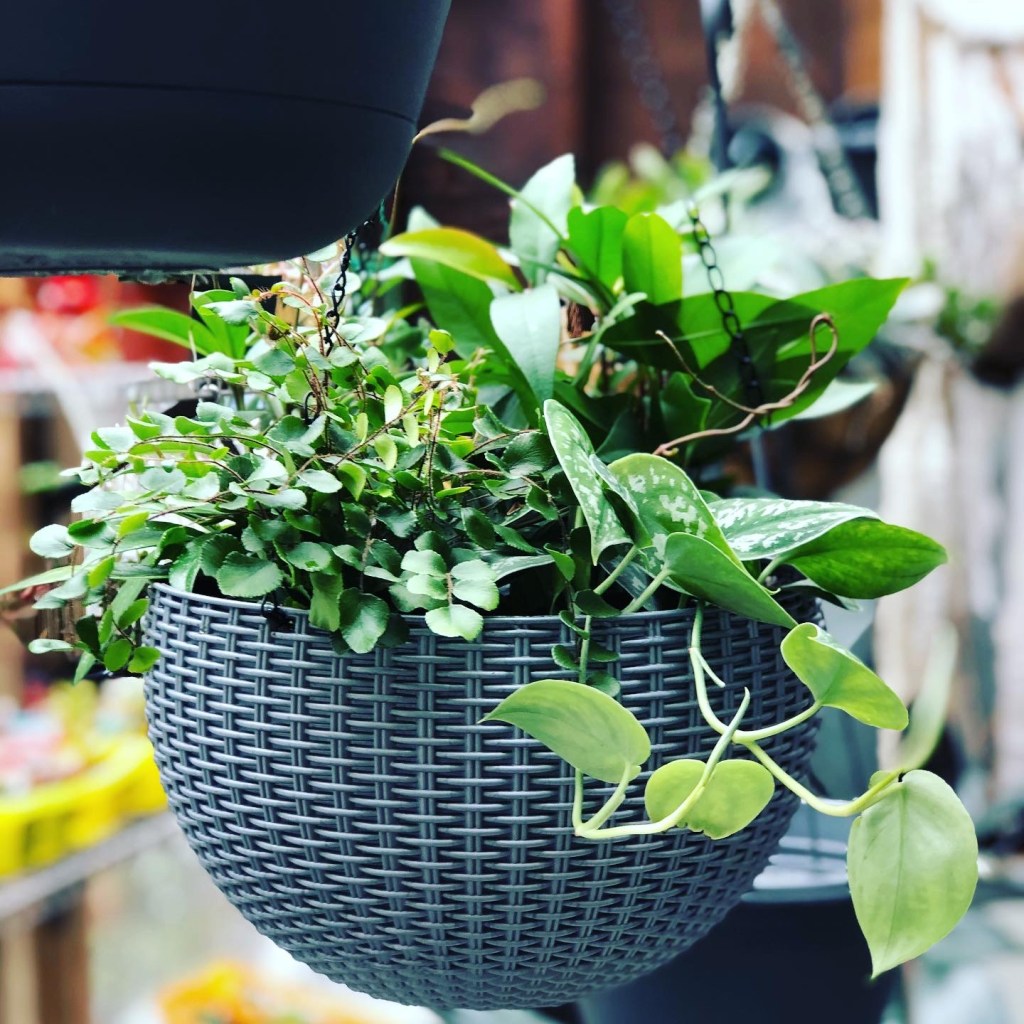
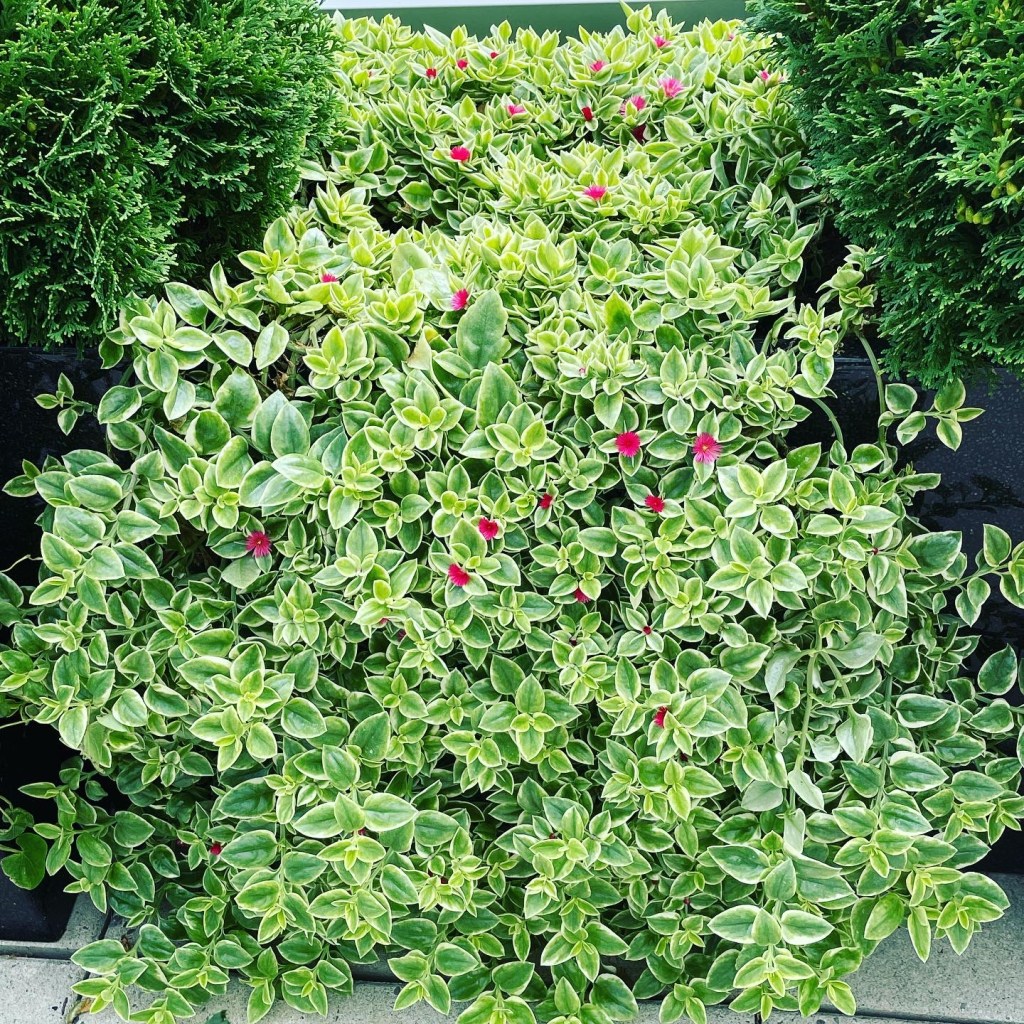
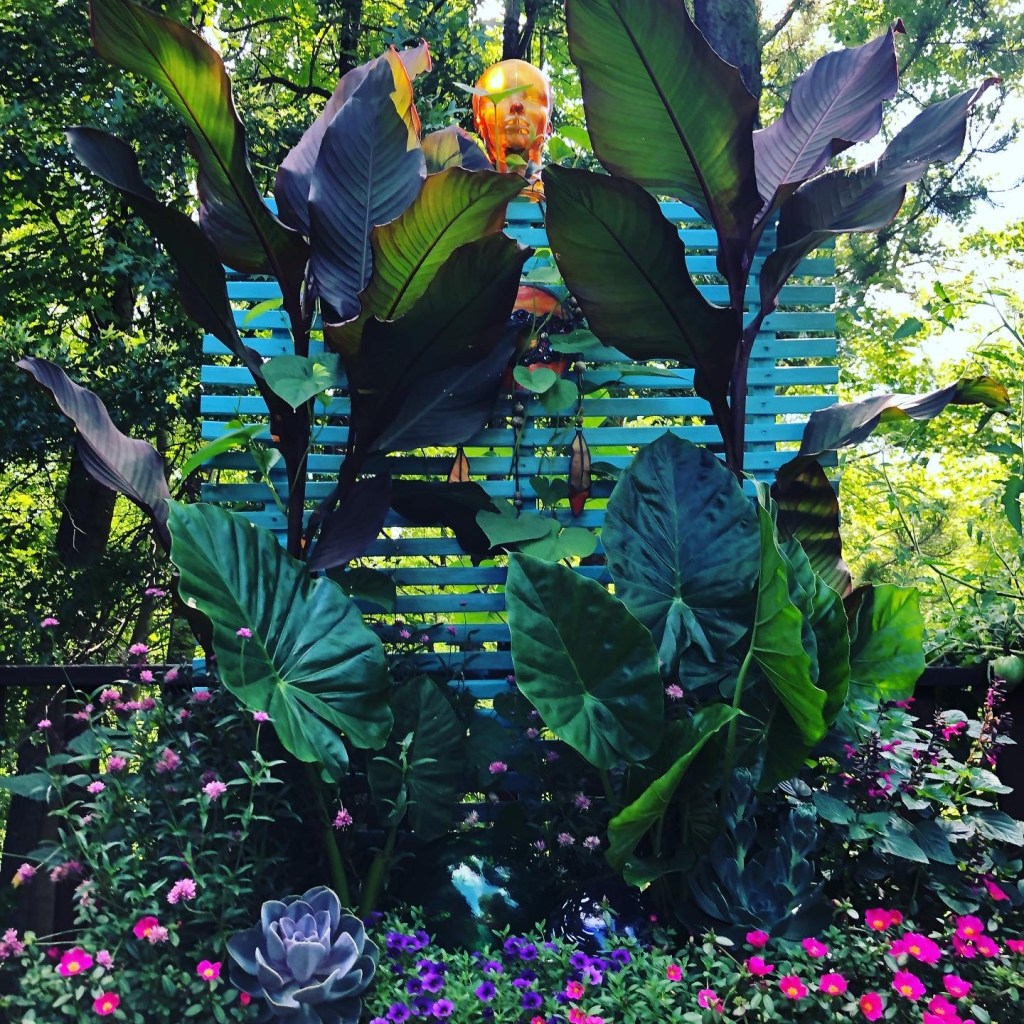
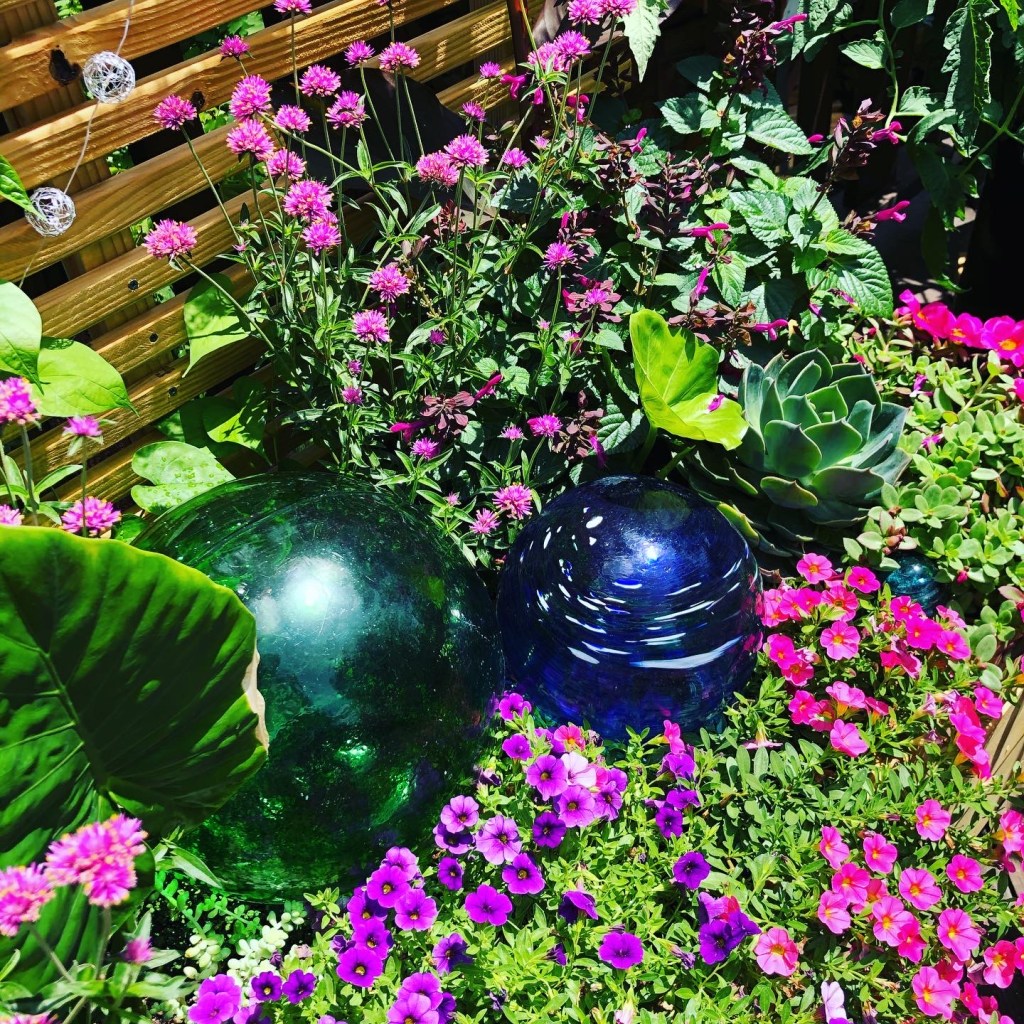
Cathy T’s Planters at Home with Salvias, Sky Petunias, and other plants.

This one with the fuchsia-colored blooms seem to be his favorite. A male hummingbird pops by it and bounces from bloom to bloom. This one I don’t have the plant tag for but the darker Salvia in the taller planter is Salvia Rockin’ Deep Purple.

Salvia Rockin’ Deep Purple

The Rockin Deep Purple hybrid is a bit shorter than the other one. I’m not sure if the other one just bolted more due to weather conditions. Rockin Deep Purple Salvia reaches about 30-40″ tall per the plant’s tag.

Salvia with Fuchsia-colored Blooms

I didn’t have a tag for this one, but it has the most beautiful vivid deep fuchsia color to its blooms. They all have an upright and vertical habit and bloom till end of the summer season here in Connecticut. They are treated as an annual here in Connecticut as well.

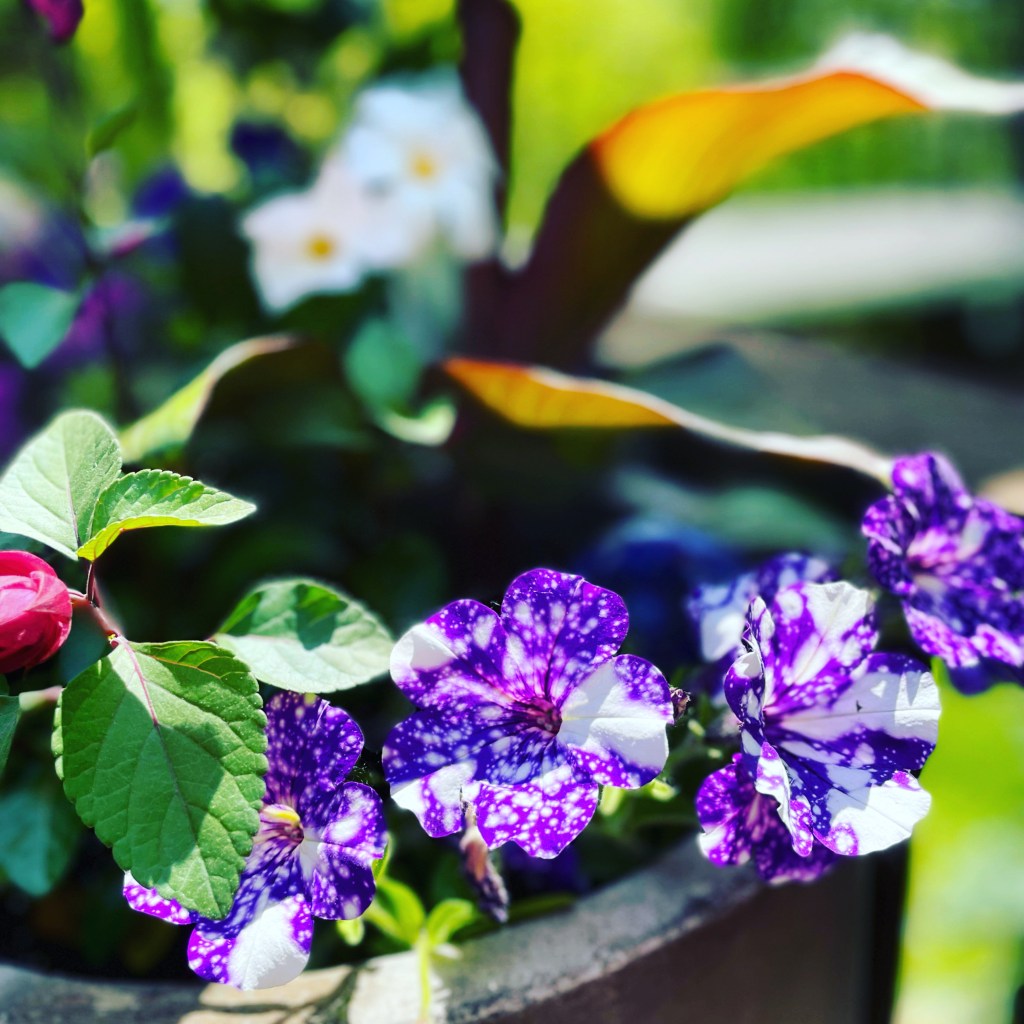
Sky Petunias

I wanted more color this year in my planters to attract the hummingbirds and butterflies. Although I’ve witnessed butterflies going by my trees near my house often this year, I still haven’t managed to catch one on a bloom. The Sky Petunia annuals really add a nice pop of color. Although, I tend to love big foliage plants, I decided to add these along with the Salvia plants. The hummingbirds do not feed from the Petunias (yet). I’ve seen them look at them, but they do not feed for whatever reason.

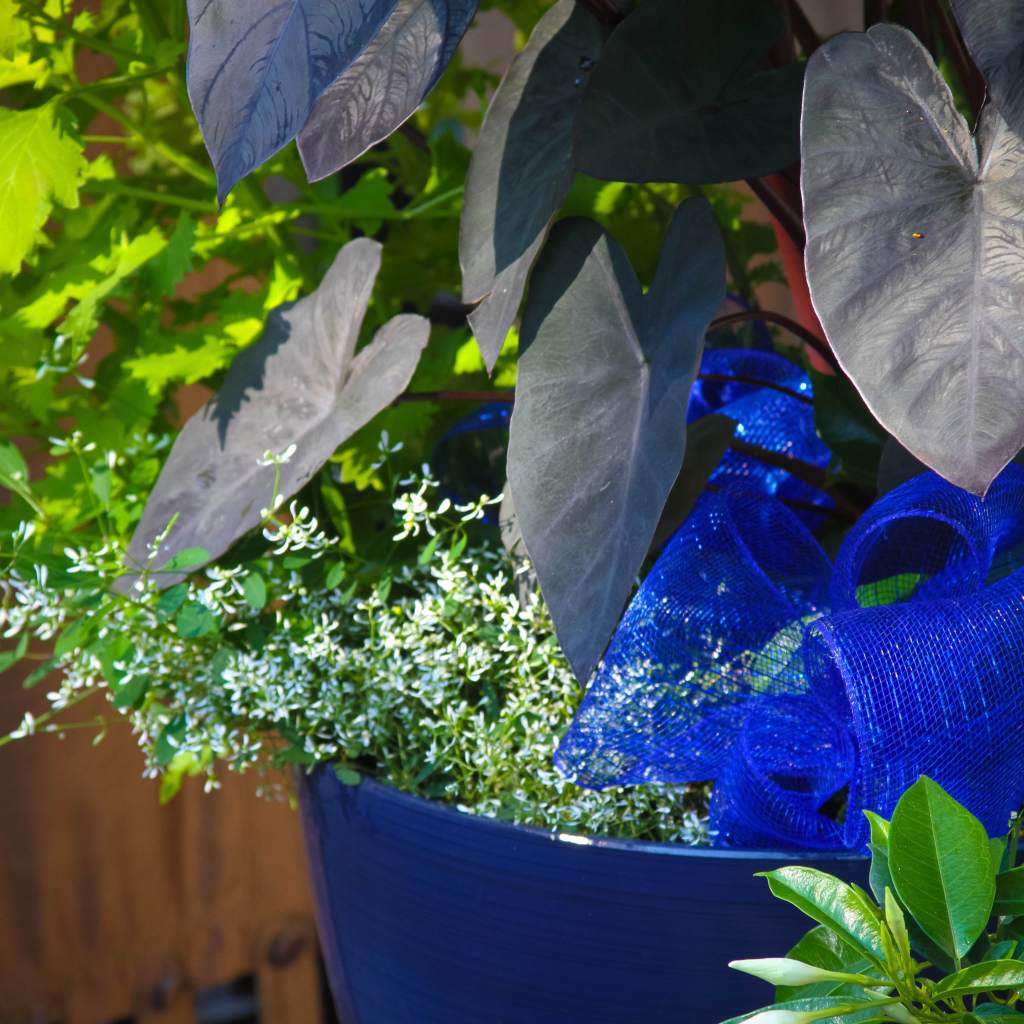
My New Blue Glazed Pot

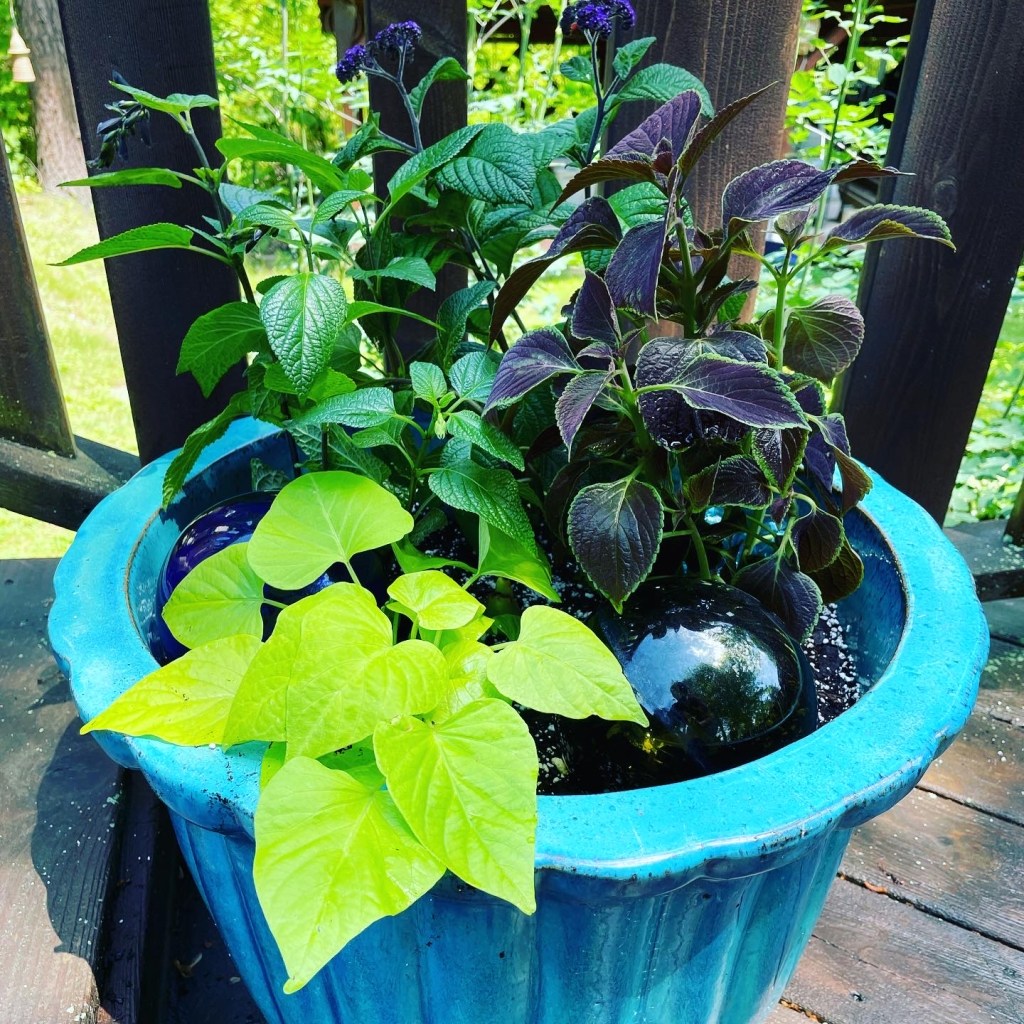
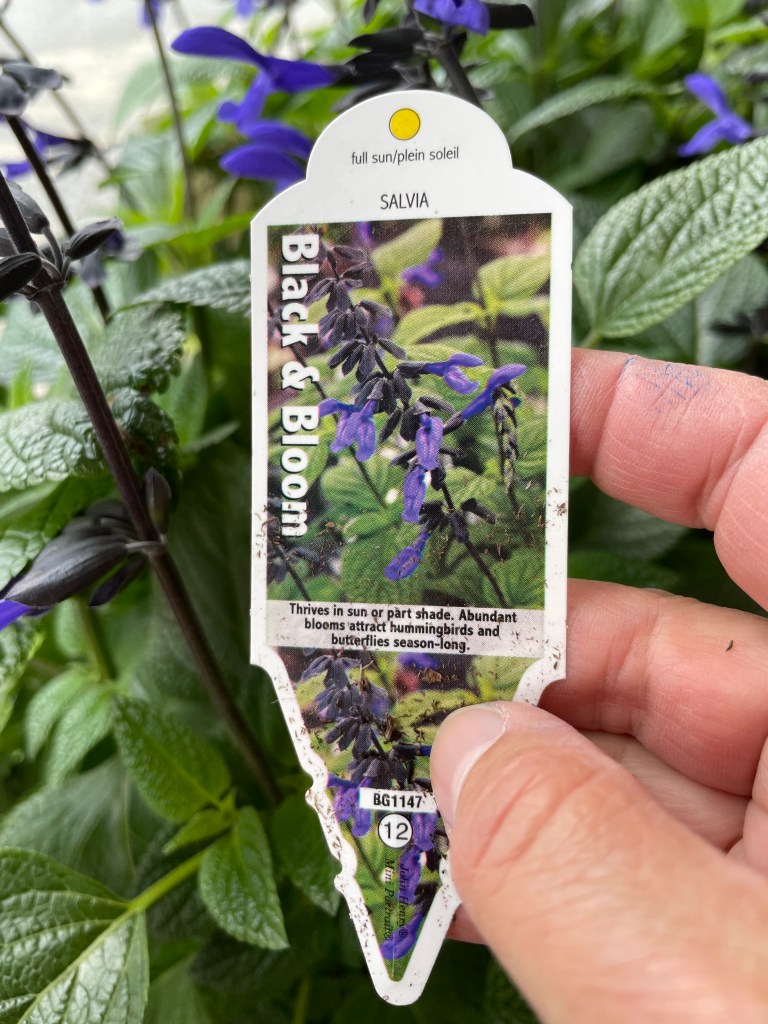
My sister-in-law gave me this nice big blue glazed pot because she moved into an apartment and there is no place for outdoor gardens. She generously donated this pot to me. So, yesterday, I wanted to again add color around my deck and got a Salvia Black & Bloom to plant with these other annuals.

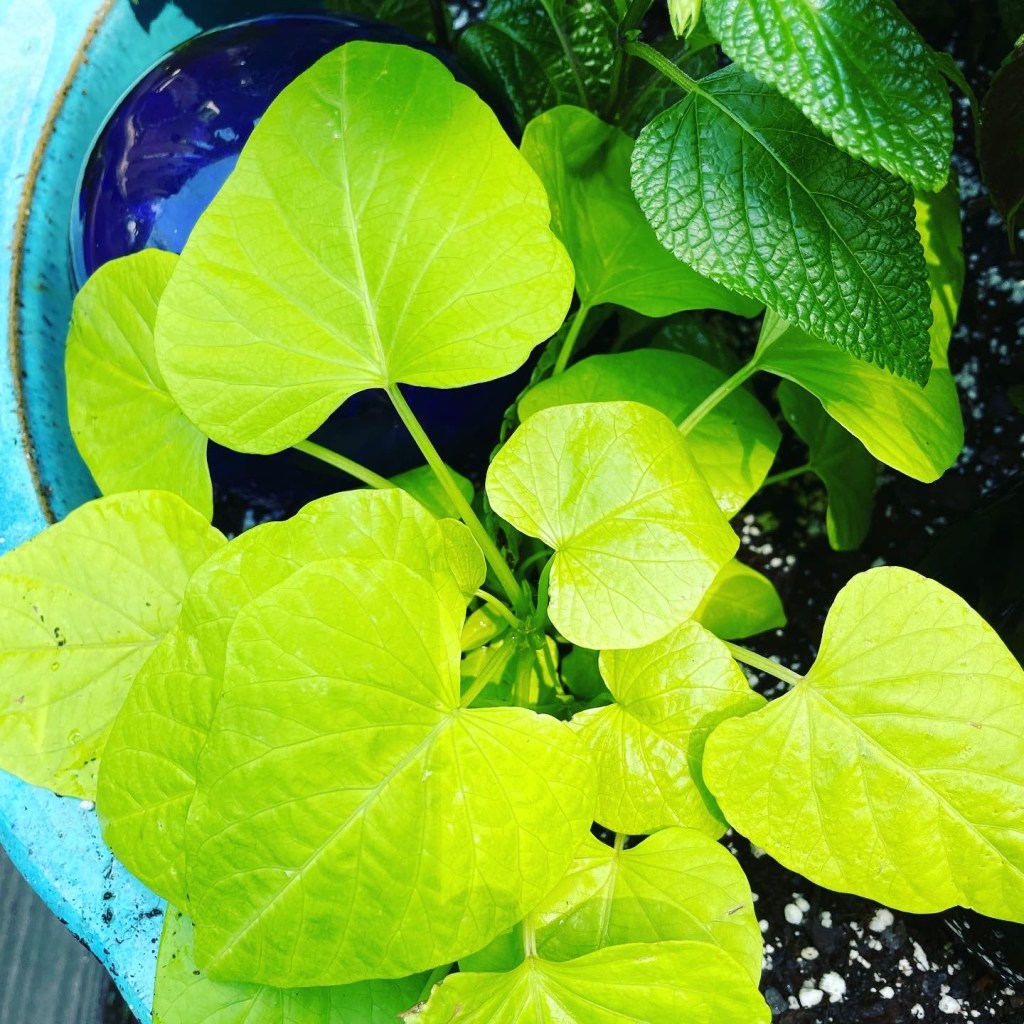
Sweet Georgia Heart Light Green (Sweet Potatoe Vine).

I added a Sweet Potatoe Vine with a bright light green color to give an additional contrasting pop of color. I felt like I hadn’t planted a sweet potato vine in years. It was like being reunited with an old friend. This one picks up on the colors of the Coleus in the planter which has edges in a similar color. Sweet potatoes vines are vigorous once they get established so it will spill over the pot’s edges eventually.

Coleus Vino

I swear I had no idea this cultivar was called Coleus Vino! LOL! Contrast is so key and the darker tone next to the bright tone of the potatoe vine would work I thought when I grabbed this Coleus. The edges are perfect to pair.

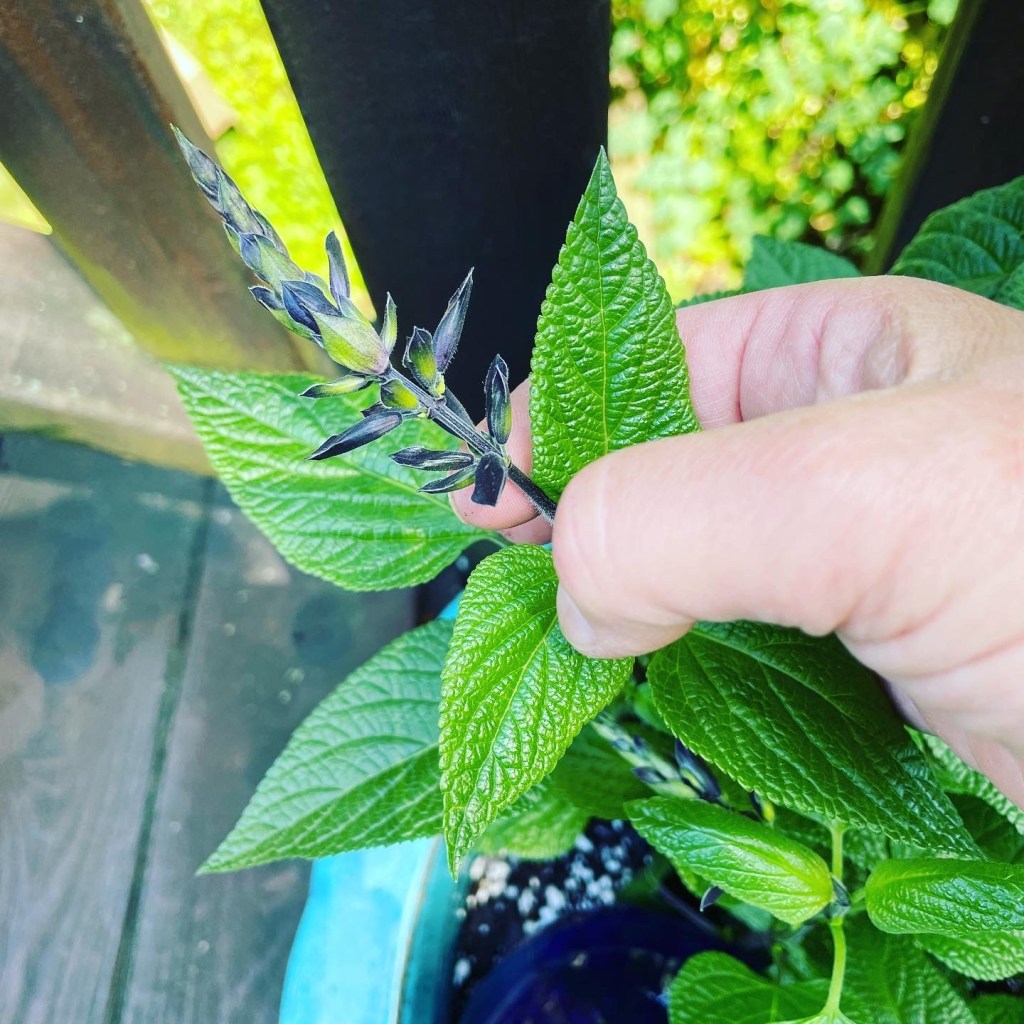
Salvia Black & Bloom

This one has many flower buds about to open. I think this one is popular and I’ve seen huge plants of this one before many times. It reaches 24-36″ tall and blooms spring till fall. I’m hoping my humminbird friend will spot this one as well soon.

The Salvias like full to part sun, and the Coleus likes full sun and/or shade.

In the center of the blue planter, I put an upright Alocasia that is just starting to push its top growth out of the soil. Hopefully all will look splendid together this summer as the planter fills out.

Tucked in the back is a Heliotrope. A purple bloomer.

Heliotrope

I think I saw Heliotropes for the first time when I worked at a small business in Grandby. The owner liked these and used them a lot. They are low-maintenance, just like Salvias, in my opinion. However, I felt they were (the Heliotropes that is) a bit old fashioned looking for my taste. I must be getting older cause I like them now, but my overall goal was more color in my container gardens.

As for the hummingbirds, I am always thrilled to see and hear them around me. I put out feeders with the sugar water and one trick I do to make sure the sugar water remains fresh is I don’t fill the feeders all the way. I usually put about 1/3 of the mix in there and it forces me to refresh it often. Sometimes sugar water goes sour and that can make the hummingbirds sick or may even die. It is also good to keep sugar water out of full sun and wash the feeders between refills. I would never want to hurt a hummingbird as they are far too precious.

About two weeks ago, I witness a hummingbird do a u-shape pattern by my honeysuckle perennial plant in the ground. They like honeysuckles too. But back to the dance he did, I witnessed that same thing a few years back. I read it has to do with a mating dance. As noted below on Princeton’s website, they dive up and down (to me as a u-shape) and it is a super-fast motion. Very cool to witness!

I also have seen a hummingbird perch on the power lines to the corner of my house. Every evening, around 6 pm, there he is perched. He looks left to right up and down for about 5 or so minutes, takes off, comes back and does it again. I started to wonder if he/or maybe it is she, has a nest nearby in my front landscape.

“Hummingbirds are no exception when it comes to snazzy performances, as males of many species perform spectacular courtship dives. Broad-tailed hummingbirds (Selasphorus platycercus) fly up to 100 feet in the air before sweeping down toward a perched female, then climb back up for a subsequent dive in the opposite direction. At the Rocky Mountain Biological Laboratory in Gothic, Colorado, home to a population of breeding broad-tailed hummingbirds, researchers from Princeton University have been investigating how hummingbirds combine speed, sound and color in their displays. Their work appears in the Dec. 18 issue of the journal Nature Communications.”

https://www.princeton.edu/news/2018/12/18/hummingbirds-dive-dazzle-females-highly-synchronized-display

Lastly, above it the Salvia plant label. I spotted some yesterday at Dzens garden stand, and you could probably find these at The Garden Barn in Vernon, CT or at Revay’s Garden Center in Broad Brook, CT. However, some of the local nurseries are already low on stock and/or appear to be closing. I think June 14th is way too early to close shop, but I realize patterns dictate. However, us plant junkies do need our plant fixes all summer long. If you see some good Salvias and want hummingbird visitors, I suggest you grab them fast. They really do attract hummingbirds!!

Happy Hump Day,

Cathy Testa
Container Crazy CT
Zone 6b, Connecticut
http://www.ContainerCrazyCT.com
http://www.WorkshopsCT.com
http://www.ContainerGardensCT.com

Find me on Facebook and Instagram under Container Crazy CT

Don’t forget – I’m offering Watering Services again this summer! It will get very hot eventually. Contact me at 860-977-9473 if you are local and have the need. Thank you – Cathy T.

What if I lost my vision?

3 Comments

As we age, things with our bodies change and some things are out of our control. I recently found out I have an eye condition which could potentially lead to loss of vision in the center of one eye. Today I go see a specialist. I really dread this appointment because I envision a needle coming my way. But then I tell myself, stop obsessing and all will be fine.

But this had led me to think about what if I did lose my vision. What if I couldn’t see my plants, all the amazing flower colors, and the beauty of what plants bring to my eyes, and my heart?

Being a “what-iffer” is not a good thing and maybe my eye issue won’t be severe and allow me to be free of vision problems for several more years. I won’t know till after today’s assessment, or perhaps for a few years, who knows.

My Mom lost partial vision in one of her eyes many years ago too. I remember going to the doctor’s appointment with her and the process they explained for a surgery at that time involved lying face down for several weeks at home after the surgery for the recovery process. It was an insane scenario to me. I remember thinking how anyone can lay face down for that long? She didn’t do the surgery back then.

She managed a very long time with partial vision in her eye, but today, as she is more in her elder years, she cannot drive due to her vision issues. She used to crochet a lot but said she cannot do that anymore, and that she can’t even read the newspaper now.

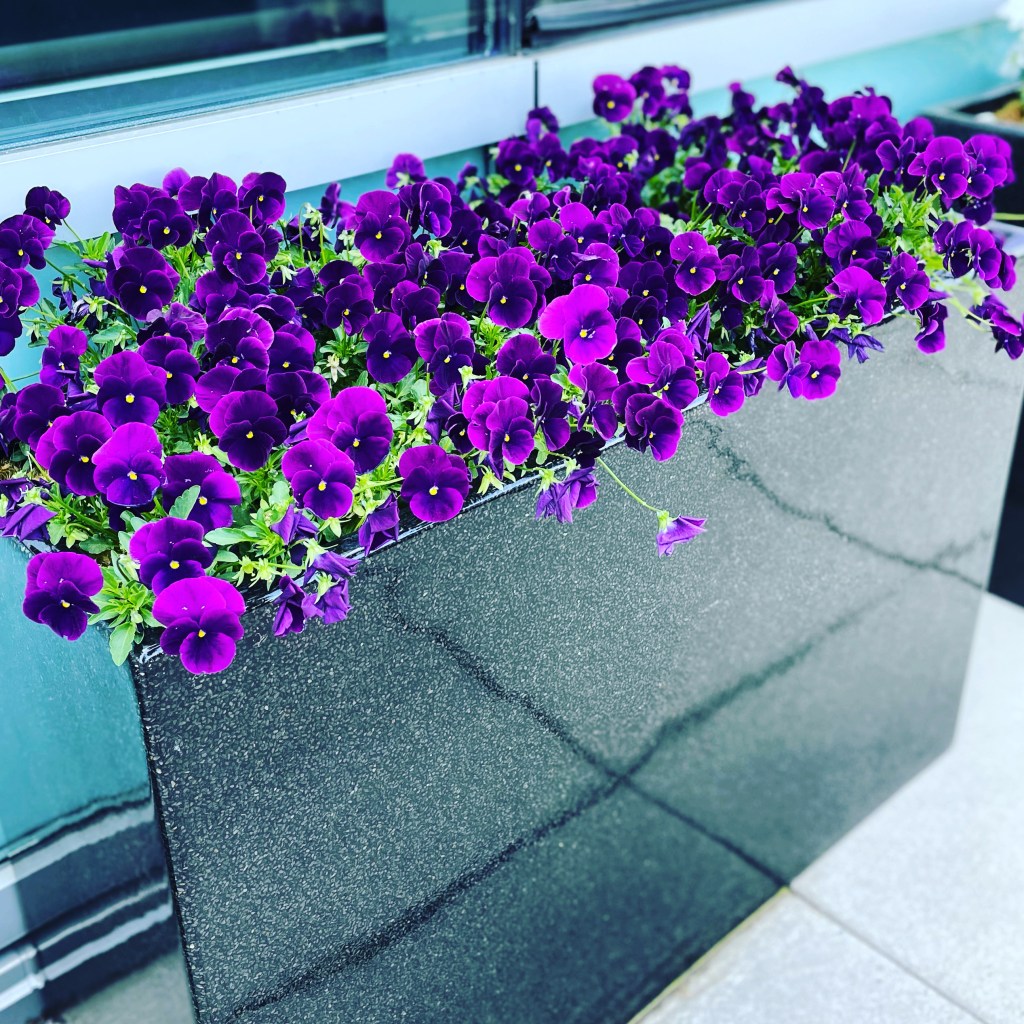
I often browse my plant photos and it really brings me a feeling of good vibes. I love colors, I love looking at the colors of flowers. Even simple Pansies are amazing when you really look at the flowers, and think, how on earth could God, Nature, whomever is responsible for these colorful wonders do such an amazing job. It is such a gift to us. Truly. Just look at these purple Pansies in the photo below. The outer edges are a lighter purple than the centers. The color is two toned! Nature does that!

If you think about the colors of the world, so many come from plants, flowers, fruits, and of course, the sea, ocean, sky, etc. Colors paint our world. Can you imagine a world without flower colors? I cannot. I am always amazed at the beauty of gardens and plants. And color patterns of birds and more.

Recently, I started playing around with needle felting and I really enjoy it. I started to think, what if I couldn’t do this if I was vision impaired. What would I do to replace this creative therapy.

Could I envision plants and their amazing colors in my mind. I guess if someone said, oh this photo of your planter with x-y-z has this and that, I think I could envision it. I could see it in my mind, hopefully.

Again, I’m not in the gloom and doom phase – don’t get me wrong, just it got me thinking about it. Certain scents can bring you back to a moment in time. I remember the scent of sugar canes in Hawaii. I will never forget that – and if I smelled it right now, it would zoom me back to that moment.

Our senses are all part of the equation.

In a jewelry class I took this winter, a woman moaned a bit and the instructor asked if she was, okay? She replied that her darn arthritis was bothering her hands. I guessed she was probably the same age as me. I thought to myself, we all have our struggles as we age. For me it is my eyes, for her it is her hands. I have heard how painful arthritis can be.

I suppose you just have to adjust and deal. Heck, my hearing is already having issues. I joke with my husband that there should be a special form of sign language for people who start to lose hearing in their later years. He said, there is, it is called sign language. I always told him; we will learn and use sign language if we ever lose our hearing.

Anyhow, until any of those days come, I will try to “focus” (no pun intended) on enjoying colors even more than I already have. I will enjoy listening to the tree frogs, birds, crickets even more than I already have, and try not to think about those what-ifs!

To see photos of some beautiful flower colors, visit my SmugMug Gallery of Flowers.

What if I lost my vision? Could I recall all the flower colors in my mind?

Photos above:

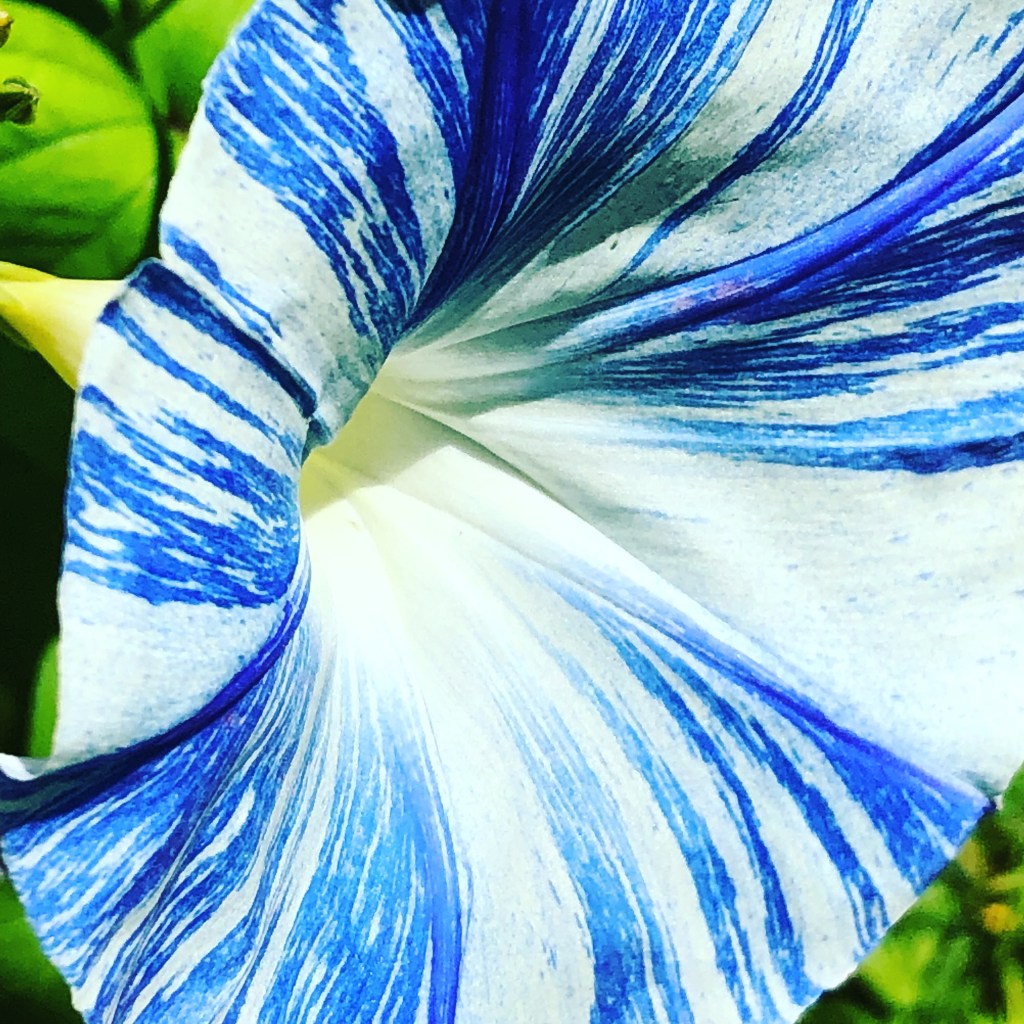
Blue and White pinwheel morning glories. Grown from seed one year. Absolutely stunning and fun.

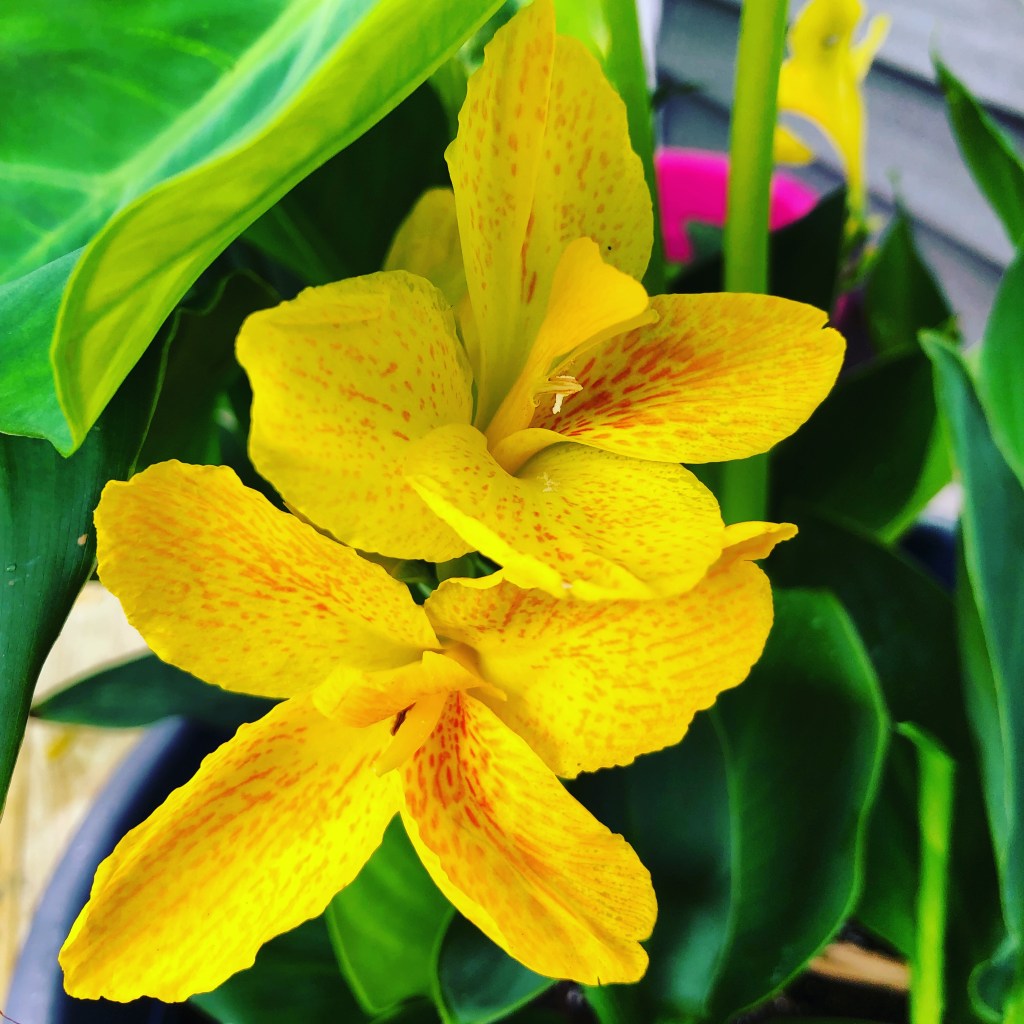
Yellow blooms with red speck of Canna Lily. Love growing Canna Lilies and using them as big tropical thrillers in my container gardens every year.

Deep red Canna Lily blooms with purple flowering annual behind it. I think the purple is annual salvias. I love how this spontaneous photo I took came out. Truly – does it not bring joy to your eyes, and then your heart? It does for me!

Almost all photos on my blog are photos I took with my iPhone. Yes, it’s an obsession!

Cathy Testa
Container Crazy CT
Broad Brook, CT
Zone 6b
Connecticut


Overwintering Alocasia 2022

1 Comment

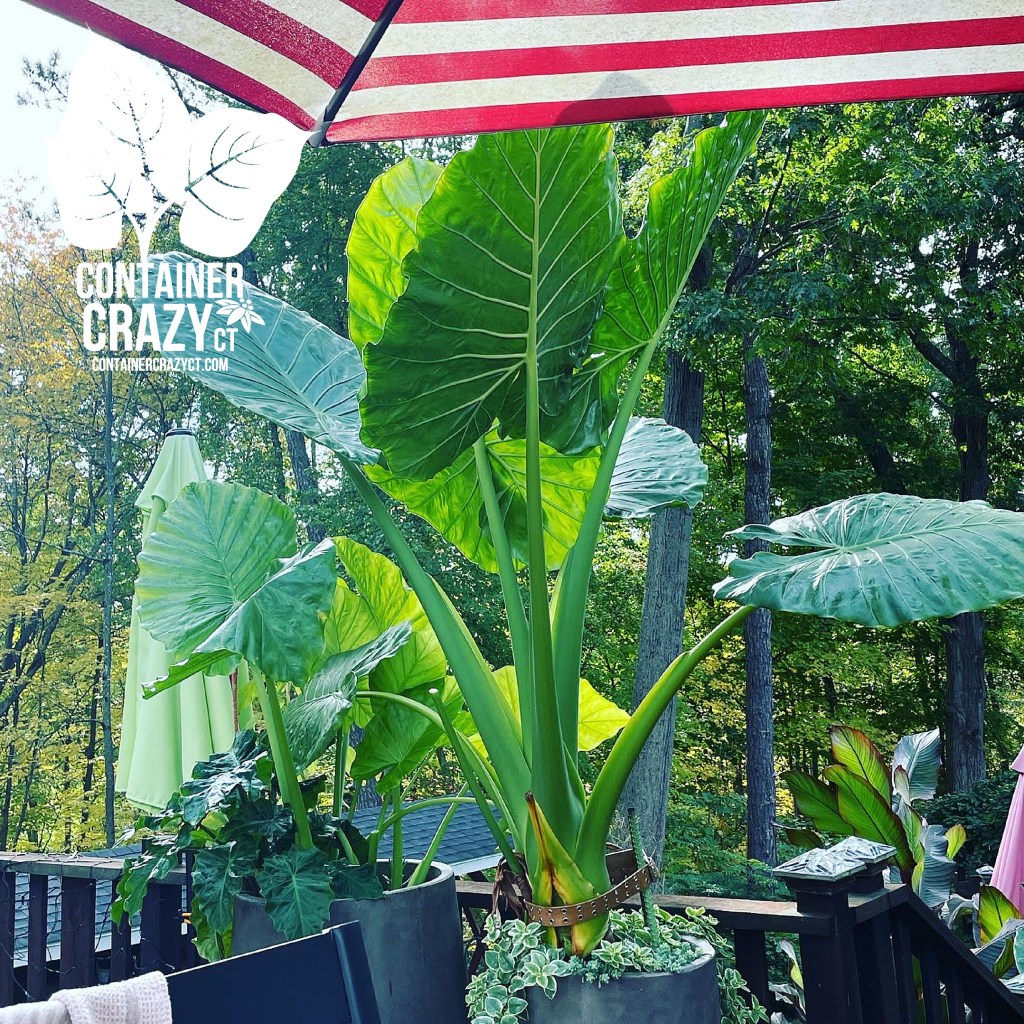
This is part one – showing my process of disassembling my largest elephant’s ear plants from containers or planters. I purchased the tubers in 2019 for this Alocasia, which I refer to as an “upright elephant’s ear” because the leaves point upwards towards the sky. It is often referred to as a Giant Elephant’s Ear, Giant Taro, or Upright Jumbo). Official name is A. macrorrhiza. They grow from 71 to 96 inches (6-8 feet tall) from summer to frost and prefer partial shade. The leaves are very dark green, glossy, and impressive! It prefers partial shade but will do well in more sun with appropriate moisture. In my zone, it must be stored, but warmer zones, I suspect you may keep them outdoors or protected somehow.

2022
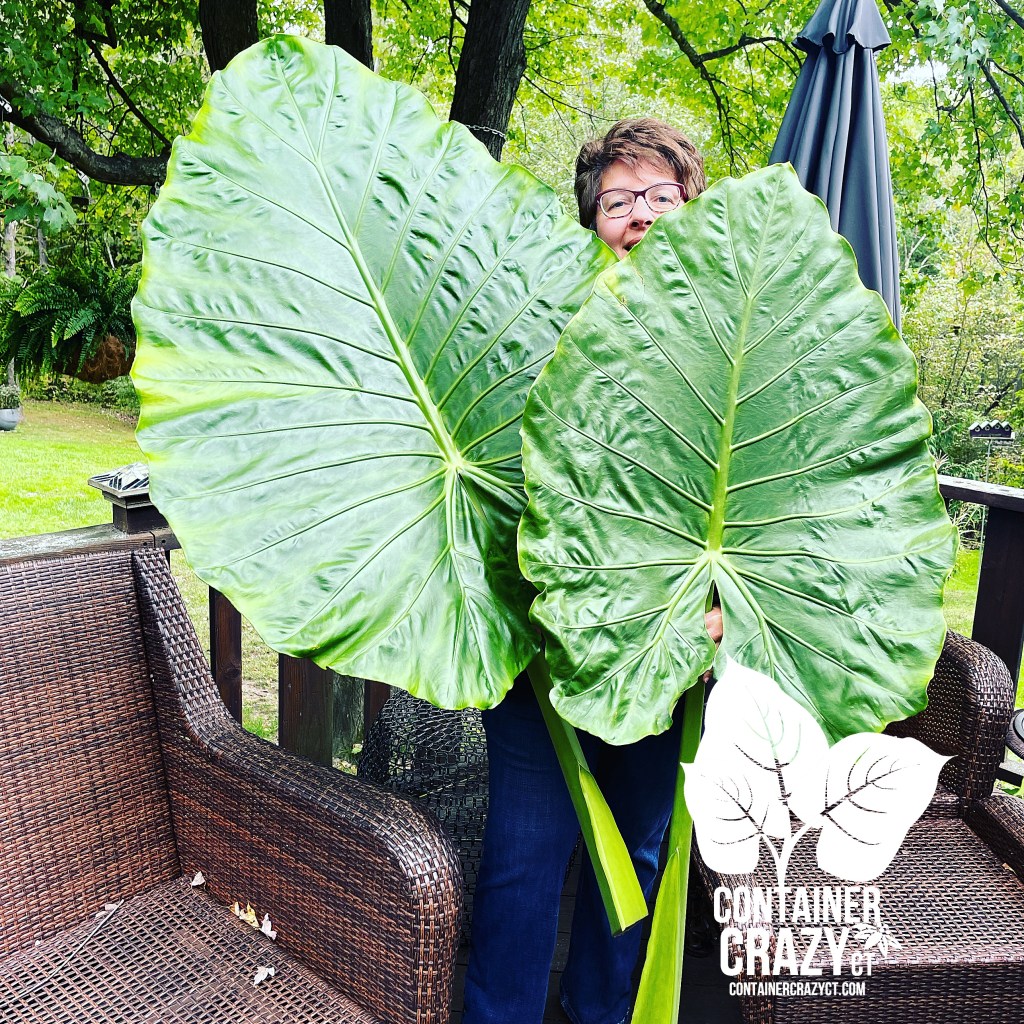
Cathy Testa holding two of the leaves

As you see here, I’m peaking behind two of the leaves. The leaves are at least 3 feet long with the stem an additional 3 feet as well. They tower above me in my planters and put on quite the big tropical show in summer. Now, on to how I disassemble them in preparation for our Connecticut winter months:

Definitely Wear Gloves

TOOLS

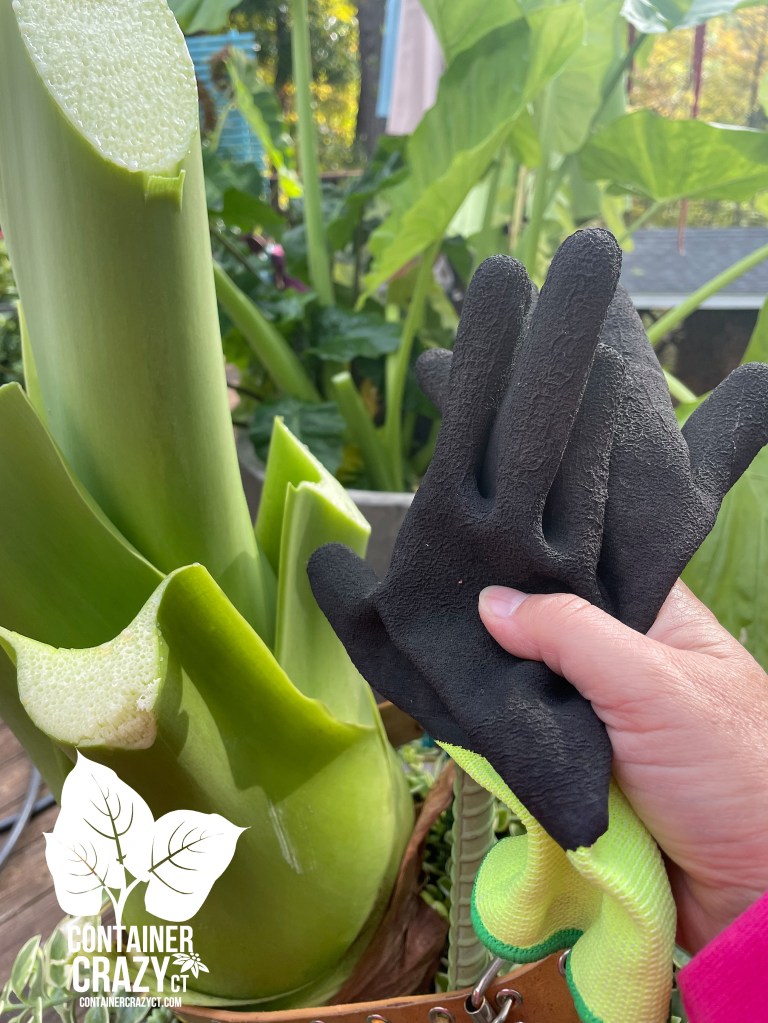
Gloves: Definitely wear garden gloves. These plants release a sap that will make your hands itchy – believe me, I regret when I don’t wear them. Even digging around the soil, I found my hands will itch later.

Hori hori knife: I really like this tool, heavy duty, serrated edge, perfect for cutting the roots in the soil around the base of the plant to release it. I find this to be one of my most useful overwintering tools.

Bin: A clean bin to put all the tubers and root bases in to let dry outside if it is pleasant weather, or inside if it is rainy.

A Large Kitchen Knife or Machete: I couldn’t find my machete, so a long, clean, sharp knife is a great back up.

Clean Up Tools: A leaf blower works to blow away dirt that will fall everywhere.

Ruler: Yes, measure those babies!

Large Knife

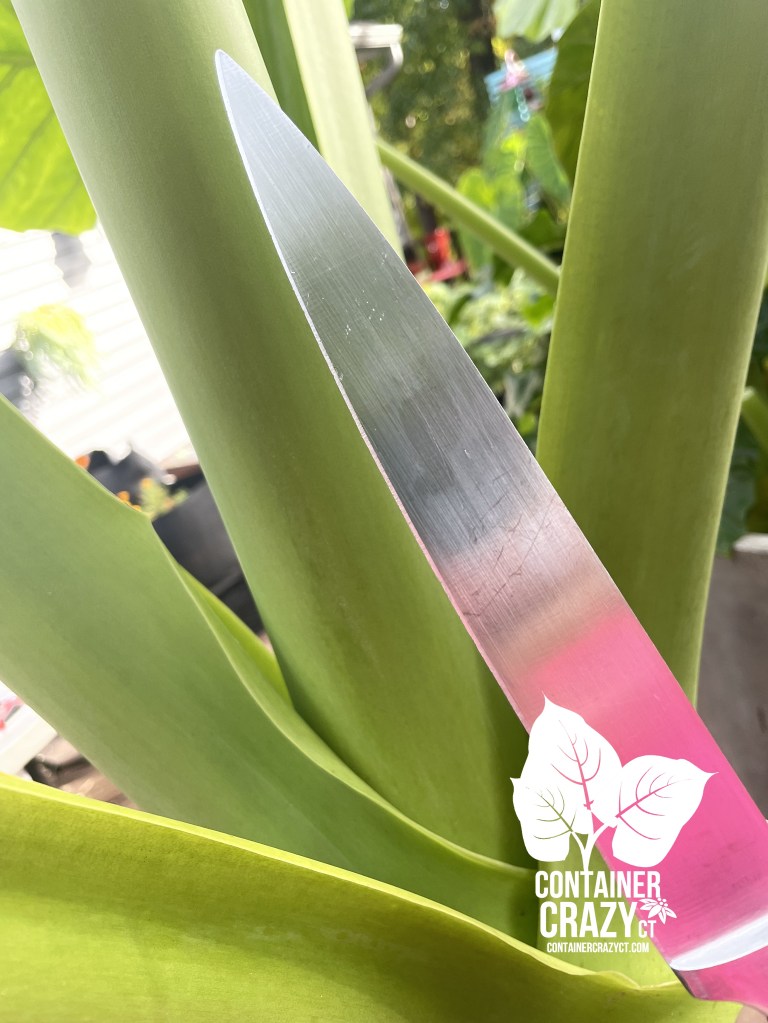
Cut away all the foliage by using the knife to slice each stalk off individually at the base of the plant. The main thing is to cut away from the plant so the angle of the slices are able to drain away excess moisture. At least that is how I do it. I’m also very careful to not nick surfaces with my knife tip – always avoid any damage while I work.

Slicing off each leaf at the base of the stalk (petiole) – stem – whatever you wish to call it!

As you slice off each petiole at the base, be sure to do a clean cut, avoid tears or anything which would allow entrance of mold or insects later on. A clean cut is recommended. If you mess it up, cut it again below where you just cut it.

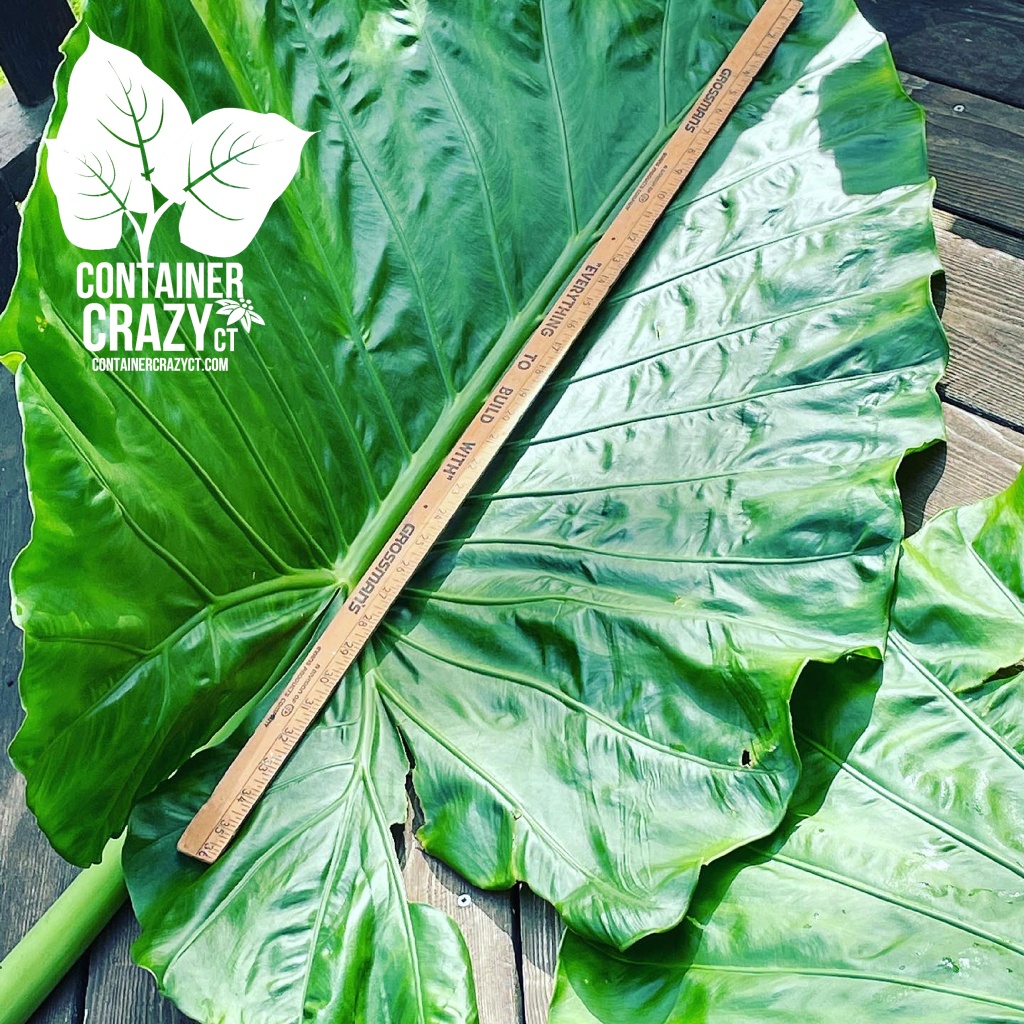
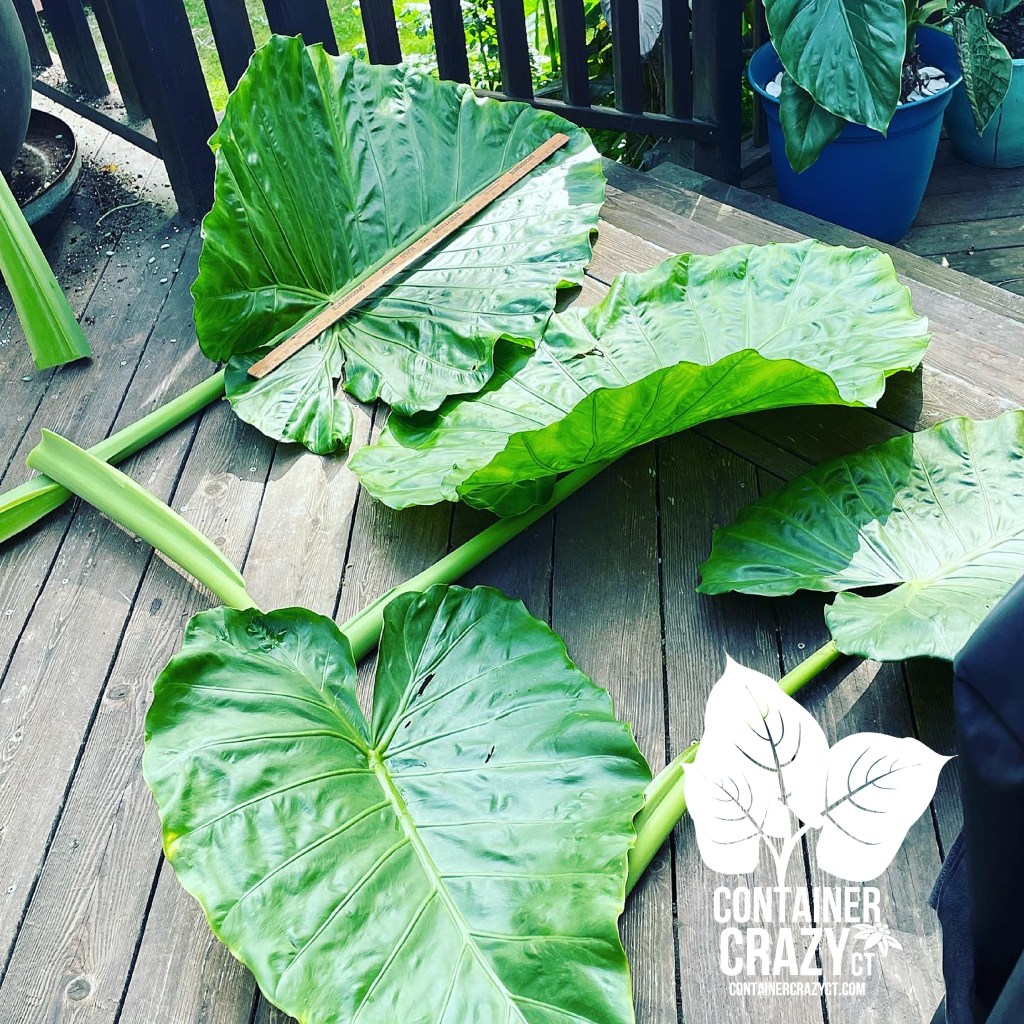
Measure the leaves cause it is impressive!

I always measure so a ruler is handy, or measuring tape, and then take photos. Because sharing is caring – LOL. Everyone loves to see how massive these leaves get. It is fun to Instagram the photos!

Here are two of the biggest leaves above. It is too bad I am not set up to make leaf castings of these babies, they would make impressive art for the garden!

Close up of Slice

As you can see, the slice is downwards and away from the center of the plant. I slice each stalk individually and pile the leaves to the side.

All leaves removed

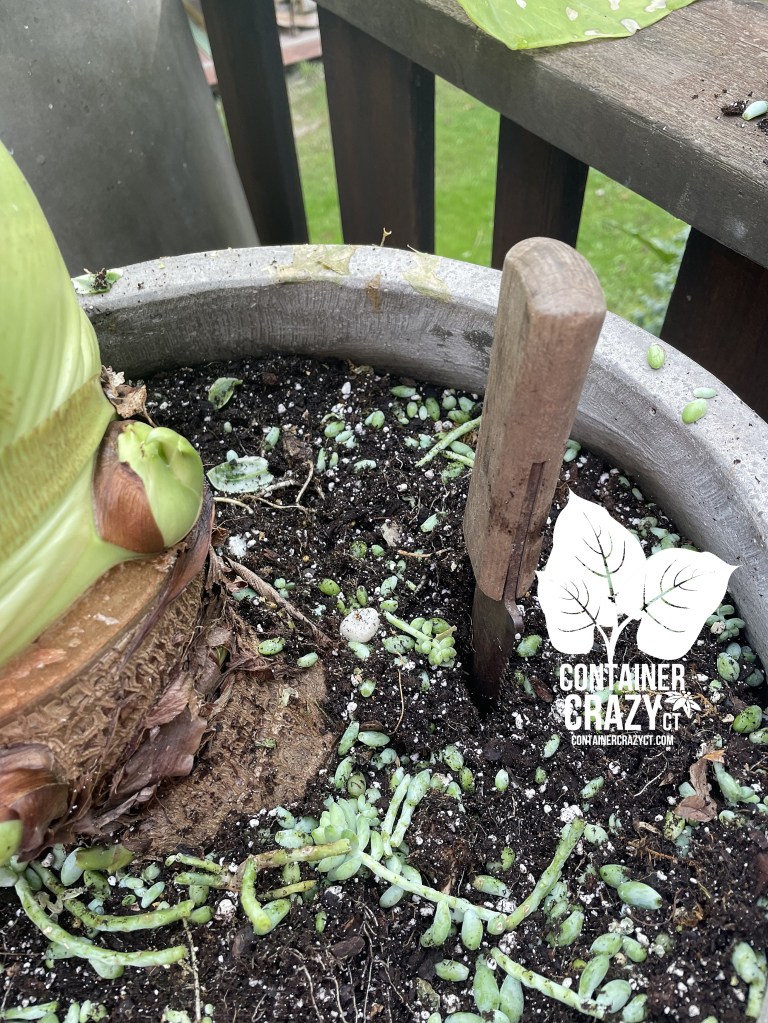
After removing each stalk, I use my Hori hori knife to cut around the base of the “stump” in the soil. As I push the knife around in the soil, I hear the crack of the roots being cut. Then I will push on the stump back and forth to help loosen it. Once I feel it is ready to be “delivered” from the soil, I start to pull it out – It always makes me feel like I’m a doctor delivering a baby – hahahaha. I have quite the imagination at times!

Cutting a circle around the base of the plant to cut the roots below
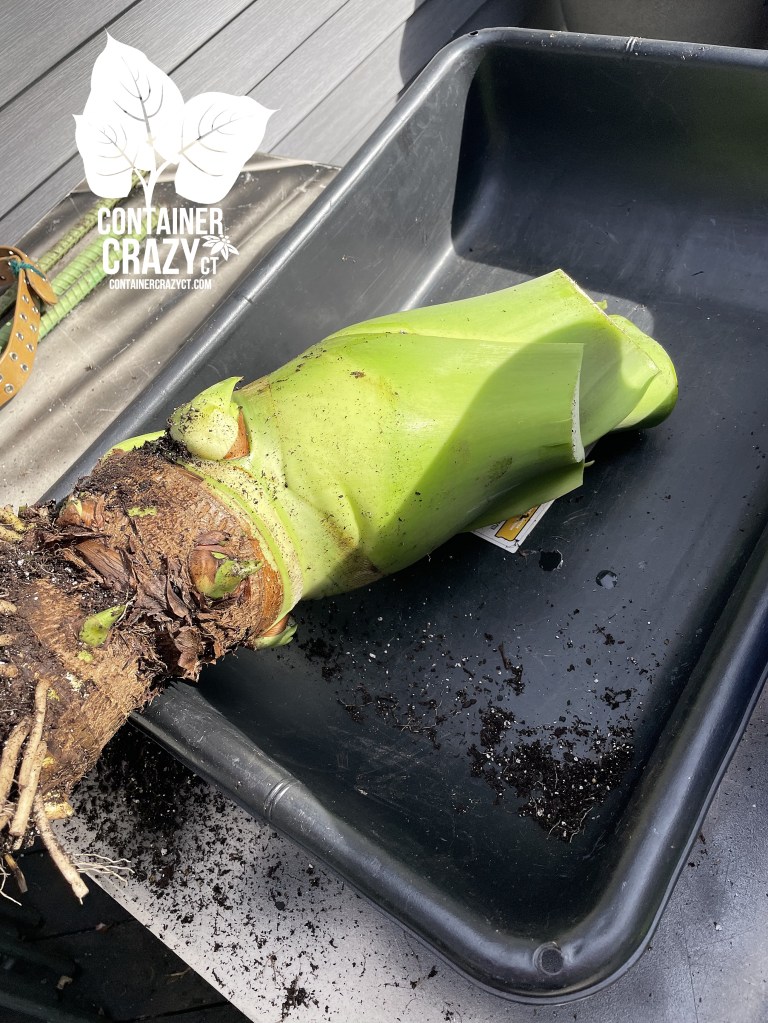
Out with more top sliced off

I will put it in the clean bin and trim the roots with clean sharp pruners or cutters, and slice the top off a bit if it still too big to fit into the bin. Leaning it upside down, or on the side to help drain excess moisture is helpful as well. Some folks may recommend not trimming the roots but I always have. New roots grow when it is replanted. My theory was less “fleshy” material the better. Fleshy material has the tendency to rot sometimes over the winter months.

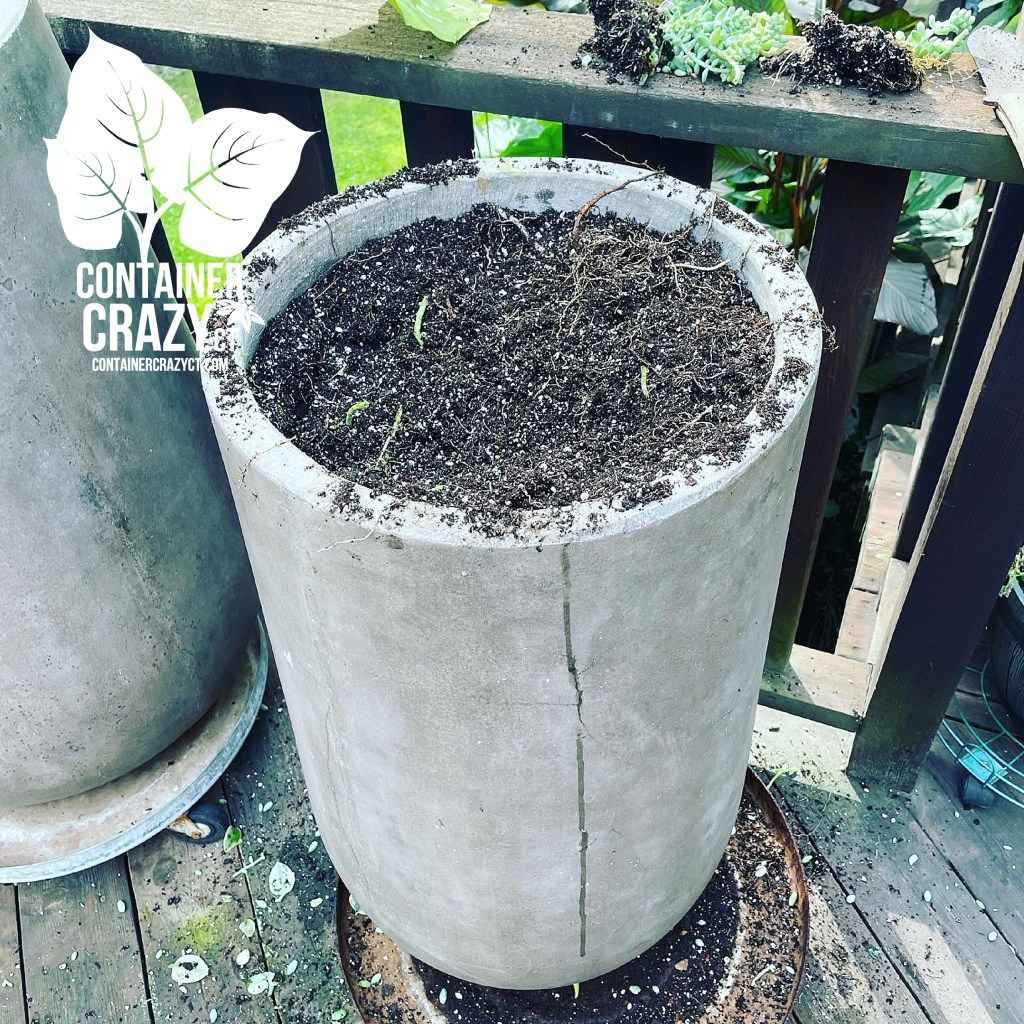
After I got the massive big base out and laying out to dry, I worked on the planter next to it which had more off sets from the same type of Alocasia. I then let this dry in the house for about 6 days. Oh, I also removed as much soil as possible from the tuber areas. I used my gloved hands and kind of just rubbed or pushed off the soil. You may use a garden hose with water blast but that will only make the tuber wetter, so I didn’t do that. In the past, I have used a soft painters type brush to get soil off.

TIMING

In Connecticut (my planting zone is 6b) you may do this process either before or after we get a fall frost which could happen anytime now, but sometimes I like to start this while things are dry and temperatures are not too difficult to work in, so I started on these two planters last Thursday (9/29/22). It was a cool, breezy, day with little sunshine but that would be better than the rainy cold days expected the days following. The date if this post is 10/4/22 and no frost yet, but there are some talks it could happen this weekend, I hope not, cause I have lots more to do!

I placed the bin in the house for a few days and then moved it to a table in my basement. The next phase is storing them. For years, I stored all my tubers, rhizomes, corms in peat in bins with air holes drilled on the tops. But this past spring, I had rot on portions of my tubers. This year, I plan to store them dry in paper bags for some at least. I will most likely test the paper bag process and see the results. I will post photos of this soon. I also saved some mesh netting bags (like those used for Avocado’s in grocery stores) to put some tubers in.

Oh, when I took these apart last week from the gray planters, they had NO ROT anywhere on the tuber areas (brown area at the base) which is good news. No rot means they won’t have rot as they dry for a few more days. When I store the tubers, I will share it here as well.

The tubers need to be sored in a cool, dry place. I use my basement which does not drop below freezing but is unheated so it stays cool. It is recommended that you do not store them in plastic bags which would only trap moisture. If stored in a paper bag, make sure it has holes for vents. Again, for years, I stored them in peat moss in bins, but had rot issues this year in spring, and I didn’t want to loose these tubers of this super big Alocasias, now that I’ve regrown these plants each year. These particular tubers were from 2019 so it has been replanted 4 times now. A definite pay back from the investiment!

PLANT IN SPRING

Next year, after all danger of spring frosts, I will replant these Upright Elephant’s Ear tubers to grow again. Many tropical loving plants may be handled this way, such as Canna Lilies. For years, I stored my big red banana plant, Ensete, the same way as shown above. In fact, here is the link to the Ensete post if you are searching for it on my blog site: https://containercrazyct.com/2013/10/31/storing-my-big-red-banana-plant/. Unfortunately, I lost my big red banana plant this year in 2022. It was the first time it rotted too much.

NEXT OVERWINTERING PROJECT

Ack, I have to dig all of these up soon – anyone want to come help me?!

Canna Lily on ends with Upright Alocasias in the centers

Cathy Testa
Connecticut
A Container Garden Designer
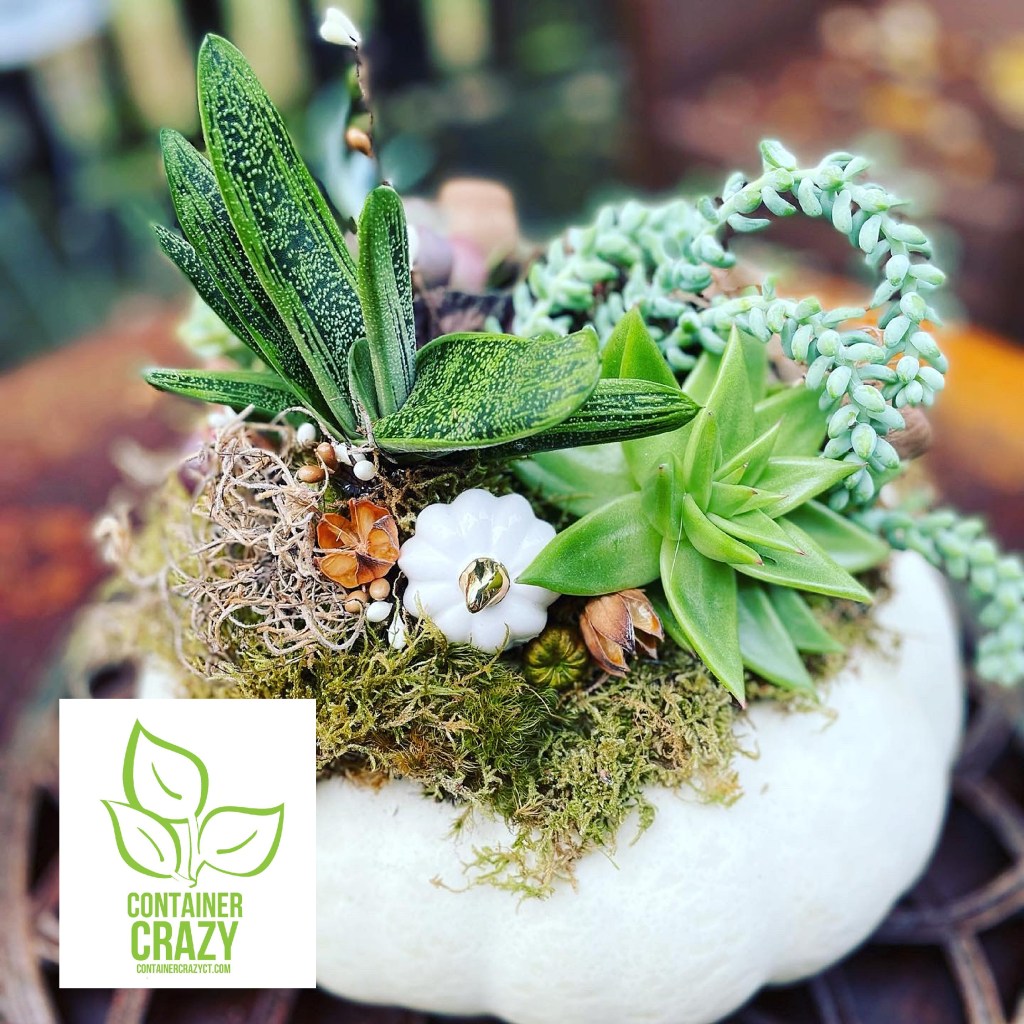
Also make custom orders, grow tomatoes in spring time, make succulent pumpkins now in fall season, wreaths during the holidays! Thank you for visiting and your support.

DIASSEMBLY ALOCASIA QUICK STEPS:

Get your tools ready (knife, gloves, bin, hori hori knife, cleanup tools, etc.).
Cut away each leaf stalk at base cleanly.
Cut around base of plant in the soil area to break free roots with hori hori knife.
Pull out stump (base with the tuber) out of the planter, and let dry for several days to a week.
Store in an unheated, dry, cool area that does not go below freezing in winters.

For a Wall of Flowers, Use Mandevilla Tropical Plants in Container Gardens

Leave a comment

Mandevillas are amazing flowering tropical plants for full sun locations in the summer in container gardens and planters, and I always enjoyed looking at them, but for some reason, I didn’t plant them very much at my own home location, until a couple years ago, when a clients’ needs to cover a wall with flowers lead me to paying attention more to mandevillas.

Perfect for walls, trellises, arbors and more…

If you have an area to grow a beautiful flowering plant upwards, such as a wall, trellis, lamp post, arbor, stair railing, fence, mailbox, or in a pot with a support trellis, these plants are perfect candidates. In Connecticut, mandevillas will bloom profusely on upward growing vines with big dark greens leaves when provided enough sun and heat, and appropriate growing conditions. They work very well in containers, planters, patio pots, and don’t even require super huge pots to thrive.
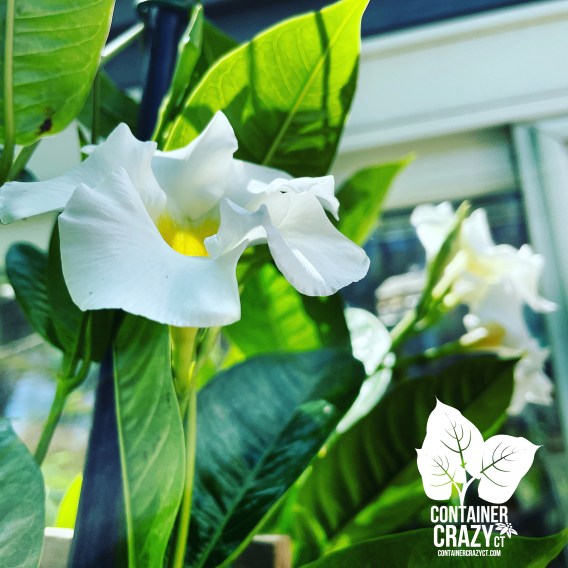
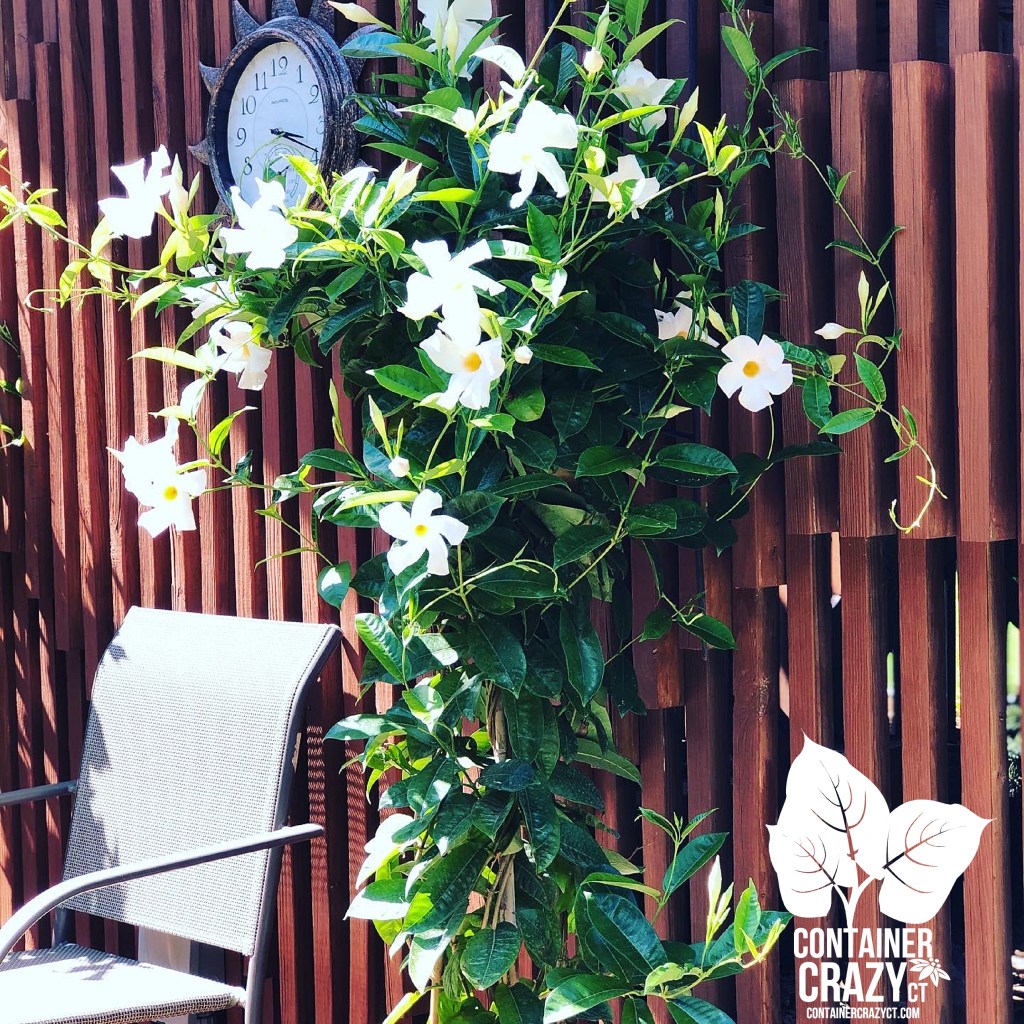
Mandevilla at a Client’s Home

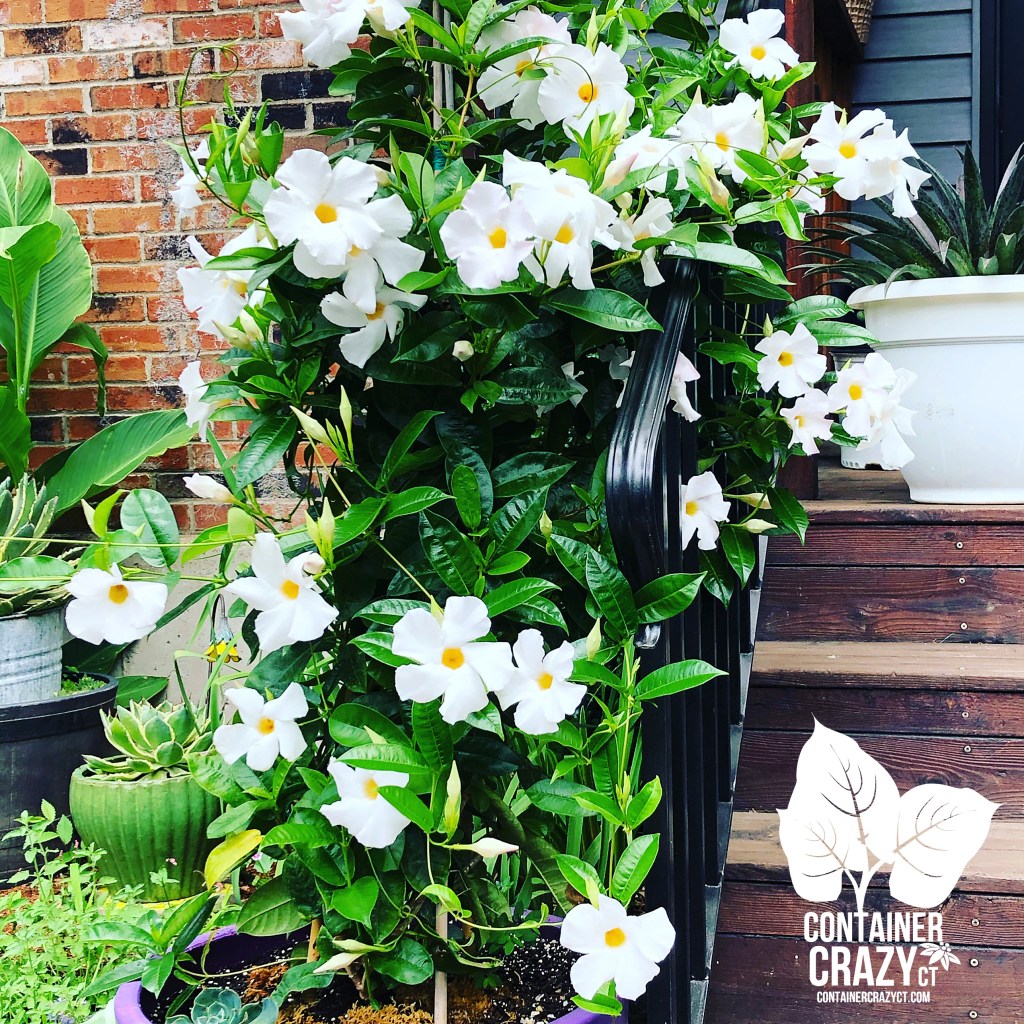
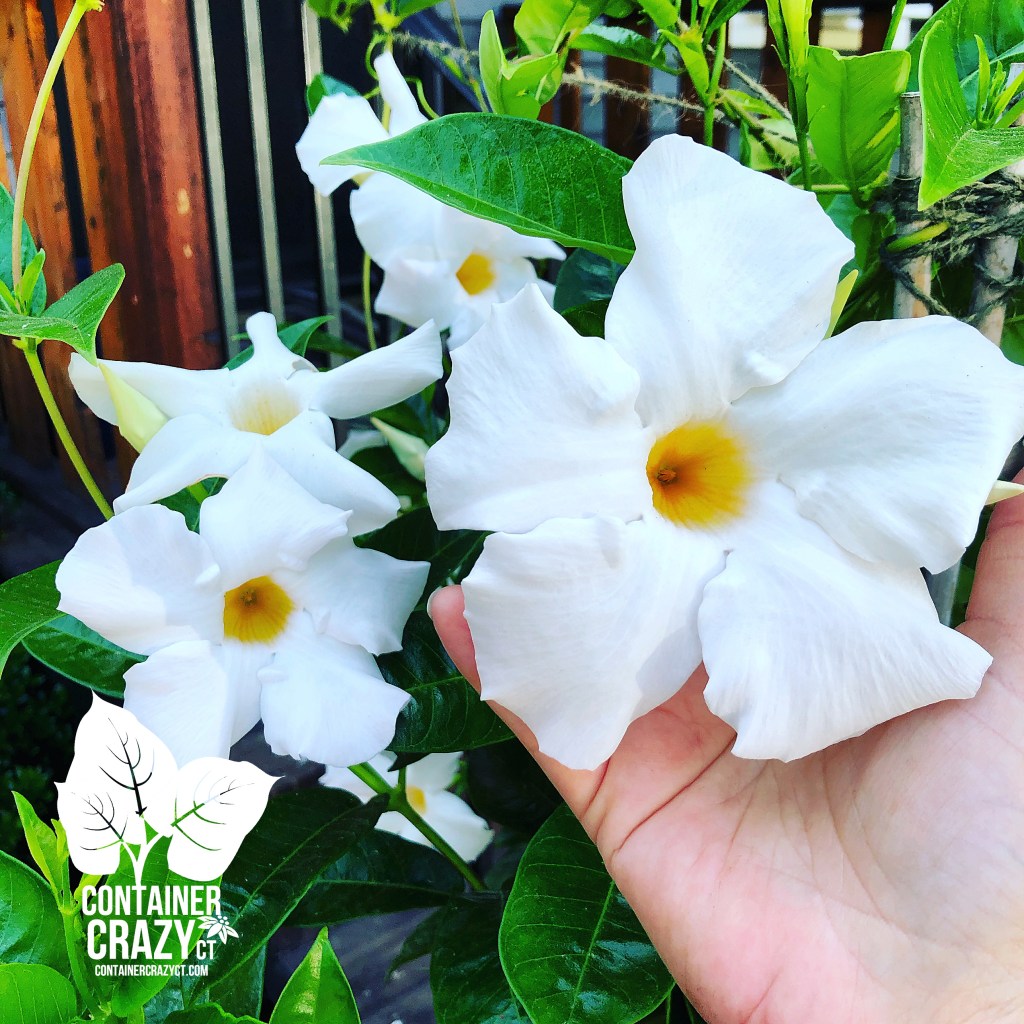
Above is an example of a wall located below an upper deck. The white blooming mandevilla vines were very lush and full, growing from a planter about 24″ diameter and just as deep. It was facing the sun most of the day, and it looked absolutely fabulous, reaching the top of their deck that year. These plants will twine fairly quickly onto supports with many funnel formed flowers opening over the course of the summer to fall season in Connecticut. They must be taken in before fall frosts or overwintered immediately after being touched by frost. See my “Overwintering” posts for more information on that aspect.

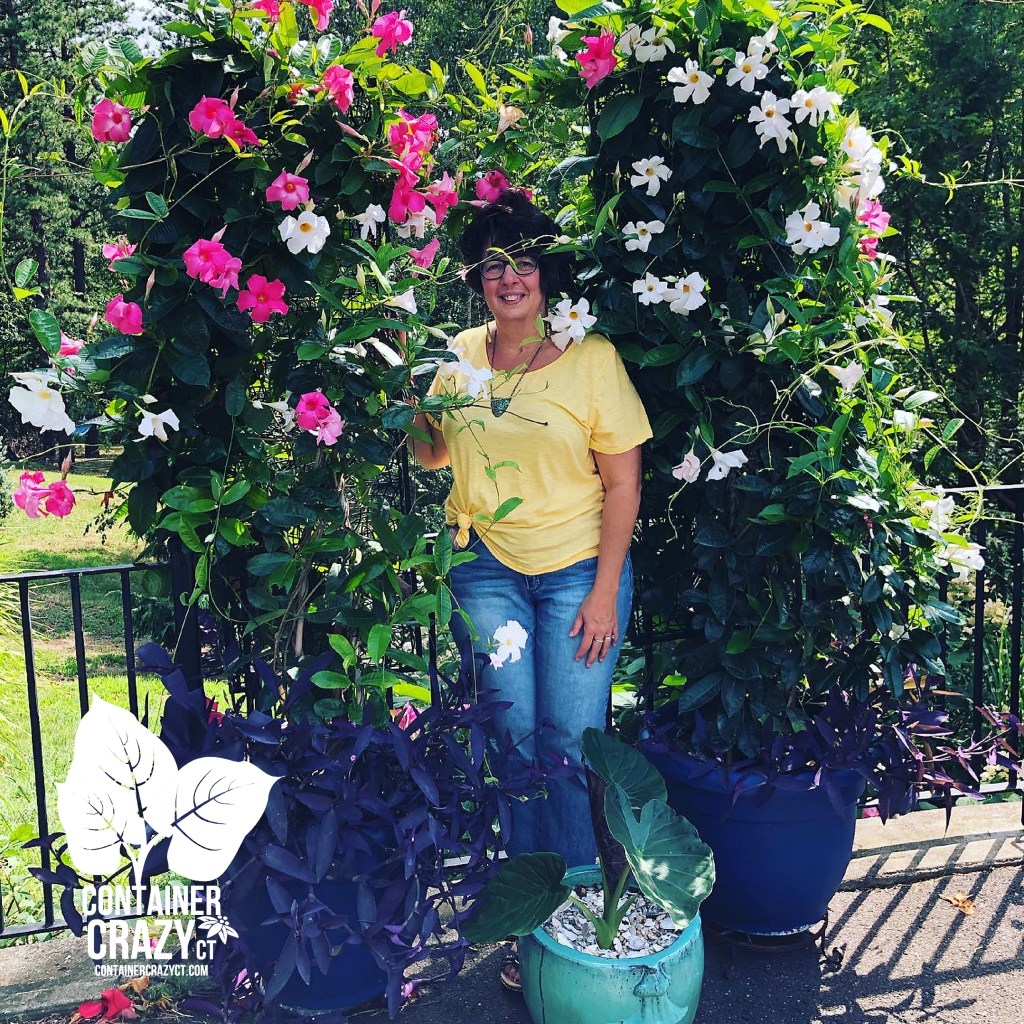
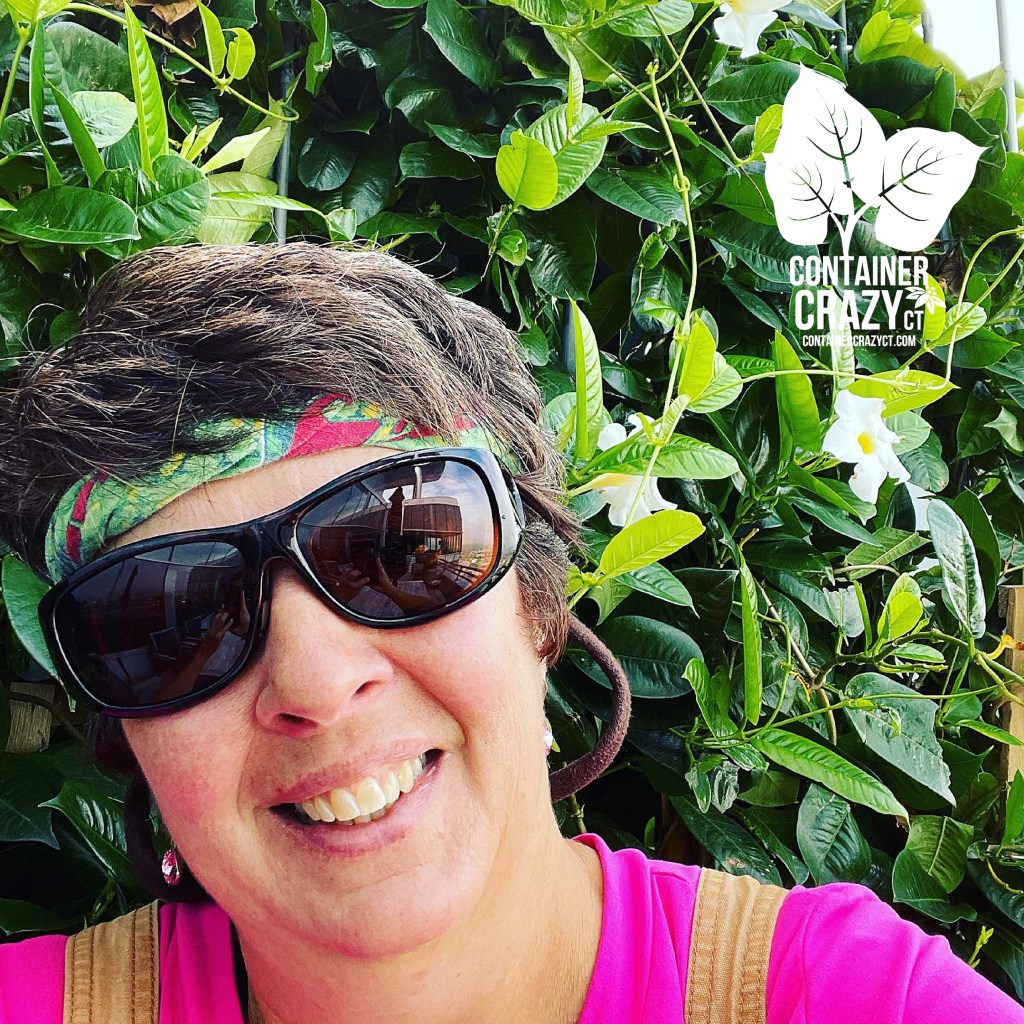
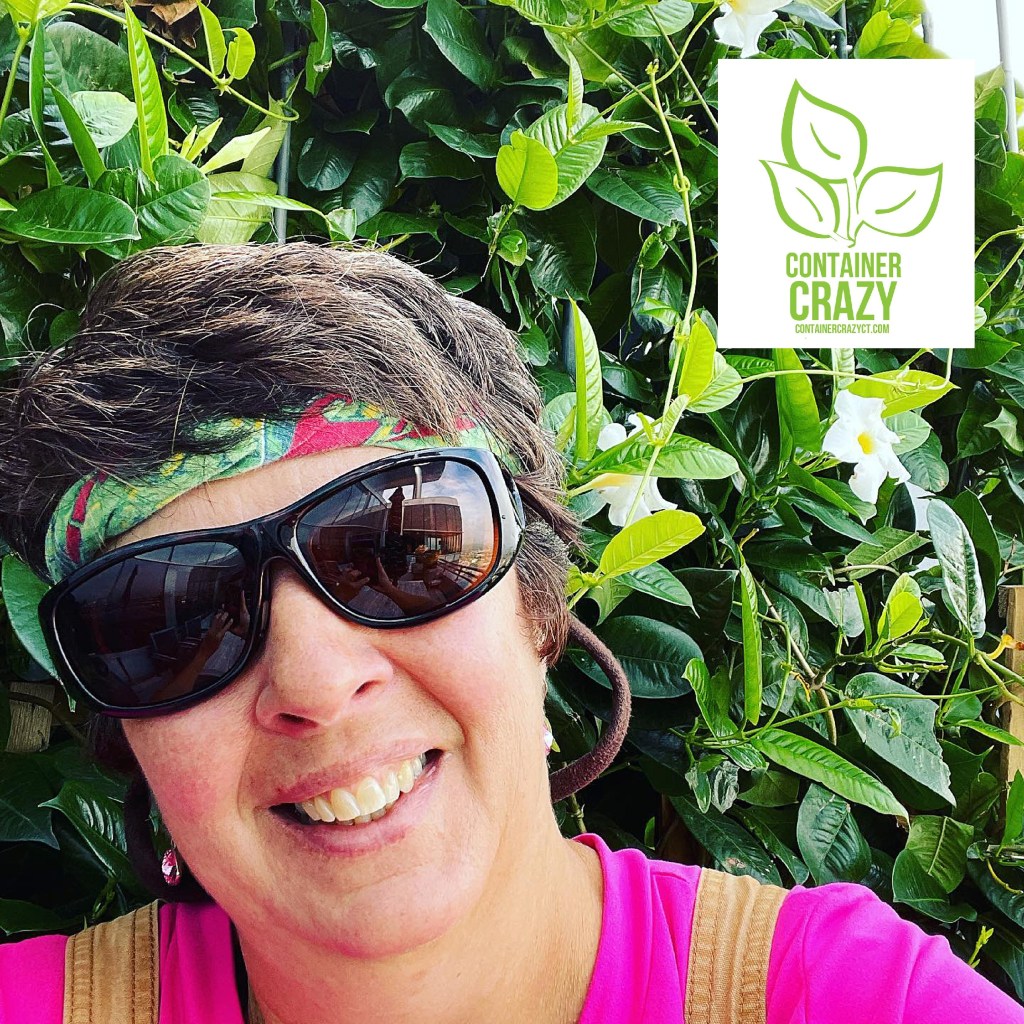
Cathy Testa with two Mandevillas at her home in Broad Brook

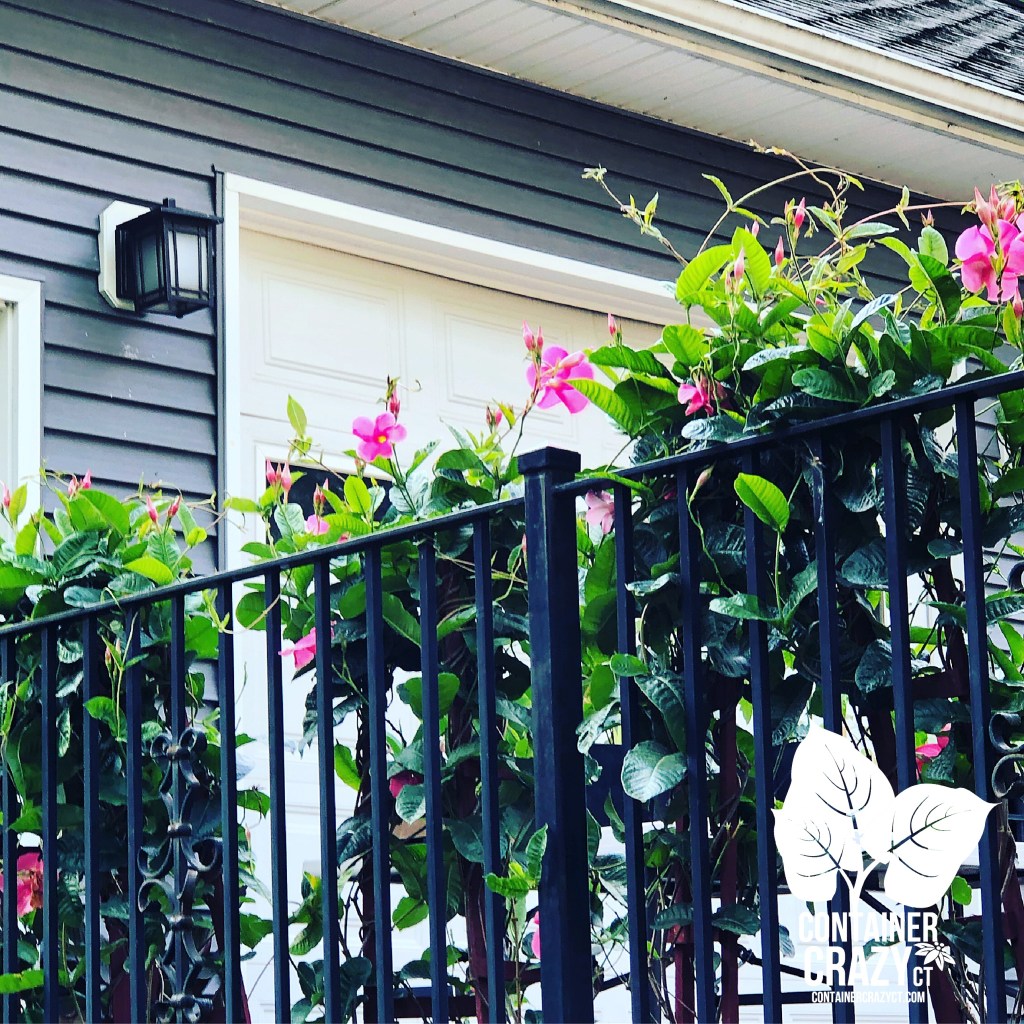
In the next photo, here I am in between two plants in blue pots at my home. The base plants (serving as fillers) are Tradescantia pallida ‘Purple Queen’ (annuals in CT). I put really tall trellises in each pot along this wrought iron fence, which is on the driveway where the plants got full sun all day and my watering hose was easily accessed. You will see they were growing taller than me and if the trellises were higher, they would keep growing up and up and up.

In a Pot Growing Up a Staircase Railing

And I wanted to grow one up my stair case railing to reach the overhead arch, it almost made it to the top. It helps to use garden twine to guide it along and give the vines something to reach and attach to as it twines up. The purple pot below used for it is probably about 2 feet deep, but you may grow these plants in even smaller pots. More on that later.

Side View on the Driveway
Cathy Testa standing in front of a Wall Planted with Mandevilla Plants

And here is a photo of me with the mask on, primarily because I wanted to show the timing of this photo, of a wall I just planted. It wouldn’t be long for the plants to produce more blooms. It does help if you start with taller plants if you are looking to gain the affect of covering up something like the wall in this city photo. They will grow as high as the support system they can attach to. If I had a higher wall here, it would keep growing up all summer. They don’t grow as fast as morning glories, as an example. The growing pace is moderate, so if you want to get one to really show off, get the taller specimens to start with. They may be a pricy but so worth the display and enjoyment you will get by using one or more in your outdoors spaces.

Reaching for the Heavens
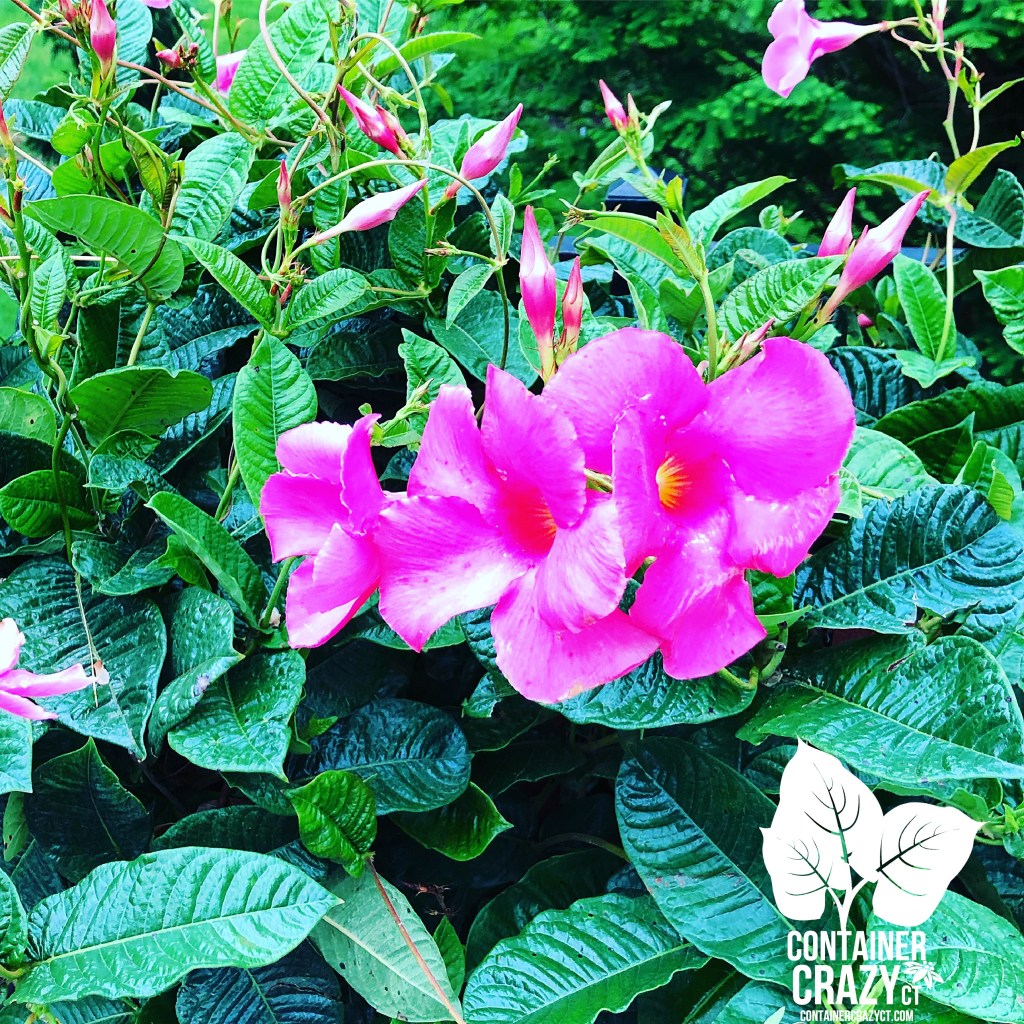
Gorgeous Pink Blooms against dense foliage
Stunning Against Blue Skies!

Moderate climbers that keep on growing up…

Mandevilla vines will reach to the heavens, if you allow them to – they seem to never stop wanting to reach up into the skies. If you are able to acquire taller specimens to begin with, it is worth it in my book. They come in white, pinks, and reds for bloom colors. I haven’t grown the red ones yet, maybe this year will be the year.

Funnel Shaped Flowers
Masses of Pink Blooms

Inspecting the leaves

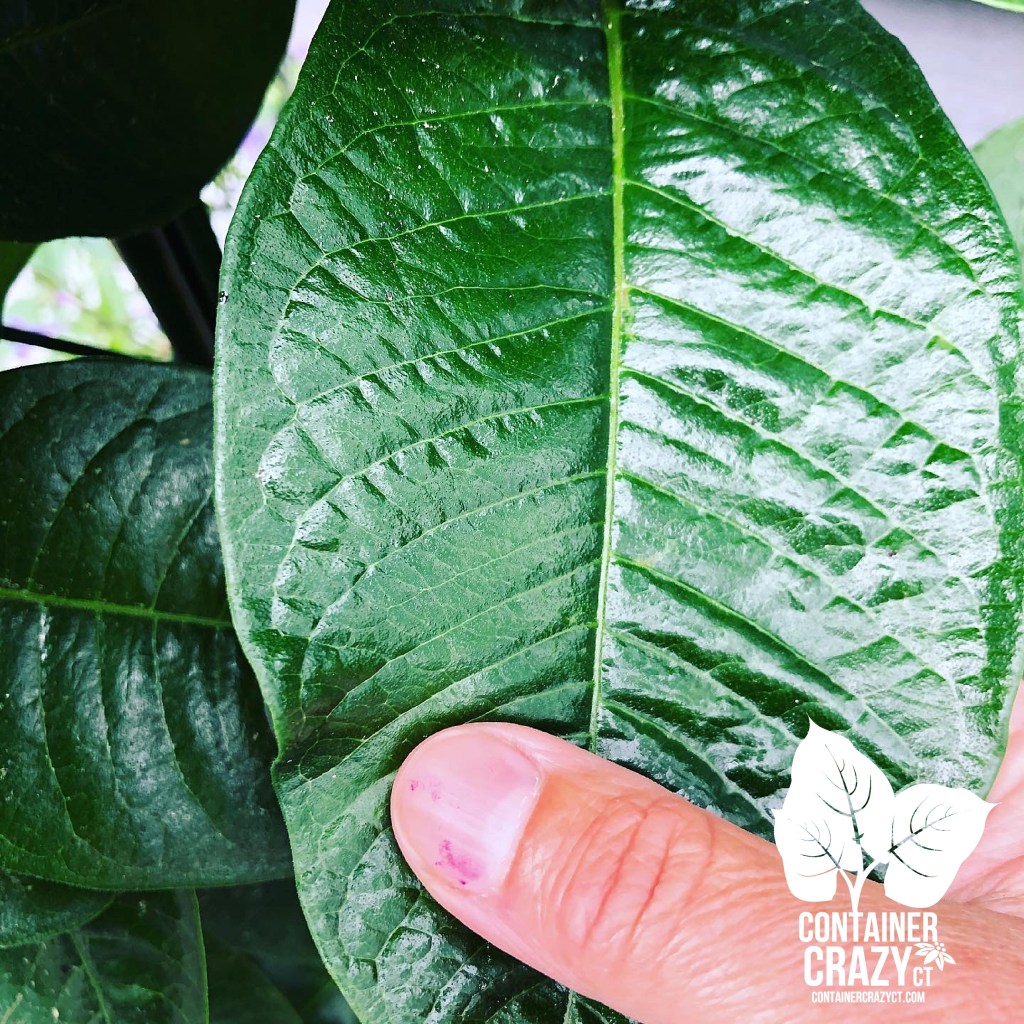
Some of the varieties have glossier leaves than others. The leaves on the white blooming one, in my photos, were about 4-6″ long. A good tip is to inspect the foliage when you are looking for one during out Connecticut container gardening growing season, and although you might experienced a stressed leaf or two based on when they arrived in Connecticut (cause most of them are shipped here from warmer states), they usually bounce back quickly when potted up and provided the right soil environment and sunny conditions in your planters. It is not to say they don’t suffer some minor issues, but a good tip, again, is to inspect your plants. See a healthy tall one – don’t hesitate to grab it.

Now that is a HEALTHY A** LEAF!

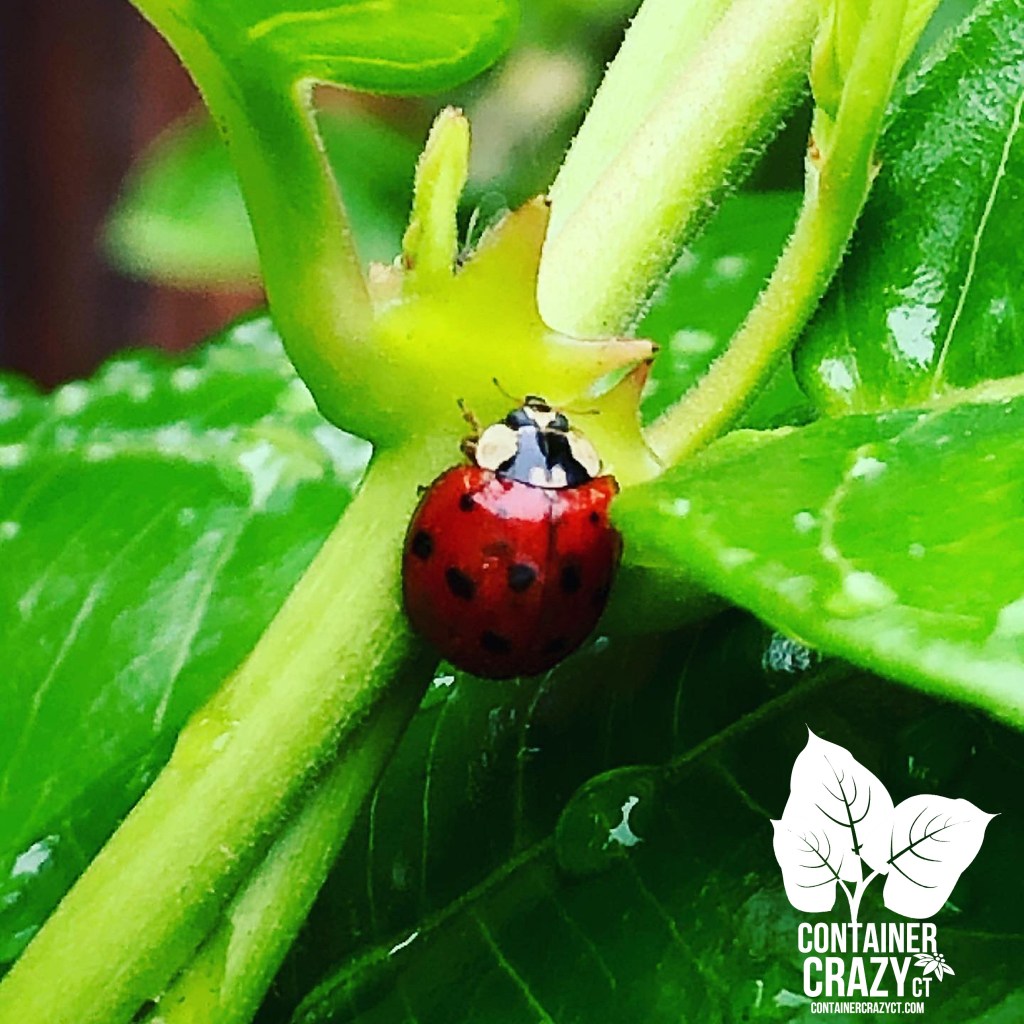
Sometimes I admire foliage of plants more than flowers, especially when they look almost perfect. Not always achievable because we are not plant Gods, but the leaves on this plant that year, wow, so shiny and healthy. To achieve good results, be sure to have well draining soil, use pots with drain holes (see my 5-Must Do’s for Container Gardening), and inspect the plant from time to time. Sometimes, during inspections, I may discover nice insect visitors, like bees, lady bugs, butterflies, and moths.

A very WELCOMED visitor – Lady Bugs are great for eating any bad bugs!
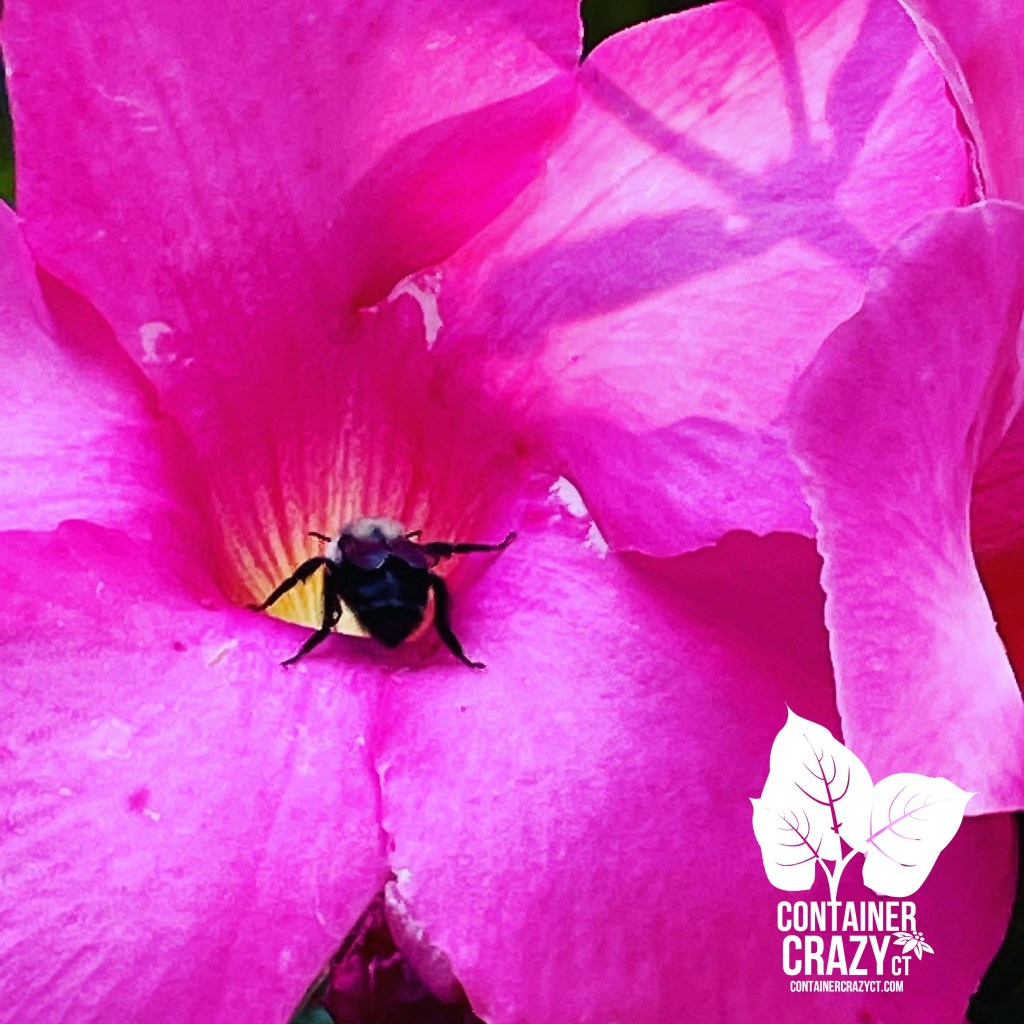
Bumble Bee Heading in for a Landing
Bee Deep in the Tunnel Funnel

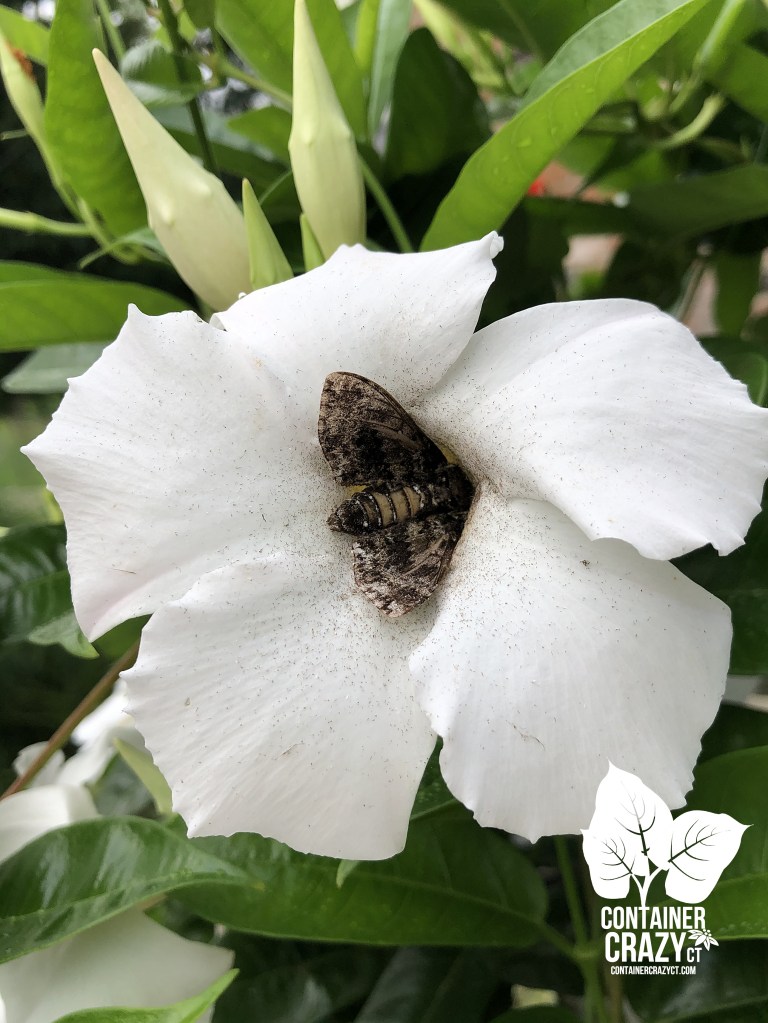
Moth – Awakening from His Night Visit

Not damaged by serious pests, but bothered if conditions are not right…

So far, I have not encountered serious pest (bag bug) problems on mandevilla plants, but I do think they don’t like “inappropriate environmental stress” and things like too cold of temps, or too much wind, or neglect from not watering regularly. Those aspects will weaken them, and you should also avoid areas with high salt (maybe road side). Do not plant them in containers or your patio pots in Connecticut outdoors till well after all chances of spring frosts. So, you would plant them around the same time as you put out your warm season vegetables, like tomato plants.

Heat, sun, and well-draining soils…

The plants want heat and sun, well-draining soils, and appropriate watering. These are tropical vining plants and they don’t like the cold, so remember that on your timing in spring time. They want warmer temps at night so even if the an early spring day feels okay, the cold temps at night are not good for them in early spring before frosts. Also, for more blooms, get some bloom booster liquid or water soluble fertilizer and fertilize a couple times a month in the summer after the plants are established if you feel there are not enough blooms being produced on your plant. It is a good idea, like most tropical plants or plants indoors over the winter, to acclimate them to outdoor summer conditions.

Acclimating a Stock on My Driveway
The In and Out Year

One year, I had to pick up my mandevillas orders earlier than normal, so I literally moved them in and out of my greenhouse during the later part of April into mid-May before planting them at a location. I didn’t want to subject the plants to cold temperatures of the evenings, but I also wanted to give them natural sunlight during the days (on good early spring days). It was a “Mandevilla Workout!” As noted above, do not plant them until around Memorial Day in our area of Connecticut (Zone 6b). They are from areas of warmth, sunshine, and moisture – so remember these 3 environmental conditions for your mandevilla plants. If temperatures drop or if you put them out too early, your plant will experience stress, leaf drop, and potential diseases later, so be sure to protect them from the cold in early spring before frosts if you pick any up early in the container gardening season in Connecticut. An occasional drop in temps in the summer is fine however if we get some freak cold (like we did last year in 2021 on Memorial Day weekend!), they should bounce back from the heat of summer, which mine did that year.

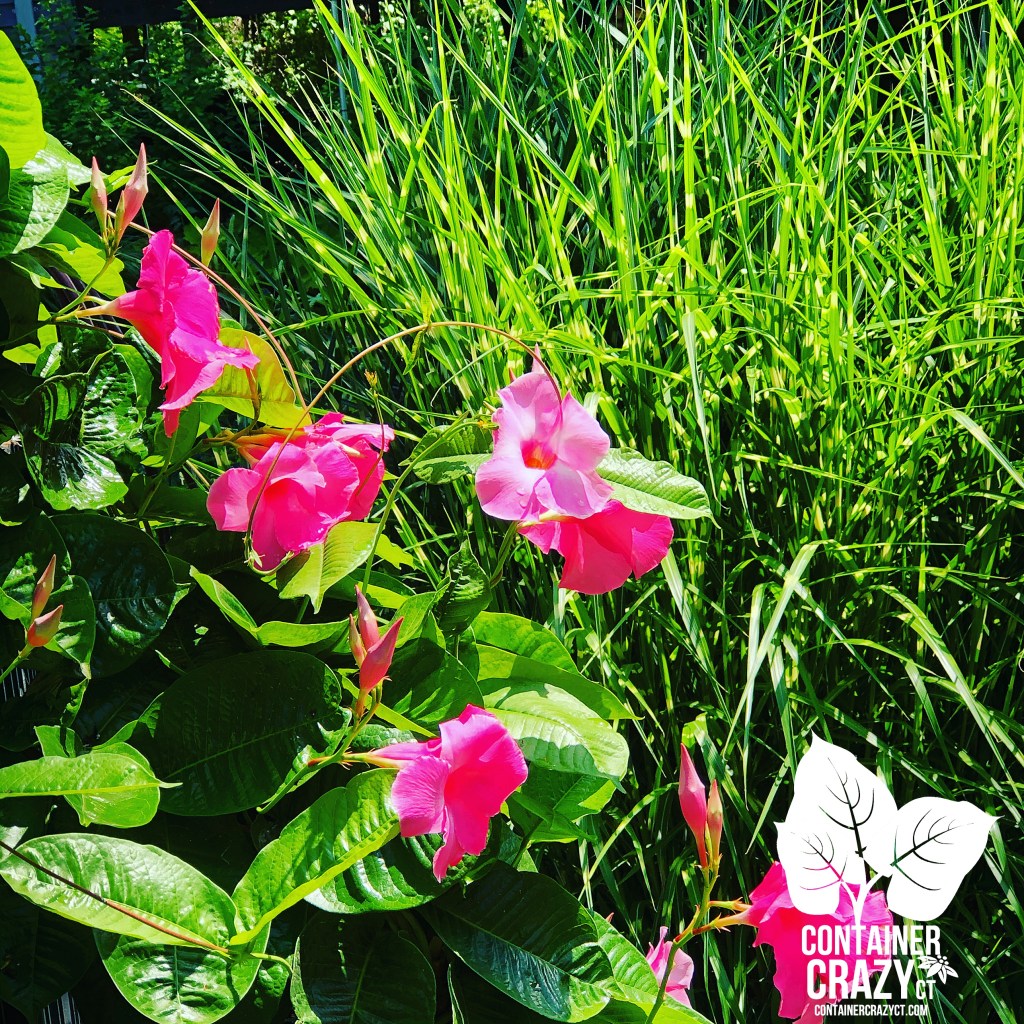
Pretty with the Ornamental Grass nearby

Of course, you may plant them into the ground but I typically do not do that. In this photo above, the pink mandevilla is in a pot below my driveway climbing up and an ornamental grass is in the background, which I thought looked lovely together as a combination.

Cathy Testa of Container Crazy CT

As you can see, mandevillas make me happy. I love planting them and watching them grow all summer long. They turned into a plant I barely gave a second glance to, to one I can’t stop admiring now. I hope you will admire them too.

Pots don’t have to be really big…

And I noted you really don’t need big pots. Sources will say keeping them in smaller pots will force the plant into growing the top part of the plant more rather than focusing on growing roots for Mandevilla. In my experiences, I’ve done both, repotting into a 22″-24″ diameter planter or inserted the nursery pots into a larger planter, but be sure to allow draining in either scenario from the base of the pots. And the soil is best on a organic side. I have amended the soil with aged compost in pots with potting mix. I tend to space them right next to each other when creating walls in big planters. However, in gardens, it is recommended to space them apart by 8″. Probably the best maintenance tip is to water them regularly and not let them dry out too much. They have thick chunky root systems, so if the pots is smaller, you may see the nursery growing pot expand as the roots are trying to move around, pushing against the sides. In those cases, I’ve used a razor knife to cut the pot off the root base before planting them.

Cathy Testa
Container Garden Designer
Broad Brook, CT
Zone 6b
All photos are taken by Cathy Testa
See also:
www.WorkshopsCT.com
www.ContainerGardensCT.com
P.S. I plan to get more mandevillas this year, if local, e-me!

Fall is Fantastic

2 Comments

We are having a wonderful spout of good weather in Connecticut this year, 2021, during our fall season. The temps have been just lovely, no more rain (like we had all summer practically), and minus the mosquitos here, the fall weather has been fantastic to continue my various plant projects.
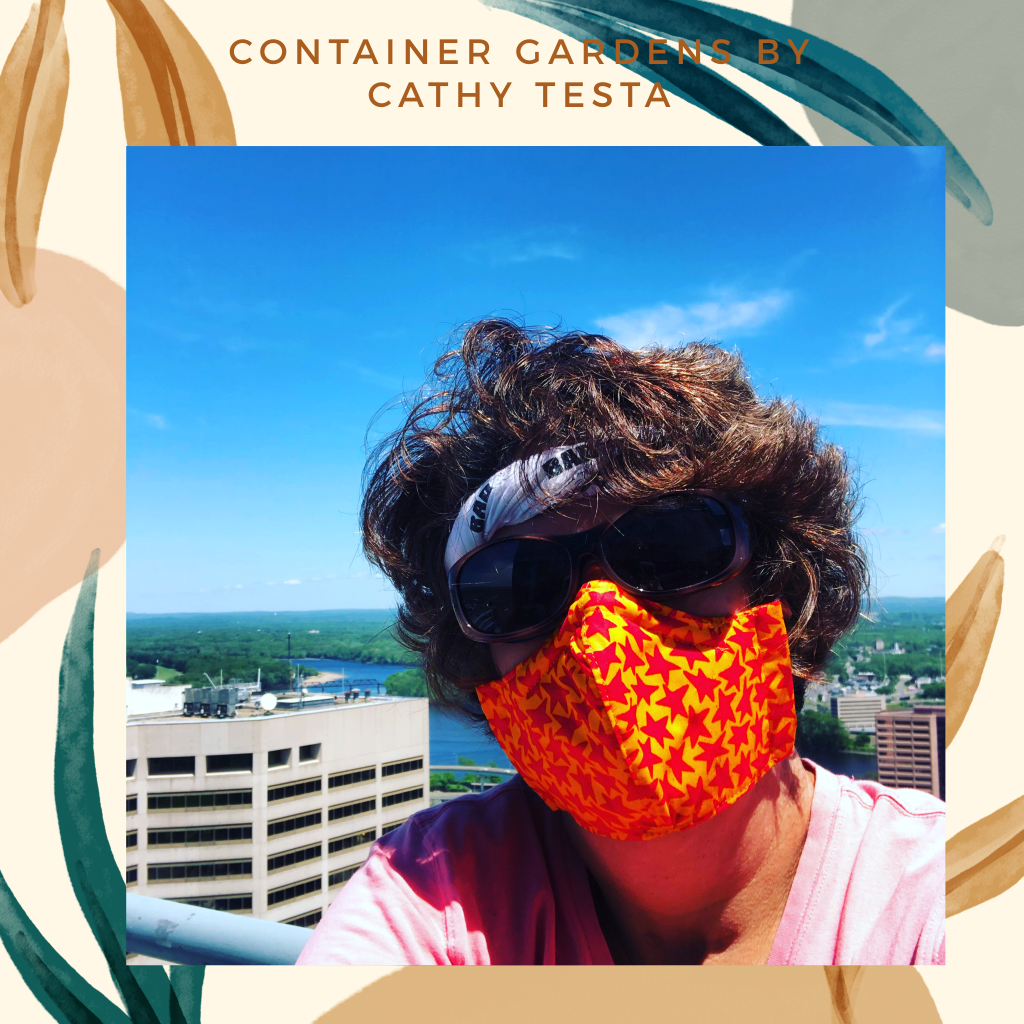
I am still taking down some of my tropical plants at home to store and overwinter, while finishing up some container garden installations for the fall season for clients, and also making beautiful custom made succulent topped pumpkin centerpieces for my orders.

I thought I would show some photos of various projects I’ve been doing, jumping from one project to another this month of October 2021 in Connecticut.

Cathy T holding a banana leaf Oct 2021

Well, here I am, holding a very long banana leaf from my red banana plant (Ensete ventricosum ‘Maurelli’). It is not hardy to our zone (6b) so I take it down every fall. It has become a ritual. I never had any issues with storing it as described on this blog via other posts (search Overwintering or Ensete), but this past spring, when I took the “stump” out of the storage bin, it was a little more damp than usual. I figured it was due to no air holes in my bins, so I drilled some very small air holes in the bin covers for this season. Or maybe it was the “new peat” I bought that stayed too damp, I’m not sure, but I have done this process again! Cutting down each leaf, chopping off the top of the plant, then storing the base. (See more photos below). People liked this photo when I shared it because it really shows the size of the planter, the plant’s leaves. I’m 5’6″…so, you can see how long these leaves grew this season in 2021. You may notice the plant is in a big black pot, I usually plant it directly into the big cement planter, but got lazy this year, and it did just as fine, the roots went thru the drain holes into the big planter below. I also fill this planter with Castor Bean plants, other Alocasia and Colocasia plants, and other perennials, etc.

Callicarpa Beautyberry Shrub Oct 2021

This is not a tropical plant above, it is a deciduous shrub, called Callicarpa. Just look at the purple berries this year! The foliage is a lime green (normal color). But this year, the berries have been abundant and really a deep purple color. I wondered if our abundant rainfall contributed to the color being so intense this season? I planted 3 of these side by side by my deck at the ground level years ago and I remember taking a measuring tape out to ensure I was giving it the recommended distance for spacing. People notice this shrub right now – it is beautiful. It makes a nice shrub for massing together as the branches arch and fill the area. I had cut it back in early spring and it performed nicely. I’ve never seen birds eat the berries, even though some sources say they do. I’ve never tried to grow it from seed, perhaps I should try to do so. Mr. Micheal A. Dirr’s manual indicates the seeds require 90 days cold stratification.

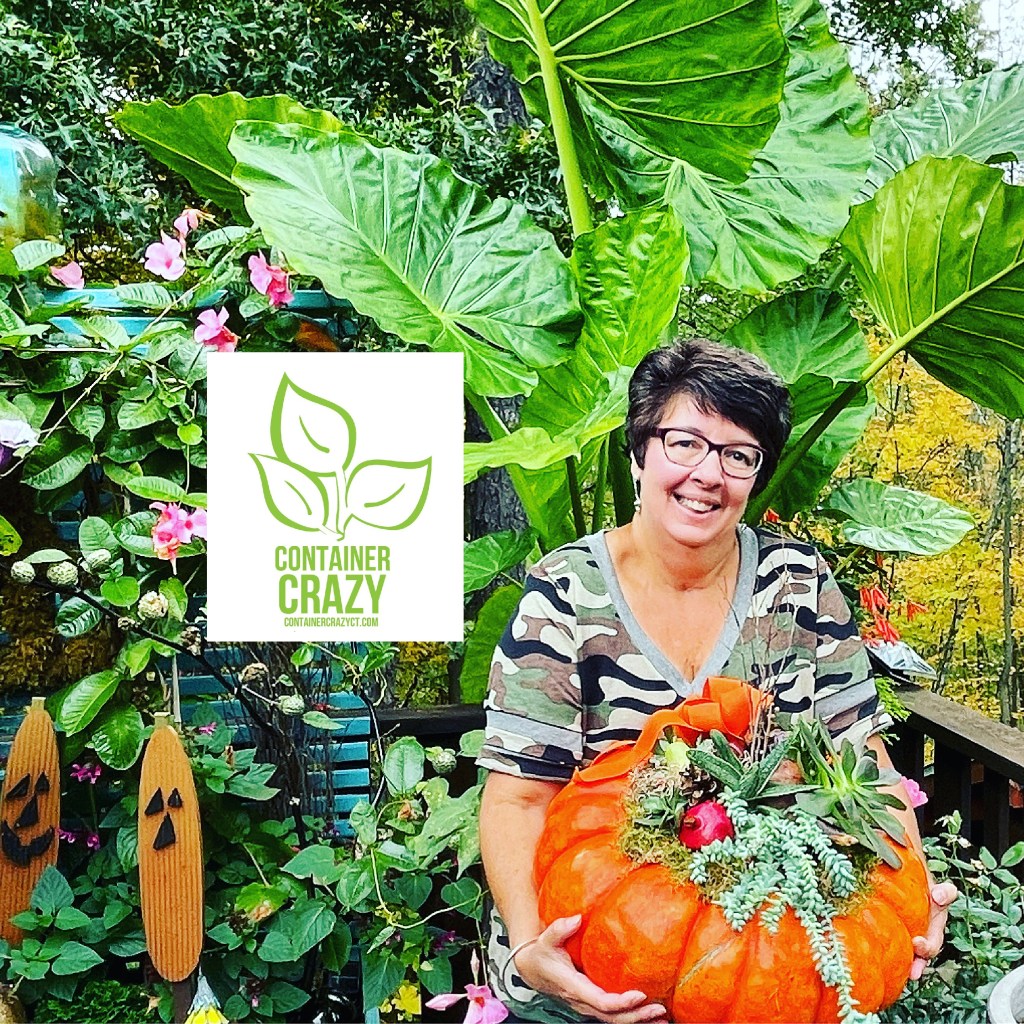
Cathy T holding a large Succulent Topped Pumpkin 2021

Yup, that’s me – trying to hold onto this very heavy and large succulent topped pumpkin I made for an order. Isn’t it beautiful – and so are the plants behind me! I could barely hold the pumpkin long enough for my husband to take a photo.

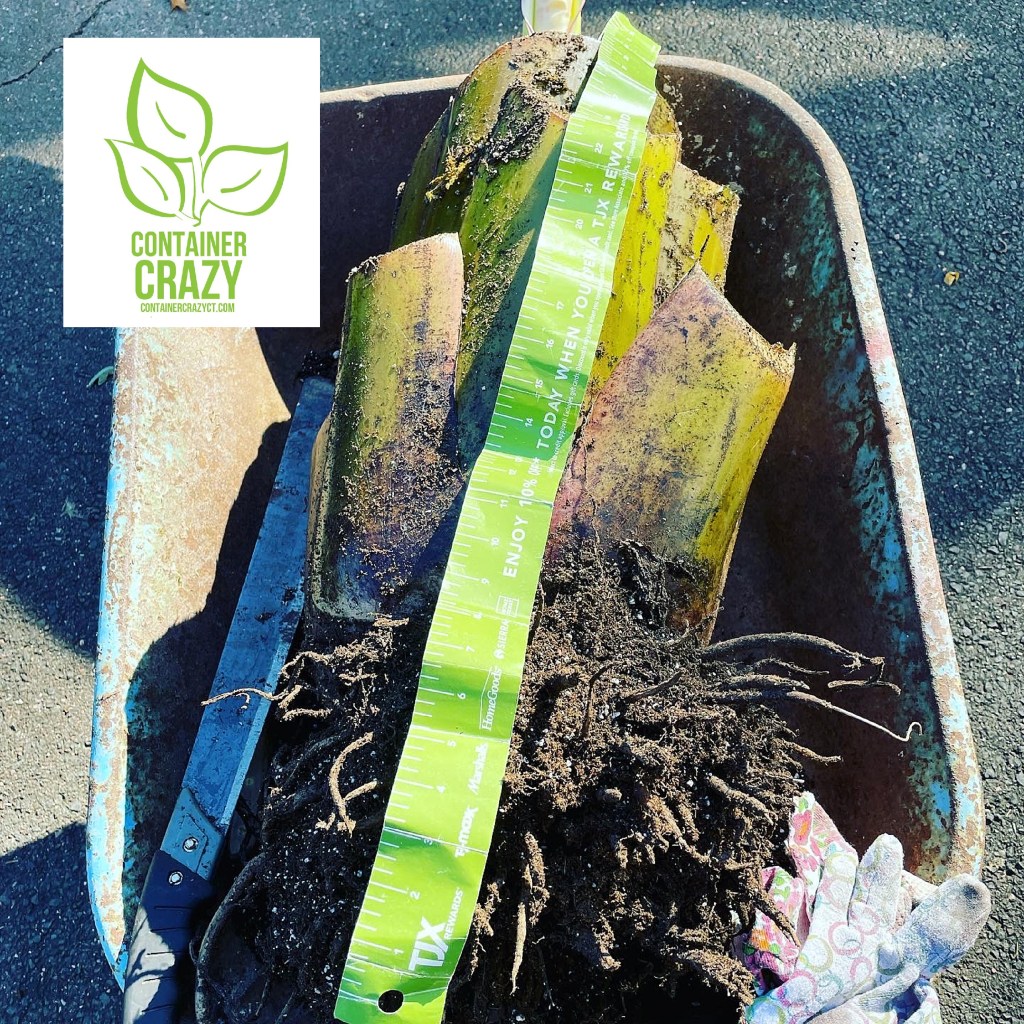
Ensete stump
Ensete stump

Referring back to the top photo of me holding the red banana plant leaf, here is the stump I dug out after chopping off the top. I use a machete. This stump was left in my garage for about a week, mostly because I was busy doing other fall plant project, but also to allow it to dry out somewhat. It is still moist from the water held in it, so a good suggestion is to tip it upside down and let the water drain out of it after removal from the pot or ground. I did have to cut off more of the top to fit it inside my storage bin which is about 3 feet long. The cover barely shut – this stump is a doozie! (That is heavy and big).

Container Garden by Cathy T in the month of October at a client site

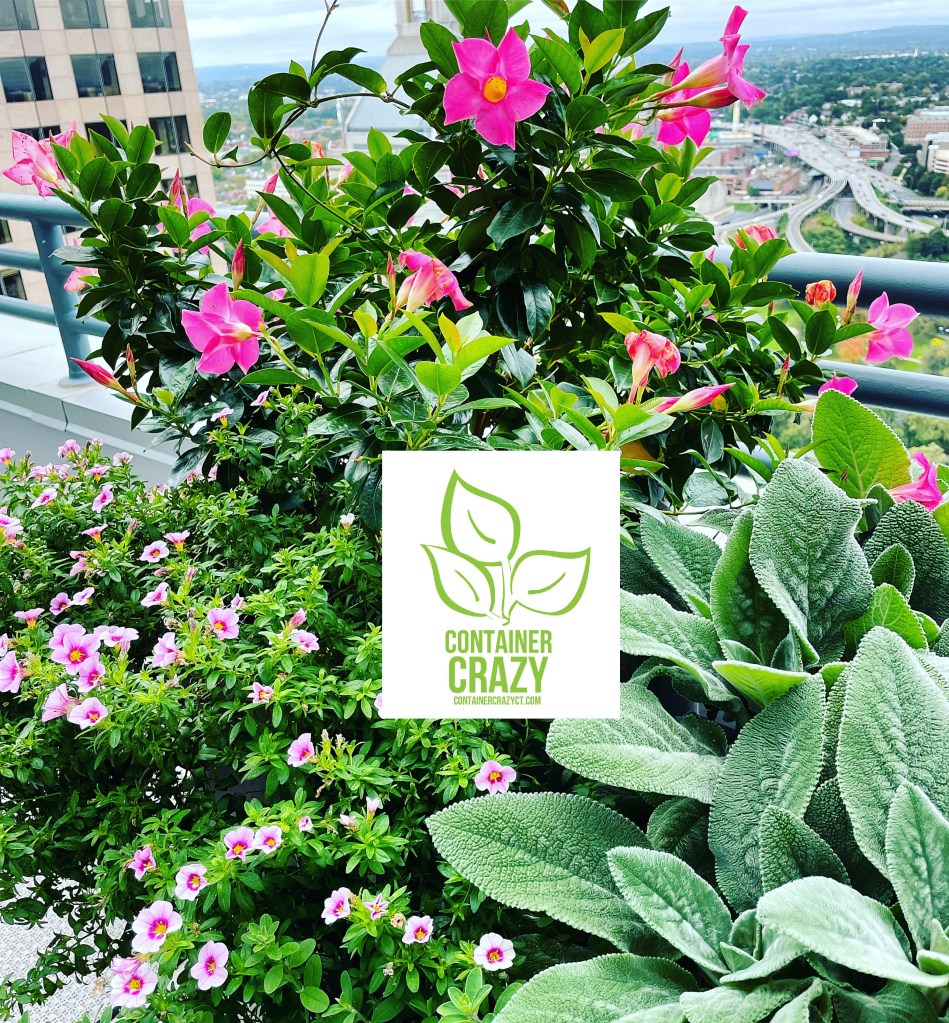
If there’s one thing I will tell the plant Gods when I visit them some day, is, “THANK YOU!!” for offering me the wonderful opportunity to plant on a high rise. This is an October photo of just one of the many container gardens I install at this client site, and it is full and lush. I love how the fuzzy big leaves of the Lamb’s Ears plant grew extremely well, no blemishes, and as perfect as ever. It is called Stachys byzantina ‘Big Ears” and I guess you could say, I do have a fondness for big plants which make a big impact. It is a perennial plant for full sun (hardy to Zone 4). The silvery soft leaves are low maintenance and used as groundcovers, or in containers as I did here. I paired it with two flowering plants, one an annual and the other a tropical lover for hot sun. They looked just beautiful but it was time for the take down process this month. The nice thing about using perennials in containers is if you wish to move the pot (not doable in this case due to the location), you may do so to an unheated garage and there is a good chance the perennial will return the following spring. Or you may dig out the perennial from the container garden and plant it in the ground in the fall to continue your plant investment.

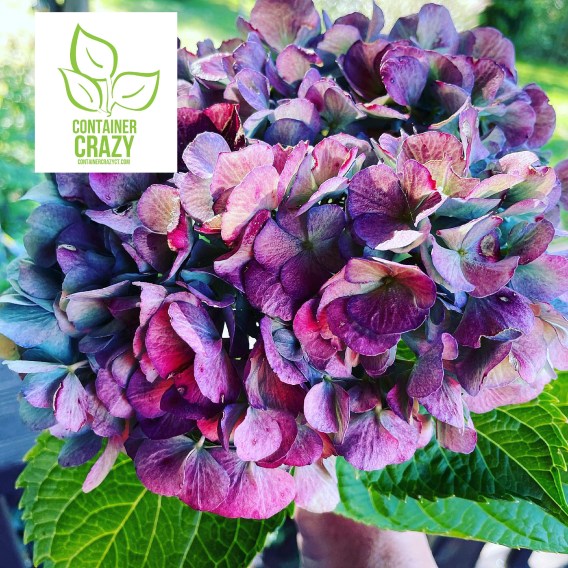
Mop Head Hydrangea Bloom at my House

I guess you could say, this month of October 2021 has been a very colorful one. This plant above usually hasn’t produced many blooms for me before, but this year, it took off. I had these big colorful blooms and I cut them from the plant just yesterday. I read you may spray the flower head with hairspray (aerosol hairspray) and set it in a cool dark room to dry. I am trying that out this season with these Hydrangea mop-head blooms in purple, blue, and rosy tones.

At a Client Site

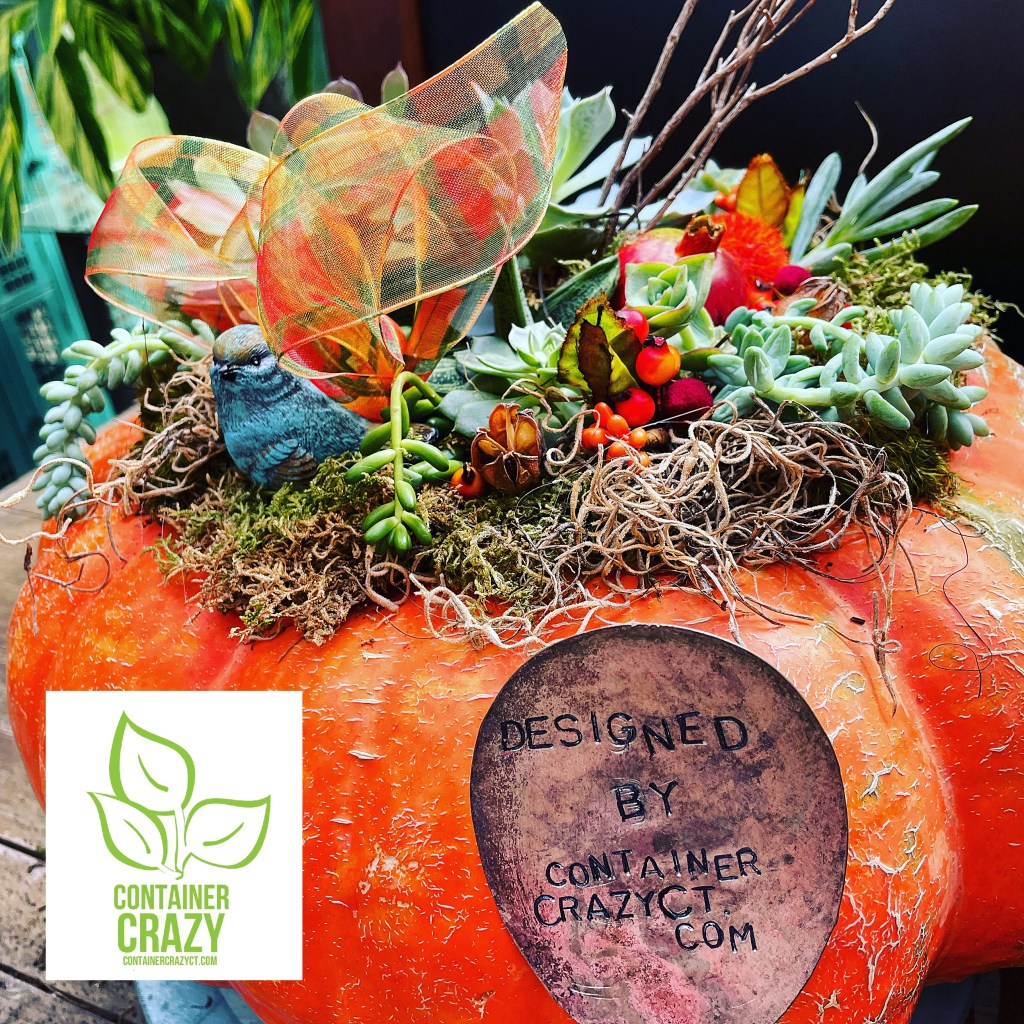
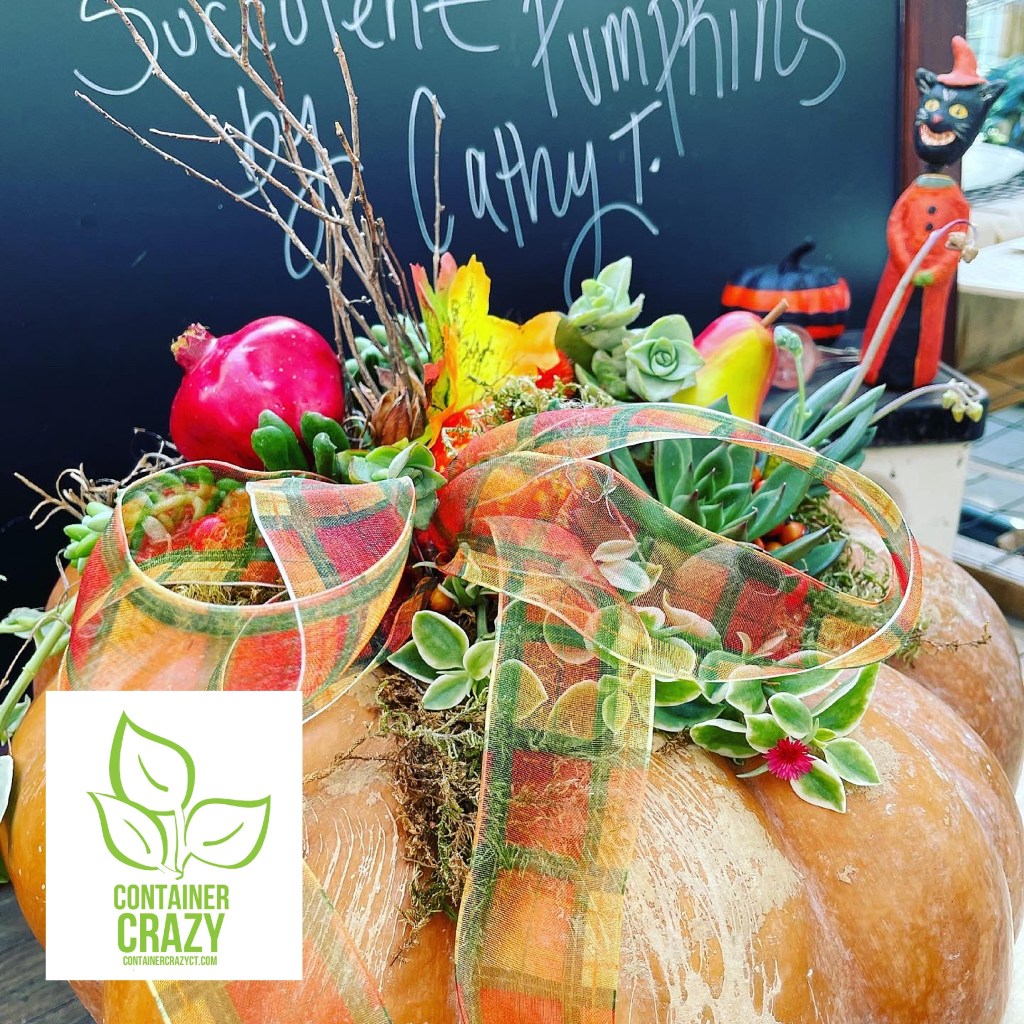
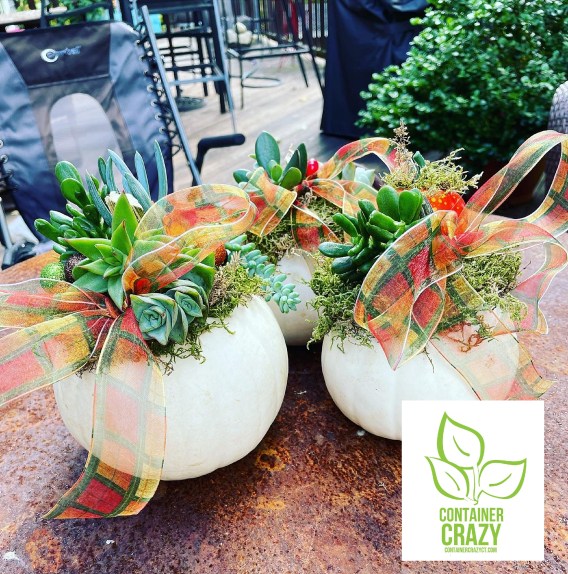
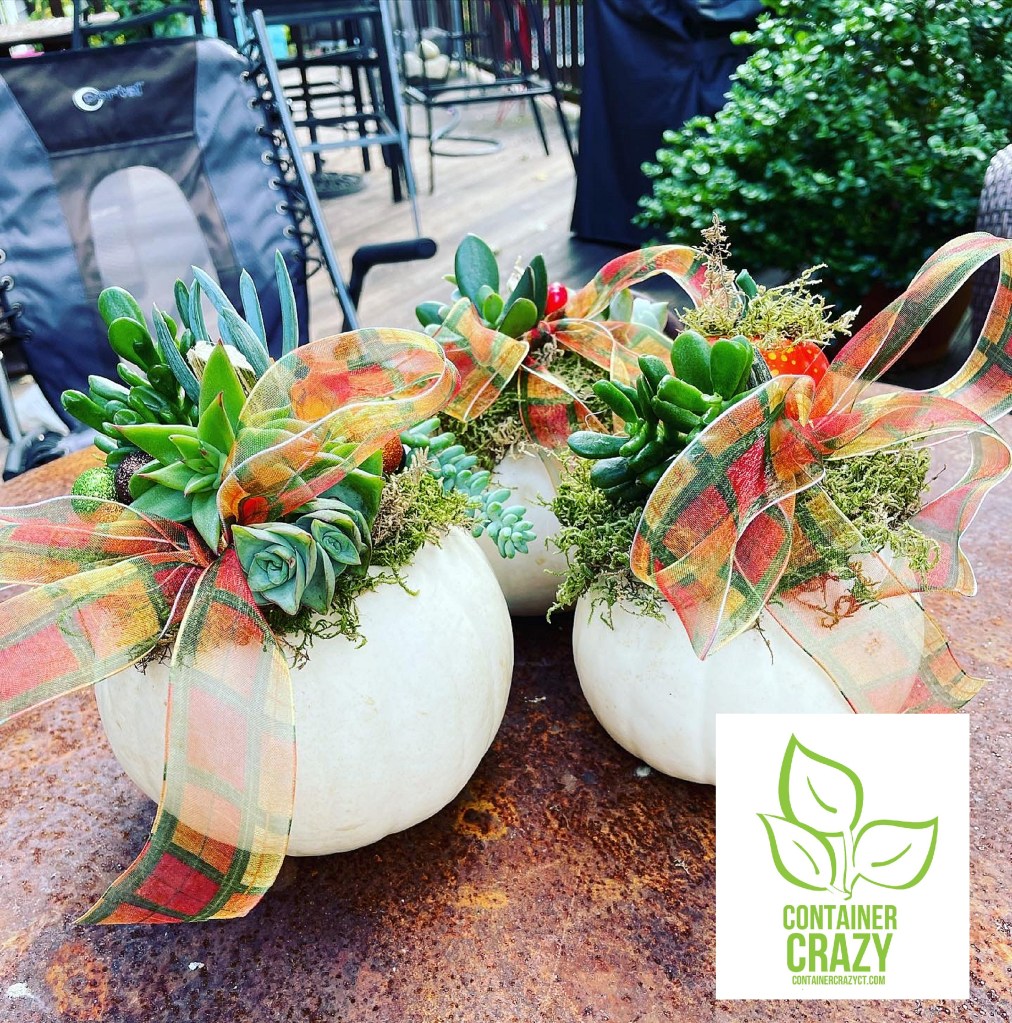
A pumpkin centerpiece I created (referred to as a succulent topped pumpkin) is shown above at a lady’s home. I absolutely love how she decorates her table, putting the Family piece and candle holders with the mums all around. And a nice photo she took, which I decided to share here. Isn’t this another beautiful fall color photo? And yes, that is a real pumpkin, one of a nutty brown color. Sourcing my pumpkins was a little trickier this year. Many local farmers had issues growing them because of our summer abundant rainfall. Some fields were flooded and ruined some of the crop. I had to hunt and peck to find good ones for my succulent topped pumpkin creations this season.

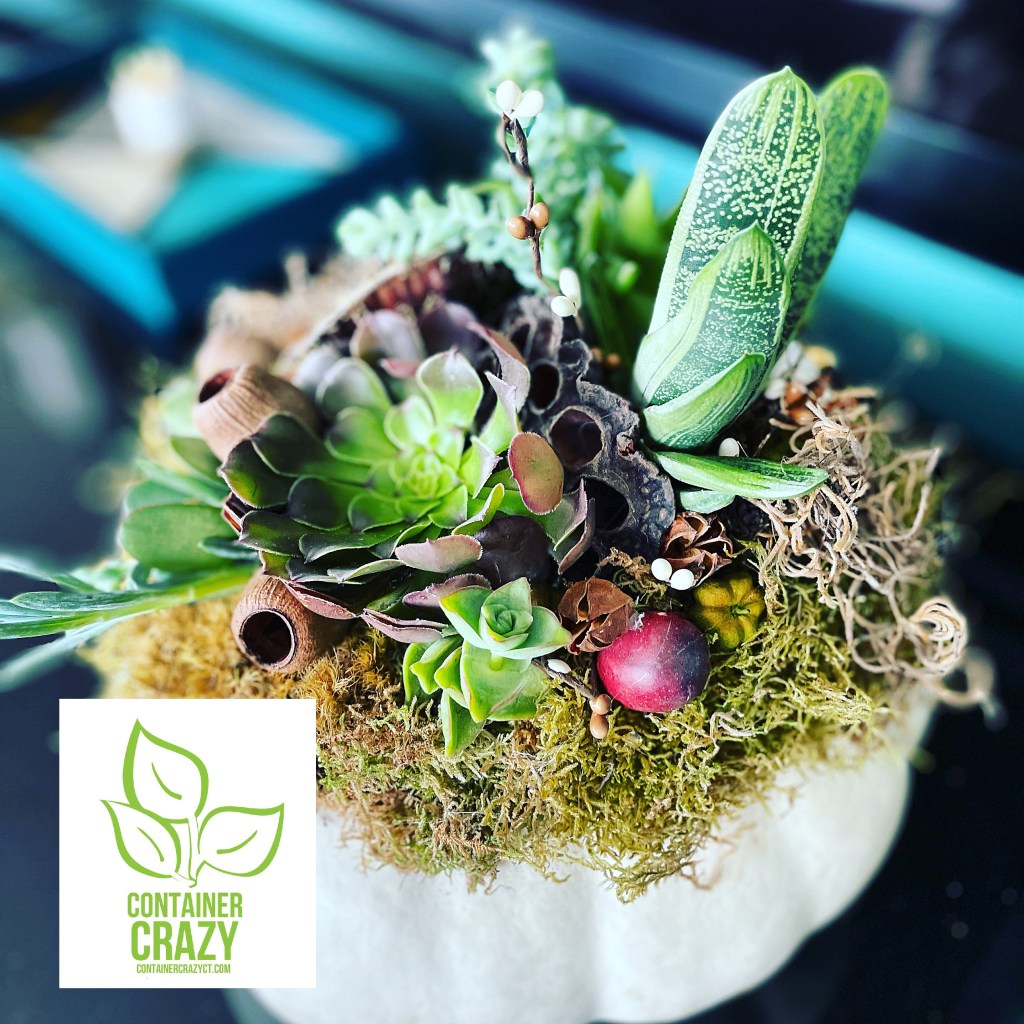
More of my creations above. I love making these in October. I have made some Halloween themed too.

Me in-front of a Wall of Mandevilla

That is me again, here I am standing infront of a wall of Mandevilla plants I installed in the spring. By October, they were full and gorgeous all the way to the top of the 7 foot wall situated above planters. I have to say, I was distraught early this spring because right after I finished planting these, there was an extremely freak cold rain day where temps dropped so low and it poured, cold rain. I was so worried it would ruin my work at the client’s site, but the Mandevillas did well, and the rain all summer encouraged their growth. The foliage was shiny, perfect and lush. Each year is different, and I was so thankful these performed well. They have white trumpet shaped blooms that last all the way into the fall. These plants are vine-like growing easily up when trellised. They will keep on climbing, reaching for the skies, which they did here on this high-rise garden. I have planted the red, pink, white types. All add a tropical feel to any container gardens outdoors in summer.

Plant Gifts by Cathy T

Well, I guess that is it for now. I’ll finish off today’s blog post to remind everyone I offer custom plant gifts, especially popular in the autumn and at the holiday season. Look me up on Facebook or Instagram under Container Crazy CT. I do all in containers, planters, patio pots, dish gardens, etc. You name it. This month I’m offering adorable succulents, bagged up and ready for pick up. If interested, DM me on Facebook or text me!

Thank you and enjoy the rest of this week’s perfect and fantastic fall weather.

Cathy Testa
Container Crazy CT
Zone 6b
Broad Brook, CT
cell: 860-977-9473
email: containercathy@gmail.com

Today’s weather: 72 degrees F day, Lows at 48 degrees F at night (still safe for tropicals outdoors, I suspect the frost will arrive later next week!)

Tomorrow – partly sunny and Saturday and Sunday look nice during day. 37 degrees predicted for Sunday night.

Back to work I go outside today. Trying to make the most of this perfect fall weather, did I mention, it is fantastic?!

Succulent Topped Pumpkin Time

Leave a comment

Autumn Time

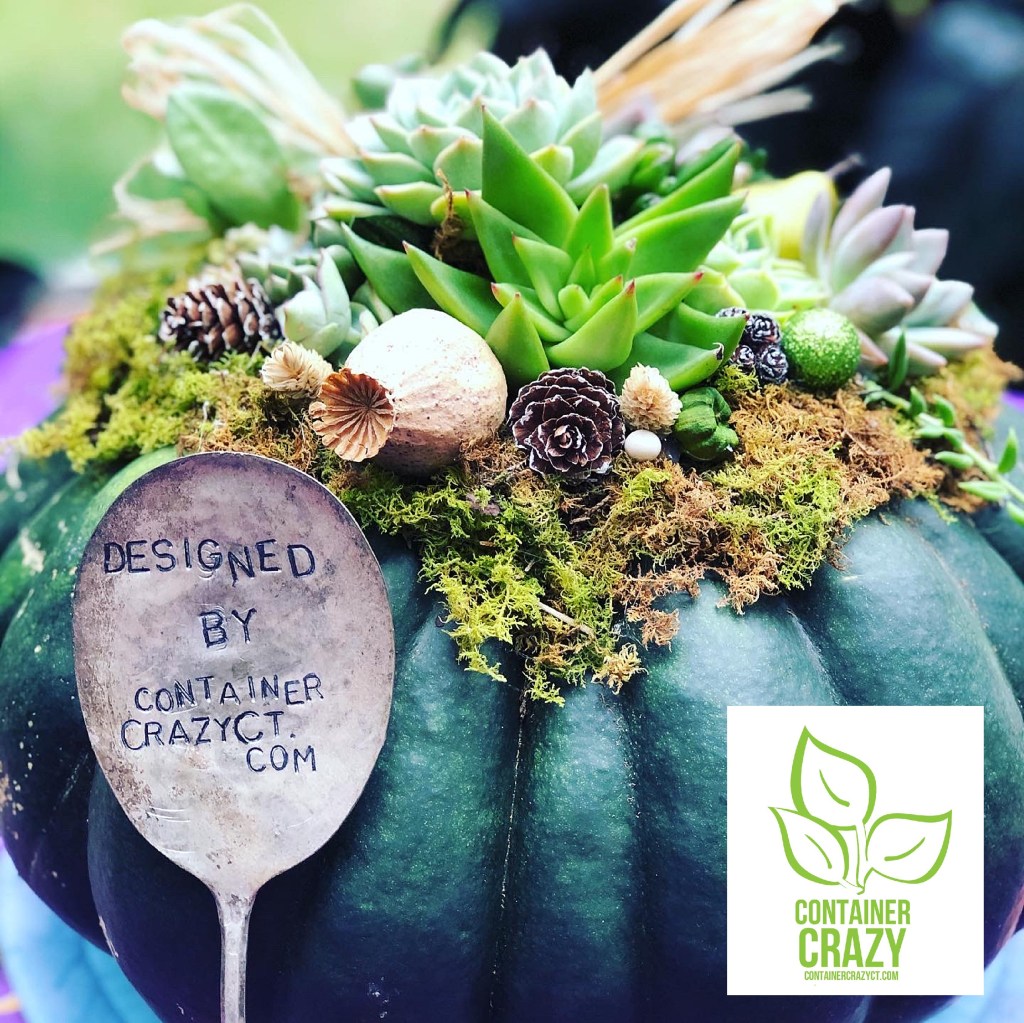
Hop on over to my site, called www.WorkshopsCT.com to learn about my custom made succulent topped pumpkins. They make wonderful autumn centerpieces, and now that there is a bit of fall in the air, these are my next fun endeavor. I love making them for orders. They are wonderful displayed inside your home for the fall and Halloween season, and last for months!

Winterizing Time

I’m also still taking down my tropical plants, probably working on them this weekend during the nice pleasant sunny cool fall weather. We have not had our October frost here yet, so there is still time but alas, my work must continue or I will be backlogged with plants! I have some Brugmansias which are blooming beautifully right now with huge yellow trumpet shaped flowers which smell wonderful in the evenings, as well as my Canna Lily plants, and I still have many elephant ears plants (Alocasia and Colocasia) outside in my larger container gardens. All will be taken down, pulled out of the soil, cut back and stored via the parts under the soil (corms, tubers, rhizomes, etc.) for storage during our winter months. I will show more photos soon but just enter search terms in the search box on this blog to locate directions and information and feel free to ask questions. I also have already collected my seeds from various seed pods by this time and stored them in cool dry places for use next spring to regrow some of my favorites. Pods should not get soggy and wet and be collected before that phase, or they will mold or rot on the plants outdoors at this time of year. I also put away most of my agaves, mangaves (one is shooting a flower stalk – it is 4 feet tall right now! So exciting!) And put my succulents in the greenhouse along with some of my larger house plants. The greenhouse is not being heated of course yet, and the natural air goes thru daily along with an auto fan as the temp rises on sunny days. Anyhow, the fun and plant work continues.

Winter Time

Boy, times are tough for small businesses. Every time I turn around prices are going up. This impact us greatly and we just can not afford to be “low priced” on our unique creations and please bear in mind, plants are perishables similar to vegetables from the grocery stores. Of course, you may make plants last for years, if not centuries, with the appropriate care, so it is a wonderful investment to have the beauty and company of plants surrounding us, but all the delivery costs, shipment fees and delays, materials and you name it, it has raised prices on materials for our industry, from the plants to the decorations we use for them. So thank you for supporting my small business – especially those who repeatedly visit me.

It brings me much joy, honestly, especially in the winter months to continue my work and custom orders. I guess my point is – I’m still planning to make my custom made holiday items as well as my succulent pumpkin centerpieces, but prices have gone up for me as a very small business owner. Custom is not cookie cutter, so if you enjoy unique, handmade, well cared for plant creations – I’m your girl! And also, the weather factors, this year our areas got hit hard with rain and floods – this impacted the availability of pumpkins locally. But this will not stop me from creating because it is my passion. Passions can not be stopped! 🙂

Thank you for visiting.

Cathy Testa
Container Crazy CT
Broad Brook/East Windsor, CT
Zone 6b
USA
Posted: 10/7/2021
Today’s weather: 54 degrees F, Foggy, H: 73, L:50
Weeknight temps for next week are in the mid 55’s range.
Friday and Sat – Party Sunny – yes! Glad we will have nice weekend weather.
Next week, looking good too in the mid-60’s to low 70’s, but maybe some rain showers

Overwintering Agaves Early

2 Comments

This will be a quick post. I am trying to document how I overwinter various plants from the outdoors to the indoors in my area of Connecticut as I work on them. This week we are having gorgeous weather, thus I am getting a head start on my plants at home because I will be busy the rest of the month working on clients’ plants.

Agave (ah-GAH-vay)

These plants are considered succulent perennials hardy in zones 9-11, some maybe hardy in zones 7-6, but in my case, I treat them as non-hardy plants and move them into a lower temperature greenhouse for the winter. The greenhouse is not heated right now because it is still warm enough outside, but by mid-October, we could get frosts and my agaves should not be subjected to any frosts.

During the summer, my agave plants are in full sun locations on my outdoor deck in individual pots. Some are super heavy and require a hand-truck to move them to my greenhouse, while others I can manage to lift and carry in my arms in the pot, although it requires a bit of muscle power to do so.

I usually allow the soil to dry in the pot as much as possible but we had so much rain and moisture this year, some of them are still holding damp to moist soils. However, it is best to move them indoors when the soil is dry if possible.

Over the winter, I suggest you do not water them at all and allow them to stay on the dry side. If the soil stays wet and you move them indoors, they may get root rot (especially if you are moving them into a house with air conditioning still on and in a non sunny situation).

Inspect the Plant

Steps

  1. Let the soil dry out as much as possible before you decide to move in your agave plant. As noted above, wet soggy soils only invites problems (i.e., root rot, insects that like moisture, and fungus sometimes)
  2. Inspect the plant for insects. Use the methods below to blow away any insects, debris, etc.
  3. Lift to inspect roots if possible (optional)
  4. Wash the outside of the pot with mild soapy dish water if possible

Inspect

Usually my agaves do not have any insect issues on the succulent foliage. You may find a spider in there (a good one), a cricket hiding between the foliage, maybe even a tree frog sitting on the plant! They seem to like one of my bigger agaves. I find one or two tree frogs every year hanging on them earlier in the season. Before moving them inside, check them over for any potential insects or debris (like fallen tree leaves or twigs, etc.). Ways you can handle the inspection are by:

Using a leaf blower to blow anything off of it.
Using a hose with a harsh spray to blast the leaves with water to dislodge any debris.
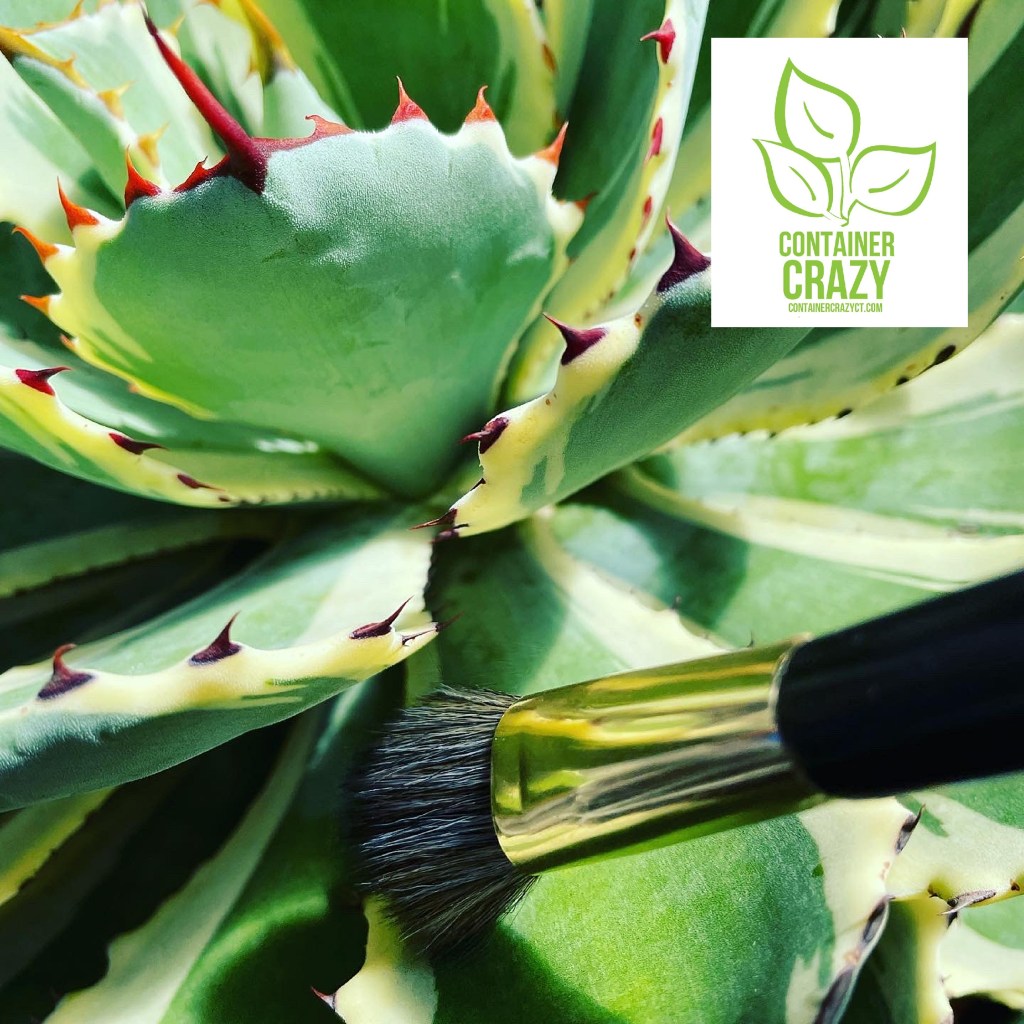
Use a little brush to brush away items caught between the leaves.

Lift from pot to look at roots – optional and if possible

This agave is in a plastic pot inserted within a glazed pottery pot. I decided to lift the plant out and inspect under. Yes, the soil is still moist, but otherwise, the roots look fine. When I lifted it up, a tiny cricket insect jumped out – so it is helpful to check and get all those little hiding bugs a chance to get out before they move into your home or greenhouse.

You can see here the plant is pushing out a side shoot (pup) which will eventually form another baby agave. Overall, the roots look fine, but the soil is staying so wet, I decided not to reinsert the plastic pot into the glazed pottery pot when I moved it into the greenhouse. This will allow the air to help dry out the situation. Also, right now, the greenhouse is nice and sunny and warm. It will help to dry out the soil.

Overall this agave showed no major concerns. It is now safe in my sunny greenhouse to await the cooler days of fall and then eventually winter where it will be protected until next year. I have written about overwintering agave plants before. To locate the posts, type the word ‘Agave’ in the search box on this site.

Thank you for visiting. Let me know if you have any questions.

Cathy Testa
Container Gardener
860-977-9473
containercathy@gmail.com

Bringing Plants Indoors

2 Comments

I usually call this process, “overwintering plants,” but I figured that is a term which may be unfamiliar to newer gardeners.

Thus, this post titled, “Bringing Plants Indoors,” is referring to just that. I’m starting to bring in some plants this week (Sept 7th, 2020).

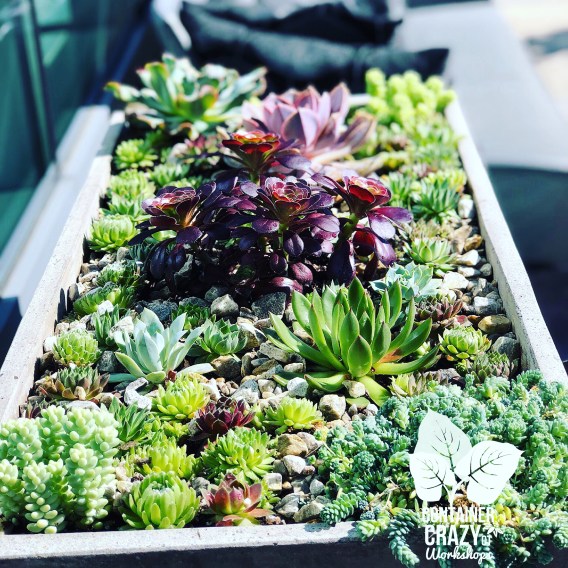
Some plants, like hardy succulents, are able to stay outdoors all winter here in our CT planting zones. They are able to tolerate frost and winter temperatures, and are referred to as, “winter hardy.”

For example, Sempervivums (a.k.a., Hens & Chicks) succulents. However, if you decide to keep any of these hardy succulents, which were grown in containers, patio pots, or hanging baskets outdoors, be sure to put them in a protected location, such as under a porch, in an unheated garage, or shed. They are more sensitive to winter conditions if in a pot versus grown in the ground in a garden.

If they have been growing in the ground, they will be fine over the winter, and do not need protection. They will go dormant when the time is right as temperatures drop in the fall and winter, and come back alive next summer season.

This particular hanging basket (shown above) is filled with Sempervivums which are looking perfect right now. There is no damage, no insects, and they are as happy as can be. I just love how they filled this hanging basket in fully. The color intensified recently, as many succulents do when they get a bit of stress of cooler temps.

I decided to move these Sempervivums in a hanging basket into my greenhouse yesterday, however, it is not because they can’t remain outdoors for another few weeks (or all winter in a protected location), but because they look so healthy. I want to keep them that way.

Tip: Move them in while healthy!

I find the best time to move some plants indoors, especially succulents and houseplants, is while they are looking great, are free of insects, and haven’t been stressed by a drop in temps during the fall season, which is usually accompanied by rain fall. When this happens, the soil, the pot, and the plant get cold and damp. This starts to invite issues such as rot, insects, and stress.

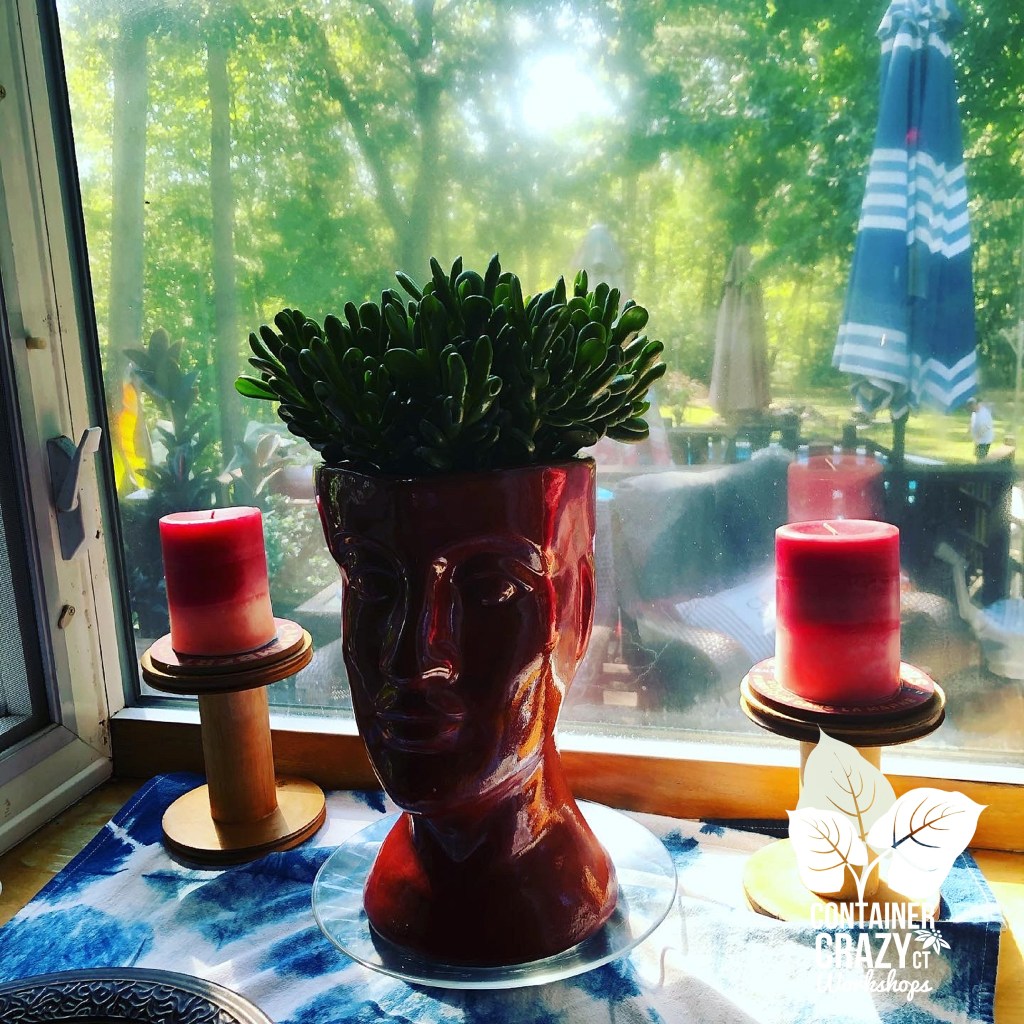
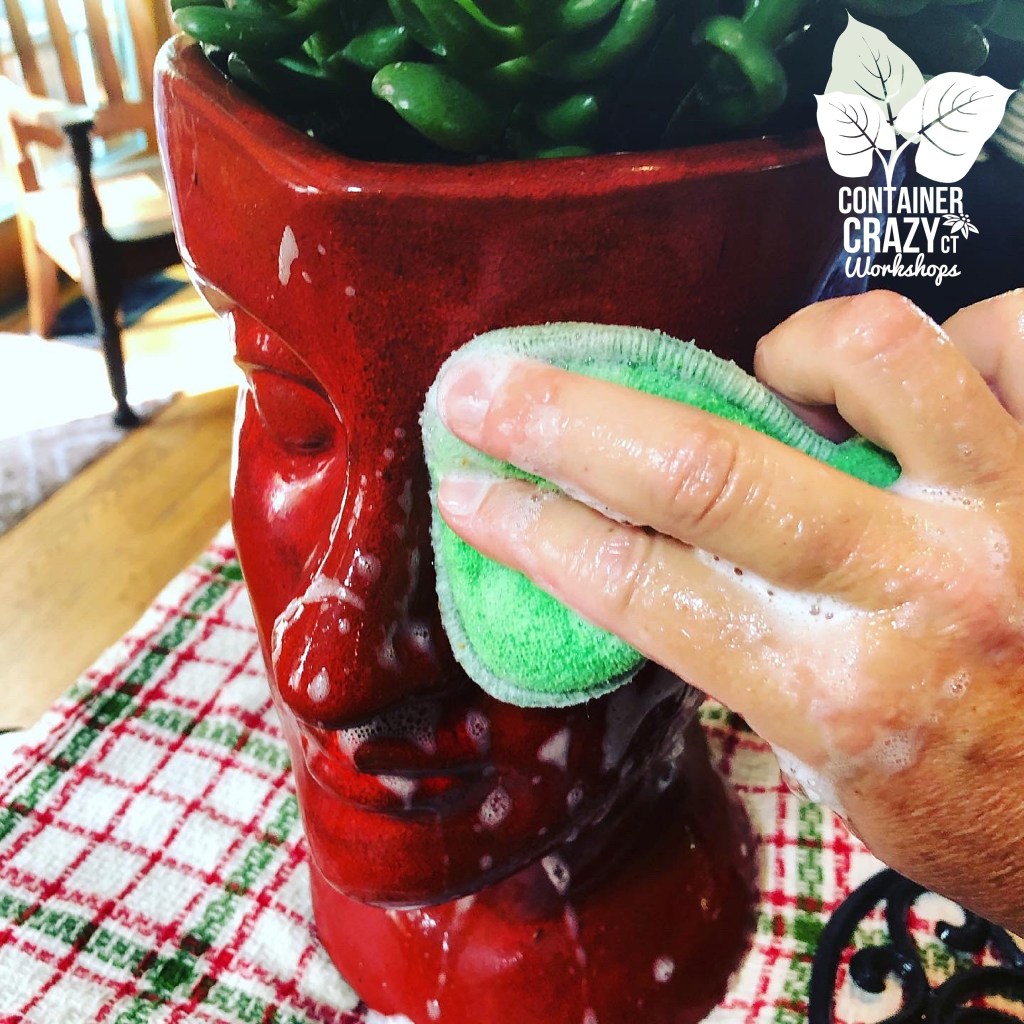
This plant above, a Jade in my red head planter, is another example. It could tolerate a few more weeks outdoors. Once it is consistently 50’s degrees at night, they should be moved in however.

It probably won’t go into the 50’s for another week or so, and even if it did – it still might be okay for one night or two of 50’s lower temperatures if our day temps stay warm (60’s, 70’s and maybe even another day of 80’s!).

But, it must be moved in before it gets hit by frost. Frost would kill it. It is not “winter hardy.” It can not tolerate the CT winter temperatures. Frost usually hits in early October.

However, because this Jade plant is so healthy right now, this week of September 7th, I wanted to take this gorgeous red head planter in before the beautiful Jade plant in it experiences any fall weather related stress. It has grown so much and has done well in this planter.

What do I mean by fall weather related stress? Well, when it drops down to chilly, 50 degrees F or below, in the fall season, we usually also get rain. Then the planter would be damp, cold, and this will affect the plant and the soil. It may not kill it – but it most likely will stress it. The soil gets cold and damp, and I find this scenario to not be ideal for plants you are moving indoors.

Tip: Move them in before major rain fall during a temp drop. And let the soil dry out in the containers outdoors before moving them inside.

Additionally, I advise my plant followers to let the soil dry out in your container gardens and patio pots before you move them indoors, AND, move them in before they get too chilly (before there is a consistent temp in the 50’s in the evenings.) A succulent is able to tolerate drought, so let that soil dry out before moving it in.

The plant got tall enough, so I had to remove the top shelf of this south facing kitchen window that extends out. It will be good enough sunlight to keep this plant happy all winter. The window area sometimes gets a little chilly in winters, but this plant is able to take 55 degrees “indoors” during the winters at night. It won’t get too cold here for this type of plant.

Before you move it indoors, here are other things you should do:

  • Don’t water it before moving it indoors for a few days if possible or even a week. Drier soils are better for moving in plants.
  • Inspect it for damaged leaves or any signs of insects. Treat if you find insects with the appropriate spray or treatment.
  • Remove any fallen debris from the plant (I found pine needles in there.)
  • Remove any damaged leaves if possible. Wiggle them back and forth to pull away if you see leaves with holes or damage.
  • Inspect under the pot. (I did this. I found a small round insect cocoon.)
  • Wash the outside of the pot with soapy water (mild dish soap is fine).
  • Move it before it gets 50 degrees F or below at night consistently. (This could happen anytime between now and the next couple weeks.) Watch your weather app for night temperatures.
  • Pick the appropriate home location. Some plants need some sunlight, others are able to tolerate low-light.

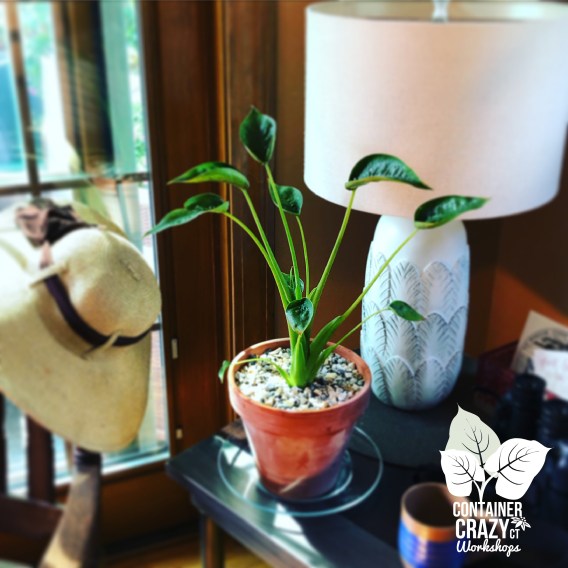
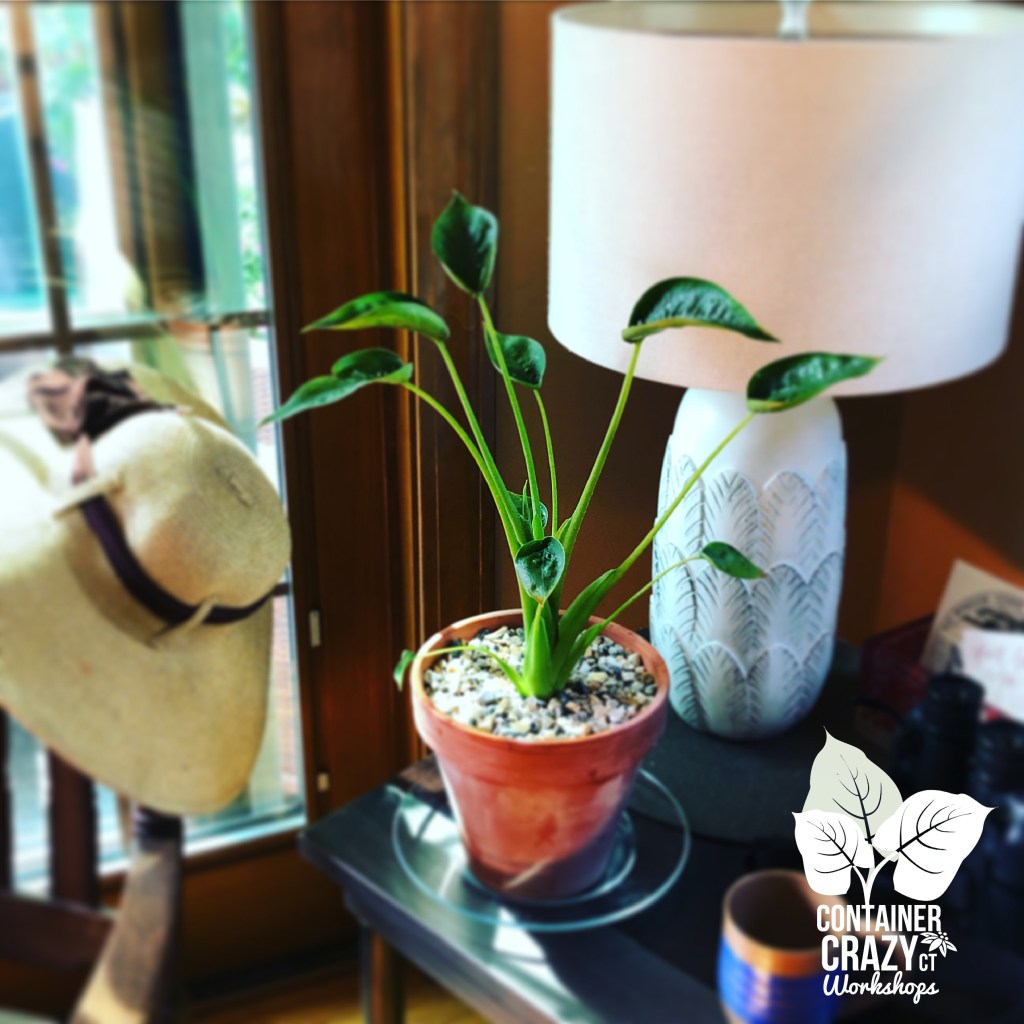
The next plant, shown above, is an Alocasia called ‘Tiny Dancers.’ When I saw it at a growers, I had to have it. I have lots of huge monster size Alocasias but I never had a dwarf sized one, like this one. It is too cute!

It started off in a tiny 3″ square nursery black pot. I potted it into a new terracotta pot and had it outdoors all summer. Usually, I store Alocasias by storing their tubers (round like bulbs located under the soil) only, but this is a tiny Alocasia, in fact, more along the lines of a dwarf. It makes it a houseplant candidate in my book, at least, I can test it out as such this year.

I decided to move it in and give it a spot by my south facing kitchen slider. It will receive sun light only a portion of the day during the winter which should be sufficient.

I don’t think it would do well in a north facing window which does not receive much sunlight at all. Another good place for this plant, if there is sun light in the room, is a bathroom because this plant likes a bit of humidity.

This Alocasia has been is pushing out new growth and is very happy. This one will be treated as a houseplant this winter rather than storing it like I do with my giant Alocasias (which are tropical plants and can not withstand winter temperatures). Sorry repeating myself.

I followed the same steps above: inspect, look it over, remove any damaged leaves. I did not wash this pot because it is terracotta and porous so the soap could go into the pot and although probably not too harmful, I just used a rag to wipe away any debris.

But this Alocasia ‘Tiny Dancers’ did have some signs of insects. When you inspect your plants before moving them indoors, look closely.

I did see, in the cups of one leaf, that there were little spiders in there. I am not sure if they were spider mites, but I decided to “lightly” spray the plant with Neem Horticulture Oil in a spray bottle as a precaution.

Tip: Please read the label or ask a nursery staff about insecticides, fungicides, or other products before you treat your plants. You could damage a plants’ leaves if you use the wrong product.

Check any treatments you use on plants by reading the label first. Make sure it is appropriate for the plant type! If you spray a plant with the wrong product, you will damage the plant, not help it.

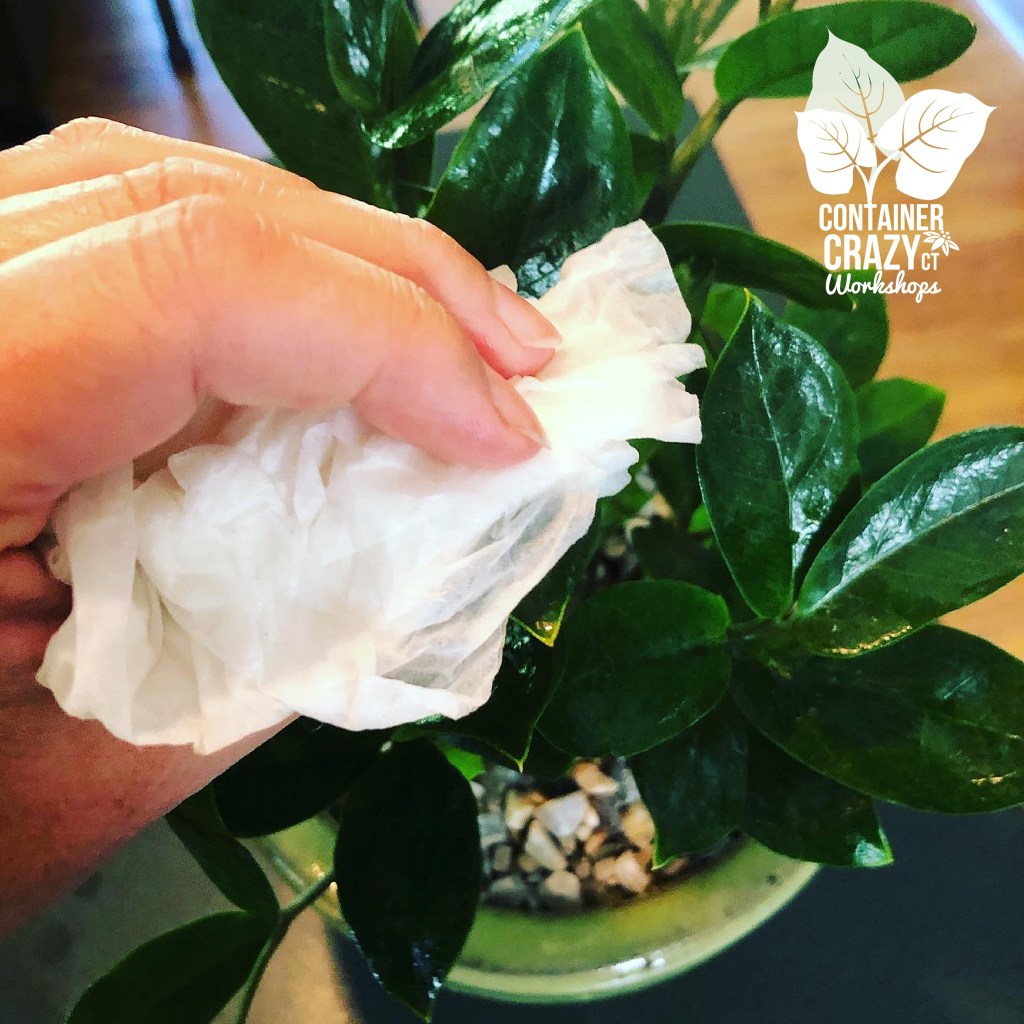
Another plant I moved in to the house is considered a houseplant, the ZZ Plant. It has been thriving under a patio umbrella and had no insect issues, and is also pushing out new growth. When you see the growth, this is a good sign your plant is happy. Moving them in when happy is a good idea.

Tip: And I can not emphasize this enough, the best time to move plants inside as fall approaches is when or if they are healthy. If they have no issues, get them in before they do. Colder temps often times invites problems.

I carefully cleaned each ZZ Plant leaf with a wet paper towel to wipe away any debris or dust, washed the outside of the pot, and this one was placed in a north facing window that receives very little light. Since this plant is able to tolerate lower light, I think it will be fine in my north facing window this winter. This plant is marketed as being easy and care free, so the north window is its home for the rest of the year. Water this plant less as it does not like overly moist soils.

To recap, plants may stay outdoors for the most part, but some I start to work on early, partially because I have the time this week to work on my own plants before overwintering my clients’ plants from their container gardens. Also, sometimes working in mild and comfortable temperatures is better on me.

Also, I believe plants perform better indoors over the winter when you move them in before they get stresses from drops in temps in the evening. This is especially true for “non-hardy” succulents, such as Echeverias. I will be showing those as I work on them in future blog posts as well.

Tropical plants, like my Canna Lilies, Elephant Ears (Colocasias and Alocasias), and Banana plant (Ensete) may remain outdoors all the way up to frost (early October) or just after frost (IF you plan to store the under the soil bulbs, rhizomes, corms, or tubers only). If you want to keep the plant indoors as a house plant, move them in before frost.

Succulents plants, just to recap, may remain outdoors all winter if they are winter hardy. However, if they are not, they must be moved in before frost in October, and I recommend (sorry repeating myself) to move them in before they get cold, damp, wet, and chilly (BEFORE it gets consistently 50 degrees or below at night). Again, you may wait till we get the temp drop, but I prefer to do it a bit at a time before that phase.

Houseplants, well, I would move those in now too. While plants are healthy, strong, and not stressed out. It is a difficult thing to do because we want to enjoy every last minute of outdoor goodness (and so do the plants), but if they are doing well, might as well capitalize on that because they will be more likely to do well indoors if healthy now.

I already took down my tomato plants, by the way, and herbs are dwindling down so I am trying to use as much as I can before they are goners, and made pesto with my basil. I am considering sowing more herb seeds this fall in the greenhouse however. Maybe have a fresh batch available in a month or so. Sorry, that is a side bar comment. LOL.

Here’s a recap list:

  • Tropicals – Can wait til frost or after frost if storing tubers (specifically Canna Lily, Elephant Ears, and Banana Plants). Mandevillas you should move in before frost if keeping the plant in tact or storing the plant.
  • Non-Hardy Succulents – Can wait till the evening temps hit 50′ degrees F, but I recommend moving them in earlier, for reasons noted above.
  • Hardy Succulents – Can leave outdoors all winter. If in a pot, move to a protected location before winter. If in the ground, no worries, leave and let it be.
  • Houseplants – Move them in now while healthy. Each houseplant is different on lower temp tolerance, but treat them like the non-hardy succulents above.
  • Herbs and Tomatoes – Already took down my tomato plants because they are not producing fruit now and it is too cool at night, and herbs are starting to dwindle so collect what you can now. But that is up to you based on your own gardening veggie habits.
  • Agaves and Cacti – Can take drop in temps and tolerate it but can not take frost. Take them in before October frost or treat as I do with non-hardy succulents. The Agaves and Cacti I will leave out for a while longer probably, or take them in “if healthy” and cherished. Again, if they are “healthy” with no issues, I like to move them in before any chance of issues.

Hopes this helps if you are considering on working on your outdoor plants too. And please share my site with friends who may find this information useful. Feel free to ask for any clarifications, and also, note that these are all my opinions based on my years as a container gardener.

Thank you and enjoy your Wednesday!

Cathy T.
Cathy Testa
http://www.ContainerCrazyCT.com
http://www.WorkshopsCT.com
http://www.ContainerGardensCT.com
860-977-9473
containercathy@gmail.com

P.S. Unfortunately, I am not offering my typical Autumn Succulent Pumpkin Workshops due to Covid this year. However, I will be taking custom orders around the end of September. Reach out if local and interested. Thank you for visiting my blog.

Time for Updates

Leave a comment

On this muggy and cloudy day, I briefly visited this site, my blog, and I realize I am overdue at making many updates. I need to revamp this site, and as my work schedule calms down, I will do so for you.

COVID-19 has disrupted many of our worlds. The timing and planning especially – who can plan with all these uncertainties, right? I had purchased a “calendar book” this past winter due to expecting a very busy season of offering container garden installs and my plant related workshops, but guess what?! That calendar book became useless – everything I had targeted week by week had suddenly changed, but many of what changed ended up being for the better for the gardening world.

I was extremely busy for months as people stayed at home and wanted to enhance their outdoor spaces, create their own C-19 Victory gardens, plant their herb kitchen gardens, and spruce up all at home with living beautiful plants. I am glad I was able to assist so many homeowners with their plant endeavors this season.

However, I realize so much has changed and I need to update this blog site very soon. I also need to update my photos. I have so many to share for inspiration and ideas in the container gardening world.

For one big change, no workshops are being offered by me at least up to the winter season. It remains to be seen if we will experience a 2nd wave of COVID-19 before I decide if any holiday workshops will take place. At this time, I do not plan to offer any fall workshops. So sorry, but please stay tuned or follow this blog for regular updates.

I promise to update you on all. In the meantime, please visit my Instagram feed under Container Crazy CT to see my daily plant related photos.

For my regular customers, please stay tuned to my updates and video on plant care. This week has been a hot one and it looks like it will remain hot for the rest of this week. Be sure to water your tomato plants deeply and regularly. And look out for the insects and plant related diseases which sometimes surface during this muggy, no air movement weather today.

Thank you for visiting.

Cathy Testa
Container Crazy CT
860-977-9473
containercathy@gmail.com

Top Nine

Leave a comment

When watching talk shows the other day, I realized so much was being shown regarding the “Top Nine” app used to generate the top nine photos in a grid format from Instagram feeds and it perked my curiosity.

I caved and did it – and here it is:

Top Nine 2019 by C Testa Copywrite_0002

Apparently, this is not an “Instagram” thing but a separate app but using Instagram – and it became popular and a bit of a trend. We may all assume the reason why? Because your curiosity kills the cat – you have to know – Gee, what is my top nine (most liked or most engaged photos of the year) per some app? Well, mine are above.

To be honest, it surprised me which were selected. How do they determine which photos are selected? I guess it is based on likes, shares, and engagement? Not sure, and I don’t have the right mind after the holiday hoop-la to research that aspect right now, but I did find it interesting and a bit of fun to use the app to find out.

My Photo Grid Explanation:

From left to right (starting from the top row), I thought it would be entertaining to say what I think of each of these photos which were generated by the Top Nine app.

The Jade Plant (Crassulas) – Ah, this is one plant I became involved with in 2019. Meaning, I propagated it (made cuttings and grew new plants) from it quite a bit. It is rather easy actually. I also used this plant in some of my install jobs in various containers. And offered them in my succulents workshops. But what would make it a top photo is the fact that I feel I can grow them myself and they are healthy and happy! Maybe people enjoyed the photo due to the Indigo Blue Background which is a popular color right now I heard.

The Beach Shot – That was a vacation my husband and I took last year in Naples, Florida. I wanted to make sure we’d go see the sunset which I had read about being wonderful on this beach, and we joined many other people that day doing the same. I guess that is a good photo, right? And it WAS a great afternoon waiting for the sun to set.

The Yellow Peppers – Grown from seed, hot and tasty. I love these yellow long banana shaped peppers, which I wrote about in my seedlings topics on this blog and for the workshop which I offered on seed starting last year too. So, yes, I agree on this photo. The peppers were easy to grow, abundant, and we ground them up after drying them in the oven to make hot pepper flakes of the yellow variety. They did not go wasted. My husband loves hot peppers and he shook those flakes on his various meals many times. We went thru two jars of the hot pepper flakes. Great for chili recipes too.

The Blue Pots – Ah, yes. I was on the hunt for a client, trying to find pots. I kind of knew these weren’t the right ones. I had put them on the floor and took a photo. You will see my hiking boots there as I looked down in the photo. But for some reason, this photo was popular with people on Instagram. However, it was not quite the right fit and I later found a better style and color for my clients’ needs. But that was a journey on a day of hunting for just the right patio pots. Pinch me – I love that type of work.

The Flyer in the Window – My workshop flyer was posted in a local package store’s window. I always appreciate when they share my flyers about my workshops. I guess that day, it was noticed quite a bit and thus, another top nine. I would say these clients are tops too. They have hired me for years to install their store-front pots. I do think the flyers look great in their store’s windows. Thank you!

The Cacti Cans – I pounded small drain holes in the bottom of soup cans with a hammer and nail last year and inserted a cactus in each. No drill required which I loved. And I even hand-stamped the sides of some of the cans with words and added chains to some to hang the cans. They are adorable. However, in the rain, one thing I forgot about is the cans start to rust. I did’t like the rusty look. That day a flower was blooming on one, as you can see, and it was adorable, so I snapped a photo.

The Burro Tail Sedum – I obtained a stock of these from a grower to provide in my succulent related workshops last year. Everyone loves these plants, which drip down into long tails as they grow over time. They work well in hanging baskets – which was a topic I offered last year too. These plants are great fillers in arrangements and easy to grow, drought tolerant and long living.  I still have some growing in my hanging baskets in the greenhouse now. I can see why a popular photo – and those who got them in my workshops surely loved them. Thanks to my amazing grower, I obtained a nice stock of them last year.

A Photo of Me – From many years ago. What I like about this photo is that my red head planter, the little red table with red chairs, and the red blooms of the Canna Lily plants in the background were all happening. I spray painted that little round table and the chairs red. It was a freebie find on the side of the road one day. My sister was annoyed cause it was on her street when I found it as I was leaving her house. She joked that was supposed to be her free find. 

The Cherry Tomato Leaf – This is all about my obsession with plants. I love taking close up shots of plants and their structures. It was also probably popular cause we all dream of eating fresh tomatoes. The photo was taken in March or early April, and the handwriting on the label is not mine – it is of an attendee’s who came to my workshop on seed starting last year. That will be my first project, setting up the Seed Starting Workshop for 2020. I can’t resist doing it – it was very rewarding. Seats will be limited because the plants are kept in my greenhouse until they are ready to be planted outdoors. Unless, of course, I got a bigger greenhouse.

By the way, this is what CNN has to say about the Top Nine app and trend. You may want to read their article before you try it!

Have a good start to your first week in 2020.

Best regards,

Cathy Testa
Container Crazy CT
860-977-9473
containercathy@gmail.com

Other Cathy T sites:

www.WORKSHOPSCT.com
www.ContainerGardensCT.com