A Walk in the Garden – A Blog to Follow

4 Comments

John Viccellio from Stallings, North Carolina is the author of a blog titled, “A Walk in the Garden.” I never met John in person, but I’ve been enjoying his blog posts for quite some time.

He regularly posts photos of cut flowers collected from his gardens which are arranged in vases. Actually, I believe his wife is behind the vase selection and arrangements. He refers to her as his Arranger, and she does a wonderful job.

In addition to the various vase photos on his blog, John writes about plants growing in his North Carolina gardens. From time to time, I’ve admired the plants he is growing which I wish I could grow here in my Connecticut yard.

However, John’s planting zone is a tad bit warmer than mine. He is in a zone 7 area, and I reside in 6a. But not is all lost, as some of the plants he can grow easily in his area are candidates for container gardens or patio pots in mine if they are not winter hardy here.

Vitex agnus-castus (chaste tree)

One day, I spotted a gorgeous photo of a chaste tree growing in John’s gardens via his blog posting. He had them ‘arranged’ in a vase and the soft blue to violet colors of this plant, along with its long narrow blue-green leaves situated like fingers from a central point, caught my attention and admiration. I don’t know why, but plant lovers just fall in love with certain plants, and this is one I’ve always liked.

I don’t see this plant (technically a deciduous shrub which can grow to the size of a small tree) offered for sale here in Connecticut often. They are hardy to planting zones 6 to 9 (or zones 5-9 depending on which plant reference you look up), so they are considered, what I call semi-hardy in our planting areas because they do not hold up well during harsh winters.

If the winter is not harsh, I guess your chances are better. Also, where they are planted matters in regards to the soil and exposure because they prefer full sun and well-drained soils. Bottom line is the plant will die back (dies to the ground) in severe winters. Its roots may survive to regrow the following season if all goes well.

Chaste Tree Cuttings by A Walk in the Garden blog

Chaste Tree Cuttings by A Walk in the Garden blog

The only other time I’ve seen a beautiful specimen of the chaste tree was when I toured a Connecticut garden via the Connecticut Horticultural Society’s programs. It was growing in Steve Silk’s amazing gardens amongst other trees and shrubs on his property in Farmington, Connecticut. Steve is a former newspaper photographer, travel writer and was managing editor at Fine Gardening magazine. He held the role of President for the society for several years.

Steve also has cool tropical plants in container gardens staged in various areas on his property, which is why I was happy to be seeing his gardens that day during the tour. But as I walked his yard, I remembered spotting the chaste tree and running my fingers along the plant’s foliage, again thinking how I wish I had one of these trees. I should have asked Steve how he managed to keep one growing in his garden due to it being a bit sensitive to our winter climate.

Of course, an alternative option, when desiring a specimen that is not totally cold hardy here is growing them for enjoyment in your container gardens during our summers and then overwintering them if possible in frost free places in the fall and winter. Many times semi-hardy plants will survive this way.

I can envision this chaste tree right now growing in a large container garden, and would pair it up with other plants showing off soft color tones, like pink, soft yellow, or other blue to violet flowering plants. If you browse John’s blog, A Walk in the Garden, you will see the other color of flowering plants he put near his chaste tree in his garden, some were hot pinks which worked well.

This deciduous shrub is a long summer bloomer, and as John noted on his blog post, it can be deadheaded for re-bloom later in the season, which he has done for twenty years on his plant. It was a grown from a second generation cutting from its parent at his Aunt Martha’s home in Chatham, VA.

Muhlenbergia capillaris (pink Muhly grass)

Then there was another day when John posted the pink Muhly grass photo from his gardens. Oh my God, I thought. I just LOVE that grass, and wish I had one here. The photo was especially beautiful because of how the sunlight captured the bright to soft pink colors of this fine textured ornamental grass in his garden, and I especially like how delicate this perennial ornamental grass looks and feels. Again, depending on which source you look up this grass, it is hardy to zone 6 or zone 5.

A Walk in the Garden muhly grass light

John noted that its a native, so his climate is ideal for its growth.”In October it was glorious,” he wrote, “…as the sun seemed to ignite its pink seed clusters.” I couldn’t agree more, it is electric – Just look at his photos!

Photo by John Viccellio

Photo by John Viccellio

Ah, I thought as I read his words and admired the photos he posted, I can imagine this vision on a fall day. Selecting a spot where the sun would hit it would be ideal in the landscape or garden, or again – in a container garden or patio pot. I can envision it in a cobalt blue pot, can’t you?

One day, on a day which some bloggers call, “Wordless Wednesday” – John posted two photos of his pink Muhly grass with no words or text because, it was “wordless” Wednesday, and it was enough to see just the photos, let me tell you – this grass is captivating.

A Walk in the Garden blog shares beautiful photos of the grass growing in their gardens.

A Walk in the Garden blog shares beautiful photos of the grass growing in their gardens.

John has been kind to follow my blog, and I follow his – but I really don’t remember who discovered whose blog first. So, recently I asked him to answer these following questions as a fellow follower – and wanted to share his blog site with my readers so they may enjoy his gardens too.

Why do you blog?

“I started the blog almost two years ago coincident with my self-publishing of my first (?) garden book (Guess What’s in My Garden!) in hopes that it would spur sales of the book. Over time, however, I began to respond to a number of garden memes out there (and photography), and that has been pretty much the direction I have been going. It is fun, and am getting to know folks all over the world. I have been thinking a lot about how I can get more info about the book into the posts and perhaps spur a few more sales. I have spoken at several garden clubs this past year, and that has gained me some blog followers and a few sales. I love the involvement I have now with fellow gardeners and fellow bloggers around the world.”

What attracted you to Container Crazy CT’s blog?

“I was attracted to your blog for several reasons. I realize you are using it as a vehicle to support your business, and I have enjoyed seeing your business related posts. It’s just a bit far for me to sign up for some of your workshops. I also have liked your hands on posts (e.g., pot arranging, etc.). Your warm personality shines through what you write and present…I can sense your smiling.”

What is your favorite plant or way of gardening?

“I have lots of favorite plants…particularly iris, peonies and azaleas…but my favorite way of gardening (because of our soil) is raised beds. I also very much enjoy creating things for the garden…stone walls, trellises and clematis poles that I have designed and constructed.”

Thank You for Your Service

And by the way, John Viccellio is a retired U.S. Navy Veteran – so, in addition to thanking him for his online contributions, gardening style, and demeanor expressed on his blog regularly, I’d like to pass on a sincere thank you to John for his service to our country in honor of Veteran’s Day which was two days ago on Wednesday.

Cathy Testa

www.ContainerCrazyCT.com
860-977-9473
containercathy@gmail.com


Be Thankful. Be Creative. Be Colorful, and Just Be! Giving Thanks.

2 Comments

Thank You to All Followers

November is the month of being “thankful” for all we have in our lives. I would like to express here my heartfelt thanks to you, my fellow followers. To the friends and family who inspired me to follow my dreams, to the bloggers out there reading and liking my posts and sharing their passions, to the mysterious rocks stars (fake or not) taking an interest in little ol’ me, and to the people in the plant world providing me with great networking opportunities, and to the artists offering their talents as guest speakers, and to many, many more, I say today, Thank you. Thank you also for posting your reviews and testimonials.

Current Followers

This morning I was looking over my stats on my blog. Currently, I have 73 WordPress followers, a total of 522 Facebook Friends liking my pages, 60 email followers, and 197 Twitter followers. It wouldn’t be right to say I have a total of 852 followers because some are the same people on one or the other platform, but roughly its somewhere about 600+ people.

I’ve always said too, it’s not the number of, but the passion of the followers which truly counts – and people who follow this site enjoy container gardening, art, and plants probably as much as I do. Each and every one of them is important to me because of their similar passions and interests.

Followers of this blog receive an update in their WordPress Reader (which is a special background page for WordPress users), via email, or both depending on their settings each time a new post is added. For social media, they are notified of posts in their feeds.

Getting new content quickly (as it is posted) is beneficial, especially for hot topics and new workshops on the horizon being offered by Container Crazy CT.

wordpress-logoWordPress Followers

WordPress followers have a blog of their own on WordPress, as opposed to followers which may be from Facebook or Twitter. As noted above, they get notified in their “reader” when they follow another WP site.

Sharing is caring in the world of bloggers and blogging, so one of my goals is to share posts by my fellow WP followers on this blog on a routine basis to spread the love and the information, as they share similar knowledge, ideas, interests, tips, and more. Thank you WordPress Followers – I’m following you too!

Facebook Followers

For my connected social networking services (such as Facebook or Twitter) through my blog’s publicize feature, it shows that I have 301 followers on my Facebook page for Cathy T’s Landscape Designs page, which means there have been a total of 301 Page Likes for it.

Cathy T’s Landscape Designs’ page is where I originally started my business about container gardening and garden designs, among other services. It is the official name of my business, but over the years, my services focused on all things container gardening and exotic tropical plants, and a bit less on landscape designs.

This is why I also have a Container Crazy CT Facebook page, which more suits what I currently offer in the world of container gardening and hands-on workshops. This page has a total of 221 Page Likes as of this writing, and seems to be growing.

If I could only merge the two Facebook pages together for a total of 522 Page Likes! Some are the same people, but no matter, it is all good – and it warms my Facebook soul to have them participate on my posts with their comments about their container gardening passions too.

Thank you Facebook Friends – Love hearing from you and seeing you every day.

Email Followers

Currently, my Container Crazy CT site has 60 email followers. These primarily consist of clients, workshop attendees, artists or bloggers, networking contacts, and anyone else out on the web that came across my blog and decided they wanted to keep in touch by receiving a post each time it is published.

If you want to receive instant notifications as they are posted, this is a great way to not miss a thing, especially upcoming speaking engagements at garden clubs and the workshops offered related to combining nature with art or container gardening.

Thank you email friends – I know how email can pile up – and I hope you enjoy receiving the updates regularly!

a-cute-twitter-logoTwitter Followers

As of today, I have 197 followers on Twitter. A big thrill was when Martha Stewart started following my Twitter feed last winter. And, recently, Dr. Allan Armitage started following me too. Both are rocks stars in their field of work and study.

While it may not be the “real” Martha, and maybe Dr. Allan Armitage has a helper for his social media feeds, it is cool to me – especially because Martha is in the world of all things fun for design and crafts, and the Dr. Allan Armitage is a Horticultural specialist. These two facets are what I love in my world of business offerings, that is combining nature with art.

If it isn’t really them, I still will enjoy fantasizing that it is. If it is really them – Thanks!!!!

ContainerCrazyCT Autumn_0001

Sincerely,

Cathy Testa
www.ContainerCrazyCT.com
860-977-9473
containercathy@gmail.com

To see more reasons why you should follow this blog, check out this former posts on “Five Reasons Why You Should Click Like, Share or Comment.

Oh and Don’t forget my Instagram and Pinterest pages. More on these later!

https://instagram.com/cathytesta/

Go back

Your message has been sent

Warning
Warning
Warning
Warning

Warning.

Repurposing Prescription Pill Bottles as Seed Containers

8 Comments

Recently, I decided to use the plastic pill bottles provided by my pharmacy for our prescriptions as small storage containers for my collected seeds. The pill bottles are small enough, have a label on them already which I can write the plant and date on with a sharpie marker, and the amber color of the plastic pill bottles are dark enough to prevent light exposure.

Pharmacy containers are made from light resistant plastic and meet USP light standards for light transmission and USP tight standards to protect the contents from contamination for pills, so I figure they must offer the same protection for seeds. Plus, it feels great to repurpose these pharmacy pill bottles rather than tossing them into the recycle bin.

ContainerGardenTakeDown_0012

Before taking seeds from plants that you want to try sowing next year, it is important to know that several changes take place in seeds as they mature and ripen on plants. Sometimes, you may notice the outer parts covering the seeds start to become dry and brittle. Eventually, as it dries, the seeds fall naturally from the plant or the coverings crack open to reveal the tiny seeds held inside.

Seed Coat Colors and Moisture Content

The colors of the seed coats will change as well as they mature. They may change from a light color to a dark color such as brown or black. But what you may not realize, since it is not visible to the naked eye, is the moisture content in the seeds reduce during their maturation process.

Some seeds need to retain moisture while others can tolerate a higher percentage of moisture loss as they naturally dry. It depends on the species of plant. Each is different. Fortunately, we can leave the moisture content percentages to the professionals as they know when to harvest their seeds for optimal germination.

Seeds may dry some more after harvest and/or before you store them in a container. If the seeds become too dry, they may not germinate the following year.

It is difficult to determine what is going on with the moisture content, but it is helpful to know because many people get frustrated when they sow a whole tray of harvested seeds – only to find out they won’t germinate. Feeling frustrated, they think they lack a green thumb, but it could be just the reality the seeds have gone bad because they did not mature fully on the plant before harvest, or because they were stored inappropriately.

Seed Collecting_0001

Seed Collecting_0002

You may notice seeds or their outer coverings are hard on some species of plants. A good example, which comes to mind because I just collected them, are Canna seeds. They are as hard as rocks or marbles. They need to be chipped in order for water to enter the seed when sowing them.

How Seeds Travel

In nature, animals will eat seeds and carry them to different places, the first being their digestive tract which will soften the seed coats as its pass through their gut. When released to the ground, the seeds will most likely germinate if the environmental conditions are right (light, temperature, water, oxygen, etc.).

Other seeds have interesting spines which become attached to animal fur, and our clothing when we do gardening work. This is another way in which plants modify their parts to make sure they are successful at getting off the plant and into the ground to grow.

ContainerGardenTakeDown_0007

An example of seed coverings that are spiny are the seed pods of Castor bean plants. When broken open, you see the seeds within but the outer parts are covered in spines. Another modification to seeds are the wings we see on maple tree seeds which make them fly. They are called ‘Samaras’ and are on ash and elm trees too.

Then there is the method of moving seeds by water – think coconuts. Even explosions are used by plants to burst seed coats open which shoot seeds out and about to disperse. Clever those plants are in their strategies. No high speed WiFi needed for them.

ContainerGardenTakeDown_0009

As noted above, if seeds are taken off plants too soon, they may not be fully developed. They may still germinate but the plant may not be of good quality or short-lived. Additionally, if seeds are not stored appropriately, they may loose their ability to germinate.

Storing Seeds at Low Temperatures

Seeds should be stored at low temperatures and low-humidity. You may have heard about how seeds can remain good for many, many years, even up to 75 years. This is true, but usually it is with the case of seeds with very hard seed coats. They will not germinate unless the seed coat is nicked, scratched, or chipped so it can take in water. Fires are another way in which hard seed coats are broken or damaged. Nature always finds a way.

Some people will keep their seeds in their refrigerators to keep them long term which works, but if the seeds have too much moisture content at time of harvest, the moisture inside the seeds may freeze. Moisture proof containers help this situation.

As for myself, I haven’t done much seed collecting over the years, just a bit here or there. I’ve stored them in envelopes before but this new method of using the pill bottles is handy and convenient. So far, it has worked.

Just a little tip!

Cathy Testa
http://www.ContainerCrazyCT.com
860-977-9473
containercathy@gmail.com

Go back

Your message has been sent

Warning
Warning
Warning
Warning

Warning.


Recycle Potting Mixes – A Quick Tip

5 Comments

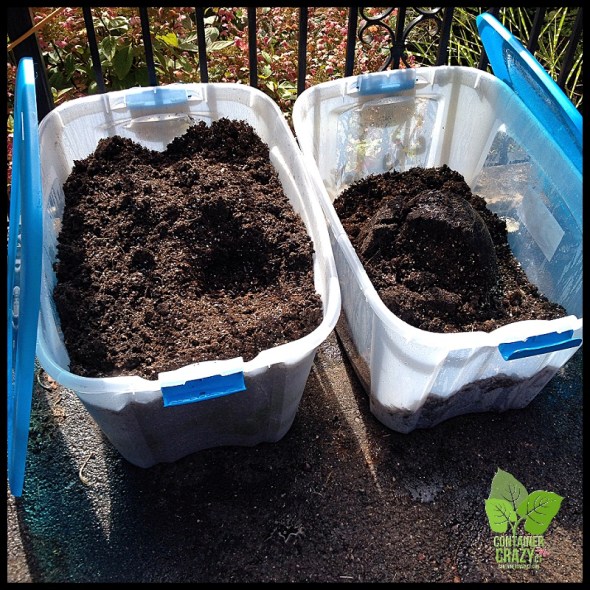
Potting mixes used in containers and patio pots doesn’t have to go to waste. When dismantling your pots in Autumn, save it to put in the bottom 1/3 of your big pots next spring and top it off with FRESH soilless mix or potting mix. Or transfer the soil to your garden beds to be recycled that way. It doesn’t have to go to waste! Just a tip for the day. Enjoy your fall weekend everyone, Cathy T.

ContainerGardenTakeDown_0008

Cathy Testa
http://www.ContainerCrazyCT.com
860-977-9473
containercathy@gmail.com

Getting Red, Orange, and Yellow in Your Fall Landscape

6 Comments

The fall colors we have been experiencing as the trees’ leaves changed to red, orange, and yellow this year in Connecticut have been so spectacular, well – it is nearly impossible to put into words.

There have been moments when driving where you may have been blindsided by a turning in a curve when you see the beauty of it all. A street that is ordinary in your hometown has suddenly turned into a light show of vibrant eye candy, and you may have pulled over to take photos, but many times, those photos do not capture what you see through your eyes or through your polarized sunglasses against the clear blue skies and bright sun.

However, this month, a friend posted a photo which blew me away. Not only were the trees covered in the mixed colors of fall, but the ground was as well. Vibrant reds from low growing wild blueberry bushes provided an affect one doesn’t often see – unless you live in Maine, which is where my friend resides.

PJ Walter Photography

This friend, PJ Walter, is a person I met many years ago when my husband and I stayed at his inn which he co-owns with his partner, Frank. When we met PJ and Frank, the bond was instantaneous – Let’s just say, they are great people with a wonderful inn located in Rockland, Maine, called the LimeRock Inn. Check their place out – Steve and I highly recommend it for visits in that region, which we have done many times when attending the North Atlantic Blues Fest in summer.

During our first time staying at the LimeRock Inn, PJ did something special for us. He knew Steve and I were taking a sail boat ride in the afternoon, so he hiked out to one of his viewing spots and took a photo of us on the boat as it was sailing by. We didn’t know he was there, so when we arrived to our room that evening, the photo was already printed and matted for us sitting on our bedroom side table – what a surprise and gesture by PJ.

This is how we were introduced to PJ Walter Photography, and many of his works are hanging in the hallways of the LimeRock Inn for their guests to enjoy. PJ has the skill of capturing the magic of mid-coast Maine. He was posting photos this month of various Maine landscapes, and stating along the way how Maine’s fall colors were incredible and probably the best around New England.

One day, I responded by posting, “The colors are not too shabby in Connecticut either.”

But then on October 16th – PJ posted this brilliant photo below. It blew my mind.

It also blew the minds of many of his followers and friends. Comments were posted, such as:

“Looks like an impressionist painting.”

“BELISIMO!!!!!!!!!!!!!”

“That hill is on fire, yo!”

“Interesting that the colors are in the ground cover as well as the trees.
Do you know what gives it the red color?”

PJ responded to the question by providing a link explaining why the ground color is painted in red (see Wild About Blueberries blog), and also gave a hint of the location, posting it as: Route 1 just north of Bucksport. 

His photo was shared over 55 times and a local television station in Maine shared it one evening. One may argue he should have kept it so well guarded to avoid a non-credit situation, but how can one not share such a beautiful sight? We are so glad he posted this photo and many others this season which has been particularly colorful from here to Maine. To see more of his professional photography – be sure to visit his website, PJ Walter Photography.

Low Growing Reds

As PJ pointed out to his fellow followers, the reds on the ground are wild low-growing blueberry bushes. Many people desire the red color in their fall landscape, and for years, the burning bush shrub (Euonymus alatus) was recommended for its bright scarlet color in autumn, but this plant is invasive. It spreads aggressively in the woodlands (where it stays green in coloring due to mostly shade situations) and overtakes areas, out competing local native plants. Blueberry bushes are the perfect alternative – giving your fruit in summer, and as you can see from PJ’s photo, the bonus of providing a powerhouse of red to scarlet coloring in the fall season, especially this year. While these shrubs are wild and low in Maine’s natural landscape – many blueberry shrubs can be purchased here in Connecticut which grow taller, from 3-6 feet. There are highbush, lowbush, and rabbiteye blueberries – and as long as you plant them in acidic soil they desire, blueberries are rewarding. Ask your local nurseries about them next time you visit to browse their offerings.

Taller Growing Reds

Another good option is planting a Japanese Maple (Acer palmatum) to get red color in your fall landscape. There are many varieties, heights, and styles to choose from, but what you may not notice is the red coloring of Japanese maple leaves intensify in the late fall, turning to a glowing red. Some cultivars you may be familiar with are the ‘Bloodgood’ maple which grows to about 15′ in 15 years, or ‘Crimson Queen’ with a more delicate, weeping form, and many more. Ask your local nursery staff to point them out to you next spring so you can capture some of that red in your landscape in time for next fall season. Japanese Maples like partial sun or filtered sun locations in moist, fertile, well-drained soil, and range in heights from six to twenty feet, so if you want a high level of red, plant one of these along with some blueberry bushes, and you are in business. And don’t forget, many smaller Japanese Maples are gorgeous in containers on your deck, they serve as elegant focal points, and may be protected in the winter months in garages to be returned outside the following season – something I did for several years with one of my smaller maples until I decided to plant it permanently in the landscape.

Another Red – Sourwood Trees

Another red tree, which I just have to mention because I find them beautiful, is the Sourwood tree (also called Sorrel Tree, Oxydendrum arboreum). It grows long drooping clusters of bell-shaped white tiny flowers in summer, which I think are splendid, and in the fall, the leaves turn a plum-red color. You can see the remnants of the white flowers against the red when you observe the tree up-close. It is a slow-growing tree, reaching about 20′ tall, requires a infertile soil, and likes full sun. I don’t see them often in landscapes, but when I do, and it is in the fall – the color is striking on the finely textured foliage. There is one located in Northampton, MA by a walkway which I took photos of this summer and Instagramed by Cathy T – I will track down those photos for you soon to post here later.

Oranges and Golds of the Sugar Maples

Sugar Maple spotted in Wethersfield, CT.

Sugar Maple spotted in Wethersfield, CT.

Fall Colors_0005

One afternoon while babysitting my niece, I drove past this maple on my sister’s street in Wethersfield, CT. My gosh, I had to walk to it to take photos. Sugar Maples (Acer saccharum) make an impact when in full golden color – and this year in Connecticut, they have been breathtaking.

Close Up of Golden Leaves on a Maple Tree

Close Up of Golden Leaves on a Maple Tree

When my sister arrived home from work, I told her immediately, “I went down the street to take photos of that maple – its glowing.” She excitedly responded with, “I am so glad you said that; when driving down the hill, as the sun hits it – it is absolutely beautiful every year.” The tone in her response was as if she way saying, gosh, you noticed it too – that emotion you feel when you see a colorful autumn tree highlighted by the sun.

It is moments like that when you embrace fall. It helps to prepare for the oncoming winter by providing a sense of transition – and the Sugar Maple is one to have for oranges and golden yellows in your landscape. It prefers full sun and moist, fertile, well-drained soil and can grow up to 60 feet tall and 40 feet wide. Although this one was located by a sidewalk, these trees do not like poor soil or road salt and do best away from those scenarios. They require a lot of space since they are big trees.

Ginkgo for Yellow

Another yellow to be had in the landscape is by way of the Ginkgo biloba (a deciduous conifer), which most people are familiar with due to its unique fan-shaped leaves and its medicinal benefits – however, did you know it turns a yellow color in the fall? Additionally, it is very tough, can take difficult locations, and the yellow leave color in the fall is lovely – until all the leaves drop which can happen quickly – as in one day when frost hits it – but it is worth it up til that point, plus you may choose to collect the fallen leaves for crafts. Ginkgo trees do not have serious pest issues. They tolerate road salt and drought, unlike the sugar maples. Oh, and if you go buy a Ginkgo at the nursery, remember to ask for only male trees (‘Shangri-La’ or ‘Autumn Gold’ are examples) because they do not produce fruit – the fruit on the female trees are stinky and people find the scent unbearable.

Pumpkins in Broad Brook, CT

Pumpkins in Broad Brook, CT

One afternoon, sitting inside by my kitchen slider, I was mesmerized by the colors of the trees in my own backyard – our carved pumpkins were a nice orange, and I thought, “Gosh, I wish I could capture those tree background colors in a photo.” This photo above was my ridiculous lame attempt with my iPhone. I guess the autumn colors will be sealed in our minds, or if we are lucky enough – captured by people, like PJ Walter, to be viewed forever. Here’s another one of his shots. Thank you PJ for the permission to post and show your photos.

Photo by PJ Walter Photography

Photo by PJ Walter Photography; FB Page in Mid-Coast Maine, 2015

Cathy Testa
http://www.ContainerCrazyCT.com
860-977-9473
containercathy@gmail.com

Go back

Your message has been sent

Warning
Warning
Warning
Warning

Warning.

Beware of Bittersweet in Your Autumn Decorations

4 Comments

We often don’t consider the impact of grabbing something from the woods to add to our Autumn decor this time of year, so if you weren’t aware of the potential spreading of this highly invasive plant, beware of bittersweet.

I spotted bittersweet twined around some branches in the woodlands by my home, and took a quick photo yesterday. It is not difficult to spot. The yellow and orange coloring stands out in the landscape especially as other trees begin to loose their leaves.

Bittersweet_0001

Asian bittersweet, also known as Oriental bittersweet (Celastrus orbiculatus), is a non-native plant, invasive and listed on Connecticut’s Invasive Plants list.

Chokes Off Other Plants

Bittersweet climbs by twining around trunks of trees and other branches. It can strangle its host over time. While the colorful berries are easy to spot, the leaves may have fallen from the plant by the time you spot the berries in Autumn, which is the case at my home – Thus, distinguishing this species from the American bittersweet (Celastrus scandens also used in fall decor) may be challenging. American bittersweet is said to not be as much as a problem, but it can quickly grow to 20-30 feet long or more, so you decide. Both types can and will usually attach to another plant or structure.

Leaves are Variable in Shape

Oriental or Asian bittersweet leaves are variable in shape (egg-shaped, oblong, round, tapered, etc) so distinguishing it from American bittersweet may be a little confusing upon a quick glance if you get tempted to take some for your decorations, but I would suggest using caution either way. Oriental bittersweet plant grows well in shade so you will find it embedded in woodland areas or around branches of native shrubs. Its one of those plants that will find a way to continue growing even when you tear it out by its shallow roots because every little piece left in the soil or torn pieces will grow more shoots.

Birds and Humans Move Them

Birds also carry the seeds to other locations. When the fruit on this plant splits open, you see the yellow parts on the outer parts which reveal the seeds in the center covered in orange fleshy coatings. This is nature’s way of moving it around, but humans may unknowingly move it to their yard too when they attach it to grapevine wreaths to put on the doors in the fall, or take it inside to put on the table as a centerpiece coloring. After all, it can be found for free in the wild because it is invasive and usually easily spotted. If you decide to use it in the home, be sure to dispose of it in the trash and not in your compost.

How Did It Get Here?

That’s a long story – which you may read about here: Untangling the Twisted Tale of Oriental Bittersweet by Peter Del Tredici. You may wonder how it gets to your yard – and one way is by not knowing it can spread in the pieces you take away from the woodlands. This is one of the cases where using fake plants is better.

Cathy Testa
http://www.ContainerCrazyCT.com
containercathy@gmail.com


How to Overwinter Tropical Hibiscus

Leave a comment

A friend recently asked me on Facebook if she can take her tropical Hibiscus inside to go dormant over the winter, and it reminded me of a post about this many years ago – Here it is below.

I would like to add that basically the answer is yes. They may be moved inside as a houseplant by a sunny window, OR these plants may be stored in the basement (unheated) where it remains cool, dark, and not below freezing. You keep the soil on the dry side (limited watering over the winter months). Most tropical Hibiscus are hardy to at least 45 degrees F. Watch out for pests such as aphids or white fly. You may want to have an organic spray handy if you spot any on them after moving them in – look at the underside of the leaves to inspect.

Don’t confuse the tropical Hibiscus with those which look similar but are hardy. Some people get confused, as noted on this blog post from years prior.

For example, some types of Rose-of-Sharon shrubs have similar looking flowers which folks have confused with a tropical, non-hardy Hibiscus plant.

There are “perennial, hardy Hibiscus” plants too – which usually have dish plate size flowers. One example is Hibiscus ‘Kopper King’ hardy in zones 4-9. These may be left in the ground over the winter outdoors in Connecticut planting zones.

If you are not sure which type you have, and want me to take a look, text me a photo! Cathy T

Cathy Testa's avatarContainer Crazy CT

In late August, I took a photo of the blooms on a tropical Hibiscus growing as a standard in my brother’s backyard by his patio.  He and his girlfriend planted it this year.  It has been growing beautifully all season.

  • Standard:  For those of you who are not familiar with the term standard, it means a plant that has been trained into a tree-form shape.  I’m not sure why they call it a standard; seems like it should be called a tree-form plant.  A newbie would never use the word standard to search for information about how to grow a plant into a standard, which ends up looking like a topiary.  The plant sits as a beautiful round form on the top of a small tree.
Tropical Hibiscus

My brother’s Hibiscus has a twisted 3 branched trunk instead of a single trunk or stalk.  These are commonly found in nurseries and give…

View original post 961 more words

My Take on Self-Watering Pots

12 Comments

I have often made the comment during my container gardening workshops and demonstrations that if you don’t like to water, leave this presentation immediately. I actually love to water my container gardens and patio pots. Yes, a bit nuts to hear by some folks, but to me it is relaxing. It allows me to take a moment to enjoy the plants’ features and feel the sun on my shoulders. Not only do I like the whole watering routine, I also realize the importance of water to the plants’ internal functions and growth processes.

Water is the primary component used during photosynthesis when water is split into hydrogen and oxygen by the energy of the sun. Water is also used to transport nutrients, cool the plant, expand its cells, and maintain turgor pressure. And YOU, my container gardening workshop attendees and gardening friends, are the person that will provide water to the soil so our plants’ roots can take up the elements so essential for all this beauty to begin and grow in your container gardens in the summer. Without your watering process, a plant in a container garden and patio pot cannot internally manufacture its own food – a function that only plants can perform on this earth. Sound like a big responsibility? If it is too big for you…well, there are some options.

As shown at my annual May Container Gardening Workshops, there are some tricks used to “reduce” watering routines for your pots needs, but there has also been self-watering pots out there on the market for some time now for people who, UNLIKE me, despise having to water their plants in the summer months. Or, they may not have much time to “relax, enjoy the plants’ features, and feel the environment” due to their busy workday schedules – after all – it does take some time to water container gardens – but its worth it, isn’t it?

As one attendee told me after the summer season was over, watering her plants on her deck felt like a part-time job – but she surely enjoyed the big, lush plants which grew large in her pots all summer. To enjoy your container gardens as focal points throughout your outdoor surroundings is a mental boost to your day. Watering may just force you to stop and take it all in after your work day. It can be a forced relaxation moment in some ways. Now, back to the self-watering pots…

What are Self-Watering Pots?

Self-watering containers and pots have a reservoir of water in the base of the pot. A disk or platform partition is inserted into the pot about 1/3 of the way down with the soil resting above the disk. A fill tube allows you to top off the water as needed which goes below that disk in the base of the pot. Sound easy, huh? Yet, I have to admit, I am not a big fan of self-watering pots, partly because – as I mentioned – I enjoy watering plants, and because there is something about the water ‘not draining’ freely from self-watering pots through the bottom, and through the soil, which disturbs me. After all, do you like the feeling of damp feet when you are wearing shoes that don’t quite breathe correctly?

I don’t think plant roots like that feeling either (damp feet) which can occur with “some” self-watering pots. The theory is the disk prevents the roots from penetrating into the water reservoir below the disk, but in my curious mind, I wonder. I’ve seen roots creep where they want to go – nature finds a way, but again – I have not researched this like a scientist – it is just my intuition that the roots may try to go below that disk and hit pure water, and stop growing.

What happens when things are too wet? We humans may develop a foot fungus and stinky feet, and run to the drug store to get athlete’s foot powder. But plants, well, in containers and patio pots, their little roots aren’t going to be able to leave to get powder or more air. They are trapped. This is very unlike roots of plants growing in the ground where they can travel, plus they also have a larger mass of soil to help out the situation. Thus, my concerns about self-watering pots continue to ponder me. Here are some of my concerns:

Salt Build-up

Salts – Fertilizers are basically salts (in chemical form, as I remember my professor emphasizing in class). When applied near water, salts will move gradually towards the area where it was applied. This dilutes the fertilizer and distributes it. If tender roots are close to the fertilizer when too much fertilizer is applied, water is ‘drawn from the roots,’ and nearby soil (water in the roots and water in the soil moves). Plants can dehydrate when we apply too much fertilizer because of reverse osmosis where the water will move out of the plant’s roots, and this is why we use caution to apply fertilizers in the garden and pots in correct amounts, at the right time, etc.

In containers, salts can sometimes be a problem if they don’t leach out of the pot and end up building up in the pot (which doesn’t happen if you follow Container Crazy CT’s 5 Must Do’s for Container Gardening). You need to use good soilless mix with proper pore space, have drain holes in the base of your pots, and not over apply fertilizers.

Water should drain through the soil. It just makes sense. Also, it is a good practice and healthier for the plants, if you allow the soil to dry out a bit between watering applications so the soil has a chance to breath. Keeping the soil constantly wet is not good (unless it is a bog plant or native to a wet habitat or environment). Just like soggy shoes would bother our feet after a long walk in the woods, so will roots be bothered by overly wet soil for a long period of time.

A note on Winter Watering

In the winter, by the way, watering container gardens which you have moved inside as a houseplant is greatly reduced because the plant’s growth usually slows down if you place the pot in a sunny but cooler temperature inside the house. And those pots which you put in your unheated basement to go dormant are watered only when the soil goes dry – water very sparingly, as discussed in my “Storing Tender Tropical Plants” demonstration last weekend. Winter watering is greatly reduced in most cases.

Too Much Rain

Too Much Rain

Rain Falls

Rain – If you have self-watering pots outside in the summer, without a plug which enables drainage, and you get lots and lots of rain, the pot actually starts to form a pond on the surface of the soil because the excess water has no place to go. It goes up as the soil gets waterlogged. Now your plants are floating in a muck as the water rises to the top, and you’re not too happy either because you have to go outside in your muck boots and rain coat to relieve the plant by removing the plug in the weep hole in the side or bottom of the pot so the water under the disk may drain out. You may even have to tip the pot to the side to drain out more excess water. When we drink too much, what happens to us? We get messy too. We topple over or lean; the same thing happens with plants. They’ll wilt and eventually – if they drink too much – well, you know what happens there. They die or suffer such a bad hangover, they don’t quite recover, start to get diseases, rot, etc. One alternative solution, other than calling a rehab center, is to use plants that drink responsibly. Those which don’t require too many libations – as we discuss when we talk about drought tolerant plants, or just face it – water our plants ourselves to control and maintain an appropriate balance of watering applications.

Oxygen to Breath

Oxygen – Plant roots need oxygen to take up water. A perfect soil gives plant roots oxygen for respiration, pore structure, nutrients, and even distribution of water. When water is sitting in the base of a pot and the roots hit pure water, they will not grow there due to lack of oxygen. This reduces the root mass for the plants above to thrive. I like to give my plants what I refer to as a ‘full spa treatment’ by providing a good, if not great amount of soil volume by using large pots – something I go over in my Container Garden Workshops every May. They will be happy and thrive, grow large and lush, and full in BIG pots. Also, remember self-watering pots have a disk in the bottom. This reduces the amount of soil allowed in the pot above the disk because it is partitioned off. In small pots, the soil volume can be cut in half as compared to big pots. This greatly reduces space for the roots to grow and roots are important – very important to successful growth of your plants above the soil. It also causes a perched water table situation – an area roots seldom penetrate where root problems start due to lack of air, oxygen, etc – I try to explain the perched water table in my workshops as best I can to my attendees so they understand how small pots reduce the impact and vigor of plants. After they hear what I have to say on the subject, they go out and get that big pot – and let me tell you, they are impressed with their results.

The Fill Tube

In self-watering pots, there is a fill tube attached, and I don’t like it. Call me picky, but this is another reasons why I feel a bit leery about self-watering devices because there is no “spa” once the growing spaces are reduced – and we all know, everyone, even plants, enjoy a good spa environment. The fill tube is cumbersome basically. It is like a straw. I’m not going to fill a little straw to water my plants, ugh.

Drainage is Key

Drainage – As water enters your pot from your watering wand or rainfall, it moves through pore spaces in the soil and between soil particle’s tiny spaces. As it enters, it pushes air out. If air is not replaced over a long period of time, the plant roots will lack oxygen needed to thrive. Some water is used by the plant, and some will drain out through the mandatory drain holes in the bottom of your pots. It is one of Container Crazy CT’s 5 Must Do’s – drainage holes. If there are no drain holes, as with self-watering pots, some air is not replaced, in my humble opinion and experience. Too much water is not a good thing, nor is too little watering – it is a balancing act. Excess water causes the roots to suffocate because the pore spaces are filled with water. Basically drainage holes plus your commitment to watering correctly provides a balance. Some self-watering pots have “weeping holes” to help alleviate potential water build up as noted above. I suspect this “draining issue” is why the weeping holes were added to self-watering pots in the first place. Are they self-sufficient now? I don’t know – I need to keep researching, but I do know that I don’t want to take a plug out of a pot every time it rains – I only like to uncork wine bottles. Now, I see maintenance, watching if the soil gets too wet, and maybe I’m just anal. So, I’ll stick to just watering it myself.

Watering container gardens correctly and using the right soil-less potting mixes has provided me with the ultimate success in growing lush, bold, and beautiful container garden plants. In fact, I don’t always fertilize my containers and they are spectacular. My theory is: a) I water them, b) I use big containers with drain holes for large soil mass, and c) I use the right soilless mix, and of course, d) I love them (maybe a little too much).

Gravel at the Base of a Pot?

I remember thinking that putting gravel in the base of a pot for drainage was not really a good idea because it gets all clogged up eventually with little debris or bits of soil going into it over time, water then doesn’t drain there, roots don’t grow into that area because it gets too wet. Soon enough science later backed up this suspicion by announcing the old practice of putting gravel in the base of pots is not really beneficial. It can impede drainage. Roots won’t grow into that wet area at the base of the pot, thus it reduces the full spa treatment. So, take this as just my opinion on self-watering pots, and if I change my mind – I will update my findings here on this blog. I am sure someone will argue the point with me – and I fully admit I need to know more – but I also have heard some folks say they like self-watering pots, but I haven’t seen their plants though either. Are they healthy, lush, and thriving?

Planter with succulents by Cathy T

Planter with succulents by Cathy T

We all Need to Drink Responsibly

Lastly, there are always the options of using plants that drink responsibly such as succulents, some herbs, ornamental grasses, some shrubs like Junipers, or cacti. Drought tolerant plants require less watering, which not only saves you watering time, but helps the environment by reducing water usage – which is big today – no one likes waste. And if you are not a fan of dessert scenes or rock gardens, add things like soil moist to your potting mix, which is discussed in Container Crazy CT’s annual May workshops as well. Rain barrels may be placed on your deck too to obtain free water for watering your patio pots. You may focus on shade tolerant plants that require less water routines versus the hot, sun-loving types. And shade cloths can be used on extremely hot days in your greenhouses or growing rooms, or patio umbrellas on your deck during the hottest sunniest days of summer to cast some shade over plants to reduce watering needs. But I say, if you love beautiful plants in container gardens – then love watering them too.

Cathy Testa
containercathy@gmail.com
860-977-9473

To hear more about pot types, see this page: Container Garden Pot Types.

Ways to Decorate Containers for Autumn and Halloween

1 Comment

Wait – Don’t put your container gardens and patio pots away too fast – They may be used in Autumn to serve as a place to add fall and Halloween decor for the month of October.

Autumn Installation for Store-Front

Autumn Installation for Store-Front

In the photo above, mesh ribbon, fake leaves, and various decor were used to fill the top of these barrels. Handy tools to get this done: Staple gun, wooden stakes, and creativity!

Kissing Balls_0021

This cast iron urn is wonderful because it can stay outside year round. In the fall, I took out the plants, left the soil, and added the black fabric webbing and a skull. The skull is attached to a square piece of Styrofoam by some heavy duty glue. First, a piece of black landscape fabric was used over the foam to hide the white of the Styrofoam block, then I glued the skull on top, added moss pieces and glow-in-the-dark worms. To insert it into the pot, use some larger type wooden skewers and push them into soil, then into the base of the square foam – simple and fun. And don’t forget, leave the soil in there when you disassemble this decor because it will be used to hold the winter evergreens when it is time to dress it up for the holidays in December.

Kissing Balls_0020

The plant on the side (vines) is from a climbing spinach plant which worked out nicely because it has black berries still clinging on – so it worked well with the black fabric webbing.

Kissing Balls_0015

Kissing Balls_0019

A spooky baby head is tucked under a Carex grass. Picked up this “baby” at a antique fair of all places. Knew I’d find a use for it.

Kissing Balls_0018

The Carex grass is perfect because it was flopping anyhow as Autumn arrived, and the Delosperma below, hanging over the pot, is still tough outside right now. So. I added a cool Owl using the same technique noted above: Square Styrofoam block, black landscape fabric over the block, glued the decor on and staked the owl with wooden skewers into the soil.

Kissing Balls_0007

Kissing Balls_0006

Kissing Balls_0017

On my Mum-mmy pot, I added some plastic creepy hands found in a Halloween shop – all I did was use heavy duty wooden skewers in each finger and pressed it into the soil.

Kissing Balls_0011

My Castor Bean plant got hit by frost and all the foliage was toppled over, so I decided to remove all the side branches, foliage and kept the main stem and branches on the plant, which I then covered with the fake white webbing found in Halloween shops this time of year.

Kissing Balls_0014

Kissing Balls_0013

After Halloween is over, I will chop the whole plant down, and save the soil in this big pot for stuffing with evergreens for the December holiday season.

Kissing Balls_0012

This is a photo of the spiny seed pods of the Castor Bean plant which I’m saving to use for next year’s plants – For more about this plant and its spooky features, read this post:

CASTOR BEAN POST

Kissing Balls_0010

A week before, I dismantled my big black pot – which kind of looks like a witches kettle, and removed the big red banana plant for overwintering. Well, I could not leave the pot un-decorated.

Kissing Balls_0008

Kissing Balls_0009

I took old stalks of perennials and glued mini skeleton hands on the top and tore some black landscape fabric to add, then just inserted them into the soil. The witches broom was added to keep you thinking – what else will be added to her witches brew?

After fooling around with all this Halloween fun, I got serious and planted 50 tulip bulbs into my big cement planter and enjoyed the rest of the warm day. Remember, your container gardens and patio pots can be maximized during special holidays before they are moved inside for the winter season.

Cathy Testa

Go back

Your message has been sent

Warning
Warning
Warning
Warning

Warning.

Pimping Pumpkins with Nylon and Bling-Bling

Leave a comment

This post received a lot of attention last October – so if you haven’t decorated your pumpkins yet – and don’t like the art of carving, here are some wonderful alternatives.

Note the stick-on bling decor held up well but some started to peel off when the sun heated them up – so I would recommend some adhesive or even some very small push pins to secure them onto the pumpkins.

I loved the nylon covering for pumpkins because they are reusable. I stored mine with my Halloween decor – however, we did some carving last Sunday, meaning my husband and I.

Carving pumpkins was so much fun – I decided in 2016 – I’m going to offer a fun workshop of “Carving and Flower Stuffing of Pumpkins” early in October. It will be posted on my blog under the “Nature with Art” class programs in 2016.

All will be here for attendees – pumpkin selections, carving tools, and fresh flowers if you prefer to fill them with flowers for your table!

Only two more weeks until Halloween – have fun out there, and be safe.

Cathy Testa

Cathy Testa's avatarContainer Crazy CT

IMG_9310The past week’s weather prompted me to start decorating for “Falloween,” the period where it may feel a tad bit early to put out your scary Halloween decorations, but not too early to begin decorating with pumpkins, gourds, cornstalks, mums, and other goodies.

IMG_9276So I decided to go with the easy packaged Martha Stewart find called “pumpkin sleeves” discovered at a local Michaels craft store.  When I tried looking up instructions, because there really wasn’t any on the package, I could not locate this item on the Martha Stewart website.

IMG_9275

IMG_9277

Not a bother – because it was very easy.  Just slip it over and secure the ends.  At first I used small rubber bands to gather the ends on the bottom and top, but later discovered a draw string for the top end of the sleeve.  However, I still found the rubber band trick to secure it tightly worked better.

View original post 298 more words