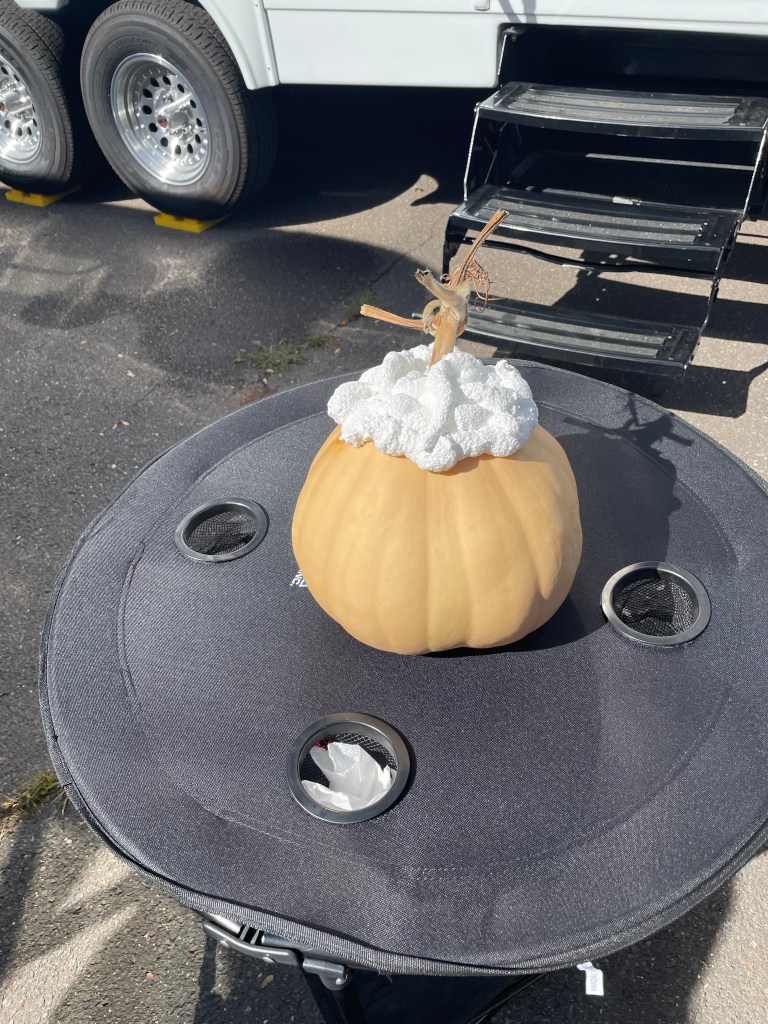
Today I did it – I clicked the button to not renew my subscription to another blog I maintained, called Workshopsct.com. It will officially expire on 2-29-24. This site was used to announce my workshops a few years ago, and most recently, my service offerings from things like my creative Succulent Topped Pumpkins to Summer Watering Services. I have officially closed my small plant related business, but I am always here to offer tips on container gardening, plants, and hobbies. Thus, for now, this site, called Container Crazy CT, is staying.
I think one of the hardest things to let go of is all my amazing photos of plants, many of which were showcased on WorkshopsCT.com. I’m addicted to plant photos – probably because I’m a visual person type of person. I love reviewing my photos and thinking about the story behind each container garden creation, or a nature situation like spotting of a butterfly or other cool insects and also looking back on photos of many types of plants, flowers, herbs, succulents, cacti, tropicals, tomatoes, and even weeds at times! LOL.
Anyhow, saying goodbye to a blog is not easy for me so I’m doing it in steps. First to go is Workshopsct.com, and next will probably be my 3rd blog about container gardening services, called Container Gardens CT. But, again, this blog, for the time being is staying. I’ve been writing on it for over 10-15 years, I’ve lost count! Below is a photo of the screen shot of workshopsct.com, just for the heck of it.
Enjoy the rest of your weekend! Cathy T of Container Crazy CT Today’s date: 1/14/2024
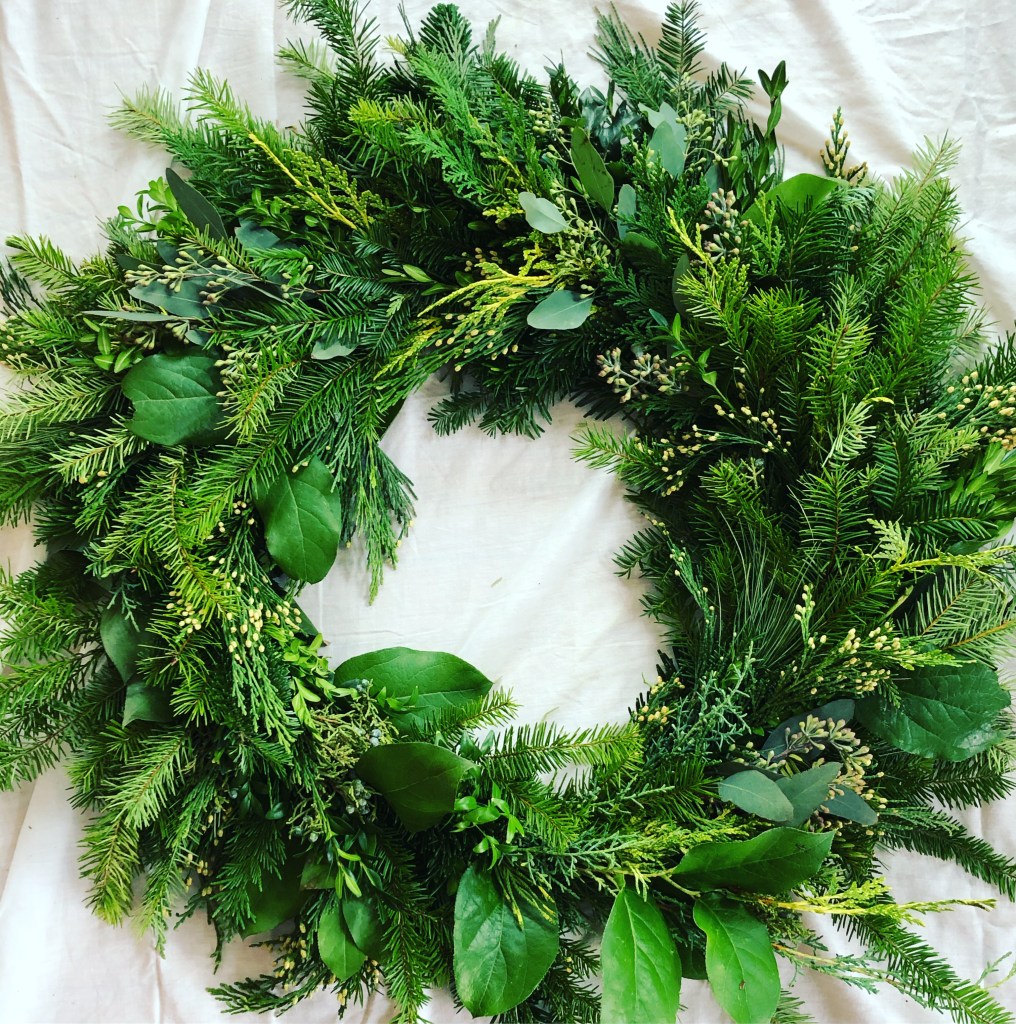
When I held holiday wreath making workshops, I referred to greens that are primarily used in the wreaths, as “base greens.” I felt that these greens are your standards and used for much of the filler material. Another term I created was, “premium greens.” Those were the more pricy and floral quality greens used to create accents in your wreaths or holiday kissing balls.
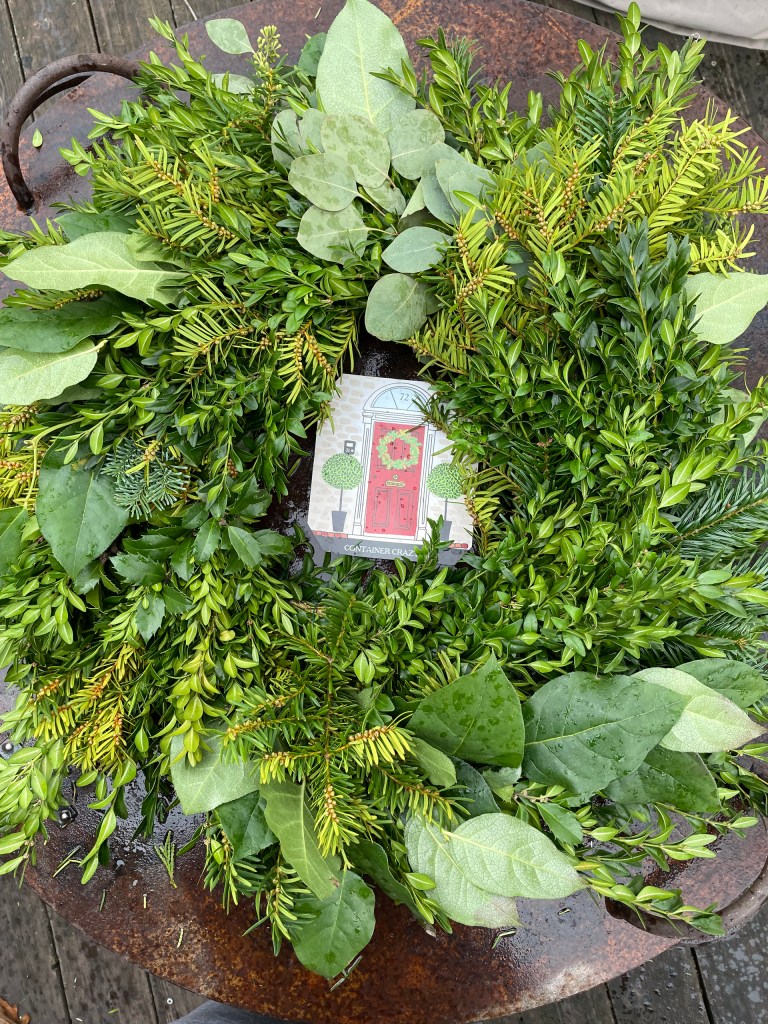
A mixed greens wreath with base and premium greens
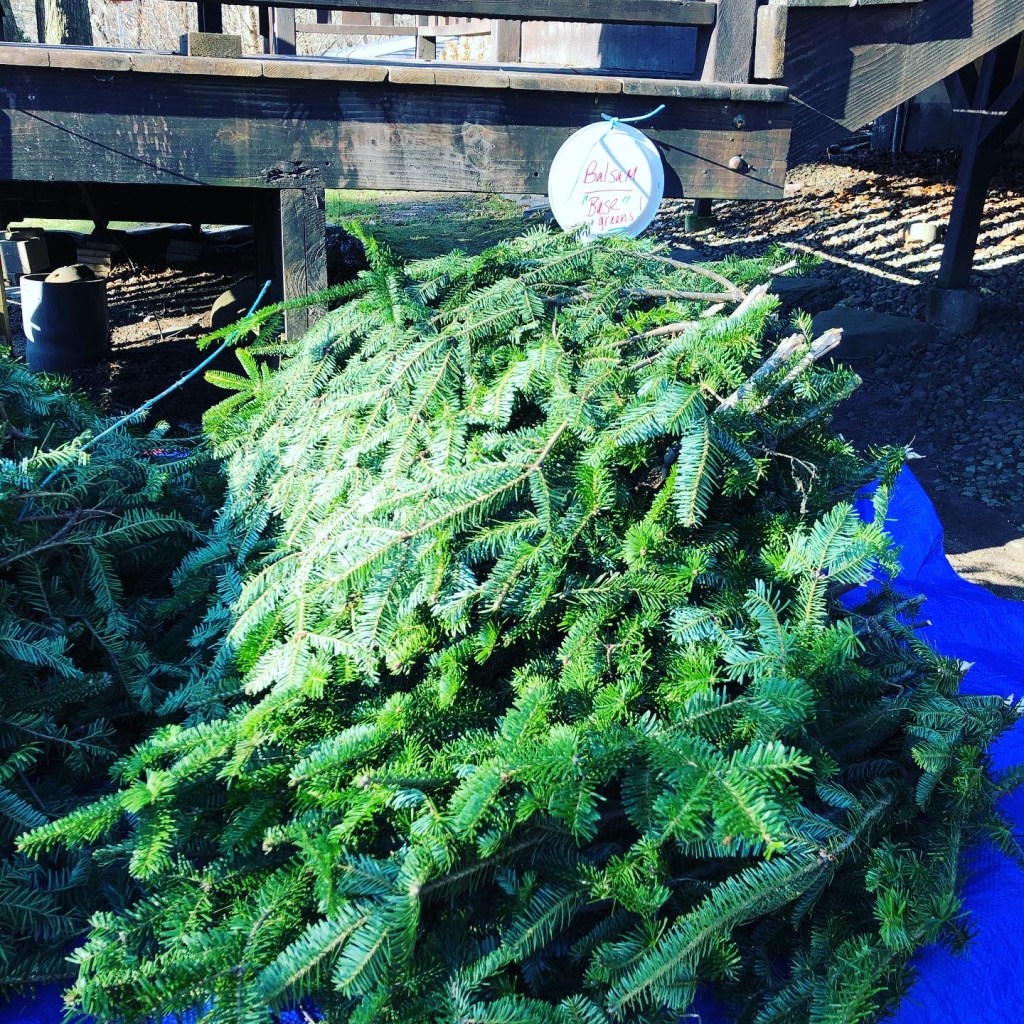
The base greens were usually Balsam, Douglas fir, yew and pine. So far in my series of recent posts here on Container Crazy CT’s blog, I have covered yew, holly, salal lemon leaf, and boxwood. Of these, I considered the boxwood, lemon leaf and holly more along the premiums. Yew makes an excellent base which I also covered in a prior post.
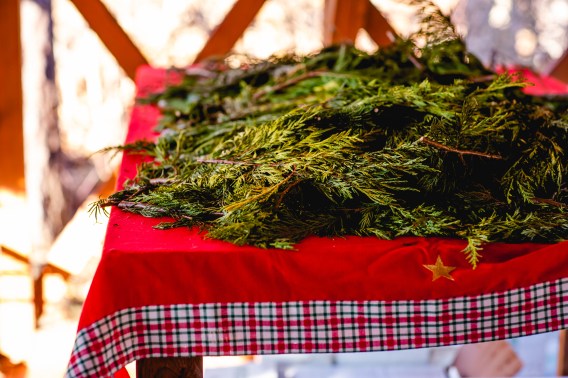
Base Balsam Greens on a Big Outdoor Table
When you make a holiday kissing ball, you need a lot of greens. Having the base greens in supply made that happen. It is also true for fresh greenery holiday wreaths. The base greens are the bulk, and the premium greens are the decor and special touches. It takes a combination of these to make a beautiful creation for the holidays. The base greens were typically the less expensive greens while the premium greens were pricier. And a lot of places do not make wreaths with premium greens, sticking with the balsam only or balsam wreaths with some special touches, like adding holly or pine.
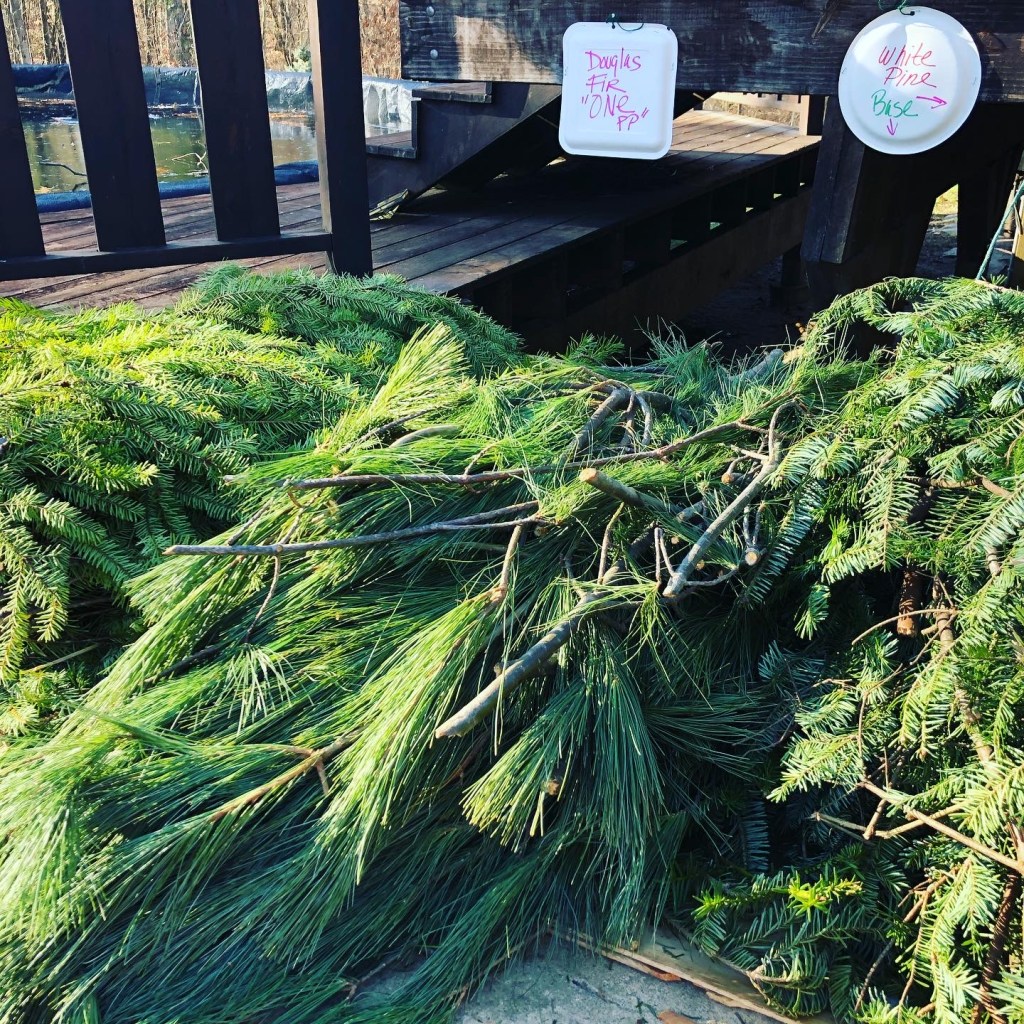
Base Greens on a Table
At first, when I held my wreath making workshops, I let everyone go hog holiday wild with grabbing greens from large outdoor tables. Some of the tables and shelves were in a wooden outdoor shed and other greens were piled on a table. I would monitor if the base greens were running out and restock as needed during the workshop. Steve helped me with this task as well. In the beginning, I had to see if my estimates worked. No one handed me this information so I always had a bit of panic that I could run out but fortunately, we usually had plenty.
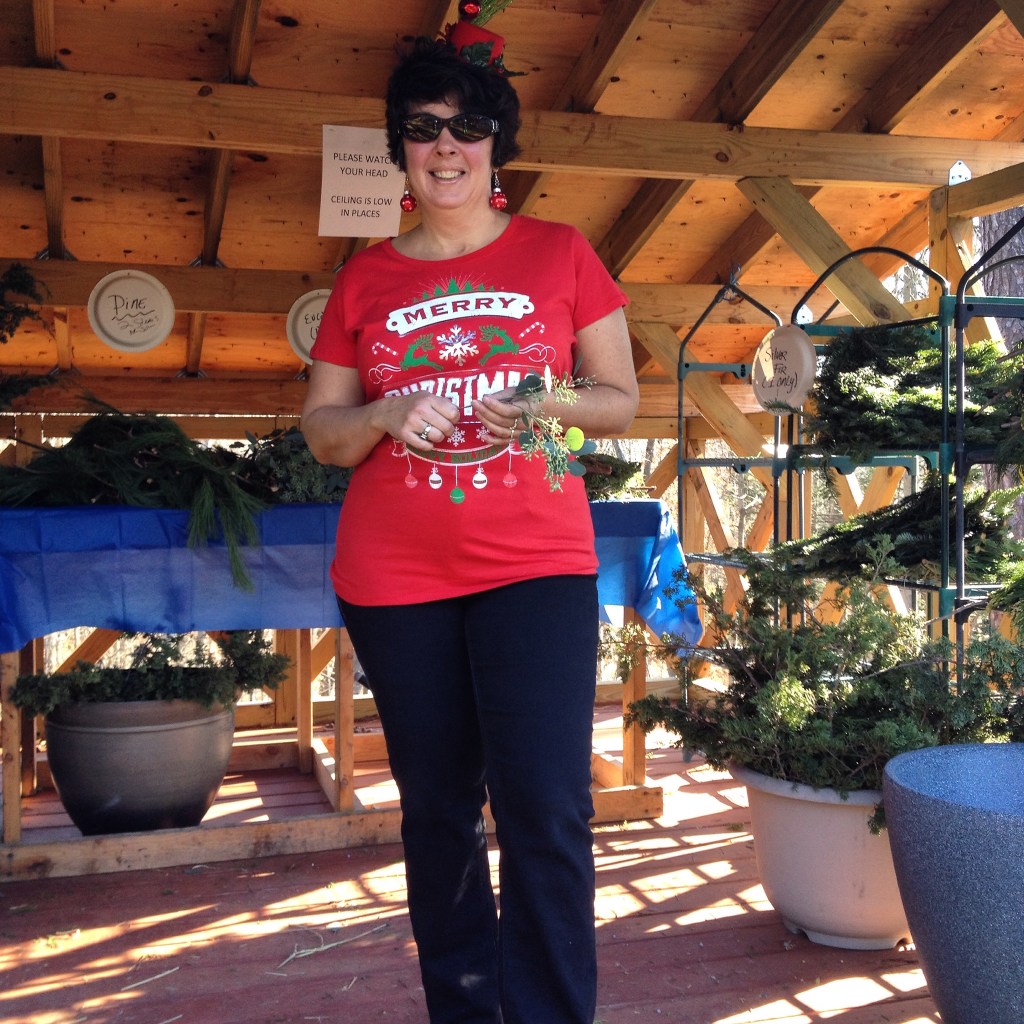
Me between two piles of base greens
That was part of the fun, but one year, an attendee took a ton of the premium greens, and one type of the premiums were no longer out there on the tables for others. This made me consider how I had to portion things out a bit more the following season, so it was fair to all attendees. I even had a friend help me to make sure attendees would take what was allotted per person. She stood there reminding everyone of that as they came out to get their greens. We began to affectionately refer to her as the “greens police.”
Various Greens on a table in the Greens Shed
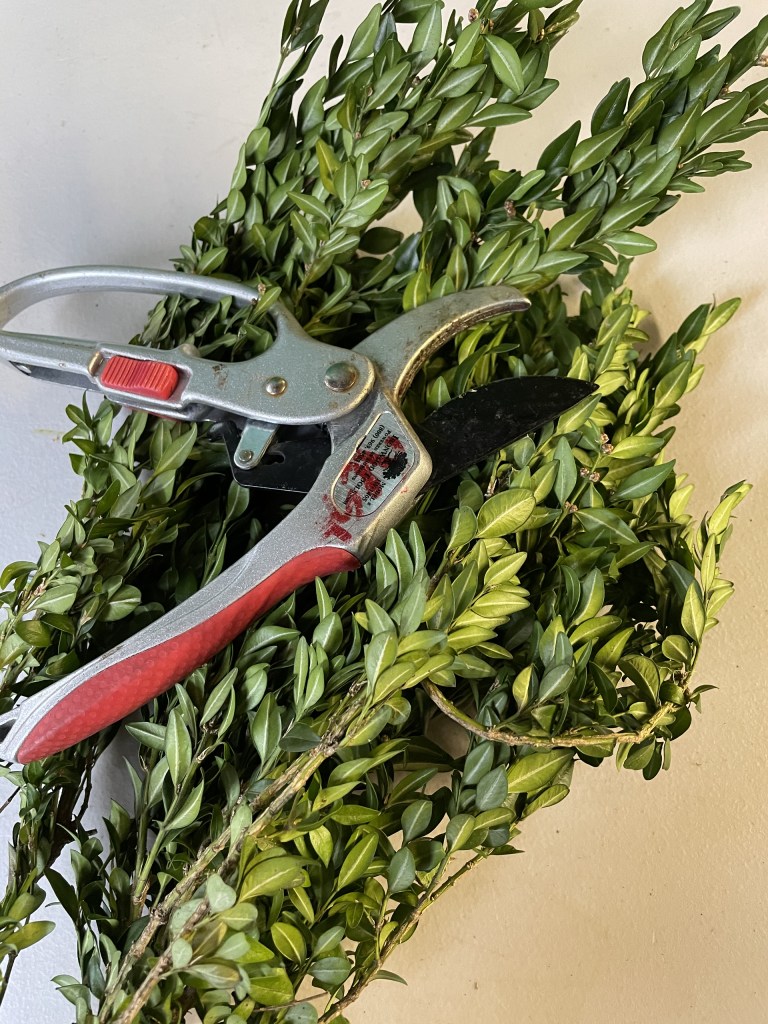
For me to portion everything out for 35 to 40 attendee’s prior was just too much work, so I really liked just putting all the greens out for everyone to enjoy. Over time, I learned which greens held up the best and which could dry out faster. Some of that was nature’s choice. Depending on the climate and weather of the region where greens are obtained from, some items may have not been available or in the best condition. This is the nature of working with plants in general. No guarantees. I also didn’t want to dry out the greens by precutting big branches of the balsam or other bases, which typically came in big bundles, so fresh cuts are best to help retain the moisture. The attendees brought their own pruners and would cut to the sizes needed as they worked to make their wreaths or kissing balls. There was no way I could do that work before hand, plus I think it is part of the process and as you cut your branches, it smells so good too. The aroma of all the greens would permeate our workshop room.
Base Greens
Also, portioning everything out, would be required probably the night before and I never set up the greens the night before, because I didn’t want to expose them to the elements such a wind out in the greens shed. My husband, Steve, and I would get up very early the morning of the workshops and move all the greens to a staging outdoor open shed. It was usually cold, our hands froze, but I am so lucky he was as cheerful as me in doing this process. He hooked up his trailer to his old tractor, loaded up the stock I felt we needed, and I would work fast to get all setup before everyone arrived. I was also excited too – because it was fun, but it was also a timing thing that required coordination. I used paper plates to make signs so the attendees would know which greens the base bulk were to use, and which were premium greens. There was a set amount each person was to take. I used tables and shelves, along with bins and buckets to put everything out in time.
Steve and Cathy – 2019 – The last workshop we held, and we made it a celebration! Ironically, this was the year before Covid arrived too.
I think one of the best compliments was when a friend recounted attending one of my first wreath making workshops, and she said to me that when she walked out to the greens shed area, it was like a manger with the wooden structure and all the beautiful greens lined out. I decorated the structure somewhat. It was festive and got everyone into the holiday spirit. I used to say, this is my holiday. Also, my husband gave up that wooden structure for us – the attendees of my workshops. He had built it hold his firewood, but he allowed us lots of space to use it as the greens shed. That was very generous of him.
Large Mixed Greens Wreath
It was the perfect outdoor structure to setup all the individual greens for the attendees to take. We worked indoors to make our wreaths, but our greens supply was outdoors. Some years it was cold, other years, it was actually warm! One year, we wore t-shirts and didn’t even need to cover up with hats or scarves. But overall, it was always a good day with decent weather conditions, I lucked out on that. I worried about snowstorms creating a problem for my workshop sessions, but those never happened or were the type of big winter snowstorm to not stop a bunch of enthusiastic happy ladies ready to join their family and friends at my wreath making workshops.
Cathy T (me!) the year we wore t-shirts at my Wreath Making Workshop!
Steve and I would always finish up setting up only minutes before the first attendees would arrive, then the fun would begin! This was a holiday tradition we held for 15 years. I do miss it and I’m sure my former attendees do as well. But, alas, the time had come to move on. In the meantime, I started making some holiday ribbon wreaths this year, quite spontaneously and that has been fun, but it will never be like making a fresh wreath or holiday kissing ball, but it sure is a great substitute! At least for this season.
Stay tuned as I go over things to know about using more base greens next in my series of posts!
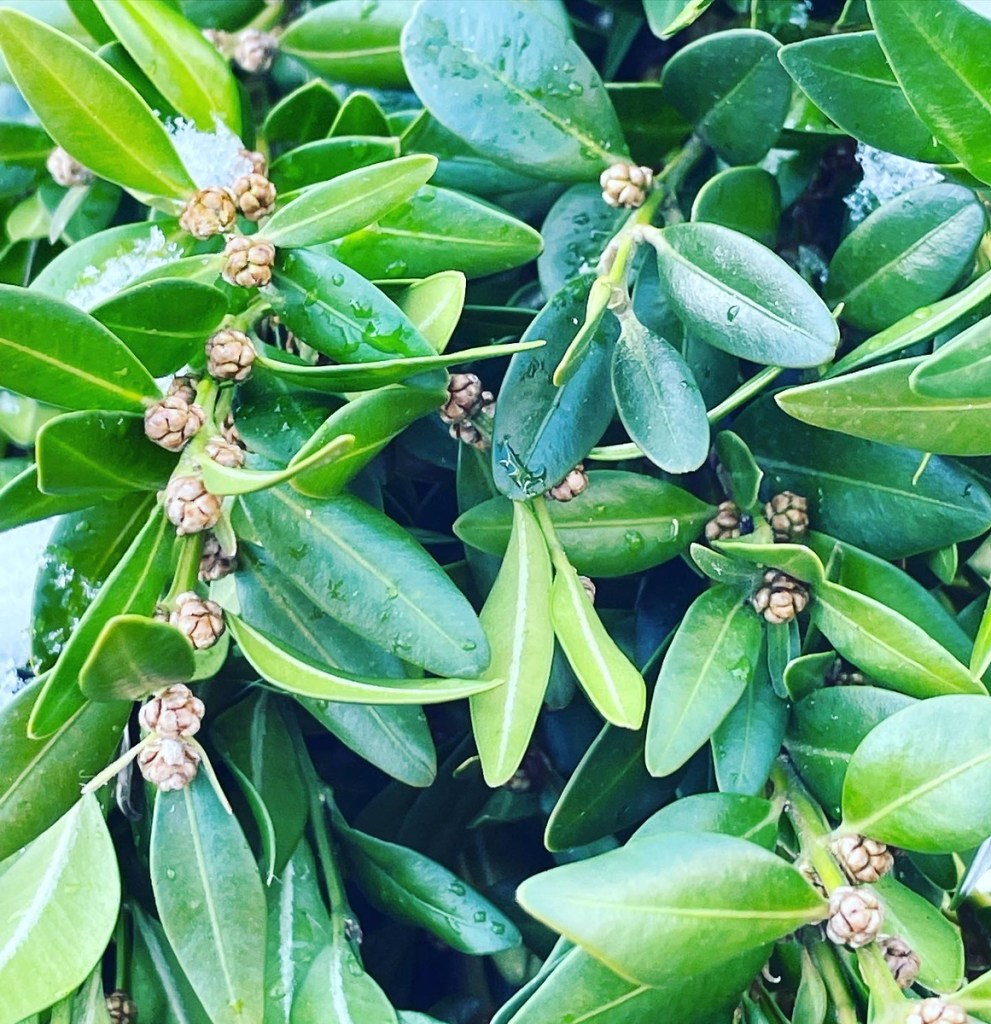
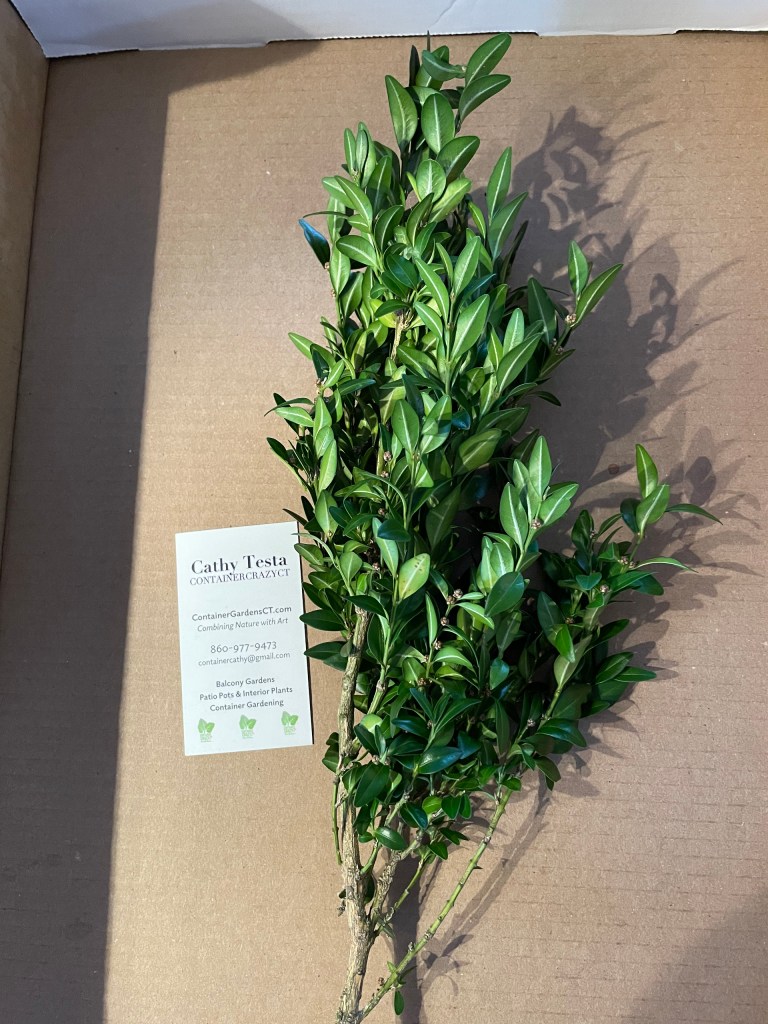
Do you know what the word Buxus is? It is the genus name for boxwood. It’s one of the easier botanical names to remember. Anyhow, boxwood evergreen shrubs have rounded or obovate shaped leaves, on slender green stems. It is a dense evergreen shrub used in landscapes and commonly available at nurseries. It is also a greenery available from floral suppliers or retail locations at nurseries during the winter to make festive arrangements such as fresh greens wreaths and holiday kissing balls.
As with most evergreen shrubs, there are many varieties or cultivars available of boxwood. Some have more narrow leaves and others have oblong leaves. For example, common boxwood (Buxus sempervirens) has elliptic or ovate to oblong leaves. Because I am a plant person, I notice the differences in the leaf shapes on boxwoods more so probably than a typical person. The leaves are small and glossy on both sides of the leaves usually, and in arrangements for the holidays, the leaves retain their dark green glossy color very well. Boxwood greens add a nice textural and color element.
I’ve written about the benefits of using boxwood in wreath making before on this blog. For example, there is no sap to contend with as with balsam. After a while, your hands get very sticky when making many fresh holiday wreaths, so that can be a benefit. Also, the boxwood bunches or stems are light weight. I liked using them to make boxwood only holiday kissing balls because of this feature, as other kissing balls would get terribly heavy when I did a mix of greens to create them.
As far as a quality green, I like boxwood on the greens list. It tends to give a classy look to a wreath or kissing ball. Used alone or with a mix of other greenery, it works very well. In my mind, it is a nice benefit or not sure of the word, but a higher-end type of greenery to use and if you can afford it, I say do it!
A holiday kissing ball made with boxwood greens only.
Wreath by Cathy T with Boxwood and Magnolia Leaves
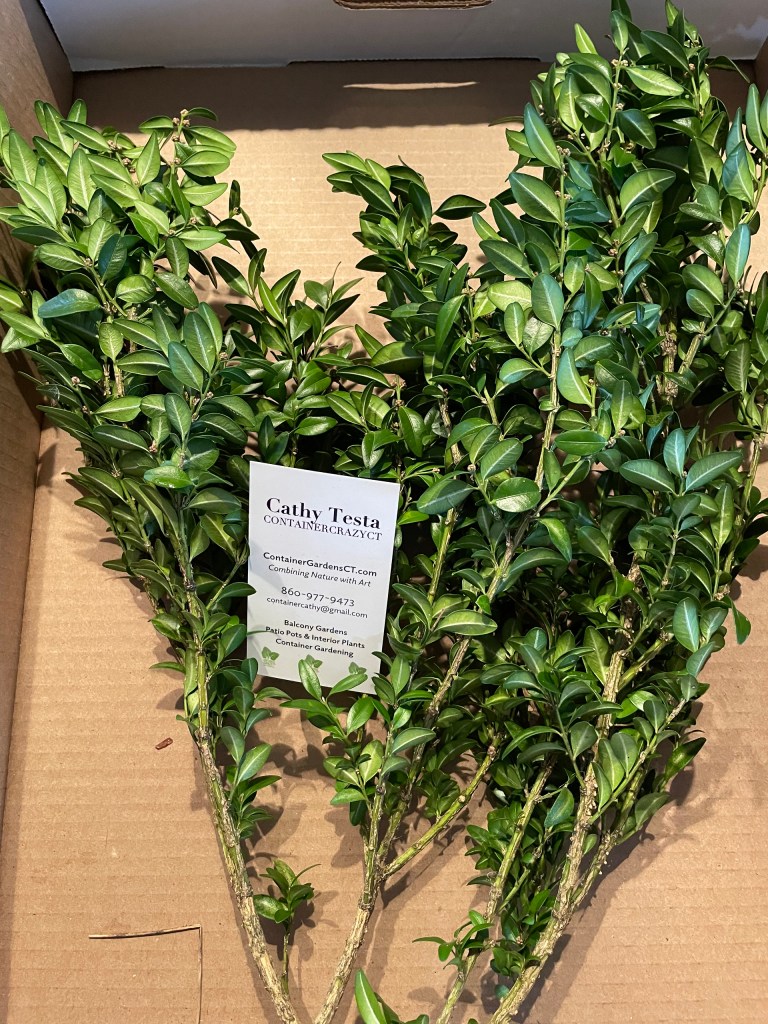
Boxwood ready for a workshop
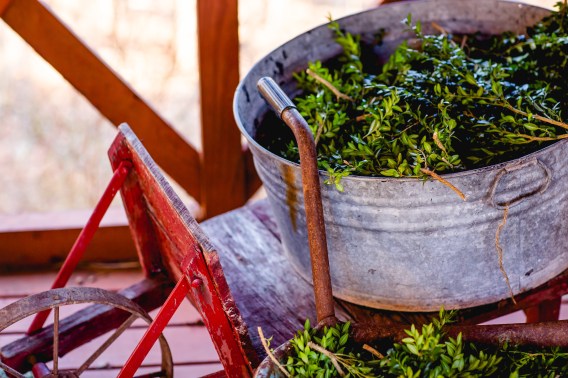
Typically, the boxwood I would order was packed in boxes or burlap bags, and they were always fresh and good looking. To keep them hydrated, if I felt they needed it, I would take a bucket or bin like the one shown above, fill it with water and drop the boxwood tips and stems into the water to soak them for a bit. Then I would shake off the excess water after they had a good soaking (maybe about 15 minutes or so). I would shake the bunch and then lay them on beach towels to somewhat drain.
As mentioned in my prior posts, the greens need to be kept cold. In the florist trade, it indicates the boxwood greens should be in a cooler at a temperature between 36 degrees F to 41 degrees F. Anyhow, I kept them in the waxed coated boxes or the burlap bags in an unheated garage. However, if I soaked them in water to rehydrate, sometimes I would just place them in a bin after the excess water was removed. Again, rehydrating them was not often needed.
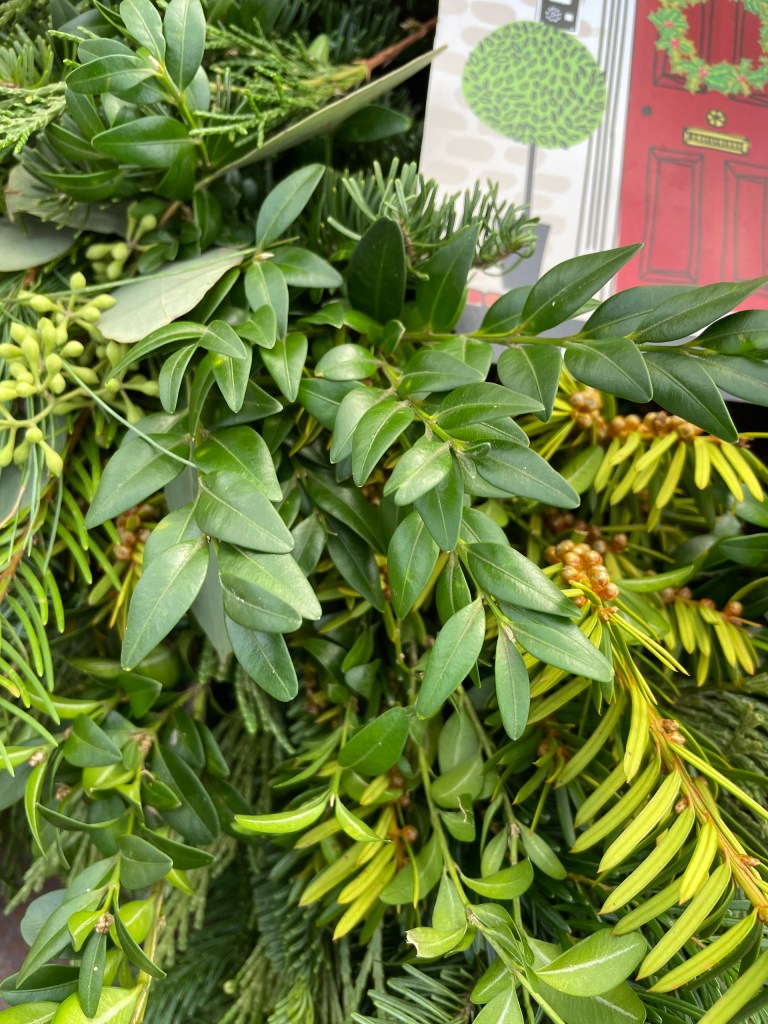
Boxwood on a Wreath by C Testa (with Lemon Leaf shown also)
Another nice aspect about using boxwood is the stems are very sturdy. I would recut the stem ends to a bit of a point to insert into kissing balls center ball foam easily. BTW, you may also rehydrate boxwood before use by recutting the stem ends and inserting them into vases of water, but I usually did not do that or need to. As noted above, if there was a need to rehydrate them, I’d do the soak method in water in a tub for a bit then dry them out a bit so they would not be repacked soaking wet. Outdoor weather like snow or sleet did not bother the look of the greens either once they were in a wreath outside.
For a couple years, I offered boxwood in my box of greens mixes. These boxes of greens were for people who wanted to make their own wreaths at home. Included were many other fresh greens such as balsam or Douglas fir, Salal lemon Leaf (prior post), yew, silver fir, berried juniper, holly, and more. I never harvested boxwood from my own shrubs or others, but these shrubs are common in the landscapes, so if you happen to have a big enough shrub stash of them, they can be harvested from to add to your holiday wreaths. Typically pruning boxwood is done in the spring but taking some minor cuttings for your arrangements is usually harmless for winter decorations.
Of all the greens I would order, boxwood was usually the highest price on the list. Therefore, I did treat it as a quality green to use with a mix of greens, but if I had some left over or someone wanted a boxwood only wreath or kissing ball, I would charge accordingly. The price was worth it because boxwood is an elegant green that makes your arrangements look classy, in my opinion.
Wreath made by C. Testa with a mix of greenery. Boxwood accents shown.
Wreath by C Testa with Yew, Lemon Leaf and Boxwood
Boxwood Only Wreath by C Testa
Another nice aspect of using boxwood is it was a faster assembly as shown above on this wreath with only boxwood. It would take a lot less time than bunching various greens together.
Boxwood Only Holiday Kissing Ball
Snips and tips of boxwood greens are nice in vases or other holiday decorations. For example, if you wanted to make a snow scene in a glass bowl, the cuttings can be used in there and last a long time with no odd scent. And as mentioned good color retention. I really can’t think of any downfalls of using it. I would rate it higher as a good quality type of green to use and hopefully you will have the opportunity to do so in your own holiday arrangements!
Yesterday I started the process of taking down my tropical Alocasia and Ensete plants from my container gardens and patio planters at home. It was a nice sunny day, and it is much more pleasant to work on them in the fall when the weather is not cold or too wet. These tropical plants must be removed and stored over the winter because they do not tolerate our cold winters here in Connecticut in pots and planters.
Here’s a photo of the plants I took out of the planters.
October 17, 2023 – Base of Alocasia plants (Upright Elephants Ears) and One Ensete (red banana plant)
And here are my tools:
Tools Typically Used
Garden Sheers, Hori Hori Garden Knife, Kitchen Serrated Bread Knife, Pruners, Trowel, and Small Shovel.
Cutting off the foliage and stems
Cutting back the foliage is the first step and is relatively easy to do. Using the garden sheers or the kitchen serrated knife works perfect. I recorded several videos of me doing this and posted them on my Instagram page as well as my Facebook pages under Container Crazy CT if you wish to see how I used the tools to cut all the foliage back. Here are the links:
For the Alocasia (upright type), I cut off all the leaves with stem (petioles) attached about 6 to 9 inches from the base of the plant. After getting all the foliage off and tossing the items into the compost, the next step is to dig out the base of the plant. This is the area where the corm is at the base (often covered with furry looking or papery material and has the roots attached at the bottom), and up to where the petioles grow from and up to the green part of the plant. Sometimes you will see little round suckers forming at the bottom of the base. For the purposes of this post, I’ll refer to the whole thing as the “base of the plant.”
Base of Alocasia’s above
Base of Ensete (red banana plant) photo above
The components of the Ensete (red banana plant) are a little different than the Alocasia (upright elephant ears) because it does not form a corm per say as the Alocasia does. It is basically like a big stump, with the roots at the bottom. When I cut the leaves off the Ensete, notice I use a knife and cut away from the plant base to avoid nicking or damaging the trunk. Technically, it is called a pseudo-stem formed by the leaf bases but for ease of writing this blog post, I call it the base or the trunk when it comes to the Ensete (red banana plant).
Dig out, Upside Down to Drain, Air Dry
In both cases, the fleshy material can be damp and contain some water so after I dig them out, I lined them up upside down to allow water to drain before laying them on a table in the sun for a few days to dry out some more. If the weather is rainy, I move these into the basement to dry out on a table.
I will trim the roots somewhat so there isn’t as many roots as possible to deal when they are stored in a box. The boxes I use are cardboard with air holes made in them with a knife – slits basically. In a prior post, I talked about how I store the upright Alocasias differently than the regular elephant ears. In my experience, these upright elephant ears store better in a dry and dark state versus a damp and dark state.
I allow the plants to air dry and then I place the base (as shown above) inside a cardboard box that will not allow any light in, and I put the box in a cool, dark place in my basement. I will check them in a few months to see how they are doing. Storing my upright Alocasias this method worked very well last year.
In years prior, I had stored most of my tropical plant bases in plastic bins, with air holes drilled in the top covers, and in some slightly moist peat. This worked well for my Canna Lily rhizomes and regular elephant ears, but I started to see rot on the upright Alocasias and learned dry storage was better for those types of tropical plants. Either way, if you discover the bases are rotting in the boxes, it is best to toss them out. And try again next year.
Now back to how I dig them out of my planters.
The Hori Hori knife is my go-to tool first. I basically stick the knife straight down into the soil and dig around it (the base of the plant) to cut the roots under the soil. I’m careful not to hit the corm or any part of the plant below but I can hear the roots crack as I saw around them with the Hori Hori knife. Sometimes that is all it takes. If that doesn’t get it out, I use a small shovel to dig more around the plant and then I rock the base back and forth with my hands and eventually it comes loose from the soil.
Timing
You can do this process before or after CT’s fall frost, but again, when it is cold wet and frosty, sometimes the corms will start to rot in your pots, so I like to do this “take down” process before things are mushy and wet. It always works for me. I usually do this mid-October when are days are cooling down.
I do brush off or use a leaf blower or just my gloved hands to remove the soil around the roots and the base of the plant base as much as possible. By the way, gloves are mandatory for me – the sap from these can make your hands itch and it is difficult to wash off – so I always wear gloves.
Collapsible Bin – Very Handy
My sister-in-law gave me this bin this year and wow, I wish I had this for years prior. It is so handy. I toss all the foliage in there and toss into the compost.
Check the bases later
As noted above, I will check on the stored boxes of these periodically. Here’s a post I did last March when I check on them and they were doing well. You can see I used newpapers to make a bed for them and how the green is slowly fading on the photo below and eventually it goes dry.
October photo of two of the planters (left Alocasia; Right Ensete)
As you can see, the flowers around the two tropical plants are starting to fade. The Salvias were still blooming (purple flowers), and I will miss those very much because two hummingbirds fed from them all summer. A bee or two was still visiting the blooms as well this month. They were so tall and beautiful. The White mandevilla was still offering some last blooms and the petunias faded pretty much. But the two tropicals still steal the show all the way into our fall season – why I love them so much.
The Ensete (red banana plant) on the right is a new one this year. I had stored a base of an Ensete for over 12-14 years but last year, I lost it, so I scored a new one this season. The Alocasia plants are from an original I got about 4 or so years ago and each year I get more from the pups and the repeat storing of the original. They are tricky to get growing in the spring though – and take a while to start from dormancy, but so worth it. Once they take off – they grow big.
Storing container plants is a way to save money and keep a plant growing larger as the base gets bigger each season. It’s a bit of a process but it went well yesterday for me. I’ve written my steps many times and just use the search bar to locate the posts.
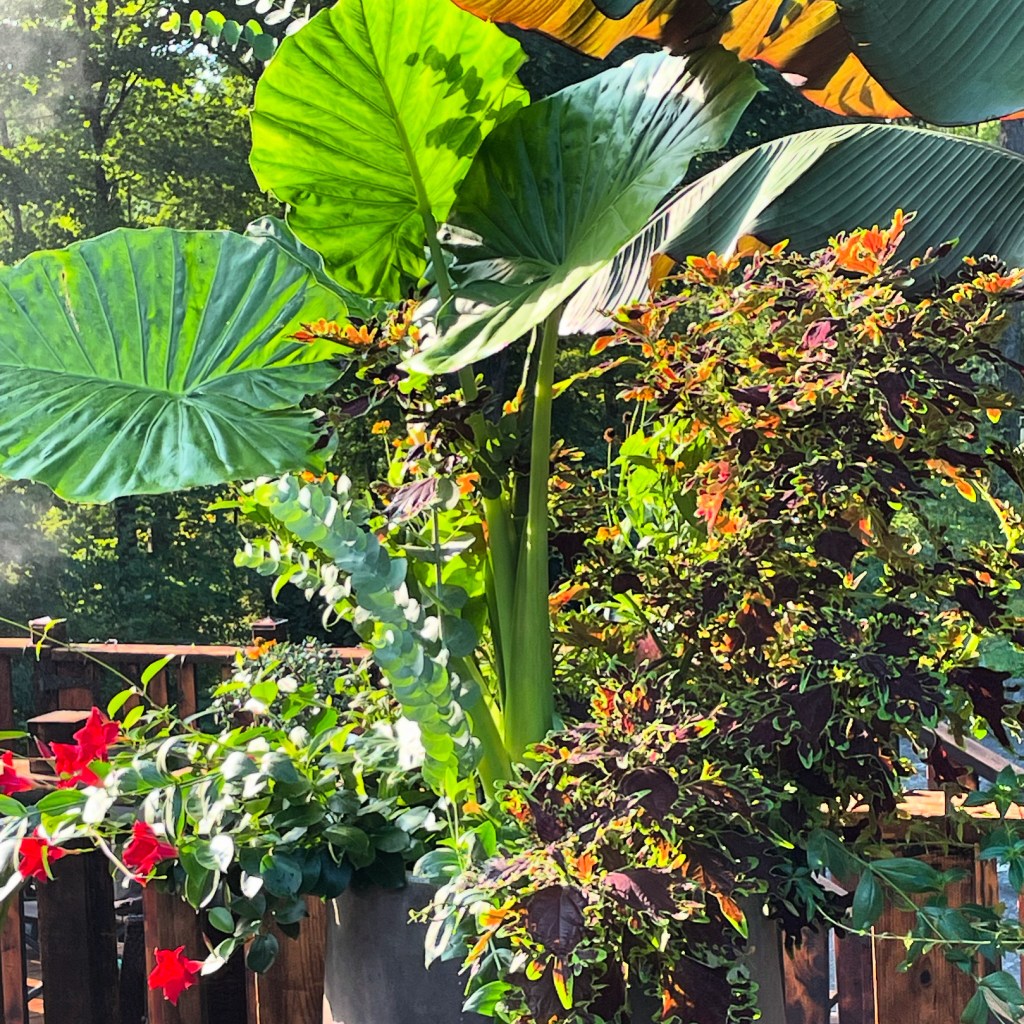
I’ve put this combo together in a pretty blue glazed patio pot and I’m loving it and so are the two hummingbirds visiting regularly on my deck due to the Black & Bloom Salvia in this container gardening combination. I wrote about it a couple weeks back, and thought I’d share some updated photos:
The Sweet Potato Vine (Sweet Georgia Heart Light Green) is doing fine except an insect has been making some holes here and there. I kind of just ignore that or snip those leaves off with my fingertips from time to time. The exposure is part sun here and this vine adds a nice punch of vivid color, working well with the adjacent Coleus. The vine can be planted in sun or part sun and is a vigorous grower.
To compare, above is upon planting it. It shows off the pot more at that time, now the pot is practically covered by the Sweet Georgia Health Light Green Potato Vine which is an annual plant in our planting zone in Connecticut. Genus is: Ipomea.
The dark maroon colored plant to the right of the sweet potato vine is a Coleus, also an annual plant here in Connecticut. It is starting to flower now. I don’t bother with removing the flowers. Anything to give pollinators more harvesting considerations is kept usually. This plant adds a beautiful contrast and makes the other adjacent plant stand out more. It prefers conditions of full sun or shade. Latin name for the Coleus is Solenostemon scutellarioides. The Coleus shown here is called Vino.
Tucked in the back and on the side of this combination is a Salvia plant. As I have noted in prior posts, if you want hummingbirds, plant Salvias. Hummingbirds love these blooms. I see them come by every day in the mornings and late afternoons. Currently having two regular hummingbirds. They fight a little from time to time. This variety is the Black and Bloom which thrives in sun or part shade and grows tall stems with beautiful blooms. Latin name is: Salvia guaranitica. Many stems have reached out beyond the deck’s railing and I love that look. I’m sure the humminbirds go to those and I don’t see them at that location as much, but I’m sure they do.
In the center is a Alocasia (a Jumbo Upright Elephant Ears plant) which usually gets gigantic, but it has experienced a slow start. I love the incredible thick shiny glossy leaves pointing upwards. It was started from a tuber earlier this season and will last through frost of fall. It likes partial shade. This tuber was actually from an original mother plant I got back in 2019. From one plant, I got many off sets and keep them going by overwintering these and regrowing each spring, but they seem to always take their time to get started growing. I still haven’t figured out the secret to get them to move faster out of dormancy. Anyhow, they are a keeper. They rarely get any problems and put on a good show especially this season with our humid wet tropical like weather patterns between the sun and heat.
To see more details about these plants, see my prior post:
Camping is a new adventure for me and my hubby, Steve. We decided to buy a small camper last year. It was quite spontaneous, somewhat. We got a bit tired of the airline scene and thought, we could give this a try.
Steve really was all for it – but I panicked a little after he signed the dotted line and thought, is camping for me? Well, long story short – I absolutely love it. You are surrounded by nature, you are forced to relax and chill, and it is a fun adventure each time we try a new place. As one of his friends said, “Camping is just plain fun.” And it is and has been so far.
It got me thinking about plants too. On our most recent journey, to the Acadia National Park area, I saw plants here and there and welp, I decided to blog today on what I spotted.
Acadia National Park
Steve was the one who picked the Acadia location. Because I knew there are lots of nature things to do there, from hiking to kayaking, I wanted to make sure we could find hiking trails and know where to go, so I picked up a book by Hilary Nangle about the Acadia National Park area and it was quite helpful. She provides maps, tips and locations for hiking and kayaking, eating, etc. She divided the book into chapters about Mount Desert Island, Schoodic Peninsula, Blue Hill Peninsula, Deer Isle, Ellsworth and Trenton and more towns.
Our first little camper! You can see my basil on the table brought from home for my cooking.
Trenton, Maine
Trenton is where we stayed at a place called Wild Acadia Camping Resort. It is near towns like Ellsworth and Bar Harbor, and we liked the location. Originally, we picked this location because it has a kid’s zone, but we are kid-less, so it was more around the thought that my younger sister might meet us there with her kids. But that didn’t happen this go around, anyhow, we did like this little campground. One of the best amenities was a new barn they have complete with wonderful bathrooms, showers (coin operated), laundry and even a sink area for doing dishes for the campers. I thought it was just beautiful. They did have flowers barrels outside but stupid me, I didn’t take a photo, but it was several barrels of petunias out front.
Barn with showers and bathrooms
Every morning a crew cleaned this new barn, and I was very impressed with it – we got lucky! I had no idea this was there, and it is new. So are two new cabins they were in the process of building. They also have tents sites and RV sites. Some more in the wooded area in the far back than others. The kids’ zone is in the front entrance areas. I liked that our site was in the back by the barn.
Anyhow, that was our home base and we enjoyed it. Unfortunately, it was cool, misty weather the whole week with rain, but it was never a downpour or total rainy day. We had breaks of sun one day, and we were never rained out of sitting by a fire at the campsite, thankfully!
Planter outside of a Store in Ellsworth
Ellsworth and Bar Harbor, ME
One day we met up with my sister, Lisa and her husband to have BBQ at a place called Mainely Meat BBQ at 15 Knox Road in Bar Harbor. It was very good and had an excellent vibe with a brewery next door. That was fun and after we decided to go to Ellsworth and do a little quaint store shopping. As Lisa and I walked store fronts, I spotted this planter above with a Coleus (with the bright lime green edges around wine-colored centers), Sweet Potatoe Vine (with the dark chocolate color), and a trailing fuzzy foliage plant (having a brain fart on the name at the moment – I’ll update!). I paused to take two photos. What a lovely combination, I thought! I loved how all three plants intermingled well together. And whomever was watering and caring for it was doing a nice job – all was very healthy. We shopped the stores here and I really liked several of them, from cool clothing to artsy finds. Worth a stop on a rainy day.
Update: The trailing silver fuzzy plant in the combination above is called: Helichrysum petiolare ‘Silver’
Roses along a shore path behind Bar Harbor Shops
Bar Harbor Area
My husband and I walked the Bar Harbor area as well on another slightly rainy day. There are several shops and restaurants. Down one side street off Main Street is a larger parking place, so we parked there and took a walkway shore path along the back that is lovely. We packed some snacks and a blanket, so we sat there admiring the views and watching boats for a while. Beach roses scented the area for us. We watched sea kayakers go by, there is a town pier to checkout, and a really nice Inn facing the water along the shore path. In the old days, we would stay in an Inn like that – but these days we are campers! LOL. And of course, there are shops and pubs. The shops had lots and lots of t-shirts and sweatshirts. Lots of trinket shops whereas Ellsworth had more artsy shops, at least I thought so.
Not Cimicifuga Plant! This is a Black Lace Elderberry!
Along the road to the parking area, where we started our walk the shore path, was a very impressive Elderberry plant. In my prior post, I mis-identified it as Cimcifuga. Their foliage is similar, and I was super tired when I wrote my blog post yesterday, ooops! I realized my error this morning. Either way, it was one of those that I knew the plant, but my brain fog made me forget the name at the time and later. Must be getting old! LOL.
Crabapple Tree at Lamoine State Park Beach
Lamoine State Park and Beach were not that far from our camping place, so one day, I said, let’s go look at it – maybe it is a nice place to camp next time we come out this way. They charge $6 per person to enter the area beach area, and because it was rainy or wet like weather, the place was pretty much void of people. There were a couple of people fishing and a few just kind of looking at the views like we did from the beach. It has a big vast ocean view, and I noticed this tree as we stood at the beach. I believe it is a crabapple. Anyhow, the beach area is not huge, and neither was the parking, so I can imagine when sunny and busy, it may be tricky to get a spot there. It has a boat launch too. There was also the state park with campsites area, however, we were not allowed to go there so we could not see how it was set up. Apparently, the state park area is 55-acres. I was disappointed to not be able to drive thru to see how it was setup.
My homegrown basil
Yummy pasta creation with Gorgonzola Sauce
After several days of grilling food, we really had a hankering for some pasta by our fire at the campsite. I had purchased some Gorgonzola Cream Sauce from Difiore’s in Ellington and made up this quick recipe with my basil, of course. I cooked the small sized brussel sprouts in a little bit of olive oil and tossed them around for a while. The were frozen in a bag, and then I added the yummy sauce, some white wine, and angel-hair pasta that was pre-boiled, and wow, I have to say, it was just delicious! Maybe it was that sauce and the fact it was like a cool fall wet day; we gobbled it up!
Lively Lobsters!
We also had lobsters, of course, while in Maine – and found this place from the book I referenced above. Wow, it did not disappoint. Nothing like fresh lobsters while viewing views of the pier and ocean, and boats. This place was 12 miles from our campsite location and worth the drive. It is called Beal’s Lobster Pier at 182 Clark Road, Southwest Harbor area.
We did tons and tons of other activities, from walks to browsing areas. Two favs of the week were the drive to Schoodic Point and Peninsula of Acadia National Park. And hiking Ocean Path starting at Otter Cliffs on the one sunny day we had. Those were amazing sights to see. We did not eat and only sit by campfires but the weather prevented us from some hikes and kayak plans. There’s always next time!
I hope to take more photos on the next camping adventure and continue sharing it with you. I think it will become a new hobby for me.
Thanks for visiting!
Cathy Testa http://www.ContainerCrazyCT.com Located in Broad Brook, CT Date of this post: 7/10/2023 Location of Camping: Trenton, Maine
This was a question posed by a person on a Facebook group page of CT gardeners today (5/5/2023). Great question, and it also included the statement of, “There are annuals being sold everywhere right now.”
Yes, the garden centers and nurseries are packed right now. Not unusual, I think, especially with Mother’s Day around the corner (next weekend). However, as tempted as we are to plant now, some plants (such as annuals) should probably wait until we are beyond chances of a spring frost and when the soil temperatures are warmer.
What is confusing is that our climate is constantly changing. We have global warming experiences and fluxes of crazy warm temperatures sometimes during the spring season. All of this leads us to wanting to plant now.
What is a person to do? Wait? Plant and risk it? Get plants and wait. All of these choices are applicable.
Comments and Responses to the Question:
I loved the commenters’ responses to the question posed above. I had to share them and my thoughts on each! Here they are:
“I look at the ten-day forecast in the middle of May. If it looks good, I plant. I get too anxious.”
That is good advice actually. I’ve always told folks watch the weatherman/women talk about the weather in mid-May. They usually give a heads-up if a frost is about to occur but usually that is only a one-to-two-day warning or less. However, you may use your weather apps or watch weather forecasters on television to get an idea of the next 10 days. As noted in my prior posts, I always use May 12th as my estimated last spring frost date in Connecticut (Zone 6b) area. So, start watching the weather next Friday.
“May’s full flower moon, and fully leafed out maple trees are always a good indicator for when it’s safe to plant annuals, tropicals and most herbs. I’ll start Sunday.”
Interesting on this commenter’s comment of the fully leafed maple trees! We use the maple trees to determine when to take the pool cover off our pool – after our maple tree is fully leafed out and because they drop samaras (winged seeds) first, and those make a mess. I never use the “moon” to gauge my planting time, but people do – and that was interesting advice.
“I always wait until after Mother’s Day and full moon. Last year was so cold but I planted my tomatoes around May 20th and I had a bumper crop.”
May 20th is probably somewhat safe; only about 9 days before Memorial Day timing (which I use as safe planting for tropicals, tomatoes, succulents, cacti, and annuals). But be sure to also tack on the ‘ten-day forecast in middle of May advice’ along with that timing by watching the forecasts, and you may use this as your gauge if you are okay with risking it and your internal mind is sure all is okay. (Again, I use Memorial Day as the safest planting date.) It is possible your yard or garden has a unique micro-climate situation based on how it is situated too. I know this is confusing, but some people get anxious and go for it.
“I buy now to get the best selection and then store on an enclosed porch until planting time in mid to late May.”
Also, excellent advice. If you have a place like an enclosed heated porch, heated greenhouse, and an attached garage that doesn’t get too cold at night, picking up plants to get the best selection now and waiting to put them outdoors is a choice. Just bear in mind, environmental stress is not good for plants and can impact their growth somewhat. I would use caution for plants that really need warm temps, but many people probably do what this commenter noted, pick up and store until safe. Or you may put some plants out on warm above 65-degree F sunny days and put them back inside the home (like hanging baskets for example) during the evenings until it is ultra safe outdoors around Memorial Day in May.
“Experience tells me to wait…some years I planted annuals before Memorial Day and spent the entire summer trying to backfill those that rotted.”
Note she said she planted annuals (in the ground). Remember, the ground is still very cold. Dig a little hole and feel the soil right now. Warm loving plants like warm soils (think tomatoes). So, while the air temperature and sunshine may feel right, the ground is cold and sometimes very damp from April showers. This led to rot on some of her annuals as she noted.
“From someone that has lost many plants due to frost in May, I’d be patient a little longer.”
I always note the frost incidents on my calendar, and I swear, I just don’t recall a frost in May of last year (2022), but IT DOES HAPPEN usually – thus, why I personally use Memorial Day as the safe planting time for annuals, tropicals, tomatoes, succulents, cacti. You may be safe putting out containers and patio pot during the day right now, because those are easily movable, or putting out hanging baskets, then if a frost comes thru one night in mid-May bring them inside that night so they don’t get killed by frost, but planting in the cold ground is riskier for warm season and non-hardy plants. They will suffer and not perform well and may die or rot.
“This is the magic questions. Usually, I wait till Memorial Day for annuals, tropical plants, succulents, warm loving tomatoes, and peppers. Frost usually occurs in mid-May but global warming seems to be changing that. It’s a tough call. Depends how safe you want to be.”
This comment above was my response to the question. I know, I know, it is super frustrating to wait. I have to wait for some of my client site plantings because I certainly don’t want to do all that work and have it fail. I so wish I could start right now! But at home, I tend to mix up the rules a bit. I have a Yucca in a pot – I moved it outside and it is fine. I actually moved it out because I found tiny ants in it – I also moved out one of my Alocasias in a pot because it was struggling anyhow (so, willing to risk it struggling and see how it does). But anything really healthy that needs warm temps, I’m waiting on. Next week, we have a mid-40’s at night range to anywhere from 62-70-75-degree days! Today’s temperature range (per my weather app) is from 42 degrees F to 62 degrees F and supposed to be mostly cloudy. Combine all the factors and make the decision which is best for you. Everyone is different. I know my Dad always said he waits till Memorial Day to plant his garden and today is his birthday, so it is a reminder, he is a wise old (sorry Dad, LOL) gardener. He has decades of experience!
The second part of this person’s question was: “Should I wait a week or two to be sure the threat of frost is gone?”
If you want to be super safe, and not risk the plant’s health and growth, then I say, yes. But this is the crux of it all, I believe, in my opinion, global warming is changing things. Years ago, Canna Lily plants would not survive in the ground, now they are – as an example. We have been having crazy weather experiences all over the country. What I mean is the golden “Dad” rule of waiting is best and has been for years, but things are changing with our climate and weather.
And don’t forget that Mother Nature creates unusual freakish weather scenarios sometimes. One year, after I planted on Memorial Day, we had the worst windstorm, torrential constant cold rain and the temperatures dropped super low over that weekend from a freak storm. I was devastated. I did lots of work and was worried about the damage and how the plants would or could recover! That is just an example. No matter what we do, we can’t fool Mother Nature.
Variegated Yuccas – Were in the Greenhouse all winter, the one on the right had tiny ants in the soil I discovered – I put it outside and left it there since last week. It is doing okay. Need to repot it. Those tiny ants found their way to the pot’s soil – what a PIA they can be. Easily remedied though, repotting it will fix that. Note Yuccas are technically hardy, but these have been in my greenhouse all winter. So, they are okay moved outside early if need be (due to the ants!).
White Mandevilla I got recently, as noted by the person who said they pick up now and keep indoors – that is what I’m doing with a few of these healthy Mandevillas I acquired recently. I won’t put this outdoors till Memorial Day. Environmental stress is not good for these, they tend to suffer when left out in the cold! They are tropical. They have been in hot environments and shipped here, so think about that – you have been sunning in warm cozy temps and then someone puts you outdoors without a jacket – That’s shocking to the system! These are sensitive to cold snaps – keep them inside until Memorial Day.
Pansies I put out in early April – they are doing great! They are my color filler around my house until it is safe to plant the warm loving plants in my life outdoors later in May. In the meantime, stick with pansies or perennials which bloom in the springtime (and of course the daffs and tulips give us spring color) – those are options to serve as eye candy as well until we can enjoy the other heat loving flowering plants which we want to put outdoors.
Yesterday was our first fluffy snow fall, which I have to admit, made me happy. I can picture the soft white snow on the items I made for many holiday orders this year at people’s homes, such as Kissing Balls hanging outdoors, Patio Pots filled with holiday greenery, Garlands, Wreaths, and more. The snow is also a great way to add some moisture to the greens on the wreaths and such.
The past two weeks were extremely busy. As a one woman owned business, with a very helpful special Elf Helper, my hubby, we did it – installed and created holiday scenes for everyone. Today, I hope to make a nice big Boxwood Wreath. I show all my photos on my Instagram page under Container Crazy CT handle.
I want to take this morning to say THANK YOU to all the people who hired me to work on their holiday scenes and patio pots, and also to all who ordered a Wreath, Kissing Ball, or Garland this year. It puts me (and hopefully them) into the holiday spirit. I finally got to do some of my own outdoor decorating yesterday a little bit before the snow started to fall. But it is a real treat and a special thing for me to create Holiday Items for people – THANK YOU AGAIN FOR YOUR SUPPORT – and pick-ups.
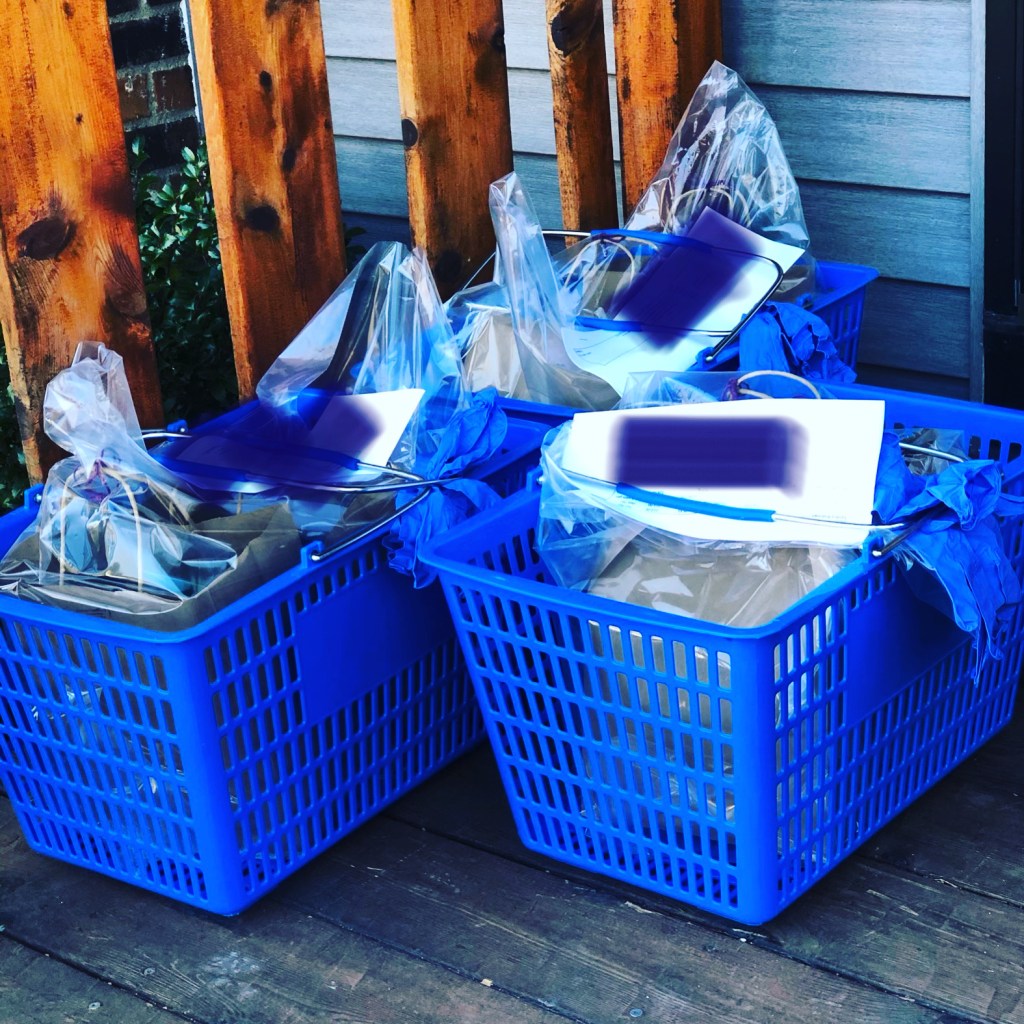
I also have to admit, I do stay inside a lot when people pick up their orders cause I’m so busy and can’t talk too long, plus I really really didn’t want to catch any colds or COVID during my work of holiday crunch time. But I find the “Pick-ups” are extremely useful and helpful to people when they are also doing their own rush holiday errands and they may pop by to get their handmade wreath with fresh greenery and other items quickly (Grab and Go!).
Next on the list is making some unique holiday pick-up gifts which are great for last minute shoppers, me included! I haven’t shopped at all yet for Christmas gifts on my own to-do lists. I never have the time in early December.
Hope you are enjoying this snow fall – it sure looks pretty from my office window – I can say that!
Sincerely,
Cathy Testa Container Garden Designer located in Broad Brook, CT 860-977-9473 containercathy@gmail.com
Yesterday, on the news, they said today is one of the busiest days for many small businesses offering holiday items, but we are expecting lots of rain and heavy winds today here in Connecticut, which may result in power outages. That’s okay, I can still make my custom wreaths in the dark with the woodstove going and candle light if need be.
Also, for some very odd reason, every year around now, my technology starts to give me trouble – why?! I Wonder?!! One year, my iPhone died completely at this busy holiday time, and I actually had to rush out to buy a new one – a present I wasn’t expecting; I remember feeling completely frustrated I had to do that.
This year, my iphone is not dinging when texts arrive (I seem to fix it once, and it is happening again), and my business Facebook page under Container Crazy CT seems to be doing weird things – Ugh, please holiday bad gremlin go away. Just like in the holiday movies, there is always that one bad spirit trying to steal the happiness of others – maybe that is my tech gremlin! I can’t let him do that though!!!
So, I am just reminding everyone the best way to reach me is a direct text or email works too! I’m busy making wreaths and offering my Holiday Box of Greens. Now is truly the best time to get this as the next week is busier than this week for me. As a one-woman owned business, with one very cute Elf Helper, a heads-up is very much appreciated!
Thank you, Cathy Testa of Container Crazy CT 860-977-9473 containercathy@gmail.com
I’m sure everyone knows how many days till Thanksgiving 2022! We are looking over menus, inviting friends and family to gatherings, and feeling the chill in the air to signal a new holiday upon us soon.
For me how many days till Thanksgiving is important because I start making custom holiday wreaths and kissing balls, some fresh made garlands, and other holiday gift items starting the weekend of Thanksgiving. So, we have 2 weeks to go before getting to my “start date!” for orders.
There’s quite a bit of pre-planning, such as reaching out to those who routinely order from me, posting various photos, wiring ornaments ahead (to save time while making wreaths), maybe spray painting some items for some outdoor holiday installations, or measuring various items, and checking the stock of my inventory needed is a big task as well. Do I have enough wreath frames in different sizes, florist wire, and other items needed to create? Remember COVID year, things were in low supply. I don’t think supply issues are as big but they do impact costs that continue to rise. Cost rising means more planning and careful to not over do things, which is tricky if you love to decorate!
Also, I usually make some special trips too to sources to find unique ornaments, ribbons, or decor to use – but restraint is also required because, not to be a broken record, but we all know prices of practically everything has gone up. As my SIL said recently, “Can you believe even celery is expensive?!” Yes! I can! However, I can not resist making beautiful wreaths with a mix of greens – everyone needs to at least have a wreath to adorn their door, mantels, or outside windows, you name it.
My wreaths come in various sizes from small, standard, large, and deluxe sizes. Usually, standard is a popular choice for folks, and standard or large sizes fit well on doors. I try to use color choices desired, but this year, I have to say with the rise in prices of greens to ribbons, I will be using standard colors mostly. There are some exceptions for special orders, etc. I do the best I can for everyone. And all is made with fresh greenery.
I also offer “boxes of greens” if you wish to make your own, and also make large kissing balls custom made. Fresh greens are great for your outdoor pots, window boxes, or to adorn a railing inside the home.