Reasons to Use Perennials in Pots

Leave a comment

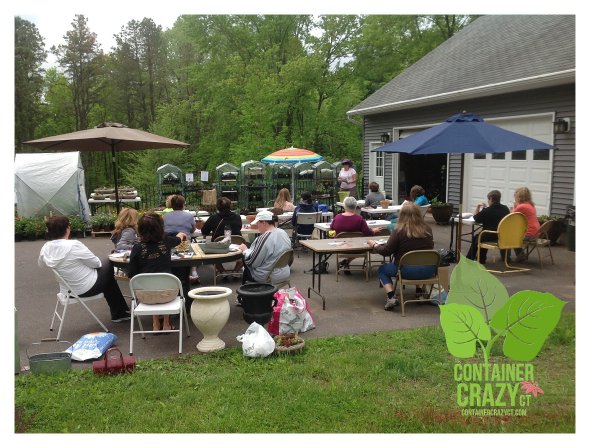
One more day until Container Crazy CT’s workshop on container gardening with powerful perennials and tropical plants. The lucky ladies signed-up are in for a treat! Want to join us? There are just a few seats remaining for tomorrow’s hands-on workshop. You get instruction, tips, and insider info as you pot up your beautiful container gardens and patio pots.

You may wonder why should you use perennials in pots in the first place? Well, here’s just a few of the bene’s:

MORE LIKE A TRUE GARDEN

Perennial plants give your container gardens and patio pots a true garden feel when combined with other blooming annuals and textural plants. How many times have your seen a garden stuffed with only annuals? Not very often I am sure – and it would be too much color in my opinion, and a huge waste because annuals won’t winter over or return. Perennials give your container gardens and patio pots the feel of a true garden in a pot.

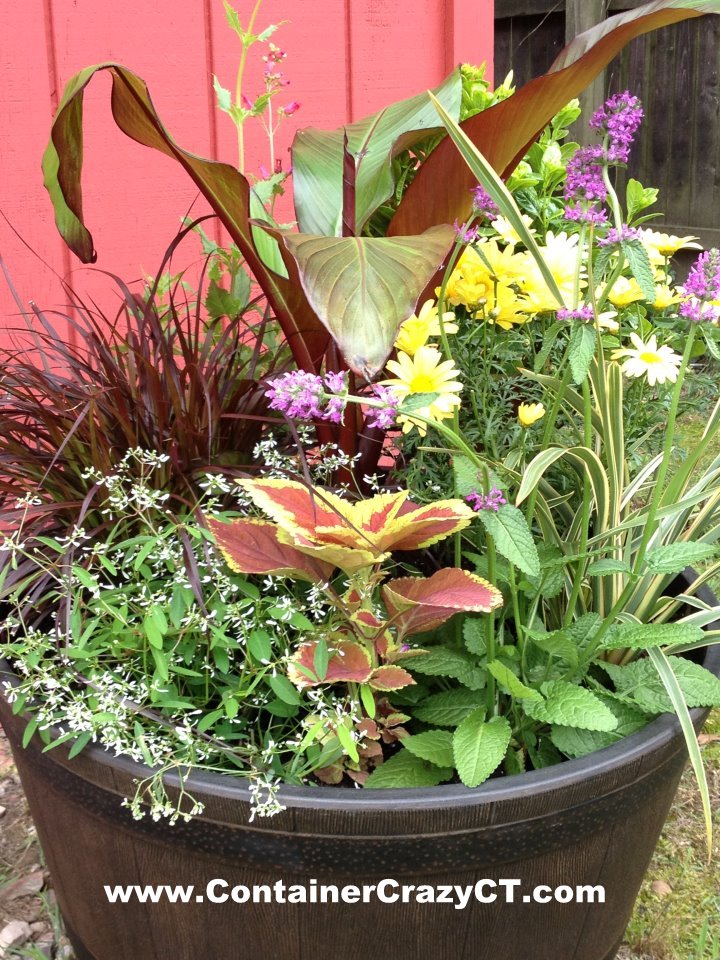
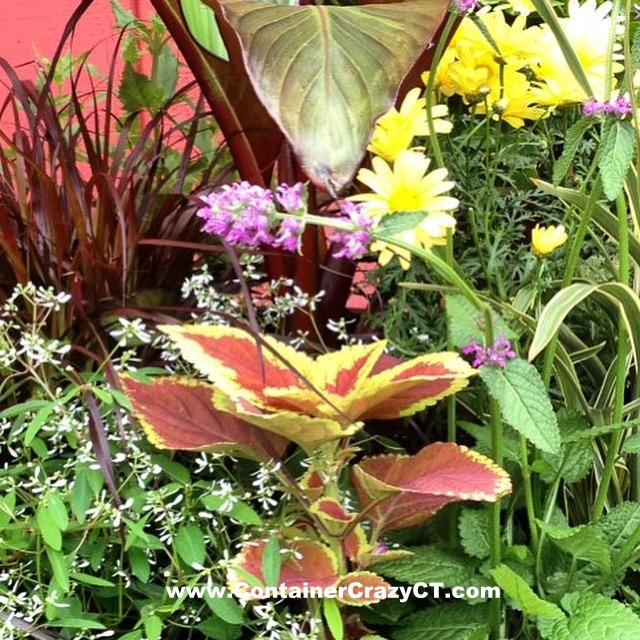
A mix of perennials and annuals with a thriller topical - Looks like a garden in a pot!

A mix of perennials and annuals with a thriller topical – Looks like a garden in a pot!


ARE LESS DEMANDING AND FUSSY

Perennials are less demanding because they are a little bit tougher. They don’t need to be deadheaded, cleaned up, or pampered on a routine basis or throughout the growing season over and over again. You basically clean them up after their flower cycle during a set period of time based on their particular bloom cycles, whereas annuals need this attention regularly because they bloom constantly. You can spend more time enjoying perennials than pampering them.

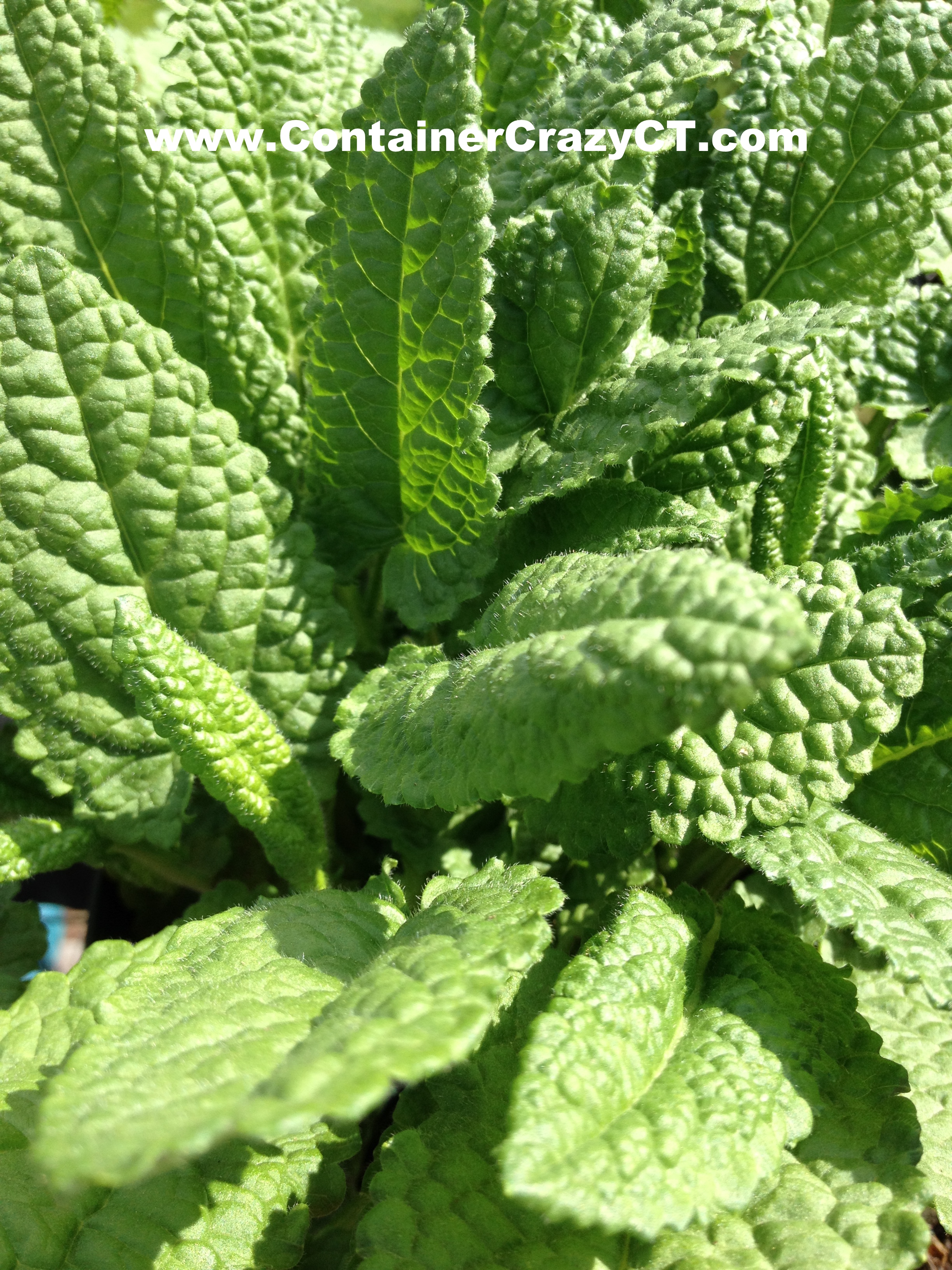
Stachy monieri 'Hummelo' has textural foliage and is a tough perennial

Stachy monieri ‘Hummelo’ has textural foliage and is a tough perennial

NOT AS MUCH WATERING

Some perennials don’t require as much watering as delicate and fussy annuals do in the season. With the right soil environment and growing space in a pot from the start, you can pretty much expect the perennial to proceed with what it is used to doing – growing and blooming on queue for you. Learn what is right to use to grow the best powerful perennials in container gardens at the workshop.

EXTENDS YOUR SEASONS

Perennials can take colder temperatures than annuals, so many perennials may be put out earlier than annual plants, giving you an early start to container gardening outdoors in the spring. And perennials may be left out later when fall arrives as well, allowing them to go dormant in the pot before overwintering them. There are many ways to do this which we discuss in Container Crazy CT’s workshops.

Stachys monieri 'Hummelo' - Easy to transition to the garden

Stachys monieri ‘Hummelo’ – Easy to transition to the garden

BLOOMS ARE EVER CHANGING

Perennial’s blooms are ever changing, they don’t sit idle. Perennials tend to be like the “star cast members” in a patio pot and container garden. They add interest and change up your container garden display sequentially. Imagine having some color in your pot from a perennial plant that blooms through spring, then a different perennial in the pot sends up its blooms in July and continues to September, and meanwhile a mid-summer perennial plant bloomed in the pot. You have action happening all the time.

Bloom open on perennial 'Hummelo' while foliage carries a strong textural design.

Blooms open on perennial ‘Hummelo’ while foliage carries a strong textural design.

FOLIAGE FOR LONG LASTING TEXTURE

Perennial offer a wide array of showy textures and colors in their foliage, and some are known for being fantastic foliage candidates to mix up your design in your pots. The color of the foliage stays true as it grows and shows. Embrace the foliage – it is what makes your design stable and long-lasting. When a perennial isn’t blooming, it is working in your container as a foliage feature, whereas most annuals do nothing if they are not in bloom. Foliage is architecture in your pot.

Digiplexis 'Berry Canary' is Berry Nice Indeed, makes a beautiful flowering filler or thriller in a pot! Zone 7 plant.

Digiplexis ‘Berry Canary’ is Berry Nice Indeed, makes a beautiful flowering filler or thriller in a pot! Zone 7 plant. There will be some tropicals at the workshop too ! Let’s mix it up.

SOLO CANDIDATES ARE LITERALLY ONE AND DONE

If you like it super simple, pick a stunning pot and plant it up with one perennial which will grow wider, taller and fuller in your pot as it progresses from season to season. That is ‘One and Done’ baby! You only have to overwinter the pot and roll it back out to your favorite spot outdoors every spring.

SIMPLE STEPS TO OVER WINTERED MORE WAYS THAN ONE

They can be over wintered in the pot to regrow every season when stored properly, and there are several ways to do so, which we will go over in Container Crazy CT’s workshops this May. Because perennials return, they are reusable without repaying the following season. Unlike annuals which get tossed, perennials are here to stay in your pots and gardens – no replanting required. They act in a double-duty fashion, and we explain all of this in our workshops.

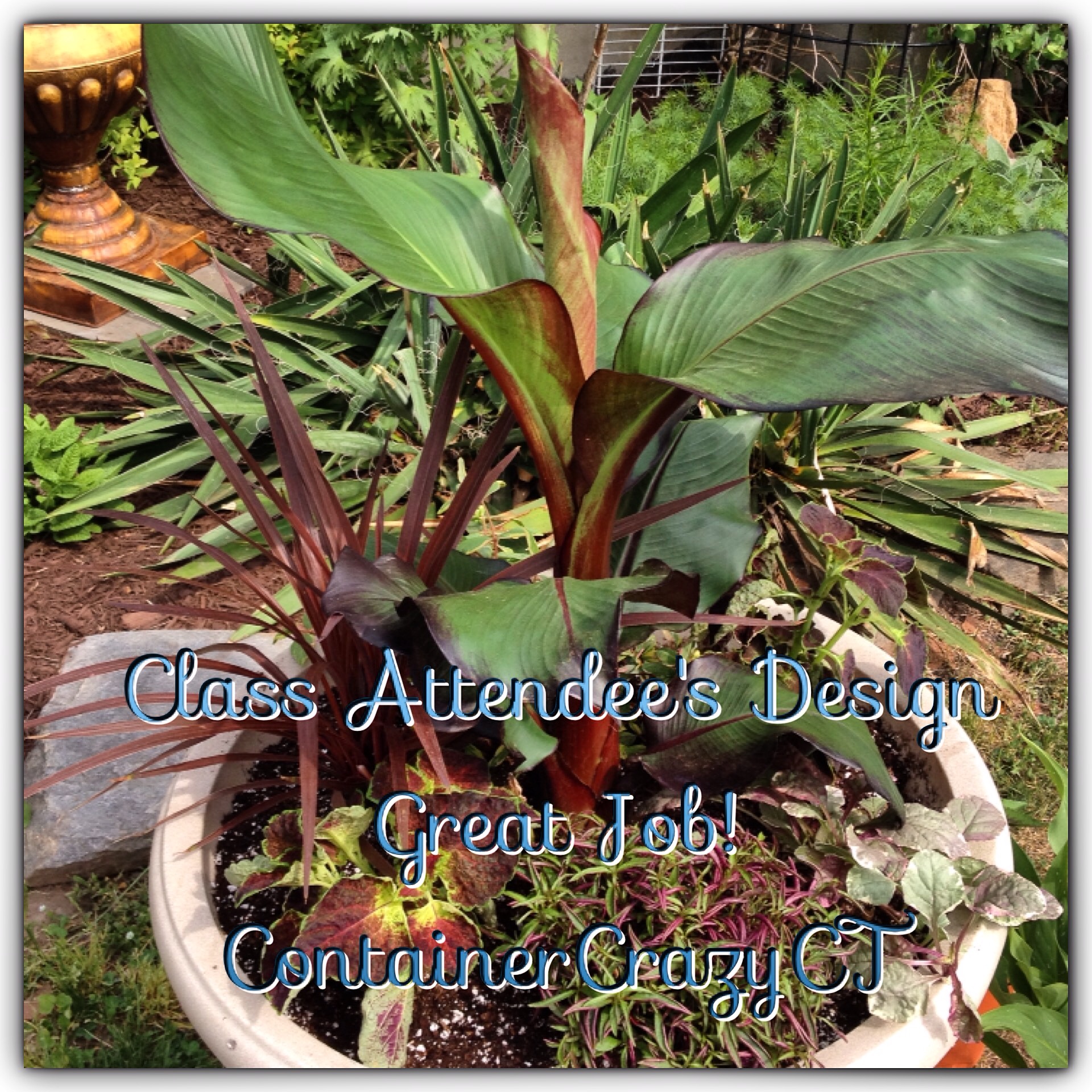
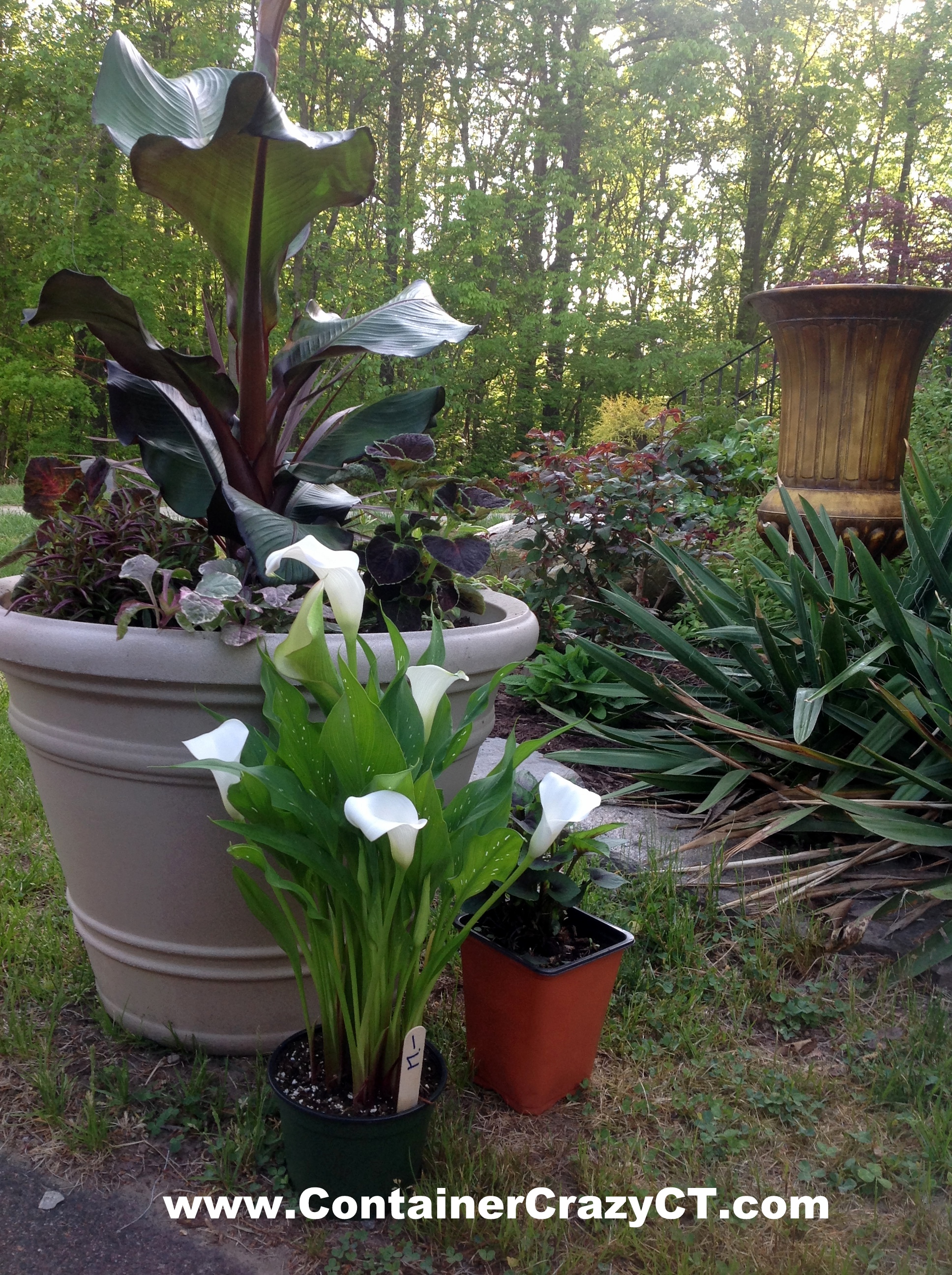
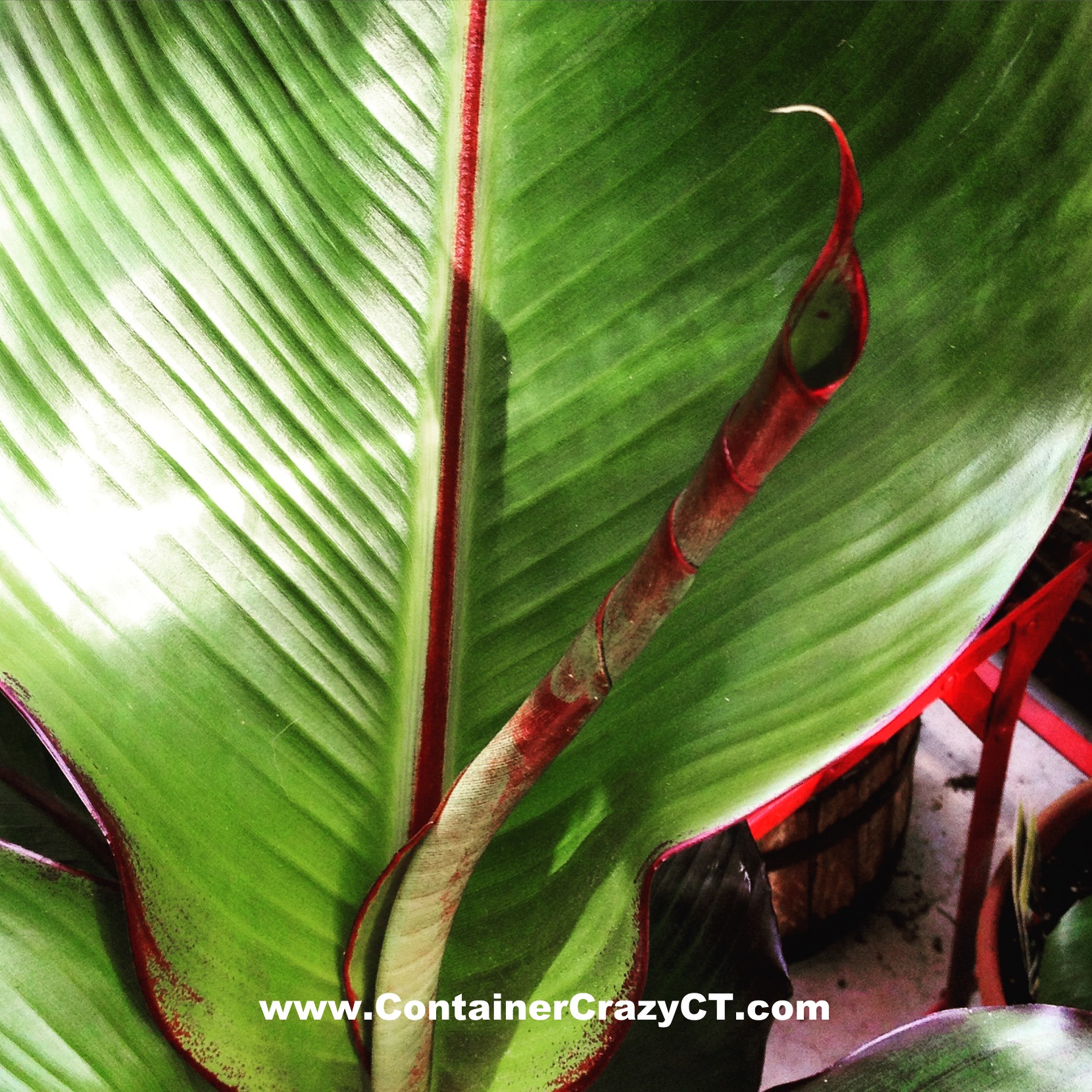
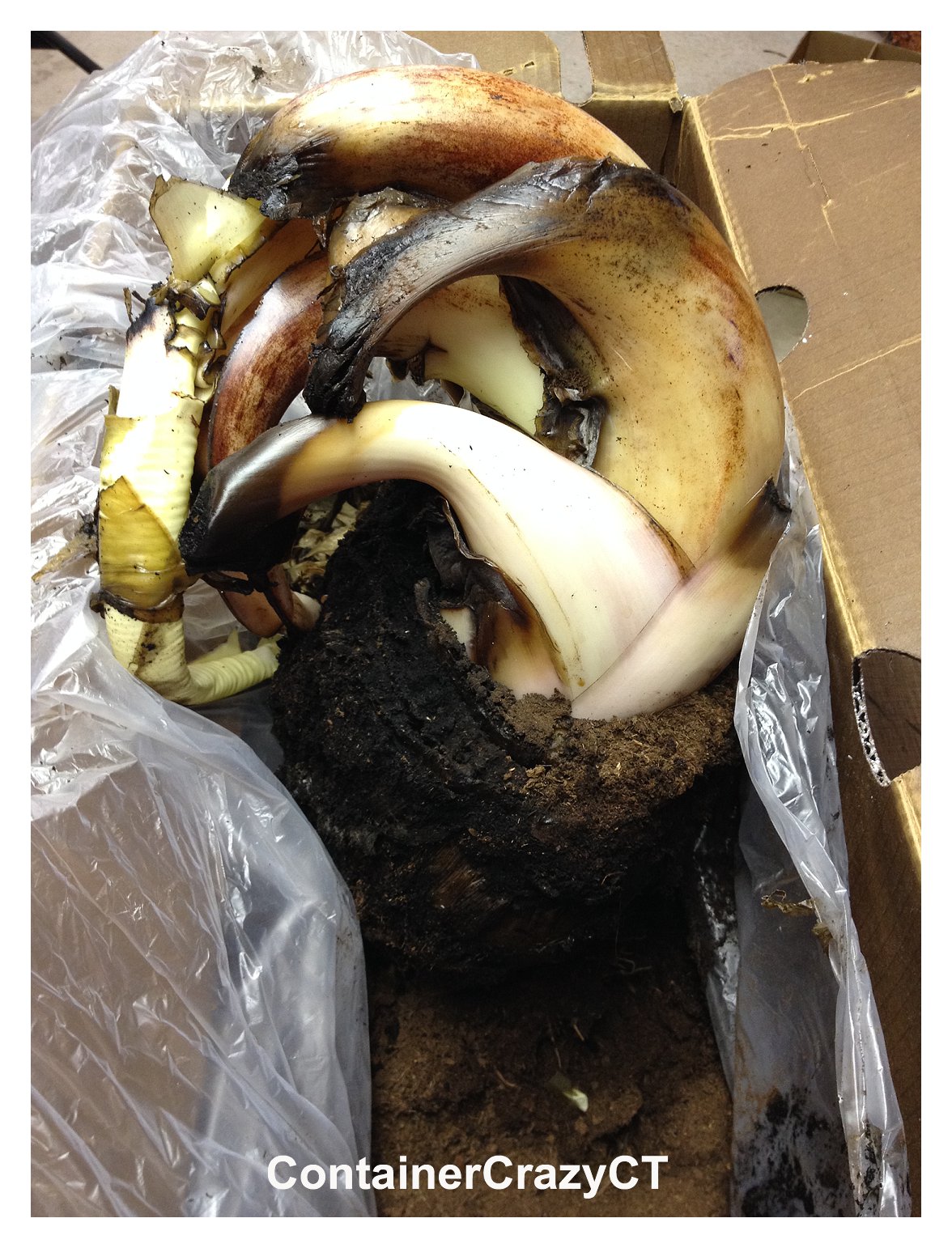
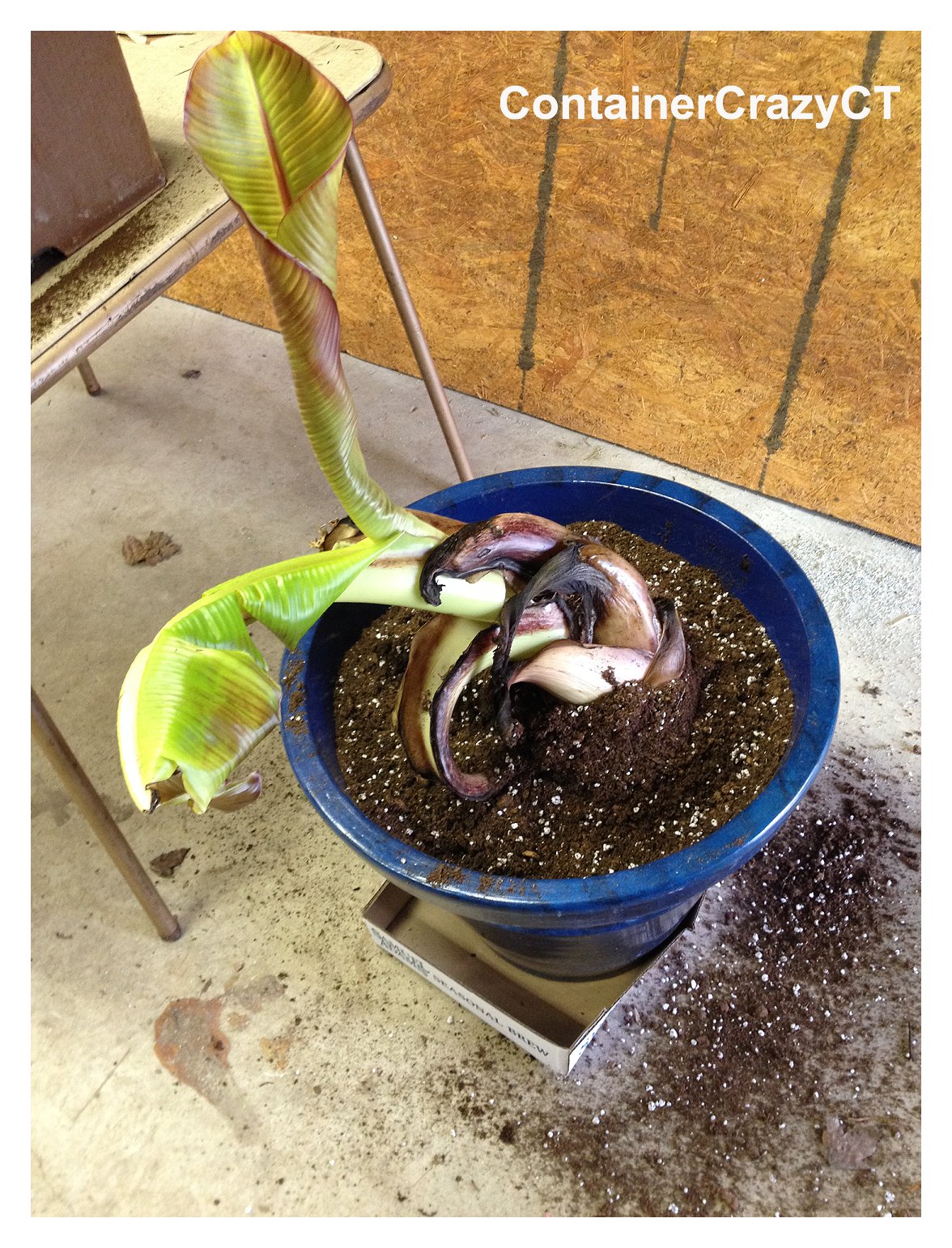
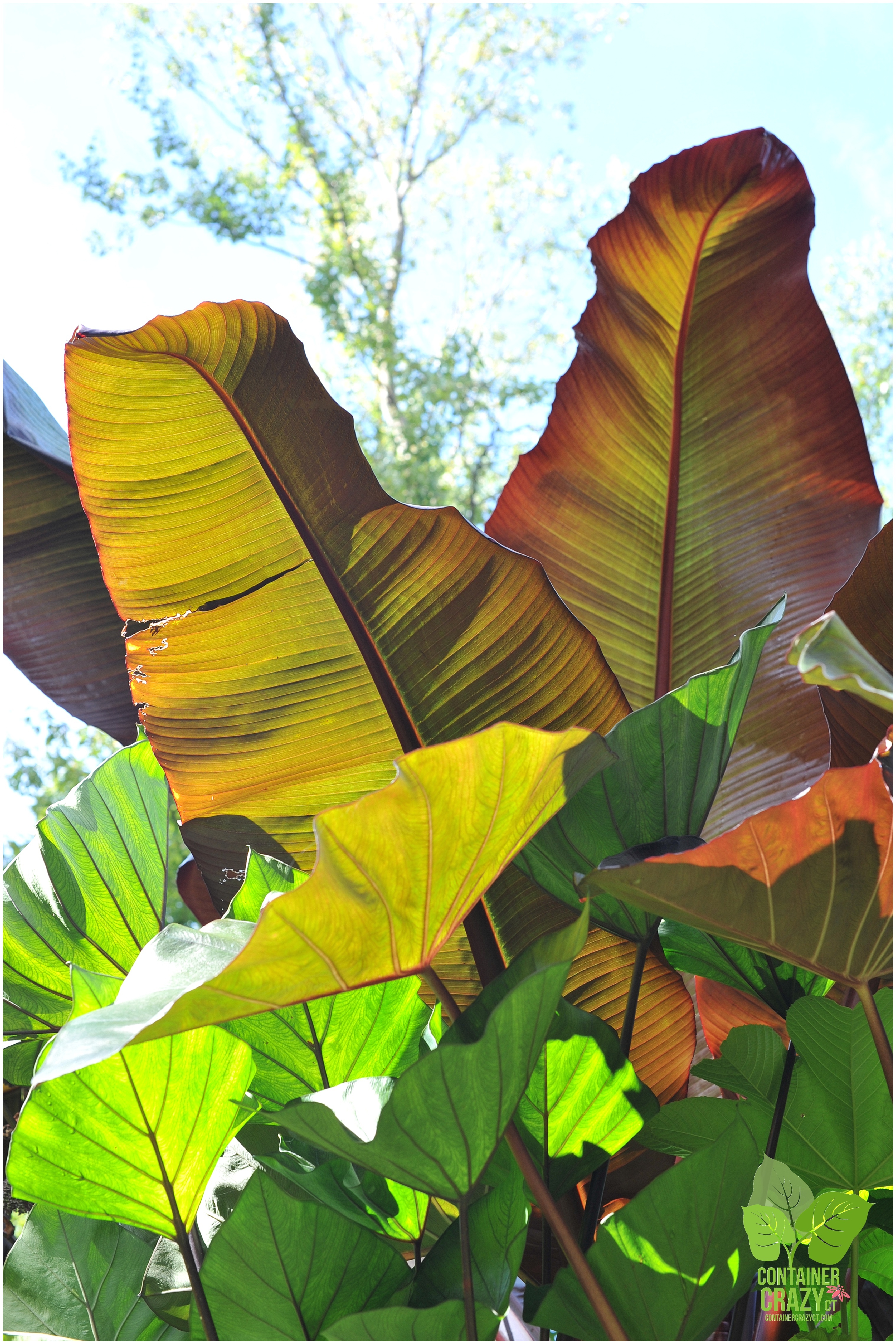
Ensete (Red Banana) is unrolling - getting ready for the Workshop tomorrow!

Ensete (Red Banana) is unrolling – getting ready for the Workshop tomorrow!

Container Garden Workshop – Session One

Saturday, May 16th – Tomorrow
11 am (start time); end time anywhere between 2-3-4 pm (up to you!)
Cost: $15 to register + price of plants purchased at class for your container/patio pot – we have lots.
To register, call 860-977-9473 or text
Rain: No worries, we have coverage for us and our plants

IMG_1909

Happy Friday Everyone,

Cathy Testa
860-977-9473
containercathy@gmail.com

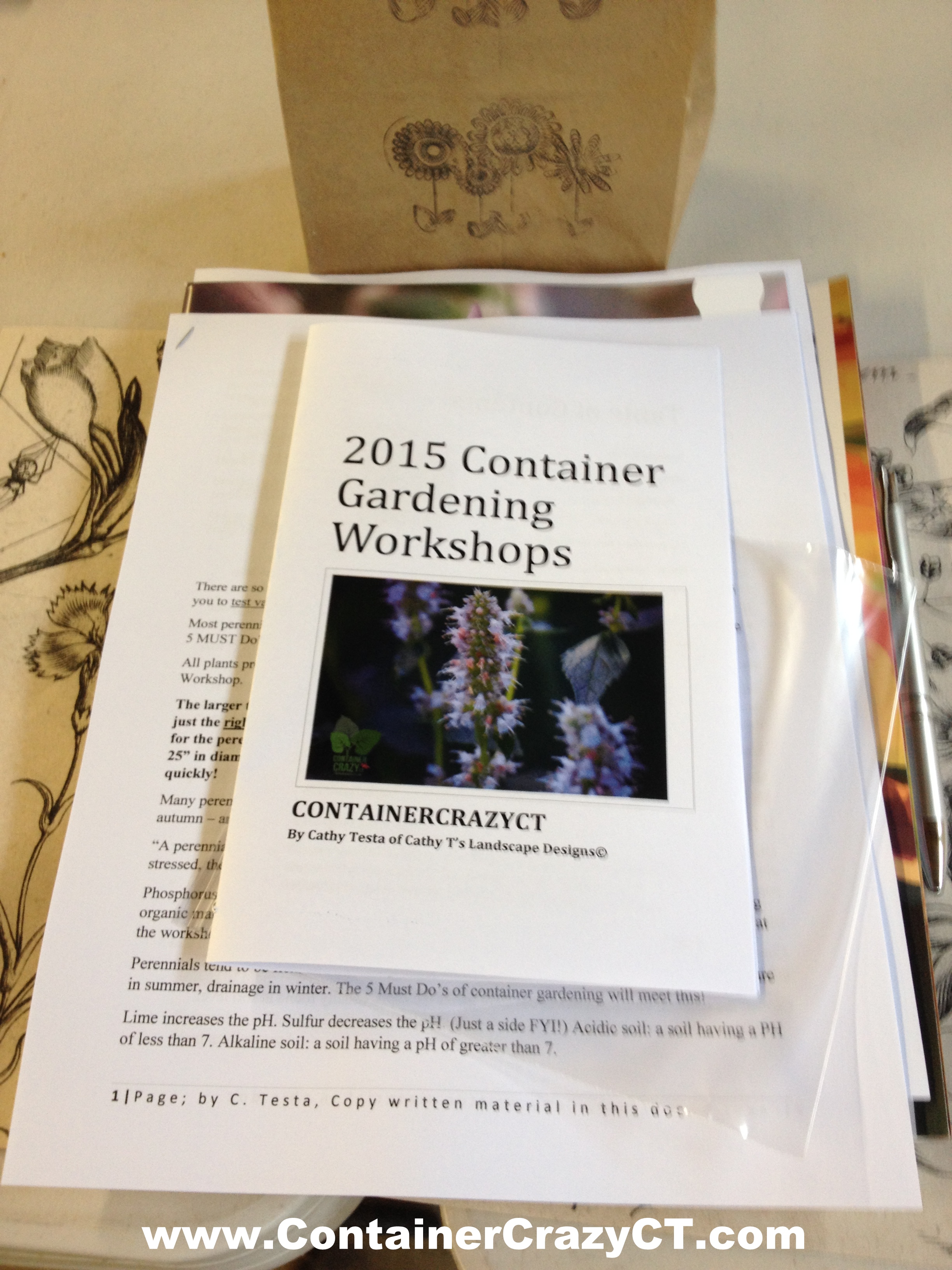
Container Gardening Workshops in Broad Brook, CT – May 16 and May 23

1 Comment

Workshop Photo Flyer

Cost: Only $15 pp (plus the cost of the plants you decide to select at the workshop)

Registration is Required.

Fill Out the Contact Form below to sign-up.

For Details, visit our Menu Pages above on this blog or view these prior posts:

MAY CLASS DETAILS

WORKSHOP INTRO

WORKSHOP DETAILS – PRIOR BLOG POST

We hope you will join us!

Cathy Testa of ContainerCrazyCT

Go back

Your message has been sent

Warning
Warning
Warning
Warning

Warning.

Why Attend a Container Gardening Workshop about Perennials?

2 Comments

Cathy Testa of Container Crazy CT located in Broad Brook offers a service that brings the plants and education directly to you in one spot on the day of her classes and workshops. The workshops are convenient – You don’t have to travel from store to store to get a great selection of plants – and you get Cathy T’s advice and knowledge as you pick and choose the plants you want to pot up at the workshop.

What makes this class different is a lot of effort goes into getting everything ready for just for you – think of Cathy T’s workshops as a personalized class service for you. She hand selects the plants from local reputable growers based on experience of prior use, her classroom is a place you can get dirty and not worry about it or need to clean up after, and it is fun!

You also get to chance to meet other plant and garden people local to your area, make new friends, and enjoy a day with no true work on your part.  Just think, you show up, plant, learn, and take home your patio pots – there is no need to put away that heavy soil, sweep up the floor, or deal with empty trays to recycle.

Purple Power

Delosperma (Ice Plant) cascades over the rim of this pot – A beautiful perennial with drought tolerance and lots of blooms; it is a wonderful filler and spiller in container gardens – and it returns!

What are the best perennials to use in container gardens?

Maybe you haven’t considered using perennials in pots, maybe you don’t know what they are, or maybe you have. One thing is for sure, Cathy T has used various perennials in container gardens and patio pots over the years due to her experience as a local professional container designer – and she will tell you which have worked and which haven’t – some return easily, some are a little trickier, but either way, she will share with her knowledge of powerful perennials at this class.

Perennials offer lots of design benefits from being truly architectural in pots to providing continuous or cycle of blooms. They can be powerful in container gardens, and you will hear about each one available during the Container Gardening Workshop in May and how to capitalize on their features. Tropical plants are part of the workshops too. There are ways to reuse perennials and tropical plants in patio pots again and again. You will learn how to grow them, store them, and over winter them for use every year which is covered during the Container Garden Workshops in May.

Flamingo Pink

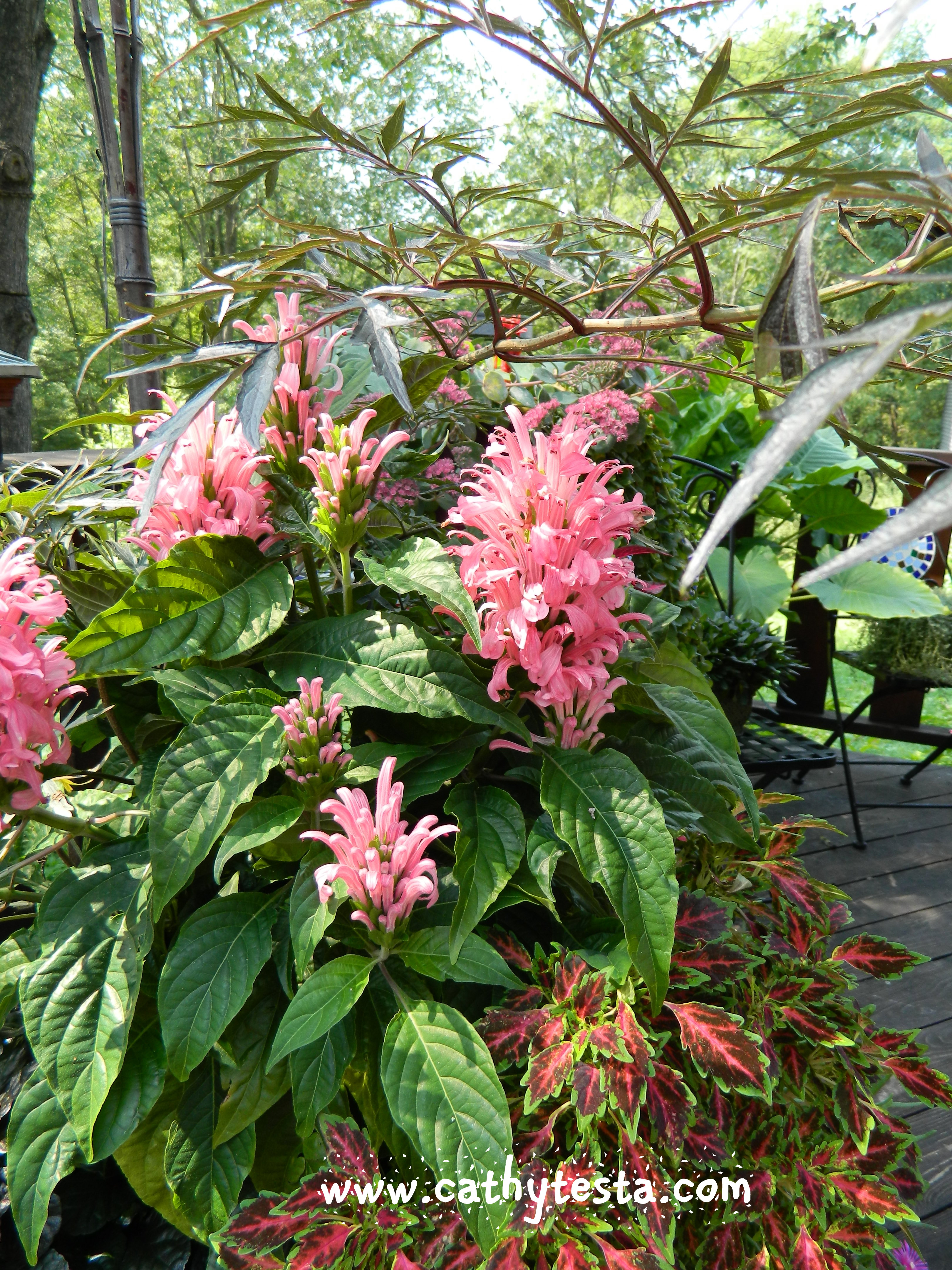
Justicia carnea with pink blooms in a container garden – Attracts hummingbirds and as tropical plant in our CT Zone – It is very showy along side Coleus annual and a hardy shrub above.

Ever have trouble getting help when it’s busy?

Getting attention and help on your perennial questions is sometimes difficult to obtain when you visit a busy garden center as the doors swing open for spring, especially this year – after our snowy winter and slow warm up of spring, everyone is anxious to get going. By attending Container Crazy CT’s personalized workshop, you get help and attention in a setting that is not over crowded or too busy. It is not everyone that is willing to share their background story on plants or what is going on in the industry – but Cathy T often does at her workshops and classes. Get the inside scoop by signing up for the workshop – and you will learn from the other attendees in class as well because many of them have their own experiences with plants or they may be new attending for the first time and want to learn what you have tried, even as a beginner, or if you are more seasoned – either way, it is an open forum at the classes.

Examples of things you will learn at this class:

  • Specific details about each perennial and tropical available at the workshops
  • How to plant perennials in the appropriate soil in pots
  • Design and color tips to choose showy combinations with perennials and tropicals
  • Cathy T’s Five Must Do’s for Success with Container Gardening
  • Ways to overwinter key perennials and tropical plants
  • How to capitalize on troublemaker perennials and make them stars in pots
  • What to know about growing perennials and tropical plants

 PERENNIAL PLANT PICTURES

  • Visit ContainerCrazyCT’s special Pinboard highlighting the selected perennials and tropical plants which will be available at ContainerCrazyCT’s May Container Garden Workshops on May 16th and May 23rd. This will give you a preview and some amazing inspiration!

Three Ways to Sign Up:

  1. Complete the Contact Form below
  2. Visit ContainerCrazyCT’s Events Page
  3. Email containercathy@gmail.com

Cost: $15 per person plus the cost of plants selected at the workshop (sales tax applicable). You only need to send your registration payment, bring the pots of your choice, and enjoy! Sign-up before the seats are filled, space is limited.

Go back

Your message has been sent

Warning
Warning
Warning
Warning

Warning.

We hope you will join us!

Cathy Testa

More details may be found here:

MAY CLASS (BIG CONTAINER GARDEN WORKSHOPS)

CONTAINER GARDEN WORKSHOP INTRODUCTION

MAY WORKSHOP IN THREE WEEKS (PRIOR POST)

Cathy Testa Summer 2014

Cathy Testa Summer 2014

Container Gardening Workshops in Broad Brook, CT – In Three Weeks!

2 Comments

Container Gardening Workshops

 Do you dream of lush, full, flower abundant container gardens on your patio, deck, surrounding your pool, or gracing the front steps of your home?

If yes, then Container Crazy CT’s Container Gardening Workshops are for you!

Pucker Up

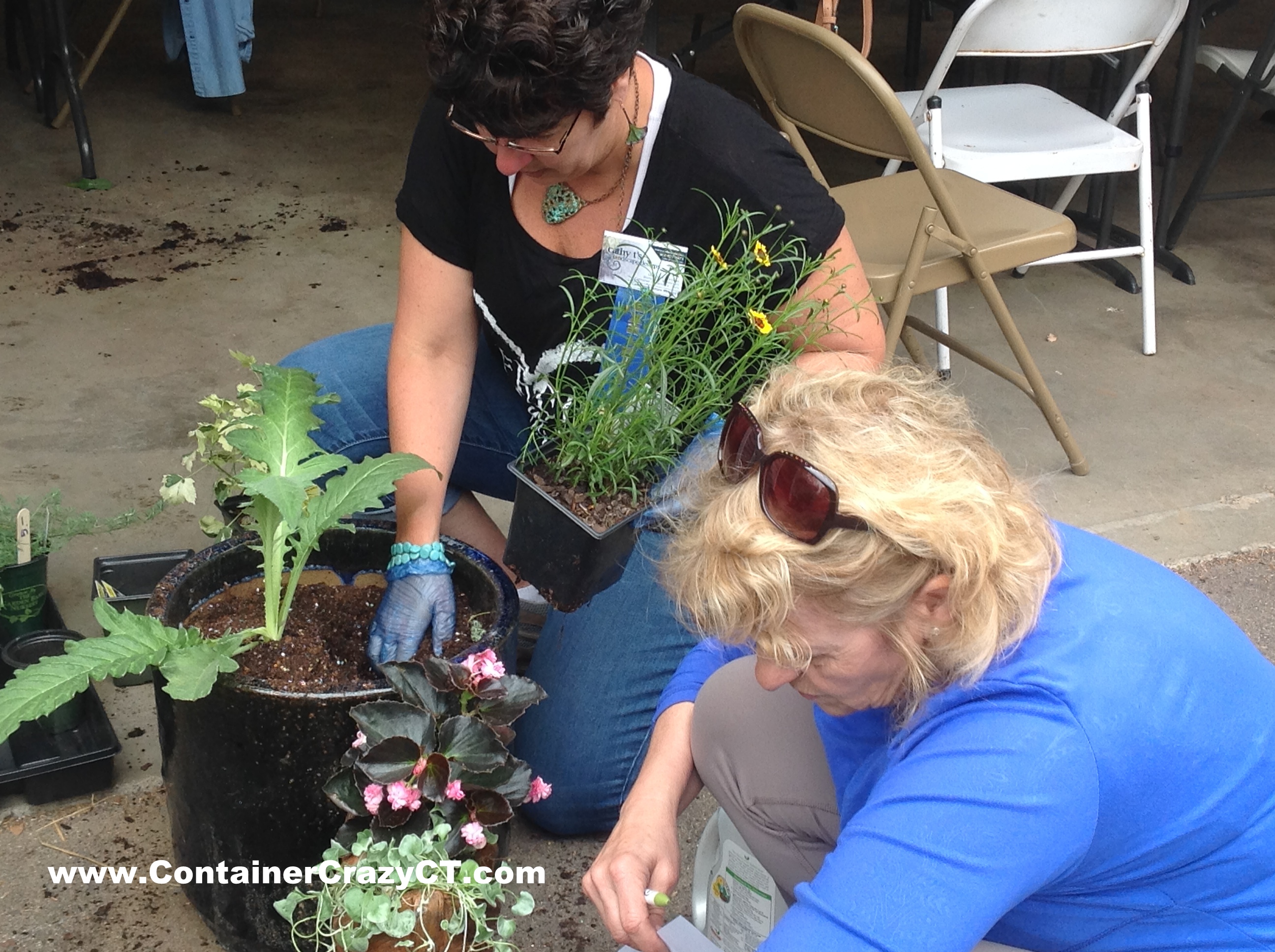
Cathy T with plants for a workshop

Learn from a professional designer about the steps for success in designing and maintaining beautiful container gardens and patio pots at this workshop and take home your creations.

This is a fun hands-on event that everyone will find informational and convenient. So popular in fact, each May, it fills up quickly – so don’t delay – fill out the Contact Form below to sign up.

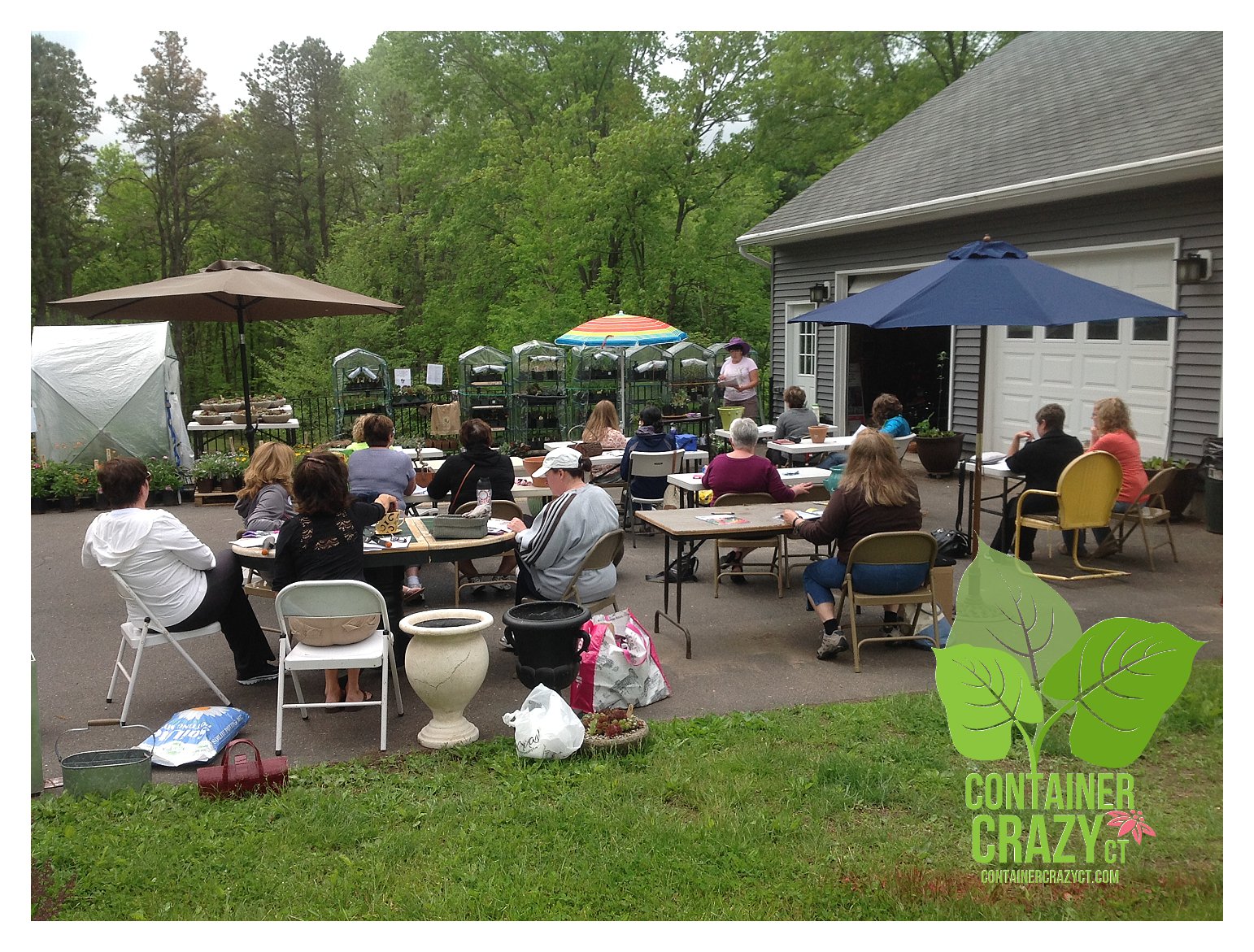
Last year's Class Group

Last year’s Class Group

Dates

Saturday, May 16th, 11 am to 2:00 pm
– or –
Saturday, May 23rd, 11 am to 2:00 pm

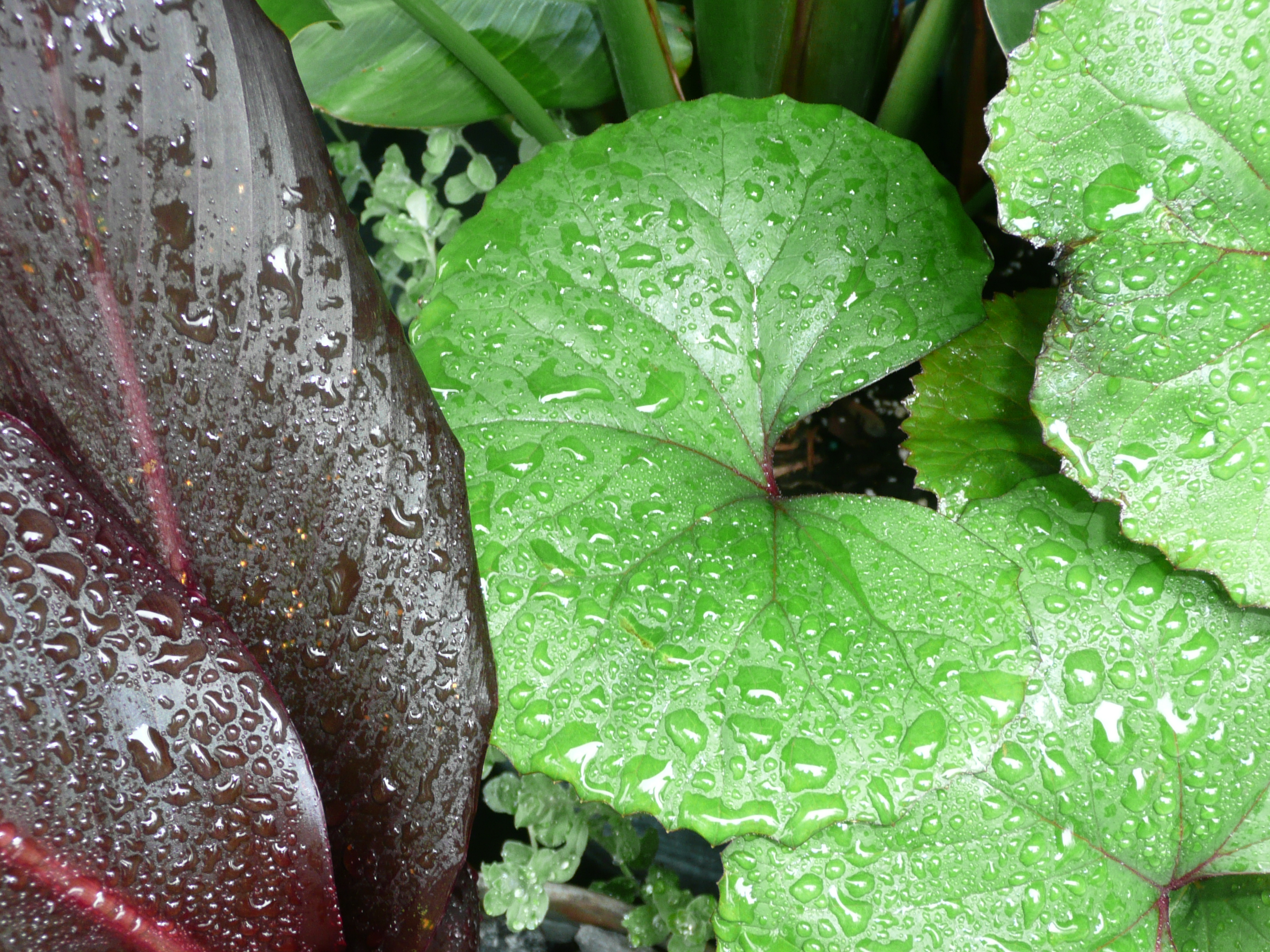
Water Droplets on Leaves - Different colors and textures

Water Droplets on Leaves – Different colors and textures

Workshop Details

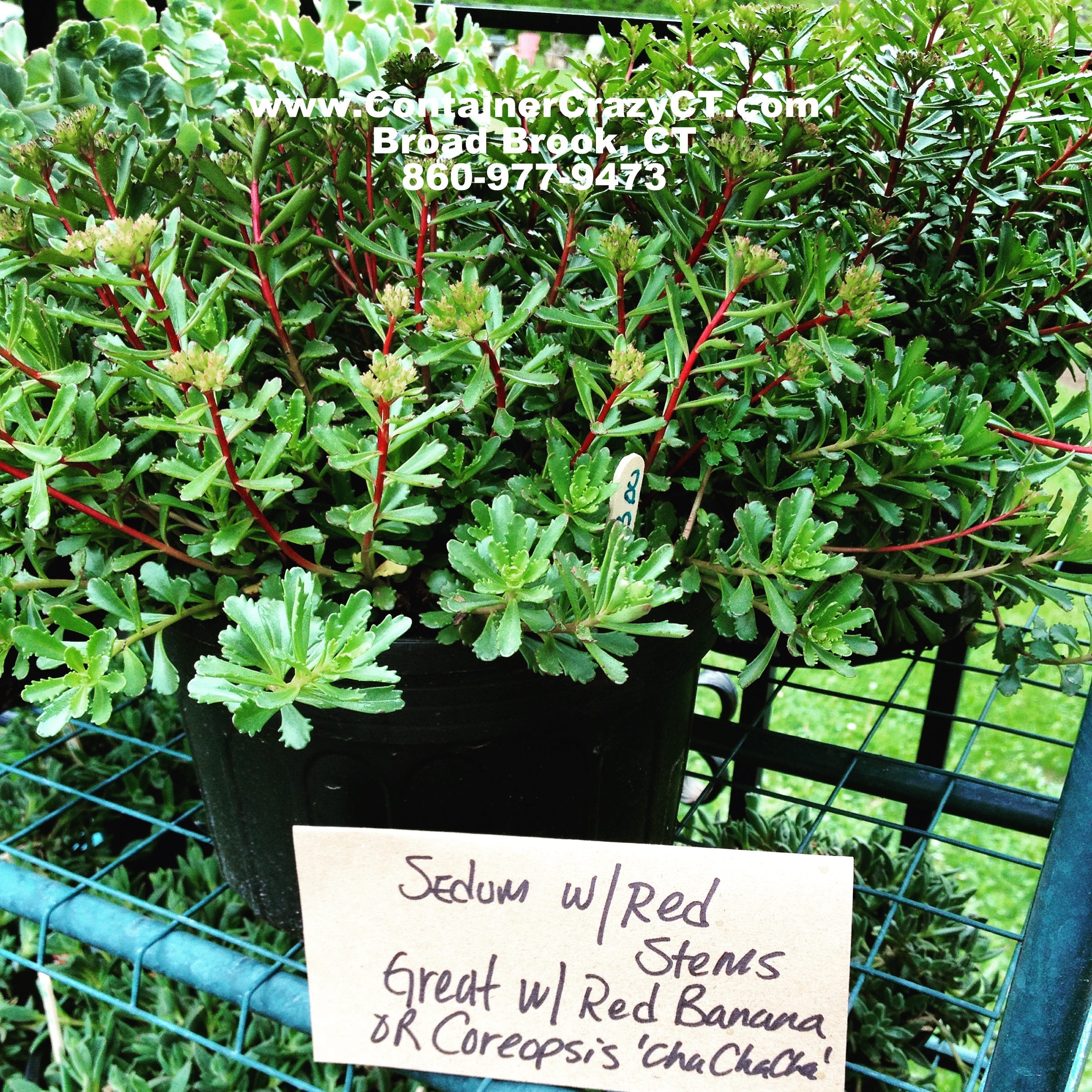
Many plants will be available at the workshop held in Broad Brook, Connecticut for you to select from. Cathy T of Container Crazy CT uses reputable nurseries and local growers that offer quality plants, plus she has an eye for selecting ‘wow’ plants suited for stunning color and textural combinations.

The design process demonstrated during this event will be based on a theme of using ‘powerful perennials’ and ‘showy tropical plants’ this year. A large variety of perennials and tropical plants will be available for purchase and each attendee will be provided with detailed instructions and reference documentation for continued care of their plants.

The right soil mix specifically for container gardens and patio pots will be available for purchase so you don’t have to carry a thing but your beautiful container garden and patio pots ready to be filled with plant selections. And don’t worry, if your pot is too big to carry when you are done, we have delivery services available via a protected trailer.

You only need to bring yourself, a container(s) of your choice, and gardening gloves! It’s that easy.

Don’t Delay – Save Your Date Now

As noted above, you have two choices: May 16th or May 23rd.

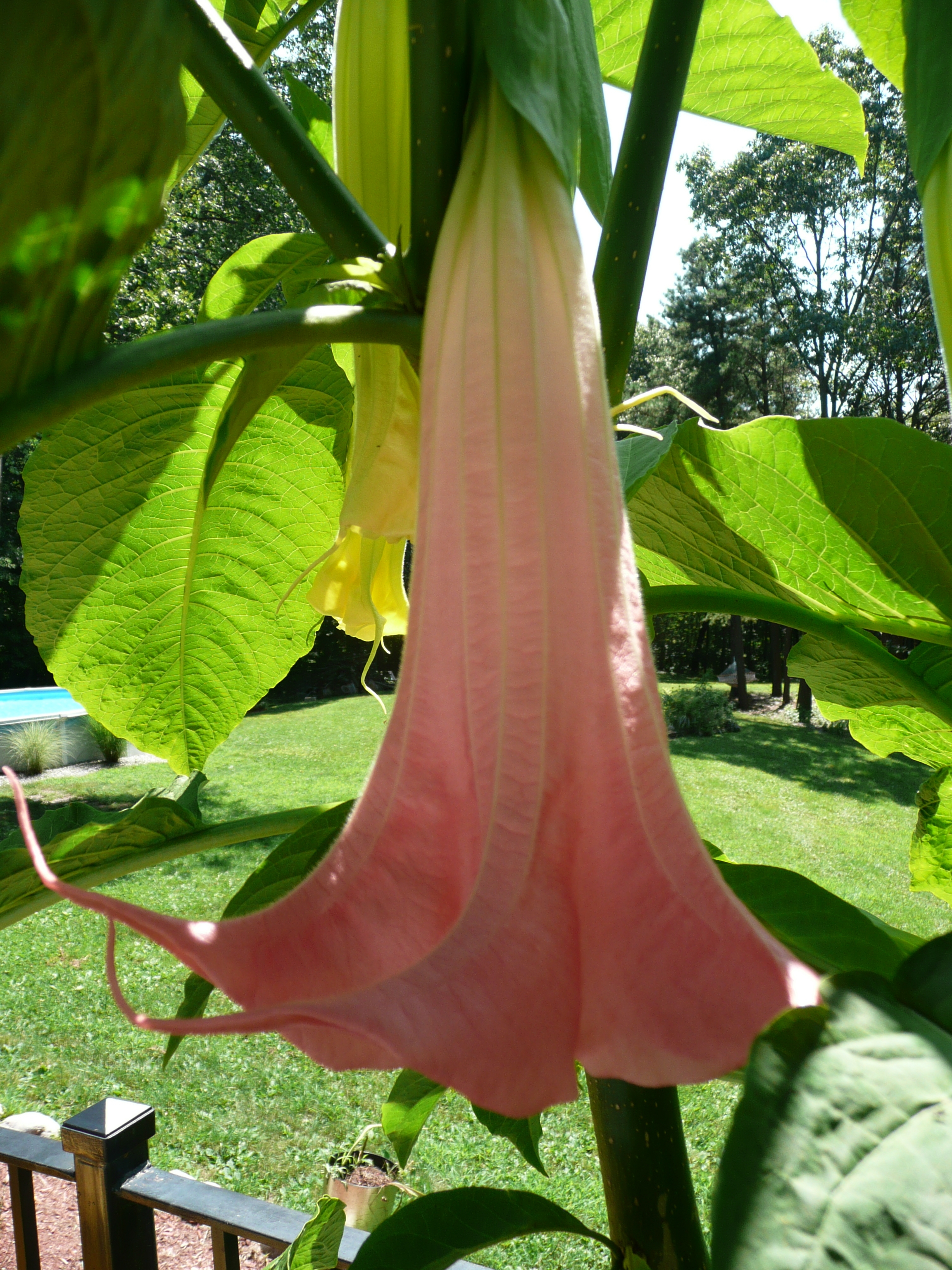
Brugmansia tropical - Available at this Year's Workshops

Brugmansia tropical – Available at this Year’s Workshops

Workshop Cost

Only $15 per person + plus the cost of plants purchased at the class (and applicable sales tax).

Payment is mailed to Cathy T’s Landscape Designs to confirm your seat. Address is provided upon registration.

Note: Cancellations 4 days prior to the class dates are non-refundable, or you may send an alternate.

More Details

For more details, visit the menu’s above, or click these links below, and stay tuned.
Once registered, you receive additional details with your workshop confirmation.

May Container Gardening Workshop

Workshop Introduction

Pinboard – Shows Examples of Types of Plants at the Workshop

CONTACT FORM – TO SIGN UP

Go back

Your message has been sent

Warning
Warning
Warning
Warning

Warning.

Looking forward to seeing you soon!

Cathy Testa

Cathy Testa Summer 2014

Cathy Testa Summer 2014

Powerful Perennials in Container Gardens – An Intro to May’s Hands-On Workshop

7 Comments

The Theme – Powerful Perennials

Perennials, which return year after year in your gardens (or more technically stated, are a plant that normally survives for three or more seasons), are excellent candidates in container gardens and patio pots.

However, they are often overlooked for this use and many people do not understand their amazing benefits in container gardens or know which to select to achieve stunning combinations to make your container gardens look amazing in your outdoor surroundings!

This year’s Container Garden Workshops hosted by Cathy Testa of Container Crazy CT in Broad Brook, CT will focus on perennials which perform beautifully in container gardens and patio pots, and how and why you should use them to your advantage.
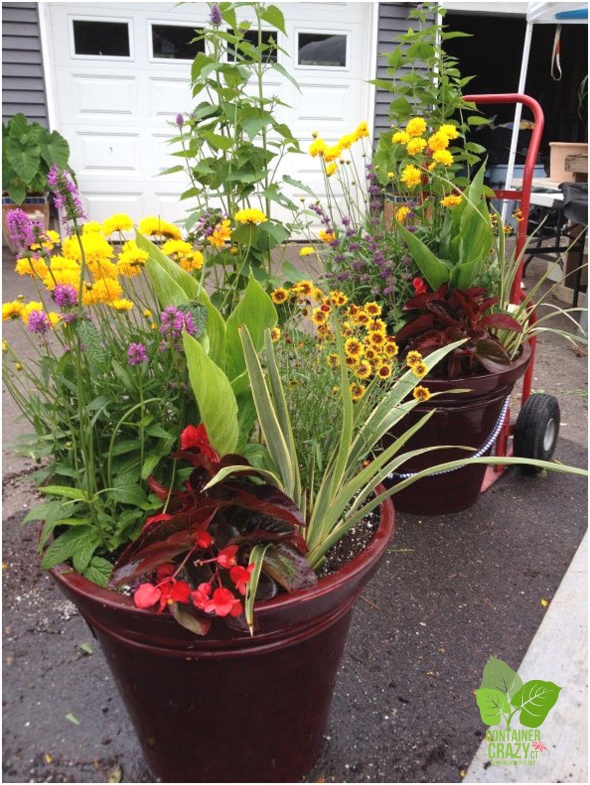
Container Garden with Mix of Perennials and Annuals

Container Garden with Mix of Perennials and Annuals Upon Planting!

Burst of “Dynamic” Color Periods

We all love color – and know many annual plants provide constant color in your container gardens, but so do perennials. Many perennials bloom at specific times during the season so they add a dynamic element to your containers. Some are short bloomers for a period of weeks, while other are long lasting for several months – It is a matter of knowing which perform best to maximize their show in your container gardens. Think of perennials as providing a burst of color at the right times to compliment the other mix of plants in your container gardens and patio pots.
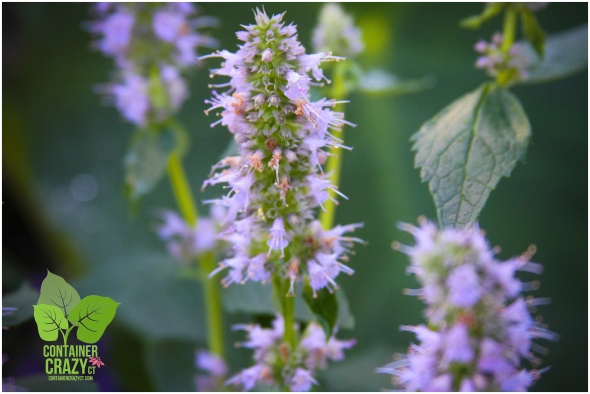
Perennial: Agastache 'Blue Fortune' blooms all summer long

Perennial: Agastache ‘Blue Fortune’ blooms all summer long

For example, a blue flowering perennial, called Agastache ‘Blue Fortune’, which also goes by the common name of anise hyssop, has a very long lasting soft blue flowers in summer. The blooms start in July and continue blooming all the way into September. Not only is that long-lasting, if you find the blooms look tired towards the end of the summer, you only have to snip them off from the tall stems of the plant, and guess what? Within two weeks, you will see new fresh buds forming and opening up on your plant in the container garden.

Perennials Don’t Get Exhausted

Perennials don’t peter out as quickly as annuals because most do not profusely bloom during the entire summer which takes lots of energy, and they have reserves from previous year’s growth, unlike annuals, such as a petunias. Petunias, as an example, usually look tired or worn out by the end of August. I’m not saying annuals don’t rock in container gardens because they do and they are a must have – but people often overlook the values and bonuses of using perennials in container gardens and only consider them for the gardens of the ground.

Are Stars in Containers

Some perennials are aggressive spreaders in gardens, but when used in container gardens, they turn into stars. An example is the perennial, Ajuga reptans, also by the common name of bugleweed. You may know this one too. In the spring time, this low growing, ground cover looking perennial spikes up tons of purple flowers in May; they are noticeable.  However, they also have a habit of spreading in lawns – which is a nuisance.  This perennial actually travels from one spot to the next underground – so folks who desire perfect lawns dislike this plant.
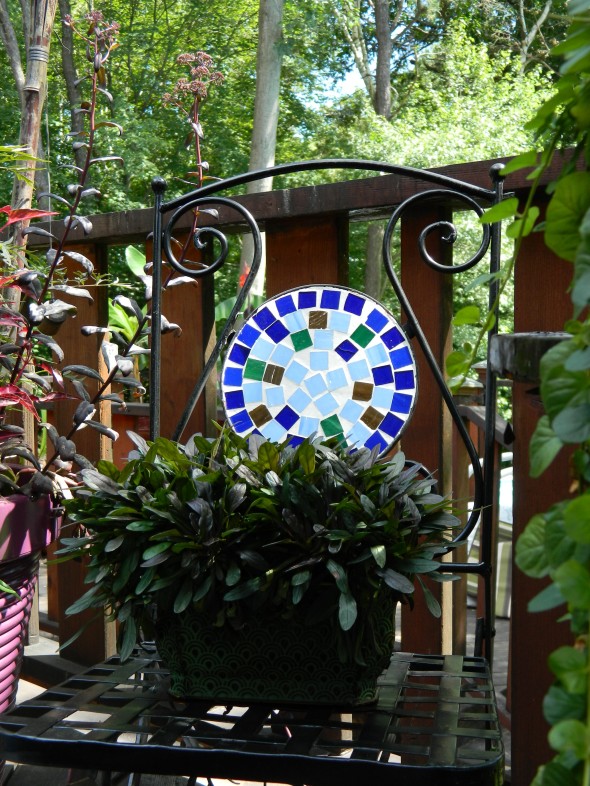
Ajuga in a small pot

Ajuga reptans in a small pot packs a lot of punch – Just Adorable!!

In a container garden, however, the spreading issue of Ajuga is eliminated and controlled.  Because it is a tenacious plant, it will return in a container garden for several years however – the problem aspect is now a solution in container gardens and patio pots; it shines during the growing season with various foliage colors and tidy habit serving as an exception filler in container gardens with other mixed arrangements.
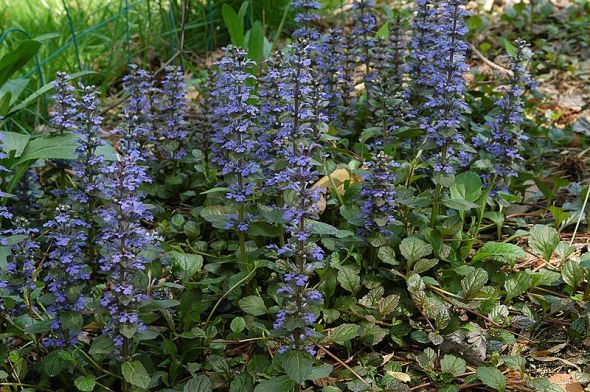
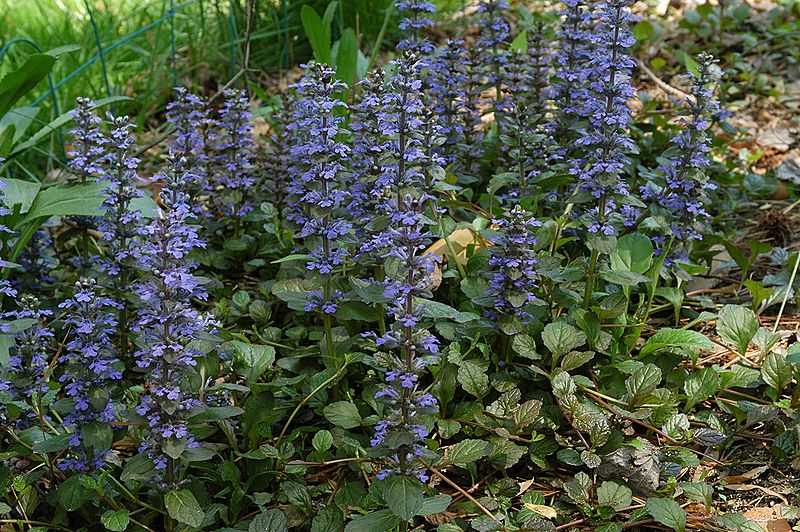
Ajuga reptans

Image: Wikipedia/EnLorax – Ajuga in the ground – shows the blooms, which are so pretty in a container!

Ajuga reptans is just one of the many examples of perennials which can be vigorous or quick spreaders in the ground, but is not a problem in a container. The flush of purple color from its blooms is beautiful in a container especially when combined with other spring colored plants like the soft yellow of daffodils or pinks of tulips. Or it can serve as a very long lasting foliage feature in your container gardens, and this perennial doesn’t get lots of problems.

For this upcoming Container Garden Workshop in May 2015, two cultivars of Ajuga reptans: ‘Burgundy Glow’ and Ajuga ‘Chocolate Chip’ will be available for purchase along with many other wonderful perennial plants. Both of these cultivars I have used in containers and patio pots with wonderful results.

‘Burgundy Glow’ has white, pink and purple variegation on its leaves with 6” spikes of blue flowers in May, and ‘Chocolate Chip’ has intense violet-blue spikes rising 3” above miniature, vibrant, chocolate-hued foliage in May through June. One year, I used ‘Chocolate Chip’ in a little container and it was so pretty, and this one can take shady conditions too.

Ornamental Grasses or Grass-like Perennials

You may not think of ornamental grasses or grass like perennials as container garden plants but two of these which I can name right off the bat are Hakonechloa macra ‘All Gold’ and its counter opposite in regards to color is Liriope muscari ‘Big Blue’.
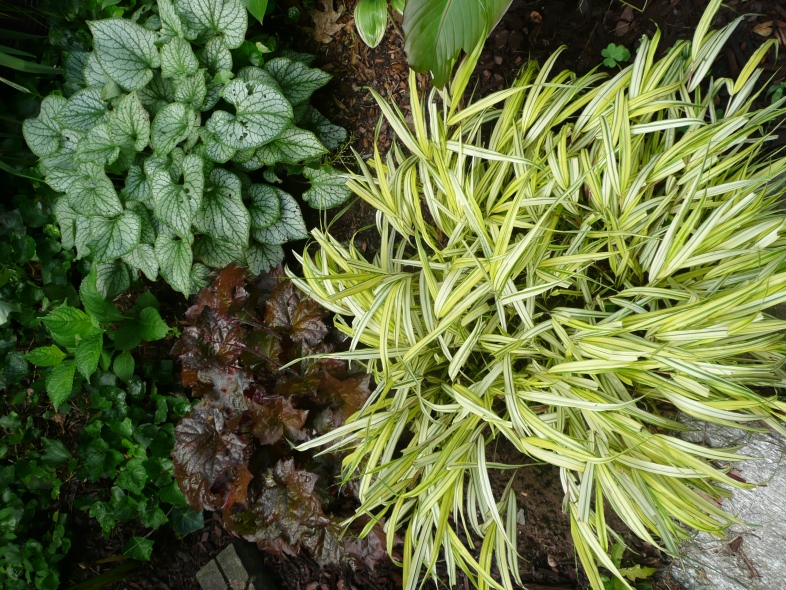
Hakonechloa macra 'Aureola' on right

Hakonechloa macra ‘Aureola’ on right – Similar to ‘All Gold’ but All Gold  is well – all gold!

Hakonechloa macra ‘All Gold’ is one of many hakon grasses I selected for this workshop because it has stunning gold blades of foliage that grows in graceful clumps and the color is intense and vivid. Take that intense vivid color and put it next to the right color bloom of another perennial – and voila – you have eye magic or eye candy.

Then there’s Lirope muscari ‘Big Blue’, the polar opposite in color compared to the hakon grass – it has a dark green long strap-like leaves – and it is not an ornamental grass but a perennial, so it, like ornamental grasses, it returns year after year and is tough too.

Lily turf is Lirope’s common name, and it can be used to cover lots of turf – because it does spread – so this one fits my “Troublemaker Turned Star” scenarios for container gardens. It is a strong grower which is a problem in landscape situations, but it makes a wonderful low height type thriller with 15-18” long leaves with violet flower spikes in late summer in containers and patio pots! I’ve used Lirope in containers and it comes back every single year – it’s tough! This enables me to reuse it and just add new supporting candidates with it in the pot every season.
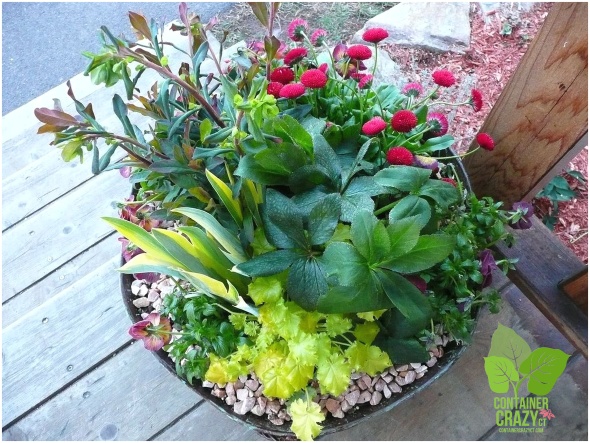
Container Garden with Perennials: Heuchera, Hellebore, Bellis, Euphorbia.

Container Garden with Perennials: Heuchera, Hellebore, Bellis perennis, Euphorbia in early Spring!

Other Perennial Benefits

There are other wonderful benefits to using perennials in your pots – Again, they return, as mentioned above, for at least three or more years – so this saves you money; they may be transplanted into your gardens or yard after the summer season is over in the fall, so you will enjoy them for years to come; and they give a dynamic bloom period or show at specific times in your container gardens. This gives your container a living interest because suddenly, in the midst of summer, a burst of a new color opens in the blooms of a perennial in the container, or perhaps it is an early spring bloomer or late bloomer in the fall – either way, it adds a new interest for you to enjoy and view. It is the ta-da of container gardening.

Perennial Purposes

Perennials also serve lots of other wonderful purposes. They have fragrant foliage and flowers, many can be used as a cut flower for your vases, and they attract butterflies and bees – and others have medicinal purposes too.
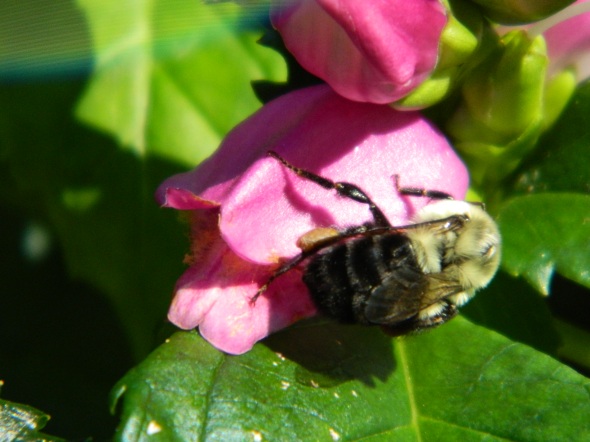
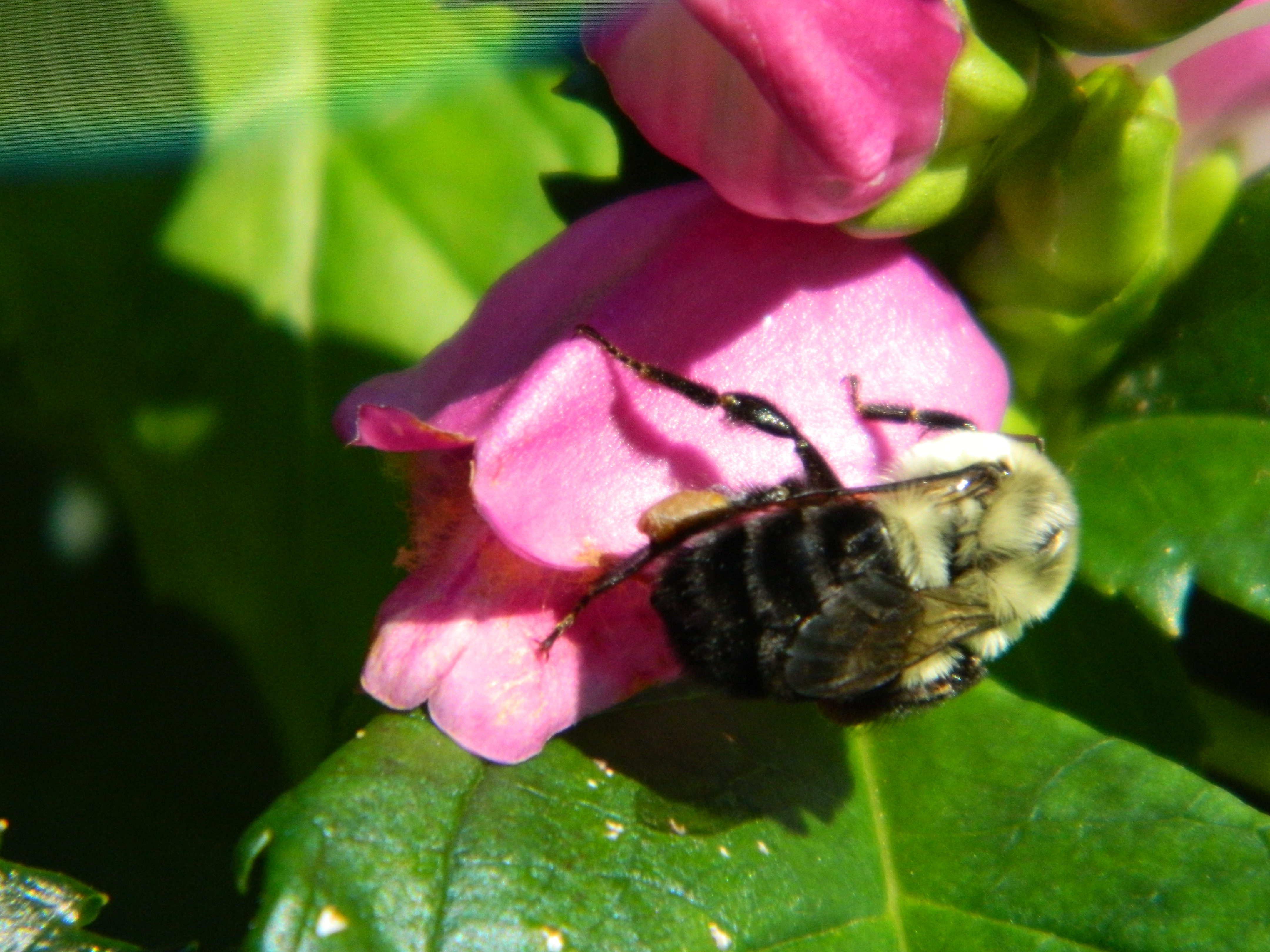
Bee enjoys a Perennial (Turtlehead)

Bee enjoys a perennial (Turtlehead) – A late season bloomer and very showy plant in containers!

There will be varieties for sun and shade available at these two workshops in May 2015. A total of 120 perennial plants have been ordered, 6 each of 23 species. Learning their features and how to use them with other plants in the containers will be part of this workshops offerings.
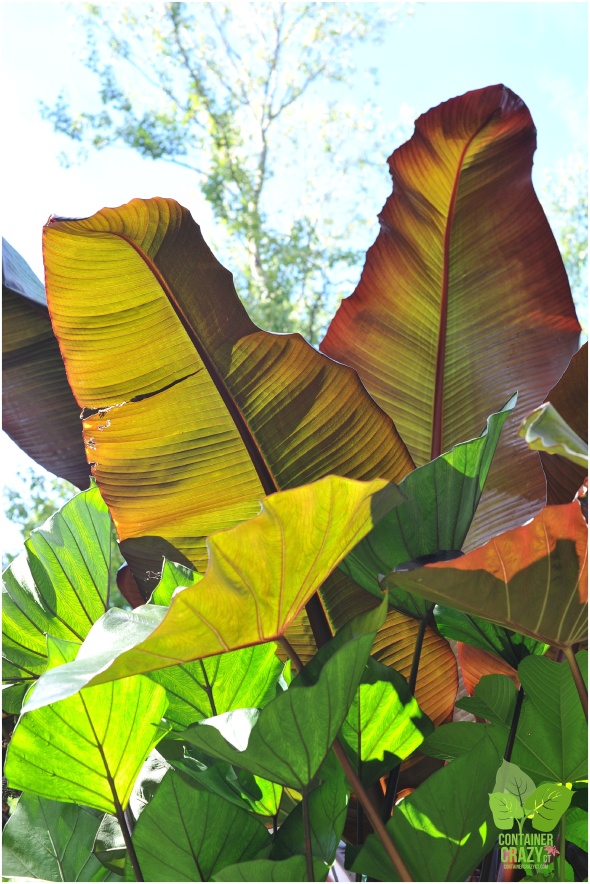
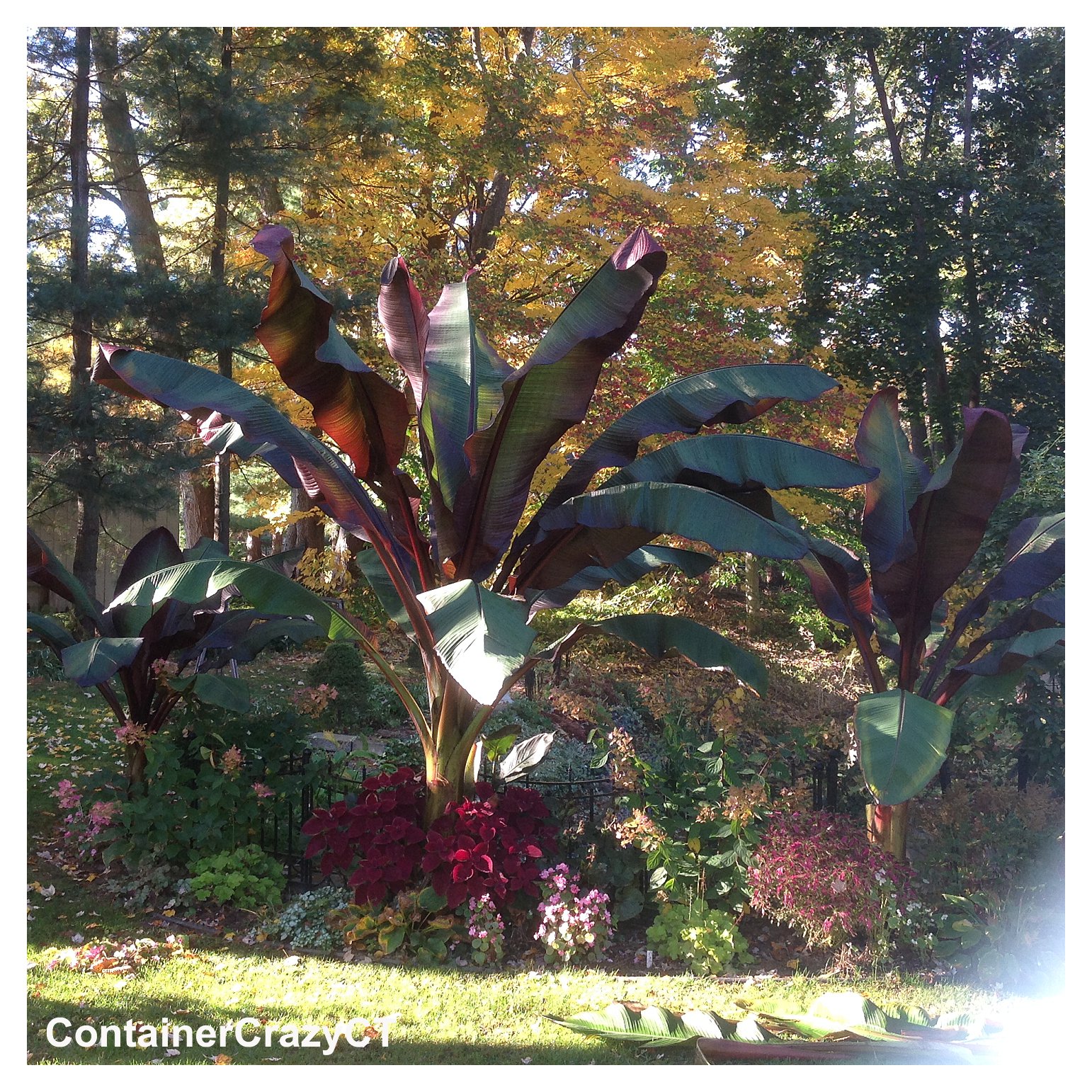
Red Banana Leaves with Various Elephant Ears

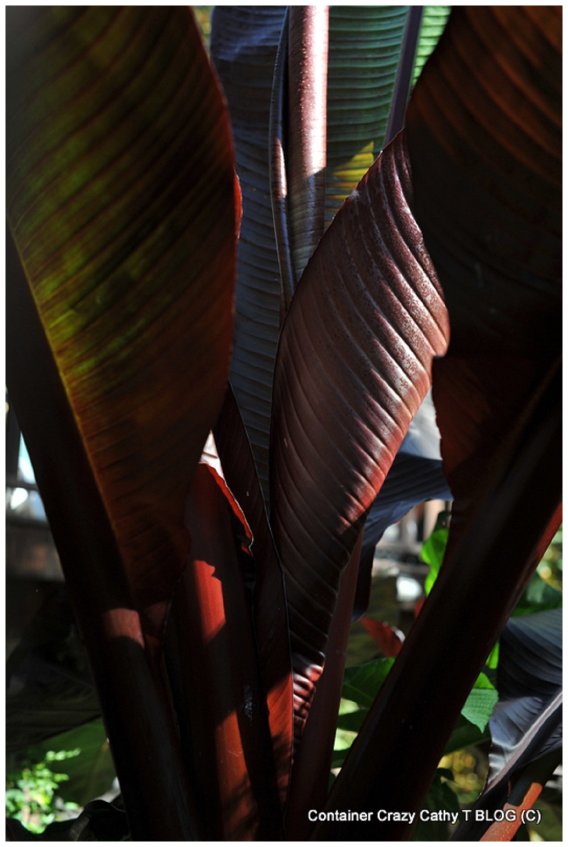
Red Banana Leaves with Various Elephant Ears – The Type of Tropical Plants Available at the May Workshops!

Tropical Additions

Tropical plants with large lush foliage features will be part of the Container Garden Workshops this year as well – because they are a passion and, like perennials, they have great benefits – the ability to reuse them year after year when appropriately stored over the winter, their dramatic and showy role due to their ability to grow fast, and adaptability to warm climates, which is what we have here in CT during the summer months. Many tropical will last all the way into October with no signs of stress, giving you a real show until the first frost of fall arrives.
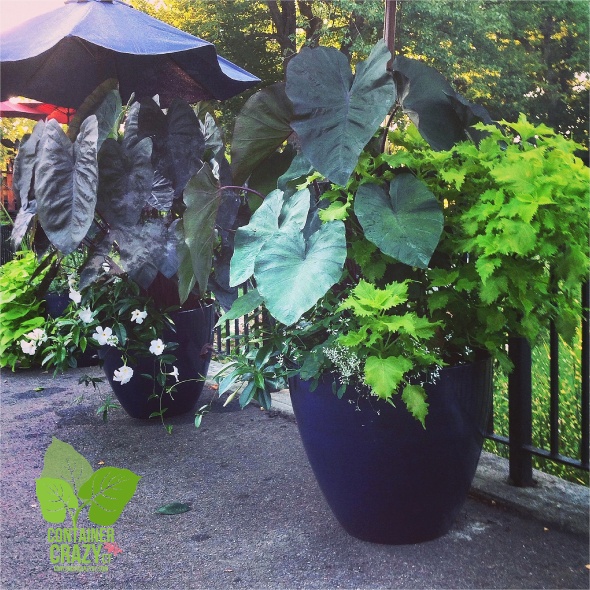
Containers in Sept 2015

Containers in Sept 2015 shows the thriller of Colocasias (Elephant Ears) – Available for Purchase at the Workshops!

Every year, elephant ears (Colocasia), banana plants (Ensete and Musa), and some other unique tropical plants are offered as part of this workshop. Pairing up a dark toned elephant ear, such as Colocasia ‘Maui Magic’ with a vivid bloom of a perennial has dramatic effects in containers, and in this workshop you will see how it’s done.

A total of 185 tropical plants have been ordered, 8 each of 21 species, and learning their features and how to use them with other plants in the containers will be part of this workshops offerings.

Pinboards – Perennials with Power for Container Gardens

Start visiting my pinboard titled, Perennials with Power for Container Gardens, to get a glimpse of what the featured perennials and tropical plants will be at the Container Garden Workshops scheduled on May 16th and May 23rd, 2015. I will be adding photos up until the workshop dates. This will give you an idea of what will be featured, and some are shown in container gardens and patio pots too.

Two Workshop Date Options

This year, the workshop is being offered on two dates. There are some considerations beyond your calendar’s availability on which date you may want to select. Both sessions will have the same topics and materials available.  More details of what is included in the class is listed on www.ContainerCrazyCT.com, click MAY CLASS (BIG CONTAINER GARDEN) under the Nature with Art Programs menu.

May 16, Saturday – Session No. 1:

The May 16th date is after our typical spring frost date but we won’t know until we hit April. Experts say we are “almost guaranteed” to not get frost from May 10th through September 26th, but after our winter and global changes – do we trust weather guarantees anymore?

This means if you elect to attend session no. 1 on May 16th, your containers may require protection if we get an overnight frost. Frost is not as harsh to perennials, but will affect tropicals. If you are okay with moving your pot or covering it with a light sheet if forcasters say we will get a frosting, then May 16th is for you.

May 23, Saturday – Session No. 2:

The May 23rd date will be safe – however, it is Memorial Day weekend, and schedules tend to be busy – but with that said, nothing is better than placing your newly arranged container garden out on your deck or patio just in time for the festivities.

Registration one of 3 ways:

  1. Visit the Facebook page for Container Crazy CT and click on EVENTS to join.
  2. Complete the Contact Form found at the bottom of the class pages from the top-menu bars of http://www.ContainerCrazyCT.com.
  3. Email containercathy@gmail.com or call (860) 977-9473

Payment:

$15 per person + cost of plants purchased at the class. Payment of class fee of $15 is required by mail one month prior to the class date. Payment is non-refundable for any cancellations one week prior to the class date. Sales tax is applicable on all plant purchases during the class.

Send to: Cathy T’s Landscape Designs, 72 Harrington Road, Broad Brook, CT 06016

For a PDF version of this text: Container Garden Workshops Intro 2015

Go back

Your message has been sent

Warning
Warning
Warning
Warning

Warning.

Thank you,

Cathy Testa

Cathy Testa is a container garden designer in Broad Brook, CT. Her work has been featured on the television program, CT Style, and in several gardening publications. She offers classes year round where nature is combined with art and is available for container garden installations.
Succulents ContainerCrazyCT_0010For a Calendar of All Events and Workshops, click HERE.


Wasabi Coleus with Vivid Lime Green Coloring is a Top Performer

4 Comments

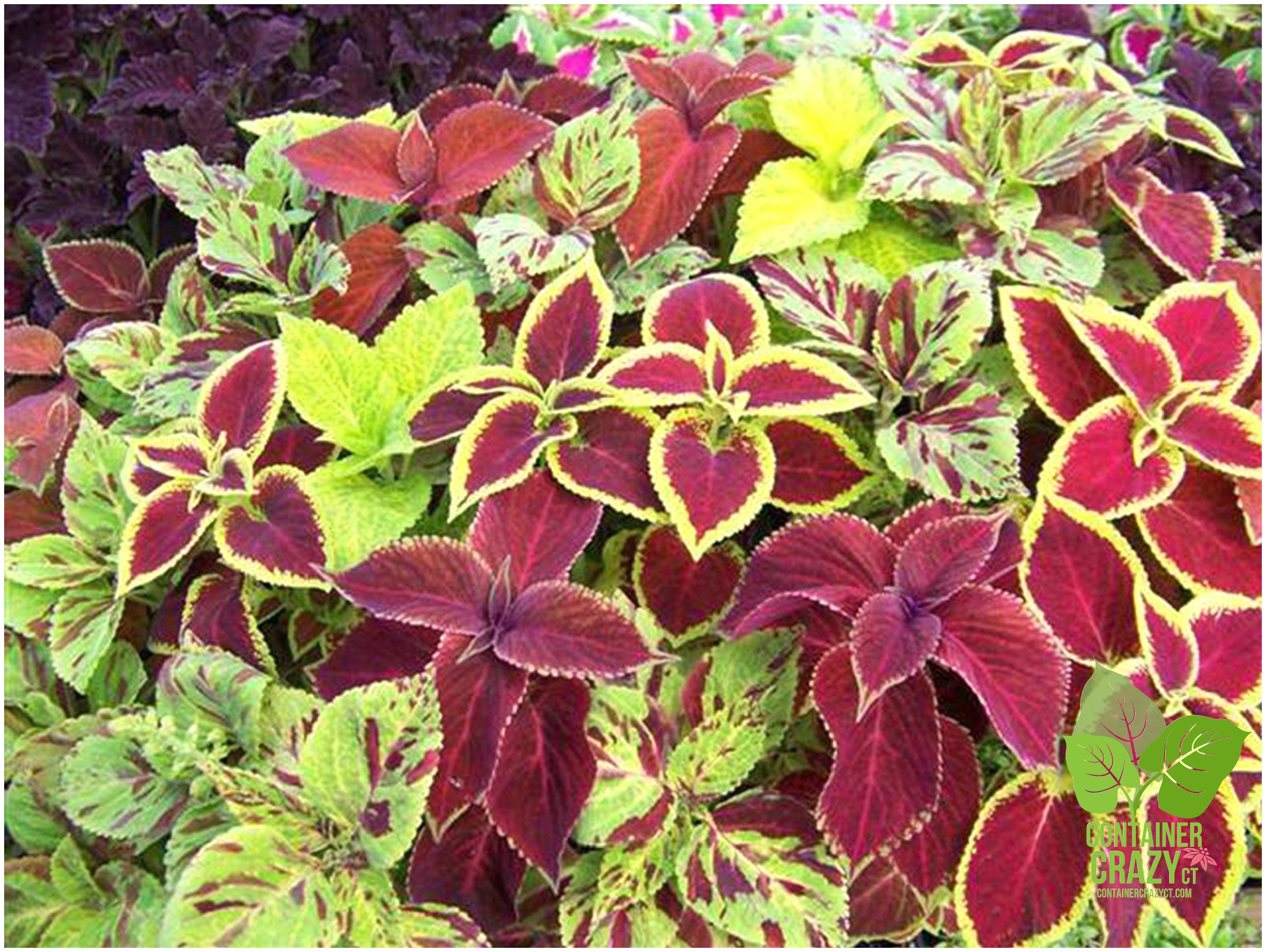
When it comes to a wide array of foliage colors, coleus plants are one of the best to use. It is no wonder the National Garden Bureau has declared 2015 the Year of the Coleus. Just look at this image below, downloaded from the bureau’s website (www.ngb.org/downloads). The variegation is speckled, trimmed on the edges, and splashy! And this plant is so easy to grow. Coleus plants are known for being tough and are quite recognizable by plant lovers.
Mix of Coleus - Photo from National Garden Bureau

Mix of Coleus – Photo from National Garden Bureau

Last year, I used Wasabi coleus (Solenostemon scutellarioides ‘Wasabi’) in several container gardens for a wedding client. The bride wanted lime green along with cobalt blue and white colors in her décor for the wedding. Lime green was an easy plant color to obtain. There are many plants with lime green or chartreuse colors, and I immediately had several pop into my head, such as:

  • Alchemilla mollis (lady’s mantel) – ruffled foliage, lime green foliage and flowers (filler)
  • Canna ‘Pretoria’ – tropical fast grower, lime green foliage (thriller)
  • Heuchera ‘Citronella’ or ‘Lime Rickey’ (coral bells) – foliage lime green, many Heucheras offer it
  • Iris ensata ‘Variegata’ (variegated Japanese iris) – sword like foliage with half lime green stripes
  • Lamium maculatum ‘Anne Greenway’ (dead nettle) – spiller with lime green and white foliage
  • Lysimachia nummularia ‘Aurea’ (golden creeping Jenny) – great spiller with lime green foliage
  • Sedum rupestre ‘Angelina’ (sedum) – great filler or spiller, tough for hot sun containers
  • Tradescantia andersoniana ‘Sweet Kate’ (spiderwort) – strap like vivid lime green with blue-purple flowers

These are just examples of perennials in that color, but many annuals, ornamental grasses, and a few shrubs also show off lime green or chartreuse colors. The plant list could go on and on, but it was important for me to have strong performers and those which would last towards the end of the summer.

Containers with Wasabi Coleus by Cathy T

Containers with Wasabi Coleus by Cathy T

Two easy plant choices, which I knew from experience would last, were the annual plants, Wasabi coleus and Ipomoea batatas ‘Marguerite’ (sweet potato vine). Both plants have bright yellow to lime green foliage and really stand out in container gardens.

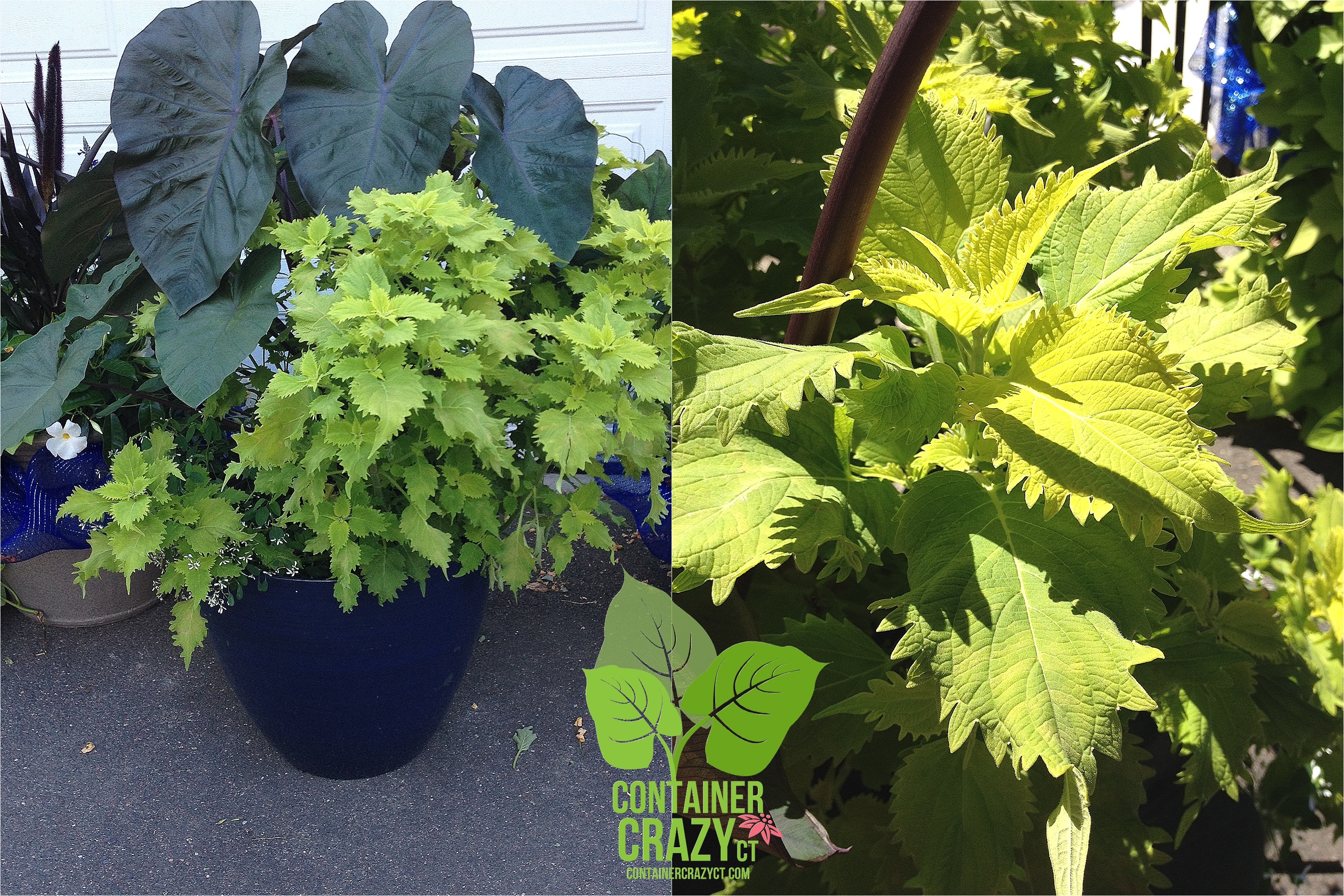
Close up of Wasabi Coleus

Close up of Wasabi Coleus – Heavily Serrated Leaf Edges

Wasabi Coleus

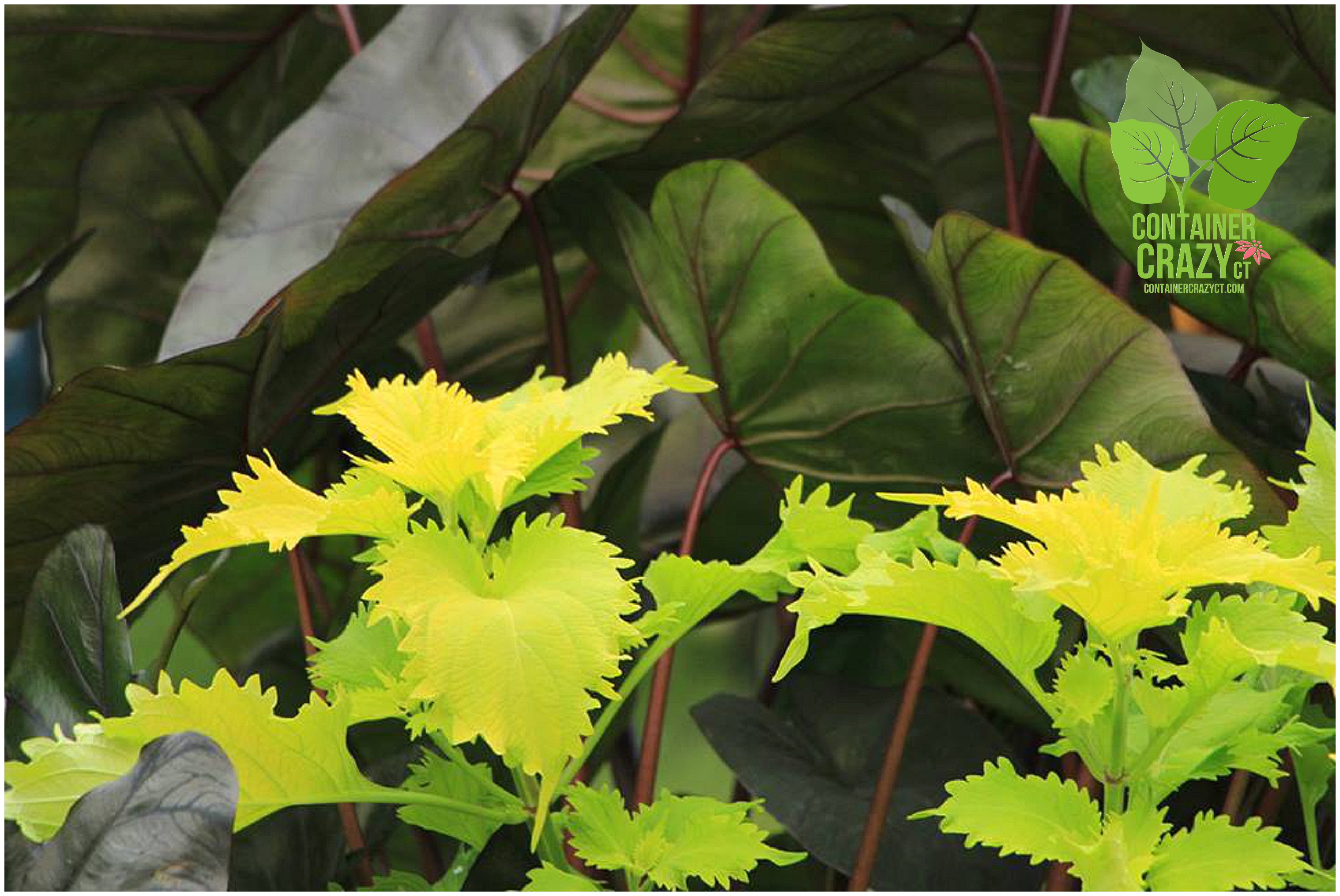
One of the aspects I adore about how Wasabi coleus worked in the container gardens is how its lime green coloring was highlighted or intensified as it sat near the dark toned elephant ear plants in the pots.

Wasabi Coleus with Dark Toned Elephant Ear Plants - Photo by Patrick C.

Wasabi Coleus with Dark Toned Elephant Ear Plants – Photo by Patrick C.

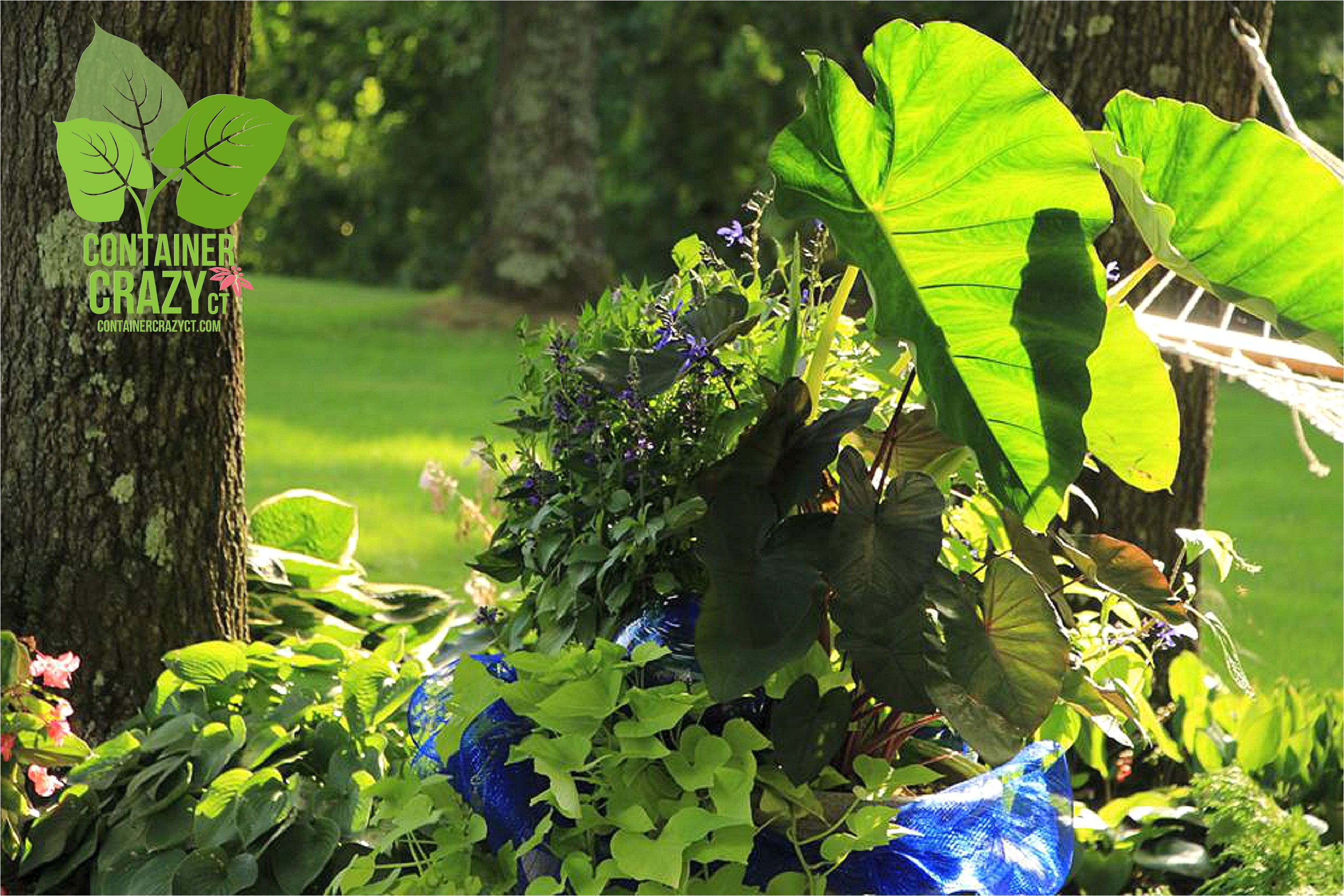
For the elephant ears, two varieties were used, Colocasia esculenta ‘Black Magic’ and C. esculenta ‘Black Diamond’. The coleus was so vivid and intense next to the darker toned elephant ears making each plant all the more dramatic.

Colocasia esculenta 'Black Magic'

Colocasia esculenta ‘Black Magic’

Colocasia esculenta ‘Black Magic’ has to be one of my all time favorite dark toned elephant ears. It has amazing downward facing heart or ear shaped leaves rising from tall plum to purple-black stems and grows to about three to six feet tall. The reason I find them great tropical performers is because the stems cluster and rise in a nice full batch from the center, and they stay tidy but are very lush and full, serving a the main thriller plant in the container gardens.

Container Garden by Container Crazy CT - Wedding Pots

Container Garden by Container Crazy CT – Wedding Pots

Coleus has strong stems which helps it to stand upright in the container as a filler plant next to the elephant ears. However, those strong stems may break in windy situations or if bumped up against. But, the good news is with a quick snip to any damaged stems, regrowth bounces back nicely.

Wasabi Coleus on left in the pot

Wasabi Coleus on left in the pot

Wasabi coleus does not tend to send out blooms, so I did not have to deal with cleaning them up. From the time I planted them in the containers until the point it was time to tear them out, there was not a flower in sight which to me was a good thing because I prefer the foliage colors and textures of coleus plants – the flowers are not that intriguing to me.

Wasabi Coleus ContainerCrazyCT_0023-001

In fact, I experienced no problems with Wasabi coleus. No blemishes, no spots, thus no worries. It was an excellent specimen from beginning to end.

Containers in Sept 2015

Containers in Sept 2015

The lime green to chartreuse color of this annual plant served to meet the client’s desired colors, and provided a nice texture with its heavily serrated edges, plus it grew upright and tall, filling in nicely alongside of the other plants in the container. However, there were a couple other plants incorporated into the pots with similar lime-green coloring.

Some of the wedding pots mid summer

Some of the wedding pots mid summer

Duranta – Sky Flower Tala Blanco ‘Gold Edge’

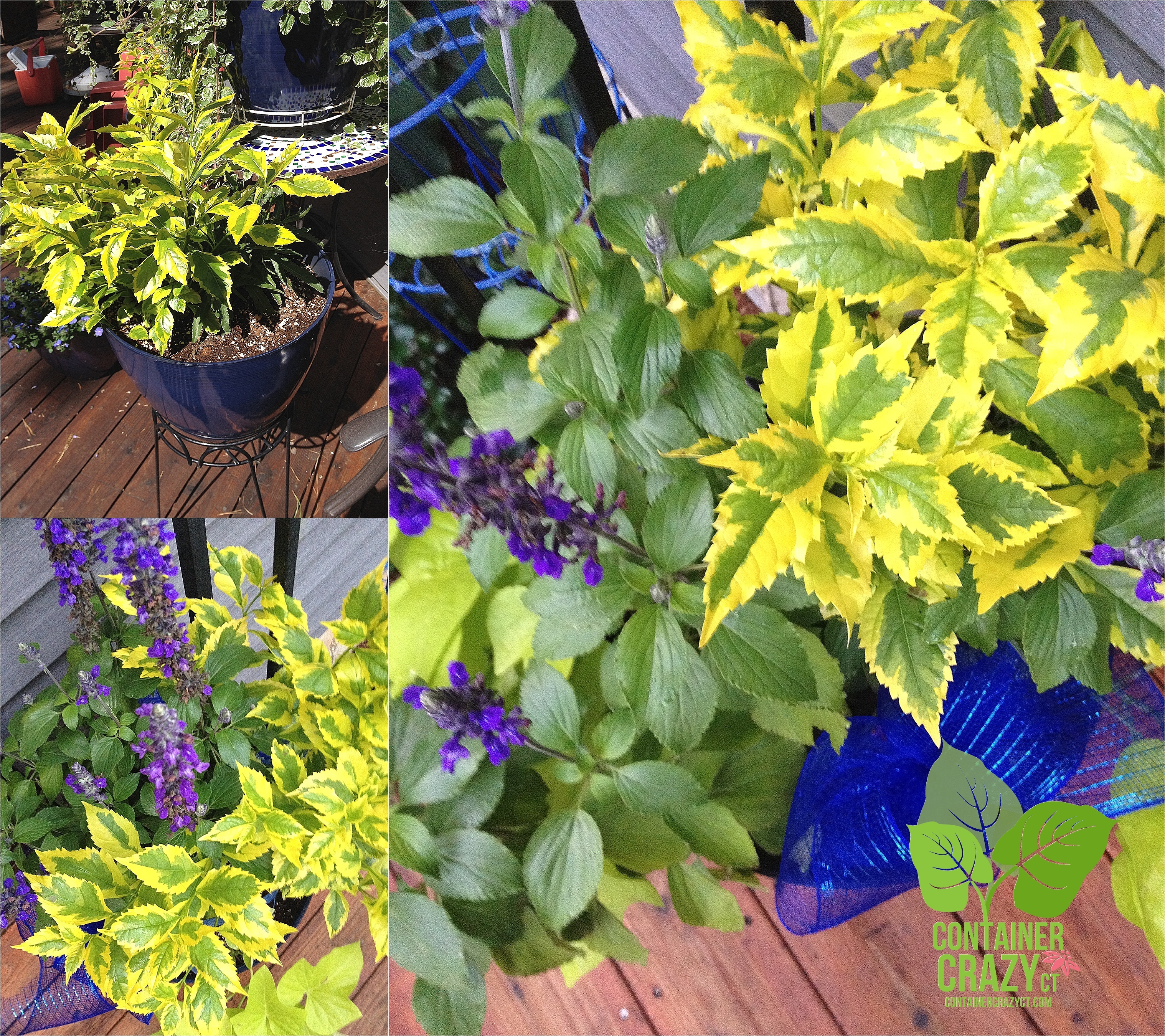
Another plant, which is not a perennial but annual in our CT planting zones with lime green appeal, is Duranta serratifolia (Sky Flower Tala Blanco ‘Gold Edge’).

Duranta Gold Edge  -- Photo by Cathy T

Duranta Gold Edge — Photo by Cathy T

This species is a shrub and its vivid lime green to bright yellow foliage with green centers is extremely electric. The coloring is very bright and the plant is tough. The only concern is handling it because stems have sharp spines, but otherwise, it definitely adds flare to the containers. As noted above, cobalt blue was another color requested, and this plant made the blue to purple flowers in the pots pop.

Duranta at Different Stages of Growth

Duranta at Different Stages of Growth

Marguerite Sweet Potato Vine

You don’t even need to say or mention why sweet potato vines are excellent for container gardens. They trail, grow relatively fast, and are showy in pots. Pretty much everyone into gardening knows of them – similar to how gardeners are aware of coleus plants. This is why the ‘Marguerite’ sweet potato vine was used as the spiller, a plant which trails off the sides in the container gardens. It has a nearly perfect lime green color and grows quickly.

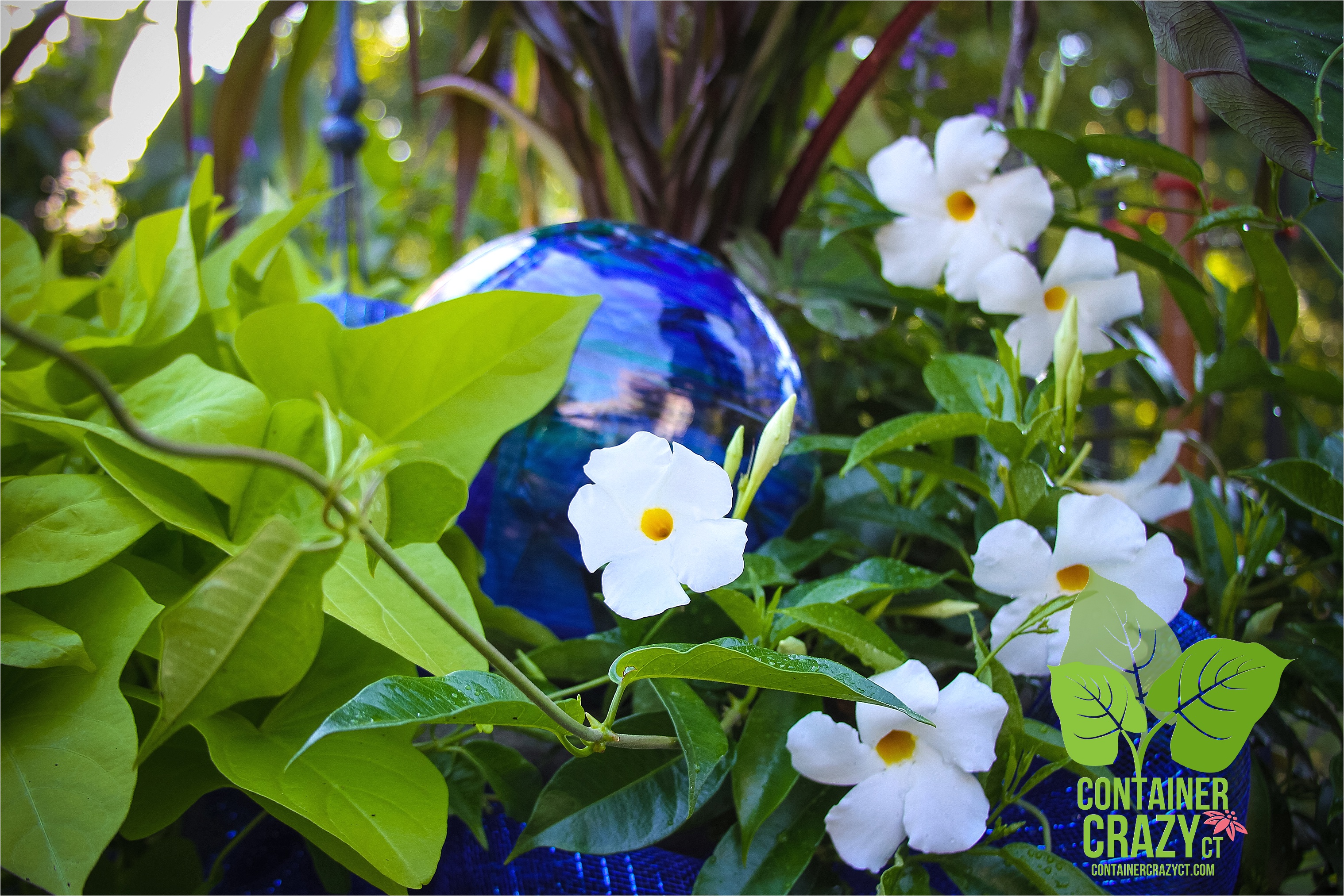
Sweet Potato Vines next to cobalt blue gazing ball decor in the pot

Sweet Potato Vines next to cobalt blue gazing ball decor in the pot

The sweet potato vine plant eventually grew so long, I had to pick them up in my arms when moving the pots into my trailer for delivery. It felt like I was holding the train of a wedding gown. Ipomoeas are sun to part shade annuals. They are very versatile in any type of container gardens from hanging baskets to window boxes. Sweet potato vines could be considered the staple of spillers because they cascade so nicely and keep growing.

Sweet Potato Vine Marguerite (Spiller)

Sweet Potato Vine Marguerite (Spiller)

The container gardens at the wedding event served more purposes than just dressing up the space, they were great for protecting guests from tripping over the tent cords. And the bright lime to yellow green of the three plants (Wasabi coleus, Marguerite sweet potato vine, and Sky Flower) seemed to glow at dusk as the wedding day progressed which turned out to be beneficial.

Placed at key places during the Wedding Event

Placed at key places during the Wedding Event

After the container gardens were returned to my nursery, because they were obtained as rentals by the bride and groom, they continued to show their beauty until the early days of fall. When the season was over, I piled the stalks and cuttings of the plants into a garden cart to compost. Even here, you can see how amazing the bright lime greens showed up in the pile of mixed plants removed from the containers.

Garden Cart at Take Down

Garden Cart at Take Down

By the way, many people view coleus as a shade plant, but it can take part sun or dappled sun. Coleus ‘Wasabi’ was a great filler in these container gardens, but many other varieties tend to cascade downwards, serving as what I’ve titled as a “sprawler”. Sprawlers are similar to spillers, except they reach out a bit like arms coming down or reaching out of a pot. Also, big plants, like the elephant ears used in this combination, provide some shade over the lower growing coleus plants.

Containers by Container Crazy CT of Broad Brook, CT

Containers by Container Crazy CT of Broad Brook, CT

One sprawler which comes in mind is Coleus ‘Dipt in Wine’. It has a red wine color. One year when I used it in a container garden, it gently moved its way outward and downward from the pot. And…well, I could go on and on about coleus plants, so I should stop here.

At the Wedding Event - Pot staged in different places by hammock in a small garden bed - Photo by Patrick C.

At the Wedding Event – Pot staged in different places. Here by hammock in a small garden bed – Photo by Patrick C. (A family member of the groom and bride!)

Saying “The Year of 2015” is the “Year of Coleus” seems a little silly because it has always been a yearly choice for me.

Cathy T being silly on delivery day

Cathy T being silly on delivery day

For more details about how to grow and care for coleus, visit the National Garden Bureau page.

Cathy Testa

P.S. Only 15 days until spring!

Sweet Potato Vine next to white Mandevilla vine and Blue Gazing Ball

Sweet Potato Vine next to white Mandevilla vine and Blue Gazing Ball

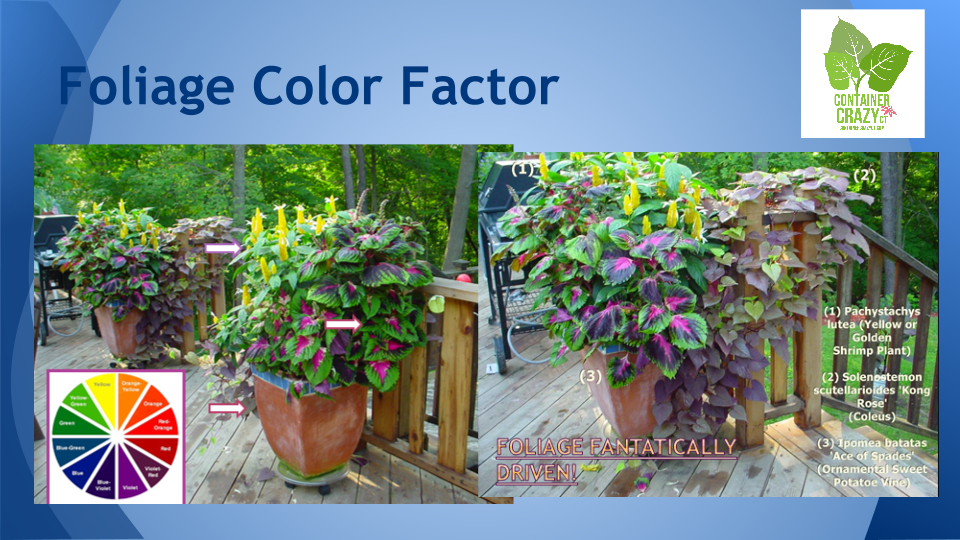
Yellow Shrimp Plant with Two Companions Make The Perfect Trio in Two Pots

2 Comments

The Tools - MG Class (1)

Foliage Lasts Throughout the Season

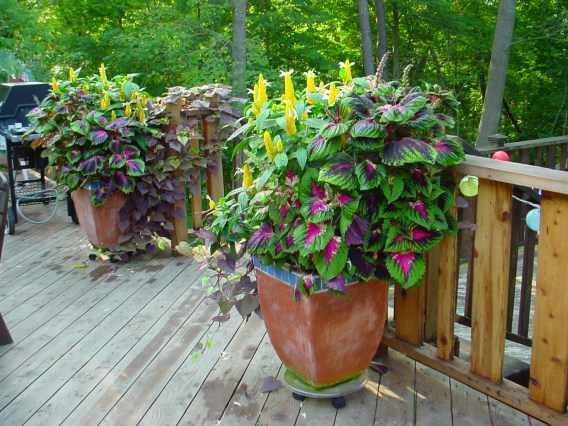
One year, these three plants were used in two pots and the foliage rich result was eye-catching.

One of the benefits of focusing on plants for their foliage features is foliage lasts throughout the growing season.  In many cases, annual plant blooms will wither away towards the end of the summer from heat exhaustion or repeat blooming.

So when you use foliage with a captivating thriller plant, like the yellow shrimp plant, you result with a stunning combination which is easy to assemble and maintain.

Echoing Foliage Colors

Notice how the dark purple plum like color (violet-red color on the color wheel) of the sweet potato vine’s heart shaped leaves are repeated in a band of the same rich purple plum color in the leaves of the Coleus ‘Kong Rose’ plant.

Repeating a color of one plant in another plant is a way to add impact to a design. This holds true in containers, patio pots, and in gardens of the ground.

Complementary Color – Yellow and Purple

The yellow shrimp plant’s yellow parts (technically bracts) represent a color opposite to purple on the color wheel so they seem to pop near each other.  This is especially true when two plants with pure yellow and purple colors are used together in a container garden – but either way – what I loved about this trio is how lush and full they got and stayed all summer long with little to no problems.

The Tools - MG Class (2)

The plants used in these two pots are what I consider reliable performers.

Reliable Performers

The ‘Ace of Spades’ sweet potato vine just kept growing and growing, dangling over the rim of the pot to the ground and even down the railing. It served as a “spiller” in the container gardens.

The Coleus ‘Kong Rose’ has very large leaves; and is an exceptional “filler” in the container gardens. I would have to say the ‘Kong’ cultivars are one of my fav’s as well – because of their lush leaves.

Then, of course, is the shrimp plant, the “thriller“, with its amazing yellow bracts and white blooms. The flower structure is fascinating, so the minute I saw some available at a local garden center, I grabbed two that year.

See the Yellow Shrimp Plant during the Winter

Visit the Butterfly Conservatory and Gardens in South Deerfield, Massachusetts; you will spot this plant there growing in their greenhouses filled with fluttering butterflies. The butterflies love the blooms, and the tropical like feel in this place is perfect for growing this tropical to sub-tropical loving Peruvian shrub.

Yellow Bracts with White Flowers

As I noted in my prior blog post about spotting this plant there, you can see why it is called a golden or yellow shrimp plant.  The flowers are not the yellow parts you see here; these are the bracts.  The white tubular flowers extend from the yellow bracts, and in my container garden, the hummingbirds and butterflies loved them.

Long Lasting Blooms – Feeds the Butterflies

Another bonus of the yellow shrimp plant’s blooms are they are long-lasting in summer, and grow upright and tall – you really notice them, plus they are a bit unusual or nontraditional – and are definitely exotic looking in my book. If you are looking for something out of the norm – this is the plant to try.

Part to Full Shade or Full Sun to Light Shade – Easy to Grow

Yellow shrimp plants enjoy part to full shade and this worked out well because its companion plants in this container gardens do as well. Although I found if situated in part sun – it didn’t do much harm at all.

This plant combination was featured in the GMPRO magazine in 2008, titled “Foliage Fanatic.”
Check it out to read the exact growing requirements.

2008 Stunner

2008 Stunner

Other plants similar to the yellow shrimp plant are Jacobinia carnea (pink shrimp plant, Brazilian plume) and Pachystachys coccinea (cardinal’s guard). They are not hardy to our Connecticut planting zones, so just be sure to wait to put them out in season when things are warmed up appropriately during the summer months – which is far away at the moment, but viewing these photos gives us inspiration until then.

Thank you for visiting my blog – Please Share!
Cathy Testa

Cathy Testa of ContainerCrazyCT blog_0001

Don’t forget to note the May 2015 dates for Cathy T’s Container Garden Workshops:
May 16th and May 23rd, 2015

ContainerCrazyCT 2015 Calendar (2)

Autumn Begins On Monday – Time to Move In Your Plants

Leave a comment

Hi Everyone,

Just a quick note to remind you to think about that statement I made at the Big Container Garden Party in May:

Do not let your succulent plants, cacti, or houseplants with tender foliage in your outdoor container gardens and pots stay out in the cold damp weather too long.

It has been my experience if you let that soil stay cold, and it remains wet – and then you move them inside, two things typically happen.  The tender soft foliage of these types of plants start to rot at the base, or sometimes the damp wet soil invites little critters to take residence in the pot.

So as noted on your handouts from the May Big Container Garden Party class titled, “The 7 MUST NOT DO’S WITH SUCCULENTS & CACTI“, is that you should not leave them out beyond summer when we start to get continuous cold evening temperatures.  (Try this test: Touch the side of your pots – if Terracotta or glazed, they are chilly right now – even in the sun.  The type of container may contribute to cold soil at this time of year, despite the nice warm sun we are having.)

This week has been nice and sunny during the day, so if for some reason your soil in your pots is really damp/wet, give it some sun, don’t water, and let it dry out a bit – then start to move them in soon.  Frost typically happens early to mid-October, so there is still time to enjoy other plants, as follows:

Canna, Elephant Ears, and Banana Plants

As for the Canna, Elephant Ears, and Banana plants – they can handle this weather a while longer into early October before the first frost of Autumn hits.

If you wish to keep the Canna, Elephant Ears, or Banana plants in their pots inside the home – my advice is reduce the watering now – it will dry out the soil a bit, makes the pot lighter to move, and kind of the same theory as above, the soil won’t be damp when it is moved inside – reducing your risk if critters moving into damp soil. Pick a sunny window in the house from that point forward.

If you wish to store the Canna, Elephant Ear, or Banana plants base or storage organ, such as the rhizomes under the soil for the Canna, you may allow it to get hit by the fall frost – The foliage will turn black and soft – and you can cut that all off and then work to remove the rhizome or corm for the Canna and Elephant ear respectively.  For the Banana Plant, refer to my blog where I posted all the steps.

There is also choice #3 – if you want to keep the Canna, Elephant Ear, or Banana plants in their pots and you have a basement to move them into – this is also a technique for overwintering them.  Again, pick a spot, don’t water it much now, and let it look tattered over the winter but just hanging in there. For basement option, must do before frost as well – which probably will happen in mid-October.

Elephant Ear - Colcocasia

Elephant Ear – Colcocasia

Brugmansia (Angel Trumpets)

Another plant sold at the Big Container Garden Party was the Brugmansia (Angel Trumpets).  These should not be hit by frost.  I recommend you move them in to the home if you wish as a houseplant before frost hits, or into your basement to go dormant.  In the basement, most of the leaves will fall off, it will look tattered over the winter, but will bounce back (usually!).  Also, Brugmansia (Angel Trumpets) may be pruned back hard if you wish – pruning off all the stems and part of the stalk, but then you would not have the tall height next season if you wish to keep it tall.

Succulents, Cacti, Alpine Plants

Also, a reminder about another “do not do’s” with the succulents, cacti, and alpine like plants – do not put them in dark rooms, or between curtains in the house.  Do not let them sit in water catch trays.  Do not put them in a very shady spot in the home, or by really cold pockets. They need a bright sunny window, and reduce watering them regularly.  South or West facing windows are typically best. Refer to your handout on more details about how to water them in the winter months.

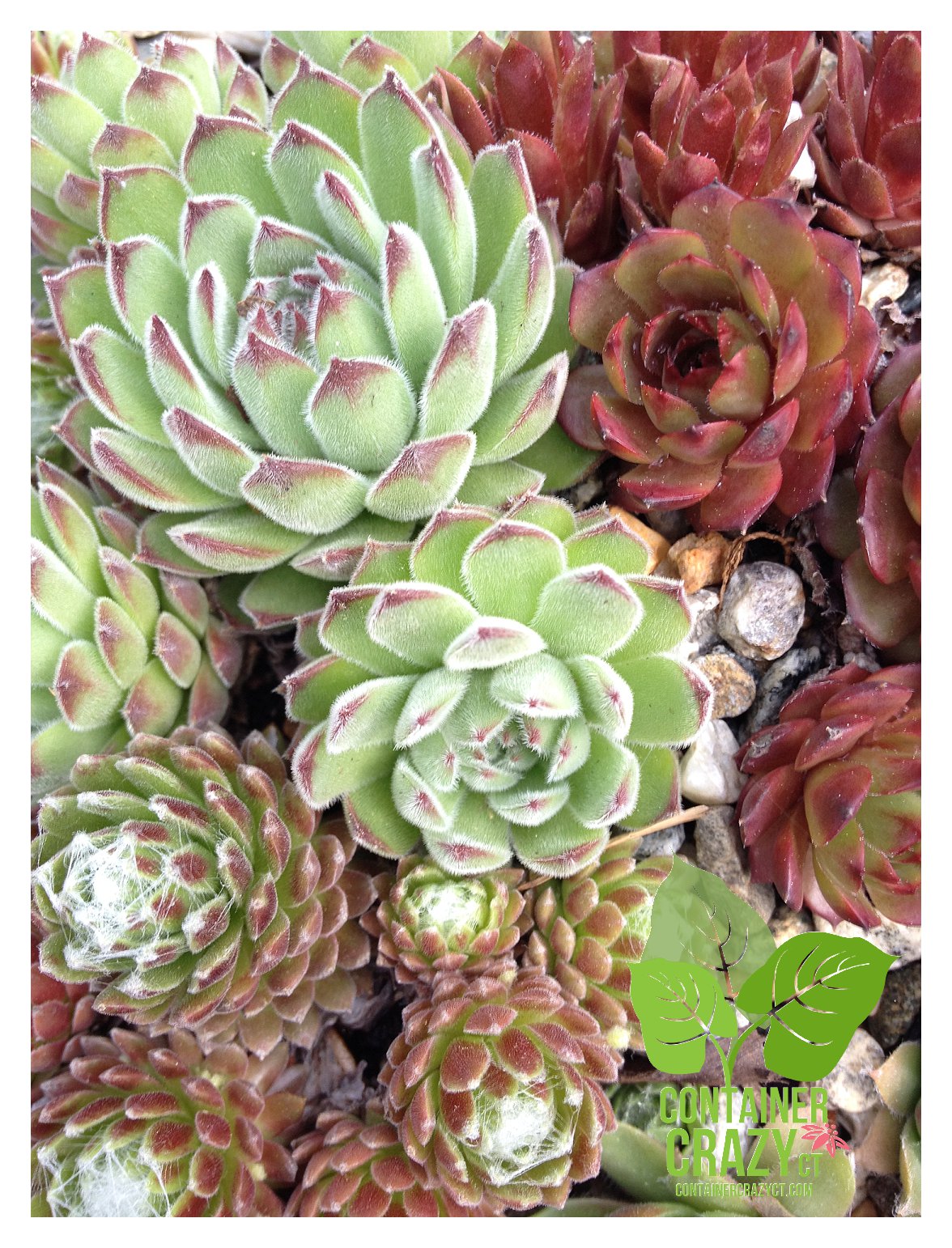
Hens and Chics

Hens and Chicks – Sempervivums

Hypertufas with Hens and Chick Plants

Hypertufas!  Did you buy one in May?  Well, the good news is they can remain outdoors – the material of the pot is pretty tough – but I say move it to a protected outdoor location, the hens and chicks in the pot will come back next season.  You may want to put it under your porch steps, or if you have a woodstove, heck, put it by the foundation wall near that area outdoors.  Or bring it in and place in a sunny window to treat as a houseplant, reduce the watering, etc.  The plants will look like they are not alive at some point, but they hang in there – believe me – they bounce back.

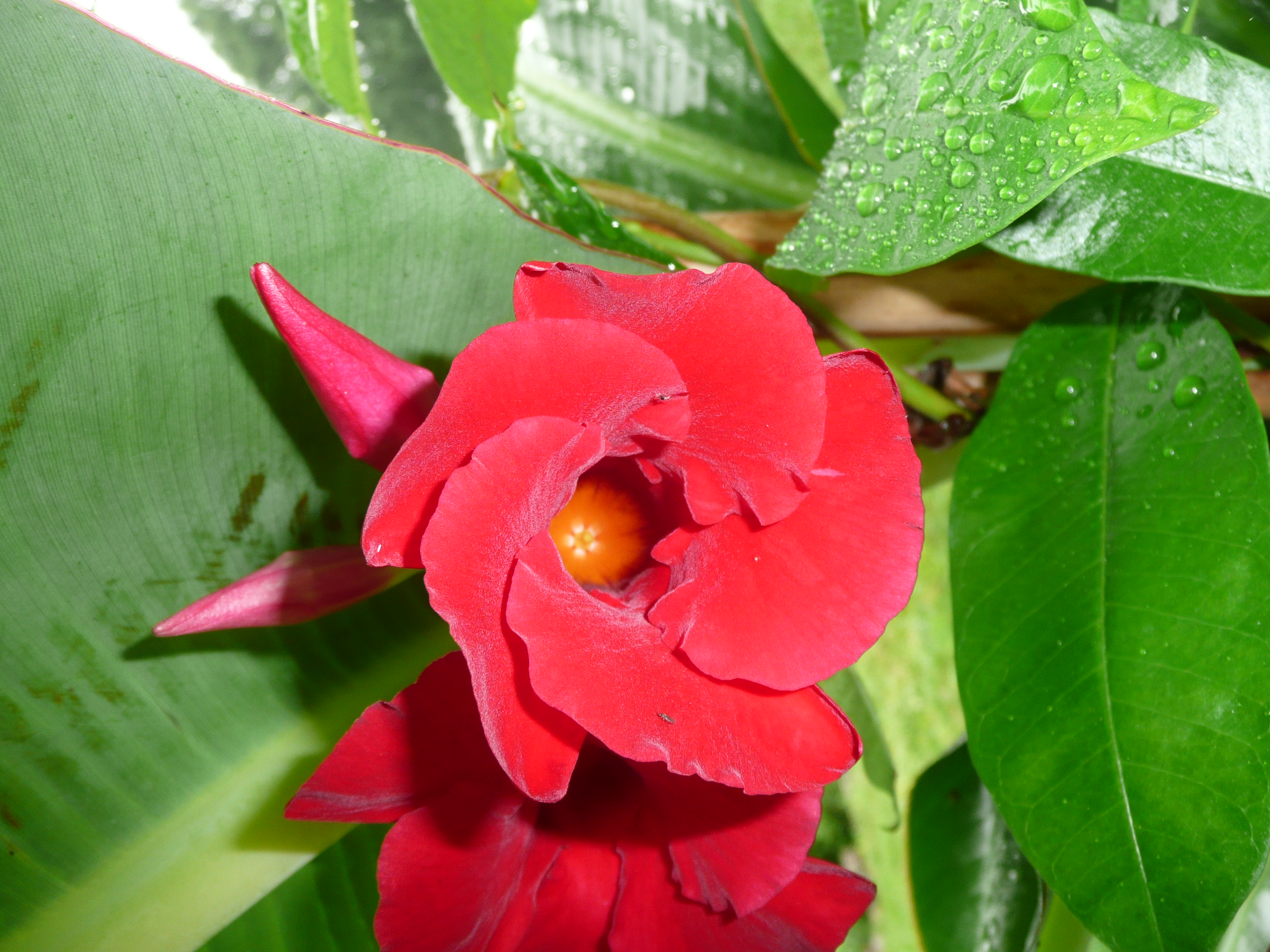
Mini-Crimson Mandevilla

Mini-Crimson Mandevilla

Mandevillas

Mandevilla – These too can be stored over the winter in somewhat of a tattered state, cut the vines back, and put them in the basement, they will loose leaves over the winter, but will hang in there.  More information can be provided if you have any further questions. This tropical like vine will be showy for a while more too – but don’t let it get hit by frost.

Perennials – Some of the plants were perennial and you may remove them from your container gardens and transplant them into the gardens of the ground, or often they return in the pots if you move them to a protected location over the winter (i.e., garage), especially if you used a big pot with lots of soil mass as your container garden when you put these together in May.

Thank you, and for those registered for the Octobert Hypertufa Class – I’ll see you soon!

Cathy Testa

P.S.  The “Evergreens Kissing Ball & Holiday Creations” class date has been noted above and on the side bar of this blog.  It is Saturday, December 6th, 2014.

Ensete ventricosum ‘Maurelii’ – A Big Red Banana Plant Revived Again!

8 Comments

Red banana plants (Ensete ventricosum, also called Abyssinian banana) are herbaceous perennials from the Musaceae family hardy to zones 10 to 11.  They can reach heights of 8 to 10 feet, perhaps even 12 in the best of situations, and take full sun with medium moisture.

When sun and good moisture are provided, it will give you a show to remember, especially if you are not from the tropics, as most would not expect such a large tropical specimen to be growing in your Connecticut yard.  But this is very doable if you store the plant appropriately over the winter, and follow the steps below to revive it to be planted again each year.

For the third year now, I have taken my red banana plant (which is a cultivar, ‘Maurelii’) out of storage around this time of year to revive it and bring it back to life so I can enjoy it once more in my landscape or in a big container garden.  Red banana plants love organic rich soils, so the large cement planter it grew in last year at my home during the summer is probably where it will return this season.

As I mentioned, in my blog post last fall about how to overwinter (store) a red banana plant, I took photos of the plant repeatedly last season.  I also had people stand in front of it when I’d walk them around to my backyard for them to see my big red banana plant.

Parents and Relatives

Here’s a photo of my parents (on the left) and my Aunt and Uncle on the right from last summer.  My mother is a twin, as you will notice.  It’s so cute to see them get together and my Uncle joked with me about how I built a foundation for my plants – he was correct!  They were having a fun day and it was a treat to have them stop by.

Mom/Dad, Aunt/Uncle 2013

Mom/Dad, Aunt/Uncle 2013

Another time, when babysitting my nephew, I tortured him a bit by taking several photos of him in his stroller before we went for a walk.  Here he is waving at me.  Too cute!  Someday he’ll look back at this photo and say his Aunt was nuts about plants.

Nephew waving 2013

Nephew waving 2013

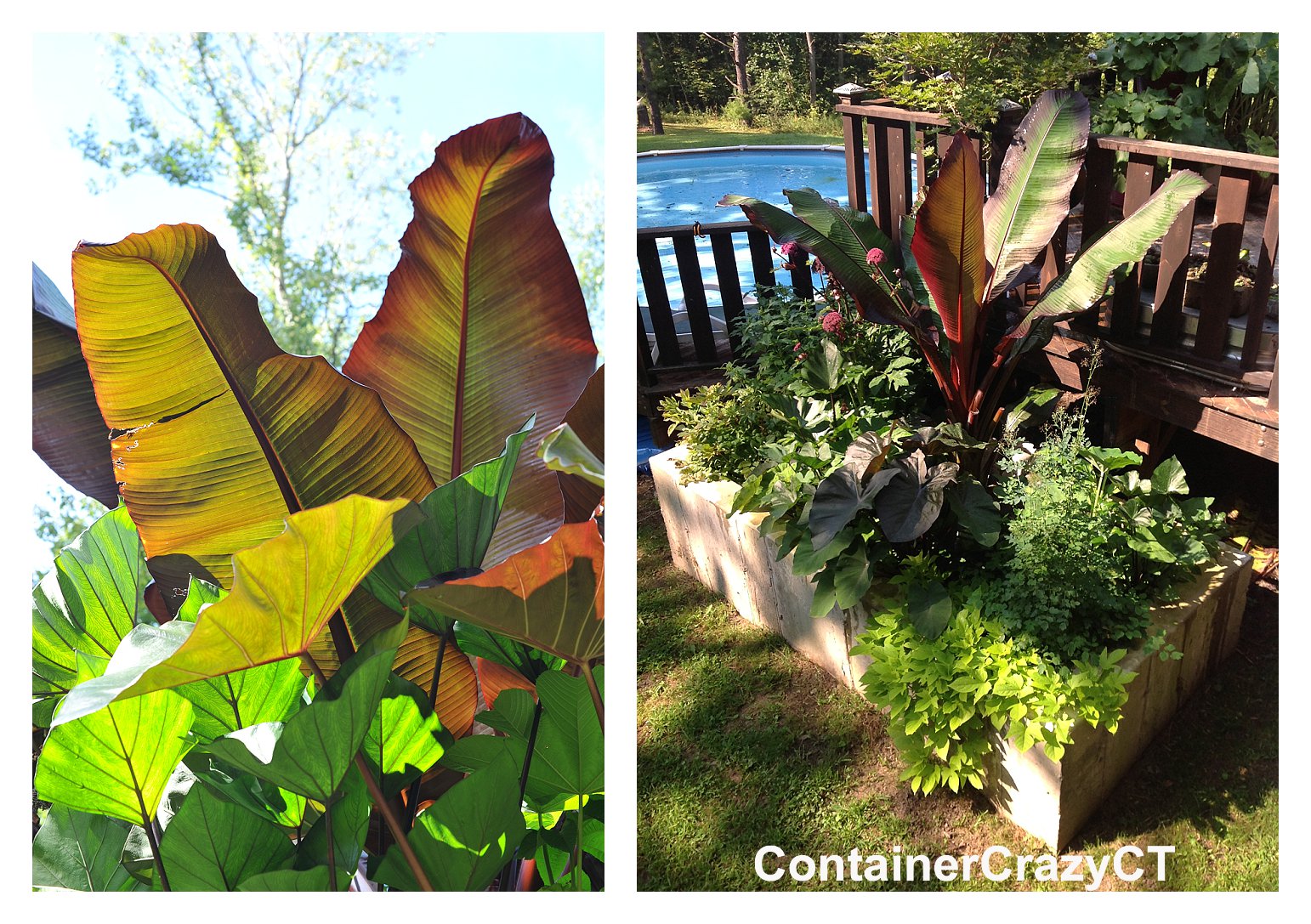
Red banana plants like some shade so the spot where this planter is located is perfect. It gets the morning sun on the east side, which my nephew is facing in this above photo, and later, it gets shade in the afternoon as the sun moves over head to the west.  I also intentionally located it by our pool and below our deck, knowing the leaves would rise to the top of the deck railing where it could be seen as it grew to its towering heights. You can see I have many elephant ears and perennials planted around it.  On hot days, as I watered plants on my deck, it was easy to have the hose over the top to give this planter regular drinks of water too.

Photos taken from above summer 2013

Photos taken from above summer 2013

This plant likes good consistent moisture, and in my large cement planter this was never a problem because it is so large, it holds the moisture well.  When you plant red banana plants into pots, I recommend you go as large as possible too.  Okay – maybe not as large as my cement planter is possible for some folks, but remember the plant gets big, so you want a good sized pot, not only to give it a nice soil environment, but because a large pot will hold down a large plant well in the winds and will require less watering because it won’t dry out as fast as smaller pots.  See my Cathy T “5 Must Do’s for Container Gardening” for more information about how to succeed with container gardening.

Will It Get Bananas?

Many people will ask if my red banana plant will get bananas, and the answer is no, probably not.  Because I cut it down every season in the fall after it gets hit by a frost to store the root base, it may never produce a flower, but there are other types of dwarf banana plants you can grow that will get fruit, one being Dwarf Cavendish.  In fact, I gave one of those to my sister in law one year and she kept it in her sun room all winter. The following summer, it produced a bloom and had tiny bananas which her family was afraid to eat because they never experienced that before.  It was a new experience for them to see a tropical plant produce fruit in their home.

Red Banana Ensete_0014

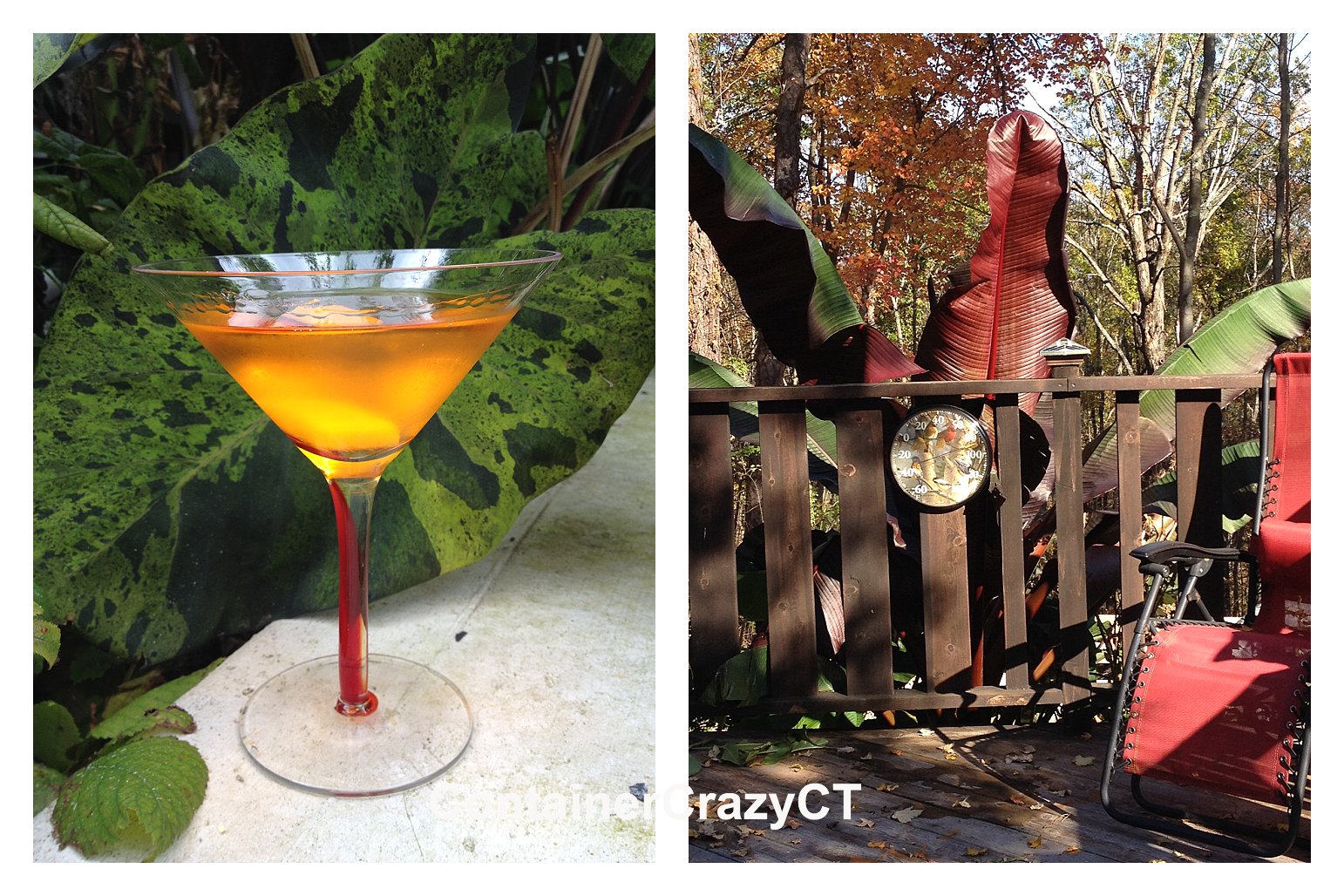
At the end of the season, I took a photo from the other side of the deck.  You can see how the leaves reached the railings.  I also found the spot where it was placed to be a nice private place to sit and have a cocktail in the summer.  But eventually it was time for it go to.

Photo on Right, Towards end of Season

Photo on Right, Towards end of Season

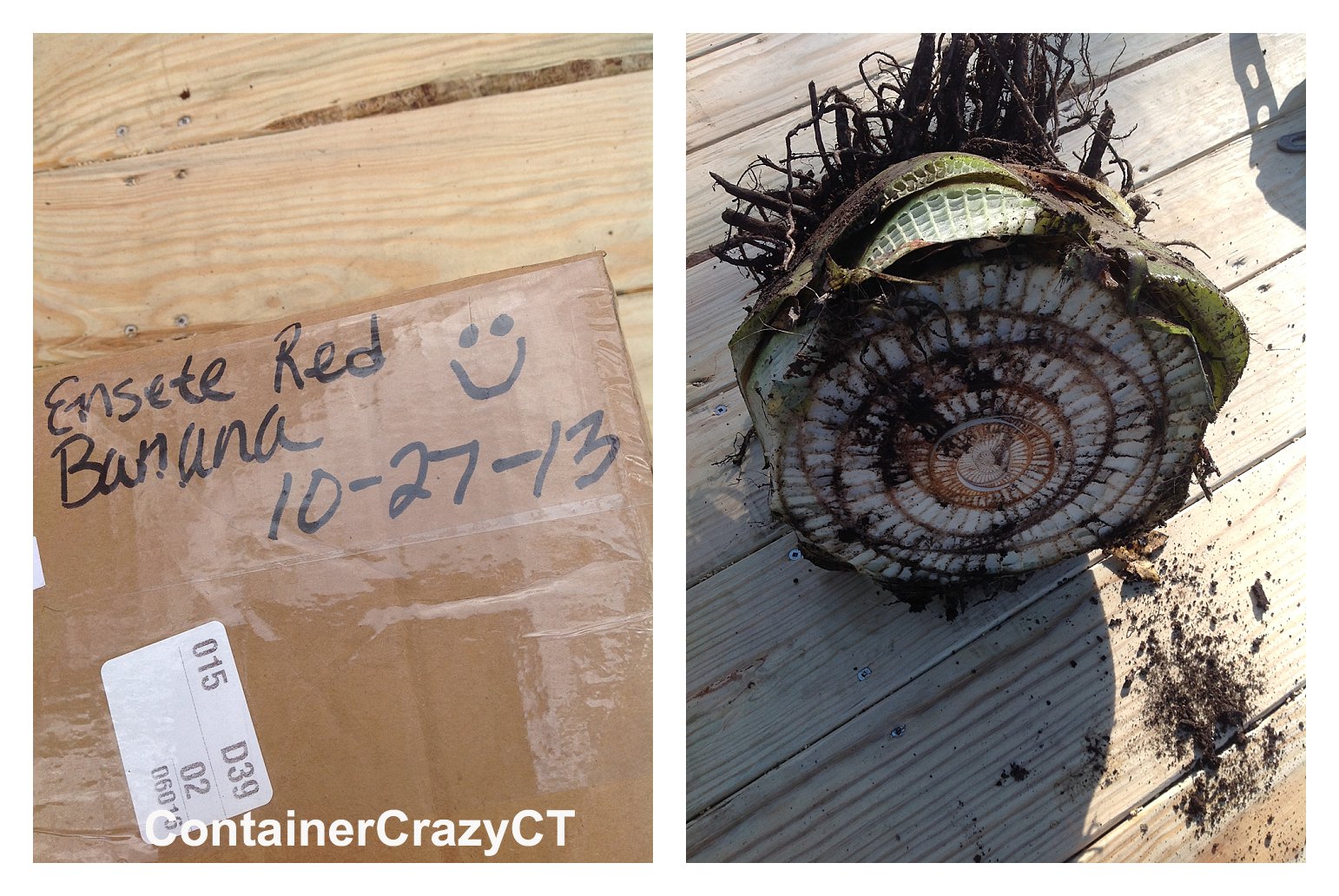
This is what the root base looked like after I took the plant down.  You can see the overwintering preparation steps on my blog post from the winter.  Finally, spring has circled back around. So recently, I went down to my basement to check on the box.

Sure enough, the plant sensed the temperatures changes, and I could see white growth from the top through the plastic taping I used to close the top.

Root base just before packing last fall

Root base just before packing last fall

Opening Box Spring 2014

Opening Box Spring 2014

Coming Out of Storage

It may look like something out of a horror movie when you look at this image above of the plant as it is reawakening in the early spring, but believe me it won’t be long before it is returned to its beautiful state.  My first step is always to check to see if it looks healthy, free of any little insects, and if starting to grow – which is was in the box.  I opened up the box and positioned the root base to be standing upright.

Leaves Rising 2014

Leaves Rising 2014

As you can see, the leaves began to rise.  The bases of the leaves overlap like celery. And while it may look tattered, not to worry, it will perk up and look better in no time. I keep mine like this for a week or so and give it a tad bit of water, but not too much.  I don’t want rot to set in now that I have it alive and revived again.

Temporary Pot

Temporary Pot

A Temporary Pot

On Wednesday, May 7th, of this week, I decided to pot it into a temporary pot using fresh quality potting mix specifically for container gardening.  It happened to be a beautiful sunny day so my juices got going to get this baby into a better environment, and I watered it lightly again.  The next day, I carried it upstairs to a room so it could get warmer conditions and some soft light.  It will remain there until Memorial Day weekend when all chances of frost have past.

New Pot

New Pot

Cleaning It Up

And one other note, there were some outer sections which had some mold or fungus on it, where you can see the whitish area in these following photos.  I took a sharp clean kitchen knife and sliced it off very carefully.  If you do this, be careful to not cut the layer below the piece you are removing.  This step was taken to reduce any chance of the fungus to spread.  And any black parts were cut away also.

Slicing of bad sections

Slicing of bad sections

It is hard to believe this once towering plant at 9 or so feet last year with 6 foot long leaves is now a stump that will regrow to the same size again in no time.  It will sit in my spare room until ready to head outdoors, and as noted above, after all chances of the late spring frost has passed.  I don’t risk putting this plant out too early after all the effort to store and reawaken it.  And by the way, remember any plants you move outside to move into a shady location first so the leaves won’t burn when it is exposed to sun for the first time.  Just like our skin, it can get hurt and you will see white damage on the leaves when exposed to sun too quickly.

In the Landscape

If you want to see what this red banana plant looks like in a landscape bed, check out this photo provided to me from a Master Gardener friend, Serena.  She does garden maintenance, and was excited about her red banana plants last year too.  We both were very happy to see the lush growth of our plantings.  She lives in Connecticut also.

Serena's Red Banana in her CT Garden

Serena’s Red Banana Plants in her CT Garden 2013

By the way, Ensete ventricosum are referred to as “look-alike” banana plants because they are similar to the Musa genus but not part of the Musa genus.  Does this really matter?  Heck no!  It’s a red banana plant to me!  And it will go back outside in three weeks.

Written by Cathy Testa
http://www.cathytesta.com
http://www.ContainerCrazyCT.com
860-977-9473

P.S.  A limited supply of these plants will be available at Cathy T’s upcoming class, the “Big Container Garden Party (Class)” on Saturday, May 24th.

Happy Mother’s Day Weekend Everyone!


A Slow Warm-up for Spring – But Time to Get your Tropical Bulbs Reawakened

Leave a comment

Good Morning Everyone,

Last spring, we were concerned about planting too early because we had over-chilly temperatures around this time of year – but it was colder, whereas this year, it is taking longer for the cold to leave.

There is no doubt every single year brings an interesting challenge for gardeners when it comes to the weather, and often times we must have the endurance to patiently wait for the conditions to be favorable for our planting adventures.

But, as we know – “Good things come to those who wait.”  And, patience is a true virtue in the gardening world.  When things are not favorable to work in your gardens outdoors, take the opportunity to prepare other gardening tasks and plants for when the temperatures and conditions are perfect.

Here is my latest e:Pub for Spring 2014, which refers to our slow spring warm up and things you can do now with any stored summer or tropical bulbs to give them an early start as we wait for temperatures to creep up higher in Connecticut.

Spring 2014 – e:Pub Newsletter – “A Slow Warm-Up

A new page has been added to this blog from the top menu where this e:Publication is posted, and more will follow.

Click on ABOUT, then 2014 MENU, to see a drop down menu called e:Pub Newsletters.

I started writing e:Pubs many years ago, and there are prior versions on my website, www.cathytesta.com.  It is interesting to look back and read some of the prior versions, at least for me.

One year I wrote a poem about all the rain we had in June which seemed like it would never end – that was in 2009.  But fortunately, today, the weather is warming up – we may even reach the 70’s.  Can this be true? We sure hope so.

Have a Great Weekend Everyone!

Cathy Testa

UPCOMING CLASSES:

Don’t forget to check out Cathy T’s Container Gardening Class on May 24, 2014 in Broad Brook, CT.  See also Cathy T’s Garden Talks.

Please share or join this blog by entering your email on the sidebar, you will get updates via email and special offers or coupons of upcoming classes as a Cathy T blog follower!