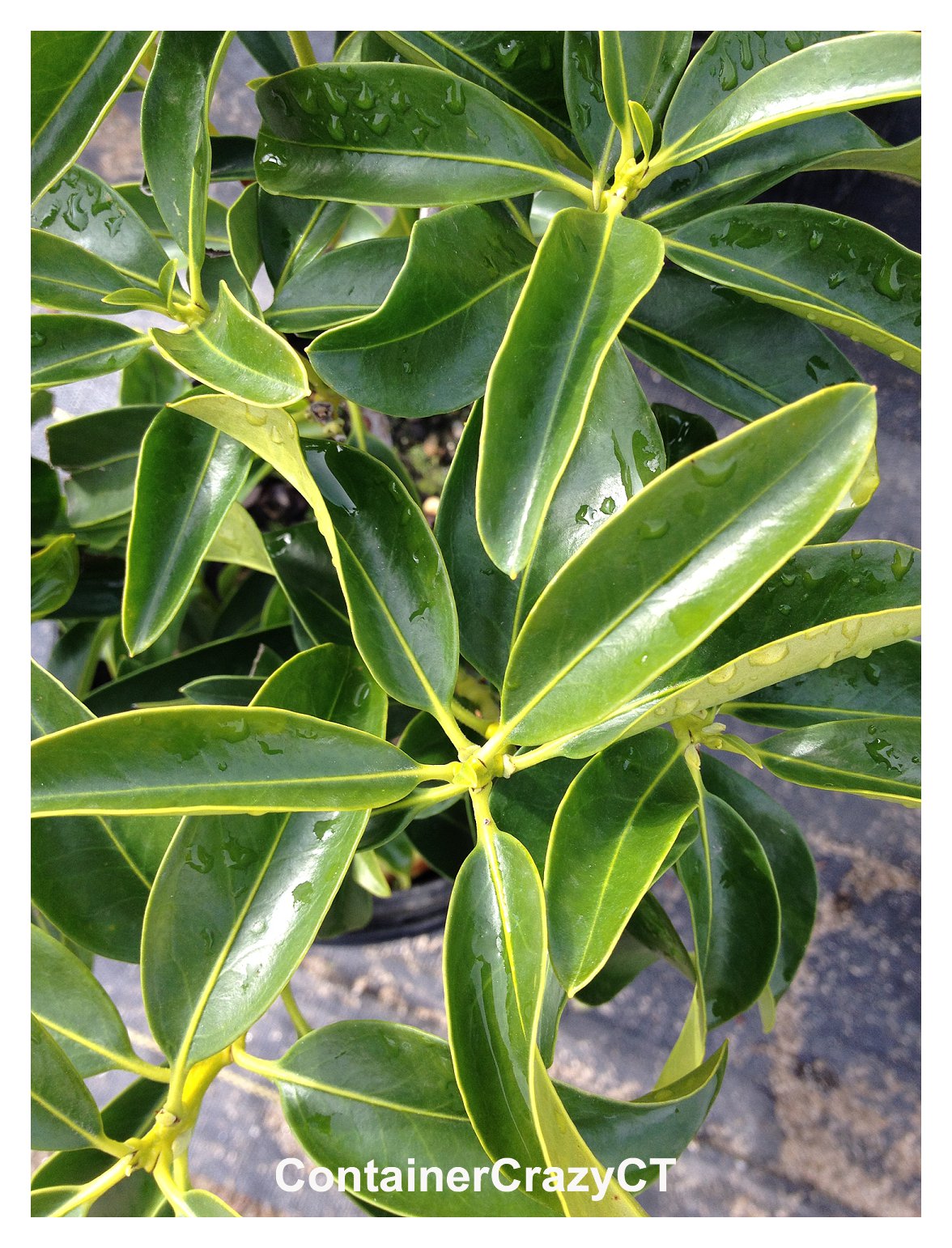
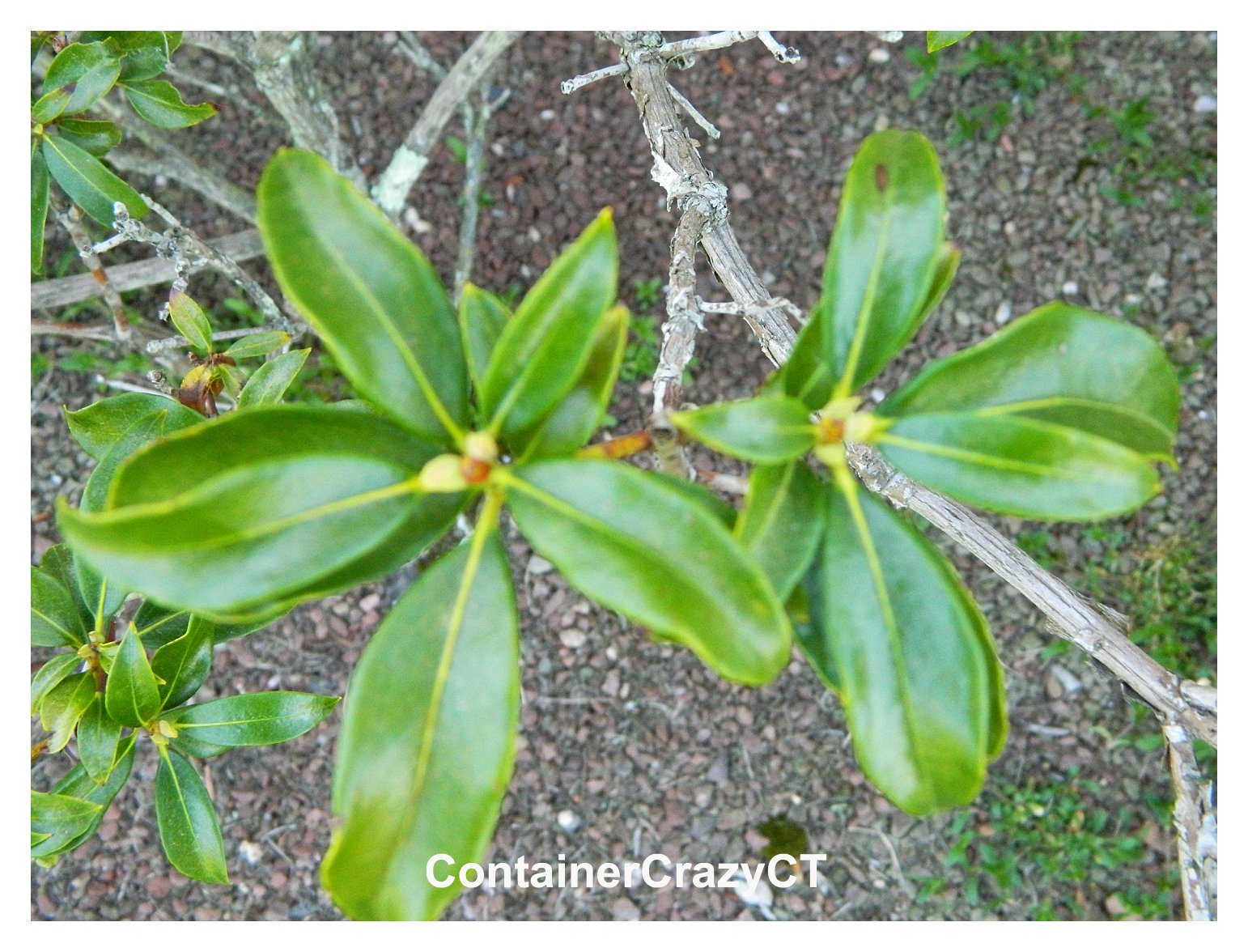
Making Your Own Evergreen Creations – This Saturday at the Mini Workshop!

1 Comment

Just a quick heads-up – If you missed the big Holiday Evergreens Creations Workshop this past Saturday, there are other opportunities to make your own evergreen creation – via appointment this week or attend the Mini Workshop on Saturday, December 12th, 11 am.

(Note, the start time is 11 am but if you prefer earlier in the day, or later, just let me know – I realize everyone has super busy holiday schedules right now – we are flexible).

To attend Saturday’s class, email containercathy@gmail.com or call or text me at 860-977-9473. Payment in advance is not required – You may pay at the class, but a confirmed headcount is needed, so sign up by Thursday of this week if you wish to join the Mini Workshop on Saturday.

We have fresh beautiful greens to make a Kissing Ball, Candle Centerpiece, Wreath, or Candy Cane Wreath.

Here’s more details!

Open Studio Days – The week following the Big Class, if you prefer a one-on-one instruction by appointment, you may contact Cathy T to book a date and time – any time of day the week of Dec 7th, Monday through Dec 11, Friday.  This is convenient for those having time during the day or prefer to make an item after work or even before work.

Saturday’s Mini Workshop

Saturday, December 12th, 2015 – The Mini Workshop:  This session is perfect for anyone, nice for mothers and young daughters, or anyone that could not make the Big Class. It is quieter, no festivities other than making your beautiful evergreen holiday items with more one on one personal instruction directly since it is not a big crowd. You will learn the techniques and tricks to making gorgeous greenery arrangements and take home your holiday creation.

Cost: $37-$40 based on item you elect to make.
See the menu bar for descriptions.

Location: 72 Harrington Road, Broad Brook, CT 06016

I hope to hear from you! Cathy Testa

860-977-9473
containercathy@gmail.com

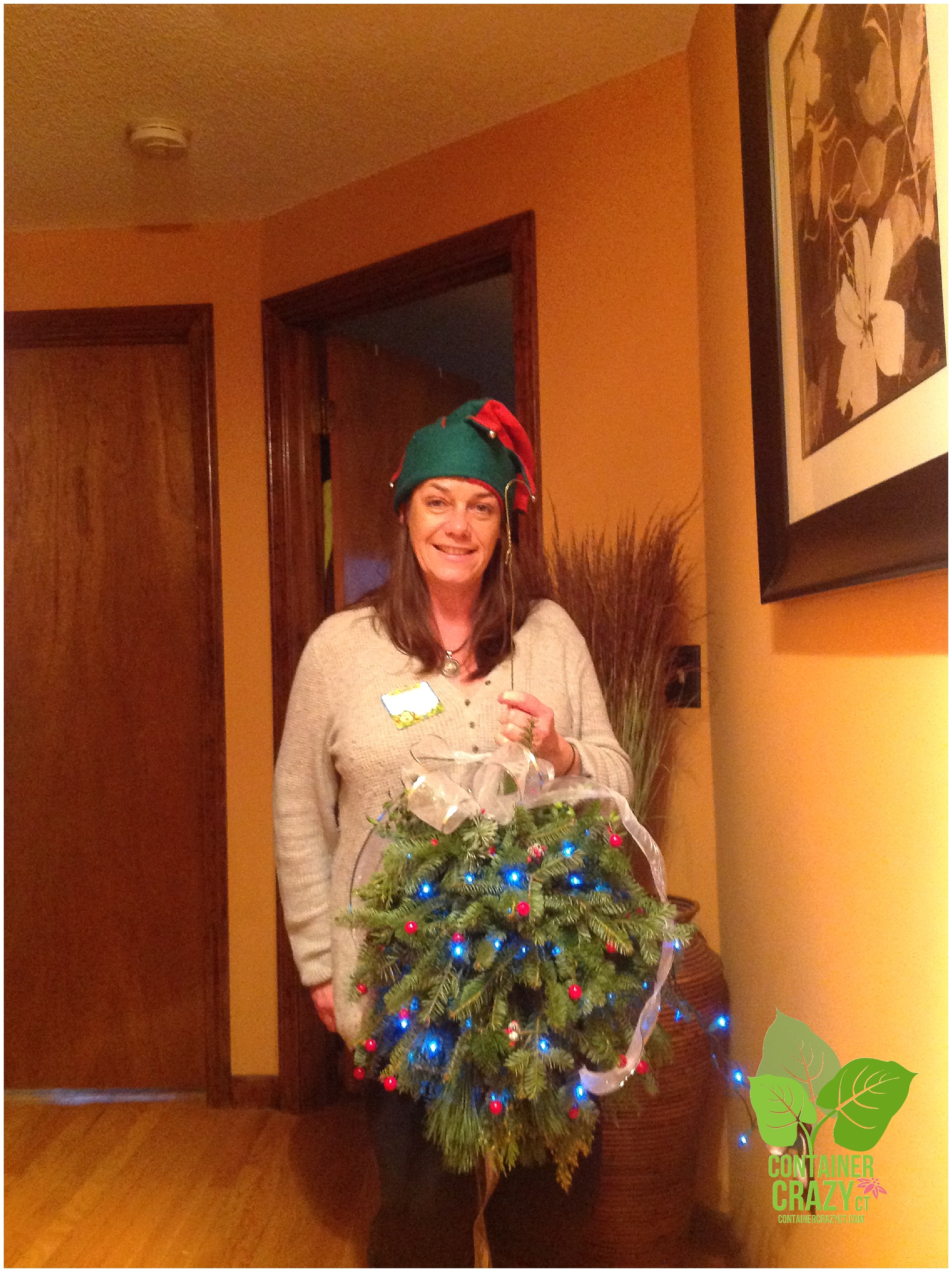
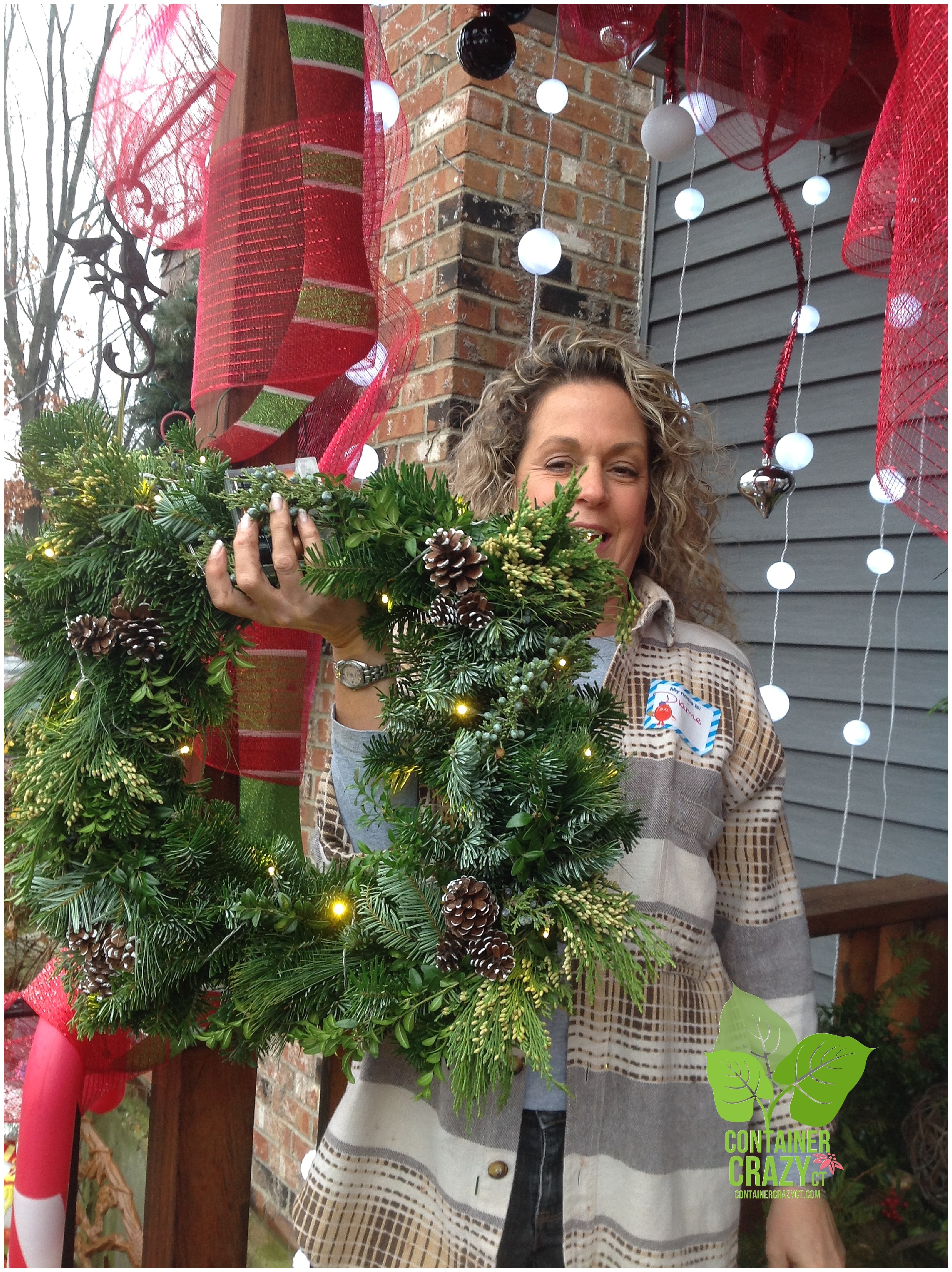
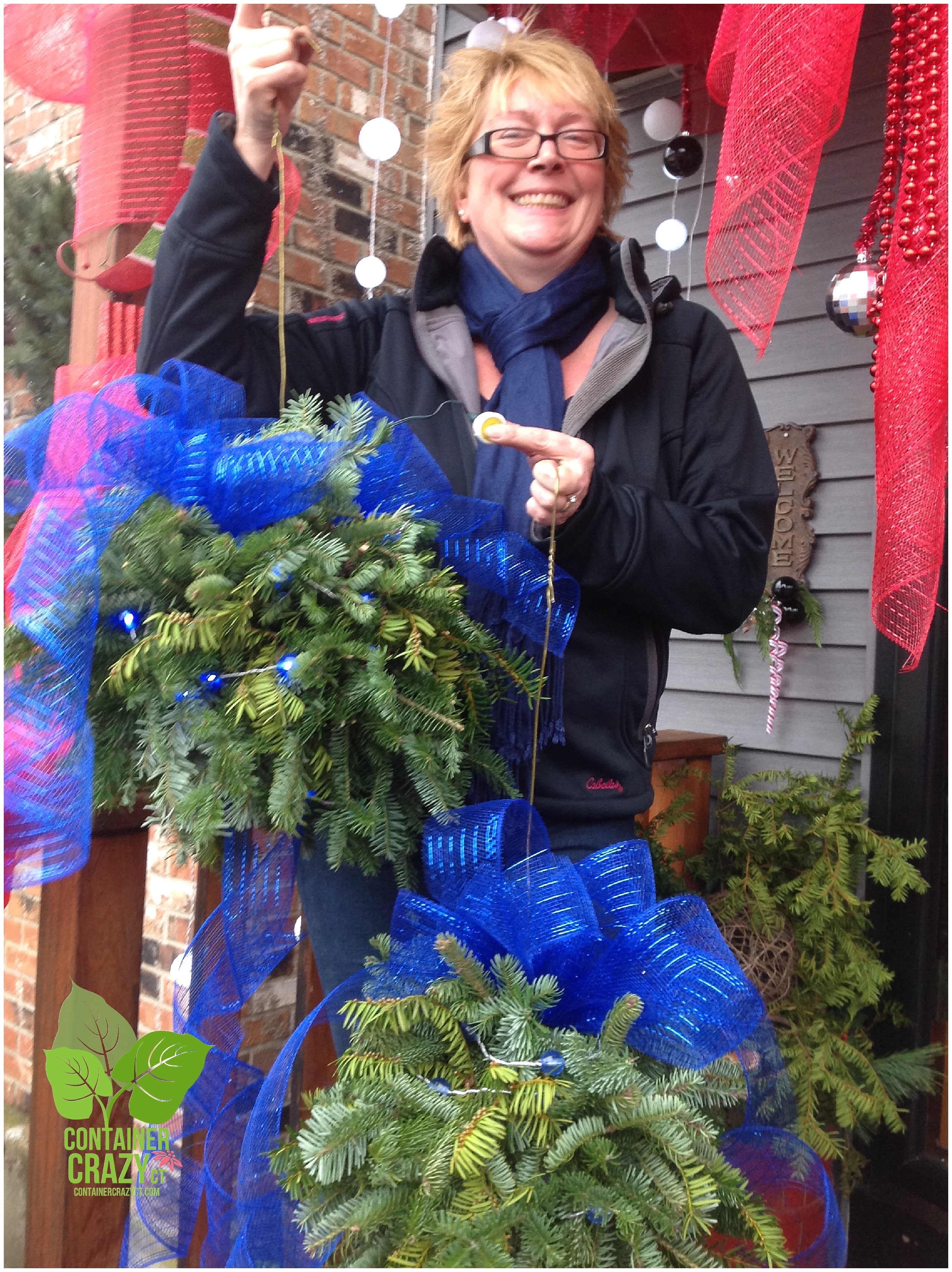
Photos by Bonnie of the Home Place Blog. That’s her on the top left in pink! She is wonderful and shares posts about food, events, and fun happenings in Connecticut. Check out Bonnie’s award winning blog for more on her amazing topics about places to eat and enjoy in Connecticut.

Keeping Holiday Greens Fresh after Assembly

2 Comments

Hello Everyone,

The temperatures are getting a little colder here in Connecticut and the misty rain is making things outdoors a bit damp, but it will not dampen my spirits – In fact, it will make them even brighter.

As my big Kissing Ball and Holiday Evergreen Creations class is approaching – in only 3 days – I welcome the colder temps and feeling of winter – It also helps me to maintain the goodness of my specially ordered mixed evergreens for this weekend’s class.

This year, we have lots of newbies in my workshop. Some of them seem a little nervous, saying or texting things like, “I’m not crafty” and “I want to sit in the front of the class,” but I believe they will surprise themselves.

All my attendees end up making something amazing and they impress me every year with their talents as they decorate the kissing balls and wreaths. I learn from them as well.

FM Kissing Ball Red Ribbon

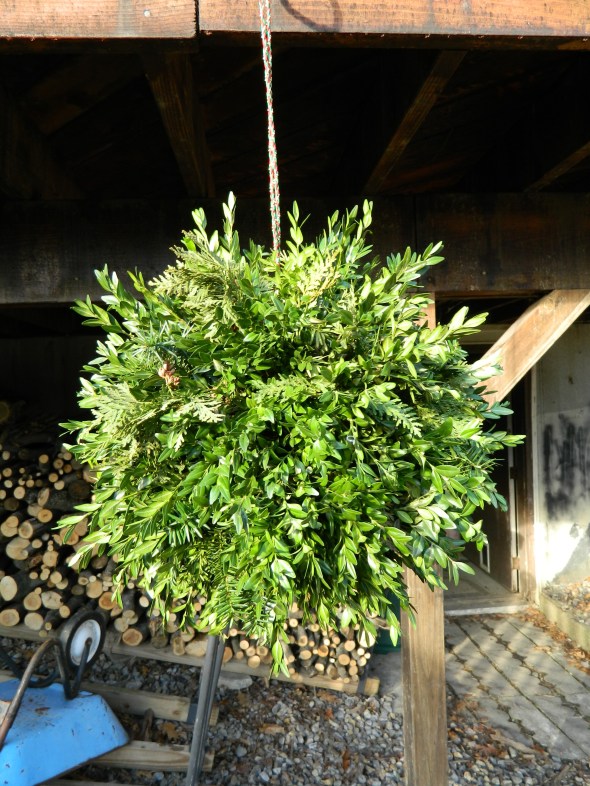
Kissing Ball with Bow Created at ContainerCrazyCT Classes

But after the class, they may be wondering, how do I keep everything fresh?

For starters, the cold weather really helps – and it best for them to keep their newly made holiday arrangements with fresh evergreens outside.

The natural moisture from misty winter rains and upcoming snow falls outdoors keeps the greens just right. Colder is better to retain needles.

But, the type of evergreen also determines how it will fare in the weather after being cut and inserted into the mechanics.

For example, fir and balsam trees cuttings last very well for a long time. Their needle retention is pretty good – that is why people like them for Christmas trees.

Keep Your Holiday Creations Outdoors

It is also important or helpful, but not mandatory, to keep your wreath or kissing ball out of direct sunlight and wind. The wind may dry out the needles somewhat faster than if located in a protected place outdoors.

You may hang your kissing ball indoors – like from a ceiling fan or chandelier, however, it will dry out faster in a warm house. If you really want to do that for décor during your festivities later in the month, a good tip is to hang it outside the weeks or days before so it stays cold, and move it to your indoor location a couple days before your holiday event.

And be sure to keep any holiday arrangements with fresh greens away from hot rooms heated by wood stoves. That will surely dry them out.

I also recommend any candle centerpieces are kept in the coldest room possible before you display them at your holiday dinner table.

Kissing Ball on VDay

Fake Red Carnations on a Regular Sized Evergreen Kissing Ball

I find my kissing ball, hanging outside by my steps lasts all the way into February with no problems at all. I remember one year, it was hanging there on Valentine’s Day covered with snow and red fake carnations but it was soooo beautiful even then.

Pick Them Fresh

It also helps if the greens are purchased or picked fresh of course, which is one of my goals every year for this workshop. Timing is everything.

If you get greens from your yard, wait until you are ready to arrange them to cut them from your branches, or do it the evening before if possible, and take them when it is cold outside (not warm). Also, I recommend you cut them before any major wet type freeze falls on leave leaves or needles – so be sure to watch your weather forecasts.

Boxwood Plain

Regular Size Boxwood Kissing Ball – Color Lasts a Long Time!

Other types of evergreens which last and have a nice color in mixed arrangements are juniper, incense cedar, white pine, and as noted above, fir and balsam. The white pine may dry out a little quicker than the others, I have found but no worries, all will be fine.

Hemlock branches are very pretty and they tend to arch which I like in container gardens outdoors for holidays, but they will loose their needles a little faster than other types.

Yew, with its dark green needles, is a great candidate and lasts. For some reason, it is not as popular but I think it looks marvelous and adds a layer of texture in the arrangements.

One new item this year at my workshop, which will be a surprise to my attendees unless they are reading this blog post today, is berried Eucalyptus. This has a beautiful blue coloring and texture – and I’m excited to share it with everyone on Saturday.

Boxwood is another excellent, quality green in arrangements for the holidays. One big benefit is they have no sticky sap and they maintain their dark color even if they get a little dry over time. I absolutely love the classic look boxwood cuttings give to kissing balls and wreaths.

Boxwood along with Pine may be soaked in water prior to your day of arrangement – if needed to re-hydrate, but often it is not required.

Holly can be a little tougher to work with because those spines are SHARP. And holly may turn black if it gets wet and then freezes, but I don’t see this situation too often.

By the way, this year, we have variegated Holly – wait til you see it – oh, la, la, fa, and la-lah. Its gorgeous.

One year, perhaps next year, we will add magnolia leaves to the mix – they have shiny tops and brown undersides to their leaves, and it adds a really nice texture to holiday evergreen arrangements, especially on wreaths.

There are anti-desiccant type products you may spray on your greens to help retain moisture, but to be honest, I don’t bother with that – and everything has lasted well for the holidays.

Boxwood Bow III

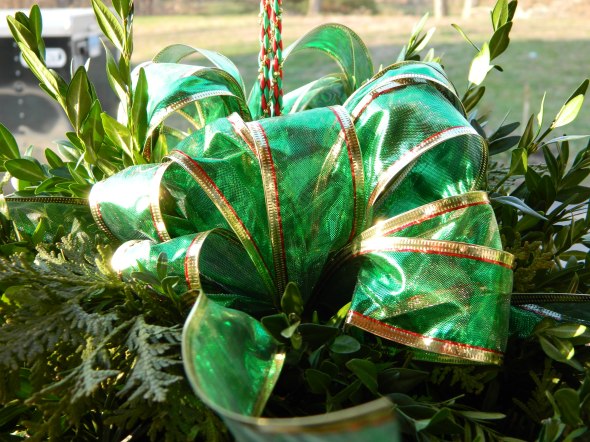
Bow on top of a Kissing Ball

Last but not least, cutting the ends of your greens from fresh branches with “good sharp pruners” is important. It not only helps with the insertion into your kissing ball mechanics, but allows water uptake if you set your greens in a bucket of water the night before or if you are using hydrated floral foam.

Timing is Everything

Timing is probably the most important of all (along with cold temperatures).

Everything is timed in the background – lots of busy growers, distributors, and buyers do everything they can to time the harvesting of greens at the right time to shorten the length it sits out – and if too early, that’s not good – if too late, not good either. It has to be just right.

I do my best and feel like Mrs. Kissing Ball Clause as I prepare all for holiday workshops – I feel this magical spirit as I get everything ready – maybe that is what drives everyone in the business of selling Christmas trees, making wreaths to sell at stores, and arranging workshops. They end up working outdoors in the cold or rain but keep on. We are those elves doing whatever it takes to make all merry.

See you soon,

Cathy Testa
www.ContainerCrazyCT.com
860-977-9473
containercathy@gmail.com

Container Crazy CT has Gift Cards Available – See the Menu Bar above – A Great Gift Redeemable Towards Future Workshops!

We have many exciting new workshops in 2016 – See “February’s Floral Design Class” with two experts in the horticulture business of floral design. See “April’s Art class”, and also May for the “Container Gardening workshops” – All hands-on and fun, educational, convenient. Classes fill up early too – so gift cards are perfect to give to someone who will enjoy this type of event at Container Crazy CT located in East Windsor/Broad Brook, Connecticut. And they may be used, of course, for next year’s holiday workshops. We hope to hear from you! Cathy Testa

A Walk in the Garden – A Blog to Follow

4 Comments

John Viccellio from Stallings, North Carolina is the author of a blog titled, “A Walk in the Garden.” I never met John in person, but I’ve been enjoying his blog posts for quite some time.

He regularly posts photos of cut flowers collected from his gardens which are arranged in vases. Actually, I believe his wife is behind the vase selection and arrangements. He refers to her as his Arranger, and she does a wonderful job.

In addition to the various vase photos on his blog, John writes about plants growing in his North Carolina gardens. From time to time, I’ve admired the plants he is growing which I wish I could grow here in my Connecticut yard.

However, John’s planting zone is a tad bit warmer than mine. He is in a zone 7 area, and I reside in 6a. But not is all lost, as some of the plants he can grow easily in his area are candidates for container gardens or patio pots in mine if they are not winter hardy here.

Vitex agnus-castus (chaste tree)

One day, I spotted a gorgeous photo of a chaste tree growing in John’s gardens via his blog posting. He had them ‘arranged’ in a vase and the soft blue to violet colors of this plant, along with its long narrow blue-green leaves situated like fingers from a central point, caught my attention and admiration. I don’t know why, but plant lovers just fall in love with certain plants, and this is one I’ve always liked.

I don’t see this plant (technically a deciduous shrub which can grow to the size of a small tree) offered for sale here in Connecticut often. They are hardy to planting zones 6 to 9 (or zones 5-9 depending on which plant reference you look up), so they are considered, what I call semi-hardy in our planting areas because they do not hold up well during harsh winters.

If the winter is not harsh, I guess your chances are better. Also, where they are planted matters in regards to the soil and exposure because they prefer full sun and well-drained soils. Bottom line is the plant will die back (dies to the ground) in severe winters. Its roots may survive to regrow the following season if all goes well.

Chaste Tree Cuttings by A Walk in the Garden blog

Chaste Tree Cuttings by A Walk in the Garden blog

The only other time I’ve seen a beautiful specimen of the chaste tree was when I toured a Connecticut garden via the Connecticut Horticultural Society’s programs. It was growing in Steve Silk’s amazing gardens amongst other trees and shrubs on his property in Farmington, Connecticut. Steve is a former newspaper photographer, travel writer and was managing editor at Fine Gardening magazine. He held the role of President for the society for several years.

Steve also has cool tropical plants in container gardens staged in various areas on his property, which is why I was happy to be seeing his gardens that day during the tour. But as I walked his yard, I remembered spotting the chaste tree and running my fingers along the plant’s foliage, again thinking how I wish I had one of these trees. I should have asked Steve how he managed to keep one growing in his garden due to it being a bit sensitive to our winter climate.

Of course, an alternative option, when desiring a specimen that is not totally cold hardy here is growing them for enjoyment in your container gardens during our summers and then overwintering them if possible in frost free places in the fall and winter. Many times semi-hardy plants will survive this way.

I can envision this chaste tree right now growing in a large container garden, and would pair it up with other plants showing off soft color tones, like pink, soft yellow, or other blue to violet flowering plants. If you browse John’s blog, A Walk in the Garden, you will see the other color of flowering plants he put near his chaste tree in his garden, some were hot pinks which worked well.

This deciduous shrub is a long summer bloomer, and as John noted on his blog post, it can be deadheaded for re-bloom later in the season, which he has done for twenty years on his plant. It was a grown from a second generation cutting from its parent at his Aunt Martha’s home in Chatham, VA.

Muhlenbergia capillaris (pink Muhly grass)

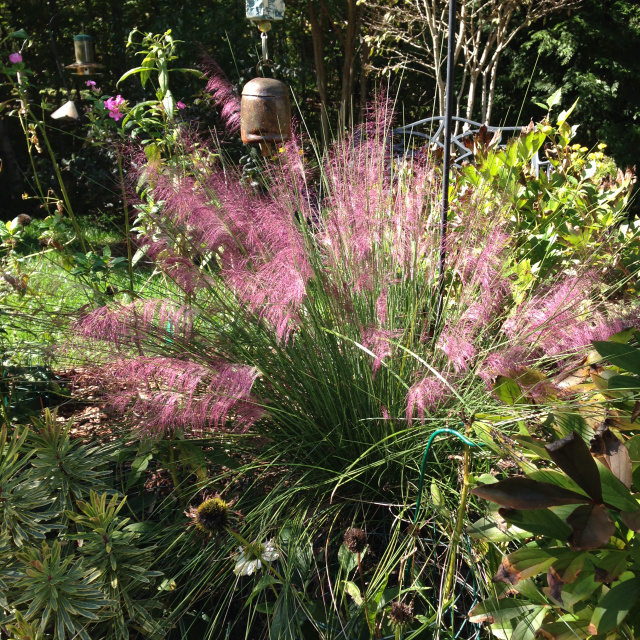
Then there was another day when John posted the pink Muhly grass photo from his gardens. Oh my God, I thought. I just LOVE that grass, and wish I had one here. The photo was especially beautiful because of how the sunlight captured the bright to soft pink colors of this fine textured ornamental grass in his garden, and I especially like how delicate this perennial ornamental grass looks and feels. Again, depending on which source you look up this grass, it is hardy to zone 6 or zone 5.

A Walk in the Garden muhly grass light

John noted that its a native, so his climate is ideal for its growth.”In October it was glorious,” he wrote, “…as the sun seemed to ignite its pink seed clusters.” I couldn’t agree more, it is electric – Just look at his photos!

Photo by John Viccellio

Photo by John Viccellio

Ah, I thought as I read his words and admired the photos he posted, I can imagine this vision on a fall day. Selecting a spot where the sun would hit it would be ideal in the landscape or garden, or again – in a container garden or patio pot. I can envision it in a cobalt blue pot, can’t you?

One day, on a day which some bloggers call, “Wordless Wednesday” – John posted two photos of his pink Muhly grass with no words or text because, it was “wordless” Wednesday, and it was enough to see just the photos, let me tell you – this grass is captivating.

A Walk in the Garden blog shares beautiful photos of the grass growing in their gardens.

A Walk in the Garden blog shares beautiful photos of the grass growing in their gardens.

John has been kind to follow my blog, and I follow his – but I really don’t remember who discovered whose blog first. So, recently I asked him to answer these following questions as a fellow follower – and wanted to share his blog site with my readers so they may enjoy his gardens too.

Why do you blog?

“I started the blog almost two years ago coincident with my self-publishing of my first (?) garden book (Guess What’s in My Garden!) in hopes that it would spur sales of the book. Over time, however, I began to respond to a number of garden memes out there (and photography), and that has been pretty much the direction I have been going. It is fun, and am getting to know folks all over the world. I have been thinking a lot about how I can get more info about the book into the posts and perhaps spur a few more sales. I have spoken at several garden clubs this past year, and that has gained me some blog followers and a few sales. I love the involvement I have now with fellow gardeners and fellow bloggers around the world.”

What attracted you to Container Crazy CT’s blog?

“I was attracted to your blog for several reasons. I realize you are using it as a vehicle to support your business, and I have enjoyed seeing your business related posts. It’s just a bit far for me to sign up for some of your workshops. I also have liked your hands on posts (e.g., pot arranging, etc.). Your warm personality shines through what you write and present…I can sense your smiling.”

What is your favorite plant or way of gardening?

“I have lots of favorite plants…particularly iris, peonies and azaleas…but my favorite way of gardening (because of our soil) is raised beds. I also very much enjoy creating things for the garden…stone walls, trellises and clematis poles that I have designed and constructed.”

Thank You for Your Service

And by the way, John Viccellio is a retired U.S. Navy Veteran – so, in addition to thanking him for his online contributions, gardening style, and demeanor expressed on his blog regularly, I’d like to pass on a sincere thank you to John for his service to our country in honor of Veteran’s Day which was two days ago on Wednesday.

Cathy Testa

www.ContainerCrazyCT.com
860-977-9473
containercathy@gmail.com


Getting Red, Orange, and Yellow in Your Fall Landscape

6 Comments

The fall colors we have been experiencing as the trees’ leaves changed to red, orange, and yellow this year in Connecticut have been so spectacular, well – it is nearly impossible to put into words.

There have been moments when driving where you may have been blindsided by a turning in a curve when you see the beauty of it all. A street that is ordinary in your hometown has suddenly turned into a light show of vibrant eye candy, and you may have pulled over to take photos, but many times, those photos do not capture what you see through your eyes or through your polarized sunglasses against the clear blue skies and bright sun.

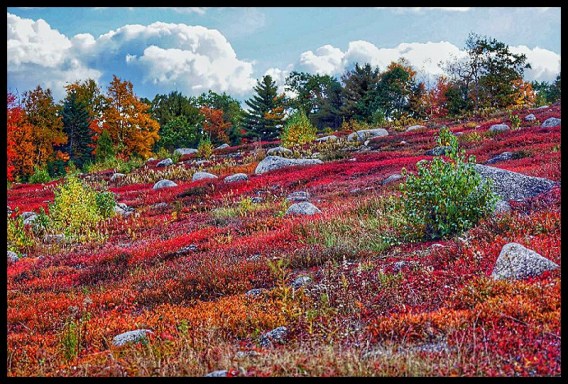
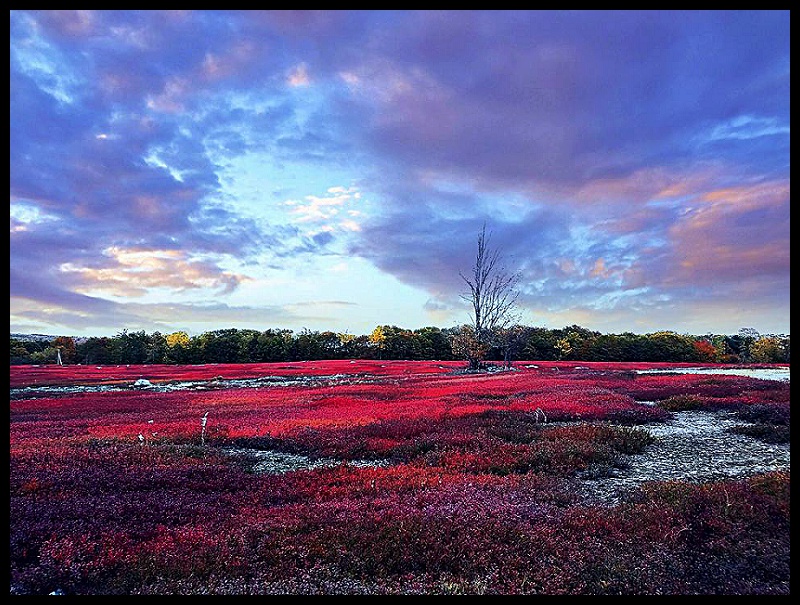
However, this month, a friend posted a photo which blew me away. Not only were the trees covered in the mixed colors of fall, but the ground was as well. Vibrant reds from low growing wild blueberry bushes provided an affect one doesn’t often see – unless you live in Maine, which is where my friend resides.

PJ Walter Photography

This friend, PJ Walter, is a person I met many years ago when my husband and I stayed at his inn which he co-owns with his partner, Frank. When we met PJ and Frank, the bond was instantaneous – Let’s just say, they are great people with a wonderful inn located in Rockland, Maine, called the LimeRock Inn. Check their place out – Steve and I highly recommend it for visits in that region, which we have done many times when attending the North Atlantic Blues Fest in summer.

During our first time staying at the LimeRock Inn, PJ did something special for us. He knew Steve and I were taking a sail boat ride in the afternoon, so he hiked out to one of his viewing spots and took a photo of us on the boat as it was sailing by. We didn’t know he was there, so when we arrived to our room that evening, the photo was already printed and matted for us sitting on our bedroom side table – what a surprise and gesture by PJ.

This is how we were introduced to PJ Walter Photography, and many of his works are hanging in the hallways of the LimeRock Inn for their guests to enjoy. PJ has the skill of capturing the magic of mid-coast Maine. He was posting photos this month of various Maine landscapes, and stating along the way how Maine’s fall colors were incredible and probably the best around New England.

One day, I responded by posting, “The colors are not too shabby in Connecticut either.”

But then on October 16th – PJ posted this brilliant photo below. It blew my mind.

It also blew the minds of many of his followers and friends. Comments were posted, such as:

“Looks like an impressionist painting.”

“BELISIMO!!!!!!!!!!!!!”

“That hill is on fire, yo!”

“Interesting that the colors are in the ground cover as well as the trees.
Do you know what gives it the red color?”

PJ responded to the question by providing a link explaining why the ground color is painted in red (see Wild About Blueberries blog), and also gave a hint of the location, posting it as: Route 1 just north of Bucksport. 

His photo was shared over 55 times and a local television station in Maine shared it one evening. One may argue he should have kept it so well guarded to avoid a non-credit situation, but how can one not share such a beautiful sight? We are so glad he posted this photo and many others this season which has been particularly colorful from here to Maine. To see more of his professional photography – be sure to visit his website, PJ Walter Photography.

Low Growing Reds

As PJ pointed out to his fellow followers, the reds on the ground are wild low-growing blueberry bushes. Many people desire the red color in their fall landscape, and for years, the burning bush shrub (Euonymus alatus) was recommended for its bright scarlet color in autumn, but this plant is invasive. It spreads aggressively in the woodlands (where it stays green in coloring due to mostly shade situations) and overtakes areas, out competing local native plants. Blueberry bushes are the perfect alternative – giving your fruit in summer, and as you can see from PJ’s photo, the bonus of providing a powerhouse of red to scarlet coloring in the fall season, especially this year. While these shrubs are wild and low in Maine’s natural landscape – many blueberry shrubs can be purchased here in Connecticut which grow taller, from 3-6 feet. There are highbush, lowbush, and rabbiteye blueberries – and as long as you plant them in acidic soil they desire, blueberries are rewarding. Ask your local nurseries about them next time you visit to browse their offerings.

Taller Growing Reds

Another good option is planting a Japanese Maple (Acer palmatum) to get red color in your fall landscape. There are many varieties, heights, and styles to choose from, but what you may not notice is the red coloring of Japanese maple leaves intensify in the late fall, turning to a glowing red. Some cultivars you may be familiar with are the ‘Bloodgood’ maple which grows to about 15′ in 15 years, or ‘Crimson Queen’ with a more delicate, weeping form, and many more. Ask your local nursery staff to point them out to you next spring so you can capture some of that red in your landscape in time for next fall season. Japanese Maples like partial sun or filtered sun locations in moist, fertile, well-drained soil, and range in heights from six to twenty feet, so if you want a high level of red, plant one of these along with some blueberry bushes, and you are in business. And don’t forget, many smaller Japanese Maples are gorgeous in containers on your deck, they serve as elegant focal points, and may be protected in the winter months in garages to be returned outside the following season – something I did for several years with one of my smaller maples until I decided to plant it permanently in the landscape.

Another Red – Sourwood Trees

Another red tree, which I just have to mention because I find them beautiful, is the Sourwood tree (also called Sorrel Tree, Oxydendrum arboreum). It grows long drooping clusters of bell-shaped white tiny flowers in summer, which I think are splendid, and in the fall, the leaves turn a plum-red color. You can see the remnants of the white flowers against the red when you observe the tree up-close. It is a slow-growing tree, reaching about 20′ tall, requires a infertile soil, and likes full sun. I don’t see them often in landscapes, but when I do, and it is in the fall – the color is striking on the finely textured foliage. There is one located in Northampton, MA by a walkway which I took photos of this summer and Instagramed by Cathy T – I will track down those photos for you soon to post here later.

Oranges and Golds of the Sugar Maples

Sugar Maple spotted in Wethersfield, CT.

Sugar Maple spotted in Wethersfield, CT.

Fall Colors_0005

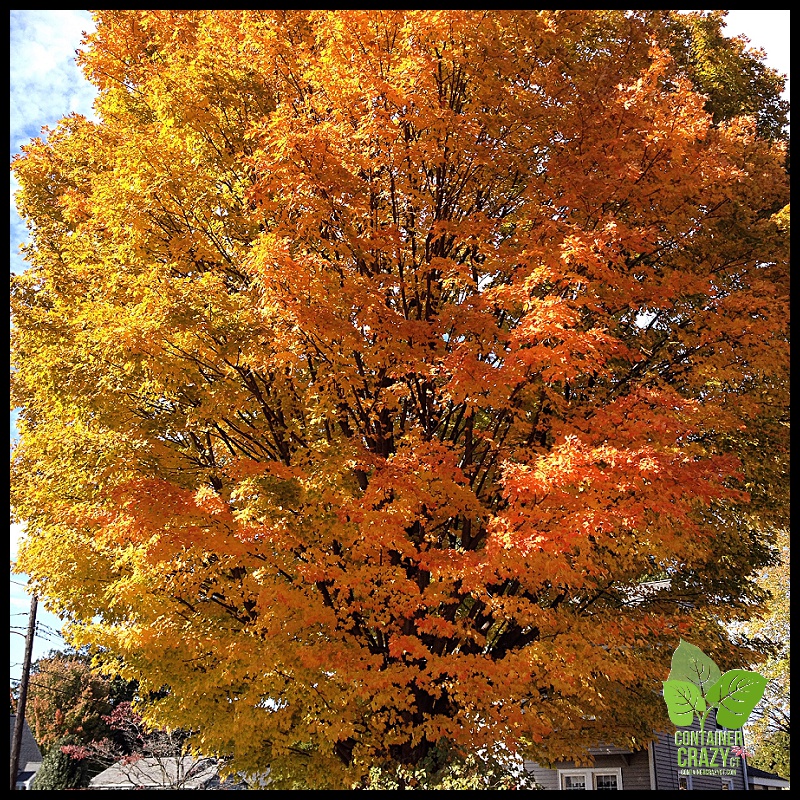
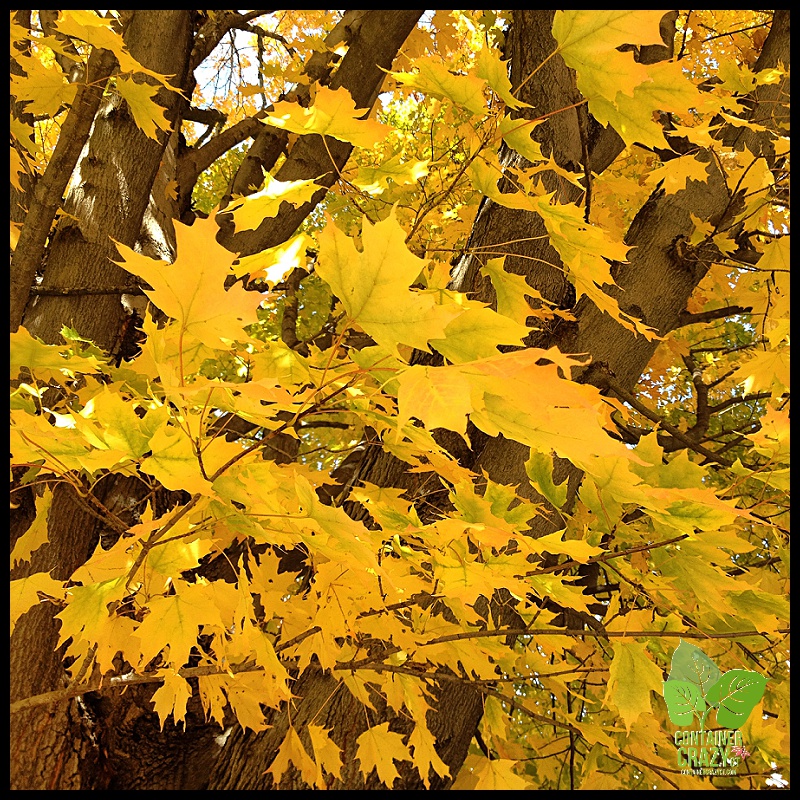
One afternoon while babysitting my niece, I drove past this maple on my sister’s street in Wethersfield, CT. My gosh, I had to walk to it to take photos. Sugar Maples (Acer saccharum) make an impact when in full golden color – and this year in Connecticut, they have been breathtaking.

Close Up of Golden Leaves on a Maple Tree

Close Up of Golden Leaves on a Maple Tree

When my sister arrived home from work, I told her immediately, “I went down the street to take photos of that maple – its glowing.” She excitedly responded with, “I am so glad you said that; when driving down the hill, as the sun hits it – it is absolutely beautiful every year.” The tone in her response was as if she way saying, gosh, you noticed it too – that emotion you feel when you see a colorful autumn tree highlighted by the sun.

It is moments like that when you embrace fall. It helps to prepare for the oncoming winter by providing a sense of transition – and the Sugar Maple is one to have for oranges and golden yellows in your landscape. It prefers full sun and moist, fertile, well-drained soil and can grow up to 60 feet tall and 40 feet wide. Although this one was located by a sidewalk, these trees do not like poor soil or road salt and do best away from those scenarios. They require a lot of space since they are big trees.

Ginkgo for Yellow

Another yellow to be had in the landscape is by way of the Ginkgo biloba (a deciduous conifer), which most people are familiar with due to its unique fan-shaped leaves and its medicinal benefits – however, did you know it turns a yellow color in the fall? Additionally, it is very tough, can take difficult locations, and the yellow leave color in the fall is lovely – until all the leaves drop which can happen quickly – as in one day when frost hits it – but it is worth it up til that point, plus you may choose to collect the fallen leaves for crafts. Ginkgo trees do not have serious pest issues. They tolerate road salt and drought, unlike the sugar maples. Oh, and if you go buy a Ginkgo at the nursery, remember to ask for only male trees (‘Shangri-La’ or ‘Autumn Gold’ are examples) because they do not produce fruit – the fruit on the female trees are stinky and people find the scent unbearable.

Pumpkins in Broad Brook, CT

Pumpkins in Broad Brook, CT

One afternoon, sitting inside by my kitchen slider, I was mesmerized by the colors of the trees in my own backyard – our carved pumpkins were a nice orange, and I thought, “Gosh, I wish I could capture those tree background colors in a photo.” This photo above was my ridiculous lame attempt with my iPhone. I guess the autumn colors will be sealed in our minds, or if we are lucky enough – captured by people, like PJ Walter, to be viewed forever. Here’s another one of his shots. Thank you PJ for the permission to post and show your photos.

Photo by PJ Walter Photography

Photo by PJ Walter Photography; FB Page in Mid-Coast Maine, 2015

Cathy Testa
http://www.ContainerCrazyCT.com
860-977-9473
containercathy@gmail.com

Go back

Your message has been sent

Warning
Warning
Warning
Warning

Warning.

CT Flower and Garden Show Photos – In Case You Didn’t Go Last Week

1 Comment

Hello Fellow Blog Visitors,

In case you didn’t make it to the CT Flower and Garden show last week in Hartford, here are the photos I quickly snapped from my iPhone. The funny thing is I thought I may not take as many photos as usual – but it didn’t take long for me to do so – There were so many wonderful photos to capture of landscape displays, garden art, handcrafted items, and more.

First Landscape Display Seen at the Show

First Landscape Display Seen at the Show

VARIOUS LANDSCAPE DISPLAYS BY LOCAL DESIGNERS

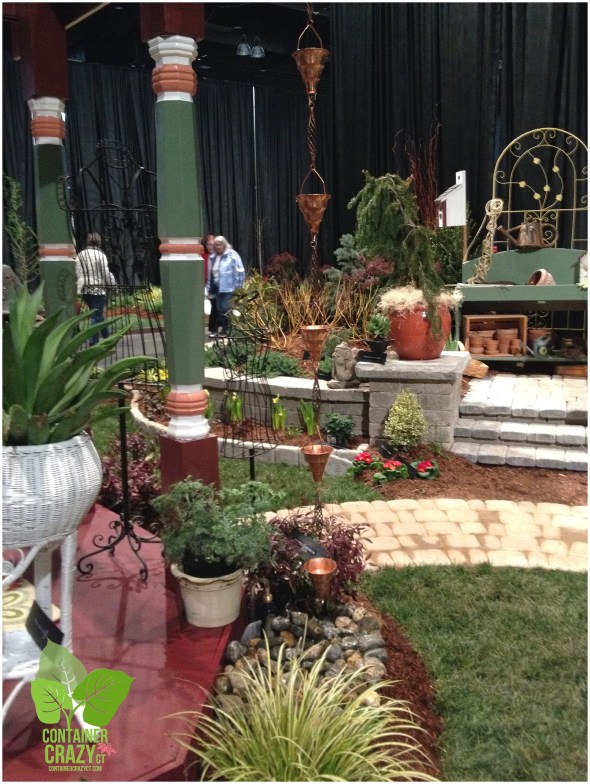
The first landscape display we saw was by “Supreme Landscapes.” I enjoyed the wooden structure, the clever fountain made with an old rusty re-purposed gardening item, and the large boulders edging the beds, which I reached down to touch to see if they were real – and they were. Amazing what they truck in and place at these displays.

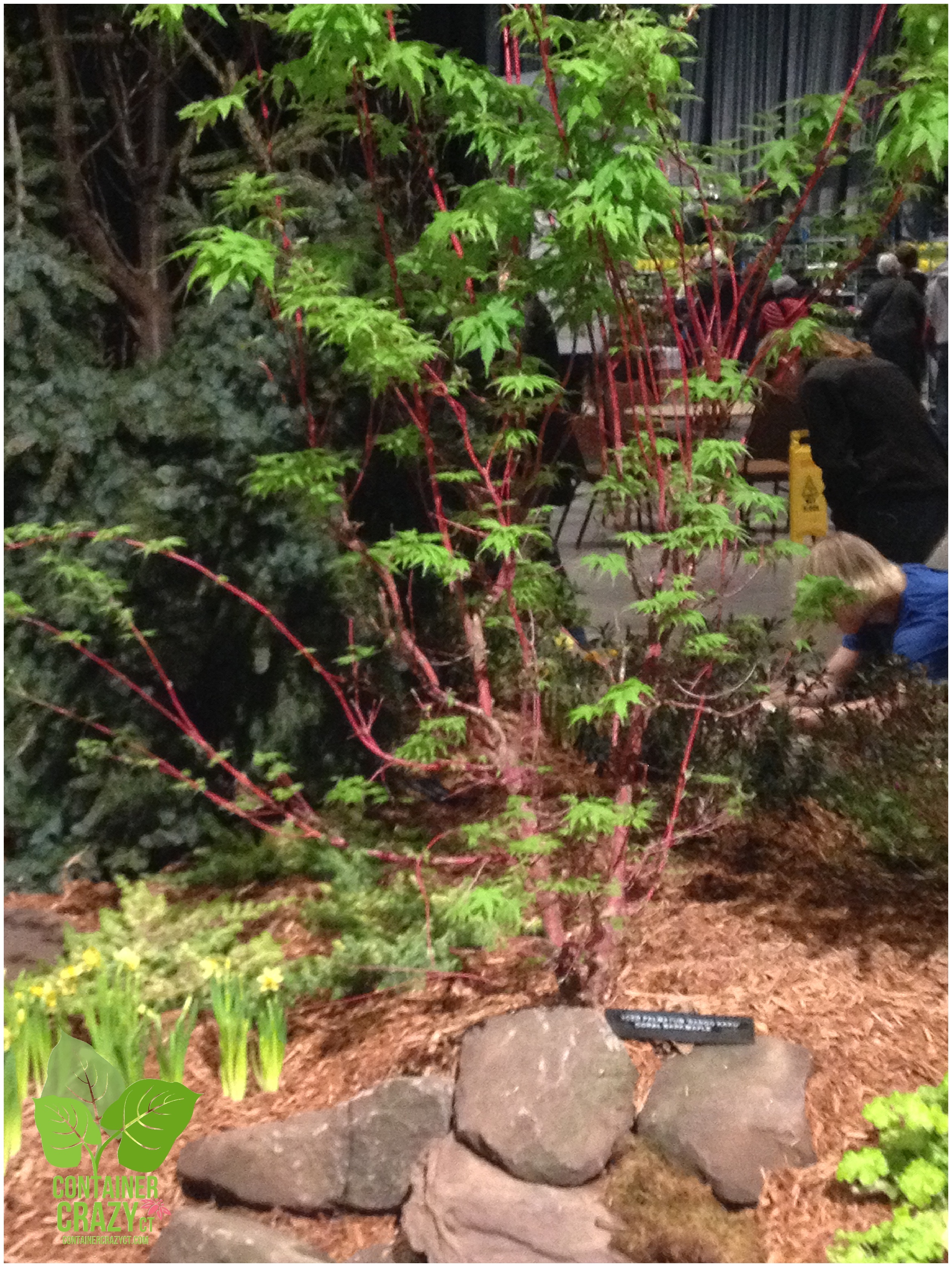
'Sango-Kaku' Japanese maple in a display

‘Sango-Kaku’ Japanese maple in a display

Supreme Landscapes began their landscape written description with the words, “…a staircase jumps out inviting you to go up to the rustic hideaway…”

And I couldn’t agree more. The staircase led your eyes up to a little wooden cabin, a place you surely would want to visit if you found it surrounded by flowering plants and gentle sounds of water falling from a nearby fountain. It was a wonderful scene to greet you as you entered the main landscape area at the show.
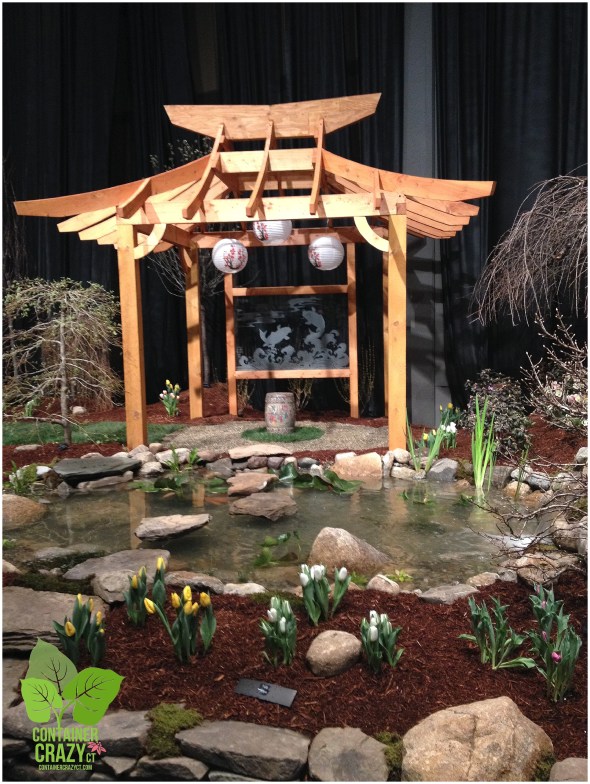
Landscape Display Aquascapes of CT

Landscape Display Aqua Scapes of CT

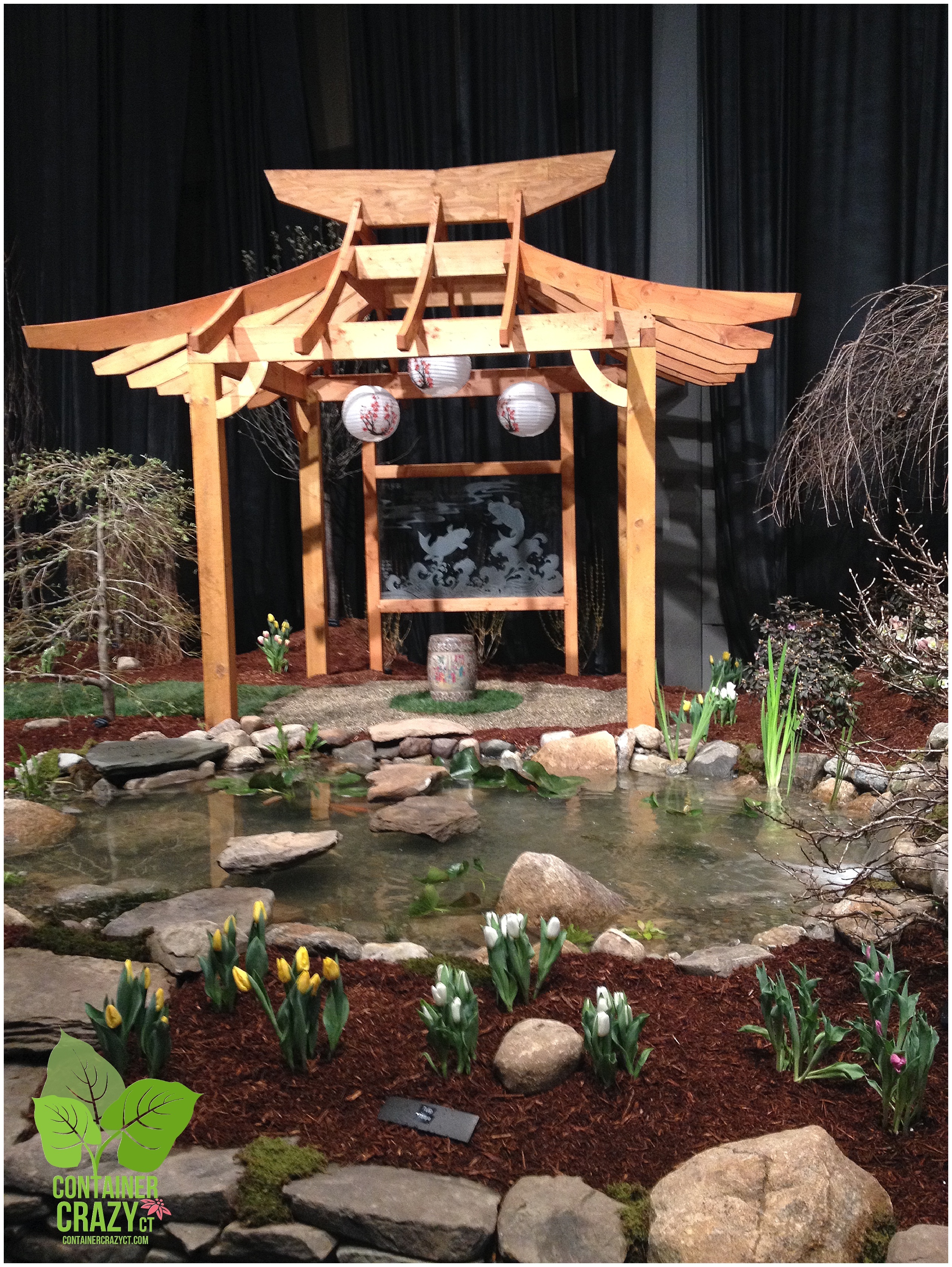
Around the bend, we came across “Aqua Scapes of CT” – Talk about a pagoda!

The main features at this display were all about water scenes, waterfalls, ponds, koi fish, and copper water features.

Here we were greeted by Mark Zinni of WFSB Channel 3; he noticed my small suitcase, and asked if I was coming from the airport.

When I explained I brought a suitcase along to pack my garden nick-knacks to be purchased at the show, he interviewed me along with my friend, Linda. It was aired later that evening.

And I loved what my friend, Linda, stated, “We need it, we need it to have a boost-because it is the light at the end of the tunnel…spring is around the corner.

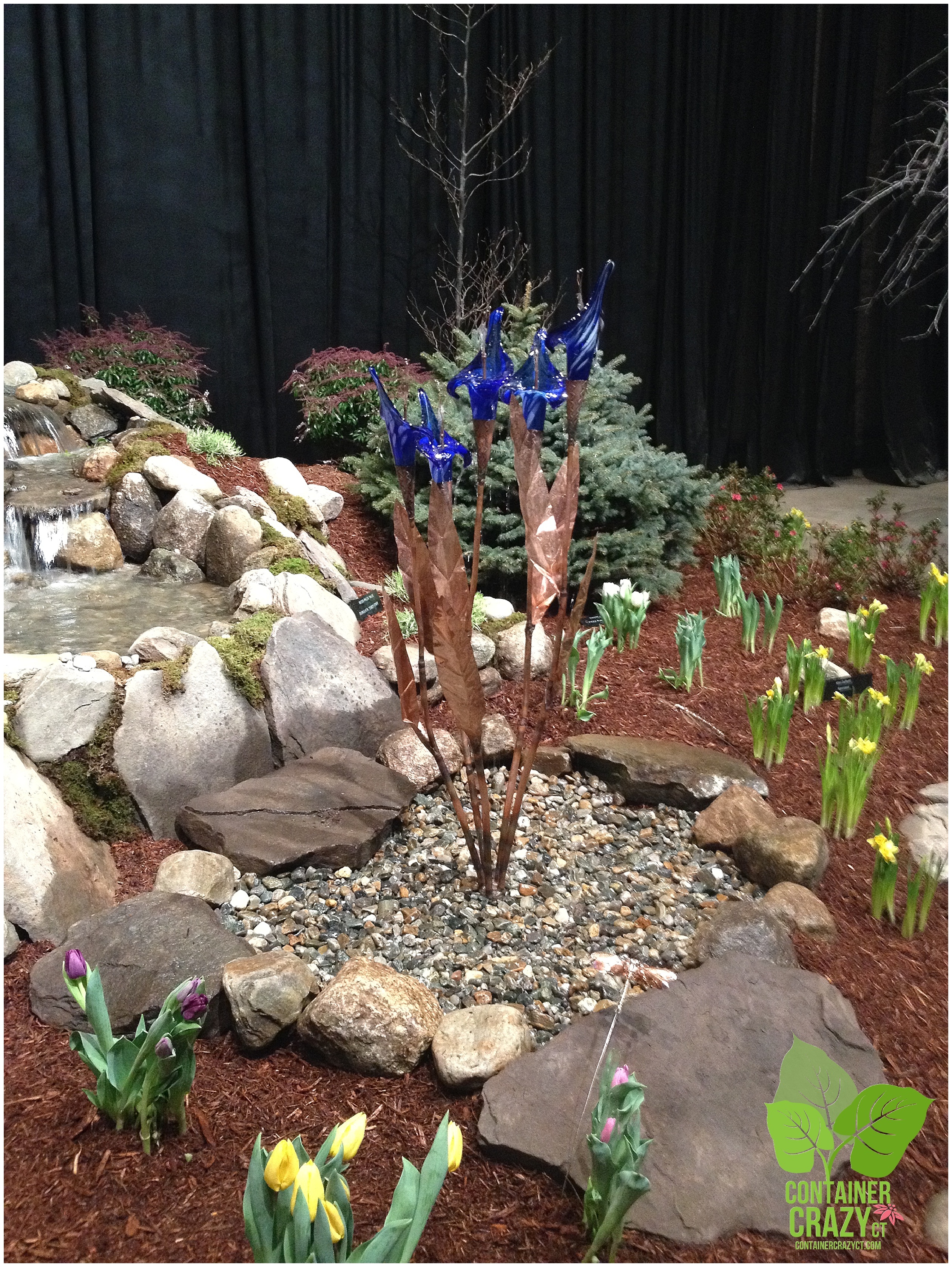
Aquascapes Garden Art - Blue Bottles

Aqua Scapes’ Display – Copper Garden Art among the Tulips and Daffs
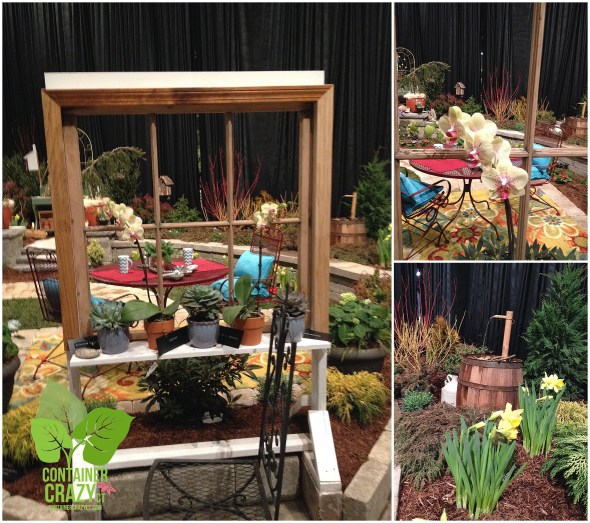
Encore Landscaping Display

Encore Landscaping Display

The next display which caught my eye – and was my favorite of the landscape displays – was by “Encore Landscaping.”

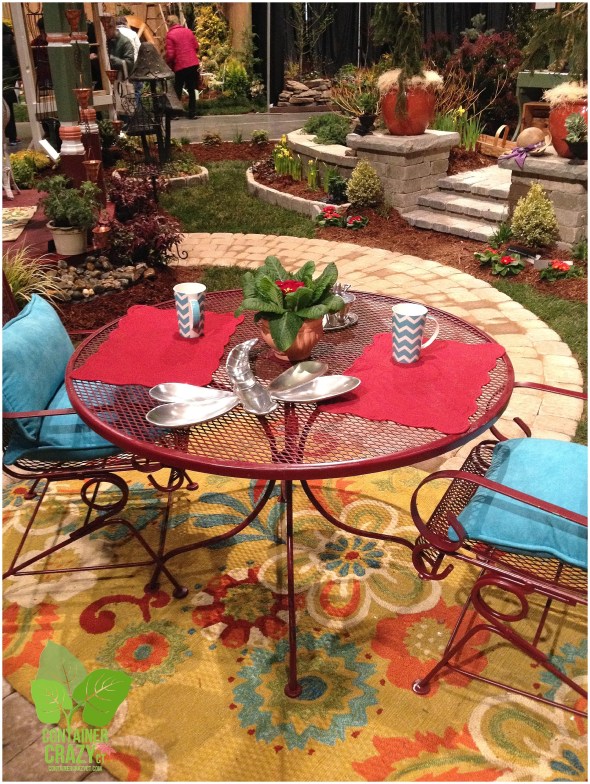
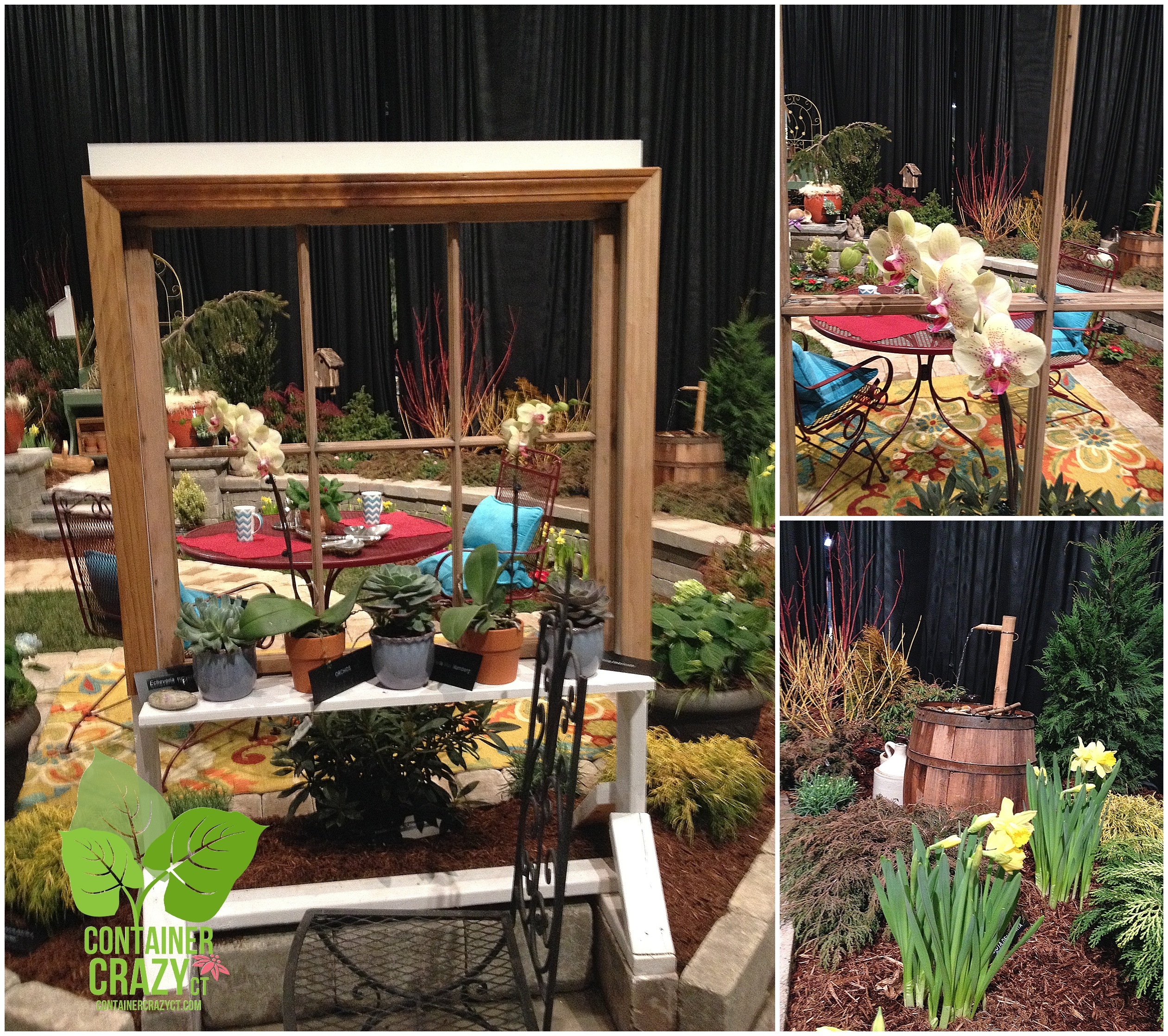
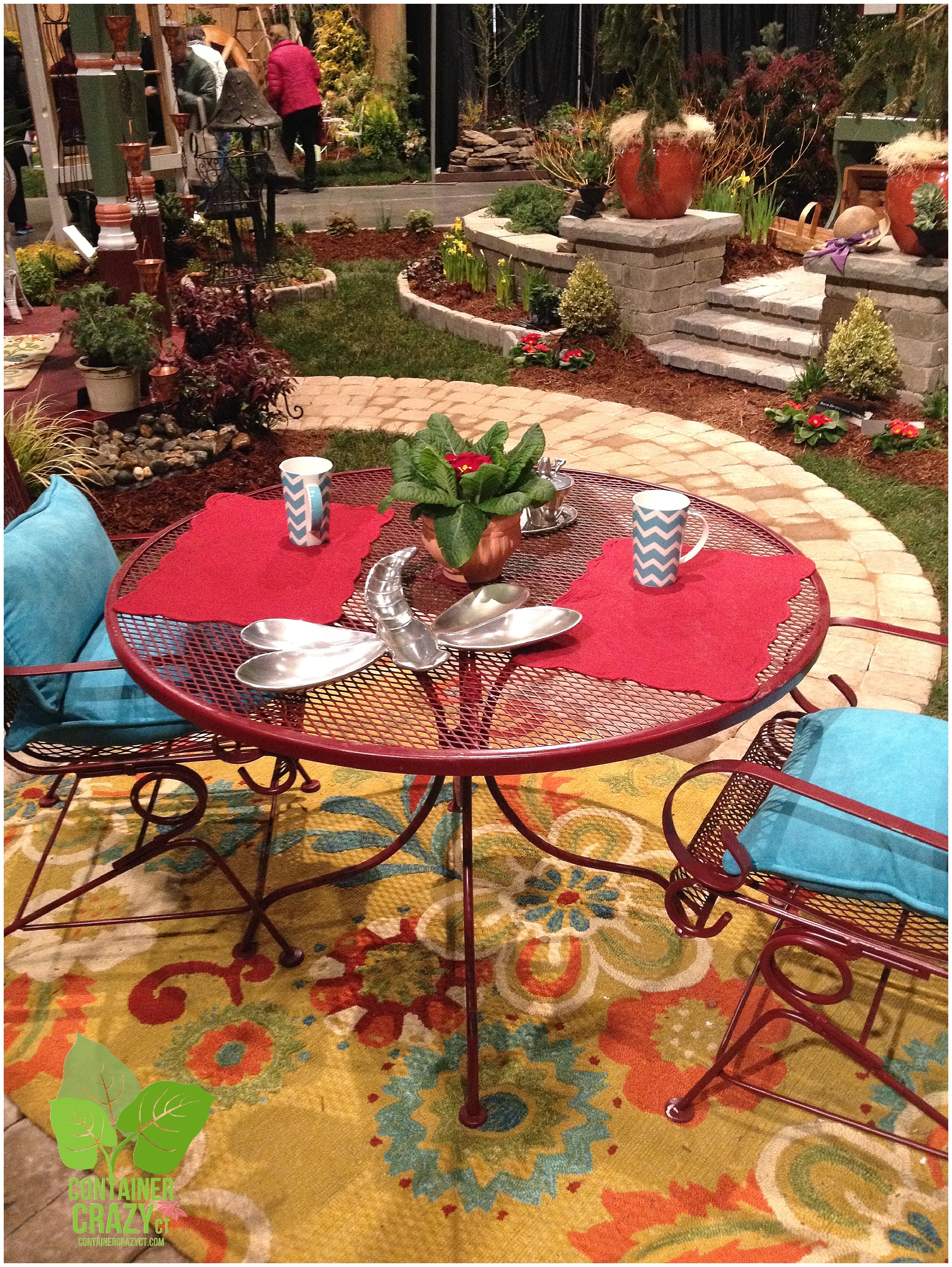
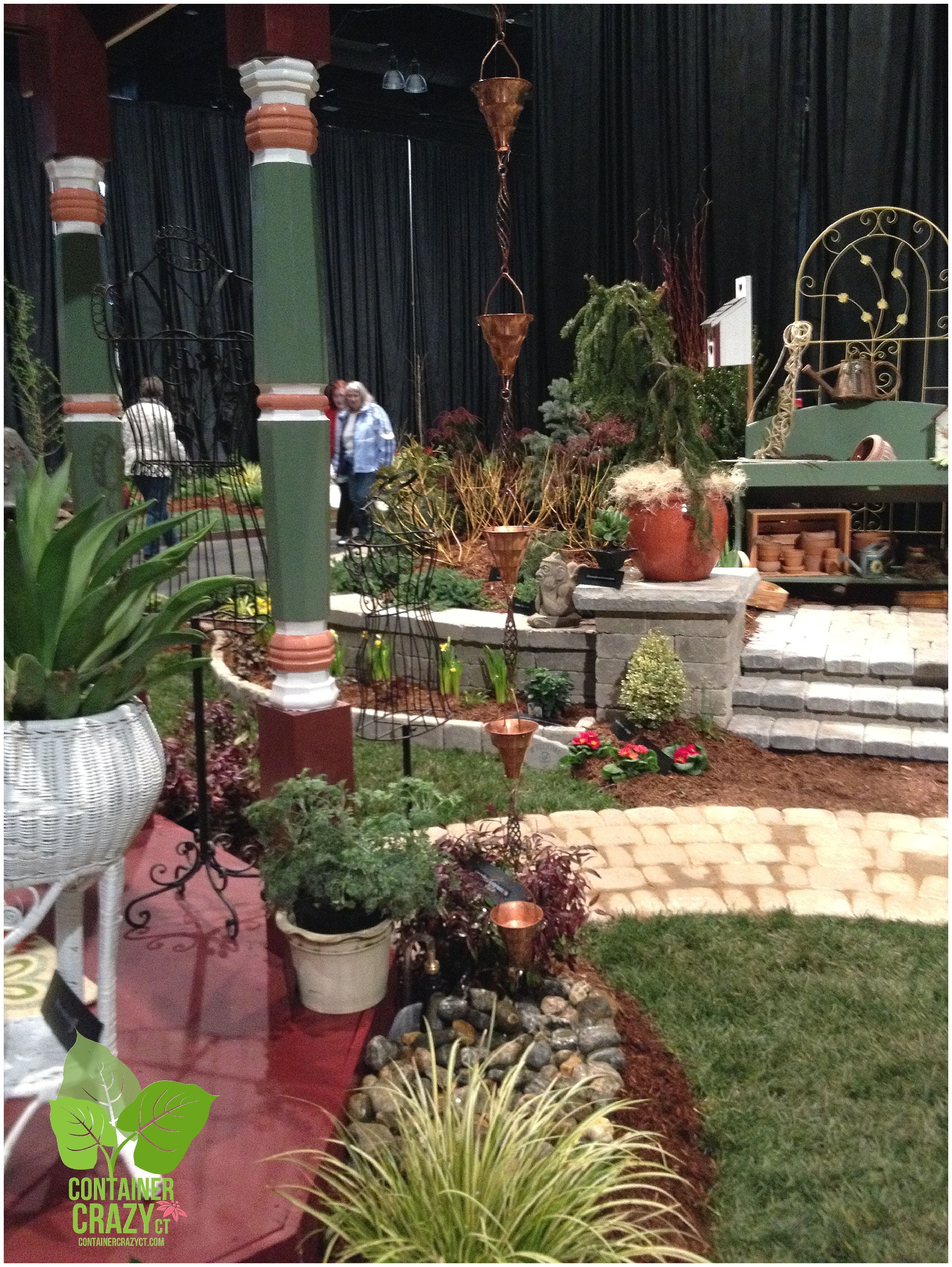
As I approached this display, it was the special touches which impressed me most – The window frame with decor, container gardens situated just perfectly to frame areas, a little sitting area with table and chairs, etc.

But as I browsed more of the various features, I could not find the sign to indicate which designer it was. Linda looked it up for me in the garden show book, and it was a pleasure to discover all was designed by a friend, Diane of “Encore Landscaping.” She and I have chatted about design in the past.

Encore Landscaping described their landscape display as a “…sunny and warm day in spring, with the promise of even warmer days soon to come.

Encore Landscaping

Encore Landscaping

Encore Landscaping

Encore Landscaping

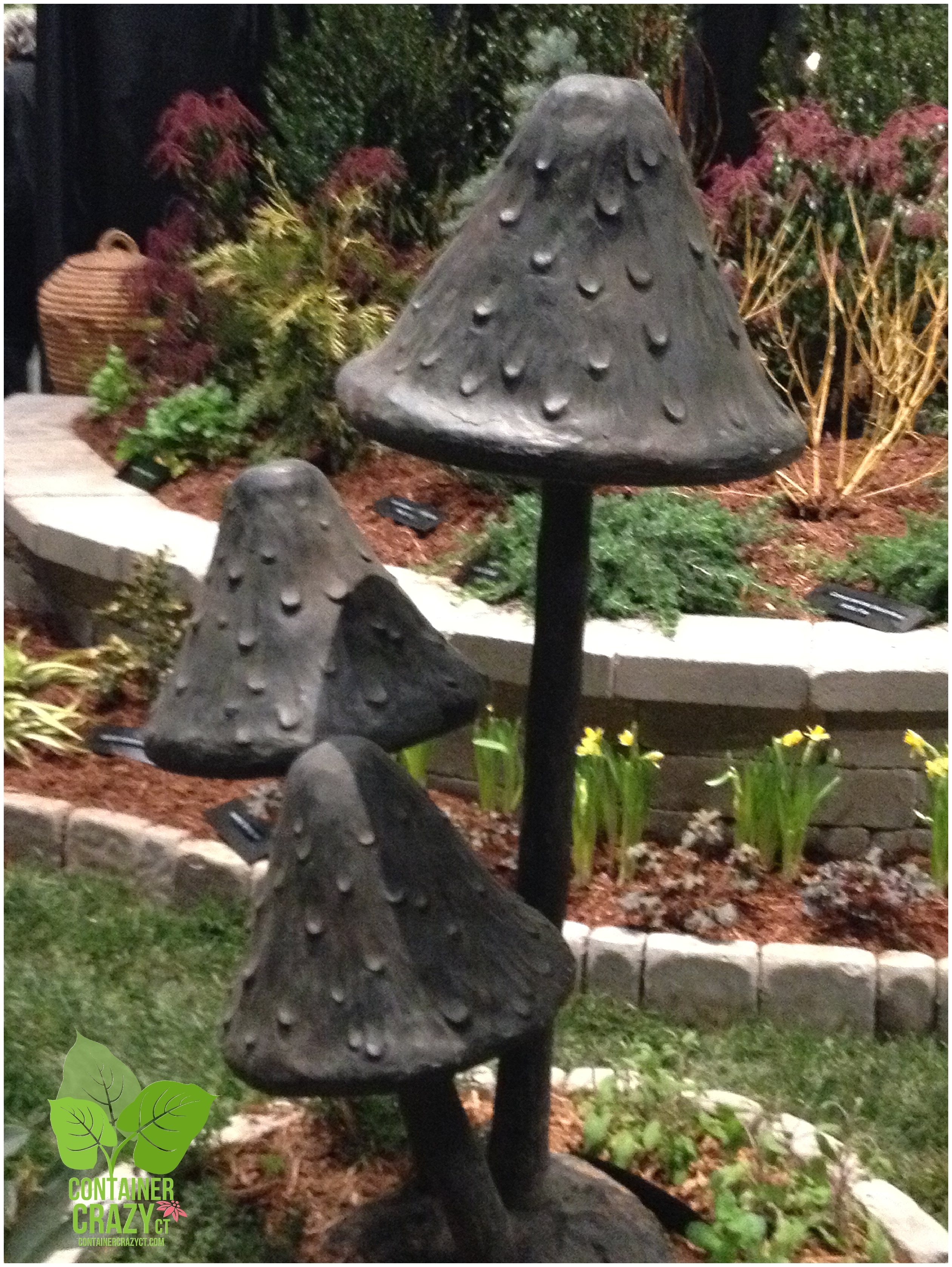
Encore Landscaping - Love those mushrooms

Encore Landscaping – Love those mushrooms

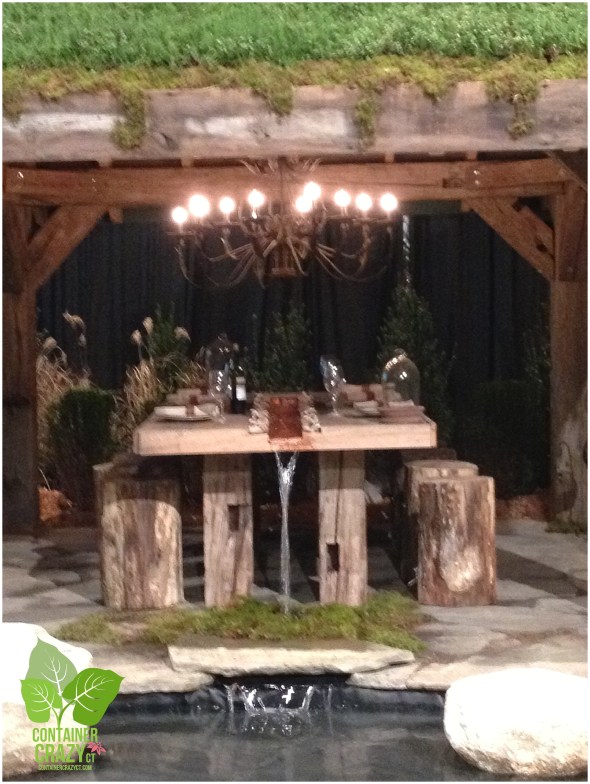
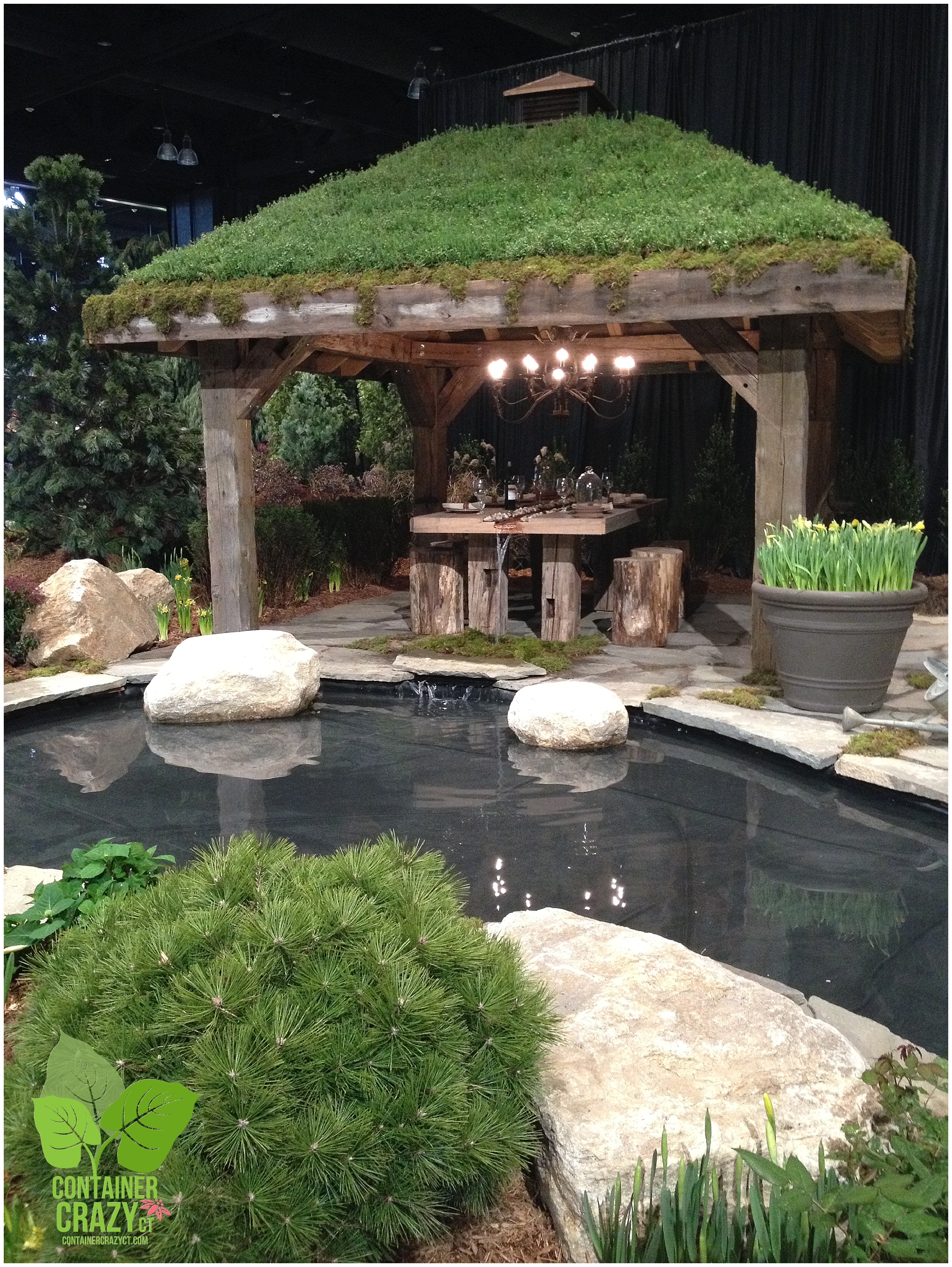
And who could not fall in love with the next landscape display by “Creative Contour Landscape Design.”

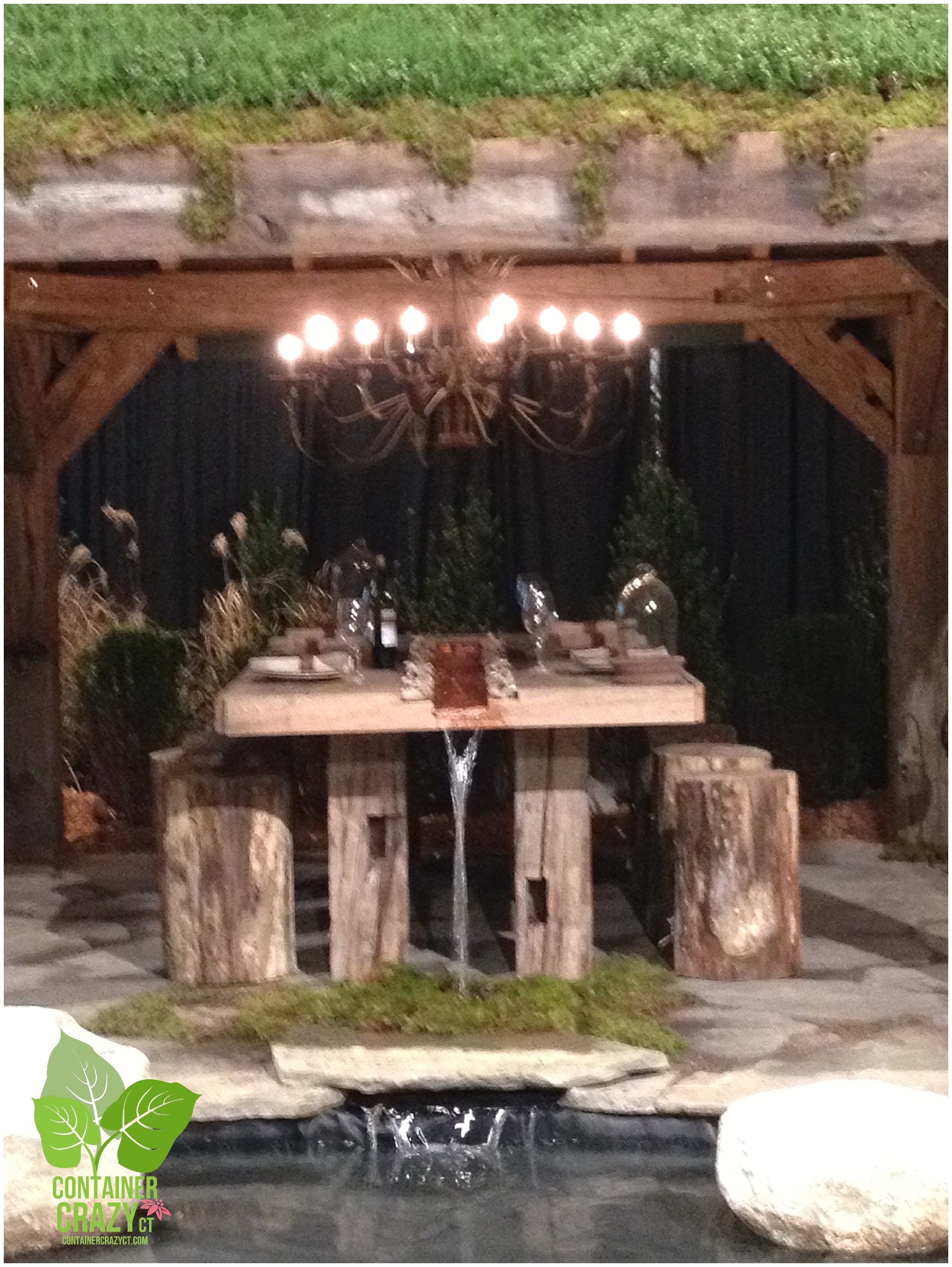
The greenroof, dining table with running water spilling down the ends, and the water features were spectacular.
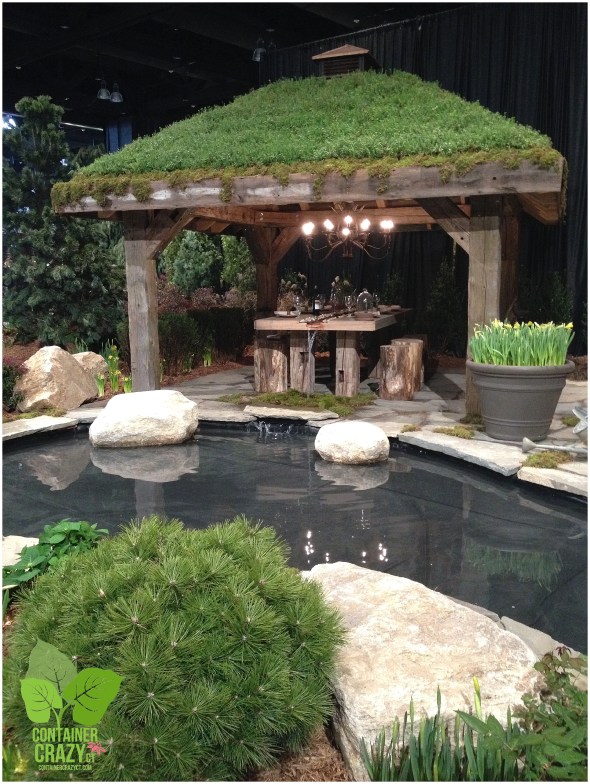
Creative Contours

Creative Contour

Creative Contour Landscape Design

Creative Contour Landscape Design

Creative Contour Landscape Design

Creative Contour Landscape Design

If I remember correctly, this was the far right part of their design – but you see so much, as I browse the photos – I have to rethink – but pretty sure it was. Loved the big pots here and there, the sitting area, etc.

When I spoke to the designer, Jennifer Noyes, she quickly asked if I would like to be on her consultation list – and I thought – “Yah-right -would I?! But it is not in my budget this year.”

Who wouldn’t love that scene above tho – I would dine at that table every night during the summer – even if I was eating alone.

Creative Contour described their display as, “...cascading waterfalls into a “Spring” fed reflection pool…

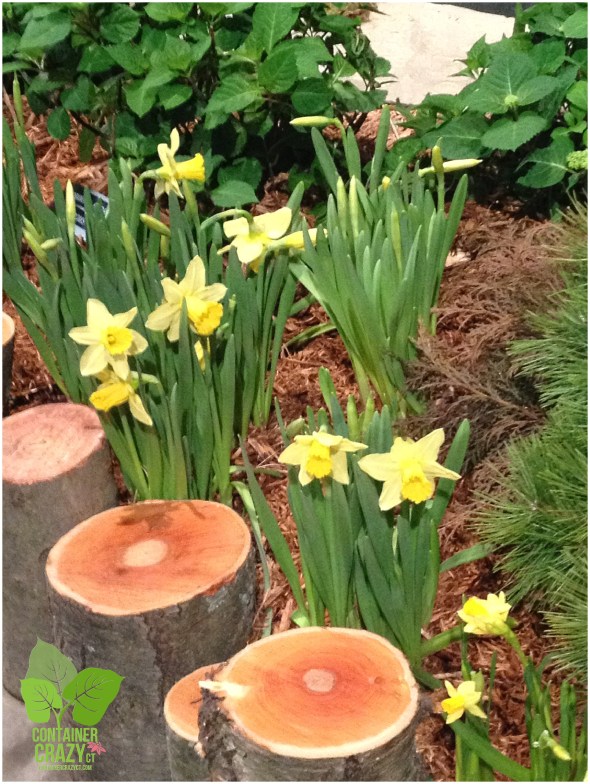
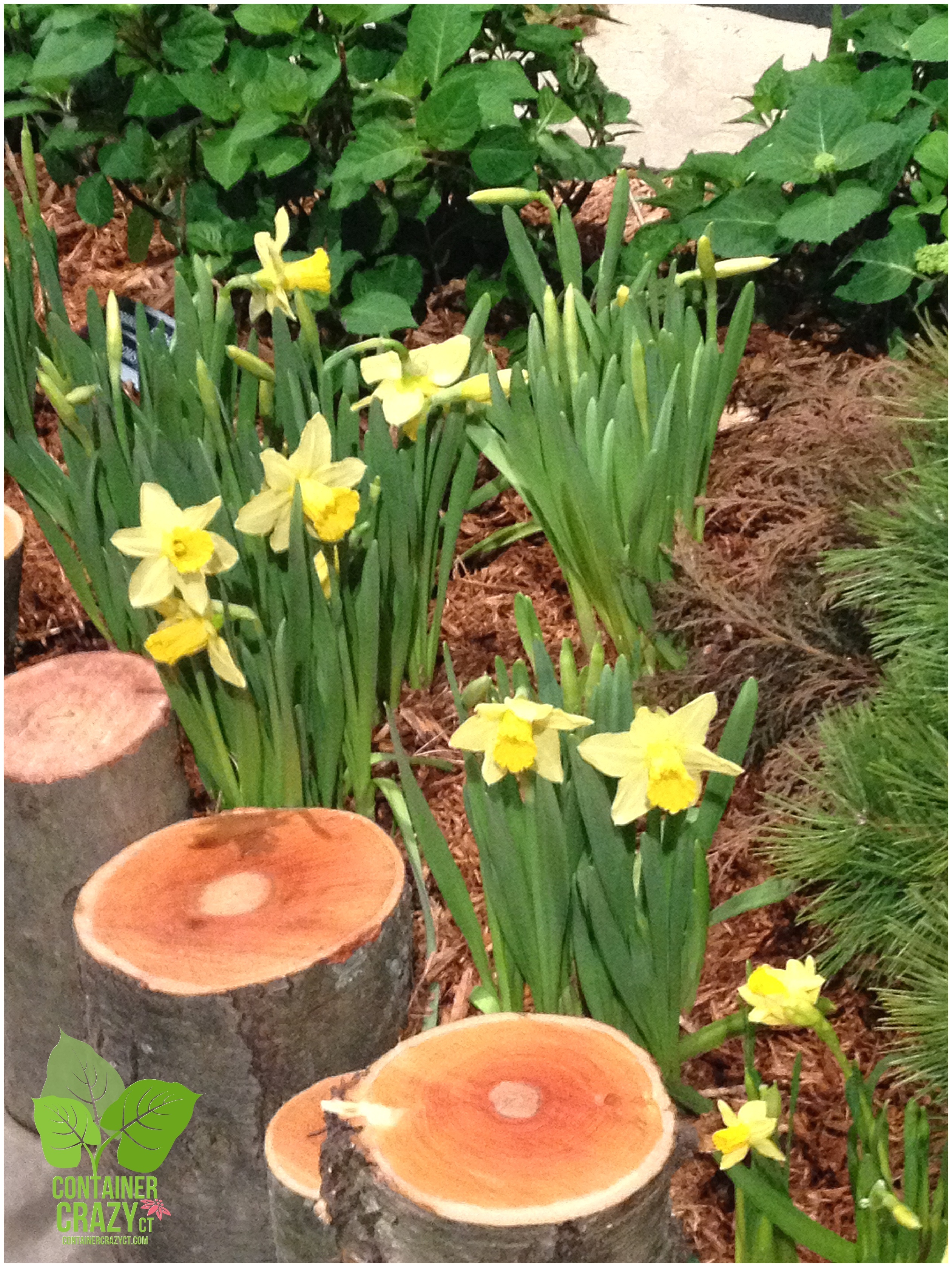
Wood Edges

Wood Edges

Again – it is hard to remember exactly which display this was above, but I like the wood log sections and how they carefully placed them as a border’s edge.

Display at the CT Flower and Garden Show 2015

Display at the CT Flower and Garden Show 2015

I apologize for not noting the name of this display – but wow – they think of everything!

PLANTS FOR SALE BY GREENHOUSE GROWERS ASSOC.

Greenhouse Growers Assoc. Area

Greenhouse Growers Assoc. Area

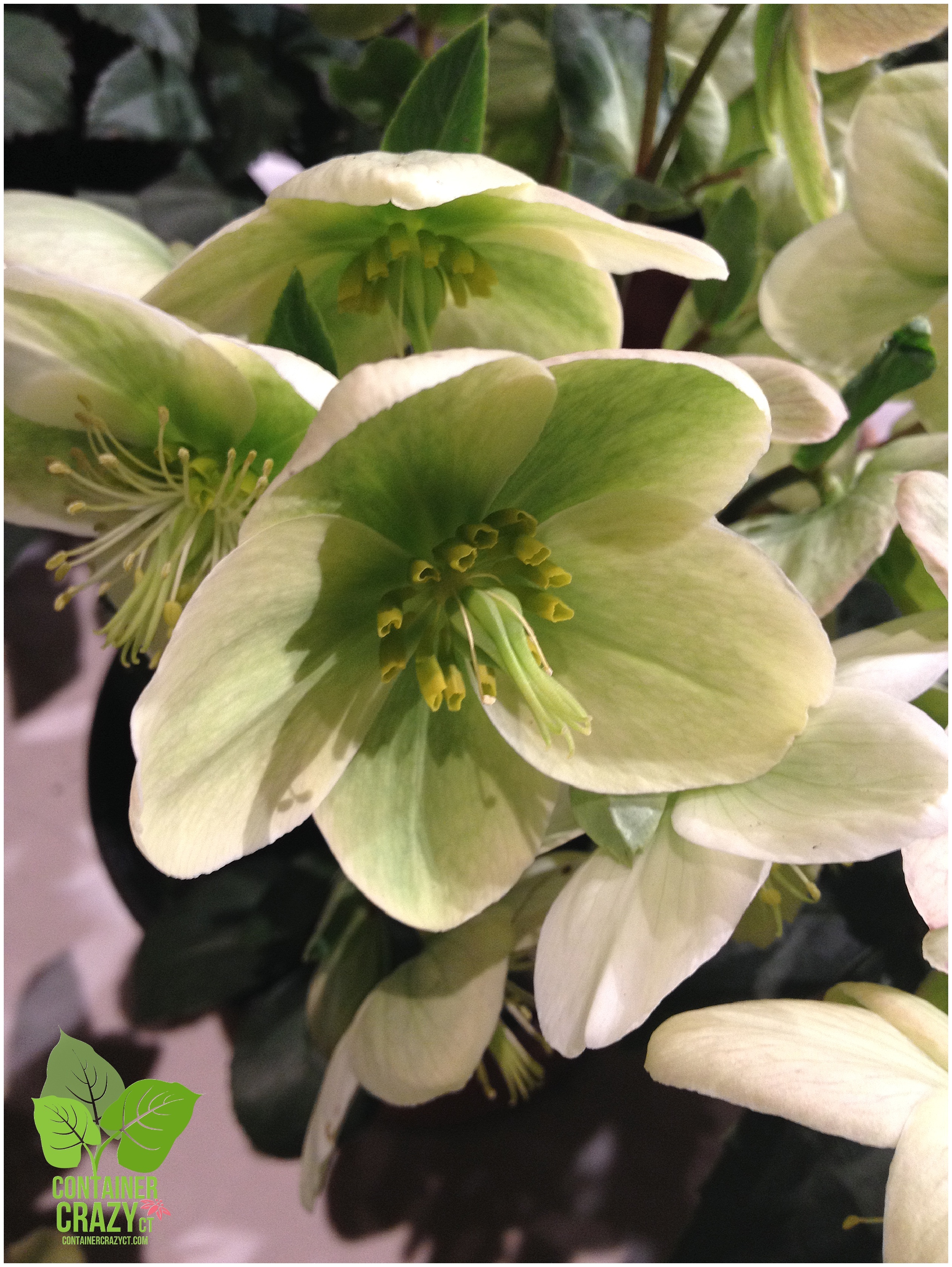
Hellebore at Greenhouse Growers Assoc.

Hellebore at Greenhouse Growers Assoc.

Mentioned previously in a blog post about the upcoming show, there are plants galore you may purchase at the show. One area showcases several florists and this is where I got a close up photo of an early blooming perennial, Hellebore. This will be the first one to show its blooms and foliage after our abundance of snow melts in the spring – sometimes this perennial pops up while there is some snow left standing on the ground too.

The CT Greenhouse Growers Association is a trade organization representing the interests of this state’s 150-plus greenhouse growers.

MANY MINIATURE GARDEN EXHIBITORS AT THE SHOW
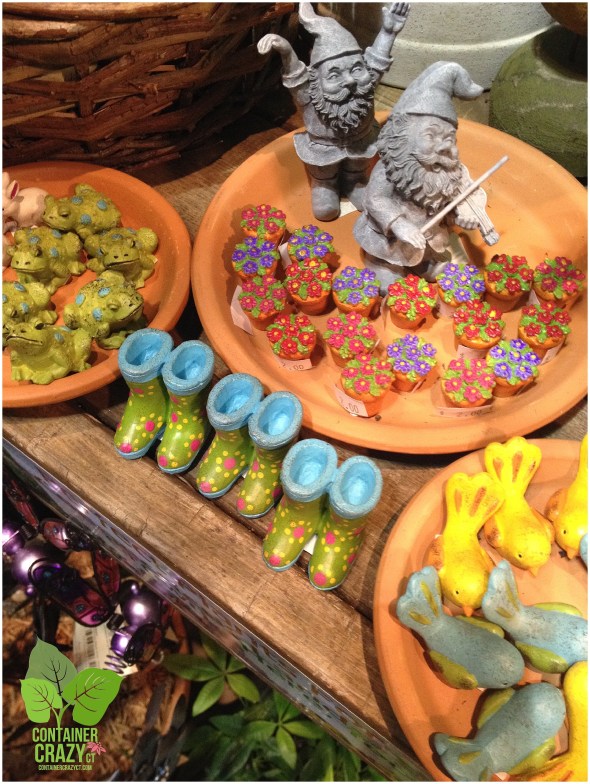
Miniatures

Miniatures

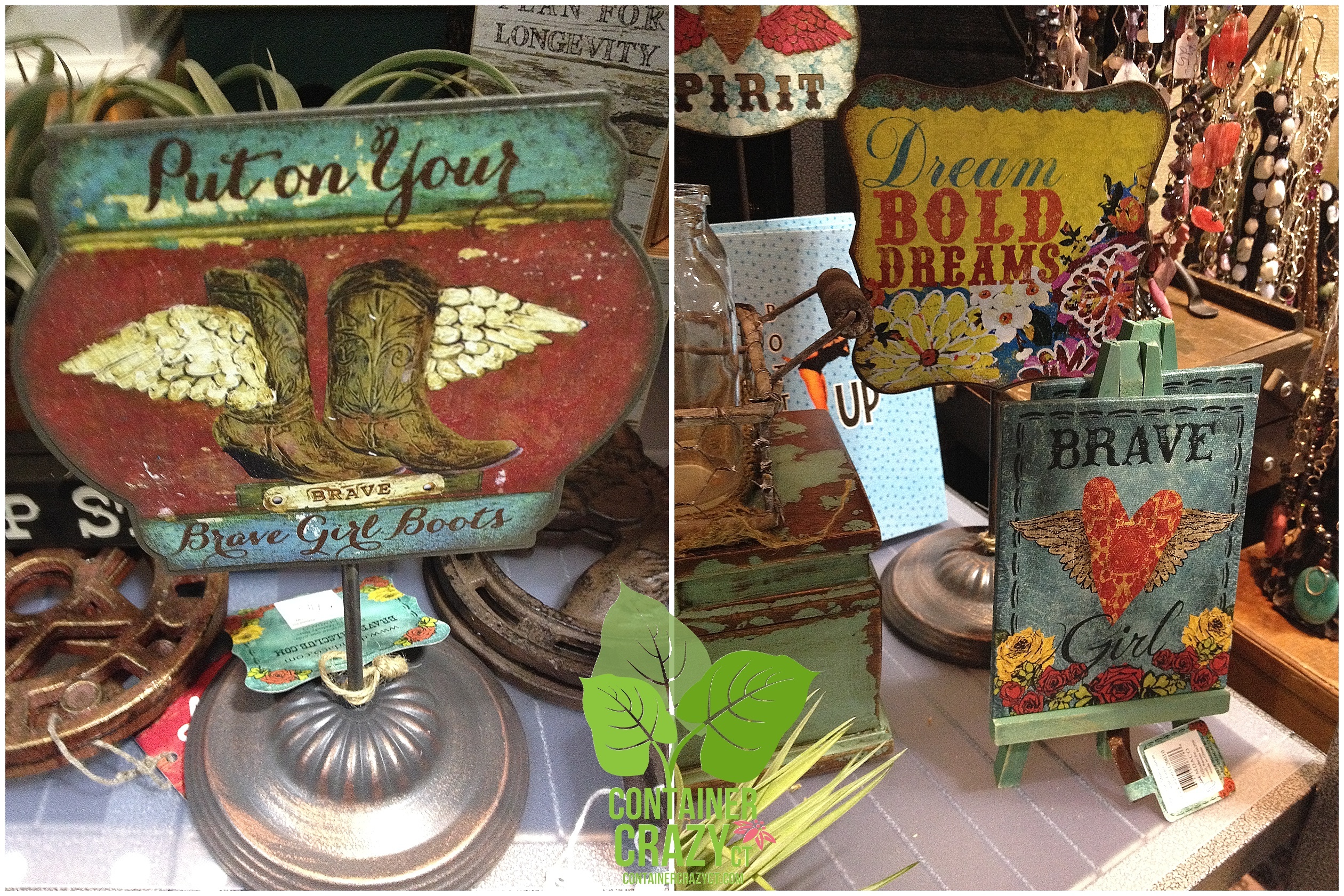
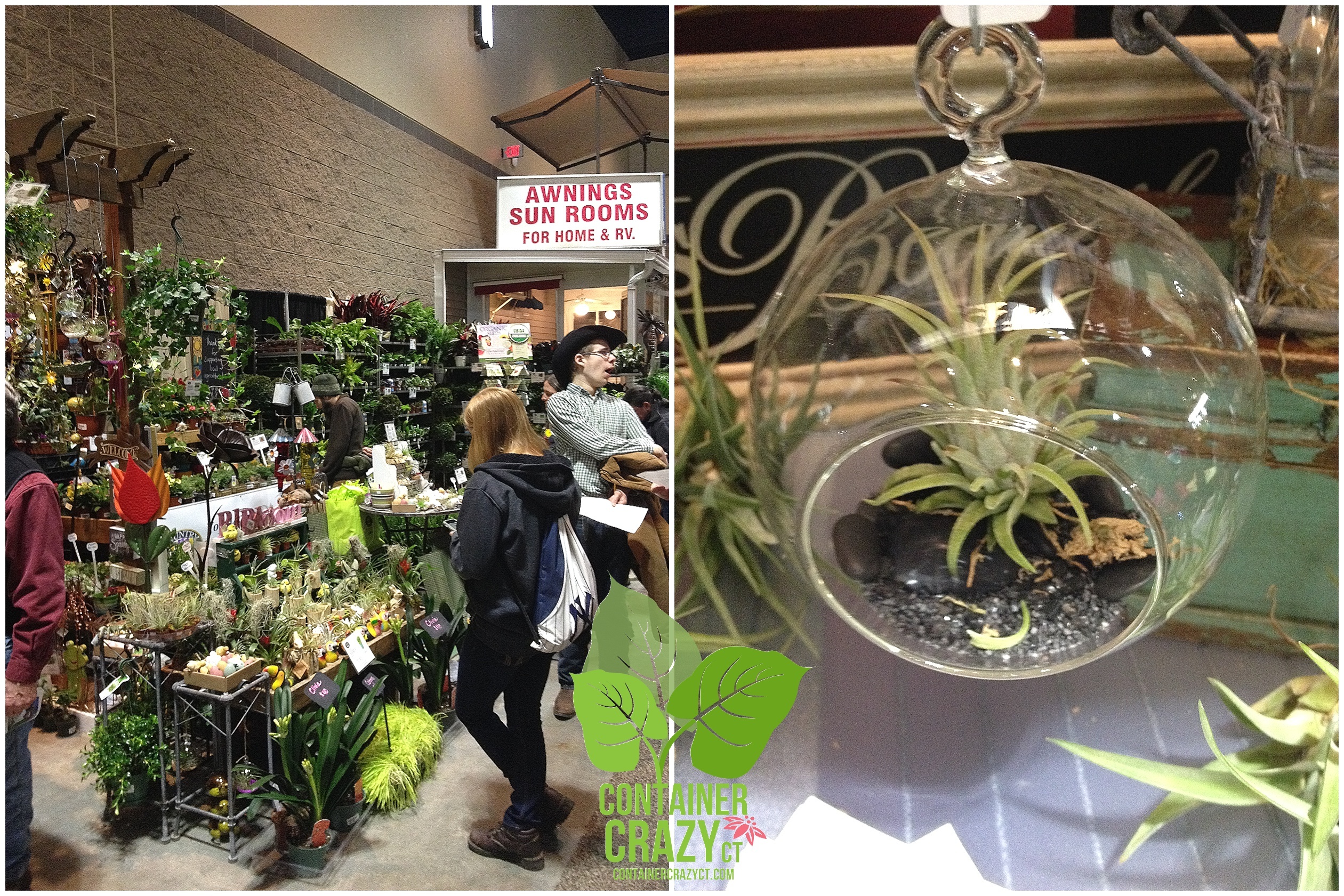
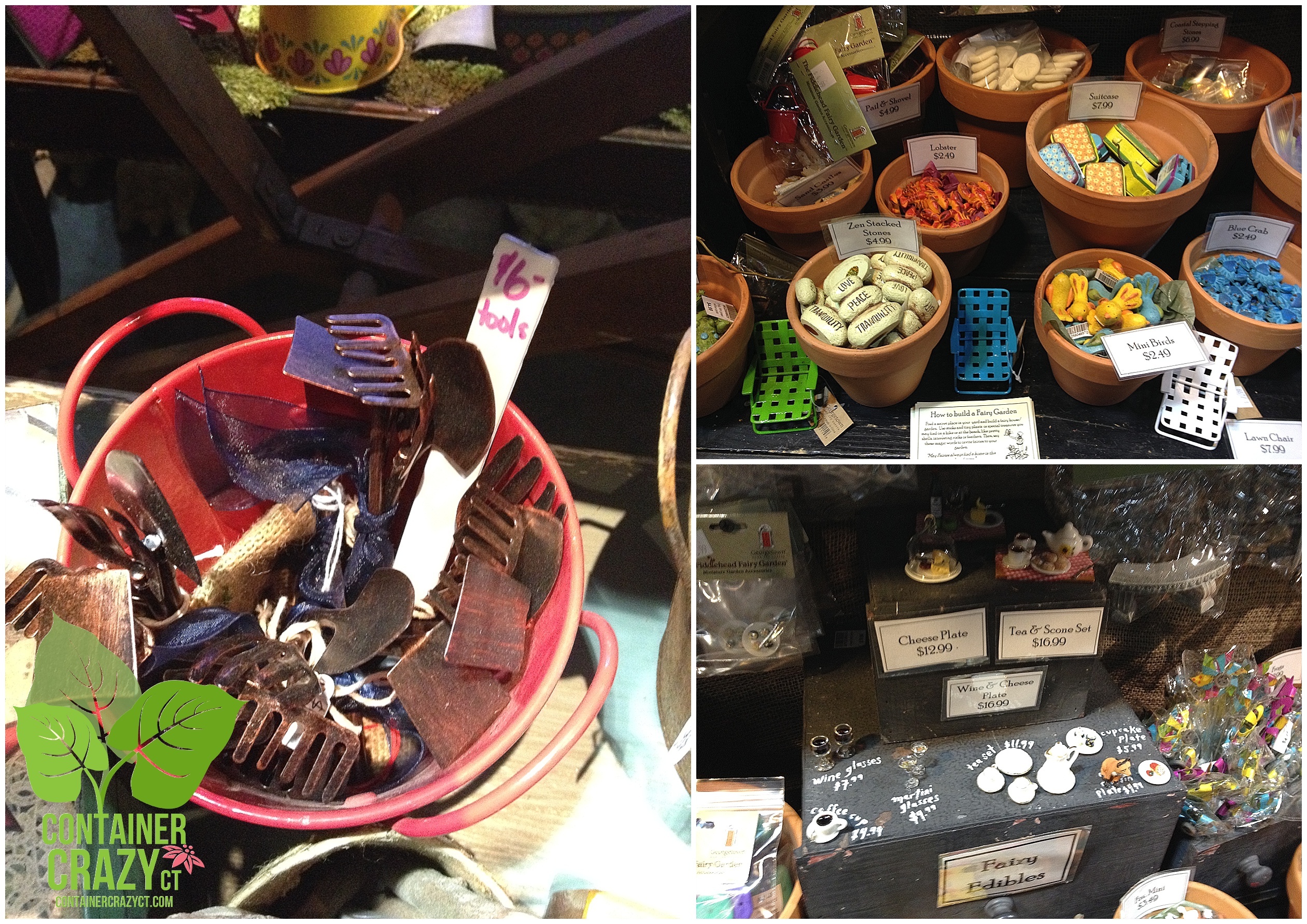
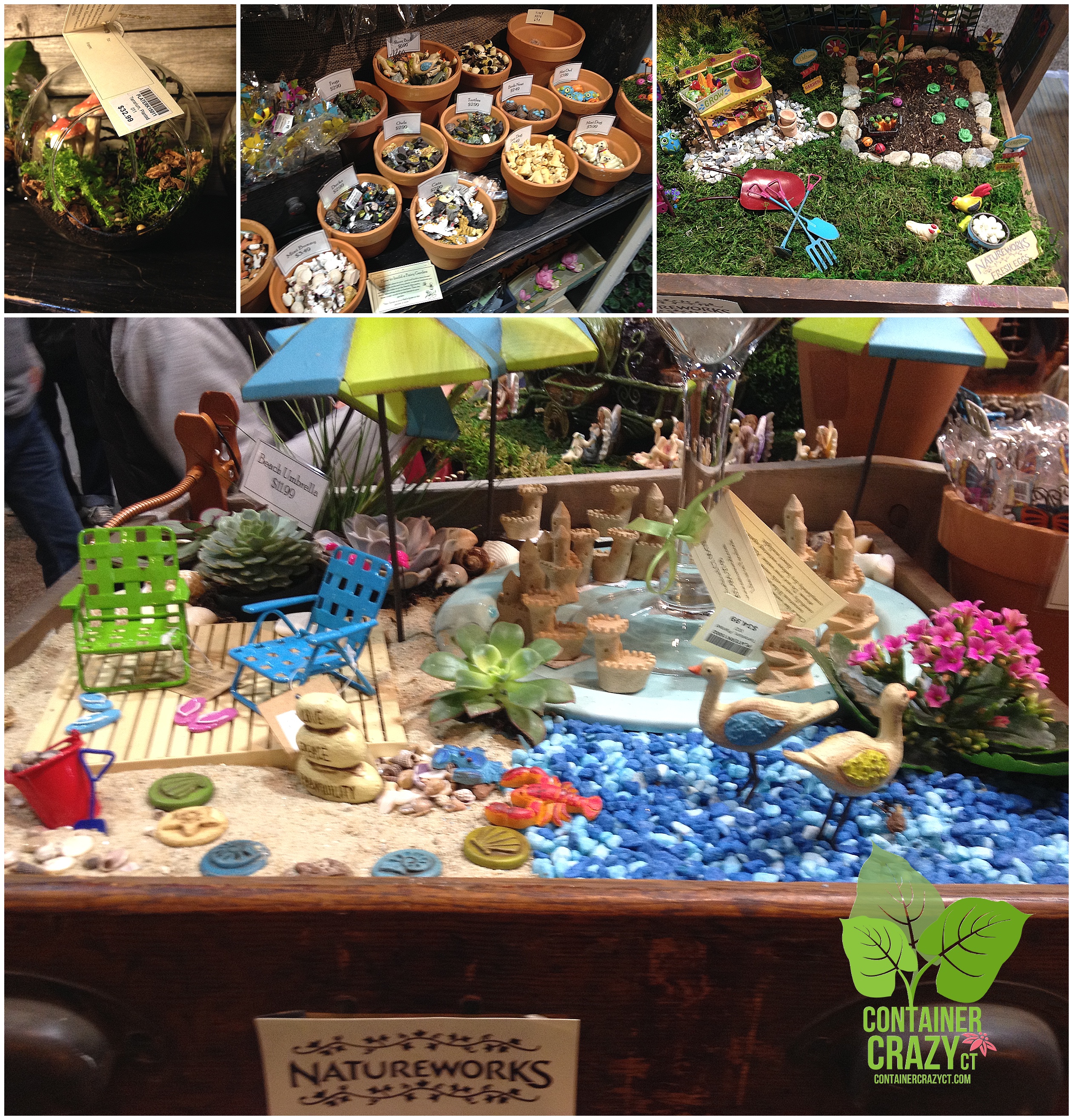
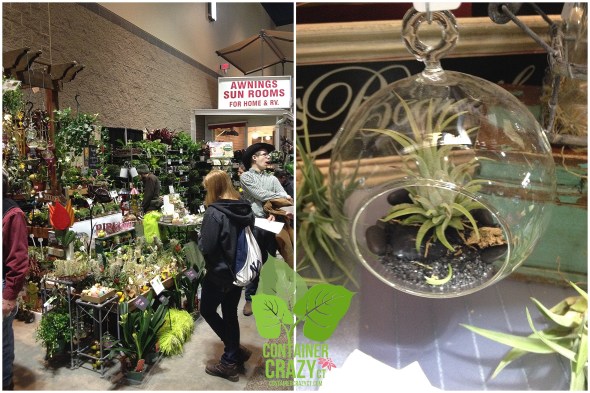
Here comes the Mini’s! There were so many booths showcasing and offering miniature garden decor – I visited at least 3 at the show – it is a popular activity in the gardening world, even some landscape displays had miniature scenes arranged within the garden beds.
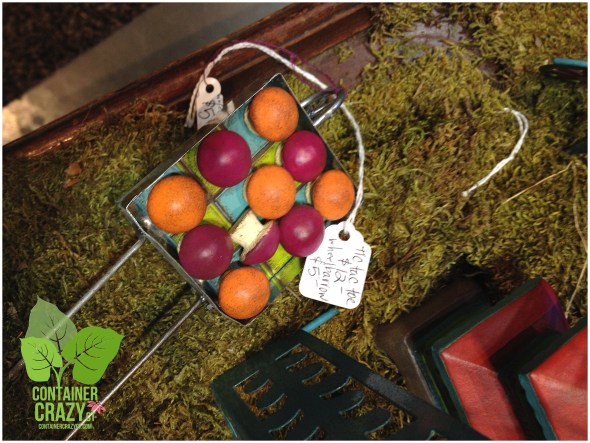
FlowerShow 2015 ContainerCrazyCT_0021-001

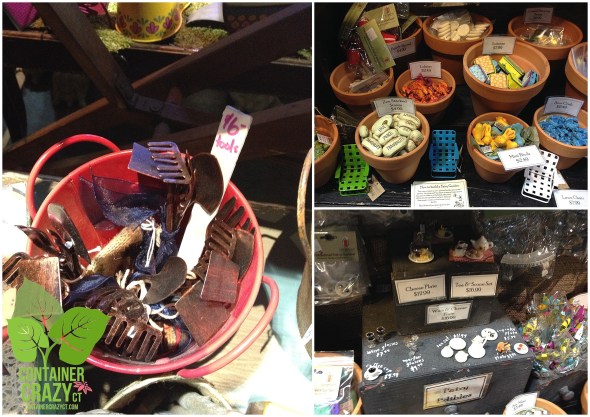
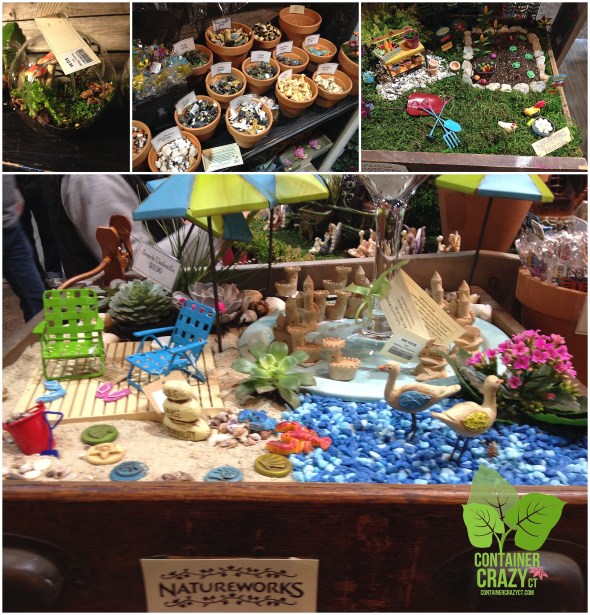
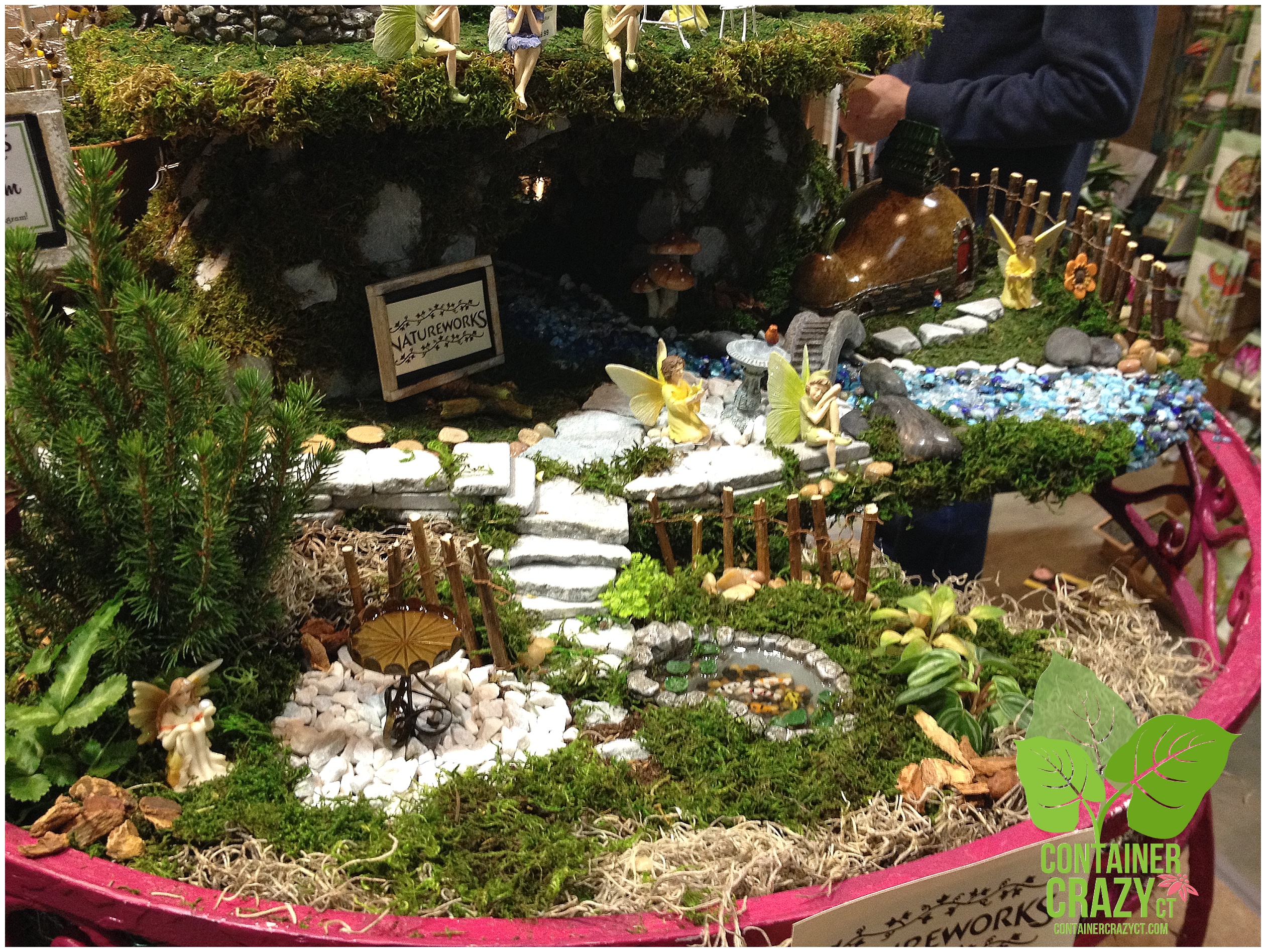
Natureworks is a very popular garden center in CT, and they had many minis along with other garden art.
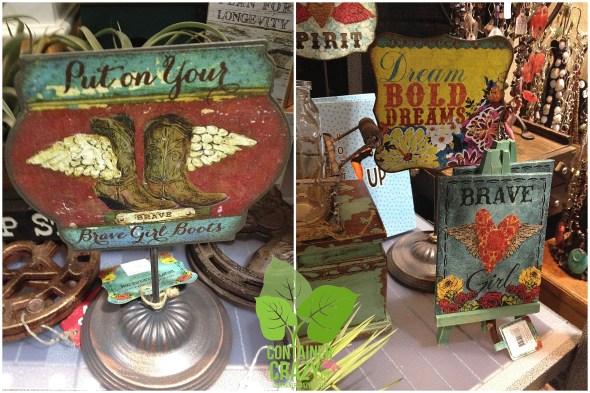
Natureworks
Natureworks

Natureworks

Natureworks

Natureworks' booth

Natureworks’ booth

Natureworks' booth - Mini Displays

Natureworks’ booth – Mini Displays

Natureworks Miniature Gardens

Natureworks Miniature Gardens

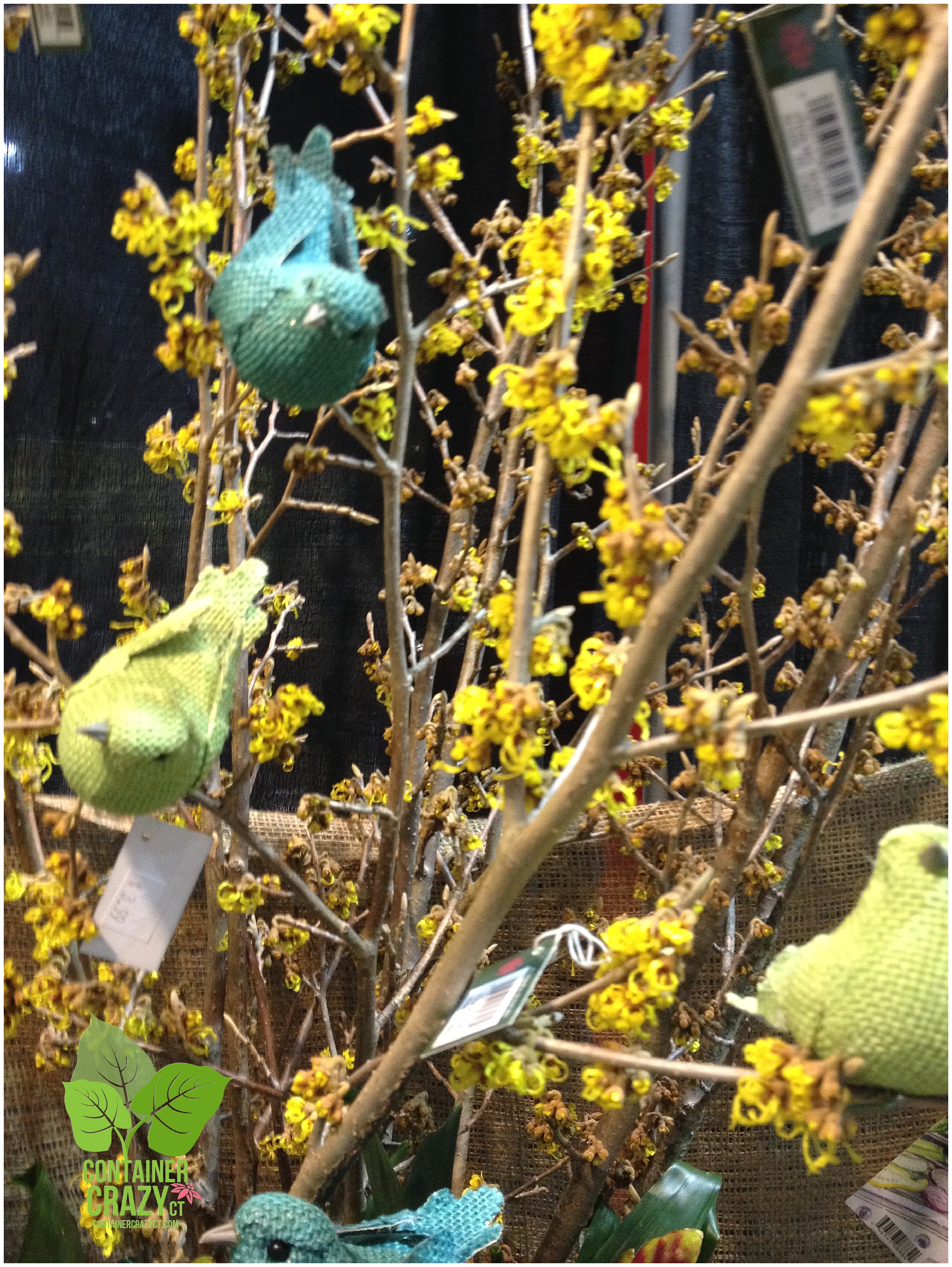
Natureworks Garden Decor on Witch Hazel branch

Natureworks Garden Decor on Witch Hazel branch
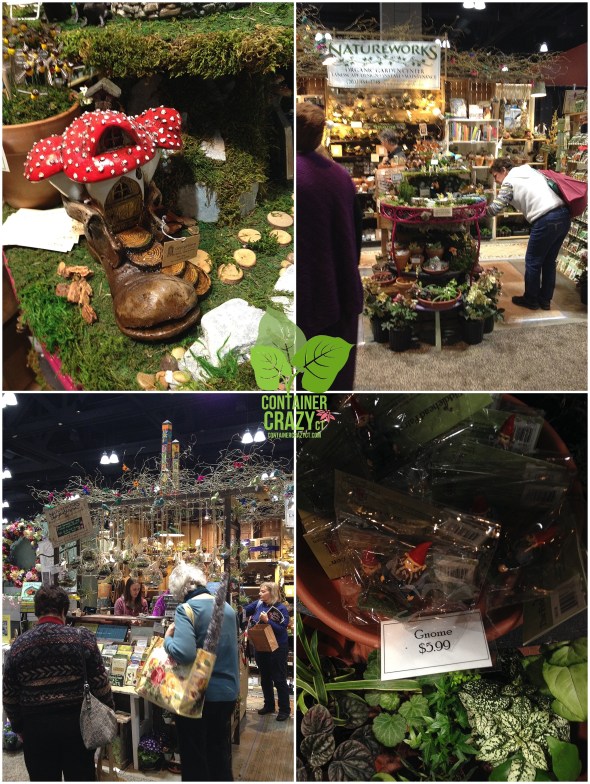
FlowerShow 2015 ContainerCrazyCT_0032 FlowerShow 2015 ContainerCrazyCT_0034-001

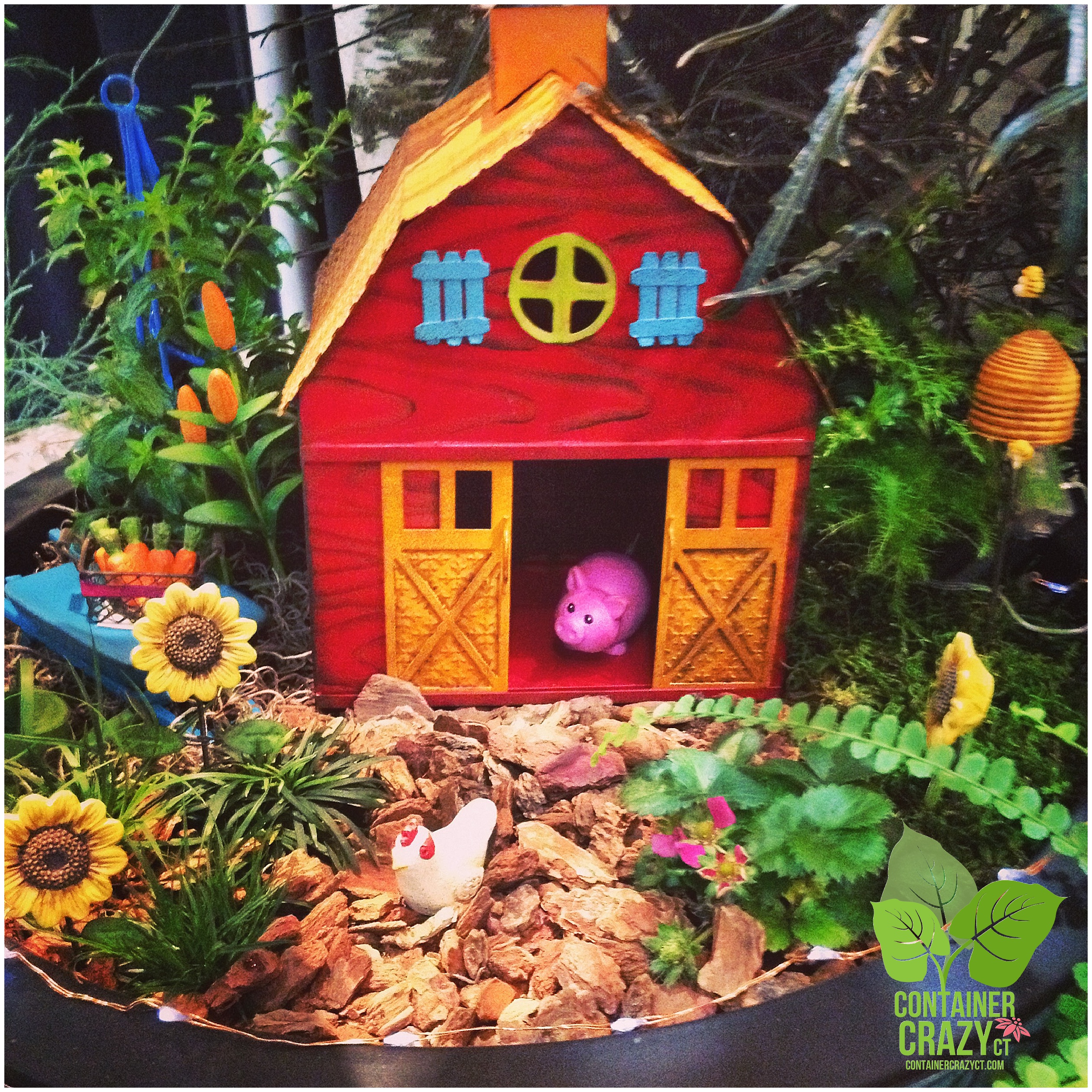
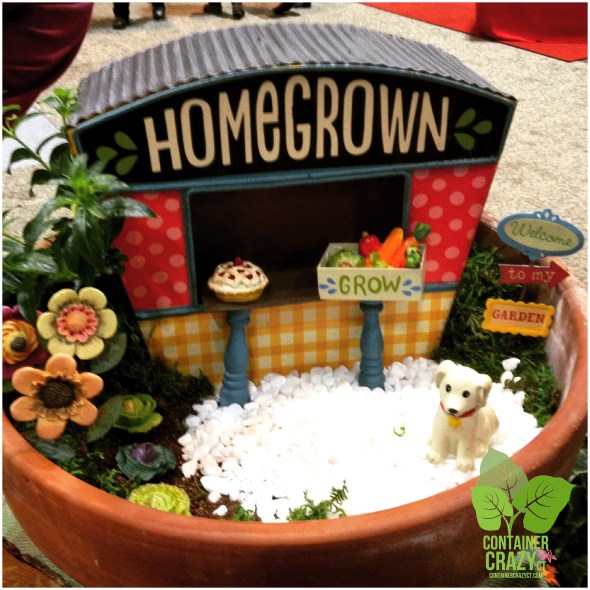
I wish I could remember who’s booth the following photos of the mini barn and vivid mini arrangements were from – because they had adorable miniature garden embellishments as well.
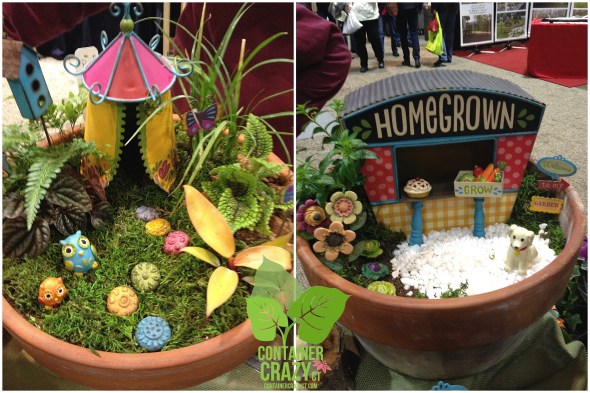
More Minis at the Show

More Minis at the Show

More Minis at the Show - Cute Barn Display

More Minis at the Show – Cute Barn Display

Love the vivid colors
Love the vivid colors

Great themes of the Minis

Great themes of the Minis

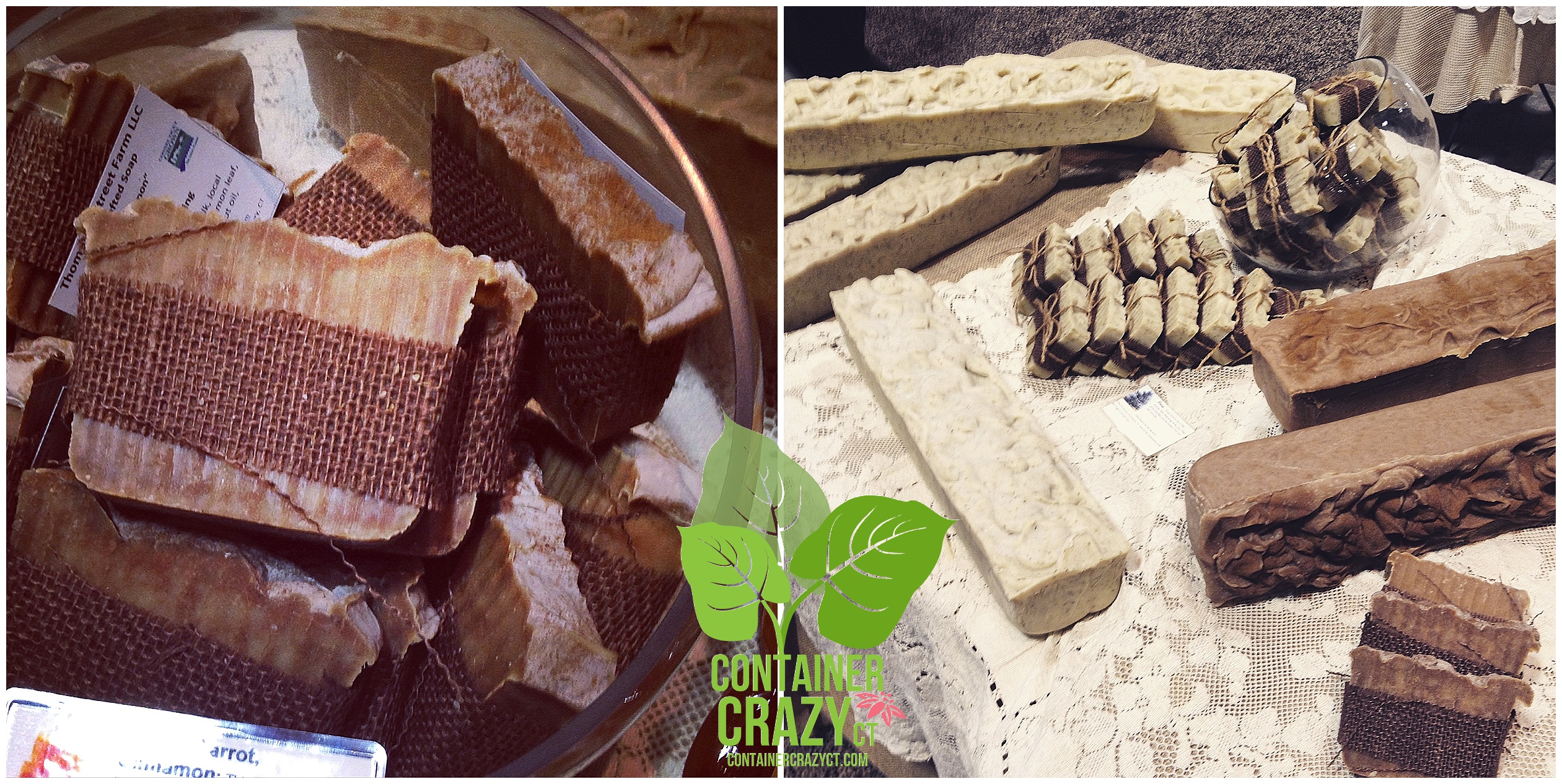
Every year at the show – I am sure to pick up a few bars of handmade soaps – who can resist the wonderful scents?
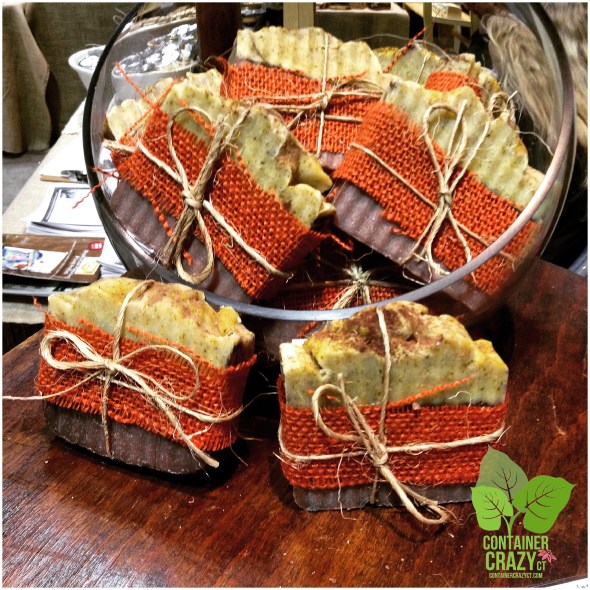
Thompson Street Farm of South Glastonbury, CT
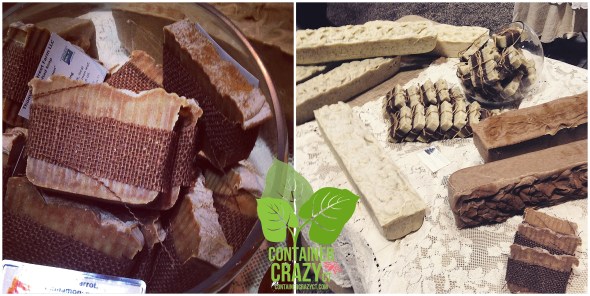
Thompson Street Farm of South Glastonbury, CT

Thompson Street Farm - Bars displayed

Thompson Street Farm – Bars displayed

Thompson Street Farm had an great display of their soaps – I loved how Brenda Sullivan, the owner, showed huge uncut bars of the soap – and she told me that one time an online shopper thought her soaps were fudge – No wonder, they are scrumptious to look at as well as smell. She is located at 49 Thompson Street in South Glastonbury, CT, and offers more than handcrafted herbal and floral soaps, she has some leafy greens and veggies/herbs per her business card. Her soaps were a definite purchase and added to my suitcase of goodies as I shopped more at the show.

ORGANIC FERTILIZER PRODUCTS
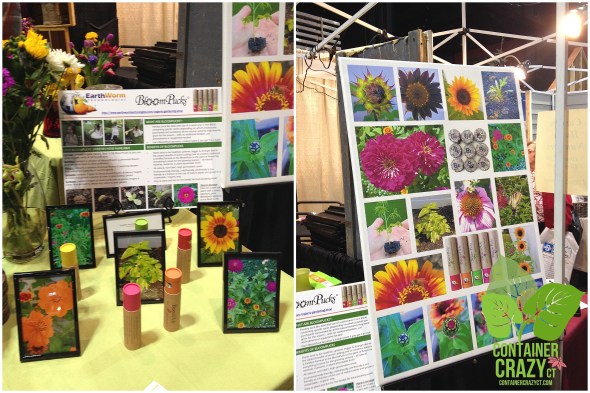
EarthWorm Technologies

EarthWorm Technologies

Steven Devloo, Founder and CEO of Earthworm Technologies, impressed us with his colorful display and talk about his eco-friendly products utilizing earthworms and vermicomposted food scraps to create fertilizer boosts for potted plants. Visit his website to check out his small capsules of pill like shaped fertilizers which are inserted into the soil for indoor and outdoor plants, and for use in vases to feed freshly cut flowers. He’s onto something here! Earthworm Technologies are based in Stamford, CT.

SEA GREEN ORGANICS – LIQUID SEAWEED FERTILIZER

Another organic product I saw was by Sea Green Organics, but I didn’t get a photo of it – However, I did purchase a bottle of their liquid seaweed fertilizer which I will be trying out this summer. As noted on their bottle, “Our Liquid Seaweed fertilizer is radically different than anything that you have tried before. This product was developed over many years at the University of Connecticut by a team trying to solve some of the big problems our planet faces. Specifically, it reduces drought stress, and nitrogen runoff which has become a major water pollution issue.”

Sea Green Organic’s liquid fertilizer may be used as a root drench, foliar feed or as a soil injection. It is mixed in water for application. I’ll let you know about the results this summer.

FLORAL ART DESIGN COMPETITION

THE FEDERATED GARDEN CLUBS OF CT, Inc. had several design competitions, in themes such as, “Ship Ahoy, Cruising Around the World, Seven Blue Seas, and Tour the World.”

Beautiful Delphiniums with White Flowers

Beautiful Delphiniums with White Flowers

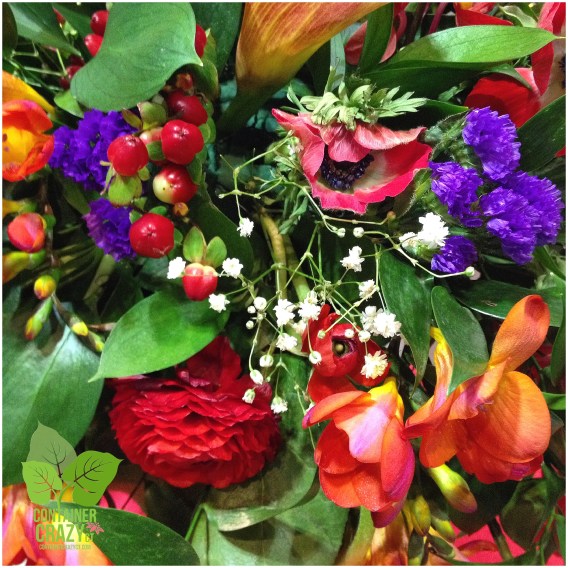
And, I decided to save the best photo for last – beautiful Delphiniums with white flowers in this gorgeous floral arrangement showcased at the design competition. I fell in love with this one and the other photo shown below of the autumn colors in another display – just wonderful to see these colors this year especially during our very snow filled winter.
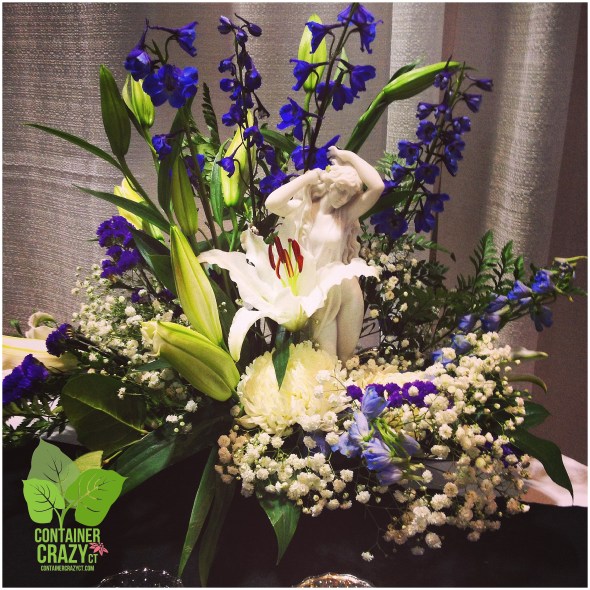
Floral Competition - Flower Show - Hartford, CT

Floral Competition – Flower Show – Hartford, CT
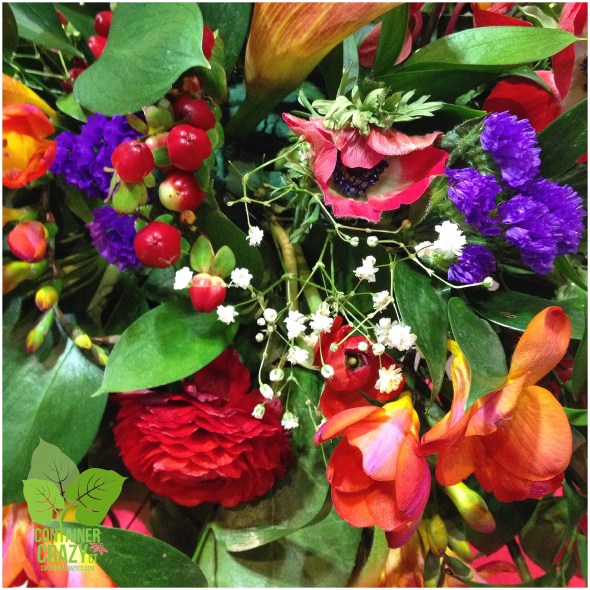
Floral Design Competition - CT Flower and Garden Show - 2015

Floral Design Competition – CT Flower and Garden Show – 2015

The CT Flower and Garden Show is held every February at the Connecticut Convention Center in downtown Hartford.

This year was the 34th annual – and themed, “The Spirit of Spring.”

BACK TO MY SUITCASE

As for my suitcase which I brought along to load up with goodies – by the end of the day, it was filled with gardening pamphlets, a bottle of Sea Green Organic fertilizer, several decorative wrought-iron hooks for hanging baskets by Garden Iron of Covington, KY, several bars of handcrafted soaps by Thompson Street Farm, zinc-plated plant markers from Ironwood Tools, a birdhouse (yup, it fit), along with a small box of decorative greeting cards with bird photos on them, and sachets of lavender. Things were smelling good in there by the time I arrived home in the spirit for spring and less focused on winter.

Cathy Testa

Cathy Testa today 2015
Cathy Testa of ContainerCrazyCT

Cathy Testa, owner of Cathy T’s Landscape Designs and Container Crazy CT, completed the Master Gardener Program in September of 2010.  She holds an Associates of Applied Science degree in Horticulture with a concentration in Floriculture from the University of Connecticut.  During her studies, she managed a private nursery for a design install business in Bloomfield, CT.  Upon graduation, Cathy was employed at the Garden Barn and Nursery in Vernon, CT for two years before starting her own business, which she has been operating for eight years.  She served on the Board of the Connecticut Horticulture Society for two years on a volunteer basis, and continued her studies via programs such as the UCONN Perennial Conference. Her current business services include container gardening design and installations for homes and retail business store fronts, small garden design consultations, blog writing which includes freelance writing for local farmers market blogs, and she offers regular hands-on classes on topics pertaining to combining nature with art from her classroom located in Broad Brook, CT.  Her attention to plant details, growth requirements, and steps for success with container gardening, along with a passion for plants and their ornamental beauty, has contributed to her reputation of being “container crazy” in her area of services.  Cathy has also appeared on the CT Style television program, participated on the CT Food & Farm podcast, and regularly speaks at Garden Clubs.

To see a history of Cathy Testa’s horticultural activity the past few years, click on the ABOUT link.

Thank you for visiting Cathy Testa on ContainerCrazyCT

My First Square Wreath Done!

9 Comments

Greeting Fellow Visitors,

Making a square wreath is a little more challenging as compared to a typical round wreath because of the corners and how you should keep the greens symmetrical to maintain the square look of the frame – but it is just as much fun as any project working with freshly cut evergreens.

Steps to Make a Square Wreath:

First, decide if want to batch your bundles of freshly cut greens by the “same type/variety” or by a “mix of each type” per bundle.

Mix of Fresh Cut Evergreens

Mix of Fresh Cut Evergreens

Because I wanted to see how it would look if I cut and batched the fresh evergreens by same type, this is the option I used to make my first square wreath.

However, I also love the look of bundles when a mix of each cutting or snip of the various greens are batched and bundled as well. It just depends on your preference or style.

Types of Evergreens Used:

Shown above, from left to right, are Holly, Berried Juniper, Silver Fir, Fraser Fir, Cedar Coned, Boxwood, and Golden Arborvitae.

Highlights of the Evergreens:

  • Holly – Very sharp leaves, and more of a decor touch – I only used 2 batches of those.
  • Berried Juniper – What is a wreath, kissing ball, or centerpiece without a touch of the berried Juniper? The soft, blue tones add a contrast and like the Holly, I made only 2-3 bundles of this to add as a highlight.
  • Silver Fir – Thick stems, one sided long soft needles (meaning the underside color is softer), and smells amazing when cut!!
  • Fraser Fir – Very long lasting, a must in any arrangement, traditional – just like Balsam, but Fraser is what I had available this season.
  • Cedar Coned – I love, love, love the golden color of the little cones on the tips – and it really shows up against darker greens, like the Boxwood. This type tends to drupe or dangle, so use care where you position it.
  • Boxwood – This is another fav – because it is so classic, a rich dark green color, small ovate like leaves, and a bonus is they don’t make your hands sticky while you work.  It’s a dark contrast of green to use in the design and a nice base, such as the Fraser Fir or Balsam.
  • Golden Arborvitae – Soft, flexible yet so beautiful – it has patterns of golden yellow in the green, and really so pretty to add as another element. Like the Cedar, it is a little softer and pliable.
  • Pine – Also smells amazing when cut, very sappy, and thin, long, flexible needles, nice next to coarse greens. Think thick foliage next to fine.

Cutting the Snips for Bundles:

So, cut a few of each at all the same length (4-5″ or 5-6″) and wire them together tightly at the cut end with green florist wire. Use sharp pruners and wear gloves, otherwise, you will have a sticky mess on your hands, and lots of lotion required afterwards.

Prepared Bundles:

Here are several bundles prepared. It is easier and faster to work if you have all the bundles ready to go, then you can lay them out on top of your frame to see how they would look before attaching them individually on the frame.

Bundles Prepared

Bundles Prepared

Think about putting the lighter colored bundles next to darker ones. For example, dark green Boxwood next to the light blue of the berried Juniper or the softer Golden Arborvitae. However, in the end, I don’t think it much matters, as all the beautiful freshly cut evergreens on the wreath usually look amazing!

Dark Green Boxwood

Dark Green Boxwood

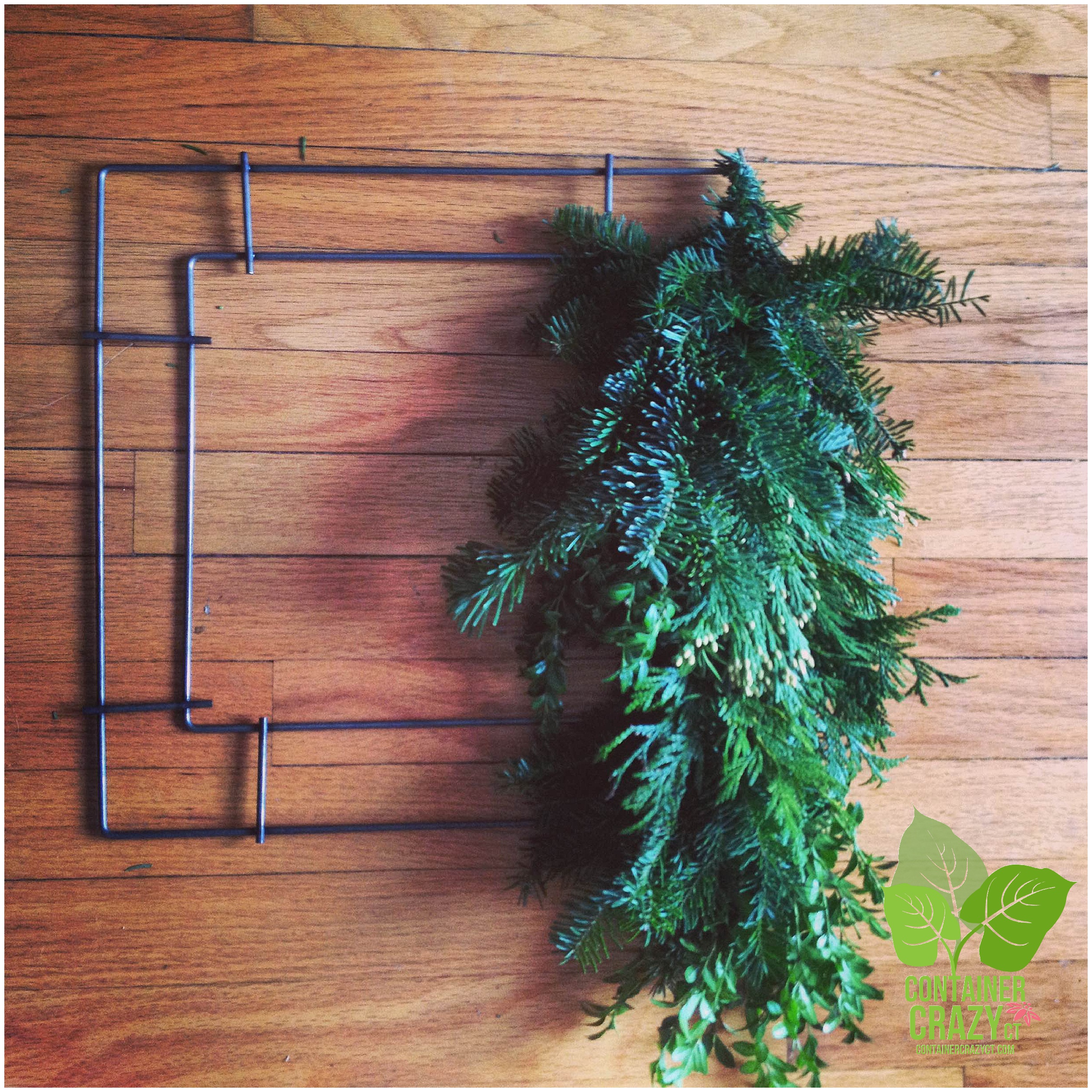
14″ Wire Frame Used:

A heavy-duty double-wire 14″ square frame was used for this wreath. The durable frame is usable year after year, which is why I highlighted it at my class on making kissing balls and other holiday creations last weekend.

14" Wire Frame Used

14″ Wire Frame Used

Shown above are several of the bundles attached.  You can see there are two bars along each side of the frame.

Options are to wrap each bundle directly over the middle of those two bars, or to stagger them on each edge of the double bars. If you have a paddle of florist wire, wrap the stem end to the wire, then continue for each bundle without cutting the wire from the paddle.

Working Way Around

Working Way Around

Or you can cut wire as you go – either way works – but the key is to wire tightly. Wrap, pull tight, wrap a few times more to ensure it is secure.  The Silver Fir, as an example, can be heavy as well as a batch of drooping Cedars, so be aware of their weight for each bundle.  Boxwood and Fraser Fir are lighter thus may not require as much wiring.

Golden Arborvitae Used in the Design

Golden Arborvitae Used in the Design

As you approach each corner, think about the placement a bit so the square form is maintained. It also helps to watch a good holiday movie or listen to holiday tunes, and if your day is lightly snowing!

Snowfall that day in Broad Brook, CT

Snowfall that day in Broad Brook, CT

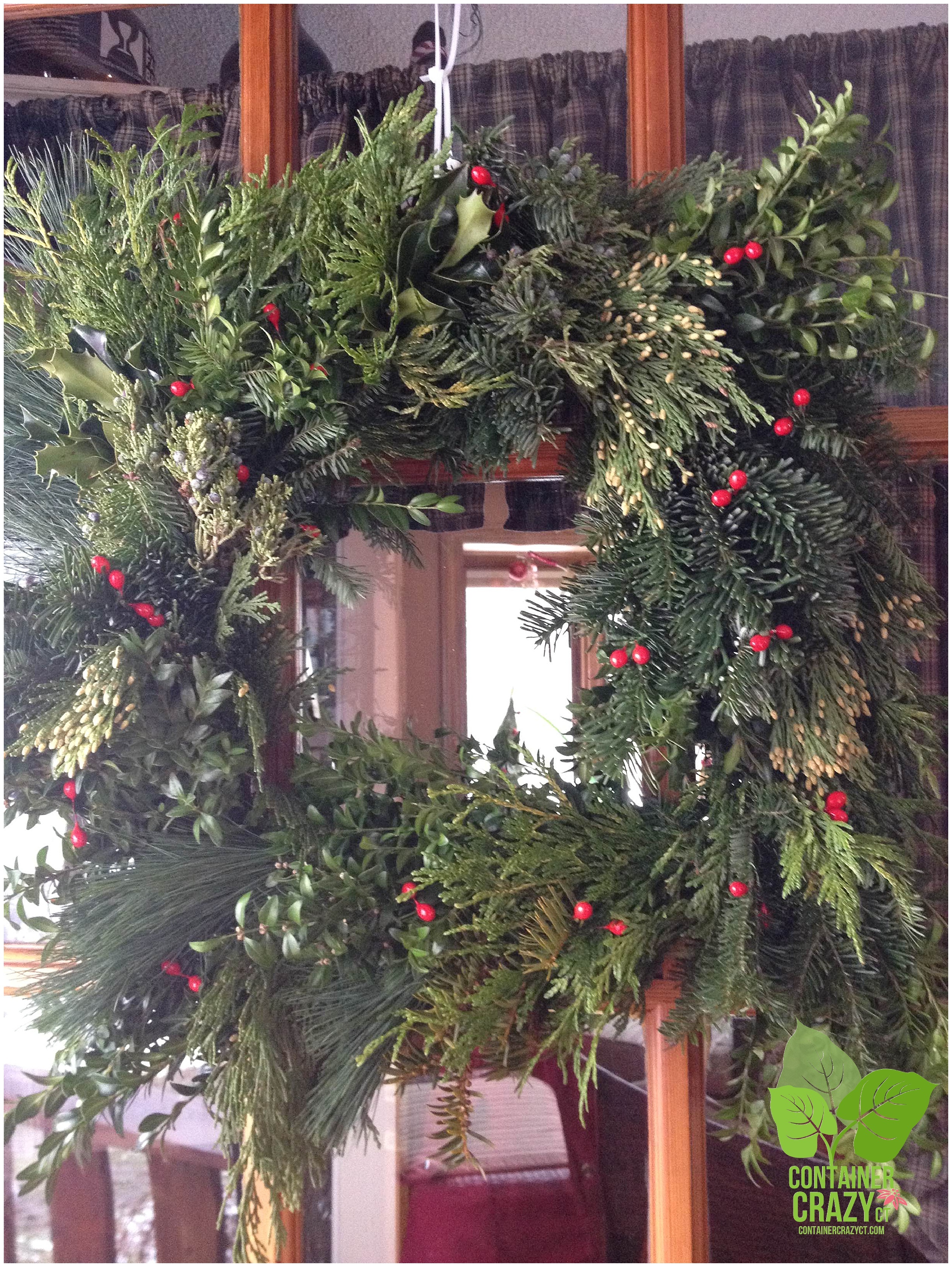
Here is my first ever made finished square wreath without decor and ribbons. The little red berries are double-ended on a wire and easy to attach. The look here is natural and likable, but decor was added after this step.

Square Wreath with Red Berries Attached

Square Wreath with Red Berries Attached

Adding Decor:

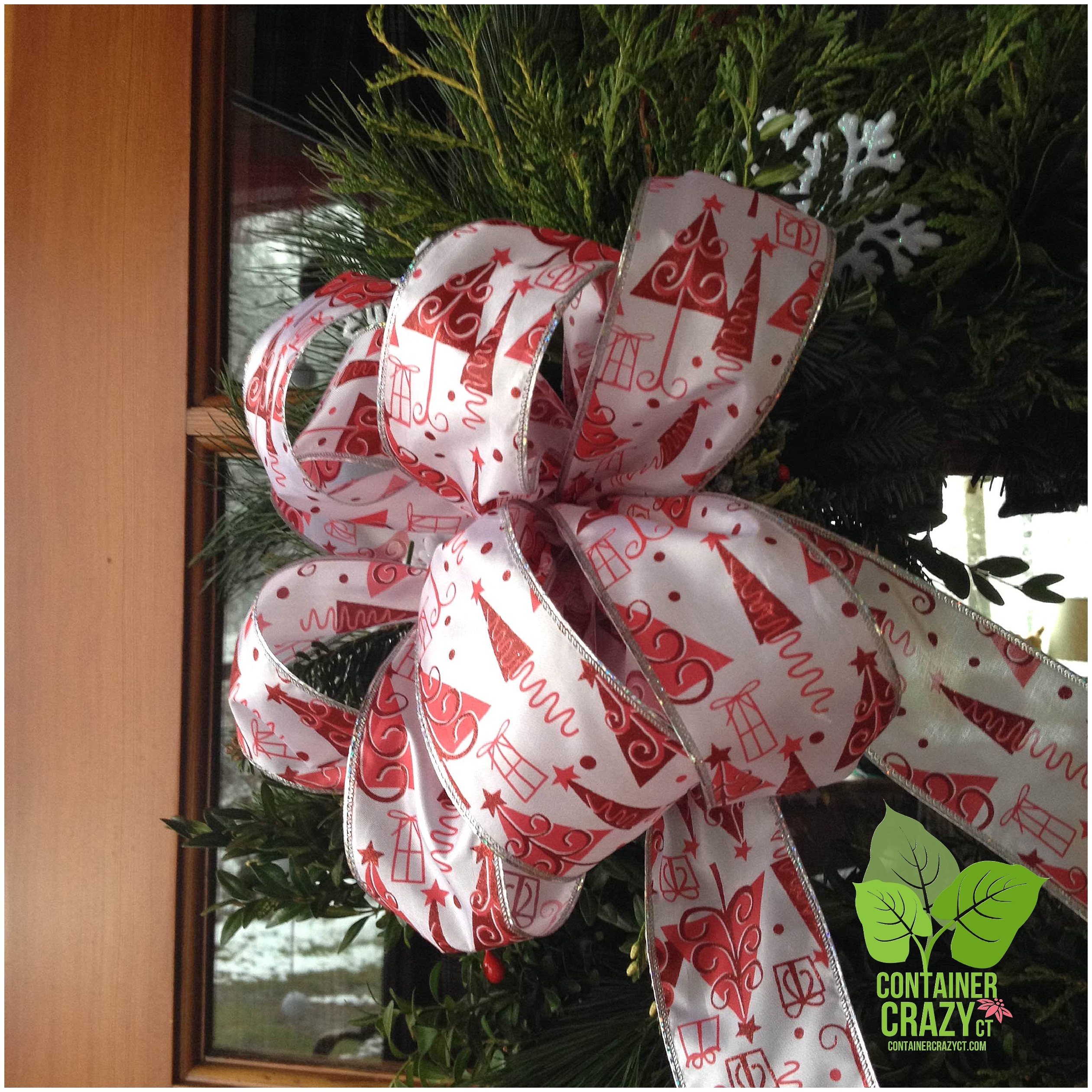
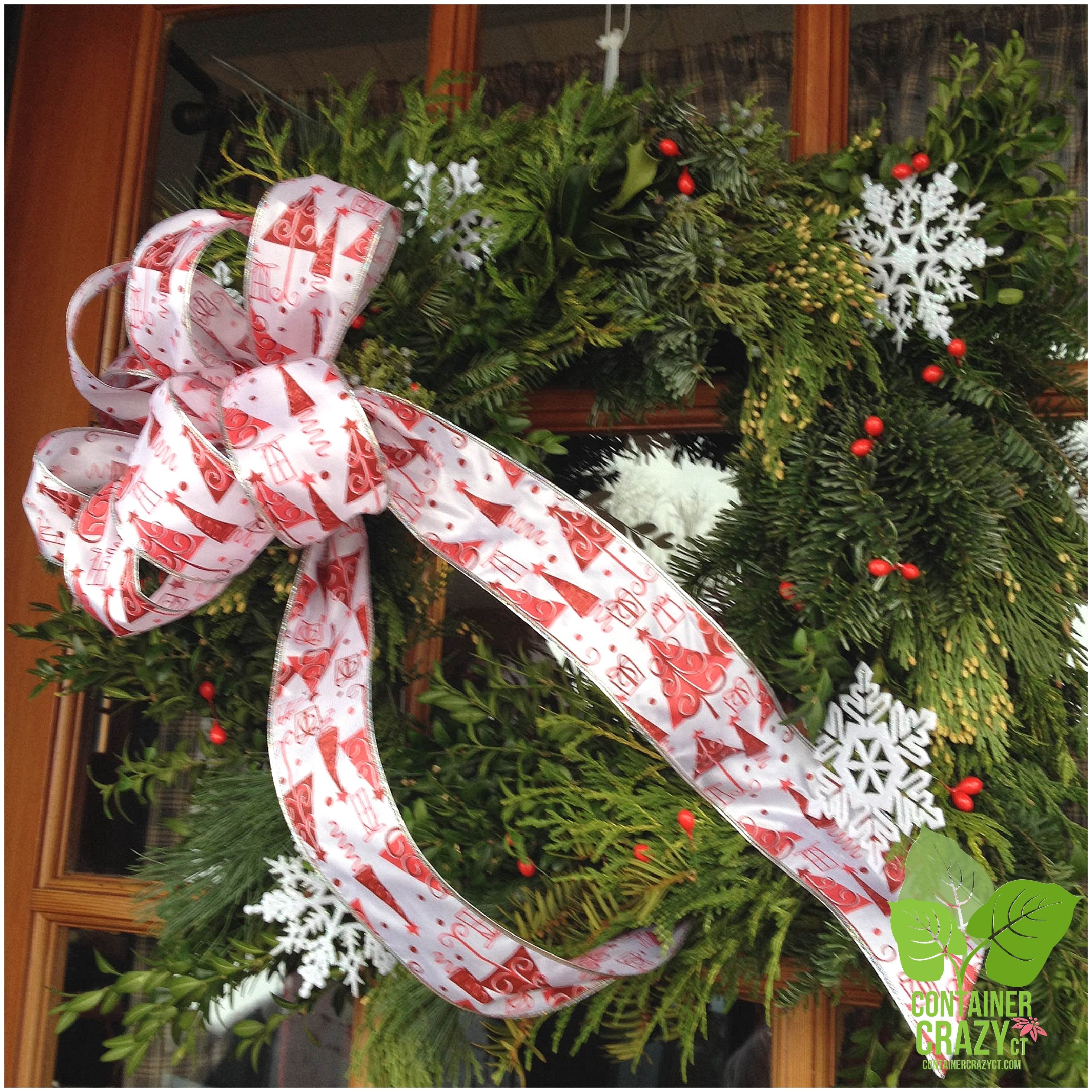
This step is really based on your preference. I made a bow to match the color of my white and red holiday decor colors at the house, and inserted picks of white snowflakes. Zip ties are what I use to attach a hanger on the back.

Bow on the Left Side

Bow on the Left Side

Silver Snowflakes Added

Silver Snowflakes Added

All Done!

Here it is all finished and hung on my door.  When my hubby arrived home, he said he liked it and that it smelled good too. And, when posted, many friends “liked it” which was very nice too – Thank you!

All Done!

All Done!

Want to Make Your Own ?? – Now’s Your Last Chance at Cathy T’s!

I’m holding a mini-session tomorrow, Saturday, Dec 13th from 9:00 am to 12:00 noon. If interested in attending, contact me via text or call: 860-977-9473 or email containercathy@gmail.com. Cost is $30-35 based on item you elect to make. Options: Kissing Ball, Candle Centerpiece, Round Wreath – or, of course, a Square Wreath!!!  Location: Broad Brook, CT.

This will be your last opportunity to Make Your Own, but if you don’t have time, and need a decor element made for your home, custom orders are accepted.

TGIF Everyone,

Cathy Testa
http://www.ContainerCrazyCT.com
860-977-9473
containercathy@gmail.com
http://www.cathytesta.com

Go back

Your message has been sent

Warning
Warning
Warning
Warning

Warning.

Visit Cathy T’s Pinboards on Holidays to see many, many inspirational ideas of working with evergreens!  Click the Pinterest Icon on the right side bar of this blog.

To see examples of Cathy T’s Container Gardens Stuffed with Evergreens – See her latest posts and pinboards.  Ho-Ho-Ho-Horticulturist!!!

We Put Lights in Our Holiday Kissing Balls and Wreaths

Leave a comment

The lovely lady in the below photo, attending Container Crazy CT’s annual Kissing Ball & Holiday Creations Class, brought a string of holiday lights to put in her kissing ball one year – and that was the moment a trend began at this annual class!

The Official Light Queen at Cathy T's Annual Class

The Official Light Queen at Cathy T’s Annual Class – Photo by HomePlaceBlogger

Magic like this sometimes happens in class – and is one of the best part of holding a session where creativity kicks in by all the attendees. Thus, this light originator has been crowned our “Official Light Queen” at our class.  Love it Eilene!  Thank you for inspiring us.

Lights in our Holiday Kissing Balls

Lights in our Holiday Kissing Balls

In fact, this season, so many of the repeat attendees, which I refer to as the “Advanced Kissing Ball Makers,” are perfecting their techniques as they create their kissing balls, wreaths, and candle centerpieces with fresh evergreens.

Square Wreath with Lights - New This Season in Cathy T's Class!

Square Wreath with Lights – New This Season in Cathy T’s Class!

Here is an attendee also bringing lights, inspired by our “Official Light Queen” above, which she added to the square wreath she made with a mix of beautiful fresh evergreens.

Cathy T shows the class the new square wreath frame (Funny Expressions! LOL.)

Cathy T shows the class the new square wreath frame (Funny Expressions! LOL.)  Photos by HomePlaceBlogger

The square wreath is a new option available at Cathy T’s class this year.  It is created using a 14″ double-heavy duty metal frame – the frame is so strong, it will not bend and lasts for years to be reused. And the lights, which this attendee attached to her square wreath shown above, are battery operated – Great Job Dianne!

Light Queen Demonstrating

Light Queen Demonstrating – Photo by HomePlaceBlogger

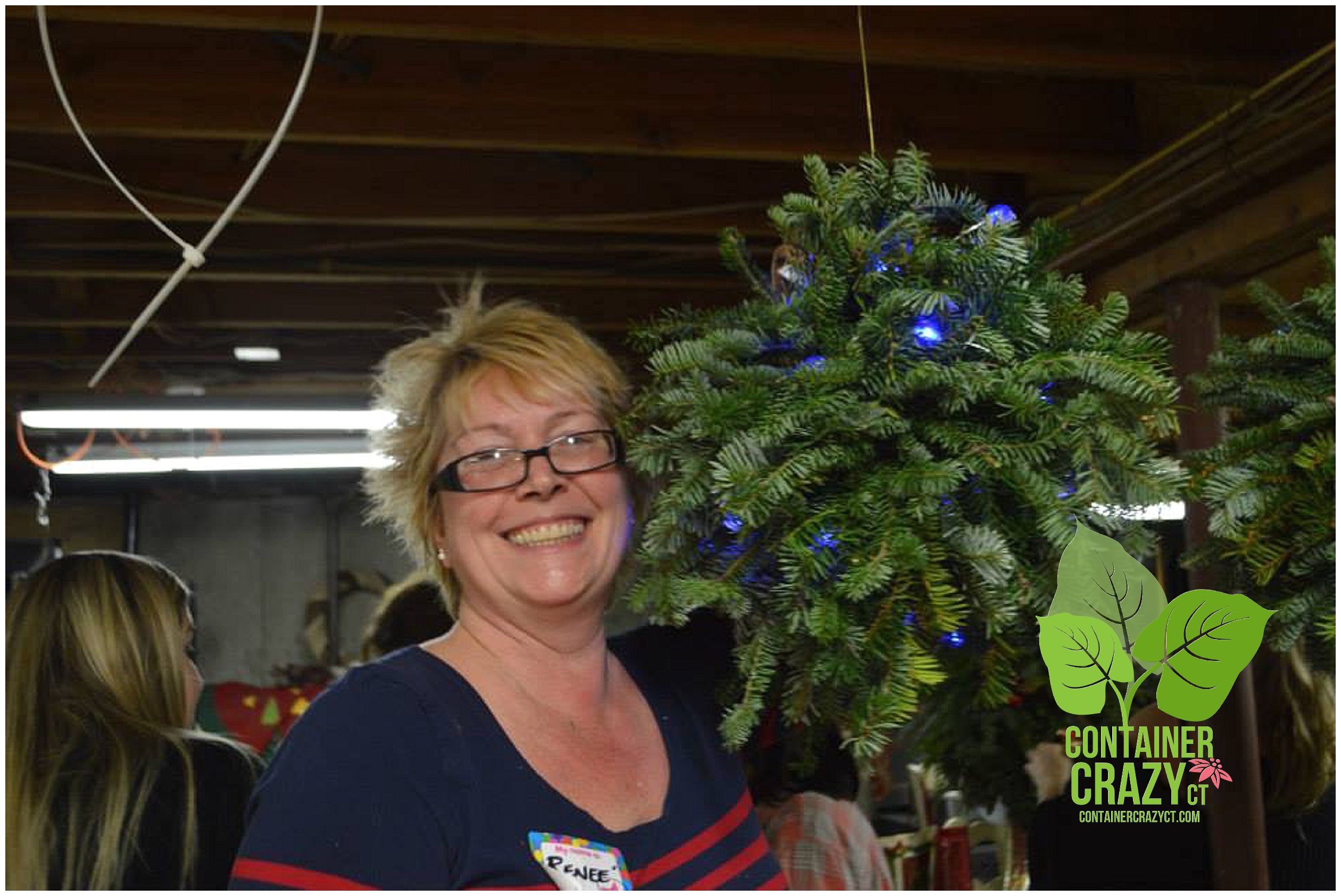
I asked our Light Queen, Eileen, to demonstrate her technique for adding the holiday string of lights to the kissing balls, and you can see Renee is watching carefully – as she had plans to do the same in her two kissing balls.

Renee works the blues - adding blue ribbons and blue lights

Renee works the blues – adding blue ribbons and blue lights to her kissing balls

Renee and I attended the same high school (many moons ago). In fact, we sat next to each other in art class back in those days – and I always loved her drawings and clay art, and later in life – well, she ended up in my life even more – because I married her cousin!  So we are in-laws, and to have her here again this year is a treat.  She did an amazing job with her two kissing balls this season.  Way to go Renee!

Two finished with Blue Ribbon and Blue Lights!

Two finished with Blue Ribbon and Blue Lights!

I just love her bubbly personality which comes through in these photos.  More will be posted soon of our attendees amazing creations, and see below – a mini session is underway this weekend on Saturday.

Finished with Lights; Photo by HomePlaceBlogger

Finished with Lights; Photo by HomePlaceBlogger

Tips for Using Lights in Your Kissing Ball:

Evergreens remain fresher if kept outdoors in the cold where they will also receive some moisture from occassional snowfall or rainy days.  So, I always recommend kissing balls be hung outdoors, this way, they will last a long time – even up to February.

And please note: DRY greens are a huge fire hazard.  Never EVER leave a kissing ball with lights on unattended – and the same goes for any candle centerpieces created – do not leave candles unattended in centerpieces with greens if you decide to light the candle – even if it is a non-drip type as provided in class.

In fact, my recommendation is to not light the candle at all – or to use the non-drip type with a catch tray inserted for any potential drippings and if you light the candle, ONLY when you are sitting right in front of it.

Why so cautious?

Ever see a dry Christmas tree catch on fire?  It can be very dangerous and the flames move quickly.  So while lights are gorgeous in all evergreen creations – and many are available now as battery operated – just remember the safety rules – only when attended and better if the creation is displayed outdoors.

Have a Good Day Everyone,

Cathy Testa

Note:  A mini-class is underway for this Saturday, 12/13/14 at 12:30-3:00 pm.  If interested, contact me soon!

Go back

Your message has been sent

Warning
Warning
Warning
Warning

Warning.

Early Planning is Part of the Process…

2 Comments

Early planning is part of the horticulture process.  Plants must be ordered in the winter months for spring deliveries, and evergreens must be ordered in autumn for winter pickups.

And, as much as you try to plan ahead, there will always be things you don’t expect which may cause your plans to not go exactly according to plan, but you adjust, correct, and move on.

On my recently submitted evergreens order for the upcoming December class on making holiday creations with fresh evergreens, there is a disclaimer on the bottom of the confirmation form which reads:

“Prices are from current inventory and WILL change due to availability, season, and any other act of God.”

Can you imagine if this disclaimer was on your plant tag or pot when you buy a plant at a garden center?  Imagine the response!

But I so get what this company is saying – and, they say it like it is.

Large Full Size Kissing Ball created by an Attendee!

Large Full Size Kissing Ball created by an Attendee at Cathy T’s Annual Winter Class

My planning began this month for a Cathy T Class being offered in December.  It is the 5th Annual Kissing Balls and Evergreen Holiday Creations Class, and it is fun, popular, and worth every bit of planning.

This post is to provide my blog followers with a heads-up that the class is on the calendar.  If you wish to sign-up, which is recommended to do early for seats fill up quickly, see the menu bar above, Cathy T Classes.

When you click on the menu’s option, a drop down list appears with two options for this winter class.  One is the “contact form” to sign up, the other provides more details about the class with photos of the items you can make.

As for now, this is all you need to know if you are interested in signing up today to save the date on your holiday calendar.

As soon as you are “in,” more information on the amazing variety of evergreens is provided along with complete details about this class scheduled on December 6th, 2014 – the first Saturday in December.

By the way, we have three “premium” evergreens added this year, which are new for this year’s class!  As well as the usual mix of eleven other types of FRESH evergreens.

That is right – a total of 14 varieties of beautiful evergreens to use when you make your holiday creation as an attendee at this Cathy T Class.

You won’t find this elsewhere, I guarantee it – Unless, of course, there is an act of God.

Cathy Testa
http://www.cathytesta.com
http://www.ContainerCrazyCT.com
containercathy@gmail.com

Cathy Testa's Vision of the Future - Photo by Bitstrips

Cathy Testa’s Vision of the Future – Photo by Bitstrips

Mountain Laurels – If You Want Blooms – Give it Some Sun

Leave a comment

The main thing I find with Mountain Laurels (Kalmia latifolia), when I discuss them with my garden design clients, is they think this flowering broadleaf evergreen shrub should be in full shade because Mt. Laurels are commonly seen in the wild growing under a canopy of trees. However, to get plentiful blooms on typical Mountain Laurel shrubs sold as landscape plants from garden nurseries, you need to plant them where they will get a bit of sun.

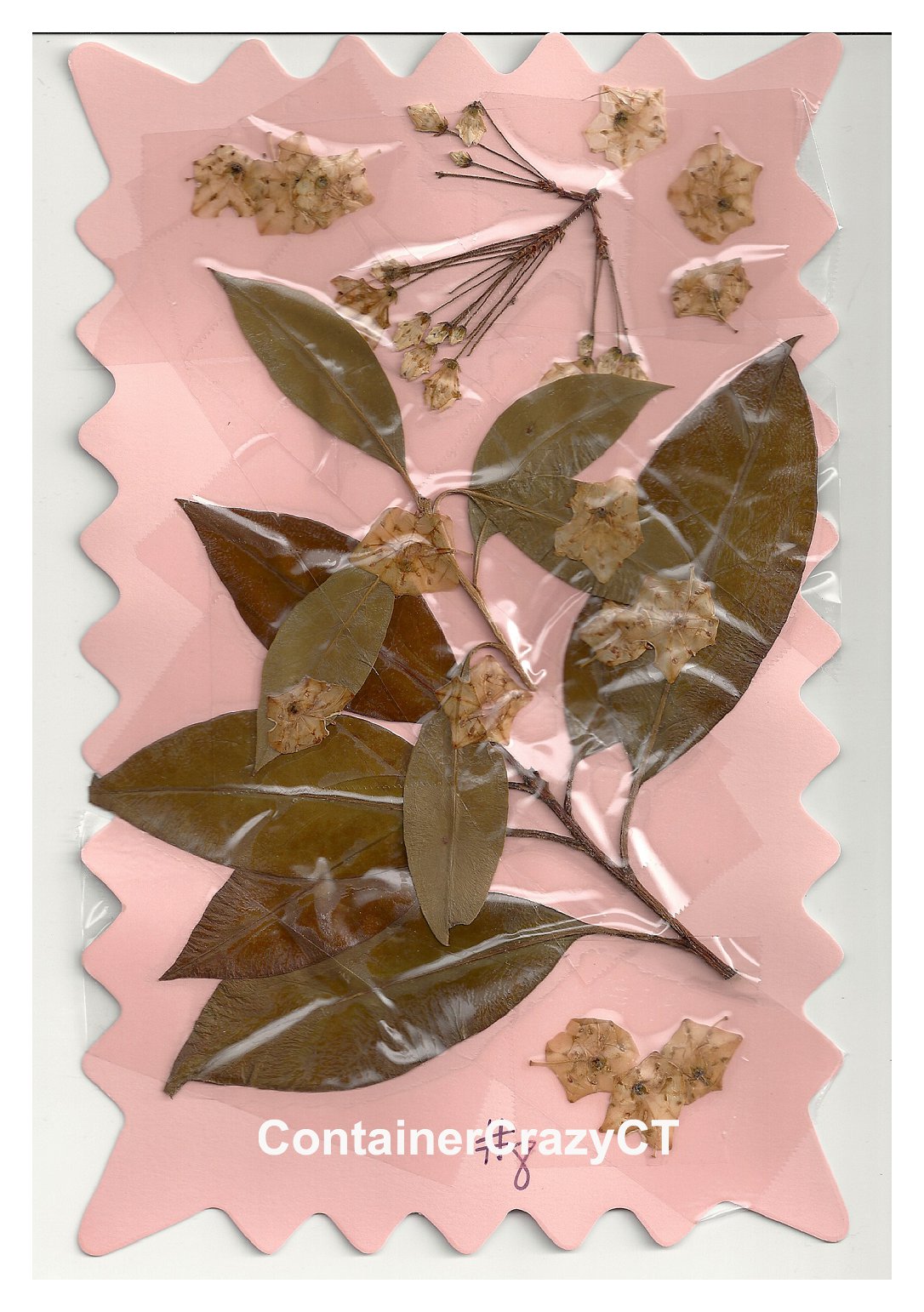
Pressed Sample

Pressed Sample

Half-Day Sun Location

Mountain Laurels will provide you with more blooms when placed where they get a half-day of sun, or when situated in a ‘bright’ shady area in your yard or landscape.  Think of a dappled shade location for this plant candidate, where there is some filtered light coming through the nearby trees.  If planted by a house, select a side where the location gets sun for part of the day. Otherwise, the shrub will not flower as densely.  It does tolerate shade well, but when in full shade all day, you will primarily see foliage over flowers.

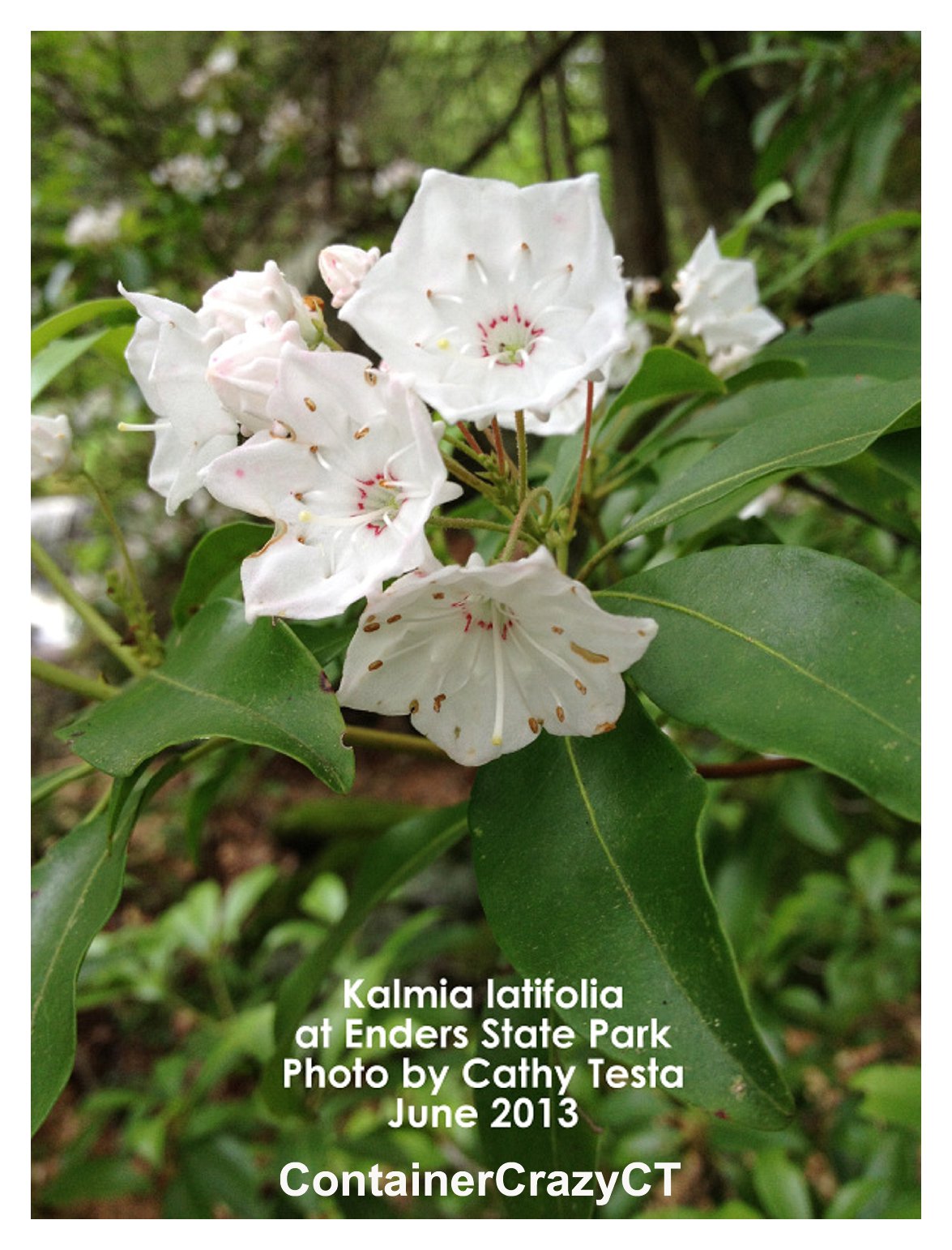
Little Cup-Shaped Flowers

The colors of the flower buds and opened blooms on Mountain Laurel shrubs range from white to pink, and some cultivars are available in deep reds to lush rose tones.  When the buds appear in late spring, they are shaped like tightly closed pinwheels.  Eventually they open up to reveal small cup-shaped saucer-like flowers in clusters, each holding ten stamens in the center.

Mt Laurels_0005

It is always a pleasure to spot these flowers in the wild while on a hike or when full bloom in a homeowner’s landscape.  But more often than not, I’ve seen the plants look scraggly and lacking leaves and blooms.  Usually this is a result of not enough sunlight, or due to poor growing soil conditions.  Consider the soil as well as the exposure to get the maximum performance from this evergreen spring blooming shrub.

Glossy Green Leaves

The dark glossy evergreen leaves on Mountain Laurels are elliptic shaped, broadest in the middle and narrow on the ends.  It will hold onto its leaves throughout the winter months and typically does not require regular pruning for maintenance.  If placed in full hot sun, the leaves may yellow a bit, so again, achieving some sun with shade is best situation for these shrubs.

Mt. Laurel in a pot at a Garden Nursery

Mt. Laurel in a pot at a Garden Nursery

As this plant matures, it may grow to have a more open and non-full look to its shape.  This growth will also happen if it is grown in full shade or lacking healthy soil at its roots.  I like the description of gnarled growth as written for this plant on mobot.org. See their ‘plant finders’ link below for additional details.

In my experience of seeing Mountain Laurels in homeowners’ landscapes, their shrubs are more open than dense.  In fact, I can only think of one case where I saw a beautiful Mountain Laurel in a foundation planting completely full of leaves and blooms.  When I asked the homeowner what they did, they said all of their soil was formerly farmland.  Their housing development was placed on healthy organic soil to start with.

Acidic and Healthy Fertile Soil

In addition to providing some dappled sun or filtered shade to achieve the best blooms, Mountain Laurels prefer acidic soils to get the nutrients they desire to grow well.  The soil should also be moist, well-drained, and have good fertility with high organic matter.  Mountain Laurel shrubs will not thrive in alkaline soils typically found near home foundations, and tend to suffer if placed in poor soils unable to hold moisture. Many properties are void of healthy soils because the soil was disturbed or removed when the house was built.  If you did not amend your planting beds around your home’s foundation, it may not be well suited for Mountain Laurels because they will suffer from things like drought stress or lack of nutrients.

Mt. Laurel in Foundation Planting, lacking vigor

Mt. Laurel in Foundation Planting, lacking vigor

If unsure of your soil conditions, collect a soil sample first and mail it to the UCONN Soil Lab for testing.  Or go with a holistic approach by amending the soil with healthy compost prior to planting.  Raising the planting bed is also beneficial for Mountain Laurel shrubs because the soil will drain well which they prefer.

When planting a shrub in a poor soil, void of organic life, it usually will not prosper, flower, or flourish.  So remember to consider the exposure, the soil’s existing condition, and don’t forget once you have it in the right spot, to finish it off with some mulch.

The Mulch

Mountain Laurels pair up well with rhododendrons and azaleas due to their similar acidic soil requirements, preferred exposure of dappled sunlight and shade, and sequence of the blooms during the spring time. And they share similar water and mulch requirements.  Mulch is a good idea for these shrubs because all three are shallow rooted and it will help keep the soil moist and cool.  If you are seeing wilt on your shrubs, this can be an indication it needs some watering.  Remember to protect all three of these plants from drying winds, and again, when newly planted, to follow a watering routine until they get established.

Written by Cathy Testa
www.ContainerCrazyCT.com
www.cathytesta.com
ContainerCrazyCT@gmail.com

Useful Links:

http://www.hort.uconn.edu/plants/k/kallat/kallat1.html
UCONN Plant Database

http://www.statesymbolsusa.org/Connecticut/flowerMtlaural.html
State Symbols USA

http://www.missouribotanicalgarden.org/PlantFinder/PlantFinderDetails.aspx?kempercode=c798
Missouri Botanical Garden Plant Finder

Pinterest Board

To see photos of Mountain Laurels and other Evergreen Shrubs blogged about on ContainerCrazyCT, visit Cathy T’s Pinterest Board:

American Arborvitaes – Easy To Grow, Unless You Made These 5 Mistakes

1 Comment

Arborvitae_0004Mistake #1 – Placed it where deer roam to dine

Thuja occidentalis (Eastern or American arborvitae) is a needled evergreen tree often planted in rows to create living borders between properties.  It is very easy to grow, low maintenance, commonly sold, and available in many choices of cultivars, but if you placed it where hungry deer tend to roam during their forage for food, you are asking for trouble.

Deer favor American arborvitaes and will typically dine on the lower portions of the leaves when they are hungry enough.  Your trees will end up looking like deformed topiaries, instead of full evergreens with a conical to pyramidal shape from top to bottom.  This will be a big disappointed if you invested in planting a long row of them as a hedge.

Alternatively, if deer grazing is not a problem on your property, this plant makes an excellent evergreen candidate for hedges, as foundation plants, and as backdrops to perennial beds.  You can use methods to protect the trees during the winter season with burlap, deer fencing, or wire cages, however, this is a process you may not prefer.

Mistake #2 – Planted it in full shade or exposed windy locations

If you have a lot of shade, beware when it comes to arborvitaes.  Too much shade will make the plant a bit more floppy, open and loose looking.  It may make it because they are generally easy to grow and tolerant, but they prefer full sun to “part” shade (and enjoy some light afternoon shade in warmer locations) to perform their best.

When planted in full shade, their stately upright form will suffer.  Before you invest in planting a row or barrier of several plants in your landscape, consider the sun exposure during all parts of the day.  Think about how the shade is cast throughout the day, especially if located near large homes or buildings.

Arborvitaes are generally picky about wind exposure as well, especially if the windy site is open with no protection around the plants.  During the winter, when exposed to wind, the foliage will suffer and may display brown to yellow spots the following spring from winter burn.  It is not super unsightly and can be cleaned up by pruning if limited, but could lead to some disappointment.

If planted in a container garden or patio pot during the growing season (because this plant also makes an excellent thriller in patio pots), be sure to protect the containerized plant during the winter months by moving it to a sheltered location such as your garage or shed.

When planted in the correct exposure, these evergreens will demand little attention.  Its flat sprays with overlapping scale-like leaf patterns are densely packed on the trees and are slightly aromatic.  Another interesting feature on this evergreen are the urn-shaped small cones.

Arborvitae_0001

Mistake #3 – Failed to protect it during heavy snowfalls

This plant can topple a bit during heavy snow storms and you may end up with arched plants from broken branches due to the weight of snow and ice.  During heavy snowstorms, which are thankfully months away now, you may want to loosely place twine around them to help keep up their branches or protect them with a wooden frame during the heavy storms.  Another option is to gently shake accumulated snowfall off the plants, if you feel like venturing out during the storm.

Twined

Twined

Mistake #4 – Planted it too deep or failed to water it

If your arborvitaes turn brown shortly after planting, this could be an indication you planted them too deep.  Because roots require oxygen and arborvitaes are relatively shallow rooted, they will suffer from lack of oxygen below the soil if planted incorrectly.

Be sure to follow the instructions provided by your nurseryman, or hire a professional if you are installing a large barrier or hedge – it will be worth the investment and help protect you from hurting your back, especially if you are planting larger balled and burlapped trees which are very heavy to move and place in the ground.

Arborvitaes can take a wide range of soils from average to well-drained, and overall, they are not super challenging to grow, however, their preferred soil conditions are moist and well-drained.  Think about the soil in your yard before you proceed.

After planting time, you should follow a watering routine as dictated by your nurseryman, especially when planting during the hottest parts of summer.  Once these plants are established, they are more tolerant to drought, but it is important to get your plants growing with a good start.  Do not leave them unattended during the heat of summer.

Planting any new plants, especially a row where you invested in purchasing several, should be monitored for watering during dry periods as well.  Do not fail to water it, and if you plan to leave for vacation immediately after planting them, remember your neighbor may not want to water them for you seeing as you just put up a privacy barrier between your properties.  Plan when you plant to avoid letting the new trees sit without attention.

Mistake #5 – Planted in compacted areas or where additives accumulated

Because arborvitaes are excellent candidates as tall hedges, many people will plant them alongside driveways or roadways on their property lines.  Be aware of any hard packed areas where the roots may struggle to get established.  And if planting balled and burlapped trees versus containerized ones, follow the instructions on how to property deal with the twine so you do not end up girdling the tree’s trunk near the soil line.

Additionally, roadside salts or runoff from lawn herbicides may injure hedges overtime.  Always consider the soil conditions of your planting site before proceeding with planting a hedge.  If planted at the base of a slope for example, accumulation of harmful additives in the area can affect the planting area.  While these evergreens are tough, anything sitting in a pool of pollution will suffer eventually.

American arborvitaes are native to the northeast and commonly used in landscapes as hedges, foundation plants, backgrounds to perennial beds, and focal points – and they are relatively easy to grow with some tolerance, but they still need a bit of awareness of their prefer conditions to perform at their best.  Avoid the 5 mistakes above, and you will enjoy your privacy in no time.

Pressed Sample of Flat Sprays

Pressed Sample of Flat Sprays

Pronunciation:

Thuja is pronounced kind of like “Fool-ya” but with a ‘th’ instead of the F.  To hear how it sounds, check out wordHippo.  By the way, many folks refer to arborvitaes as cedar trees.

Written by Cathy Testa
www.ContainerCrazyCT.com
www.cathytesta.com
ContainerCrazyCT@gmail.com

Arb w Pansies

Arb w Pansies