Insects in Your Container Gardens – And What You Can Do…

2 Comments

Hello Everyone!

It is that time of year when we may be seeing little critters appear on some of our plants in our gardens or container gardens, and it ain’t pretty.  Fortunately, many of them do not last long due to their life cycles, stages of growth, and time of appearance, but regardless, it is best to battle them as soon as spotted on your plants.

I like to use the ‘pick and squish’ method first whenever possible, if bold enough, prior to reaching for any insecticides, or use of pesticides.  Sometimes just hand picking off or pruning, then disposing of them works.

In the photos below, you will see what I believe are eastern tent caterpillars on my honeysuckle vine (top left), aphids on the eggplant bloom (middle top photo), and mosquito larvae in the water image.  These were all spotted in late June, along with a first sighting of the infamous Japanese beetles, which emerge from the ground in early summer to feed on plants.

Yuck -- Insects on Plants

Yuck — Insects on Plants

Tent caterpillars on my trumpet honeysuckle – YUCK! That was a first – and my honeysuckle has been doing so well this year.  Obviously, I was not happy to find these buggers.  My honeysuckle plant is growing by the side of the house, and it surprised me to find tent caterpillars on it.  Fortunately, with a quick snip of the vine from which they were attached, they were easily bagged and tossed.

Honeysuckle bloom creeps into Delphinium

Honeysuckle bloom creeps into Delphinium’s blooms

TENT CATERPILLARS ON MY HONEYSUCKLE VINES

Using clean pruning shears, I cut of the portion of a vine with the nasty critters on it, put it in a plastic bag on the driveway and then stomped on the bag.  I left the bag laying on the driveway for a while.  Why? I figured the heat would fry any not crushed (oooh, gross – the things gardeners will do!).  Then, I went out for my day’s work at a client’s location.

That day, my parents dropped of some items at my door, and my mother saw the plastic bag sitting on the driveway so she included my bug bag as a hanging item on my door handle while I was not home.  I guess she figured I dropped something by mistake on the driveway.

Well, when I opened up that bag at the kitchen table – ACK.  Out to the garbage can it went – and quickly. You see, the other bags my parents often leave me are filled with fresh veggies from their home garden.  Imagine my surprise and reaction when I found bugs instead of radishes.

Prior to all this bug nonsense, I was enjoying the many orange trumpet shaped blooms growing from my honeysuckle so much all month.  At one point, a stem pushed its way through the center of a Delphinium stalk located near it – talk about stunning.

Do these two plants know they are complementary colors on the color wheel?

Opposite each other on the color wheel – are blue and orange – talk about a nice surprise nature combo in the garden! Although this Delphinium technically has more purples than blues in its blooms, the combination was breathtaking all the same – I have been enjoying it for a whole month.  I wrote about Delphiniums before on this blog, as it was a flower I selected in my wedding bouquet 24 years ago.  It probably was one of my first flower obsessions.  I find them a little difficult to keep growing in my garden, so this year, I just bought a new one and plopped it by the honeysuckle plant, and it has grown beautifully.

Honeysuckle Blooms

Honeysuckle Blooms

Honeysuckle (Lonicera) is a deciduous vine that grows quickly every year.  It is deer resistant and attracts butterflies. A trellis or arbor is needed to hold it up as it grows taller, sometimes reaching 15-20 feet.  I’ve had mine for several years in this spot with little problems – again, why I was surprised to see the tent caterpillars take a spot on it this year.

Although this vine grows quickly, I wouldn’t classify it as a invasive plant because it is easily removed if you find it over takes your space, but it can get large fast and needs to be watched.  It is included in my Troublemakers Turned Star Plants on my Pinterest page, because it can be very useful in a container garden if you find it a nuisance in the regular gardens of the ground.

It likes sun to part shade, and blooms for a long time.  The scent is intoxicating for many cultivars. This plant may be used as a thriller in a large container garden, so long as you add a nice big trellis in the container for support.
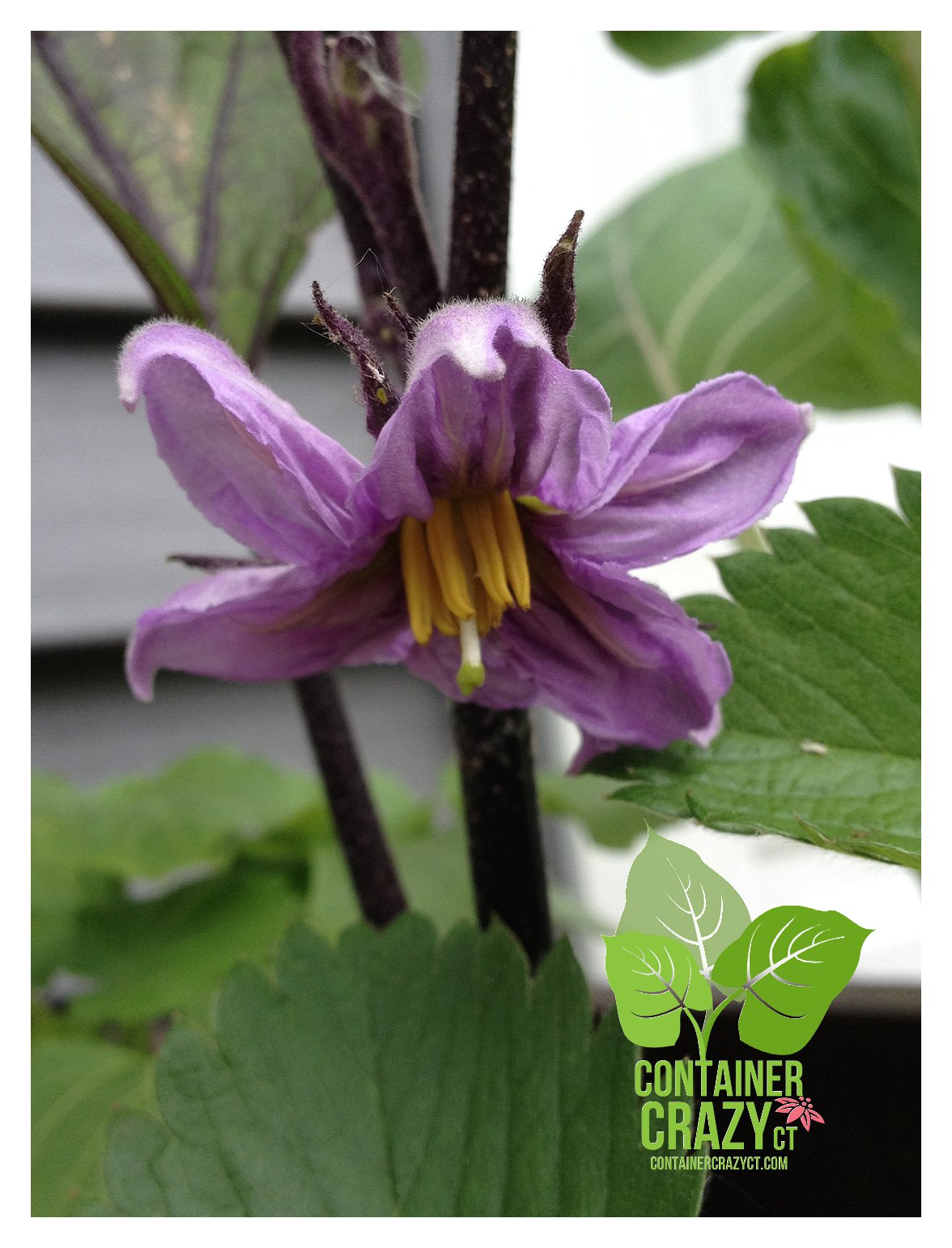
Happy Bloom on Japanese Long Eggplant

Happy Bloom on Japanese Long Eggplant Being Visited by Pest Aphids

APHIDS ON MY EGGPLANT BLOOM

If you take a close look above, you may see the little aphid bugs on my Japanese eggplant.

Aphids are very tiny pear-shaped insects with long antennae and tubes on their back-ends.  Some of the interesting tidbits about aphids are ants protect them because they enjoy their “sweet honeydew”, and they (aphids) reproduce faster than rabbits – the females do not need males to do so, and aphids vary in colors – not just green as the ones spotted on this plant.  To learn more about these little guys, see the CAES link.

Well, seeing them on my Japanese long eggplant flowers in my container garden was not pleasing. I’ve been using edibles in container gardens a great deal this season – and talking about it at garden clubs.  I am finding, however, the edible plants seem to get attacked by bugs much quicker than my tropical or annual plants.

To battle these aphids, I lightly sprayed the plant on a shady day when cool with a safe organic spray for vegetable plants (remember, don’t spray a plant when its very hot and located in full sun), and then a day later, I hosed off the leaves by using the garden hose with a watering wand at a good heavy pressure – it did the trick.  No more signs of the aphids since – and my first eggplant fruit growing right now on the plant – yeah!

I couldn’t really pick the small aphids by hand because they are too tiny, at the size of 1/8″ long.  And by the way, lady bugs are natural predators, releasing them can help if you can find the ladybugs from a garden center.

First eggplant

First eggplant

I potted up this eggplant plant along side an asparagus plant, strawberry plant, and would you believe, Brussels sprouts?! The asparagus added a nice soft texture with its fine and light foliage along side the coarse texture of the eggplant leaves, the strawberry plant is a spiller, and the Brussels sprouts – well, wow – what big texture those leaves have offered.

Eggplant with Mixed Edibles

Eggplant with Mixed Edibles

Earlier in June, I brought the container garden to the Ellington Farmers Market to show the combination during my talk about “Incorporating Decorative Edibles in Mixed Container Gardens.”  Well, low and behold, these two very interesting looking insects took their position on the red trellis in the pot – and stayed there all day during the market.  Thankfully they did not jump on me when I was driving home later that day with the container garden on my truck seat.  Not sure what they are, do you know?
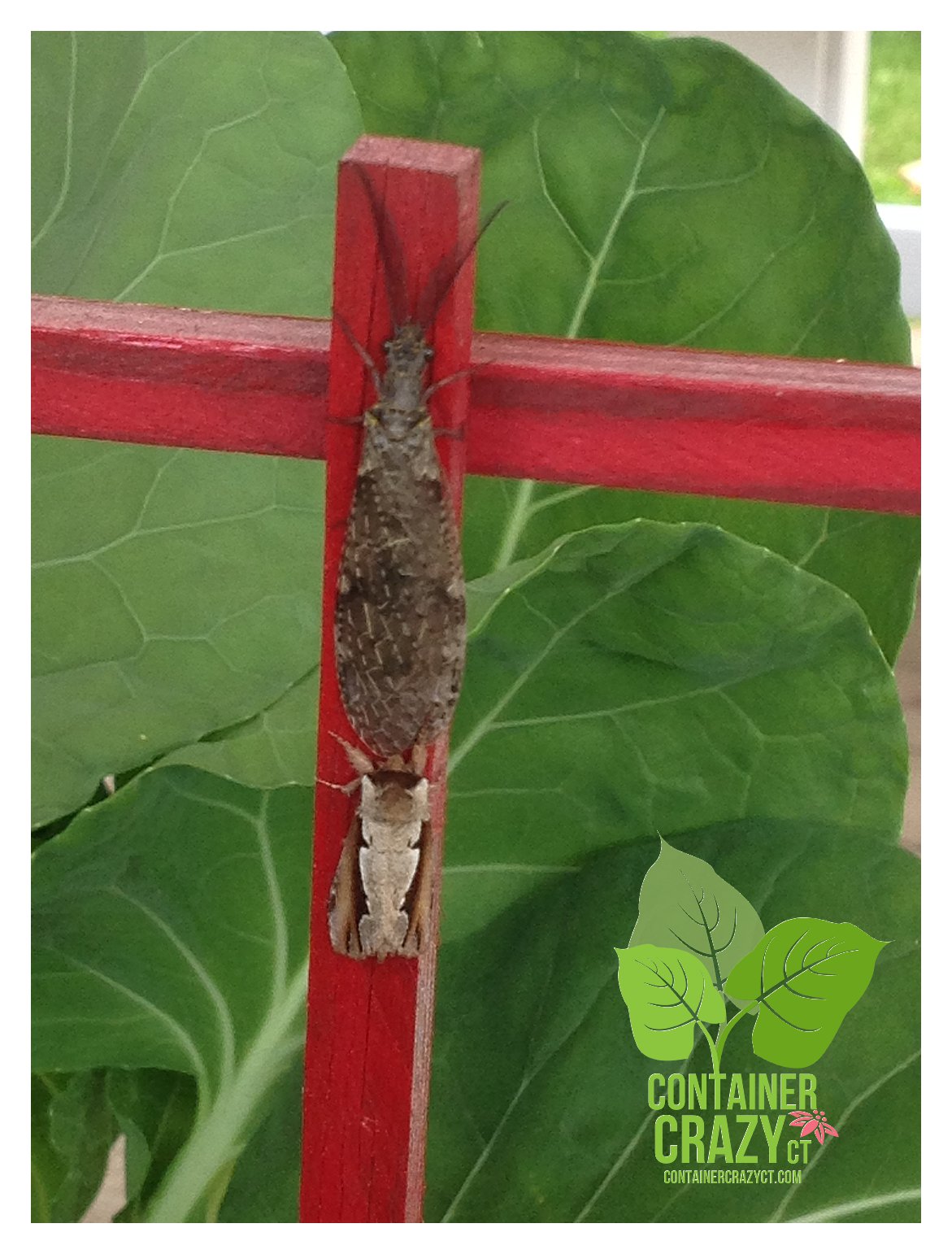
Bugs on Trellis with brussel sprout Leaves behind it.

Bugs on Trellis with brussel sprout Leaves behind it.

MOSQUITO LARVAE IN MY WATER GARDEN

The other spot where I saw critters was in a water garden I have at home, which is a big galvanized feeding bin (for animals) filled with water and plants, such as elephant ears (Colocasia) or other water tolerant types, such as Cyperus papyrus (Tut). I put the plants in terracotta pots because they sink well into the water due to their weight and the clay is porous. Add some stones to the top of the soil of those pots so the soil does not escape into the water.  When submerging the pots, gently drop them into the water as to not disturb the soil too much.

Well, I should have known, tiny mosquito larvae started to grow in the water, and there were tons of them wiggling in the water one day.

To avoid this situation – you may try two things – place a mosquito dunk, which are not harmful to the plants, in the water, or just flush some of the water out occasionally with a garden hose so the water is not stagnant.  This is what I do. Later, no more larvae and no more bites.

Oh, when I was very young, I remember telling a teacher that I saw little things wiggling in a puddle at home. (Living on a farm, you tend to notice things like this – or I was just always fascinated with looking at things up close in nature.)  He told me to put them in a jar with water, cover it with plastic wrap and to bring it into class.  He set it on his desk and said, “Let’s see what happens.” A few days later, a bunch of mosquitoes were flying above the water.  A visual lesson for sure.

A PRETTIER INSECT
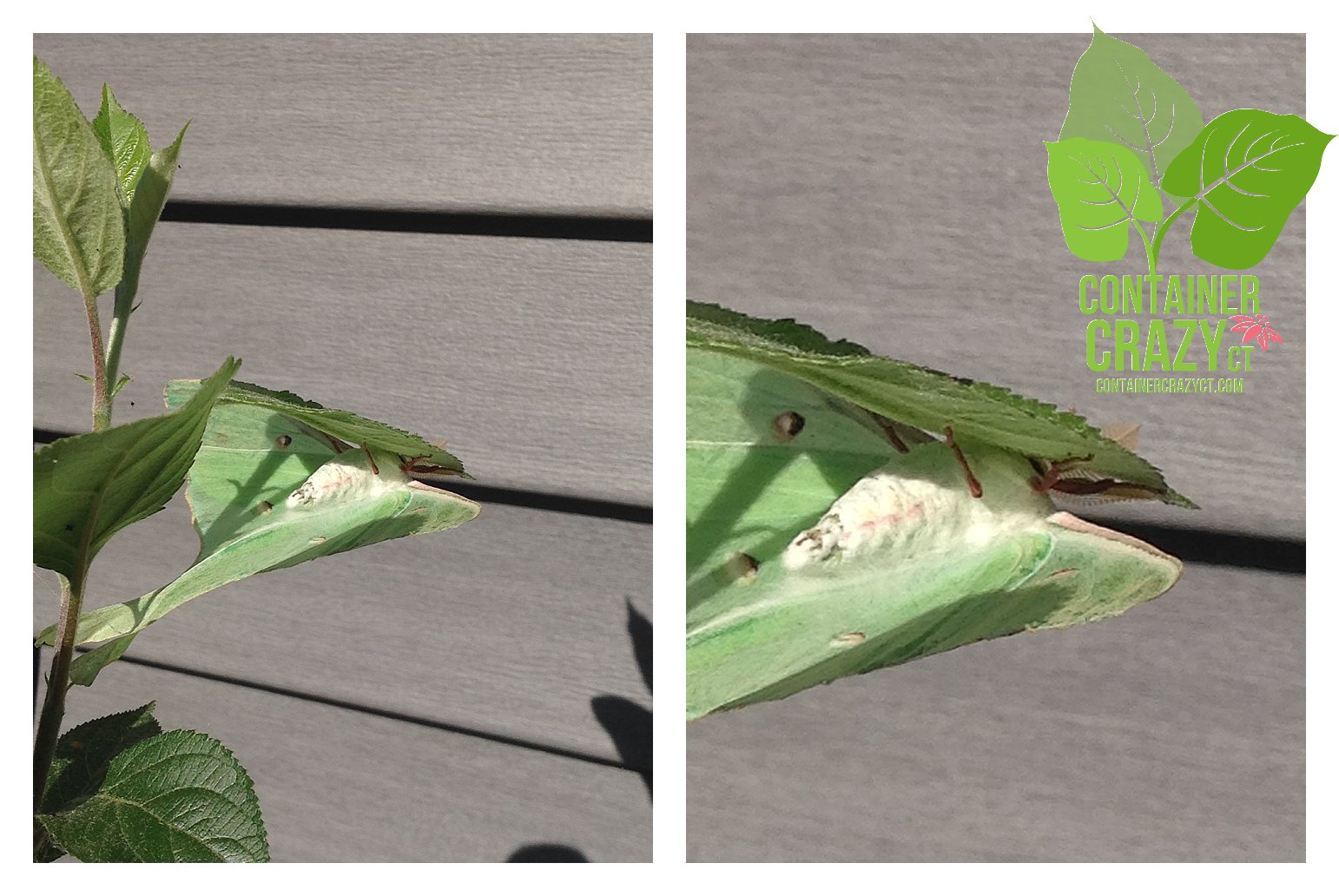
Fuzzy body of moth

Fuzzy body of moth

Another surprise sighting at my home this season was a Luna moth (Actias luna) on a apple tree in a pot.  As I was walking out to my garage, I saw a white substance on a leaf.  Well camouflaged, I didn’t see the wings of the moth at first.

I thought, “What the heck is that white fuzzy cocoon on my apple tree?”  (By the way, I often plant small trees in container gardens for a few years first – because I am crazy about container gardening, but it also can give a small tree some time to grow larger and stronger before I eventually transplant it to the ground when it outgrows a large pot – this way, I enjoy, learn and grow the plant first – as is the case with this apple tree.)

Insects ContainerCrazyCT_0015

To my surprise, it was a beautiful moth and not an ugly insect!  This was in the early morning and the east sun was brightly lighting up its wings.  The moth was completely motionless, and not moving at all – this gave me the wonderful opportunity to snap more photos.
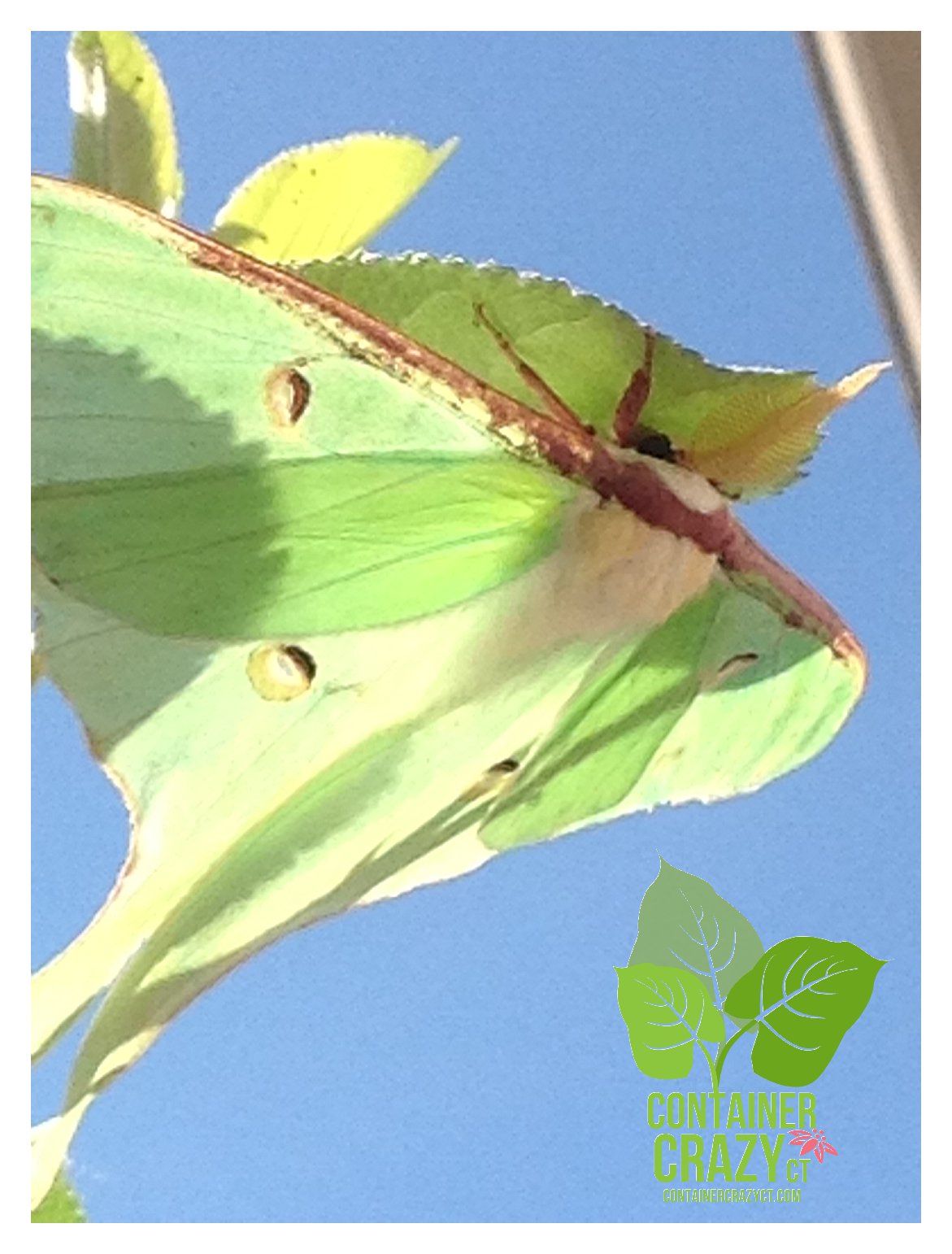
Luna Moth on Apple Tree hanging on the underside of a leaf

Luna Moth on Apple Tree hanging on the underside of a leaf

I tried getting photos from every angle, which was difficult to do because it was on the backside of the plant along the garage wall.  After repeatedly taking photos, I tried moving the pot but it flew away.

Insects ContainerCrazyCT_0009

Luna Moth on Apple Tree

Luna Moth on Apple Tree

SPOTTING FIRST JAPANESE BEETLE

I also just spotted my first Japanese beetle on a plant yesterday – it happen to be a watermelon plant in a single container. Those beetles, I pick up with my hands and squish on the ground under foot.  They never scare me – even when they grab tightly onto my fingers.  I guess this is because my father would pick them from his garden plants and put them in a jar – another memory from childhood – and sometimes, I would help him collect the beetles.  I also would chase my younger sister, Louise, around in our pool, when I would find Japanese beetles in our pool too – and she would screech at the sight of them.  She told me this game as children put a fear of those beetles in her for a lifetime – oh well, the things we do when we are kids – LOL! However, she also practices the “pick and squish” method in her own vegetable garden for insects not so scary to her.
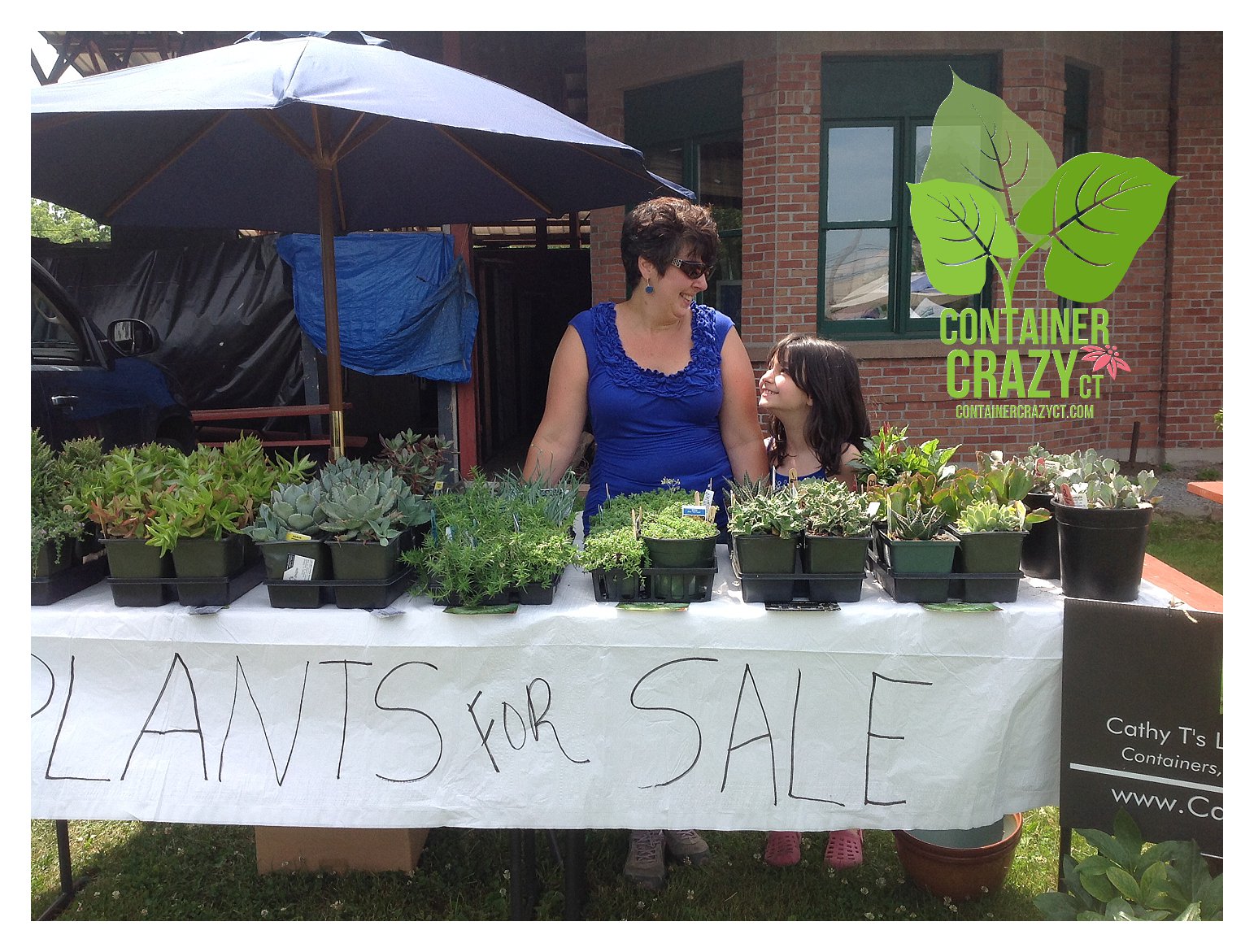
East Windsor Farmers Market

East Windsor Farmers Market

ALL BUGS ASIDE

Last week, all bugs aside, I was featured as a guest speaker at the East Windsor Farmers Market on their opening day. Their market runs from now until October, on Sundays, 11 am to 2 pm, at the Trolley Museum off Rt 140.

My niece came for a visit – she loves to help me at the markets with my plants – and I love having her there.  We were goofing around, taking silly photos, and coincidentally, had matching blue shirts on.

See the next photo – this was my building at the market – pretty cool, huh?

Nope, just kidding – it was some sort of very old structure from the Trolley Museum next to my table setup.  I never got a chance to ask them what is was about, but it was sort of cool looking.  (BTW, if you go there, go see the old trolleys and even a few other interesting vehicles, such as airport shuttle buses built, but they were never installed at Bradley airport.)

The other cool thing about going to the market at this location is kids and family can take trolley rides on antique trolley cars as part of their day.  And, I did not know this – but there is a little movie theater inside the trolley museum building too – along with old cool trolley pics and more – so if you go, be sure to go inside as well as visit all the new vendors at this growing market in a great location – picnic tables and all.

Old Structure at the Trolley Museum

Old Structure at the Trolley Museum

AFTER THE MARKET

After the weekend, one of my first priorities was to update my client’s business store front with some red-white-and blues for the holiday and put a nice mix of succulents in the container gardens.  Cactic and succulents can be a little tricky to plant if they have spines and needles.  Just be sure to wear thick gloves and handle it by the root ball – and with some practice, you won’t get pinned, stuck, or aggravated by tiny spines.  I will say this however, whomever is putting their cigarette butts in my container gardens at this location – you will find a little surprise this time (hee-hee!). Fortunately, insects tend to not bother cacti and succulents much based on my experience, so they are useful for the non-insect people.

Client Barrels Decorated for the 4th

Client Barrels Decorated for the 4th

4th of July Succulents ContainerCrazyCT_0002

Oh by the way, what are these ugly critters below?  Saw these on a weed plant, so I pulled the plant out of the ground and took it to the chicken coop for the hens to deal with.  That’s another way to deal with insects.  Recycle to the coop…
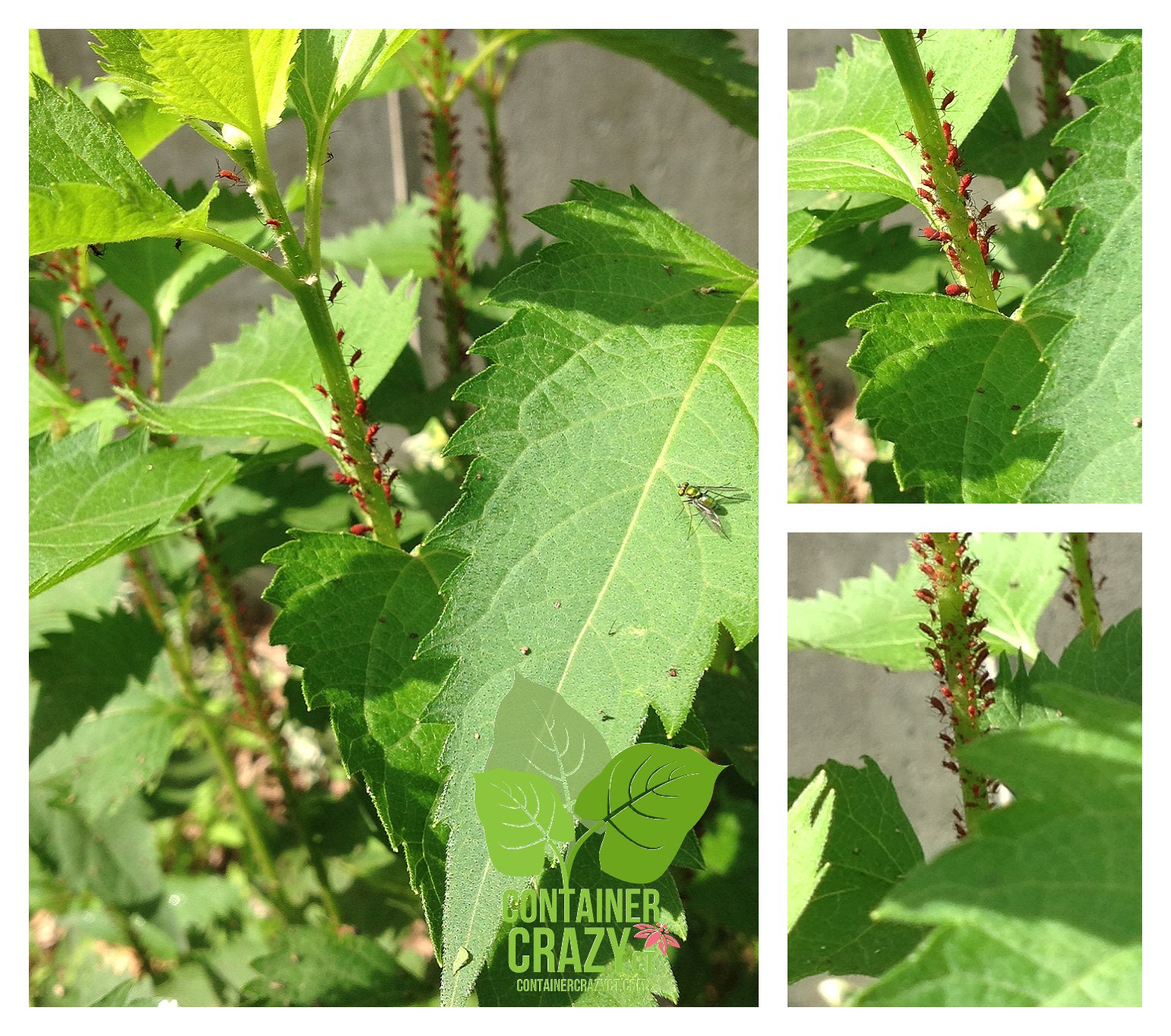
More aphids or not??

More aphids or not??

Cathy Testa

860-977-9473
http://www.cathytesta.com
ContainerCrazyCT
containercathy@gmail.com

Condensed List- What You Can Do:

  1. Pick, Squish, Toss
  2. Prune away Plant Parts with Insects and Toss
  3. Pull Plant; Feed to Chickens
  4. Hose off with Strong Spray of Water
  5. Chase your Younger Sister around with them
  6. Lightly spray with Insecticide specific for plant and insects
  7. Get natural predators, like ladybugs and release near pest insects

Happy 4th of July Weekend Everyone – Hope it is filled with food, family, fun – and not many critters!

4th Photo Courtesy of Freedigitalimages.net, by nuttakit

4th Photo Courtesy of Freedigitalimages.net, by nuttakit

Minis and Markets – This Weekend in East Windsor, CT

Leave a comment

Happy Friday Everyone,

Looks like an amazing weekend coming up with the weather predicted to be beautiful and sunny – and tons of summer related events to enjoy.

SATURDAY MINIATURE GARDENS WORKSHOP

Two on the agenda this weekend for ContainerCrazyCT is a Miniature Gardens Workshop hosted by Cathy T with guest speaker Rhonda Niles of Gardening Inspirations.  It is scheduled for June 28th, Saturday, 11:00 am to 1 pm, in Broad Brook/East Windsor, CT.  Want to join us?? – You can!  Lots of details have been posted on Cathy T’s Facebook page, and links on this blog.  See Cathy T Classes above for more information.

For more inspirations and ideas of what you could potentially create at this workshop, check out my Pinterest Board:

SUNDAY EAST WINDSOR FARMERS MARKET:

And on Sunday, June 29th, Cathy T will be joining other vendors and guests at the East Windsor Farmers Market on Opening Day at the Trolley Museum grounds.

This is the second year for this market – if you are local, please support this market so it will grow for all of us.  Lots of good fresh food, BACKTRAX BAND providing musical entertainment, and Cathy T will be presenting on “Incorporating Edibles in Mixed Container Gardens.”  This talk also includes interesting details about how EDIBLES are hotter than ever and growing in popularity now and for the past six straight years.

Edibles Mixed Planter with Tomatillo in Center as Thriller

Edibles Mixed Planter with Tomatillo in Center as Thriller

SUCCULENTS FOR SALE

And at the market, Cathy T will have select succulent plants for sale, this is your last chance to get some to fill in your planters at home too.  From tiny and adorable Sedums to big and chunky cacti.  Succulents are perfect for planters in the sun, requiring minimal watering, can be left alone when on a vacation, and last for years indoors as houseplants during fall and winter months.  Come learn about them, and edibles on Sunday at the East Windsor Farmers Market.

OTHER UPCOMING EVENTS

Don’t forget to also check out the upcoming “Walk and Talk Home Gardens” day in July on “Pondering Ponds.”  See the menu bar above on this blog for all the details. The one in July will showcase an homeowner’s amazing pond creation in Enfield, CT.  Note the date now so you won’t miss this:  July 19th, 10:00 am.  The walk and talks are free to attend.

Planter with succulents by Cathy T

Planter with succulents by Cathy T

Enjoy your weekend everyone.  Hope to see you soon.

Cathy Testa

http://www.cathytesta.com
ContainerCrazyCT.com
860-977-9473
containercathy@gmail.com


Walk and Talk Home Gardens – This Saturday, Wethersfield, CT

4 Comments

Have you ever walked around with a friend or family member in their yard to check out their gardens and plants?  Next thing you know, you shared a tip, something valuable you didn’t know, or a funny story about your gardening and plant adventures!

This experience of walking and talking home gardens can be rather rewarding.

In an attempt to get this “gardening conversation” going – Cathy T is kicking off a Walk and Talk Home Gardens event, featured once a month at home gardens by volunteers.

Anyone may volunteer to host an hour – and the rule is – its all informal yet informative.

You do not need a “showcase or perfect” garden.  Any small plot is of value in today’s world, and everyone’s experience with gardening always offers something to learn.

The Urban Vegetable Garden

This Saturday, June 7th at 2:30 pm to 3:30 pm, the first “Walk and Talk Home Gardens” hour is scheduled at a garden in Wethersfield, CT.

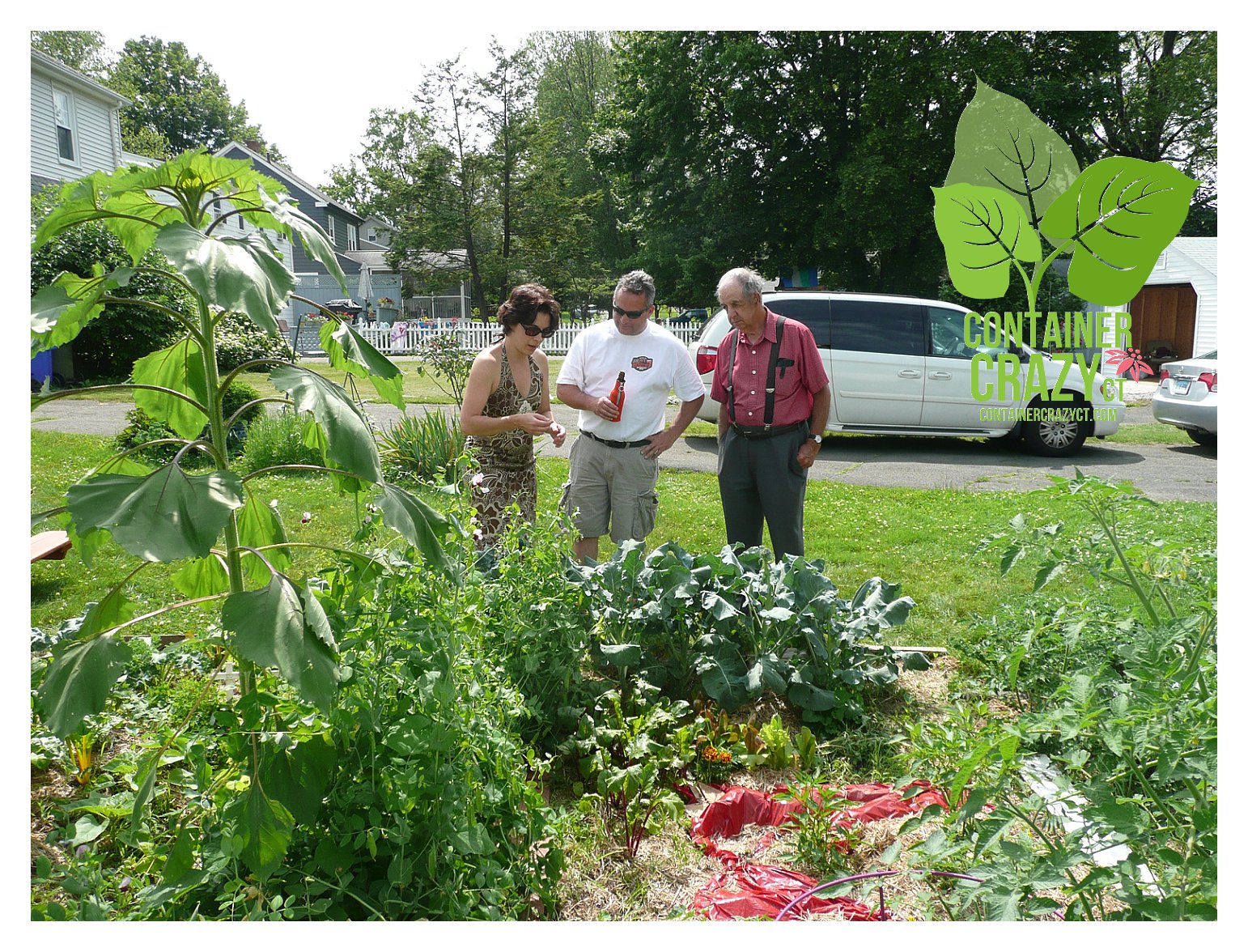
We titled this one, “The Urban Vegetable Garden,” because the property is surrounded on each side by other homes and property lines, yet this homeowner, Louise, has not only a nice vegetable garden – she raises chickens and shares the eggs with her neighbors too.

Louise talking to brother in law and her Dad about the garden

Louise talking to brother in law and her Dad about the garden

When Louise told me she was going to get chickens, I thought on her small lot – what will the neighbors think?!

Her response was, she already asked them – and they were fine with it.  She built a very nice chicken wagon – you have to see it.

Her Chickens

Here’s a photo of her chickens when they were relatively new at her home.

Chickens in the Wagon

Chickens in the Chicken Wagon

Growing Her Own

Louise has an intolerance for corn syrup, a common ingredient in foods.  So she thought, I’m going to grown my own food. This was part of the reason she began her urban style vegetable garden.  Like 47 million Americans growing their own food, she wants her food to be safe for herself and her family.

Louise has a passion for organics and heirlooms.  She spends as much time as possible in her gardens. I have witnessed her expand her knowledge about vegetable growing – I feel like she fits the Master Gardener personality.

When I took the program myself, I met gardeners who loved to be “in the garden” 24 x 7.  This is Louise.  She also began sharing information with me I didn’t know myself. And she plans to share these tips on Saturday with our Walk and Talk group.

One day, I told her she better watch out – she reminds me of a Master Gardener so much that she will be squishing bugs between her fingertips soon. Her response, with a laugh, was, “I already do.”

The Magnolia Hunt

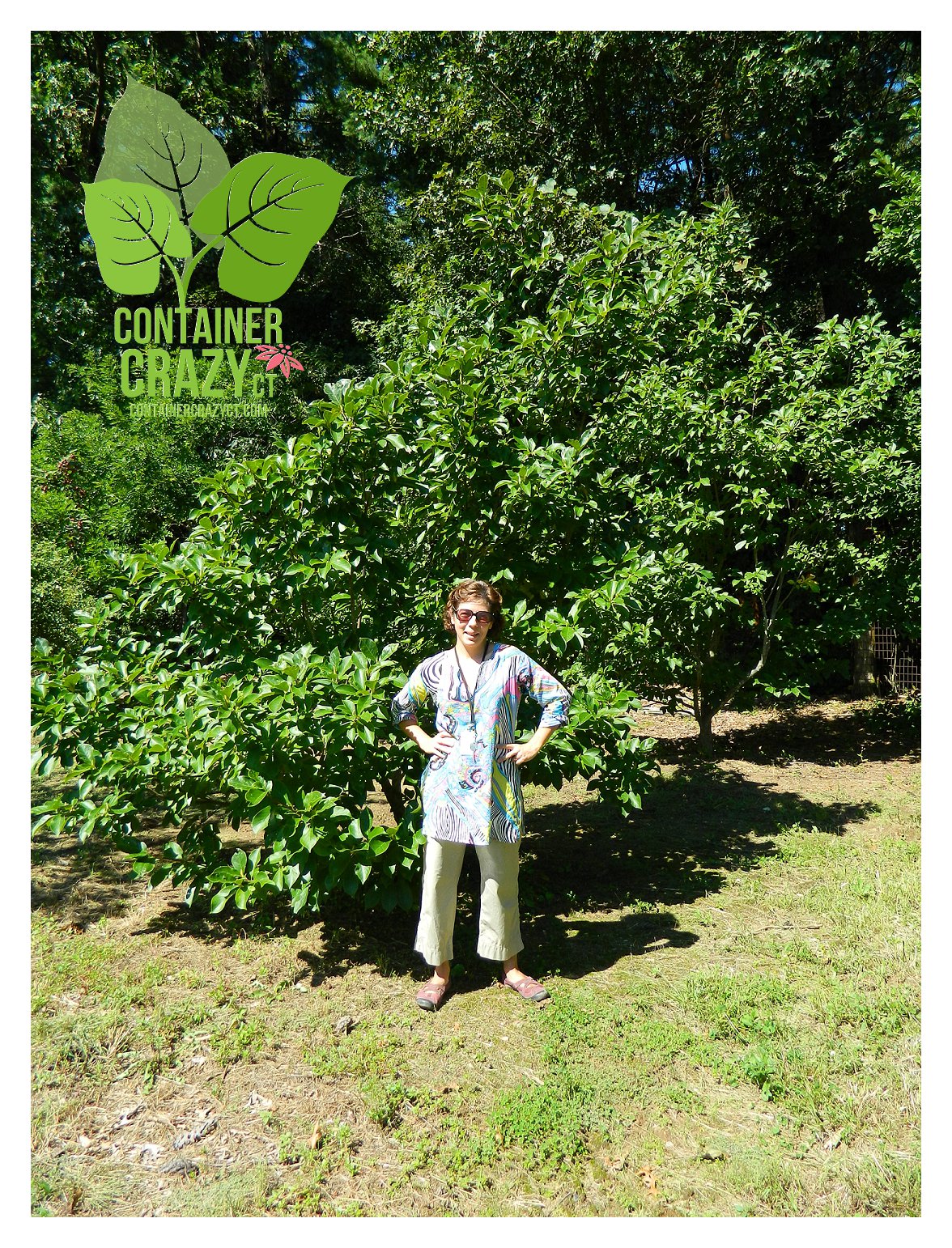
One year, a treasured and huge Magnolia tree in her front lawn got toppled over from a storm.  It was devastating to Louise because she adored the tree so much, and it was one of the reasons they bought their house.

The tree was so tall, its blooms could be seen from her bedroom window on the second floor of her house.

We searched out various sources, nurseries, and special places to find a replacement for her mature Magnolia.  It was an adventure one afternoon on a very hot sunny mid-summer day when we went to a private stock on a property.  She found her replacement and it was dug, balled and burlapped, and delivered to her home as a replacement.  To hear more about this adventure, join our walk and talk on Saturday.

A Hot Day when we Searched for a Magnolia Replacement

A Hot Day when we Searched for a Magnolia Replacement

It is Free to Attend and Registration is Not Required

We hope you will join us – registration is not required, it is free to attend, and we will even offer up some lemonade and some miscellaneous plants will be available for sale, or you can bring a plant to swap with another attendee if you wish.

Let’s get walking and talking.

Oh and by the way, Louise is my sister.  She is a professional soprano, teaches private music lessons, and more.  Maybe we will get a solo out of the day.

Address for Saturday:

23 Stillwold Drive
Wethersfield, CT 06109

Parking is on the street.  Look for Cathy T’s Sign in the front yard.

Written by Cathy Testa
http://www.cathytesta.com
ContainerCrazyCT.com
860-977-9473
containercathy@gmail.com

Cathy T at the Ellington Farmers Market – Edibles, Succulents, and More

2 Comments

Good Morning Everyone,

In June of 2009, I was interviewed by Sarah Martinez for “Garden Center Magazine” about my Container Garden Parties at people’s homes, and one statement I made to her at that time was, “Holding these parties at people’s homes is a lot of work – but I enjoy it.”

Well, the same holds true today.

Last weekend, Cathy T’s Big Container Garden Party (Class) was held, and the plant feature was succulents, alpines and tropical plants – and again – it was a lot of work to setup, but so much fun.  Being with a group of attendees interested in creating and learning – well, it can not be beat.

Attendees listening to Cathy T's Tips

Attendees listening to Cathy T’s Tips

The opportunity to share what I have learned over the years about Container Gardens and plants presents itself again at the Ellington Farmers Market today in Arbor Park on Main Street in Ellington, CT.

Come see me at 10:00 am in the gazebo. (Note:  There are 2 gazebo’s on the property, one will have musicians, the other along Main Street is where I will be on the farmers market grounds.)

The market opens at 9:00 am and closes by noon.  It will be a fast paced day filled with goodies – including a talk on “Decorative Edibles in mixed Container Gardens” by me.  I hope to see you there today.

And because I have beautiful succulents and alpines in stock, I will have those available for sale too.  If you haven’t completed planting up your container gardens and patio pots – come see the goodies available.

Succulents, Alpines, and Cacti

Succulents are plants with thick and strong leaves and stems.  Because they are designed to store water during periods of drought – they are tough little plants.  Some are dainty and others offer bold and strong architectural forms.

Cacti are similar to succulents; they store water in their stems.  Some have areoles with spines, so they can be very strong and even dangerous if not handled appropriately, but so worth it in my opinion, for many offer values in design compositions in container gardens.

In my class last weekend, I went over the 7 ‘Must Not Do’s’ with Succulents, so if you want to know what those are – see me today or sign up for a future class.

Oh and alpines – well, they are just adorable little plants popular to use in rock garden settings, as ground covers, and in crevices — and of course, in big or small container gardens.  This small wired basket is a creation by an attendee last weekend, Linda.  Isn’t it as sweet as ever – so small but so cute.

A dainty creation with alpines by an attendee

A dainty creation with alpines and herbs by an attendee

Sometimes you get inspired when you work with small plants too.  Yesterday, I took snips and cuttings of various succulents and alpines to create this adorable, dainty tea cup embellishment for a table.  Want to give it a try?  All supplies, the vintage bone china tea cups, plants, and instructions will be available at the market at the gazebo.

Cuttings of Succulents in Vintage Tea Cups

Cuttings of Succulents in Vintage Tea Cups

The tea cup plate and cup on the left, by the way, will be available for purchase. These cups go for $20-25 dollars on eBay – I will have them for a deal at a limited supply so if you want one, arrive early before they are all sold out.

But succulents, as noted above, can be very edge looking, and another attendee at the class scored an amazing container – check this out!  Topped with a very large Sempervirens (Hens and Chick), alone it makes a statement.  Her tall silver GARDEN container will rock it outdoors, and is easily moved indoors over the winter if desired.  I think it was my favorite container style brought by an attendee this year – so fun to see what they find and design in class.

Lisa's GARDEN container rules!

Lisa’s GARDEN container rules!

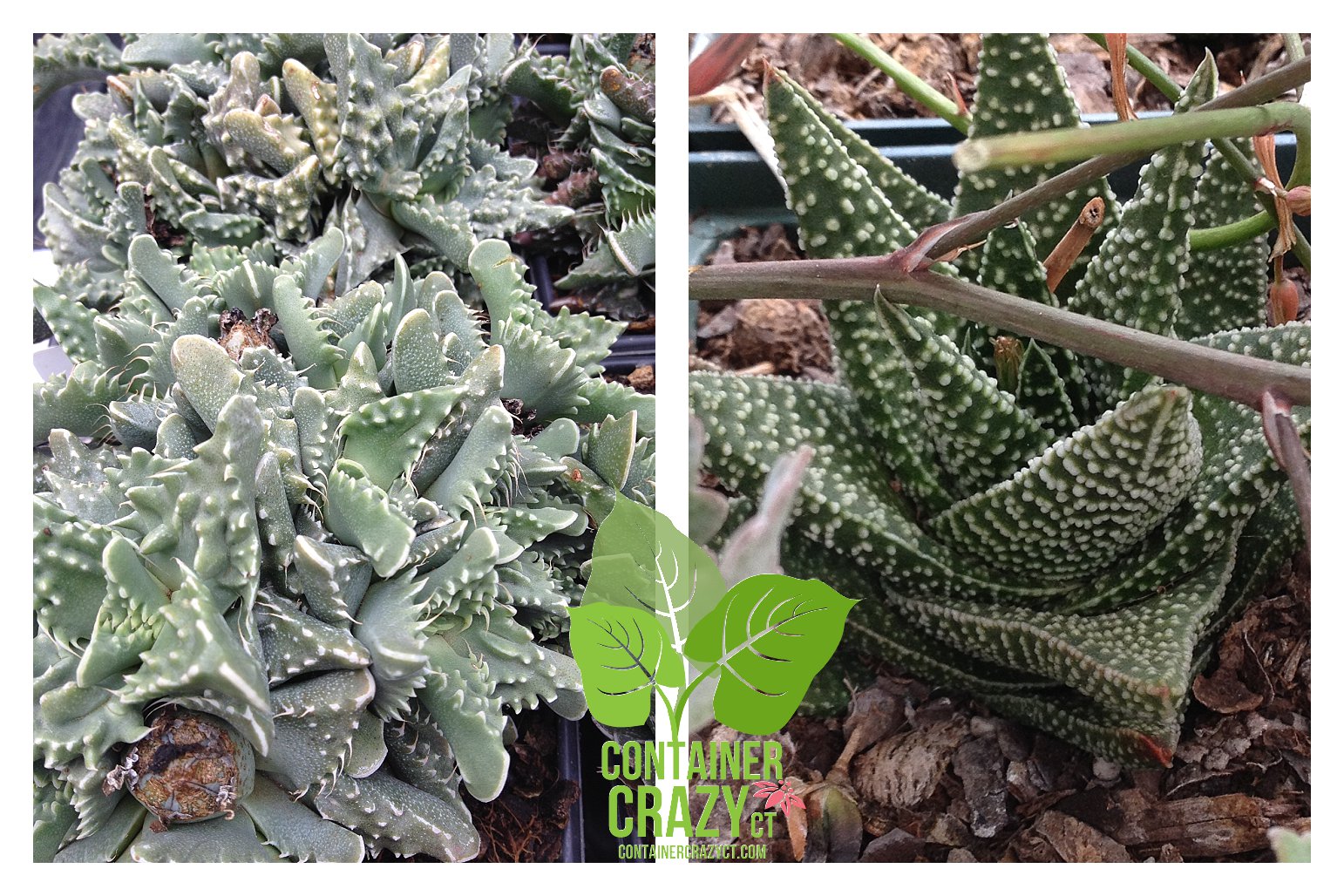
Succulents and cacti offer extremely different ranges of forms and textures.  Take the Faucaria tuberculosa on the left in the photo below.  This plant is a South African native and has the most interesting triangular leaves and it is a soft silvery blue color. This looks great with darker toned succulents in a pot, but it is also a neat form to work with.  It is a Zones 10-11 plant so perfect for the heat of summer and as a house plant in winter.  It is very easy to grow and will bloom yellow flowers in late summer.  The common name is Pebbled Tiger Jaws – perfect name, I would say.

Awesome forms and textures

Awesome forms and textures

And check out the plant on the right – Gasterworthia ‘American Beauty’ – it is NEW on the scene.  This is a hybrid of Gasteria and Haworthia pumila (maxima) grown by local growers in CT – and the rosette is stunning – patterned with spotting on the leaves. It is shooting up yellow flowers right now.  Both will be available for sale today at the market, along with many other types.

Two Types of Jades

Two Types of Jades

The plant with red edged leaves is a Jade plant by the name of Crassula arborescens – also NEW on the scene.  How can you resist this plant? – it has fleshy, blue-gray foliage and stands upright but full and mounded too.  It eventually grows to 3 to 4 feet wide, and I think they are stunning.  Also, a common Jade (as seen in the background), Crassula ovata, is in this photo – a common houseplant which I think looks amazing in head planters.  Go see my Container Garden Collages for photos of a red head pot to see.

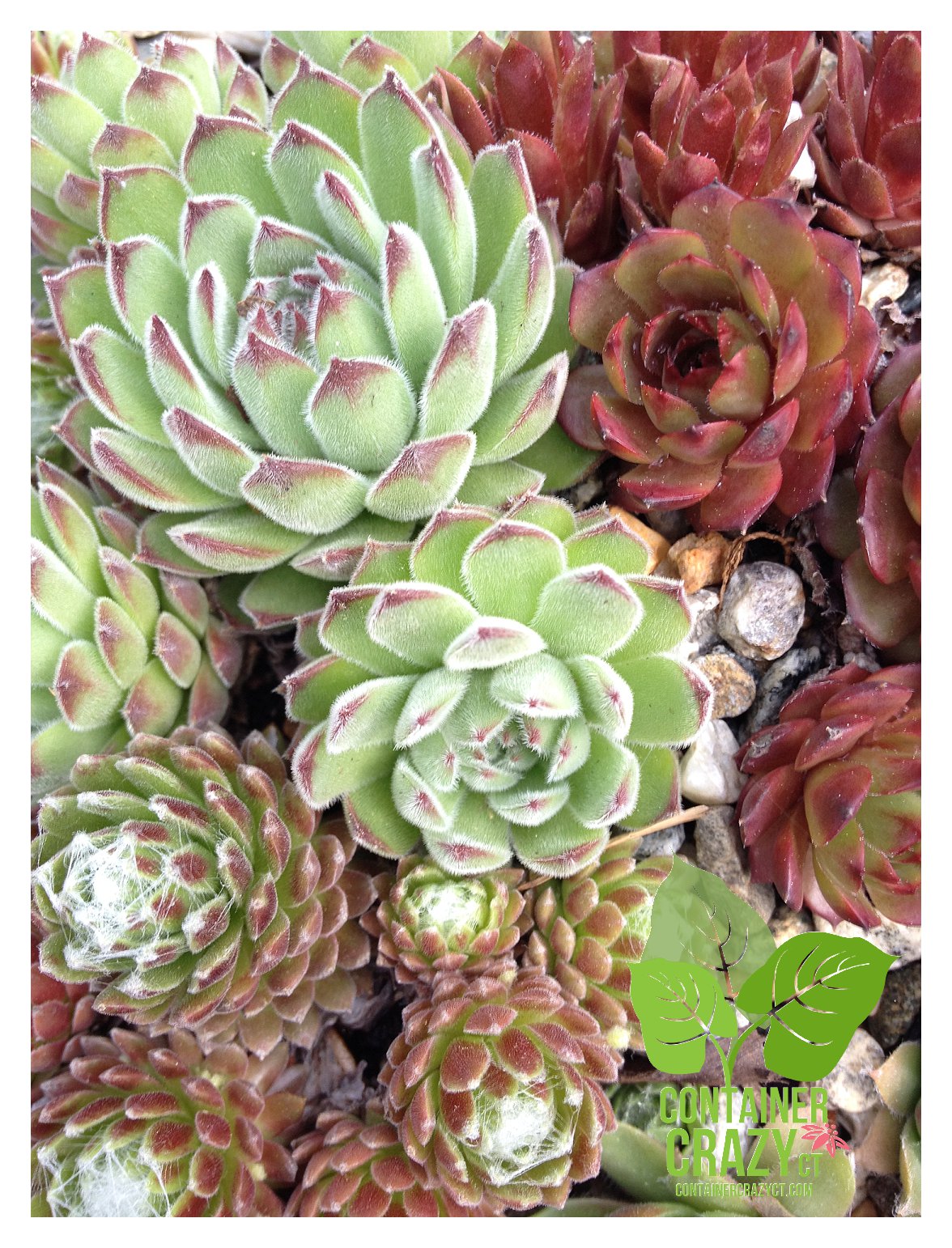
Hens and Chics

Hens and Chics

These are just ‘sneak peeks’ of today’s plant features.  Echeverias with a variety of colors and fleshy leaves tinged with colored edges will be available too.  The Genus name is named after an 18th century Mexican botanical artist, Atanasio Echeveria y Godoy – now you know why they are called Echeverias (a.k.a., Hens and Chicks).  And be on the look out for Agaves, Aloes, Kalanchoes, and other’s.

But now it’s time for me to sign-off and get ready for my day.

See you there,

Cathy Testa
http://www.cathytesta.com
ContainerCrazyCT.com
860-977-9473


Goofing Around with My Camera (Predators, Coop Renovation, Blooms)

4 Comments

I’ve been so busy preparing for this weekend’s class on Container Gardening with succulents, alpines, and cacti that I woke up at 2:00 am unable to sleep.  The excitement is getting to me, as it always does.  So, after tossing around in bed for another couple hours, I gave up and got up. I decided a distraction may be in order, so to continue my trend, I’m posting some general photos I took around my home, and here or there, related to gardening – and chickens – yes, have those now and we are enjoying our six hens.

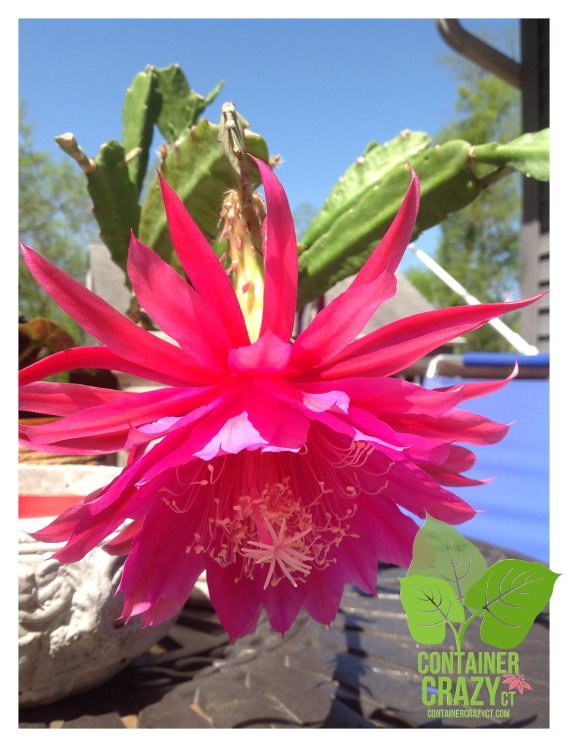
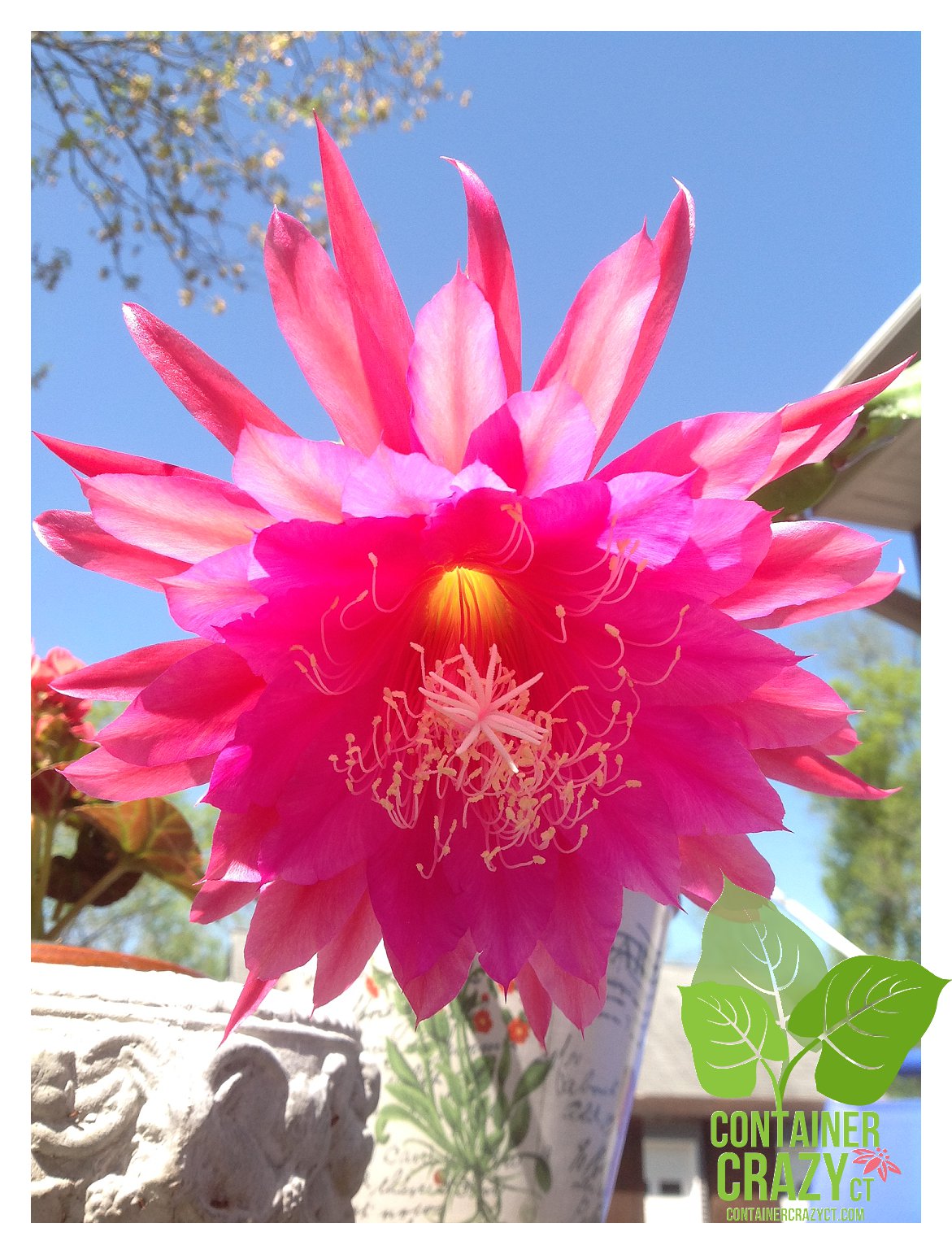
Orchid Cactus

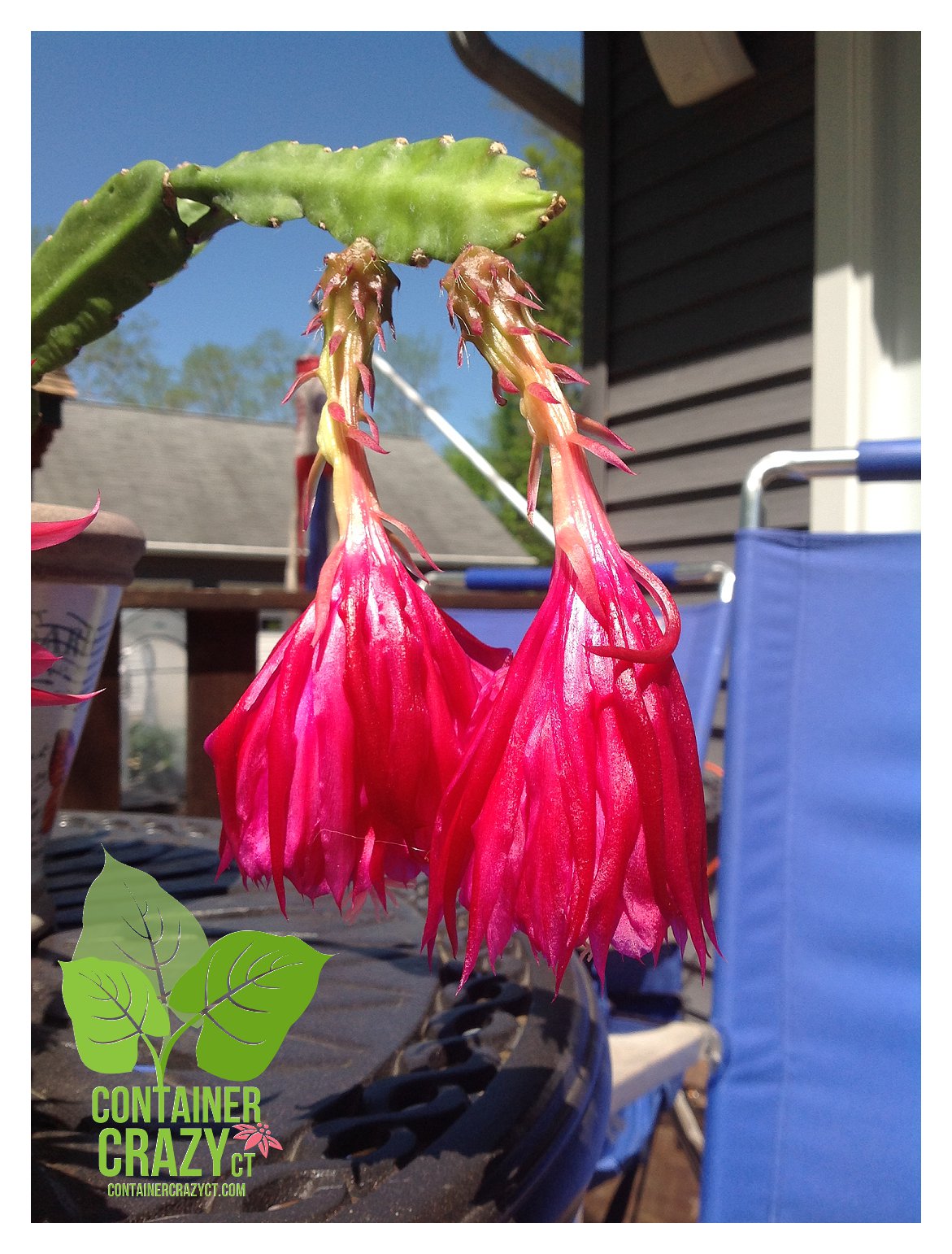
On a clear day last weekend, I took this plant outside to take some photos of its amazing bloom.  And geesh, is this not stunning?  I love the hot pink color against the clear blue sky.  Why haven’t I had one of these plants before?  I plan to research and blog about in detail later.  Do you have one or grow these?  If yes, I would love to hear from you.  The bottom photo is of two closed up blooms that finished their show.

Orchid Cactus Bloom

Orchid Cactus Bloom

Goofing w Camera_0002 Goofing w Camera_0003Take a Guess

Can you guess what this plant is?  As noted, they are tobacco plant seedlings.  Last summer, I asked a nearby grower of these if I could have one plant.  His response, well, no, I can’t give any away.  I wanted to remind him of the day his big cows came into my yard and rubbed against my Arborvitae trees many years back, and how I didn’t complain – Why? Because I grew up on a farm and have an appreciation of how cows can get free, running loose from time to time.  But his cows did major damage, so I tore the trees out without much of a word about it and moo’ed on.

Well, last winter, I happen to mention this story to a friend, and this spring, she text me to say she got me some seedlings of tobacco plants from a farmer friend of her’s, and she even dropped them off for me in this pot.  I thought, what an amazing gesture on her part.  Why, you wonder, would I want one of these?  Well, they grow fast, have large showy leaves, and I just want to experiment with it for the features.  Will let you know how it goes, it is time to prick these out and get them into individual pots.

Tobacco Plants

Tobacco Plants

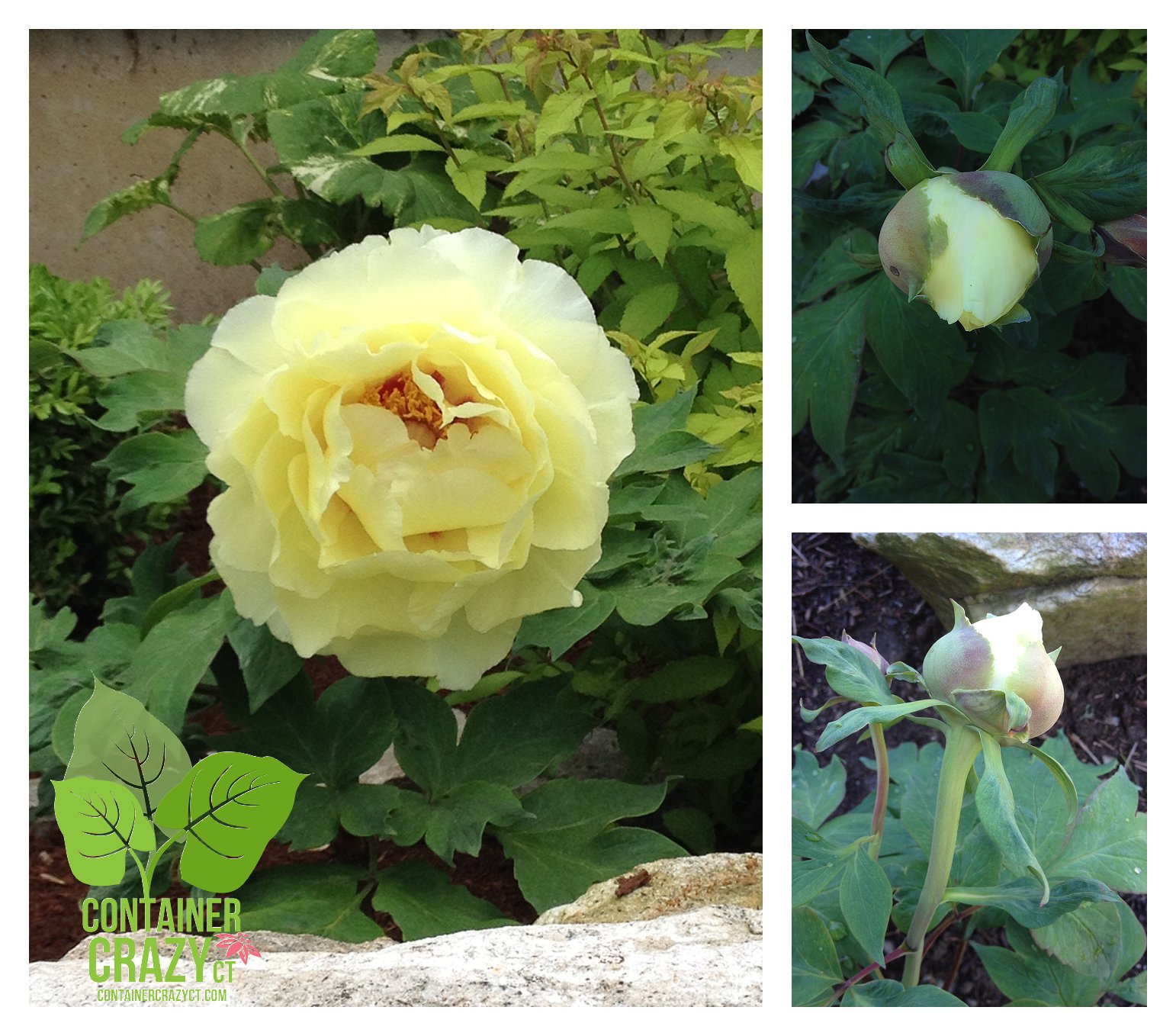
Japanese Tree Peony

I finally got my first Japanese Tree Peony (Paeonis suff. ‘High Noon’) and I couldn’t be more thrilled with its show.  The yellow blooms are luxurious.  This one has an exceptional yellow flower and they are the double type which I prefer on Peony plants.

As the afternoon sun hits it, I just ooze over it.  It will grow to 48″ tall and is for Zones 4-8.  It was a little pricey, but worth it.  For those of you who do not know, these have a wood based stem and look more like a shrub when mature.

Japanese Tree Peony

Japanese Tree Peony

Goofing w Camera_0010

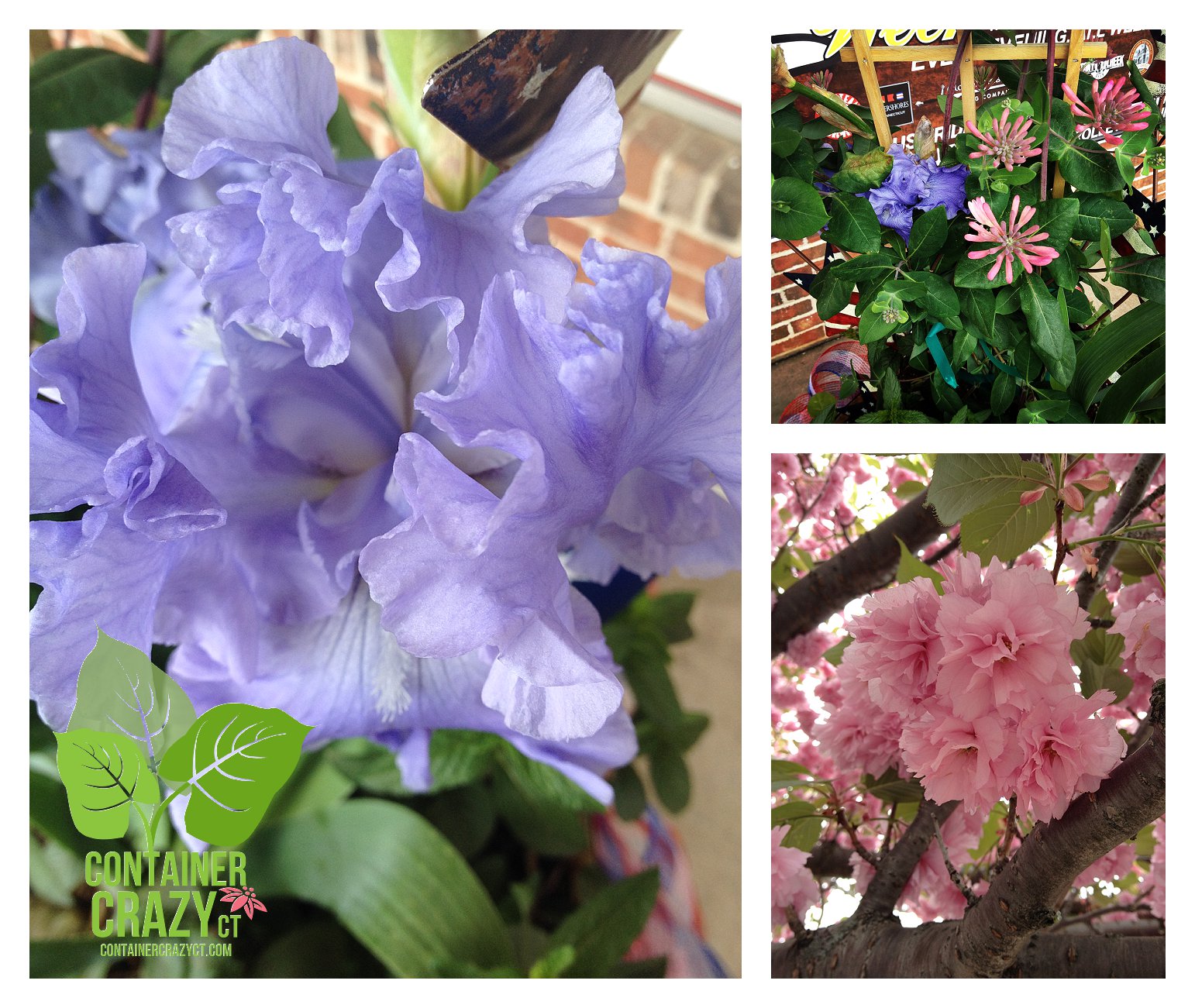
Iris with Honeysuckle

I planted a tall bearded Iris with honeysuckle and chocolate mint plants, one of each type in two large container gardens for a business client.  Imagine the scents in this arrangement?  The honeysuckle is Lonicera x heckrottii ‘Gold Flame’, a perennial with a vine and shrub like habit.  It is super fragrant with deep magenta blooms appearing in late spring through early fall.  It takes sun to part shade and I think the color looks spectacular with the blue blooms of the Iris ‘Abiqua Falls’. Ironically, I stopped at a local garden center this past weekend, and one of the owners told me someone had asked her recently what was in these planters – thinking her store planted them.  (Note to self: I have to get my sign in these containers!) I don’t like the look of a sign poking out of the containers, one of the reasons I haven’t done so yet.  Oh, the Iris is an award winner, prized for its large, sky blue blossoms.  The only problem with using Irises is they toppled over a bit, but luckily the trellis helped to anchor them back up.  In the bottom right photo is a Kwanzan cherry tree’s blooms which I took a photo of while on the road the same week as stopping in to check on these two container gardens.

Iris with Honeysuckle

Iris with Honeysuckle

Goofing w Camera_0008

Fold Up Cart

Taking a break from the flowers – I also wanted to show a handy cart I ordered, which folds up super easily.  It can hold a lot of items and rolls really well too.  For years, when I would go to a Container Garden Party to do my classes or for talks at garden clubs, I lugged heavy items into the building practically by hand.  This wagon so helped me this past Monday when I did a talk at the Vernon Garden Club on incorporating edibles into container gardens.  It folds in a snap and goes right into the back bed of my truck.  Love it!

Fold Up Cart

Fold Up Cart

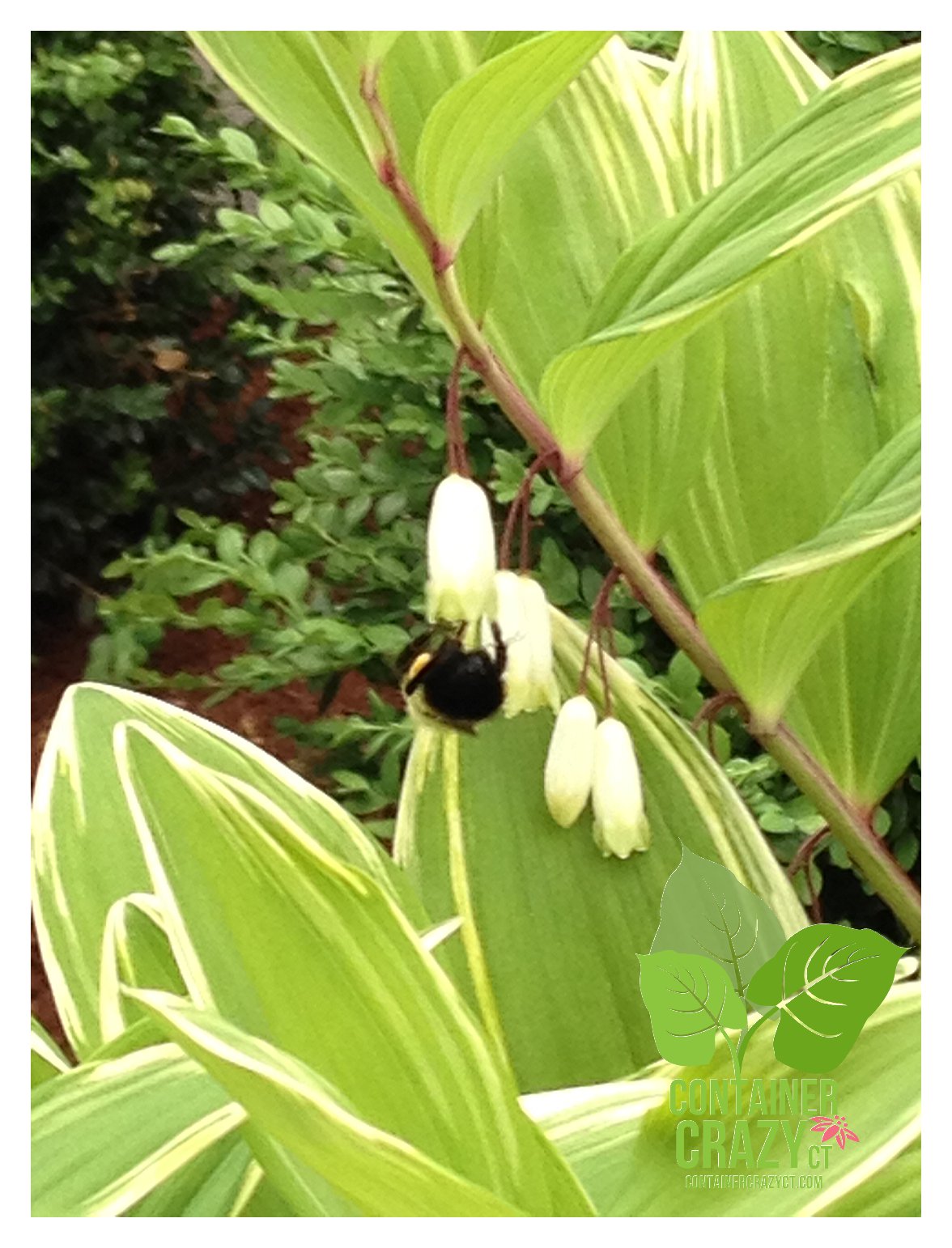
Bee on Polygonatum

I was trying to get a photo of this bee – but it came out a bit blurry.  This is a perennial I get CRS on every spring. I mix up the name sometimes with Polemonium which is similar but not quite.  However, I love my Polygonatums on the north side of my house in a shade area.  Their long and graceful arching stems are eloquent.  I divided up some and moved them to appear in batches in the bed and this year they look really great.  This makes a great woodland plant too and the dangling flowers are serving the bees coming by.  The foliage on this variegated one is very pretty, painted white on the edges.  This perennial prefers good moisture too.

Goofing w Camera_0011

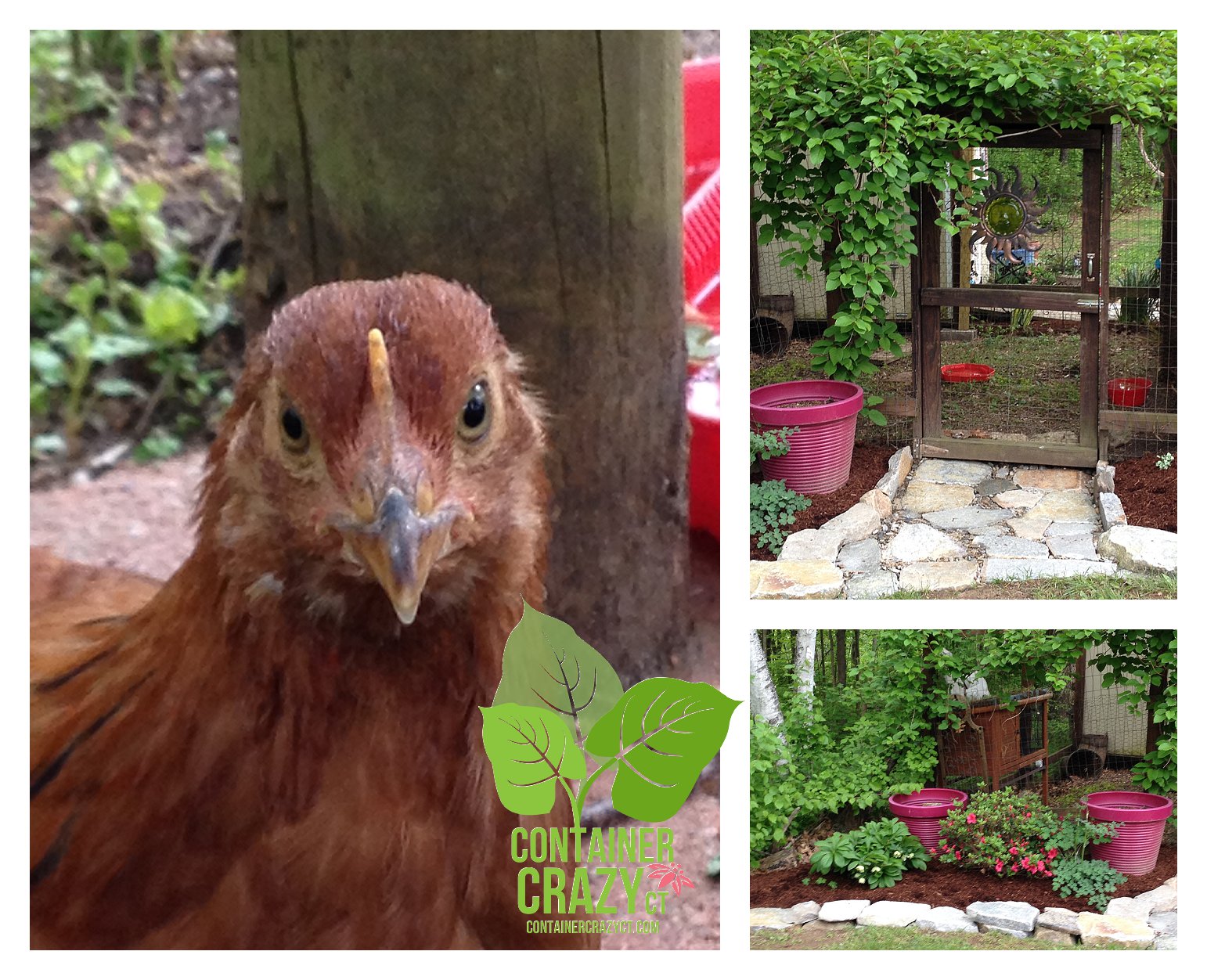
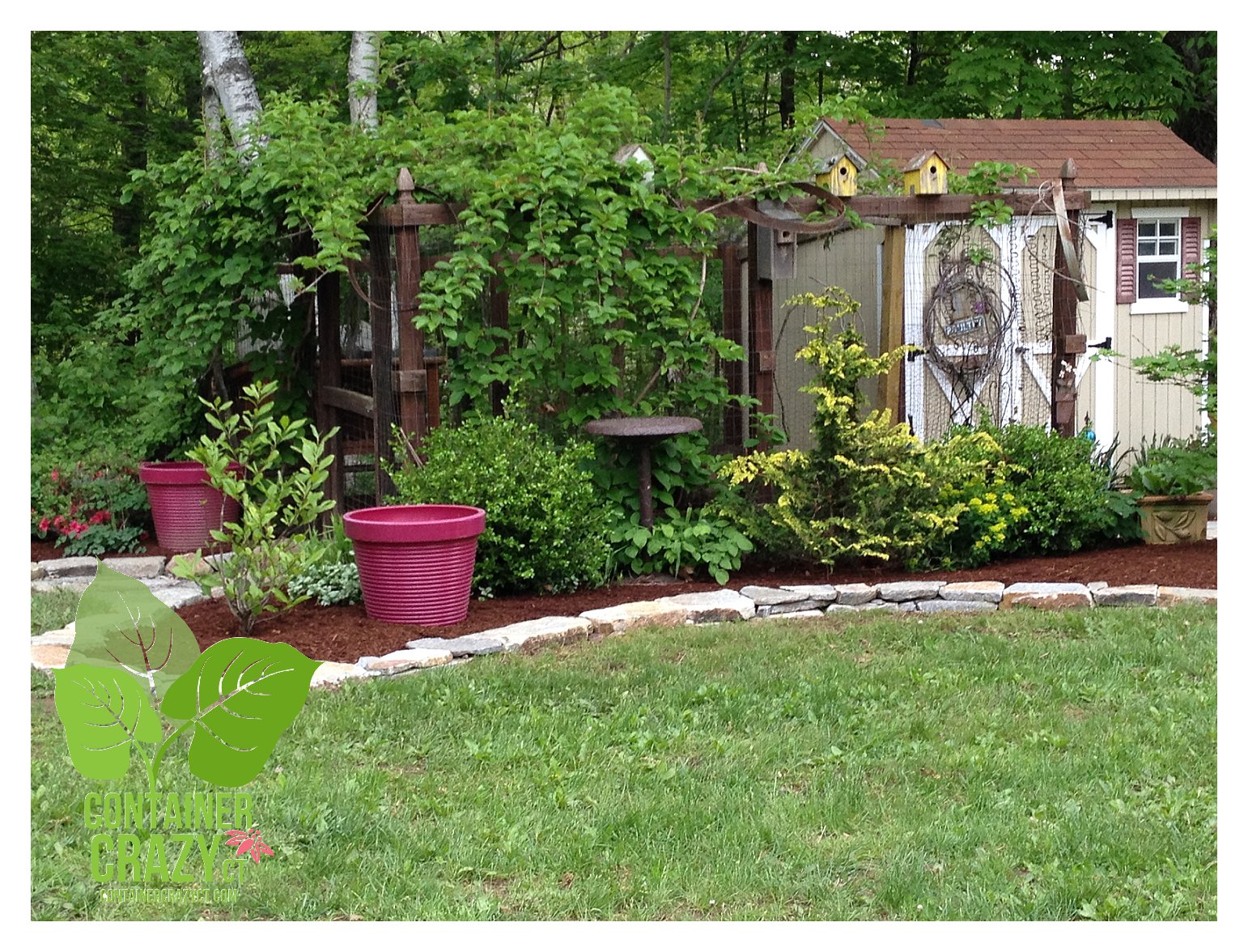
Stone Edging for the Coop

For years, I wanted to edge the area around my chicken coop – and my friendly landscape installer connection, Chris of Outdoor Creations of Ellington, obliged my request to have it done in time for this weekend.  I am thrilled with how it came out.  I like the natural look of this type of stone, and now I can have fun fixing up my plantings and adding perennials and container gardens to this area.  Talk about spoiled chickens!  Not only is their surrounding enhanced, they were fed grubs and worms by Chris as he was working on the building of the edge and mulching the beds.  He said they were fun to watch, and I’m sure they enjoyed his company while he was here.  Sparkles, the recently named chicken, agrees.  She’s the boss of my six Rhode Island Red hens, seen in the photo below.

Goofing w Camera_0017 Goofing w Camera_0015 Goofing w Camera_0014

Kiwi Vine Feeds My Chics

Two kiwi vines, plants several years ago, a male and female plant on each side as required for pollination, are above my pen area of the coop.  One day, Sparkles was jumping up to grab some leaves.  We caught her on our motion censor camera which we move around the house to capture photos of wild life – and predators, as you will see following this photo.  Look at Sparkle’s feet – she jumped right off the ground.  My first priority was to determine if this vine could be poisonous to the chickens, and thankfully, it is not.  They get a feeding of them every day now when I go visit, tearing some leaves off to toss down for them.  And, I think this will be the year we finally get kiwi fruit from these vines. I saw tiny buds on one plant, the female plant.  It takes about five years for them to bloom and produce fruit – so we will see.  The vines require a great deal of pruning to keep in check, it can overtake anything, and grows fast.  We removed branches off a tree above the pen area last year because the vines were twining up to it, so it has to be watched.  Feeding some leaves to the chickens will help, I think.

Kiwi Vine Above Coop Pen

Kiwi Vine Above Coop Pen

Wild Predators Don’t Take Long

As I have mentioned, we attempted chicken raising here twice before, and gave up for a couple years.  The former chickens were allowed to free range, and got snatched by foxs, hawks – you name it.  But our new ones will not go beyond their protected coop and outdoor pen.  Since we have a motion censor camera, we set it up nearby to see what would lurk to investigate our new chickens.

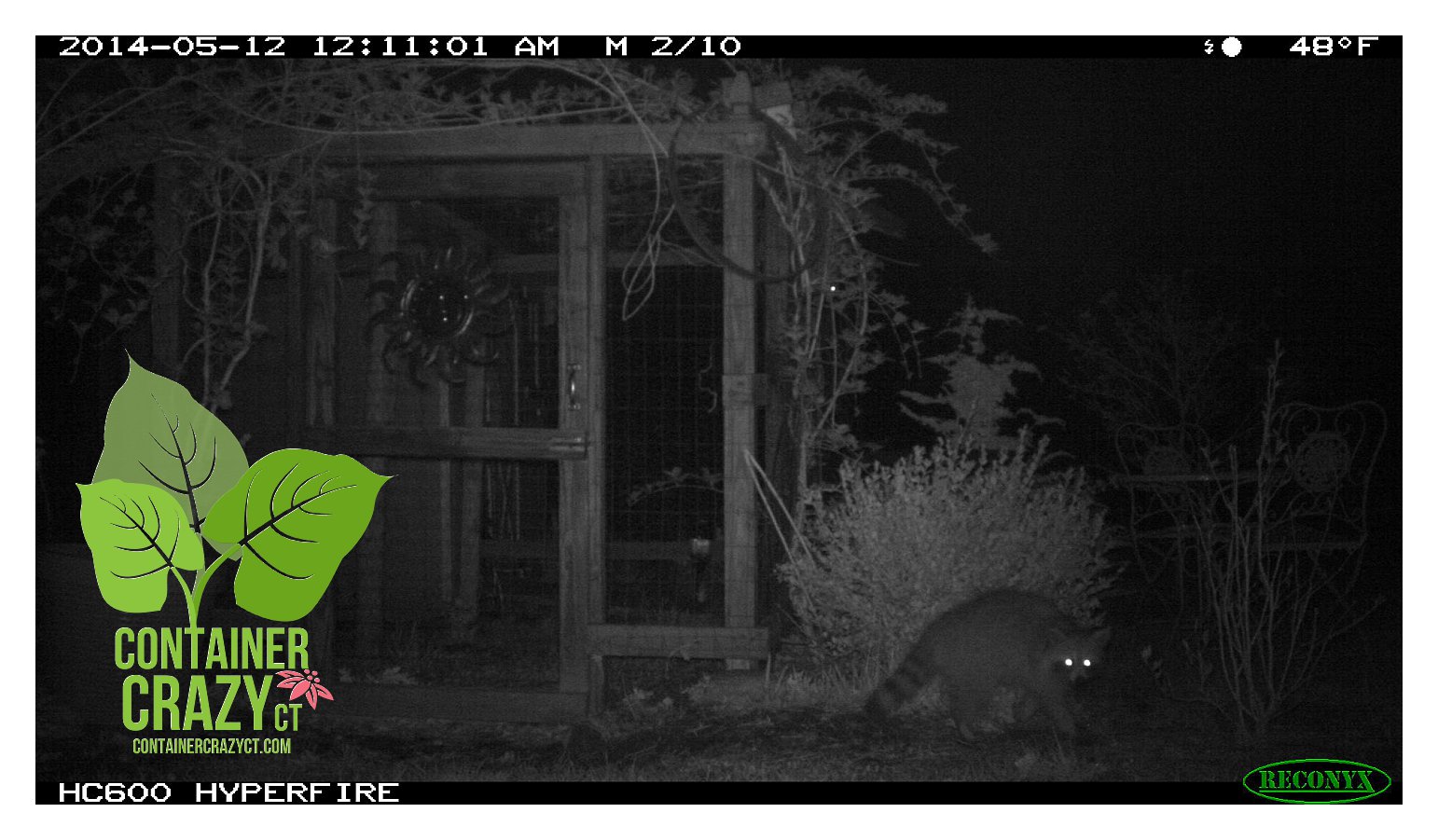
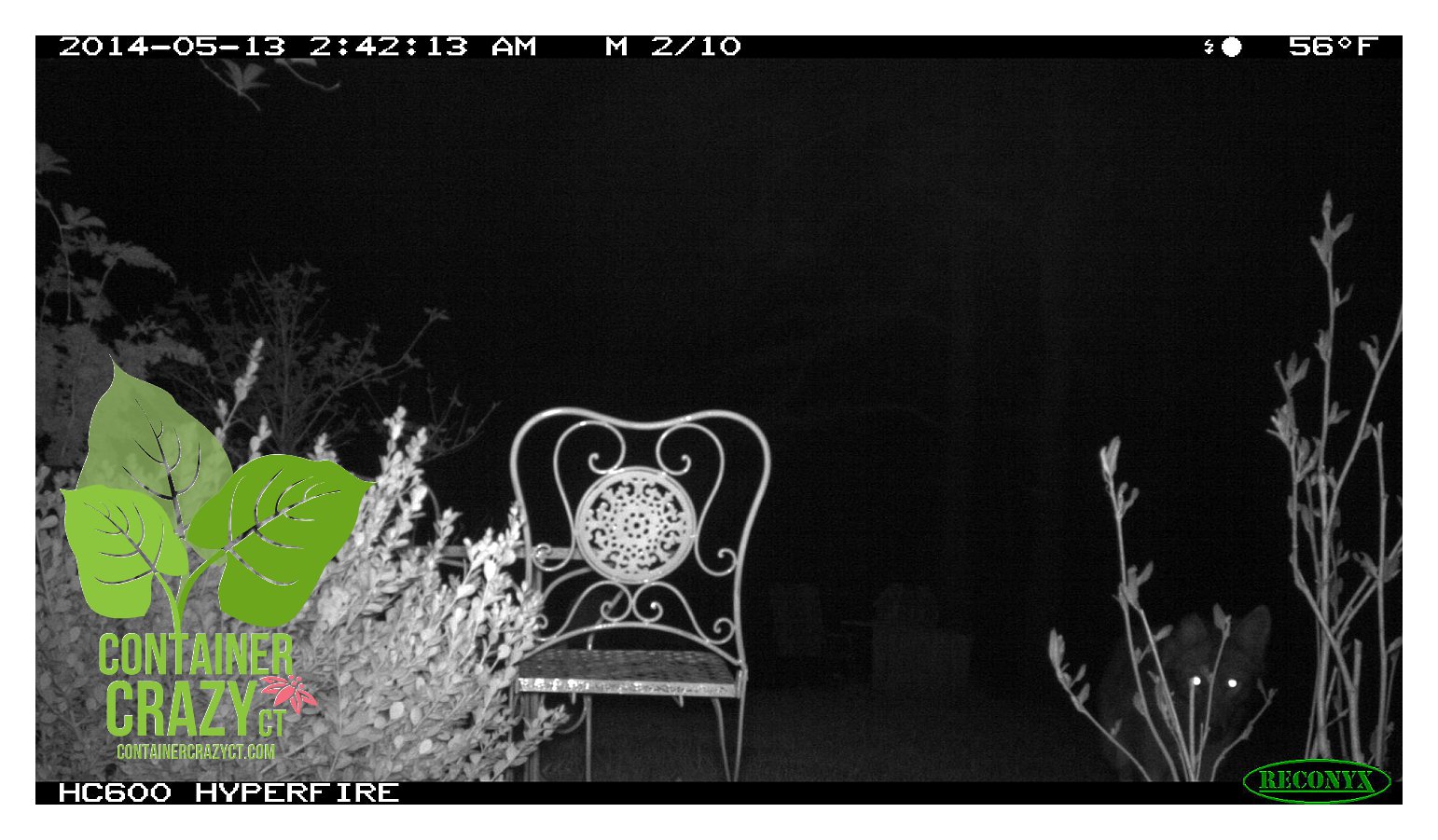
The first week, we spotted a raccoon and coyote in the photos, and one early morning, I saw a fox running around the coop with something in its mouth.  Thankfully, it wasn’t one of my chicken.  We are sure to close their coop door every evening, and we are keeping a steady watch to make sure their pen is safe.  So far so good.  Kind of creepy to see the coyote checking it out.

Predators, first racoon, then Coyote

Predators, first raccoon, then Coyote

Goofing w Camera_0022 Goofing w Camera_0023

That’s all for goofing around with my camera.  Now, its time to get back to work.

Written by Cathy Testa
http://www.cathytesta.com
ContainerCrazyCT.com
860-977-9473


May 3rd Garden Talk – Incorporating Edibles in Mixed Container Gardens

Leave a comment


Comstock Purple

Shiny Hot Black Pepper

Have you ever considered that vegetables and fruits are not only edible, but very functional as a design element in mixed container gardens?

They can be included as amazing and unexpected design features – and why not, right?

They serve an additional purpose – providing you food, snacks, and garnishes all season long!

From unique peppers to weird tomatoes, figs to papayas, the list of edibles is endless.

Why not stop in next Saturday morning to hear more – and see a new building completely refurbished in downtown Broad Brook too?

The Speaker

Cathy Testa of Cathy T’s Landscape Designs will be speaking on this topic on May 3rd, Saturday at the Pride Fitness Building in downtown Broad Brook, CT from 10:00- 11:00 am.

You can’t miss the building – it’s historic with brick exterior, adjacent to the small book store and breakfast restaurant facing the Broad Brook Pond from Main Street.

The Topics

The Amazing Ornamental Qualities of Edibles and Why You Should Notice

How to Use 3 Design Techniques to Create Interesting Combinations with Vegetables and Other Plants

A Review of the Hottest and Latest Edible Trends in the Gardening World

The Flyer

GARDEN PRESENTATION May 3rd Edibles Flyer

← Back

Thank you for your response. ✨

Looking forward to seeing you there!

Cathy Testa
http://www.cathytesta.com
ContainerCrazyCT.com
860-977-9473

Five Ways to Protect the Tender Plants You Put Outdoors Too Early

Leave a comment
Photo Attribution Below

Photo Attribution Below

You know you should have waited to put out tender plants or seedlings, but you got anxious and planted them outdoors anyways.  Whether in a container garden or a garden of the ground, they are now subject to the upcoming chills expected during the overnight hours this week as predicted by our local forecasters.

It’s not too difficult to understand why you tried to cheat the planting dates – after all, we had temperatures in the 70’s last weekend here in Connecticut.  It got our gardening juices flowing, and you may have impulsively planted tender seedlings in your gardens, such as tomatoes or peppers, or have potted up some summer like annuals in your mixed container gardens and patio pots.  Perhaps you even put a few of your houseplants outdoors for some fresh air and sun exposure for the first time this season.

But as of today, we have rain, strong winds, and a drop in temperatures coming.  It is expected to be in the low 30’ for the next three evenings.

So, you may be wondering what you should do now to protect the tender plants you put outdoors too early.

Here are five suggestions you can try – some may be better than others – due to the rainfall and winds occurring today:

#1 Cover them with a light-weight bed sheet

Protect the plants by carefully placing a light-weight bed sheet over the garden bed where you put them in or over the container garden or patio pot.  Use some stakes to tent the cloth up so the now wet tender plants will not get bent or be pushed down by the weight of the sheet or blanket.  Use rocks or bricks to hold the sheet down if necessary.  However, this may be difficult to do tonight especially because we will have rain overnight, and some areas in Connecticut may get sleet (Litchfield).  Ugh, but this trick does work well to protect tender plants from late spring frosts – so take note, or avoid the situation next time by doing Option #2, setting up temporary plastic tunnels.

#2 Use temporary plastic tunnels

If you planned ahead and ordered, you can use low tunnels made specifically for plant protection like those available from GardenersEdge.com.  They are easy to use, expand like an accordion over your plants, and come with curved hoops made of bamboo used to brace the tunnel in the ground.  Push the hoops into the soil and you should be all set.  This is a great way to protect plants, but you are not going to be enjoying doing this now with the downpours.  Another reminder of why we should wait for the tender plants, or plan ahead.

#3 Roll out floating fabric row covers

Similar to temporary tunnels noted above, fabric cloths or frost blankets specially made to protect plants are available from many garden supply manufacturers or at your local nursery.  They will hold in the warmth and protect any new plants without damaging them.  As with a light blanket, you may need to pin down the edges so it won’t be blown away by the wind.  Again, there’s wind tonight – Sorry!  Such is the way of gardening in the Northeast.  But these are handy in other situations, such as use for the last spring frost.

Photo by C. Testa

Photo by C. Testa

#4 Move the container garden back inside

Move your patio pot or container garden potted up with tender plants inside to a warmer place or sheltered location, such as your garage or shed, for the cold evenings.  A hand-truck works great for this process.  Also, if you put any small seedlings or your houseplants that were kept inside during the winter out on tables because you thought the plants should enjoy the warm weather last weekend, you should have moved those back indoors, especially now with the overnight low temperatures coming.  As noted in my Spring e:Pub, tropical plants, cacti like plants, and many houseplants must wait to go outdoors when things have warmed up after the last spring frost date.

#5 Be patient and wait a little longer

Most reputable nurseries put out only those plants which can take the cooler temperatures of the early spring, while tender plants are kept inside their large greenhouses for warmth and protection until warmer temperatures arrive.  Just watch out for stores that don’t follow the rules – and we tend to know which they are.  Usually their plants look injured a day or two following exposures to low or freezing overnight temperatures.  Wait a bit longer to put out the tender plants, and remember to watch for our last frost date of the spring season.  Otherwise, you risk damaging the plants’ foliage and flowers, or the plant will die and ruin your ambition and expenses.  Be patient and wait a tad bit longer.

Other Interesting Ideas

Christmas Lights on Fruit trees – I’ve heard you can string large styled Christmas lights around apple trees limbs near the buds to help keep them warm.  Buds can get damaged or killed if they freeze, so this is one holiday styled technique. Interesting!

Make a Camp Fire – Just kidding!  But some nursery growers of fruit trees actually light small fires under fruit trees.  Hey, anything to save those buds from frost, right?  However, not recommended or needed in home garden environments typically.

Water Fruit Trees – This may sound contradictory – but growers will water fruit and citrus trees, and some nurseries will water (sprinkle) specific plants, as a shield from the morning’s sun following a frost or freeze.  It serves an insulator for the growing buds and foliage – but it gets more technical which I will not expand on this topic here because of “timing” of this post.  However, if you’re interested, check out the “frost protection fundamentals” by FOA Corporate Document Repository where they explain it isn’t the cold temperatures per say that affect the plants, but how the plant tissue are injured via dehydration.

Water the Soil – Your outdoor plants (including the trees and perennials) are being watered right now by the natural rainfall, which is good for the plant’s roots because dry soil tends to pull moisture from the roots during frost or freeze periods.  Wet foliage however is not a good thing; when the foliage and stems of tender plants get wet and cold, this may lead to rot, flopping over, and general damage.  Antidessicants may be used on evergreens (rhododendrons, azaleas, hollies, boxwood, etc.) to help reduce dehydration of the foliage.  A commonly type is called Wilt Pruf, and it is organic and biodegradable and primarily applied in the fall.

photo (24)

First and Last Freeze/Frost Dates by Zip Codes

Go to Dave’s Garden website to enter your zip code for a first and last freeze/frost dates for your area based on averages.  For Broad Brook, here are the results received via this site:

  • Each winter, on average, your risk of frost is from October 9 through April 26.
  • Almost certainly, however, you will receive frost from October 22 through April 11.
  • You are almost guaranteed that you will not get frost from May 10 through September 26.
  • Your frost-free growing season is around 166 days.

Overall, it is best to plant the cold-tolerant veggies, plants like pansies, and your typical spring bulbs like hyacinths, tulips, and daffodils.  For the rest, hang in there. It won’t be long until we can enjoy all – I promise.

Written by Cathy Testa

Lady's Mantel Leaves Pop Up on April 15th, 2014

Lady’s Mantel Leaves Pop Up on April 15th, 2014

Upcoming Events:

Don’t forget to check out Cathy T’s Container Gardening Class on May 24, 2014 in Broad Brook, CT.  See also Cathy T’s Garden Talks.

Please share or join this blog by entering your email on the sidebar, you will get updates via email and special offers or coupons of upcoming classes as a Cathy T blog follower!

Photo attribution:  “Weather Icon” by bandrat; FreeDigitalPhotos.net

Juncus effusus is a Low-Maintenance and Highly Versatile Plant – And it looks like Chives!

5 Comments

Common rush or soft rush (Juncus effusus) is a grass-like plant which resembles the foliage of chives with dark green cylindrical stems and a vase-shaped habit.  Although its green stems appear stiff, they are soft to the touch. The plant grows from a clump at the base and each green stem grows up to pointy tapered tips.  Because the plant has a strong dark green color and a vase-shaped upright habit, it is a nice thriller in a container garden or a sharp accent in a garden bed.

Photo by Simon Howden, Freedigitalimages.net

Chives, similar to the look of Juncus effusus is shown blooming purple flowers along a garden path with dark green spiky foliage.  [Photo by Simon Howden, Freedigitalimages.net]

Easy to Grow in Versatile Conditions

This plant is also very easy to grow, experiences little to no disease or insect problems, and is flexible with its soil conditions.  It can take moist, wet, sometimes dry, and difficult areas.  It won’t flop, bend, or topple over as it matures, even when it is sticking out of water or snow.  It’s adaptable to many conditions, making it easily-useful in the garden or in a container garden.

Juncus in water and snow [Photo left by Christian Fischer Wikimedia; Photo right by Cathy Testa]

Juncus in shallow water.  Juncus poking out of the snow  [Photo left by Christian Fischer Wikimedia]

For years, I assumed Juncus effusus (common rush or soft rush) was an annual plant and used it commonly in container gardens or patio pots during the summer, but seeing it return in a garden bed one year, I later realized my error.  As I searched for the plant’s origin and genus, it was interesting to see how it is described by different references on the web and in some gardening books, as follows:

  1. A clump forming wetland plant
  2. A slow-spreading, clump forming, grass-like perennial
  3. A plant loosely referred to as an ornamental grass
  4. A rush from the plant family Juncaceae
  5. A useful solution for wet-moist-sometimes-dry landscapes
  6. A species which is mostly perennial, rarely annual
  7. A warm-season grass
  8. A cosmopolitan rush species
  9. An annual, perennial herb, general from rhizomes
  10. A grass-like, rhizomatous perennial
  11. A perennial wetland plant

It is indeed a plant in the Juncaceous (rush) family, and it’s a monocotyledonous plant, which means it has a single cotyledon in the seed as in grasses.  It looks more like a grass than an herbaceous ornamental perennial, but it is perennial for it returns every year. Although it can be described as a type of ornamental grass, it is technically not classified as such. My favorite description spotted on the web for this plant has to be # 8 listed above: A cosmopolitan (Watch out, Vogue).  However, this term means its range extends across all of most of the world in appropriate habitats.

Stiff Stems are Soft to the Touch

The foliage on Juncus effusus (common rush, soft rush) is made up of individual leafless stems grouped together growing from a clumped base.  Because the stems stand firmly together, the plant won’t flop over as it grows larger.  Unlike typical ornamental grasses, it doesn’t tend to sway in the wind easily or become scraggly looking over time.  Adjacent plants in a mixed garden bed or container garden won’t be buried by it either.  Its spikey form is bold looking, tough, and vertical.

It has a Nice Effect in Containers and Garden Beds

Stored pot will return Juncus effusus each season

Stored pot will return Juncus effusus each season

From a designer’s point of view, this plant makes a nice effect in a composition of mixed plants because of its shape and habit, serving as a nice thriller in containers elevating an arrangement, or as a center focal point in gardens, especially when placed near a lighter green color or bolder leaf texture.  Perhaps it can even be massed or grouped in landscapes to help with soil erosion or as an alternative to turf grass in select areas with the right exposure (sun is preferred).

And, as mentioned above, Juncus effusus (common rush, soft rush) prefers moist-sometimes dry landscapes. And this particular variety is a dark green color, which remains dark green during the season but eventually turns a muted brown in the fall and winter.  It will remain standing during the winter months and the stems’ pointy tips will poke out of a snow covered area without bending or breaking, adding interest in the winter months.

Summer Flowering is More Interesting than Showy

Juncus flowering [Photo by Frank Vincentz Wikipedia Commons]

Juncus flowering [Photo by Frank Vincentz Wikipedia Commons]

It flowers in summer (typically around June), but rather than shooting out flowers from the top, the flowers seem to extend from the sides of the stems opening up like a side curtain.  Unlike the purple balls of chive’s flowers, this plant’s yellowish flowers are not super-attractive, but they still add character to the plant in summer.  The flowers are clustered together in batches, and turn a bit brownish later in the season as they mature.  They are the type of flowers which are more interesting to look at than showy or floral.

For Water Gardens and Low-Wetlands

Photo Christian Fischer, Wikipedia; See Attributions Below

Photo Christian Fischer, Wikipedia; See Attributions Below

Because of its flexible nature in regards to soil conditions, this is a great candidate for water gardens in decorative pots, or in low wet areas in your landscape.  It is also a great choice for rain gardens which fill up with water during a rainfall, but then later dry out when there is no rain occurring.  Another benefit to using it container gardens is this will control its potentially spreading roots (rhizomatous in nature), so it can be also used as a “troublemaker turned star” plant.  However, although it can spread under ideal conditions in the landscape, mine has not caused any sneak appearances elsewhere as of yet.  Besides an occasional watering with the hose in the summer, my plant has been growing well in dry-sometimes “wet” soil, a little opposite to description # 5 above.

Curly Cultivars with Twists and Turns

Not only is Juncus effusus (common or soft rush) a plant with formal looking, straight v-shaped look, there are also cultivars with more funky foliage traits, such as J. effusus ‘Frenzy’ (variegated corkscrew rush), J. effusus ‘Unicorn’ (giant spiral rush), and also J. effusus ‘Spiralis’ (corkscrew rush).  Unlike their upright cousins, the foliage on these varieties bear stems with twists and turns, resembling untamed curls in otherwise straight hair or the spiral metal rod of a corkscrew.  The curly varieties add a bit of whimsy to fun containers, such as head shaped pots.  And are great for kids to enjoy because of the plants’ playfulness and irresistibility to touch.

Juncus effusus (common rush, soft rush) is a plant with many uses able to take varying conditions and is a long performer in the garden.  These benefits make this candidate a low-maintenance and high versatile plant.  Remember to take notice of it and consider its uses next time you are out shopping for plants, which hopefully will be in 30 days when spring arrives!

For more information, refer to these useful links:

http://www.northcreeknurseries.com/plantName/Juncus-effusus-
NorthCreek Nurseries

http://plants.usda.gov/factsheet/pdf/fs_juef.pdf
USDA NRCS fact sheet

http://www.finegardening.com/plants/qa/grasses-rushes-sedges.aspx
Fine Gardening

http://www.eeob.iastate.edu/classes/bio366/families/Juncaceae.pdf
EEob.iastate.edu

http://www.provenwinners.com/plants/juncus/quartz-creek-soft-rush-juncus-effusus
Proven Winners

http://www.floridata.com/ref/j/junc_eff.cfm
Floridata

http://www.missouribotanicalgarden.org/PlantFinder/PlantFinderDetails.aspx?kempercode=z200
Juncus effusus ‘Unicorn’ (corkscrew, or giant spiral rush), Mobot.org Plant Finder

http://hoffmannursery.com/plants/juncus-effusus-frenzy/
Juncus effusus ‘Frenzy’ (variegated corkscrew rush), Hofftmannursery.com

http://www.missouribotanicalgarden.org/PlantFinder/PlantFinderDetails.aspx?kempercode=v930
Juncus effusus f. spiralis (corkscrew rush), Mobot.org Plant Finder

Plant Details:

4 feet tall with flower (June)
Sun exposures
Low water spots (0-6 inches)
Planting Zones 4-10

Photo of.
Attributions:

Juncus in snow
(http://instagram.com/p/kXIlxosJND/)
by Cathy Testa
Cathy T’s Landscape Designs and Container Crazy Cathy T

Up the Garden Path photo by Simon Howden
freedigitalphotos.net

Juncus in nursery square pots
Forest & Kim Starr [CC-BY-3.0 (http://creativecommons.org/licenses/by/3.0)%5D, via Wikimedia Commons

Juncus flower clusters
By Frank Vincentz (Own work) [GFDL (http://www.gnu.org/copyleft/fdl.html) or CC-BY-SA-3.0 (http://creativecommons.org/licenses/by-sa/3.0/)%5D, via Wikimedia Commons

Juncus by water
Christian Fischer [CC-BY-SA-3.0 (http://creativecommons.org/licenses/by-sa/3.0)%5D, via Wikimedia Commons

Written by Cathy Testa
www.cathytesta.com

Please don’t forget to share this post with your gardening friends!

Photo take Feb 2014

Photo taken Feb 2014

Decorating your Mailbox for the Holidays with Greens

Leave a comment

Just a very quick post to show you the evergreen swag made by a class attendee this weekend for her mailbox.  I’ve offered this option in my class for two years, but this was the very first taker for this particular item.

The other attendees made kissing balls, wreaths, and candle centerpieces.

And now, I have to say, “I’m hooked!”  on these mailbox swags.  It came out beautiful, and I must make one for my mailbox if I get the time soon.  It’s lovely.  Great job attendee!  You know who you are.

Evergreen Creations_0003

The swag requires a special frame and evergreens of course and some time.  The technique is covered in my class on the how-to’s.

More photos and tips will be posted on my Evergreen Creations Classes to share with you.  Especially now with the holidays fast approaching.

But in the meantime, if you are local and wish to join a day class tomorrow, December 10th, 12:30 to 2:00 pm, contact me at 860-977-9473.  Location:  Senior Center in Broad Brook, CT.

Stay Tuned,

Cathy Testa

P.S.  You do not need to be a senior to attend the class noted above.  Thank you.

← Back

Thank you for your response. ✨

Living with Wild Turkeys in My Connecticut Yard

7 Comments

Eastern wild turkeys (Meleagris gallopavo silvestris) have routines and rituals in my Connecticut yard during every season.

In the spring, summer, and winter, the flock walks up from the woodlands into my open yard behind my house in single file. Their first stop is the bird feeder.  They hit up the fallen seeds near our lower deck by scratching the ground for leftovers.

Last year, around this time of year, I thought about how the lower deck is a great place to position our motion sensor outdoor camera because it would capture images of the flock as they were eating seeds from the ground.

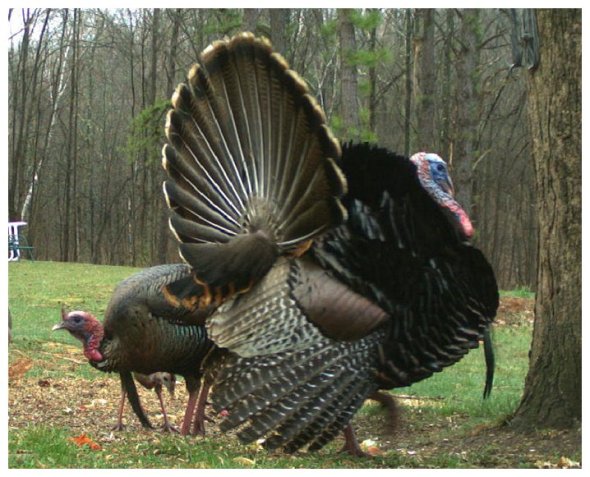
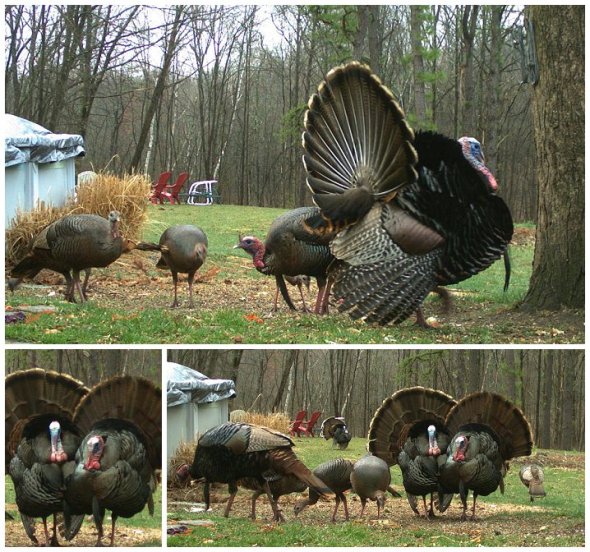
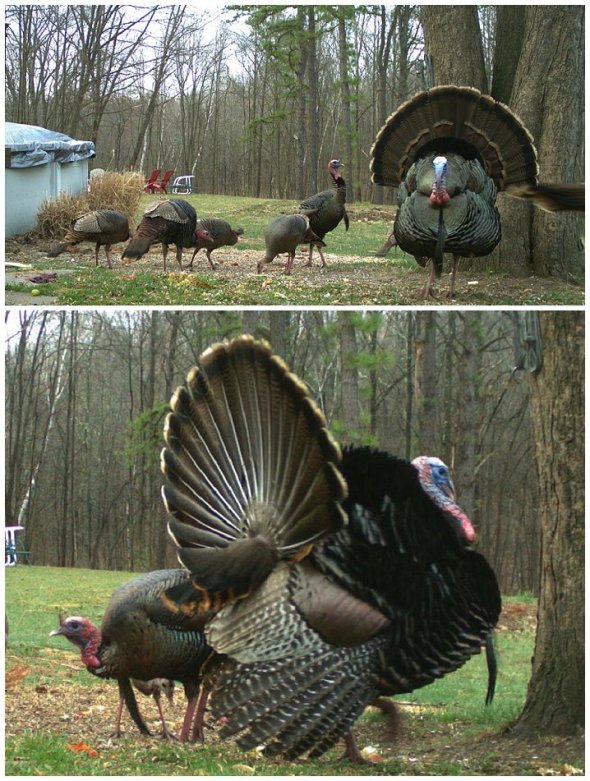
It worked.  The camera captured images of male turkeys puffing out their feathers and strutting their stuff.

November 2012

November 2012

And as you can see from these photos, it is truly astonishing how large they look when fully puffed out.  The male toms can reach 4 feet tall, but they look even larger at this stage.  And you will notice, its blue head and red caruncle at the neck is in full color.  I guess this occurs as another way to “show off” to the female turkeys in the group.  It is just incredible what these guys do for their females.  They put on quite a show.

Side View - Massive!

Side View – Massive!

After they are done snacking on the birdseeds, the flock will slowly and cautiously walk past my side door over the driveway, and then proceed down my long driveway to the road.  As they strut along in single file, it is quite amusing.  I always think to myself, “Well, there they go, off to work again for the day.”

Turkey Testa_0024

They probably have a routine of visiting every feeder or garden on our street, but by late day, you can guarantee, they come right back down my driveway – in single file – to return to our birdfeeder for their last snack before retreating into the woods again for their evening roost.

Once, in the very early morning, I could see several turkeys perched way up high in tall pine trees.  Eventually, they fly down again, and it is something to see a big turkey gliding through the sky to land on our lawn.

There’s been times when the turkeys have stood on a railing of our deck or on the edge of the pool.  Usually there is one turkey “on guard” being careful to look around for potential threats.  The guard turkey won’t eat with the others while on duty, and sends out warnings sounds if something, like me, comes by.

Turkey Testa_0023

But this past summer, there were many times when the turkeys would also sit in the yard and relax.  They are getting comfortable to say the least.  And a few times, in fact, this summer, when I was on my deck sitting in a chair, they would extend their necks up to look at me, but they didn’t run away. Until I got up.  Then they would feel threatened and take off or at least move a distance away until they felt it was safe again.

One year, I witnessed three toms standing side by side and shoulder to shoulder during their mating season.  They were completely puffed out and turned together in unison as if they were locked together.  If you can imagine it like an airplane turning slowly around, it looked like that.  Remarkable.  I wished I caught that one on camera as they turned slowly together to face the females in their surroundings.  I guess they were looking for a threesome. LOL.

Another time, I saw two toms in a serious battle in my front yard.  Their necks were wrapped around each other – and each pushed and tussled the other as they were locked into this position for at least a half hour or so.  At times, I was sure one would have their neck broken by the other.  I felt sorry for them, but best to let nature do their thing as they continued into the woodlands to duke it out.  I didn’t witness the end of their wrestling match.

In early June, the young baby poults arrive.  There are many with the female hens.  It does not take long for them to grow up and look like full sized adult turkeys. And then there are times when I see a solo turkey in the yard.  He wanders the yard by himself.  But, I guess they do this until they find a mate.  Or he thinks I’m his mate, he seems to like hanging around.

Another year, we had an injured turkey visiting – walking with a hobbled leg.  Because he was weak, the other turkeys would be a little aggressive towards him.  However, he wouldn’t give up and continued to stay with the group as much as he could.  The turkey pecking order is strong, and part of the wild scene you have to accept, even though it seems cruel at times. It is wild turkey bullying.

We don’t directly feed the wild turkeys, but allow them to take what they find from our yard.  They have never damaged our gardens, and sometimes will peck at the blackberries, but overall, they have been harmless.

Our cat inspecting the hidden camera, notice her ear moves in second shot!

Our cat inspecting the hidden camera, notice her ear moves in second shot!

And as close as they get to us proximity wise, no real danger has ever come to us ever since we’ve been witnessing them here in our yard.  They only bring us joy because they seem so comfortable here and offer an occasional laugh, like when they chase off our cats.  It doesn’t take long for the cats to realize who is in charge.

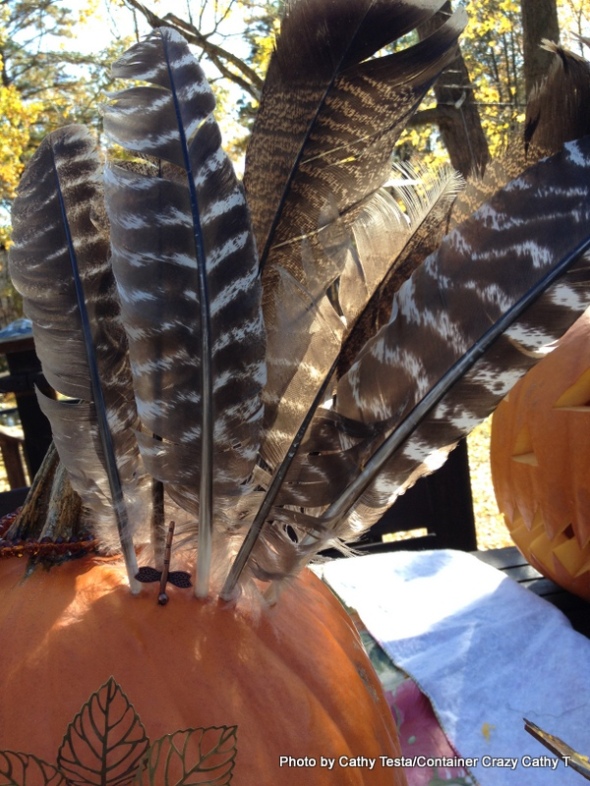
When I find turkey feathers left behind in the yard, I collect them to use in decorations, like I did with a pumpkin this year, or I’ll put them in my Thanksgiving Day arrangements or on Christmas wreaths.

Feathers in Pumpkin

Feathers in Pumpkin

The gobble noises and sounds made by the wild turkeys can be quite loud at times, especially during their breeding season in the fall.  I’ve read you can hear it from a mile away.  I’m not surprised. I often hear them in my backyard from the house.  I love the noises they make because it is interesting.  The different tones and cackles represent every action or purpose.  One of these days, I will know them all.

But the most interesting thing I think I saw in regards to wild turkeys was when one was helping an injured turkey across the road.  A large turkey had a small one under its big wing, and was carrying it away.  At first I wasn’t sure what was going on, but as I approached closer, it appeared the mature turkey was carrying away an injured smaller turkey, perhaps hit by a car.

Image courtesy of FreeDigitalImages.net/boulemonademoon

Image courtesy of FreeDigitalImages.net/boulemonademoon

Nature never ceases to amaze me.  And with Thanksgiving approaching, talking about wild turkeys seems a bit appropriate.  Unless you like to eat them.  In that case, I say stick with the store-bought or farm raised types.  I suffer from the Bambi syndrome.  I prefer to watch the wild types, and can’t seem to eat meat from wild deer, turkey, or rabbits.  No matter how many times my hunting relatives tell me it is good.

Images courtesy of FreeDigitalImages.net/nongpimmy

Images courtesy of FreeDigitalImages.net/nongpimmy

It is only 2 weeks until Thanksgiving everyone.  I hope you have a very pleasant holiday and spot some turkeys in your surroundings.  If not in your yard, perhaps on your plate!

Gobble, Gobble,

Cathy Testa

Turkey Links:

http://nwco.net/PDF/turkey.pdf

http://www.nhptv.org/natureworks/wildturkey.htm

http://www.nwtf.org/conservation/bulletins/bulletin_1_9-9-09.pdf

Camera Used:

We purchased our camera from Cabela’s.  It is called RECONYX Hyperfire model, and it has worked very well at capturing motion in the woods or other areas of our surroundings as we have moved it around from place to place. We have also captured photos of deer, a bobcat (Lynx rufus), coyote, fox, racoons, beaver, skunks, our male cat, other stray cats, rabbits, birds, and even a man with a machete.  Turns out it was a neighbor (phew).  One very interesting shot was when a deer bed down to sleep right in front of the camera – very cool.  And moving trees, leaves, even sunshine casting down, showing shadows moving across the ground during the day, is photographed. Snowstorms are fun too as you can see the level of the snow rising over time in sequential shots, so long as it doesn’t bury the camera. Maybe even YOU were snapped – a friend captured when you came by to visit – Bet you didn’t know that, did ya?  LOL!!!