Goofing Around with My Camera (Predators, Coop Renovation, Blooms)

4 Comments

I’ve been so busy preparing for this weekend’s class on Container Gardening with succulents, alpines, and cacti that I woke up at 2:00 am unable to sleep.  The excitement is getting to me, as it always does.  So, after tossing around in bed for another couple hours, I gave up and got up. I decided a distraction may be in order, so to continue my trend, I’m posting some general photos I took around my home, and here or there, related to gardening – and chickens – yes, have those now and we are enjoying our six hens.

Orchid Cactus

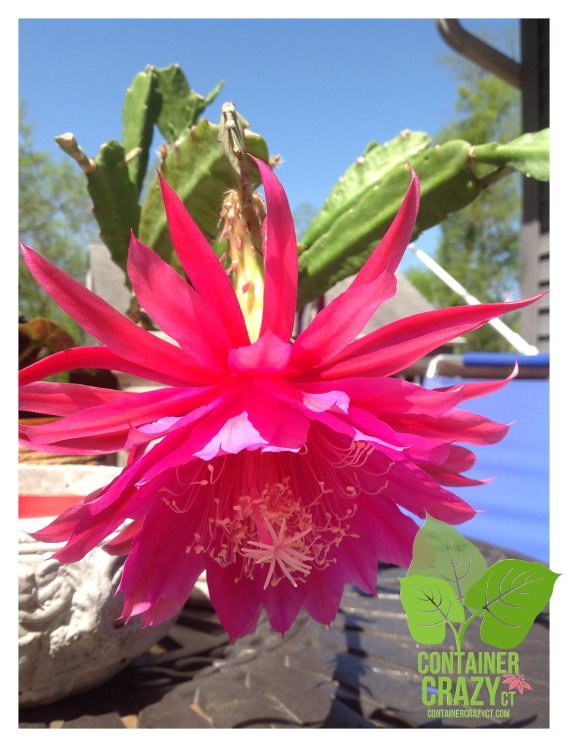
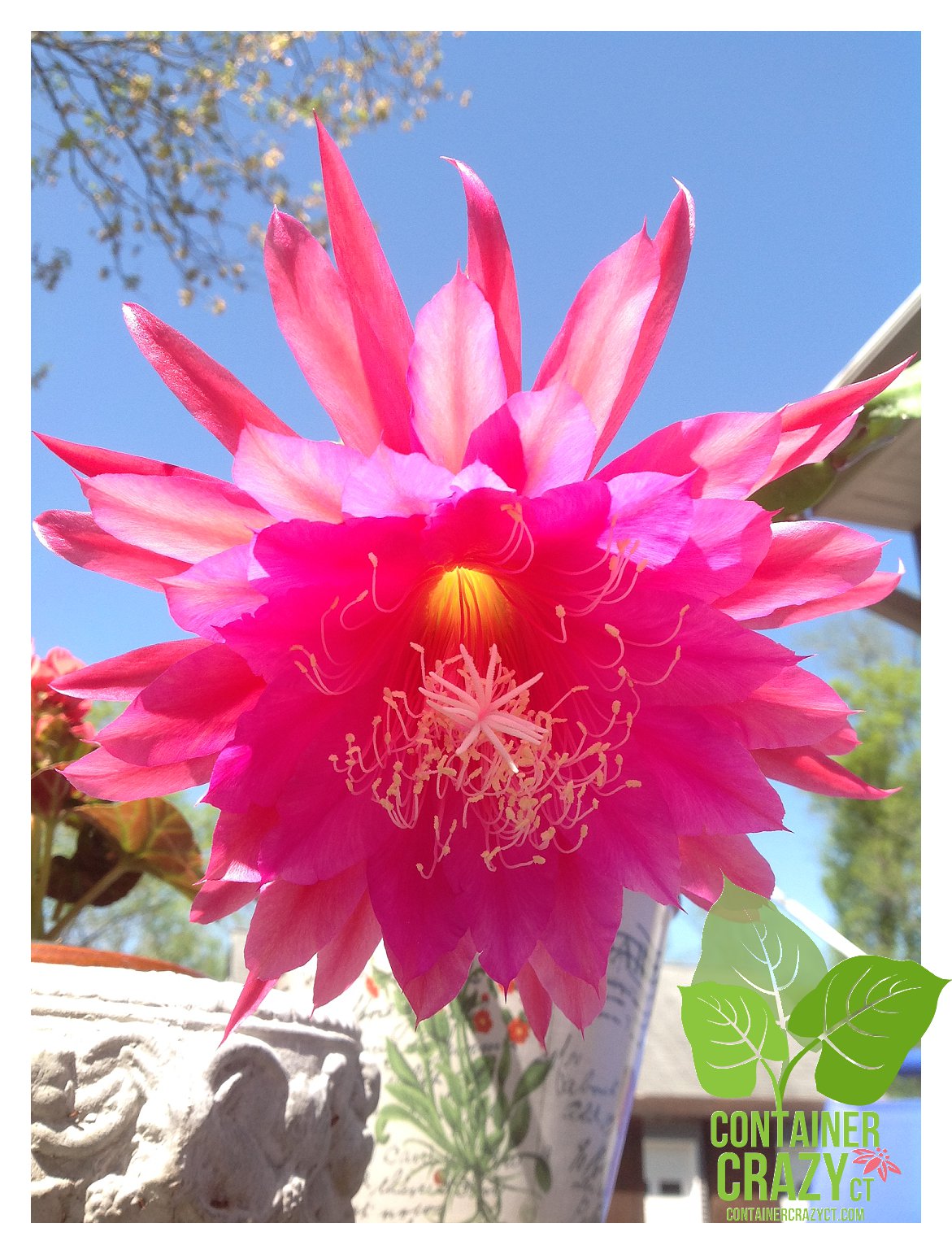
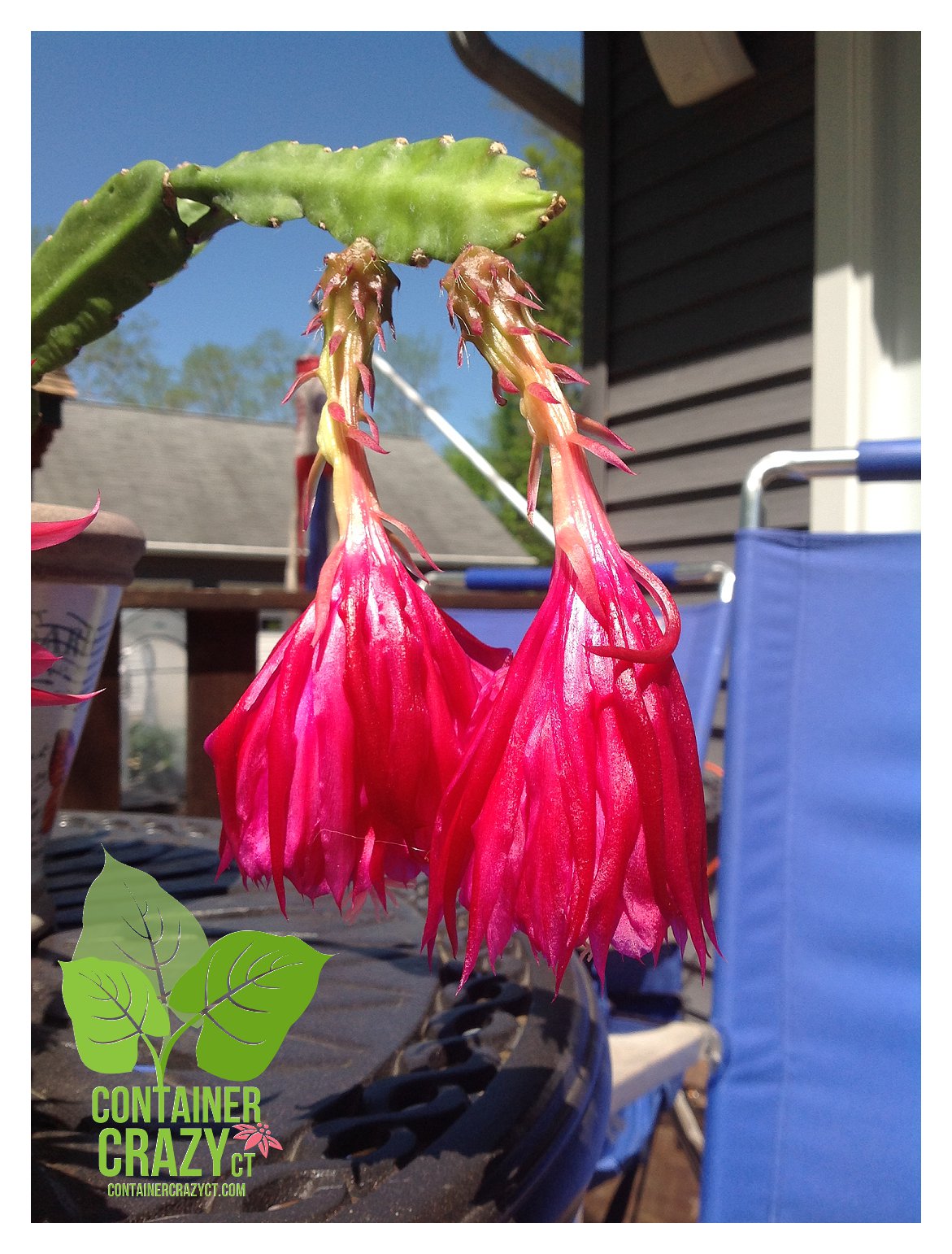
On a clear day last weekend, I took this plant outside to take some photos of its amazing bloom.  And geesh, is this not stunning?  I love the hot pink color against the clear blue sky.  Why haven’t I had one of these plants before?  I plan to research and blog about in detail later.  Do you have one or grow these?  If yes, I would love to hear from you.  The bottom photo is of two closed up blooms that finished their show.

Orchid Cactus Bloom

Orchid Cactus Bloom

Goofing w Camera_0002 Goofing w Camera_0003Take a Guess

Can you guess what this plant is?  As noted, they are tobacco plant seedlings.  Last summer, I asked a nearby grower of these if I could have one plant.  His response, well, no, I can’t give any away.  I wanted to remind him of the day his big cows came into my yard and rubbed against my Arborvitae trees many years back, and how I didn’t complain – Why? Because I grew up on a farm and have an appreciation of how cows can get free, running loose from time to time.  But his cows did major damage, so I tore the trees out without much of a word about it and moo’ed on.

Well, last winter, I happen to mention this story to a friend, and this spring, she text me to say she got me some seedlings of tobacco plants from a farmer friend of her’s, and she even dropped them off for me in this pot.  I thought, what an amazing gesture on her part.  Why, you wonder, would I want one of these?  Well, they grow fast, have large showy leaves, and I just want to experiment with it for the features.  Will let you know how it goes, it is time to prick these out and get them into individual pots.

Tobacco Plants

Tobacco Plants

Japanese Tree Peony

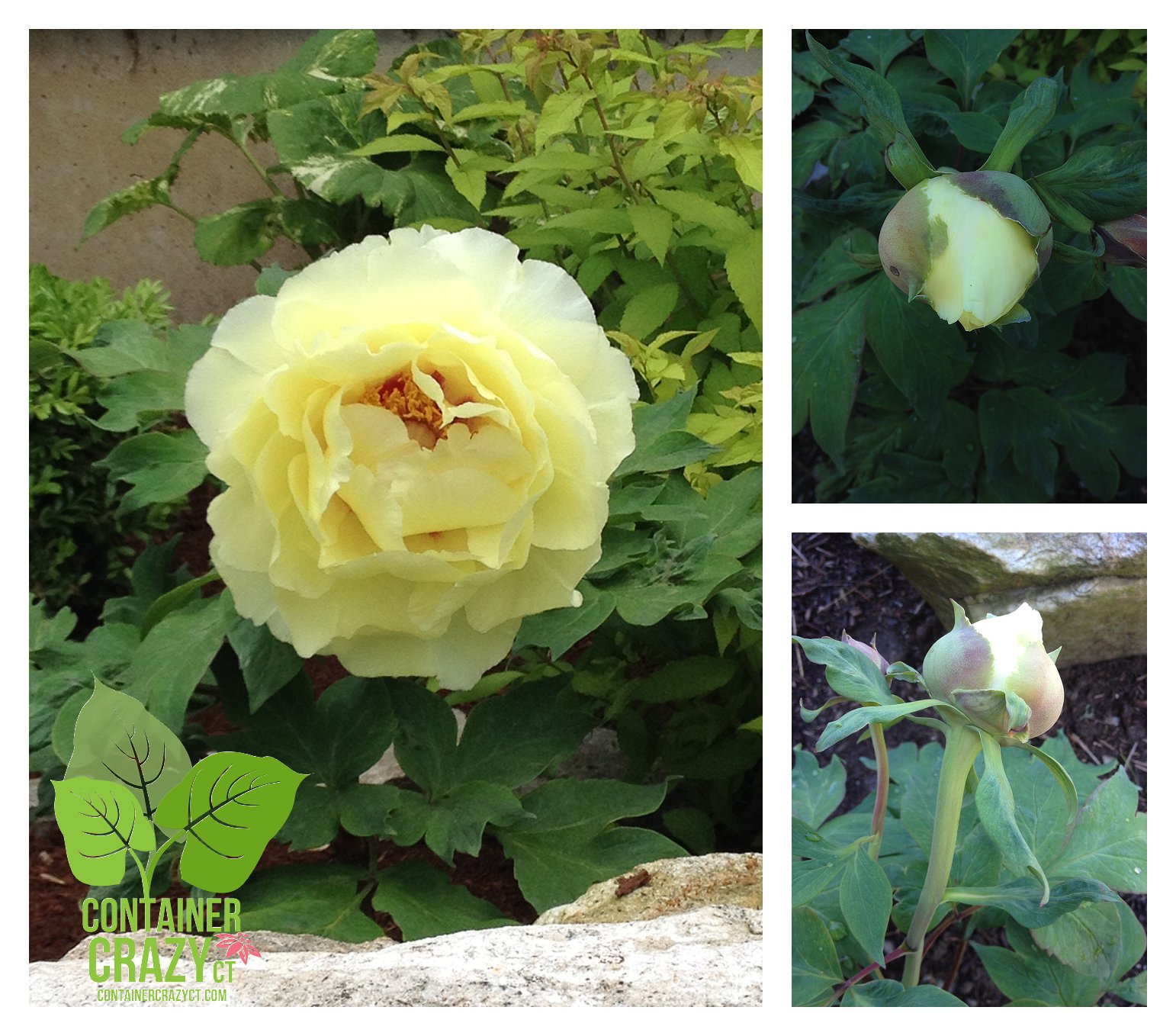
I finally got my first Japanese Tree Peony (Paeonis suff. ‘High Noon’) and I couldn’t be more thrilled with its show.  The yellow blooms are luxurious.  This one has an exceptional yellow flower and they are the double type which I prefer on Peony plants.

As the afternoon sun hits it, I just ooze over it.  It will grow to 48″ tall and is for Zones 4-8.  It was a little pricey, but worth it.  For those of you who do not know, these have a wood based stem and look more like a shrub when mature.

Japanese Tree Peony

Japanese Tree Peony

Goofing w Camera_0010

Iris with Honeysuckle

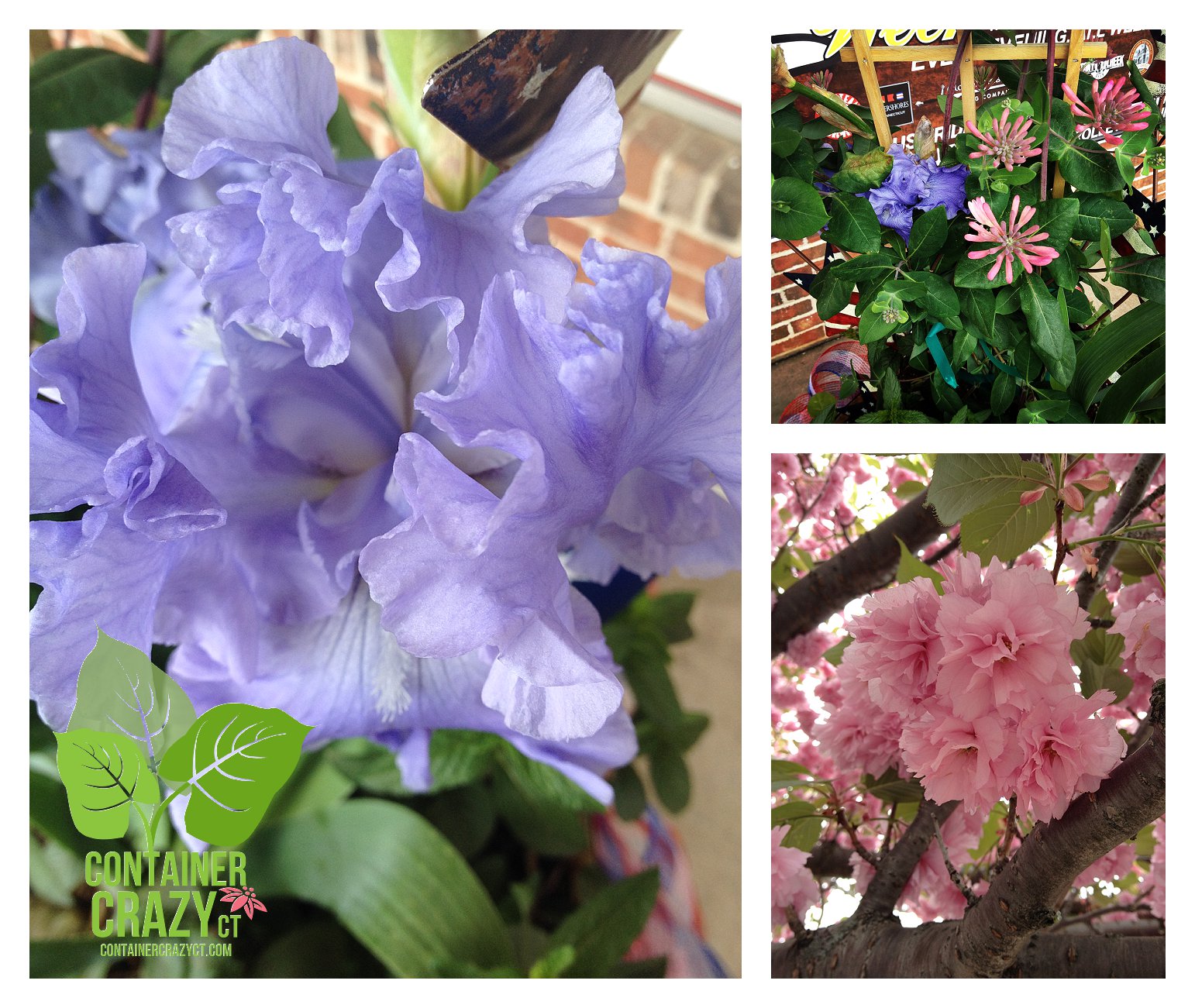
I planted a tall bearded Iris with honeysuckle and chocolate mint plants, one of each type in two large container gardens for a business client.  Imagine the scents in this arrangement?  The honeysuckle is Lonicera x heckrottii ‘Gold Flame’, a perennial with a vine and shrub like habit.  It is super fragrant with deep magenta blooms appearing in late spring through early fall.  It takes sun to part shade and I think the color looks spectacular with the blue blooms of the Iris ‘Abiqua Falls’. Ironically, I stopped at a local garden center this past weekend, and one of the owners told me someone had asked her recently what was in these planters – thinking her store planted them.  (Note to self: I have to get my sign in these containers!) I don’t like the look of a sign poking out of the containers, one of the reasons I haven’t done so yet.  Oh, the Iris is an award winner, prized for its large, sky blue blossoms.  The only problem with using Irises is they toppled over a bit, but luckily the trellis helped to anchor them back up.  In the bottom right photo is a Kwanzan cherry tree’s blooms which I took a photo of while on the road the same week as stopping in to check on these two container gardens.

Iris with Honeysuckle

Iris with Honeysuckle

Goofing w Camera_0008

Fold Up Cart

Taking a break from the flowers – I also wanted to show a handy cart I ordered, which folds up super easily.  It can hold a lot of items and rolls really well too.  For years, when I would go to a Container Garden Party to do my classes or for talks at garden clubs, I lugged heavy items into the building practically by hand.  This wagon so helped me this past Monday when I did a talk at the Vernon Garden Club on incorporating edibles into container gardens.  It folds in a snap and goes right into the back bed of my truck.  Love it!

Fold Up Cart

Fold Up Cart

Bee on Polygonatum

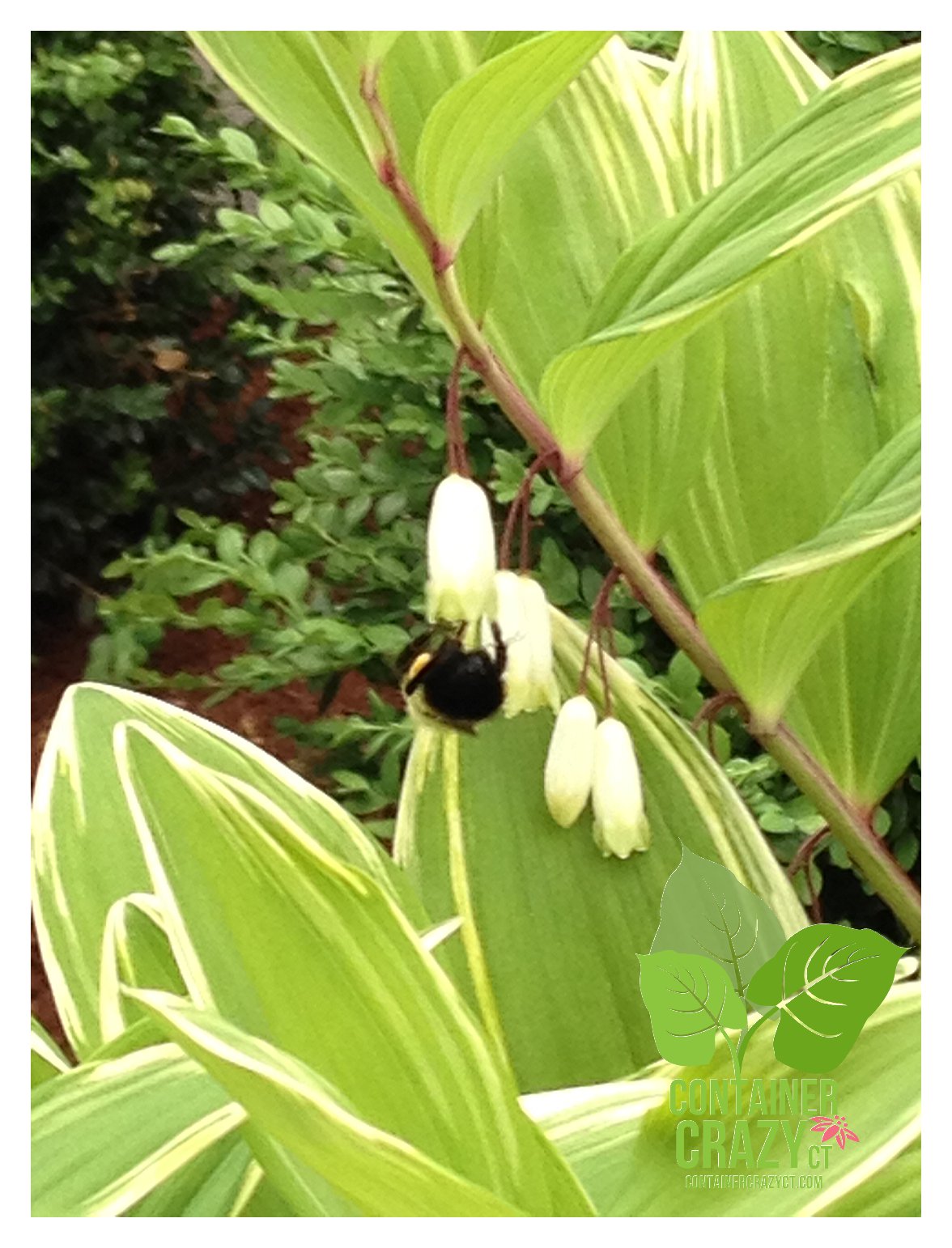
I was trying to get a photo of this bee – but it came out a bit blurry.  This is a perennial I get CRS on every spring. I mix up the name sometimes with Polemonium which is similar but not quite.  However, I love my Polygonatums on the north side of my house in a shade area.  Their long and graceful arching stems are eloquent.  I divided up some and moved them to appear in batches in the bed and this year they look really great.  This makes a great woodland plant too and the dangling flowers are serving the bees coming by.  The foliage on this variegated one is very pretty, painted white on the edges.  This perennial prefers good moisture too.

Goofing w Camera_0011

Stone Edging for the Coop

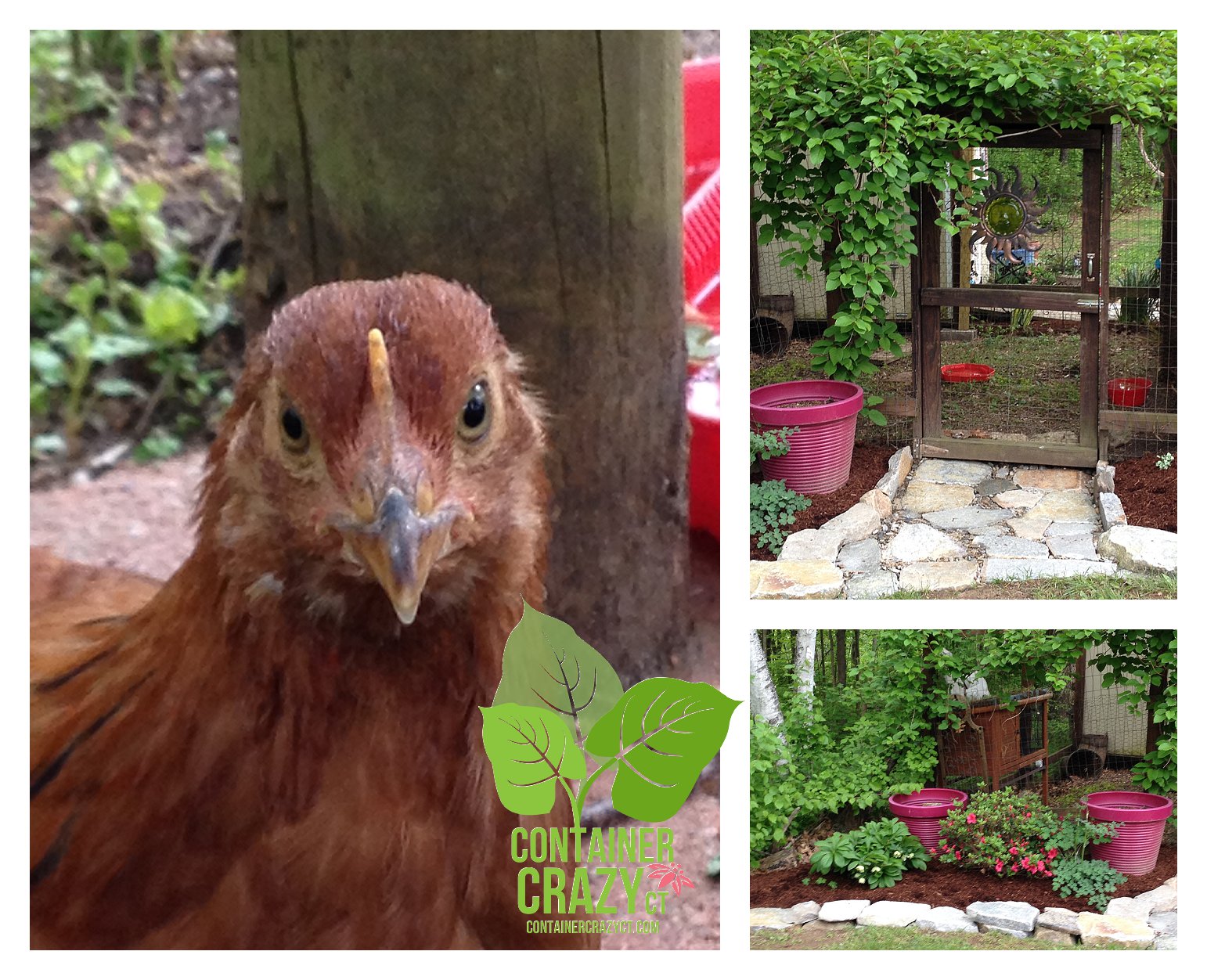
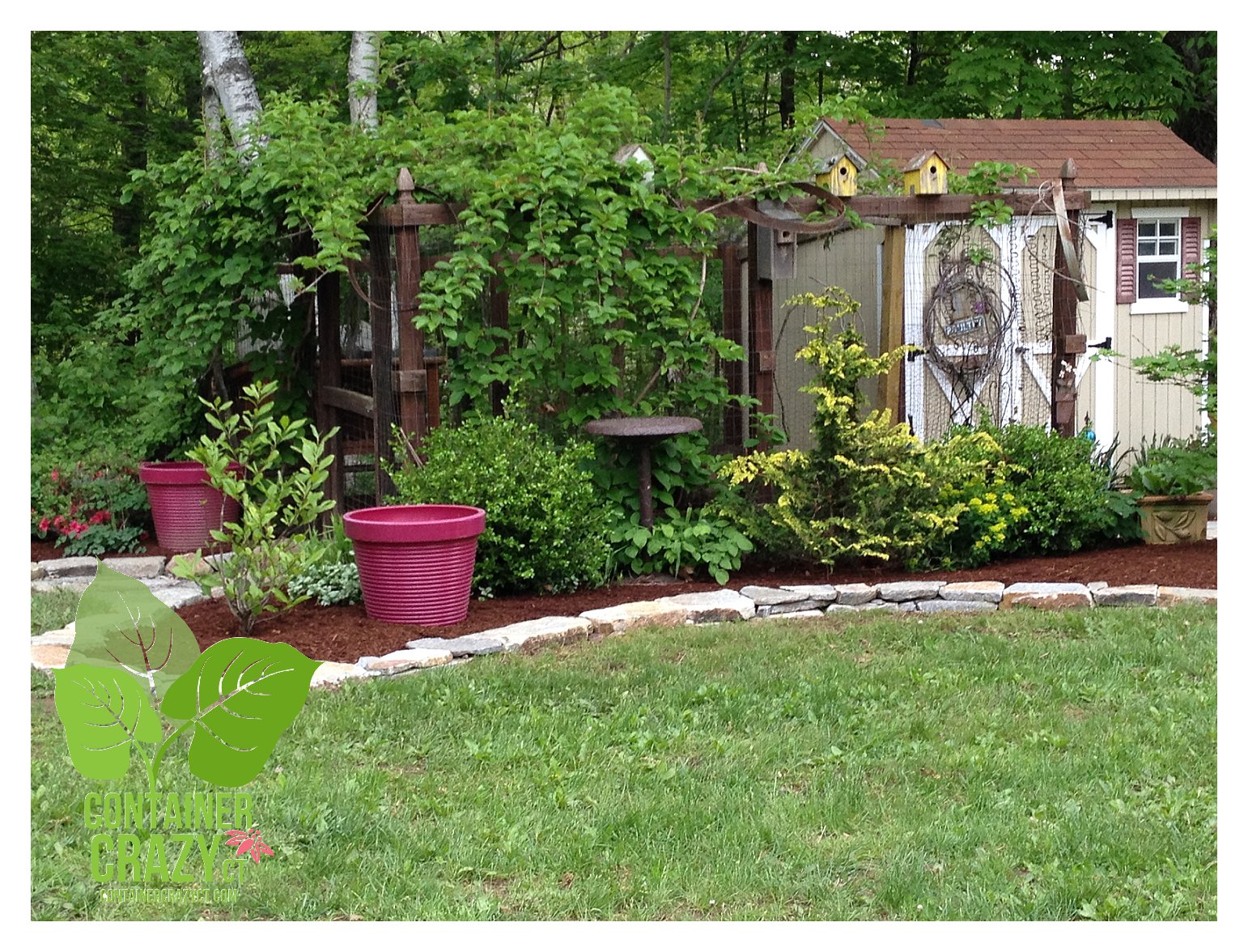
For years, I wanted to edge the area around my chicken coop – and my friendly landscape installer connection, Chris of Outdoor Creations of Ellington, obliged my request to have it done in time for this weekend.  I am thrilled with how it came out.  I like the natural look of this type of stone, and now I can have fun fixing up my plantings and adding perennials and container gardens to this area.  Talk about spoiled chickens!  Not only is their surrounding enhanced, they were fed grubs and worms by Chris as he was working on the building of the edge and mulching the beds.  He said they were fun to watch, and I’m sure they enjoyed his company while he was here.  Sparkles, the recently named chicken, agrees.  She’s the boss of my six Rhode Island Red hens, seen in the photo below.

Goofing w Camera_0017 Goofing w Camera_0015 Goofing w Camera_0014

Kiwi Vine Feeds My Chics

Two kiwi vines, plants several years ago, a male and female plant on each side as required for pollination, are above my pen area of the coop.  One day, Sparkles was jumping up to grab some leaves.  We caught her on our motion censor camera which we move around the house to capture photos of wild life – and predators, as you will see following this photo.  Look at Sparkle’s feet – she jumped right off the ground.  My first priority was to determine if this vine could be poisonous to the chickens, and thankfully, it is not.  They get a feeding of them every day now when I go visit, tearing some leaves off to toss down for them.  And, I think this will be the year we finally get kiwi fruit from these vines. I saw tiny buds on one plant, the female plant.  It takes about five years for them to bloom and produce fruit – so we will see.  The vines require a great deal of pruning to keep in check, it can overtake anything, and grows fast.  We removed branches off a tree above the pen area last year because the vines were twining up to it, so it has to be watched.  Feeding some leaves to the chickens will help, I think.

Kiwi Vine Above Coop Pen

Kiwi Vine Above Coop Pen

Wild Predators Don’t Take Long

As I have mentioned, we attempted chicken raising here twice before, and gave up for a couple years.  The former chickens were allowed to free range, and got snatched by foxs, hawks – you name it.  But our new ones will not go beyond their protected coop and outdoor pen.  Since we have a motion censor camera, we set it up nearby to see what would lurk to investigate our new chickens.

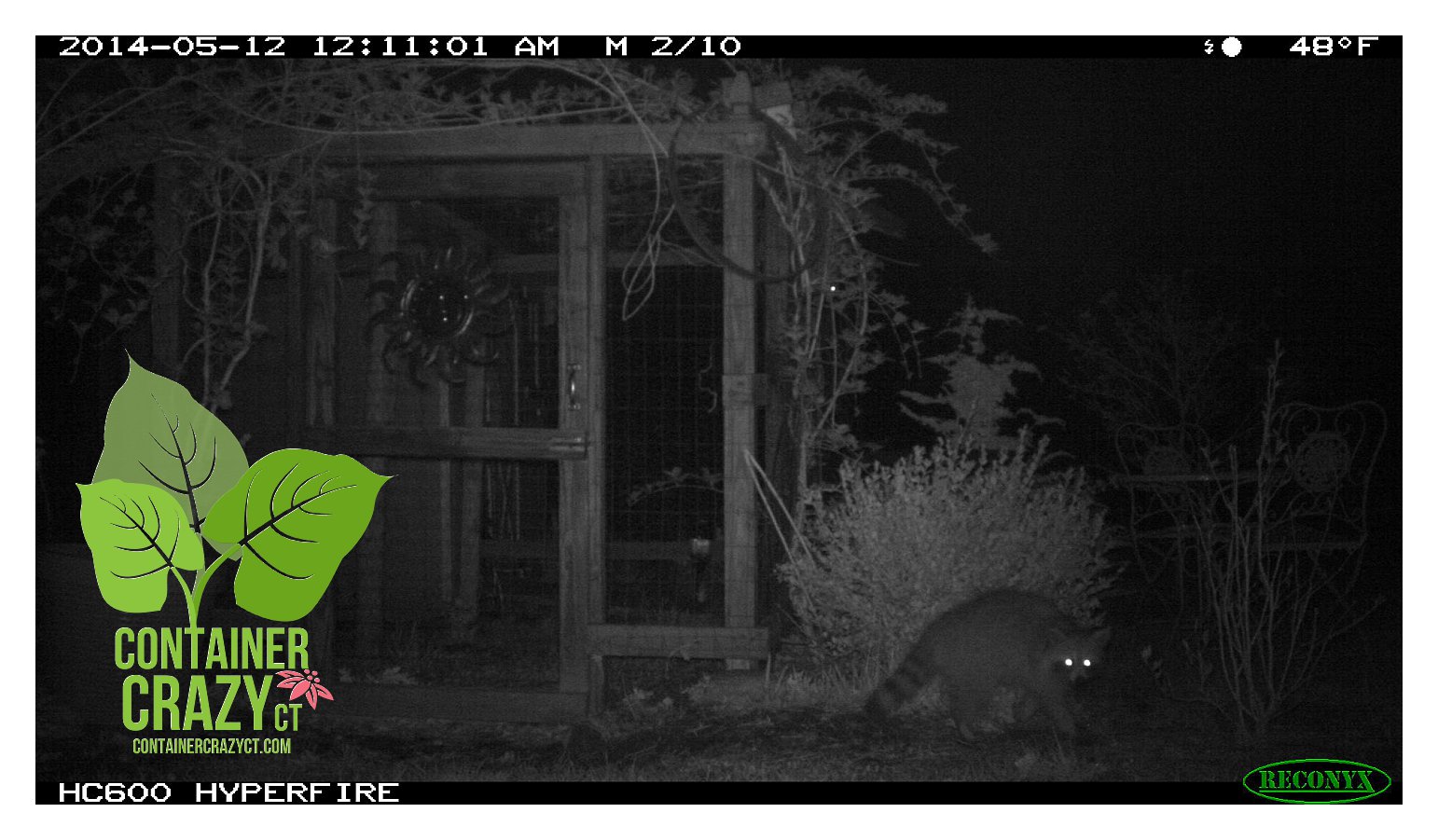
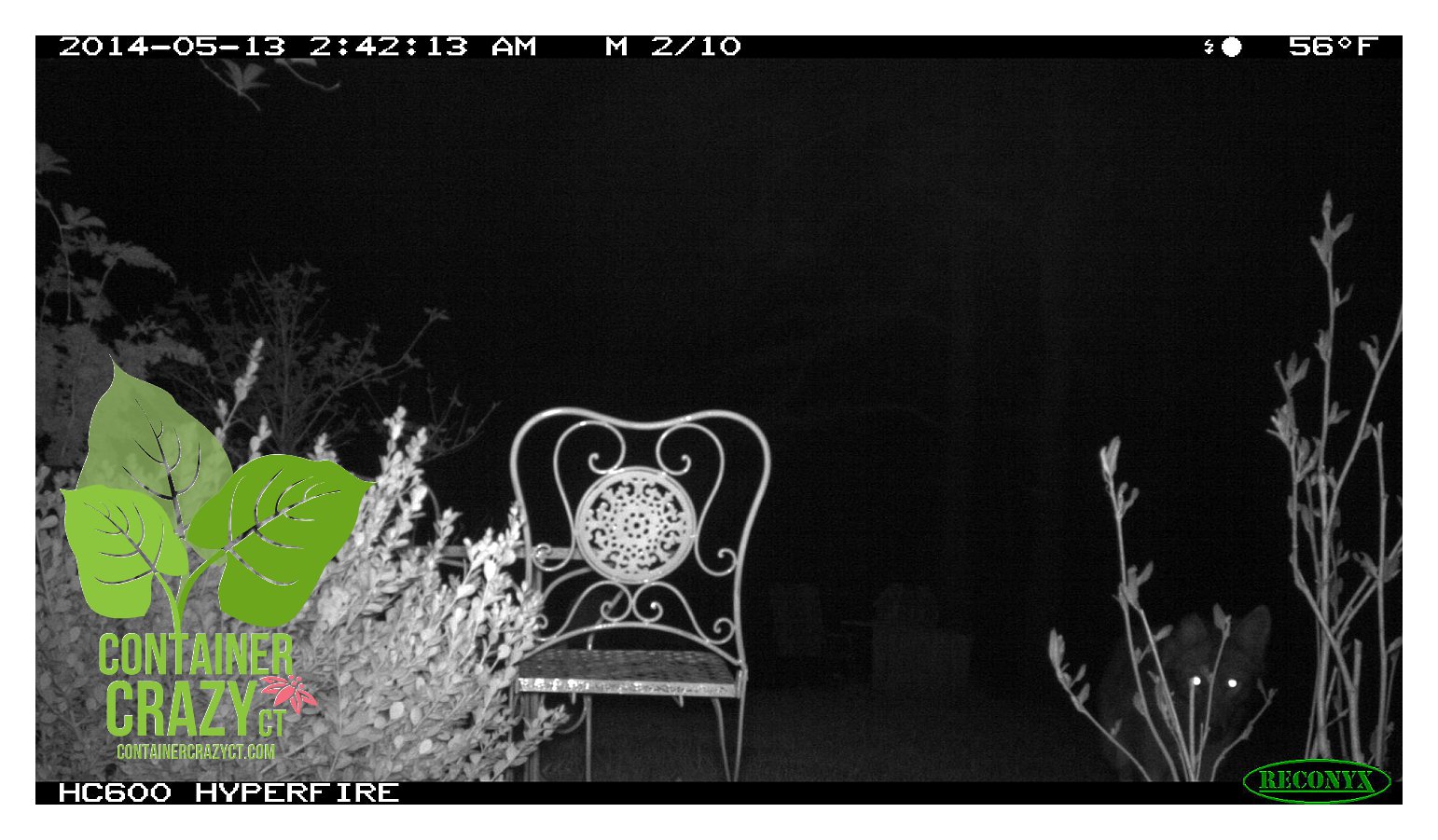
The first week, we spotted a raccoon and coyote in the photos, and one early morning, I saw a fox running around the coop with something in its mouth.  Thankfully, it wasn’t one of my chicken.  We are sure to close their coop door every evening, and we are keeping a steady watch to make sure their pen is safe.  So far so good.  Kind of creepy to see the coyote checking it out.

Predators, first racoon, then Coyote

Predators, first raccoon, then Coyote

Goofing w Camera_0022 Goofing w Camera_0023

That’s all for goofing around with my camera.  Now, its time to get back to work.

Written by Cathy Testa
http://www.cathytesta.com
ContainerCrazyCT.com
860-977-9473


Leucothoe axillaris – Five Great Reasons to Plant it this Spring

3 Comments

The genus name, Leucothoe (lew-KOE-thoe-ee), is one many folks are usually confused on how to pronounce, and I probably mispronounce it too.  But it’s a great evergreen shrub to use in the landscape or in container gardens.  If you haven’t been introduced to it yet, here are five great reasons to plant it this spring:

#1 – It blooms in spring and can take shade

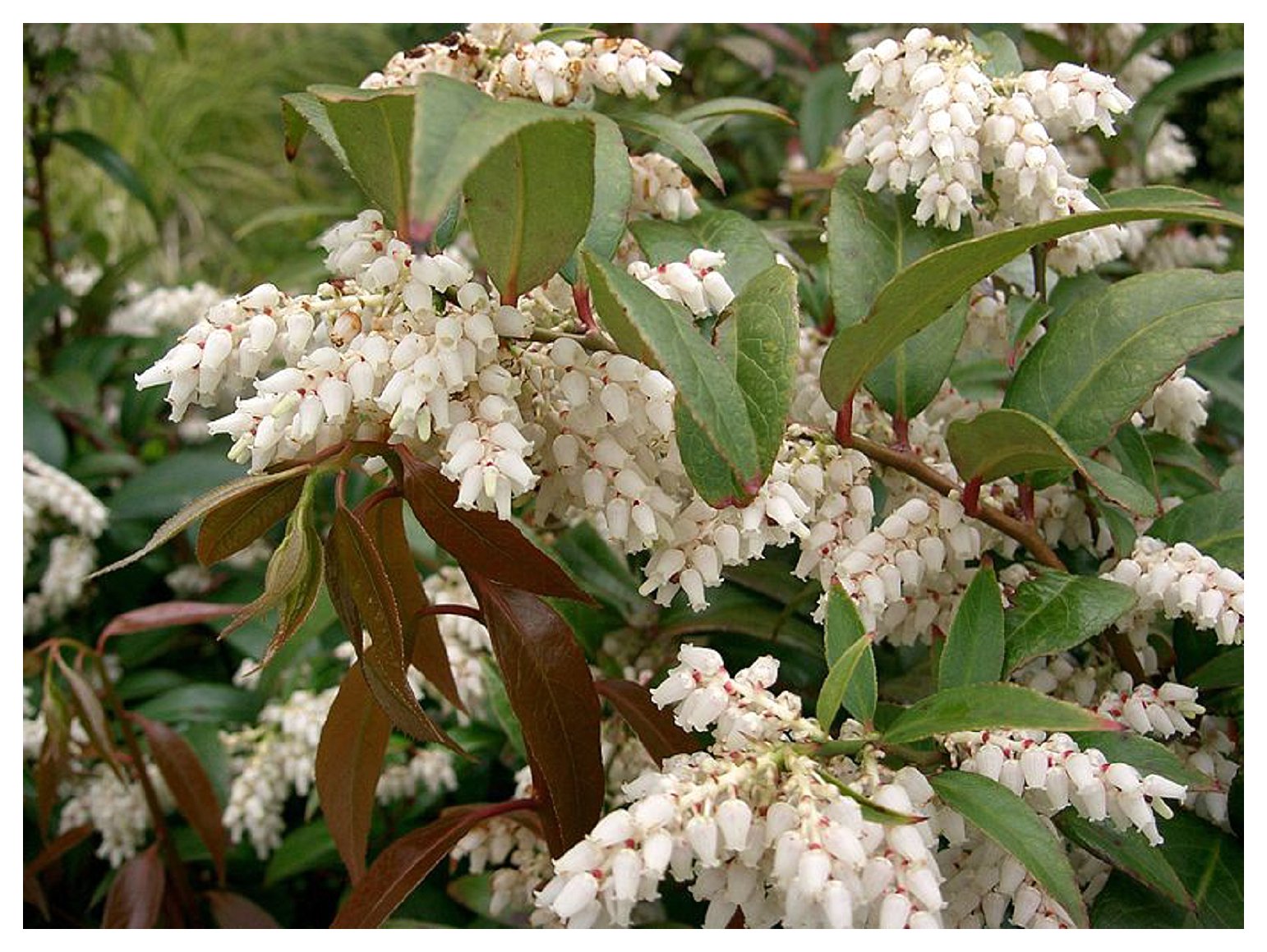
I think this plant’s growing habit is best described as floppy or arching, but its technically spreading and low growing.  The white urn-shaped flowers bloom in clusters along the stems near the base of the leaves in April and May.  They are very pretty, resembling heather or perhaps the blooms of Pieris, and are mildly fragrant.  This evergreen shrub is made for shady locations, preferring partial to full shade, so it is a great solution for shady spots in your yards.

See Photo Attribution Below

See Photo Attribution Below

#2 – It puts on a second show in the fall season

The dark green leaves on this broadleaf evergreen shrub are narrow, pointed, leathery and shiny. In autumn, the leaves turn a wine plum color which is very showy.  The photo below is a scan of a pressed stem of the leaves.  While not very pretty here because the color faded in the pressed sample – it shows you the ovate to oblong shape of the leaves.  This shrub is definitely a beauty in person. The fall plum color is a useful seasonal feature, offering a darker contrasting color next to other evergreen plants in your landscape.  Having alternative colors in the landscape on shrubs during the fall season adds a pop of color when we need it most.

Pressed Sample by C. Testa

Pressed Sample by C. Testa

#3 – It holds onto its leaves in winter and pairs well with Rhodies

This shrub is a nice candidate in rock gardens, borders, or on slopes.  It can also be used as a foundation plant or as a hedge in mass to create a screening. In my opinion, Leucothoe shrubs look more like deciduous cane-like shrubs, but it holds onto its leaves during the winter months.  It is an evergreen to semi-evergreen shrub reaching a height of 2 to 4 feet and spread of 3 to 5 feet with a slow growth rate, so the size is just about right.  It won’t take over a space quickly.  It goes well with other evergreens such as azaleas and rhododendrons, and has a different shape so it makes a nice mix in foundation plantings.  The leaves can look a little less full in the winter months but they still look amazing as their color goes bronze to plum.  In deep shade, the color may be a little less intense.

See Photo Attribution Below, Rhododendron

See Photo Attribution Below, Rhododendron

#4 – It can be used in container gardens and patio pots

Check out my pinboard of evergreens recently started where you can see photos of this plant in the ground and in containers.  This plant looks amazing in container gardens and patio pots.  Imagine the dark plum color being combined with warm fall colored plants and pumpkins or gourds during October.  Because the wine plum coloring transition happens during the fall season, it is a wonderful contrast element in mixed compositions.  By the way, sometimes when you see these shrubs in the nursery in early spring – they still have the plum color on them from the prior season but it will go back to green over the summer, and to plum in the fall.  Using shrubs in containers and patio pots also offers the additional benefit of being reusable each season so you don’t have to spend more on a new plant and many shrubs can stay in the pots outdoors over the winter, unlike annuals or tropical plants.  This shrub’s habit makes a nice spiller because it arches and will drape over the sides of your pots.

#5 – It is deer resistant and doesn’t need pruning

This woodland shrub does not have serious issues in regards to insects or disease problems, and deer rarely dine on them (see Rutger’s link below on Deer Resistant Landscape Plants).  This is a big plus for many gardeners with deer eating issues in their landscapes. Leucothoe axillaris doesn’t require regular pruning either – another plus.  It can be left alone for some time unless there are some weak stems requiring attention, which can be pruned off after the plant is finished blooming for the season.

See Photo Attributions Below

See Photo Attributions Below

Three Side Notes:

About the only three points to consider of importance are:

  1. Leucothoe axillaris prefers acidic (pH 4.5 to 6.0) organic fertile soil.
  2. It is hardy to zone 6 and the “warmer” zone 5 areas, meaning it is best to plant it in a protected location away from winds or cold micro-climate spots in your yard if your planting zone is closer to 5 than 6.
  3. It does not take doughty locations and if in the sun, the soil must stay moist.

Common names:

Coast Leucothoe, Dog-hobble

Cultivars:
‘Compacta’ a dwarf, ‘Dodd’s Variegated’ creamy white leaves, ‘Greensprite’ common, bigger up to 6’, ‘Sarah’s Choice’ low mounded, ‘Rainbow’ molted rosy pink and creamy yellow new leaves.  L. fontanesiana (Drooping Leucothoe) is a similar species. See Leucothoe fontanesiana ‘Girard’s Rainbow’ for a variegated option; ‘Scarlet’ is a dwarf, ‘Rainbow’ has mottled yellow leaves.

Useful Links:
http://njaes.rutgers.edu/deerresistance/ (Rutgers; Landscape Plants Deer Resistance)

Photo Attribution:
GFDL, Creative Commons Attribution Share Alike 2.1 Japan License.  Photo by KENPEI from Wikipedia.
Deer Photo Courtesy of FreeDigitalImages.net, by anankkml, “Sika Deer Fawn”
Rhododendron Photo Courtesy of FreeDigitalImages.net by Tom Curtis

For other shrubs written about on this blog:

Written by Cathy Testa

www.cathytesta.com
ContainerCrazyCT.com
860-977-9473
containercathy@gmail.com

The FIVE MUST DO’s for Successful Container Gardening

4 Comments
Images courtesy of FreeDigitalImages.net.

Images courtesy of FreeDigitalImages.net. (top left to right: Zirconicusso, Criminalatt, and Marin.  Bottom: James Barker and Simon Howden photographers)

A new page has been added to this blog where I share with you The Five Must Do’s for successful container gardening.

In all my container gardening talks, I go over every one of them and why they are so important – but now you can read them HERE on my blog.

You will find if you do all five, your container gardens will thrive, look amazing, and make you extremely happy.

So often, people will skip one or more of the steps, and they wonder why their plants are not doing well or growing poorly.  Once they follow my 5 MUST Do’s, they never look back again because their plants will thrive and grow so well.  Doing The 5 MUST Do’s is – well, a must!

Hope you enjoy the new page, accessible from my top menu bar under CONTAINER GARDENS.

Stay tune too – more tips are on the way.

Thank you,

Cathy Testa

New Page: Troublemakers Turned Stars

Leave a comment
Photos by Cathy Testa

Photos by Cathy Testa

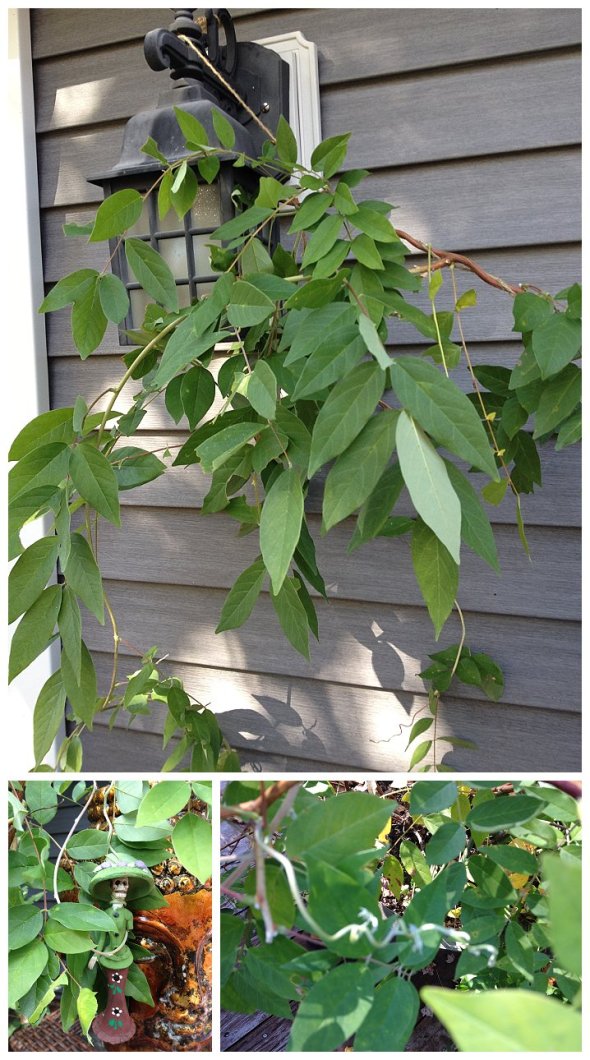
We all know everyone has a good and a bad side, and so do plants!  Thus, I’ve added a new sub-menu to my blog called Troublemakers Turned Stars.  Visit this page and my Pinboards to see more images and photos of the plants discussed.  If you have questions, just let me know – I’ll share my plant experience to date with you – or perhaps you have a story to share how the plant caused you some trouble in your gardens or landscape.  But the point of this information is many plants which are troublemakers in the garden have the opposite effect in container gardens and patio pots. They turn into star performers – so why not use them to capitalize on their bad side?  You will be amazed how useful and attractive they become.

PETASITES

Photos by Cathy Testa

Photos by Cathy Testa
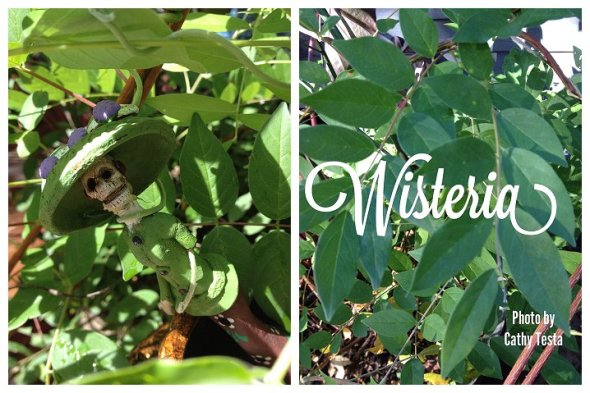
WISTERIA

Photos by Cathy Testa

Photos by Cathy Testa

Photos by Cathy Testa

Photos by Cathy Testa

BAMBOO

Photo by Cathy Testa

Photo by Cathy Testa

See my Page, Troublemakers Turned Stars, to read the details, why the plants are problems or a nuisance in the garden, yet turn into star performers in container gardens and patio pots.  More will be added routinely to keep you ‘posted.’

Written by Cathy Testa

I Wish I Was as Strong as An Ant

3 Comments
Image Courtesy of FreeDigitalPhotos.net/by Sweet Crisis

Image Courtesy of FreeDigitalPhotos.net/by Sweet Crisis

When I take down my container gardens for the season.

Lifting objects fifty times my weight would be handy right around now when I start taking apart my large container gardens and patio pots on my deck for the close of the season.

Years ago, I had no problem whatsoever doing this process, but as one ages – well, you know, if you don’t keep up with those muscle building routines, it can become difficult.  In fact, when I gave talks on container gardens and why “bigger pots are better,” some ladies in the classroom would ask, “How the heck did you manage moving all those big pots?!”

Sometimes I get so excited about container gardening, I instantly find super power energy enabling me to lift heavy bags of container garden soil or other items needed like the big pots. However, during this year’s take down process for my container gardens, I felt a little weak at times.

In fact, I started to tell myself, stop feeling frustrated about taking down your plants in your container gardens!  It is part of the process and get into the spirit.  So I did some of my work of breaking down the 20+ or so large container gardens on my deck yesterday, and as I was doing so, I thought I’d share some of the things I found frustrating or helpful during the process.

Soil from Containers

Soil from Containers

GET A WHEEL BARREL OUT

Last year I was lucky. I had a new huge cement planter near my deck and I tossed the left over soil into that, but this year, I had to use my wheel barrel.  At first, however, it fell over from the weight of the soil falling from the deck level above into the barrel as I tossed it over the railing.  So I attempted to move my pick up truck to the deck, well, that didn’t work.  It was too difficult to maneuver the truck to the corner of my deck.

photo (7)

So, it was back to using the wheel barrel.  After getting a big lump of a root ball or two into the barrel, it stabilized and I was able to continue dumping the soil into the wheel barrel receptacle from above.  I will use this soil in the ground somewhere to recycle it as it doesn’t do well being reused in my container pots next year – It is best to have fresh container gardening soil each season, in my opinion, but to use it as a top dress to a garden bed or for a new garden bed is a good idea.

PLASTIC LINERS FOR POTS

In my container garden demonstrations, I show folks how to line their containers and patio pots with plastic liners (which must have slits and holes cut into them for drainage).  The reason I started doing this many years ago was more to keep the containers in good shape, but it also turns out to be a very effective method for slipping the whole root ball out of the containers at the end of the season.  The roots circle a bit around the edges within the liner, and it forms a nice ball or chunk when you are ready to take the plants and soil out.  It is a great tip for plants like Canna plants because they get large rhizomes and roots in the soil, making removal difficult. So I was happy my liners were working perfectly as I was removing the soil from my pots.

Foliage being Tossed into a Bin.

Foliage being Tossed into a Bin.

CUTTING ALL THE STEMS AND FOLIAGE OFF

Before slipping the soil out of the pots with the liners, I cut off all the foliage and stems to about 4″ from the base for plants I’m tossing in the compost pile. The little stub of a stem helps to lift the root ball out of the pots, at least in sections or chunks. The key here – use good sharp pruners or a serrated knife for large stems, and make sure to clean or disinfect them so you don’t spread any yuck (diseases) around, even during the take down process, clean tools are important.  I tossed my cuttings into a large bin on my deck, another item which came in handy as I was working.  It is easier to take all the foliage off before trying to move pots to a location or to the spot where I was tossing out the soil into my wheel barrel. Seeing the cut off stems of my elephant ears made me sad, and also made me think that I should have setup a station to make leaf imprints in a concrete mix as a side project at this time, especially because I have plenty of leaves to use, but that’s another crafty project requiring time.

WASHING THE POTS

Sometimes I feel a little lazy, but I force myself to wash the pots with a little soapy water, and a soft brush to clear away any soil residue left in or on the pots.  Then air-dry the pots completely before moving the containers into a garage or shed.  It is important to not skip this step. Cleanliness is so important for your plants when you begin again next spring to replant your containers.  It greatly reduces, if not eliminates, potential plant diseases or problems and you will be happy you cleaned them the year prior.

My Big Kalanchoe, Going to a Foster Home.

My Big Kalanchoe, Going to a Foster Home.

FINDING NEW HOMES

For container plants which I can not fit into my home (yup, read my blog earlier about greenhouse procrastination), I stand there contemplating where I can fit this – or should I give the plant to a friend or family member with a bigger house? The one I’m struggling with right now is my Kalanchoe (paddle plant).  It is HUGE. I know I can easily propagate some with cuttings, but I keep looking at it saying, should I cram it in my bedroom again to keep it alive all winter? Or give it to my sis in law with a big open bright living room with lots of windows?  Oh gosh, the challenges!!  I don’t know.

Hypertufa at End of Season.

Hypertufa at End of Season.

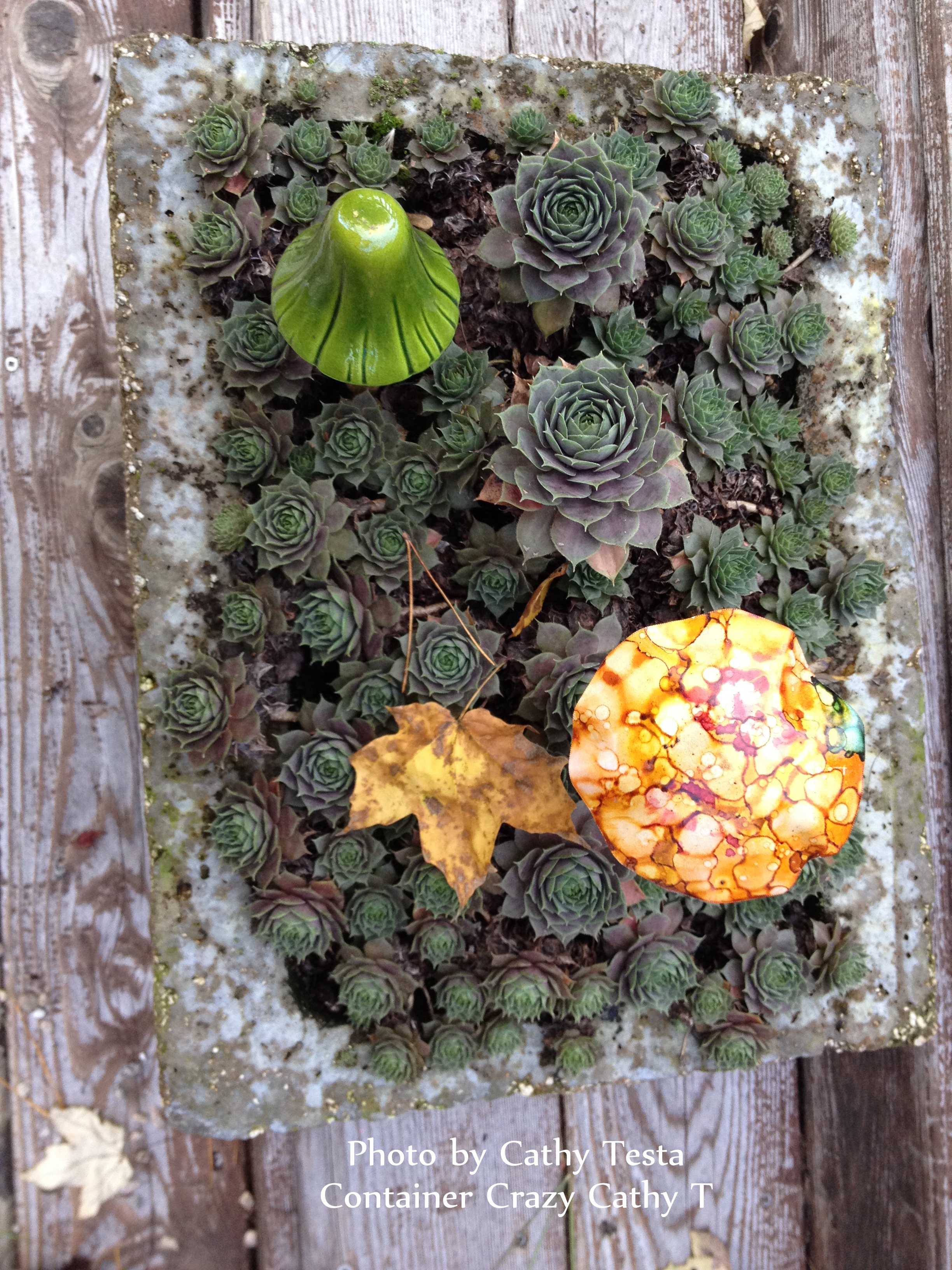
I also have a beautiful hypertufa stuffed with Sempervivums (hens-n-chicks).  They are pretty tough, can go really dry all winter with little watering, but I don’t have room in my kitchen garden window because I put my head planters there.  Gosh, where will this one go?

These are the challenges I face, never mind the fact I just don’t want to stop admiring my container garden plants outdoors, but winter is coming.

HAVING A GLASS OF WINE

Another downfall, or plus depending on your point of view, is that I started feeling like I wanted to have a glass of wine and enjoy my deck.  It is one of my favorite spots at my home. If you were to ask me – What is your favorite spot? Well, it is our deck.  I always feel like it is a vacation spot or oasis with all my big tropical plants every summer.  I get to decorate it with all my garden decor, and it faces a private backyard, so it is really a retreat.  So because I was out there on a nice, sunny fall day, and being around my beautiful plants, I felt like, gee, I should relax and have a glass of wine.  So I did after I disassembled about five or so of the smaller of my big containers.  Today, I will tackle the bigger ones.  This will require a hand-truck, some patience, and strength.

Wish me luck!

Cathy Testa