Easy Moss Crafts for a Beautiful Easter

Leave a comment

Easter is on April 5th this year, 2026. Although it is still 2 months away, I recently thought about some Easter creations. I made them with plants and moss a few years ago.

You can use sheet moss, Spanish moss, reindeer moss, mood moss, sphagnum moss, or faux moss. In my examples below, I used two or three types of natural live moss.
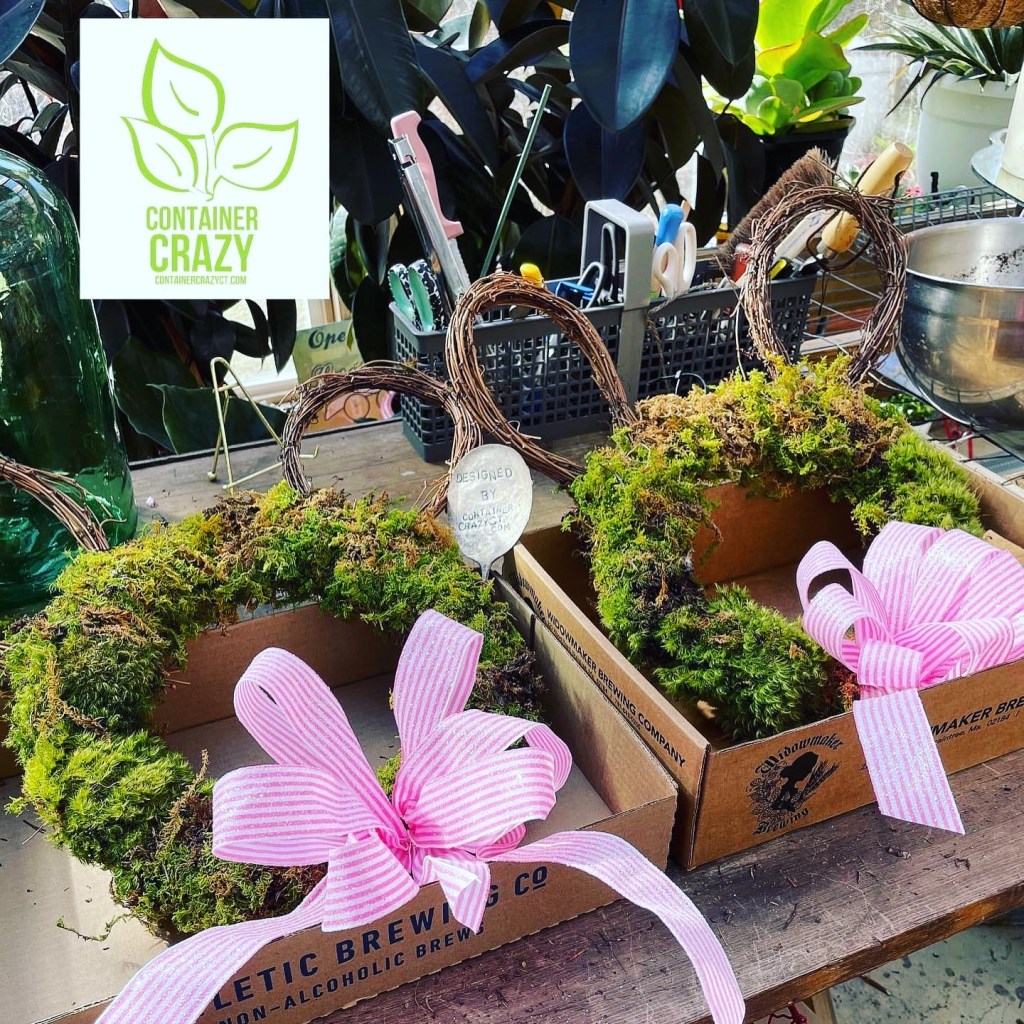
Easter Moss Wreath with Grape Vine Bunny Ears

Round Metal 12″ Wreath Frame
Natural Moss (different types)
Natural Grape Vine Twig Garland
Green florist wire
Ribbon

Making this wreath was rather easy. It does make a mess though because the moss will scatter bits here and there. I made them in my greenhouse. The moss was live natural moss I had in my stock. Moss can be kept in cardboard boxes in a cold environment, like an unheated garage. Some florists keep moss in their florist coolers. The wire wreath frame was in my stock from prior years of making holiday wreaths. I also had some florist wire from before. And the grape vine twig as well. At first, I didn’t know how to make the bunny ears, and the grape vine came to mind. Attaching the moss with the florist wire by just repeat wrapping is simple. The grape vine was bendable to I attached it to the wire frame as well.
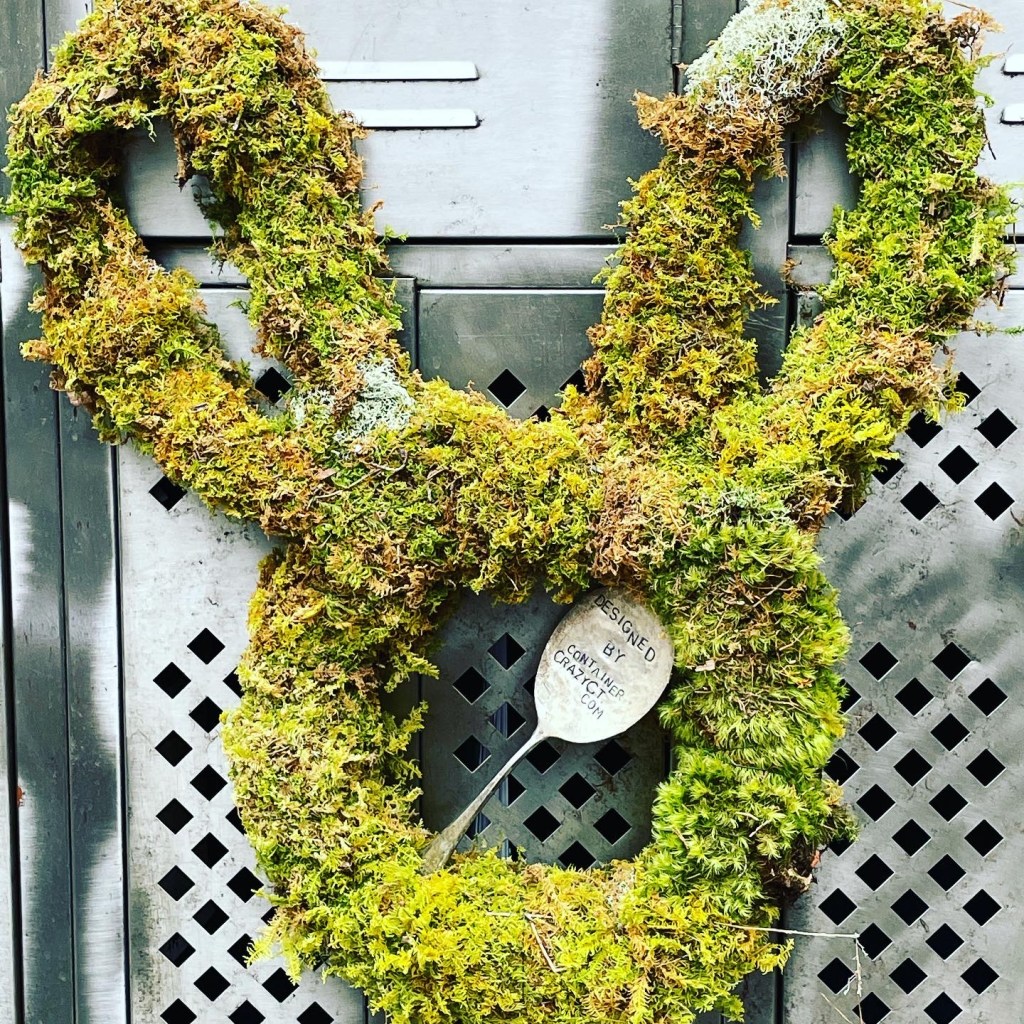
I attempted to make bunny ears by using coat wire hangers and bending them into the bunny ear shapes. It worked too but was more time consuming. I preferred the grape vine ears instead.
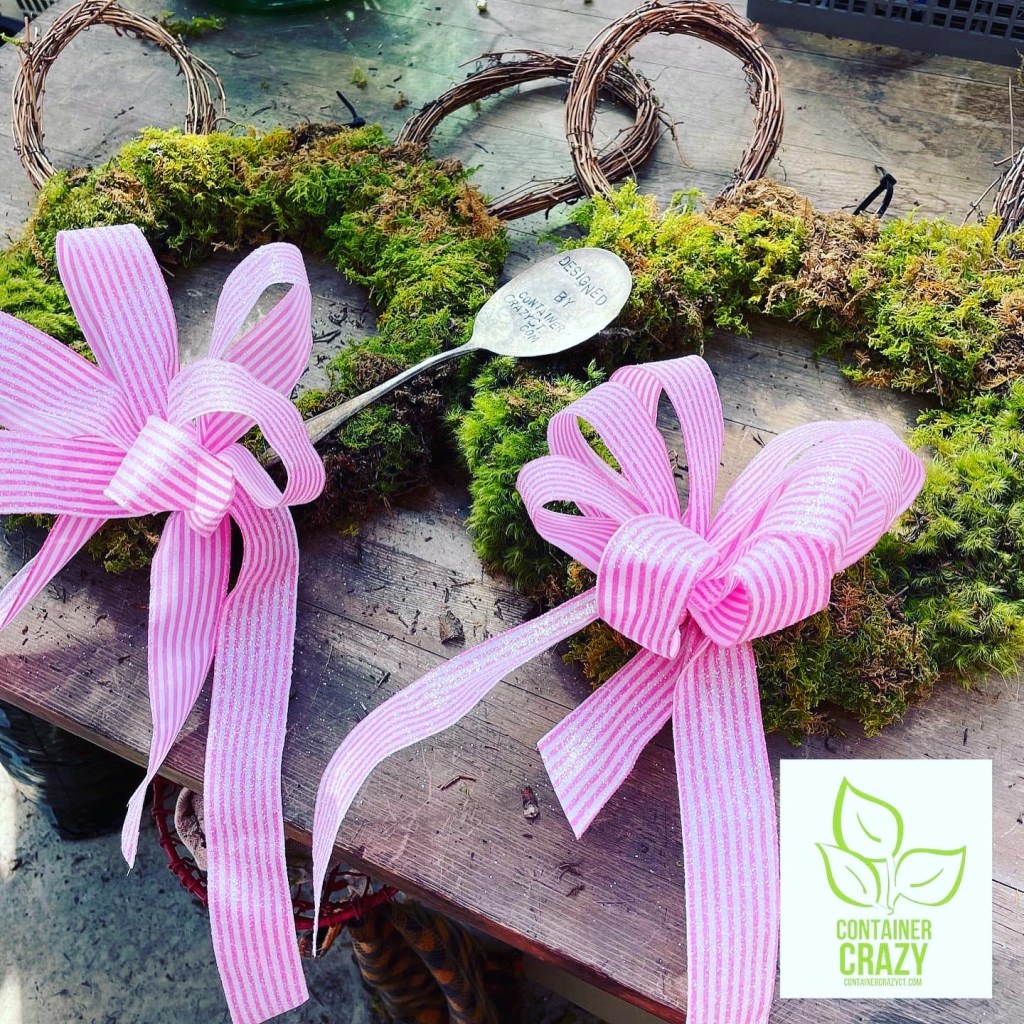
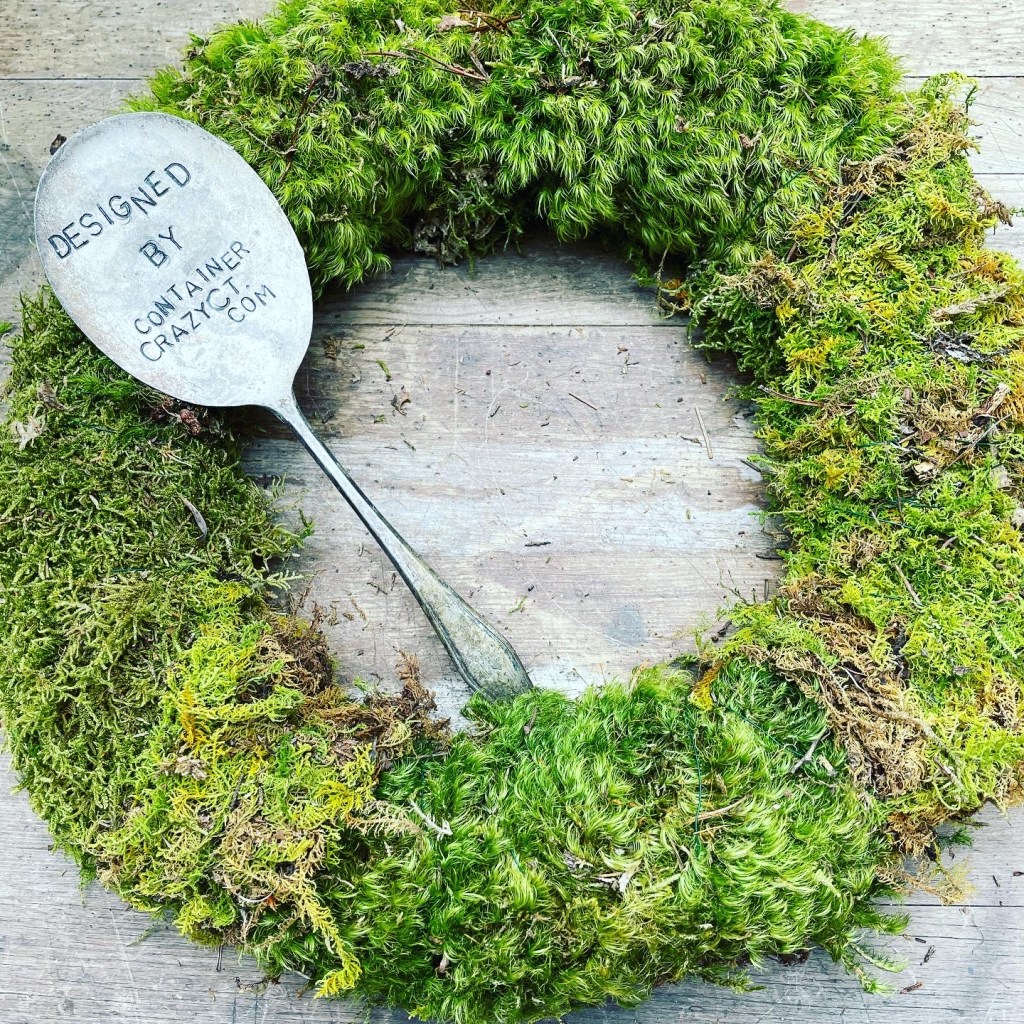
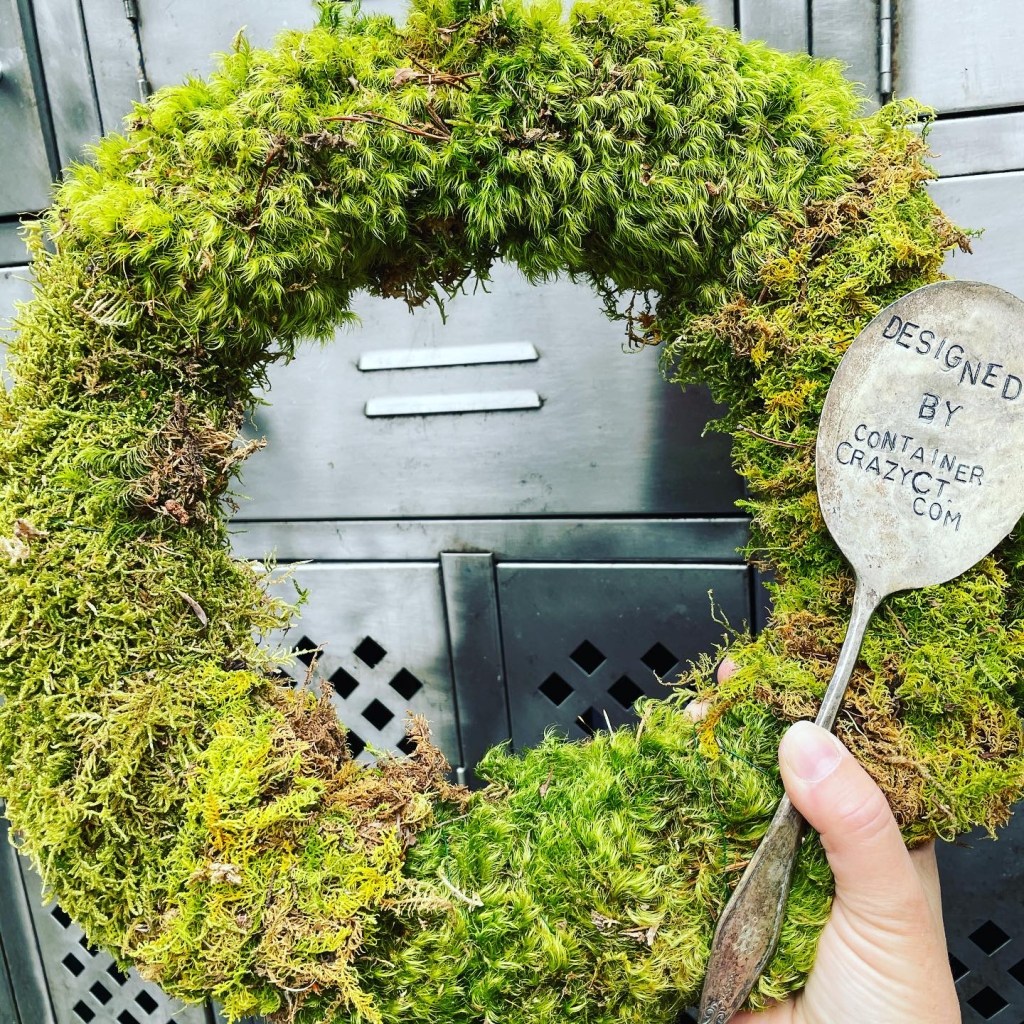
I also like the look of just a simple natural moss wreath. There are actually several different types of mosses used in the wreath made shown above. Moss gives me a feeling of just enjoying nature. It is earthy, has an almost like soil smell, and pliable. If the moss needed a little moisture, just lightly spray it with a water bottle sprayer. Outdoors it lasts for months if not indefinitely. The moss on the one in the photo above was a combination. It included mood moss, which is wavy looking, and sheet moss. Sheet moss pulls apart in pieces. It works well to wrap a piece or section of it around the metal wreath frame. Then using florist wire, I just wrapped the florist wire around the tops. The florist wire, which was green, disappears as it gets pushed into the moss somewhat.
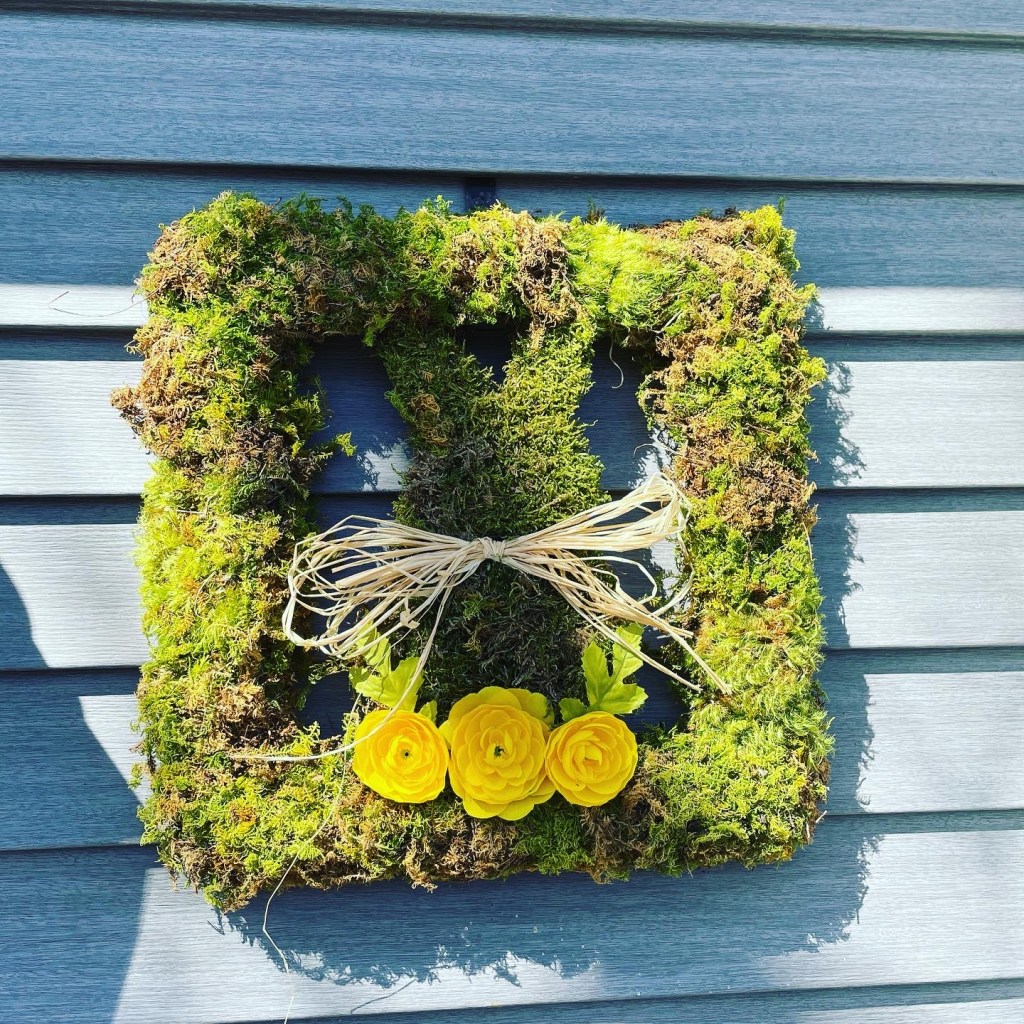
Square Wreath with Bunny in the Center

Square Double Rail Metal Frame
Natural Moss (different types)
Faux flowers
Green florist wire
Raffia ribbon
Cardboard (used either an empty cereal or beer box)

This one was made on a square wreath frame. In the center, I made a bunny. I cut a bunny shape using cardboard and used glue gun glue to glue moss over the bunny shape. It was rather easy and then I attached it in the center. The yellow flowers are faux material. It came out rather cute. The bow was made with natural raffia ribbon.
Next, is a bunny cut out project fun and simple to do with kids.
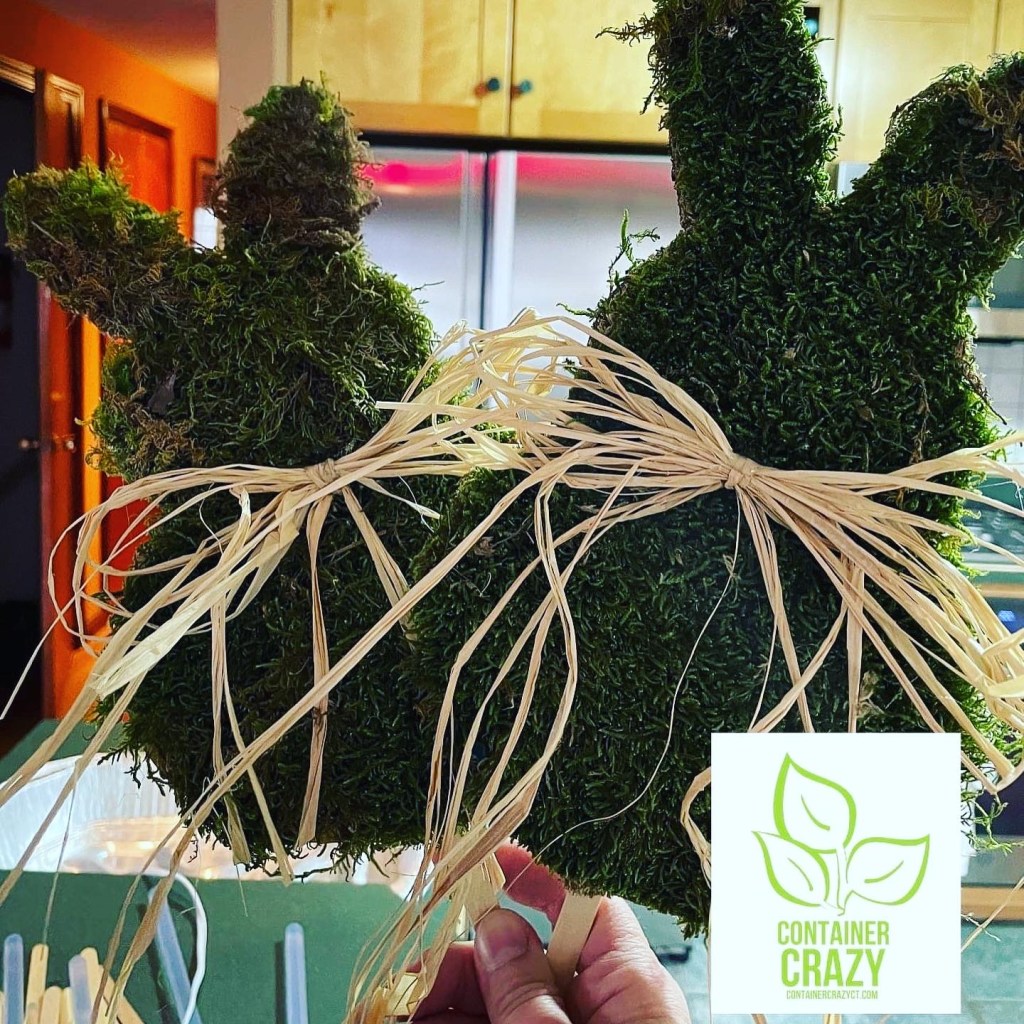
Bunny Sticks with Moss

Sheet moss
Glue gun with glue sticks (or other type of glue)
Raffia ribbon
Cardboard (used either an empty cereal or beer box)
Popsicle sticks
Green spray paint

Another crafty bunny idea was these moss bunny cutouts. I thought how this is an easy and fun project to do with kids. First, I cut the bunny shapes out using cardboard. I found that beer cases, like Budweiser beer boxes really worked well. It was easy to cut shapes with that type of cardboard. Or you can use empty cereal boxes. Wooden Popsicle sticks were used as the stick part. Then these can be inserted into things like potted plants or whatever. Again, I had natural raffia ribbon on hand to make the bow for the bunny’s neck area.
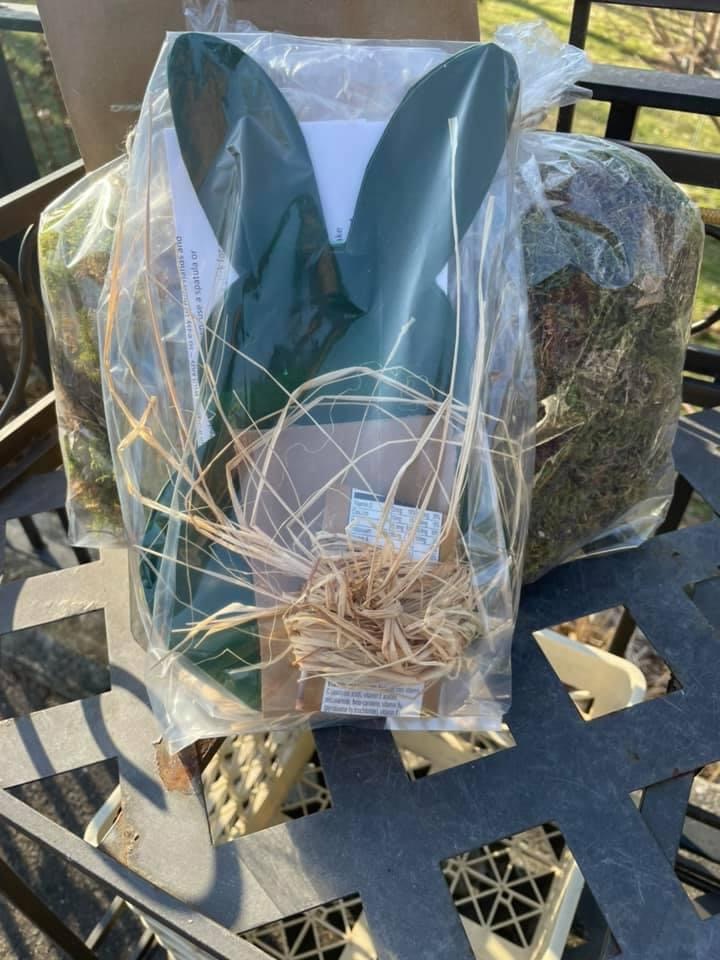
That year I decided to make kits with all the components to sell. I had spray painted the bunny cutouts with green spray paint. This helped to hide the print of the cereal box. I left the other side bare. It was a very easy and fun craft to do with kids. Use your imagination. Add eyes or a bunny tail!

The next project is hanging glass globes.
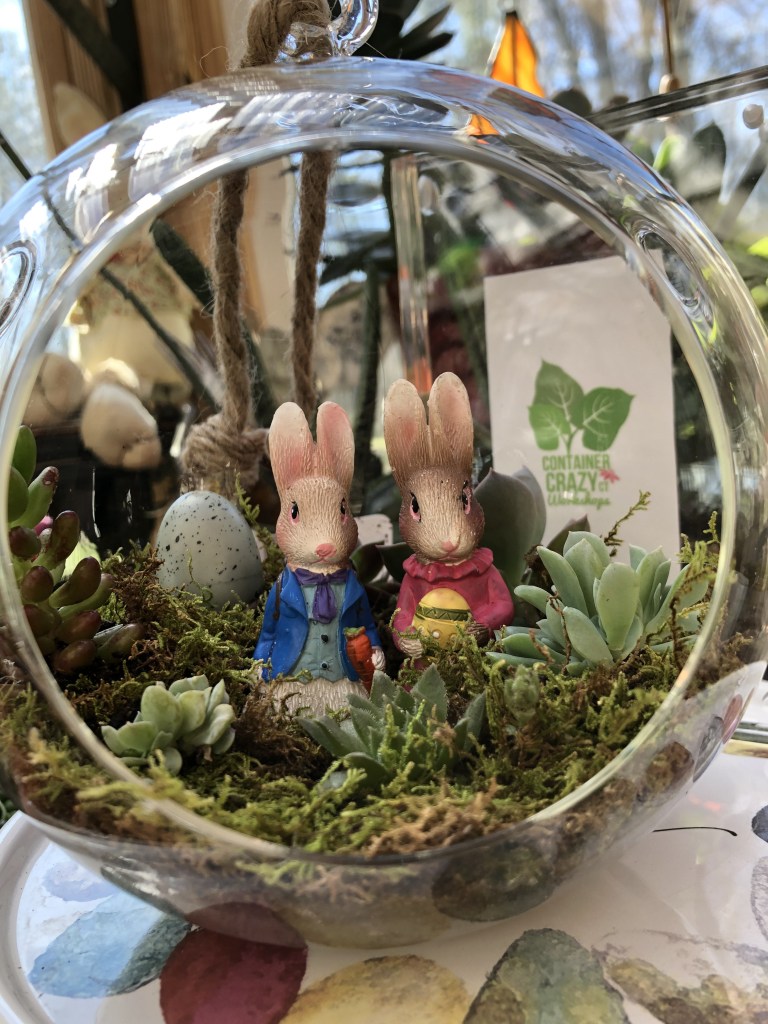
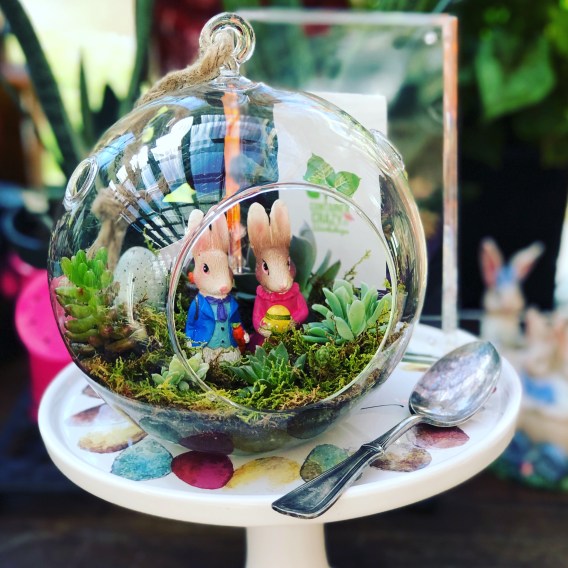
Hanging Glass Globes with Succulents and Bunny Figurines

Natural moss (recommend any type except Spanish or Faux Mosses)
Hanging Glass Globe
Decorative small bunny figurines
Faux decorative Easter eggs
Live plants (hens and chicks, jades, donkey tails, echeveria, or other succulents)
Potting soil (small amount recommended)
Activated horticulture charcoal (optional)
Glue gun with glue sticks (optional)
Round wooden craft like disk (size of a quarter, optional)
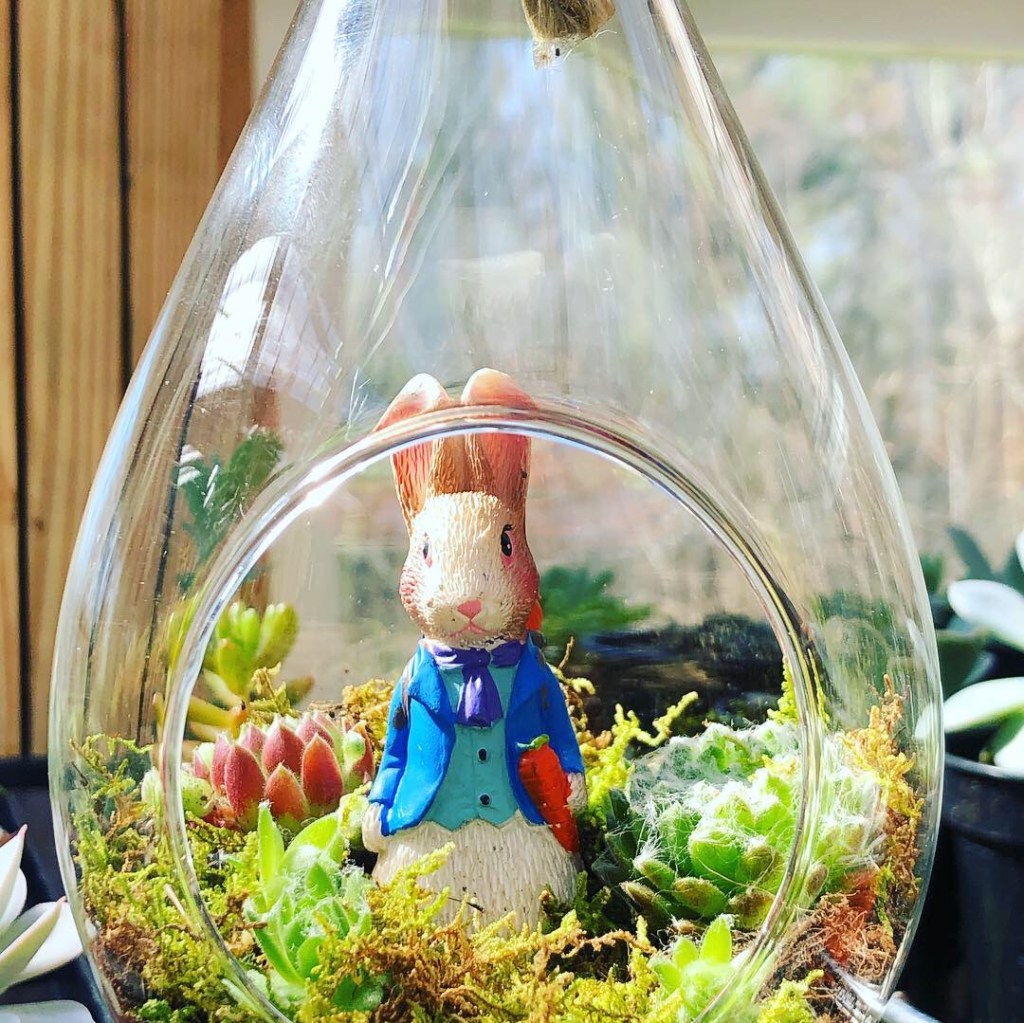
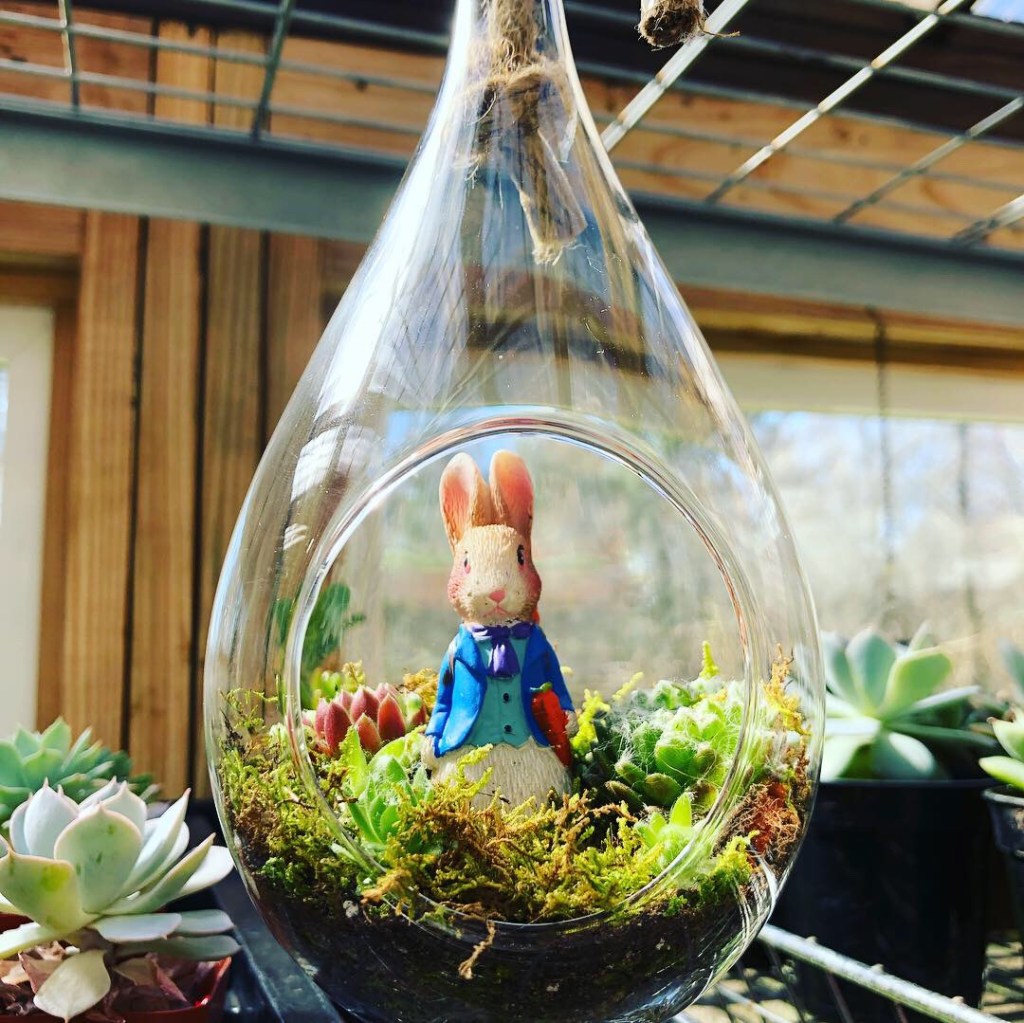
Before you start, be sure your decorative bunny figurine fits into the hole of the glass globe. Succulents can live in natural moss. The roots will naturally grow into the moss and the bit of potting soil below it. The activated horticulture charcoal, which is infused with oxygen, helps absorb odors. It is an optional item. If you don’t have any, don’t worry too much about it. But if you decide to use the charcoal, place a little bit of it over the well-draining potting mix before the moss layer.
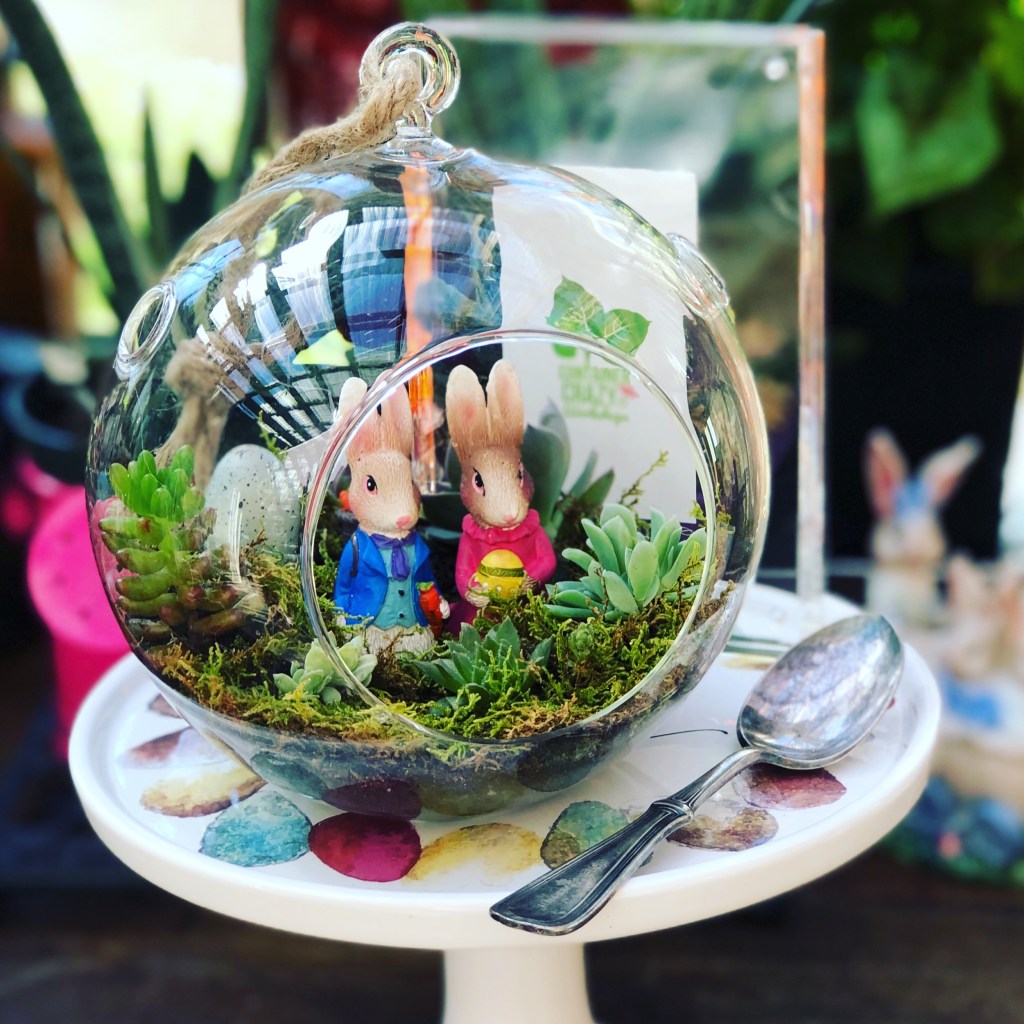
The round wooden disks I mentioned in the items list are the size of a quarter coin. I used them to glue my bunnies onto. This helps stabilize them. I used some glue gun glue to attach it to a disk. Then I inserted it into the hanging glass globe. I do not recommend dry mosses that tend to rot which is what I feel Spanish moss does. Spanish moss may be green or light tan brown and it looks stringy. When it gets wet, it tends to stay too wet for the succulent plants. I prefer the other types of natural living mosses like sheet moss, mood moss, or others noted above.
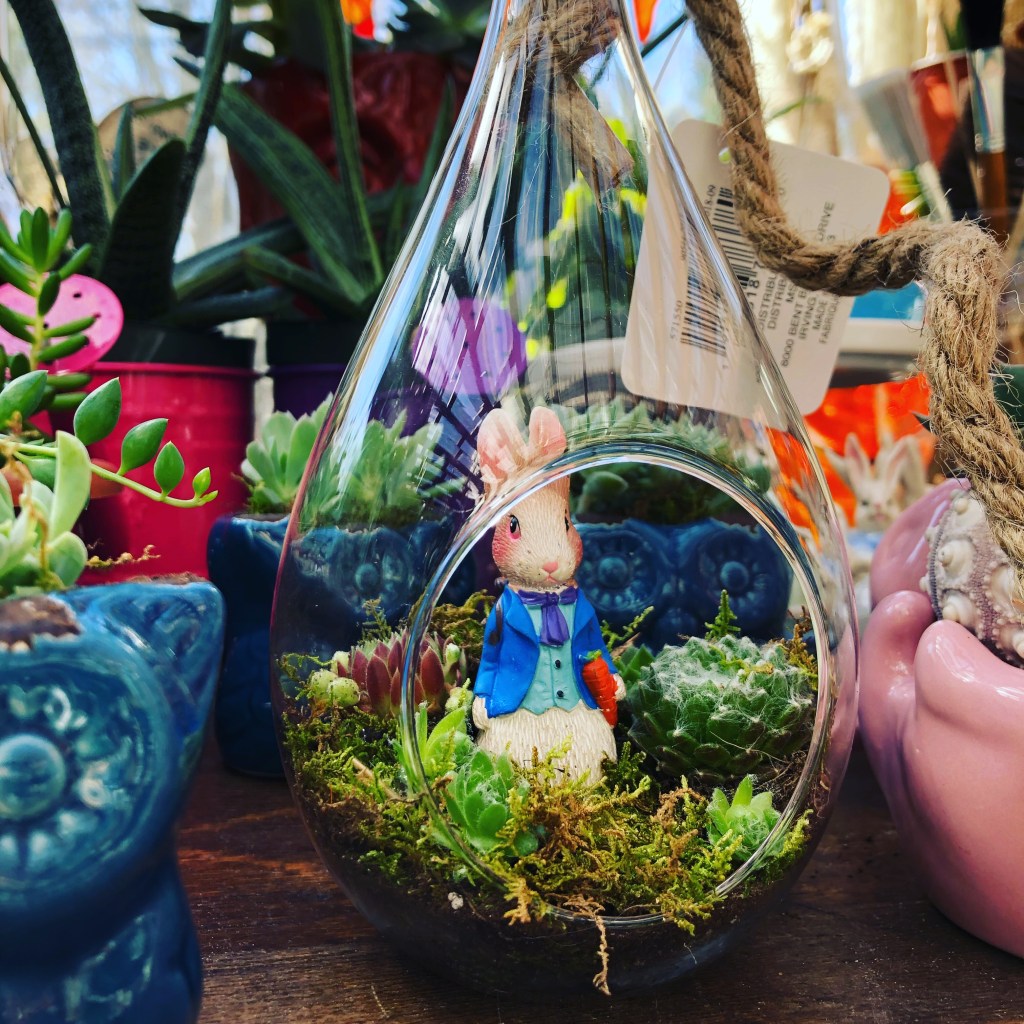
The moss is the next step, tucking it around the bunny and onto the potting soil. Then comes adding the tiny succulent plants. Most of these were cuttings or really small hens and chick plants (Sempervivums). If you think the plant won’t stay in place, add a tiny dab of glue gun glue underneath. This will help secure it.

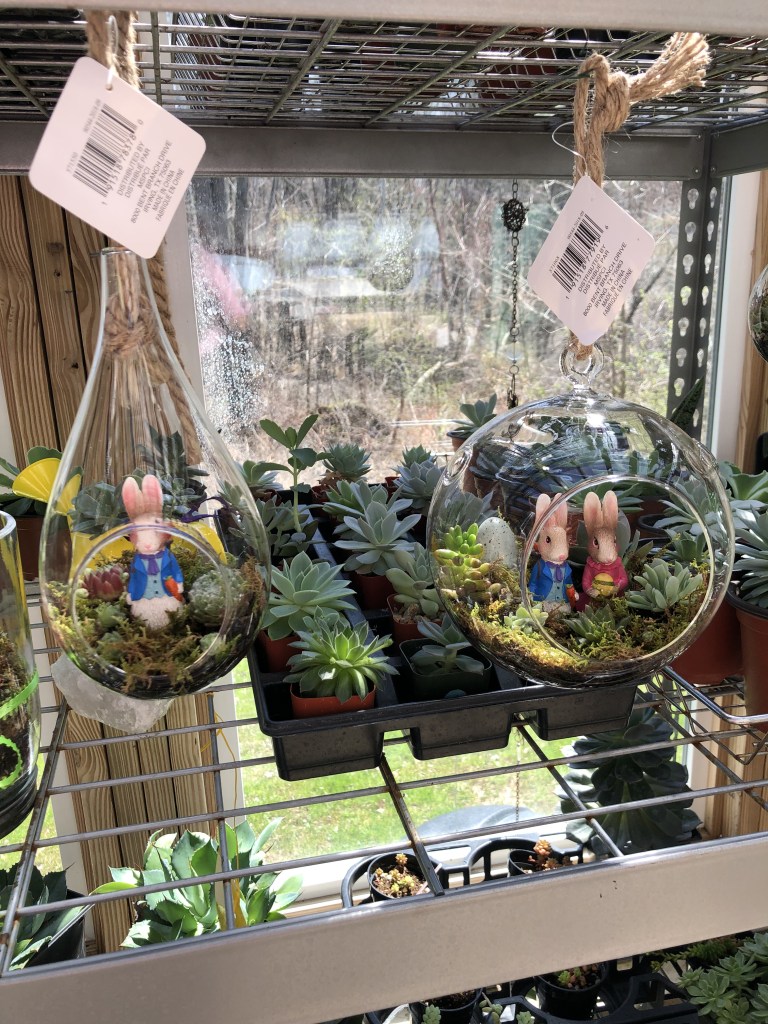
In this example next, I acquired tiny little bunny decor. So cute!
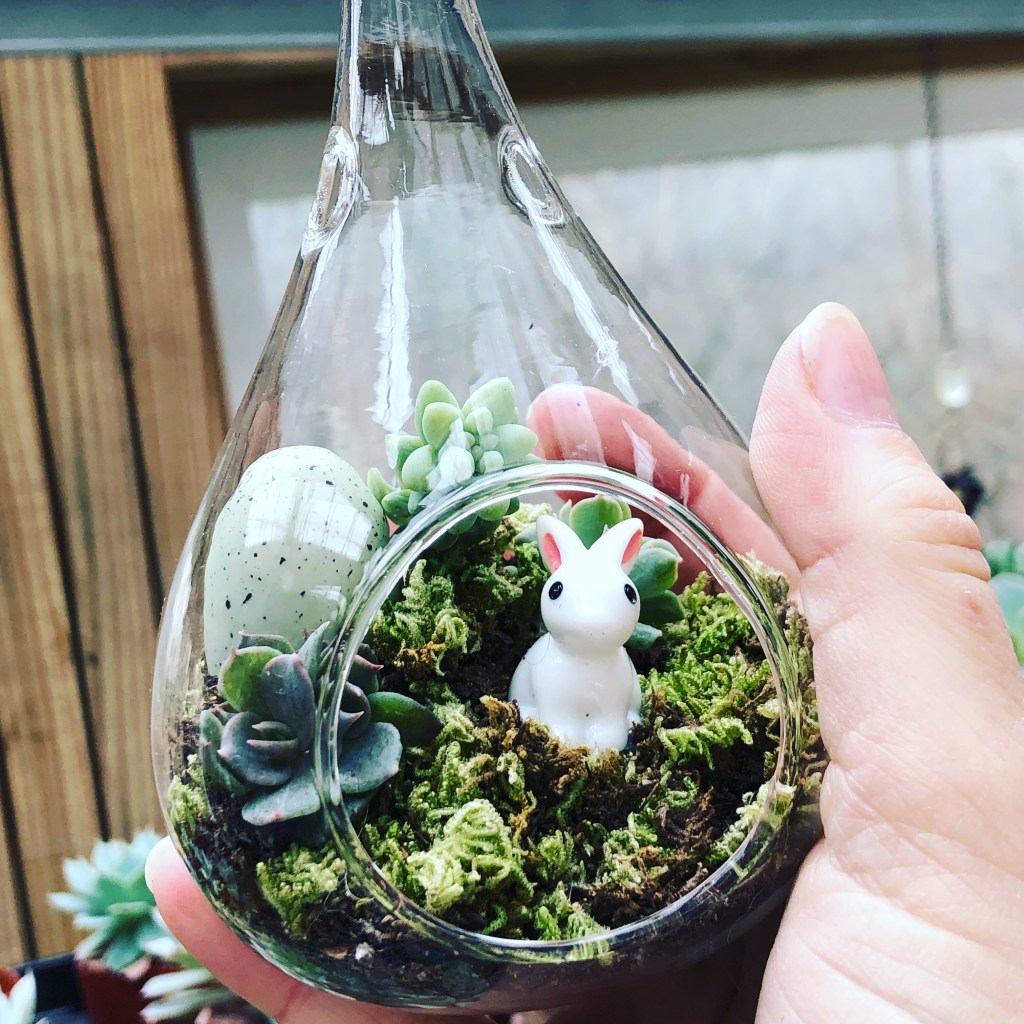
Are these little, tiny bunnies adorable or what? It made the project so cute. The nice aspect of these hanging glass globes is they function like mini terrariums. The succulent plant will grow very slowly. Once you are done with the Easter decorating season, you can remove all if you wish.
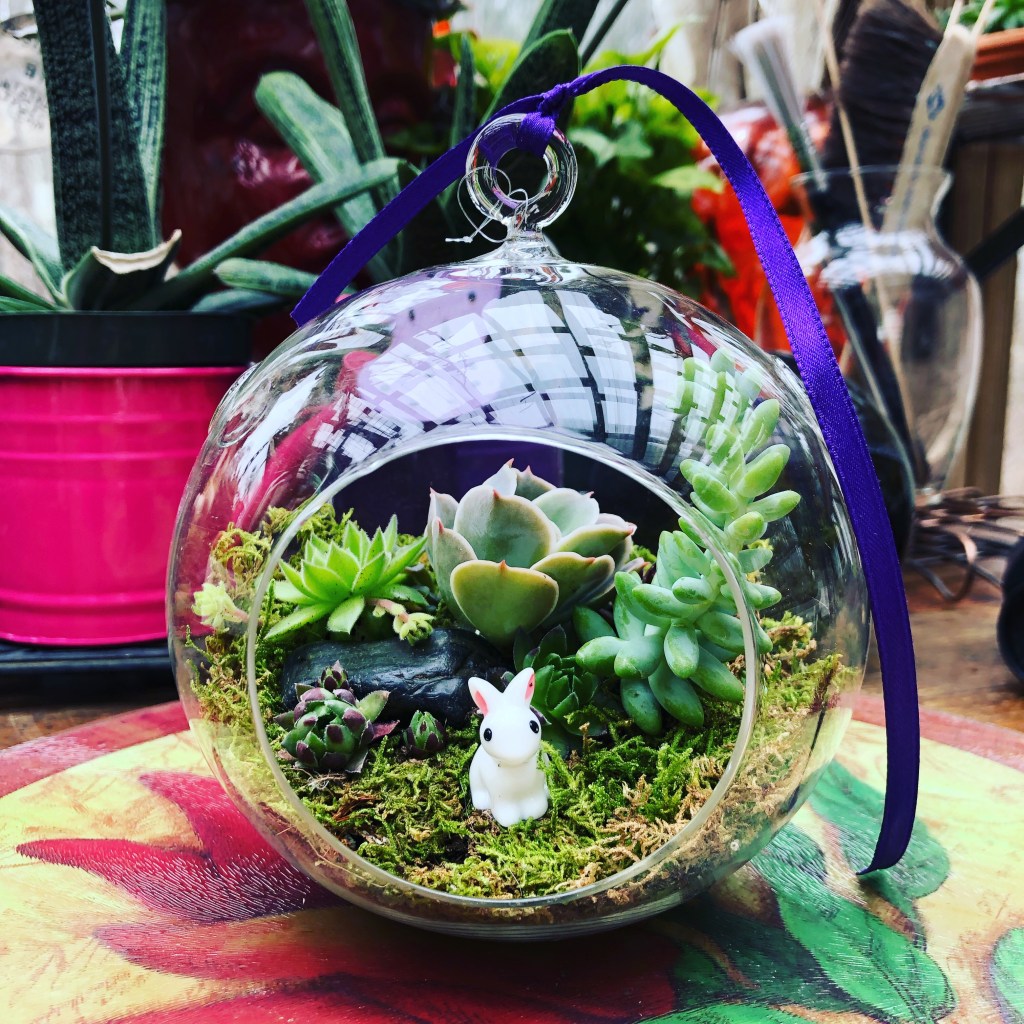
Add items you have on hand. Perhaps you have some nice stones or twigs to add. A pretty ribbon to hang it with or twine. You are only limited by your imagination. These make adorable gifts for your Easter dinner hostess. Every once in a while, add a tiny bit of moisture to the moss and let it dry between. You do not need to water it often. Only enough for the tiny root hairs of the small succulent plants. I’m talking less than a shot glass of water. Less is more with smaller hanging glass globes. I do not recommend spraying the moss with mists of water, it will only get the glass stained. The idea is minimal damp moss at times. If you wet it too much, things will rot.
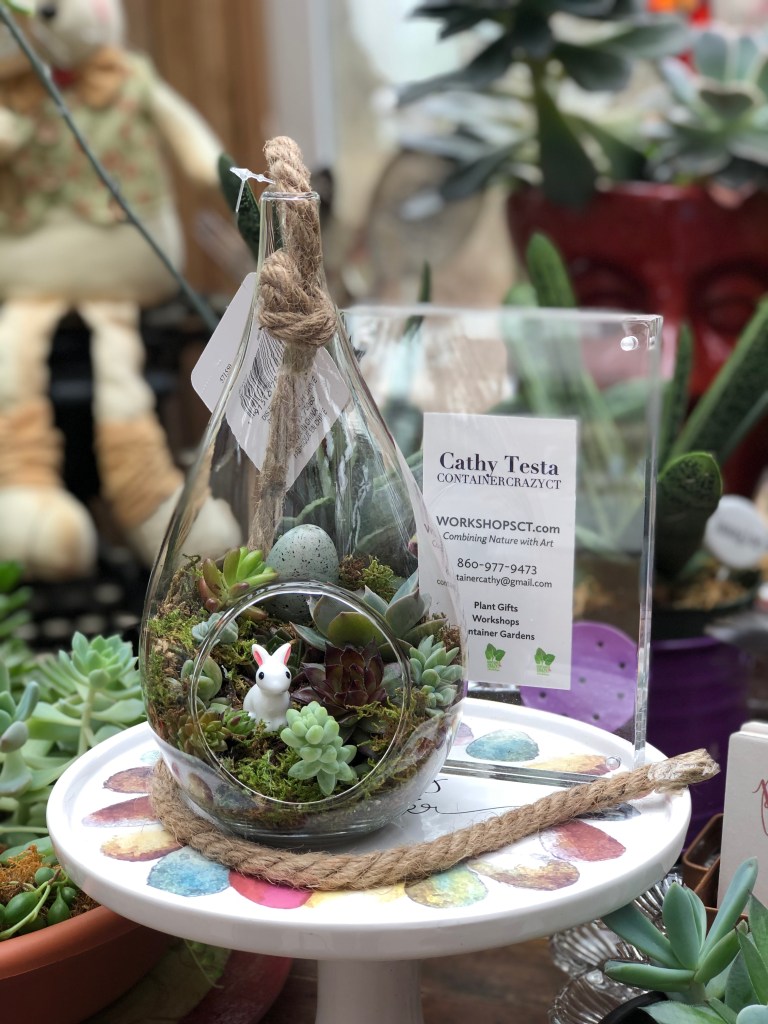
Sometimes maneuvering my fingers into the globes was difficult. Tweezers or long bamboo like sticks can help. Use them to position items as needed. Once completed, hang them in indirect sunlight inside the home and away from super cold drafts. Remember, when including live plants, glass vessels are like mini environments. The open hole allows for air, and you will lightly water the moss at times. Don’t overdo the watering. If you happen to put too much water in there, carefully tip your glass globe to drain it out. Allow the moss to completely dry between watering cycles. Succulents can go for weeks without water.
The next project is making a centerpiece with live perennial plants.
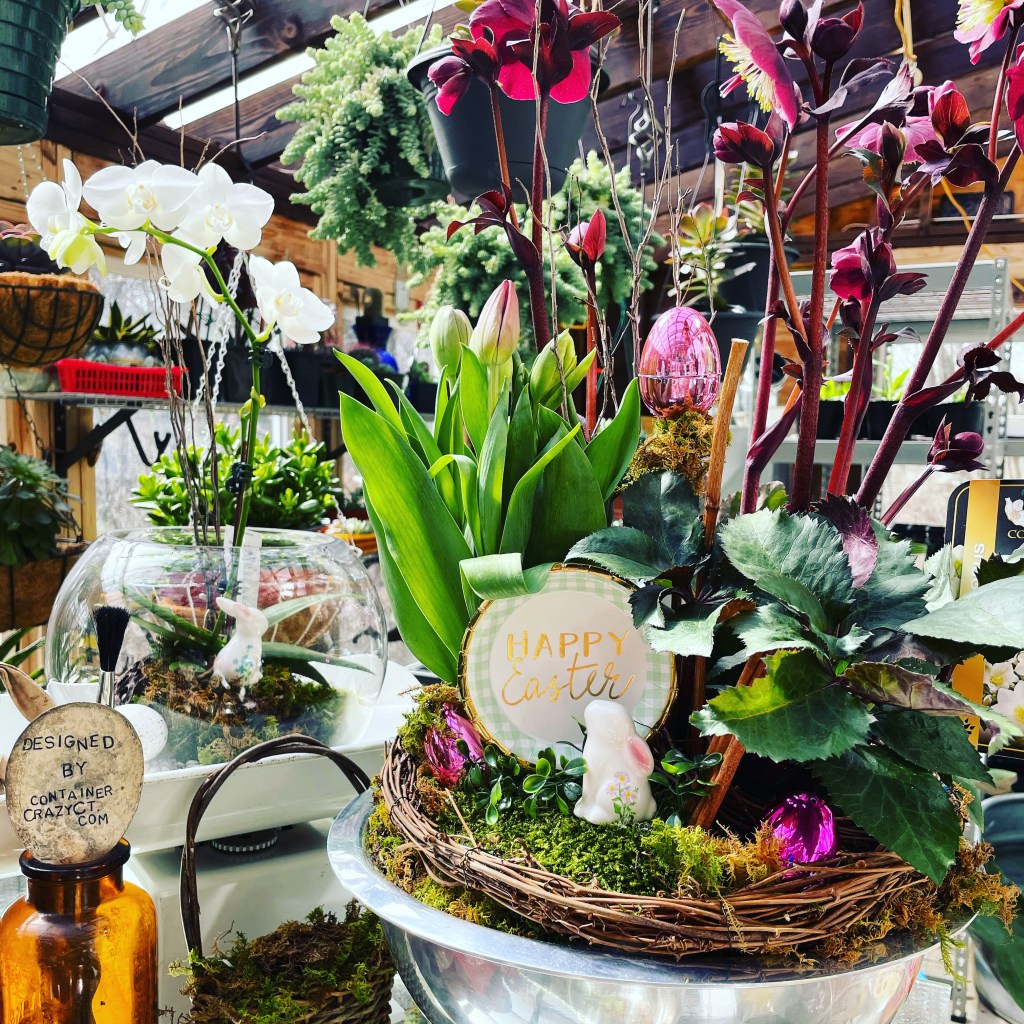
In the background, you can see a terrarium fishbowl. Just like the hanging glass globes, the base components are important. Use the potting mix (well-draining types), activated horticulture charcoal, and live moss. A drainage layer, like pea gravel is beneficial as well below all of that. You can see I put a live orchard in the glass fishbowl terrarium. The pea gravel is important when using larger plants to allow for drainage in the vessel you use.

The last project shown is a big silver bowl with two plants. One is a Helleborus perennial. You start to see these at nurseries and stores during Easter time. Also commonly available are tulips. I just tucked each of these live plants into the silver bowl in their original growing nursery pots. Then, I used moss to cover that up. Then the fun part is just adding your own Easter decoration. By the way, the perennial (common name is lenten rose) takes partial to full shade and flowers March thru April. The leaves are evergreen and will stay green outdoors. They are one of the earliest perennials to bloom. They are also deer resistant.

Hopefully this post inspired you for the Easter season to come. Go get your supplies now so you can enjoy making them before the season arrives.

Cathy Testa
Date of this post: 2/10/2026

Cathy had a small business focused on container gardening. Today she and her husband are retired. They like to go camping so camping topics are being added to this blog site. Also, Cathy likes making holiday decor and is sharing some of her creations here as well. Some with plants and some without! Thank you for visiting.
Colorful Balcony Plants for Extreme Weather

Leave a comment

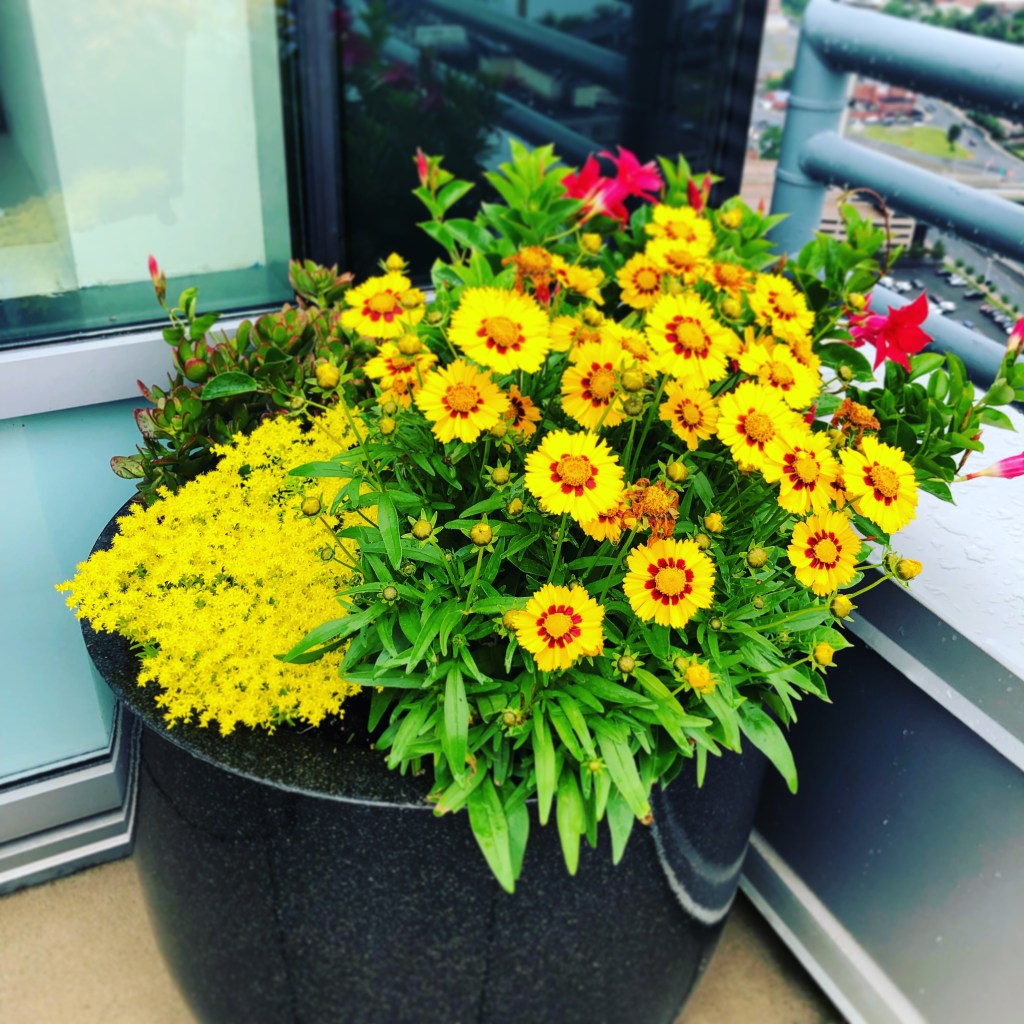
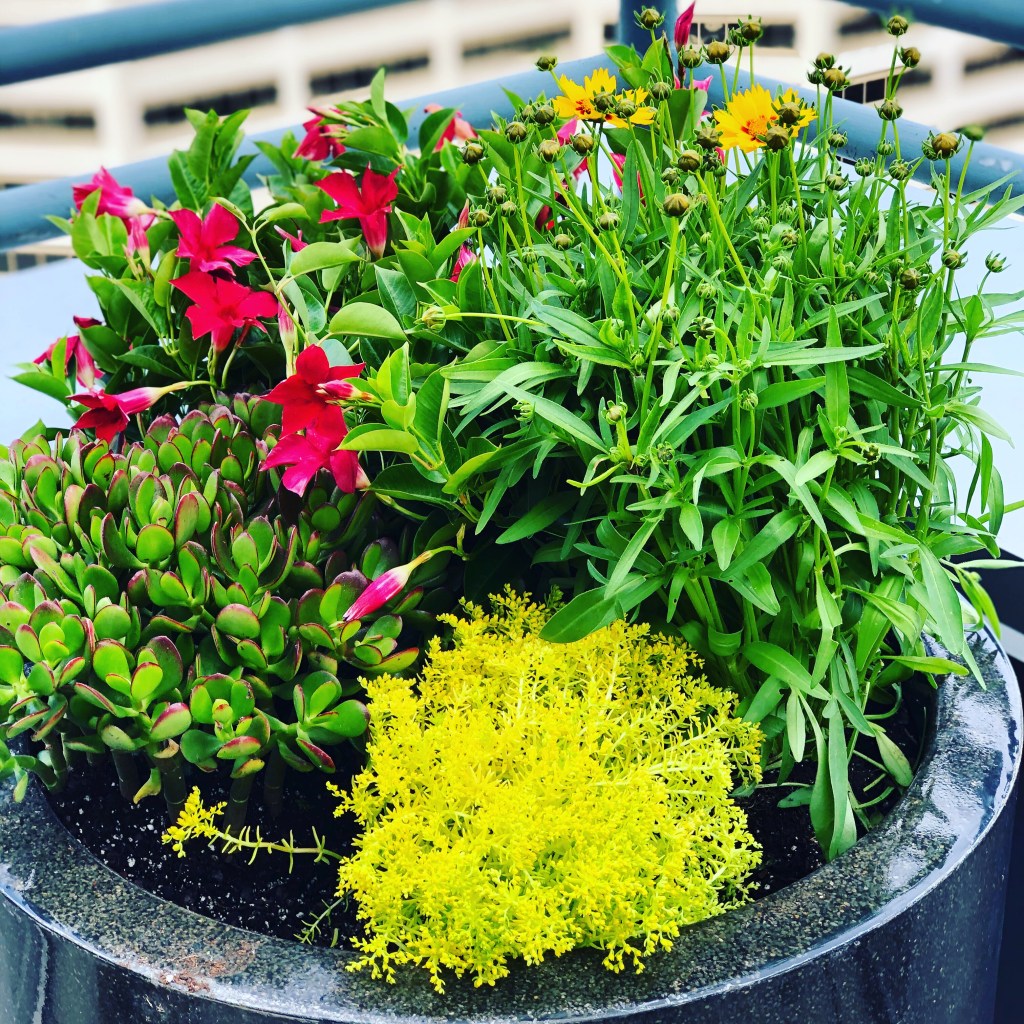
These are photos of vivid reds and yellow blooms in large patio pots showcased on a high-rise balcony. As you can see, the yellows and reds of the flowers on these plants stand out. They are also very drought tolerant. And full sun lovers.

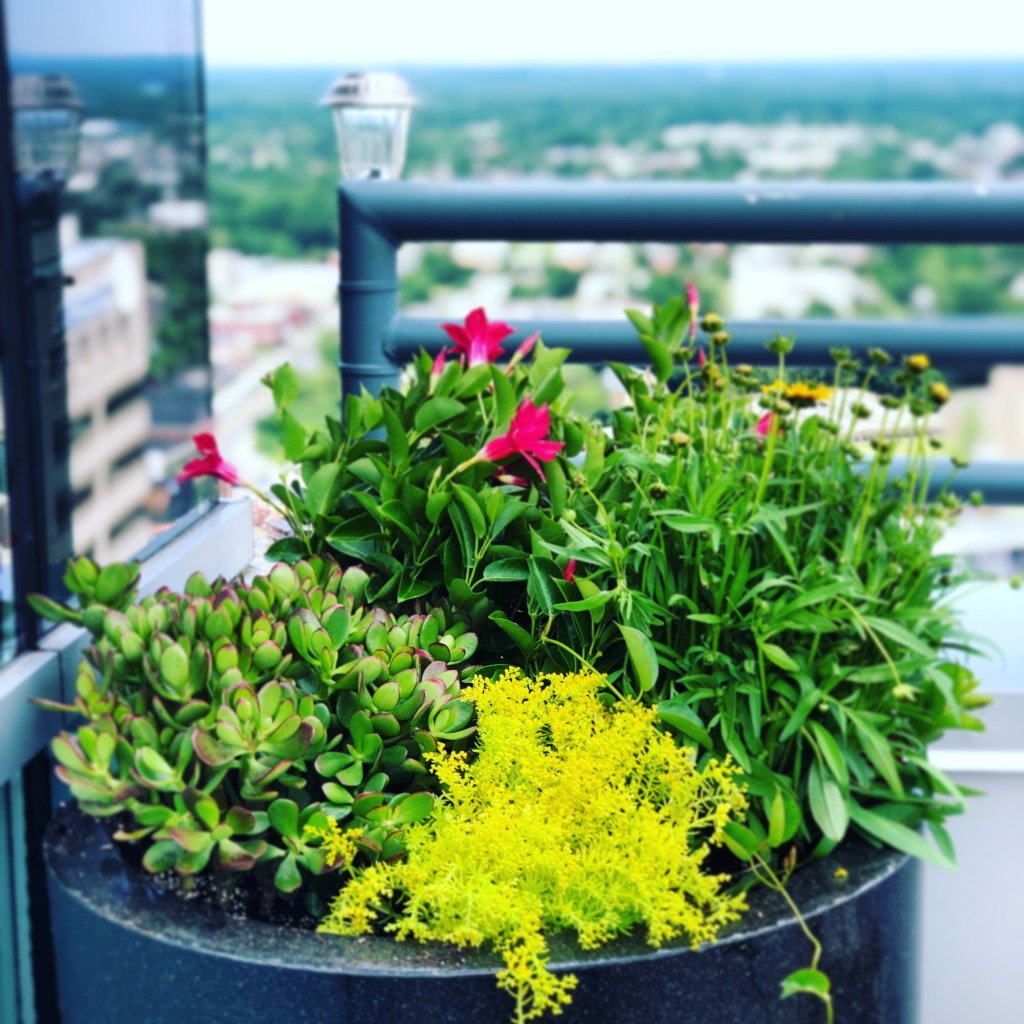
I planted this combination on a high-rise balcony many years ago. The conditions up there were brutal in the summers at times. It was very sunny and hot for the first half of the day. The second part of the day was shaded due to the height of the building’s walls and the sun’s movement. But it also was extremely windy at times, and as hot as a very hot beach summer day. Notice in the next photo how much the blooms opened up.

The pots shown here were quite large. Plenty of quality potting soil was used. Some soil moist was added to help manage moisture levels. I also added slow-release fertilizer into the soil. But it was key to find plants which would survive the high-rise conditions. They must get water too. It was imperative to find plants with strong abilities to survive in the sun, wind, and heat. These plants did this well. These also did not need lots of clean up. The faded flowers of the Coreopsis are easy clipped off (deadheaded) if needed. All the other plants held onto the flowers in this combination.

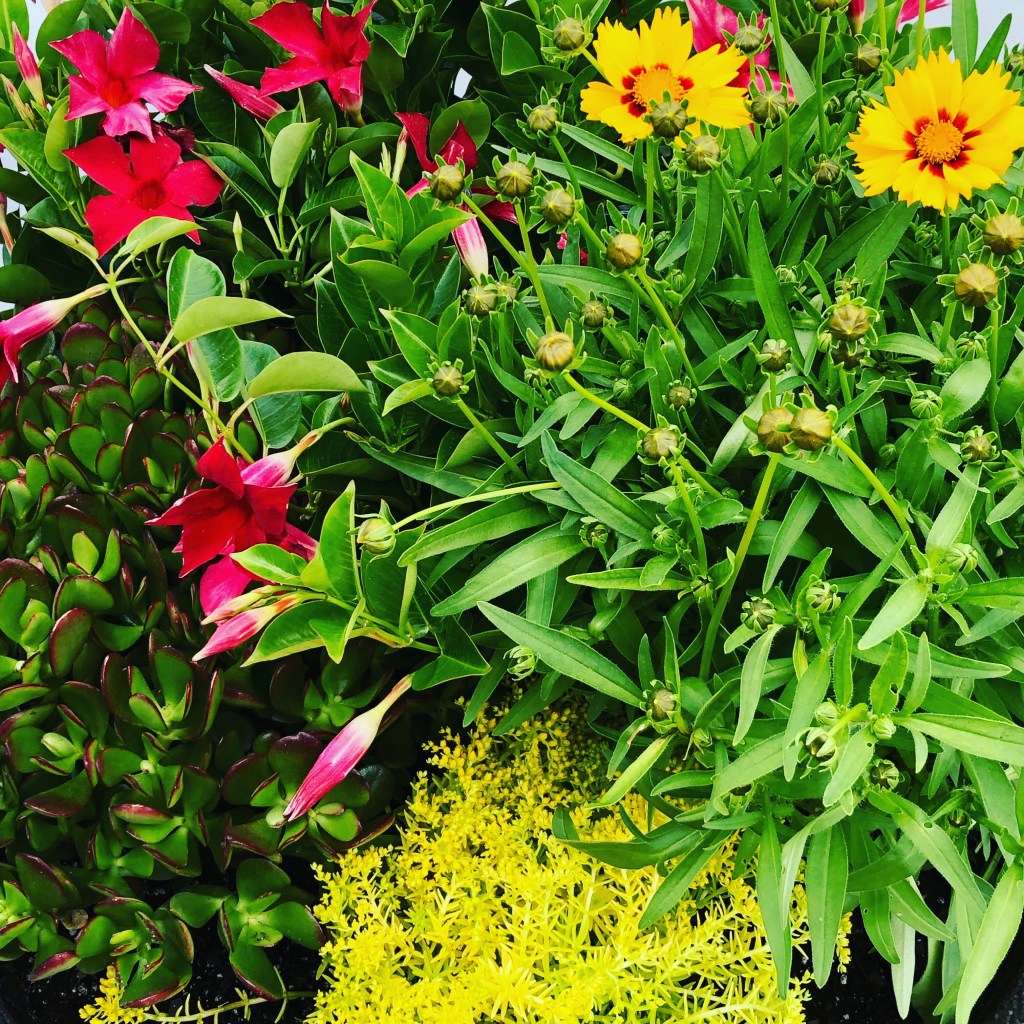
As the summer progressed, the plants became full and offered super bright colors seen from afar. This was good. The view from the balcony owners’ large living room allowed them to see the reds and yellows. I also focus on different textures too. You can see the fine texture of the yellow Sedum. The larger oval leaves of the red edged Jade plant are also visible. Yes, a Jade (as in a houseplant). I never overlooked using houseplant candidates as well as perennials and tropical plants. Just like in a garden, textures add the drama and flow needed to please the admiring eye. I often held up plants next to each other. I did this to look them over and see if they seemed to work together. I was just like that with my eyes. I would figure out if they played well together visually. I also needed to know the plants’ overall habits and culture needs.

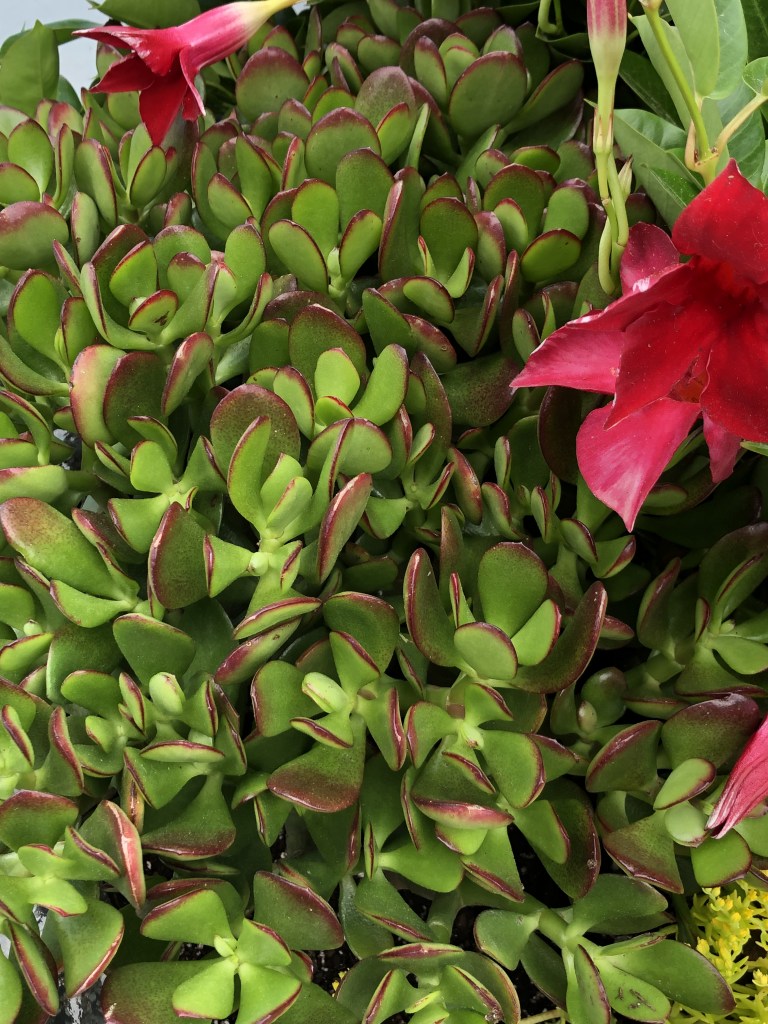
This is a Jade. It was a rather large plant. I loved the red edges. The red color only intensified in the patio pots with the full sun conditions. There was lots of warmth and heat on sunny days. These were able to withstand drought like conditions. I always emphasized that the owners should water every day. Plants need water. The soils dry out rather quickly up there on the top of a building in the city. And the owners were fantastic. They did water the plants as often as possible. They got an A+ on that as it wasn’t always easy, there were no faucets or hoses outside. All water was carried from the inside to the outside in buckets! When it rained, that was a bonus.

The yellow plant in the front is a Sedum. It is called, Lemon Ball Stonecrop Sedum. A perennial. Talk about an intensely bright yellow! Really pops. It was perfect for the front of the patio pot, tucked in nicely. That plant in this combination was a little more delicate. But, its vivid yellow was unbeatable.

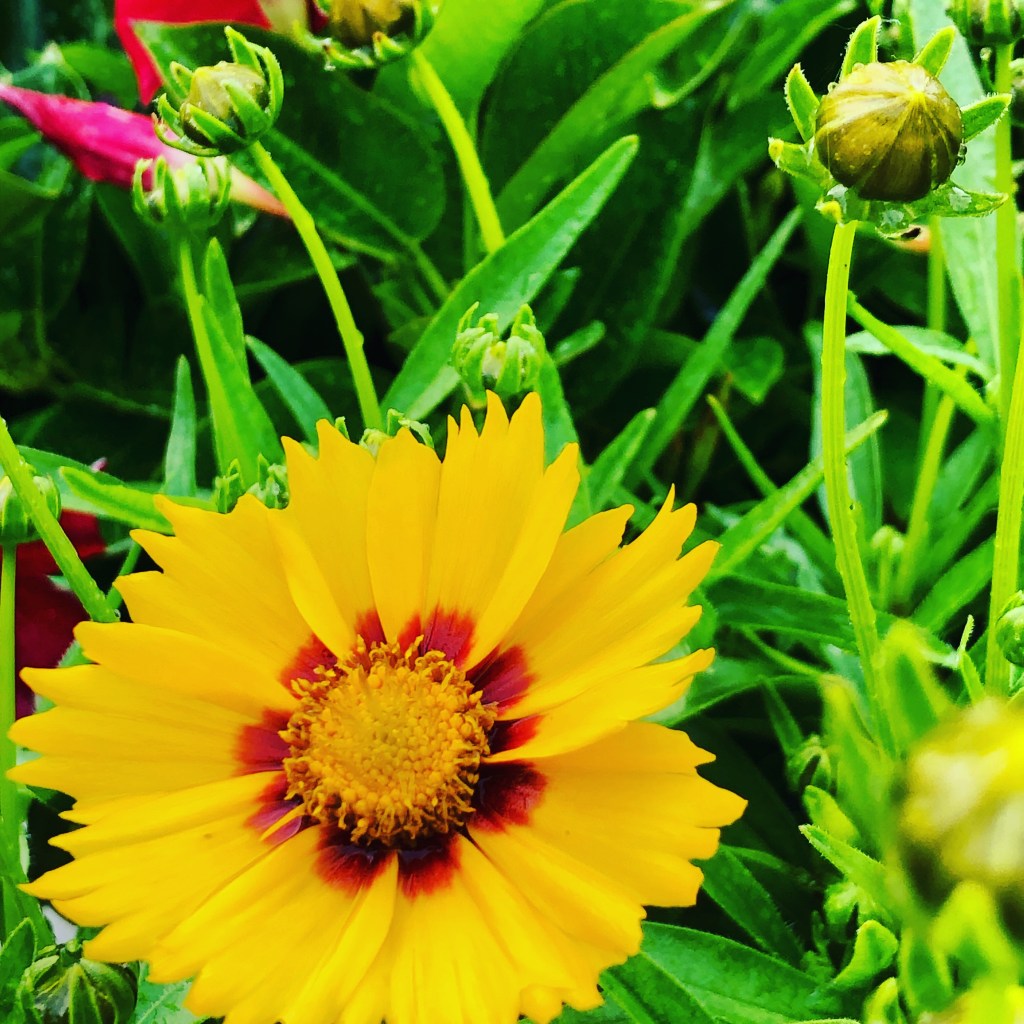
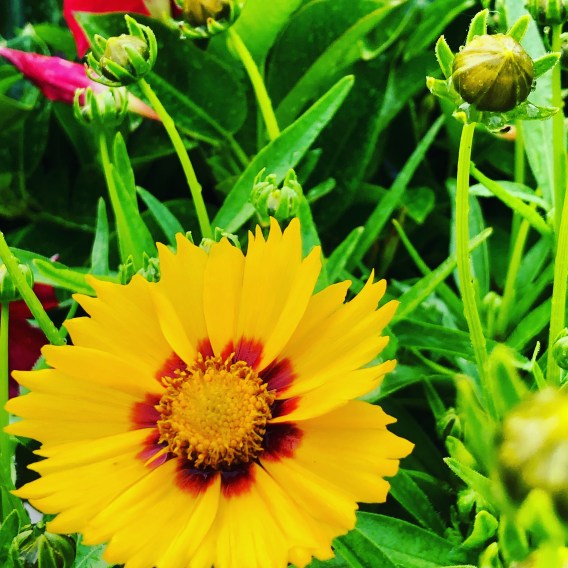
And a must on everyone’s list is flowers which bloom most of the summer. I added these Coreopsis because of their beautiful yellow coloring with red centers. They also handled the drought conditions quite well. This one is called, ‘Baby Seed’ Tickseed Coreopsis. These are butterfly magnets and work well in rock gardens too. It was always a treat to see a bee or two. I enjoyed seeing a bee come by up there when I put flowers into the customer’s containers. Way up there. I think it was 26 floors high, or was it 28? I can’t remember, but it was up high. If you couldn’t handle heights, you would not be capable of work up there on their open balcony. It didn’t bother me to look over the railing to the city streets below. It was a unique planting experience and a great learning one too due to the high-rise location.

And there are of course the Mandevillas or Dipladenias. Big pretty blooms. Red on these and a vine-like habit. This one did not vine as much as others, but it was a staple for my balcony garden working days. They tolerate the winds, hold onto the flowers despite winds strong enough to move heavy furniture on the balcony. Furniture which had to be chained down appropriately always. Tropical plants they are.

Experiencing working on a high-rise balcony was one of my ultimate pleasures of having my former small plant related business. I only felt disappointed that they (the penthouse owner’s) did not discover me sooner. I wish I had worked up there when I was younger. I would have been able to handle more of the physical aspects. I was a solo worker. It was sometimes a challenge to figure out how to get all the soil bags, plants, and more up there. Because I am organized, I found ways to maximize my trips up the service elevator. I used wagons and a hand truck. I used the appropriate boxes and bins. I did it and I loved every minute of being up there. Well, maybe on those super-hot days, not so much. But I loved the plants and expansive balcony views enough to keep on working up there. It was an honor.

Cathy Testa
Date if this post: 1/29/2026

In this patio Pot:


Letting Go of Websites and Other Stuff

Leave a comment

I did it. Today I deleted another one of my websites called ContainerGardensCT.com. The website was primarily about my former service offerings as a plant person, such as container gardening and installing patio pots and such at people’s homes and on their balconies. It had some nice photos of plants and also a few articles, talking about what you could get for services by each season, and so forth.

As I have stated here and there, I’m technically retired, but it IS early retirement. It comes with letting go of some old passions and introducing new ones, such as our new camper adventures. I also no longer can lift heavy objects like I used to and that, with the combination of saving for travel, has reduced much of my former plant passions and work.

It is difficult to let go of my past plant writings and even more difficult to let go of my plant photos! But to maintain them at a cost online doesn’t make sense anymore, in my new early-retirement state of mind. However, like a band aid that must be torn off quickly, I deleted ContainerGardensCT.com quickly. I didn’t review the photos first or print the prior articles. I just did it quickly. Done!

Now, I will always love nature, plants, and all the wonderful surprises which comes from admiring nature and plants, like a butterfly visiting a flower to the abundance of bumblebees that recently covered the last fall blooms of my Stonecrop Sedum (Sieboldii). I had put two of these sedums in separate hangers and picked these sedums because they are very drought tolerant, thus while away camping, I wouldn’t have to worry about them not being watered often. They are also perennials, thus saves money when I would replant them somewhere in my yard in the fall after the hanger planter season is over. Saving money is also important as an early-retired individual.

What surprised me though was about 2 weeks ago, seeing all these bumblebees all over the sedums pink blooms. They were all sleeping (not sure if technical term) and not moving in the mornings. This lasted for a good week or so. During the day, they hovered and visited, and I couldn’t even attempt to water the plants there. They were not aggressive and kind of let me be as I took photos of them in the mornings.

They’d fly over and feed and then later in the day it was a scene to see them all frozen in sleep positions. That lead me to read about how all bumblebees die at the end of the season. I did not know this! Only the queen stays alive and hibernates in the ground. It was interesting to see that many, up to 20 bees on the plants, and also a bit sad knowing this was the end of their lives. Somehow it symbolizes the tragedy that we all face someday, that day we witness others face too. Anyhow, onto the sedum…

The Stonecrop Sedum Sieboldii is a full sun perennial plant and blooms in the fall, so if you like bumblebees, this is a great plant to have around in containers or hanging baskets like I did. It also has bluish-green foliage which draped over, perfect for a hanger, and prefers well-drained soils. It’s an easy-care plant for sure. I’m happy I had gotten two of them this year. They served multiple purposes.

Anyhow, the one website (blog) I still haven’t deleted is this one which you are reading on now. Container Crazy CT is still being visited by people. I noticed it recently, mostly folks looking for information on how to overwinter their canna lily rhizomes and elephant ears tubers. I’ve written about my process of taking them out of containers around early October and storing them in my basement in boxes many, many times. Just use the search bar and type in “overwintering” or canna lilies, or Ensete. You should find them. So, this blog site I still haven’t deleted yet. It still seems useful and has lots of articles I wrote for many years.

I mostly have the Alocasia elephants’ ears now. I grew only one canna lily plant from seed. Just one but it furnished a nice plant for the hummingbirds who loved the blooms in my tall patio container. And I have one big red banana plant (Ensete) which sadly it started to rot on the bottom this fall. I waited a bit too long to get it out of the soil.

We (my husband and I) went thru the process of digging that red banana plant (Ensete) out – It was on its 3rd year of growing in the summers, and it got huge! It was very heavy and when we dug it out – too wet, and it had been too cold, so it started to rot. I should have taken it out of the soil earlier, I thought to myself. Oh well, I knew I was risking it.

I told my husband to toss it in the woods after we dug it out and turned it upside down, when I saw the rot spot. He was like, “Really, this is your baby?” I had to remind him my baby Ensete was tossed 3 years ago after growing it for like 15 plus years. This one was only 3 years old, but it had grown quite a bit this season, was huge! Remember, these plants cannot stay outside over the winter here in my CT planting zone, so I always dug out my Ensete plant and stored the base (the stump so to speak) in the basement, and I did this for well over 20 years now. But this was one I just didn’t want to put away because I saw some rot and also it was soooo heavy. I don’t have the muscle power to deal with that anymore, I guess.

Anyhow, I am thinking that I may continue to use this blog site to not only write about plants, but maybe about some other things in my life and adventures. Perhaps my learnings as a new camper woman, maybe a bit about some other personal struggles, maybe I’ll write about a new craft I’ve tried, you name it. It doesn’t have to be just about plants, right?!

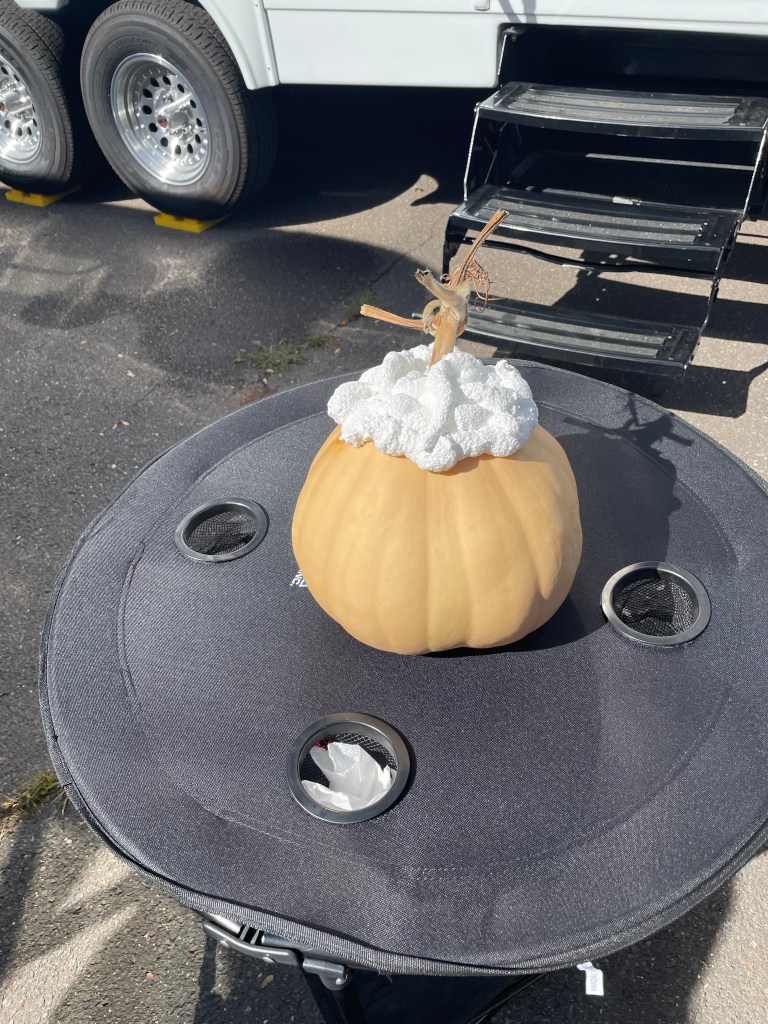
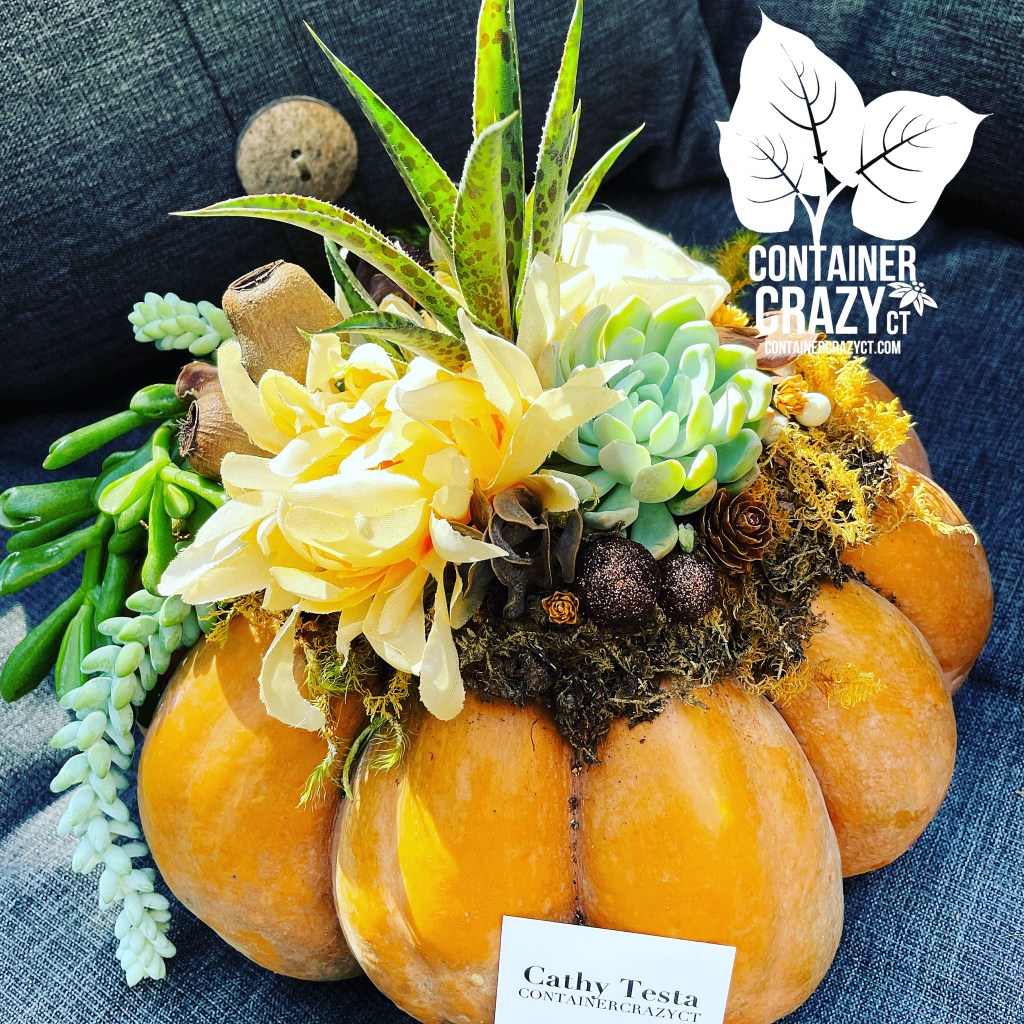
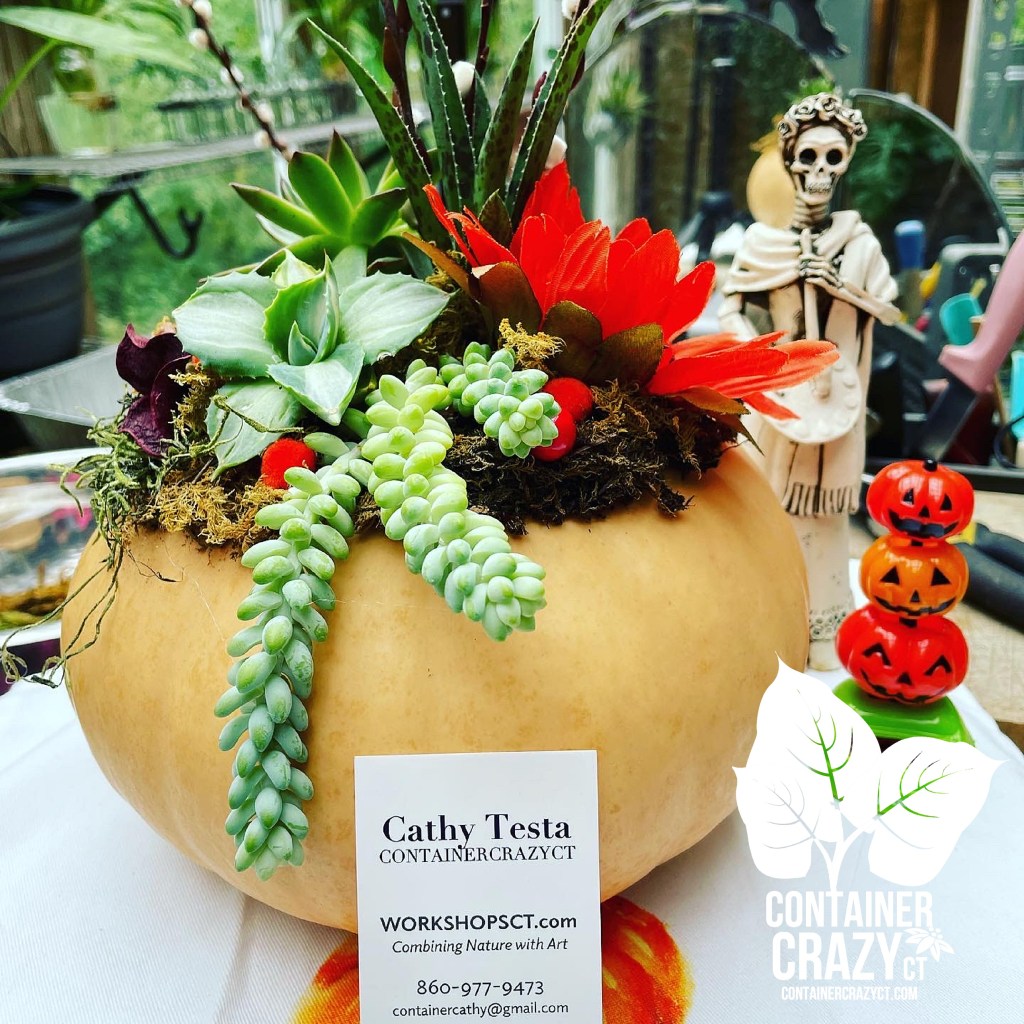
Speaking of crafts, if you know me, you know that I have created succulent topped pumpkins in the past. Well, no more succulent plants here really so I attempted to create a pumpkin topped with faux flowers. It came out pretty good for a prototype.

I used Loctite Tite Foam in a can (a product used to fill gaps and cracks). It comes out soft and then hardens. I sprayed it to the top of a pumpkin, let it set for about 30 minutes so it was a little harder but still somewhat soft, and then started inserting dry flowers (faux) and it was working!

My only HUGE MANDATE is do not use this foam product stuff without wearing gloves. OMG, if you get it on your hands or fingertips, that foam does not come off – TRUST ME ON THAT. I did have gloves on but later I tried to use some again to make a scary topped pumpkin and got some foam on my fingers – big mistake.

And note, the faux flowers and decor I inserted worked well if they were not heavy and had a stem to insert into the semi hardened foam. The foam ends up waterproofed too, so putting my pumpkin on a patio table outside was no problem. You may also spray paint the form once it is hard if you want to, but I didn’t need to on this faux flower version as all the pieces I used to decorate the top covered the white hardened foam very well when finished.

Oh, and I did grow those pumpkins in a container on my driveway this year. I got about 4 good pumpkins to play with. I love the Cinderella shape of these. They are fun to create with either faux flowers or succulents. You cannot use that spray foam for live plants or live succulents because it would kill them (too toxic for plants). See my prior blog posts about succulents on pumpkins on this blog, Container Crazy CT. Just search for “succulent topped pumpkins” if you wish to locate that prior blog post.

Well, that is my mix of topics for today. It is a little cloudy and a little chilly outside today. Somehow, I feel we are in for a cold snowy winter. Just a gut feeling I have. But this year, we plan to do a bit of time in a warmer state in late winter before it warms up here, hopefully! I may just blog about that later.

Have a good weekend,

Cathy T.
Zone 6b
Broad Brook CT
Container Crazy CT

Written on 10/24/2025

Topics: Blog Deletion, Bumblebees on a Sedum, Faux Topped Pumpkin, and more…

Pommy Balls for the Holidays

2 Comments

Back in 2016 – yes, that far back, I made what I affectionately referred to as, Holiday Pommy Balls!

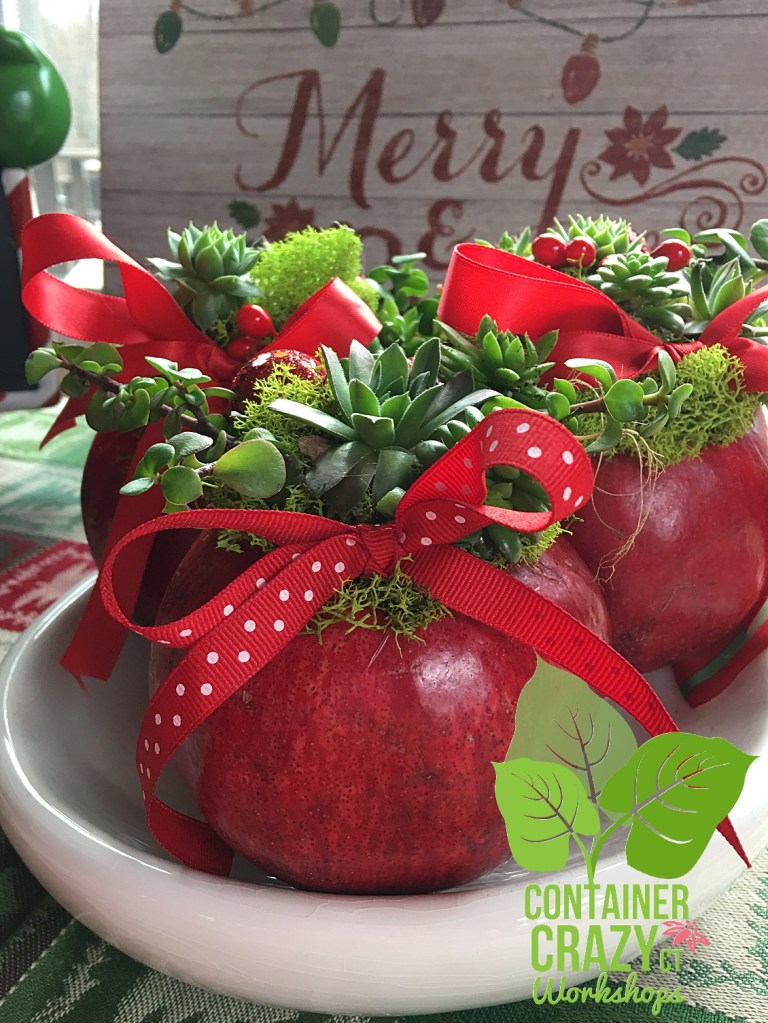
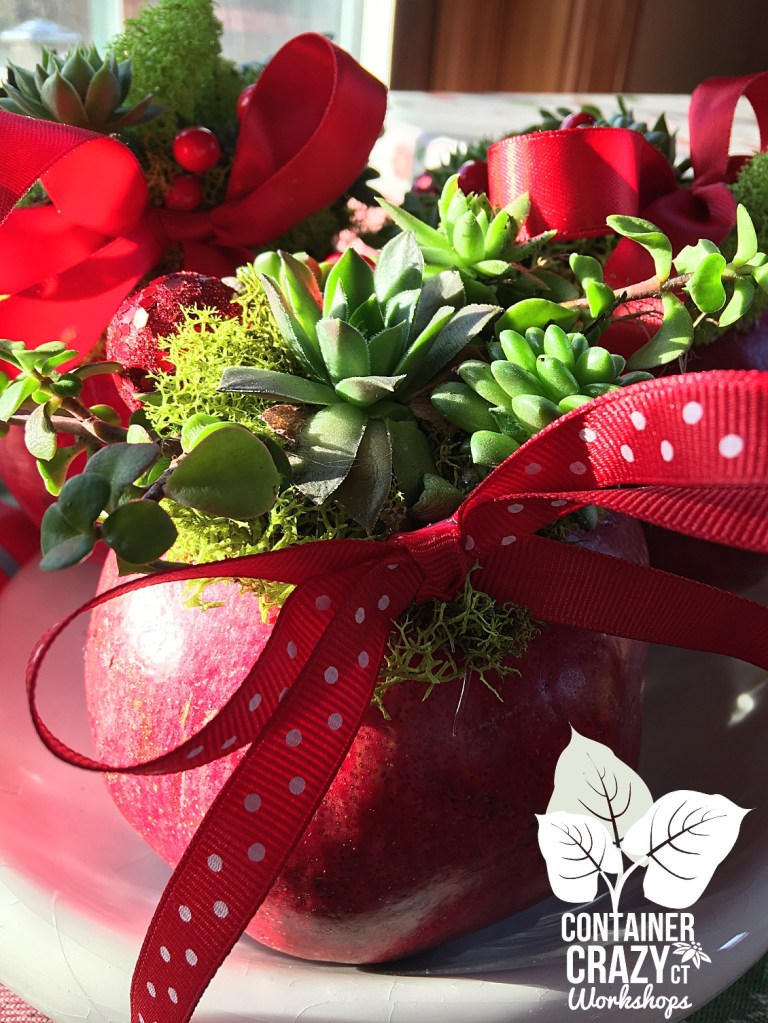
What are they? Real pomegranates topped with live succulent plants and some holiday bling.

At that time, I didn’t want any photos of them to be shown on social media. I thought they were the most adorable creations for holiday decor. I knew it was a unique idea that popped up in my mind.

It just came to me one afternoon, and I thought, “Hmm, could these pomegranates be used like succulent topped pumpkins I made in the fall to create a holiday item?”

Spontaneous thoughts are how these things happen. It just comes to me. And, because I had this feeling at that time that any unique item I was creating was being copied, I asked people who got them from me not to share photos of them.

Seems silly, doesn’t it?! I was at a point; I actually didn’t want to share it on Instagram or other places.

Anyhow,

Pomegranate fruits were introduced to me by my husband when we were dating and living in my small apartment next door to my parents. I remember him cutting one open and enjoying the fresh goodness inside – the red juicy seeds. Every holiday, we enjoy some of these as a tradition. They are in season September to November and can be found in the grocery stores in December and January.

Back then though when we lived in an apartment, we put some of the seeds in a bowl to show my dad. He had never tried pomegranates either! He said, “This is a trick?” We laughed and replied, “No, these are good and good for you!”

Flash forward to 2016, and just one day I had some pommies at home to eat soon, and that thought came into my mind. I grabbed my glue gun, some of my smaller succulents, made a tiny holiday ribbon bow, and added glitter balls. Voila! They came out so darn cute. And were really fun and easy to create!

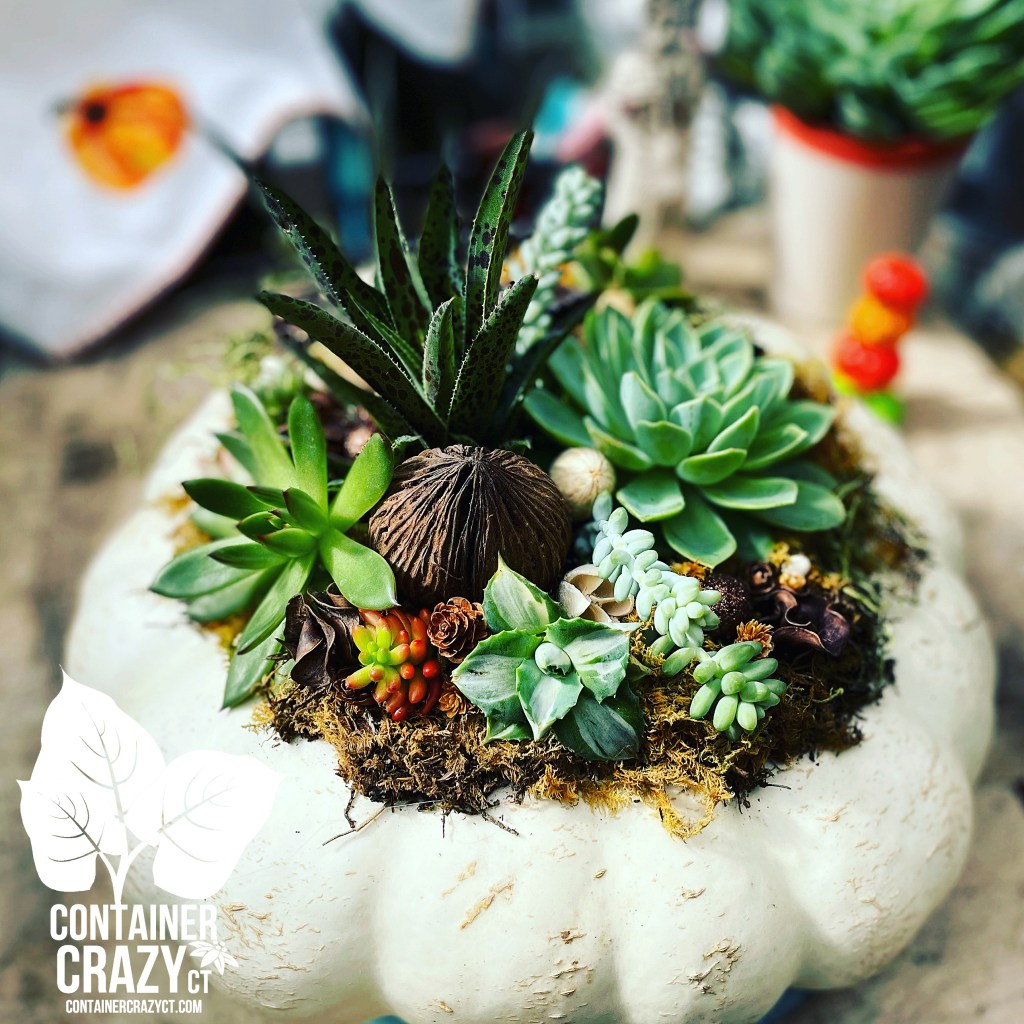
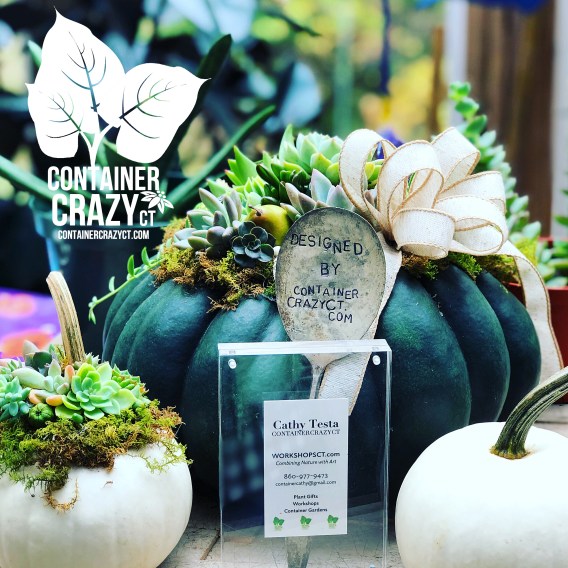
They are natural and I love that. Also, pomegranates will dry out naturally over time, and usually with no rot. So, the plants sat on top for a long time and may be removed later, similar to succulent topped pumpkins I’ve made in the fall season. As shown in the photo below, smaller white pumpkins were used.

Any type of succulents will work from Echeverias to Sempervivums. Use a few donkeys tail to drip over the sides. Usually, the succulents will self-root eventually into the moss.

The only ironic thing is that I was sure I had tons of photos of them, but going into my detachable hard drives yesterday, I realized I could only find a few photos. Why? I don’t know. Probably because I told people not to post photos too. Maybe they are sitting on my old laptop that is collecting dust on the floor in my office. Here’s just the few that I located in this post.

Pomegranates can be kind of expensive at times. I do think they look better with large pomegranates, over small ones. We searched out pommies at various grocery stores, and if they were bright red, firm, and perfect, I would grab them to make my new idea of succulent topped holiday pommie balls.

The steps are so easy to make them: Glue some moss with a glue gun to the top, add the succulents with roots into the moss using the glue gun glue to secure each carefully and try not damage the succulent, and add the bows or whatever decorations you would like.

The pommies looked so nice on a table, setup somewhere in the home. I could see them lined up on a large dining table at each plate, or even within holiday greens as a centerpiece. Either way – adorable and natural. They also made a perfect hostess gift and were again, what I thought was a very unique idea!

I haven’t made any this year (2023) because I don’t have any succulents in stock, but if I did, I’d be tempted. If you make some, let me know. Please share your thoughts!!!

Enjoy your Friday!

Cathy Testa
Container Crazy CT Plant Blogger
Broad Brook, Connecticut

Date of this post: 12/15/2023

Bringing In Some Plants for Winter

Leave a comment

In Connecticut, many plants we use and display in our container gardens and patio pots will not survive the winters here, and must be handled by taking them in as houseplants or storing them by digging out tubers if they have tubers, corms or rhizomes, such as tropical plants like Canna Lilies, Elephants Ears, etc.

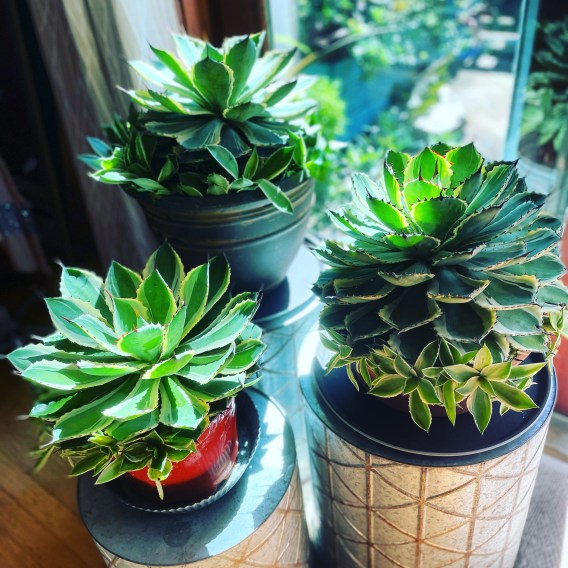
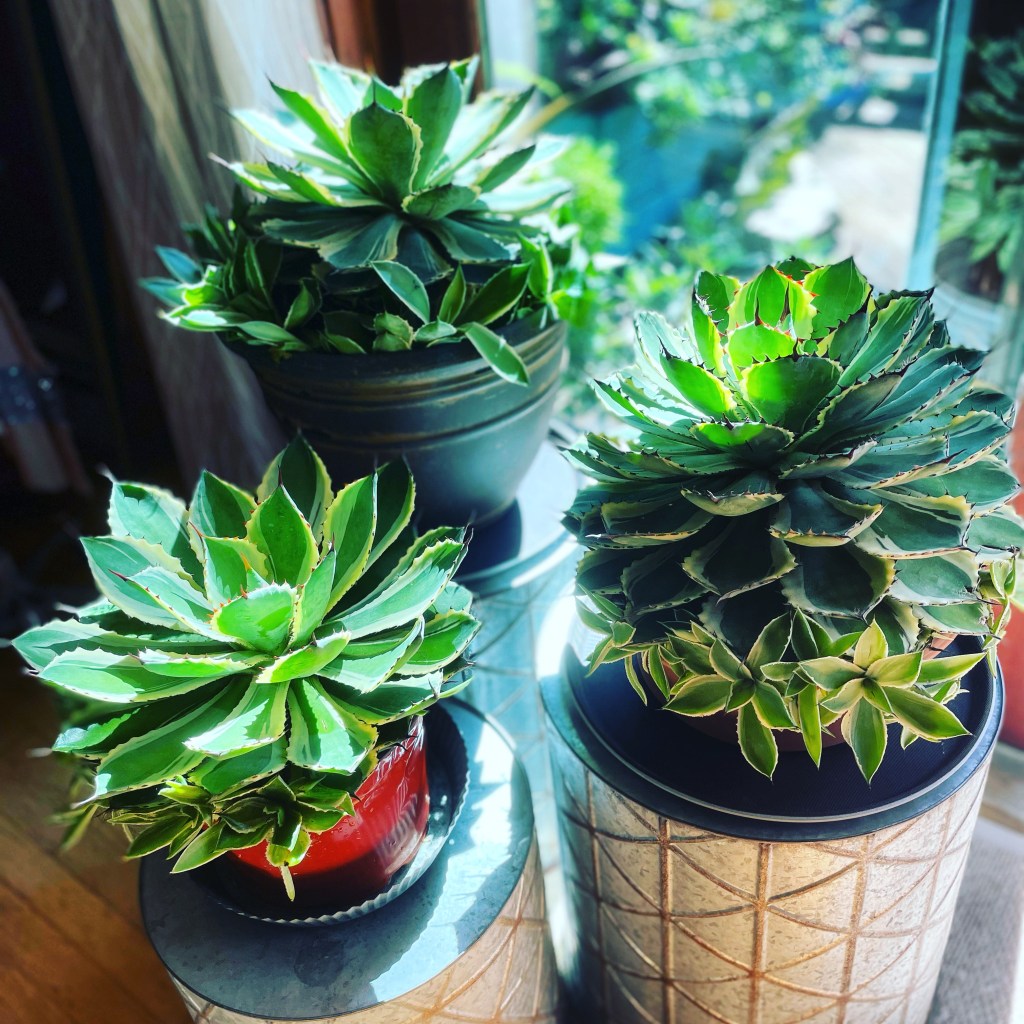
I’ve started some of this overwintering setup process already this year. This year, I mostly have agaves, cacti, and succulents to take inside as houseplants candidates. Some of them are rather large and this is becoming like a jigsaw puzzle in my home, because I’m taking them into the house instead of my greenhouse this winter. I don’t want to pay for the heat for my greenhouse – it is becoming too costly. So, I’m literally back to how I used to store plants when I was first into playing with plants over 20 years or so ago!

Pick and Choose the Best Plants to Take Inside

The process of picking and choosing which are worth taking into the home is interesting. I have literally stared at a giant agave and thought, Hmmm, where could I fit this? I’ve rearranged my small home office so a table has space for some plants by a window. And I put many smaller succulent plants (like in 3-4″ pots) in the kitchen garden window over my kitchen sink that faces south. I even moved a small couch from my kitchen sitting area to fit plants under a window facing west there too. Plant people will do anything for their green babies, like a complete furniture rearrangement to make space by a window.
I see people asking all the time on gardening Facebook group pages, what do I need to do to move in this plant? Sometimes it is a tropical Hibiscus plant, other times it is a traditional houseplant they had outdoors, or perhaps it is a giant Canna Lily plant. Everyone has their suggestions, like dousing them with a dish soap liquid combo, or other methods, like putting them in a garage and doing a bug bomb routine, and someone said they even put theirs in paper bags and spray them with insecticide and let that sit for a day to kill any bugs. Are these methods good? Well, if it works for them – perhaps. Not sure about the bag method, however. But you will try anything to take in a plant for the winter and keep it growing or stay dormant so you may use it again next year outside in the summer months here in CT.

My Ground Rules for Taking Plants In:

I, however, use certain “ground rules” for which plants are selected to be brought into the home for the winter. And here are my rules:

The soil must be dry (as dry as possible).

For succulents, cacti, or agaves, I make sure the soil in the pot has dried out – so they were either kept under a patio umbrella (if there’s been rain) or brought into more sun to help dry out the soil on sunny days recently. I make sure the pot is draining very well, even have tipped a pot on its side and let water run out, and I look at the soil to inspect it. If possible, I may tap the plant out of the pot and inspect the roots and just kind of look over if there are any critters in there. Or rotting roots. Dry soil reduces the potential for soil born insects, I find. And cacti, succulents, and agaves do not need lots of moisture in the winter. So before taking them in, I make sure the soil is as dry as possible. We have had a mini summer episode this week for weather, so it is good right now to try to get the soil dry if possible, so I’m doing that now. Rain is coming Saturday. I want to take them in before that.

Blow any Debris off the Plant

I have a small leaf blower and I will use that – especially for Agaves since their leaves are stiff and can take the blowing of air, to remove any debris. Leaves from trees sometimes fall on them and get stuck between the leaves of the plant. A leaf blower is perfect this this – it may blow away a spider or two as well, but spiders are usually good bugs, however, if you have a fear of spiders, you probably want them gone before taking the plant indoors. I cut off any bad or damaged leaves of plants after this. What I’m trying to do is remove any potential for something to cause issues. Some insects feed on decaying plant material, so getting rid of anything decaying on the plant is a must. A vacuum may be another handy tool, and also look under leaves of plants for anything lurking.

Washing the Outside of the Pot

I use soapy dish water to very thoroughly clean the outside of the pot. I want to make sure I’m not bringing along any debris, dirt, or maybe something unseen. All of this is done to prevent bringing in trouble, like hidden insects or any kind of lurking problem. It is a precaution of sorts. But worth doing.

Selecting Best Location Possible Inside

It is tough if you don’t have a glass house, but there are some places I know my plants could make it. Some of my medium sizes agaves went inside the bedroom by the slider. It is Southeast, it will get some sun, just enough to hang in there. I put the mini succulents in the kitchen garden window but remember that window gets cold in winter, but most succulents or cacti can take “some cold”. On good days, I am sure to open the little side windows on the garden window to give the plants air circulation. I also put some on a table in my home office which faces north. I’m not sure if that is going to work though, but I may get a small grow light and try that location. That window and room is colder, but not as cold as an unheated greenhouse would be. However, there are some succulents that actually are fine with less sun so those will go in the office. My bathroom small window works for a couple plants. Plants that don’t need a lot of sun and like humidity from the bathroom shower may go on a little table there.

Spraying Plants with Houseplant & Garden Insect Killer

This I do with only some. If a plant has a bug issue and I see it – and it is bad, it doesn’t make the selection list at all to bring inside. It is too much of a risk to increase and spread. If I may suspect a tiny problem; I may lightly spray the plant before bringing it in to try to treat it. Garden Safe is one I have used. But I truly don’t do this too much. Look at the bottle label on the back, make sure it is a safe product for your particular houseplant candidate (some products should not be used on particular types of plants), and do that outside before you bring it in. Again, I avoid plants with problems, and usually I don’t have too many big issues because I coddle my plants in the summer as well. Many people use insecticidal soaps or horticulture oils, etc. Ask your local nursery person for a good product or browse those sold in stores, but read the label on the back, open it up and see if any plants should not have that spray on them.

Giving Plants Away

I select the people I give my plants to with as much carefully thought-out consideration as I do with which plants come into my home. My sister-in-law has a beautiful big glass living room, and she has a green thumb. I just gave her one of my huge Jades. She was thrilled. I have given her plants before, and she always keeps them thriving for years. It makes me feel good when I see the plants in her home, but I also have that tang of jealousy, like, wow, I gave that one away?! But like I said, my house is small. And she truly does take good care of them.

Overwintering Saves Money for Next Season

Overwintering plants is a way to save money and also is a method to keep your treasured long time plant companions going for years. It also adds beauty inside your home. And life! But probably the biggest concern people will have been insects and the correct place to put your plant so it can make it. A room with absolutely no light may not work for the houseplant candidates. It depends greatly on the type of plant and the temperature too in the house. If you keep a room totally unheated, that can stress a plant. But that room may be perfect for tubers you are storing in boxes, for example. I will go over tuber and storing of corms and rhizomes again soon.

I have a rather large Agave which I’m currently trying to figure out where to fit it. It has matured so much over the years; it is huge and heavy! I noticed one day ants going to the base of the large pot. I thought, uh-oh. I won’t move that one in the house without potentially taking it all together out of the pot and removing all the soil – what a chore, and it can be dangerous due to their spines. I’m still contemplating this one. Should I try to sell it? It’s a monster! What will I do? I don’t know.

Other methods:

There are other ways to capture some of the parts of the plants like taking off-sets or cuttings of annuals or even some succulents will have off-sets or plants on the stalks, seed gathering for other types of plants, etc. And storing tubers or rhizomes of tropical plants which I will most likely cover here again, but I also have many posts from years past on this on this blog. Use the search bar to search for them. But right now, I’m focused on my agaves, cacti and succulents for this post.
Keep your Inspection Hat On!

Finally, once you have decided to keep a plant and take it indoors, keep your inspection hat on. Look over the plants every few weeks or even every few days initially. If you see a problem, act on it before it spreads. Reduce watering greatly for cacti, succulents, and agaves. They don’t need water much during the winter.

Thank you for visiting!

Cathy Testa
Plant Blogger
Connecticut
Date: 10/4/2023, Warm sunny weather this week but rain and cold on Saturday!

I have a post from 2013 on how I stored my Big Red Banana Plant (tropical plant). It is sometimes difficult to search for, so I’m linking it here below for those asking:

Storing My Big Red Banana Plant

Photos related to today’s post:

My Kitchen Garden Window – Mix of smaller cacti, agave, succulents (South facing)
Prized Agaves (Southeast) Bedroom
A mix of Succulents – By Kitchen Slider (Southwest spot in the house)

Self-Watering Pots Rock on a High Rise

Leave a comment

Self-watering pots, those with a reservoir area at the base of the pot to hold water for the roots, were not high on my list in regard to usefulness. I had tried them at home on my deck outside and I found that I didn’t like them for several reasons, such as, they tend to get overwatered when it rains and stay in a flooded state (unless you use the drain plug to release the overload of water), they don’t allow air to circulate well when waterlogged, and things like that. In fact, several years ago, I actually wrote a post about how I just didn’t like self-watering pots. I felt they were not good for plants! See that prior post below:

Post above from 2015. Wow, times have changed.

Boy, did I change my mind when I experienced using self-watering pots on a high-rise balcony. On the high-rise balcony, which I tended to for five years for clients’ plants in various pots and some self-watering pots, the environment is so different, I guess you could say, the environment has big weather extremes. And because one of those extremes is intense heat and strong sun, the self-watering pots (they were actually long planter boxes) did not stay flooded after a rain fall for long. The sun and heat dried them out much faster than self-watering pots I used at my home at ground level or on my deck.

A big environmental or climate consideration on a high-rise balcony for the plants was the extreme heat and full-on sun (as I refer to it – sun that is full on and intense). On some days, in the middle of fall, or even winter, it was like being on the beach up there on a balcony so high up if the sun was out. On hot summer days, I would have to make sure I worked on the balcony during the period of day when the sun passed by and there was shade from the buildings so I wouldn’t roast, but that was not often doable. Let’s just say, it gets very hot at times, almost unbearable, so plants which tolerate drought and heat were critical as well. To clarify, this was 38 floors up on the top of a building in a city exposed to all elements from sun, wind, etc.

Because of the environmental extremes such as sun (and wind), trying to keep the soil moist for the plants was more of a job for my clients. They would have to carry water out from inside their penthouse. By hand, with buckets! There was no outside water source, so my big fear was will they water enough? And they did fortunately. Otherwise, the plants would be toast from the extreme sun and heat.

However, with self-watering pots, some of that was solved. My clients actually had two long planters that were self-watering pots before I came onto the scene. When they pointed them out to me, I didn’t say much because I always felt those planters were problematic (as noted above in my prior post from many years ago), and I believed in watering plants in pots yourself. But I was the fool in this case, because I learned quickly, those self-watering planters were winners on a high-rise. So, for those who may be doing some urban gardening, take a look at self-watering pots. They may be very helpful to use if you have plants that require moisture and also if you have intense sun (and wind) on your open balcony up high.

Let me explain why. If the rain fall was abundant, the fact that the sun was so strong and hot after at times, the soil would dry out. The water would not stay in there and flood the planters, like they did at my home after a rain fall. It would be the same exact weather at my house and theirs but due to being up so high, the planter would not stay waterlogged. Waterlogged soil will rot the roots or kill them. It was working out, especially for herbs. Herbs can take dry soils usually, but they do need moisture at times. I started to fall in love with their long self-watering planters.

I learned lots of lessons by working on a high-rise thru experience. I also have knowledge on plants and which were tolerant of conditions, drought tolerant, loved heat and full sun, but I still had lots to learn and plants to test out. In the case of self-watering pots, I discovered that they rock on a high-rise balcony.

The self-watering planters did need to be stored for the winter, however, which I offered as part of my services. I would wash them well, store them and return them in the spring with fresh soil and fertilizer. It was working out and they still have those planters today – those were a very good idea, and an excellent investment.

Pots and planters have special considerations on a high-rise which is another thing I will write about, and I had to find solutions. I’m kind of an out-of-the box thinker – AT TIMES … so I got really creative when during the first year there, which I will write more about later. Weight for example is a big factor. Again, it is not like pots near the ground, there were weather considerations all the time.

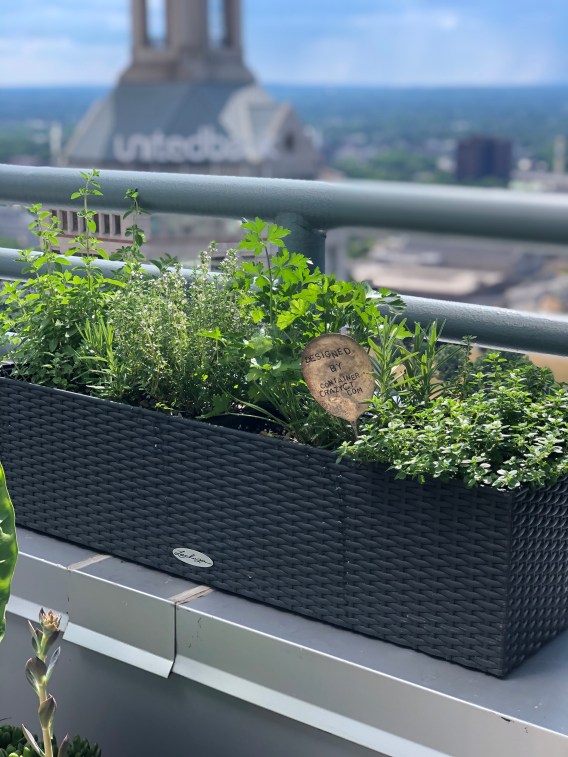
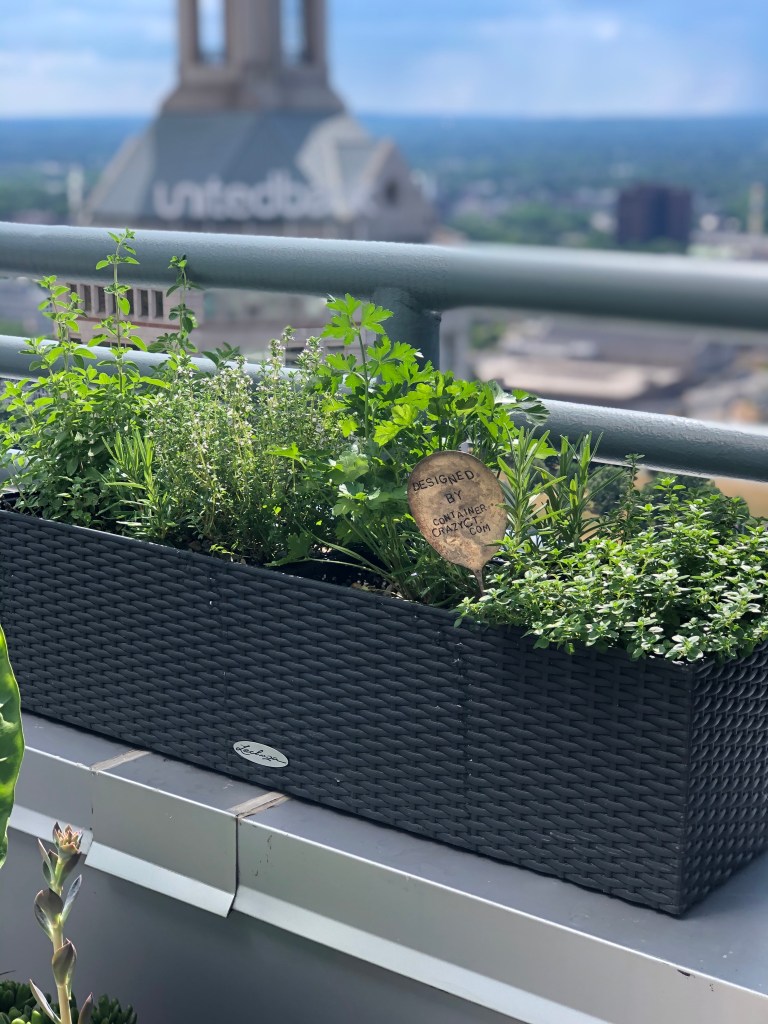
Plants that I felt did very well in their self-watering long planters were herbs. I did try smaller compact type of patio cherry tomato plants one year, but they kind of fell over from the winds, so that did not work where the long self-watering planters were positioned near the railing. However, herbs did very well in these. Some herbs in general can take dry soils – herbs like rosemary, for example. Later, I ended up acquiring some tabletop pots which were also self-watering and started to use them with succulents on their high rise as well. Those worked out well also. Succulents do not like soggy soils, so when it rained so much that it flooded the pots, it was fine because the sun and heat would dry them out fairly quickly. Or you can drain them if need be. It was just working out so much better than I would have thought.

A couple things I did was I added some small pea gravel in the base where the reservoir holds the water to weigh down the planters. As noted above, due to extreme winds on a high-rise, I was concerned the planter was not heavy enough. I also used standard potting mix with slow-release fertilizer. And sometimes, I top-dressed the top of the soil with either pea gravel, mulch, or moss, however, it was not really needed but I liked that “finished off” look to add some style to planters.

Here are some photos. I know I have more, but it takes a while to locate them. When I find them, I will add to the next post. I rather enjoyed taking them the planters to my greenhouse to clean for the winter and replant in the greenhouse to deliver in each spring. I felt they were kind of Zen. The herbs would grow three times the size at their balcony – I know I have photos of that but will have to share them when located! It always amazed me how much the plants grew when I would return for a fall change out. Balconies are wonderful places to have a full blow herb garden if you have enough sun, which this place did.

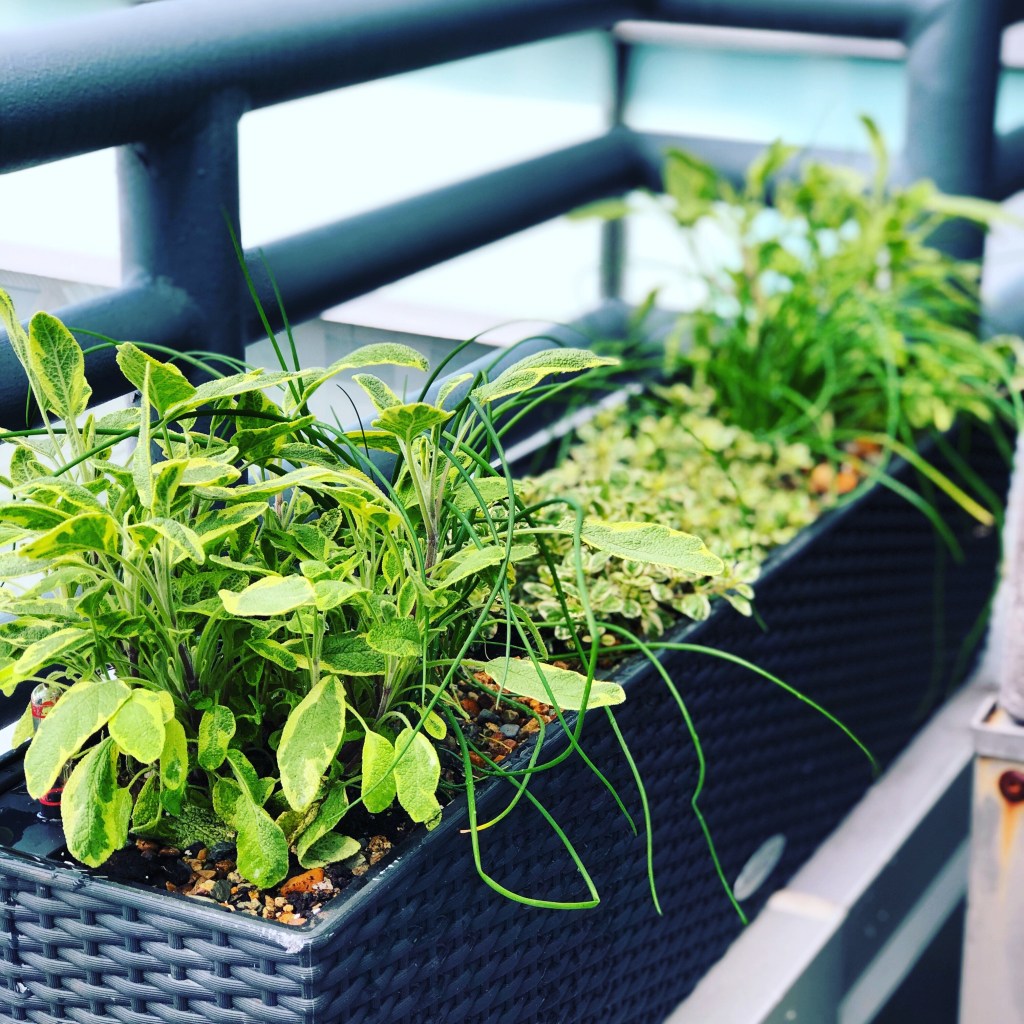
Self-Watering Long Planters with Various Herbs
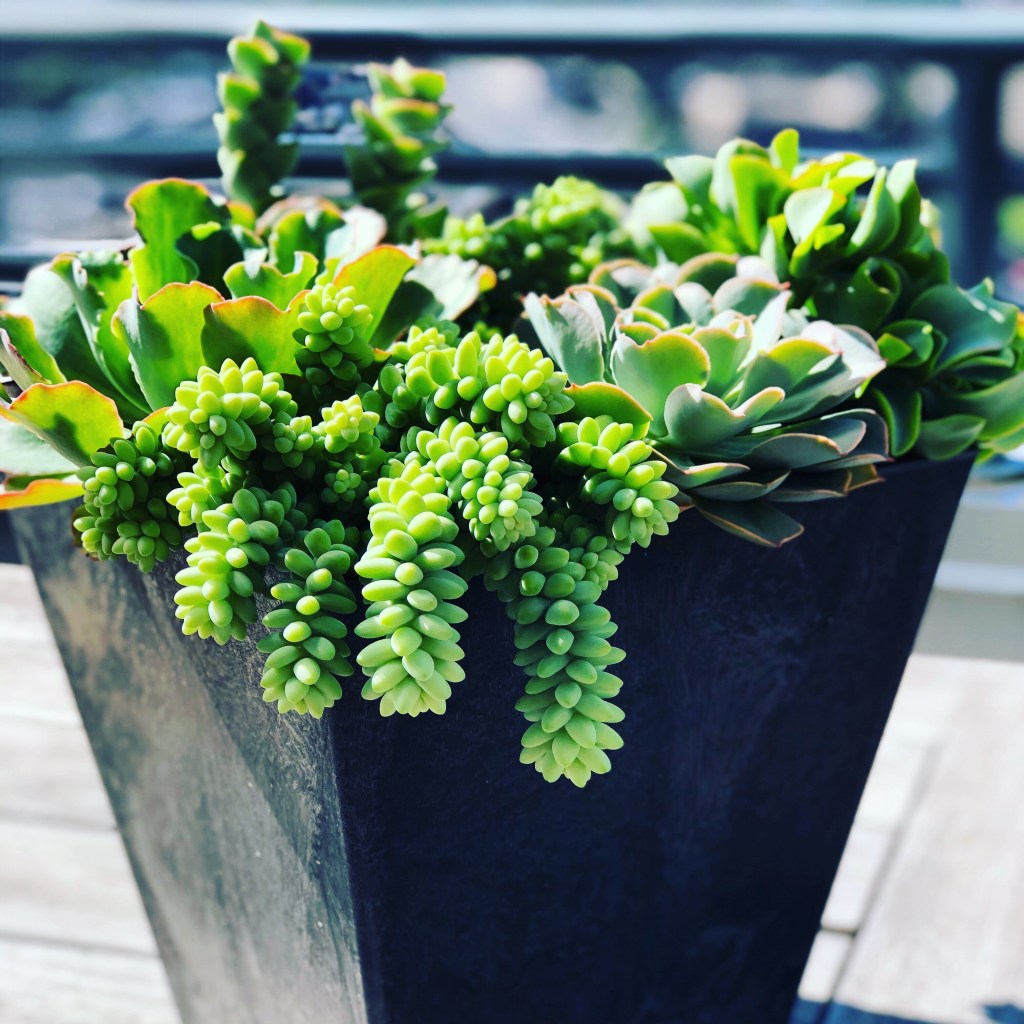
Self-Watering Tabletop Planter with Succulents Above

Thank you for visiting,

Cathy Testa
Container Crazy CT
Blogger in East Windsor, CT

One more photo below!

Frost Arrived in Connecticut Overnight in 2023 on…

Leave a comment

If you are on practically any Facebook gardening page, you saw the plethora of posts by people preparing for the pockets of freezing temperatures in areas of Connecticut and Massachusetts, as announced by the weather stations for the evening of May 17, 2023, and early morning of May 18, 2023.

Many nurseries also posted warnings to take in your hanging baskets, potted plants, and cover any plants you may have put into your gardens of the ground. They wrote titles such as, “Frost/Freeze” warnings. It was noted to occur in areas of New England, New York, New Jersey and Pennsylvania. It was important for plant lovers to heed their warnings and take “precautions” depending on where in the state you are located.

Because we have had spectacular weather for the past week or so, and Mother’s Day was just last weekend, many people got their plants started outside and patio pots were probably potted up and hanging baskets of annuals were hanging. Some of these items were probably easy to take in (such as the lightweight pots, and the hangers) while others may have been a real chore to move for some protection.

Even though I know the potential for frost and kept some of my plants in my greenhouse, I still had some out too which I was acclimating to the outdoor environments, and I even moved a few plants up to my deck but most of my pots have been empty because I wait till Memorial Day to plant my tomatoes, peppers, succulents, cacti, agaves, and Alocasias and Colocasia (elephant ears), etc. Anything tropical, cold sensitive, and any warm loving vegetables stay inside. I only take them out to harden off (acclimate) on good days this time of year and wait it out till Memorial Day to plant permanently in their intended locations – but it was rough to wait!

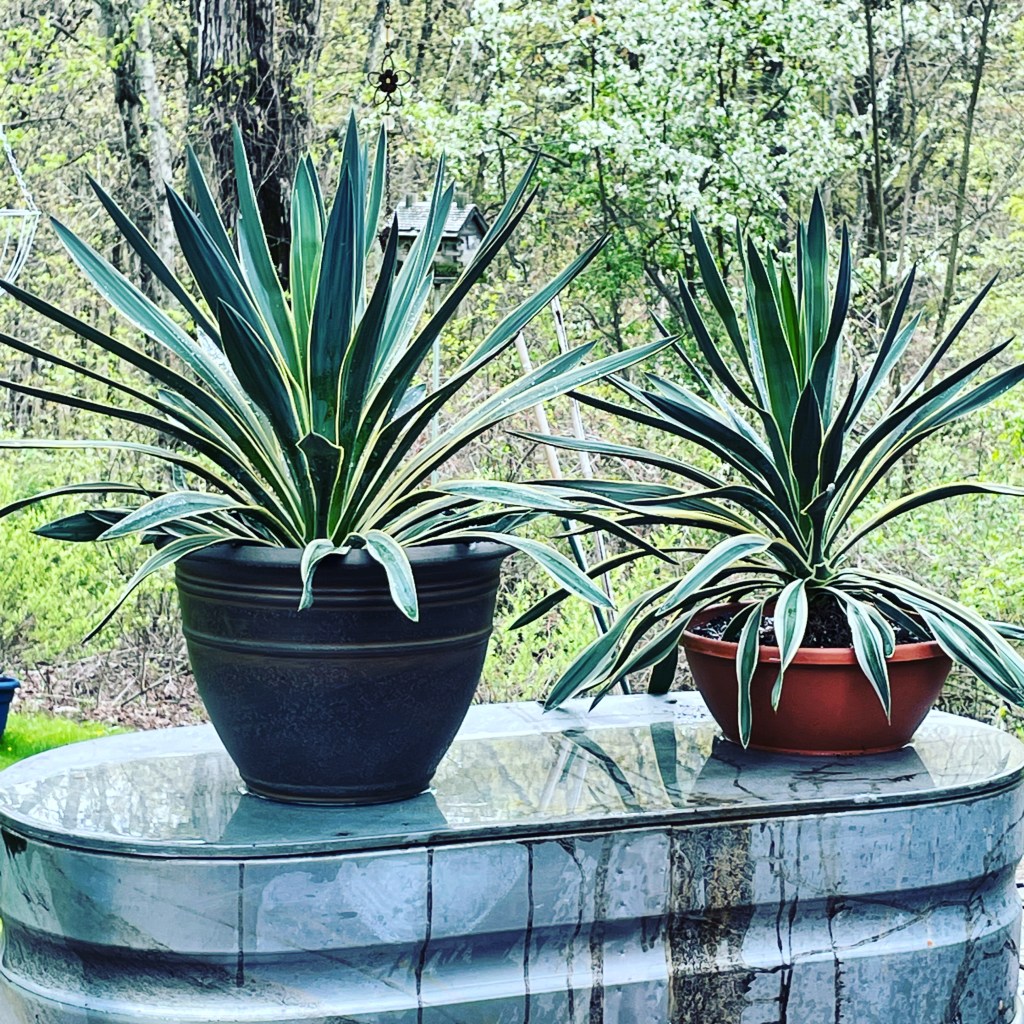
Light sheets were used to cover up the plants I did move out to the deck that I felt would be okay, like some Yucca plants I have in pots. But a lot of the smaller items I had out got moved in. My petunias, a few of the Mandevillas I was acclimating on my driveway, the Alocasias in two pots still small enough to lift, the Mangaves, and some Agaves. Anything with succulent like tender foliage (like the Mangaves, they have foliage similar to Aloe if you crack them open, they have gel inside).

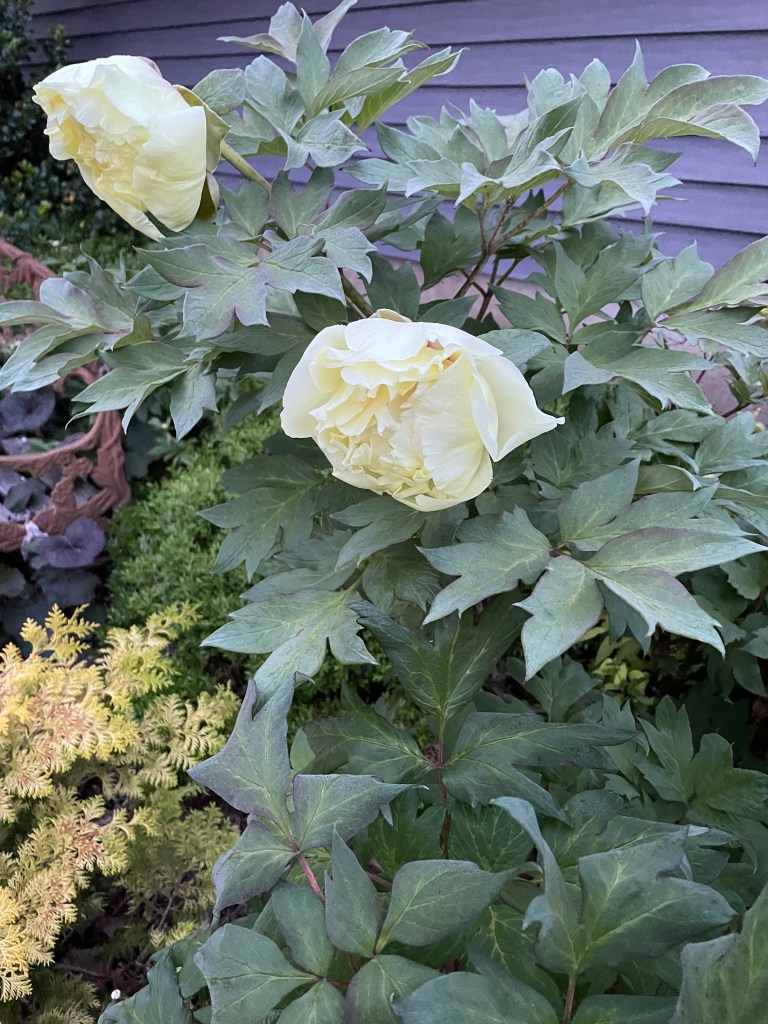
So, we got our exercise last night. I did not cover up my amazing tree Peony as shown below in the photos. Plants which have been growing in my landscape for years, like my gorgeous yellow-blooming Peony, I didn’t bother to cover up. I checked them this morning and they looked okay.

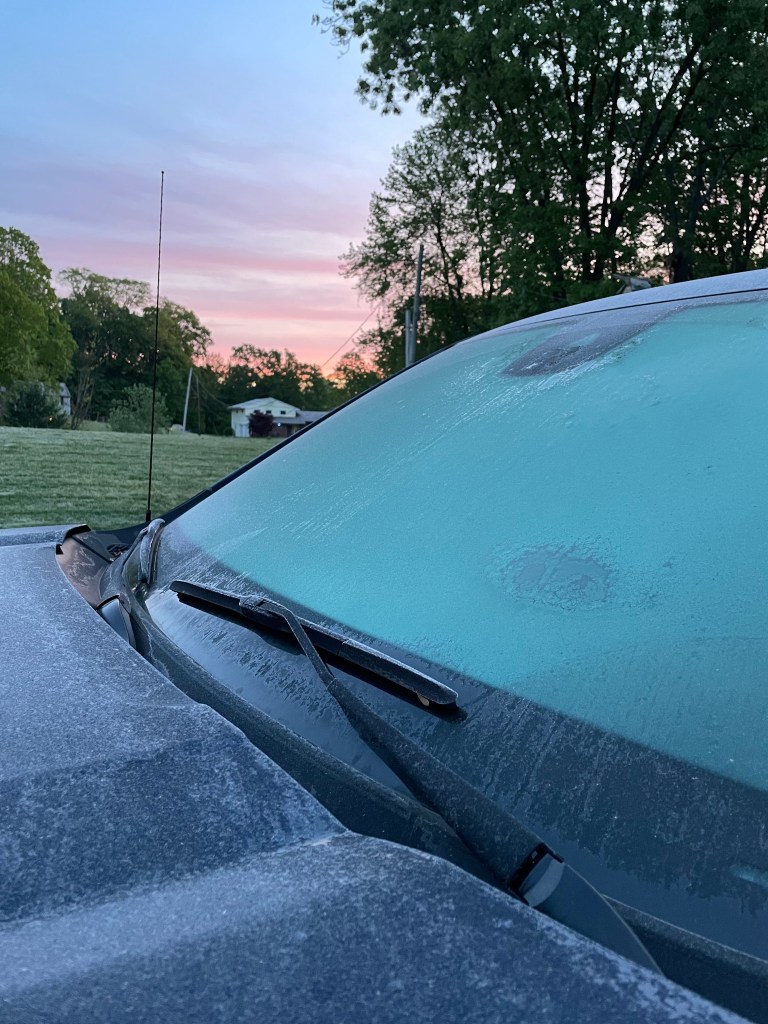
Frost on the windshield of your car or truck is a good indication that yup, it got cold enough to get “frosty” on windshields, but just how long did the drop in temps last? It may have been quick, only an hour or so just above or just below freezing. At 4:30 am, it was reading 35 degrees F on my weather app. So, bear in mind, it was quick and not a drop you would get in winter that would surely completely kill your plants.

While this type of frost may not outright kill some of the plants you risked leaving outside, it will stress them. I didn’t want to subject the Mandevillas I am holding for a client to this quick frosty episode because then the plants’ leaves drop off, the plant gets a bit stressed, and they are temperamental to start with so even those have 5 ft poles in them, I took 3 into my house. The rest of my Mandevilla are still cozy in my greenhouse.

After years of stressing out about plants, I kind of know which are more susceptible and need to be babied in these situations and which are possibly okay risking. As I have noted in my recent posts, I always use May 12th as an estimated last frost date. This year, frost came a bit later (May 17-18, 2023) and I have already marked this on my calendar so that when I get my 2024 calendar to hang on my office wall, I will have already noted that it arrived on May 17-18. Even with me noting May 12th, that is safe because I don’t permanently put the plants out – I am usually hardening them off – by putting them out during the day to get acclimated and taking them in at night if I felt it dropped below 50 degrees.

I do believe that we are safe now – except for tonight – they said this occurrence of a quick drop in temps may fall again tonight, May 18th, for some areas of the state. Massachusetts was colder than CT last night, and my uncle, who has an amazing garden in New Hampshire, posted snow falling yesterday! When I see his posts, I know it is true that frost will hit us. And it did.

I tend to make a note here on my blog to serve as my reminder.

What I took in:

Sky Petunias – which are in tiny pots (they smell so strong; I took them in last cause I’m actually sensitive to the scent).
My Mangaves – because a) not frost tolerant and b) tender succulent foliage is more likely to get damaged.
Mandevilllas – They tend to get stressed, and I don’t like that cause it sets them up for leaf problems. They don’t care for below 50.
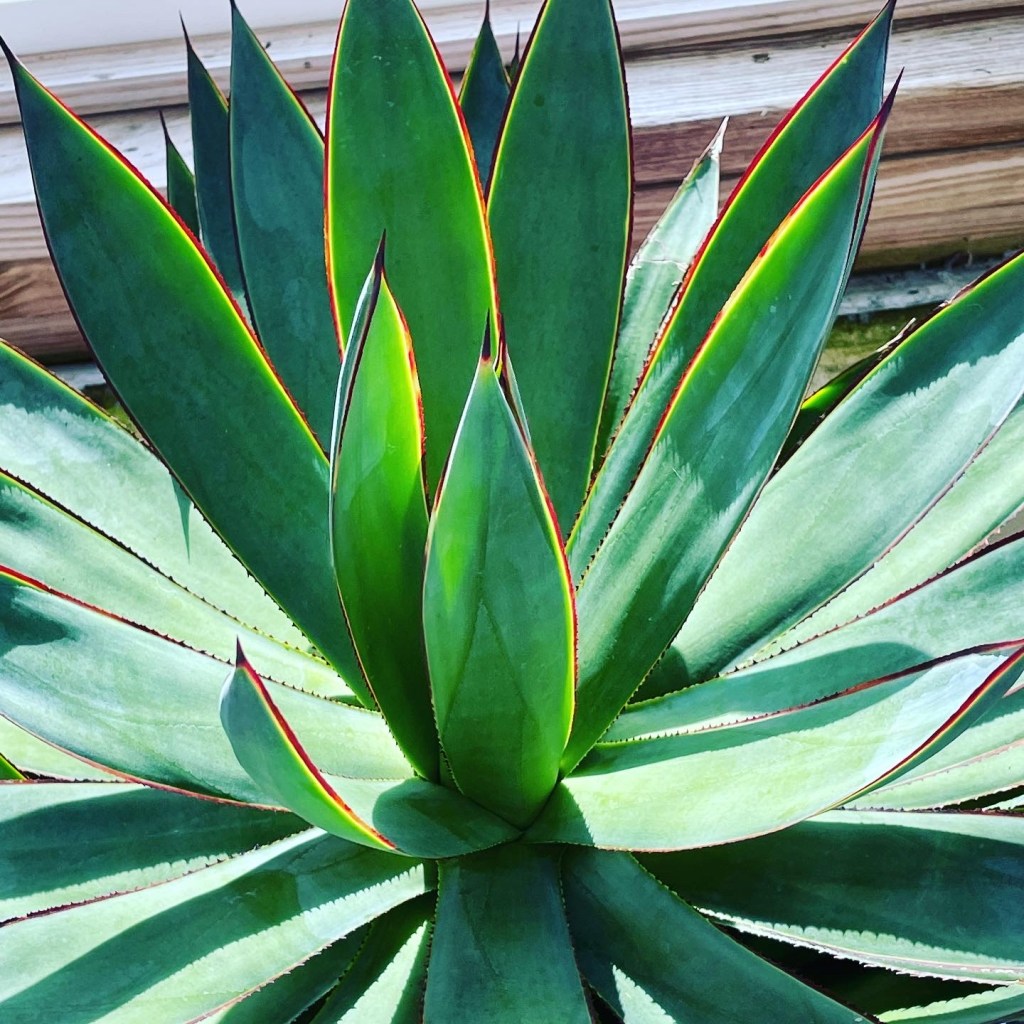
Agaves – Those prob would have been fine, but what the heck, if they weren’t too heavy, I took some smaller ones inside.
Alocasias – That were overwintered in the greenhouse, were outside to acclimate for a few days already, and were not too big yet and still in medium pots. They have tender foliage too. If the foliage were to get damaged from the frost, it would probably regrow from the tubers below the soil, but I just figured, take those two in.
Cacti and smaller Succulents – I had some on the deck in small terracotta pots, what the heck I took those into my bedroom, so it would be easy to put them back outside. Cacti can take cold drop, but the succulents cannot.
Houseplant Hanger – I overwintered a houseplant in the greenhouse and had that hanging outside for a few days now, in it came.

I probably will leave most of the smaller pots in today and tonight. I’m taking the Mandevillas out for the day and back in tonight and then finally this routine will be done! Friday night will be plant celebration time! Along with happy hour!

Remember, note the 2023 Frost Dates for reference and reminders next year. And enjoy the rest of your spring and summer planting season. I hope next week’s weather will be as pleasant cause I have lots of plant work to do.

Thanks!

Cathy T.
Container Crazy CT Blog
Zone 6b
Broad Brook, CT

Screen shot at 4:30 am on 5/18/2023
My gorgeous tree Peony blooms before the frost episode!
After the frost episode – a little stressed but the flower petals didn’t drop off – yet!
Frosty on the vehicles this am!
Two Alocasias that were in my greenhouse and outside for a few days – Took these in last night – Pots not too heavy.
Mandevilla and Dipladenia I have in the greenhouse
Yuccas I had put outside for a few days, then had moved to the deck – I covered these up with a light bed sheet last night.
Agaves with thick skin may have been okay – like this one but I took a few in, and others are still in my greenhouse.

My Mangave Shoots Up A Bloom

2 Comments

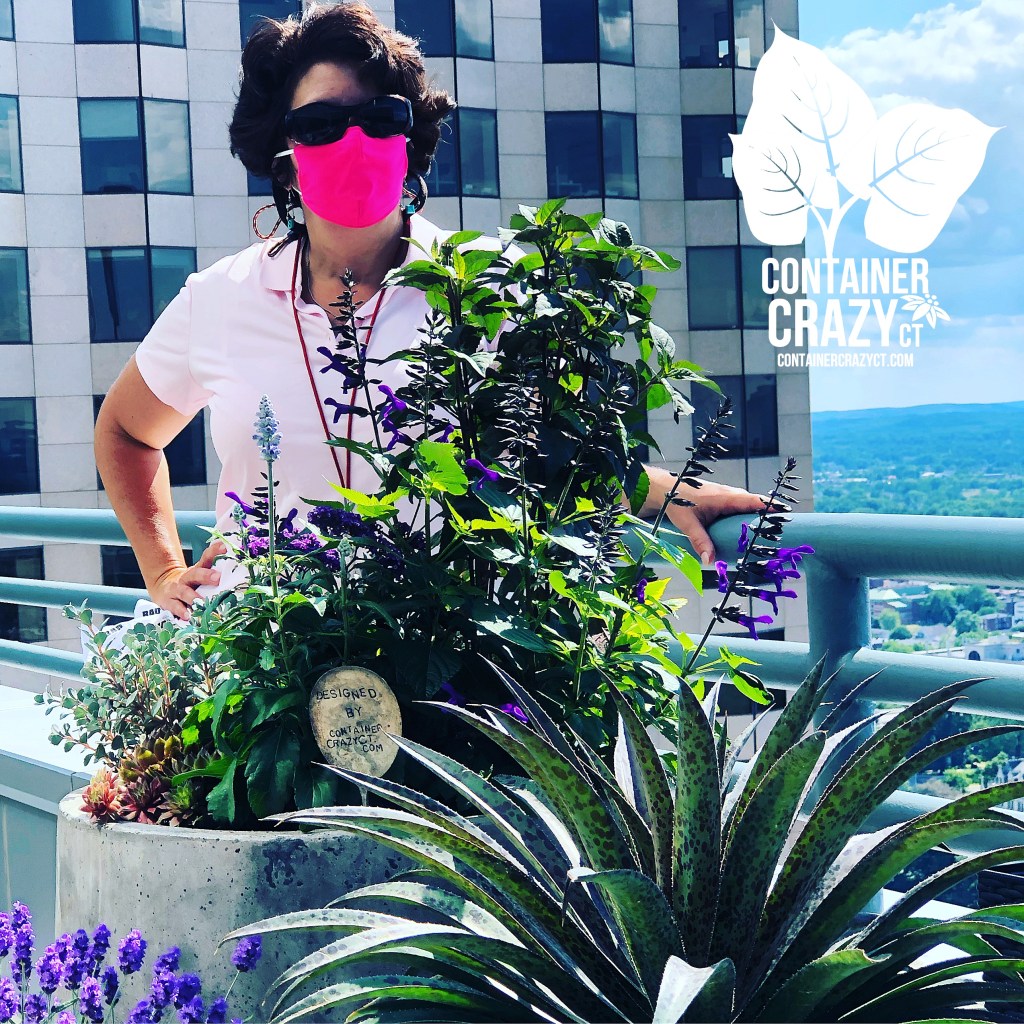
I like finding cool and unique plants for my clients’ balcony gardens every season, so when I spotted two rather large Mangave plants at a local garden center, I had to grab them despite the price. I was excited to plant them in two large upright planters and I asked my husband to take a photo of me standing right behind the planters.

Cathy Testa with Mangave in front planter

The mask wearing was on purpose, to show a timeline history of my plantings, and this had to be when masks for COVID were still required. Anyhow, I wore a pink mask and I loved how the photo came out. We were still required to wear masks at this time so I think it was 2020, or 2019.

Mangave is a Cross between Manfreda and Agave

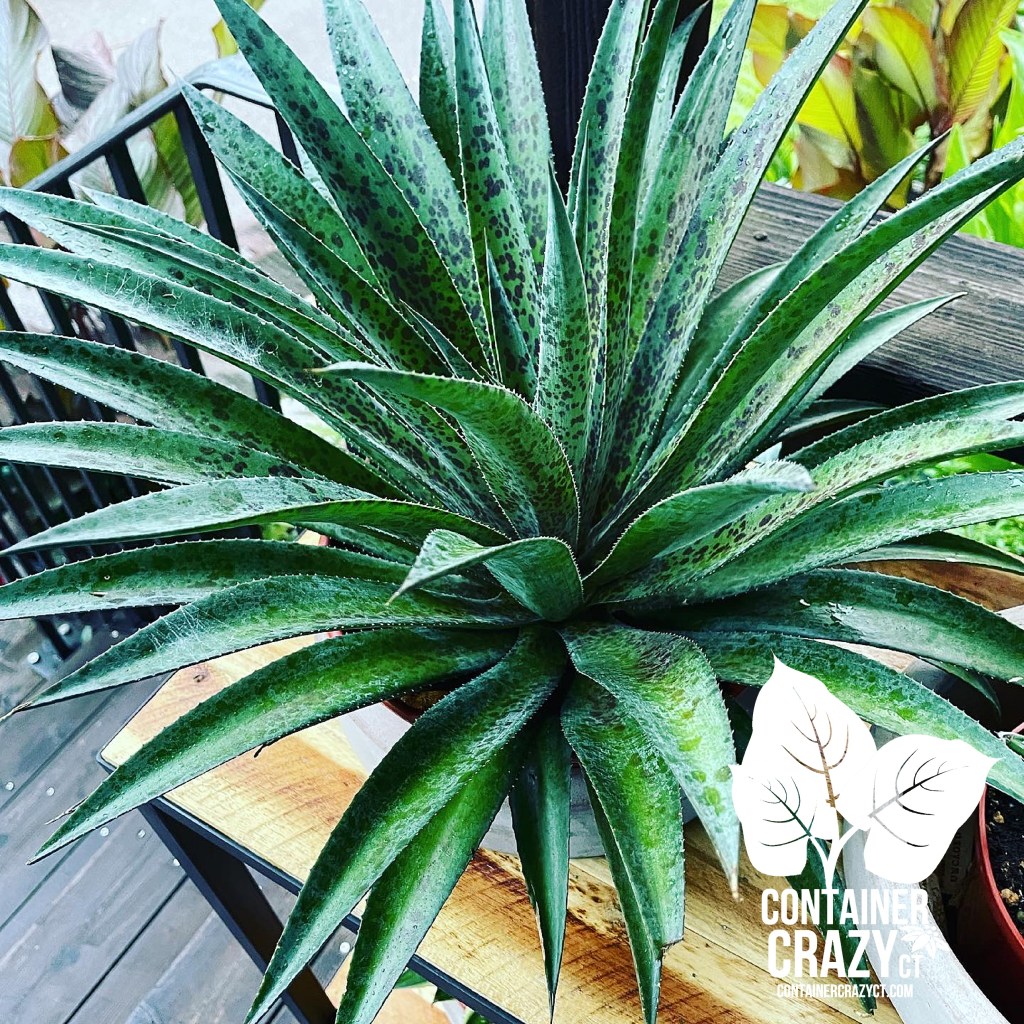
I’m a big fan of Agaves, so when I spotted an article about the new Mangaves, which I read about prior to finding the only two available at a local garden center, it elevated my excitement of getting them and planting them as a unique and dramatic specimen at this location. I love the outlines of the plant, the speckling on the leaves (spines), and the fact it was not something commonly found at that time.

Here is some background information about it.

As stated in the article linked above:

Taking the best from both genera, Mangave have the accelerated growth rate, spotting and softer spines from manfreda, mixed with the durability and large architectural forms of agave. Mangave hybrids bring the potential of hundreds of new colors and habits not previously seen among agave in a product that’s more grower-friendly, with a quicker finish time and less prickly spines.

As the principal breeder of Mangave, Hans is the perfect source for the story behind the succulent, his experiences with the crop and how he sees it contributing to the world of horticulture.

https://www.growertalks.com/Newsletters/View/Newsletter/?article=3103

Spines are not weapons, like with regular Agaves

It is true, the spines are less prickly than typical Agaves. In fact, spines on Agaves are so sharp, they could be used as a weapon! And the spotting patterns on these new Mangaves are very interesting on the spines, and it has a wonderful architectural form, and yes, they grow fast! My two specimens were already rather large so I knew they must have been growing somewhere at a growers for a while before making it to a local garden center in my area to be offered for sale. In fact, when I spotted them at the garden center, they were sitting on the floor in their large nursery pots under a bench, as if almost hidden from sight, near other succulents and cacti. I lifted them into my shopping cart at warp speed, let me tell ya. I knew I had to have them.

They served as wonderful candidates all summer long at the clients’ site, and I think the only downfall to these plants is the spines are extremely flexible and soft, thus with one bump, the tips break off. I don’t like that aspect because it feels like a break to the overall form and architecture of the plant, so they are somewhat difficult to move, especially when you are moving plants up to a high-rise, but the effort was worth it. When moving them, use caution to not break any of the spine tips when possible, as I did the more I experienced observing, growing, and using this plant. It turned out to be more useful than I had expected.

September 21

In September of 2021, I noticed a bloom coming up on one of the Mangaves, which I had returned home earlier from the client site. Sometimes plants are taken back, and in this case, one of the Mangaves at the client’s balcony had started experiencing growing issues, so I took it home, inspected the roots, and sure enough, there was some type of pillbug in the soil. Because I cherished this plant, I removed all the soil and repotted it in new fresh potting mix that is well draining and more on the coarse side. Agaves typically don’t like wet soil, and I suspected the soil was probably wet prior to even planting it. I watched it for a while outdoors to see if it would improve, which it did, then in the autumn season, before frost time here in Connecticut, I moved it into my greenhouse. It was around that time, in September, that it suddenly started to shoot up a bloom stalk.

A Bloom Stalk Surfaces in 2021

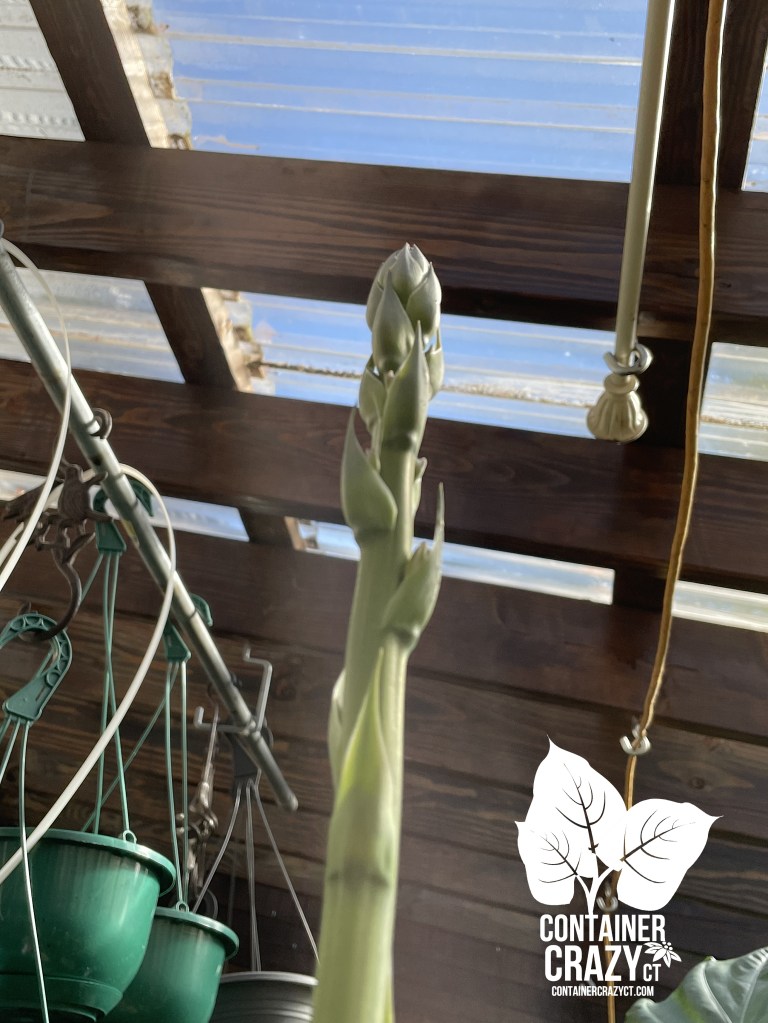
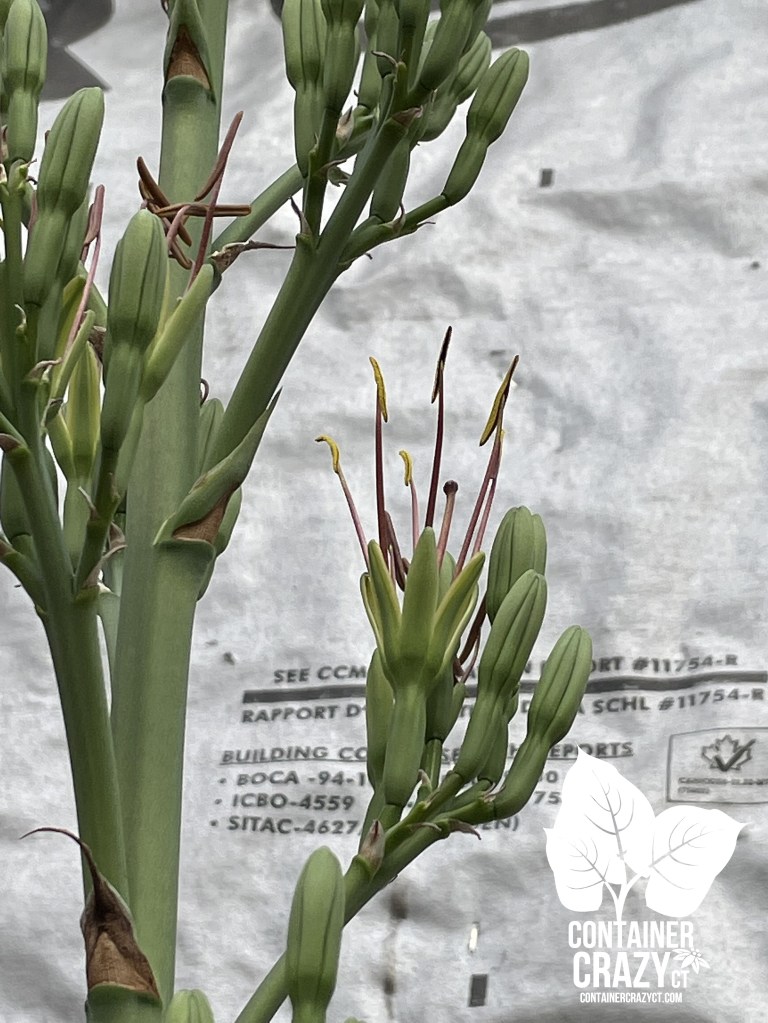
When the bloom started, I was super excited about this and posted a photo to my Instagram feed (seen above). As some plant people may or may not know, Agave plants do not commonly flower. Some will bloom after several years, while others may take as long as ten years or even a hundred years to produce a bloom; this is why Agave plants are referred to as century plants. And the flowers will grow on the tip of a very tall stem, solo rising up from the middle of the plant, and the stem/stalk will grow super tall, reaching for the skies, or in my case, reaching for the ceiling of my lean-to style greenhouse. Knowing this, I was pretty excited to see how long it would take the flower stem (referred to as a candelabrum or wand for Agaves) to grow and how high it would reach in my greenhouse before it would produce flower buds. The stem (or wand if you wish to think of it that way), has no leaves on it and to me, it resembled an asparagus stalk.

Photo Taken As It Kept Rising

September 27

Within 7 days, you can see from the next photo how much the stalk rose from the center of the Mangave. It was growing up, and every day, I’d walk in to take a look, and I started to have to move it around because as it got taller, it was reaching the lean-to style of the greenhouse’s roof. I wondered if it would soon hit the ceiling.

Mangave flower candelabrum or wand

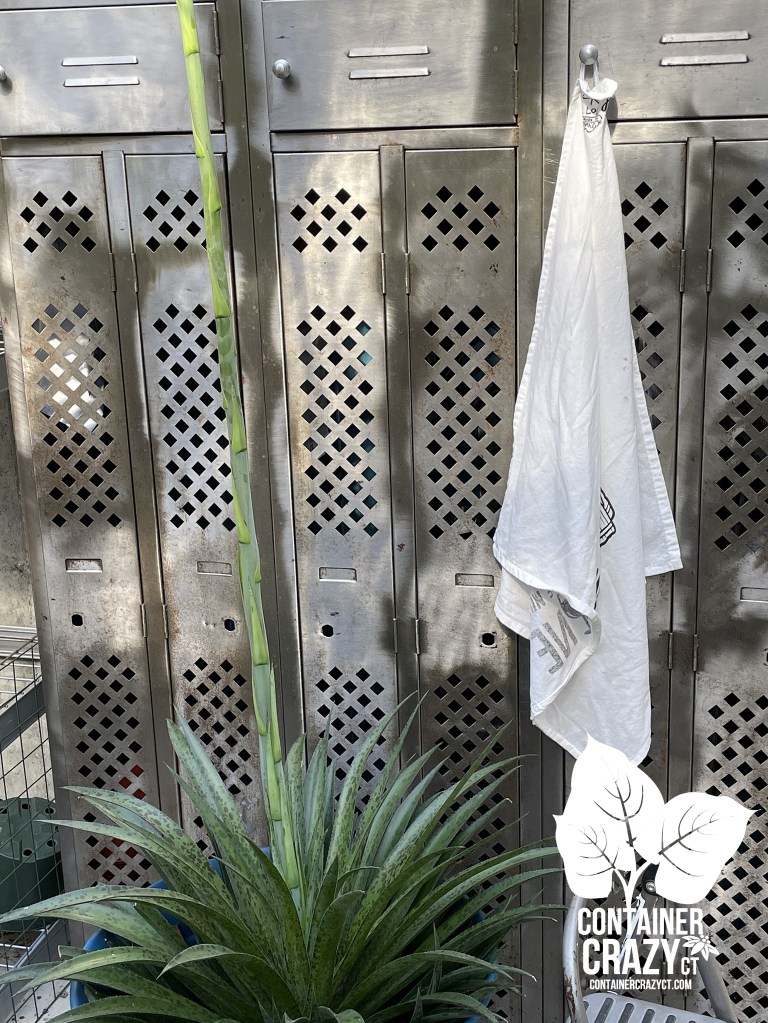
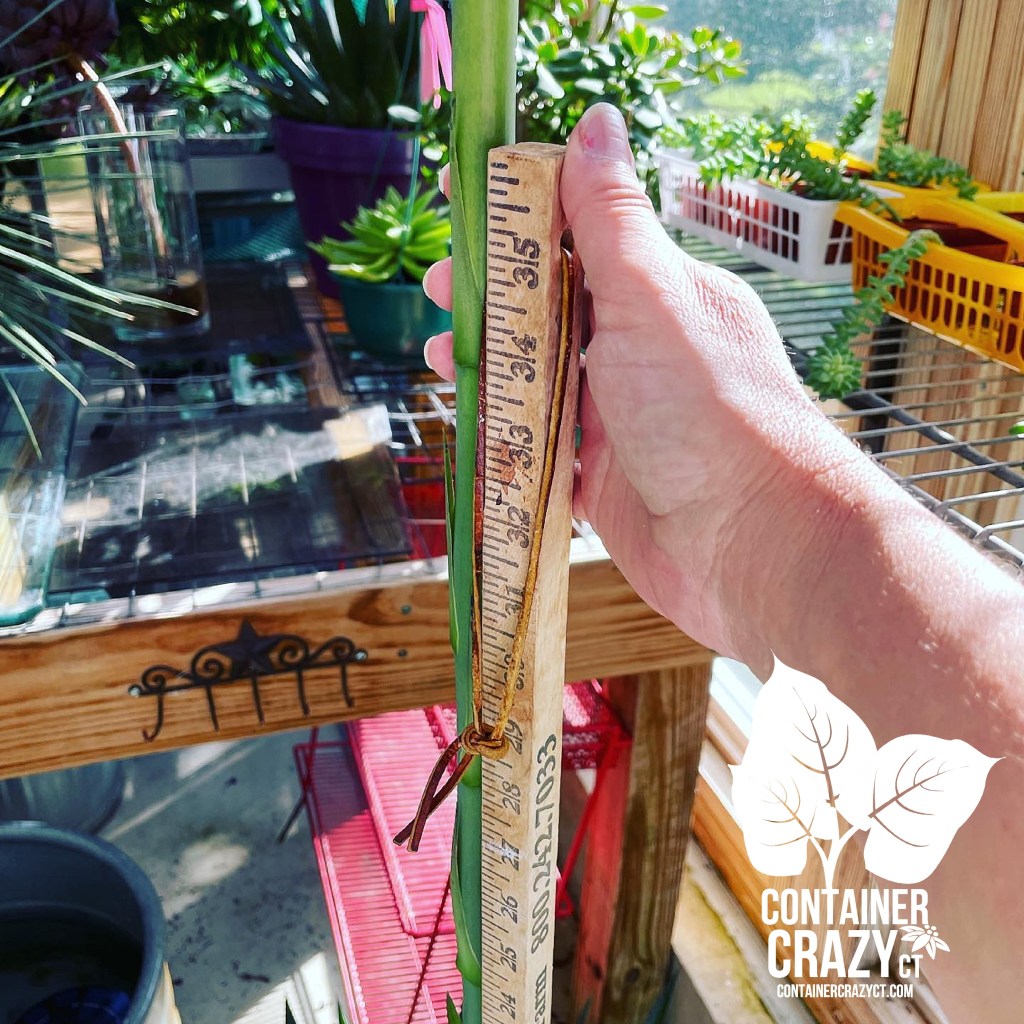
It got to the point, the stalk was so tall, I couldn’t get the whole thing in a photo. Here is a photo (above) where I moved it in-front of an old silver locker I picked up at a vintage shop, and it was about as tall as that cabinet by this point. As you can see, it definitely looks similar to an asparagus stem.

Very Top of the Stalk

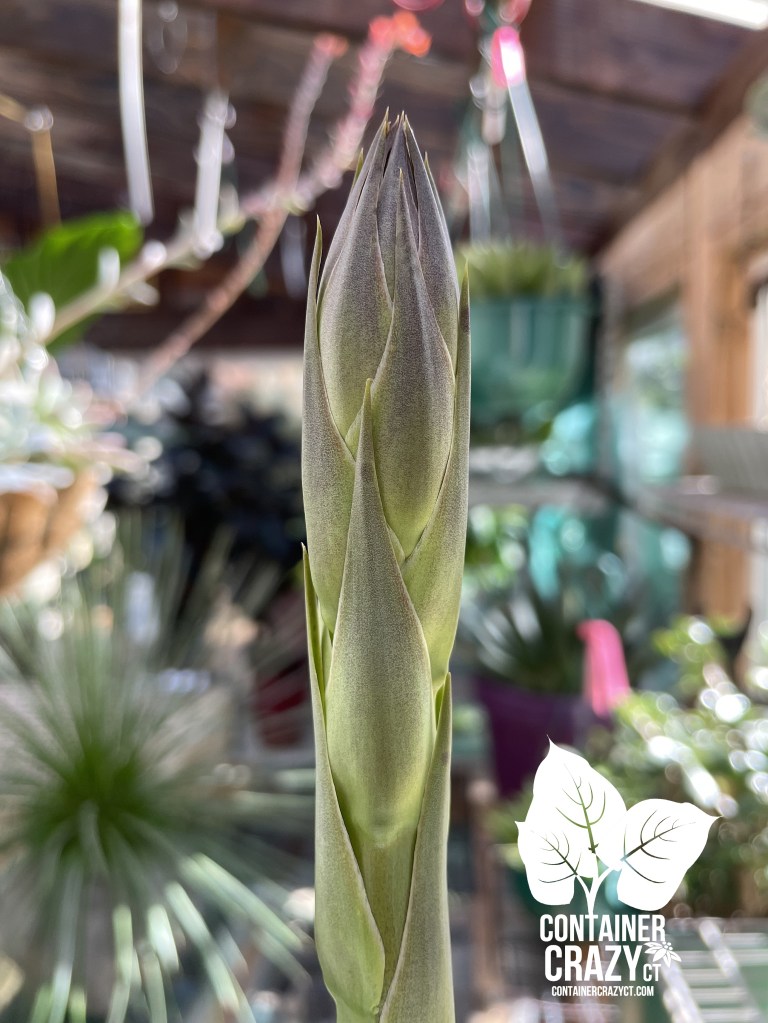
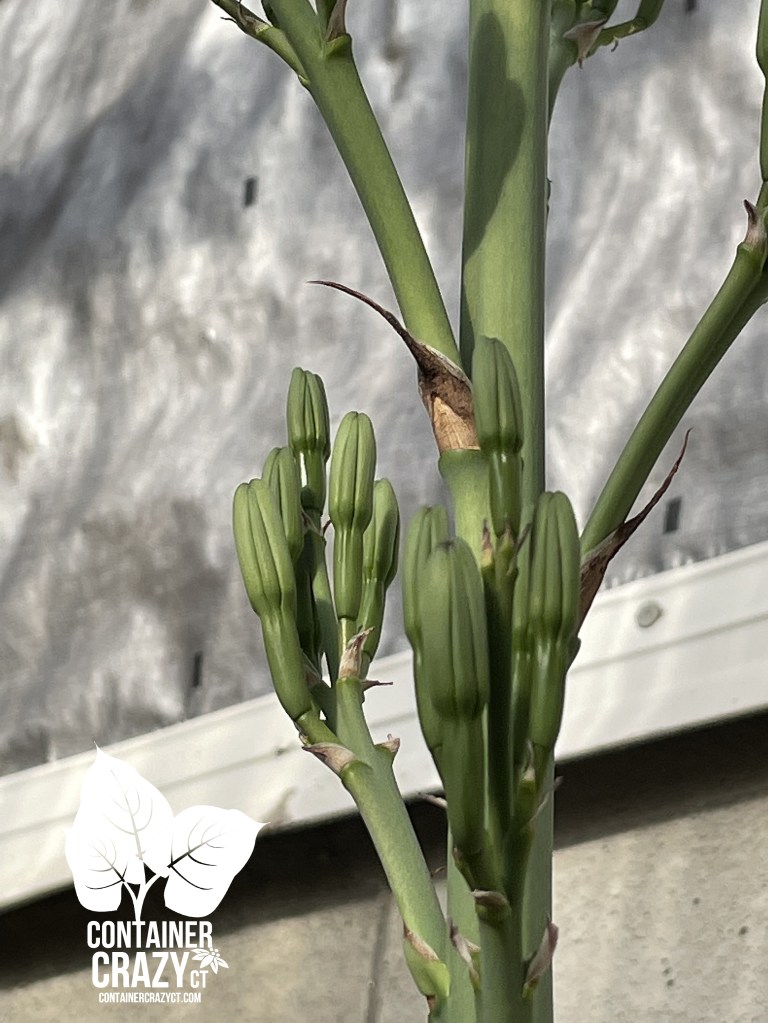
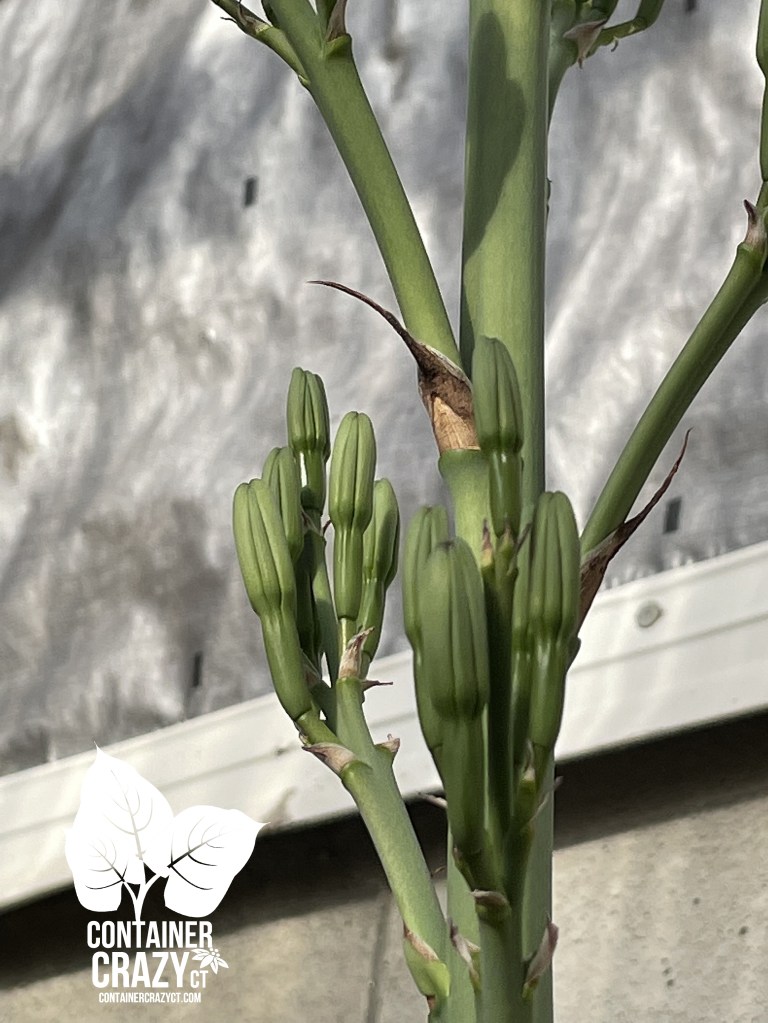
Then the next phase was starting to reveal. Side shoots on the top started to form with flower buds. I knew I was in for a big surprise soon. And fortunately, the very tip of the stalk was not touching the roof of the greenhouse. It appeared I had just enough space to keep it inside for the rest of the winter.

Flowers Opening

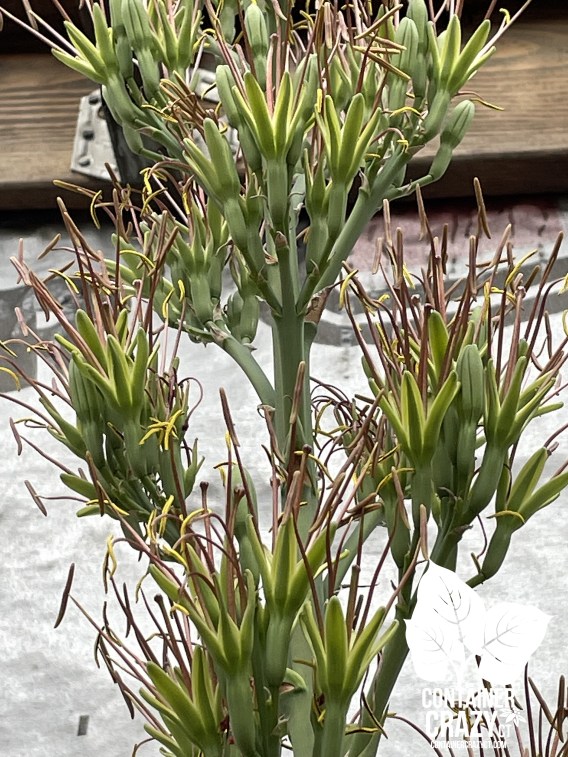
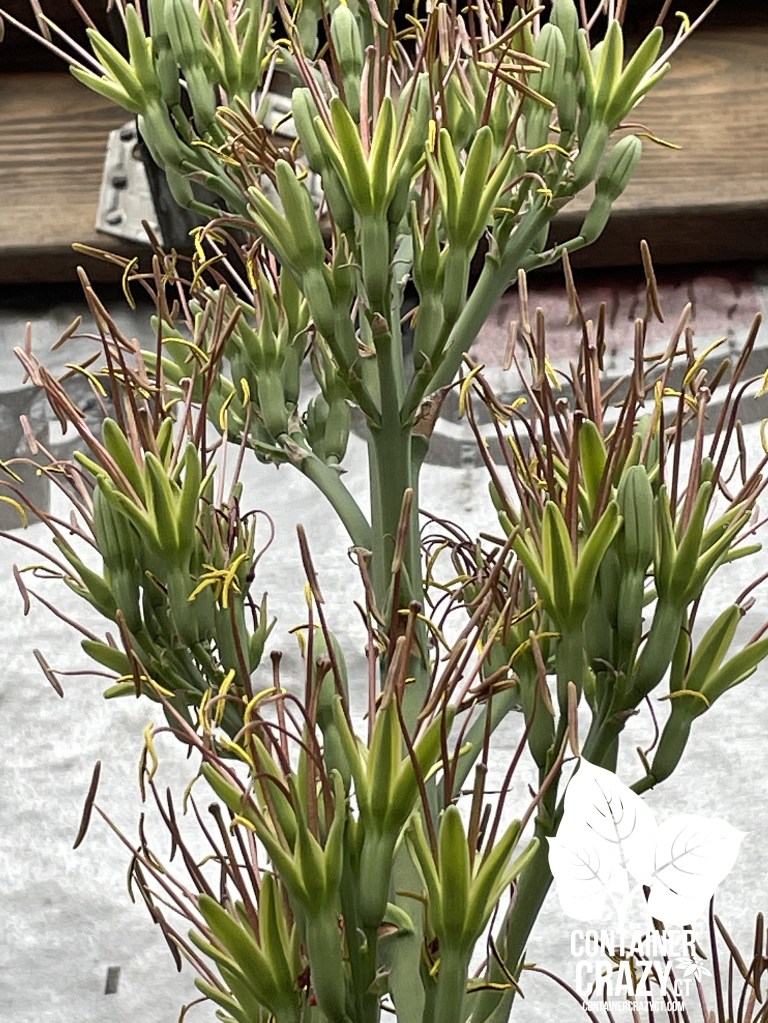
The flowers started to feel like a fireworks show to me. That is just how my mind works when it comes to nature’s surprises. The flower clusters started to form to the sides of the main cluster on the top and as they opened, pollen was visible and I thought it was a shame as it would not be pollinated inside my greenhouse during the winter months, but just the same, it was a fun experience to witness all the buds opening over time.

By December, 3 months after I first noticed the stalk rising from the center of the plant, it had buds and the stalk was about 10 feet tall. In reviewing some of the posts I was sharing, around December 11th, it was 6 feet tall. Later in December, it grew to ten feet. By the following spring, I decided to chop off about 1/3 of the stalk and it was time to get it out of my way so outside it went. I put it on my deck, and to my surprise later in the summer, more side plants formed at the top of the plant’s flower stalk (where I had cut it off). It also produced many pups on the sides at the base of the plant, which I decided to use to top off my succulent pumpkin centerpieces; it made a nice spikey looking thriller on the top of the pumpkins.

Mangave used on the Succulent Pumpkin Centerpieces

This plant ended up surprising me in many ways and kept on giving. It did not die off as some plants do after flowering for Agaves, and retuned to my greenhouse yet again this fall. Not only that, I repotted some of the pups earlier, and they grew rather quickly into larger plants (as noted by the breeder above, Hans, they grow quickly).

Agave and Mangave plants make wonderful specimen plants, are beautiful in larger pots, and they handle full sun and don’t require lots of fertilizer, and they may be kept inside the home over the winter, if not too large, or if they haven’t grown a major flower stalk of 10 feet tall, and they over winter well in a low-temp greenhouse too from my experience. It is pretty cool when you start off admiring something and witness many returns and uses which were unexpected, like how I used them on my succulent pumpkin centerpiece creations this season.

I like collecting various Agaves and now Mangaves and will continue to do so. I find they are easy care plants and you can obtain various sizes and styles if you keep your eyes open for special finds!

Cathy Testa
Broad Brook, CT
860-977-9473
containercathy@gmail.com

Date of Post: 10/26/2022

Making Succulent Pumpkins

5 Comments

I made my first two succulent pumpkin centerpieces for an order yesterday, and gosh, it was so much fun. I typically make these in my small hobby greenhouse and the “Zen” feeling in my greenhouse puts me into a total creative zone.

The leaves of the trees outside are starting to turn the color of yellow for autumn, and the wind was blowing around quite a bit. Every once in a while, I’d look outside from my work table in the center of the greenhouse to see if any bears would be there outdoors on the property – and nope! I have NEVER seen bears here in my yard, but there have been three sightings in my town last week of a momma bear with her two cubs. And it was nearby for one sighting so it makes me wonder, will they ever adventure here? I hope not!

Locally Grown by Nearby Farms

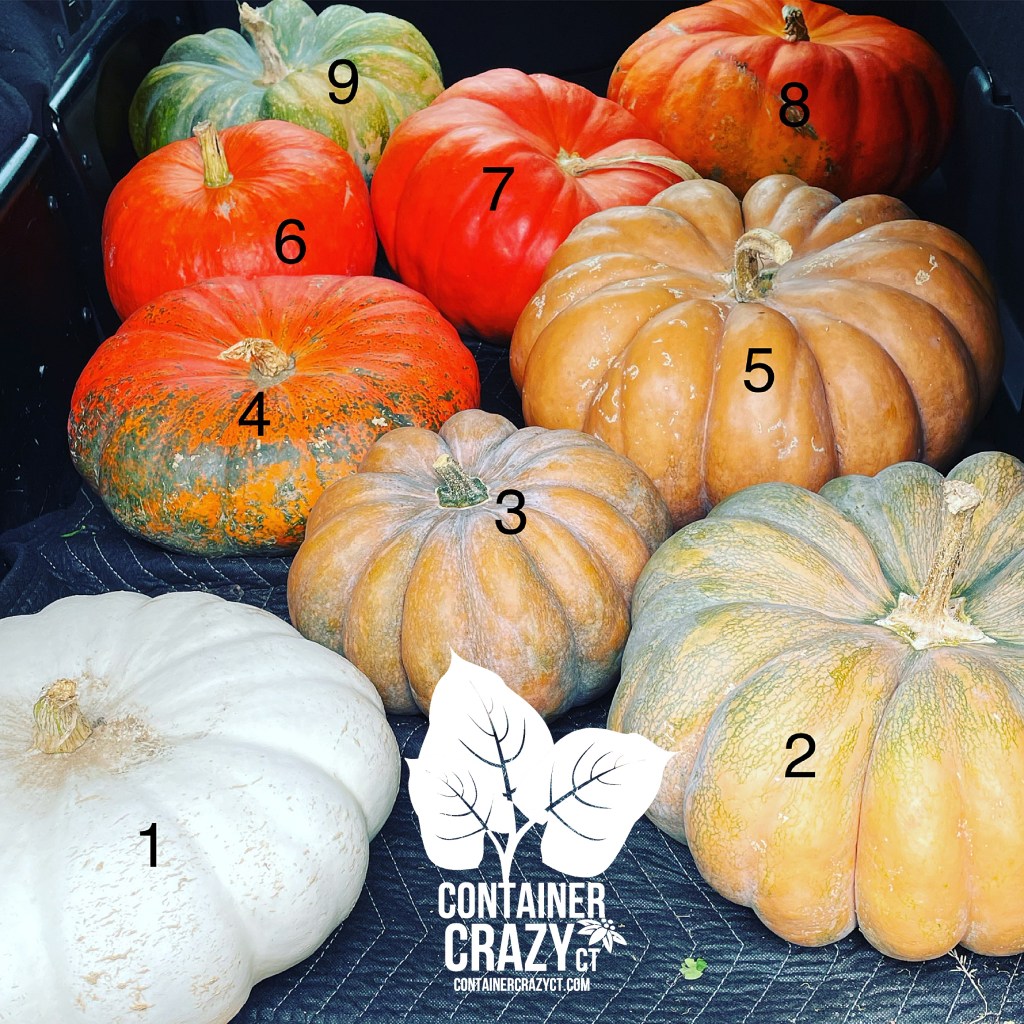
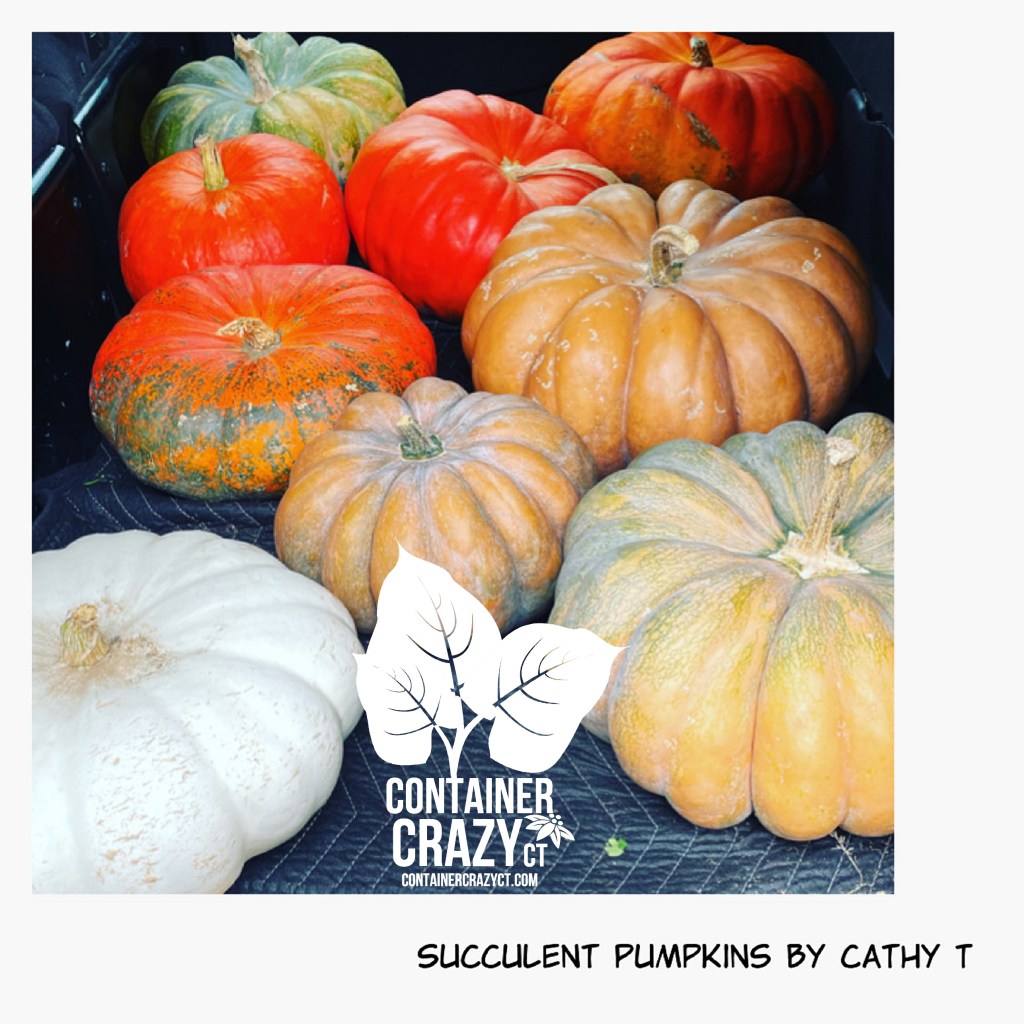
I picked up 9 pumpkin candidates from nearby farms in my town the day before. We had a drought year and I wondered how well the pumpkins would grow and this year they look great (last year we had too much rain). Number 9 was selected by a repeat customer right away along with a cheese pumpkin (not shown in this above photo) which I grew myself this year for the first time as a test (with the help of my cousin who grew veggies in her community garden plot in our town for the first time this year too!). She planted a couple of my pumpkin plants in her garden and I planted one pumpkin plant in a container here. I got about 7-8 pumpkins total for the smaller cheese pumpkins, but some had blemishes on the side but two were perfect – one has been used so far for a succulent pumpkin! Yes!

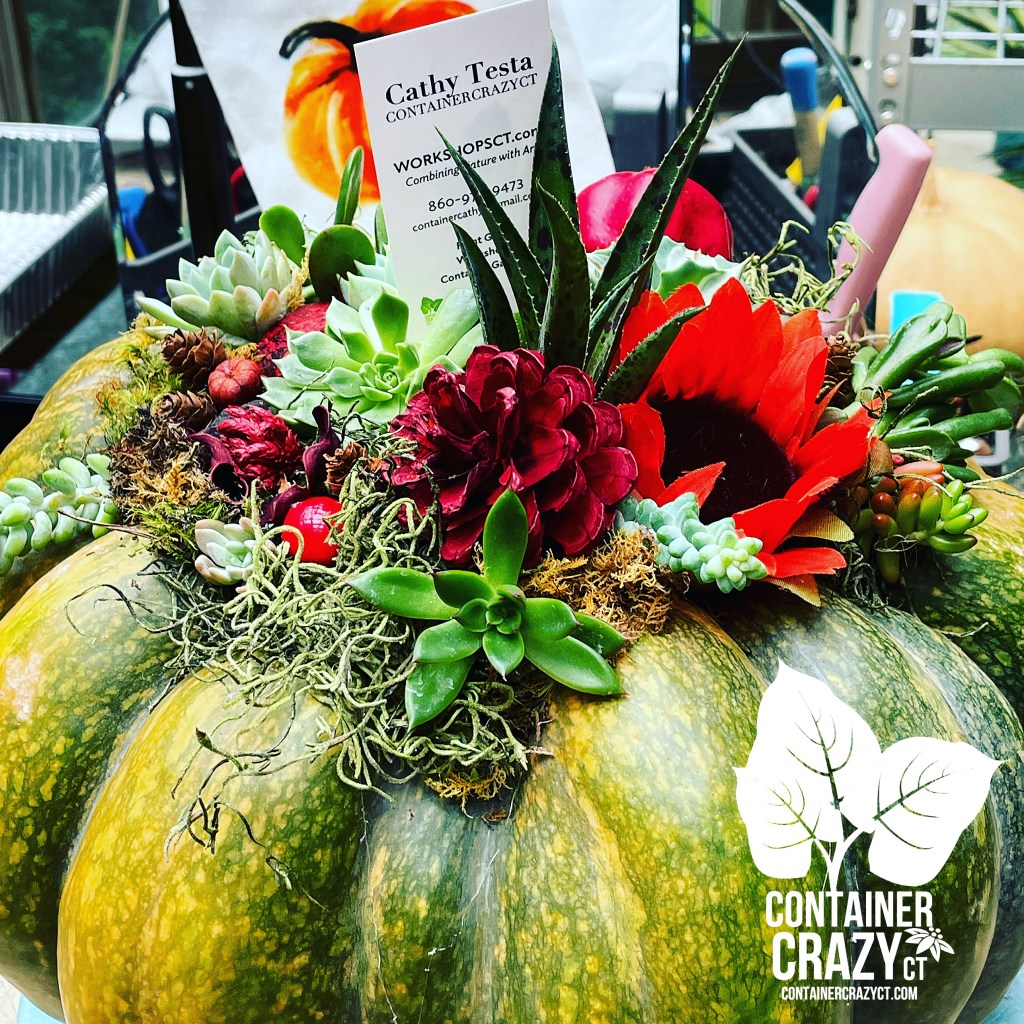
Succulent Pumpkin on a Cheese Pumpkin

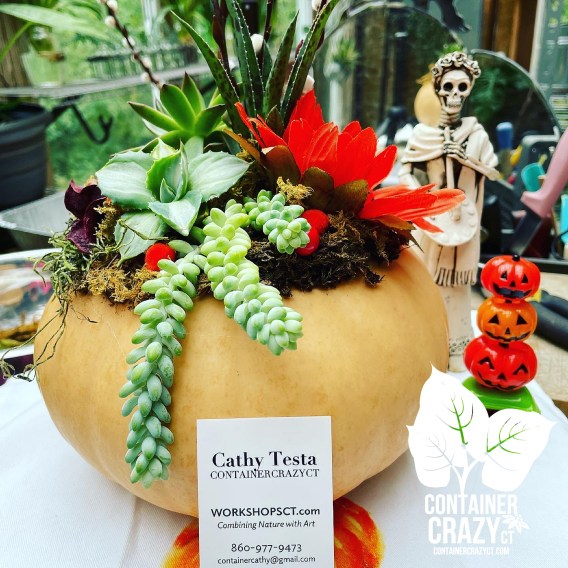
And…here it is in the above photo. It is about 7-8″ diameter. I grew them from seed and kind of just experimented. I don’t plan to be a “big pumpkin grower” but it was fun to see how they would turn out. They arrived (were ready to pick) a little earlier than I would have liked so I will adjust my seed starting process for next year. But these pumpkins last a long time, can be stored and baked too. Anyhow, it was so very rewarding to make my fall themed arrangement on this pumpkin because it was home grown by me! The shape is perfect for the succulent pumpkin making process as well.

12″ pumpkin from a local farm

The other pumpkin I used yesterday was sourced from a local farm. I’m so fortunate to have local farms nearby! It is a blue-green color and very very heavy – you’d be surprised by the weight of some of these pumpkins. I carried it to the greenhouse and get into my “Zen” and create. Sometimes I listen to blues music and totally just zone out or sing along. I guess it is that space where some artists say they are at their best. To me, it is a pleasant time of creating and hopefully the end results reflects my Zen-mode. Also when in Zen, my tinnitus is not as noticeable which is another huge bonus cause I suffer from tinnitus.

Hobbit Jade

If you can believe it – the large pumpkin finished with 11-15 different plants of all sizes! It is quite the bargain when you consider the succulent plants may be transplanted later to keep going. So as a wonderful colorful living autumn centerpiece in your home, and then plants are maintained later. Anyhow, this customer wanted reds and orange themed décor. Oh and I forgot to mention, this year I also put a dwarf agave on each pumpkin which I think is pretty cool. The plant is rare and a nice find!

Ivory Whites, Beige

I really want to make a pumpkin with the color theme above for the décor embellishments. I like this neutral feel of the soft whites, cream whites, beige, brown, etc. Maybe I’ll make that one today. Even if not for a standing order, maybe as a gift, or maybe someone will purchase it after I make it – we will see!! It is a rainy day so it is perfect to be creating again, I hope.

Well, I better get to it – I have to pack my truck for a job tomorrow and then hopefully some time today make another Succulent Pumpkin. FYI, I’m located in the Broad Brook section of East Windsor, CT. Thank you for visiting my blog and have a great day. Feel free to contact me with any inquiries or questions.

Cathy Testa
Container Crazy CT

It’s Succulent Pumpkin Time!

Leave a comment

Just a real quick post – It is that fall time of year and I’m starting to make custom orders for the large to medium style succulent topped pumpkins. To learn details, please visit www.WorkshopCT.com and see the top post.

Next up! Photos of me taking down my largest Alocasia plant. Stay tuned!

Cathy Testa
Container Garden Designer
Connecticut US Zone 6b

Thank you!