Because it is October.

10 Comments
Photo by Cathy Testa

Photo by Cathy Testa

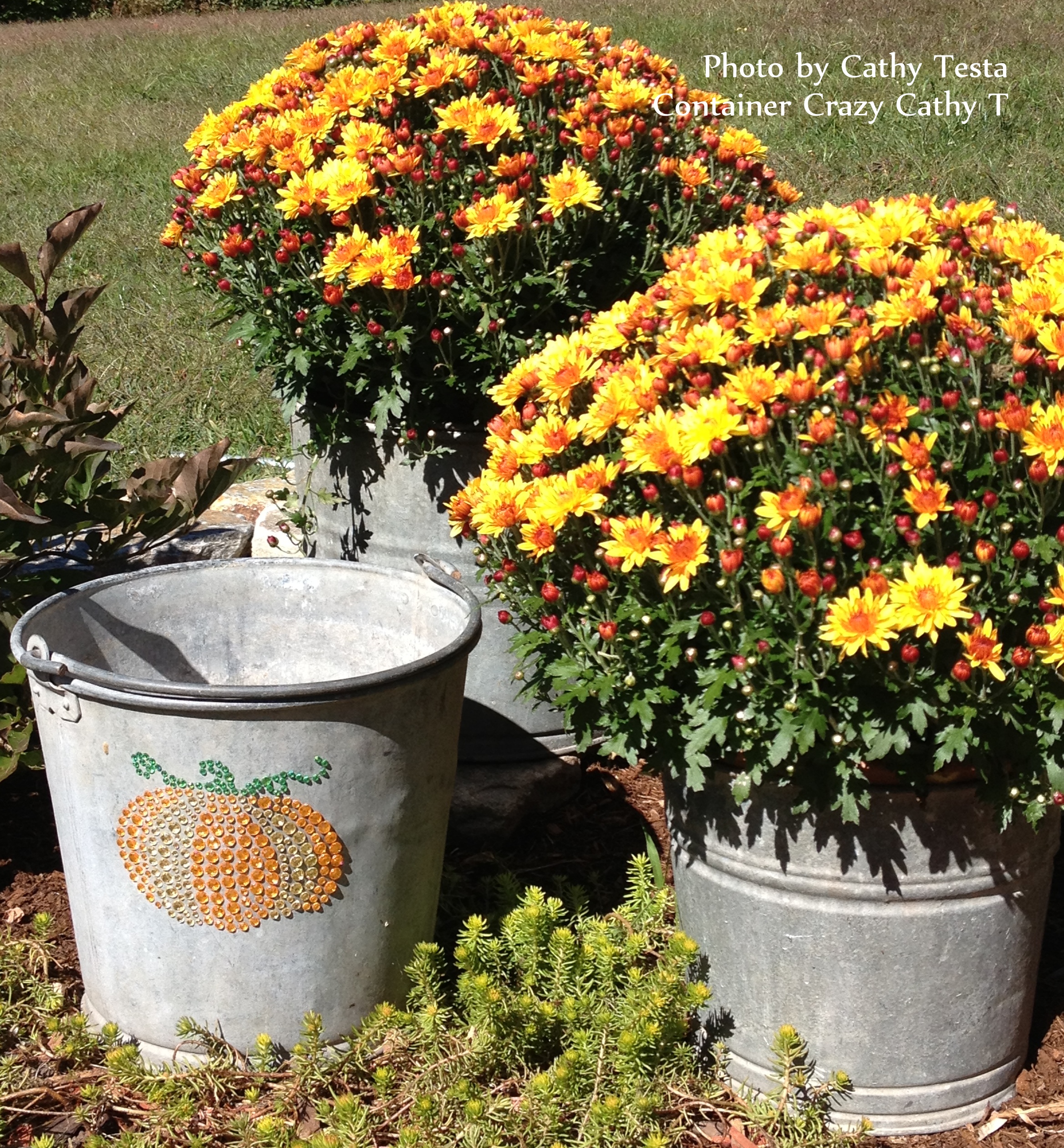
We had wonderful weather the past two weeks, best of fall (so far), at least in my opinion.  And the rainfall yesterday was needed to shower our beautiful mums and other plants in our landscapes.  Mums provide the much needed splashes of bright color along with the leaves changing as we transition through October.  Hope you have or are getting your pumpkins out.

A Reminder:  Don’t forget, a class offering on October 13th, Sunday for anyone interested in learning how to overwinter canna, elephant ears, or banana plants.  See my posting regarding the details HERE.  It is casual and informal but a great way to learn if you need that hands-on experience for your tender plants.  Feel free to contact me with any questions or to sign up, email me at containercathy@gmail.com.

Enjoy your week in the meantime, heard mid-week will be sunny!

Cathy Testa

Something new under the sun after all

Leave a comment

I just added Steven Schwartzman’s blog called, “Portraits of Wildflowers” to BLOGS I LIKE (side-bar menu). And with his permission, I’m reblogging this AMAAAAZING PHOTO of a snail he took on a flower bud. Mr. Schwartzman has contributed over 200 photos to the native plant database of the Lady Bird Johnson Wildflower Center, and this is only the tip of the iceberg of his contributions. Love his photography! Cathy T (Note: Please respect all copyright notices, photos reblogged are the property of the originator.)

Steve Schwartzman's avatarPortraits of Wildflowers

Small Tan Snail on Firewheel Seed Head Remains 1491

The firewheel was dead: to begin with.* There is no doubt whatever about that. But the little snail had given this dry Gaillardia pulchella a new sort of life by anointing it with slime, some of which accounted for the firewheel’s glistening in a way I’d never seen. Now you get to see it too.

Like yesterday’s picture, today’s is from a July 19th session on a piece of the Blackland Prairie along Schultz Ln. in southern Round Rock.

————

* Bonus points to anyone who can identify what this is a parody of.

© 2013 Steven Schwartzman

View original post

Pimping Pumpkins with Nylon and Bling-Bling

11 Comments

IMG_9310The past week’s weather prompted me to start decorating for “Falloween,” the period where it may feel a tad bit early to put out your scary Halloween decorations, but not too early to begin decorating with pumpkins, gourds, cornstalks, mums, and other goodies.

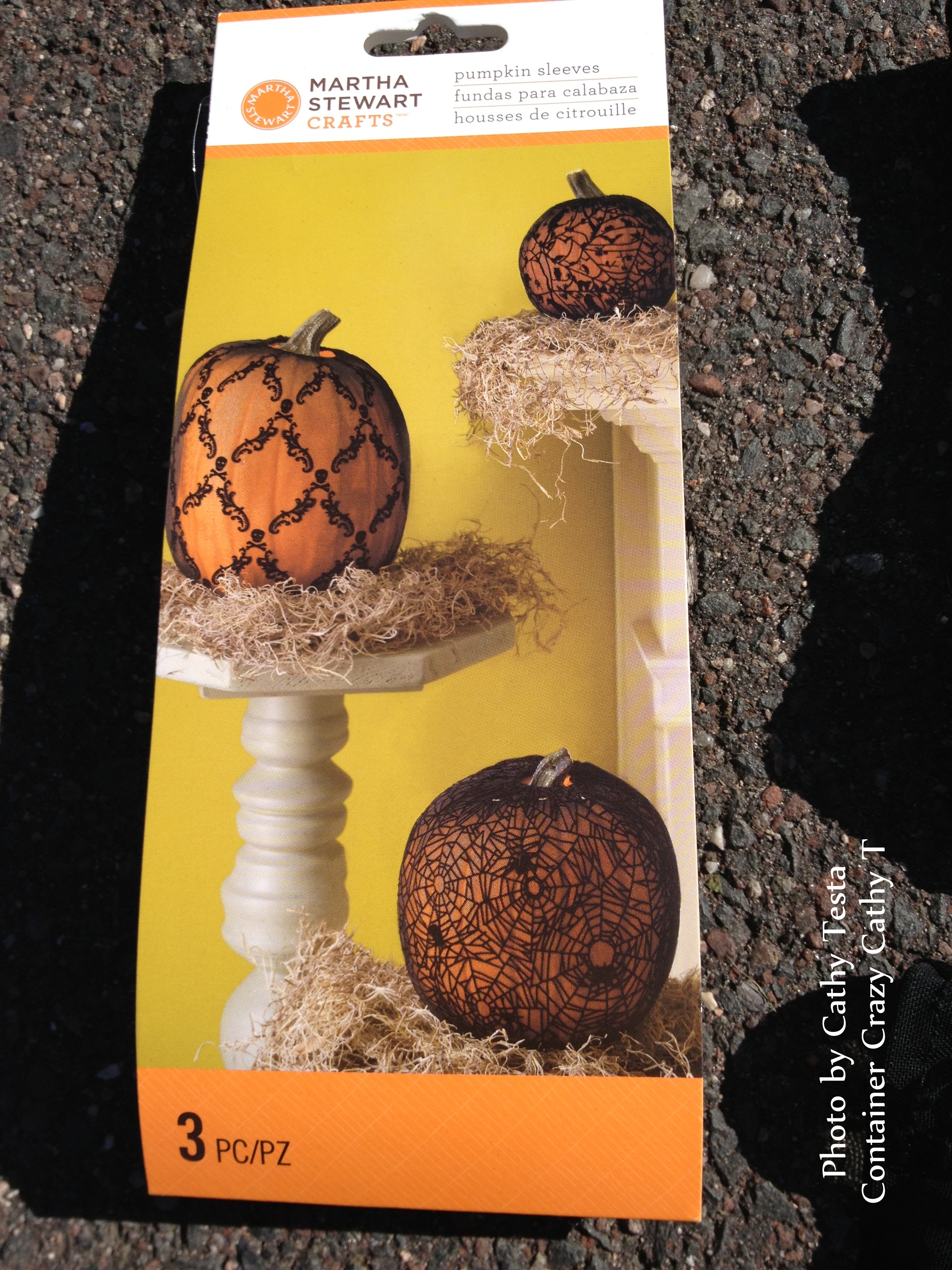
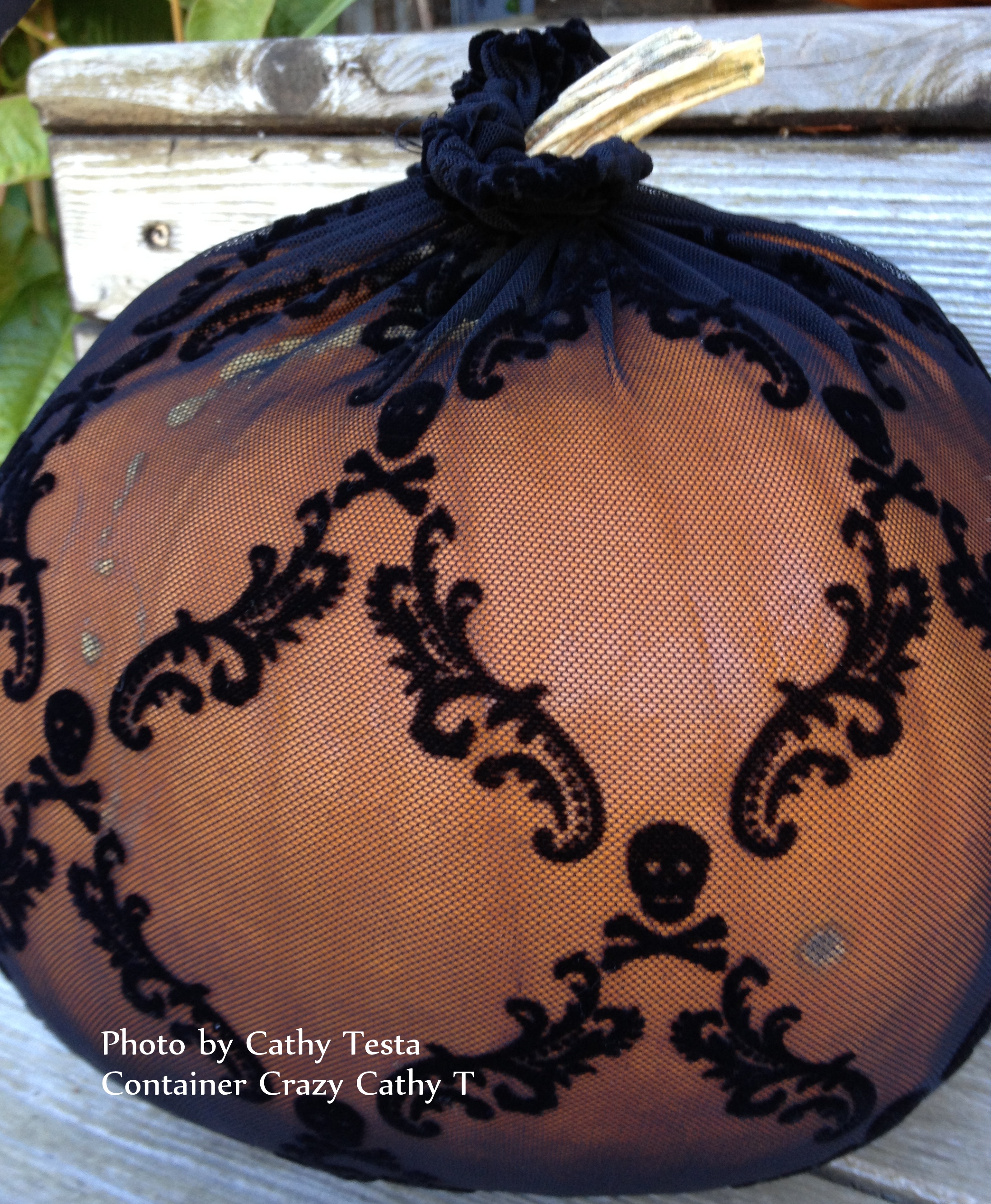
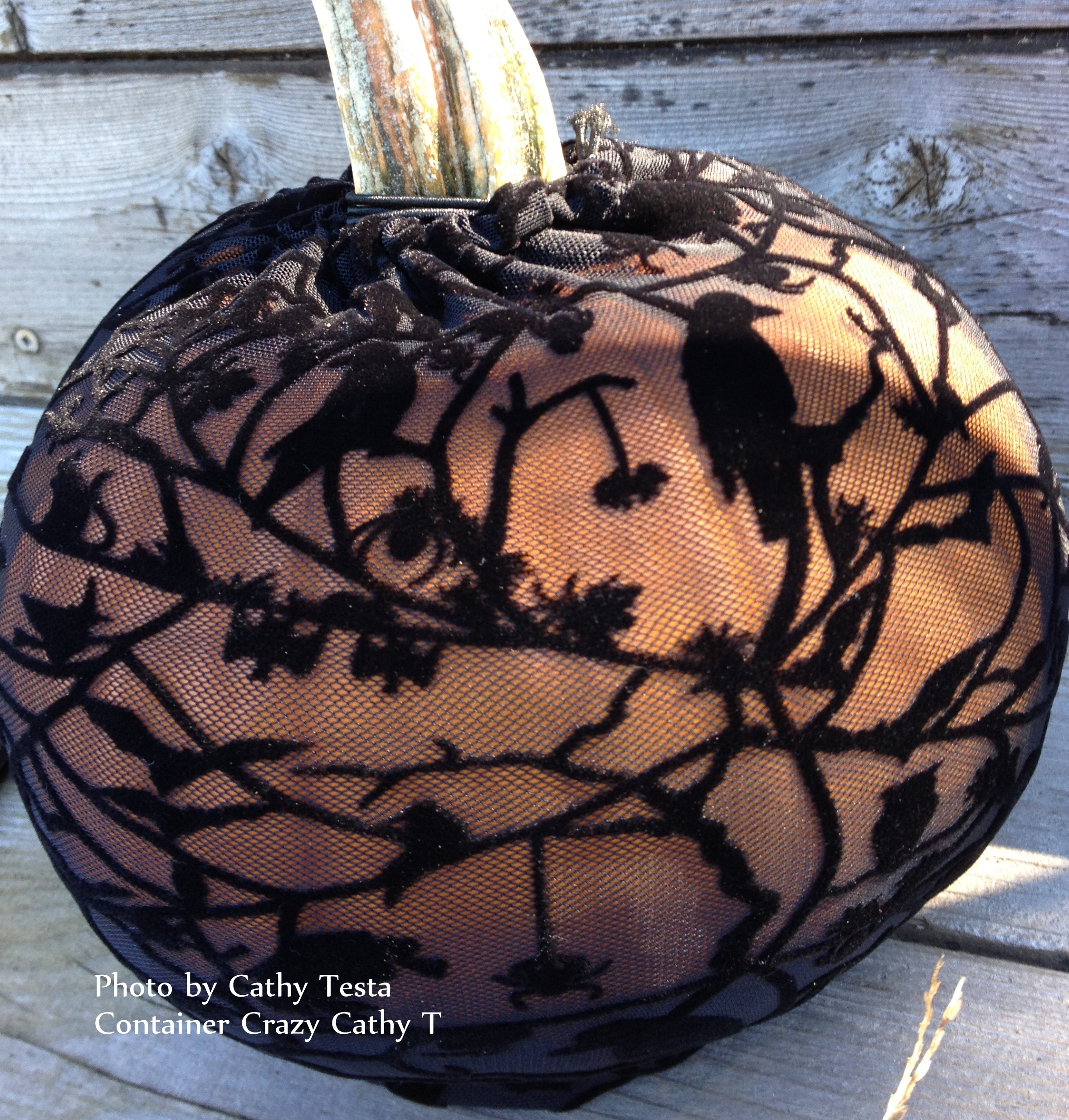
IMG_9276So I decided to go with the easy packaged Martha Stewart find called “pumpkin sleeves” discovered at a local Michaels craft store.  When I tried looking up instructions, because there really wasn’t any on the package, I could not locate this item on the Martha Stewart website.

IMG_9275

IMG_9277

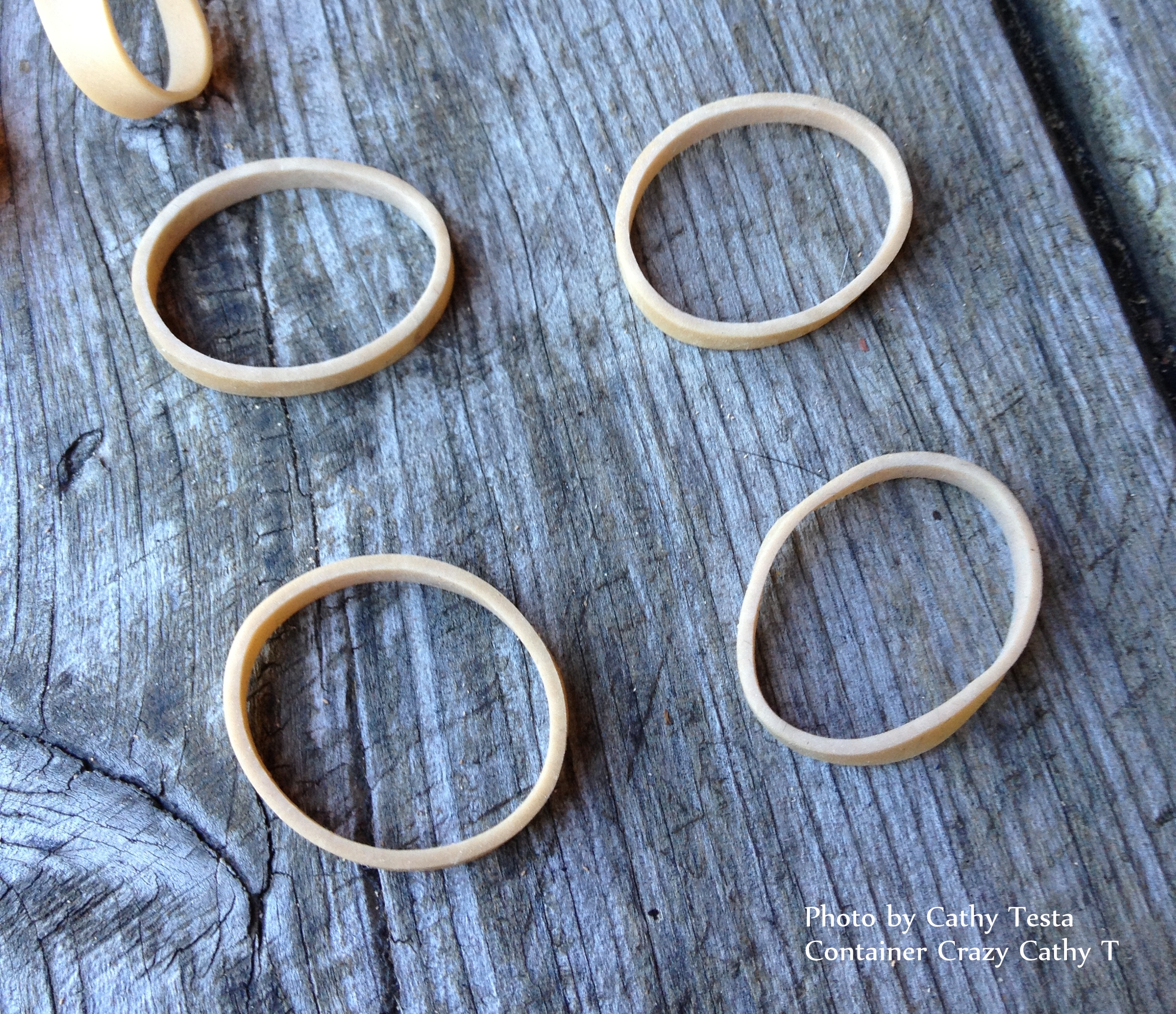
Not a bother – because it was very easy.  Just slip it over and secure the ends.  At first I used small rubber bands to gather the ends on the bottom and top, but later discovered a draw string for the top end of the sleeve.  However, I still found the rubber band trick to secure it tightly worked better.

IMG_9278

IMG_9288

IMG_9293

IMG_9292

IMG_9291

As I went to pimp my last pumpkin, I realized I didn’t have enough sleeves (only 3 per package), so I went to my drawer, found a pair of plain black nylon stockings, cut a portion off the foot end, and pulled it over. It is not as pretty because there isn’t a pattern on it, but I’m sure I could use a Sharpie permanent marker to create some images on it if I wanted to later.

IMG_9290

IMG_9300My cat, Mini, came by to investigate my project – like most of my curious cats do when I’m outside dressing up areas for the season.

IMG_9305I also picked up some bling-bling from Michaels by Recollections.  It is rhinestone stickers, probably intended to stick on windows, but I attempted to apply them to my pumpkins and galvanized buckets.

IMG_9304

Because the temperature of the pumpkin will get cold in the evenings and warm during the day, I added some additional clear glue under to help it stay adhered.  We will see if it hangs on for the rest of the month.

IMG_9306

IMG_9308

Both the sleeves and rhinestone stickers are a quick and easy fix to pimping your pumpkins.  And since there is no cutting involved, it will last much longer than a carved pumpkin.  Plus you can reuse the pumpkin sleeves every year.  For rhinestones, you could also investigate your unused jewelry beads, buttons, or small pieces to upcycle them for a look similar to the rhinestones.

IMG_9321

That’s it!  Just a quick bit of inspiration – and right after, I went to my hammock and rested a bit to enjoy the beautiful blue skies of this past weekend.  It was absolutely gorgeous out – and the weatherman said it would be nice and warm all week.

IMG_9316

Enjoy your week.

Written by Cathy Testa

IMG_9244

Two-Tiered Container Garden with Portulaca and Elephant Ears on the Side

2 Comments

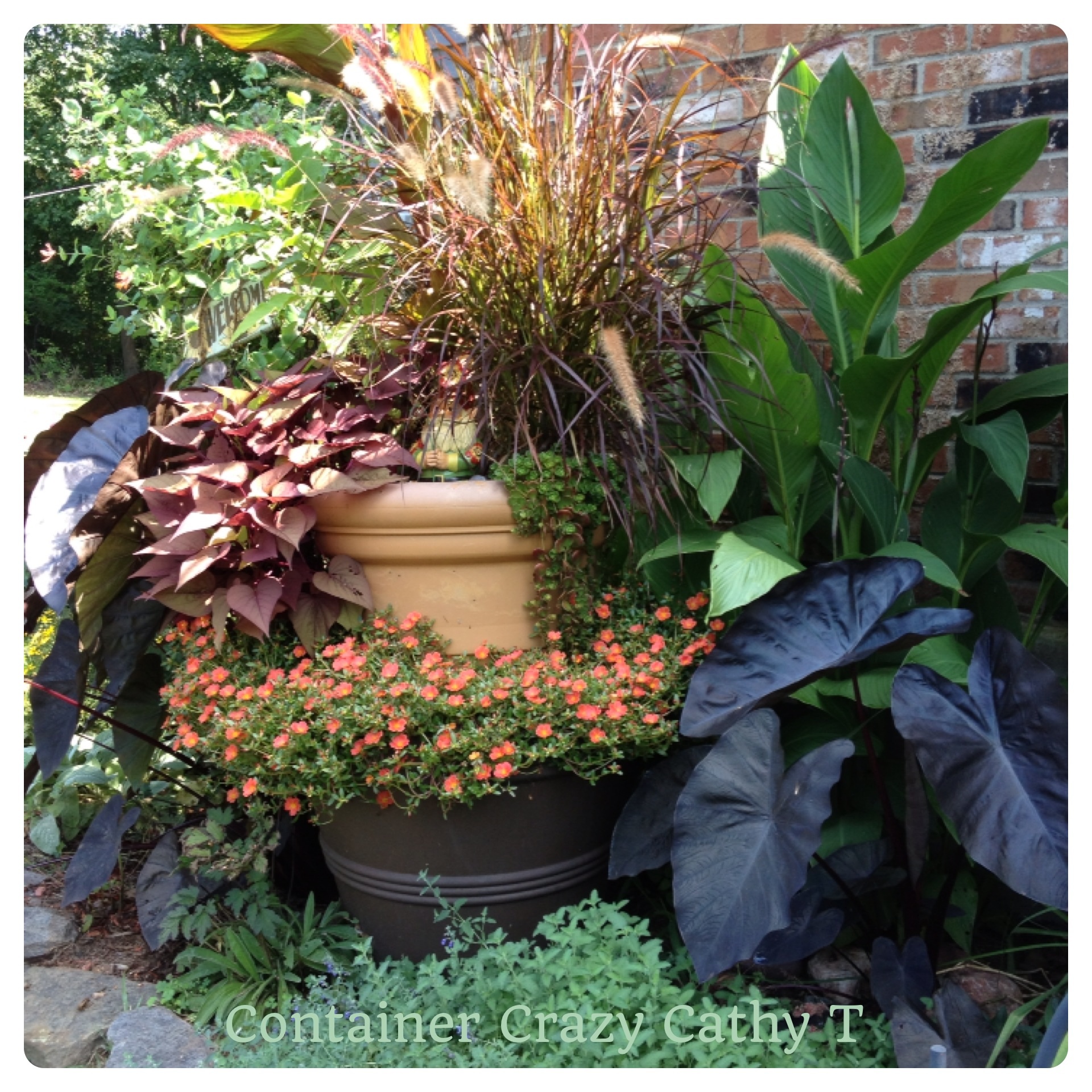
This two-tiered container garden has been impressing me all summer, and received lots of likes on my Facebook page, so I decided to share it here too.

Two Tiered Love

Two Tiered Love

It is two containers stacked, the smaller one sitting on top of the soil of the larger container.  I wasn’t sure what would be planted in the bottom level at first until I spotted some nice looking six packs of Portulaca grandiflora MOJAVE Tangerine Purslane at a local nursery. I could tell the plants were fresh and healthy, so I grabbed two 6 packs and planted them around the base when I got home. They were small sizes and easy to tuck into the soil.

I also knew this annual was a great candidate for the location of the containers, because Portulaca can take hot sun and is drought tolerant. The color of the blooms are a bright to soft orange, and with some Nepeta (catmint) planted in the ground below, the color combo of orange and blue blooms of the Nepeta would be complementary. Portulaca has a spreading habit and grows to 6″ to 8″. It blooms from early summer to frost. Definitely a hard working annual for our CT planting zones.

Orange with yellow centers of Portulaca

Orange with yellow centers of Portulaca

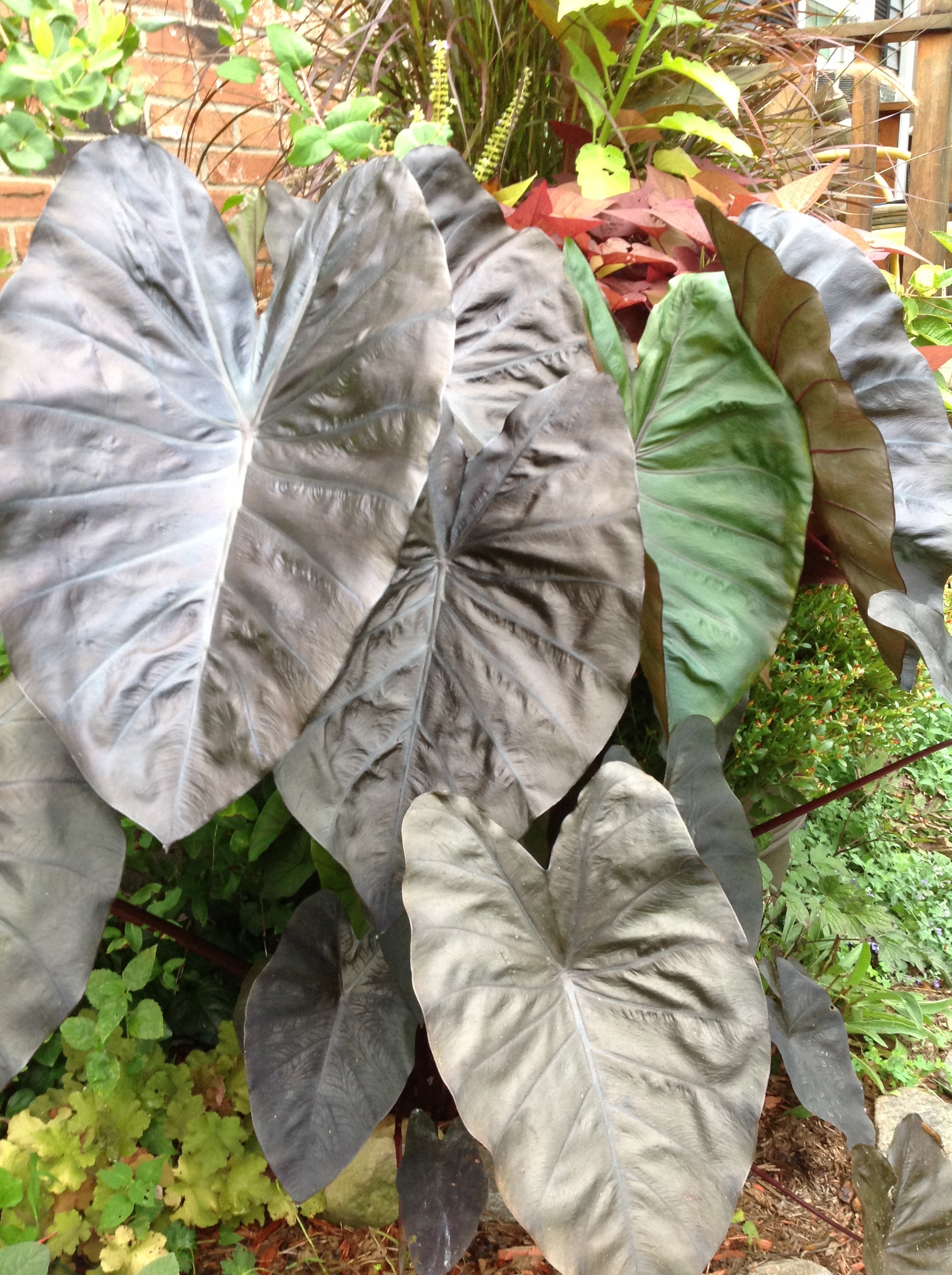
Elephant ears (Colocasia) were planted on each side of the container in the ground.  Using some kept from my overwintered stock, I thought they were Colocasia esculenta ‘Maui Magic’ but the color got so rich and lush, and at the right time of day, the leaves shimmer like a silky black negligee. So I was considering that maybe they were ‘Black Diamond’ but now I’m just not sure because ‘Black Diamond’ has pointy tips to their leaves.  Its possible the color intensified due to the location, which faces west.  I decided this was the case as I watched it grow larger all season and is still showy in fall.

Because it is against my house, it has nice shade in the morning, and the sun gradually warms up the area mid day, but by mid afternoon, it gets hot sun. As long as you water your elephant ears regularly, they can take the sun too. It turned out the rich dark color of the elephant ears look amazing against and near the showy orange of the Portulaca. It made the Portulaca stand out more with the contrast in color plus the leaf textures of both, the Portulaca being fine and Colocasia being coarse, worked.

Colocasia elephant ears, tropical

Colocasia elephant ears, tropical

The only downfall of the Portulaca is the blooms roll up tight for the evening. So, around 3 pm, the bloom show closes for the day.  The disappointment was my guests missed out on how incredibly beautiful they are if they visited later in the day. I had forgotten these flowers do this. In fact, a friend told me recently she has some at her house, and her husband asked her what happened to their plant when he came home one evening to see their’s rolled up tight too.

Closed by mid afternoon

Closed by mid afternoon

The top part of the two-tiered container let me down a tad. I expected the Brugmansia (Angel Trumpet) to grow taller along with the Canna next to it. However, the Pennisetum setaceum ‘Rubrum filled in nicely. Known as Fountain Grass, it is always a great filler or thriller in a container garden.  It is an annual in our region. But the coloring of red blades can’t be beat, and worth replanting every year in containers. It reaches 2-3 feet tall and its fuzzy plumes are showy into the fall season.  It looks great with fall decor for some reason, guess because it has movement and has a nice rich color against the yellows, reds, and oranges of the autumn season.

Planted to the right of the pot were also some Canna plants with red blooms. Sometimes when I was admiring the Portulaca blooms, a buzz from a hummingbird would go by my ears as it visited the Canna. I call the Cannas, my ‘Rene Cannas,’ because my friend, Rene, gave the rhizomes to me last season.

My Rene Cannas with red blooms

My Rene Cannas with red blooms

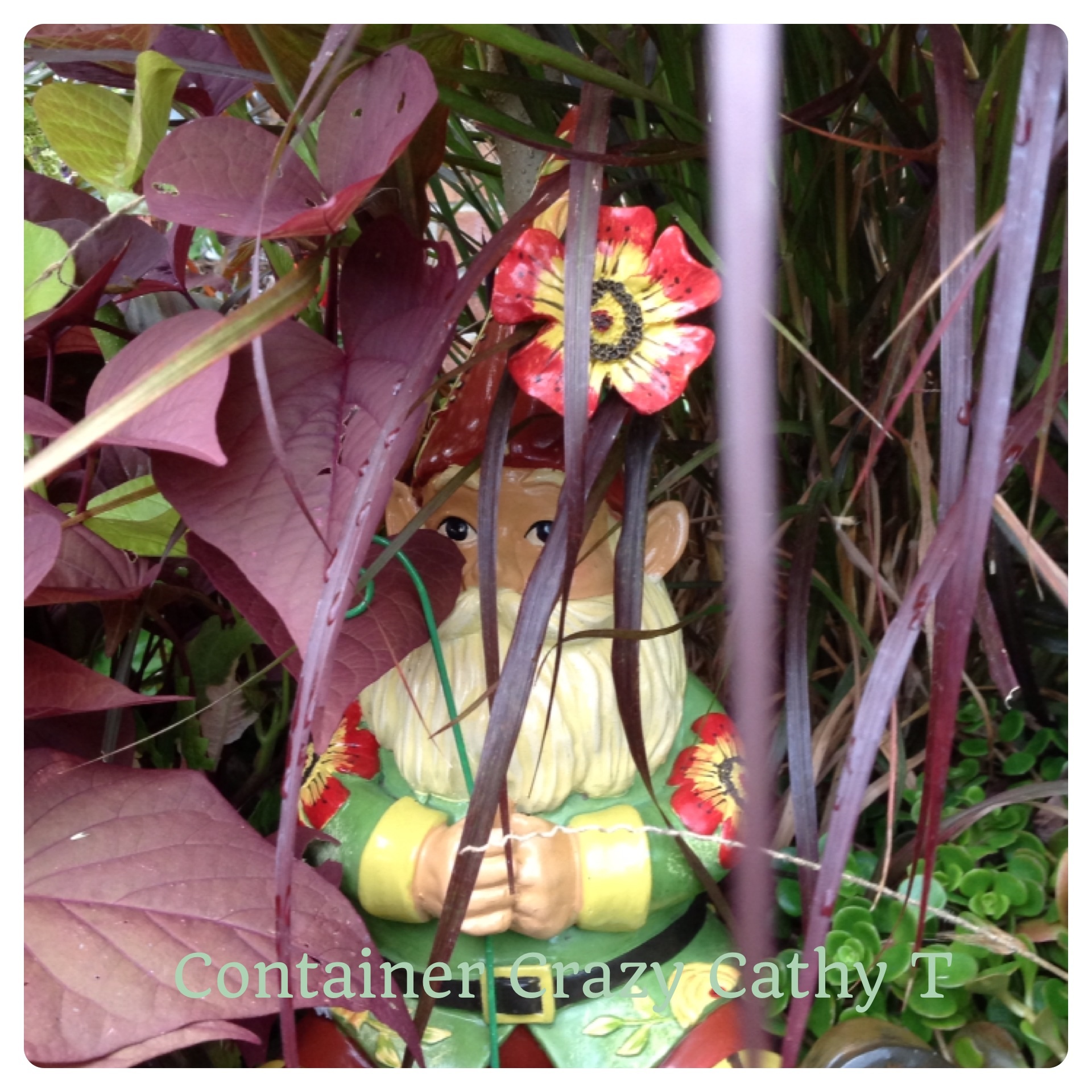
For the spiller, the reliable Ipomoea batatas (sweet potato) vine was planted on the left side.  This one is Sweet Georgia Heart Red.  And on the right side is Sedum makinoi, which is new to me. It has a nice shape to its leaves and dark coloring so it fit in with the rest. Lastly, a little decorative Gnome was tucked in for fun.

Protecting my containers

Protecting my containers

The fact my containers are old and a bit worn did not matter because the plants created a lush and full look hiding the scratches on the pots. As one Facebook friend posted, it is “Beautiful, rich, luscious, heavenly.”  I, of course, agree!

Written by Cathy Testa

One more photo:

On second tiere

PORTULACA LOVE

My Monster Cement Planter

9 Comments

Jimmy, my brother, installs stamped concrete walkways, so I finally asked him to do one outside my basement door. Then I told him how I’d like to have him build me a huge planter box below the deck. I gabbed about how cement is so popular these days, even running inside to show him photos from a Martha Stewart magazine issue showing cement outdoor tables and more.  Anyhow, he knows I get nutty about these dreams of mine, but he said we could do it.  He agreed on my dimensions, and the cement planter resulted in a 5 x 10 size.

After it was completed, which was last fall, I filled it with the soil from my disassembled container gardens from that season. It was perfect because the cement planter is below my deck, so it was easy to dump the soil into it from above. Plus, I was recycling my soil.  Then I put a big plywood board over it for the winter. It ended up serving as a useful table during my winter Kissing Ball and Evergreen Creations class.

My Monster Cement Planter

My Monster Cement Planter

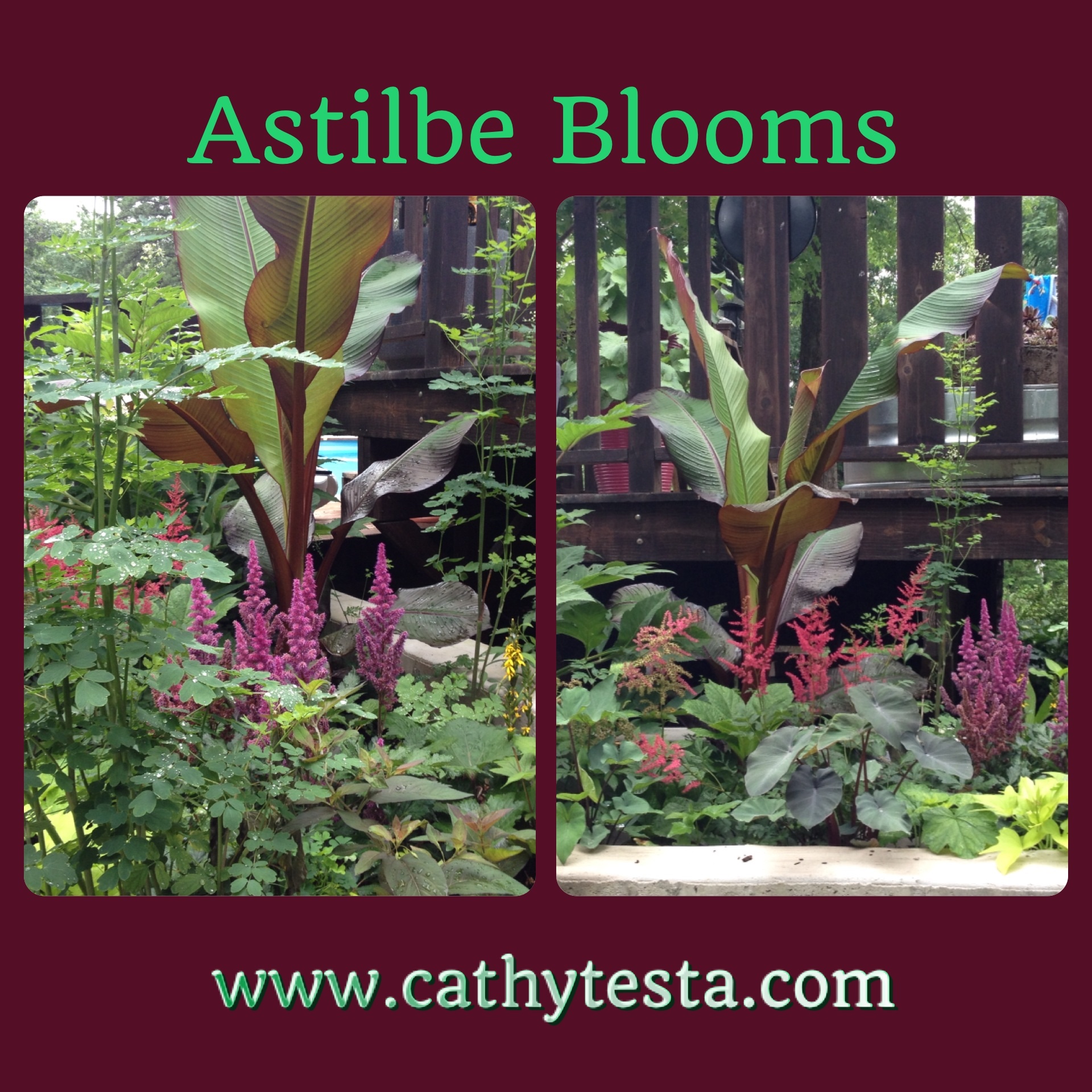
Alas, it came time to plant it this year. First, of course, was my red banana plant, as the thriller. I imagined the leaves would pop up to the deck railing levels by summer.  As of today, the leaves are 52″ long.  Yup, I measured it.  In warmer zones, the Ensete red banana can reach 12′ tall.  In prior years, this tropical plant, Ensete ventricosum ‘Maurelii’ has grown tall in my patio pots and containers, reaching probably 5-6 feet tall, but never has it grown as wide and large as it has in my cement planter.

The thriller is Ensete red banana with fillers of elephant ears

The thriller is Ensete red banana with fillers of elephant ears

The red banana plants features are thrilling to me because its large reddish leaves grow fast from a thick trunk base. The leaves come up like rolled cigars which is appealing. Then they quickly unroll to show a big tropical look. This tropical plant is hardy to zones 9-10 so I had stored the base carefully last fall to reuse as an annual here in CT.

Watering the red banana and its companion plants was no problem either. I just showered them from above when I walked around with my light weight garden hose to do the pots on my deck.  The only trouble experienced was the bothersome Japanese beetles earlier in the summer munching on the leaves. Cutting off the unsightly leaves was the solution for more would arise.

Astilbe perennial blooms

Astilbe perennial blooms

In the beginning of the season, Astilbe perennials bloomed red and pinks. They put on a bloom show for a while. And they will return every year. I also added several types of elephant ears from my stored specimens, which included the Colocasia esculenta ‘Maui Magic’ and Colocasia esculenta ‘Tea Cup.’

Tucked around were elephant ears

Tucked around were elephant ears

‘Maui Magic’ elephant ears are a fav. Its purplish stems and large leaves in a clump are spectacular. ‘Tea Cup’ elephant ears have cupped leaves. Water droplets sit in the center and bobble around as a breeze comes by, or my cat. My cats like to lick the droplets sometimes, and once I found one cat sleeping under the plants in this planter. They were reaping the benefits of cool shade from the large red banana plant’s leaves and the elephant ears, plus the monster cement planter is in a quiet location where they can rest or sleep.

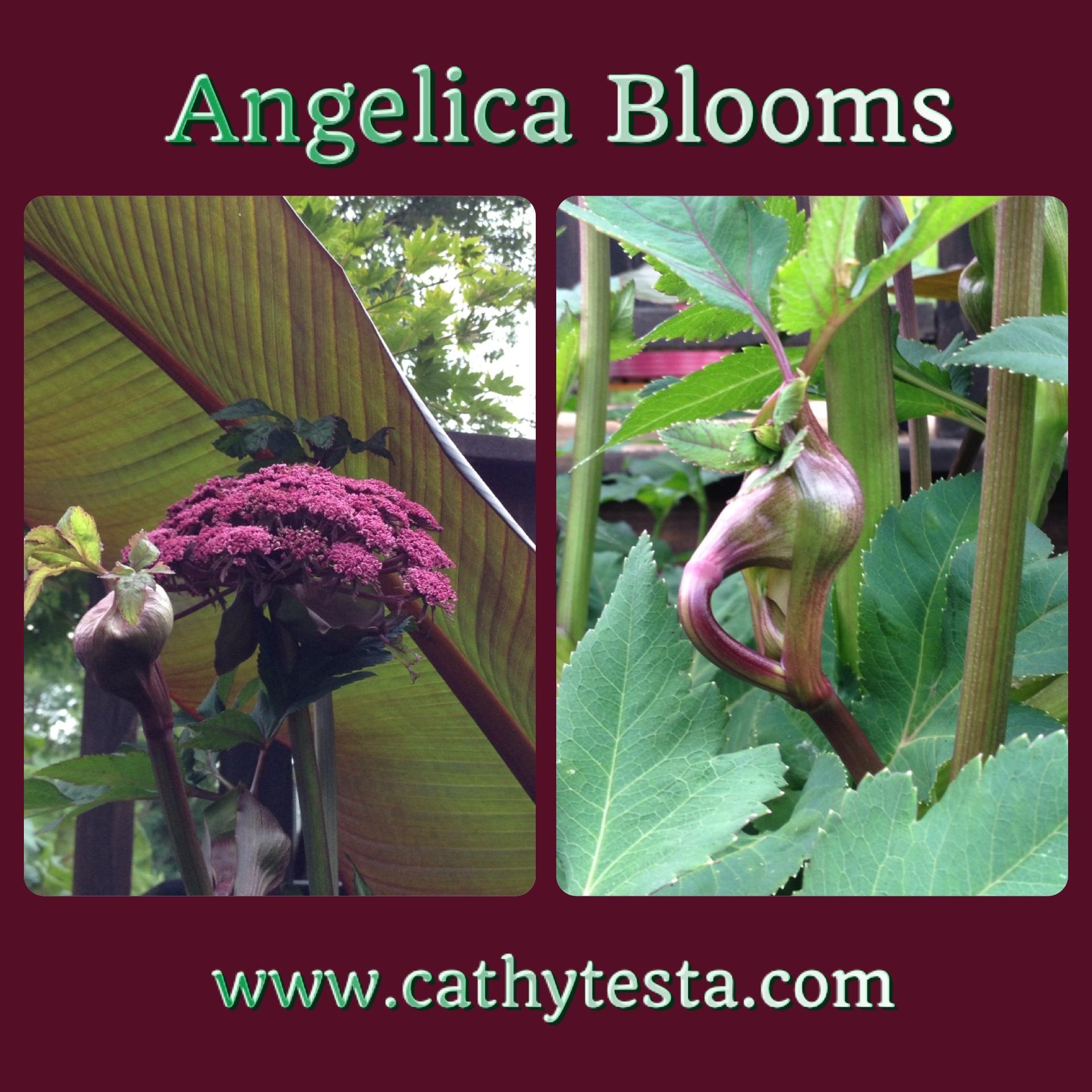
A biennial plant starts with pods

A biennial plant starts with pods

Another plant added was Angelica, selected because it has unusual looking flowers. It is a biennial, and also has large foliage resembling giant parsley. The blooms, shaped like pods, first arrived mid summer and are open now. Bees are really enjoying them. I was excited about this plant too because it grows very tall, up to 5-8 feet.  The deep plum flowers are a nice color combo next to the reddish banana leaves.

Planter filled lushly

Planter filled lushly

Next to bloom will be the pink Turtlehead perennial. Latin name is Chelone lyonii. This will bloom any day now, and more bees will follow. I had this perennial in a pot last year, and loved it. Its a late summer bloomer, and will continue until early fall, plus it also gets large.  Its on the left corner with dark green leaves, dense, and packed in nicely. It likes consistently moist soils, and so does the Angelica and tropicals in this monster cement planter.

There are other beauties in the planter, such as Rodgersia pinnata and Thalictrum aquilegifolium (Columbine Meadow Rue).  The Meadow Rue is the only perennial relocated from a former garden mowed down. It gets very tall, 2-3 feet, and has wispy pale tiny flowers in late spring to early summer. It has more of a woodland feel but the height factor made it a companion. And of course, no container garden would be complete without a spiller, sweet potatoe vine on the corner.

Red banana leaves arise rolled up

Red banana leaves arise rolled up

Planting this monster cement planter has been easy and a joy. No bending to the ground, or weeding. They can not get in practically, not just because the plantings are full, but the height of the planter helps to prevent them from creeping in. I’d rather plant hundreds of these types of large cement planters over gardens in the ground any day. Now if I could just convince my brother to build me more!

written by Cathy Testa

The thriller is Ensete red banana with fillers of elephant ears

The thriller is Ensete red banana with fillers of elephant ears

Container Gardens in the City

3 Comments

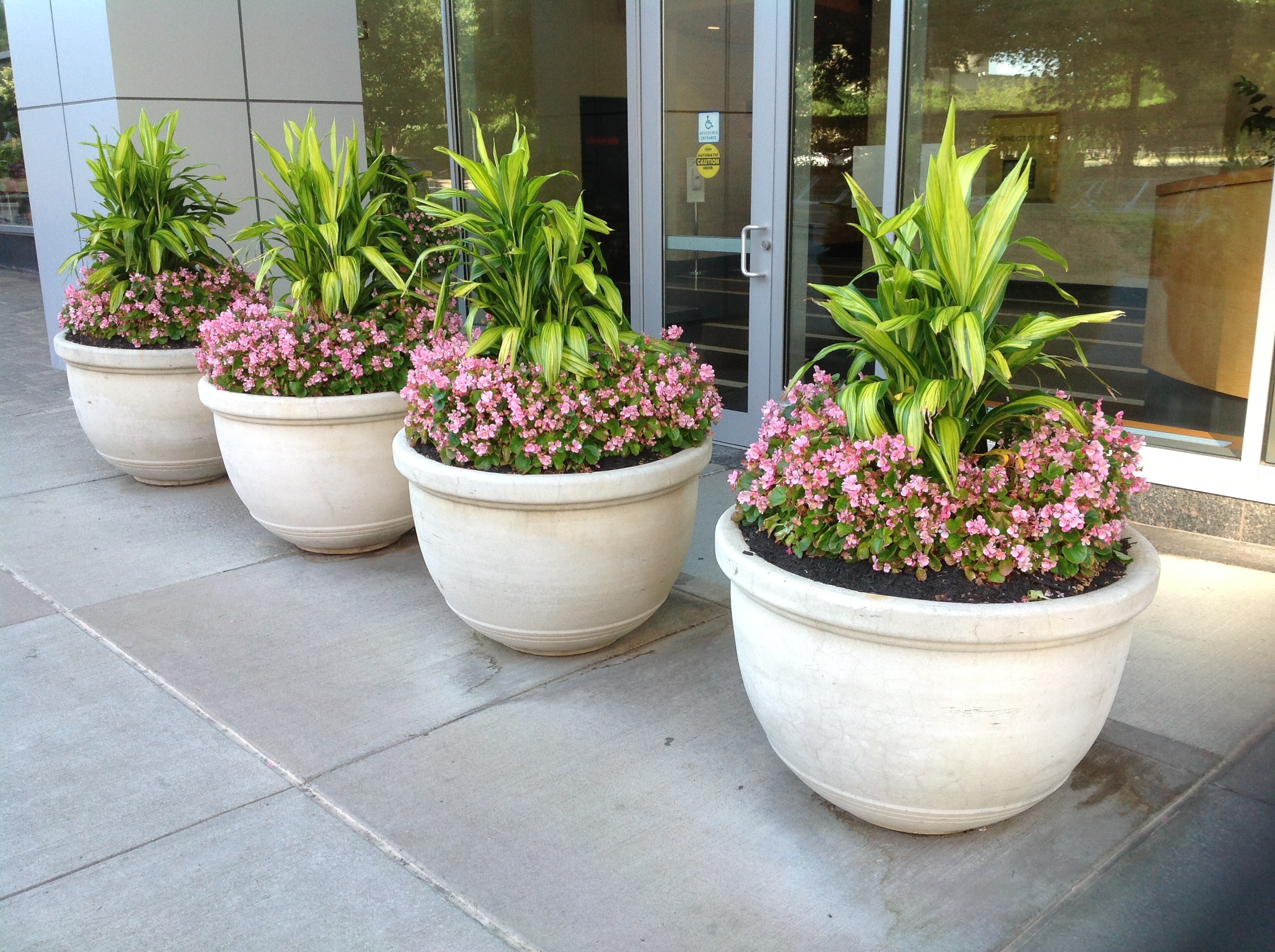
A very good place to see large, bold, and lush container gardens, window boxes, and even green roofs — providing you can get high enough– is the city. Makes perfect sense because there is very little, to no soil or ground space in front or behind private homes, and if there’s a secret garden in a courtyard, it may not be visible to the person walking by.

So as I walked the streets of Boston, Massachusetts recently, I took photos of some beautiful planters spotted in various locations such as Beacon Hill and near the Prudential building.  Whether maintained by a lucky city dweller, or business owner, all that were seen on my journeys were very healthy and impressive.

Maybe with no space for gardens, owners take more time to water the containers filled with lush plants because they don’t have a garden to tend. Whatever the reason, it is a special treat to the city visitor taking notice, and perhaps the only method to add color, foliage, and flowers to the tight spaces in the city.

Beacon Hill Window Boxes

Beacon Hill Window Boxes

No visit is complete without walking the historic Beacon Hill area. Lots of gorgeous window boxes

Prudential building

Prudential building

These by the Prudential were huge!  You can see tropicals are popular in the city.

Beacon Hill Window Box

Beacon Hill Window Box

XCambridge by a restaurant

Cambridge by a restaurant
East Cambridge outside a business building

East Cambridge outside a business building

Near Kendall Square

Near Kendall Square

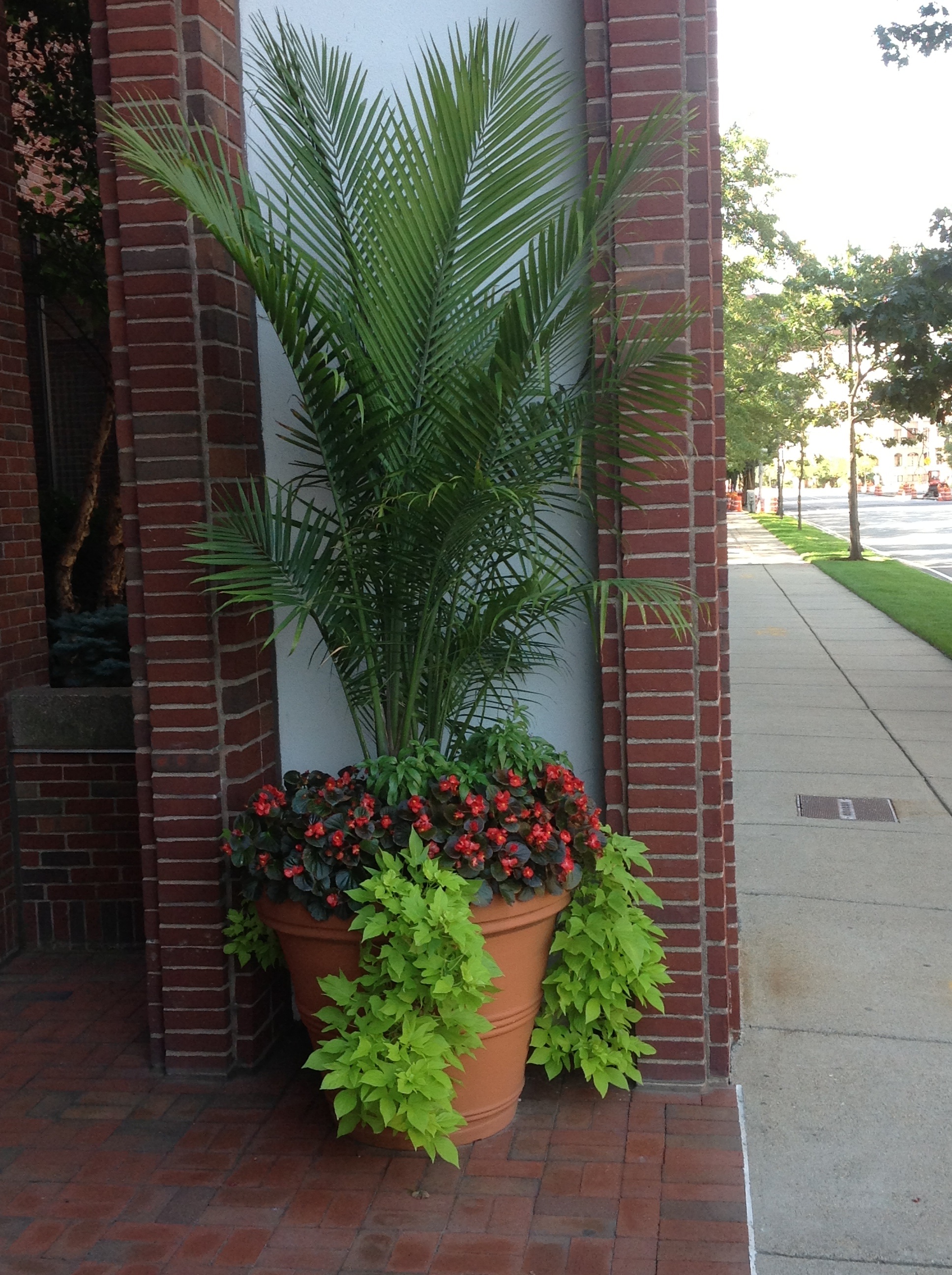
Canna plants with Mandevillas. And other tropicals. My style. Large and lush.

East Cambridge

East Cambridge

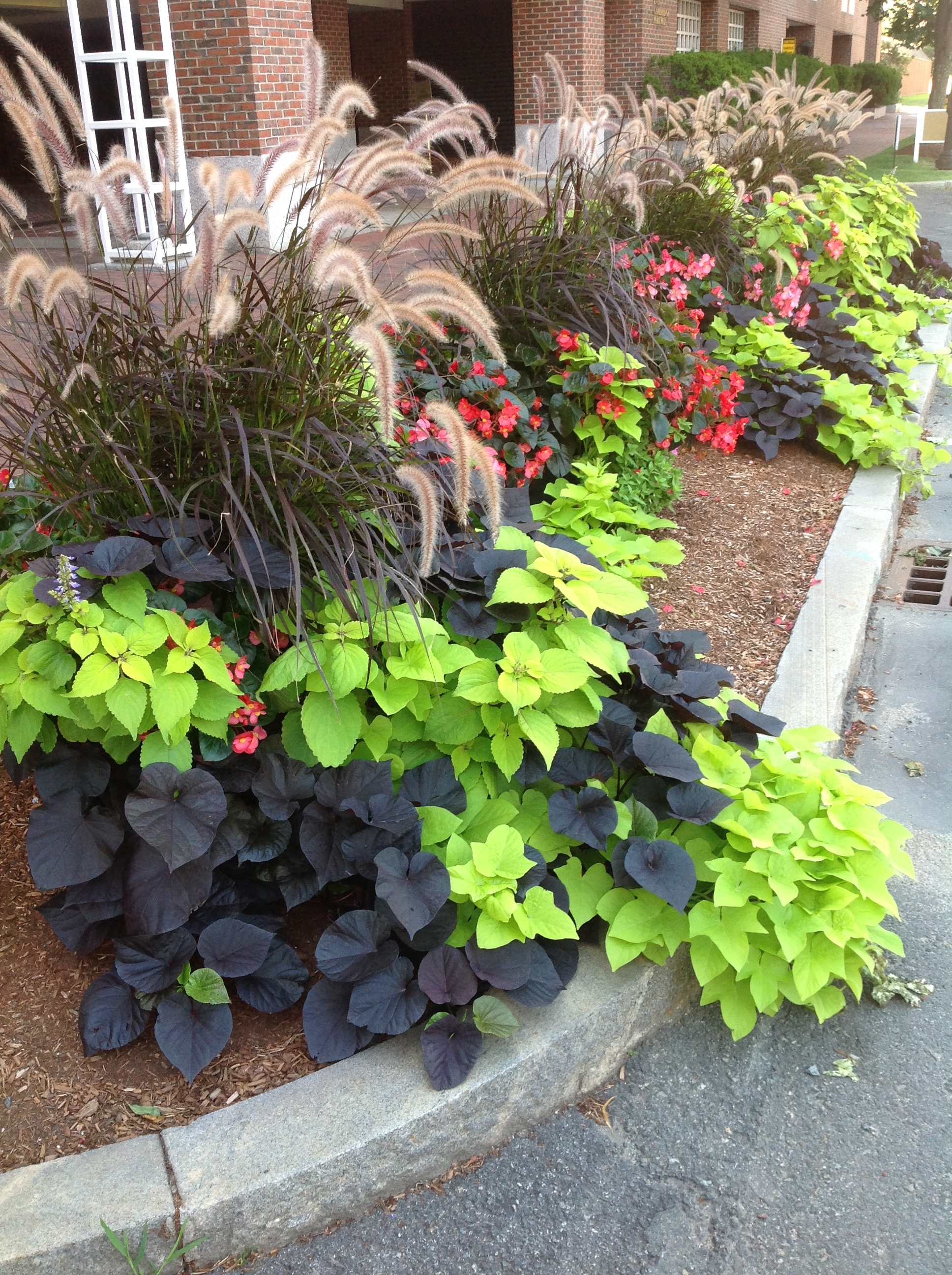
Pennisetum grasses with sweet potato vines full and trailing. Just abundant for the street side.

Close up

Close up

Begonias can take the heat well as seen here

Near Kendall Square

Near Kendall Square

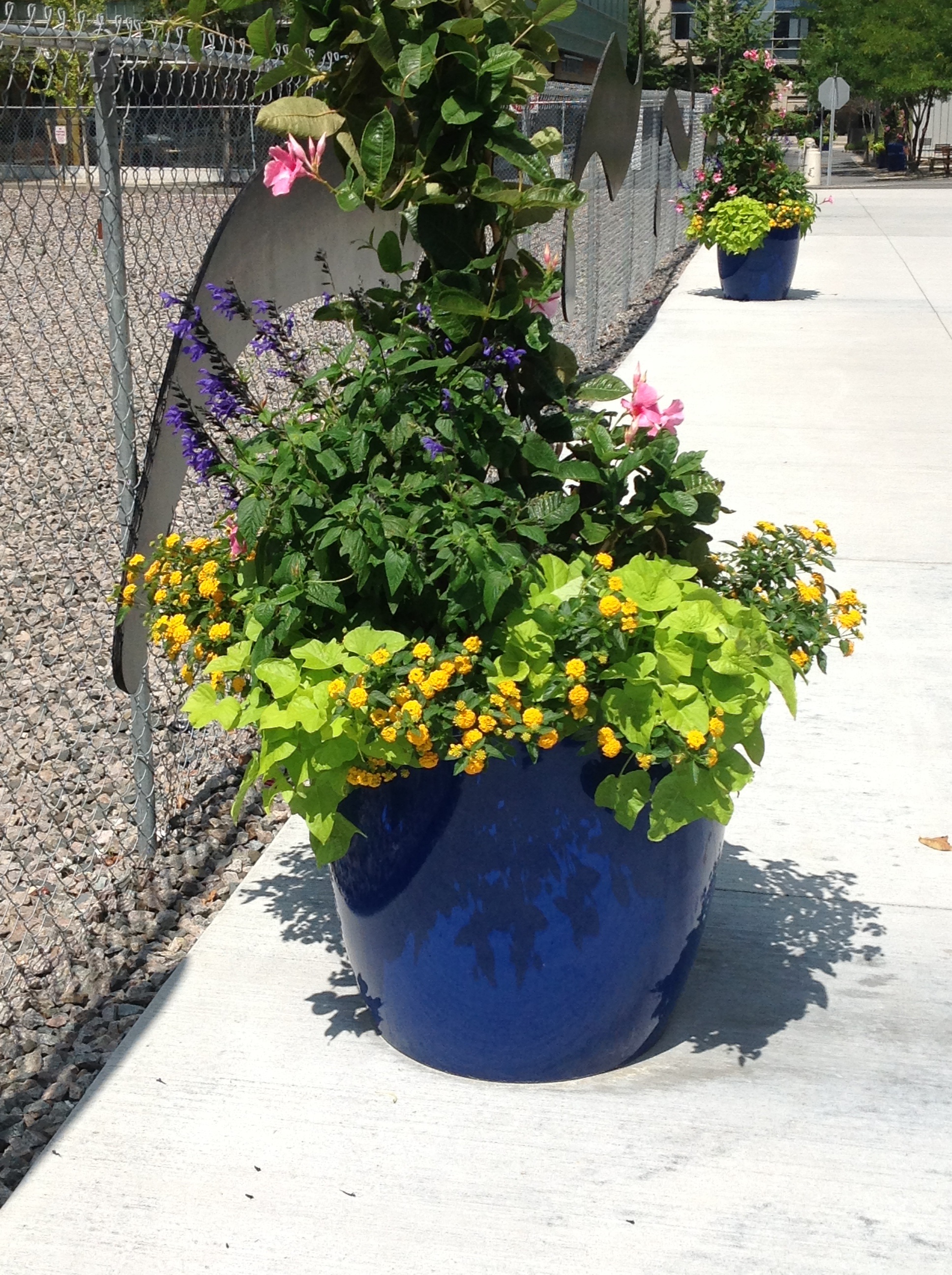
Huge blue pots add vivid punch to the combo of plants here. Not just one pot, but many along this walkway area.

By bz

By bz

Simple but again, healthy and adding movement with the tall thriller, and spiller sweet potatoe vine.

These were just the few i captured. I would write more but working on my Ipad to post is a lttle tricky. Will update with plant names in a later revision. For now, enjoy and let these be some inspiration for the large and showy containers in your environment.

Written by Cathy Testa

Mini Embellishments offer Maximum Inspirations

2 Comments

The first thing I did this morning, even before turning on my coffee maker, was take a photo of my mini creation from last night’s workshop held at my home.  It is themed after the bird houses in my own backyard and kept simple, yet it made me smile and feel inspired. I think I’ll keep it right here by the chair I like to have my morning coffee in, and during the dreary days of winter, it will be a little reminder of warmer sunny days returning when the birds start visiting our birdhouses to build their nests again.

My Birdhouse Themed Mini Garden

My Birdhouse Themed Mini Garden

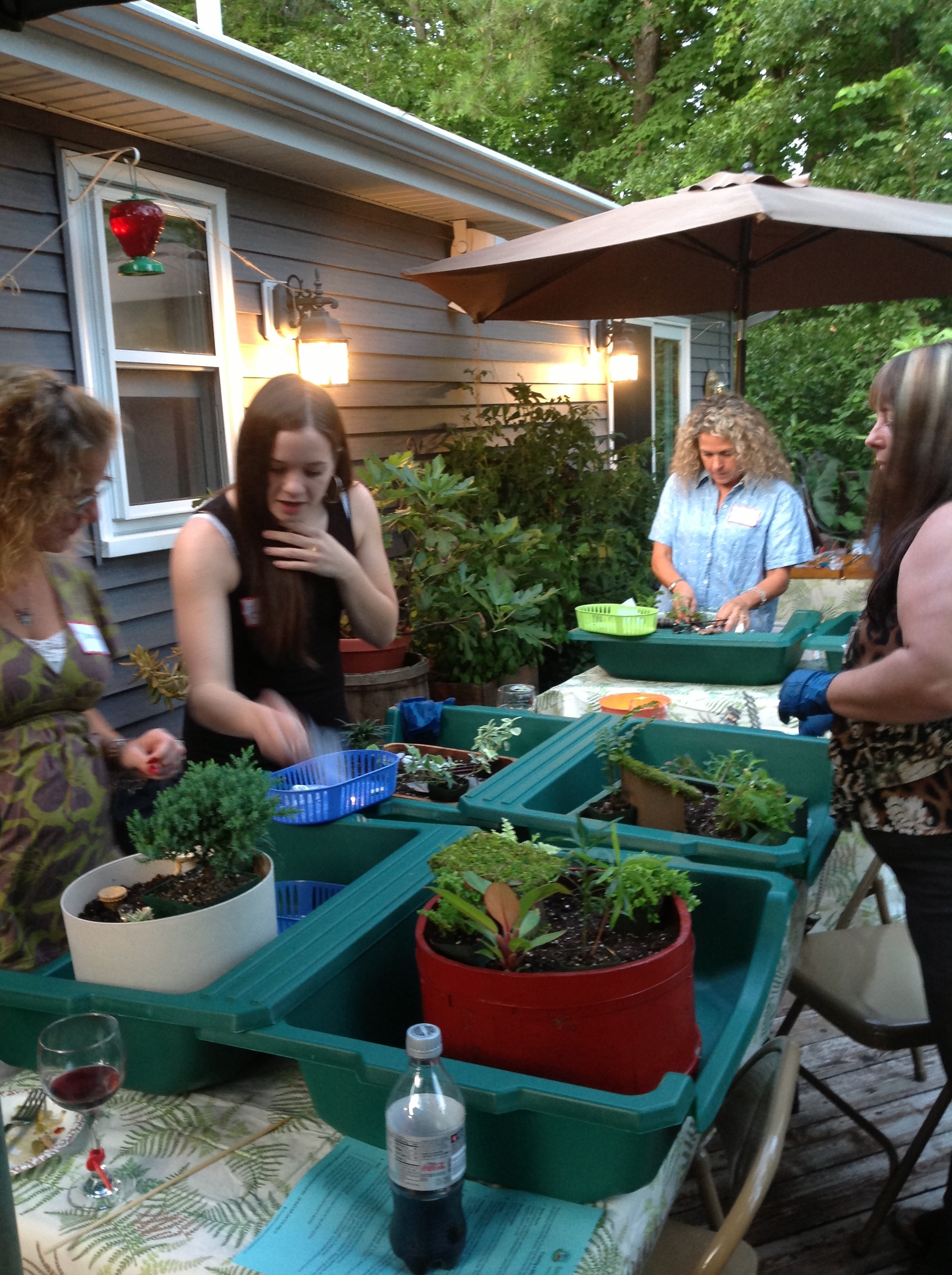
Themes were an important feature discussed by my very special guest instructor, Rhonda Niles, of Gardening Inspirations. She went over the how to’s and the why to’s as she gave a very professional workshop for the attendees.  Many of my good friends, clients, and new faces from local garden clubs were part of the group. Having a mix of people made observation interesting, as each person pondered their theme choice.

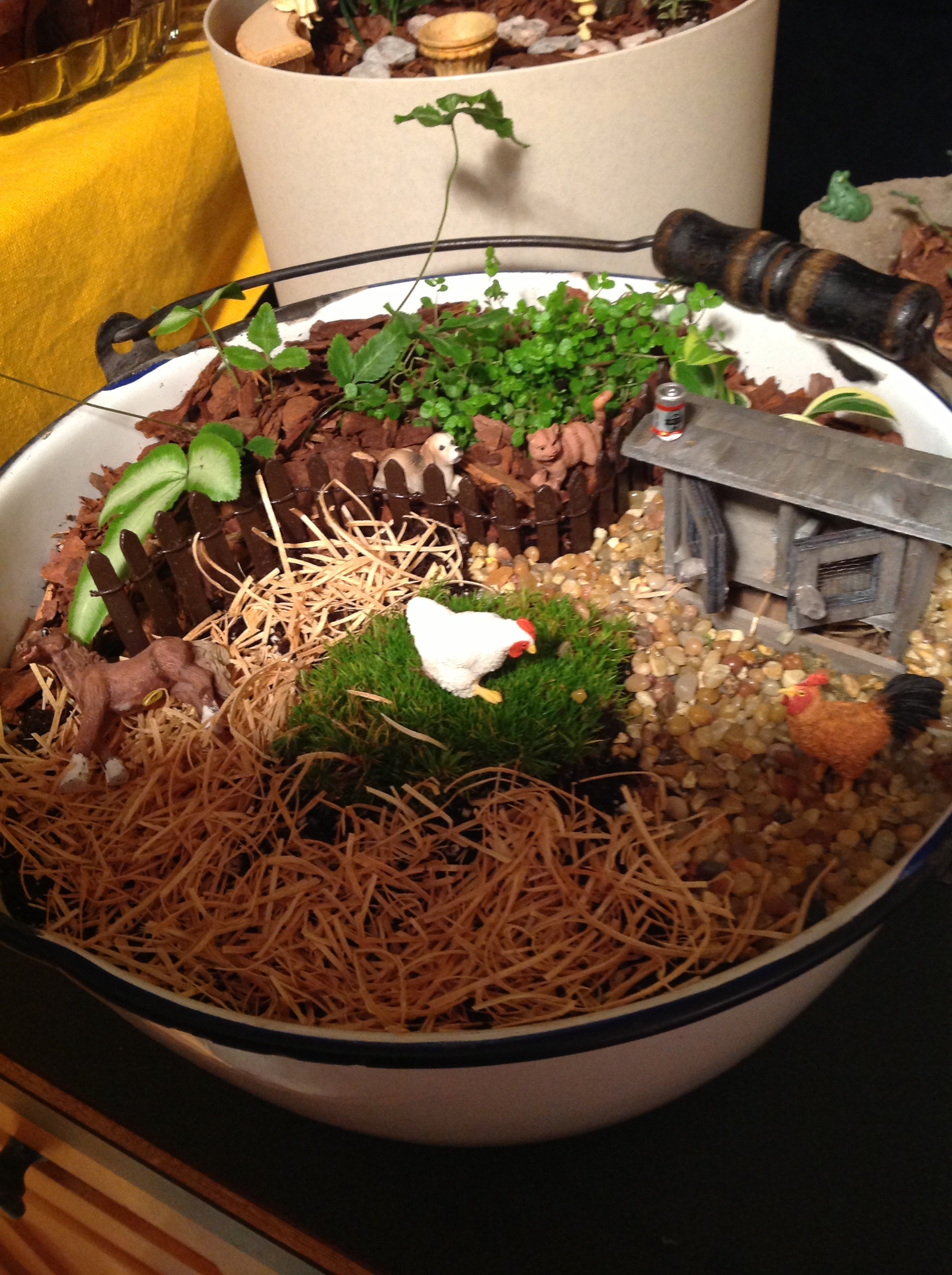
Barn yard themed by an attendee

Barn yard themed by an attendee

One attendee, Dianne, themed her miniature garden on a farm and farm animals. She has a quaint farm herself, and is an avid horse lover.  The charming bowl she brought with a handle was the perfect choice.  She asked her partner to drill holes in it, for she knows the rules about drainage, and in his honor, she included a mini beer can in her scene. Can you see it?

Another themed her creation on a dog park, and there were fantasy themes such as fairy woodland hide aways. One of the fairy gardens scenes was by my cousin, another Diane in the group. She thought about including a wine table but we agreed the vino didn’t seem right in this fairy world. But I just loved how she put a fairy on top of the little house, and the other one on a patch of soft grass.

Fairy land Scene

Fairy land Scene

Each came out very unique and special. I particularly enjoyed themes based on a special place. It is fun to recreate a place in a pot.  Kim, another attendee, created a secret looking scene too.  It came complete with the gazing ball and white bunnies. And her red wooden pot choice was perfect too.

Woods n Treasures by Kim

Woods n Treasures by Kim

We enjoyed some girl time, refreshments, and one of the most pleasant cool evenings of August. Everyone was enjoying creating so much, it started to get dark and we worked by candlelight.  Many attendees had balanced looks to their designs – perhaps a method to practice landscape designs!

I am blessed to have the opportunity to offer these types of classes, and appreciate Rhonda’s efforts to setup, instruct, and provide explanations about the dwarf plants and miniature embellishments. With good care, everyone’s take home Miniature Garden will last a very long time.

Thank you to Rhonda and our guests for a very enjoyable evening!  And…Have a good weekend.

Cathy Testa

workshop

workshop

Beautiful Houseplants can be found at Moscarillo’s

Leave a comment

Entrance

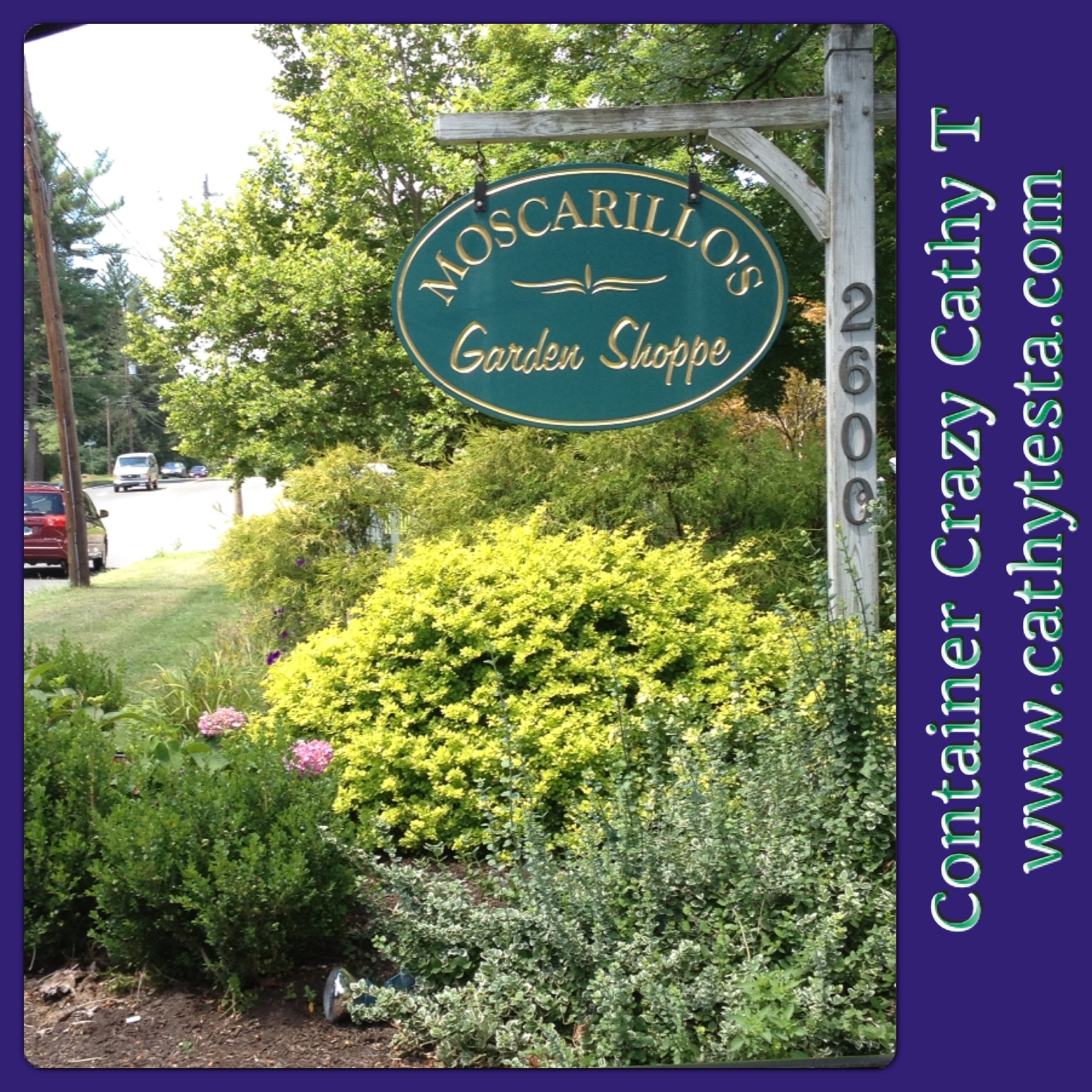
Sometimes when I enter a garden center, I can spot their strong suit. In the case of Moscarillo’s of West Hartford, CT, it was definitely their beautiful selection of healthy house plants. This is not to imply they don’t have much more to offer, because they do, but I was particularly impressed with their house plants, dish gardens, and orchids.

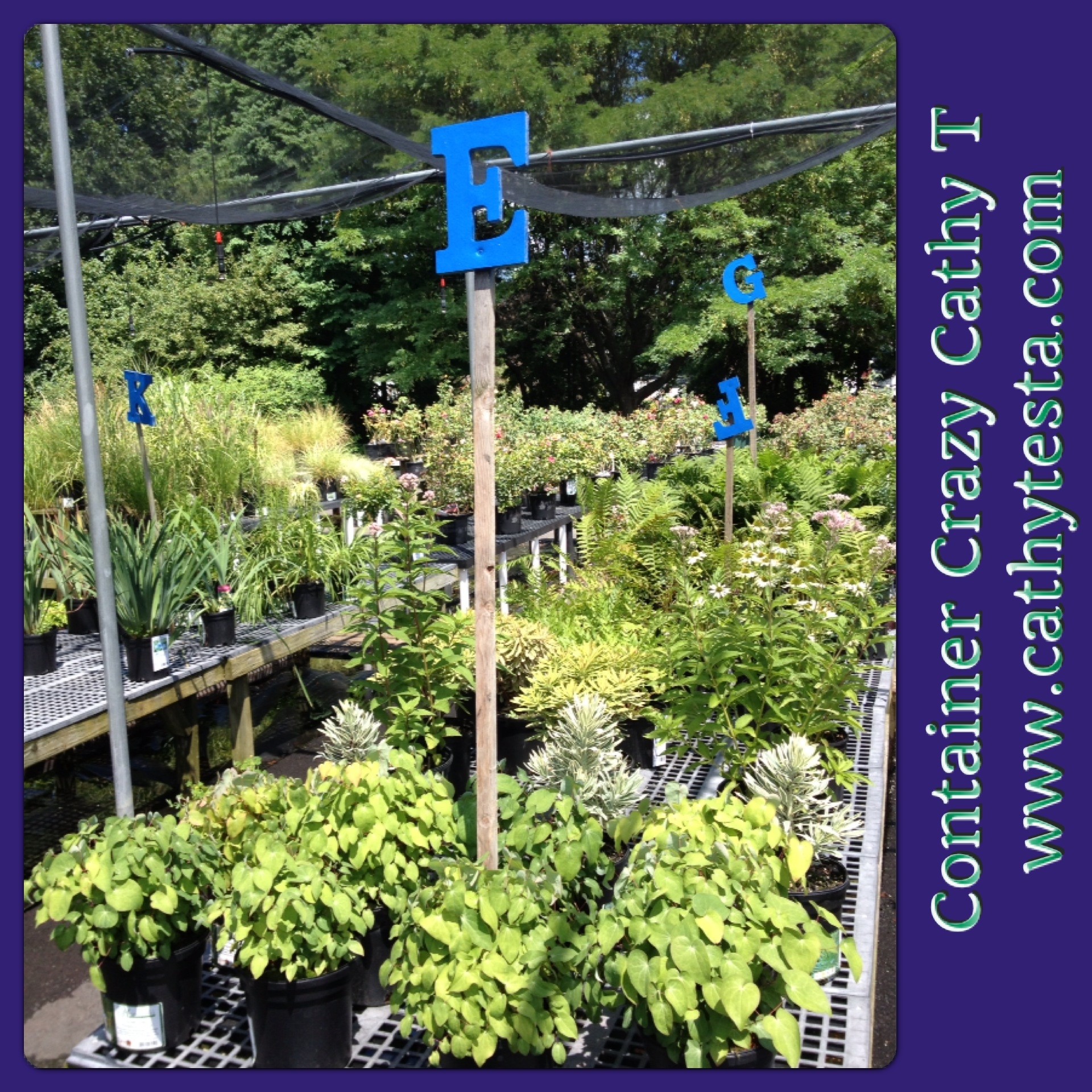
But before going to their greenhouse filled with them, I ventured into their perennial section. The outdoor tables were labeled with individual wooden letters by alpha order to help you find a plant. Need an Epimedium for example, go to the big E on a stake. Clever and unique, I thought. It helps the customer find their way.Soil

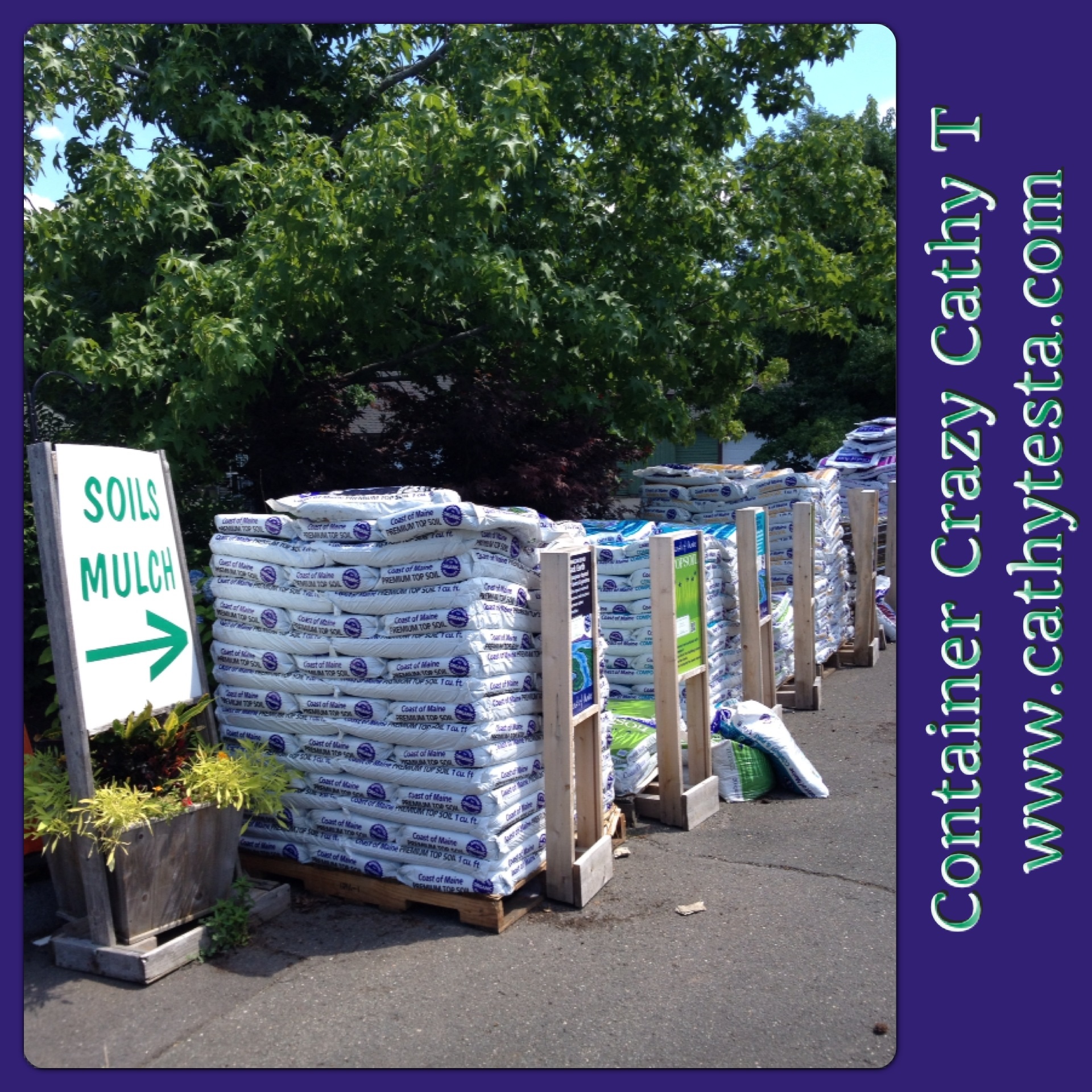
They also had nice neatly stacked bags of soil for the garden and containers, which I thought was well labeled and placed on the grounds. Although I must admit, I like when soil is under some type of cover because we all know what it feels like to carry wet soil.  I always prefer bags which are clean, not wet or torn, and when under cover it helps. However, their bags were in fine and in clean conditions.

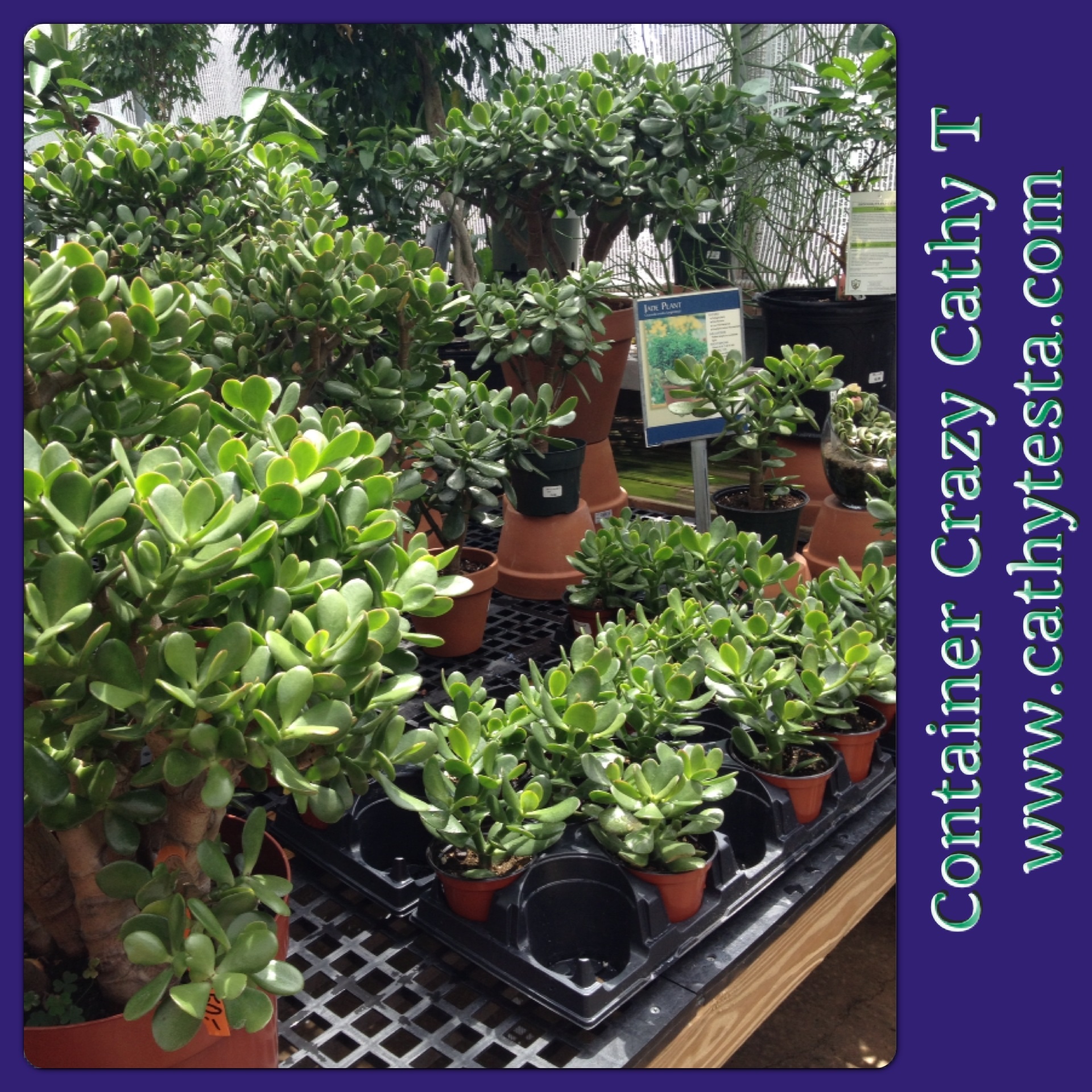
As I walked past the soil area, I noticed a back door to greenhouse was open, so I pushed my shopping cart inside and spotted pitcher plants and bonsai specimens in front of me, but also saw many house plants in this greenhouse. It was filled with good looking house plants. I think I said out loud, Ah Nice.

Alpha lettering

Why are good looking and healthy important?  Because insects spread quickly on unhealthy plants, especially if moved into a home where perhaps conditions are not ideal, and it can happen quickly. It’s best to select a plant with no problems from the start.

Orchid

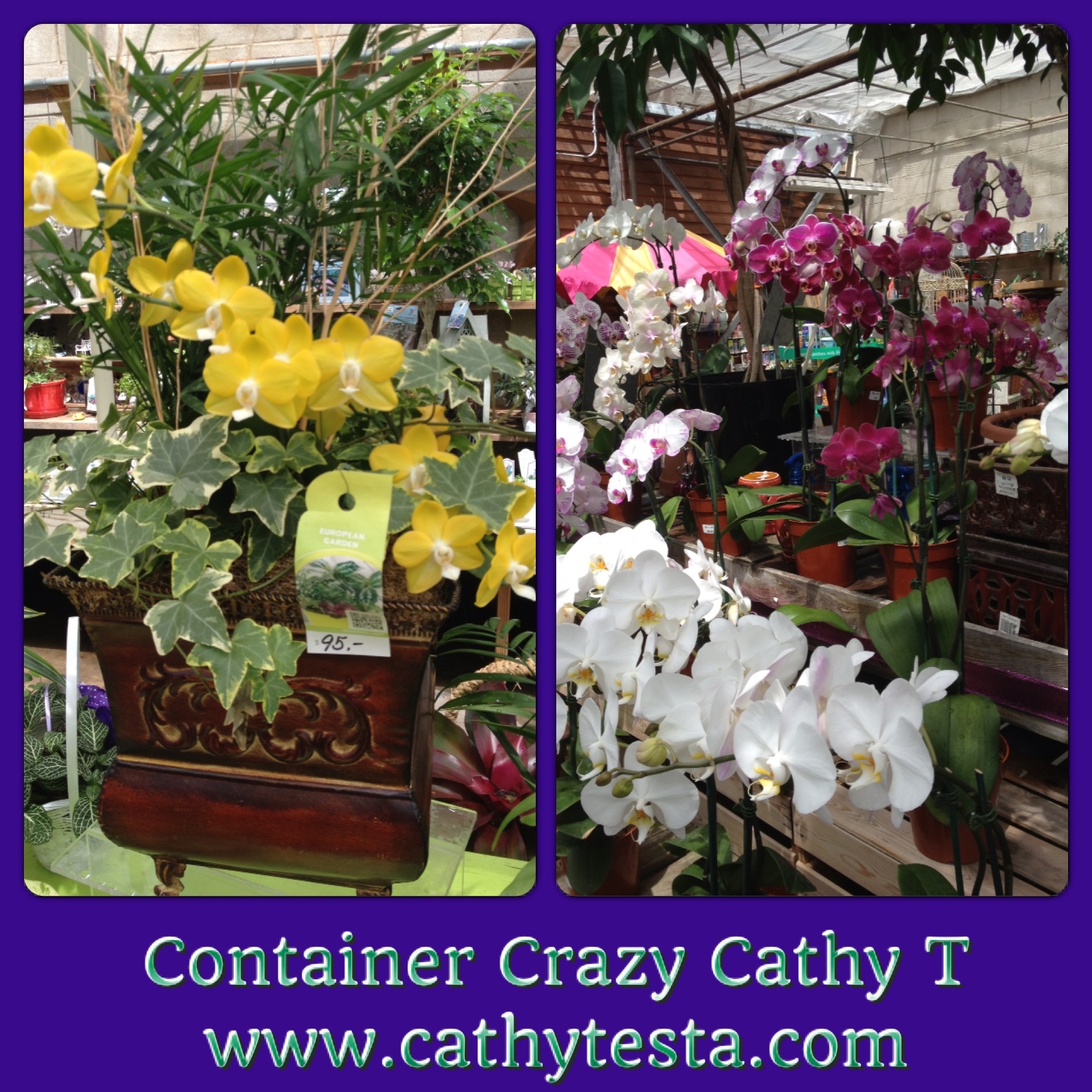
Another aspect that pleased me, was the cleanliness in general. This greenhouse was fairly packed but not unkept.  And then, I began to notice their dish gardens with orchids. The orchids were pristine, and the dish gardens well done. My mind said to me, someone here knows what they are doing.

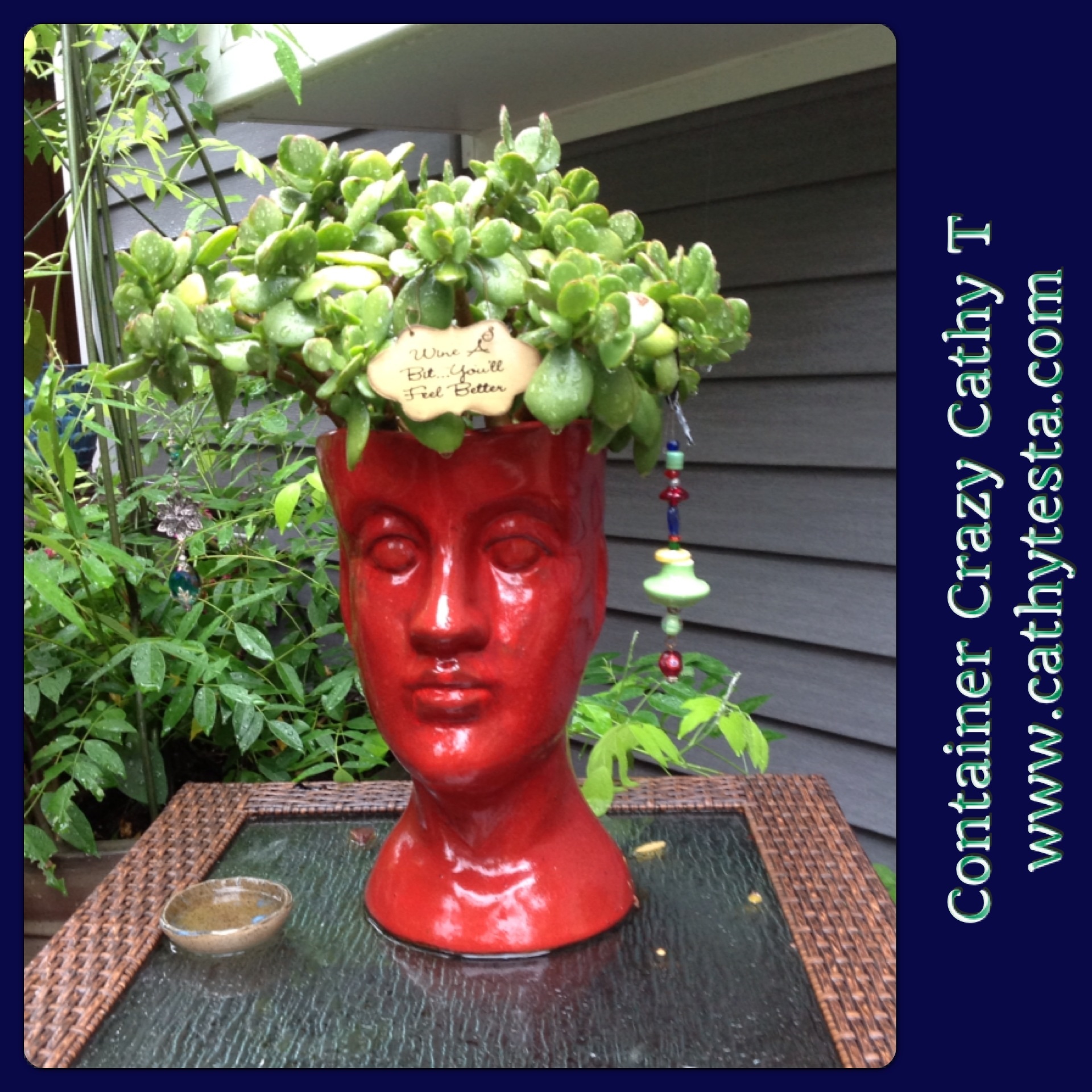
There were some Jade plants that I thought were perfect for creating head planters, like mine shown below. They also had small plants of Norfolk island pine next to a large specimen on display. The pine has handsome foliage. Its an evergreen plant, great for the patio with medium light, or as a house plant. It grows to 8′ tall so high ceilings are helpful.

Jade

Jade head

There was a gift shop and even a little section with fresh veggies. Nice touch.  As I paid for my items, I laughed at the register person’s shirt which read — Stay Calm and Moscarillo’s On.  We discussed the origin of the saying, but that’s another story.

Orchid

Moscarillo’s is located at 2600 Albany Avenue, West Hartford, CT 06117.

Website:  www.moscarillos.com

Telephone: 860-236-5487 or 800-464-9106

Dish Gardens

They have a small ad in the Garden Trail book, but a big area and offerings at their nursery. Worth a visit on your travels, especially if you are looking for a beautiful houseplant.

more Dish Gardens

Pine

Bear

Written by Cathy Testa

Is it too early to plant?

2 Comments
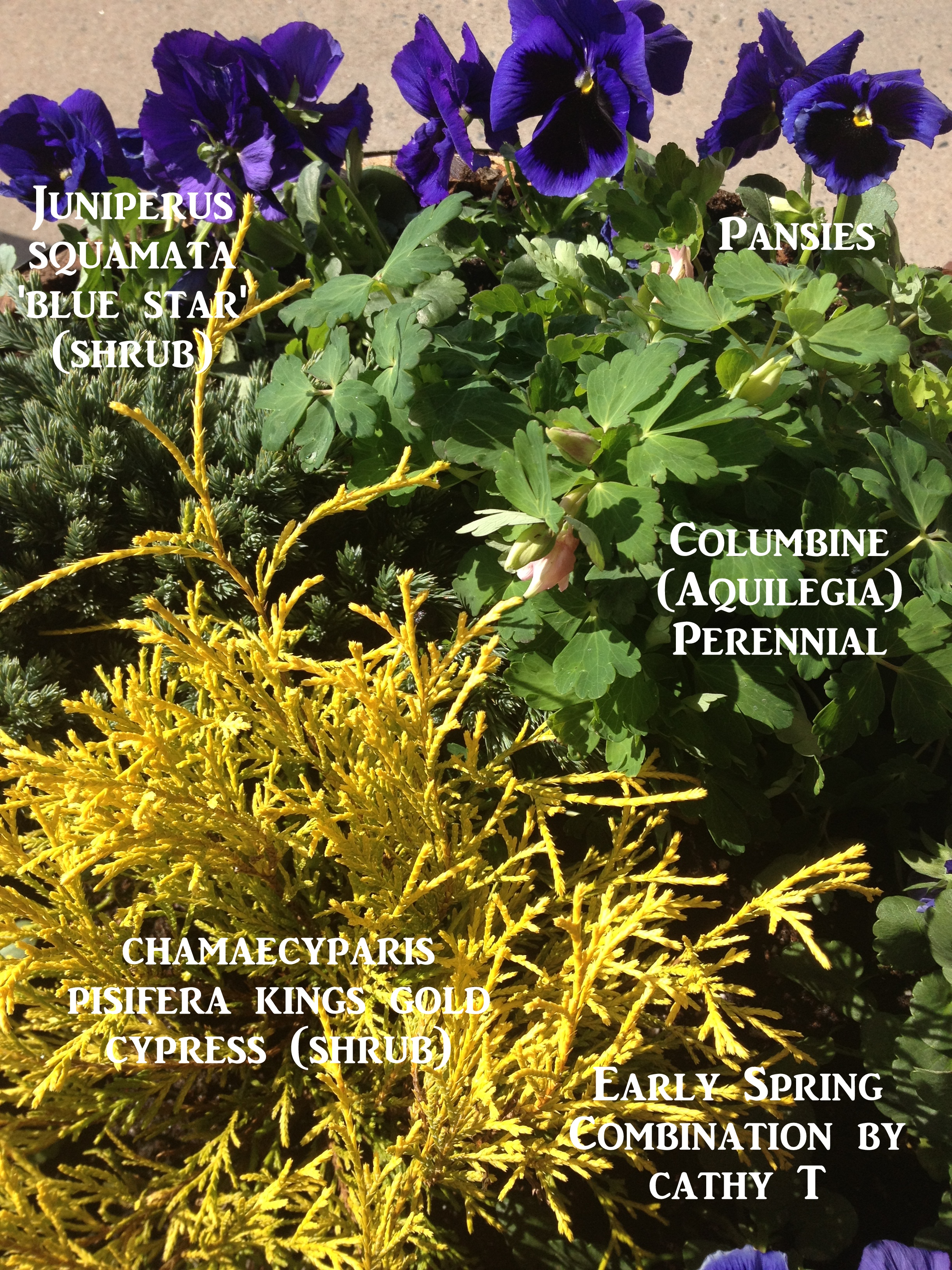
Early spring container combination

Early spring container combination

The overly-chilly temperatures experienced during early April this year has made us more than anxious for warmer weather so we can get outside to begin gardening.  And it has also prompted many of us to ask if it is too early to plant?  But the rules still remain the same.  In fact, they may be more applicable.

LAST SPRING FROST DATE

To be safe, for plants sensitive to cold, you should wait until after we get our last spring frost, expected around April 26th based on averages.  Otherwise, you risk damaging the foliage and potential flower buds, or the total loss of your new plant.  “It’s just a tad bit too early for some plants, even though we are ready to get out there.”

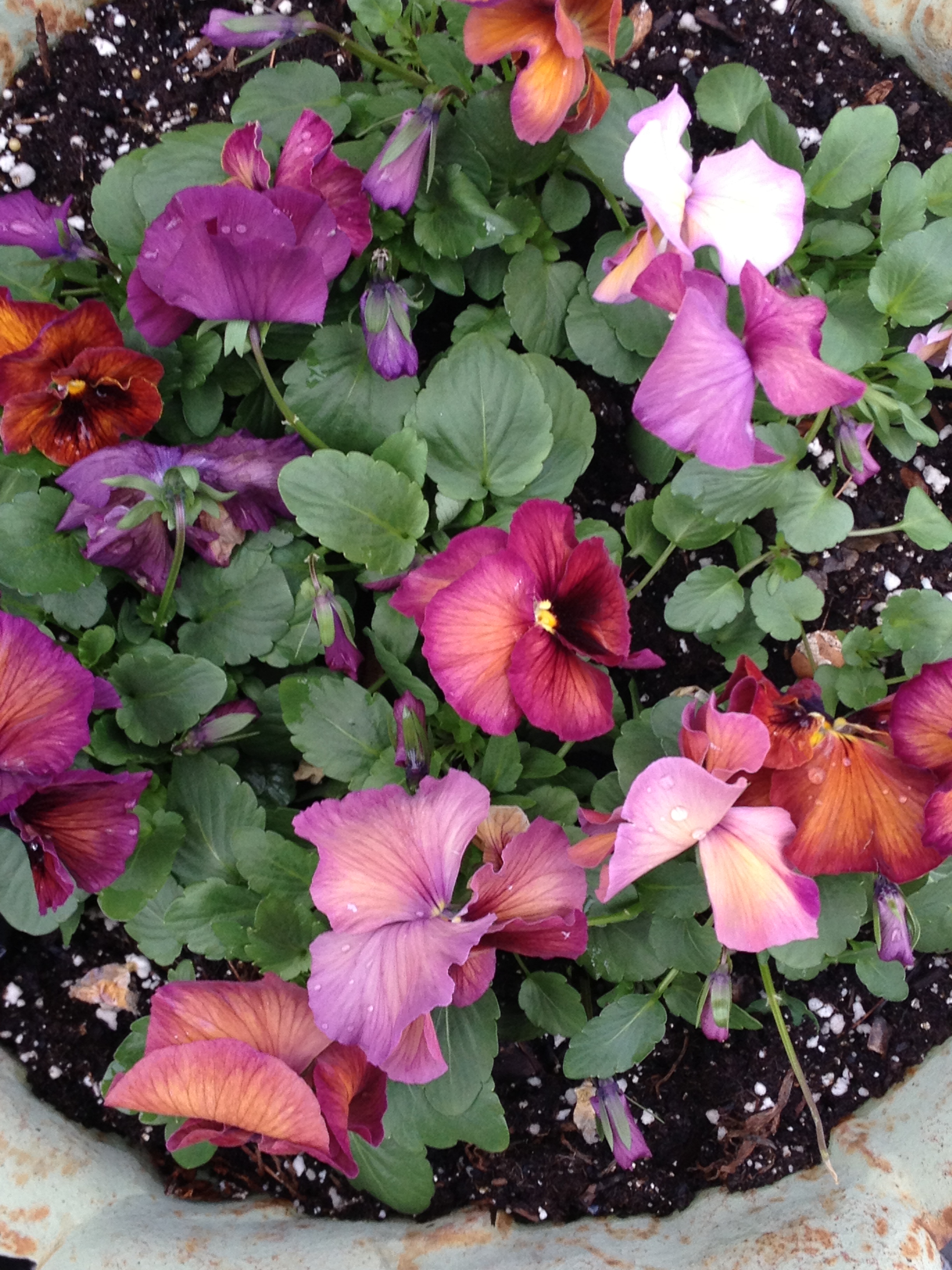
Pansies

Pansies

COLD-TOLERANT PLANTS

By now, you have probably put out some pansies, tulips, daffodils or other spring-like bulb plants, such as hyacinth.  These can take the chill.  There are some other cold-tolerant plants you can plant now as well.

You will see evergreen and deciduous shrubs and trees, early spring perennials, and other plants hardening off outside at the nursery.  Hardening off is a process where plants are transitioned from the growers’ greenhouse to outdoor temperatures.  These plants are safe to plant.  If you are not sure, ask your nursery person.

But beware; I saw a store that put orchids outside on a table last week.  A little chill to orchids may not harm them, but frost will damage them, resulting in a bad start.  Use a little common sense and consider the type of plant you are exposing to the new environment outside before proceeding.  It may be best to wait until mid-to-late May for the cold sensitive plants.

COLD-SENSITIVE PLANTS

Houseplants, cacti, tropical plants, summer annuals, and summer-blooming bulb-like plants want warmth and can’t take cold soils.  So if you stored your canna rhizomes in the fall, or caladium and elephant’s ears tubers, you should not put them in the ground yet.  Plant them in pots indoors and place them near heat sources or by a sunny window to get them started early.  When the soil warms up outside (60 degrees F-70 degrees F), move them into the ground.  Or pot them up in your container gardens around late-May.

If you kept your tropical plants in the basement to go dormant in their pot or container over the winter, now is a good time to transition them to a room inside your home to start greening up.  Start a watering routine slowly.  When the warmer days arrive, cold-sensitive plants can be put outside.  And if you just can’t wait, cover your plants with a light sheet or bring them inside when the weatherman indicates an overnight frost.  It is best to be cautious.

IMG_6170THINGS YOU CAN DO NOW WHILE YOU WAIT

This time of year, however, is a great time to get other tasks done or set-up so when it finally warms up, you will be ready to take action.  Get your containers and patio pots out, clean them up with a bit of light soapy water, place them in your favorite places, and fill them up with potting mix so when you bring your plants home from the garden nurseries, all will be ready for you.  It is also a good time to clean up any perennials with damaged or worn foliage.  Clean up your garden beds of debris, add some organic matter and/or mulch if needed, prune summer-flowering shrubs blooming on new wood before growth starts.  Edge your beds, get out your bird baths, cut back your ornamental grasses, and sharpen your garden tools.  And of course, clean up any left over tree and branches fallen from our past winter storms.  There’s plenty to keep us busy while we wait.

Container Crazy Cathy T
http://www.cathytesta.com
containercathy@gmail.com
860-977-9473 (cell)

‘Ubatuba Cambuci’ is the UFO of Ornamental Peppers

2 Comments
Purple Flower to Purple Pepper

Purple Flower to Purple Pepper

Ornamental peppers add many wonderful attributes to design compositions in container gardens.  They come in various colors, very rarely get attacked by pesty insects, and have interesting shapes. Additionally, the color of the fruit changes as it matures.

These attributes are something I’ve written about in previous posts.  One post was when my sister purchased a pepper producing purple fruit from me, and another post was when I gave a black fruiting pepper plant to my vet as a thank you for the nose surgery he did on Hunter, my cat.

I really like the look of colored peppers in container gardens.  Some end up in deep, dark colors, and others evolve into bright hot colors. You can include companion plants in the container combination to capitalize on this by thinking about when the other plant’s flowers will bloom and selecting bloom colors to match, echo, or contrast the colors of the peppers for seasonal interest.

The shape of ornamental peppers is interesting too.  Some are pointy and long, facing upwards on stems, others are round and chunky, and some are perfectly round pearl shapes.  Before the trend of incorporating veggies into perennial gardens, people would be surprised when they saw I had a pepper plant in my container gardens with other types of plants.  Now I have a new candidate to suggest using, one by the cultivar name of, ‘Ubatuba Cambuci’.  It has the most unusual shape.
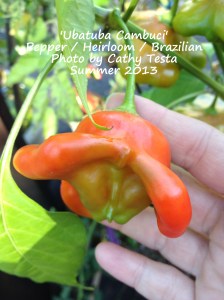
Shaped like a UFO

Shaped like a UFO

Shaped like a Flying Saucer

‘Ubatuba Cambuci’ is a Brazilian pepper plant with fruit resembling a UFO.  It has a wide to squat body shape with edges around it extending outwards a bit.

Dianne, one of my good friends, noticed mine in a container on my deck last summer, as shown in this photo to the left.

She asked, “What is that?”

When I told her the name of the plant and explained how I think it looks like a flying saucer, she replied with, “Only you, Cathy T, only you.”

Dianne is always super enthusiastic about my plant endeavors.  She attends my classes regularly and always gives me words of encouragement and praise.  I’m lucky to have her, and many other good friends, support my plant passions.  She was really impressed with the unique shape of Ubatuba and said she had never seen one before either.

I asked Dianne, “Doesn’t the fruit also look like a body with arms hugging its belly?”

We both started laughing as she agreed.  The fruit’s shape provides conversation opportunities to any admirer taking notice. But the shape alone is not its only talking point.  There are some interesting facts about the plant’s name.

Named after a place, and from its shape

Ubatuba is a lovely beach town in Sao Paulo, and Cambuci is a municipality located in the Brazilian state of Rio de Janeiro.  So, the plant is named after these two places.  I also read that a river in eastern Brazil is called the Ubatuba River, and that Cambuci is a fruit tree apparently on the verge of extinction (and this tree’s fruit has a similar shape of this pepper!), and get this…Uba Tuba granite is quarried in Brazil for use in making kitchen counters.  So there you have it – a plant named after a place and a shape.

Sometimes I think the name selections are off for plants – this one would be so easily called ‘Alien Nation’ and you would get it right off.  But honestly, I haven’t visited Brazil, so I did not recognize the name as being from a place, but surely it is a tropical treat there, just like this pepper plant.

The first part of the plant’s cultivar name has ‘tuba’ at the end, and it is pronounced just like the brass instrument, so just add an OOH-BAH in front of that. The second part I wasn’t so sure how that goes, something like CAM…going into a BOO, and then the common e-e or ei sound at the end.  Heck, you can just nickname it “Uba” for short, but there is a certain ring to saying Ubatuba – Ubatuba.  This attribute, its name, is entertaining, at least to me.

Color Changes from Yellow to Orange, to Red

‘Ubatuba Cambuci’ starts off yellow, transitions to orange, and finishes to a bright attractive red. The fruit grows to about a three inch size.  A little bit larger than the perfect bite size.  The plant itself has a bushy habit and grows up to three feet tall. Its dark green foliage has good sized leaves and the stems are sturdy and strong.  Fruit tends to stay stable on the plant because of this, and staking is usually not required, if only, towards the end of the season.

The added benefit of the pepper’s color changes is it can help you in the selection of your companion plants in your container garden design. If you think it through by period of bloom, matching the yellow stage of the pepper’s color to an early yellow bloomer of another plant, and the red color stage of the pepper to a flower blooming in late summer in the same container garden, you create seasonal interest.

Black foliage and purple peppers

Black foliage and purple peppers

Plant Companions to use with Ornamental Peppers

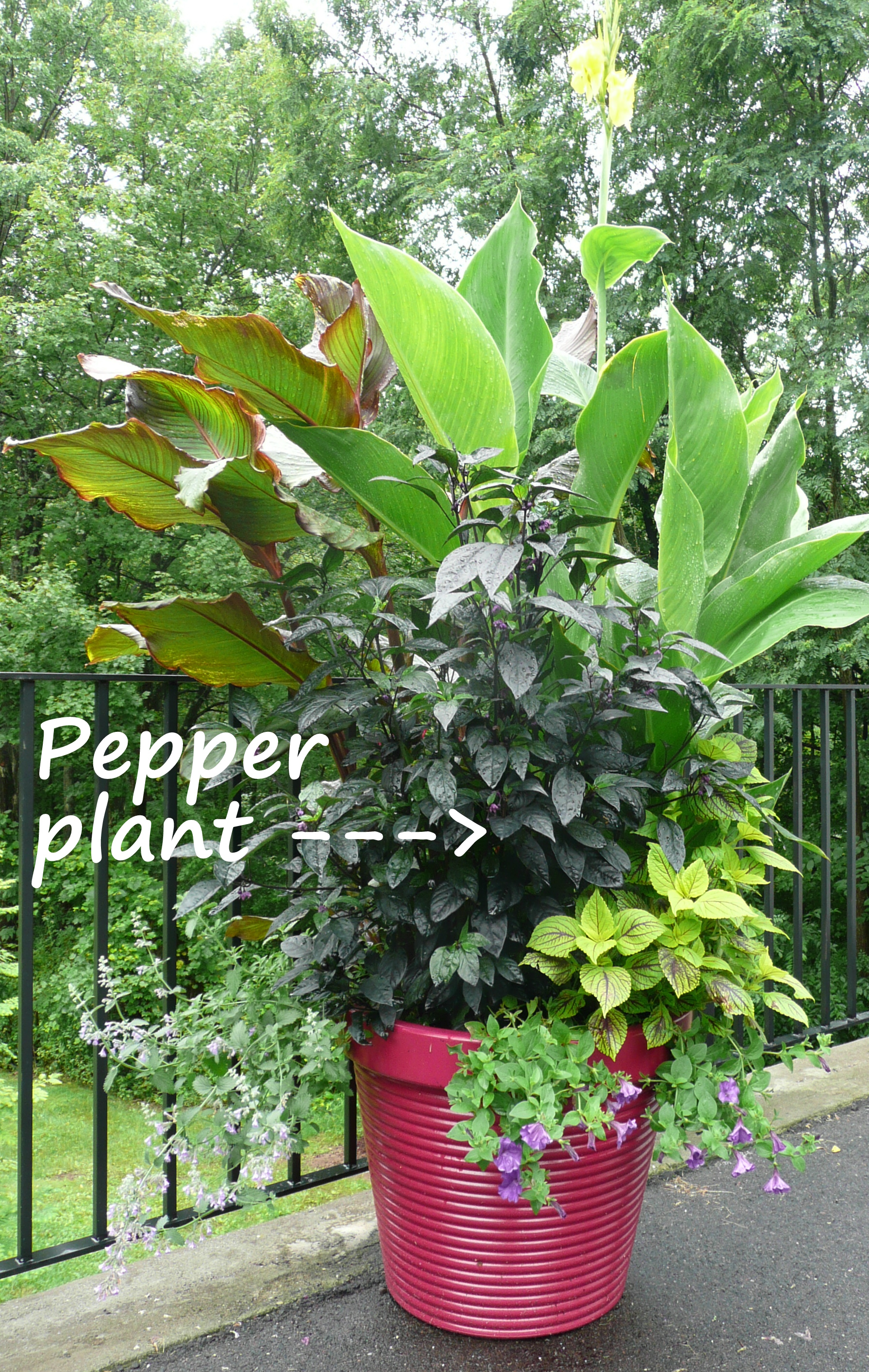
As shown in the photo to the left, the annual, Coleus ‘Gay’s Delight’ was used as a filler because of the purple veins in its bright chartreuse leaves.  It highlighted the purple flowers and fruit of the pepper plant in this container.  In this case, the pepper plant’s foliage was also a dark purple to black color.

Consider perennials; examples are Monarda didyma ‘Petite Delight’ with pink flower, Nepeta x faassenii ‘Dropmore’ with lavender flowers, and Verbena bonariensis; these would look stunning with purple peppers.  This would create a mix of purple tones to show up against the dark foliage of the pepper plant as shown here for a softer combination of monochromatic colors.

If the pepper of your choice has a full, bushy habit, put a taller center plant to elevate above it, as in the example of tall Canna plants.  Or combine your pepper plants with edibles to create quick dinner snipping sources. Include cherry tomato, basil, chive, and oregano.

Because many herbs are green foliage plants, select those with variegated leaves to make them stand out against the foliage of the pepper. Ocimum citriodorum ‘Pesto Perpetuo’ has a creamy white coloring on the leaves’ edges, or Ocimum basilicum ‘Amethyst Improved’, showing off a deep dark shiny black color.  Golden thyme plants work well, try Thymus citriodorus ‘Archer’s Gold’.  For a spiller, nasturtiums are perfect and easy to grow, and are edible, look for Tropaeolum majus ‘Wine’ for the yellow and orange flower color.

For a hot red combination, plant Verbena x “Taylortown Red’, and add a Pennisetum setaceum ‘Rubrum’ as a spiky accent with the ‘Ubatuba Cambuci’ plant.  I assure you, if you add an ornamental pepper, your friends will take notice, and you can have them taste test the fruit.  Ask them if it is sweet or hot?
Plants with Flavors

Plants with Flavors

It is Sweet, no wait.  It is Hot.

When I include peppers in my container gardens, the matured fruit does not last long because of a number one predator in my home, Steve, my husband.

Last summer, he walked up the back deck stairs, rather than entering through the front door when arriving home from work so he could partake in the daily offerings of my ‘Ubatuba Cambuci’ fruit.

So I asked him when he took his first tasting, “”Is it sweet or is it hot?”

He responded, “It is sweet, no wait. It is hot.”

This pepper is listed as “mild-hot” in the catalog, but the plant’s label indicates “sweet.”  There seems to be a little bit of both, starting off mild and transitioning to hot as you munch on it.

Adding tasty treats to your container gardens is a lot of fun, and of course, they can be used in cooking or dried later in the season to use in your recipes during the winter.

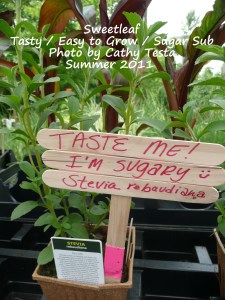
I can’t tell you how many people noticed my Stevia plants (Sweetleaf) offered for sale at a farmer’s market one season.  It is a substitute for sugar, and when you bite into a leaf, it truly tastes like sugar…And that plant – one to blog about later – really grew well in my container gardens.  But more on that later.

Culture and Container Size

For the container size, go large, at least 22-25″ diameter pot, especially if you combine “Uba” up with two or three more plants.  ‘Ubatuba Cambuci’ appreciates moist, well drained and organic soil and the space to grow.  Be prepared to water this plant in a container garden more often because it draws a good amount of moisture from the soil during hot summer months.  I watered my plant daily toward mid to late summer.  And of course, it needs full-sun to produce the best flowers and fruit.  Remember to check your companion plants for the same conditions.

By the way, I actually had difficulty finding the Genus and species name for ‘Ubatuba Cambuci’.  It is not noted on the plant’s label, nor was it in the grower’s catalog.  I’ve read it is bred from a species Capsicum baccatum or Capsicum baccatum var. pendulum.  Cultivars are typically distinguishable from the species by one or more characteristic.  The most obvious characteristic being, in this case, its unique “flying saucer” shape.  It is one you won’t forget after the first time you see it – just like when you spot your first UFO.

Container Crazy Cathy T
http://www.cathytesta.com
860-977-9473

Please feel free to click on the ‘red stamp icon’ at the top of this blog to leave your comments, especially if you have grown this pepper, I’d love to hear from those of you visiting.