Memorable Container Garden Designs to Revisit

Leave a comment

Here’s ten container gardens which I fell in love with and why from my past creations. I plan to show 10 at a time over the next months. Why? Because I will be deleting the photos from my database soon and it is a way to savor the memories!
Hanging Baskets with a Mix of Houseplants

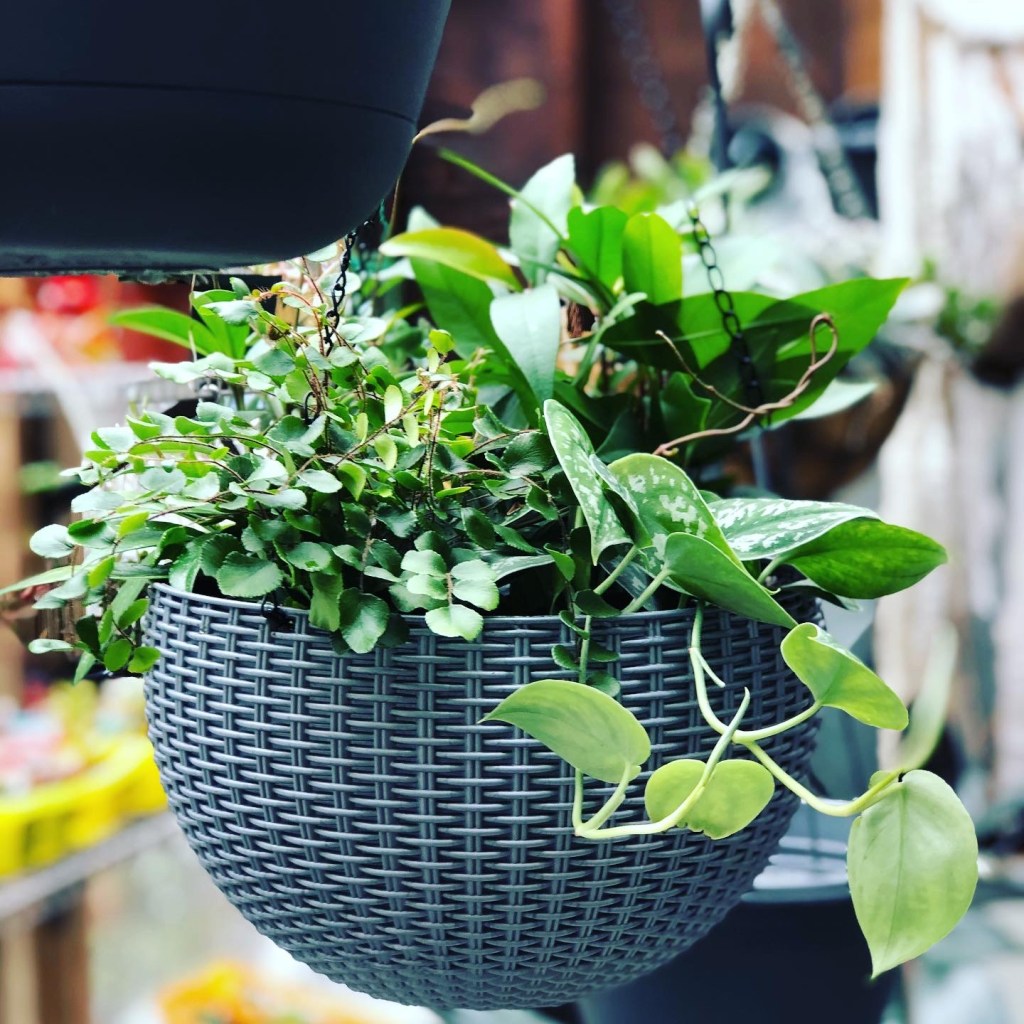
One year, I created many hanging baskets with various houseplants for sale. The reason was the houseplants were gorgeous. Additionally, the hanging baskets had a drain hole with a removable plug. It is so important to have drainage for your plants so these hanging baskets would work well. The plants were also extremely healthy and I thought, “Why not?” I sold quite a few of them. Each had a different mix of houseplants. Houseplants have their own unique sets of challenges. To help reduce them, start with healthy plants, which these were. Look the leaves over and make sure there are no discolorations or signs of insect damage. Houseplants like warm temperatures during the day and cool at night. They would be fine hung outdoors in the summer in these hangers in the right spot. Most houseplants enjoy bright indirect light and do not take direct sun too well. Having them in hanging baskets allowed placement in the home or outdoors in summer. In the summer outdoors, use caution so it is not in full sun where it would burn the leaves. It is imperative to allow water to drain out of the pot, and in this case, a hanging basket. These had a removable plug. This allowed proper drainage. Otherwise, I would not have used hangers for these plants. Hopefully the plants continued to thrive for the customers who purchased them.
Balcony Spiller Plant on a High-Rise

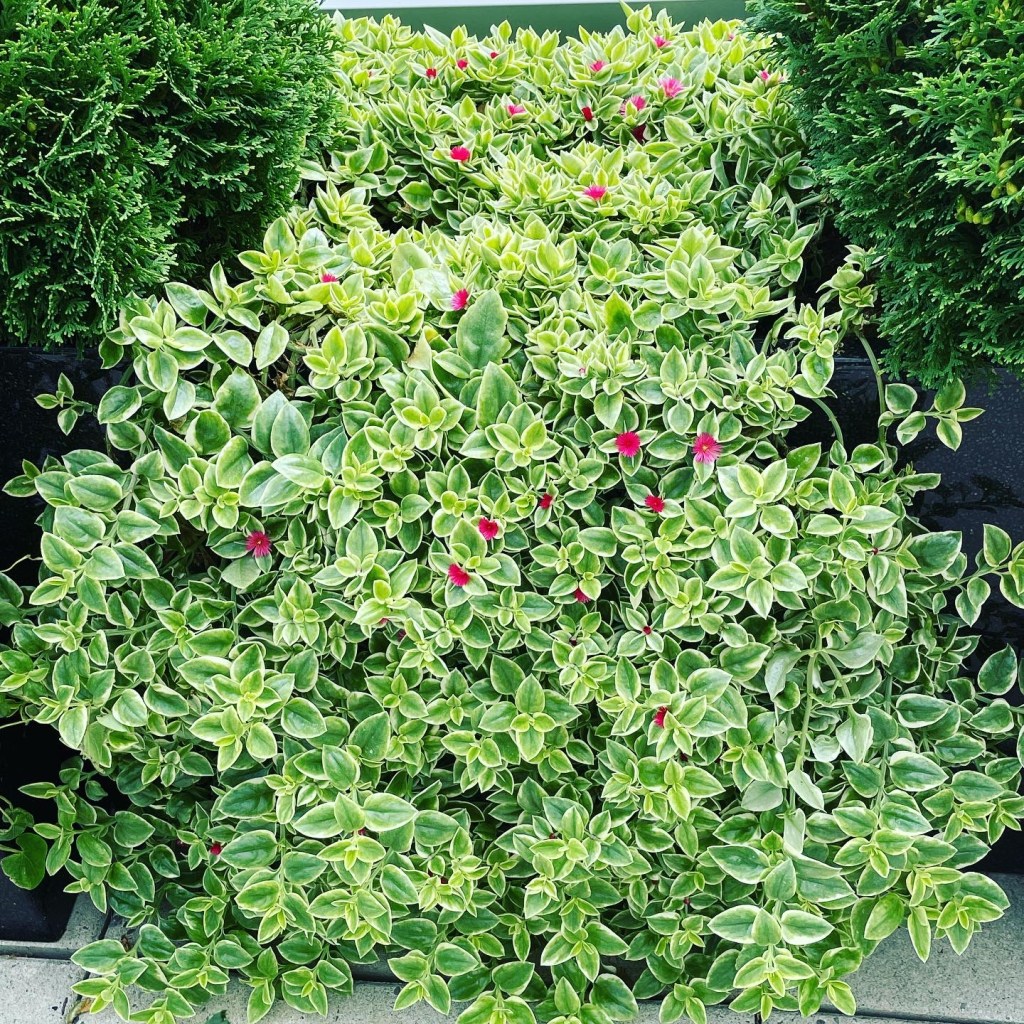
This plant impressed me immensely. First, it tolerated the full sun conditions of a high-rise balcony, and it grew so fast and full. It would make my plant-based mind mouth water! I started with a small plant and it grew very long, spilling over the edge of square planters. This is why I refer to them as “spillers.” I wrote all about this plant in a prior post. It really had other amazing features like it is easy to take a cutting to root for more plants. The red blooms appeared all summer. The plant did not get any insect damage and was drought tolerant. Read the post below if you wish to learn more. The post has some more photos too. Click below for more detailed information.
Blue Planter Box with Blue Wall and Canna Lily

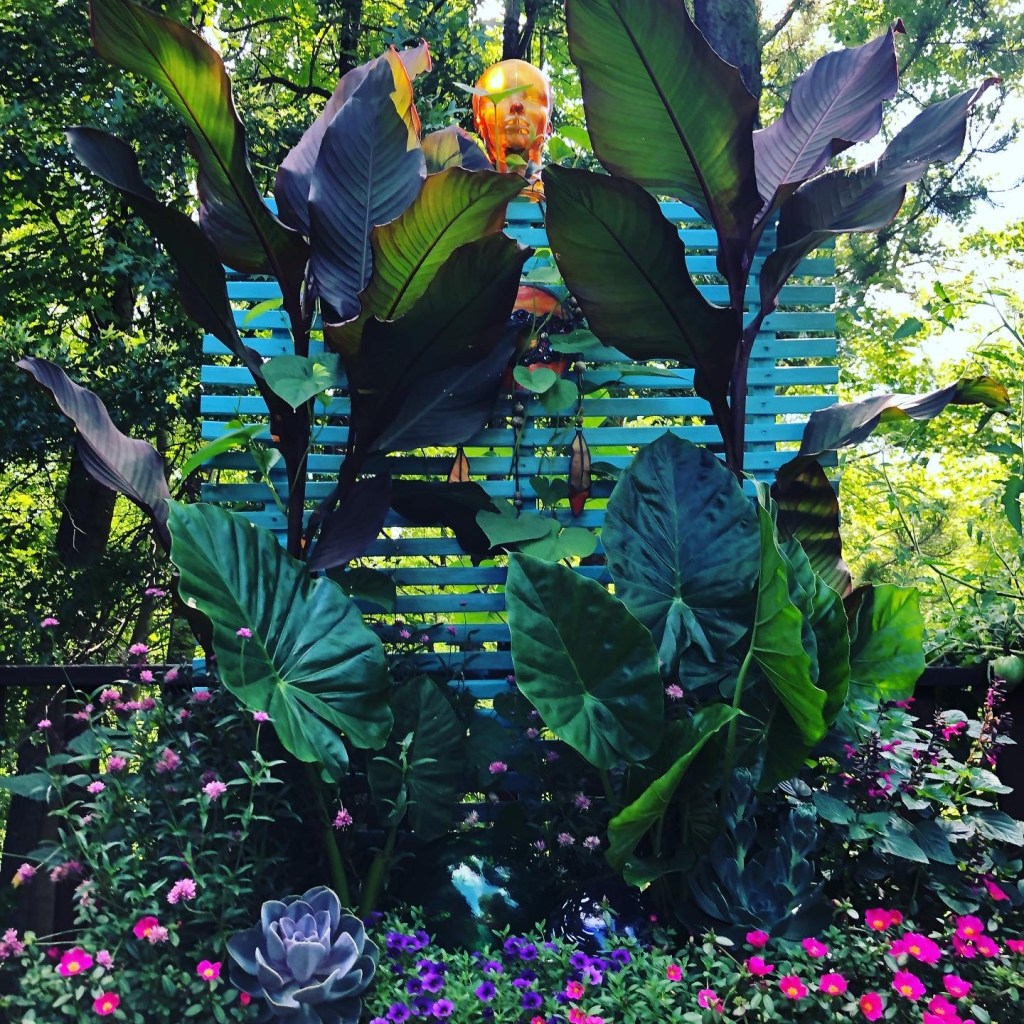
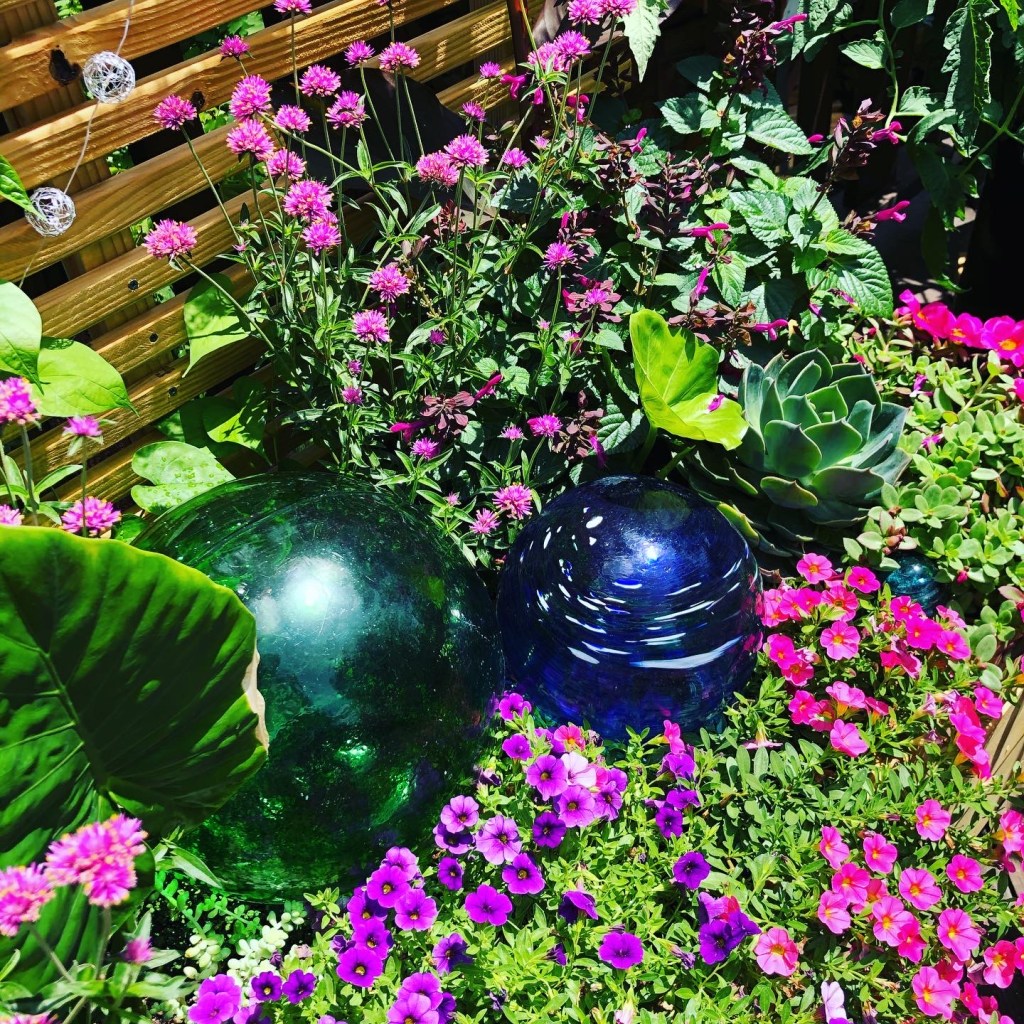
One year a lady in my town was building and selling wooden garden planters. I had to have one and situated it on my deck. I stained the planter box and attached trellis wall with an aqua-blue colored stain. Then started to plant it with a mix of sun lovers. The tall canna lilies were stunning and grew to the top of the wall. Below in the base wooden square planter were succulents, flowering summer annuals, and lots of color. I blogged about this planter too. Here’s the post. It shows the progression of growth of the plants from start to later in the summer season. It also identifies all the plants. Click below for more.
Wedding Pots with Euphorbia ‘Diamond Frost’

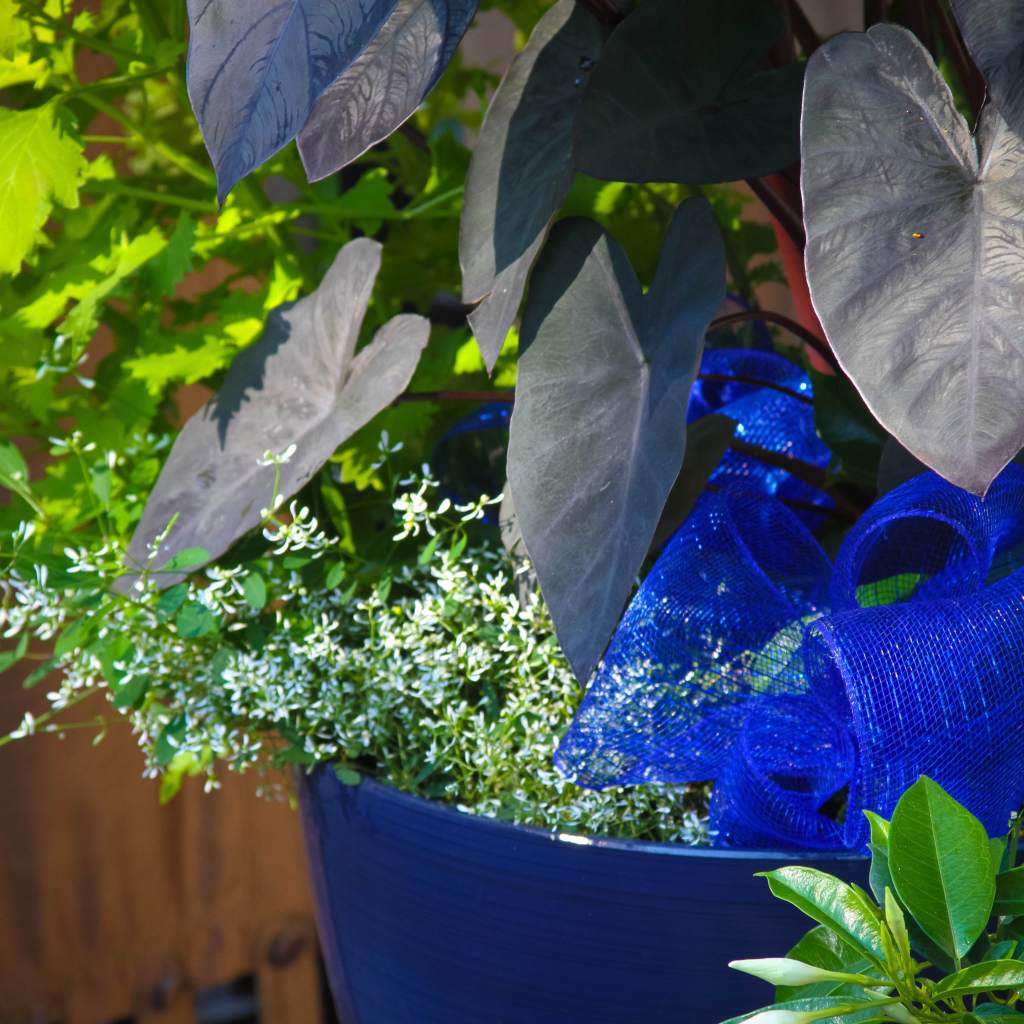
I remember Euphorbia ‘Diamond Frost’ being super popular one year. It has delicate white flowers. They are suitable for a wedding theme. These were used in wedding pots I rented to a customer one year. The client asked for blue pots and abundant flowers. I worked hard on these tending to them all summer and delivering them for the outdoor wedding. I wrote a blog post about them below. The nice thing about the white blooming plant is it can stand alone. It can also be used in combinations. Either way, it still looks lovely. Click the prior post link below for details about Euphorbia and the accompanying plants in these blue planters and pots.
A Tapestry of Succulents and Hens-n-Chicks

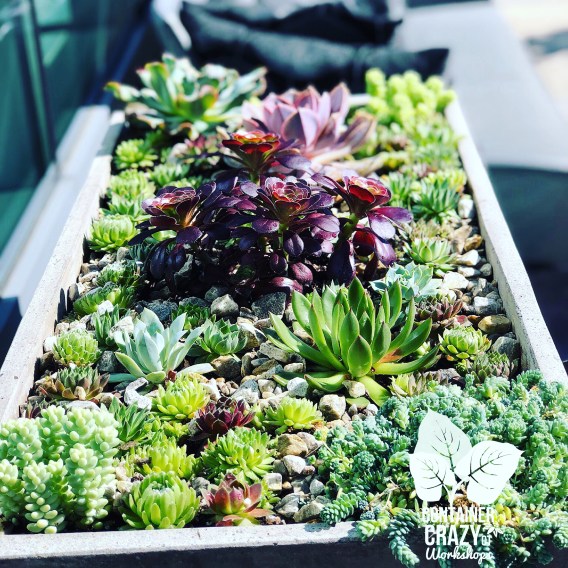
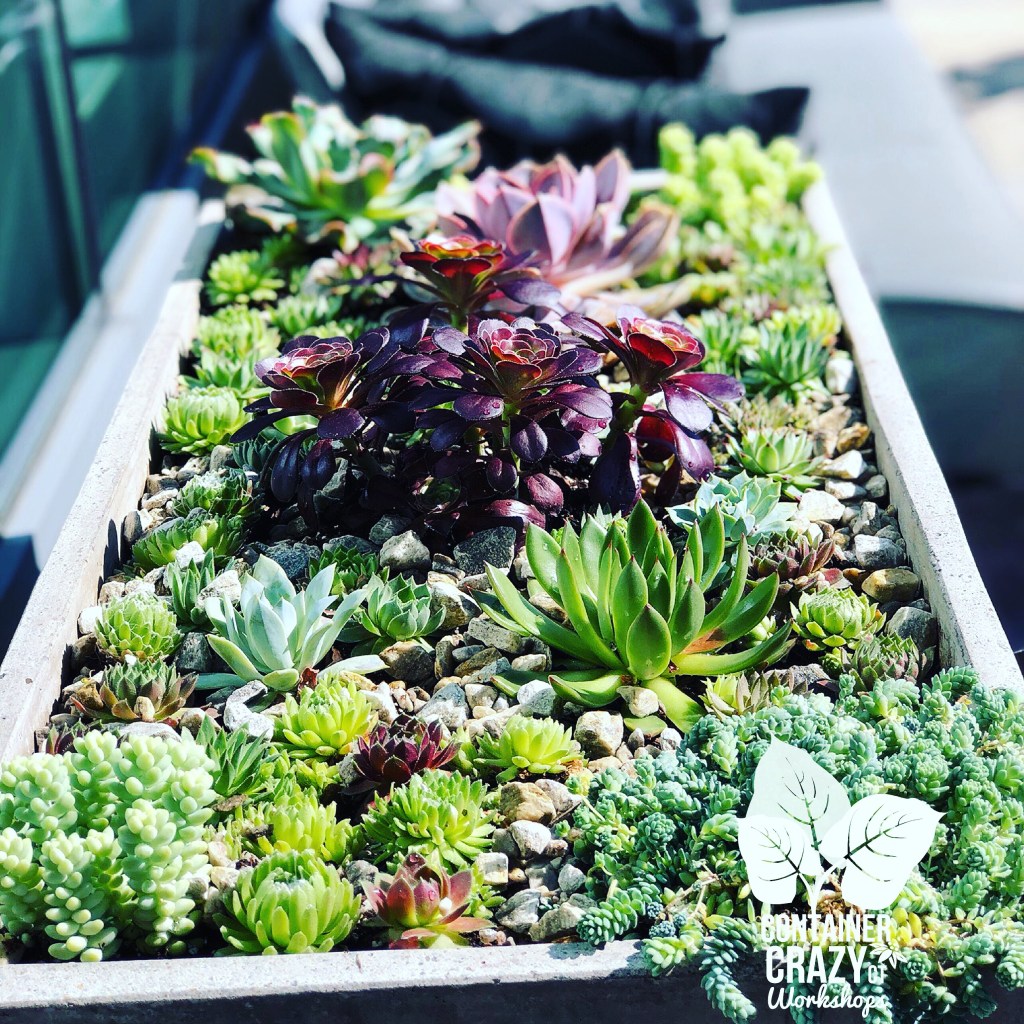
This has got to be one of my all-time favorite creations. It was a square cement like colored planter on a high-rise balcony. I was thrilled to fill it with various small hen-n-chick plants (Sempervivums). I also used other unique succulents and dripping down spillers. I felt it was “magazine worthy” to be honest. I know I took a boat load of photos of this planter and the accompanying ones. I’m surprised I don’t have a post about them on this website, but I’ll research that more later. You can see I used small gravel to top dress the soil around the plants. This offered a more finished look. I placed Donkey’s Tail (Sedum morganianum) in two of the corners. This way, it would drip down over the edges of the square planter. By mid-summer, these plants were double in size! Some larger Echeveria plants were included (they look like rosettes). In the center is a stunning Aeonium (plum colored). All of these succulents were in top-notch condition upon planting them. The planter was seen from inside too. This offered a nice touch for admiring the plants all summer long. After the season was over, I removed many of them to continue propagating them.
Barrels with Rubber Plant (Ficus elastica)

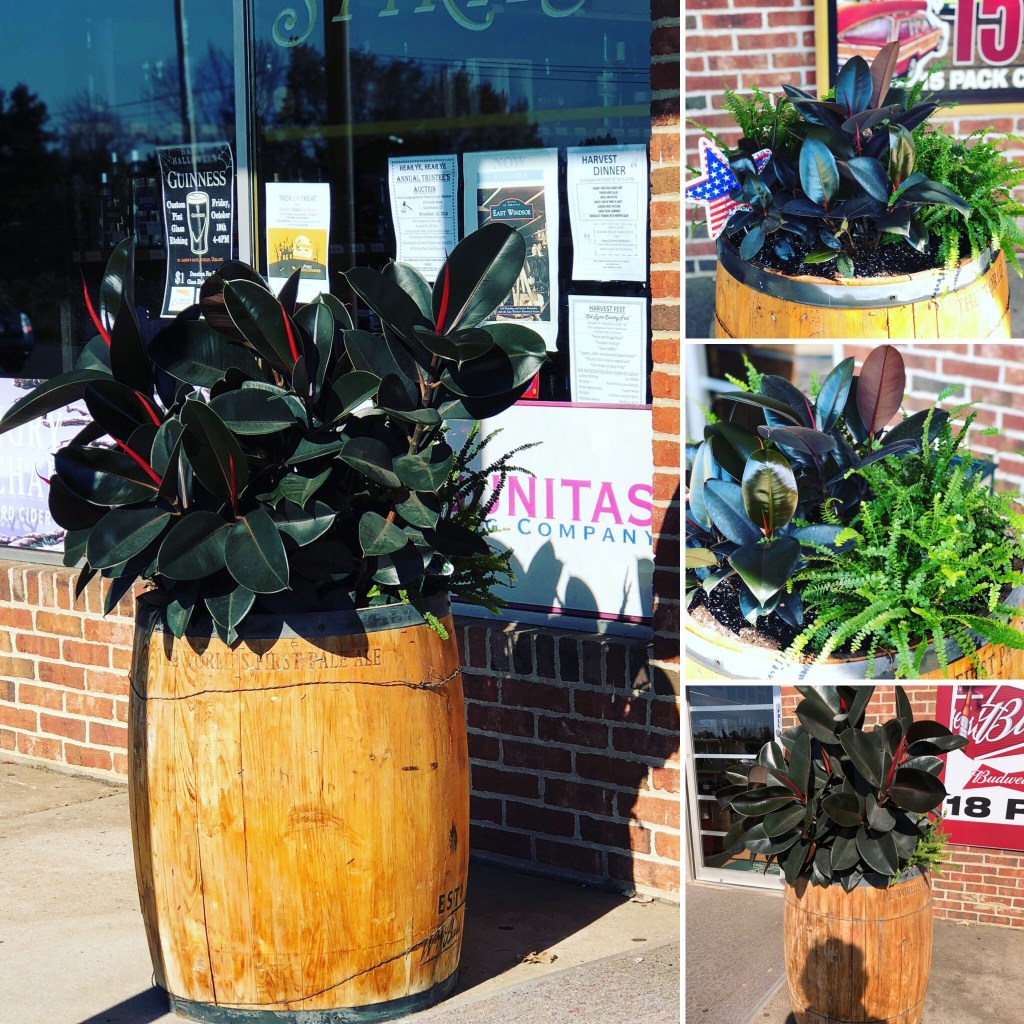
For years I planted two barrels in front of a package store in my town. One year, I used Rubber Trees. Why not I thought, they are an easy-care plant and have huge leaves and they should not be over-watered. Being watered infrequently is beneficial. The store owners sometimes found it challenging to find time for watering. But what really surprised me was how large they grew in one season! I stuffed some small houseplant ferns around the corners. The rubber plants were showstoppers. They grew wide and full. This particular Ficus had darker leaves and red tips which made it more striking. I was able to remove these plants and keep them a few more years longer inside my greenhouse.
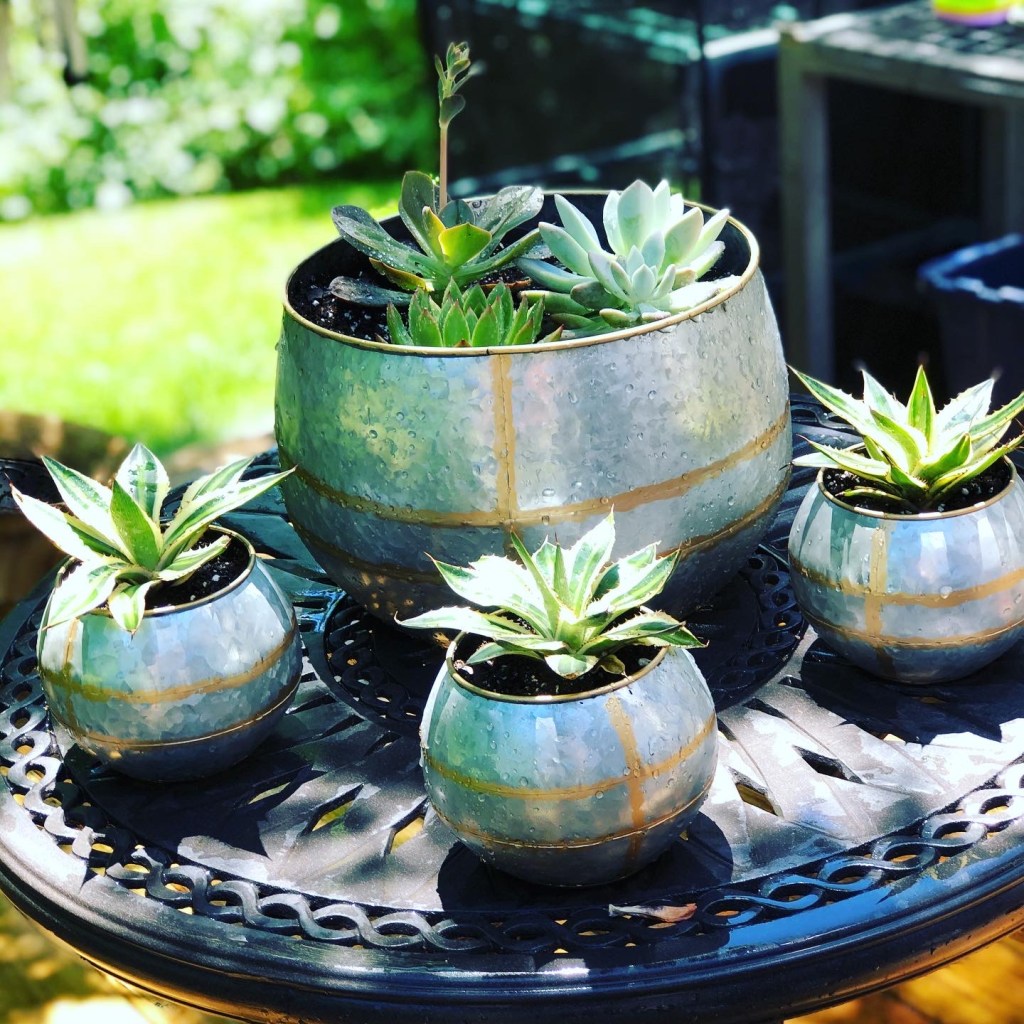
Round galvanized pots

This one is more about the pots than the plants. I just loved these pots and had to have them. I placed some Agave babies in the three small pots. I also put a few succulents (Echeverias and a Hen-n-Chick) in the larger round pot. Each had a simple pre-drilled single drain hole in the bottom (a must). I took this particular photo on the deck next to my greenhouse one day. These ended up being moved to my large deck against my house. I didn’t sell them and still own those pots today. The agave plants outgrew them of course and were moved into larger pots later.
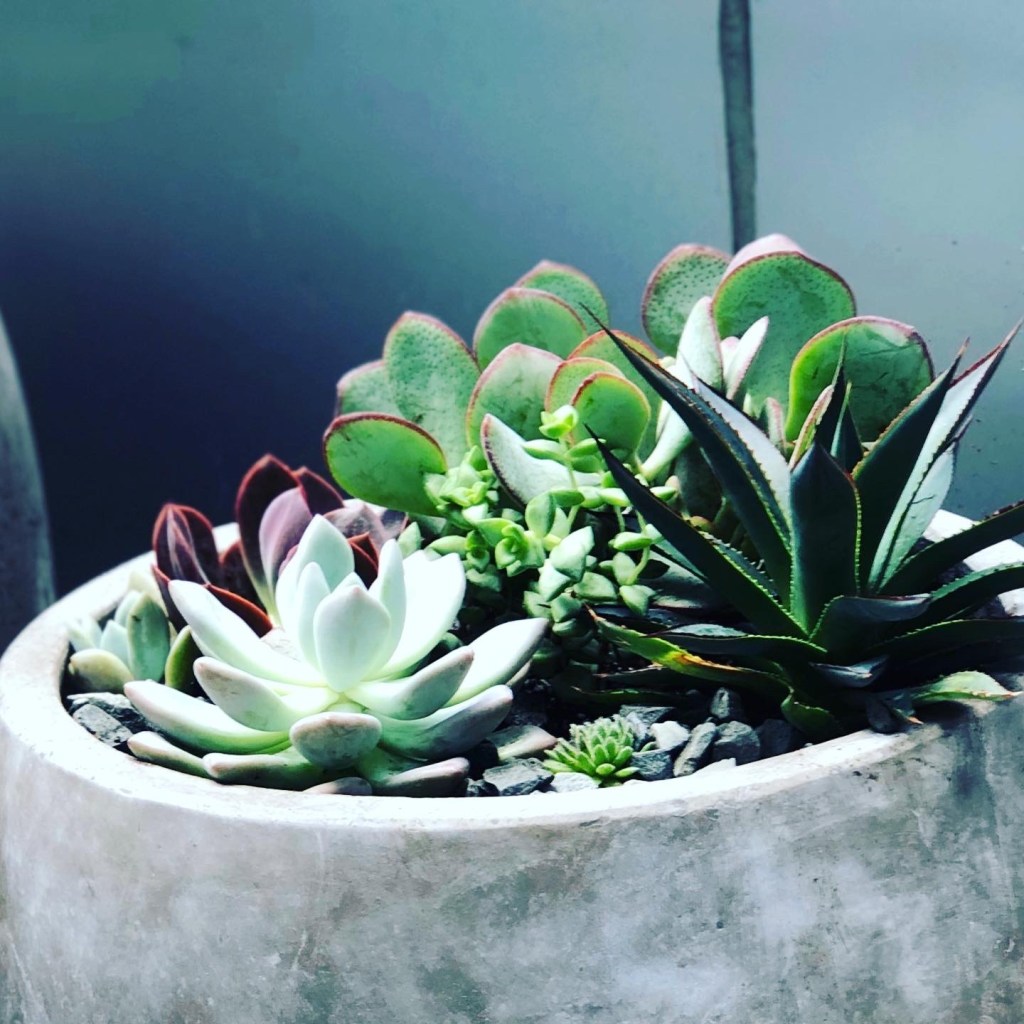
Round Urban Pot with More Succulents

This was one of the accompanying planters on the high-rise. I filled them that year with succulents, agave, and other heat lovers. As with the square planter noted above, I topped dress them with gravel or stone. It gave a nice, finished look plus it helps reduce splashing of water when watering or during rain falls. These plants thrived in a rough environment of heat and strong sun outdoors. Granted some succulents actually like less sun but these performed very well. Succulents like well-draining soil. They need good air circulation, and it would get breezy or very windy here. Some prefer bright indirect light, while others thrive in full sun. A moderate temperature is also ideal. They can handle extreme heat, which they did handle in these urban cement styled planters. Also, the outdoor location provided sun for half the day and shade for half. It was perfect because the shade gave them rest from the intense heat. The plant in the background with rounded shaped leaves is a Silver Dollar Jade (Crassula arborescens).

Thank you for visiting. Stay tuned for more features!

Cathy Testa
Date of this post: 2/7/2026

Cathy had a small business focused on container gardening. Today she and her husband are retired. They like to go camping now thus camping locations have been added to this blog in addition to plant stories.
Bringing Plants Indoors

2 Comments

I usually call this process, “overwintering plants,” but I figured that is a term which may be unfamiliar to newer gardeners.

Thus, this post titled, “Bringing Plants Indoors,” is referring to just that. I’m starting to bring in some plants this week (Sept 7th, 2020).

Some plants, like hardy succulents, are able to stay outdoors all winter here in our CT planting zones. They are able to tolerate frost and winter temperatures, and are referred to as, “winter hardy.”

For example, Sempervivums (a.k.a., Hens & Chicks) succulents. However, if you decide to keep any of these hardy succulents, which were grown in containers, patio pots, or hanging baskets outdoors, be sure to put them in a protected location, such as under a porch, in an unheated garage, or shed. They are more sensitive to winter conditions if in a pot versus grown in the ground in a garden.

If they have been growing in the ground, they will be fine over the winter, and do not need protection. They will go dormant when the time is right as temperatures drop in the fall and winter, and come back alive next summer season.

This particular hanging basket (shown above) is filled with Sempervivums which are looking perfect right now. There is no damage, no insects, and they are as happy as can be. I just love how they filled this hanging basket in fully. The color intensified recently, as many succulents do when they get a bit of stress of cooler temps.

I decided to move these Sempervivums in a hanging basket into my greenhouse yesterday, however, it is not because they can’t remain outdoors for another few weeks (or all winter in a protected location), but because they look so healthy. I want to keep them that way.

Tip: Move them in while healthy!

I find the best time to move some plants indoors, especially succulents and houseplants, is while they are looking great, are free of insects, and haven’t been stressed by a drop in temps during the fall season, which is usually accompanied by rain fall. When this happens, the soil, the pot, and the plant get cold and damp. This starts to invite issues such as rot, insects, and stress.

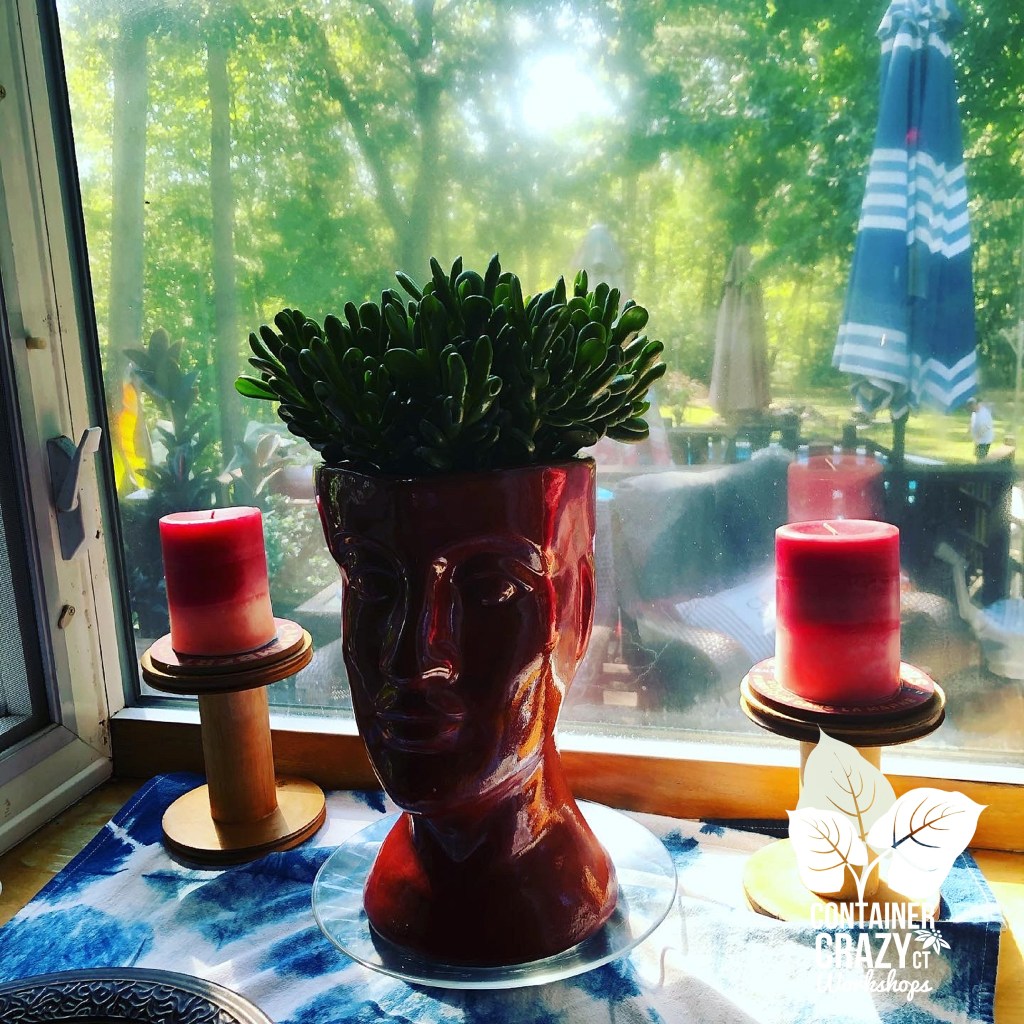
This plant above, a Jade in my red head planter, is another example. It could tolerate a few more weeks outdoors. Once it is consistently 50’s degrees at night, they should be moved in however.

It probably won’t go into the 50’s for another week or so, and even if it did – it still might be okay for one night or two of 50’s lower temperatures if our day temps stay warm (60’s, 70’s and maybe even another day of 80’s!).

But, it must be moved in before it gets hit by frost. Frost would kill it. It is not “winter hardy.” It can not tolerate the CT winter temperatures. Frost usually hits in early October.

However, because this Jade plant is so healthy right now, this week of September 7th, I wanted to take this gorgeous red head planter in before the beautiful Jade plant in it experiences any fall weather related stress. It has grown so much and has done well in this planter.

What do I mean by fall weather related stress? Well, when it drops down to chilly, 50 degrees F or below, in the fall season, we usually also get rain. Then the planter would be damp, cold, and this will affect the plant and the soil. It may not kill it – but it most likely will stress it. The soil gets cold and damp, and I find this scenario to not be ideal for plants you are moving indoors.

Tip: Move them in before major rain fall during a temp drop. And let the soil dry out in the containers outdoors before moving them inside.

Additionally, I advise my plant followers to let the soil dry out in your container gardens and patio pots before you move them indoors, AND, move them in before they get too chilly (before there is a consistent temp in the 50’s in the evenings.) A succulent is able to tolerate drought, so let that soil dry out before moving it in.

The plant got tall enough, so I had to remove the top shelf of this south facing kitchen window that extends out. It will be good enough sunlight to keep this plant happy all winter. The window area sometimes gets a little chilly in winters, but this plant is able to take 55 degrees “indoors” during the winters at night. It won’t get too cold here for this type of plant.

Before you move it indoors, here are other things you should do:

  • Don’t water it before moving it indoors for a few days if possible or even a week. Drier soils are better for moving in plants.
  • Inspect it for damaged leaves or any signs of insects. Treat if you find insects with the appropriate spray or treatment.
  • Remove any fallen debris from the plant (I found pine needles in there.)
  • Remove any damaged leaves if possible. Wiggle them back and forth to pull away if you see leaves with holes or damage.
  • Inspect under the pot. (I did this. I found a small round insect cocoon.)
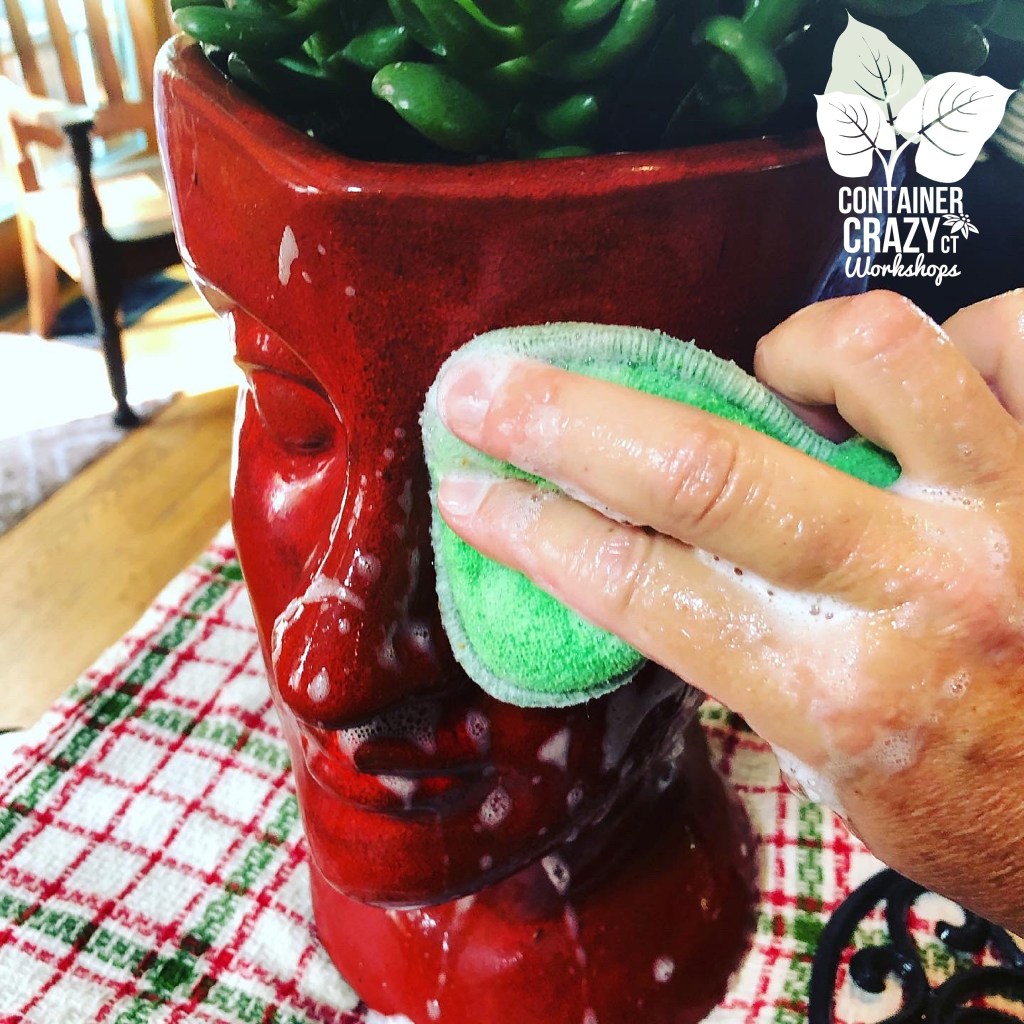
  • Wash the outside of the pot with soapy water (mild dish soap is fine).
  • Move it before it gets 50 degrees F or below at night consistently. (This could happen anytime between now and the next couple weeks.) Watch your weather app for night temperatures.
  • Pick the appropriate home location. Some plants need some sunlight, others are able to tolerate low-light.

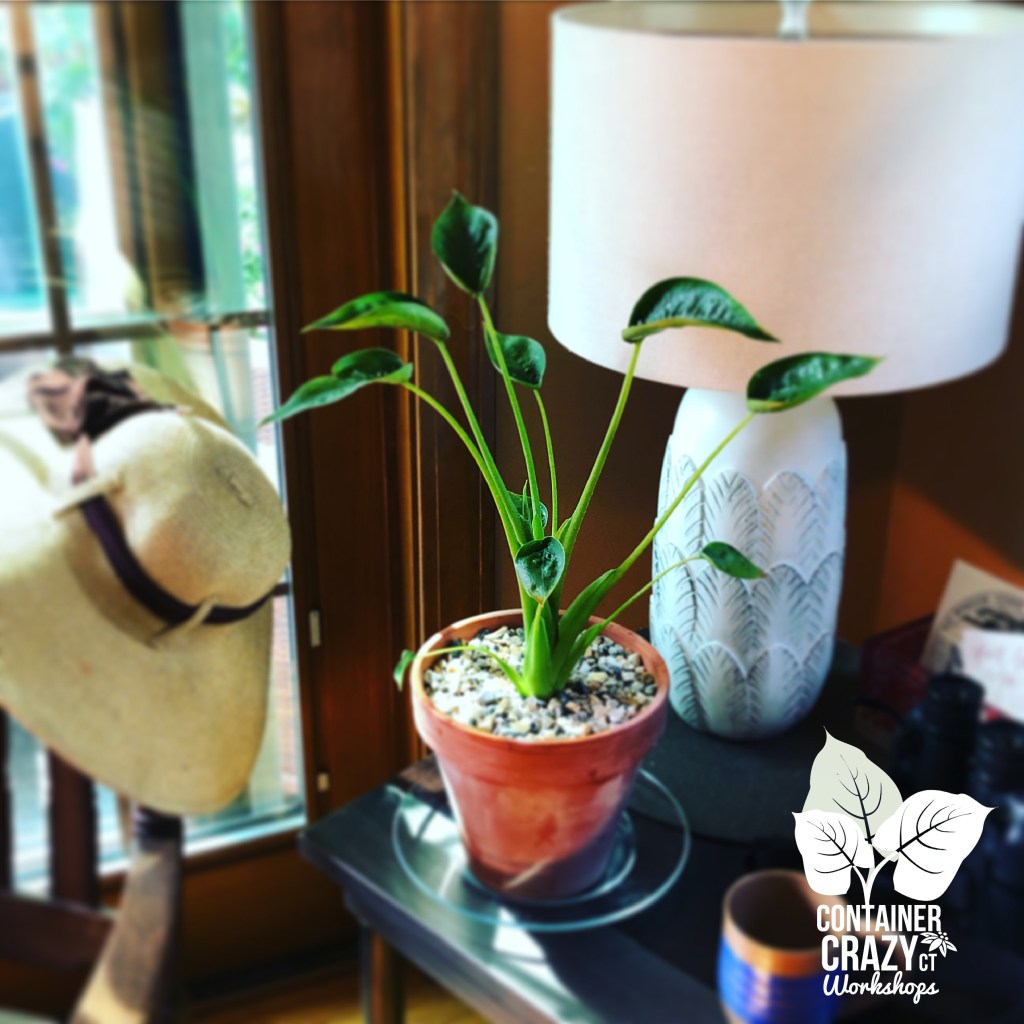
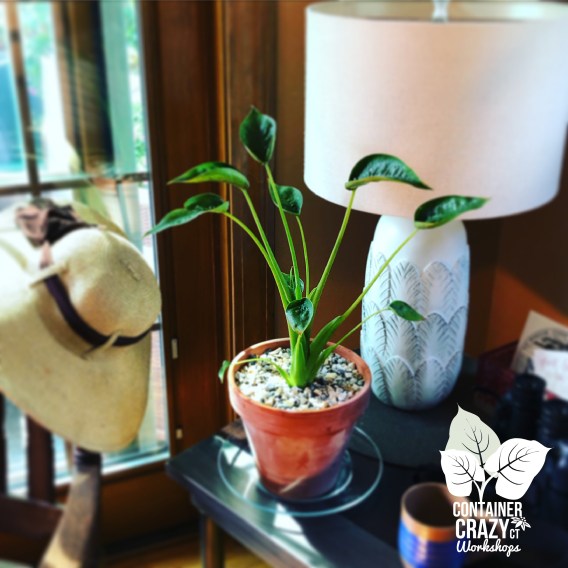
The next plant, shown above, is an Alocasia called ‘Tiny Dancers.’ When I saw it at a growers, I had to have it. I have lots of huge monster size Alocasias but I never had a dwarf sized one, like this one. It is too cute!

It started off in a tiny 3″ square nursery black pot. I potted it into a new terracotta pot and had it outdoors all summer. Usually, I store Alocasias by storing their tubers (round like bulbs located under the soil) only, but this is a tiny Alocasia, in fact, more along the lines of a dwarf. It makes it a houseplant candidate in my book, at least, I can test it out as such this year.

I decided to move it in and give it a spot by my south facing kitchen slider. It will receive sun light only a portion of the day during the winter which should be sufficient.

I don’t think it would do well in a north facing window which does not receive much sunlight at all. Another good place for this plant, if there is sun light in the room, is a bathroom because this plant likes a bit of humidity.

This Alocasia has been is pushing out new growth and is very happy. This one will be treated as a houseplant this winter rather than storing it like I do with my giant Alocasias (which are tropical plants and can not withstand winter temperatures). Sorry repeating myself.

I followed the same steps above: inspect, look it over, remove any damaged leaves. I did not wash this pot because it is terracotta and porous so the soap could go into the pot and although probably not too harmful, I just used a rag to wipe away any debris.

But this Alocasia ‘Tiny Dancers’ did have some signs of insects. When you inspect your plants before moving them indoors, look closely.

I did see, in the cups of one leaf, that there were little spiders in there. I am not sure if they were spider mites, but I decided to “lightly” spray the plant with Neem Horticulture Oil in a spray bottle as a precaution.

Tip: Please read the label or ask a nursery staff about insecticides, fungicides, or other products before you treat your plants. You could damage a plants’ leaves if you use the wrong product.

Check any treatments you use on plants by reading the label first. Make sure it is appropriate for the plant type! If you spray a plant with the wrong product, you will damage the plant, not help it.

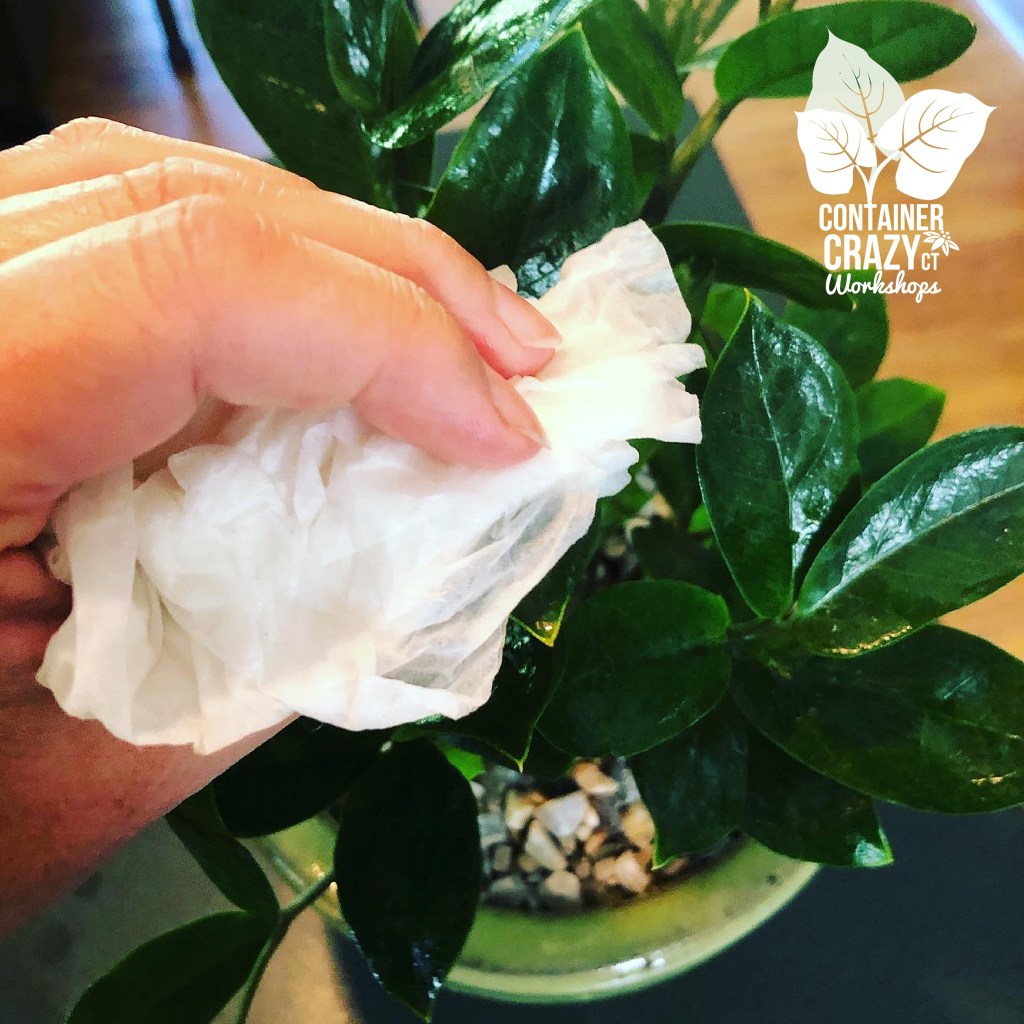
Another plant I moved in to the house is considered a houseplant, the ZZ Plant. It has been thriving under a patio umbrella and had no insect issues, and is also pushing out new growth. When you see the growth, this is a good sign your plant is happy. Moving them in when happy is a good idea.

Tip: And I can not emphasize this enough, the best time to move plants inside as fall approaches is when or if they are healthy. If they have no issues, get them in before they do. Colder temps often times invites problems.

I carefully cleaned each ZZ Plant leaf with a wet paper towel to wipe away any debris or dust, washed the outside of the pot, and this one was placed in a north facing window that receives very little light. Since this plant is able to tolerate lower light, I think it will be fine in my north facing window this winter. This plant is marketed as being easy and care free, so the north window is its home for the rest of the year. Water this plant less as it does not like overly moist soils.

To recap, plants may stay outdoors for the most part, but some I start to work on early, partially because I have the time this week to work on my own plants before overwintering my clients’ plants from their container gardens. Also, sometimes working in mild and comfortable temperatures is better on me.

Also, I believe plants perform better indoors over the winter when you move them in before they get stresses from drops in temps in the evening. This is especially true for “non-hardy” succulents, such as Echeverias. I will be showing those as I work on them in future blog posts as well.

Tropical plants, like my Canna Lilies, Elephant Ears (Colocasias and Alocasias), and Banana plant (Ensete) may remain outdoors all the way up to frost (early October) or just after frost (IF you plan to store the under the soil bulbs, rhizomes, corms, or tubers only). If you want to keep the plant indoors as a house plant, move them in before frost.

Succulents plants, just to recap, may remain outdoors all winter if they are winter hardy. However, if they are not, they must be moved in before frost in October, and I recommend (sorry repeating myself) to move them in before they get cold, damp, wet, and chilly (BEFORE it gets consistently 50 degrees or below at night). Again, you may wait till we get the temp drop, but I prefer to do it a bit at a time before that phase.

Houseplants, well, I would move those in now too. While plants are healthy, strong, and not stressed out. It is a difficult thing to do because we want to enjoy every last minute of outdoor goodness (and so do the plants), but if they are doing well, might as well capitalize on that because they will be more likely to do well indoors if healthy now.

I already took down my tomato plants, by the way, and herbs are dwindling down so I am trying to use as much as I can before they are goners, and made pesto with my basil. I am considering sowing more herb seeds this fall in the greenhouse however. Maybe have a fresh batch available in a month or so. Sorry, that is a side bar comment. LOL.

Here’s a recap list:

  • Tropicals – Can wait til frost or after frost if storing tubers (specifically Canna Lily, Elephant Ears, and Banana Plants). Mandevillas you should move in before frost if keeping the plant in tact or storing the plant.
  • Non-Hardy Succulents – Can wait till the evening temps hit 50′ degrees F, but I recommend moving them in earlier, for reasons noted above.
  • Hardy Succulents – Can leave outdoors all winter. If in a pot, move to a protected location before winter. If in the ground, no worries, leave and let it be.
  • Houseplants – Move them in now while healthy. Each houseplant is different on lower temp tolerance, but treat them like the non-hardy succulents above.
  • Herbs and Tomatoes – Already took down my tomato plants because they are not producing fruit now and it is too cool at night, and herbs are starting to dwindle so collect what you can now. But that is up to you based on your own gardening veggie habits.
  • Agaves and Cacti – Can take drop in temps and tolerate it but can not take frost. Take them in before October frost or treat as I do with non-hardy succulents. The Agaves and Cacti I will leave out for a while longer probably, or take them in “if healthy” and cherished. Again, if they are “healthy” with no issues, I like to move them in before any chance of issues.

Hopes this helps if you are considering on working on your outdoor plants too. And please share my site with friends who may find this information useful. Feel free to ask for any clarifications, and also, note that these are all my opinions based on my years as a container gardener.

Thank you and enjoy your Wednesday!

Cathy T.
Cathy Testa
http://www.ContainerCrazyCT.com
http://www.WorkshopsCT.com
http://www.ContainerGardensCT.com
860-977-9473
containercathy@gmail.com

P.S. Unfortunately, I am not offering my typical Autumn Succulent Pumpkin Workshops due to Covid this year. However, I will be taking custom orders around the end of September. Reach out if local and interested. Thank you for visiting my blog.