Use these all-natural preventives and remedies to lower your risk for contracting Lyme disease

Leave a comment

A few weeks ago, I was working in my garden, and when back in the house, I saw a tick crawling up my shirt. Fortunately, I had a white shirt on – a color often recommended to wear outdoors, including for your socks, so you spot ticks easily should they creep up on you. This article by a local Broad Brook CT Blogger gives very helpful advice on how to deal with bites including some photos of tick bite signs. Thus, with Renee’s permission, I am reblogging her post here for my CT readers. Cathy T

mindbodyshift's avatarThe Mind-Body Shift

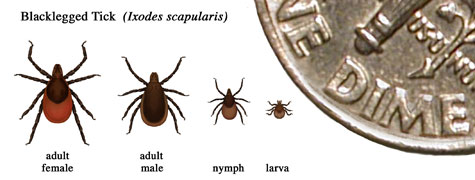
Tick sizes/Src: CT Department of Public Health Tick sizes/Src: CT Department of Public Health

Living in northeastern United States, summertime means warmer weather, less clothing and more time spent outdoors. Unfortunately, all the time spent walking, hiking and biking in the woodsy areas coincides with an increased presence of ticks. As a result, the months of June and July see the largest numbers of confirmed cases of Lyme disease by far, according to the Centers for Disease Control and Prevention (CDC). The disease us caused by bacterium Borrelia burgdorferi, which is spread through bites of infected blacklegged ticks, AKA deer ticks—and on the Pacific Coast, by western blacklegged ticks.

Who Is At Risk for Lyme Disease

The CDC reports that 95 percent of Lyme disease cases from 2012 were reported in just 13 states: Connecticut, Massachusetts, Maine, New Hampshire, Vermont, New York, New Jersey, Delaware, Pennsylvania, Virginia, Minnesota and Wisconsin. Pennsylvania reported the largest number of cases…

View original post 1,371 more words

Five Reasons Why You Should Click Like, Share, or Comment on My Blog Posts

6 Comments

If you are not familiar with the world of bloggers and blogging, you may not realize why it is so important to click the like button or share an interesting post with your friends.

One obvious reason is your click is a form of validation of the hard work put forth by the blogger to provide you with information and share a story about a particular passion, such as gardening.

Another reason is, for professional bloggers, your sharing, liking, and commenting increases their chances of gaining a few bucks from the online advertisements included on their blog site.

However, there are many other reasons why clicking those little icon buttons on a blog post are important to a blogger, such as myself.

Here are my top 5 reasons why you should do so, and how it benefits you:

See Photo Attributions Below

See Photo Attributions Below

#1 – Because my blog posts are FREE

Personally, I find it irritating when I’m reading an interesting blog post and a pop-up window displays an online ad directly in front of my text.  It interrupts my concentration just as much as an annoying mosquito buzzing around my magazine would when I’m reading an article.

Now granted – there are many, many blogs out there with online pop up advertisements which help fund the associated costs of blogging, and potentially generating some income.  And for the seriously popular mega bloggers, blogs make some substantial money.  Just check out this list of top earning bloggers on OnlineIncomeTeacher.com

For example, Life Hacker, a blog offering tips and tricks, money saving strategies, and uses for household items, earns almost $5,000 a day.  Do the math, this is a millionaire blog site.  They get there because of their amazing talents and wealth of information shared, but also because they have a strategical setup to their blog to gain revenue.

On my blog, affectionately titled, ContainerCrazyCT, only the ads automatically posted by WordPress, which I have no control over unless “I” pay a fee to make them go away, are included.  Otherwise, everything else is completely free for you the reader and blog visitor.  I’ve chosen to leave those buzzy ads out.

See Photo Attribution Below

See Photo Attribution Below

#2 – Because sharing my blog will fill me with DELIRIOUS joy

Sharing, liking or commenting on a blog post of mine will make me wild with excitement and enthusiasm.  And, you do want to make me feel filled with delirious joy, don’t you?  After all – happiness is contagious.

When you take the time to like, share, or comment on my blog post, it makes me feel the time I took to write it was worth my efforts, and that you found the information useful.  It also indicates I should continue to blog for you, and anyone else out there interested in sharing our passions of plants, container gardening, and combining nature with art.

If not for any reason, please click LIKE immediately after you finish reading my posts, or better yet, share it with a friend, because you want to make me happy today, right now, and keep me happy so I can keep blogging for you for free and with a big happy face.

Please help to keep me on my blogging high.

See Photo Attribution Below

See Photo Attribution Below

#3 – Because information you get on blogs is HONEST and REAL

What I mean here, is I find blogs are far more personal and real compared to articles or information written on websites designed specifically to promote or sell something in particular.

Blogs are written by real people with amazing and ambitious passions.  Generic websites maybe written by someone wanting to get you to buy something from them, and some sites are being paid to promote a product, whether they truly like it or not.

Let’s take travel related websites for example.  They give you information because they want you to visit their location and help fund their economy by spending some time and money in their state.

But blogging sites provide information on travel based on real experiences by real people just like you and me – it tends to be more honest – especially if the blog is free of ads or other gimmicks to get some funds from you as a reader.

A travel blogger will blog about travel because it is their passion, based from their own unique experiences.  They give you the true scoop and perspective – AND they take the time to write and post it just for you out of the pure love of what they do and willingness to share insider tips with you, even if they don’t know you personally.  Bloggers are generous souls.

They are creative as well, showing you all sides of people and their interests.  You get a window from a unique perspective, and I think it is honest.  In many cases, they are not being paid to review a product or place.

For example, last winter, I was looking for information on Stowe, Vermont.  Instead of searching the topic via Google by entering, ‘Things to do in Stowe,’ — I added the word ‘blog’ to my search field with Things to do in Stowe.

Many different blogs written by real people were provided via my search.  Blogs are not websites.  They are web logs, more like personal diaries by people willing and anxious to share what they know and love.

One post I found was written by a gal who lived in Stowe, Vermont for nine years, and it shared her top things to do in town and things nearby – adding her own real personal tips of where to park, some insider stuff – I felt like I was reading a “real experience” by a “real person.”  Basically, I believed her account and trusted her list of things to do in the area more than a generic unreal entity.

And in my blogging searches, I also found a blogger who travels solo and gives her accounts of places she has visited on her own – kind of a unique perspective.  She also offers encouragement to people wanting to travel alone or for those who must travel alone, so you don’t feel alone.  There is an emotional connection with bloggers, especially if you share the same interests or passions.

Her blog, called Solo Friendly, provides travel information in a different way – and supports those who don’t want to wait around for a travel partner.  She didn’t have a list of 10 things to do in Vermont – but a list of 100 things to do in Burlington, Vermont.  That’s homework, which took time, and again, based on her true experiences.  And that’s pretty cool.

One last thing, good bloggers also take risks.  Because they are honest, sometimes they may be controversial on a particular topic – but I admire this, and it is just another bucket of why bloggers are a great source of information because their opinion or critique is coming from an honest place, whether you agree with it or not.  They blog about things that matter to them, and it comes from things they love – or hate – otherwise, it wouldn’t be worth blogging about or mentioning.

See Photo Attribution Below

See Photo Attribution Below

#4 – Because you become part of a bigger NETWORK

When you like a post, others who liked it too will see who you are and share a conversation about the same passion with you – and thus, you become part of a bigger network with the potential of making new gardening friends.  You will establish great connections of your own by participating.

Blogs not only show you who the blogger is, but shows who you are – and what your likes, interests, or questions may be — and you may find common enthusiasts to share your love with.

Many other very good gardening bloggers have liked my blog posts from time to time – and some are people from other countries or states, and because they share the same passion, it feels rewarding. It makes you feel like you are part of something bigger – more than just your gardening self.

Bloggers want to connect with those sharing the same passion, especially those sharing plant passions because gardening in particular is a form of entertainment – we love to talk about our plants any chance we get.  It is pretty cool when you see someone has created something similar to your creation – you are not alone – we all have creativity.  So become part of the network, join in the conversation by commenting on my blog – pretty please.  Thank you – I truly appreciate it!

See Photo Attribution Below

See Photo Attribution Below

#5 – Because blog posts link you to other sources of VALUABLE information

Within every post I publish, I include links to other sources of information on that particular topic.  And at the bottom of the post, a list of Useful Links is provided for you in many cases.

This is another reason why you should click like, share, or comment.  It will drive me to do more of this sharing of other sources of information because you appreciate it, and because it helps you to find an answer to a particular question you may have about a plant or it leads you to a valuable source or reference which you did not know exists.

Looking up something in a book or on the web can be time consuming if you don’t know where to look.  Some of these sources linked on my blog took me years to find – believe me – no one handed them to me automatically, I had to research, learn and search them out – and I love sharing this with you!  Because I know I struggled at times, and I don’t want to be that person that didn’t help a person interested in learning about plants – you know, I’m stopping the pattern, so I share everything I know freely here on this blog.

As a blog follower, you automatically get notified of new posts with these links.  Don’t forget to also check out my Twitter feed or business Facebook page where I share every interesting gardening tip or unique find I’m researching as often as possible.

A Special Thank You

My current blog follower count has reach 590.  This is small potatoes compared to many blogs out there –but each and every follower is important to me, seriously.

Thank you for being a blog follower.

For friends, blog guests, visitors, and fans that have liked, shared, and commented on my posts recently or for a few years now – I’m sending “Virtual Hug” to you right now.  Thank you.  You encourage me to continue, and have a special place in my bloggin’ heart.

Bottom line, the more followers and shares, quite frankly, the more powerful I may become to help YOU with offers, information, and resources.  You are the reason I work at this – and you are the key to helping me improve.

And oh, by the way, when you Follow My Blog by using the side bar Follow button on the right page of ContainerCrazyCT.com, you are eligible for surprise prizes and gifts at upcoming Cathy T Classes.  Don’t miss out!

See also the Garden Talks and Classes menus at the top of this blog – we have some more good stuff upcoming from Miniature Gardening Workshop in June, and a Walk and Talk date on Pondering Ponds in July.

So click away, my friends, click away.  Hope to meet you here or in person at the upcoming Cathy T Events.

Thank you,

Cathy Testa
www.cathytesta.com
860-977-9473
ContainerCrazyCT.com

Photo Attributions:

Photos are courtesy of freedigitalimages.net as follows:
Free photo by Stuart Miles
Happy Veggies by AKARAKINGDOMS
Honor Trust by Stuart Miles
Join us by Stuart Miles
Lady and Guy by jesadaphorn
Books stacked by surachai

PODCAST: Container Gardening (No Yard? No Problem! Get Growing!)

2 Comments

Listen in to hear ContainerCrazyCT talk about edibles in container gardens during this podcast! Happy Sunday Everyone. Cathy T

Questionnaire for the Tween Considering Horticulture and Plants as a Future Career

Leave a comment

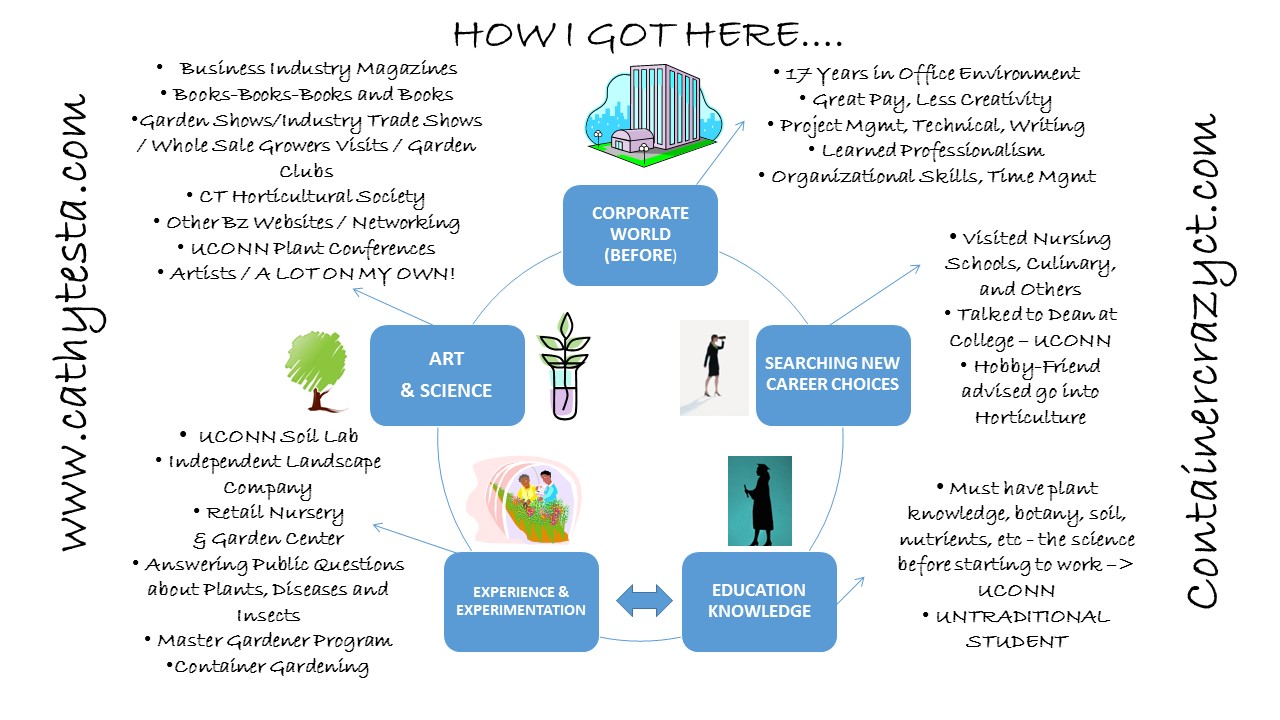
I provide small garden designs for homeowners, container gardens installs for homes and businesses, and offer garden talks and classes at various locations on horticulture topics, and sometimes sell plants, garden art, and container gardens at farmer’s markets. It’s a job I love to do and feel very lucky to enjoy, especially this time of year when May arrives. So, I thought why not share a questionnaire I completed for a Career Day at a middle school.  I attended the event along with other small business people to share what and how we do our jobs. If you are a tween or young student considering the world of horticulture as a future career – this may be of interest to you, or if you are a teacher wanting additional information about this career choice for your students, here it is.  Feel free to ask for more details.

Questionnaire

Be Respectful

How do you deal with difficult customers? – The rule stands!  The Customer is Always Right.  NO customer is difficult –they are presenting you with a challenge, make it fun and solve what it is they need; ask more questions to clarify; and also show them your knowledge and expertise, and they will learn to calm down if they are nervous or difficult when they see you have the experience and knowledge behind what you do.

If you supervise/manage people, what additional skills do you need?  — To be a leader, you must have excellent personality skills and organizational skills, sometimes people are born with these traits, and some styles cannot be learned.  To motivate your staff is key and the key is to also know what drives them — and each person has different ways they want to be rewarded. It could be pay, praise, or other things like that.

What makes a place a great place to work? – When you feel valued as an employee, are listened to, can contribute your knowledge and skills, – and anytime you do something that is like a HOBBY for a job – you will feel like every day is “not work”, but fun!  I love what I do, it is not work most times because I enjoy it so much. Think about something you do today as a hobby, and think if it could be a career.

Be Responsible

What can happen should you make a mistake?  — Easy, correct it immediately as soon as you know, apologize, learn from it and move forward.

What happens if you don’t work the hours you are expected to work?  — You get fired or let go.  You can’t treat a job like it is a game.., it is your responsibility to follow whatever guidelines a business establishes for their employees.  Basically failing to show equals failure.  Never forget, there is always someone else in line that can do the job you are taking advantage of – so if you don’t show up – someone else will.  If you like your job, respect the rules.

Be Productive

What education/job training do you need for your position?  –– See my handout – definitely horticulture, botany, knowing the plants are a must in the field of horticulture.  And learning or having a natural artistic ability is very important for design – it is a science plus an art.  I knew I had to learn the plants, how they grow, nutrients, soil, and the plants themselves – you cannot talk about plants if you don’t know their botanical facts and features.

What skills do you need for your job?  — Organizational skills, the hort world is fast paced, short season, in winter it is inactive or at rest, so you must be on-top of your game during the busy seasons, or you lose out on making money in the seasonal time frame. Business and financial management is also key if you want to start your own business.  And personal/interpersonal skills, plants are usually planted “by people” and thus you have to deal with people.  Introverts are not usually good designers for landscapes, you need to be able to talk with and understand your customers and clients.  You also need to use technology, applications, and take the time to read new materials or reference information about plants, marketing of plants, and any new news on things out there – say an invasive bug is out there on trees, you have to know to help solve clients problems with their plants as part of the job.  You need to know how to answer questions – because when designing, it isn’t just about the design, it includes the health of the plants, how they grow, etc.  Knowing how to do taxes and setting up your business legally is another skill you have to learn.

How are you measured on your productivity?  — I have my own business, so my productivity is based on results, how much I sell and also I tend to stay focused every day, and don’t let home distractions get in the way of my daily work for my business.

How frequently do you go for additional training?  – Probably every quarter – taking classes via things like Uconn conferences every winter, reading A LOT on my own via design books and plant references, reading a lot of blogs and college resource/reference databases on plants.  There are so many plants out there – you could learn one every single day and still not know them all by the time you die!  Seriously, it is almost like being a doctor having to know about all the diseases out there – the list is endless.  I took a 2-year Horticulture degree first, then gained good experience at nurseries, then went off on my own to do designs, then took the MASTER GARDENER program and I attend a lot of sessions at The CT Horticultural Society (FREE TO STUDENTS, CHECK IT OUT: WWW.CTHORT.ORG) and through other hort organizations and go to lots of big garden shows.

What skills do you use in your job that would surprise people? – This is a tough one to answer, I guess for me, surprising is that I had to learn how to hitch a big trailer to my big truck and how to unload materials from it and as a woman, some of my friends are surprised when they see me show up using equipment or power tools – this field of horticulture is expanding in the woman world, lots of women run big equipment for install jobs now, where years ago, it was mostly men contractors out there.  So if you are female, do not let that stop you!  It is an equal opportunity hort world!

What am I learning now that will be helpful for me in this career field?  –– Technology.  There are so many new gadgets coming out – all the apps now for iPhones really help to quickly reference information about plants, bugs on plants, diseases on plants, and tools like the color wheel app that may be used to select beautiful color combinations for your garden designs, I believe you – the younger generation of students – will be the ones teaching us older hort people because you are faster at learning the technology than we are!  Landscape programs are really useful too.  I just loaded the Square Up program in seconds the other night to accept credit cards when I sell plants at farmers markets for example, the technology moves at warp speeds, keeping up with it is the latest new thing I’m learning.

Be Safe

What can happen should you make a mistake?  — Harmful plants such as invasive can be a big problem if planted in someone’s yard, you have to know if a plant can creep and literally take over the whole landscape – that could be a big issue.  Also, Call Before You Dig, warning clients of proper procedures before they plant is critical.  Knowing your limitations and expertise, knowing how to direct clients to specialists in certain aspects of landscaping, such as hardscapes, paver, building materials, for example.  If you make a mistake, someone can get hurt so do your research first and advise appropriate to your clients.  Design does have risks, especially if there are building materials, ground problems in the area, water runoff to rivers is critical, you have to know if you could pollute a water source with fertilizers or underground pipes, stuff like that.

Do you have any security/safety measures in place?  — I don’t handle installations so my risk is limited.  If I had a crew, I would get the appropriate insurance and licensing.  It is critical to protect yourself in the event someone gets hurt on the job, etc.

Handouts


Slide1 Slide3 Slide2

Presentation

Cathy Testa Career Fair Hort and Plant World PDF File.  For the complete presentation, contact Cathy Testa at containercathy@gmail.com or 860-977-9473.   Written by Cathy Testa

Upcoming Events:

Don’t forget to check out Cathy T’s Container Gardening Class on May 24, 2014 in Broad Brook, CT.  See also Cathy T’s Garden Talks.

Please share or join this blog by entering your email on the sidebar, you will get updates via email and special offers or coupons of upcoming classes as a Cathy T blog follower!

← Back

Thank you for your response. ✨

Top Photo Attribution: “Student icons set” By digitalart, published on 24 July 2011 (Stock Image – image ID: 10051001)

Chicken Coop Infographics – Tips for The Chicks’ New Home!

4 Comments

Hi Everyone,

If you have ever considered building your first chicken coop – below is a great Infographic to help you get started.

I made some errors the first go around when we built our first chicken coop and outdoor access pen.  Probably the funniest error made was we used the wrong chicken wire size for the outdoor pen, and when I excitedly put my new baby chickens into the outdoor pen, they immediately walked out through the spaces of the wire because it was too large!  Duh!  My brother, who helped me build it, stood there laughing with me as we witnessed our obvious mistake in action.  I remember saying to him, “Well, don’t we have egg on our faces right now?”

Predators Abound in Our Yard

I’ve tried two rounds of raising chickens at my home, but free ranging resulted in another error – the untimely death of my chickens over time by wild predators.  My backyard is quiet, wooded, and has a river behind it so the predators seem to hang out there. They would wait for the chickens to return to roost in the coop at sunset and bang, get taken.  Not good. And sometimes during the day, hawks would swoop down to get them.  Amazing how they spotted them so quickly in our yard.

There was another time when we came home from dinner, and one of our chickens was perched on the railing by our house door. They had never done this before, so we thought – what is this about?  My husband carried her carefully back to the coop only to discover a pile of feathers.  A predator had been there – and the smart chicken waited at our door until we got home – and they say, chicken’s aren’t smart?  

And, I swear, another time, when I was tending to some plants along side the outdoor pen, I sensed something watching me.  Not saying I’m psychic, but I remember turning around to look in the woods.  Were there predator eyes on me? Could it have been a fox or even a bobcat (we saw one once) waiting for me to leave for another opportunity of a tasty evening meal?  Perhaps.  Or perhaps it was just my vivid imagination.

Anyhow, the bottom line is, the new chickens will have to stay in the pen and coop this go around. Our outdoor pen is plenty large for them to roam. Once you let them out – they never forget their experience of checking out every area in the yard, including my neighbor’s gardens (another story for another time).  It is kind of like when cats have wet food.  Do they ever forget how great it is? Nope.  Neither do the chickens.

New Chickens for 2014

This year, 2014, I’m in round three of trying again to have chickens at my home with some new rules and changes.  I’ve updated my coop based on my learning experiences, won’t allow free ranging (they will have a big outdoor pen and a chicken wagon planned on the agenda for protected roaming outside the coop and pen), and a better equipped coop.  Our coop, by the way, is a small standard shed we purchased and modified.  We put a door on a hinge in one of the side walls for them to exit everyday; and the door locks at night, and we made roosting boxes out of old antique veggie shipping crates. We added a pole as a perch in the shed too.

Chicken Coop Infographics

I plan to share photos of all later, but for now, I wanted to share a great Infographic on the do’s and don’t with a check list so you don’t have to redo it again, like we have.  It shows 46 ideas to help build the best chicken coop.

New Baby Chicks

Below is a photo of my four Rhode Island Red baby chicks being held in a warming coop by my brother until they are a bit bigger to transition to my chicken coop in about a month or so.  I can’t wait to have them home soon.  

In the meantime, I’m accessorizing the coop – and adding more plants on the outside of the outdoor pen area, which by the way, grow well there because of the organic fertilizer (chickens poop droppings in the soil from my prior chickens).  I have a couple boxwood shrubs growing there, some Helleborus, Epimedium, Daffodils (which are coming up now), Azalea, and some container gardens are added here and there too.

Contest to Name My New Chickens

Right now, there is a Facebook contest on potential names for my new chicks.  One friend posted, “Kiev”, “Parm”, “Francais”, and “Wings”. I think he was hungry, and of course, being silly, at the time.

We will see – We will have to check out the chickens’ personalities first — and they do have personalities, believe me.

New Baby Chicks 2014

New Baby Chicks 2014

Happy Hump Day Everyone,

Cathy Testa


Goofing Around with My Camera (Birds, Wild Turkeys, and More)

2 Comments

Yesterday was a gorgeous early spring day, and I decided it was a perfect day to get some outdoor activities done.  I brought along my Nikon Coolpix L120 camera to take photos, and decided this morning to post some shots.

March Photos_0001

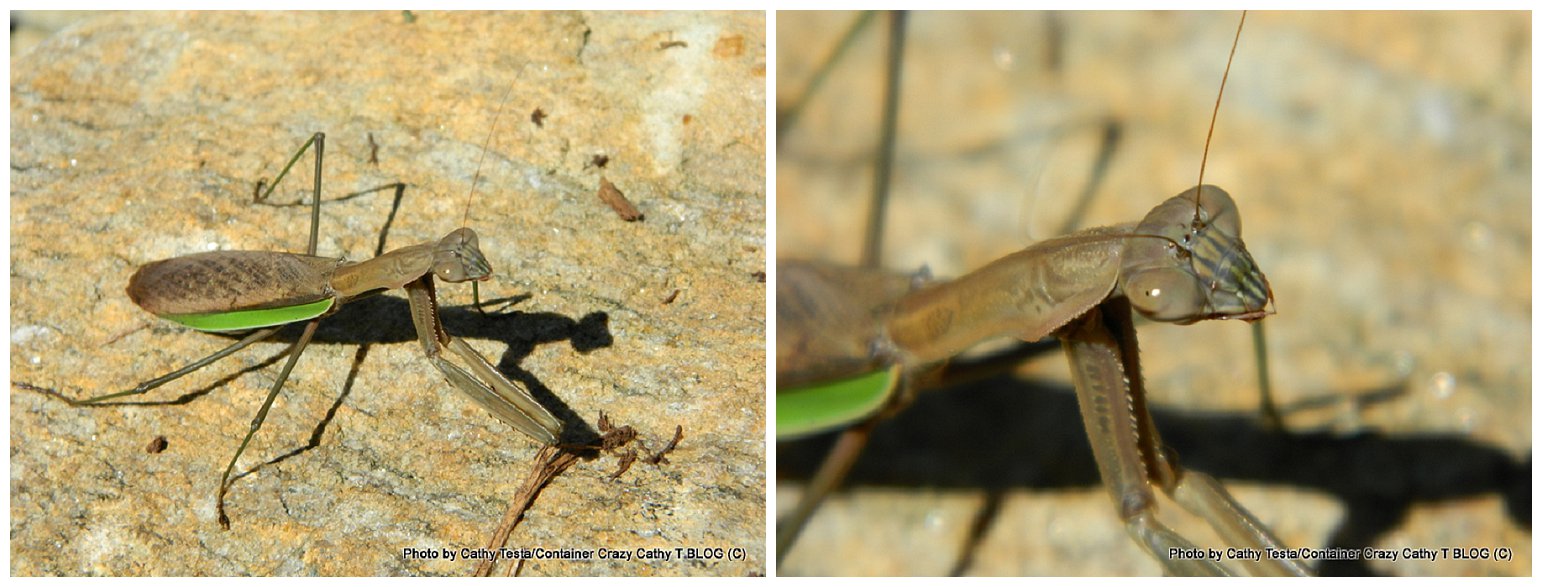
When I turned on my camera, I discovered some photos taken prior still remaining on the memory card.  I spotted this big momma of a praying mantis on a rock in a garden bed last year.  The shadows on the rock from her body are neat — and that look she gave me as I approached with the camera lens as I zoomed in closer, oh my!  I can see why my friend fears these small but mighty insects.

March Photos_0002

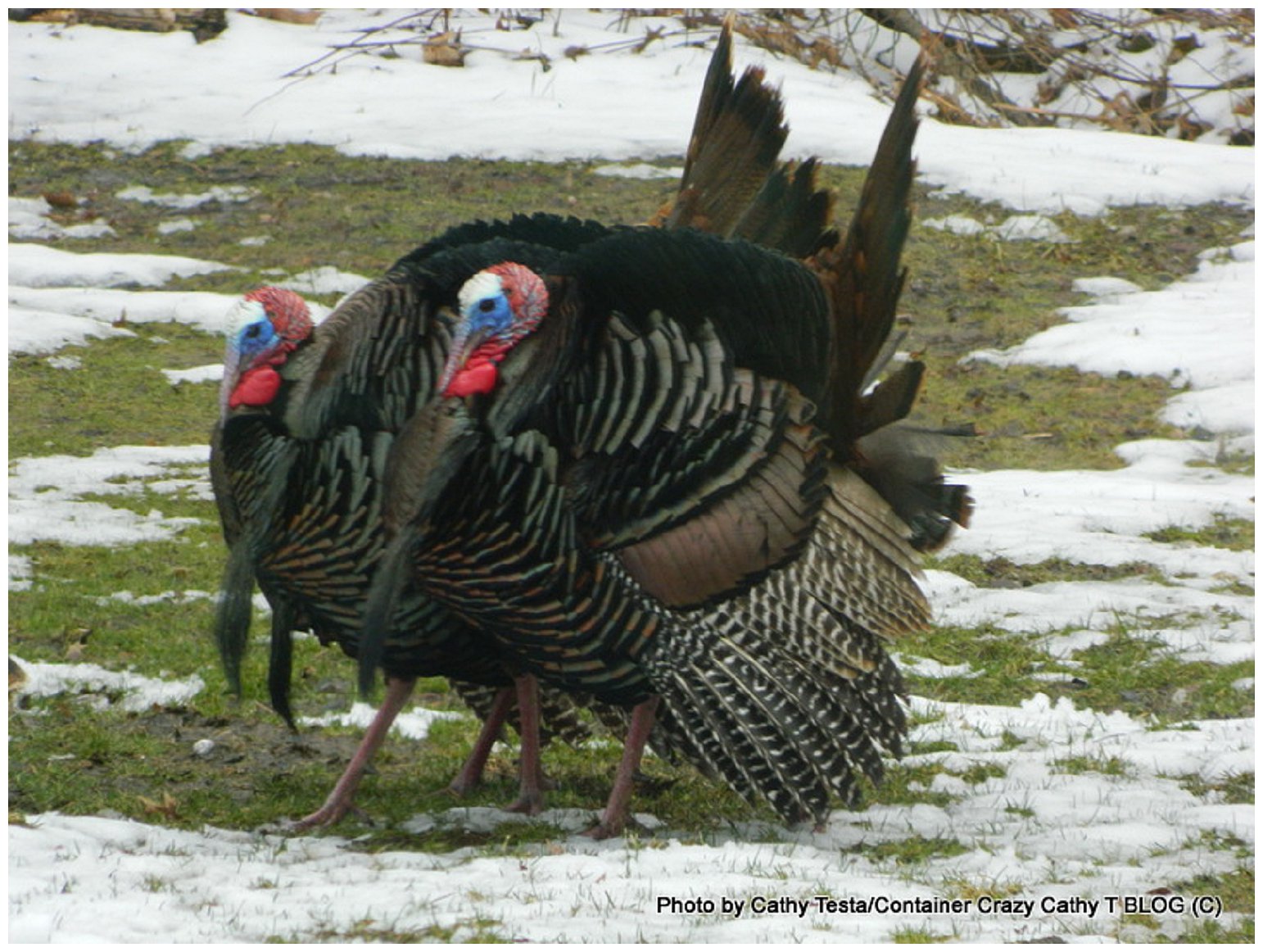
Here are some photos of wild turkeys in my yard. I’m pretty sure these were taken Tuesday, as you can see, the snow was beginning to melt away from the unexpected storm on Monday of this week.

March Photos_0003

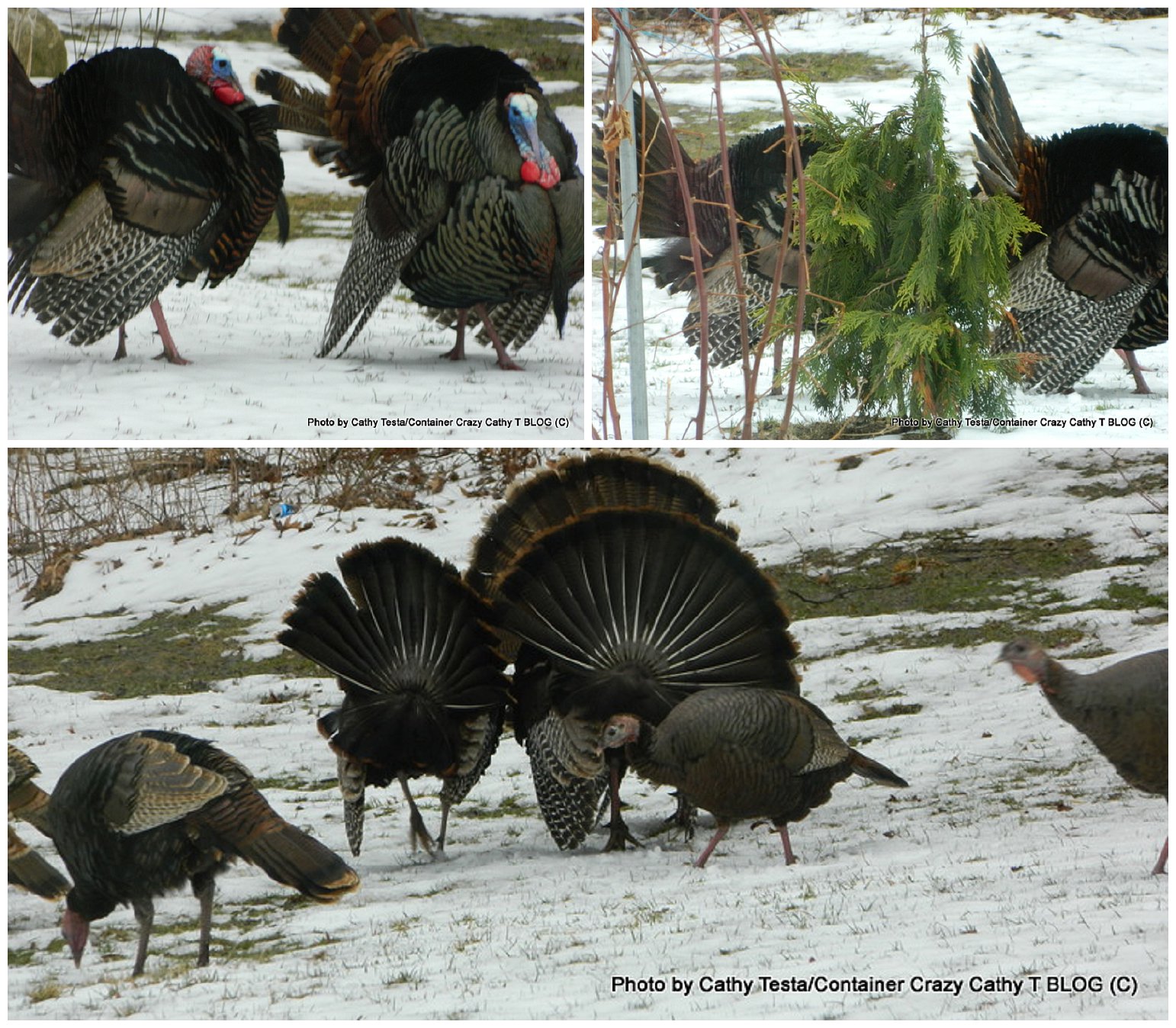
The tom turkeys were getting very showy as they were doing their thing. The red and blue coloring on their faces was really intense that day – not sure if related to being angry or mating.  It is like a nature channel around here.  A week before, they were having battles in the yard – and I posted a video of that on Facebook.

March Photos_0004

A shot of their butts as they strut their stuff.  See the turkey on the right corner of this photo – she noticed me – they have great vision – and I guess never need eyeglasses – unlike me!  I took some of these turkey photos through my house windows because they also hear very well and bolt when I open the door.

March Photos_0005

Ah yes, aren’t you beautiful?!  He is workin’ it!!

March Photos_0006

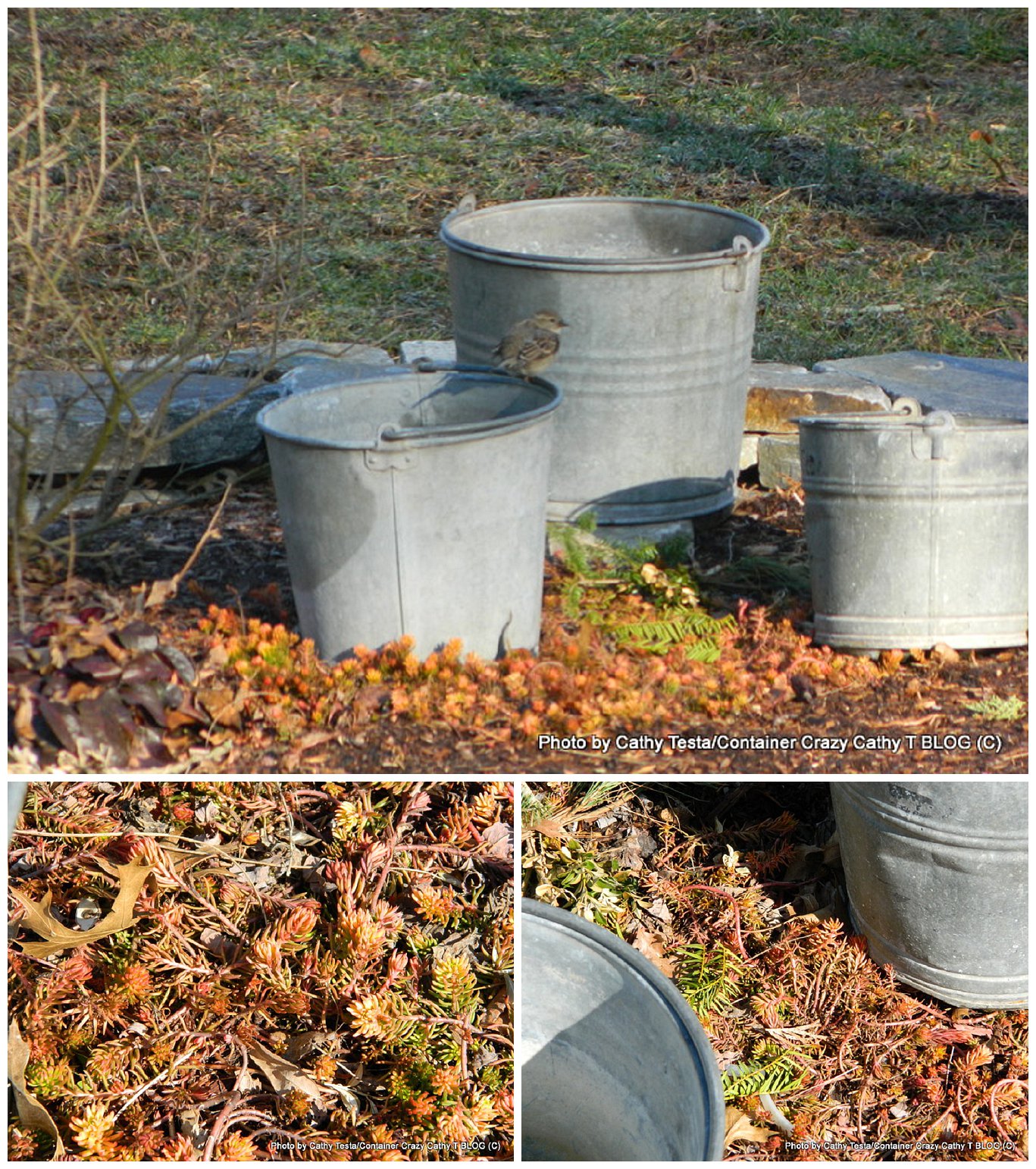
I wish you could hear the birds in my yard – it is a symphony right now as they bop around and move into the various birdhouses. I got this shot of a bird on my galvanized buckets.  The Angelica Stonecrop (Sedum rupestre ‘Angelica’) is a bronzey color right now as it awakens from winter.  This perennial is tough and enjoys full sun, coming back year after year. It doesn’t need lots of water and grows close to the ground – making it a useful ground cover.  And it grows relatively fast but doesn’t take over.  It makes a great container plant too.  It will plump up soon and eventually turn a bright yellow color as the season warms up.

March Photos_0007

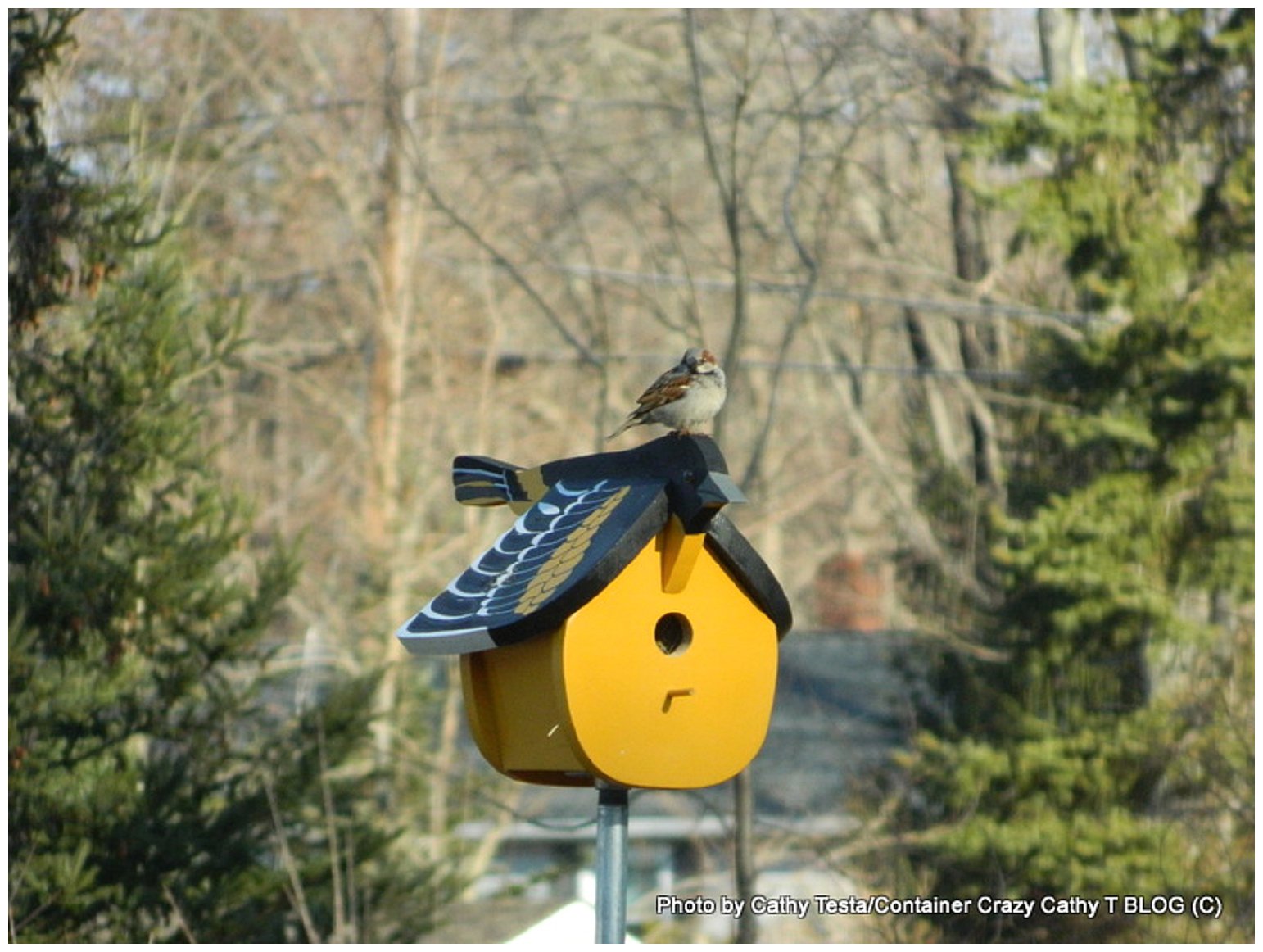
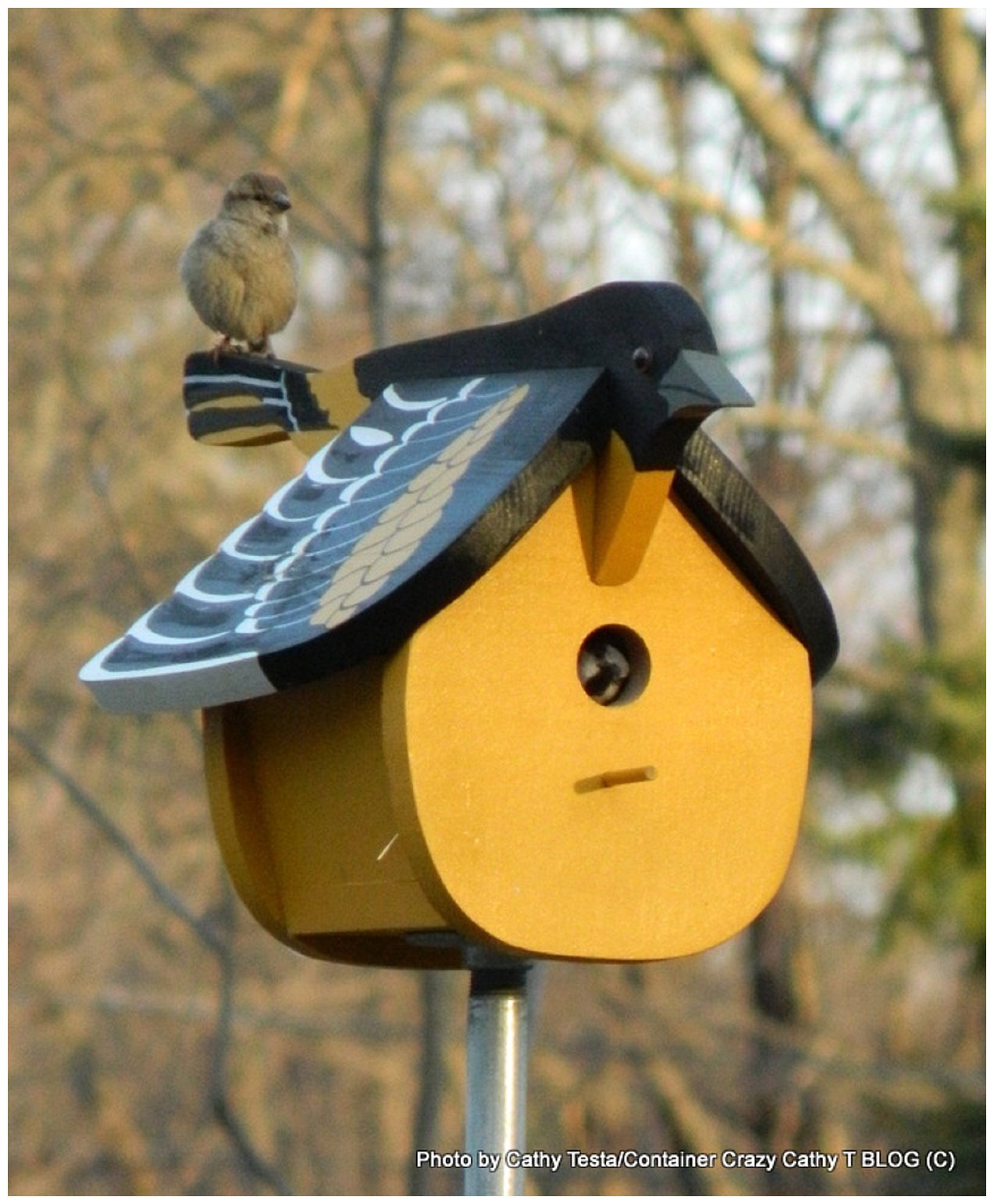
The galvanized buckets are located below this new birdhouse we put in last year.  I blogged about our process of using a rigid electrical conduit as the pole.  You can see the steps here.

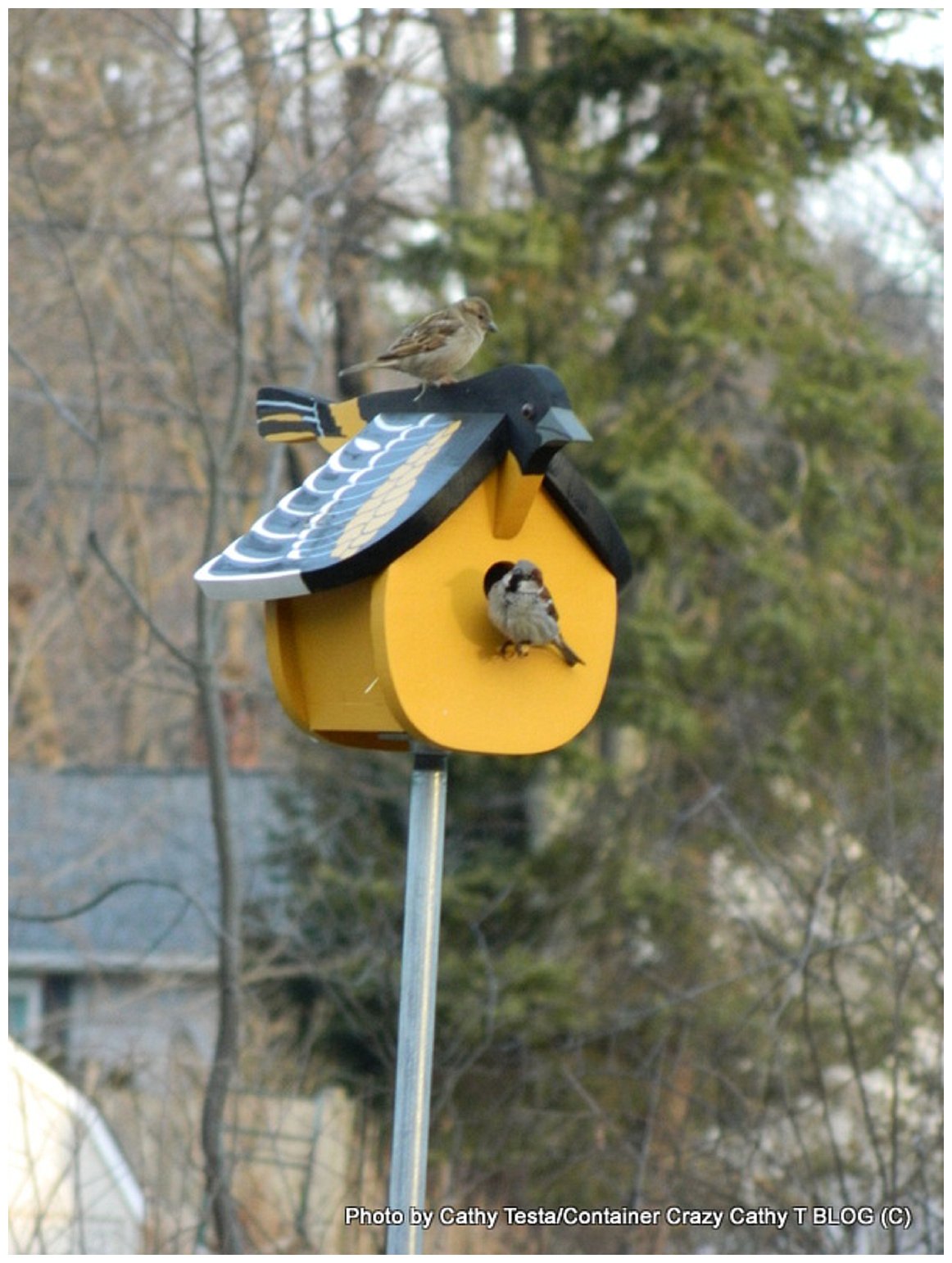
The two birds setting up their home in this birdhouse above are adorable.  I love how they perch on the birdhouse and fly in and out – they are very happy right now.

However, this next bird is driving me nuts.  We had gutter covers installed, and they move into the ends of the gutters – ugh. They are noisy too.  They have done this on the garage and the house.  In fact, I can hear a rattling noise as they go in and out of the gutter by my home office windows.  We have to do something this weekend to prevent them from using our gutters as a home.  I don’t know what these birds are called, do you?

March Photos_0008

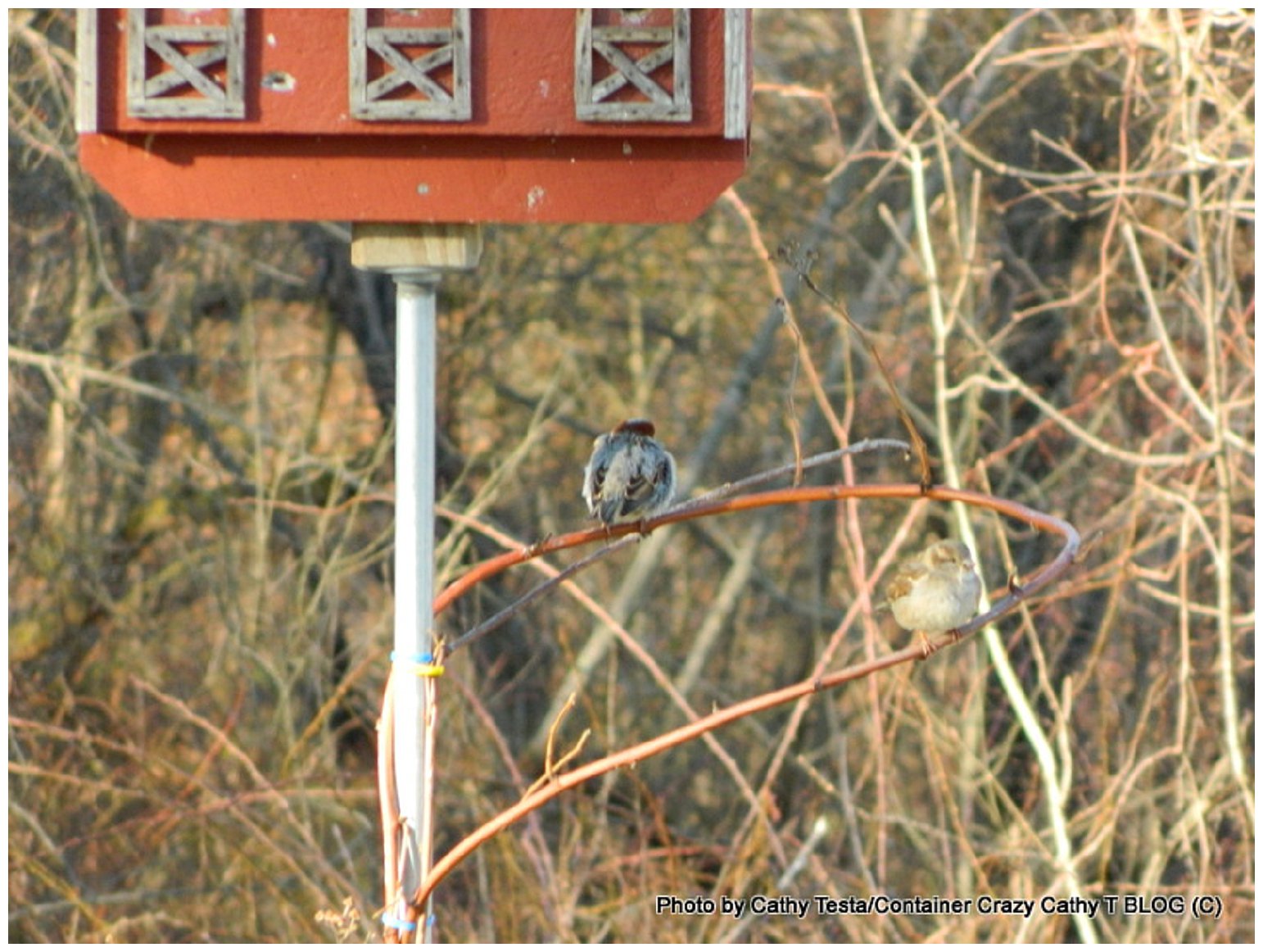
We put a blackberry plant below another birdhouse in the backyard, and the birds love to use the plant’s vine as a perch.  This birdhouse is getting a little old but still very useful for our feathered friends.

March Photos_0009

When walking past my gold Arborvitae shrub (Thuja plicata ‘4Ever’), I spotted another praying mantis egg case!  That lady at the top of this post was doing a lot of egg laying last season.  I guess I will have lots of praying mantises in the yard this year – see my blog post about where baby praying mantis come from.

March Photos_0010

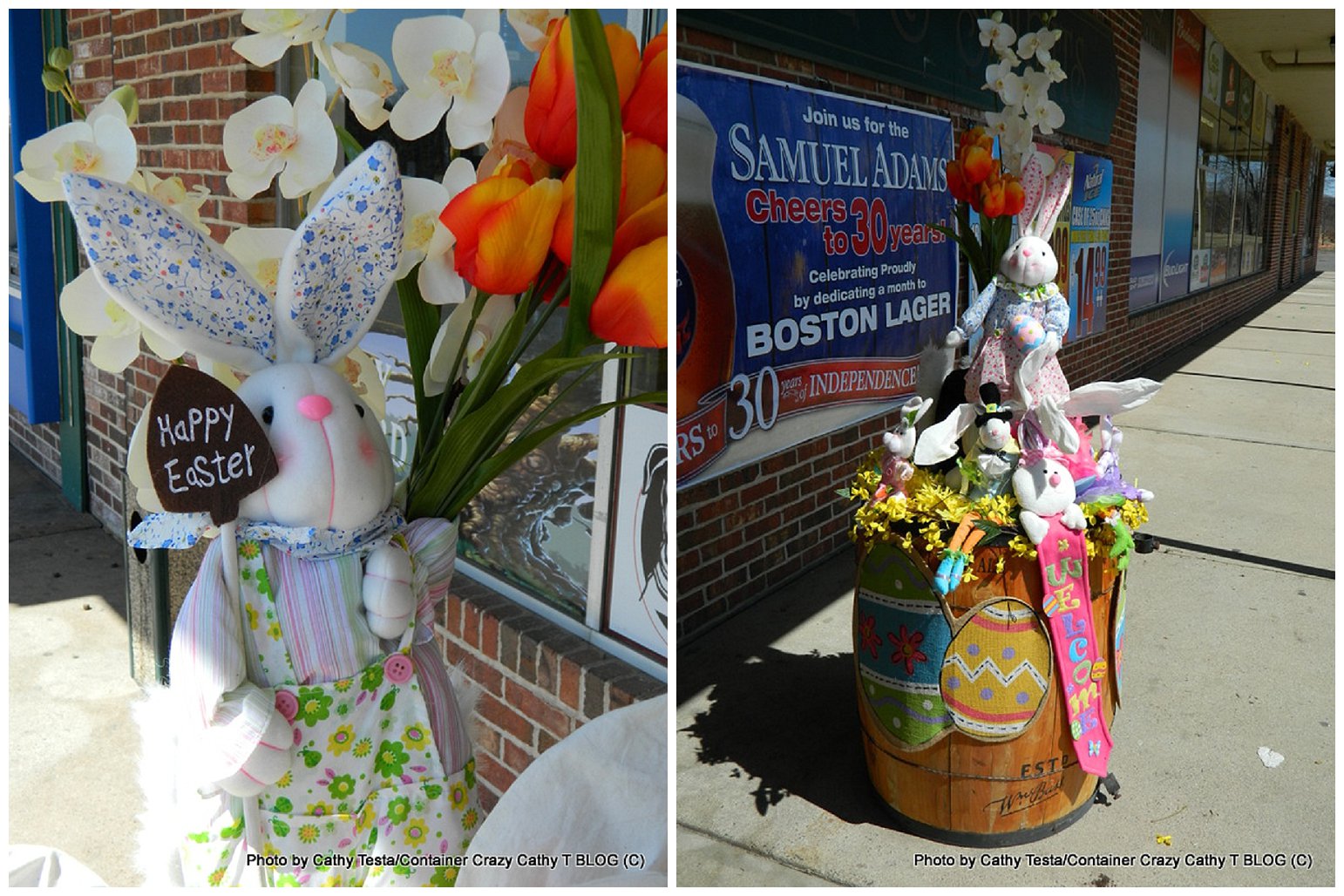
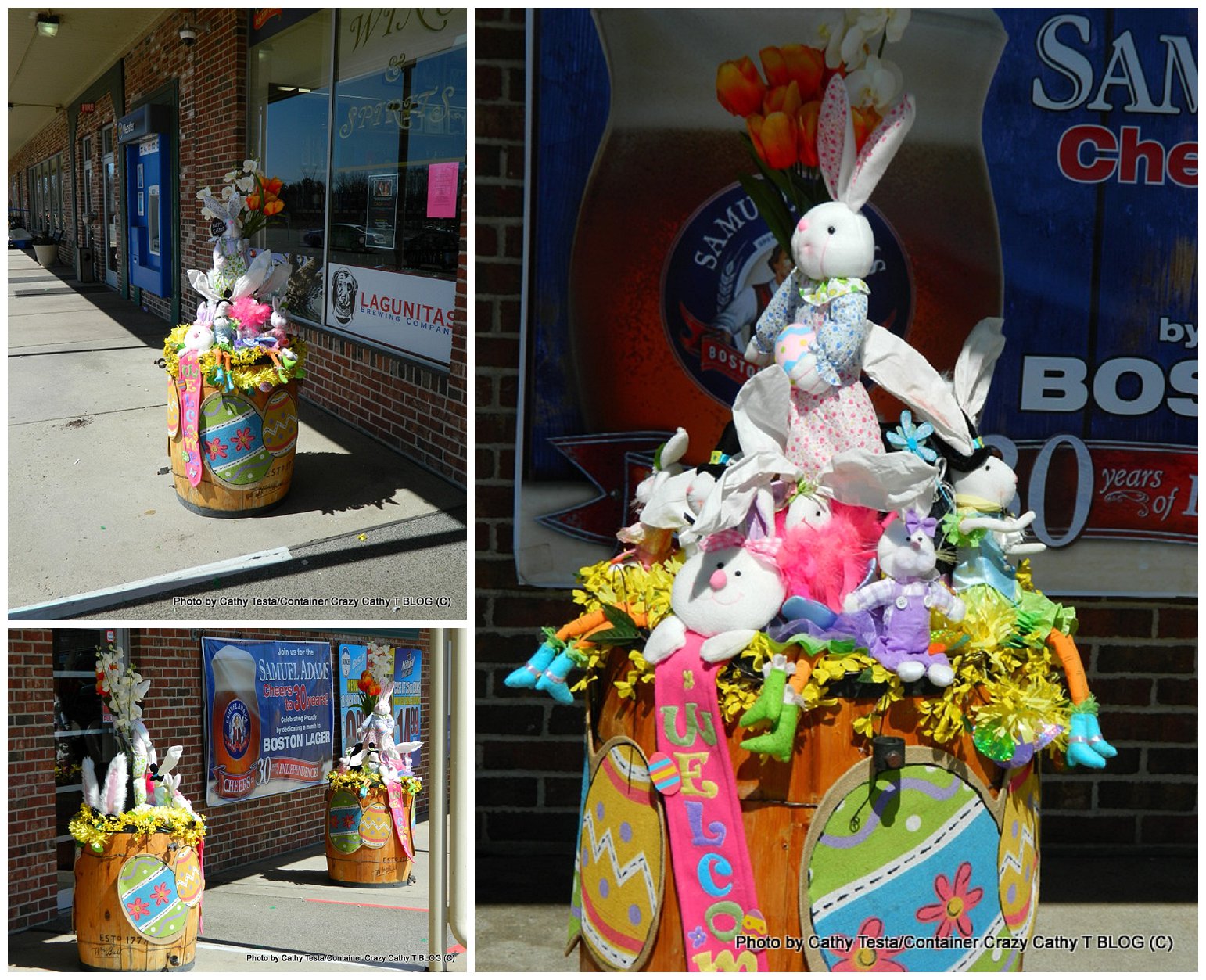
After goofing around, taking general photos for fun, I went to do a container install for a client at the entrance of his store. It was so sunny out, thus the perfect time to work outside.  One customer entering the store called me, “The Martha Stewart of the Package Store,” because this store is a package (a.k.a., liquor) store.  Her statement made me laugh – I liked it – yup, dressing up a liquor store – is fun!!  And the patrons of this store seem to enjoy the changing up of the theme every season – they always comment as they walk by.  It makes me happy. This is what I ended up creating for the Easter season theme this year.

March Photos_0011

A friend I know from a gardening event we planned about three years ago came up to chat with me, and she asked, “How do you assemble these?”  Well, I got creative, making a large round disk out of recycled wood and drilled a hole in the center for a post.  Some of the items are attached to the post, and some on the disk below.  When I came up with the idea, I kind of felt like a cake decorator – trying to figure out how to put it together and transport most of it.  More decor is added while on site to finish up the installation.  Because the outdoor location can get windy, all items on the arrangement must be secured. I’m looking forward to installing plants in these barrels next time, after the Easter holiday.  Plants are my favorite to do in these big barrels.

March Photos_0012

March Photos_0013

Most of the non-living decor is felt or made of other materials able to withstand the effects of outdoor winds, dirt, and bright sun.  Sometimes I have used tinsel, but it fades after a few week from the sun.  To see more of the ideas I’ve come up with, see my collages here.  By the way, I’m for hire to do container installs for businesses or homes – so just call me if interested.  It is a great way to welcome your visitors and customers.

March Photos_0014

When I got home, after finishing the containers at the store and going to the grocery store, I took a black and white photo of my plus-size cat, Kiwi.  She’s actually been on a diet but it doesn’t seem to show yet. Anyhow, she likes to look through the deck railings at the birds moving around here.  I took a few minutes to get my Vitamin D on the deck before making dinner. In fact, I peeled carrots while sitting on a deck chair – my first deck activity for spring.  Nothing like letting carrot peels fly outdoors.  An easy cleanup by the raccoons tonight, I thought.

March Photos_0016

This birdhouse has an interesting story – Steve, my hubby, spotted it at Comstock Ferre & Co in Old Wethersfield, CT, and bought it on the spot.  When we got home, we read the paper provided with the birdhouse about its maker and the materials he used to make it.  Well, low and behold, the slate on the top was salvaged from Broad Brook – the town where we live.  A few months later, I met the birdhouse maker at an art show.  I showed him my pictures of it with blackeyed susan vine flowers twining up, all the way to the top, from last summer.  I can’t wait to put a climbing plant on it again this year.

March Photos_0017

Morning hours seems to be a great time to try to capture photos, as I did here this morning.  I’m not a pro photographer by any stretch of the imagination. I just goof around and click for fun.  Maybe someday I’ll take a class so I can figure out how to do it right, but I still think these photos of the birds are just adorable.  I love having all the wildlife in our yard.

March Photos_0018

My hands tend to move a bit when I try to zoom and some pics come out blurry – ugh.  But can you see this little guy looking out of the birdhouse?  Too cute!

March Photos_0019

I cropped it here to get a closer view.

Happy Friday Everyone!  Let’s hope for more sunny days to come.

Written by Cathy Testa

UPCOMING CLASSES:

Don’t forget to check out Cathy T’s Container Gardening Class on May 24, 2014 in Broad Brook, CT.  See also Cathy T’s Garden Talks.

Please share or join this blog by entering your email on the sidebar, you will get updates via email and special offers or coupons of upcoming classes as a Cathy T blog follower!


Was Gone Playing in the Snow

Leave a comment

IMG_2511

I was up north in Vermont playing in the snow for a week.  

Think it is winter like here in Connecticut?  Think again!  

There were no signs of spring up north last week – That is for sure.

But we decided to embrace it, rather than fight it. 

Will post more later – Just a quick note to say, “I will be back soon!”  Cathy T

Had a Crazy Dream Last Night

2 Comments

ID-10021572

I had a crazy dream last night, or this morning depending on how you look at it, but I remembered most of it when I woke up.

It started with trying to find an exit on the highway, but along the way, I discovered an old friend standing in the middle of the road throwing bombs or fireworks in protest – of what? — I don’t know, but I told her, “Hey don’t you know this is considered fraud? – you can go to jail!”

Fraud – for fireworks?  Not sure where that was going.  But I could not get past her, and now I had to find an alternate route around her somehow to where I was heading – which is where, I don’t know?

I knew there was a building nearby with an elevator that could get me to the other side of the highway, and I knew the path.

So I find this elevator in some building by the highway, but when the doors opened, there are two drunk guys in the elevator.  One takes off quickly as if he didn’t want to be discovered.  The other stays there pretending he was just napping and not really drunk, but I said, “Hey Preacher, I know you were sleeping off a party night – you can’t fool me.”  He was annoyed at this and left.

A preacher?  Huh?  Why was he there in this dream?  And why was he drinking?  Why did I know?

After getting off the elevator, a friend (a new recent friend of mine in real life) was there with me. Her name is Rene.  She said she was trying to get to the same location as I.

So as we started off, we were once stopped on our journey again – for some reason.  Another obstacle – I don’t remember what that was, so we had to hitch a ride to get back to the highway.

How we got hitched up with some lady and a couple of her adult kids in the car, I don’t know but she took us to her house first – before taking us where we wanted to go.

When we got out of the car, Rene stepped out along the edge of a perennial bed right next to her feet which was located right next to the driveway’s edge.  There was no other space to step into as she got out of the car.

But Rene’s feet fell right through the soil, and you could see a big large open area right below the bed, like the soil bed was placed over a underground hollow hole.

When her foot fell through, I was worried for Rene because she has health problems with her body, and I thought, “Oh don’t get hurt, be careful.”  We got her out of the hole carefully.

The lady driving the car walked us over to her yard.  She had big flowers in one area.  Some were Dahlias, large sized Clematis, and some roses.  I noticed aphids on her roses and casually said, “You have aphids here.”

She didn’t seem to take notice or care at what I said, and I kind of didn’t care if she heard me either.  We were just being patient waiting for her to take us back in the car for our ride to our destination.

After looking at the big flowers in the palm of my hands as I touched them, she casually moved a couple feet in the yard to an enclosed small garden space. It had two brick walls joined together on one side to create an L-shape, and other sides were open facing the driveway and not the other way, where there was a view.

In the center of this enclosed area were tall obelisks with plants going up and the ground was brick – and there was a couple flowering shrubs on the open side, but in my dream, I was unimpressed.  I thought the space was odd.

Then the lady says, “I have to speak to ‘so and so’ (the exact name, I can’t remember, but it was her designer and gardener and it sounded like a famous one) about those aphids.”

Suddenly, I could sense a breeze from an ocean beyond.  I realized her property was facing an ocean, but the brick walls blocked the breezes in her garden corner.  And I thought the obelisks were silly and the area had no Feng Shui.

All the while, I felt it unimportant to tell her I had some design ideas to change her space, or that her space seemed outdated.  I thought her fancy designer was not really designing anymore, just maintaining.  And the maintenance was routine, and looked a little boring or unkempt. There was no vision anymore, just a sense of someone took care of it and ran out for their next maintenance job.

But for some reason, I felt no desire to tell her I was a designer. I could critique this garden, but I thought I probably should not tell her so, because that would be impolite, plus I kind of didn’t feel overly compelled to do so.

The fact the walls were blocking the ocean breezes and confining her plants in an odd way was maybe cool for some reason before, but it felt strange now.

I also sensed the problem with the bed along the driveway was there to cover some mysterious hole and wasn’t working – plus it was dangerous.  Not a place for a garden space, but again, I didn’t mention my concerns, nor was I asked.

Why my new friend, Rene, was there in my dream? – I’m not quite sure.

Why my other long-time friend was throwing weird bombs on a highway which prevented me from getting to some mysterious destination? I don’t know.

Dreams are weird.

This is all obviously trying to tell me something – and what that is – I DON’T KNOW.

Or maybe it was just the sushi food with a pomegranate martini I had last evening which was talking to me and the dream meant nothing at all.

I just felt compelled to write about it.

Written by Cathy Testa

Photo above by:
Salvatore Vuono/FreeDigitalImages.net

The Blackberry Harvest

1 Comment

Nancy Farmer, a self-employed artist in Somerset, UK is my favorite artist when it comes to drawing fairies with various themes. To see her work in progress is a gift to anyone taking note. With her permission, I’m reblogging this one of “The Blackberry Harvest”. Don’t forget to look back on her work in my blog post about the castor bean plant too!

Nancy Farmer's avatarArt by Nancy Farmer

From 12 Views of (Glastonbury) Tor…

Another print for the 2015 calendar is done – this one was printed from the plate I featured in my post on ‘imaginary drawing’: http://nancyfarmer.wordpress.com/2014/02/07/drypoint-and-imaginary-drawing-more-views-of-the-tor/. That post shows me in the middle of creating the image on the aluminium plate, with sandpaper, burnisher and pointy tool. All that guesswork… but I am quite pleased with how this one came out now. Sandpaper is my new favourite thing, which is odd because having been a jeweller I used it for days on end and never discovered a liking for it before!

Here is the Blackberry Harvest on the Tor:

drypoint print - the blackberry harvest drypoint print: The Blackberry Harvest

close-up of drypoint print - the blackberry harvest close-up of The Blackberry Harvest

View original post

Agave ‘Kissho Kan’ – When it Flowers, I’ll need a Shot of Tequila

3 Comments

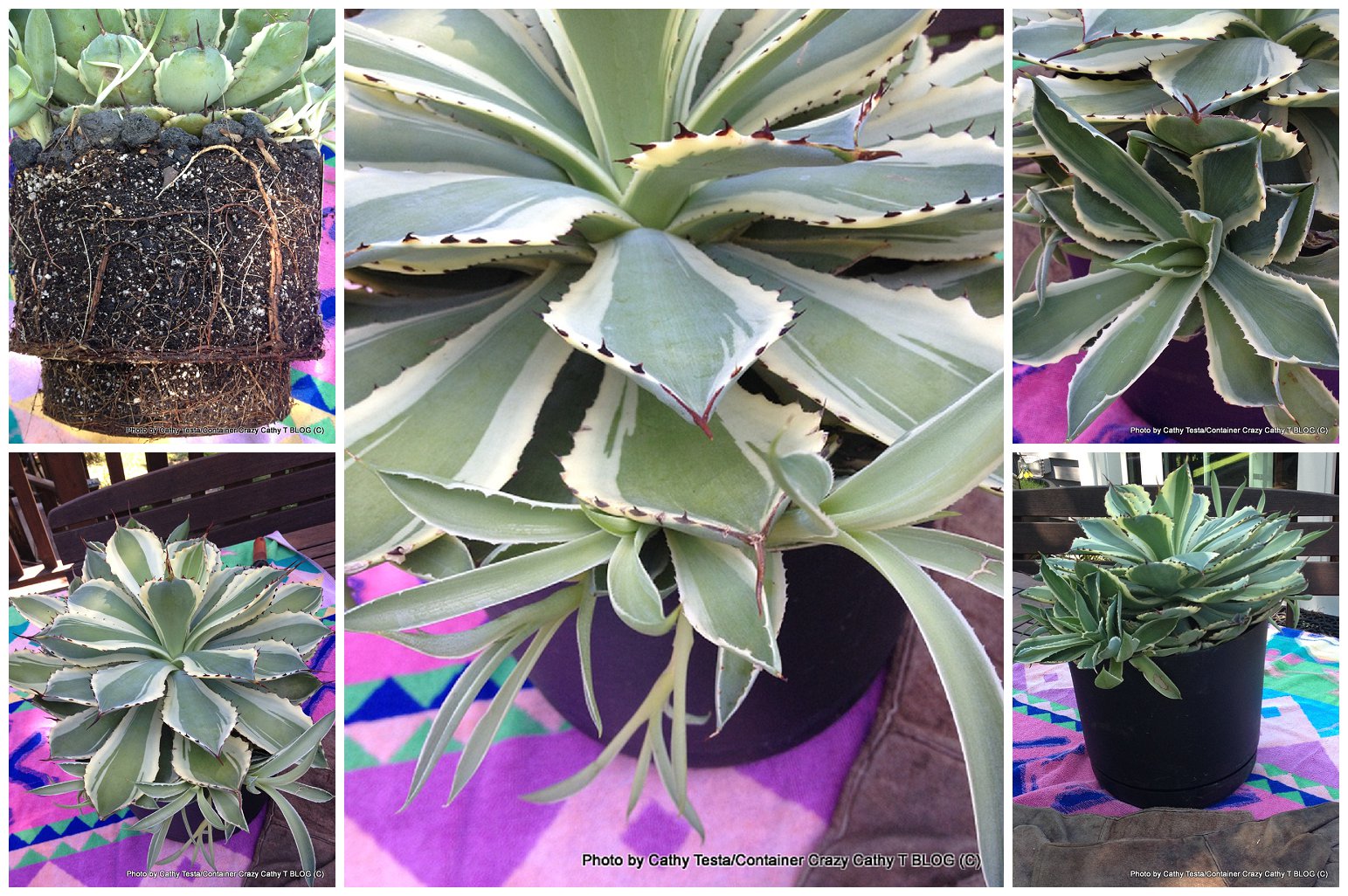
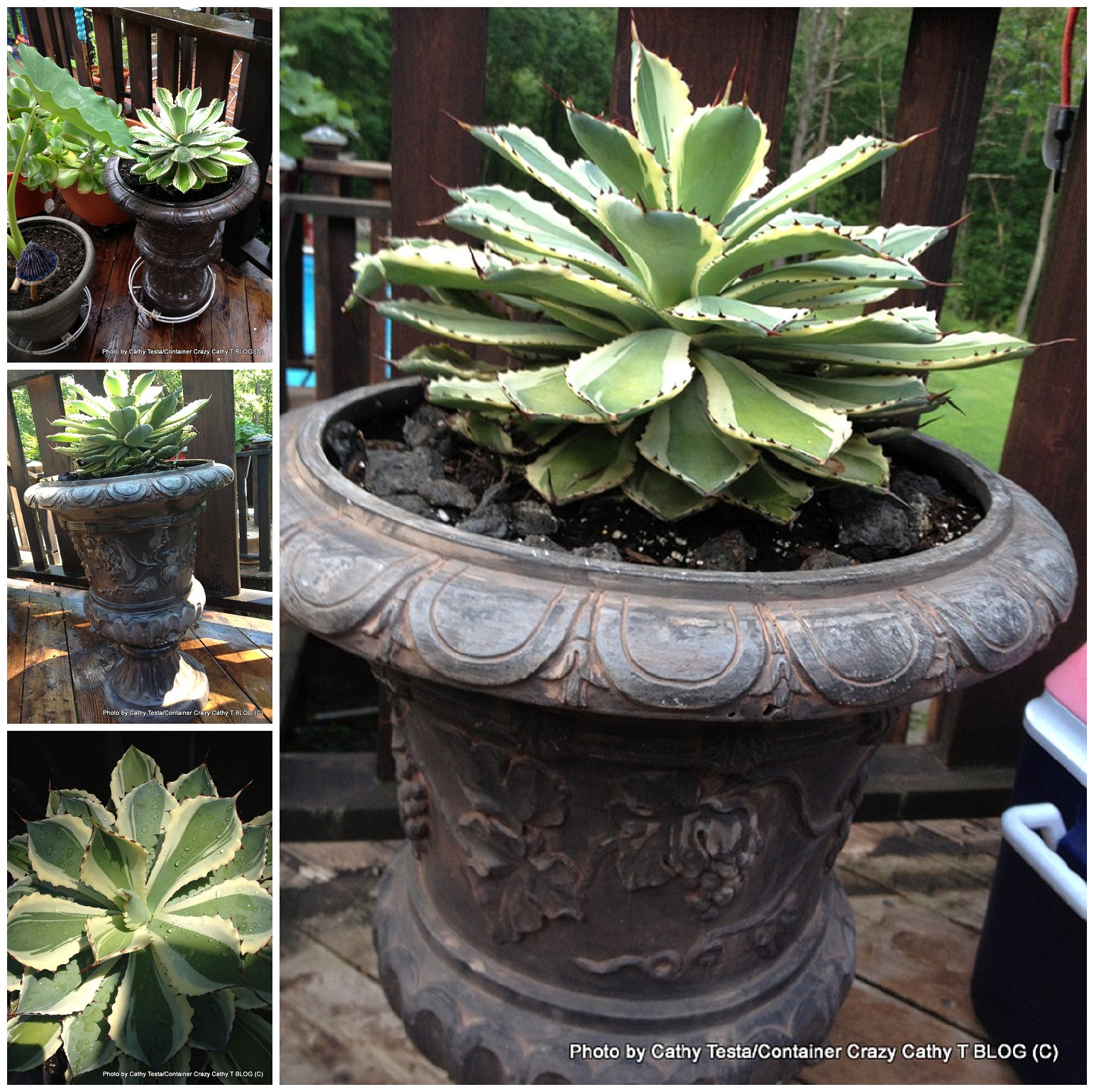
Agave ‘Kissho Kan’ (Century Plant) is a tough and beautiful ornamental succulent plant for container gardens. The plant has a strong form growing in a tight symmetrical rosette.  It has more coloring than many other species of Agave plants.  It bears creamy light yellow coloring adjacent to the blue green centers on its leaves.  And the spines at the tips are cinnamon colored but prominent enough to be used as a color echo in a mixed container garden.

Original Plant

Original Plant

Besides being beautiful, it is a really easy to grow plant.  Low-maintenance, it will last for years and potentially bloom (if you are lucky), and then die.  Yup, croak.  However, it will offer up Mini-Me’s over time as offshoots from the base prior to its death.  And if the plant lasts at your home long enough for it to offer its flower stalks as its final gift to you, you may in turn want to honor its life and eventual passing by downing a shot of tequila — because, as many folks know, Agaves are used to produce the strong elixir.

Rosette, Spines

Rosette, Spines

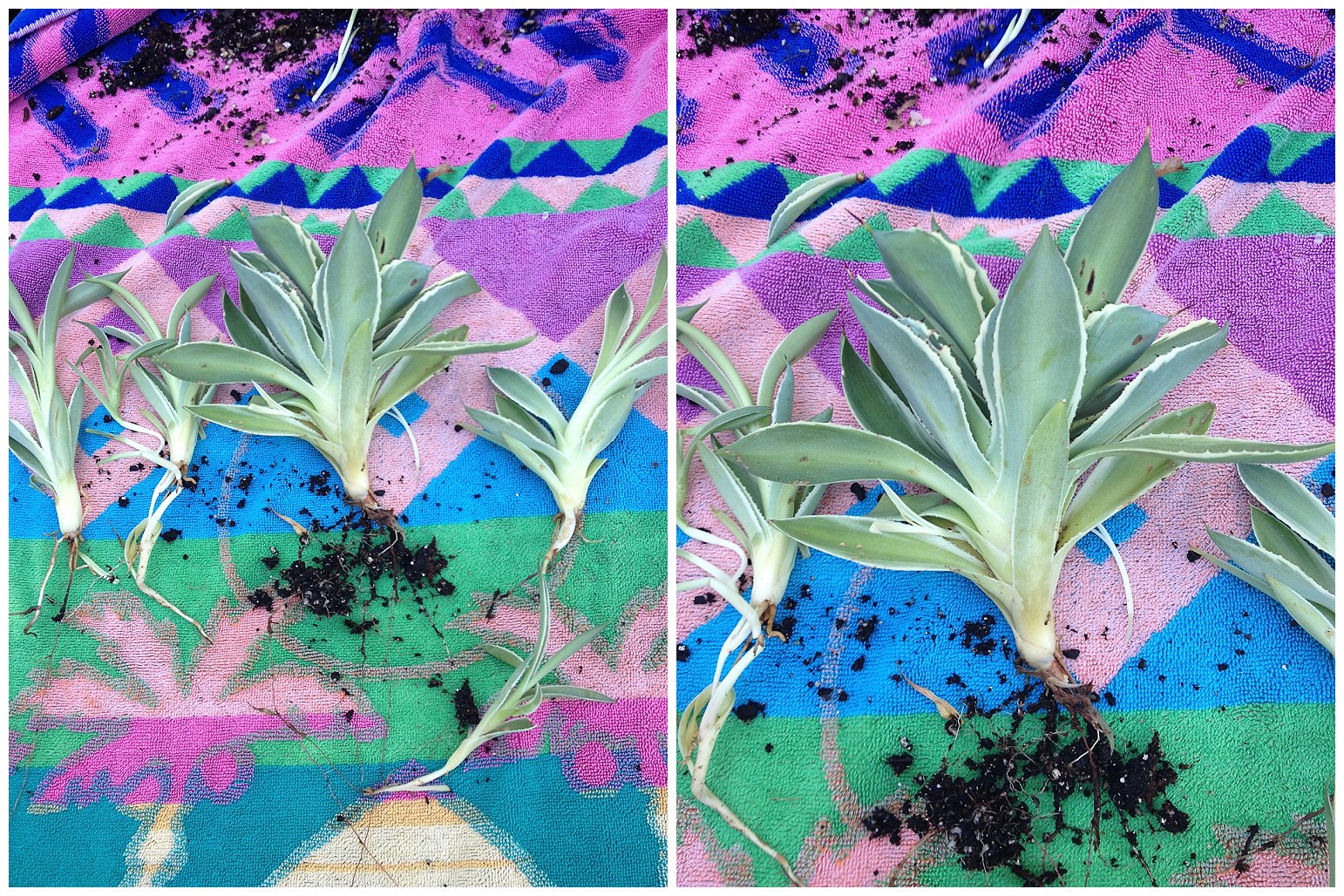
Mini-Me’s from the Mother Plant

When mine was sprouting offsets (Mini-Me’s) at the base, I decided it was time for it to be re-potted. I grabbed a couple special gardening tools and selected an urn I had in my stock (perfect as it was one size up from the former pot).  Collecting up some tools, I did my propagation routine which was easier than I expected.

Getting Ready to Repot

Getting Ready to Repot

Tools:

  1. Beach towel
  2. Large grill tongs
  3. Fish tank gravel
  4. Potting mix amended with some coarse gravel and sand
  5. Thick garden gloves, the type with rubber fingers and palms
  6. Coarse airy stones for the top of the soil

The beach towel was used because I was lazy, and wanted to grab something quickly to put on my table to collect any fallen soil as I worked.

The grill tongs used because I couldn’t think of what else was handy to hold onto the Agave, but it turns out I didn’t really need those cause the plant easily shook out of the pot onto the towel.

The fish tank gravel was from a fish tank years ago.  I knew I’d find a use for it.  It was washed and rinsed prior to filling the base of the urn with it, to about a 1/3 of the way up from the base for drainage.  Remember, well-draining soil is critical for this plant.

The thick garden gloves, well – for obvious reasons. To protect my hands from the Agave’s spines at the leaf tips.

And lastly, coarse porous black stones were for the top of the soil.  Agave plants sit so close to the soil line that putting some barrier material between it and potentially wet soil will help to avoid rot situations.  Also, the soil mix used must be porous.  You can look for the type used for succulents or cacti if you don’t want to amend it yourself.

Pulling away offshoots

Pulling away offshoots

Each little baby plant or Mini-Me (a.k.a., sucker, sprout, offsets or offshoots) at the base of the Momma plant were easily pulled away and re-potted.  Given to special gardening friends with a word of caution:  Not hardy, avoid cold wet rain situations (early spring, late fall), and watch your hands or butt should you walk by this plant – the spines are sharp.

Mini Me's

Mini Me’s

The pot should be relative to the size of the current plant.  It thrives in tight conditions and is a slow-grower so it won’t overtake a pot or container garden quickly. Select a pot that is form fitting if you plan to grow it solo, or in a mixed planting situation, you can go somewhat bigger if desired.

Repotted into Urn

Repotted into Urn

There are plenty of succulents and alpine type plants you can use to mix it up in a container garden for a real show.  Want some ideas of what those are? Visit my Succulent Sensations Pinterest boards and attend my May 24th class in 2014.

There is much to know including how easy it is to give birth (propagate) new plants (Mini-Me’s) from the mother plant. Because, as I said earlier, this plant is easy to grow, you should have grandchildren from Agave ‘Kissho Kan’ in a two to three years.

Mixed container

Mixed container with Senecio and Sage

Celebrate its Birth and Size with Tequila

This plant will grow to about 15″ or so, slowly.  However, other Agave species grow rather large. If you want to see a really big blue agave plant being dug out of the soil by a strong farmer, check out this video.  I’d like to hire this guy to dig out some yucca plants in garden beds, equally tough to remove.  And then have a couple tequila shots with him, because the plant he is harvesting is used to make tequila.  And, believe me, he’s earned a shot or two if he does this process for the whole field of plants.

Fortunately, Agave ‘Kissho Kan’ is far more manageable, and it will not grow as large as shown in the video above.  It is perfect for container gardens and for people who are a little negligent with their watering routines because the plant enjoys desert to semi desert conditions.  

As mentioned above, the only thing you can do wrong to it is let it sit in cold wet conditions – this usually leads to rot on the leaves. My recommendation is to put it outdoors in the early summer after the early cold spring rains are done, and it is warm outside regularly.  And to move it back inside for the winter before the cold autumn rains hit.  It likes to stay warm.  Most people fail with this plant because they think it will be okay if it gets rain at that time period because you still have warm days between cold rainfall, but I say avoid that cold rain situation all together for success.

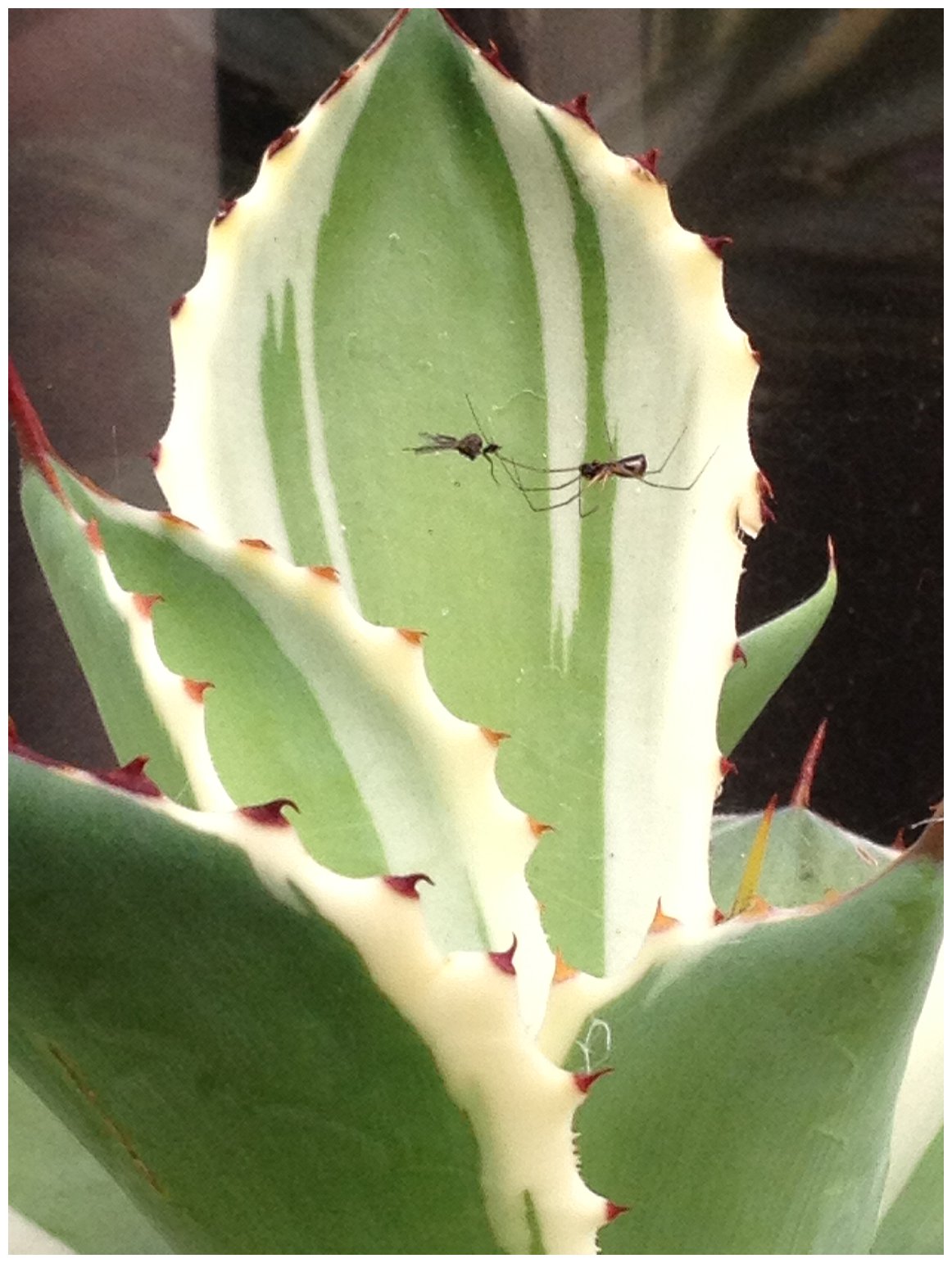
Spiders Visit the Plant on Summer

Spiders Visit the Plant on Summer

Death after Flowering

If you don’t kill it, or die from doing too many tequila shots – great – the plant (and you) will last a very long time, and even perhaps a beyond a few centuries. They grow so slow that many won’t produce a flower spike until after 15, 20 or even 30 years when it reaches maturity.  The flowers rise on tall stalks and put on quite a show.  In this video, you can see how a flower stalk reaches to the heavens.  It is quite spectacular, requiring years and then just the right conditions to come out into the open.

Some Agaves will grow flowers regularly, but I must confess, I am not sure if Agave ‘Kissho Kan’ is one of them.  There are some confusing references on it but not a concern, if I see a flower stalk appear, I’ll let you know immediately.  In fact, I’ll be sure to brag about it.  And then do a tequila shot to celebrate my success and to honor plant’s eventual passing after giving so much to its life.

Want to join me when this happens?  I’ll get the good kind.

Cathy Testa

Agave_0005

Plant Details:

Agave (Century Plant)
Agave sp. Kichokan
Agave potatorum ‘Variegata’
Zones 9-10 / Full Sun
15″ Tall Rosette

Useful Links:

Agave Kissho Kan
Plant Delights

http://www.monrovia.com/plant-catalog/plants/3155/lucky-crown-century-plant/
Monrovia

http://www.logees.com/Agave-Kissho-Kan/productinfo/S7713-4/
Logee’s Greenhouses
See my blog post about this place HERE.

Click to access temperennials.pdf

Proven Winners

Sharing:

If you like what you see on this blog, please SHARE this post with your GARDENING FRIENDS.

Thank you!

Agave_0007