Autumn Begins On Monday – Time to Move In Your Plants

Leave a comment

Hi Everyone,

Just a quick note to remind you to think about that statement I made at the Big Container Garden Party in May:

Do not let your succulent plants, cacti, or houseplants with tender foliage in your outdoor container gardens and pots stay out in the cold damp weather too long.

It has been my experience if you let that soil stay cold, and it remains wet – and then you move them inside, two things typically happen.  The tender soft foliage of these types of plants start to rot at the base, or sometimes the damp wet soil invites little critters to take residence in the pot.

So as noted on your handouts from the May Big Container Garden Party class titled, “The 7 MUST NOT DO’S WITH SUCCULENTS & CACTI“, is that you should not leave them out beyond summer when we start to get continuous cold evening temperatures.  (Try this test: Touch the side of your pots – if Terracotta or glazed, they are chilly right now – even in the sun.  The type of container may contribute to cold soil at this time of year, despite the nice warm sun we are having.)

This week has been nice and sunny during the day, so if for some reason your soil in your pots is really damp/wet, give it some sun, don’t water, and let it dry out a bit – then start to move them in soon.  Frost typically happens early to mid-October, so there is still time to enjoy other plants, as follows:

Canna, Elephant Ears, and Banana Plants

As for the Canna, Elephant Ears, and Banana plants – they can handle this weather a while longer into early October before the first frost of Autumn hits.

If you wish to keep the Canna, Elephant Ears, or Banana plants in their pots inside the home – my advice is reduce the watering now – it will dry out the soil a bit, makes the pot lighter to move, and kind of the same theory as above, the soil won’t be damp when it is moved inside – reducing your risk if critters moving into damp soil. Pick a sunny window in the house from that point forward.

If you wish to store the Canna, Elephant Ear, or Banana plants base or storage organ, such as the rhizomes under the soil for the Canna, you may allow it to get hit by the fall frost – The foliage will turn black and soft – and you can cut that all off and then work to remove the rhizome or corm for the Canna and Elephant ear respectively.  For the Banana Plant, refer to my blog where I posted all the steps.

There is also choice #3 – if you want to keep the Canna, Elephant Ear, or Banana plants in their pots and you have a basement to move them into – this is also a technique for overwintering them.  Again, pick a spot, don’t water it much now, and let it look tattered over the winter but just hanging in there. For basement option, must do before frost as well – which probably will happen in mid-October.

Elephant Ear - Colcocasia

Elephant Ear – Colcocasia

Brugmansia (Angel Trumpets)

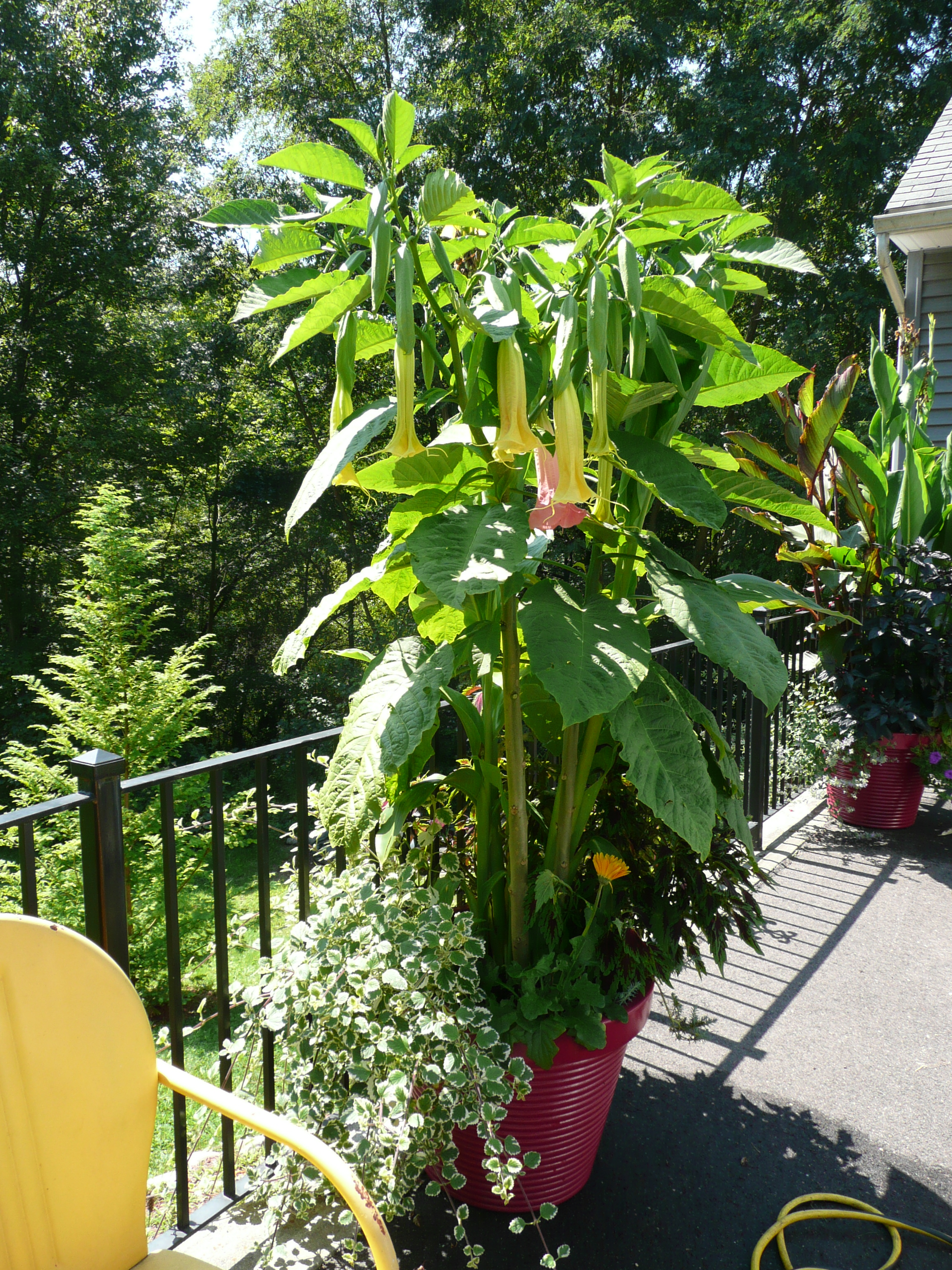
Another plant sold at the Big Container Garden Party was the Brugmansia (Angel Trumpets).  These should not be hit by frost.  I recommend you move them in to the home if you wish as a houseplant before frost hits, or into your basement to go dormant.  In the basement, most of the leaves will fall off, it will look tattered over the winter, but will bounce back (usually!).  Also, Brugmansia (Angel Trumpets) may be pruned back hard if you wish – pruning off all the stems and part of the stalk, but then you would not have the tall height next season if you wish to keep it tall.

Succulents, Cacti, Alpine Plants

Also, a reminder about another “do not do’s” with the succulents, cacti, and alpine like plants – do not put them in dark rooms, or between curtains in the house.  Do not let them sit in water catch trays.  Do not put them in a very shady spot in the home, or by really cold pockets. They need a bright sunny window, and reduce watering them regularly.  South or West facing windows are typically best. Refer to your handout on more details about how to water them in the winter months.

Hens and Chics

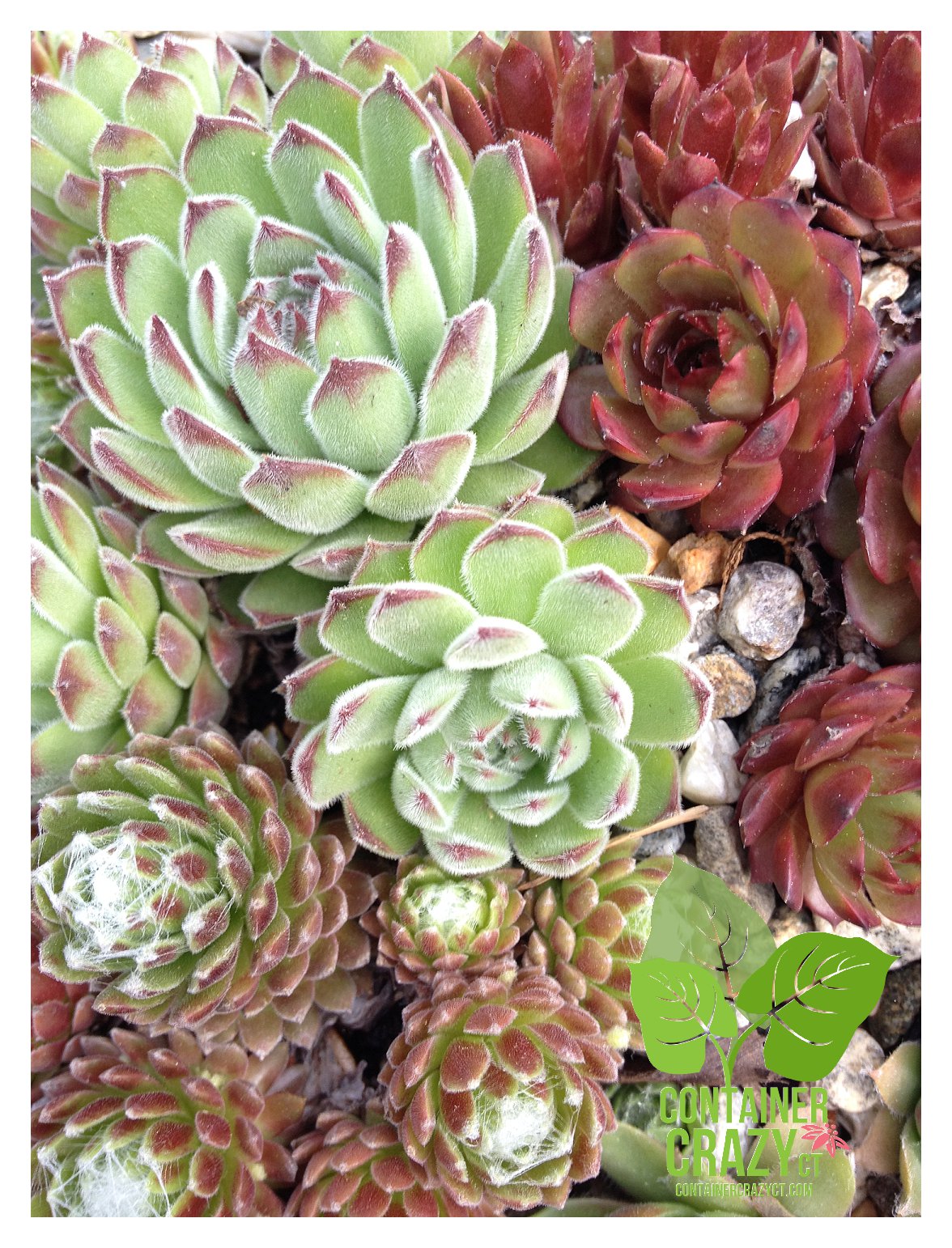
Hens and Chicks – Sempervivums

Hypertufas with Hens and Chick Plants

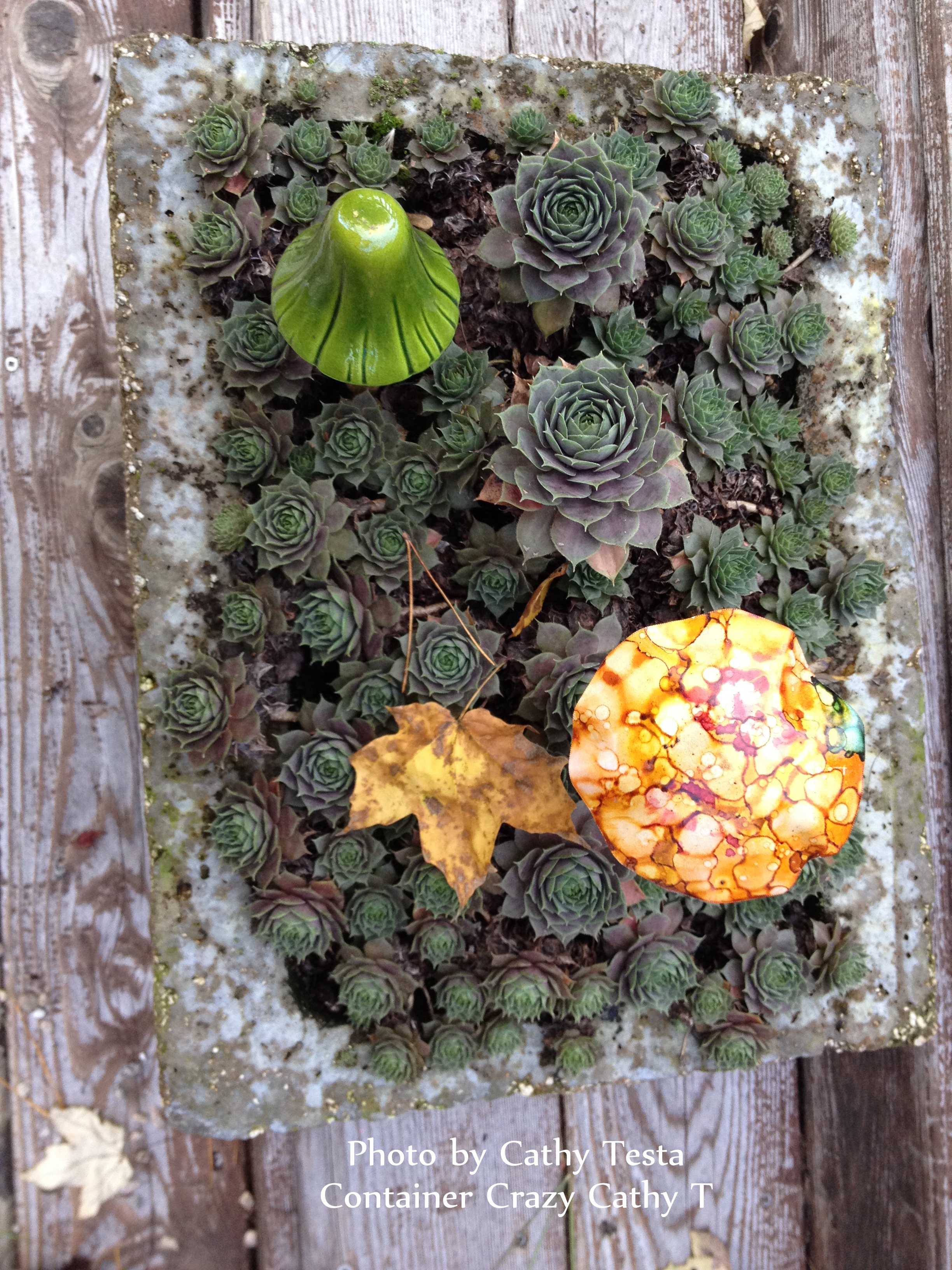
Hypertufas!  Did you buy one in May?  Well, the good news is they can remain outdoors – the material of the pot is pretty tough – but I say move it to a protected outdoor location, the hens and chicks in the pot will come back next season.  You may want to put it under your porch steps, or if you have a woodstove, heck, put it by the foundation wall near that area outdoors.  Or bring it in and place in a sunny window to treat as a houseplant, reduce the watering, etc.  The plants will look like they are not alive at some point, but they hang in there – believe me – they bounce back.

Mini-Crimson Mandevilla

Mini-Crimson Mandevilla

Mandevillas

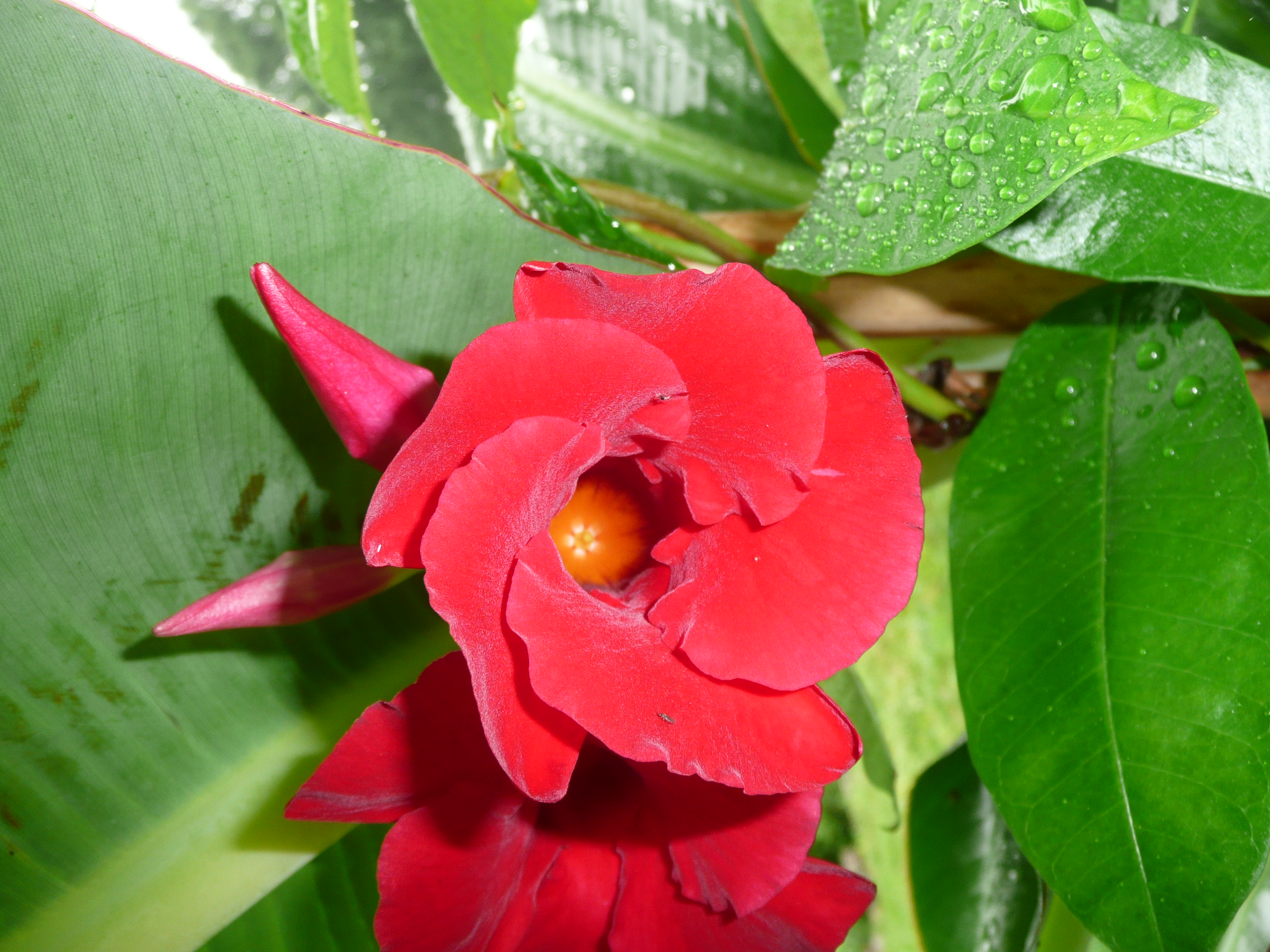
Mandevilla – These too can be stored over the winter in somewhat of a tattered state, cut the vines back, and put them in the basement, they will loose leaves over the winter, but will hang in there.  More information can be provided if you have any further questions. This tropical like vine will be showy for a while more too – but don’t let it get hit by frost.

Perennials – Some of the plants were perennial and you may remove them from your container gardens and transplant them into the gardens of the ground, or often they return in the pots if you move them to a protected location over the winter (i.e., garage), especially if you used a big pot with lots of soil mass as your container garden when you put these together in May.

Thank you, and for those registered for the Octobert Hypertufa Class – I’ll see you soon!

Cathy Testa

P.S.  The “Evergreens Kissing Ball & Holiday Creations” class date has been noted above and on the side bar of this blog.  It is Saturday, December 6th, 2014.

Plants Never Give Up – So, Why Should We?

4 Comments

After a crazy busy schedule, I thought I would have one last big item to get through on my work list for the end of this summer season, and then I thought I could take a deep breath and maybe a little break before the fall and winter activities kick in, such as the Oct 4th Hypertufa Making Class and the Dec 6th Evergreen Kissing Balls & Holiday Creations class.

But oh no…, a hacker entered my midst, and soon after a laptop problem occurred – all leading to a big delay in my work schedule and activities. It made me put on the breaks, and literally – take a BREAK.

But the good news is, I found a great tech, got things rolling again – and, as of today, it is back to business and back to blogging.

The interruption to my schedule certainly caused some nuisance problems and a rescheduling of an important class to November, for the Advance Master Gardener program, but the MG coordinator understood.  You see, she’s been there with computer issues too recently, not just on her home computer but on her work computer at the same time.

And, I think in general, gardeners or people dealing with plants as a career, well, they seem to know how to handle interruptions or mishaps when things happen with plants – maybe it gives us some patience skill building – like when we have a failure of a plant due to an insect attack, a virus or unexpected damaging weather – Our reaction can be similar – as in, first you go running, screaming, and venting – then you take a deep breath and work through it using the tools and experience you possess.

I will say this – I am super glad plants don’t rely on technology like computers do. OMG, I really don’t know how the techie heads keep up with all they need to know to manage all the problems one can encounter on the web, etc.

OK, BACK to PLANTS!

Fly on Milk Thistle Bloom

Fly on Milk Thistle Bloom

Milk Thistle Brings On Unusual Surprises

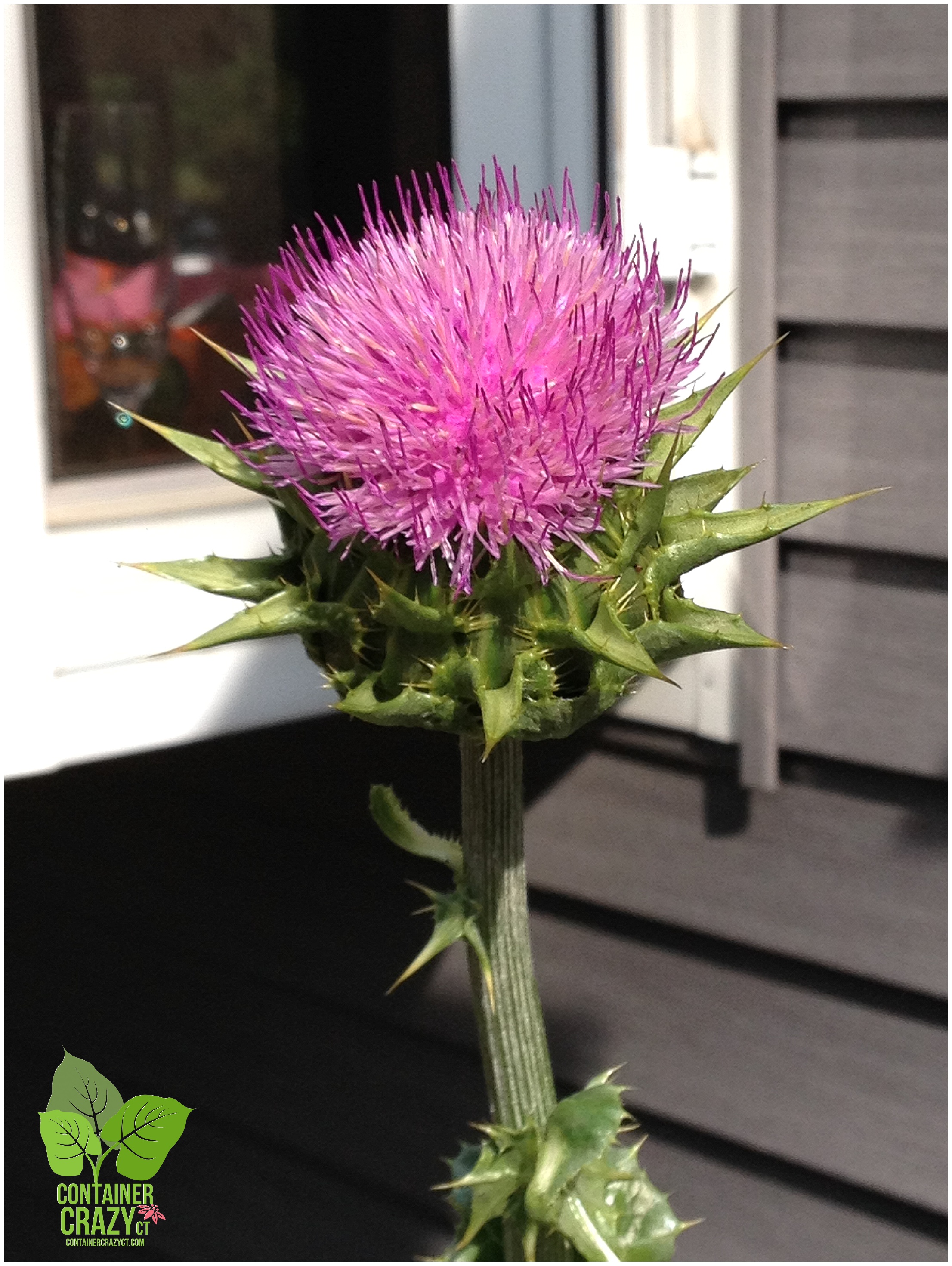
I thought about how I didn’t expect to collect seeds from one plant I put into a container garden this summer, but about a week ago, a Milk Thistle plant started to burst open its gone by flower heads and release fluffy white appendages attached to their blackened seeds within.  I carefully cut off the top of the flower head, and pulled the seeds from the center to store them for the winter to use next spring.

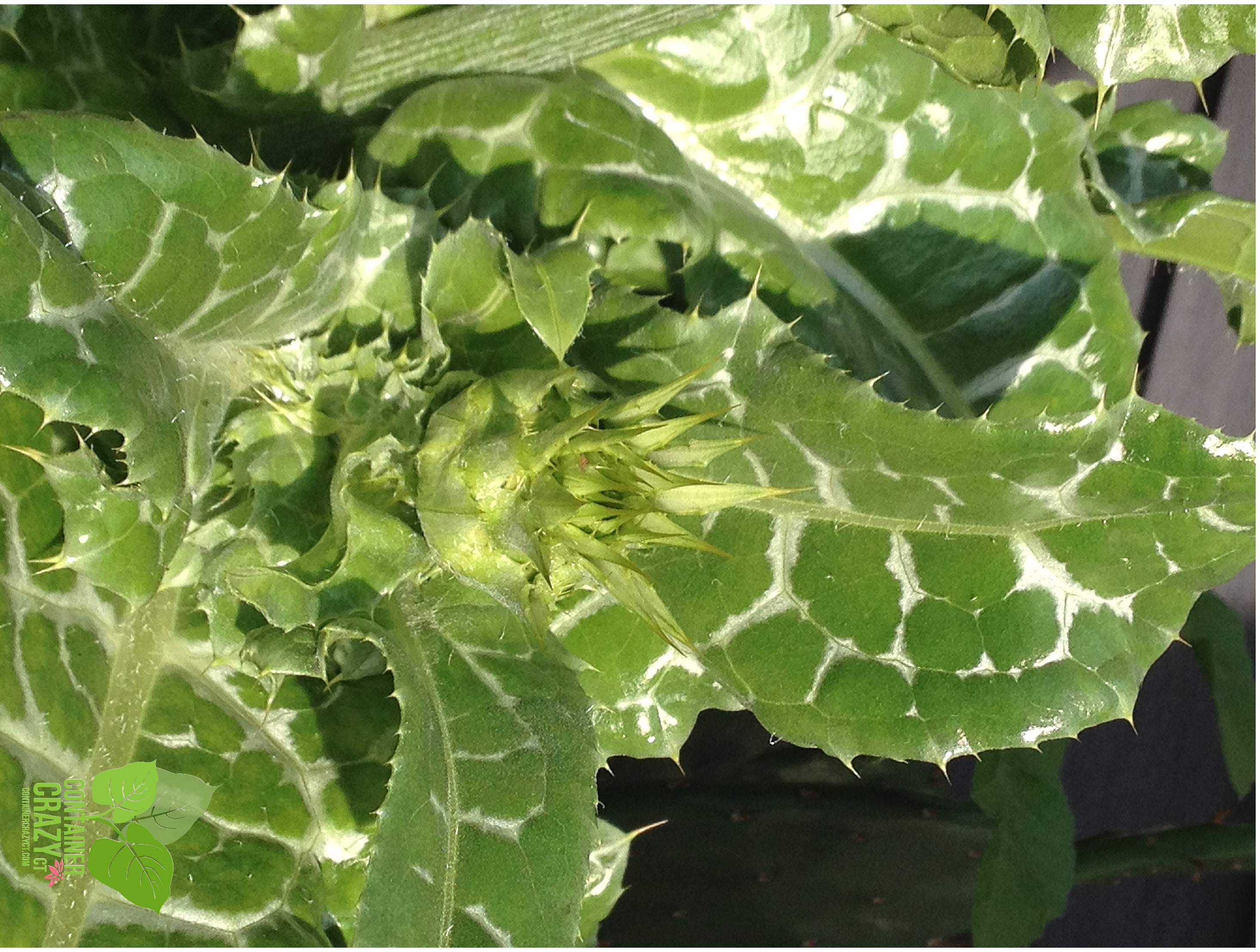
This Milk Thistle, called Silybum marianum, is new to me – and the only reason I grabbed one plant one day was I liked the speckled striking pattern of creamy white on its bright green leaves.  Knowing nothing about it (other than it resembling Canada Thistle, which is considered invasive in CT), I got it as a spontaneous purchase.

Creamy White Marbled Foliage on Milk Thistle, Silybum marianum

Creamy White Marbled Foliage on Milk Thistle, Silybum marianum

How it Grew and Changed Over the Season

As the plant grew, I discovered it has nasty thorns on its leaves, and if you happen to be near it or working around it – it can poke you easily.

It grew fast and wide, and took up a lot of space in the pot.  But the label said it would get 4 feet tall – and no way was it that tall when it first was growing in the pot.

Finally one day, around mid-summer, a stalk with a flower bud appeared to form and started to pop up from the base of the wide foliage, and within days, the stalk shot up fast to at least 2-3 feet tall.

Plant Rises Tall as soon as Flowers Grow

Plant Rises Tall as soon as Flowers Grow

It was like one minute, it was short and wide, and then two days later, this very tall flower rose above it – amazing fast growth in height. That was surprise #2 about this plant. So, it does reach four feet tall after all.

I was happy to see the beautiful purple-violet flowers open up and found them to be very pretty – when I posted a couple photos of it on Instagram, I got comments right away.

Blooms of Silybum marianum

Blooms of Silybum marianum

One person asked if it was Silybum marianum, and said they wanted that plant for medicinal purposes.  Even a nurseryman asked if I had “seeds to share.”

Flower Head Cracking Open

Flower Head Cracking Open

But it was not in my plan to actually harvest the seeds, however, I began to do so this month once I saw them pop open, and realized it could be a popular plant for some folks.

Seeds escaping to survive

Seeds escaping to survive

It is stated on the plant tag, “Legend has it that the variegation arose from the milk of the Virgin, which fell on this plant, hence the botanical name.  The flower heads are often eaten as artichokes and the seed is used to medicinally cleanse the liver.

Collecting Seeds of Milk Thistle

Collecting Seeds of Milk Thistle

Plants never give up – They continue to set flowers to set seeds, despite weather changes, attacks by insects or viruses, and it was just a thought which popped into my head this morning – as I dealt with technical problems with my laptop the past week and got “back to business” today with a functioning computer fixed finally.  A plant never gives up – despite its challenges, then neither should I. Cause believe me, the delays were testing my perseverance at the end of a busy season, right at a moment when I wanted to breath a sigh of relief.

Cacti Pots Like These Will be Moved Inside Soon

Cacti Pots Like These Will be Moved Inside Soon

Time to Start Moving in the Cacti

Now that fall is coming upon us, it is time to consider getting some seasonal color in the landscape with mums and other fall blooming plants, and maybe adding some fun autumn decor in the mix.  But, I really don’t want to let go of the plants on my deck yet!

However, the nights are getting quite cool so it is time to considering moving in the cacti or succulents, as the tender fleshy growth may rot at the base if the soil in your container stays damp in this cool weather.

My recommendation is to reduce watering greatly for your plants outdoors in container gardens, and move any pots with succulents or cacti, which you may have purchased at the May Container Garden Party Class, to a sunny location on your deck or patio this week if they are not already in full sun.

Let the sun warm and dry out the soil somewhat before you transition any of these types of plants into your home as houseplants, which should be done soon, in the next week or so.

Once indoors, reduce the watering of your cacti plants over the winter months, and be sure you put them near a sunny window, not in a very shady spot in your home, if possible.

For more information, attendees should refer to the handout from the May Big Container Garden Class about the “Must Not Do’s with Succulents and Cacti.”

Tree Like

Angel Trumpet from Prior Years – Move inside before frost if you want to keep as a houseplant

Time to Reduce the Watering of Others

You should also reduce the watering of your Canna, Elephant Ears, or Banana plants in your container gardens.  If you were watering them daily, reduce it to every 4 days or so.  The cool nights will slow down the plant growth as we transition into the fall season, and if you allow the soil to dry out somewhat, it will be easier to either move your pots into your home if you plan to do so, or remove the rhizomes and tubers below the soil after the first frost hits them in October.

The canna, elephant ears, and banana plants are still booming beautifully right now, and I plan to enjoy them up to the time I have to disassemble my pots to remove the rhizomes or root bases.  BUT, if you want to take those plants inside as a houseplant, you want to do so before our first frost in October.  Once hit by frost, they blacken and turn to mush.

Watch the weather for the frost warnings in the coming weeks as we get closer to October. And in regards to the Angel Trumpets (Brugmansia), which someone asked about recently, if you wish to move them inside the home, do so before any frost too.  Or you can cut this plant back hard and move the pot to the basement.

More details on this will be posted soon – check back in often!

Cathy Testa

Plant Details:

Milk Thistle (Silybum marianum)
Annual Herb, Sun Exposure
Height: 4 feet, Space in the Garden: 24″
Uses:  Ornamental (my reason for getting it), Medicinal (learned from friends), and Culinary
Gilbertie’s Herbs was the grower I got it from this year.
Use a big pot if you plan to grow one in a container (22″ in diameter recommended as min.)


Insects in Your Container Gardens – And What You Can Do…

2 Comments

Hello Everyone!

It is that time of year when we may be seeing little critters appear on some of our plants in our gardens or container gardens, and it ain’t pretty.  Fortunately, many of them do not last long due to their life cycles, stages of growth, and time of appearance, but regardless, it is best to battle them as soon as spotted on your plants.

I like to use the ‘pick and squish’ method first whenever possible, if bold enough, prior to reaching for any insecticides, or use of pesticides.  Sometimes just hand picking off or pruning, then disposing of them works.

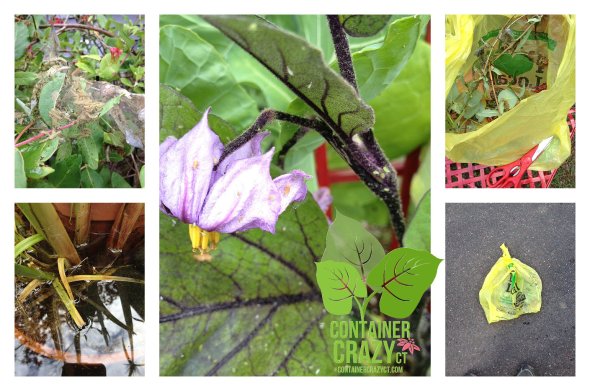
In the photos below, you will see what I believe are eastern tent caterpillars on my honeysuckle vine (top left), aphids on the eggplant bloom (middle top photo), and mosquito larvae in the water image.  These were all spotted in late June, along with a first sighting of the infamous Japanese beetles, which emerge from the ground in early summer to feed on plants.
Yuck -- Insects on Plants

Yuck — Insects on Plants

Tent caterpillars on my trumpet honeysuckle – YUCK! That was a first – and my honeysuckle has been doing so well this year.  Obviously, I was not happy to find these buggers.  My honeysuckle plant is growing by the side of the house, and it surprised me to find tent caterpillars on it.  Fortunately, with a quick snip of the vine from which they were attached, they were easily bagged and tossed.

Honeysuckle bloom creeps into Delphinium

Honeysuckle bloom creeps into Delphinium’s blooms

TENT CATERPILLARS ON MY HONEYSUCKLE VINES

Using clean pruning shears, I cut of the portion of a vine with the nasty critters on it, put it in a plastic bag on the driveway and then stomped on the bag.  I left the bag laying on the driveway for a while.  Why? I figured the heat would fry any not crushed (oooh, gross – the things gardeners will do!).  Then, I went out for my day’s work at a client’s location.

That day, my parents dropped of some items at my door, and my mother saw the plastic bag sitting on the driveway so she included my bug bag as a hanging item on my door handle while I was not home.  I guess she figured I dropped something by mistake on the driveway.

Well, when I opened up that bag at the kitchen table – ACK.  Out to the garbage can it went – and quickly. You see, the other bags my parents often leave me are filled with fresh veggies from their home garden.  Imagine my surprise and reaction when I found bugs instead of radishes.

Prior to all this bug nonsense, I was enjoying the many orange trumpet shaped blooms growing from my honeysuckle so much all month.  At one point, a stem pushed its way through the center of a Delphinium stalk located near it – talk about stunning.

Do these two plants know they are complementary colors on the color wheel?

Opposite each other on the color wheel – are blue and orange – talk about a nice surprise nature combo in the garden! Although this Delphinium technically has more purples than blues in its blooms, the combination was breathtaking all the same – I have been enjoying it for a whole month.  I wrote about Delphiniums before on this blog, as it was a flower I selected in my wedding bouquet 24 years ago.  It probably was one of my first flower obsessions.  I find them a little difficult to keep growing in my garden, so this year, I just bought a new one and plopped it by the honeysuckle plant, and it has grown beautifully.

Honeysuckle Blooms

Honeysuckle Blooms

Honeysuckle (Lonicera) is a deciduous vine that grows quickly every year.  It is deer resistant and attracts butterflies. A trellis or arbor is needed to hold it up as it grows taller, sometimes reaching 15-20 feet.  I’ve had mine for several years in this spot with little problems – again, why I was surprised to see the tent caterpillars take a spot on it this year.

Although this vine grows quickly, I wouldn’t classify it as a invasive plant because it is easily removed if you find it over takes your space, but it can get large fast and needs to be watched.  It is included in my Troublemakers Turned Star Plants on my Pinterest page, because it can be very useful in a container garden if you find it a nuisance in the regular gardens of the ground.

It likes sun to part shade, and blooms for a long time.  The scent is intoxicating for many cultivars. This plant may be used as a thriller in a large container garden, so long as you add a nice big trellis in the container for support.

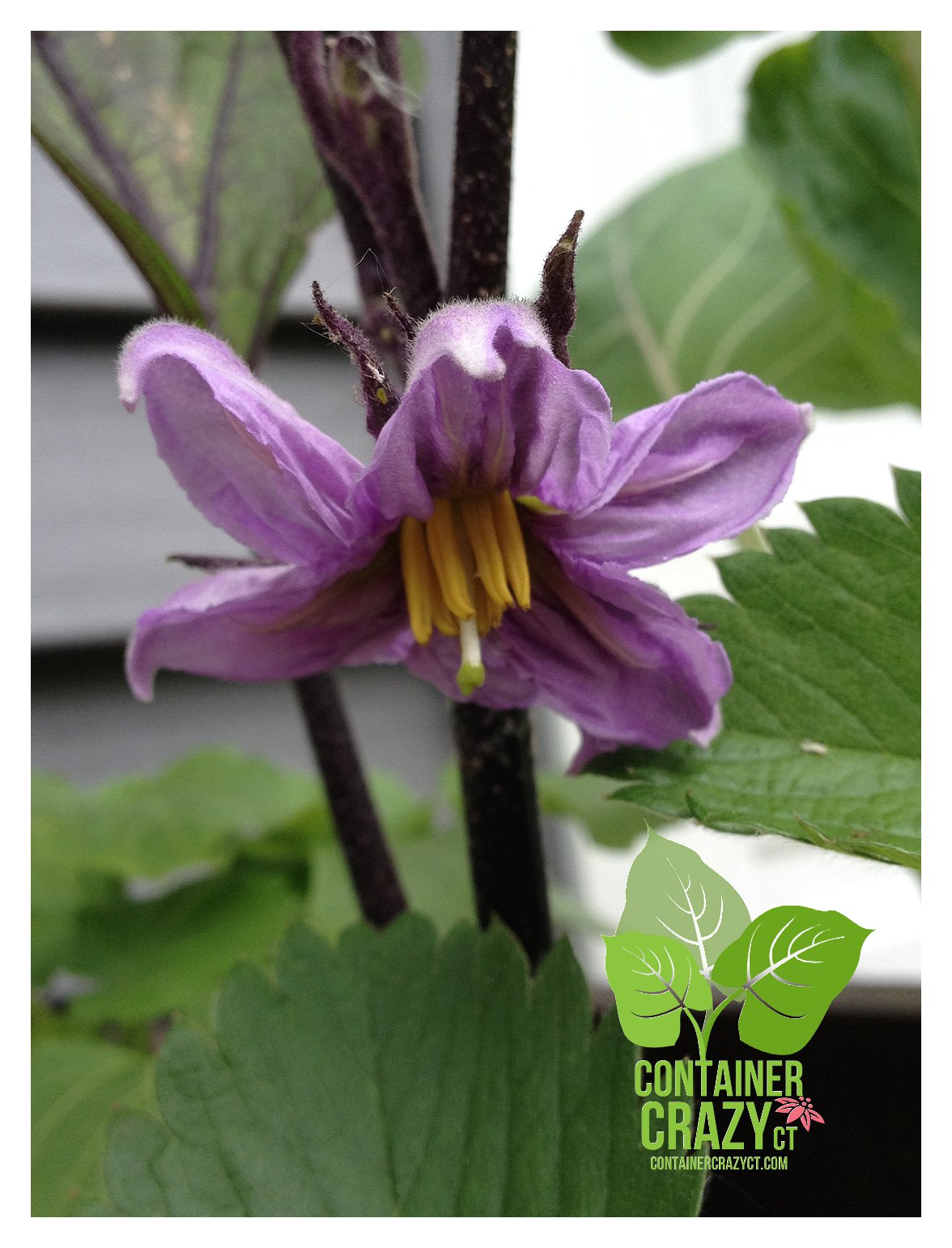
Happy Bloom on Japanese Long Eggplant

Happy Bloom on Japanese Long Eggplant Being Visited by Pest Aphids

APHIDS ON MY EGGPLANT BLOOM

If you take a close look above, you may see the little aphid bugs on my Japanese eggplant.

Aphids are very tiny pear-shaped insects with long antennae and tubes on their back-ends.  Some of the interesting tidbits about aphids are ants protect them because they enjoy their “sweet honeydew”, and they (aphids) reproduce faster than rabbits – the females do not need males to do so, and aphids vary in colors – not just green as the ones spotted on this plant.  To learn more about these little guys, see the CAES link.

Well, seeing them on my Japanese long eggplant flowers in my container garden was not pleasing. I’ve been using edibles in container gardens a great deal this season – and talking about it at garden clubs.  I am finding, however, the edible plants seem to get attacked by bugs much quicker than my tropical or annual plants.

To battle these aphids, I lightly sprayed the plant on a shady day when cool with a safe organic spray for vegetable plants (remember, don’t spray a plant when its very hot and located in full sun), and then a day later, I hosed off the leaves by using the garden hose with a watering wand at a good heavy pressure – it did the trick.  No more signs of the aphids since – and my first eggplant fruit growing right now on the plant – yeah!

I couldn’t really pick the small aphids by hand because they are too tiny, at the size of 1/8″ long.  And by the way, lady bugs are natural predators, releasing them can help if you can find the ladybugs from a garden center.

First eggplant

First eggplant

I potted up this eggplant plant along side an asparagus plant, strawberry plant, and would you believe, Brussels sprouts?! The asparagus added a nice soft texture with its fine and light foliage along side the coarse texture of the eggplant leaves, the strawberry plant is a spiller, and the Brussels sprouts – well, wow – what big texture those leaves have offered.

Eggplant with Mixed Edibles

Eggplant with Mixed Edibles

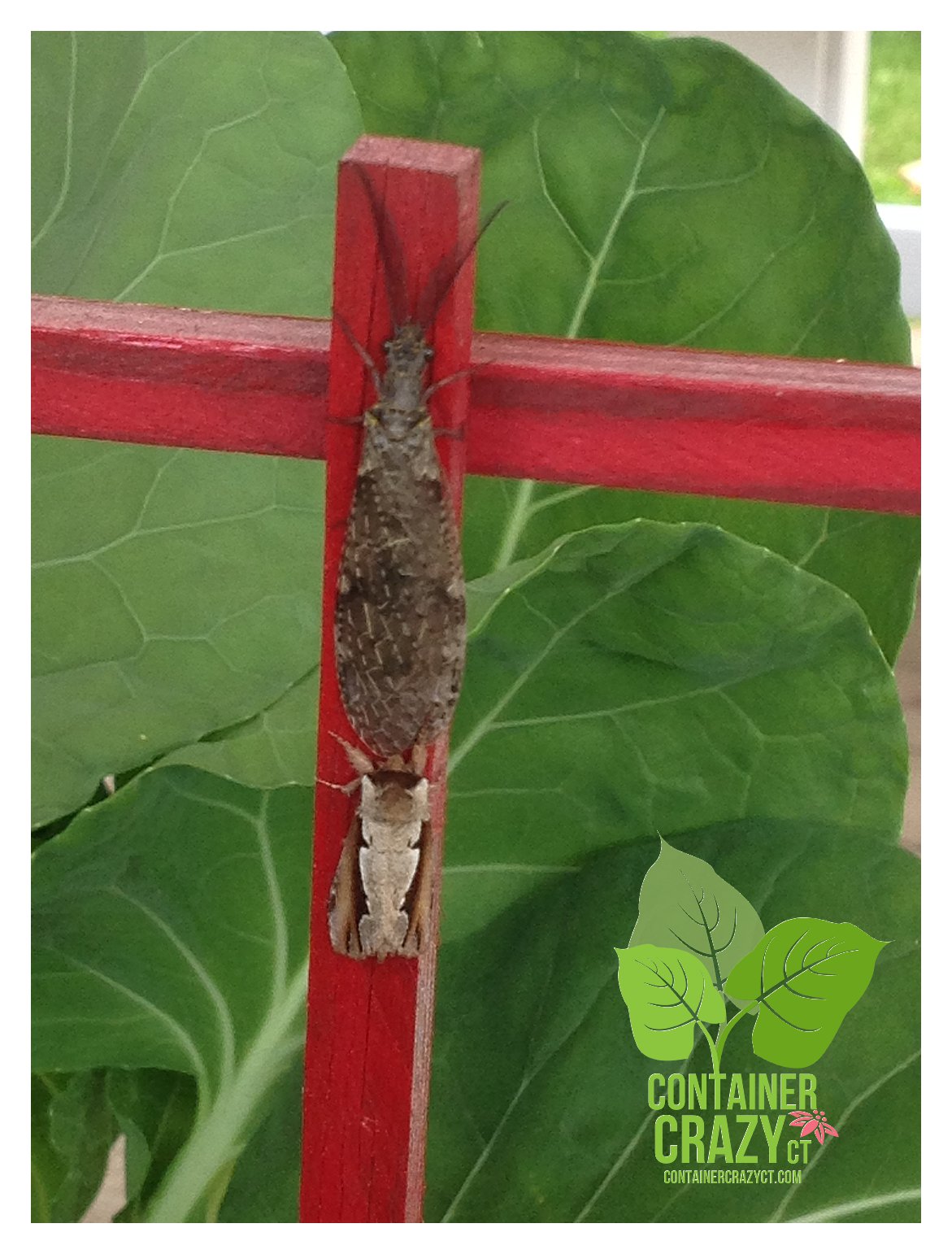
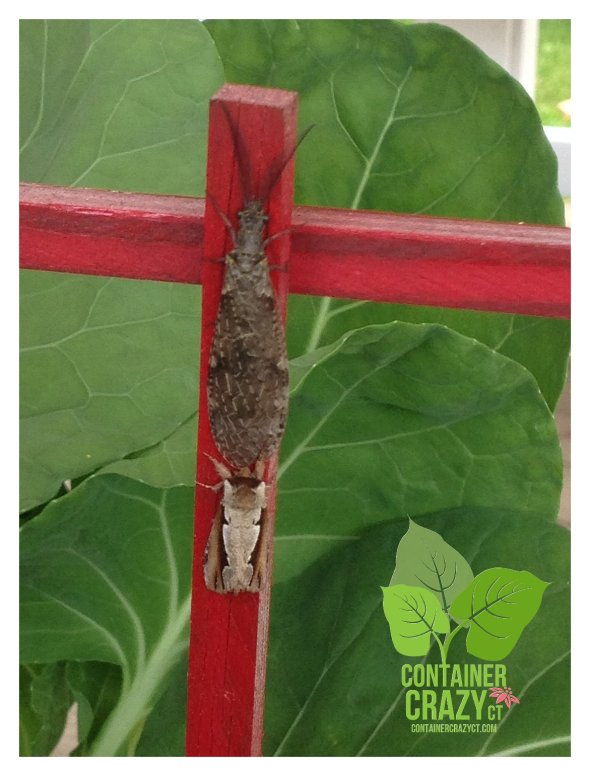
Earlier in June, I brought the container garden to the Ellington Farmers Market to show the combination during my talk about “Incorporating Decorative Edibles in Mixed Container Gardens.”  Well, low and behold, these two very interesting looking insects took their position on the red trellis in the pot – and stayed there all day during the market.  Thankfully they did not jump on me when I was driving home later that day with the container garden on my truck seat.  Not sure what they are, do you know?
Bugs on Trellis with brussel sprout Leaves behind it.

Bugs on Trellis with brussel sprout Leaves behind it.

MOSQUITO LARVAE IN MY WATER GARDEN

The other spot where I saw critters was in a water garden I have at home, which is a big galvanized feeding bin (for animals) filled with water and plants, such as elephant ears (Colocasia) or other water tolerant types, such as Cyperus papyrus (Tut). I put the plants in terracotta pots because they sink well into the water due to their weight and the clay is porous. Add some stones to the top of the soil of those pots so the soil does not escape into the water.  When submerging the pots, gently drop them into the water as to not disturb the soil too much.

Well, I should have known, tiny mosquito larvae started to grow in the water, and there were tons of them wiggling in the water one day.

To avoid this situation – you may try two things – place a mosquito dunk, which are not harmful to the plants, in the water, or just flush some of the water out occasionally with a garden hose so the water is not stagnant.  This is what I do. Later, no more larvae and no more bites.

Oh, when I was very young, I remember telling a teacher that I saw little things wiggling in a puddle at home. (Living on a farm, you tend to notice things like this – or I was just always fascinated with looking at things up close in nature.)  He told me to put them in a jar with water, cover it with plastic wrap and to bring it into class.  He set it on his desk and said, “Let’s see what happens.” A few days later, a bunch of mosquitoes were flying above the water.  A visual lesson for sure.

A PRETTIER INSECT

Fuzzy body of moth

Fuzzy body of moth

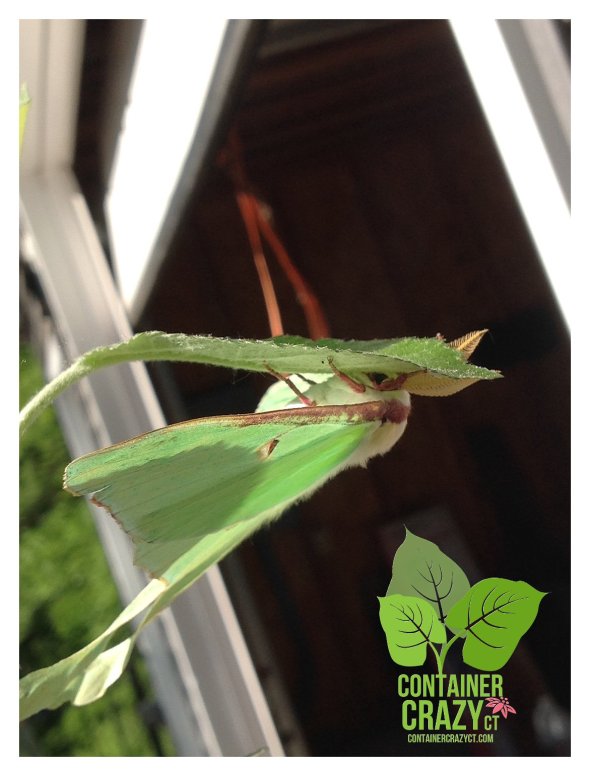
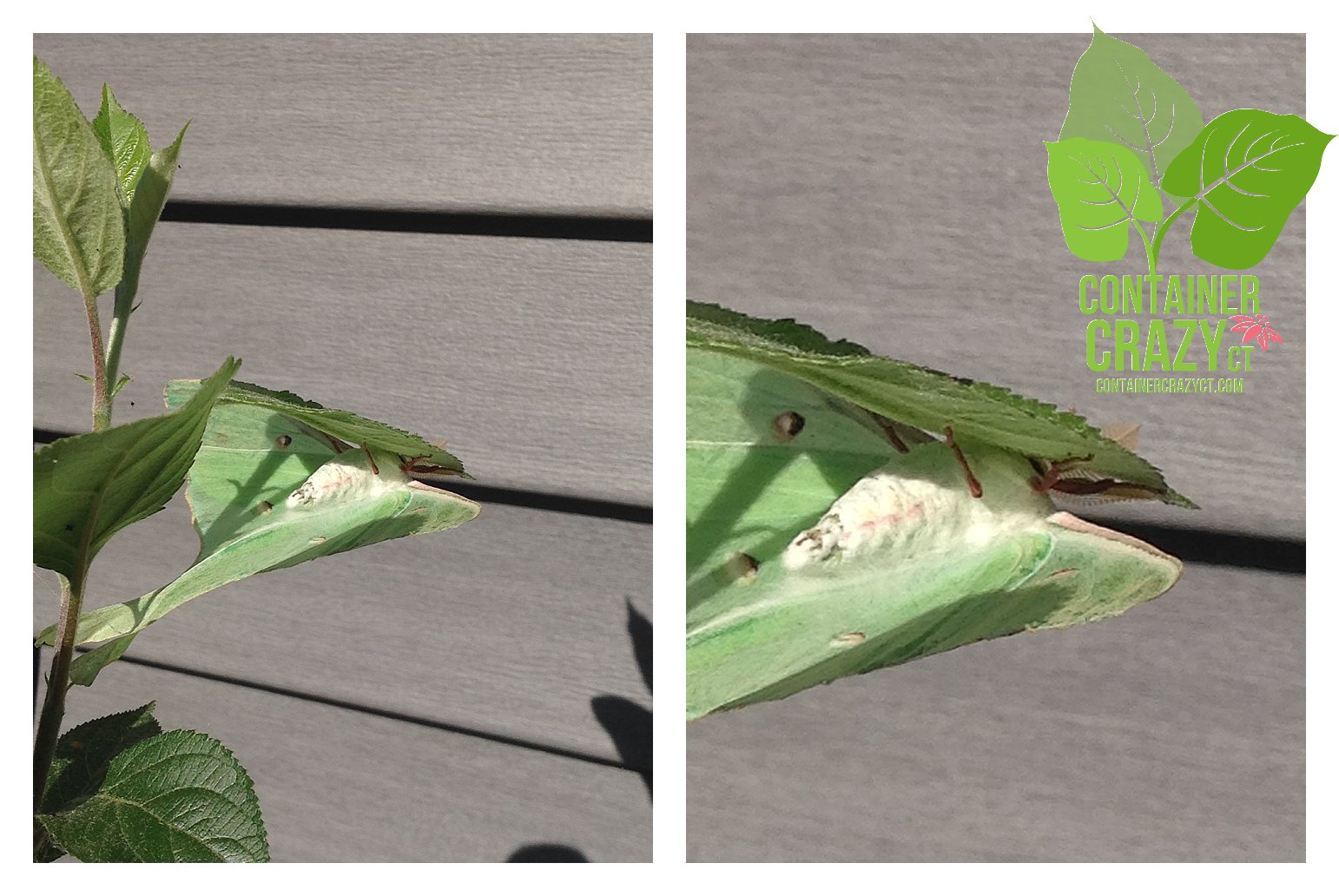
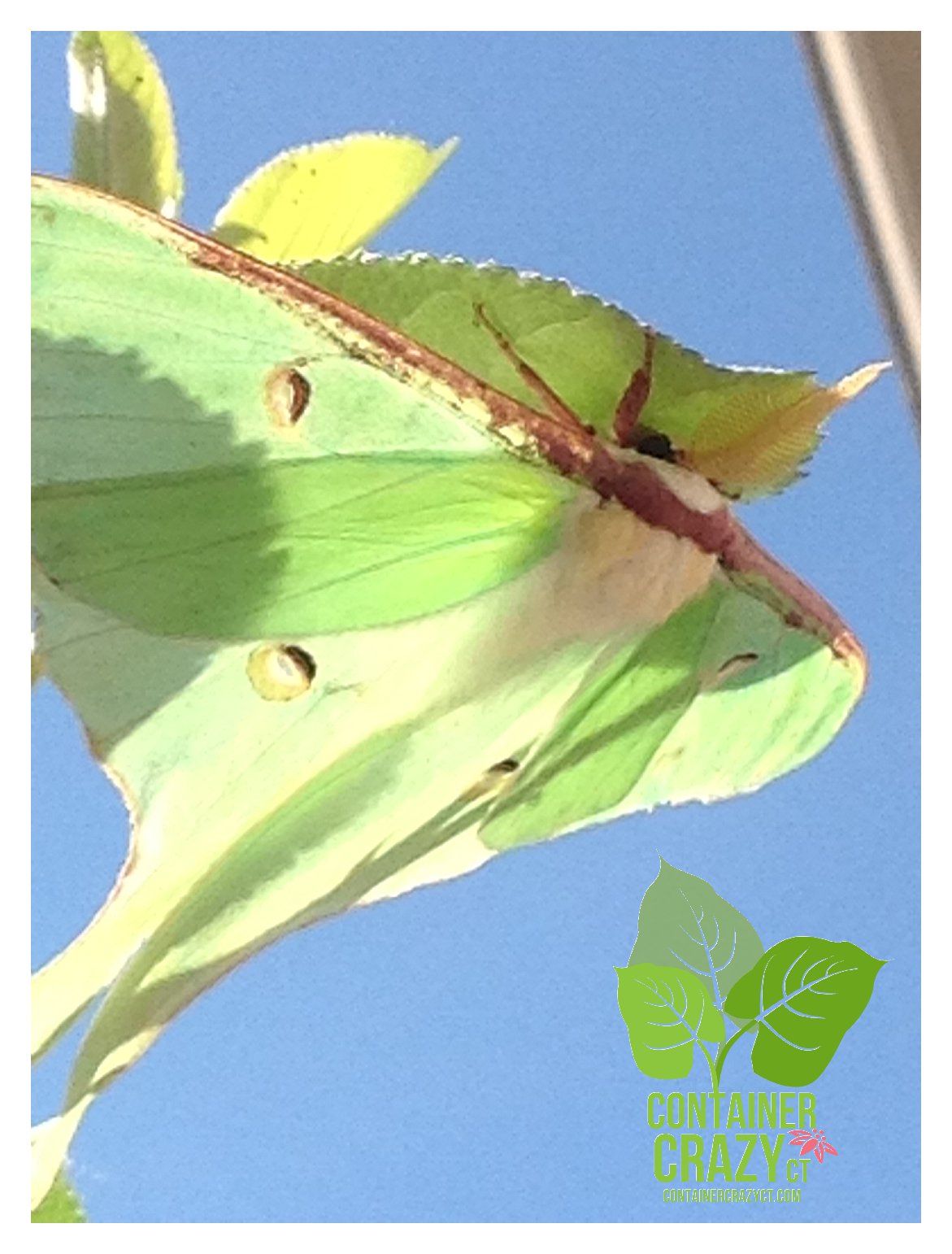
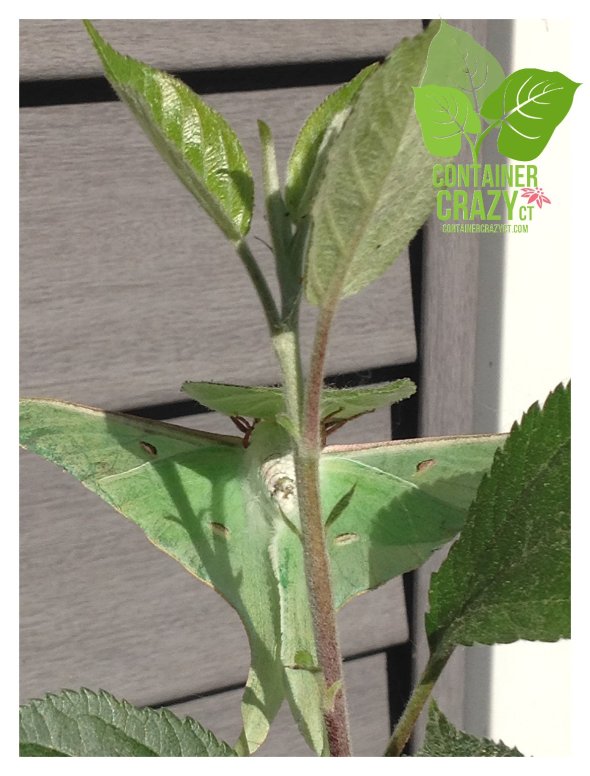
Another surprise sighting at my home this season was a Luna moth (Actias luna) on a apple tree in a pot.  As I was walking out to my garage, I saw a white substance on a leaf.  Well camouflaged, I didn’t see the wings of the moth at first.

I thought, “What the heck is that white fuzzy cocoon on my apple tree?”  (By the way, I often plant small trees in container gardens for a few years first – because I am crazy about container gardening, but it also can give a small tree some time to grow larger and stronger before I eventually transplant it to the ground when it outgrows a large pot – this way, I enjoy, learn and grow the plant first – as is the case with this apple tree.)

Insects ContainerCrazyCT_0015

To my surprise, it was a beautiful moth and not an ugly insect!  This was in the early morning and the east sun was brightly lighting up its wings.  The moth was completely motionless, and not moving at all – this gave me the wonderful opportunity to snap more photos.

Luna Moth on Apple Tree hanging on the underside of a leaf

Luna Moth on Apple Tree hanging on the underside of a leaf

I tried getting photos from every angle, which was difficult to do because it was on the backside of the plant along the garage wall.  After repeatedly taking photos, I tried moving the pot but it flew away.
Insects ContainerCrazyCT_0009

Luna Moth on Apple Tree

Luna Moth on Apple Tree

SPOTTING FIRST JAPANESE BEETLE

I also just spotted my first Japanese beetle on a plant yesterday – it happen to be a watermelon plant in a single container. Those beetles, I pick up with my hands and squish on the ground under foot.  They never scare me – even when they grab tightly onto my fingers.  I guess this is because my father would pick them from his garden plants and put them in a jar – another memory from childhood – and sometimes, I would help him collect the beetles.  I also would chase my younger sister, Louise, around in our pool, when I would find Japanese beetles in our pool too – and she would screech at the sight of them.  She told me this game as children put a fear of those beetles in her for a lifetime – oh well, the things we do when we are kids – LOL! However, she also practices the “pick and squish” method in her own vegetable garden for insects not so scary to her.

East Windsor Farmers Market

East Windsor Farmers Market

ALL BUGS ASIDE

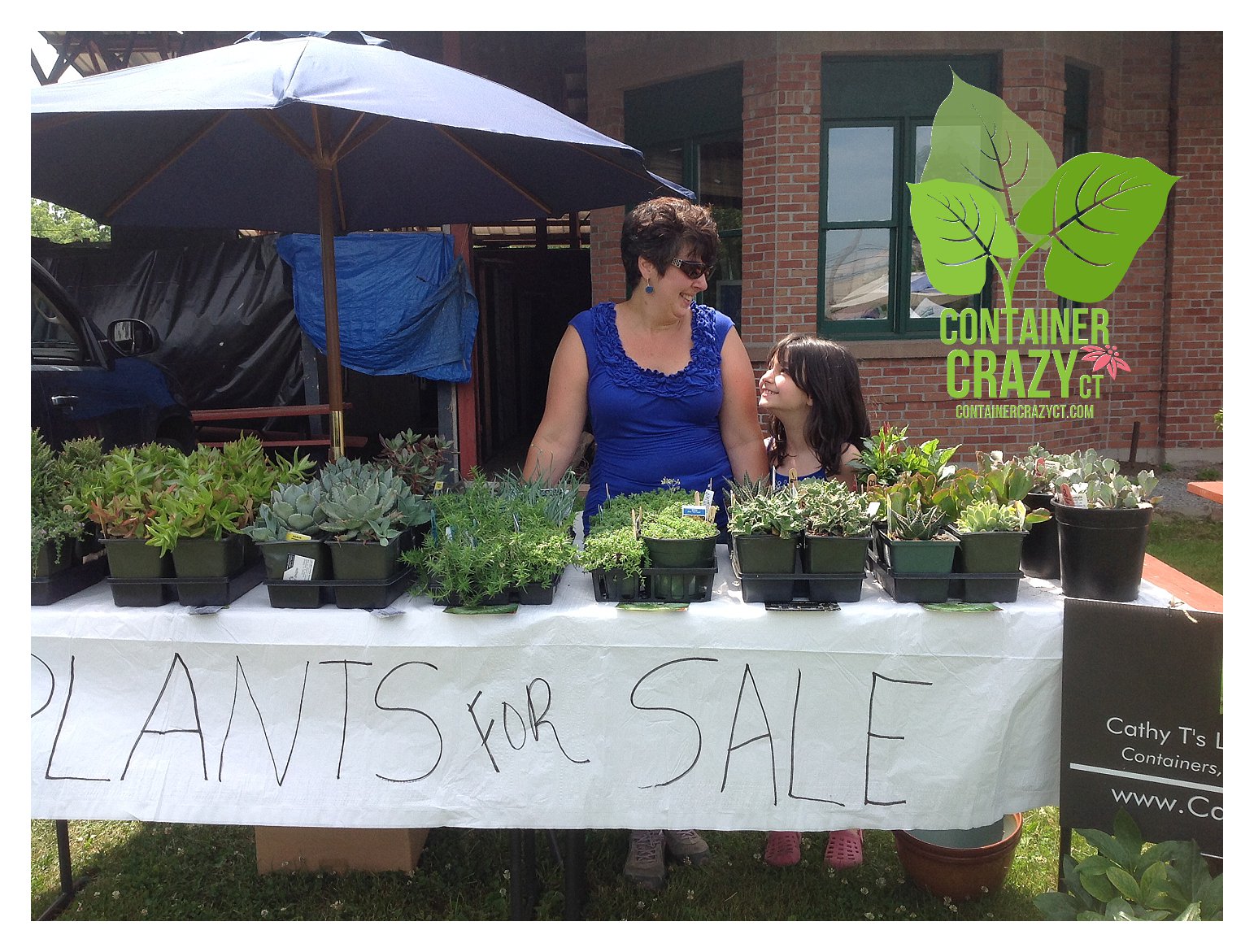
Last week, all bugs aside, I was featured as a guest speaker at the East Windsor Farmers Market on their opening day. Their market runs from now until October, on Sundays, 11 am to 2 pm, at the Trolley Museum off Rt 140.

My niece came for a visit – she loves to help me at the markets with my plants – and I love having her there.  We were goofing around, taking silly photos, and coincidentally, had matching blue shirts on.

See the next photo – this was my building at the market – pretty cool, huh?

Nope, just kidding – it was some sort of very old structure from the Trolley Museum next to my table setup.  I never got a chance to ask them what is was about, but it was sort of cool looking.  (BTW, if you go there, go see the old trolleys and even a few other interesting vehicles, such as airport shuttle buses built, but they were never installed at Bradley airport.)

The other cool thing about going to the market at this location is kids and family can take trolley rides on antique trolley cars as part of their day.  And, I did not know this – but there is a little movie theater inside the trolley museum building too – along with old cool trolley pics and more – so if you go, be sure to go inside as well as visit all the new vendors at this growing market in a great location – picnic tables and all.

Old Structure at the Trolley Museum

Old Structure at the Trolley Museum

AFTER THE MARKET

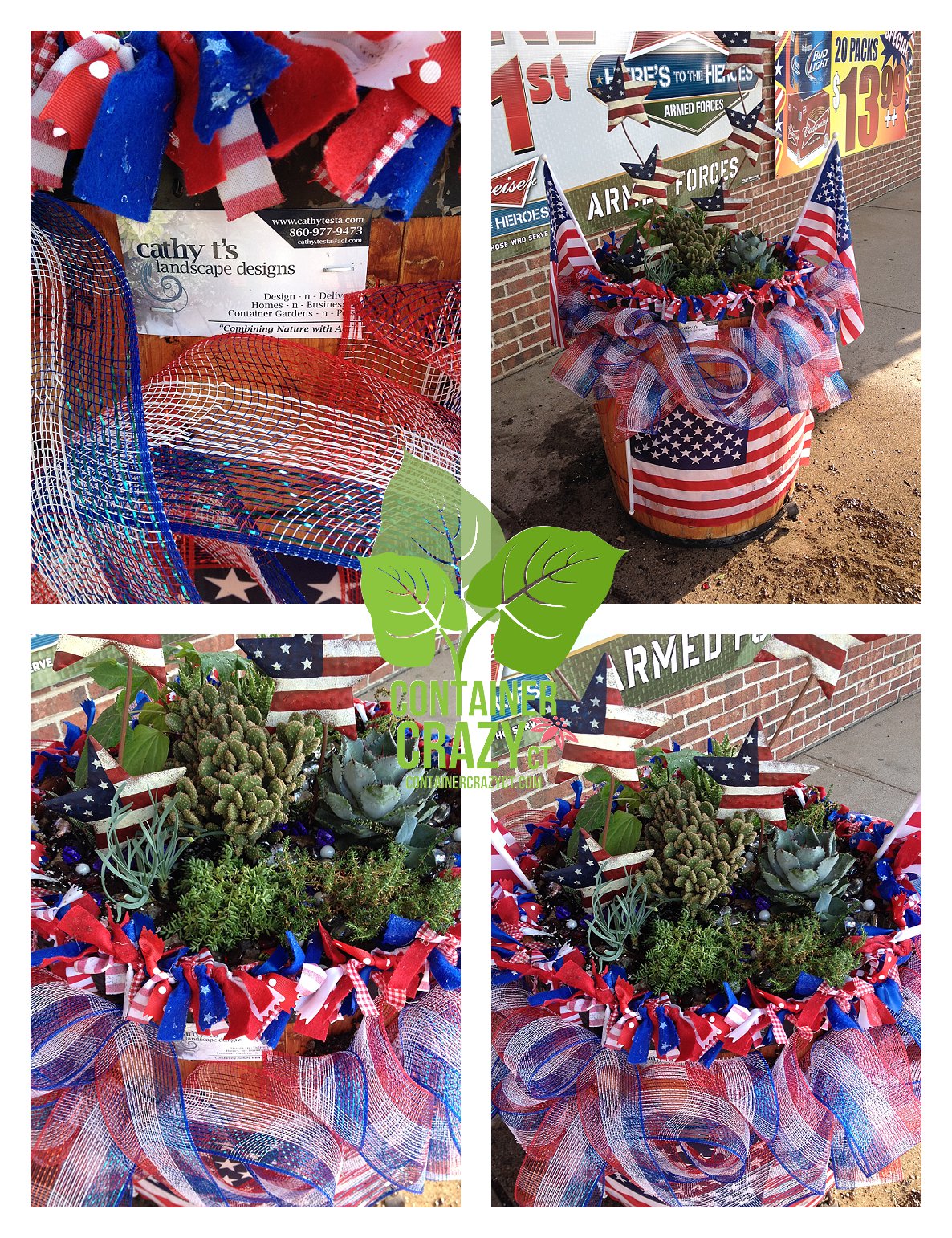
After the weekend, one of my first priorities was to update my client’s business store front with some red-white-and blues for the holiday and put a nice mix of succulents in the container gardens.  Cactic and succulents can be a little tricky to plant if they have spines and needles.  Just be sure to wear thick gloves and handle it by the root ball – and with some practice, you won’t get pinned, stuck, or aggravated by tiny spines.  I will say this however, whomever is putting their cigarette butts in my container gardens at this location – you will find a little surprise this time (hee-hee!). Fortunately, insects tend to not bother cacti and succulents much based on my experience, so they are useful for the non-insect people.

Client Barrels Decorated for the 4th

Client Barrels Decorated for the 4th

4th of July Succulents ContainerCrazyCT_0002

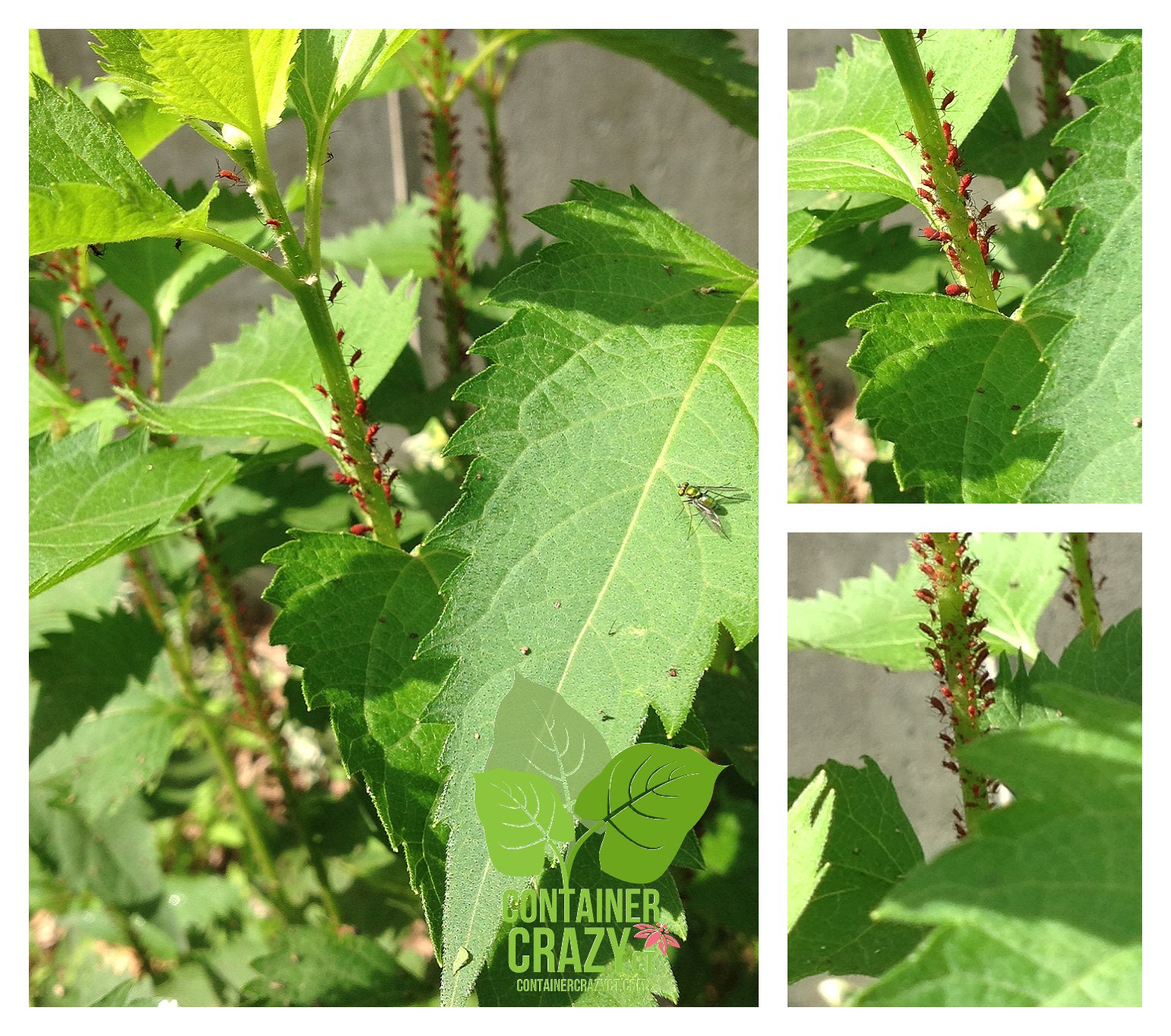
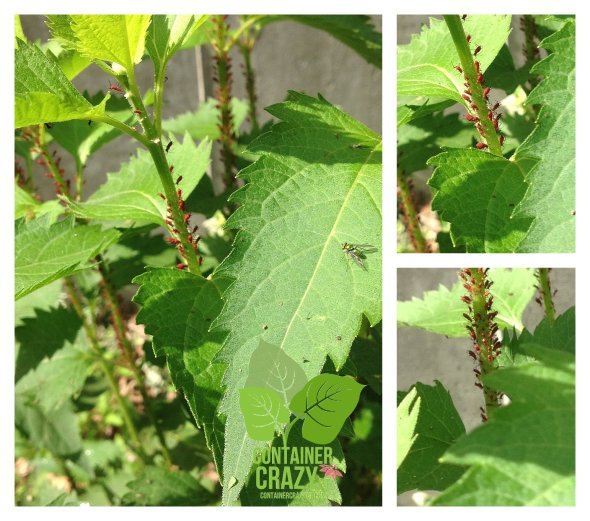
Oh by the way, what are these ugly critters below?  Saw these on a weed plant, so I pulled the plant out of the ground and took it to the chicken coop for the hens to deal with.  That’s another way to deal with insects.  Recycle to the coop…
More aphids or not??

More aphids or not??

Cathy Testa

860-977-9473
http://www.cathytesta.com
ContainerCrazyCT
containercathy@gmail.com

Condensed List- What You Can Do:

  1. Pick, Squish, Toss
  2. Prune away Plant Parts with Insects and Toss
  3. Pull Plant; Feed to Chickens
  4. Hose off with Strong Spray of Water
  5. Chase your Younger Sister around with them
  6. Lightly spray with Insecticide specific for plant and insects
  7. Get natural predators, like ladybugs and release near pest insects

Happy 4th of July Weekend Everyone – Hope it is filled with food, family, fun – and not many critters!

4th Photo Courtesy of Freedigitalimages.net, by nuttakit

4th Photo Courtesy of Freedigitalimages.net, by nuttakit

Cathy T at the Ellington Farmers Market – Edibles, Succulents, and More

2 Comments

Good Morning Everyone,

In June of 2009, I was interviewed by Sarah Martinez for “Garden Center Magazine” about my Container Garden Parties at people’s homes, and one statement I made to her at that time was, “Holding these parties at people’s homes is a lot of work – but I enjoy it.”

Well, the same holds true today.

Last weekend, Cathy T’s Big Container Garden Party (Class) was held, and the plant feature was succulents, alpines and tropical plants – and again – it was a lot of work to setup, but so much fun.  Being with a group of attendees interested in creating and learning – well, it can not be beat.
Attendees listening to Cathy T's Tips

Attendees listening to Cathy T’s Tips

The opportunity to share what I have learned over the years about Container Gardens and plants presents itself again at the Ellington Farmers Market today in Arbor Park on Main Street in Ellington, CT.

Come see me at 10:00 am in the gazebo. (Note:  There are 2 gazebo’s on the property, one will have musicians, the other along Main Street is where I will be on the farmers market grounds.)

The market opens at 9:00 am and closes by noon.  It will be a fast paced day filled with goodies – including a talk on “Decorative Edibles in mixed Container Gardens” by me.  I hope to see you there today.

And because I have beautiful succulents and alpines in stock, I will have those available for sale too.  If you haven’t completed planting up your container gardens and patio pots – come see the goodies available.

Succulents, Alpines, and Cacti

Succulents are plants with thick and strong leaves and stems.  Because they are designed to store water during periods of drought – they are tough little plants.  Some are dainty and others offer bold and strong architectural forms.

Cacti are similar to succulents; they store water in their stems.  Some have areoles with spines, so they can be very strong and even dangerous if not handled appropriately, but so worth it in my opinion, for many offer values in design compositions in container gardens.

In my class last weekend, I went over the 7 ‘Must Not Do’s’ with Succulents, so if you want to know what those are – see me today or sign up for a future class.

Oh and alpines – well, they are just adorable little plants popular to use in rock garden settings, as ground covers, and in crevices — and of course, in big or small container gardens.  This small wired basket is a creation by an attendee last weekend, Linda.  Isn’t it as sweet as ever – so small but so cute.

A dainty creation with alpines by an attendee

A dainty creation with alpines and herbs by an attendee

Sometimes you get inspired when you work with small plants too.  Yesterday, I took snips and cuttings of various succulents and alpines to create this adorable, dainty tea cup embellishment for a table.  Want to give it a try?  All supplies, the vintage bone china tea cups, plants, and instructions will be available at the market at the gazebo.

Cuttings of Succulents in Vintage Tea Cups

Cuttings of Succulents in Vintage Tea Cups

The tea cup plate and cup on the left, by the way, will be available for purchase. These cups go for $20-25 dollars on eBay – I will have them for a deal at a limited supply so if you want one, arrive early before they are all sold out.

But succulents, as noted above, can be very edge looking, and another attendee at the class scored an amazing container – check this out!  Topped with a very large Sempervirens (Hens and Chick), alone it makes a statement.  Her tall silver GARDEN container will rock it outdoors, and is easily moved indoors over the winter if desired.  I think it was my favorite container style brought by an attendee this year – so fun to see what they find and design in class.

Lisa's GARDEN container rules!

Lisa’s GARDEN container rules!

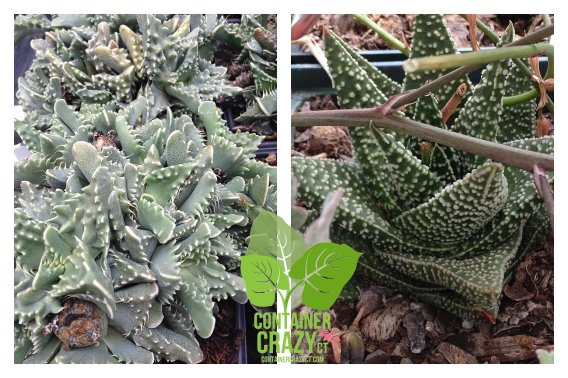
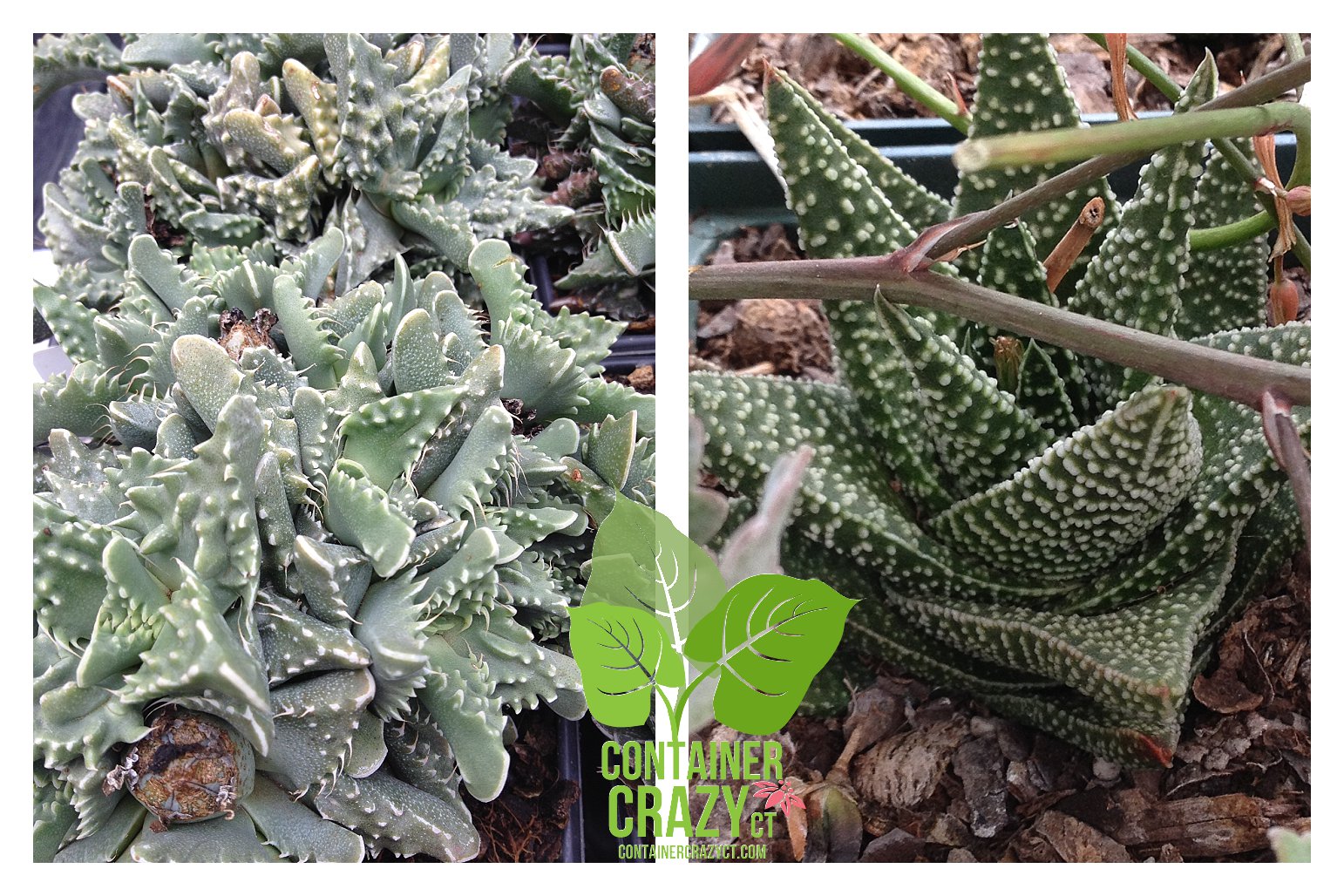
Succulents and cacti offer extremely different ranges of forms and textures.  Take the Faucaria tuberculosa on the left in the photo below.  This plant is a South African native and has the most interesting triangular leaves and it is a soft silvery blue color. This looks great with darker toned succulents in a pot, but it is also a neat form to work with.  It is a Zones 10-11 plant so perfect for the heat of summer and as a house plant in winter.  It is very easy to grow and will bloom yellow flowers in late summer.  The common name is Pebbled Tiger Jaws – perfect name, I would say.

Awesome forms and textures

Awesome forms and textures

And check out the plant on the right – Gasterworthia ‘American Beauty’ – it is NEW on the scene.  This is a hybrid of Gasteria and Haworthia pumila (maxima) grown by local growers in CT – and the rosette is stunning – patterned with spotting on the leaves. It is shooting up yellow flowers right now.  Both will be available for sale today at the market, along with many other types.

Two Types of Jades

Two Types of Jades

The plant with red edged leaves is a Jade plant by the name of Crassula arborescens – also NEW on the scene.  How can you resist this plant? – it has fleshy, blue-gray foliage and stands upright but full and mounded too.  It eventually grows to 3 to 4 feet wide, and I think they are stunning.  Also, a common Jade (as seen in the background), Crassula ovata, is in this photo – a common houseplant which I think looks amazing in head planters.  Go see my Container Garden Collages for photos of a red head pot to see.

Hens and Chics

Hens and Chics

These are just ‘sneak peeks’ of today’s plant features.  Echeverias with a variety of colors and fleshy leaves tinged with colored edges will be available too.  The Genus name is named after an 18th century Mexican botanical artist, Atanasio Echeveria y Godoy – now you know why they are called Echeverias (a.k.a., Hens and Chicks).  And be on the look out for Agaves, Aloes, Kalanchoes, and other’s.

But now it’s time for me to sign-off and get ready for my day.

See you there,

Cathy Testa
http://www.cathytesta.com
ContainerCrazyCT.com
860-977-9473


Goofing Around with My Camera (Predators, Coop Renovation, Blooms)

4 Comments

I’ve been so busy preparing for this weekend’s class on Container Gardening with succulents, alpines, and cacti that I woke up at 2:00 am unable to sleep.  The excitement is getting to me, as it always does.  So, after tossing around in bed for another couple hours, I gave up and got up. I decided a distraction may be in order, so to continue my trend, I’m posting some general photos I took around my home, and here or there, related to gardening – and chickens – yes, have those now and we are enjoying our six hens.

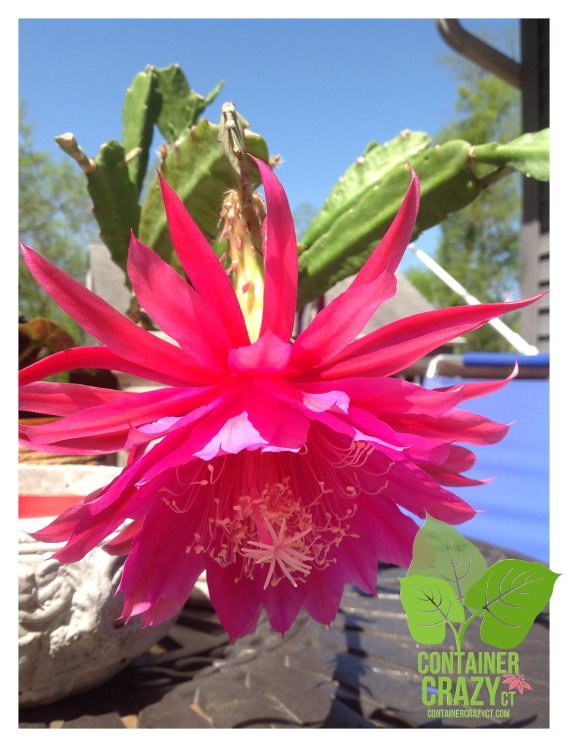
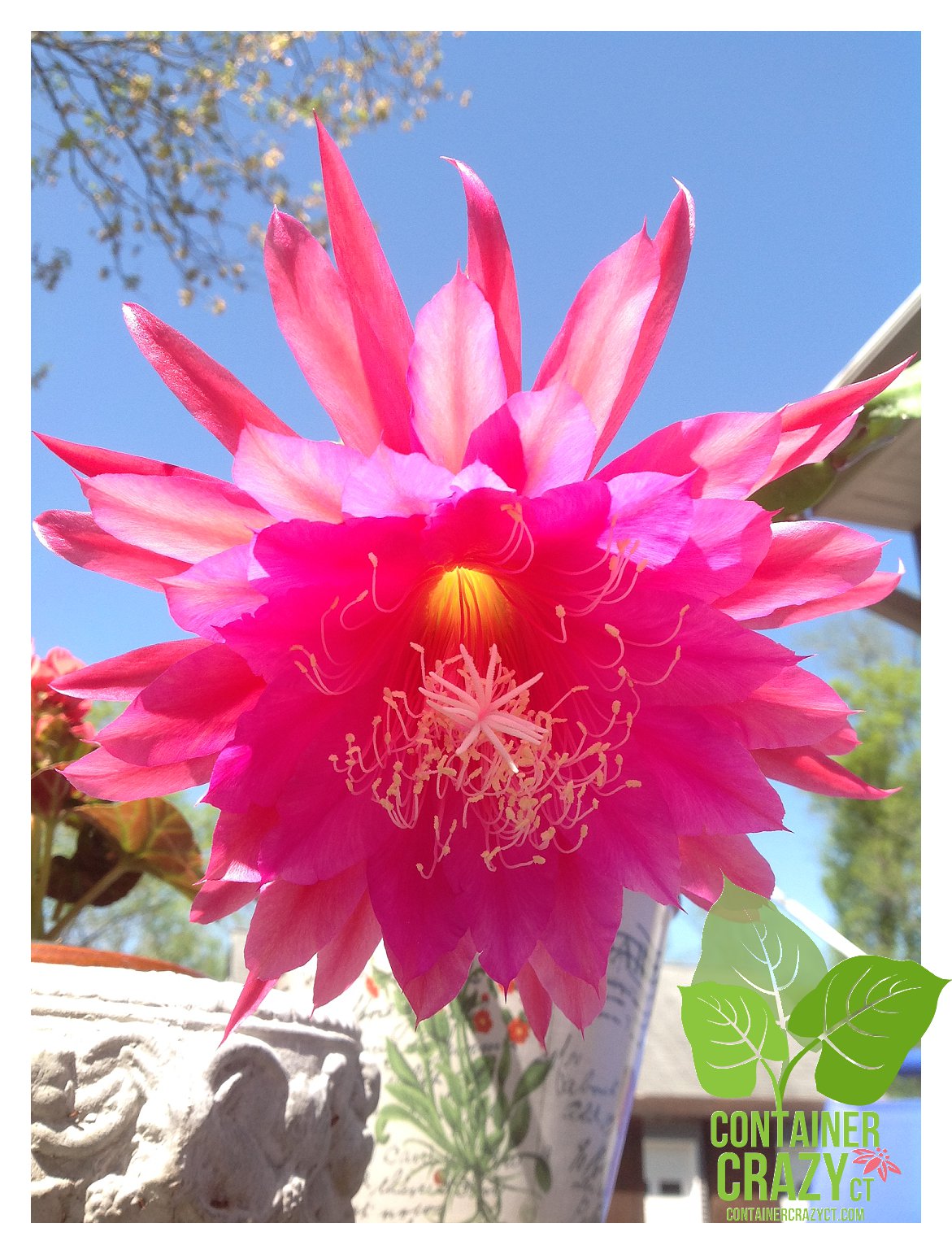
Orchid Cactus

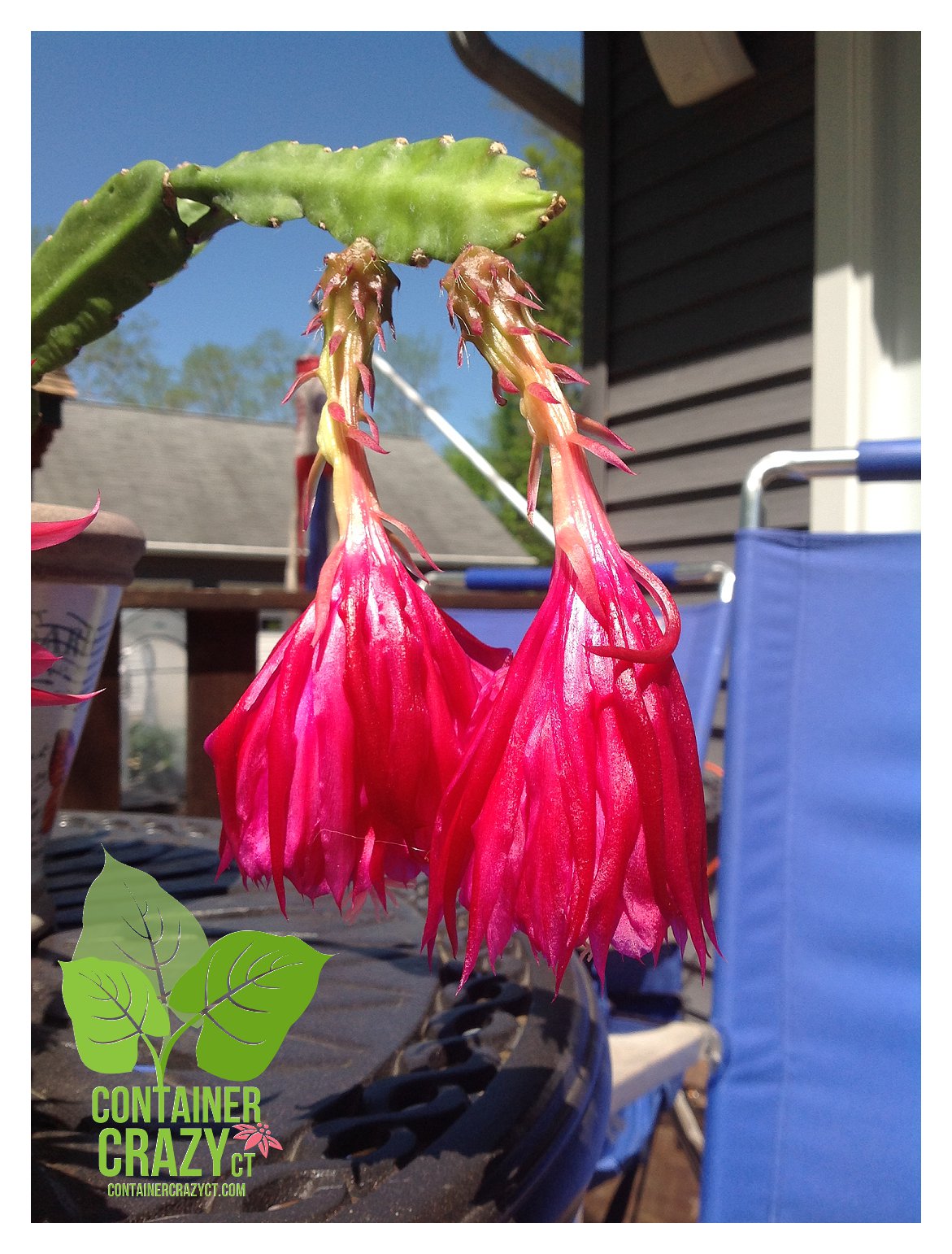
On a clear day last weekend, I took this plant outside to take some photos of its amazing bloom.  And geesh, is this not stunning?  I love the hot pink color against the clear blue sky.  Why haven’t I had one of these plants before?  I plan to research and blog about in detail later.  Do you have one or grow these?  If yes, I would love to hear from you.  The bottom photo is of two closed up blooms that finished their show.

Orchid Cactus Bloom

Orchid Cactus Bloom

Goofing w Camera_0002 Goofing w Camera_0003Take a Guess

Can you guess what this plant is?  As noted, they are tobacco plant seedlings.  Last summer, I asked a nearby grower of these if I could have one plant.  His response, well, no, I can’t give any away.  I wanted to remind him of the day his big cows came into my yard and rubbed against my Arborvitae trees many years back, and how I didn’t complain – Why? Because I grew up on a farm and have an appreciation of how cows can get free, running loose from time to time.  But his cows did major damage, so I tore the trees out without much of a word about it and moo’ed on.

Well, last winter, I happen to mention this story to a friend, and this spring, she text me to say she got me some seedlings of tobacco plants from a farmer friend of her’s, and she even dropped them off for me in this pot.  I thought, what an amazing gesture on her part.  Why, you wonder, would I want one of these?  Well, they grow fast, have large showy leaves, and I just want to experiment with it for the features.  Will let you know how it goes, it is time to prick these out and get them into individual pots.

Tobacco Plants

Tobacco Plants

Japanese Tree Peony

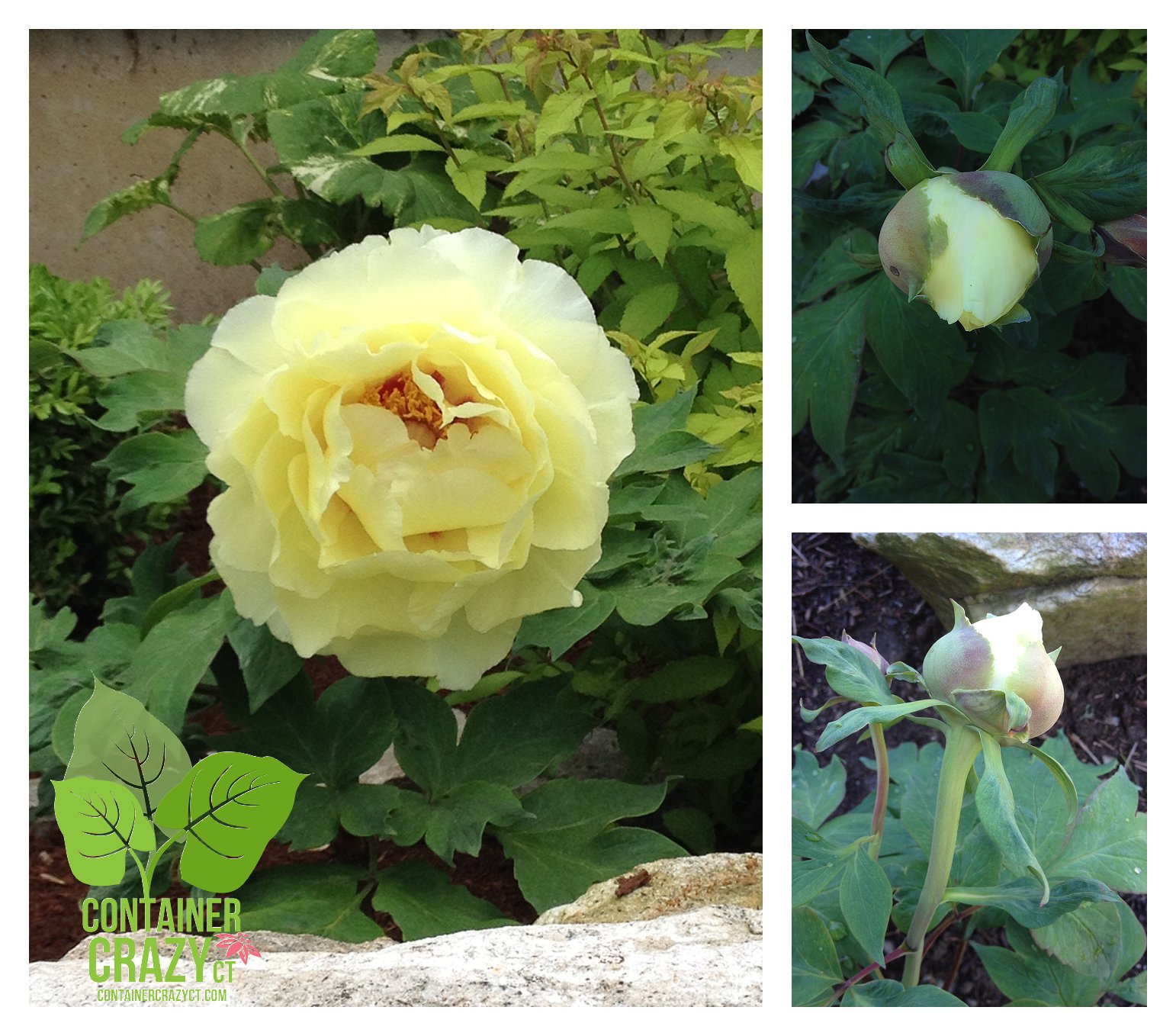
I finally got my first Japanese Tree Peony (Paeonis suff. ‘High Noon’) and I couldn’t be more thrilled with its show.  The yellow blooms are luxurious.  This one has an exceptional yellow flower and they are the double type which I prefer on Peony plants.

As the afternoon sun hits it, I just ooze over it.  It will grow to 48″ tall and is for Zones 4-8.  It was a little pricey, but worth it.  For those of you who do not know, these have a wood based stem and look more like a shrub when mature.

Japanese Tree Peony

Japanese Tree Peony

Goofing w Camera_0010

Iris with Honeysuckle

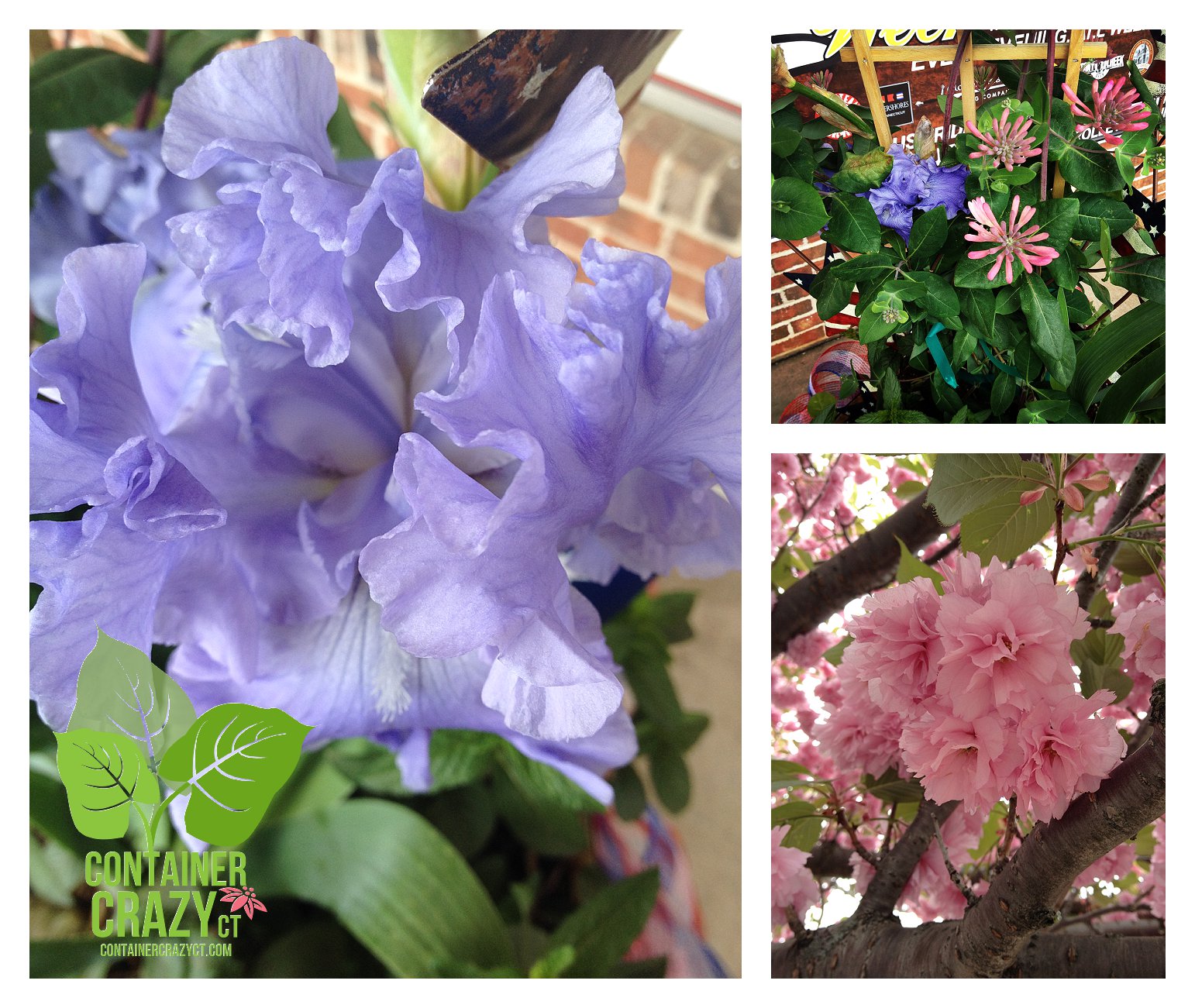
I planted a tall bearded Iris with honeysuckle and chocolate mint plants, one of each type in two large container gardens for a business client.  Imagine the scents in this arrangement?  The honeysuckle is Lonicera x heckrottii ‘Gold Flame’, a perennial with a vine and shrub like habit.  It is super fragrant with deep magenta blooms appearing in late spring through early fall.  It takes sun to part shade and I think the color looks spectacular with the blue blooms of the Iris ‘Abiqua Falls’. Ironically, I stopped at a local garden center this past weekend, and one of the owners told me someone had asked her recently what was in these planters – thinking her store planted them.  (Note to self: I have to get my sign in these containers!) I don’t like the look of a sign poking out of the containers, one of the reasons I haven’t done so yet.  Oh, the Iris is an award winner, prized for its large, sky blue blossoms.  The only problem with using Irises is they toppled over a bit, but luckily the trellis helped to anchor them back up.  In the bottom right photo is a Kwanzan cherry tree’s blooms which I took a photo of while on the road the same week as stopping in to check on these two container gardens.

Iris with Honeysuckle

Iris with Honeysuckle

Goofing w Camera_0008

Fold Up Cart

Taking a break from the flowers – I also wanted to show a handy cart I ordered, which folds up super easily.  It can hold a lot of items and rolls really well too.  For years, when I would go to a Container Garden Party to do my classes or for talks at garden clubs, I lugged heavy items into the building practically by hand.  This wagon so helped me this past Monday when I did a talk at the Vernon Garden Club on incorporating edibles into container gardens.  It folds in a snap and goes right into the back bed of my truck.  Love it!

Fold Up Cart

Fold Up Cart

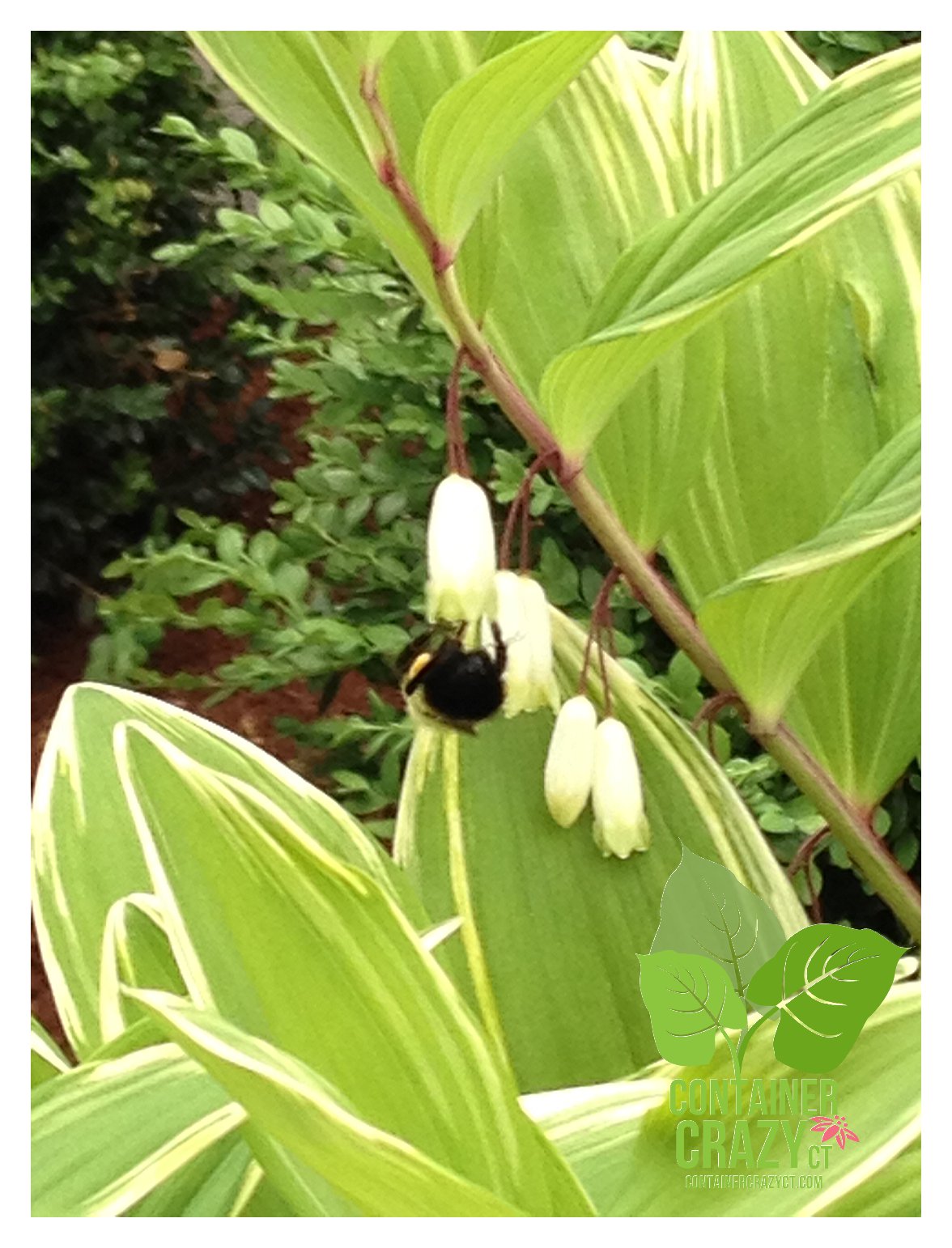
Bee on Polygonatum

I was trying to get a photo of this bee – but it came out a bit blurry.  This is a perennial I get CRS on every spring. I mix up the name sometimes with Polemonium which is similar but not quite.  However, I love my Polygonatums on the north side of my house in a shade area.  Their long and graceful arching stems are eloquent.  I divided up some and moved them to appear in batches in the bed and this year they look really great.  This makes a great woodland plant too and the dangling flowers are serving the bees coming by.  The foliage on this variegated one is very pretty, painted white on the edges.  This perennial prefers good moisture too.

Goofing w Camera_0011

Stone Edging for the Coop

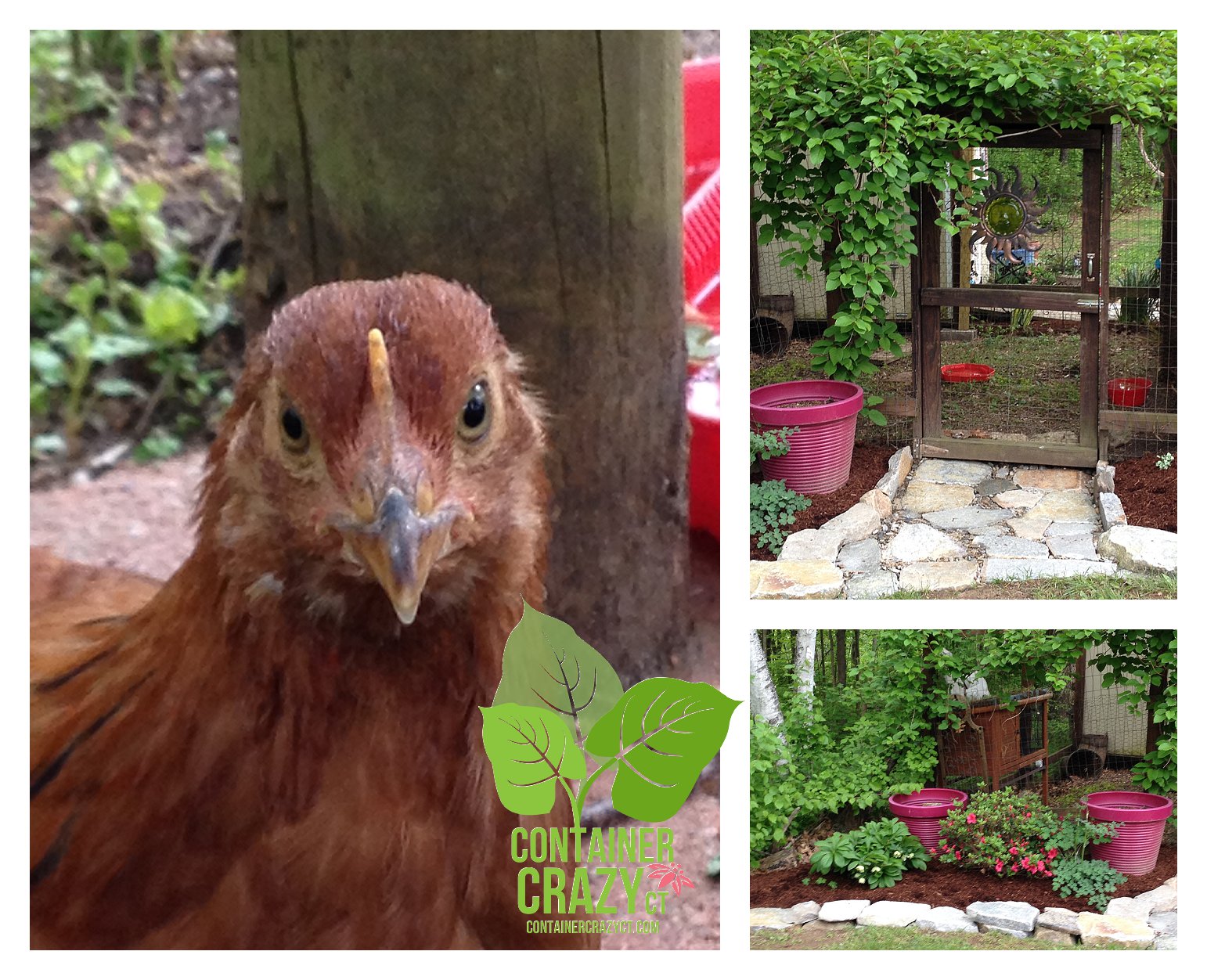
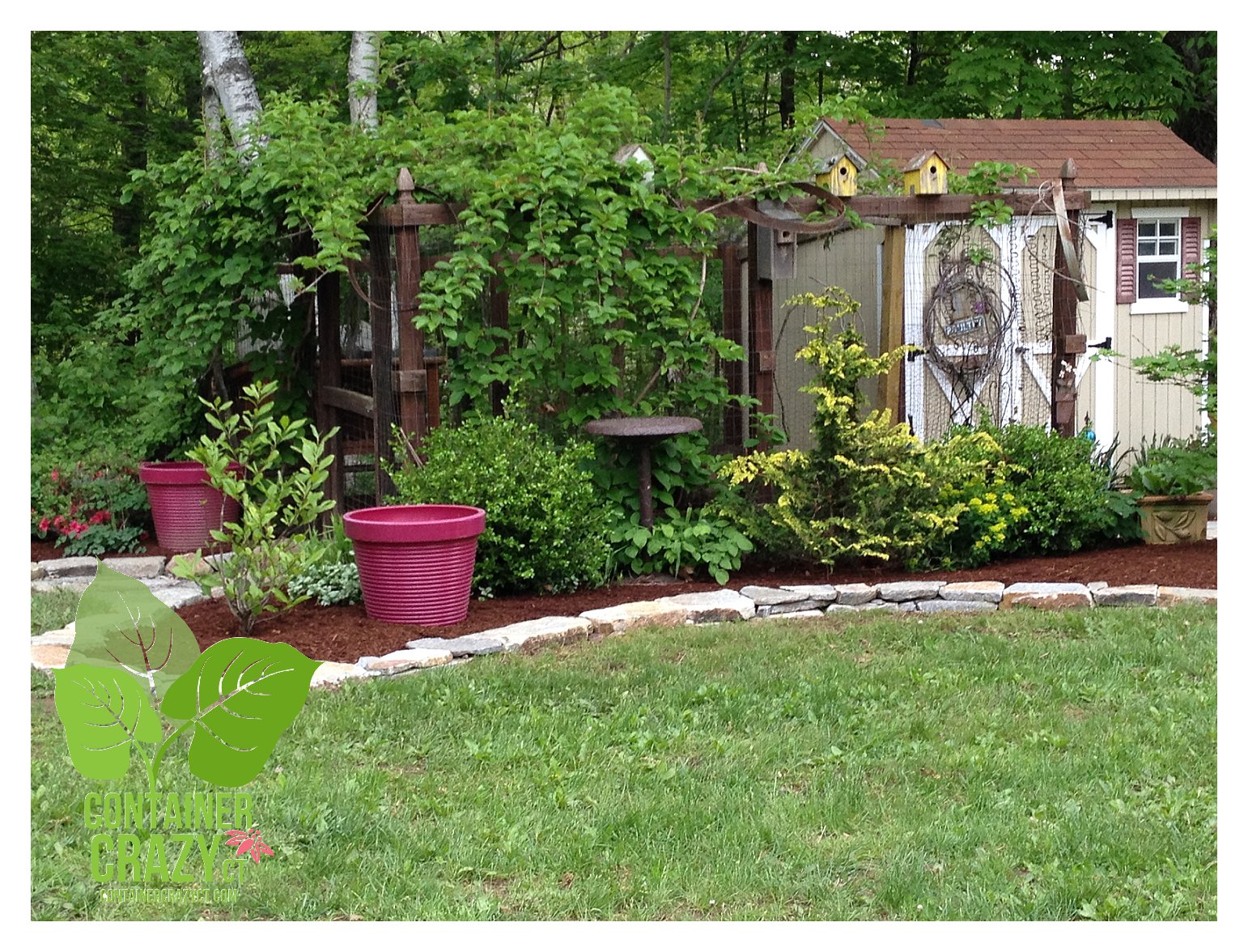
For years, I wanted to edge the area around my chicken coop – and my friendly landscape installer connection, Chris of Outdoor Creations of Ellington, obliged my request to have it done in time for this weekend.  I am thrilled with how it came out.  I like the natural look of this type of stone, and now I can have fun fixing up my plantings and adding perennials and container gardens to this area.  Talk about spoiled chickens!  Not only is their surrounding enhanced, they were fed grubs and worms by Chris as he was working on the building of the edge and mulching the beds.  He said they were fun to watch, and I’m sure they enjoyed his company while he was here.  Sparkles, the recently named chicken, agrees.  She’s the boss of my six Rhode Island Red hens, seen in the photo below.

Goofing w Camera_0017 Goofing w Camera_0015 Goofing w Camera_0014

Kiwi Vine Feeds My Chics

Two kiwi vines, plants several years ago, a male and female plant on each side as required for pollination, are above my pen area of the coop.  One day, Sparkles was jumping up to grab some leaves.  We caught her on our motion censor camera which we move around the house to capture photos of wild life – and predators, as you will see following this photo.  Look at Sparkle’s feet – she jumped right off the ground.  My first priority was to determine if this vine could be poisonous to the chickens, and thankfully, it is not.  They get a feeding of them every day now when I go visit, tearing some leaves off to toss down for them.  And, I think this will be the year we finally get kiwi fruit from these vines. I saw tiny buds on one plant, the female plant.  It takes about five years for them to bloom and produce fruit – so we will see.  The vines require a great deal of pruning to keep in check, it can overtake anything, and grows fast.  We removed branches off a tree above the pen area last year because the vines were twining up to it, so it has to be watched.  Feeding some leaves to the chickens will help, I think.

Kiwi Vine Above Coop Pen

Kiwi Vine Above Coop Pen

Wild Predators Don’t Take Long

As I have mentioned, we attempted chicken raising here twice before, and gave up for a couple years.  The former chickens were allowed to free range, and got snatched by foxs, hawks – you name it.  But our new ones will not go beyond their protected coop and outdoor pen.  Since we have a motion censor camera, we set it up nearby to see what would lurk to investigate our new chickens.

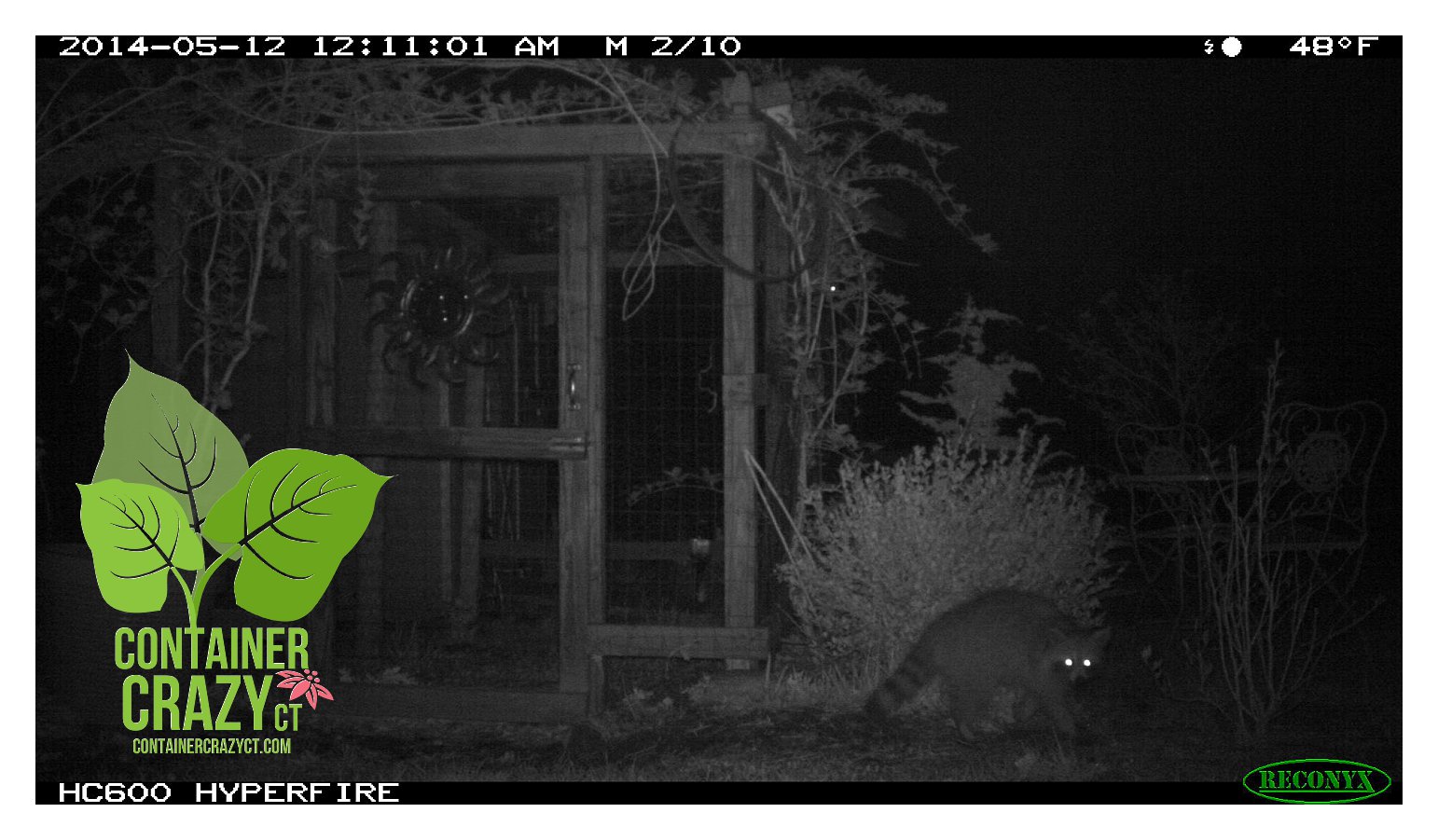
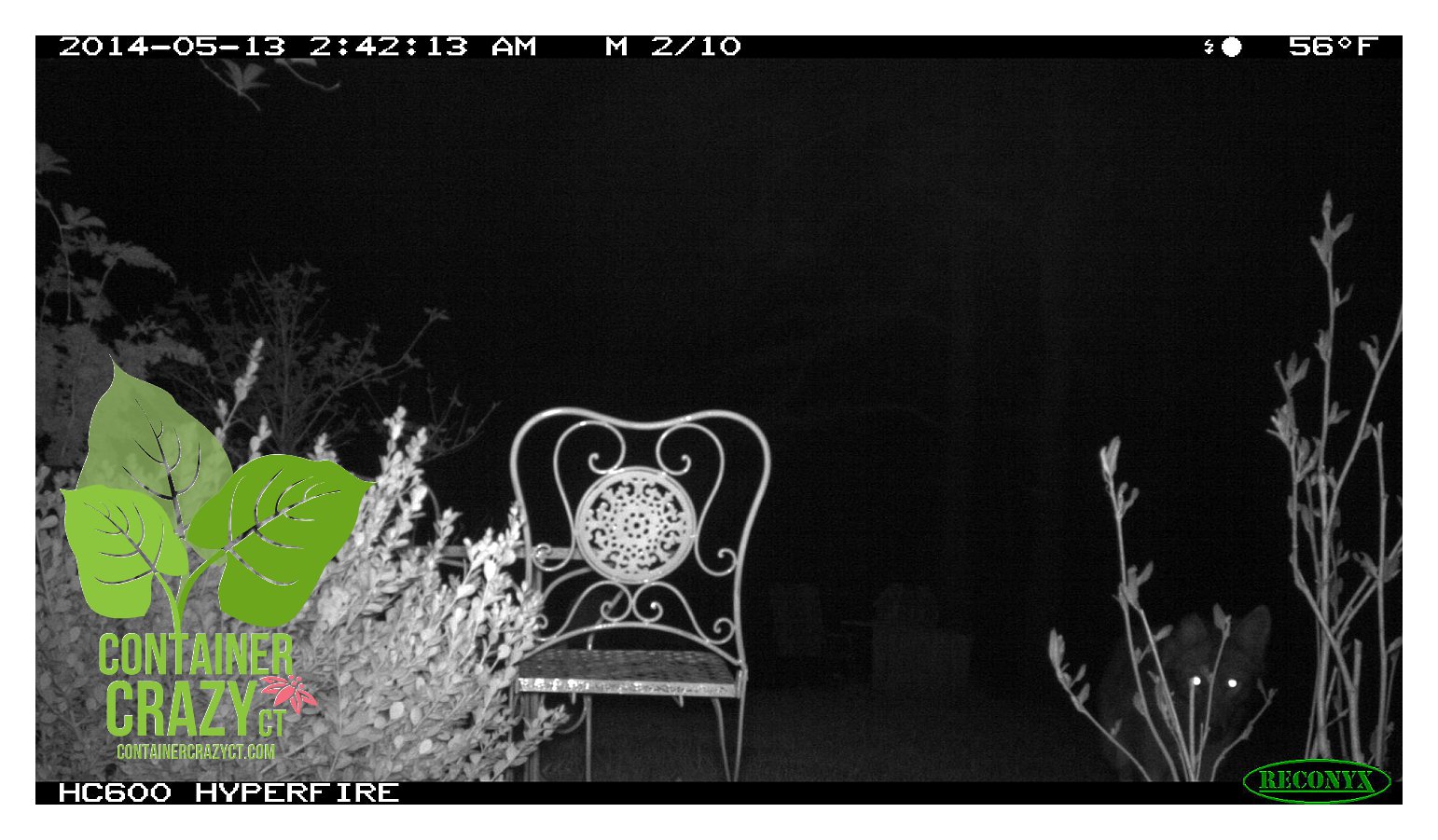
The first week, we spotted a raccoon and coyote in the photos, and one early morning, I saw a fox running around the coop with something in its mouth.  Thankfully, it wasn’t one of my chicken.  We are sure to close their coop door every evening, and we are keeping a steady watch to make sure their pen is safe.  So far so good.  Kind of creepy to see the coyote checking it out.

Predators, first racoon, then Coyote

Predators, first raccoon, then Coyote

Goofing w Camera_0022 Goofing w Camera_0023

That’s all for goofing around with my camera.  Now, its time to get back to work.

Written by Cathy Testa
http://www.cathytesta.com
ContainerCrazyCT.com
860-977-9473


When Picking Out a Mother’s Day Plant – This Is The Only Thing You Need to Know

2 Comments

Many people will be stopping into their favorite nurseries either tonight on their drive home from work, tomorrow, or perhaps on the morning of Mother’s Day on Sunday in search of the perfect gift for Mom.

In fact, Sunday may be the busiest day here in Connecticut because the temperatures are predicted to be in the high 70’s.  We may even reach 80 degrees.  A great day to shop for Mom, or with Mom at a garden center.

I remember my early days working at The Garden Barn Nursery in Vernon, Connecticut on Mother’s Day.  It was just incredible how many people came in to get plants for their mothers.  Especially popular is their big full huge hanging baskets of annuals.

And believe me, you Moms out there, your children take their time selecting just the right one for you.  All heads are up looking them over.  Shoppers will carefully look all around the plant too.

Sometimes they will ask the nursery staff to take one down from the rafters so they can inspect it better, and often they ask to put it back up so they can look over another hanger they spotted nearby.

I took down and put up so many hanging baskets during a Mother’s Day weekend one year, I had to go see a chiropractor the following week because I strained my neck.

The funny part is, the customer always goes back to the original one they spotted to take it home for Mom.

The hanging baskets will look just magnificent inside the greenhouses right now. I know from prior experience of working in nurseries, and because I just got one for myself the other day when I went to Meadow View Farms in Southwick, Massachusettes when I was in the area earlier this week.  It is a bit of a drive, but I figured, why not stop in.

Mothers Day Shopping_0001

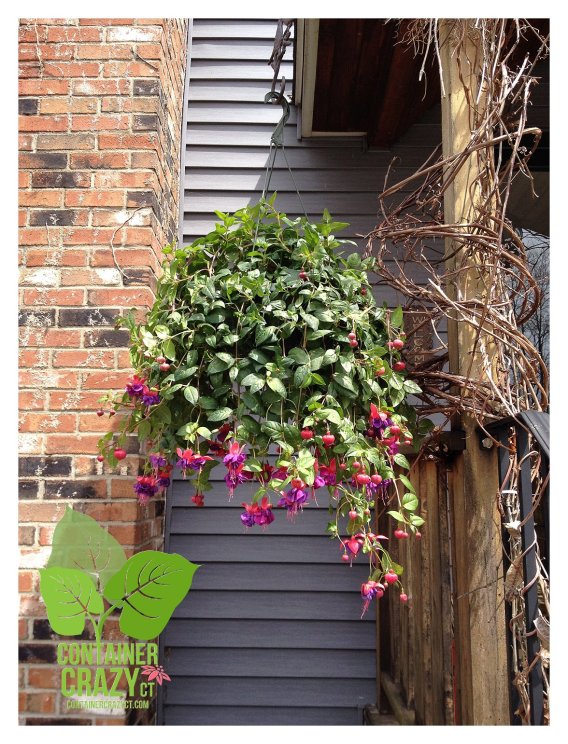
It is a Fuschia with purple and pink flowers.  I cannot resist getting one of these every year – mother, or not!  The hummingbirds love them and so do I.  And when I spotted a full one flush with dangling blooms, I had to – just had to – put it on my cart and take it home for me.

Mothers Day Shopping_0005

There are many things you want to consider as you look up to the top of the greenhouse to select a hanging basket for your Mom, but probably the only thing you really need to know is Mom’s favorite color.

I can not imagine any mother not being thoroughly pleased with a full hanging basket from their child on Mother’s Day – no matter what type of plants it contains – but when it is delivered in her favorite color, this puts the icing on the cake.  Trust me.

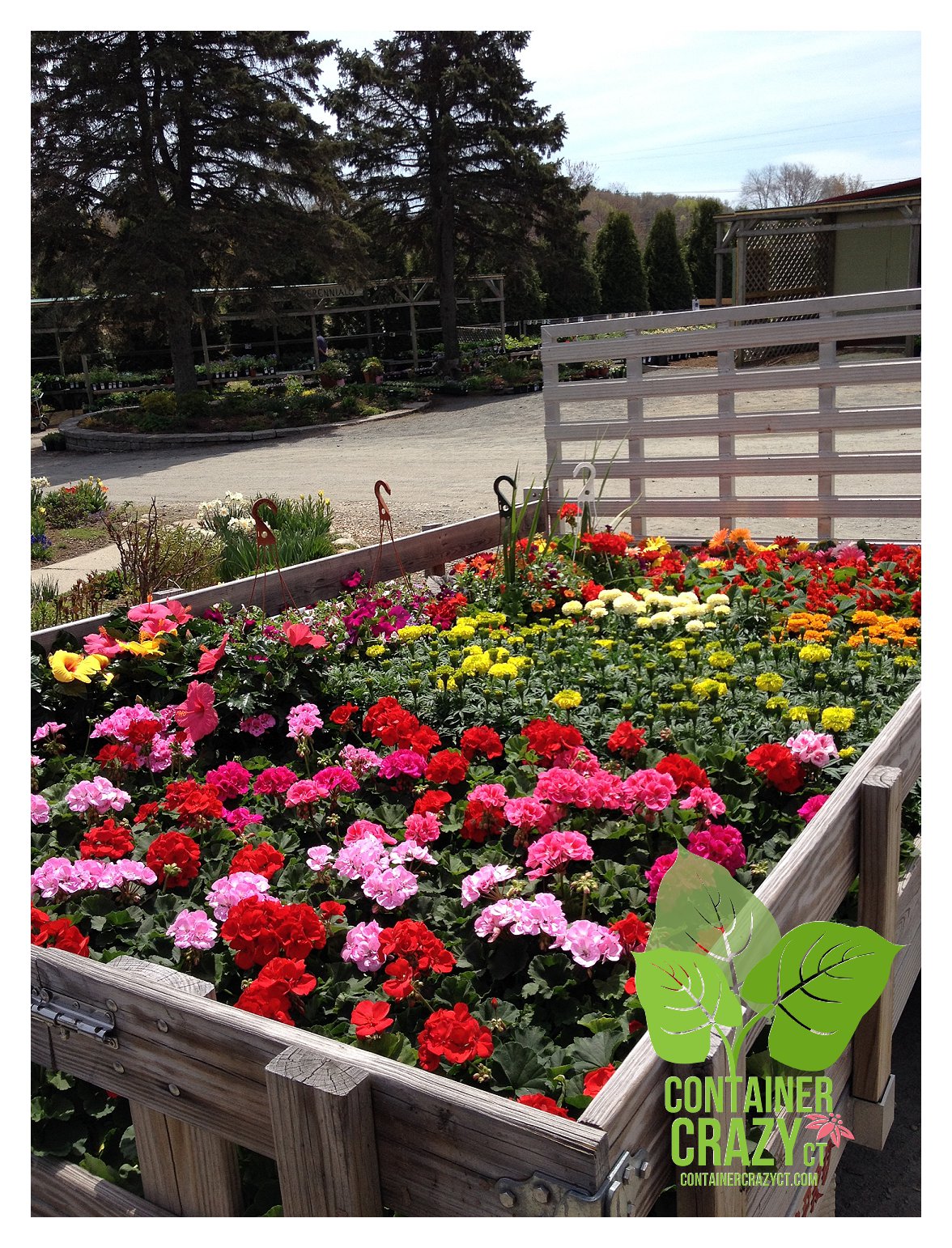
Wagon Load at Meadow View Farms

Wagon Load at Meadow View Farms

Additionally, of course, you want to look the plant over a bit to make sure it has good form and no bugs are stuck to the undersides of the leaves, but to be honest, I don’t think you will typically find this scenario this early in the season – especially this year due to our cool temperatures.  Most of the plants have been taken care of inside the greenhouse and they are freshly awaiting you.

We are having such a cool spring, almost all of the annual hanging baskets will be housed in the greenhouses where they have been kept warm, protected from the outdoor elements, and tended to by the nursery staff.  They will probably move some out now with the weather being fine over the weekend.

Mothers Day Shopping_0004

Another thing you have to remember is to check the hanger for plant tags if you don’t know what the plant are – after all, Mom will want to know – and you do want to impress her, don’t you?

I have to give kudos to Meadow View Farms because when I checked out with my hanging basket of gorgeous Fuschia plants, they handed me and every customer in line a pamphlet with good instructions on care, including a friendly warning about how the early spring days are still a bit cool to put out “some type of plants.”

Plants such as tropicals, annuals, and some vegetables require warmer temperatures and will get damaged by frost – but most perennials are just fine.  Perhaps why I put one of these in my cart too – a pretty purple blooming Pulsatilla vulgaris.  This perennial was irresistible in bloom.

A perennial Pulsatilla vulgaris 'Blue Velvet' at the nursery (does not need to be covered)

A perennial Pulsatilla vulgaris ‘Blue Velvet’ at the nursery (does not need to be covered)

I especially liked this tip on their instructions:

“A good rule of thumb is to cover plants by 8 pm the night before a forecasted frost and uncover them by 8 am the next morning.”

This might be too cumbersome to do with hanging baskets however, so my suggestion is you just take it in for the evening and put it back outside the next morning.  Tell Mom the same.

When you spot the right one for your Mom this Mother’s Day, don’t hesitate to grab it and remember, pick her favorite color.  If you don’t know what it is, I suggest you call Dad.

Written by Cathy Testa

http://www.ContainerCrazyCT.com
http://www.cathytesta.com
860-977-9473

Display at Meadow View Farms - Cute! Tea Thyme.

Display at Meadow View Farms – Cute! Tea Thyme.


How Cheerios Trumped Roses on Valentine’s Day Morning

2 Comments

Getting a rose filled bouquet on Valentine’s Day is traditional indeed, but I received the sweetest surprise this morning from my husband of almost 24 years!  Signs in different places in the house in the most creative ways – one of which I just have to share because it touched my heart so much.  A sign made with Cheerios cereal!

Creative!

Creative!

I’m sorry – even as a plant enthusiast – I have to say, this one trumped red roses this year – just check out that exclamation point.  I wonder how long it too him to do this – the letters are perfect, and so is he!!!

Love_0004

Happy Valentine’s Day Everyone,

Cathy Testa

Photo by picjumbo/Viktor Hanacek

Photo by picjumbo/Viktor Hanacek

Is Mother Nature Sharing Her Own Version of Menopause?

3 Comments

Mother Nature is on some kind of roller coaster, or she is issuing her own version of menopause upon us this winter. One day she’s hot, the next day she’s cold, and in the most unusual places.

Perhaps she is trying to tell us something.  Is she setting down signs?  Does she want to warn us to take better care of our earth? One has to wonder why she is so moody this year.

While some of the winter conditions this year have been traditional, other conditions have been unexpected or unusual.  And many places have experienced drastic ups and downs in temperatures from one day to the next.

As we are all well aware, Atlanta was hit with an unusual winter storm event earlier this week resulting in traffic nightmares beyond comprehension.  People were stuck in their cars over eight hours in some cases – and struggled as they spun their wheels (literally) over ice covered roads only to move a couple inches, if any.

One news story indicated a father walked six miles to retrieve his child from the school where many students remained overnight because of the inability to get a way home through the traffic jams.  Another story showed two people handing out bottled water and bananas to people waiting in their cars on the highway. As the couple proceeded to the next vehicle, the lady fell right onto her back onto the roadway as her foot lost grip of the road.  It was even dangerous to help.

Yet, the Atlanta people will have a reprieve from their frustrating weather incident almost immediately as their local temperatures returned to the 50’s this week, and is expected to rise into the 60’s by the weekend.  They may not have to think about a winter coat, spinning tires, ice scrapping, or shoveling for quite some time – if ever again this winter. Granted their politicians will be thinking about these scenarios for a long time due to their role of managing “Mother Nature” inappropriately.  But other than that, hopefully this weather struggle will be a far away memory for them.

For us New England’ers, however, the struggle of dealing with cold temperatures will continue for days if not a couple more months.  And Miss Mother Nature will continue to remind us of her controlling powers as we deal with each day of the chilly temperatures and gray skies, with an occasional sunny day to enjoy as a treat or gift on her good days.

It doesn’t help matters that we hear the constant chatter on the weather television stations about how cold it is every day. This only serves as a continual reminder.  In fact, it probably makes us feel colder.  We can’t seem to get it out of our minds.  Each time there is a drop in the temperatures, the news stations seem to go into a frenzy of how awful it will be to deal with, and while we need those forecasts to prepare for our day, we could use to hear a little bit of the plus side of the cold, but gosh, what is it?  It certainly can be challenging to answer that question.

Additionally, there hasn’t been a great deal of snow to play with.  Sometimes the dull-drums of the winter blues can be easily cured with a snowshoe walk on a wooded trail or with a day of sledding with your children on your favorite hill. Perhaps a chance to forget for an hour or so of how the cold temperatures are. You can go skiing, ice fishing, or skating if that is your fancy and this will ward off the Mother Nature blues for the time being.

But, unfortunately, it feels like we are seeing continued brown landscapes, lack of sunshine, and experiencing cold chills the minute we walk out the door. We are still pressing the auto-car start buttons for our vehicles, grabbing our hats, gloves and scarves, and bundling up when we go outdoors.  And our pets certainly let us know, the best thing to do is succumb to it, curl up on a blanket, and sleep it off.

On the occasional sunny, clear skied days – there is a bit of – well “sunlight” to enjoy. This makes cold temperatures a bit more manageable to endure.  And if you are lucky enough to break away from work to visit a greenhouse on a sunny winter day, you can capture the warmth of the sun even more while you are inside the greenhouse.  This will provide immediately relief, which is highly recommended.  You may even feel the inspiration of spring while you enjoy this type of greenhouse spa treatment.

Sometimes, on a really cold day, if our blessed sun is beaming towards you or your house, take a moment to face the sun and close your eyes just for a few minutes. Imagine it is the sun of the summer for as long as you can endure the frigid temps if you do this outdoors.  While you stand there, please tell Mother Nature that you promise if she stops playing these games, we will be kinder to her fellow partner, Mother Earth.  Promise her this, and maybe offer her a foot rub too, to help her cope with her version of menopause temperature swings.

And don’t forget to mention, that you do remember her powers as depicted in the old  70’s Chiffon margarine television commercials.  Don’t you all remember?  The commercial reminded us that…

 “It’s not nice to fool with Mother Nature.”

Happy Friday Everyone.

Stay Cool – I know it won’t be difficult.

Cathy Testa

Spotted at a Greenhouse in Old Wethersfield, CT - Comstock Ferry

Spotted at a Greenhouse in Old Wethersfield, CT – Comstock Ferry

Greenhouse Pics_0002Somehow these roots gives us hope to the warm season to follow.  They certainly seemed to enjoying the sun’s rays!

A Unique Way to Install a Bird House

26 Comments

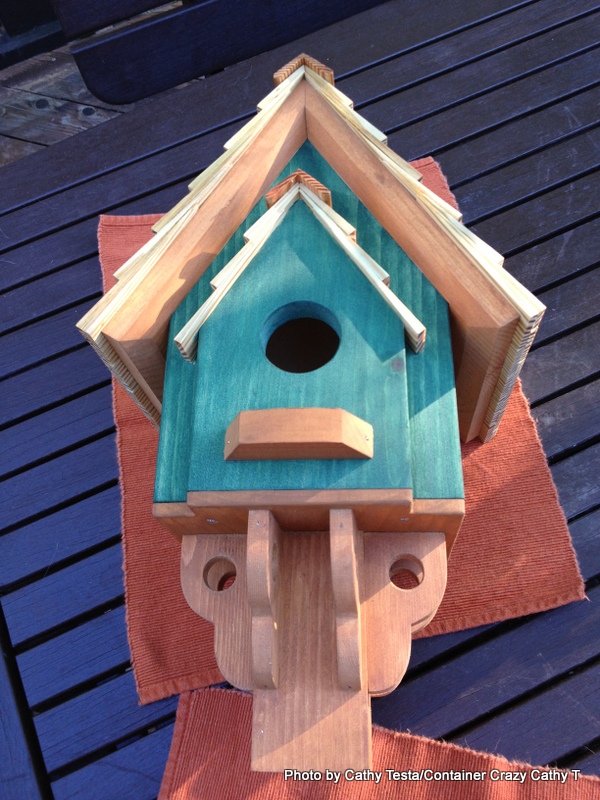
IMG_9418At my home, my husband and I have started a unique way of installing bird houses which entails the bird house being at a height of 12 feet.  It may take a few hours to get the job done, but the new home is more receptive to the birds because it is at a safe height where they are less vulnerable to potential predators.

So, we wanted to share our process with you.  Here are the materials needed, followed by instructions, and photos (note we are showing two types of houses installed), and a list of plants is included with useful links on more bird information below.

IMG_9366

Materials Needed:

  • 12 ft length of 3/4 inch rigid electrical conduit.  These standard lengths can be found in the electrical department at Home Depot.  (Note: The rigid conduit should come with pre-threaded ends.)
  • 3/4 inch floor flange.  This can be found in the plumbing department at Home Depot.
  • 12-14″ inches of an 8 inch diameter footing tube.  You will need to buy the standard 4 ft length found in the concrete section usually located in the outside area at Home Depot, and cut to 12-14″ long.
  • (1) 80 lb. bag of ‘Quick-Crete’ pre-mix concrete found in the concrete section located in the outside area at Home Depot.
  • Wood screws ½ inch long and ¼ inch diameter
  • Post hole digger tool and power drill
  • 1 very pretty and unique bird house!
Floor Flange

Floor Flange

Let’s Get Started:

1003097_10200588046796250_1420861369_nSelect your bird house location or site.  Think about the exposure, too much shade can be too cold for the birds.  Sunny exposures are great for warmth but if you have a very sunny spot, face the house east or north so it doesn’t get too hot.  You may also want to select a site visible from inside your home or from your favorite outdoor sitting place so you can view them.  But not too close either because baby birds chirping are very loud.  And of course, consider it as a vertical element in your garden bed. The placement is important if you want to use it as a piece of art in your natural landscape along with your beautiful plantings.

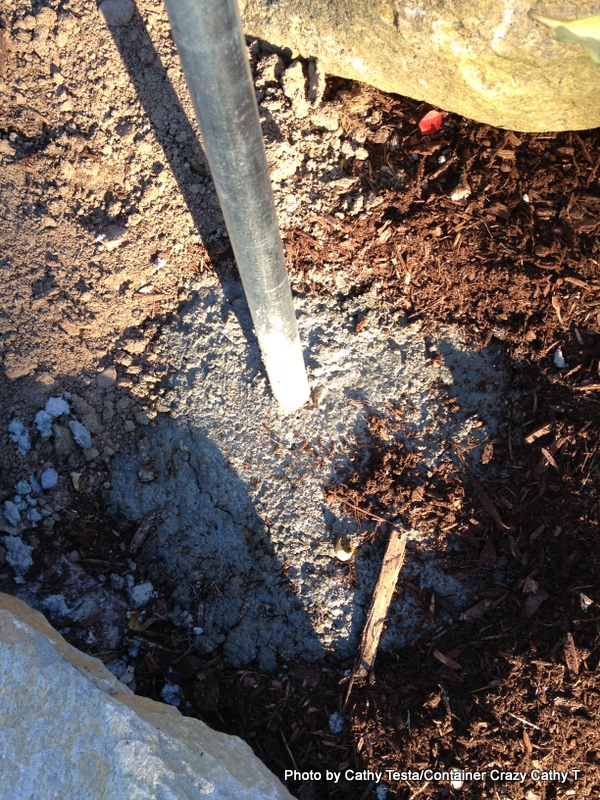
Dig the hole with a post hole digger.  Or ask your handsome husband to do so. Insert the footing tube cut to the specified depth (approximately 12 to 14″; see above). Mix the concrete as directed and pour into the footing tube.  Get ready to set the pole (rigid conduit).

IMG_9378Note:  My husband says he doesn’t pay attention to the freeze line because it does not matter if there is a little frost heave as it will only move back in place when the ground thaws.  But the rule is to dig below the frost depth to prevent frost heaving, approximately 42″ down.  If you want to be more cautious, you can dig deeper as per the guidelines for your region.

Set the pole (rigid conduit) in the wet cement.  As noted above, the 12 ft length of 3/4 inch rigid conduit works great. It is strong, very tall, cat proof, and useful for twining plants.  It does sway just a tad in strong winds, but no more than a thick branch might move on a tree.  If needed, use some wood stakes to keep the pole securely in place temporarily until the concrete mix dries completely.  The concrete drying process takes about 8 hours (or that is what we do, is wait a day before attaching the bird house to the pole.)

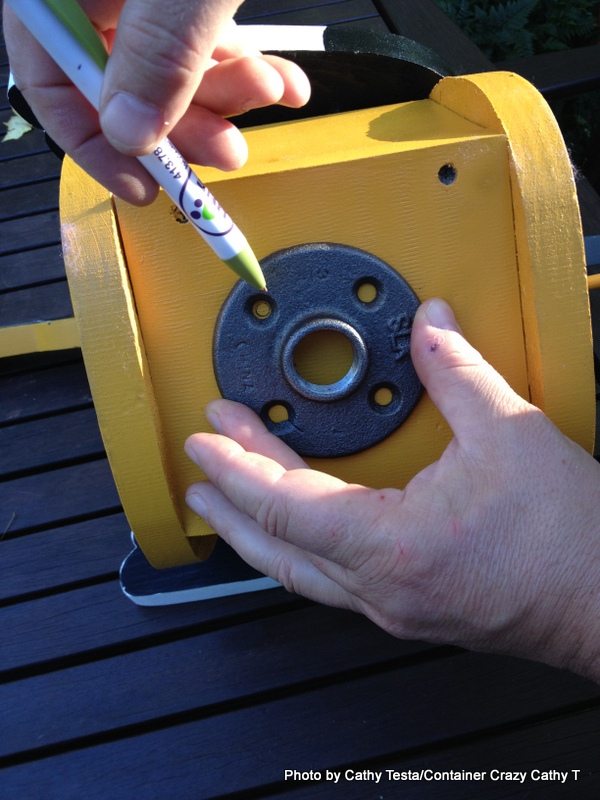
IMG_9367Attach the floor flange to the base of the birdhouse.  Pretty straight forward, mark the holes with a pencil, drill, and screw.  Takes a few minutes, and a power drill is handy for this. (Note: Pre-drilling pilot holes is helpful and recommended.)

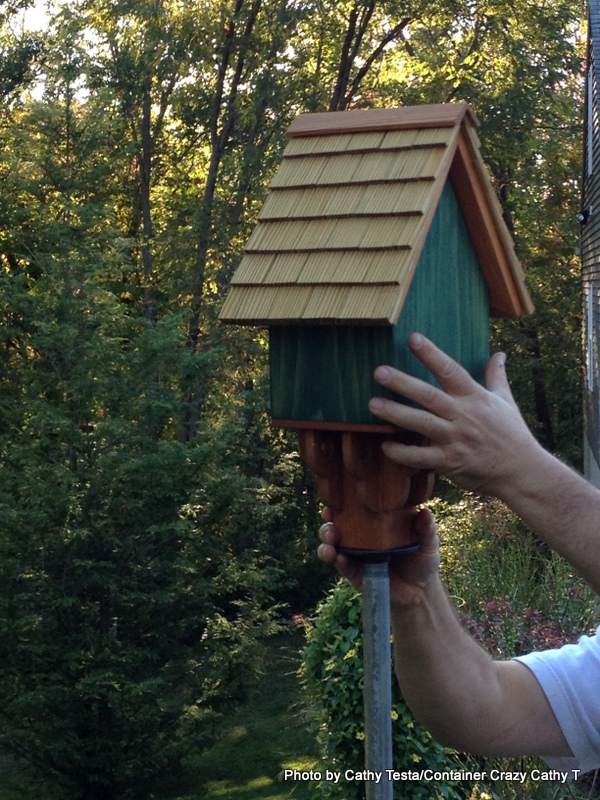
Attach the house to the pole.  Because the rigid conduit used as the pole has pre-threaded ends, just turn the house until it is screwed on firmly. Or turn it to face the direction desired in your landscape.

Watch.  In a day, you should have a bird moving in – we always do!  It’s great.  When we setup the bird house that looks like a Baltimore oriole, we saw a bird move in by the very next day, and this was during October, not in the spring.

IMG_9365

IMG_9369

IMG_9370

IMG_9376

Plants Attracting Birds:

Having a bird house in your yard will definitely entice birds to live there, but other features which help a great deal, are of course, the plants selected to feed or encourage birds. They enjoy plants with edible berries.  They also use natural scrubby bushes around your landscape for protection and as hiding places, especially during the winter for those not migrating southward.  And having a water source, such as a heated bird bath is very helpful.

Heated Bird Bath or Waterer

Heated Bird Bath or Waterer

They visit our heated birdbath all year round, and it is especially nice to see them take drinks from it during the winter when other water sources may be limited.

  • American Beauties offers a website with a bird focus design HERE.  You can narrow your search by your region, exposure of the garden, and soil type.
  • National Wildlife Federation offers information HERE.  You can find out which bird plants are native to your region and see more detailed information about attracting wildlife to your landscape and yard.
  • The Bird & Butterfly Garden at Lockwood Farm in Hamden, CT is a way to see an environment suited for birds in person.  You can find the map of the grounds here and it also includes a list of plants in the garden on page 2.
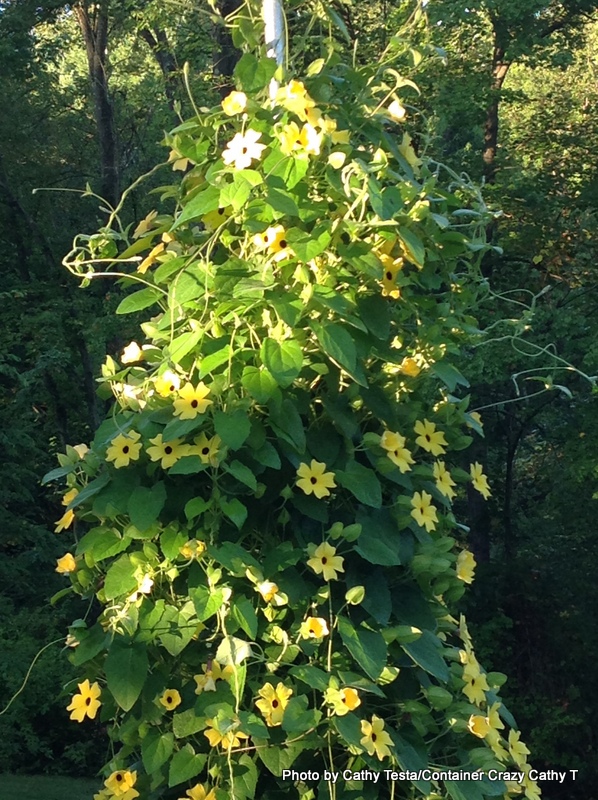
Thunbergia (black-eyed Susan vine)

Thunbergia (black-eyed Susan vine)

Twining Plants for the Bird House Pole:

In addition to considering plantings around the base of your new bird house, you may want to include a climber, twiner, or vine like plant to grow up the pole.  This will dress up the pole and create a vertical element in your garden, plus I believe the birds like it too.  More foliage and flowers, more natural for them.

Here are some recommendations:

Thunbergia starting to climb early in season

Thunbergia starting to climb early in season

Thunbergia (black-eyed Susan vine), as shown.  It is an annual, but it climbs very quickly.  Mine rose to the top of a bird house pole by mid-summer easily.  The repeat blooms are vivid and the sepals are pretty too.  It gets wider too and fuller.  This plant is tossed by end of season because it is an annual, but it is easy to replace with a starter plant in the spring because they are commonly available in the nurseries.

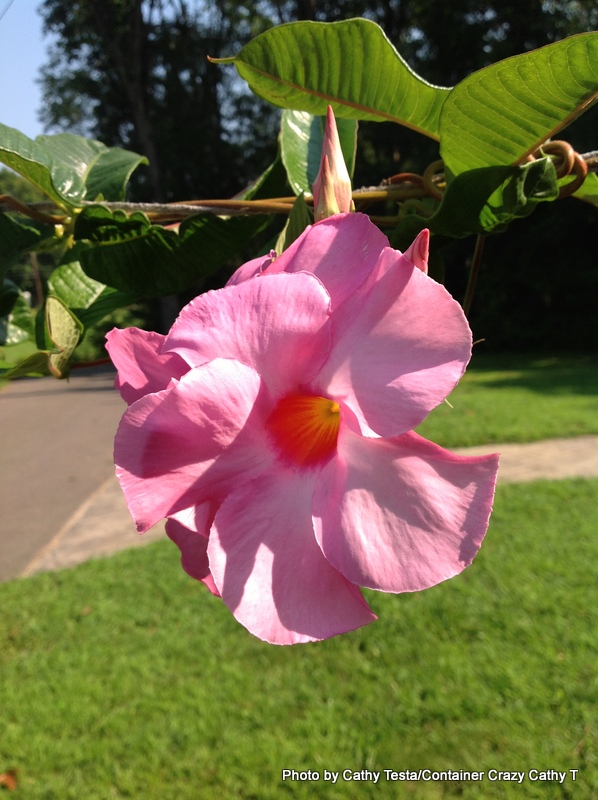
Mandevilla vine flower

Mandevilla vine flower

Mandevilla vine.  A tropical vine used in the summer, but can be overwintered by storage in a above freezing place over the winter months.  These vines grow quickly and flowers non-stop with large, tubular flowers.  I enjoy watching bees dive into the blooms.  This plant enjoys “full sun” for best performance.  To store them, wait til the first frost of autumn, cut it back, and put the root system in a container of soil or in the original pot if you didn’t plant it in the ground, move it inside the house, basement, or place where it doesn’t get below freezing, preferably between 35-40 degrees Fahrenheit.  By the way, I have a friend who stores their Mandevillas every fall, see the story here at Mandevilla Sightings on my blog.  The pink flowers were amazing this season.

Blackberries

Blackberries

Rubus (blackberry).  This will grow tall canes, but they won’t automatically twine onto the pole on its own.  You may attach the canes to the pole with zip ties (loosely) or garden twine.  We have one under a bird house and ironically, the berries don’t all get eaten by birds!  I think this is because we have lots of bird feeders too. But I have seen turkeys pecking at the leaves and I think they nibble on the lower berries. To read about the type of blackberry we planted, click HERE to see my former post.

Lonicera (honeysuckle vine).  This vine grows any where from 15 to 30 feet, and it may need some assistance to stay attached to a single pole, like the blackberry plant does, but it is a great plant for its flowers and foliage.  It may not be as fast growing as the annual Thunbergia noted above, but the tubular scented flowers are wonderful, and also attracts hummingbirds. This plant can sometimes become too aggressive, but it can be cut back and controlled.  Because it is perennial, you do not need to replant it every season as you do with the Thunbergia or Mandevilla.

Ipomoea (morning glory) or Tropaeolum (nasturtiums).  These are two plants easily grown from seeds.  Both grow rather quickly an have showy flowers, so they must be added to the potentials list for the bird house pole natural decor.  Just grab a packet of seeds in spring, start some in little pots, and transplant to the base of your pole.  The nasturtiums are edible too – by humans I mean.  Sometimes morning glories will self-sow to return on their own.

Miscanthus. Ornamental Grasses are a good choice to put at the  base of the pole as well.  It tends to soften the lines of the upright pole, and sways in the wind.  It seems to fill in that empty space below.  I also like to add decor to the poles in the fall season such as a garland of fake leaves with the orange and yellow colors.  Or you could attach a corn stalk on the pole as we enjoy the pumpkins at that time.

IMG_9375

Other Resources for Vine Plant Lists:

  • Better Homes and Gardens offers a vine list HERE.  Just be careful, some vines are aggressive and trouble-makers in the ground or when directly planted in a garden versus a container garden or patio pot.  Refer to my page called Troublemakers Turned Stars for more information.
  • Plant Facts by the Ohio State University has a nice list with pronunciations you can hear over your speakers.  Geesh, I’ve been mispronouncing Ipomoea for years.  LOL.  Click HERE to hear them out.
  • Birds & Blooms has a top 10 list for backyard vines, click HERE.  Remember, be cautious with some vines that become too aggressive and take over.  You may want to research more information on a vine before you plant it – think Wisteria or English Ivy as examples.  Both grow fast.
  • Fine Gardening has a vine list for full sun to part shade conditions, click HERE.  This magazine has always been one of my favorites because they do a great job of combining the beautify of botany with technical information about plants.

bird on plantAnd remember to check the rate of growth of the vine you select.  You want your vine to climb quickly – especially for our Connecticut season from spring through summer – it can feel short.  For woody or perennial vines, this is not as much of a concern since they will be there year round.

Enjoy your new bird house installation.

Whether you do it this year or in the early spring of next, I’m sure you will have more birds to enjoy in your surroundings for years to come.

Written by Cathy Testa (and co-authored by hubby, Steve!)

http://www.cathytesta.com

860-977-9473 (cell)


2013-10-22_0018

I Wish I Was as Strong as An Ant

3 Comments
Image Courtesy of FreeDigitalPhotos.net/by Sweet Crisis

Image Courtesy of FreeDigitalPhotos.net/by Sweet Crisis

When I take down my container gardens for the season.

Lifting objects fifty times my weight would be handy right around now when I start taking apart my large container gardens and patio pots on my deck for the close of the season.

Years ago, I had no problem whatsoever doing this process, but as one ages – well, you know, if you don’t keep up with those muscle building routines, it can become difficult.  In fact, when I gave talks on container gardens and why “bigger pots are better,” some ladies in the classroom would ask, “How the heck did you manage moving all those big pots?!”

Sometimes I get so excited about container gardening, I instantly find super power energy enabling me to lift heavy bags of container garden soil or other items needed like the big pots. However, during this year’s take down process for my container gardens, I felt a little weak at times.

In fact, I started to tell myself, stop feeling frustrated about taking down your plants in your container gardens!  It is part of the process and get into the spirit.  So I did some of my work of breaking down the 20+ or so large container gardens on my deck yesterday, and as I was doing so, I thought I’d share some of the things I found frustrating or helpful during the process.

Soil from Containers

Soil from Containers

GET A WHEEL BARREL OUT

Last year I was lucky. I had a new huge cement planter near my deck and I tossed the left over soil into that, but this year, I had to use my wheel barrel.  At first, however, it fell over from the weight of the soil falling from the deck level above into the barrel as I tossed it over the railing.  So I attempted to move my pick up truck to the deck, well, that didn’t work.  It was too difficult to maneuver the truck to the corner of my deck.

photo (7)

So, it was back to using the wheel barrel.  After getting a big lump of a root ball or two into the barrel, it stabilized and I was able to continue dumping the soil into the wheel barrel receptacle from above.  I will use this soil in the ground somewhere to recycle it as it doesn’t do well being reused in my container pots next year – It is best to have fresh container gardening soil each season, in my opinion, but to use it as a top dress to a garden bed or for a new garden bed is a good idea.

PLASTIC LINERS FOR POTS

In my container garden demonstrations, I show folks how to line their containers and patio pots with plastic liners (which must have slits and holes cut into them for drainage).  The reason I started doing this many years ago was more to keep the containers in good shape, but it also turns out to be a very effective method for slipping the whole root ball out of the containers at the end of the season.  The roots circle a bit around the edges within the liner, and it forms a nice ball or chunk when you are ready to take the plants and soil out.  It is a great tip for plants like Canna plants because they get large rhizomes and roots in the soil, making removal difficult. So I was happy my liners were working perfectly as I was removing the soil from my pots.

Foliage being Tossed into a Bin.

Foliage being Tossed into a Bin.

CUTTING ALL THE STEMS AND FOLIAGE OFF

Before slipping the soil out of the pots with the liners, I cut off all the foliage and stems to about 4″ from the base for plants I’m tossing in the compost pile. The little stub of a stem helps to lift the root ball out of the pots, at least in sections or chunks. The key here – use good sharp pruners or a serrated knife for large stems, and make sure to clean or disinfect them so you don’t spread any yuck (diseases) around, even during the take down process, clean tools are important.  I tossed my cuttings into a large bin on my deck, another item which came in handy as I was working.  It is easier to take all the foliage off before trying to move pots to a location or to the spot where I was tossing out the soil into my wheel barrel. Seeing the cut off stems of my elephant ears made me sad, and also made me think that I should have setup a station to make leaf imprints in a concrete mix as a side project at this time, especially because I have plenty of leaves to use, but that’s another crafty project requiring time.

WASHING THE POTS

Sometimes I feel a little lazy, but I force myself to wash the pots with a little soapy water, and a soft brush to clear away any soil residue left in or on the pots.  Then air-dry the pots completely before moving the containers into a garage or shed.  It is important to not skip this step. Cleanliness is so important for your plants when you begin again next spring to replant your containers.  It greatly reduces, if not eliminates, potential plant diseases or problems and you will be happy you cleaned them the year prior.

My Big Kalanchoe, Going to a Foster Home.

My Big Kalanchoe, Going to a Foster Home.

FINDING NEW HOMES

For container plants which I can not fit into my home (yup, read my blog earlier about greenhouse procrastination), I stand there contemplating where I can fit this – or should I give the plant to a friend or family member with a bigger house? The one I’m struggling with right now is my Kalanchoe (paddle plant).  It is HUGE. I know I can easily propagate some with cuttings, but I keep looking at it saying, should I cram it in my bedroom again to keep it alive all winter? Or give it to my sis in law with a big open bright living room with lots of windows?  Oh gosh, the challenges!!  I don’t know.

Hypertufa at End of Season.

Hypertufa at End of Season.

I also have a beautiful hypertufa stuffed with Sempervivums (hens-n-chicks).  They are pretty tough, can go really dry all winter with little watering, but I don’t have room in my kitchen garden window because I put my head planters there.  Gosh, where will this one go?

These are the challenges I face, never mind the fact I just don’t want to stop admiring my container garden plants outdoors, but winter is coming.

HAVING A GLASS OF WINE

Another downfall, or plus depending on your point of view, is that I started feeling like I wanted to have a glass of wine and enjoy my deck.  It is one of my favorite spots at my home. If you were to ask me – What is your favorite spot? Well, it is our deck.  I always feel like it is a vacation spot or oasis with all my big tropical plants every summer.  I get to decorate it with all my garden decor, and it faces a private backyard, so it is really a retreat.  So because I was out there on a nice, sunny fall day, and being around my beautiful plants, I felt like, gee, I should relax and have a glass of wine.  So I did after I disassembled about five or so of the smaller of my big containers.  Today, I will tackle the bigger ones.  This will require a hand-truck, some patience, and strength.

Wish me luck!

Cathy Testa