Pondering Ponds ‘Walk and Talk’ Reveals Many Unexpected Surprises

9 Comments

Hi Everyone,

First, thank you to our hostess and guests!

First, a great BIG thank you to our host, Rhonda Rafferty, for sharing her personal experience of starting her pond garden with one level, and then growing it by adding two more levels, as explained during our most recent “Walk and Talk” garden event, held last weekend.

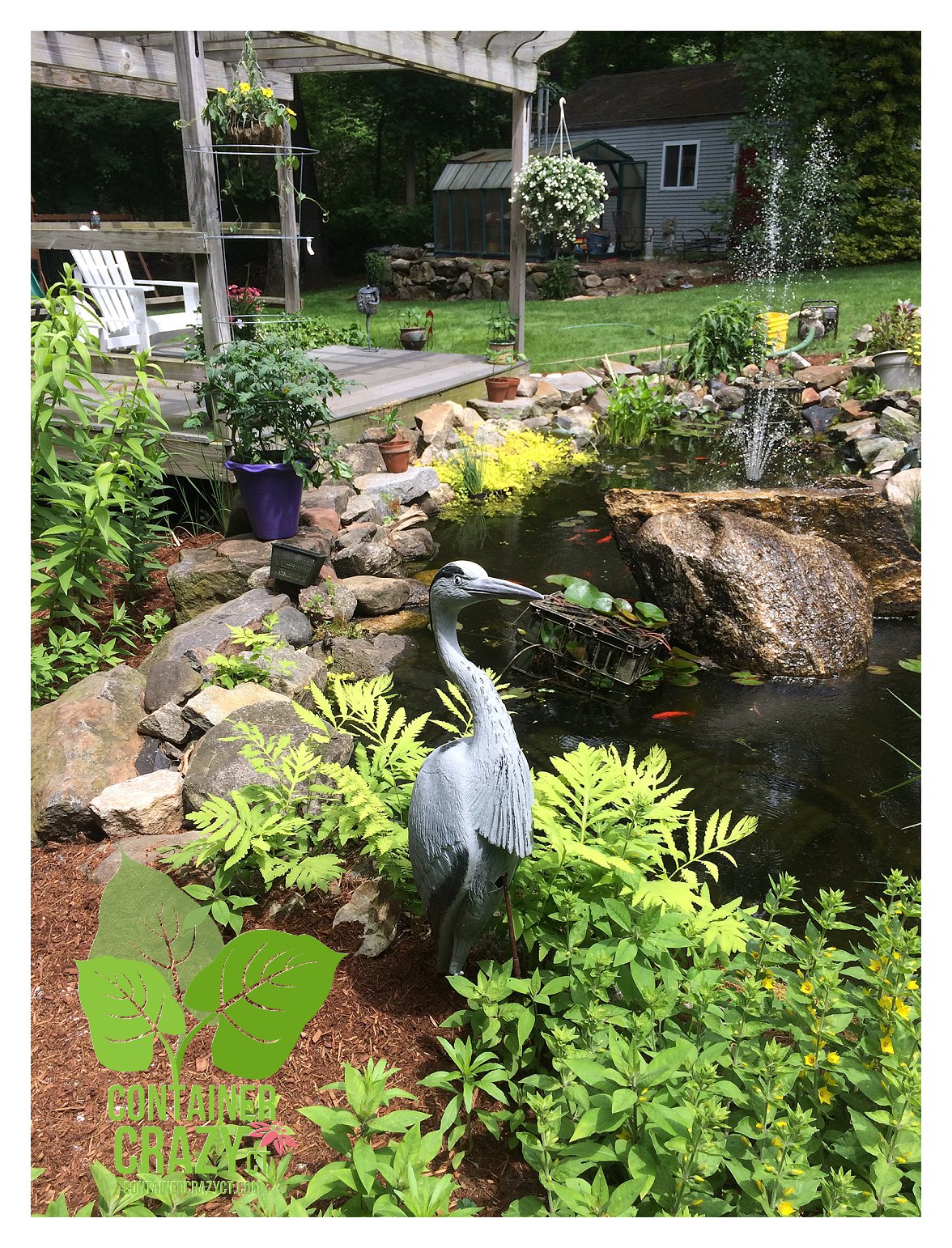
Rhonda’s pond gardens are situated in her backyard, and they are visible from her deck patio area adjacent to her house.  At the base of her pond gardens is a beautiful sitting area flanked with a pergola.

Cathy T and Rhonda's reaction to a funny intro story!

Cathy T and Rhonda’s reaction to a funny intro story!

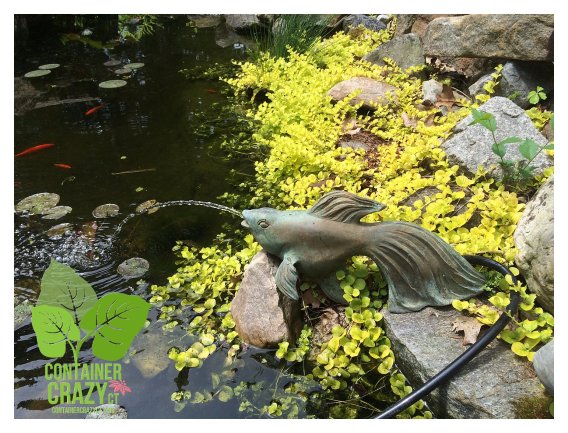
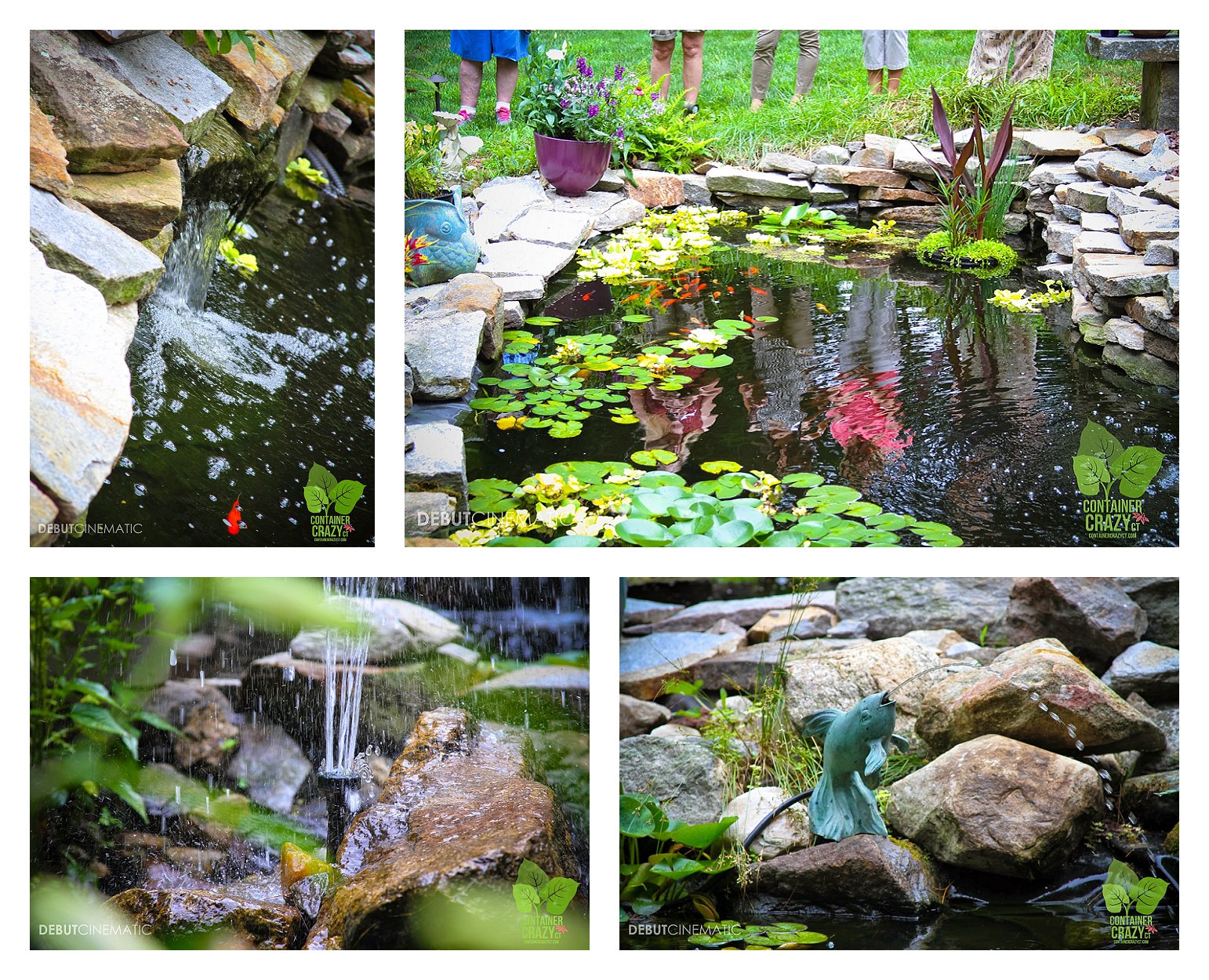
The sounds of the water trickling from decor spitting fishes and fountains in the ponds are enough to draw you from inside her home to the great outdoors in her backyard.

We had 15 attendees which made this tour a great success. Many of the attendees were from local areas, some folks from a new South Windsor church gardening group, and several attendees from Cathy T’s Classes.

Pondering Ponds Photos by Debut Cinematic_0012

Started with a kit, and built two more sections

Rhonda explained how she started her adventure with pond gardening by using a pond kit to build level one, or the very first tier of the current 3-tiered pond garden area in her yard. As soon as it was ready, her husband bought ten goldfish and put them in it, and of the ten, seven goldfish survived. All of the other goldfish in her ponds today, hundreds of them, are the offspring of the initial seven goldfish.

When Rhonda had shared pictures prior to the tour of her pond gardens, I had assumed the fish were Koi fish. They are rather large and very active in all three levels of her pond gardens, rising to the surface quickly and swimming around rapidly as you approach the water’s edge.

Pondering Ponds Photos by Debut Cinematic_0007

Rhonda explained the first level of the pond garden is rather shallow but the middle level is approximately 5 feet deep and 20 feet long.  Each pond section is structured a little differently, and they are not connected but adjacent to each other in a three-tiered pattern.
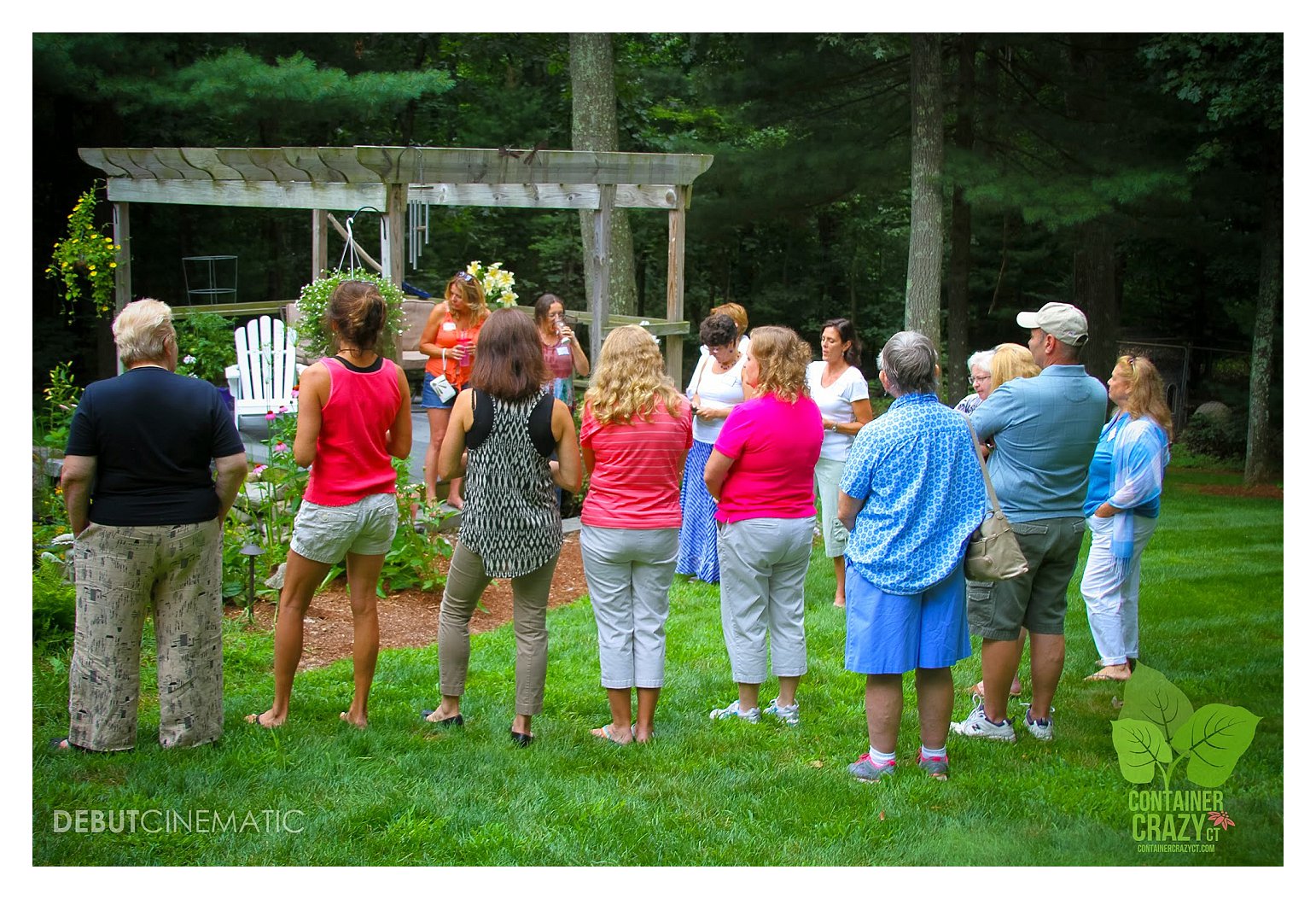
Attendees Listening to Talk by Rhonda

Attendees Listening to Talk by Rhonda

Spring and Winter Cleanup Routines

For maintenance, Rhonda drains the ponds completely in the spring.

The goldfish (which stay dormant in the winter months in the bottom of the ponds) are relocated to a 100 gallon horse troth until she’s done performing spring clean-up activities.

Easter is when Rhonda usually opens the ponds if the weather is warm enough.  She can tell when the lilies start growing that it is time to get moving and working on her ponds.
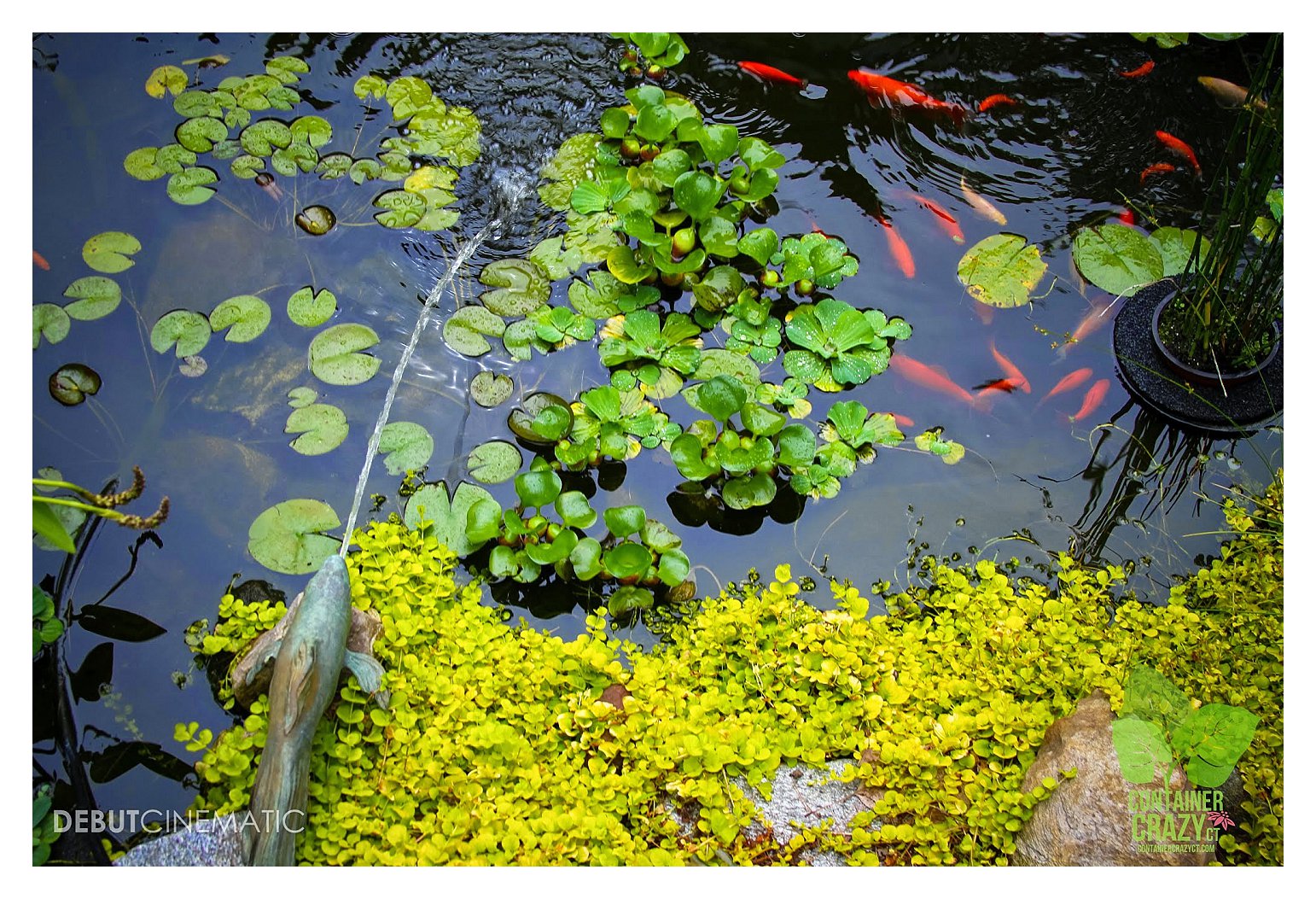
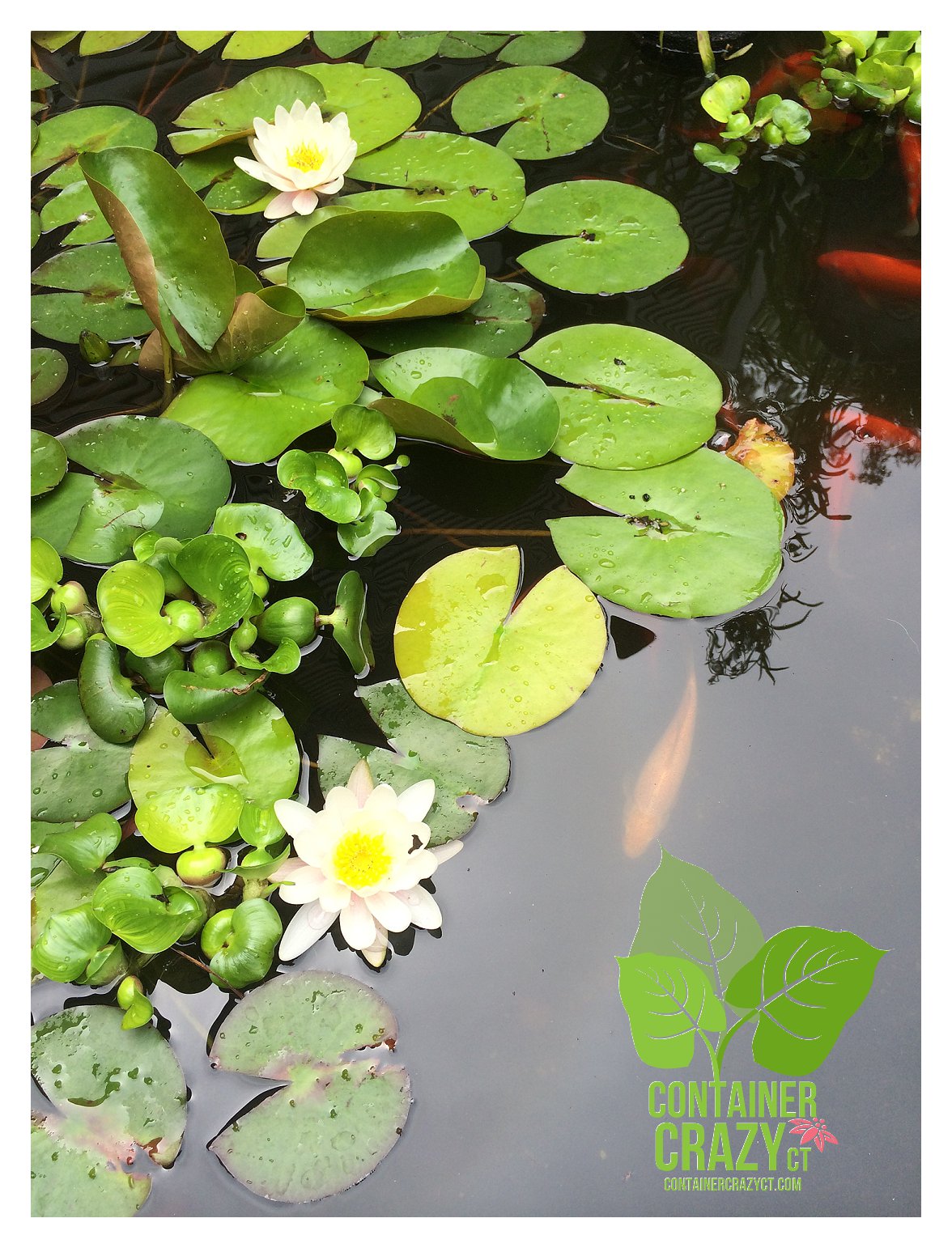
Water lettuce, Lilies, and Lysimachia near goldfish

Water lettuce, Lilies, and Lysimachia near goldfish

All the muck, which built up and decayed in the bottom of the ponds over the winter, is removed with a special muck vacuum she purchased because her ponds are so large.

Also, Rhonda noted using ‘Microbe-Lift‘ in the water filter to add good bacteria to the water.  This will keep her pond healthy throughout the season.

Pondering Ponds ContainerCrazyCT_0001

At one time, Rhonda used a power washer to clean the liner, but she no longer uses a power washer because she wants to keep the algae growing on the liner, and the power washer was removing it – so she uses a garden hose instead.

The algae helps the natural ecosystem get established after a complete water change, and provides food for the fish because you can’t feed them until the temperature of the water reaches a consistent 55 degrees.

There is a special ‘Spring & Fall’ food for cooler temps of approximately 55 – 75 degrees.

However, once the temperatures reach 75 degrees, Rhonda changes to feeding the fish a summer staple food.  Rhonda also noted she uses special UV filters to control bacteria so that the water stays clear during really hot temperatures in season.

During the fall season, the food is changed again when it gets cooler outside, and she stops feeding at 55 degrees.  She also turns off the filters when she stops feeding for the fall and winter months.

Standing at Level One, Rhonda talks about products used to keep water healthy

Standing at Level One, Rhonda talks about products used to keep water healthy; Photo by C. Testa

In the winter, she leaves all the water in the ponds, but will remove the filters and clean them for storage.  She basically washes them down with water because she avoids getting any chemicals in the filters.  She also cuts back all the hardy water lilies and plants, and sinks them to the bottom of the pond in her deepest tier.  A small low watt pond deicer, which floats on top of the water for the winter, is used.  This will create a small patch of open water in the ice to allow gases to escape in the winter.

Water Plants, Floating Plants, Perennials and Tropicals

Rhonda has a mix of plants in and around her pond gardens, and she noted, many have appeared on their own. Some self-sowed or got there perhaps by bird droppings of digested seeds, and even a few ferns arrived to her garden naturally. It is as if the plants know this is the right spot for them.
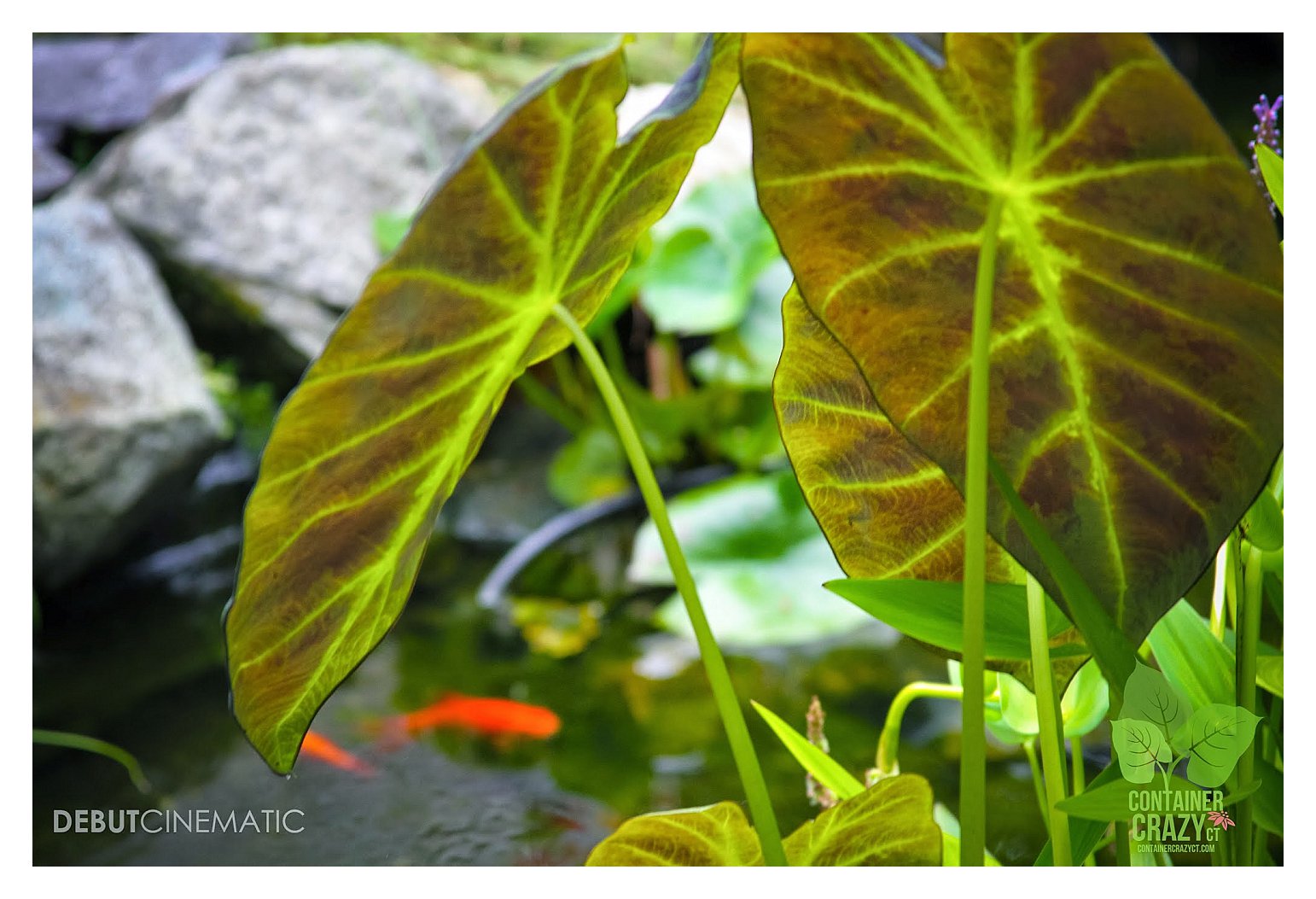
Elephant Ear (Colocasia)

Elephant Ear (Colocasia)

In the water of her pond gardens, she has water lettuce, elephant ears (one showing off a bloom on it during our tour) – Colocasia esculenta ‘Illustrious’, canna plants, hardy water lilies, papyrus (herbaceous perennial), and mosaic plants (Ludwigia sedioides, an aquatic perennial grown as an annual).

Some of the plants she overwinters by placing them in a fish tank in her home, and others are stored by division of rhizomes or corms, such as done with the canna and elephant ears, or by saving off-sets.  And some are allowed to sink to the bottom to decay or regrow the following season if hardy (as she noted above in maintenance comments.)

Rhonda mentioned Garden’s Dream in Enfield, CT as one place she purchases plants from because they started carrying water type and aquatic plants.

Other plants and bees

There is no doubt the bees are enjoying the plants, for not only could we hear water trickling, see fish moving, there were also many bees visiting the blooms of her coneflowers and other plants surrounding her pond gardens.

Pondering Ponds Photos by Debut Cinematic_0002

Perennials, such as Echinacea purpurea (purple coneflower), and various ornamental grasses are planted in the ground near the ponds, and one plant many attendees noticed planted in a pot sitting on a rock in the center of the pond was Amaranthus tricolor, an edible annual with bright red and yellow foliage, which grows rather tall and is showy.

Plant with red and yellow foliage in pot seen in background -Amaranthus tricolor

Plant with red and yellow foliage in pot seen in background -Amaranthus tricolor

When everyone asked me what it was, I drew a blank on the plant name, but Rhonda said she got her first plant of this variety from me a couple years ago and loved it – fortunately, she remembered the name of it.  Rhonda said she’ll never forget seeing this annual at my home in a container garden because she uses Amaranth flour as one of her gluten-free ingredients in her recipes at home.
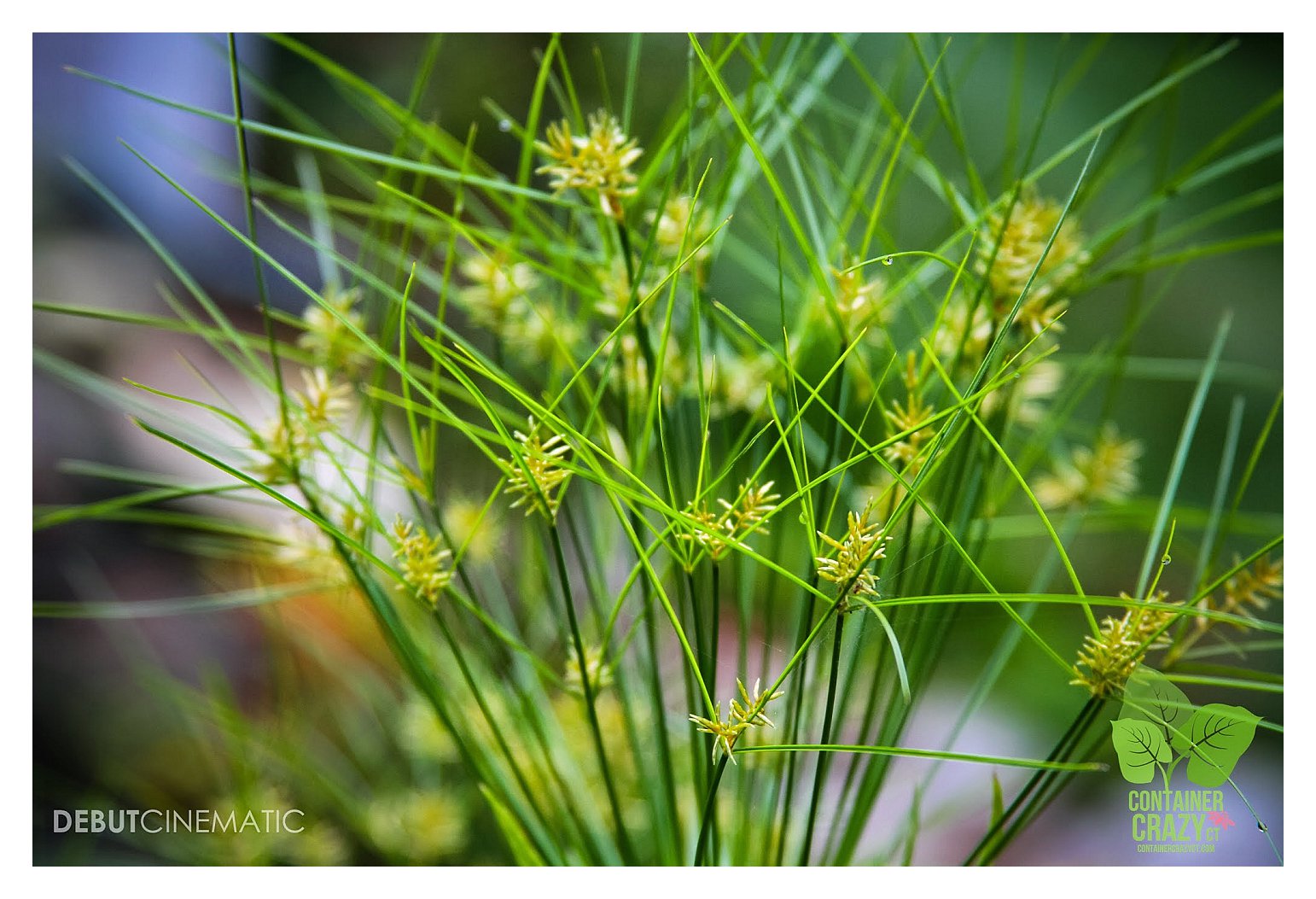
Papyrus tops

Papyrus

Other plants in the pond gardens, as noted above, were the elephant ears (can sit in water), papyrus (not technically a water plant but also can sit in boggy like water or on water’s edges in pots), and the aquatic water lettuce, hardy water lily, and more.  One we all found fascinating, and is relatively new in Rhonda’s pond gardens, is the mosaic plant (Ludwigia sedioides).  It is an herbaceous perennial (winter hardy to Zone 10) which floats and rests somewhat flat on the surface of the water and has a pretty mosaic like pattern to it.

Mosiac Plants - Photo by C. Testa

Mosiac Plants – Photo by C. Testa

Root Mass Demonstrated 

Another surprise is when Rhonda reached into the water to pull up a huge mass of hardy water lily plants bound together by one root system, explaining how quickly plants grow in her water gardens.

Root Mass of Hardy Water Lilies

Root Mass of Hardy Water Lilies

She also noted another plant found by her husband in the wild, upon with, I gave a little caution to the attendees to be very careful with water plants or any plants you may find out in the wild if you do not know what it is.  There are invasive species in the wild or in natural ponds, which you should never relocate to your pond or home gardens by mistake, especially if it can run off to another water system nearby your home.  So just a note – know what you are planting, and if you decided to get rid of a rampant plant growing your gardens because it became out of control, and don’t know what it is, toss it in the garbage and not in the woods where it could potentially spread.  This is something I learned more about as a kayak-er, where you must be careful to not accidentally bring home an invasive aquatic plant after visiting a lake with your kayak or boat, as discussed in a previous blog here.

Floating Containers – Another Big Surprise of the day 

I’ve written about all types of containers to use in and around the gardens, but have never considered the type Rhonda had in her pond garden.  There was one container floating around in the pond garden, moving here and there gently in the water, and without hesitation, Rhonda lifted her floating container out of the water to show our attendees.  It is made of a black Styrofoam base with individual open sections where pots may be inserted easily.
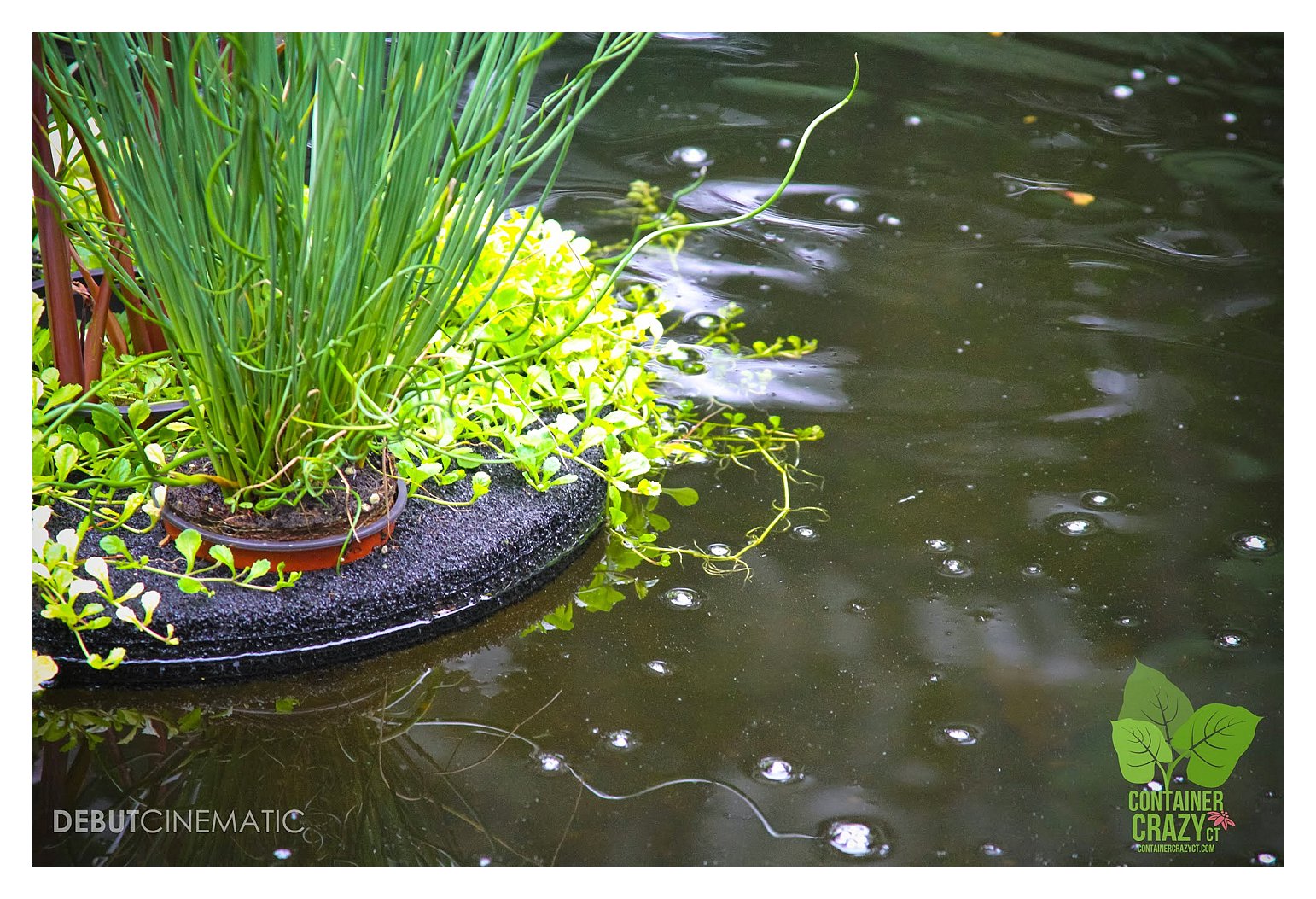
Pondering Ponds Photos by Debut Cinematic_0006 Pondering Ponds Photos by Debut Cinematic_0007 Pondering Ponds Photos by Debut Cinematic_0008

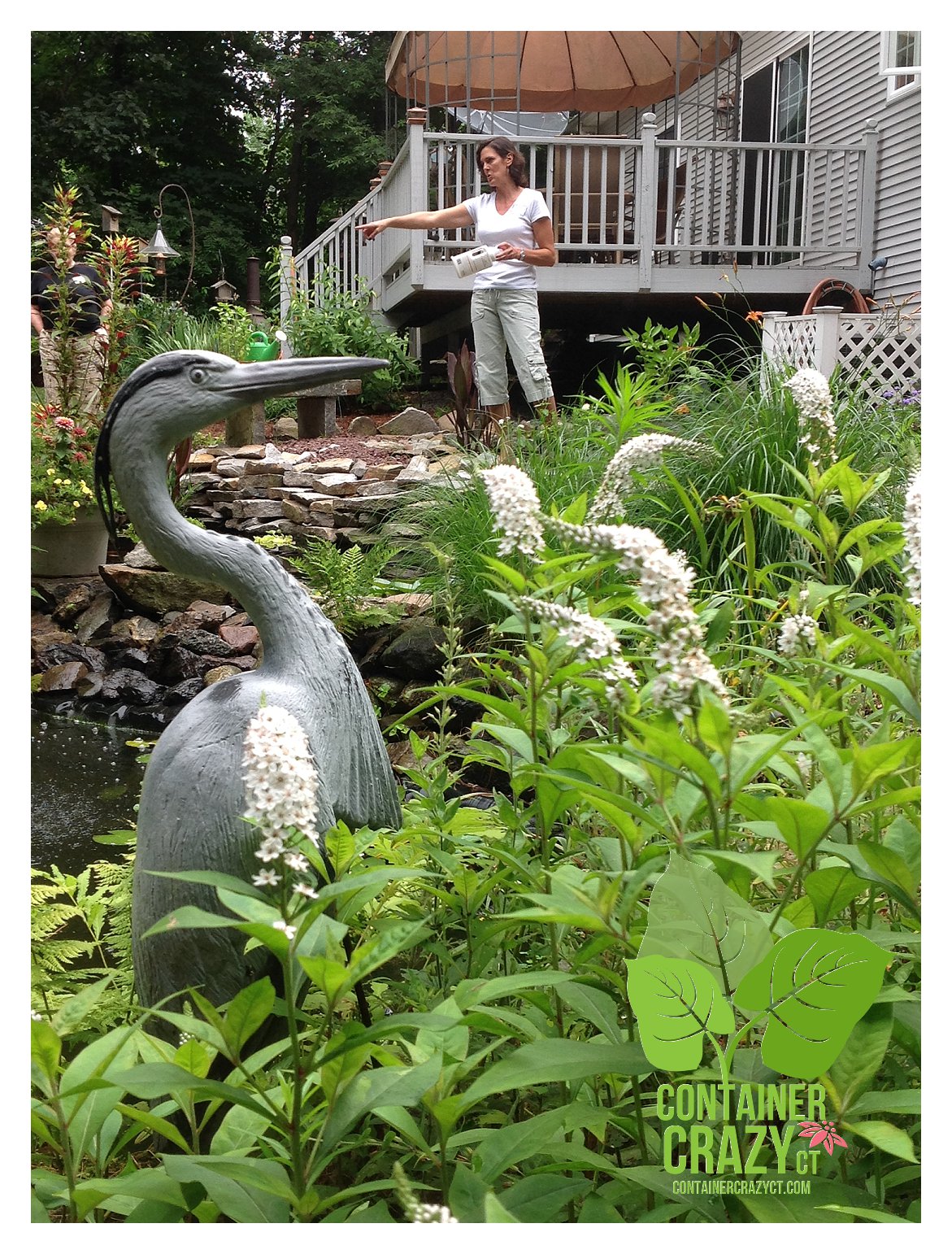
Garden Art is wonderfully displayed around her pond garden — this little pig in the corner, spitting fish here and there, and other surprises as you look and observe.

Pig by Pond; Photo by C. Testa

It is an adventure to spot them.  We all could imagine the days or evenings when she and her family has sat there to enjoy all the hard work put into the pond gardens at her home.
Pondering Ponds Photos by Debut Cinematic_0005

Sources for Pond Supplies

AZPonds.com is an online source Rhonda uses to order supplies. She gets her liner, filters, pumps, and water treatments from them. Shipping is pretty fast.  Orders arrive within 5 business days.

Rhonda started her first pond garden 12 years ago, and continues to learn and expand it.

We all could appreciate the amount of effort but how her efforts also equals the relaxing moments by the pond gardens enjoying nature, goldfish, and sounds.

Pond Gardening is Not for Weenies

Water or pond gardening is not for weenies – it takes some effort to get it cleaned and prepared every season, but the payoff is grand. And if you were wondering, one of the reasons we were laughing in the above photo is because I shared a story of how Rhonda and I met during our corporate days – when we decided to take a motorcycle riding course together, and how we would ride into work side by side on our Harley Davidson motorcycles.  Rhonda still rides today, I, however, gave it up so you can see – she’s no weenie!  Makes sense to me that she manages to maintain such a diversity of plant life, fish, and more in her pond gardens.

Hostess Rhonda; Photo by C. Testa
Hostess Rhonda; Photo by C. Testa

Pondering Ponds ContainerCrazyCT_0013

Also, as for pH of the water, Rhonda noted she doesn’t monitor it – she lets nature take its course.  That sounded good to us – and fits the overall rule of the ‘Walk and Talk’ Garden events – it doesn’t have to be perfect for us to enjoy hearing and seeing what any homeowner has created in their backyards.

Pesto and Passion Flowers

The last big surprise of the hour was the handing out of freshly made pesto by one of our attendees — Thank you Linda C.

Pondering Ponds ContainerCrazyCT_0015

What a treat, and additionally, we all saw, on the way out for the day, Rhonda’s beautiful blooms on her passion flower (Passiflora) vine located at the front of her home. She said it returns every year via self-sowing (or perhaps she has one that is noted to be survive winters, Passiflora incarnata.)  It certainly looks like it!

Passion Flower; Photo by C. Testa

Passion Flower; Photo by C. Testa

She has seen fruit growing after the flowers pass, but wasn’t aware it is passion fruit until we discussed this fascinating flower further.

See here to also learn about this plant’s religious significance, which I looked up via my iPad and pointed out to everyone – each part of the flower has a special meaning – and is believed to represent symbols of Christ’s passion and cross.

Next Walk and Talk 

Our next ‘Walk and Talk’ event is scheduled on August 16th in East Granby, CT at 10:00 am.  This one will feature a sunny hillside garden where the homeowner will share her experiences on what thrived and what didn’t when it comes to the plants she has tried in a very informal, loose and spreading garden on a full sun hill which receives lots of heat in the midst of summer, and wind.  As per our rules, the garden is not perfect but a great place to learn directly from a home gardener with a particular passion.

For more information on planting aquatic plants, check out this post by thegardengeeks.com.

Thank you,

Cathy Testa
http://www.cathytesta.com
860-977-9473
ContainerCrazyCT.com

P.S. If interested in showcasing your home garden on our Walk and Talk tours, please feel free to contact Cathy Testa, author of this blog, and coordinator of these events.

Special note of thanks to Professional Lifestyle Photographer, Karen Ladany of Debut Cinematic, for attending to take various photos of the gardens.  She is currently located in East Windsor, CT.

Elevate to Alleviate Potential Plant Problems in Your Patio Pots

1 Comment

We are experiencing wet, damp, humid, and even cool air conditions right now in Broad Brook, Connecticut due to the current weather pattern – and your plants are getting a good soaking, which can be very helpful for plants in the ground, but when it comes to plants in container gardens and patio pots, overly wet soils and wet surfaces around plants can lead to problems such as fungi, diseases, and the unsightly yellowing or rotting of leaves.

Hopefully, if you used good porous soil in your pots, and provided plenty of drain holes at the bottom of your pots, the soil is draining freely and your plants are holding up well.  But sometimes, pots sitting on a flat surface may be sitting in collected water at the base of the pot during constant rainy weather, which is keeping things wet in or around your patio pots and plants.

To avoid an overly wet situation, which may lead to plant problems, one easy thing you can do is elevate your patio pots a bit to provide a gap between the base of the pot and the surface it is sitting upon.  And the gap you provide by placing something under the pot doesn’t have to be super thick or wide, all you need is a few inches or less.

Quick Ways to Elevate your Pots

Here are some quick and easy ways you can elevate your pots to alleviate overly wet situations as we get through the dampness of our week until the sun arrives this weekend:

Kitchen Trivets

Trivet under Glazed Pot

Trivet under Glazed Pot

As you can see, the gap is slight here but it allows air under the glazed pot and prevents the wood base used as a plant stand to not stay wet all the time.  Maybe you have a trivet in your kitchen?  So long as it has spaces or gaps to provide places for the air to move, this will help the situation from staying really wet.  It will help the wooden plant stand from rotting as well.

Patio Tables

Patio Table with Opening Screen Pattern

Patio Table with Opening Screen Pattern

Maybe you have a couple side tables on your deck?  If they have a grate-like or open pattern, such as this one, it is a perfect way to elevate a pot to allow circulation under the pot, and to also showcase your container garden at a higher level.  This pot has a watermelon plant in it so the elevation helps the vines to trail down nicely as spillers in the container garden.

Pot Feet

Pot Feet

Pot Feet

Many stores offer little pot feet, which I like – they are handy and easy to store.  And if they have some cute pattern or decoration on them, it can look nice.  Place each one on the floor and then place pot on top – adjust as needed to balance the pot.  A simple and easy elevation allows the water to drain when watering on non-rainy days, instead of that water sticking around under the pot, causing the floor to stay damp. This will help your wooden deck or patio surface to not get water rings too.

Drink Coasters

Elevate Pots ContainerCrazyCT_0017

Coasters

Coasters

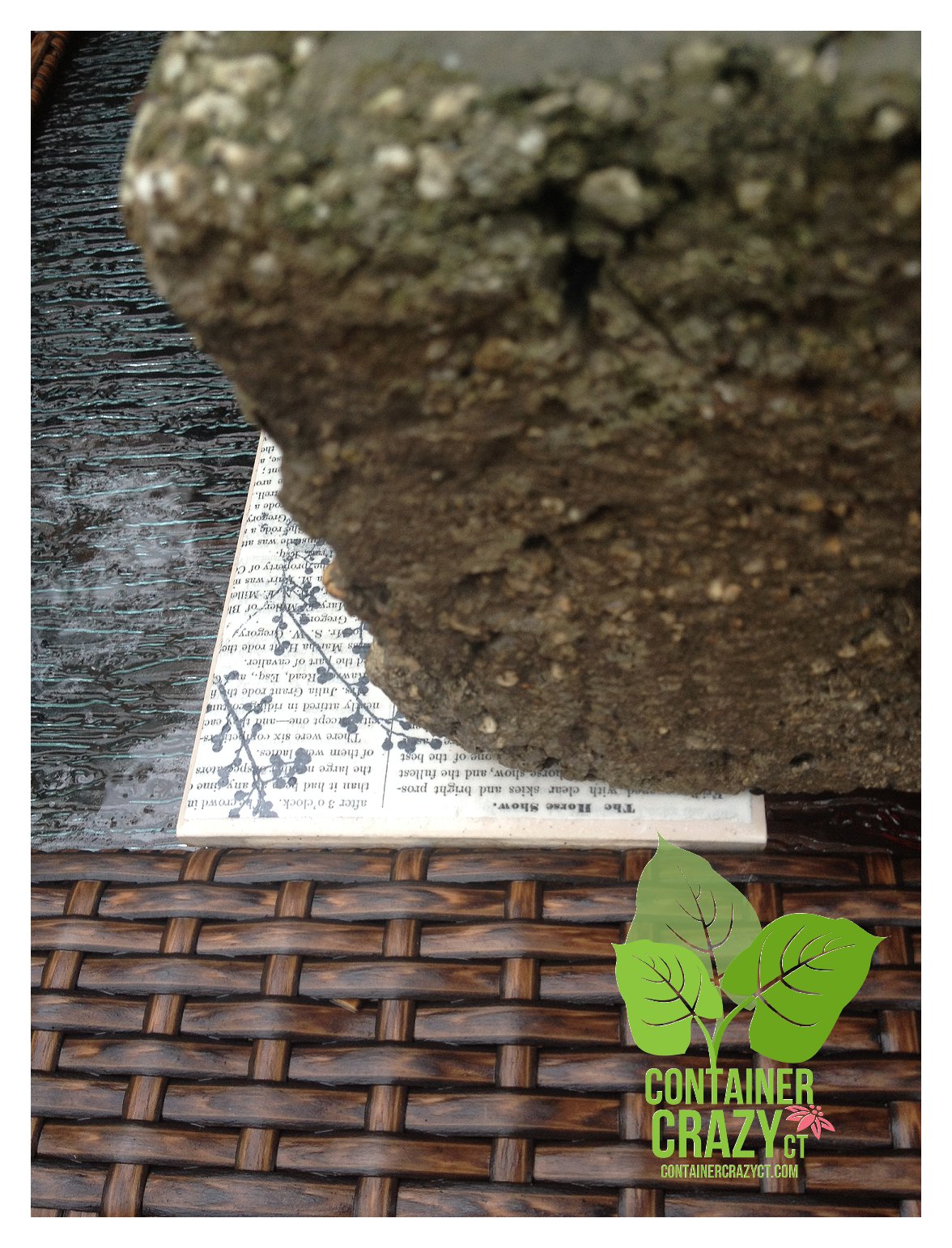
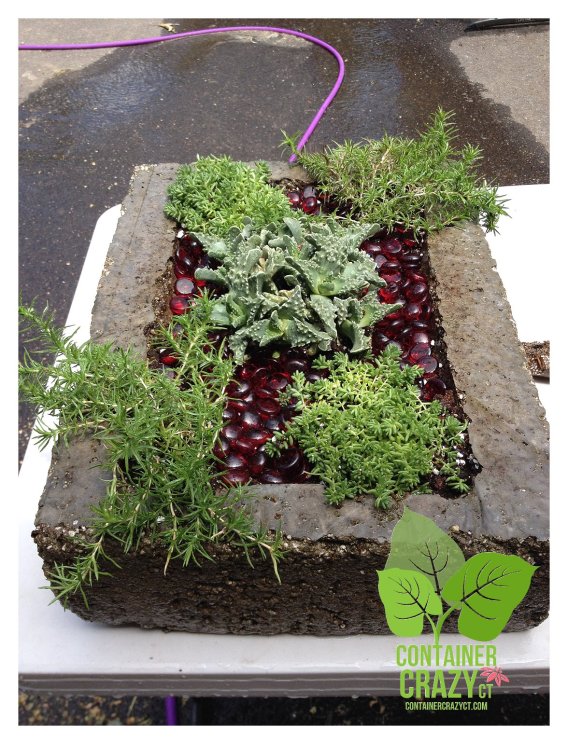
This Hypertufa planter is sitting on a glass surface.  The pot is porous, sure enough, but the glass below this square planter forms a seal of sorts and the water stays collected under the Hypertufa planter.  In wet conditions like we are having this week from the weather, I definitely prefer to have that little elevation below this planter – and coasters are perfect for this one.

Drain the Excess

Elevate Pots ContainerCrazyCT_0014

Drain excess water

Drain excess water

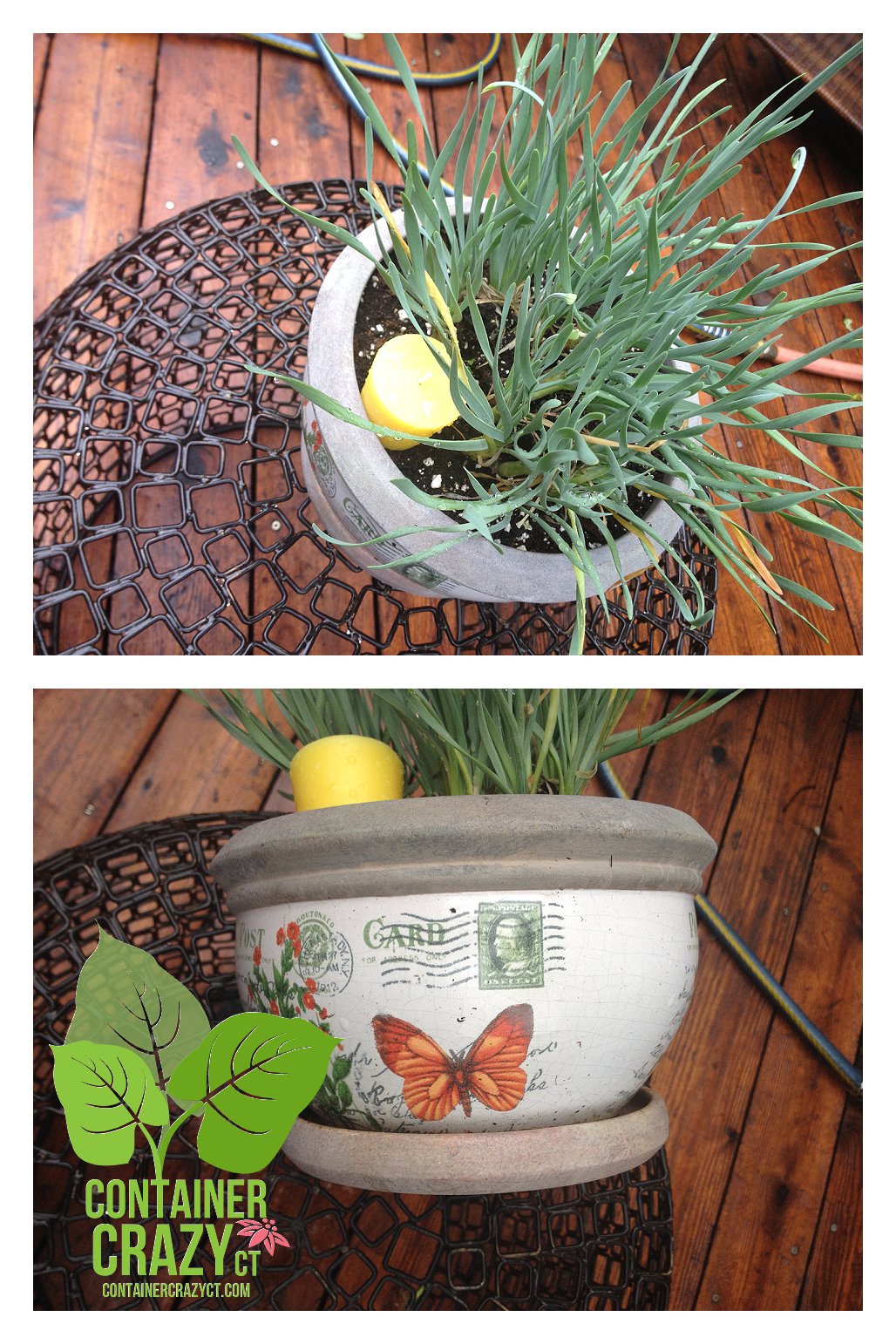
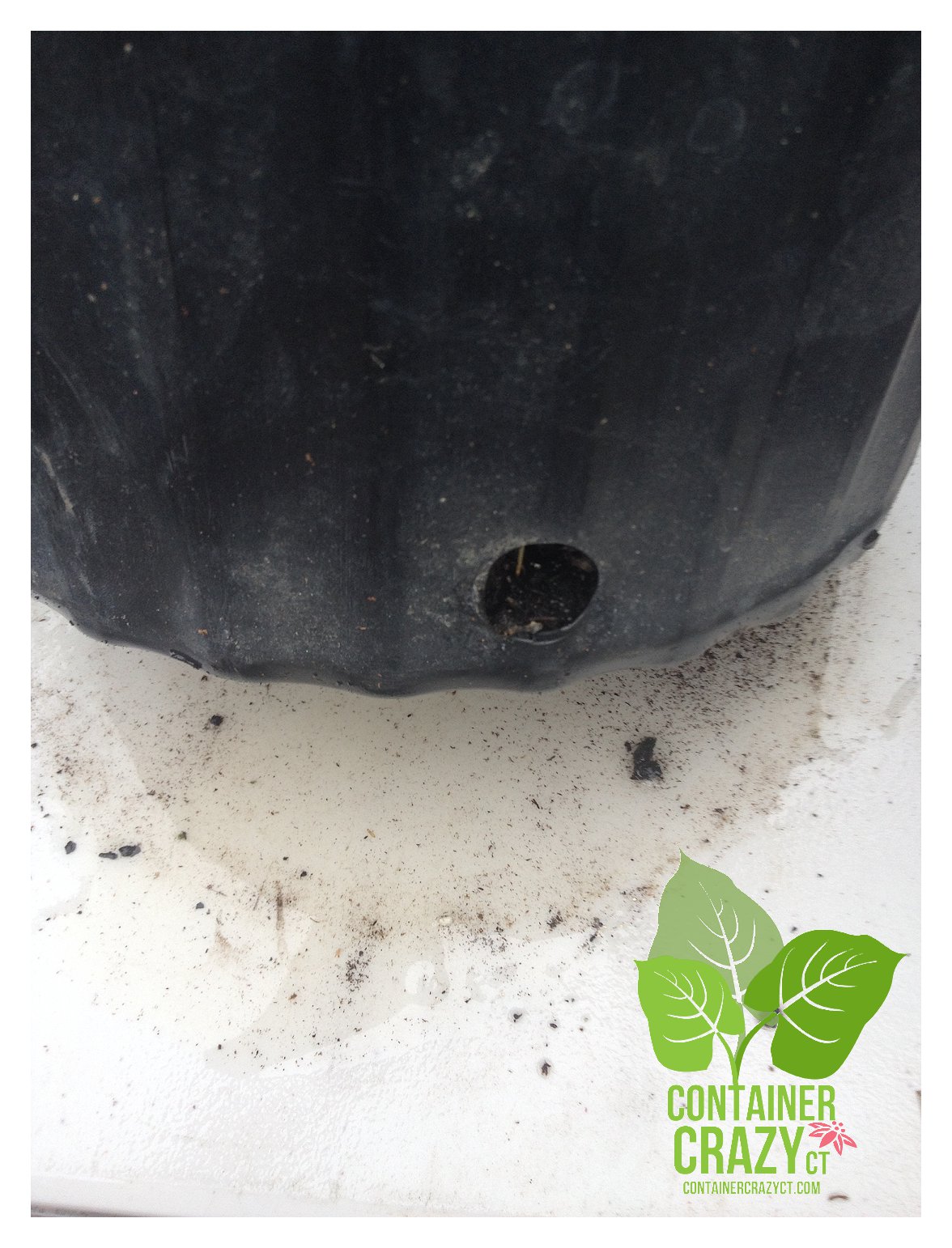
This situation is not too bad in this small ceramic pot, but you can see how excess water collects in the catch tray area.  The soil mass is small in this pot and the soil is staying damp right now.  In one photo, notice the yellowing of the leaves on the chives – a potential indication of overly wet soils affecting the leaves.  So just drain the excess water out.  It is not going to evaporate during our rainy week.  If you have a bigger or medium sized pot with no drain holes, and there is no way for excess water to exit, gently tip your pot on the side and allow water to drain out from the top.  A little tricky to do and totally unnecessary if you followed Cathy T’s Five Must Do’s for Container Gardening – and you know, providing drain holes is a big MUST DO, but if you Didn’t Do, do tip the pot to drain away excess water from waterlogged or very soggy soils if possible.

Flip the Unplanted Pot Over

Flip the Unplanted Pot Over

These days, I’ve been keeping very busy with work – so it is hard to believe, I know, but I have some “unplanted plants!” Yikes!  So here I have a pot that hasn’t been drilled with drain holes yet, and I had the upper pot sitting in it, but guess what, the water was collecting in the blue pot, so I flipped the blue pot over and set the plant on top for the few days it is raining a lot so the plant in the black pot isn’t sitting in water – unless it is a water plant, the roots in the soil will rot at the base from lack of oxygen.

Plant Trays or Kitchen Trays

Elevate Pots ContainerCrazyCT_0009

Find a Plant Tray

Find a Plant Tray

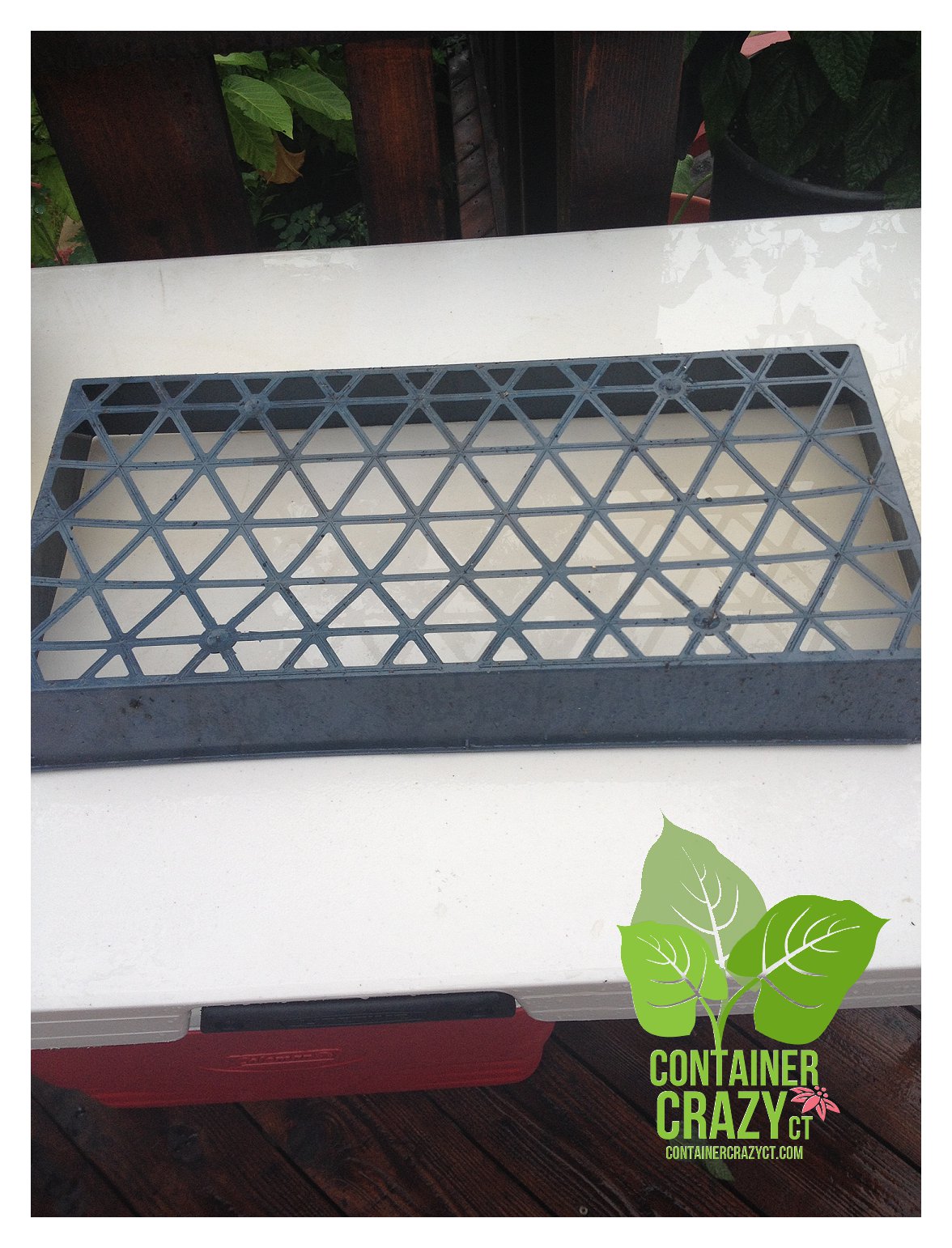
See all that water on the white table on the photo above of the round Hypertufa with the cute little owl?  That water is just hanging around, not draining anywhere.  So find a tray, maybe you have a plant tray with holes, or even a oven tray would work, to put under it and allow that water to move away. I set the round dish garden (Hypertufa) on top of the plastic plant tray turned upside down just so it isn’t soaking wet during humid weather.  It may seem a little much to go around doing this – but do you want healthy plants all summer?  I know I do.  So I watch these little things during weird weather.  Another option, if you have plants sensitive to damp weather conditions, such as succulents, is temporarily moving the plants under coverage such as a patio umbrella during the rainy week, then moving it back to sun to dry out nicely.

Shelves with Spacing

Elevate Pots ContainerCrazyCT_0012 Elevate Pots ContainerCrazyCT_0007 Elevate Pots ContainerCrazyCT_0006

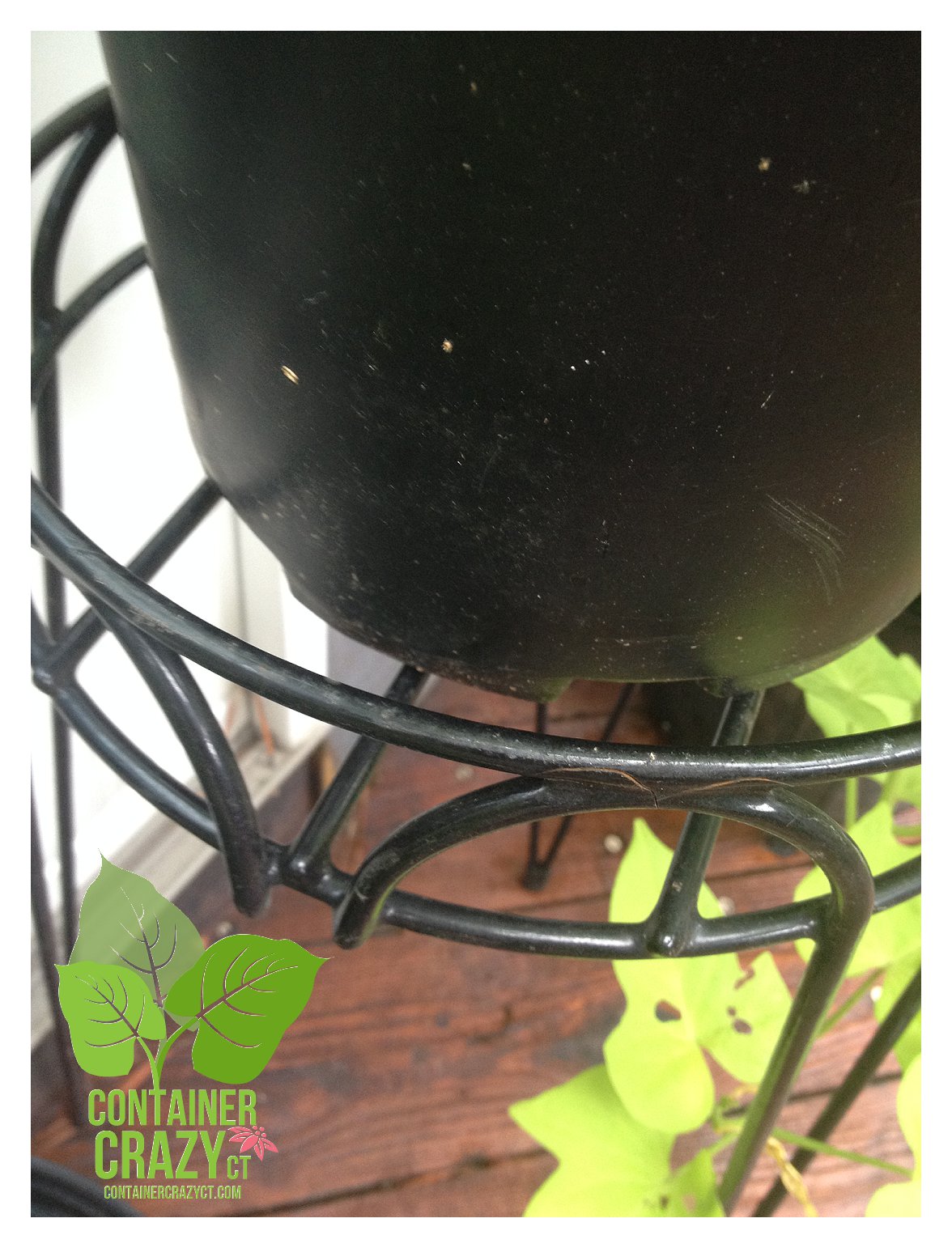
Most greenhouse benches have gaps – in order for excess water to drain and move away and out of the pots, and for air movement- so if you have tables with shelves with gaps, grates, or wire patterns – they are prefect for plants, as shown above.

Typical Plant Dolly or Caddy, or Tag Sale Finds

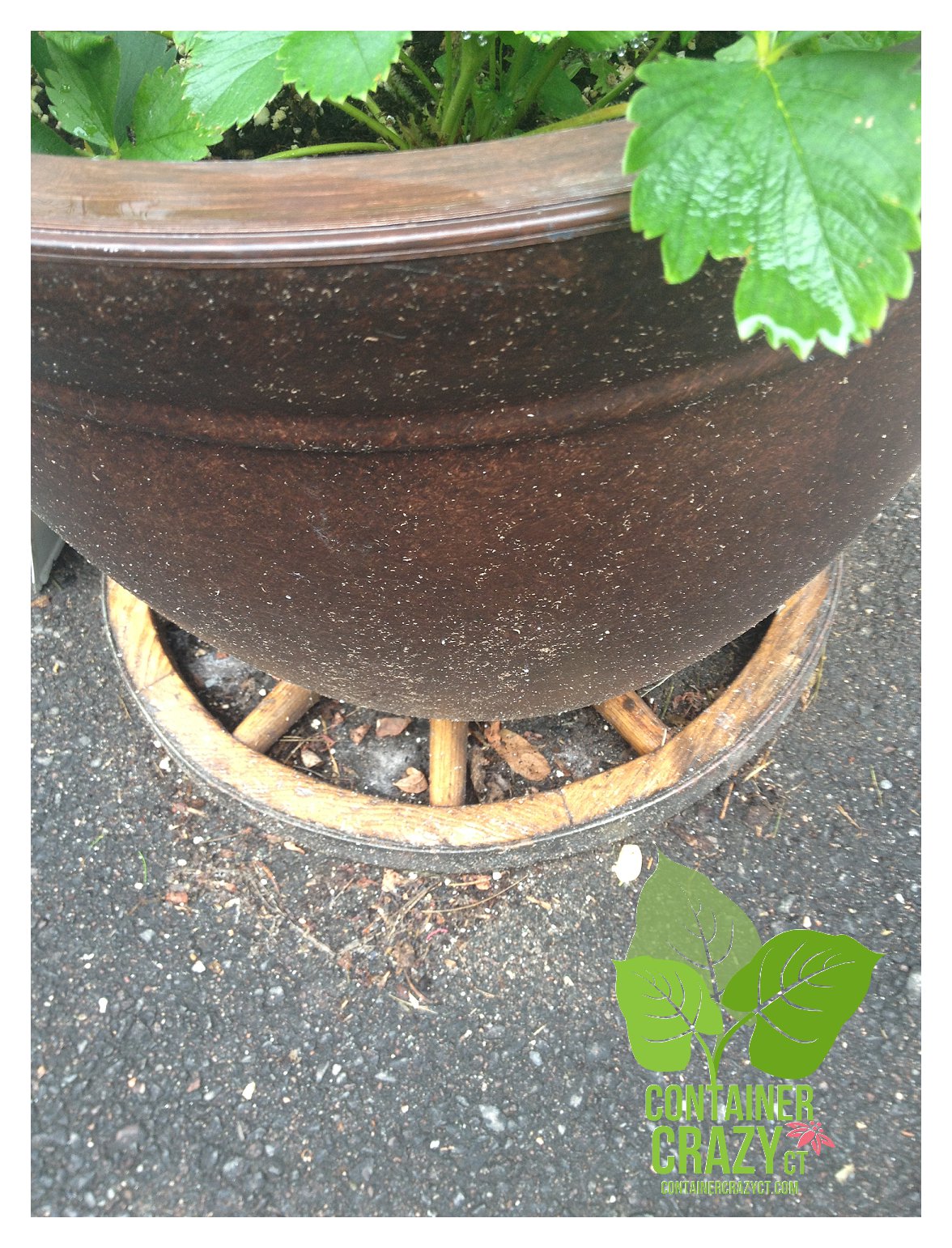
And of course, there are the plant dollies or caddys, many with wheels available at plant related stores, or maybe you may find something like a wagon wheel from a tag sale.  I found a couple wagon wheels at a tag sale last year, and thought I’d use them for some garden related art like item – well they ended up under pots on my driveway.

Think out of the box (or wheel) for items to elevate your pots just a bit.  There is probably something useful around your home.

Elevate Pots ContainerCrazyCT_0002

Plant Dollys, Trays, and Wheels

Plant Dollys, Trays, and Wheels

Mushrooms in the Pots

Elevate Pots ContainerCrazyCT_0005

Mushrooms at the Base (ugh) see how the water is collected on the table?

Mushrooms at the Base (ugh) see how the water is collected on the table?

The mushrooms won’t hurt your plants – but I do not like seeing them in my container gardens.  An over abundance of water in certain soils (soils without enough porous material such as Perlite) may lead to this problem, or over-watering soils invites mushrooms at times when the weather conditions are favorable for mushroom spores and growth.

Lately, I am seeing some potting soils I am not happy with on the market getting more mushrooms than I’ve seen in years past so – more research is required on that by me — but I also stumbled upon a good article about mushrooms growing in soils from another blog called, “Balcony Container Gardening”. Here’s the link where the blogger describes in simple terms what the mushrooms are, and how you can deal with them:

http://www.balconycontainergardening.com/gardening/226-get-rid-of-mushrooms

One last comment, although some water is held by the forces of gravity and capillary action in your potting soil in pots, the process of elevating your pots alleviates water sitting at the base of your pot and helps everything in general from staying damp and wet. Water is required for some fungus to thrive, so reduce the potential is my modo.

Elevating pots is something I have practiced for years with container gardens, and I believe it truly helps the plants overall health.

When the soil is allowed to drain freely and there is air circulation all around the pot and plants, things just stay healthier.

Wooden Dolly with space between the boards

Wooden Dolly with space between the boards

Cathy Testa

http://www.cathytesta.com
860-977-9473
ContainerCrazyCT.com

Hypertufa Class Being Offered in October in Broad Brook, CT

2 Comments

Could this season get any better?

Cathy T has just lined up a special guest speaker to teach a Hypertufa making class in October.

See Cathy T’s Class Schedule to learn more.  Click on the drop-down menu selection titled, October (Concrete Art).

The date:  October 4th, 2014 – Saturday

The time:  11:00 am to 1 or 2 pm, depending on how much fun you are having

The teacher:  An expert hypertufa making artist by the name of Jim of Ancient Gardens Hypertufa.  He has exhibited at the Boston Flower Show, Newport Flower Show, and Celebrate West Hartford.  To see his works, visit http://www.formedforyou.com.

In this class – you will be making your own small to medium sized round or square hypertufa. More details will be posted very soon.

Not sure what a hypertufa is?  See Cathy T’s description on her Class Schedule above.

For inspiration, visit Cathy T’s Pinboard:

Sign up early – You don’t want to miss this chance, as our special guest artist rarely agrees to teaching classes, but guess what? – he did for Cathy T.  This is a special treat.

To Sign Up for the October Class:

To sign up – complete the Contact Form from the Cathy T Class Schedule above.

Or join the class via the Facebook Event.

This Weekend’s Pondering Ponds:

And don’t forget – this weekend is another opportunity – to see a homeowner’s pond garden in Enfield, CT.  We have a small group forming, a professional photographer joining us, and it is predicted to be another gorgeous weekend – the stars have aligned.
Pondering Ponds ContainerCrazyCT_0001

The Pondering Pond’s Walk and Talk is this Saturday, July 19th, 2014 at 10-11 am.

For the address to join us, contact Cathy T at containercathy@gmail.com or text 860-977-9473.

Thank you,

Cathy Testa
http://www.cathytesta.com
860-977-9473
ContainerCrazyCT.com
containercathy@gmail.com

Pondering Ponds – Next Walk and Talk – Saturday, July 19th in Enfield

2 Comments

Heads-up Everyone,

The next gathering for Cathy T’s informal “Walk and Talk” hour is scheduled for this Saturday, July 19th, at 10:00 am in Enfield, CT.  Our host’s home showcases a very large pond garden in the backyard and here are some sneak peaks of it.  I don’t want to show you the whole thing or give it away, but let me just add, it is huge, so if you want to see and hear about it – Sign Up now to join us on Saturday.
Sneak Peak of Pondering Ponds

Sneak Peak of Pondering Ponds

This event is informal, free to attend, with no high expectations on the hostess’s part – we don’t mind weeds or imperfection.  The general idea is an hour at homes to ‘walk and talk’ gardens, plants, containers, veggies, ponds – whatever is your passion or just general hobby. But there is one simple groundrule ->> IT DOESN’T HAVE TO BE PERFECT, it can even be Pathetic! We can learn tips and experiences from each other just in conversations as we walk and talk plants in your yard.

Pondering Ponds ContainerCrazyCT_0001

Don’t be shy – sign up below if you want to receive the address to meet our fun group and walk this pond garden in Enfield, CT.  See the Contact Form below to express your interest to attend, or join via the Facebook Event noted next.

Share the Event

Please share this EVENT with your friends. If interested in attending, join the Facebook Event on Cathy T’s Landscape Designs page or fill out the contact form below. No fee to attend, no pressure, no saying my garden is not good enough if you are interested in having an hour at your home too.

Pondering Ponds ContainerCrazyCT_0003

Containers for Smaller Pond Gardens

In my opinion, pond gardens are a form of container gardening, but on a much larger scale.  Sometimes I create smaller pond gardens in containers – as shown below, however, this one was getting mucky and too many mosquito larvae.  And I realized later, the floating plants were for sun – they were doing horrible because this small water garden is in a shade area. Anyhow, I think our host of “Pondering Ponds” on Saturday morning will have some advice for me on that when we see her on Saturday.

My Pots ContainerCrazyCT_0009

To attend, please complete the Contact Form below.  The address will be sent to you.  Anyone can sign up and join us.

← Back

Thank you for your response. ✨

Ground Rules

For a reminder of the ground rules in attending, see this post on this blog. Whether you are new to pond gardening or have one of your own, join us – we love to meet new faces and exchange information during Cathy T’s Walk and Talk Garden Tours.

Note:  Event is held rain or shine, unless there is a major storm, plan to attend with an umbrella if lightly raining.

Thank you,

Cathy Testa
http://www.cathytesta.com
ContainerCrazyCT.com
860-977-9473

Insects in Your Container Gardens – And What You Can Do…

2 Comments

Hello Everyone!

It is that time of year when we may be seeing little critters appear on some of our plants in our gardens or container gardens, and it ain’t pretty.  Fortunately, many of them do not last long due to their life cycles, stages of growth, and time of appearance, but regardless, it is best to battle them as soon as spotted on your plants.

I like to use the ‘pick and squish’ method first whenever possible, if bold enough, prior to reaching for any insecticides, or use of pesticides.  Sometimes just hand picking off or pruning, then disposing of them works.

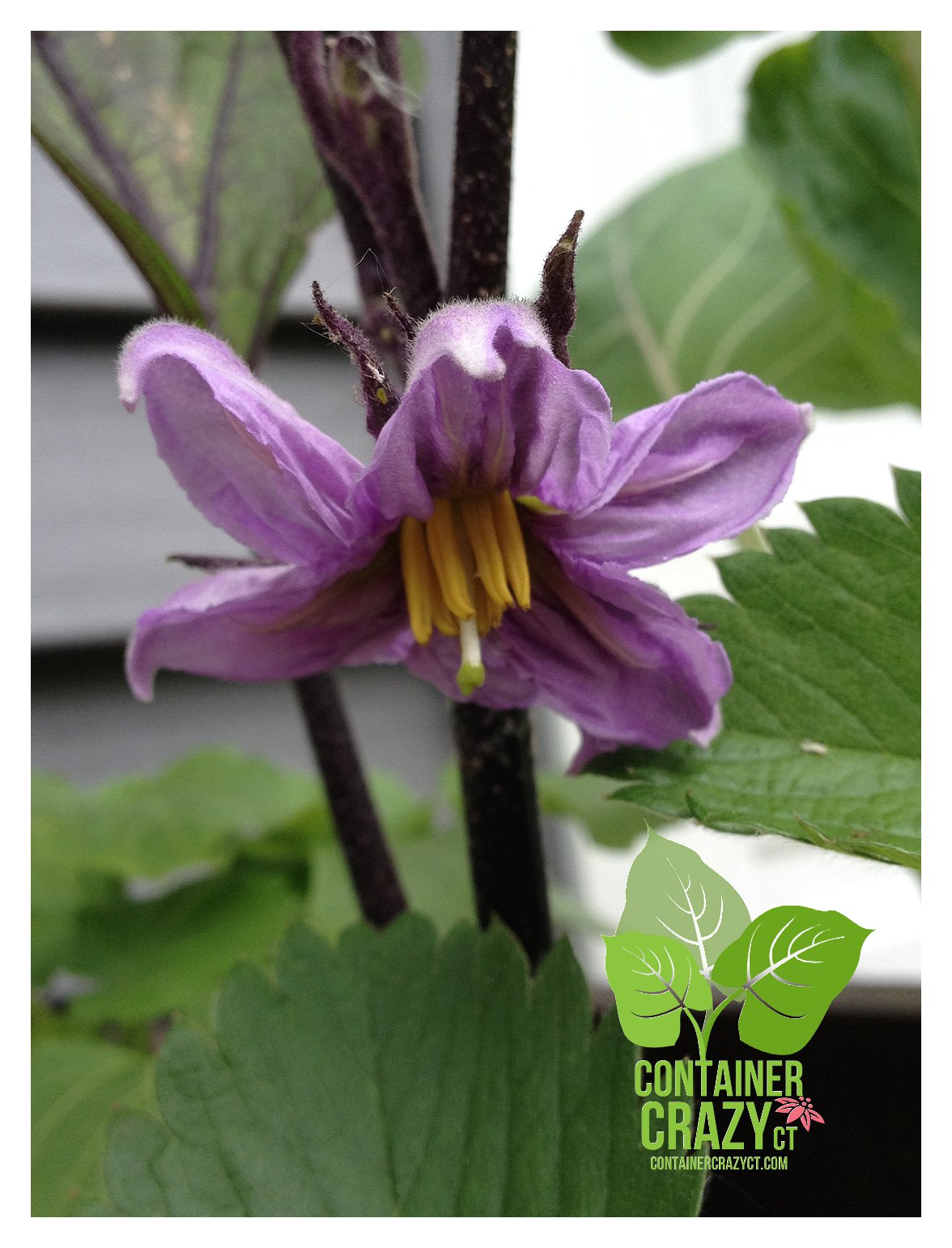
In the photos below, you will see what I believe are eastern tent caterpillars on my honeysuckle vine (top left), aphids on the eggplant bloom (middle top photo), and mosquito larvae in the water image.  These were all spotted in late June, along with a first sighting of the infamous Japanese beetles, which emerge from the ground in early summer to feed on plants.

Yuck -- Insects on Plants

Yuck — Insects on Plants

Tent caterpillars on my trumpet honeysuckle – YUCK! That was a first – and my honeysuckle has been doing so well this year.  Obviously, I was not happy to find these buggers.  My honeysuckle plant is growing by the side of the house, and it surprised me to find tent caterpillars on it.  Fortunately, with a quick snip of the vine from which they were attached, they were easily bagged and tossed.

Honeysuckle bloom creeps into Delphinium

Honeysuckle bloom creeps into Delphinium’s blooms

TENT CATERPILLARS ON MY HONEYSUCKLE VINES

Using clean pruning shears, I cut of the portion of a vine with the nasty critters on it, put it in a plastic bag on the driveway and then stomped on the bag.  I left the bag laying on the driveway for a while.  Why? I figured the heat would fry any not crushed (oooh, gross – the things gardeners will do!).  Then, I went out for my day’s work at a client’s location.

That day, my parents dropped of some items at my door, and my mother saw the plastic bag sitting on the driveway so she included my bug bag as a hanging item on my door handle while I was not home.  I guess she figured I dropped something by mistake on the driveway.

Well, when I opened up that bag at the kitchen table – ACK.  Out to the garbage can it went – and quickly. You see, the other bags my parents often leave me are filled with fresh veggies from their home garden.  Imagine my surprise and reaction when I found bugs instead of radishes.

Prior to all this bug nonsense, I was enjoying the many orange trumpet shaped blooms growing from my honeysuckle so much all month.  At one point, a stem pushed its way through the center of a Delphinium stalk located near it – talk about stunning.

Do these two plants know they are complementary colors on the color wheel?

Opposite each other on the color wheel – are blue and orange – talk about a nice surprise nature combo in the garden! Although this Delphinium technically has more purples than blues in its blooms, the combination was breathtaking all the same – I have been enjoying it for a whole month.  I wrote about Delphiniums before on this blog, as it was a flower I selected in my wedding bouquet 24 years ago.  It probably was one of my first flower obsessions.  I find them a little difficult to keep growing in my garden, so this year, I just bought a new one and plopped it by the honeysuckle plant, and it has grown beautifully.

Honeysuckle Blooms

Honeysuckle Blooms

Honeysuckle (Lonicera) is a deciduous vine that grows quickly every year.  It is deer resistant and attracts butterflies. A trellis or arbor is needed to hold it up as it grows taller, sometimes reaching 15-20 feet.  I’ve had mine for several years in this spot with little problems – again, why I was surprised to see the tent caterpillars take a spot on it this year.

Although this vine grows quickly, I wouldn’t classify it as a invasive plant because it is easily removed if you find it over takes your space, but it can get large fast and needs to be watched.  It is included in my Troublemakers Turned Star Plants on my Pinterest page, because it can be very useful in a container garden if you find it a nuisance in the regular gardens of the ground.

It likes sun to part shade, and blooms for a long time.  The scent is intoxicating for many cultivars. This plant may be used as a thriller in a large container garden, so long as you add a nice big trellis in the container for support.

Happy Bloom on Japanese Long Eggplant

Happy Bloom on Japanese Long Eggplant Being Visited by Pest Aphids

APHIDS ON MY EGGPLANT BLOOM

If you take a close look above, you may see the little aphid bugs on my Japanese eggplant.

Aphids are very tiny pear-shaped insects with long antennae and tubes on their back-ends.  Some of the interesting tidbits about aphids are ants protect them because they enjoy their “sweet honeydew”, and they (aphids) reproduce faster than rabbits – the females do not need males to do so, and aphids vary in colors – not just green as the ones spotted on this plant.  To learn more about these little guys, see the CAES link.

Well, seeing them on my Japanese long eggplant flowers in my container garden was not pleasing. I’ve been using edibles in container gardens a great deal this season – and talking about it at garden clubs.  I am finding, however, the edible plants seem to get attacked by bugs much quicker than my tropical or annual plants.

To battle these aphids, I lightly sprayed the plant on a shady day when cool with a safe organic spray for vegetable plants (remember, don’t spray a plant when its very hot and located in full sun), and then a day later, I hosed off the leaves by using the garden hose with a watering wand at a good heavy pressure – it did the trick.  No more signs of the aphids since – and my first eggplant fruit growing right now on the plant – yeah!

I couldn’t really pick the small aphids by hand because they are too tiny, at the size of 1/8″ long.  And by the way, lady bugs are natural predators, releasing them can help if you can find the ladybugs from a garden center.

First eggplant

First eggplant

I potted up this eggplant plant along side an asparagus plant, strawberry plant, and would you believe, Brussels sprouts?! The asparagus added a nice soft texture with its fine and light foliage along side the coarse texture of the eggplant leaves, the strawberry plant is a spiller, and the Brussels sprouts – well, wow – what big texture those leaves have offered.

Eggplant with Mixed Edibles

Eggplant with Mixed Edibles

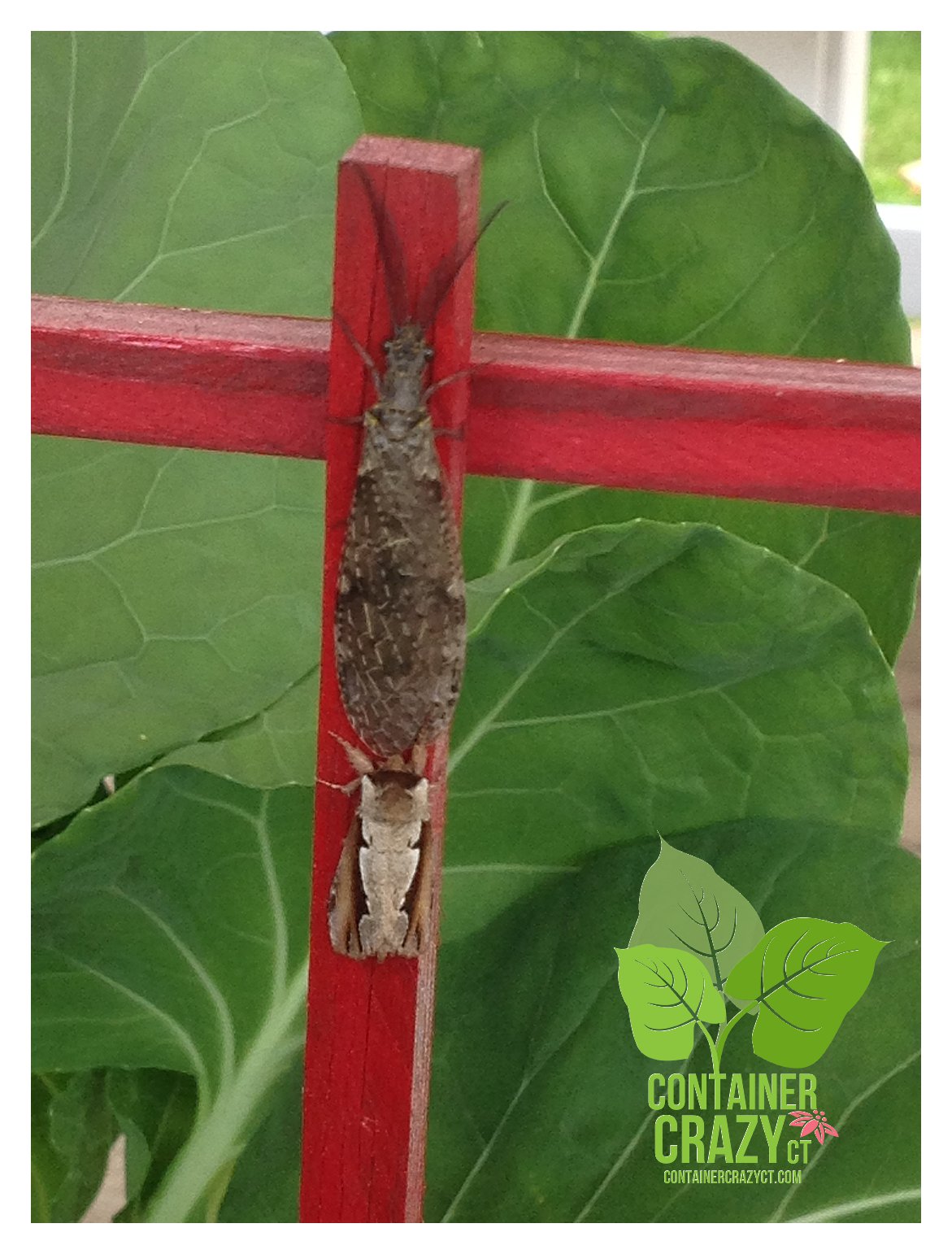
Earlier in June, I brought the container garden to the Ellington Farmers Market to show the combination during my talk about “Incorporating Decorative Edibles in Mixed Container Gardens.”  Well, low and behold, these two very interesting looking insects took their position on the red trellis in the pot – and stayed there all day during the market.  Thankfully they did not jump on me when I was driving home later that day with the container garden on my truck seat.  Not sure what they are, do you know?

Bugs on Trellis with brussel sprout Leaves behind it.

Bugs on Trellis with brussel sprout Leaves behind it.

MOSQUITO LARVAE IN MY WATER GARDEN

The other spot where I saw critters was in a water garden I have at home, which is a big galvanized feeding bin (for animals) filled with water and plants, such as elephant ears (Colocasia) or other water tolerant types, such as Cyperus papyrus (Tut). I put the plants in terracotta pots because they sink well into the water due to their weight and the clay is porous. Add some stones to the top of the soil of those pots so the soil does not escape into the water.  When submerging the pots, gently drop them into the water as to not disturb the soil too much.

Well, I should have known, tiny mosquito larvae started to grow in the water, and there were tons of them wiggling in the water one day.

To avoid this situation – you may try two things – place a mosquito dunk, which are not harmful to the plants, in the water, or just flush some of the water out occasionally with a garden hose so the water is not stagnant.  This is what I do. Later, no more larvae and no more bites.

Oh, when I was very young, I remember telling a teacher that I saw little things wiggling in a puddle at home. (Living on a farm, you tend to notice things like this – or I was just always fascinated with looking at things up close in nature.)  He told me to put them in a jar with water, cover it with plastic wrap and to bring it into class.  He set it on his desk and said, “Let’s see what happens.” A few days later, a bunch of mosquitoes were flying above the water.  A visual lesson for sure.

A PRETTIER INSECT

Fuzzy body of moth

Fuzzy body of moth

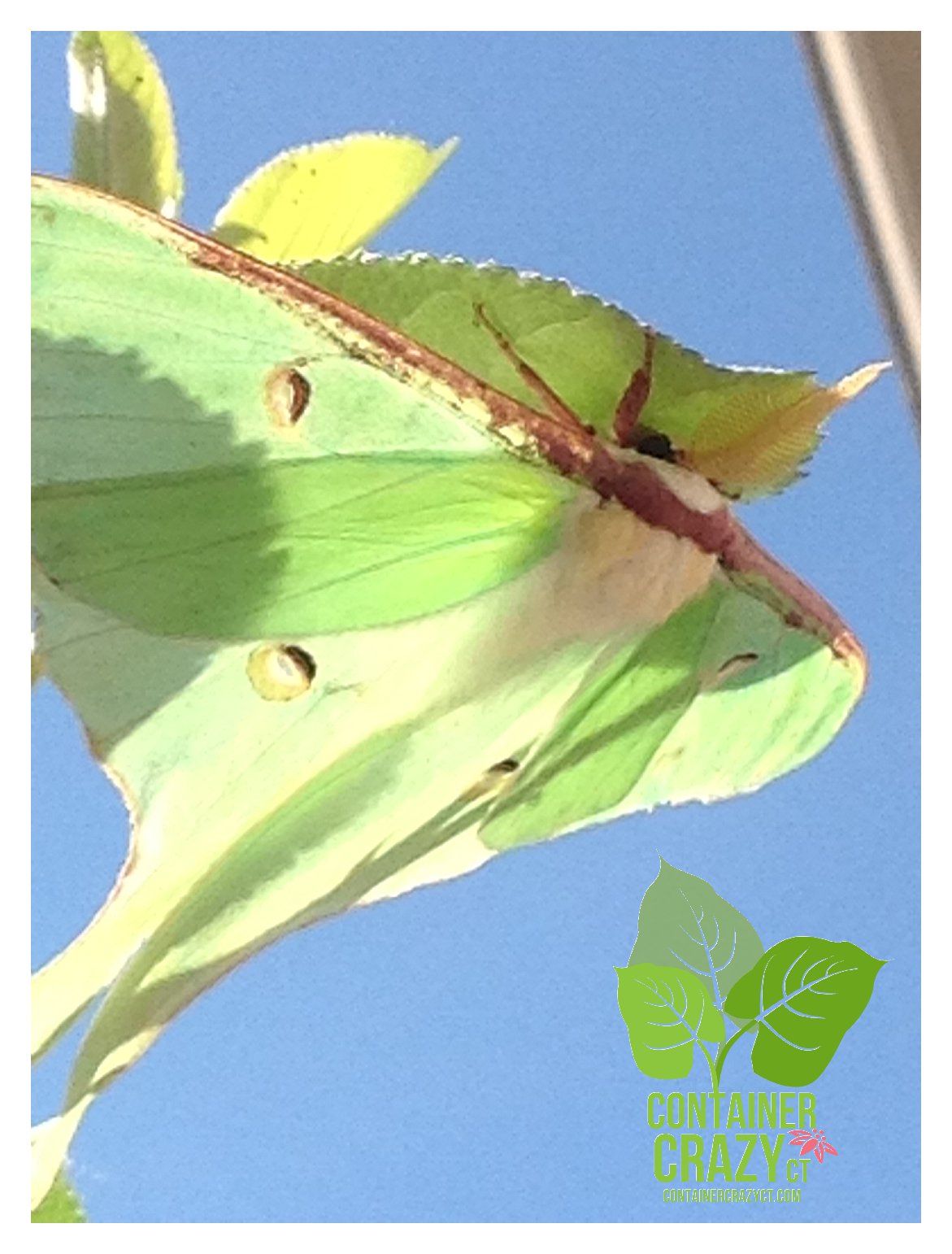
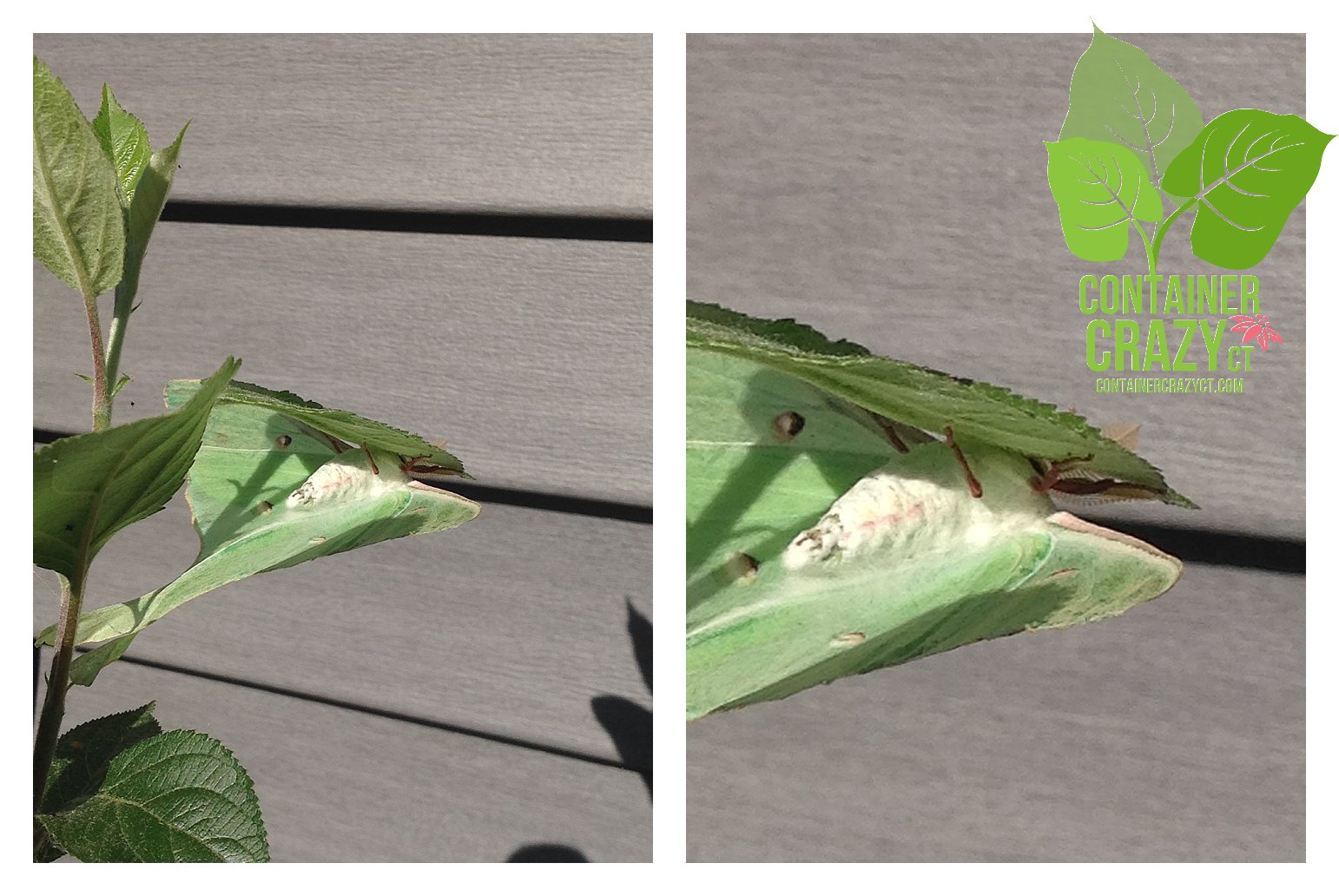
Another surprise sighting at my home this season was a Luna moth (Actias luna) on a apple tree in a pot.  As I was walking out to my garage, I saw a white substance on a leaf.  Well camouflaged, I didn’t see the wings of the moth at first.

I thought, “What the heck is that white fuzzy cocoon on my apple tree?”  (By the way, I often plant small trees in container gardens for a few years first – because I am crazy about container gardening, but it also can give a small tree some time to grow larger and stronger before I eventually transplant it to the ground when it outgrows a large pot – this way, I enjoy, learn and grow the plant first – as is the case with this apple tree.)

Insects ContainerCrazyCT_0015

To my surprise, it was a beautiful moth and not an ugly insect!  This was in the early morning and the east sun was brightly lighting up its wings.  The moth was completely motionless, and not moving at all – this gave me the wonderful opportunity to snap more photos.

Luna Moth on Apple Tree hanging on the underside of a leaf

Luna Moth on Apple Tree hanging on the underside of a leaf

I tried getting photos from every angle, which was difficult to do because it was on the backside of the plant along the garage wall.  After repeatedly taking photos, I tried moving the pot but it flew away.

Insects ContainerCrazyCT_0009

Luna Moth on Apple Tree

Luna Moth on Apple Tree

SPOTTING FIRST JAPANESE BEETLE

I also just spotted my first Japanese beetle on a plant yesterday – it happen to be a watermelon plant in a single container. Those beetles, I pick up with my hands and squish on the ground under foot.  They never scare me – even when they grab tightly onto my fingers.  I guess this is because my father would pick them from his garden plants and put them in a jar – another memory from childhood – and sometimes, I would help him collect the beetles.  I also would chase my younger sister, Louise, around in our pool, when I would find Japanese beetles in our pool too – and she would screech at the sight of them.  She told me this game as children put a fear of those beetles in her for a lifetime – oh well, the things we do when we are kids – LOL! However, she also practices the “pick and squish” method in her own vegetable garden for insects not so scary to her.

East Windsor Farmers Market

East Windsor Farmers Market

ALL BUGS ASIDE

Last week, all bugs aside, I was featured as a guest speaker at the East Windsor Farmers Market on their opening day. Their market runs from now until October, on Sundays, 11 am to 2 pm, at the Trolley Museum off Rt 140.

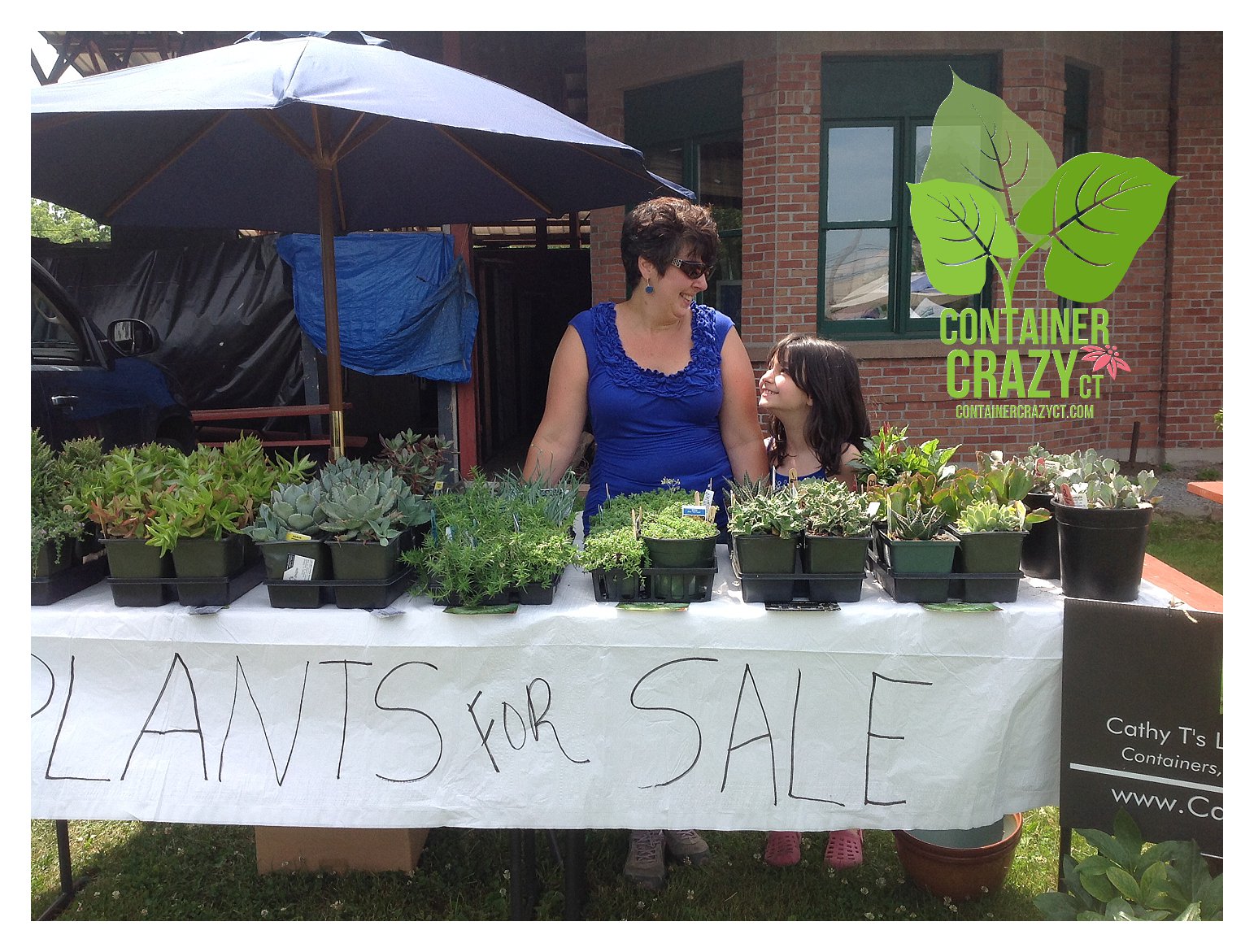
My niece came for a visit – she loves to help me at the markets with my plants – and I love having her there.  We were goofing around, taking silly photos, and coincidentally, had matching blue shirts on.

See the next photo – this was my building at the market – pretty cool, huh?

Nope, just kidding – it was some sort of very old structure from the Trolley Museum next to my table setup.  I never got a chance to ask them what is was about, but it was sort of cool looking.  (BTW, if you go there, go see the old trolleys and even a few other interesting vehicles, such as airport shuttle buses built, but they were never installed at Bradley airport.)

The other cool thing about going to the market at this location is kids and family can take trolley rides on antique trolley cars as part of their day.  And, I did not know this – but there is a little movie theater inside the trolley museum building too – along with old cool trolley pics and more – so if you go, be sure to go inside as well as visit all the new vendors at this growing market in a great location – picnic tables and all.

Old Structure at the Trolley Museum

Old Structure at the Trolley Museum

AFTER THE MARKET

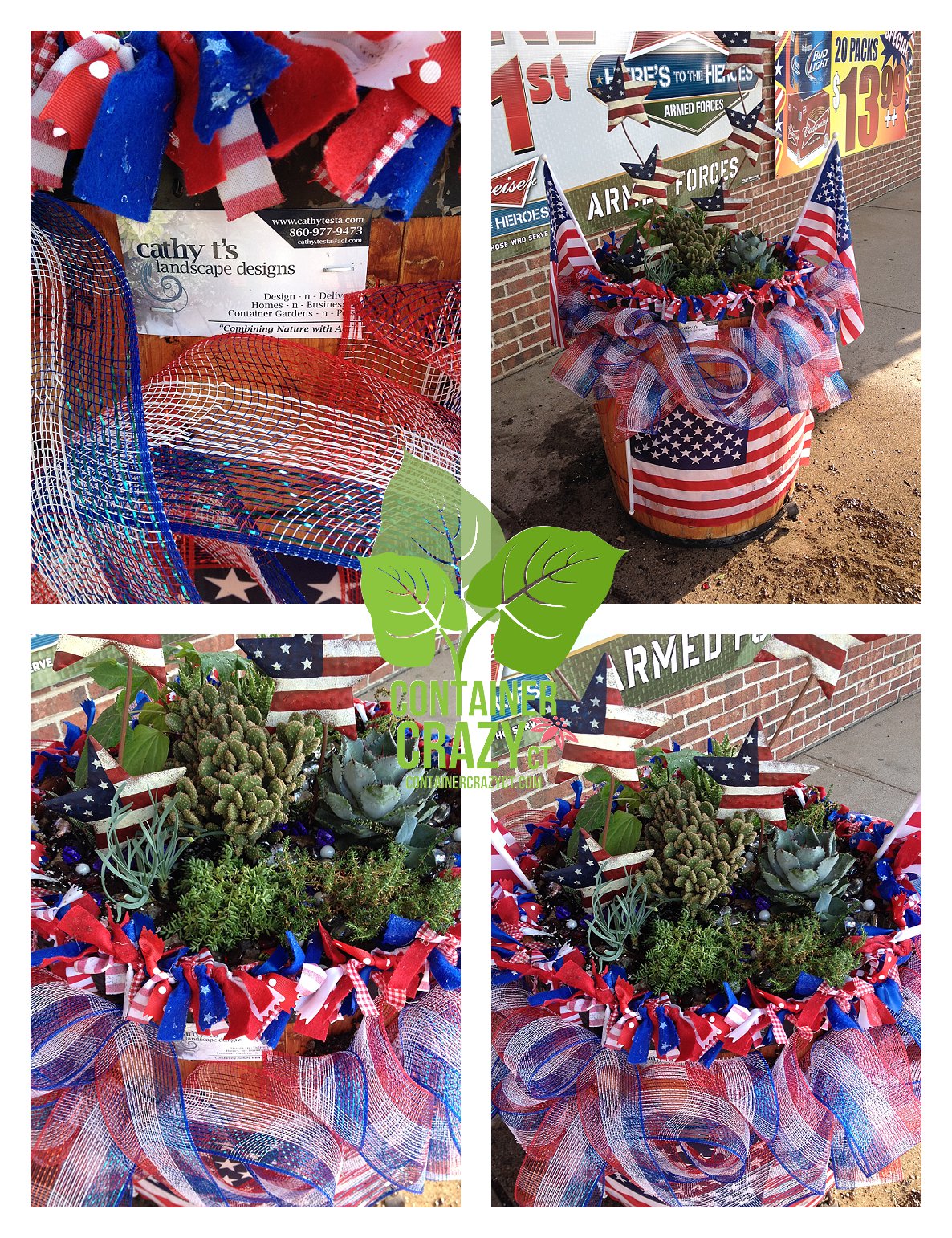
After the weekend, one of my first priorities was to update my client’s business store front with some red-white-and blues for the holiday and put a nice mix of succulents in the container gardens.  Cactic and succulents can be a little tricky to plant if they have spines and needles.  Just be sure to wear thick gloves and handle it by the root ball – and with some practice, you won’t get pinned, stuck, or aggravated by tiny spines.  I will say this however, whomever is putting their cigarette butts in my container gardens at this location – you will find a little surprise this time (hee-hee!). Fortunately, insects tend to not bother cacti and succulents much based on my experience, so they are useful for the non-insect people.

Client Barrels Decorated for the 4th

Client Barrels Decorated for the 4th

4th of July Succulents ContainerCrazyCT_0002

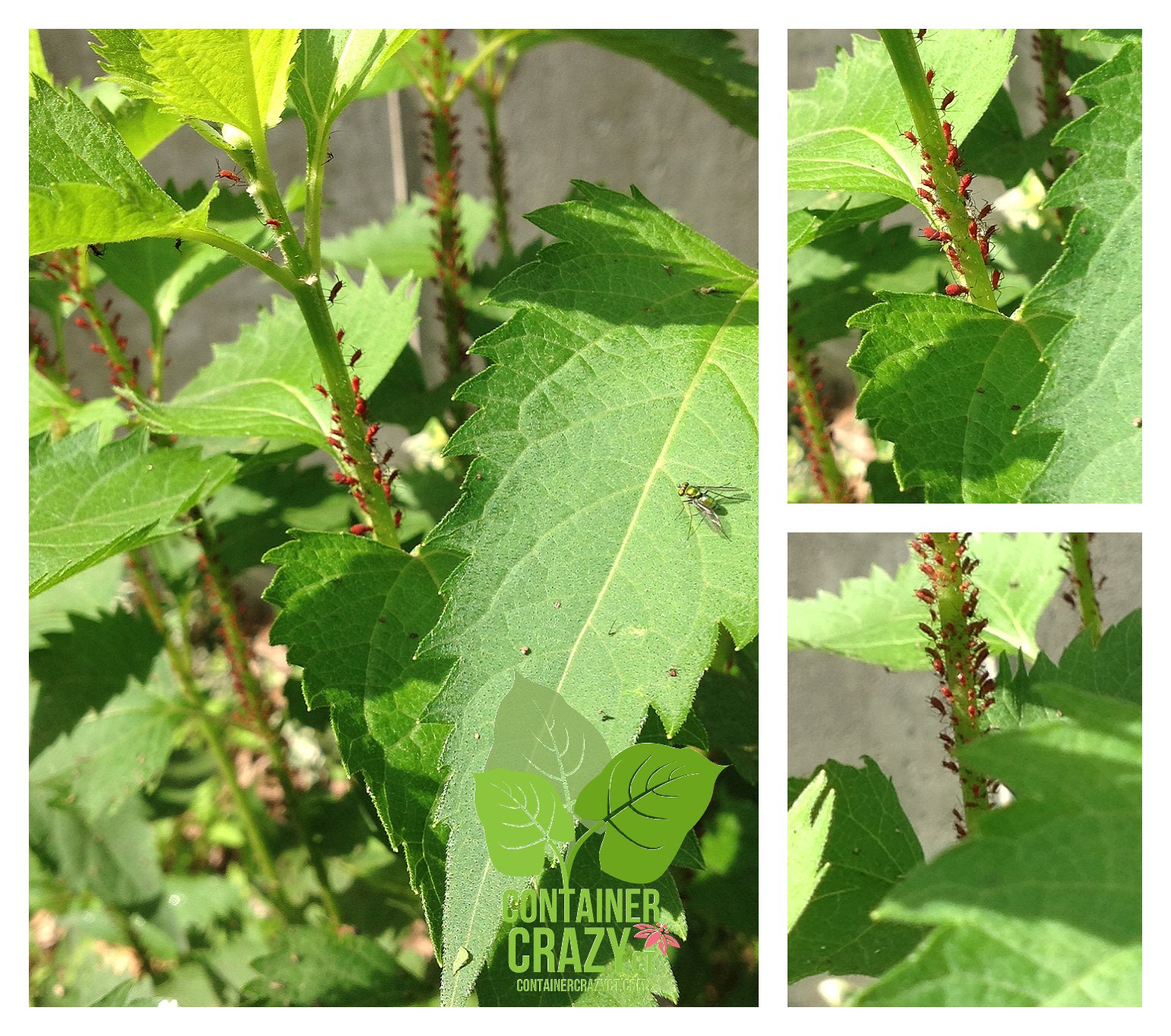
Oh by the way, what are these ugly critters below?  Saw these on a weed plant, so I pulled the plant out of the ground and took it to the chicken coop for the hens to deal with.  That’s another way to deal with insects.  Recycle to the coop…

More aphids or not??

More aphids or not??

Cathy Testa

860-977-9473
http://www.cathytesta.com
ContainerCrazyCT
containercathy@gmail.com

Condensed List- What You Can Do:

  1. Pick, Squish, Toss
  2. Prune away Plant Parts with Insects and Toss
  3. Pull Plant; Feed to Chickens
  4. Hose off with Strong Spray of Water
  5. Chase your Younger Sister around with them
  6. Lightly spray with Insecticide specific for plant and insects
  7. Get natural predators, like ladybugs and release near pest insects

Happy 4th of July Weekend Everyone – Hope it is filled with food, family, fun – and not many critters!

4th Photo Courtesy of Freedigitalimages.net, by nuttakit

4th Photo Courtesy of Freedigitalimages.net, by nuttakit