Colorful Balcony Plants for Extreme Weather

Leave a comment

These are photos of vivid reds and yellow blooms in large patio pots showcased on a high-rise balcony. As you can see, the yellows and reds of the flowers on these plants stand out. They are also very drought tolerant. And full sun lovers.
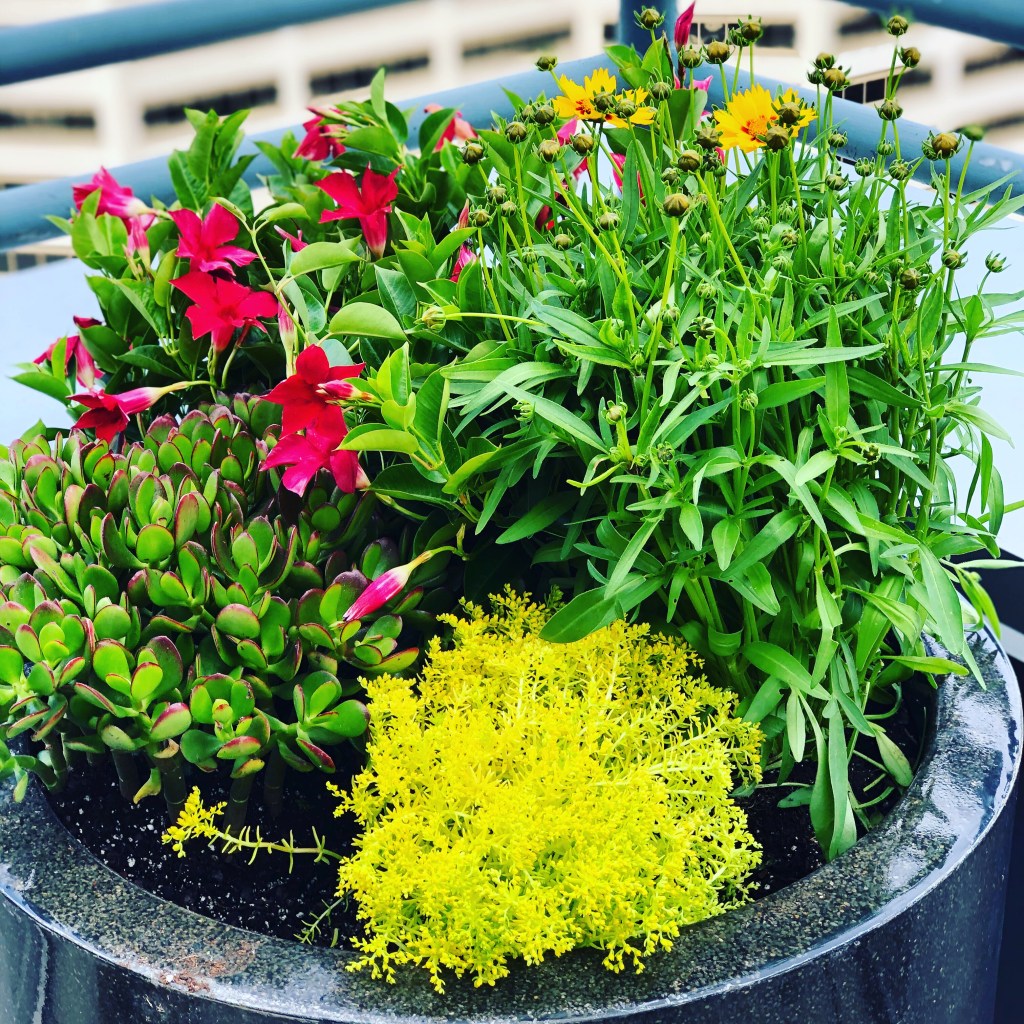
I planted this combination on a high-rise balcony many years ago. The conditions up there were brutal in the summers at times. It was very sunny and hot for the first half of the day. The second part of the day was shaded due to the height of the building’s walls and the sun’s movement. But it also was extremely windy at times, and as hot as a very hot beach summer day. Notice in the next photo how much the blooms opened up.
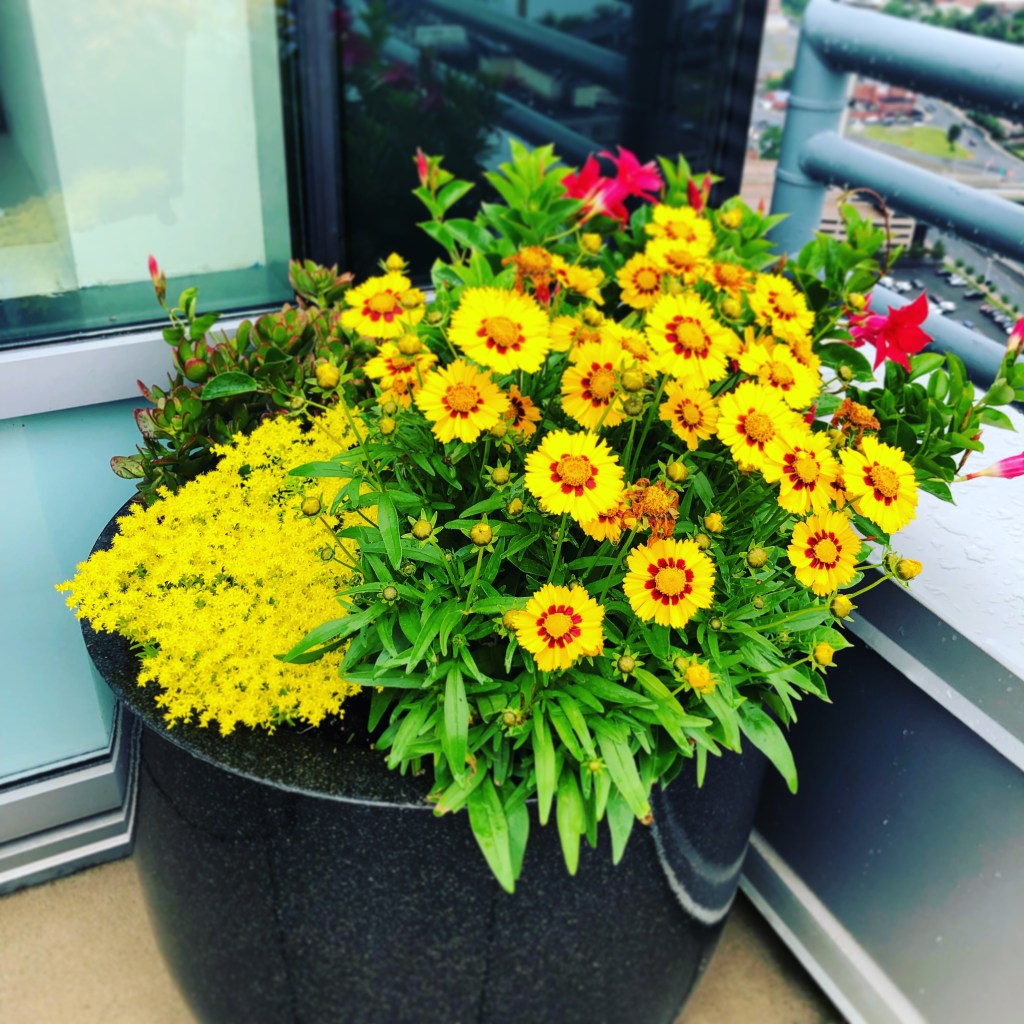
The pots shown here were quite large. Plenty of quality potting soil was used. Some soil moist was added to help manage moisture levels. I also added slow-release fertilizer into the soil. But it was key to find plants which would survive the high-rise conditions. They must get water too. It was imperative to find plants with strong abilities to survive in the sun, wind, and heat. These plants did this well. These also did not need lots of clean up. The faded flowers of the Coreopsis are easy clipped off (deadheaded) if needed. All the other plants held onto the flowers in this combination.
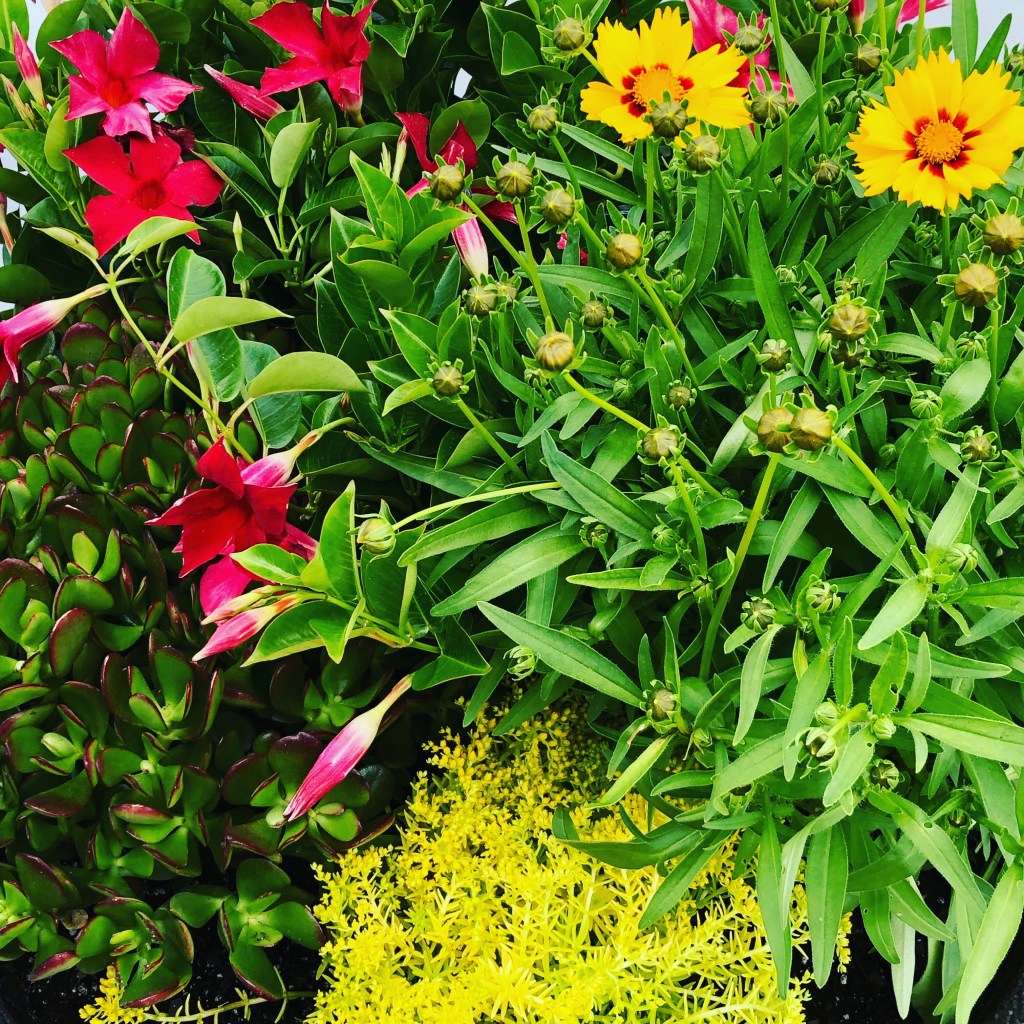
As the summer progressed, the plants became full and offered super bright colors seen from afar. This was good. The view from the balcony owners’ large living room allowed them to see the reds and yellows. I also focus on different textures too. You can see the fine texture of the yellow Sedum. The larger oval leaves of the red edged Jade plant are also visible. Yes, a Jade (as in a houseplant). I never overlooked using houseplant candidates as well as perennials and tropical plants. Just like in a garden, textures add the drama and flow needed to please the admiring eye. I often held up plants next to each other. I did this to look them over and see if they seemed to work together. I was just like that with my eyes. I would figure out if they played well together visually. I also needed to know the plants’ overall habits and culture needs.
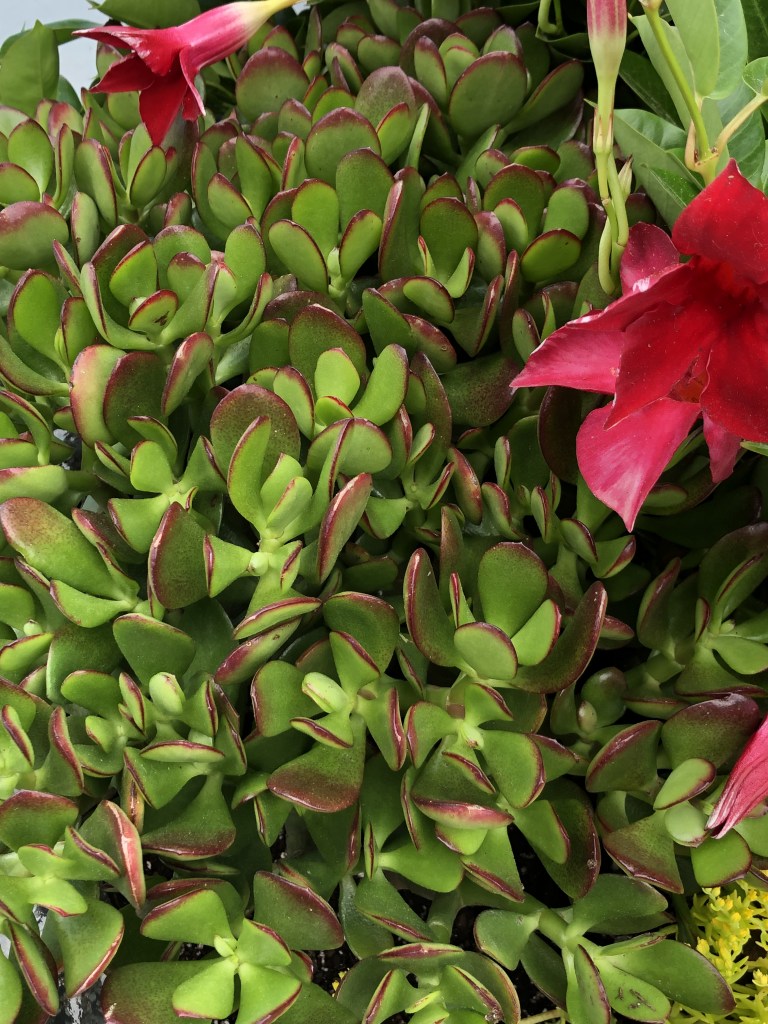
This is a Jade. It was a rather large plant. I loved the red edges. The red color only intensified in the patio pots with the full sun conditions. There was lots of warmth and heat on sunny days. These were able to withstand drought like conditions. I always emphasized that the owners should water every day. Plants need water. The soils dry out rather quickly up there on the top of a building in the city. And the owners were fantastic. They did water the plants as often as possible. They got an A+ on that as it wasn’t always easy, there were no faucets or hoses outside. All water was carried from the inside to the outside in buckets! When it rained, that was a bonus.
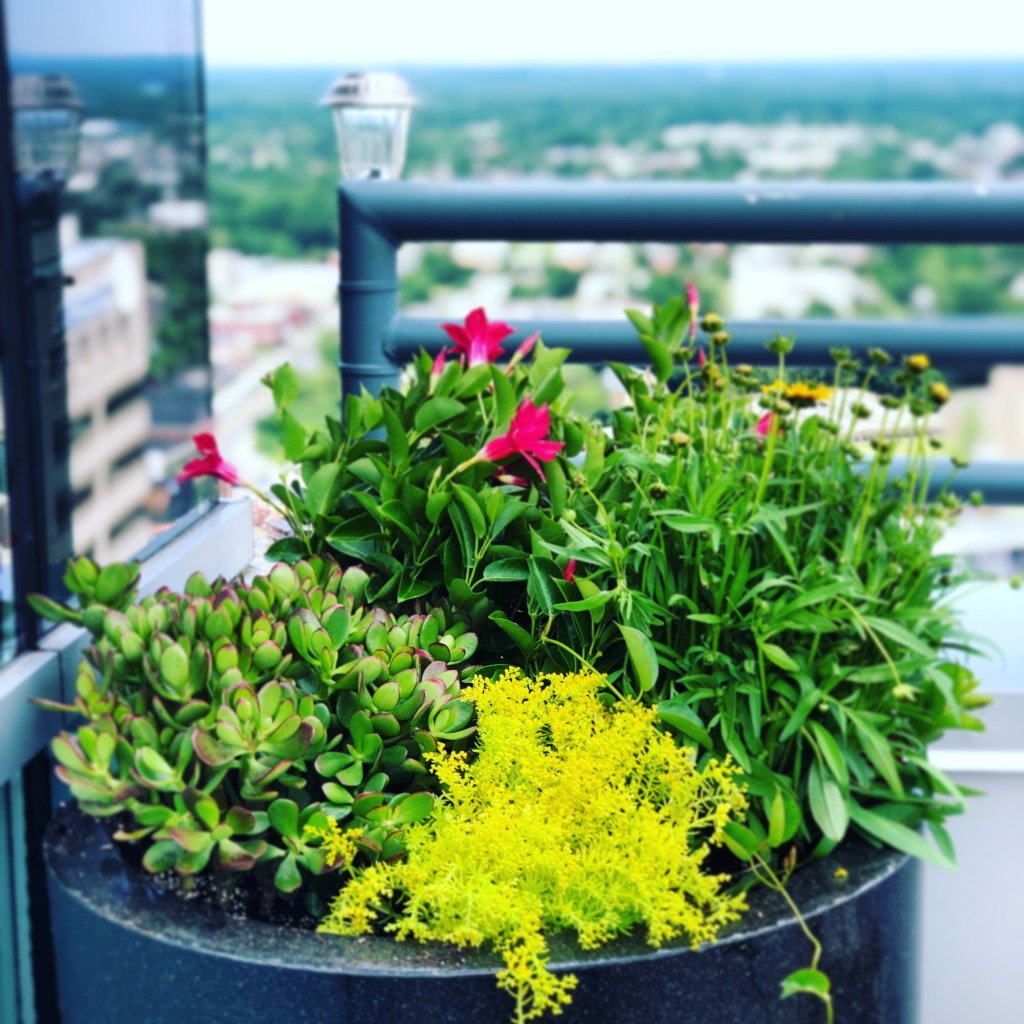
The yellow plant in the front is a Sedum. It is called, Lemon Ball Stonecrop Sedum. A perennial. Talk about an intensely bright yellow! Really pops. It was perfect for the front of the patio pot, tucked in nicely. That plant in this combination was a little more delicate. But, its vivid yellow was unbeatable.
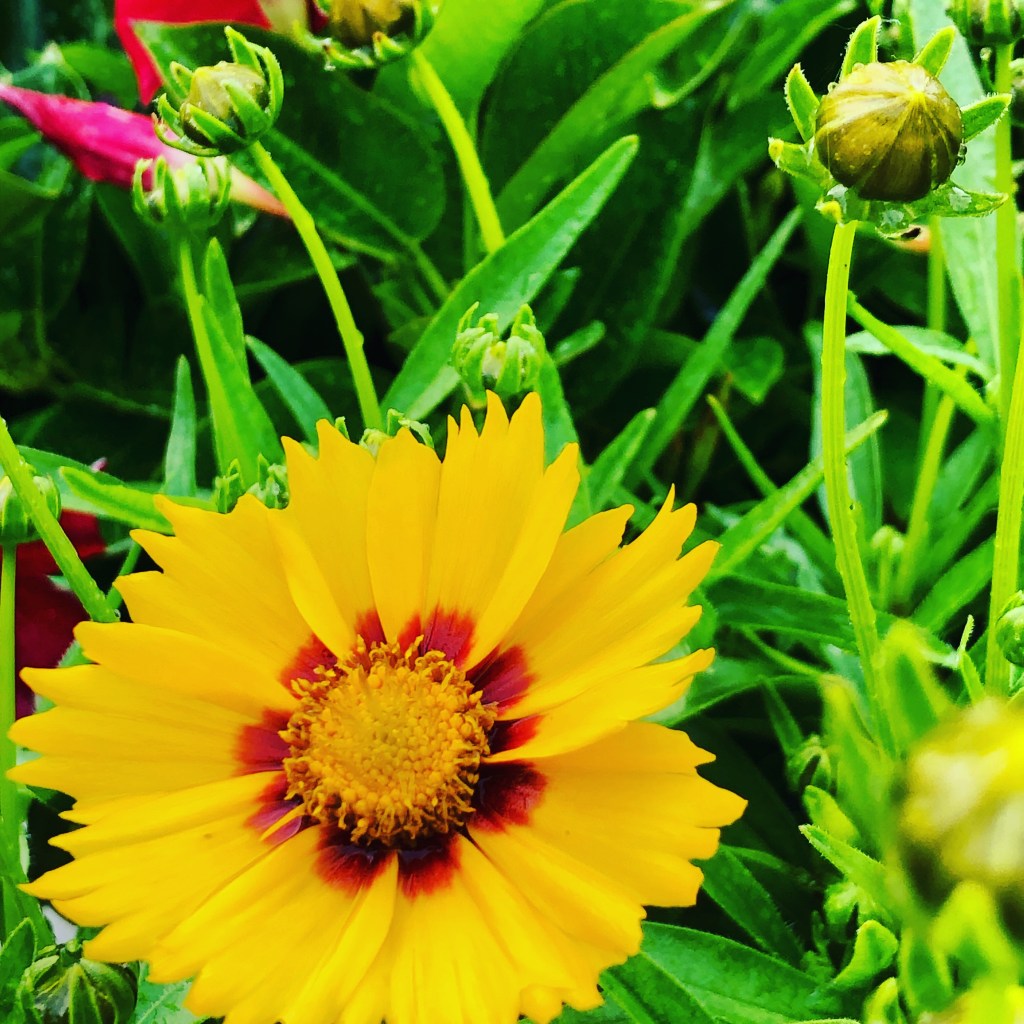
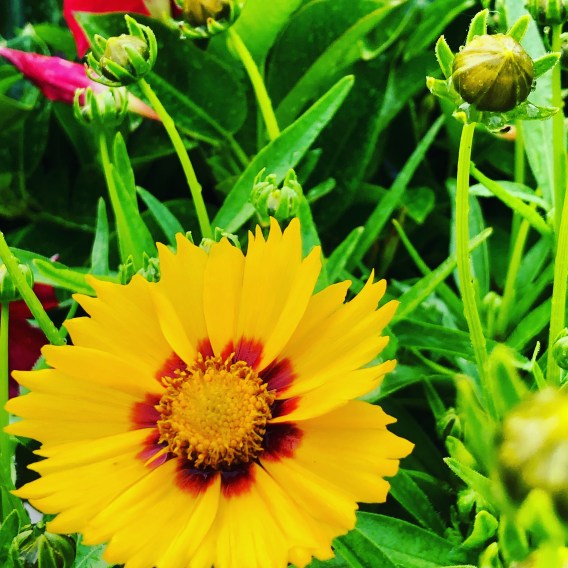
And a must on everyone’s list is flowers which bloom most of the summer. I added these Coreopsis because of their beautiful yellow coloring with red centers. They also handled the drought conditions quite well. This one is called, ‘Baby Seed’ Tickseed Coreopsis. These are butterfly magnets and work well in rock gardens too. It was always a treat to see a bee or two. I enjoyed seeing a bee come by up there when I put flowers into the customer’s containers. Way up there. I think it was 26 floors high, or was it 28? I can’t remember, but it was up high. If you couldn’t handle heights, you would not be capable of work up there on their open balcony. It didn’t bother me to look over the railing to the city streets below. It was a unique planting experience and a great learning one too due to the high-rise location.
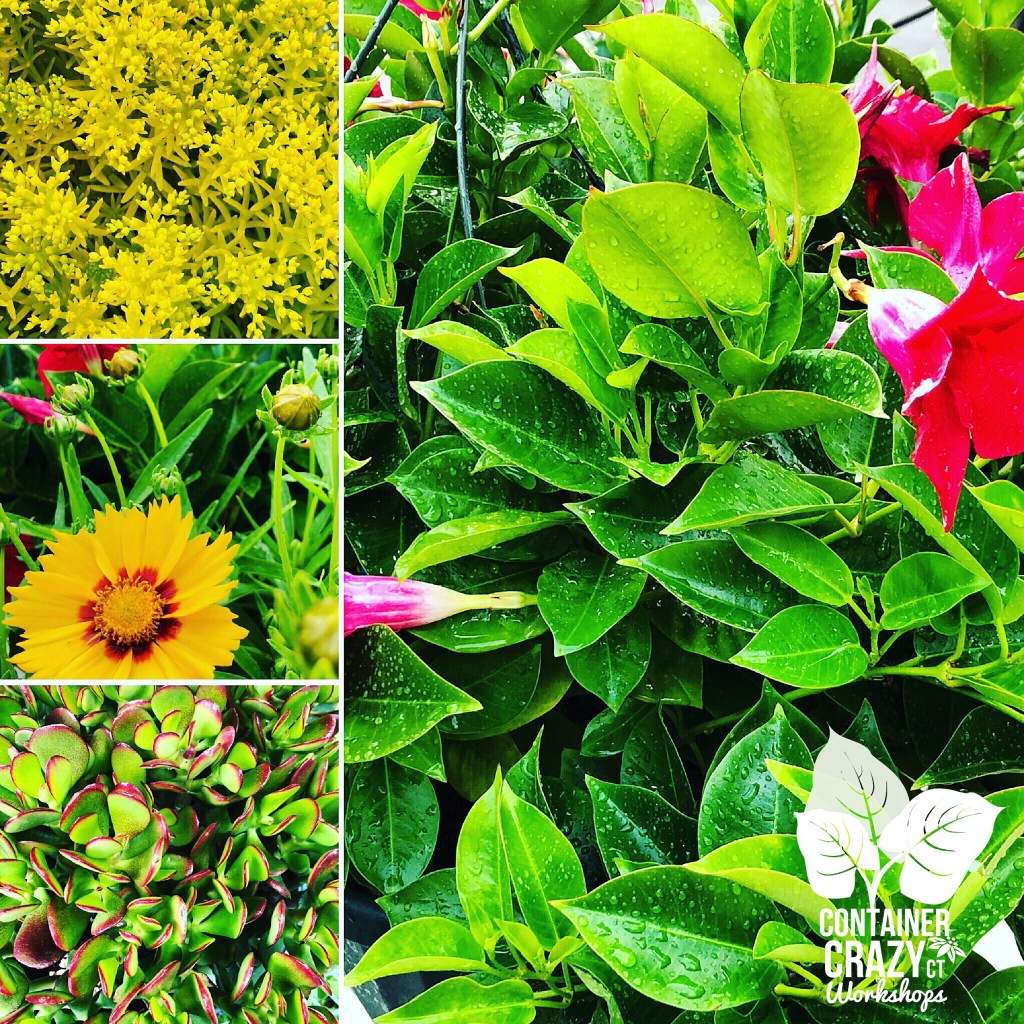
And there are of course the Mandevillas or Dipladenias. Big pretty blooms. Red on these and a vine-like habit. This one did not vine as much as others, but it was a staple for my balcony garden working days. They tolerate the winds, hold onto the flowers despite winds strong enough to move heavy furniture on the balcony. Furniture which had to be chained down appropriately always. Tropical plants they are.

Experiencing working on a high-rise balcony was one of my ultimate pleasures of having my former small plant related business. I only felt disappointed that they (the penthouse owner’s) did not discover me sooner. I wish I had worked up there when I was younger. I would have been able to handle more of the physical aspects. I was a solo worker. It was sometimes a challenge to figure out how to get all the soil bags, plants, and more up there. Because I am organized, I found ways to maximize my trips up the service elevator. I used wagons and a hand truck. I used the appropriate boxes and bins. I did it and I loved every minute of being up there. Well, maybe on those super-hot days, not so much. But I loved the plants and expansive balcony views enough to keep on working up there. It was an honor.

Cathy Testa
Date if this post: 1/29/2026

In this patio Pot:
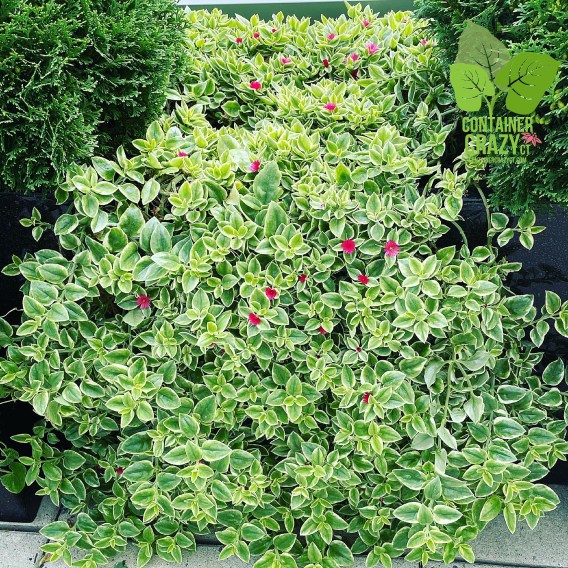

Trailing Red Small Daisy Flowers that can Take it Rough

2 Comments

I am always in search of tough (as in tolerant) plants for container gardens and patio pots for full sun locations due to having a few clients with these environmental conditions at their outdoor settings. In fact, I often refer to the location as “full on sun” when I talk to my husband about it, and he jokes about that term to this day. It is a hot location with lots of heat in the midst of summer with limited water sources outdoors. Thus, I like plants to be drought tolerant if possible.

Last year, I happen to notice an annual plant at a local nursery with light green and white succulent like foliage, and thought this may be a candidate for my full sun project because the succulent foliage led me to believe it probably is similar to a succulent plants (able to retain water in its leaves and are drought tolerant) but I wasn’t sure.

However, despite not knowing the plant’s requirements as of yet, I also noticed it blooms small red flowers and I was in search a red and yellow combinations for a theme I was planning on this site that year. I looked at the label, of course, and thought it over and decided to give this annual plant a try.

‘Mezoo Trailing Red’ is the Tradename

A Spiller in Habit

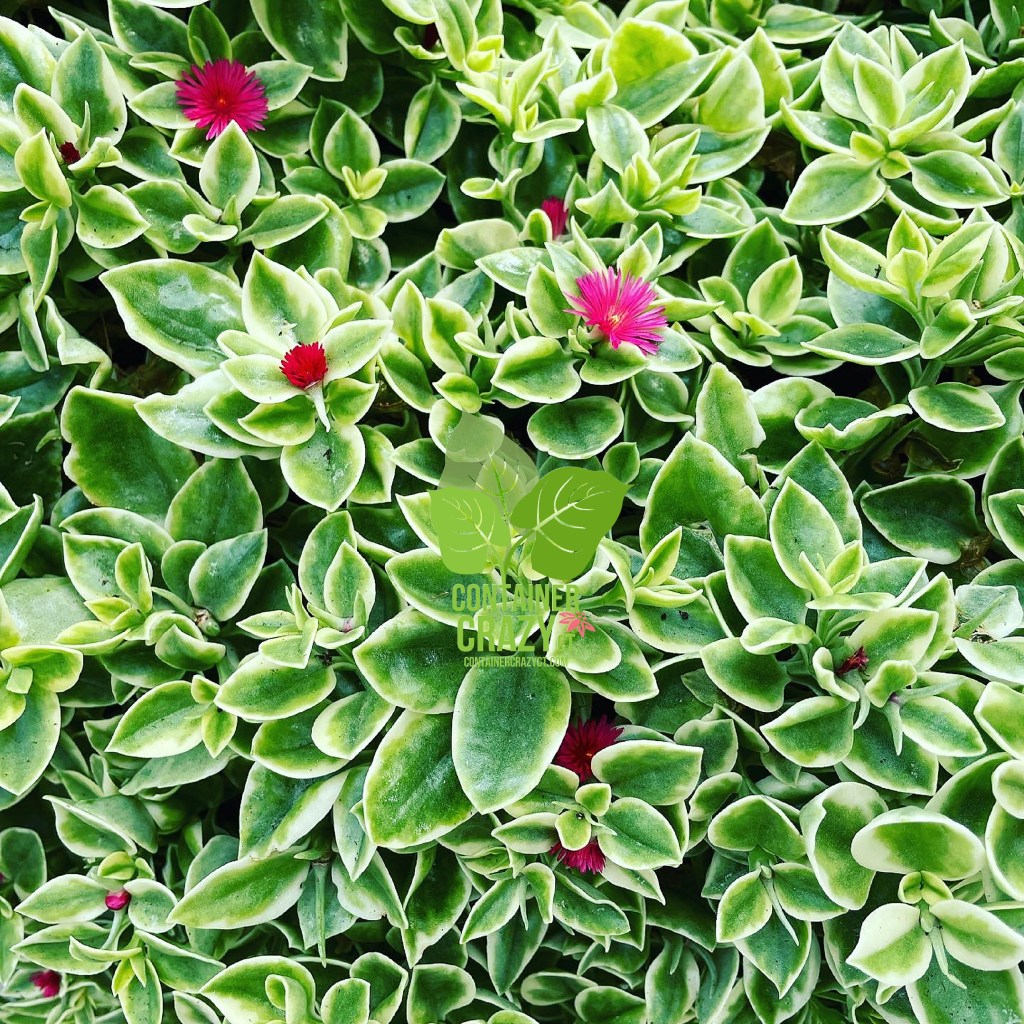
In addition to having the succulent like foliage, the hot red colored blooms are what I was searching for, and having a bit of an unusual variegated foliage coloring, it also would work as a spiller plant (plants which trail or hang down in planters and pots). I grabbed a couple to add to my selections to plant in some large long planters. And, also, it has a lighter tone of a foliage color, making good contrast to darker plants.

‘Mezoo Trailing Red’

It is known as ‘Mezoo Trailing Red’ as the tradename, but upon some research, I discovered it’s botanical name is, Dorotheanthus bellidiformis. Try pronouncing that one! So, I will just refer to it as “trailing red” or “Mezoo” in this post. It is a tender perennial that is winter hardy to planting zones 9-10, but here in Connecticut, it is treated as a annual plant and is not hardy in our CT zones. I’m in Zone 6b.

Easy to Root

However, I discovered yet another benefit about this plant, it is easy to root from a tip cutting by placing it in a jar of water and letting roots form from the stem end tip. I did that after the summer with some cuttings and managed to start a couple smaller plant to keep in the house over the winter.

Great with Darker Contrasts nearby (dark greens), and also looks nice with soft blues!

Blue Green Coloring

There are different types of green and the foliage green on ‘trailing red’ is a bit of a blue green with hues of white to creamy white edges on the leaves. I thought how it seemed to click in color with a few blue Senecio plants I had to plant as well, which I used a little fillers to tuck in next to the Mezoo trailing red plant. However, by the end of the summer, Mezoo took over the area in the center of this tall and long planter. The Senecio got crowded out quickly. I didn’t mind, however, because Mezoo turned out to be just beautiful and full to the max.

Abundant Growth

The amount of growth that occurred in one summer in the planters really shocked me when I returned later in the season to take a look at the plants. The Mezoo was lush, full, and trailing over the edge down to the middle of a 5-6 foot tall square planter. There were no signs of insects and about the only issue I had with it was as some of the leaves dried up here and there (just a bit), the dried up papery residue of the leaves stuck to the outside of the planter under the plant’s hanging foliage and blooms. I washed that up later off the planter, when I took the Mezoo out of the planter, before fall arrived, by using some mild soapy dish type water. I was glad the planter’s outside covering was not damaged.

Drought Tolerant

This is the type of plant that tolerates some dry periods as well, which is a bonus. It is low maintenance and takes somewhat dry to medium moisture. Well-drained soil is preferred by it, and I had placed between two dark green globe shaped shrubs and thus, the plant was somewhat protected, but I don’t think it needed any extra protection. It grew massive and was impressive. It dripped over both sides of the planter, to about half-way down. I was impressed. Take note, it doesn’t like to stay completely dry and fortunately, we had good rainfall to get some moisture into the soil in the planter that year.

Overflowing Abundance

Like a Waterfall

Just look at this photo above. It is very apparent this plant was thriving. It was full, lush, bursting with foliage and flowing thru the two side shrubs like a waterfall. When I saw this abundance of growth, I said an, “Oooohh, so nice!” comment out loud to myself, which is typical of me. I surprise myself sometimes. LOL. I was pleased.

When I got back to my greenhouse, from digging it out at the site, I decided to take a few cuttings (as noted above) and showed it to my plant followers, and immediately a friend and plant enthusiast chimed in to say she has one as well and loves how well it performs in her hanging baskets at home. She also takes tip cuttings to root as a method to save some over the winter months here in Connecticut.

Sometimes its worth a shot to try out a plant you are unfamiliar with and often they will give you clues to their habit and tolerance. This one I would definitely recommend for sunny locations in containers and patio pots. It handled the heat, wind, sun, limited watering, and crowding between two other plants pretty well. It has a lower habit (doesn’t grow upwards), so if you don’t want to block the view behind it, which we didn’t want to block the skyline, it worked very well and I experienced no insect issues on it all summer long. I will say, we did have more moisture than usual that summer and maybe that helped, but overall, it can take it rough.

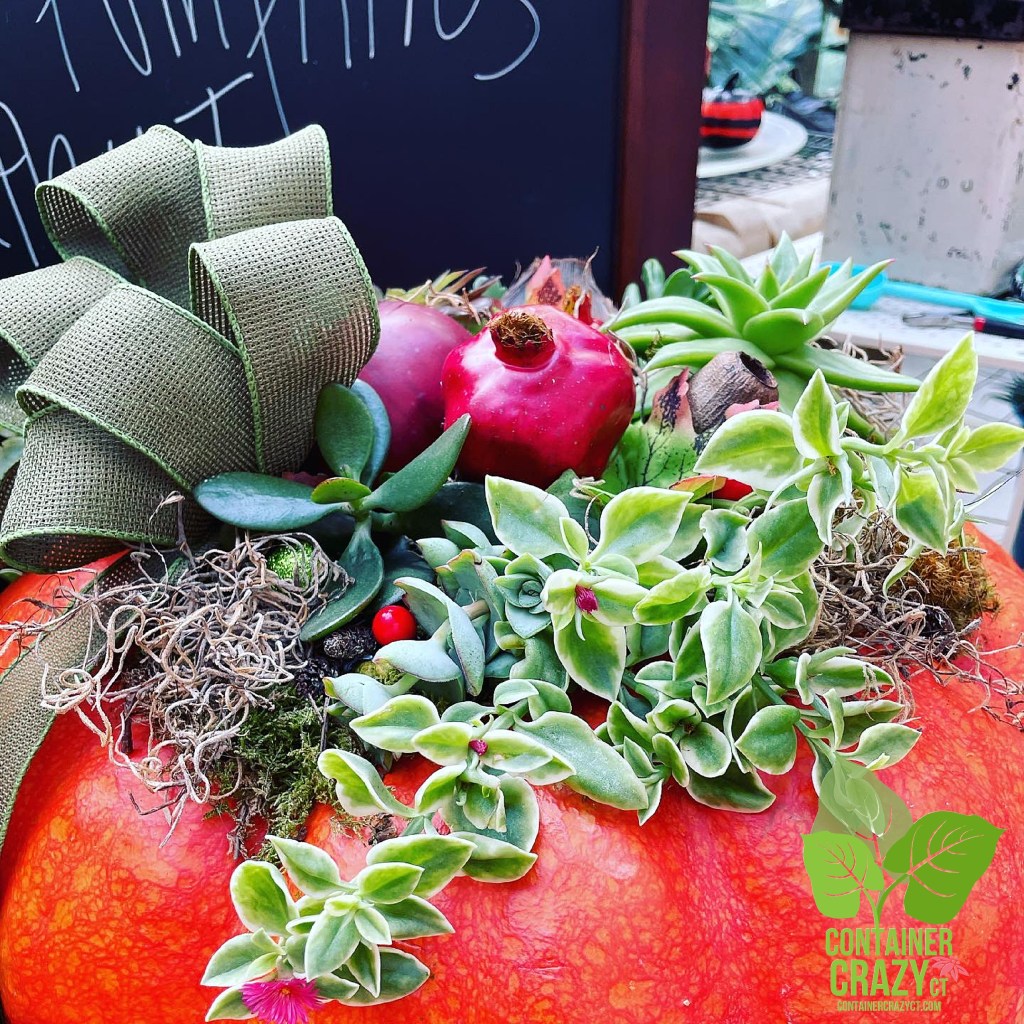
Mezoo used on a Succulent Pumpkin Centerpiece by Cathy Testa of Container Crazy CT

Blooms are Small but Long Lasting

It also blooms many daisy red small flowers from about June up to October. The flowers do not fall off so no worries about a mess on the ground area and also no worries about deadheading. I do wish the flowers were larger however.

Later in the autumn season, I ended up tucking some of those cuttings I took on top of my succulent topped pumpkin centerpieces. I guess the bonus list continued onward. It just hit me how they would look pretty on my pumpkins.

Dripping over the edge of a long square planter

Benefits Reviewed

  • Dry to medium moisture (somewhat drought tolerant; don’t allow soil to completely dry out)
  • Likes heat and can take the heat
  • A spiller that cascades over pots (but has a low mat forming habit)
  • Easy to take tip cuttings to root in water
  • Full sun lover
  • Low maintenance, no deadheading required
  • Can take average well-draining soils
  • Makes a decent winter houseplant
  • Pairs well with succulents
  • Not a high feeder
  • And well, lastly, I liked using the cuttings on my pumpkins as noted above!

Thank you for visiting!

Cathy Testa
Broad Brook/East Windsor, CT
Zone 6b
Container Garden Designer
Posted: 1/18/2022

Side View – Container Gardens by Cathy Testa of Container Crazy CT in Broad Brook, Connecticut