5 Things You Can Do Right Now to Get Ready for Spring!

7 Comments

#1 Go to the Flower and Garden Show this week in Hartford, CT

Go to the flower and garden show in Hartford, CT being held this week starting Thursday, Feb. 20th. Just walking into the building will get your senses thinking about spring and less about snow as you see, hear, smell, and experience the plants and plant offerings by the many exhibitors.  I plan to go – probably on Friday.  Got the day off?  Want to join me, just email me at containercathy@gmail.com.  There is parking adjacent to the convention center.  After parking, find your way through the parking garage to the main entrance and take the escalators up to the show floor. Don’t forget to visit the seminar speakers on the floor above the show floor too.  Food and wine is available at the show each year, and check in with your local nurseries before you go for tickets – they often offer discounted tickets by a couple bucks.  If you can’t make it during a week day, no worries – it runs through the weekend, and the weather is looking warmer by Friday.

#2 Visit Cathy T’s new Pinboards on Succulents and Tropicals

Why?  Because in May, Cathy T is offering a fun class on how to make container gardens with succulents, and will be having a Tropical Talk too.  To get inspired about this first annual BIG CONTAINER GARDEN PARTY to be held on Broad Brook, CT, visit her new pinboards right now, note the date on your calendar, and register today.  These pinboards will get you at least thinking about upcoming fun of creating beautiful containers for your outdoor spaces in the spring and summer. The possibilities are endless in the style and ways you can mix up plants for the season.

To learn more details about this class, see the pages listed under Cathy T’s Classes or under Container Gardens on the menu of this blog.  Share the information too with any local friends interested.

#3 Scout Containers for the Upcoming Season

Now could be a very good time indeed to think about containers or patio pots for not, only Cathy T’s BIG CONTAINER GARDEN PARTY (class) in May, but in general for your container gardening coming up in a matter of a month of so!  We may have snow right now, but it will begin to melt as soon as temps warm up – so why not rummage your own stock of goodies, or start looking for unique containers at the flower show this weekend?? – and of course, the tag sales that kick off in the spring. It is when you least expect it that you find a vintage item, a repurposed pot, or something sitting in your garage or basement right now that can be a container in spring and summer – old fancy shoes or pumps – heck, before tossing them, think – could this be a great container for succulents at Cathy T’s class?  I think yes!

#4 Think about Attending Other Garden Related Conferences

Did you know there is a great ELA conference next week in downtown Springfield, MA for plant enthusiasts and ground huggers?  Well, I say ground huggers in a very loving way – the focus at this conference is usually on natural horticultural practices and sustainability.  Is there any other kind?!!   The speakers at this conference are highly educated and the attendees inspiring for many are hort people in the business, but this doesn’t mean an avid gardener expanding their knowledge base and horizons can not attend too. If interested, visit their website for all the details. There is parking near the conference location, and places in downtown to eat if you want to adventure beyond the cafe onsite at this conference.  Do something different, and give this conference a try, or don’t forget other flower shows going on, such as the Rhode Island show (held same time as Hartford’s) or Boston show in March or UCONN’s Garden Conference in Storrs, CT.  You will be amazed how inspiring it can feel to attend a conference you haven’t tried before – you may not know what’s out there – but if you go – it surely makes you more ready for spring!  And many are in locations where you can adventure into the city and enjoy other places of interest if you make a weekend out of it, or stay overnight.

#5 Start some Seeds indoors, or Force some Pretty Bulbs:

Herb Seeds (Photo by Cathy Testa)

Herb Seeds (Photo by Cathy Testa)

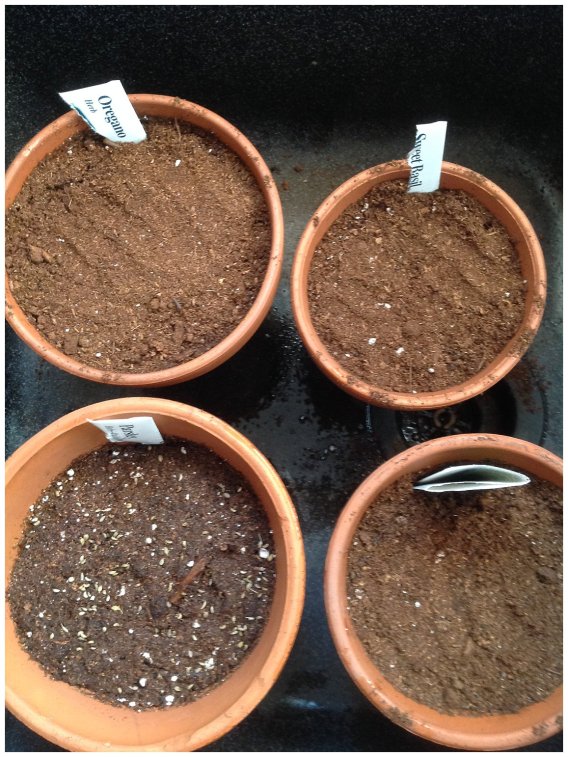
It may feel too early to start seeds, but heck if you pot up a few herb seeds in your home or grow an Amaryllis bulb, like I did recently inside the home – you start to feel inspired for the growing days of spring ahead when you see the bulb’s flowers open, or see the seeds popping up in the soil.  So go to your local supply shop, get some seed starting potting mix and a couple packets of seeds, put them in some pots, place by a sunny window sill, and watch it grow.

Photo by Cathy Testa, Panical Hydrangea Covered in Snow

Photo by Cathy Testa, Hydrangea Covered in Snow

Or if that doesn’t suit your fancy, get bundled up, walk your property and take some photos of plants in the snow covered with icicles, fluffy snow, and enjoy the shadows against the snow cast by branches.  This cheers me up and hopefully will do so for you.  By the way, if any of your shrubs are toppling over due to the weight of sticky snow, it is a good idea to gently shake the excess snow off the branches so they don’t break or bend too harshly.

Happy Monday Everyone,

Cathy Testa

The Date has been Posted – Container Garden Party in May 2014

Leave a comment

https://cathytesta.wordpress.com/container-gardens/the-big-container-garden-party/

Just a heads-up – the date has been posted for this class to be held in Broad Brook, CT.

Want to join us?  Click the link above, and register for this May 2014 class.

To see examples of Container Gardens by Cathy Testa, visit this link too:

https://cathytesta.wordpress.com/container-gardens/

In the meantime, stay warm and play in that snow!

Cathy Testa

How Cheerios Trumped Roses on Valentine’s Day Morning

2 Comments

Getting a rose filled bouquet on Valentine’s Day is traditional indeed, but I received the sweetest surprise this morning from my husband of almost 24 years!  Signs in different places in the house in the most creative ways – one of which I just have to share because it touched my heart so much.  A sign made with Cheerios cereal!

Creative!

Creative!

I’m sorry – even as a plant enthusiast – I have to say, this one trumped red roses this year – just check out that exclamation point.  I wonder how long it too him to do this – the letters are perfect, and so is he!!!

Love_0004

Happy Valentine’s Day Everyone,

Cathy Testa

Photo by picjumbo/Viktor Hanacek

Photo by picjumbo/Viktor Hanacek

Bear’s Breeches – A Beauty and A Beast

3 Comments

It is rare for me to visit a homeowner with a similar gardening style as mine because most folks are seeking traditional gardens or updates to typical foundation plants, but during a client visit in 2012, I met a homeowner who was experimenting with tropical plants and taking risks with some unusual specimens in her landscape.

As I entered her property, first thing I saw on each side of her driveway were two stately urns planted with beautiful ornamental grasses and couple perennials which happen to be some of my favorites, such as Dichondra argentea ‘Silver Falls’ as a spiller plant dripping over the pot’s edge.  Then, I spotted a tall red banana plant (Ensete maurelii) in a large ornamental pot by a border along the side of her home.  I immediately thought to myself, “I’m going to enjoy meeting this woman.”

Because of my love of tropical plants and container gardening, the feeling was an immediate admiration for the touches she had incorporated into her gardening spaces. After quick introductions, she walked me around her property, and this is when I noticed plants which some gardeners may consider a nuisance because they are known to easily take over a garden area or possess aggressive habits.

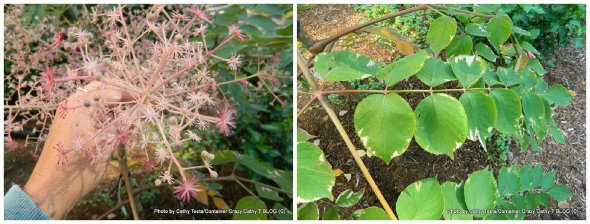
Aralia elata

Aralia elata

For example, she had an Aralia elata shrub planted in a small area near her front porch entrance.  This plant is not difficult to grow, but is tough to move once established.  It also has sharp prickles on the stems, and its roots will eventually sprout suckers.  However, the variegated leaves and panicle style flowers growing at the top of the plant are rather curious as well as pretty.  Observed up close, you will most likely admire this plant’s features.
bears breeches_0003

Where it was planted on her property was a little tight.  Aralia elata can reach 10-15 feet tall and spread to 8 feet wide.  It looks like a small ornamental tree at maturity with an unusual form.  And it drops its leaves quickly after flowering and fruiting, so it can leave plant remnants later in the season.  However, despite these things, she put it there to enjoy its features up close. I appreciated why she wanted it by the entrance to her front porch.  It is a rare plant.  Because it is not commonly seen, that in of itself, makes it intriguing.

Aralia elata

Aralia elata

Uncommon plants add excitement and wonder to a garden space.  Some plants with defense mechanisms make them more prolific in the garden, but this can also embody them with mysterious traits which make them stand out visually.  And if you are well aware of their growing habits, you may be willing to accept them or work to manage their undesirables over time.

This homeowner seemed to be aware of the nuisances of her specimens, but she didn’t seem to care.  Meaning, she enjoyed the plant’s unusual forms and was willing to use them despite the consequences or potential risks, such as the plant’s ability to spread or leave litter on the lawn.  She also has the benefit of employing a full time garden-maintenance person.  Thus, perhaps, she did not feel the anguish of planting something that would require a higher vigilance in the long run.  Or it could be that she just could not resist the temptations of a beautiful plant even if it has some beastly sides.

Because of her unrestrained style combined with the willingness to listen and understand the caveats of a particular plant as I cautioned its use, I was free to include the unexpected and maybe not so well-tamed specimen plants in her garden design for a perennial bed she was anxious to install.  And bear’s breeches (Acanthus spinosus), also called spiny bear’s breeches, was just one of those plant candidates.

The Beauty

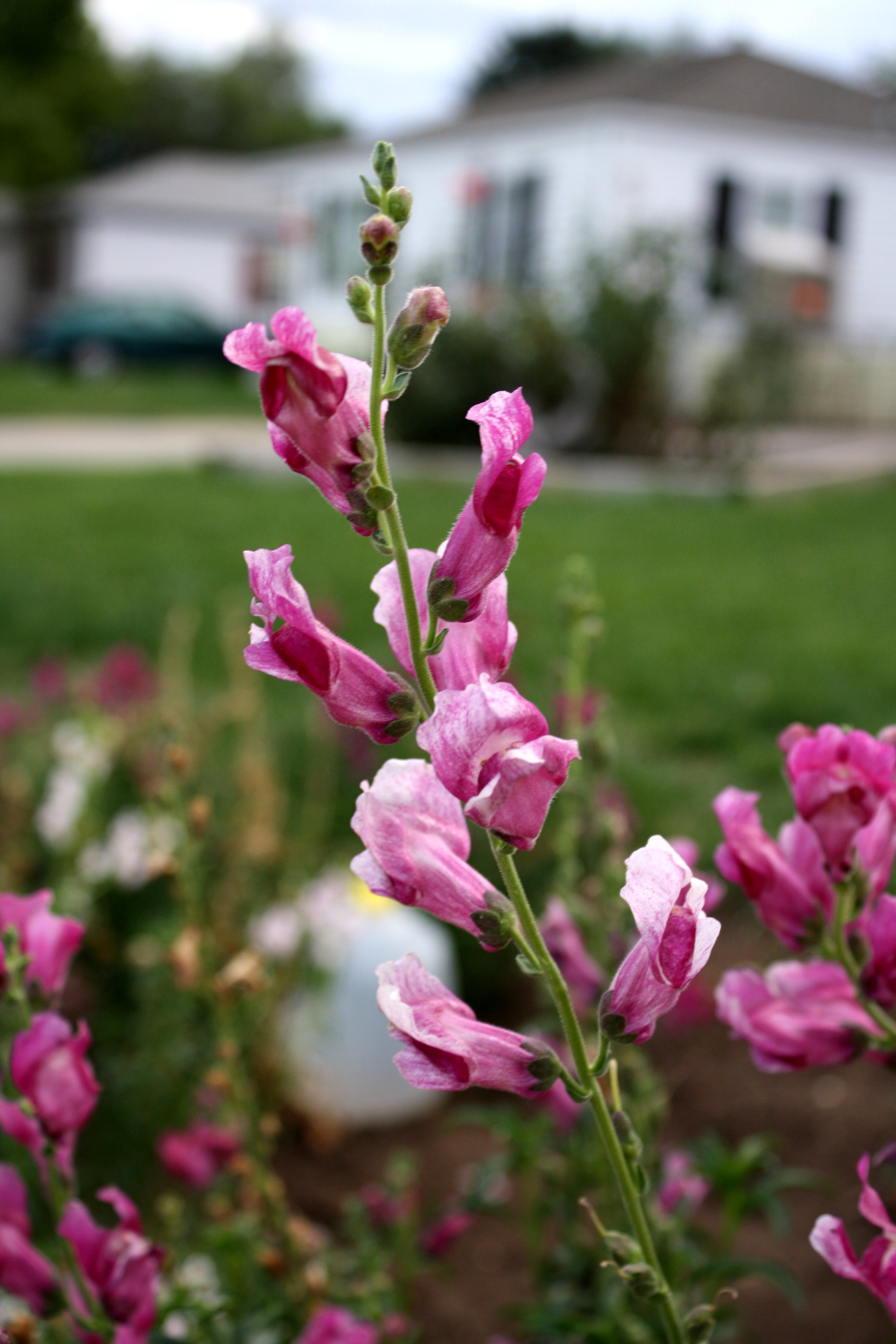
Bear’s breeches has rather interesting looking and showy flowers atop very tall flower stalks.  Each flower spike bears snapdragon like flowers which are vertically positioned.  The flowers are composed of bracts (modified leaves), lobes, and tubes – to put it simply, and their composition makes them almost-alien looking while still remaining beautiful in form.
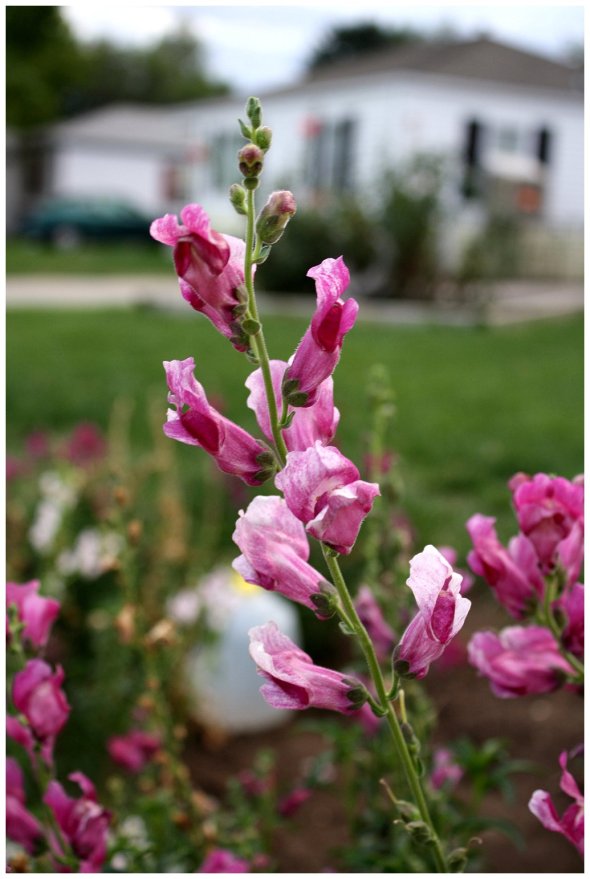
Snapdragon Flowers, Photo by Dreamstime.com

Snapdragon Flowers (similar to bear’s breeches in style), Photo by Dreamstime.com

The top hooded portion of the flower is mauve to purple, and the bottom is white.  Because the plant can reach 3’ to 4’ tall, with a mounded foliage shape on the bottom, it can be rather significant in the garden.  It is extremely visible due to the tall flowers rising above it on strong stalks which do not require staking.

By Magnus Manske, Wikimedia Commons License

Bear’s breeches (Acanthus spinosus).  Photo By Magnus Manske, Wikimedia Commons License

The flowers on this plant are a true beauty, but it is also a bit untypical looking.  In my eyes, the individual flowers seem similar to a fantasized hooded-like orchid with the stature of a foxglove or Baptisia australis (blue false indigo).  The plant provides architecture, texture, and interest and it is a long-performer in the garden even after its flowers pass.

Nursery Management Green Guide article states “Foliage remains attractive after the bold flower spikes have disappeared.”

Although the leaves resemble thistle, which is considered a common roadside weed in Connecticut, the leaves are deeply cut, glossy green and leathery – adding nice texture especially when combined with plants of opposing texture.  If you haven’t seen bear’s breeches before, the combination of the tall showy blooms with prominent foliage will make you pause to take a glance.

Tracy DiSabato-Aust describes bear’s breeches as a “real conversation piece” in her book titled, “50 High-Impact, Low-Care Garden Plants.”  She also writes, “Don’t let its thistle like leaves put you off, as they add amazing shape and textural variety often needed in many “ho-hum” shade designs.”

Another bonus is the purple coloring on the top portion of the flower’s structure.  This is a desirable color by many plant lovers, and it was a specific request by my client, along with the desire to have silver-colored foliage.  Unfortunately, many silver foliaged plant candidates require full sun!  Thus – these are the challenges of a garden designer.

The Beast

Similar to Aralia elata, bear’s breeches (also called spiny bear’s breeches) has prickles and thorns located on the foliage and in the flowers.  Your fingertips or hands may get pricked if you are not careful – and your vehicle could receive damage should you locate bear’s breeches by a driveway’s edge.  Accidentally brush up against it, and it will leave its mark.

Steven M. Still indicates “Acanthus is derived from the Greek word akanthos, meaning thorn or prickle.  It has been called bear’s breeches because of the size and appearance of the leaf of some species which is big, broad, and hairy” in his book titled, “Manual of Herbaceous Ornamental Plants.”

It is not just the prickly nature of the plant which can be off-putting, but it also has the tendency to spread by roots which will pop up new plants in other parts of the garden – once the plant is established. If you desire this look, where the plant repeats itself here and there, and you don’t mind it moving on its own, great.  It can add a naturalistic effect in the garden while providing architecture due to the plant’s form and texture.

http://www.youtube.com/watch?v=tD7ZsPV8Fgc
Viettes Gardening Tips

But there’s another catch, spiny bear’s breeches are also slow to establish.  You must be patient if you desire this spreading habit in your garden, which some folks do, and you also need to pay attention to the preferred cultural conditions because it tends to be flexible and picky at the same time.

Bear’s breeches grows best in full sun to part shade, and some references indicate it is best grown in partial shade.  The top blooming portion of the plant prefers more sun, but it performs better with some afternoon shade, especially if your climate is hot in the summer.  Fortunately for me, my client’s garden bed area had both sun and shade at different parts of the day.

As noted above, bear’s breeches’ aggressive side of spreading by its creeping rootstock easily occurs in loose soils which it prefers (well-drained soils), but it may stay put if you try to plant it in clay soils. However, if planted in heavy clay soils, this plant may get root rot because clay soils tend to remain wet. And slugs and snails will dine on the plant, especially in wet areas.

by Rod Allday, Wikimedia Commons License

Photo by Rod Allday, Wikimedia Commons License (see below attributions)

Although this plant is often recommended for the back of a garden border because it grows large and tall, it also can be placed at an edge for up-close enjoyment.

Garden Gate Specials publication recommends, “Add a bear’s breeches near the edge of a path.  It’s usually planted near the back of the border, but (here) it lifts its flowers to eye level for easy viewing.”

My client loved the look of this plant candidate as much as I did, and wanted to have it included despite its potential maintenance challenges of spreading, spines, prickles, size, repeating, and establishment.  She understood the growth habits without hesitation and was very happy to be introduced to bear’s breeches as part of my design recommendations for a new perennial bed she was planning to install.

As for myself, as a designer, I loved the freedom to use plants which have bold traits and long-lasting attributes despite their need for on-going maintenance and care.  Plant care is often regarded as an undesired chore for many clients demanding low-maintenance plants.  They just don’t want the problems, or they don’t have a full-time gardener to take care of their landscape!

But if you find you are like this homeowner, or desire uniqueness in your outdoor surroundings, despite the potential regret or work later, then you too will find spiny bear’s breeches is a true beauty while accepting it is a beast. Or you can minimize the risk and use this plant as a “Troublemaker turned Star” in a container garden.  This perennial is worth taking notice either way.

Cathy Testa

Plant Details:

Pronunciation:  Acanthus spinosus (a-kan’thus spi-no-sus)
Perennial; USDA Hardiness Planting Zone 5-9
3-4 feet tall and 2-3 feet wide; Sun to partial shade
Blooms late spring to mid-summer; no staking needed
Prefers moist, well-drained soils; Can tolerate dry soils
Protect over winter with straw mulch if in Zone 5 or colder
Related species:  Acanthus mollis

Useful Link:

http://www.missouribotanicalgarden.org/PlantFinder/PlantFinderDetails.aspx?kempercode=a100
Missouri Botanical Garden Plant Finder

Photos:

http://www.photos-public-domain.com/wp-content/uploads/2010/11/pink_snapdragons.jpg
Pink snapdragon photo, dreamstime.com Free Stock Photo

http://commons.wikimedia.org/wiki/File%3AAcanthus_spinosus_(Acanthaceae)_flower.JPGdownloaded image, creative commons license. Attribution: By Magnus Manske (Own work.) [GFDL (http://www.gnu.org/copyleft/fdl.html) or CC-BY-SA-2.5-2.0-1.0 (http://creativecommons.org/licenses/by-sa/2.5-2.0-1.0)%5D, via Wikimedia Commons

Pic of flower in a group along walkway:  Attribution:  Rod Allday [CC-BY-SA-2.0 (http://creativecommons.org/licenses/by-sa/2.0)%5D, via Wikimedia Common.  Page url: http://commons.wikimedia.org/wiki/File%3ALooking_down_into_the_Jungle_at_Heligan_-_geograph.org.uk_-_1401014.jpg

Waterproof…

1 Comment

With this bloggers permission, here I am reblogging a BEAUTIFUL photo. Water and nature, aw, just love this. Enjoy, Cathy T

manojuchila's avatarGoogsy Photography

Lotus Leaf

Lotus Leaf

View original post

Help! I’m bored with my Landscape Design Software.

1 Comment

I remember the very first day I saw PRO Landscape, a design imaging software for landscaper professionals.  Reaction was something like, “OMG – this is so cool!”  I couldn’t wait to play with it.

The part of the program I fell in love with immediately is where you can overlay plant images on actual downloaded photos of various landscape areas or garden beds.  It was so visual.

From that point on, I dove into the program and started to learn and use it.  Clients like it too.  They like seeing the images of what their home could look like with the plants recommended.  It works in many cases.

However, after five or so years of using this program, and evolving my style of design presentations – I felt a little bored with the software program.  Things like not having specific cultivars to choose from or seeing the same images of the plants with the same bloom color, felt repetitive and limiting.  Let’s face it, after a while, dropping and dragging the same dwarf Alberta spruce onto a photo is – well, uninspiring.

I’m not suggesting that the program does not provide “tremendous value” as way to show images to homeowners on what their landscape could look like with the plants recommended, because this program certainly does.  And coupled with my additional presentation documents, such as details about the plants and other photos I’ve built up with color swatches of my own, it can do wonders to help any homeowner with their design needs.

Maybe it is not the program itself I’m bored with, but that I’m yearning for something more inspiring – I’m searching for a different way to present my design ideas, choices, features, and the rewards one can achieve with a well thought-out garden or landscape design concept.

I know I really enjoy when I ‘walk and talk’ plants with a client onsite at a nursery versus pointing to a presentation with created images.  Being with the live plants is like being at a live rock concert versus watching it on the television.

In my searches for other potential software programs out there, I have had no luck until recently when I spotted an article in the January 2014 issue of greenProfit by Jennifer Polanz on Landscape Software, titled, “An Irresistible Image”.  I thought, oh cool, I’m going to check these out, and I did – today.

First on the list was PRO Landscape by Drafix Software – already know all about it, been using it.  But like I said, I’m bored with this type of software, and you are probably bored right now hearing me say that!!

Next on the article’s list was DynaScape.  It has stuff to manage the landscape business (office paperwork) but it also has several types of options or programs to select from in their product list (this is good – choices, at least).

The DynaScape ‘Color’ program seems pretty cool – probably attracts me because it is the closest thing to “artist-like” where it looks like you hand drew the design.  The design is finished off with really nice color tones, shades, etc.  BUT, it is pricey and must be worth the investment. So before jumping into something like this, I still want to look around some more.

By the way, did you know these types of design software packages can cost $1,200-$1,500 to purchase?  Granted, you make your money back if you use it regularly, and are able to achieve your goals of presenting designs to your clients – no doubt, but they aren’t cheap.

Ok, back to Dynascape’s Color program.  It’s listed at $650 (not too bad) but there is a plus, as in a + sign, of a $4.25 per month charge – for what?  I didn’t look that over, moved onto the next one in the greenPROFIT article.

Idea Spectrum was next.  You can import photos into this program as well, similar to PRO Landscape.  But, I didn’t seem to like it from the first look.  You know how you can make an immediate impression when you view something on the web?  My immediate impression was Idea Spectrum appeared too amateurish for me.  It has 3D features, which is cool – but still, it looked a little – I don’t know – rough, not polished enough for my needs and ideas.

So, I quickly clicked my web browser to view next one by Vectorworks Landmark.  Oh, too high tech for me, fancy, commercial work – too big time for Cathy T.  Move on.

Ok, onto Visual Impact Imaging by Earthscapes.  Well, I’ve seen this one before in person, when I attended a trade show about three years ago.  I distinctly remember watching the demo and thinking – this is so like PRO Landscape.  Why would I change?  Plus I know how to use PRO Landscape, and the thought of a learning curve can be wide if you don’t know have training with these types of programs.  They can be a little tricky to learn and master.  Earthscapes also is about the same price range as PRO Landscape, about $1,195.

After doing a very fast view of the Landscape design software from the highlights in the greenProfit article, I went into my completed design presentation files of last year’s design clients.  I had almost forgotten about some that I did, and the work I added to each image, such as my plant descriptions and my own plant photos with color charts.  Looking back made me recall how impressed the client was when I showed them general ideas to change a bed in their yards with the images I created using PRO Landscape.

slide11

PRO Landscape a good product – not saying it isn’t – but I guess the other side of me is searching for something a bit more, or different – Something maybe crafty, artsy, focused on the plants or… maybe it is just me?  Maybe it is winter!

Well, I guess for now, until I find something else that more suits me, it is back to using PRO Landscape, which I have to reload onto my new laptop, and this will be a little bit of a chore, considering the program is on CD’S– and there is no CD drive on my new laptop.  Time for a visit to the computer store!

However, in the meantime, if you should happen to be reading this – and know of any really cool new design programs which are different from the typical landscape design software, and its easy to use, while being inspiring too – could you let me know, please?  Thank you.

Happy Friday Everyone,

Cathy Testa

Design Imaging_0001 Design Imaging_0002

Amaryllis

3 Comments

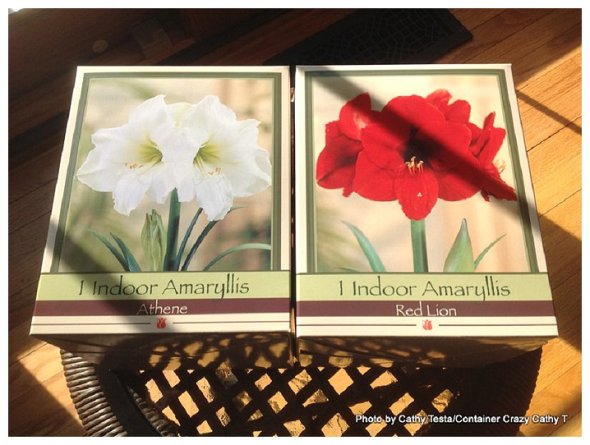
When accompanying Steve, my husband, to pick up bird seed last weekend, I noticed the store had amaryllis bulbs on sale (at 50% off actually, so they were a real bargain).  It took only seconds for me to include two in our checkout because I was inspired by a visit to a greenhouse in Old Wethersfield, CT recently where seedlings were popping out of trays, and bulbs were growing in bulb vases.  A couple of herb seed packets were tossed into the shopping cart as well.

amaryllis_0001

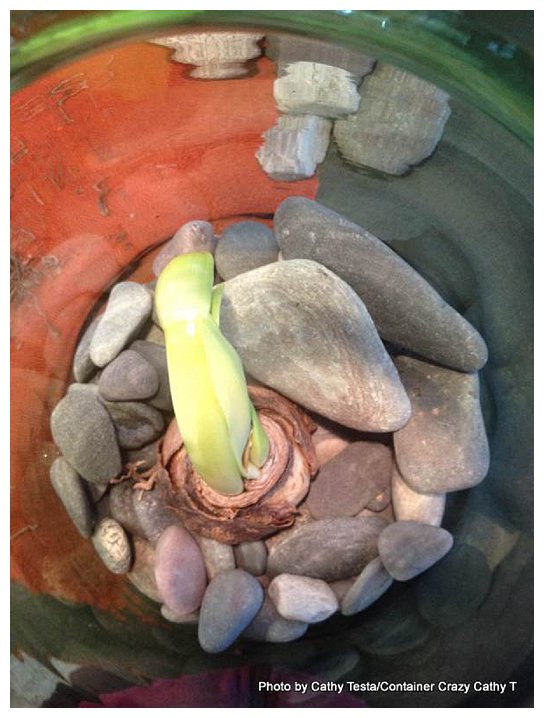
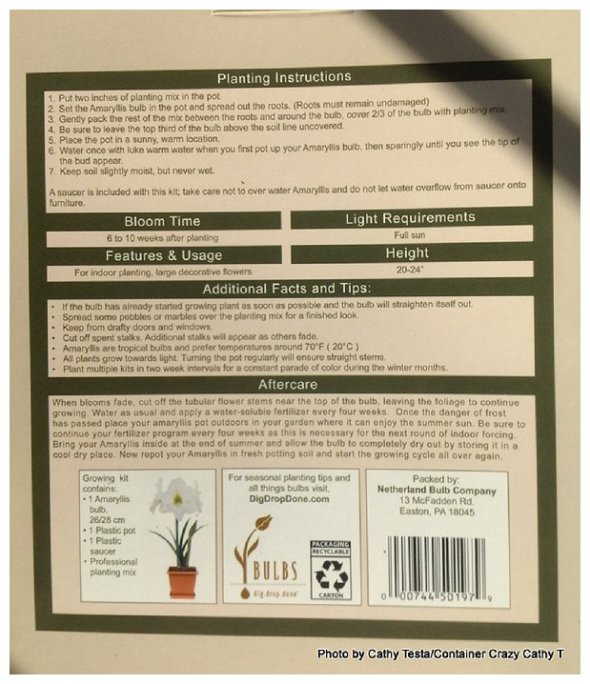
When I arrived home, it hit me. I finally have a great use for a nice green glass container I picked up at a vintage show last summer.  It is a littler larger than what the instructions indicate for amaryllis bulb growing (a pot size of no more than two times the diameter of the bulb is recommended), but I proceed regardless.  The bulb was already sprouting a shoot, which I could see via the window air hole in the box, so it was underway and would only continue to grow once given the right temperature and light conditions.

amaryllis_0002

The amaryllis box included a plastic pot, some soil mix which was rather dry and would require re-hydration with water, and instructions on the box’s exterior cover.  The pot and mix were set aside as I started to arrange various river rocks in my green glass container at a level of about four inches.  My goal was to make a nice indentation or sitting spot for the base of the bulb, and test the bulb’s position before removing dead roots and adding water.

Before setting the bulb in its final position, the brown roots, which were rather dry, were removed carefully by hand.  These can rot in the water.  Any roots which were slightly white remained.  Because even the white roots were very dry, I’m not sure if they will take but new roots should assume command once the plant begins to recognize a water source, light, and temperature conditions as it continues its growth out of dormancy.

amaryllis_0004

As I set the bulb upon the stones, I carefully tucked the white roots in crevices between the stones.  Once I was satisfied the bulb was balanced and checked that the shoot would be able to exit the top of the container, I added stones around the bulb’s top portion.

Instructions indicate, if you elect to grow your amaryllis bulb in water versus soil mix, to be sure to keep the top third of the bulb exposed and water added at a level of one inch below the base of the bulb.  I don’t think you need to be super exact with the inches and all that jazz, just follow the rule to not allow the bulb to sit in water and all should work out fine.

A sunny windowsill is best for an amaryllis bulb to grow, but I placed mine on the north side because this is where my green glass container is best suited – so it may be a little cooler there with less direct sun, but it will grow regardless – just at a slower pace.  As for the room temperature, it must remain above 60 degrees Fahrenheit.  No problem for me as I can’t take any temperature lower than that in my house during the winter, even with a loaded wood stove in the basement!

amaryllis_0005

I’m looking forward to watching the shoot elongate, turn green and eventually reveal a beautiful showy red bloom within a few weeks.  I guess the only downfall of growing these in water versus soil is the bulb is usually tossed because it doesn’t restore well.  However, having a green thumb, I will attempt to store my bulb and redo the entire process again at the right time.  A period of dormancy is required for about two months for the plant to regrow and bloom once again.

Detailed Planting Instructions

amaryllis_0003

Useful Links:

White Flower Farm with Video Growing Instructions:

http://www.whiteflowerfarm.com/cgi-bin/track/f36bb2ea+growing-amaryllis-bulbs.html

Missouri Botanical Garden Plant Finder Plant History and Details:

http://www.missouribotanicalgarden.org/PlantFinder/PlantFinderDetails.aspx?kempercode=a457

The United States National Arboretum, How to Make your Amaryllis Bloom Again:

http://www.usna.usda.gov/Gardens/faqs/AmaryllisBloom.html

amaryllis_0006

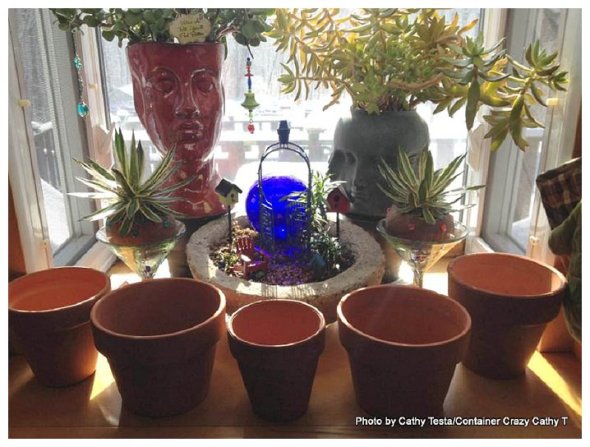
Now onto my herb seeds.  Several small terracotta pots have been washed (via a wash cycle in my dishwasher) and are waiting for soil mix and my herb seeds.  This is next on my little to do list.

Cathy Testa

Mommy, Where do baby Praying Mantis come from?

9 Comments

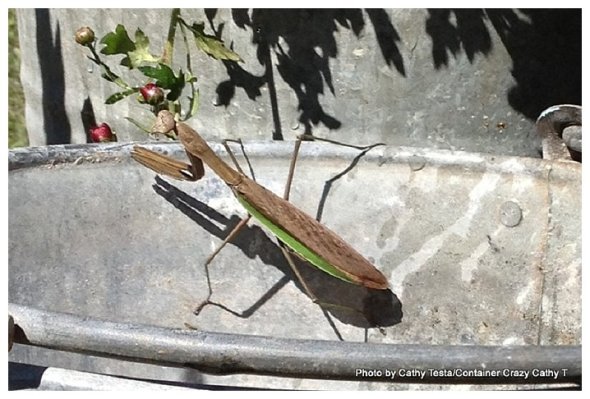
Chinese praying mantis (or Tenodera aridifolia sinensis) are commonly seen by many people in their gardens from time to time, but perhaps not so common of a sighting is that of the actual birth place of baby praying mantises.

praying mantis_0003

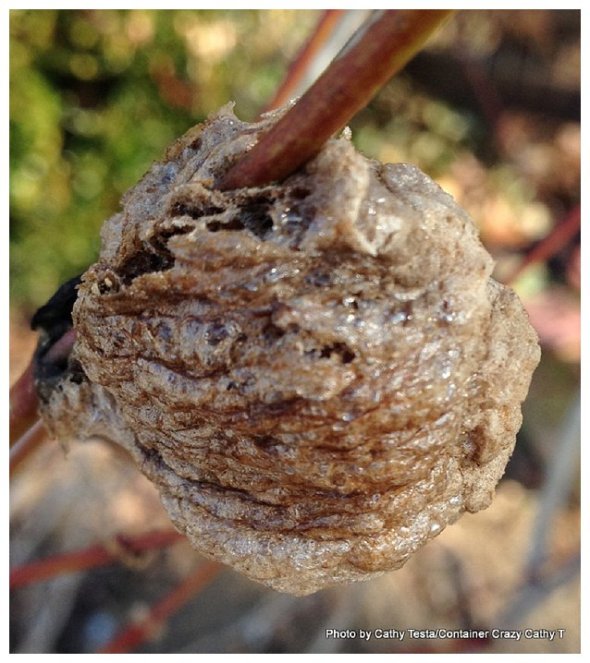
Well, my darlings – this is where baby praying mantids come from.

praying mantis_0004

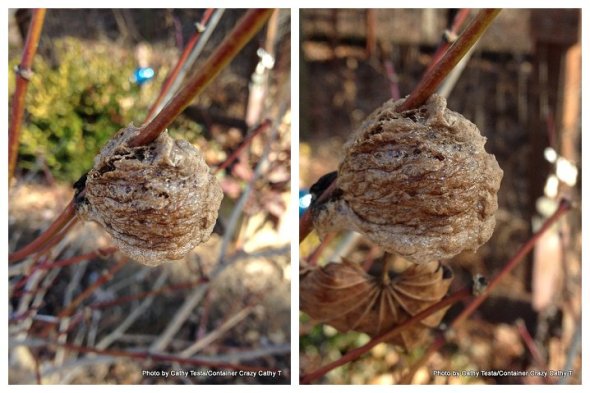
It is called an ootheca – or you can just call it the egg case, or birthing place of tiny baby mantis.

This one was spotted this winter on a fullmoon Japanese maple tree in my backyard.  You can see it looks papery and is attached to a twig, where it becomes dry and tough to survive winter.

After the mommy mantis lays her eggs in her styrofoam looking egg case (the ootheca), which is secreted from her unmentionables, she unfortunately dies.  Her army of tiny babies will have to enter the world on their own in the spring.

praying mantis_0005

But the good news is her little baby eggs remain protected until they are ready to make their first appearance.
(If only I knew exactly when, I’d love to capture photos of the baby praying mantises coming out of the ootheca!)

However, there are some photos available via VIRALNOVA.COM of baby mantids emerging.  Just click the link below to see the little babies  — they are so tiny and cute.

http://www.viralnova.com/mantis-birth/

Aren’t they just adorable?  Apparently, all the eggs (some say as many as 200) will hatch at the same time.  These little newborns enter the big nature world all together.  (Did you know they are born so tiny?  I didn’t.)

http://13tmp.wordpress.com/2013/12/21/macro-mantis-on-my-fingertips/

Check out “13tmp blog” via the link above to see an amazing photo captured of a tiny mantis on finger tips.  Nice macro, wouldn’t you say?

http://entomologytoday.org/2013/12/22/do-female-praying-mantises-always-eat-the-males/

There are lots of stories about the acts of a female mantises eating her male potential partners somewhere during the mating process. Well, in a study published by Entomologytoday, (see above link), it appears they only desire the smaller males as a meal. And perhaps the head of a larger male as dessert or an appetizer?  Don’t worry though – the male still can “get it on” despite being headless, and this keeps the female sufficiently happy.

“Yah, ummm, the mommy mantis lays her one or two hundred eggs in this styrofoam mass in the fall, but before this, she eats daddy – but only if he was born small and short.  Otherwise, he has a few “duties” to accomplish and this can be done even if he’s headless.”

Guess there’s not a lot of foreplay in this mantis’s relationship.  She doesn’t eat the males while mating, but may have a bite or two as an aphrodisiac.

http://lexyleksono.com/2014/01/06/photography-yellow-praying-mantis/

Or you could just change the subject to avoid the whole mommy and daddy mating gig, and show them a yellow praying mantis!
Check out “lexylesono” blog above.  A very rare sighting to see a yellow one, if not impossible, for our region.

http://www.youtube.com/watch?v=UlCEJyNlDqY

Seriously, praying mantids are way smarter than we think, this is for sure. Besides ambushing predators, they serve as radar detectors.  For another distraction of discussing the eating rituals before mating, just show your kid the video above.  So, that’s where speeding tickets come from!  Mystery solved.

praying mantis_0006

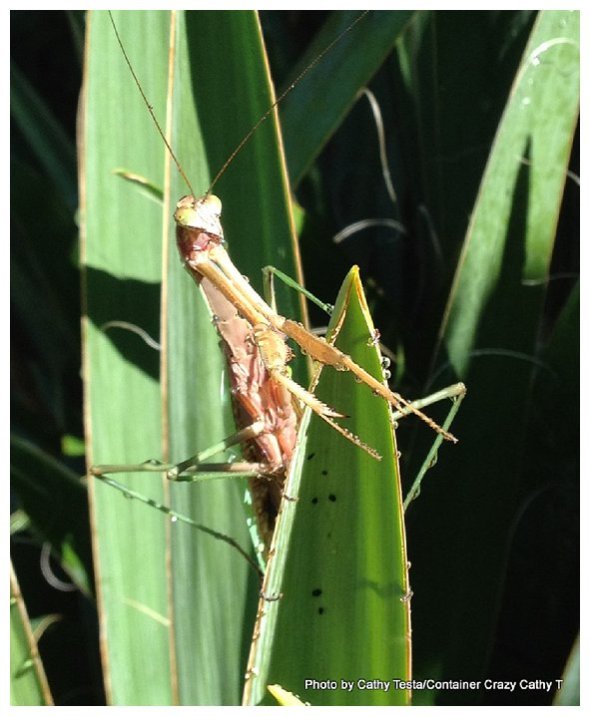
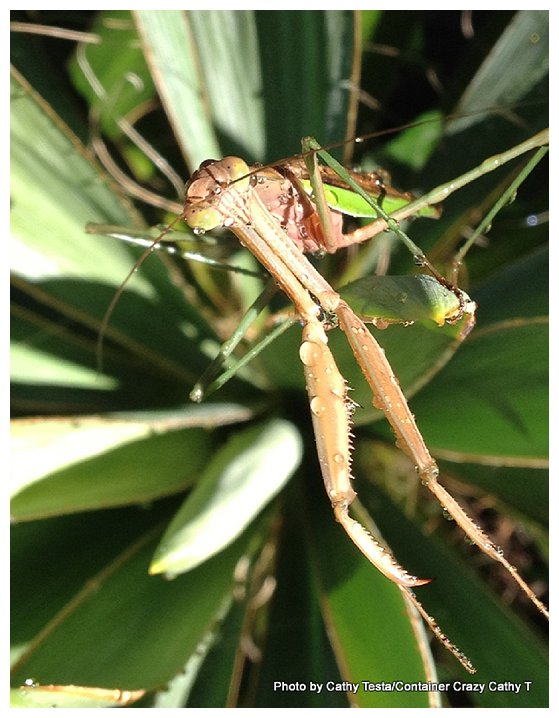
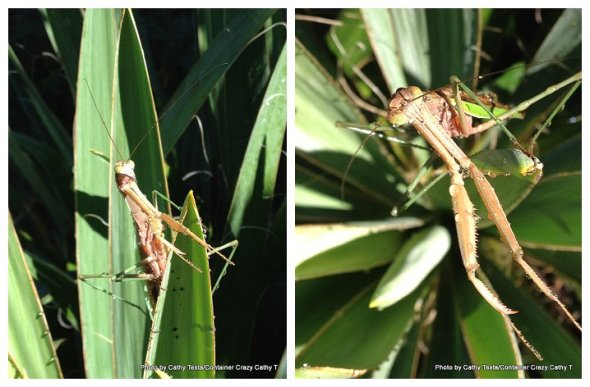
Last summer, I accidentally sprinkled a praying mantis with water from my garden hose as he was perched on a yucca plant.  I don’t think he liked me very much.  I could tell, as he turned his head over to look at me, that he was displeased indeed. Their head swivel action makes them very unique in the bug world, for not many insects have this special ability – plus it gives you that eerie feeling that he just may spit up nasty green pea soup towards you next!

praying mantis_0007

Praying mantis are always positioned, it seems, to strike.  Their grasping forelegs are armed to snag whatever meal may happen to unknowingly pass before them as they sit and patiently wait.

The leg segment near their body is called a coxa, which is elongated, so their arms tend to be positioned in a “praying” position, but the only thing they are praying for is their unsuspecting passerby.  The strike in ‘kung fu’ style.
I know, I tried to pick one up once and screeched as it whipped its grasping legs at me.

praying mantis_0008

Did you know praying mantis eat all kinds of insects – even the good bees?  And they enjoy spiders too.  But they tend to be good guys because they take care of pest insects regularly.  Plus, they are so amazing to watch and photograph, you just can’t resist their alluring body architecture, big bulging eyes, and sleek slow movements.  And silently, but deadly, nature.

References I have in stock on insects:

“Bugs in the System” by May R. Berenbaum
“Peterson First Guides. Insects” by Christopher Leahy

Happy Monday Everyone,

Cathy Testa

Is Mother Nature Sharing Her Own Version of Menopause?

3 Comments

Mother Nature is on some kind of roller coaster, or she is issuing her own version of menopause upon us this winter. One day she’s hot, the next day she’s cold, and in the most unusual places.

Perhaps she is trying to tell us something.  Is she setting down signs?  Does she want to warn us to take better care of our earth? One has to wonder why she is so moody this year.

While some of the winter conditions this year have been traditional, other conditions have been unexpected or unusual.  And many places have experienced drastic ups and downs in temperatures from one day to the next.

As we are all well aware, Atlanta was hit with an unusual winter storm event earlier this week resulting in traffic nightmares beyond comprehension.  People were stuck in their cars over eight hours in some cases – and struggled as they spun their wheels (literally) over ice covered roads only to move a couple inches, if any.

One news story indicated a father walked six miles to retrieve his child from the school where many students remained overnight because of the inability to get a way home through the traffic jams.  Another story showed two people handing out bottled water and bananas to people waiting in their cars on the highway. As the couple proceeded to the next vehicle, the lady fell right onto her back onto the roadway as her foot lost grip of the road.  It was even dangerous to help.

Yet, the Atlanta people will have a reprieve from their frustrating weather incident almost immediately as their local temperatures returned to the 50’s this week, and is expected to rise into the 60’s by the weekend.  They may not have to think about a winter coat, spinning tires, ice scrapping, or shoveling for quite some time – if ever again this winter. Granted their politicians will be thinking about these scenarios for a long time due to their role of managing “Mother Nature” inappropriately.  But other than that, hopefully this weather struggle will be a far away memory for them.

For us New England’ers, however, the struggle of dealing with cold temperatures will continue for days if not a couple more months.  And Miss Mother Nature will continue to remind us of her controlling powers as we deal with each day of the chilly temperatures and gray skies, with an occasional sunny day to enjoy as a treat or gift on her good days.

It doesn’t help matters that we hear the constant chatter on the weather television stations about how cold it is every day. This only serves as a continual reminder.  In fact, it probably makes us feel colder.  We can’t seem to get it out of our minds.  Each time there is a drop in the temperatures, the news stations seem to go into a frenzy of how awful it will be to deal with, and while we need those forecasts to prepare for our day, we could use to hear a little bit of the plus side of the cold, but gosh, what is it?  It certainly can be challenging to answer that question.

Additionally, there hasn’t been a great deal of snow to play with.  Sometimes the dull-drums of the winter blues can be easily cured with a snowshoe walk on a wooded trail or with a day of sledding with your children on your favorite hill. Perhaps a chance to forget for an hour or so of how the cold temperatures are. You can go skiing, ice fishing, or skating if that is your fancy and this will ward off the Mother Nature blues for the time being.

But, unfortunately, it feels like we are seeing continued brown landscapes, lack of sunshine, and experiencing cold chills the minute we walk out the door. We are still pressing the auto-car start buttons for our vehicles, grabbing our hats, gloves and scarves, and bundling up when we go outdoors.  And our pets certainly let us know, the best thing to do is succumb to it, curl up on a blanket, and sleep it off.

On the occasional sunny, clear skied days – there is a bit of – well “sunlight” to enjoy. This makes cold temperatures a bit more manageable to endure.  And if you are lucky enough to break away from work to visit a greenhouse on a sunny winter day, you can capture the warmth of the sun even more while you are inside the greenhouse.  This will provide immediately relief, which is highly recommended.  You may even feel the inspiration of spring while you enjoy this type of greenhouse spa treatment.

Sometimes, on a really cold day, if our blessed sun is beaming towards you or your house, take a moment to face the sun and close your eyes just for a few minutes. Imagine it is the sun of the summer for as long as you can endure the frigid temps if you do this outdoors.  While you stand there, please tell Mother Nature that you promise if she stops playing these games, we will be kinder to her fellow partner, Mother Earth.  Promise her this, and maybe offer her a foot rub too, to help her cope with her version of menopause temperature swings.

And don’t forget to mention, that you do remember her powers as depicted in the old  70’s Chiffon margarine television commercials.  Don’t you all remember?  The commercial reminded us that…

 “It’s not nice to fool with Mother Nature.”

Happy Friday Everyone.

Stay Cool – I know it won’t be difficult.

Cathy Testa

Spotted at a Greenhouse in Old Wethersfield, CT - Comstock Ferry

Spotted at a Greenhouse in Old Wethersfield, CT – Comstock Ferry

Greenhouse Pics_0002Somehow these roots gives us hope to the warm season to follow.  They certainly seemed to enjoying the sun’s rays!

Coral honeysuckle bud

Leave a comment

A great way to start the 2014 New Year is to share a beautiful honeysuckle bud photo by Steven Schwartzman of “Portraits of Wildflowers.” He lists some tips too on how to capture photos of nature. Check it out! Cathy Testa

Steve Schwartzman's avatarPortraits of Wildflowers

On December 4, 2013, when I spent a damp and overcast hour or two at the Arbor Walk pond in north-central Austin, I was surprised to find coral honeysuckle, Lonicera sempervirens, budding and flowering on the same side of the pond where I’d found it before but on the opposite side of the year from its norm. Oh well, as botanists have been known to quip, wildflowers don’t read field guides. And as with almost every plant out there in nature, notice the faint spiderwebs on this honeysuckle.

If you’re interested in photography as a craft, you’ll find that points 1, 2, 5 and 6 in About My Techniques are relevant to this photograph.

© 2014 Steven Schwartzman

View original post