INSECTS AND ORNAMENTS

3 Comments

As I was cleaning out some old files, I came across this article written by me in 2005 for a class project.  After I read it to my husband, he said I should post this.  Here it is, unchanged:

TITLED:  INSECT ORNAMENTS

My project is a collection of insects contained in clear glass ornaments hung on a miniature Christmas tree.  Each ornament contains an arthropod collected during the fall months of 2005 from the UCONN campus grounds, around my home in Broad Brook, and from property near the Scantic River in East Windsor.  Natural and synthetic plant materials were added to each ornament to represent the types of plant life found near the insects.  Also hung on the tree are information cards about insects, and some cute little decorations obtained during the Halloween season.

This reason I selected the Christmas tree with ornaments as an art form is two fold.  First, the ornaments serve as a way to showcase the insects’ intricate designs from a container that can be easily viewed.  When we have the opportunity to look at an insect up close through a glass, it is less threatening then when insects are alive and moving quickly, which tends to scare people.  Second, I wanted to use the Christmas tree theme to challenge the way in which insects are traditionally used by various cultures for holidays.  As we know, insects are usually reserved for Halloween decorations or for themes related to death or illness, but insects are not so popular for Christmas decorations.  There are exceptions such as beautiful butterflies and colorful dragonflies as ornaments, but it is very uncommon, and perhaps impossible to imagine a Christmas tree adorned with wasps, bees, stink bugs or centipedes, for most would find this offensive or ugly.  However, I’m sure insects on a tree would capture observers’ attention and they may question why insects adorned this little Christmas tree.

In researching Christmas tree history, I discovered the use of Christmas trees was born from the worship of agriculture.  The early Romans marked summer solstice with a feast called the Saturnalia in honor of Saturn, the God of agriculture.  This was due to the fact that solstice meant good farming would be underway since the days would be longer and warmer.  Also, homes were commonly decorated with evergreen boughs.  In fact, long before the advent of Christianity, plants and trees that remained green all year had a special meaning for people in the winter.  In many countries, it was believed that evergreens would keep away witches, ghosts, evil spirits, and illness.  These beliefs lead to the use of firs, pines, and spruce as symbols.  To me, it seemed like a natural fit to tie these two items together – insects and evergreen trees as a media for my project.

Insects, however, did not adorn the green symbols in ancient history, but they were however, worshiped in their own right for other reasons, such as resurrection as with the cicada beetles placed in the deceased mouths.  The scarab beetle was associated with the generative forces of the rising sun and with the concepts of renewal.  It was regarded in early Egyptian history as a symbol of rebirth and good luck.  Ceramic scarab beetles are attached to the top of my miniature tree for this reason.  Another example is how the Chinese cultures worshiped crickets because they believed they would bring good luck to their homes.  Katydids were used as a symbol of fertility.  It seems fitting to me that insects should bear the right to adorn Christmas trees because the trees symbolizes similar themes – birth, renewal, and good fortune.  By placing them on my tree, I am attempting to connect them and challenge the themes.

While realizing there are many negative effects by harmful insects to human life and food, such as spreading of diseases through parasitic wasps, or the awful swarms of locust that can virtually destroy all valuable food sources for some areas, we also know that without insects many needed activities in our environment would slow or come to a complete halt.  Insects provide many useful services as well.  They serve to decompose organic matter, eat other harmful insects, serve as food for other animals, help solve forensic crimes, and provide pollination of flowers for fruit production.  Not only are they helpful creatures, they have existed much longer than human beings on earth, more than 350 million years on every acre of land, plus they live in almost ever habitable place on earth, thus sharing space with them on this miniature tree, for me, was a way to help us see and understand their roles of insects with trees via a non traditional form.

Many different insects were captured for the insect ornament tree.  A Monarch Butterfly is in one ornament on the top of the tree.  My mother captured the monarch specimen in late August.  She found a flock of Monarchs feeding on clover plants in a large field, and she said she quietly approached and stood still.  She calmly reached down and captured one in her bare hands.  The large Katydid in another ornament was found on the hood of my sister’s car, ironically she was pregnant at the time and has since delivered a baby girl. Perhaps that sign of fertility is not so imagined!  Ladybugs are embedded in an ornament among milkweed seed plumes because I found a ladybug on a milkweed one day.  Also milkweed is eaten by Monarch butterflies, thus a symbol of their food source on this tree.  Spiders are sitting upon a yellow rose petal because I found three garden spiders on flowering plants in the campus floriculture garden.  Wasps are over their paper wasp nest in another ornament.  These wasps were found in a nest under a window’s storm shutters and it was interesting to see the larvae embedded in the individual cells.  Grasshoppers were easy to capture during the warm days earlier in the season, as they were plentiful on campus and in the meadows of my parent’s property.  I found a centipede under a rock and a sow bug under an acorn one day – both fast movers and tried to hide quickly, but captured all the same.  Moths, bees, stink bugs, and other flying insects are displayed.  One moth was found inside a college building near window shades of a similar color as the moth.  My other sister, Rosalie, found a white moth in an office on a windowsill.  If you look closely, you can find some of the captured insects and ants on bark pieces attached to the tree.  And some fake, plastic insects of ladybugs, cockroaches, and houseflies are attached at the base of the tree.

Manipulating the insects as I created the ornaments proved beneficial as I observed so many different traits about the insects.  I discovered that insects are not so scary when they don’t move.  I would look at the intricate jointed appendages of the grasshoppers realizing they can be moved and posed into interesting, and sometimes funny positions.  The exoskeleton of insects is much harder than I first realized, and often times it was difficult to pin the insects.  I observed the spiders abdomen to discover the locations from which it expels its webbing.  When inserting insects into the round glass ornaments, I learned how to move their wings carefully.  It was fun to look at the colors and patterns closely.  I had also collected many soft bodied insects, such as a wooley bear caterpillar, swallow tail butterfly caterpillar, and other small worm like insects, but upon defrosting them, they did not keep their shape and started to rot, so they were not used in this project.

Lastly, family members collected some insects.  It was fun to hear of their stories.  My sister in law collected insects from her pool filter, but discovered that laying them out to dry was not a good idea because they were quickly stolen as food by the birds above.  My sister told me she would never put an insect in the freezer again because she felt guilty for ending its life.  Many people would also approach me when I was outside on campus with a bug net in hand to see what I captured.  When showing my insect ornaments to a friend, she just loved the one with the butterfly but shrieked when she saw the one containing simple wasps.  All of these incidents enabled me to share my experience with insects and enhance my knowledge.

As a result of this project, I learned not to fear insects so much.  I’m amazed by their architecture and ways in which they inhabit their earth, how they react to movements, and how they can manipulate their colors to mimic other insects, or send out chemical pheromones as warnings or to attract mates.  I hope other will enjoy viewing my new insect ornament collection on the tree as much as I did!

By: Cathy F. Testa
Project – PLSC 125
Insects, Food and Culture
Fall 2005 UCONN

Photography by Rene Bechard
http://www.renebechardphotography.com
Copyright 2011-2013.  All Rights Reserved

P.S.:  I don’t have a photo of the “insect tree” written about back then, for if I did, I would share it with readers.

Visit again soon, Cathy T
http://www.cathytesta.com
860-977-9473

CONTAINER SUMMER CARE

Leave a comment

CONTAINER SUMMER CARE

What I love about container gardening is the “low-maintenance” factor.  I don’t have to weed them (remember, soilless mixes for containers are free of weed seeds), I won’t see ants under the mulch when I go to work on them, I don’t have to “edge the bed”, ugh does that take the wind out of me on a hot summer day (unless you are lucky enough to own a power edger), and I  don’t have to mulch my container gardens.

But around this time of season, mid-June, is when I keep my eye out for insect damage.  There may be a rare visitor taking an appetizer crunch out of the leaf, and if I found a hole ridden leaf, I just grab a clean pair of pruning scissors and snip it off.  Very rarely is a spraying required.  If the problem is bad enough for spraying however, you may want to move the container away from other containers, then determine what exactly is eating your plant before taking action.

Start following an inspection routine as you water your container gardens, that way, you’ll enjoying looking at the plants’ features and flowers and get the double-duty of checking for any insect damage.  You may find some Japanese Beetles right now because they have grown into mature stages from their prior grub stage in the ground.  I’m starting to see them.  But overall, container gardens are  less subject to attack, especially if you start with a healthy environment for your plant’s roots, as discussed previously on my recent television appearance covering my five musts to container gardening success.  If you haven’t seen the clip, it will reair on July 4th, 2012 at 12:30 pm on the CT Style program, WTNH.com, Channel 8.  Sure, you might be having a hotdog and beer then, seeing as it is July 4th, so if you can’t make it to the t.v., just visit the Video Gallery on this blog to see it.

WATERING ROUTINES

Watering is mandatory – or forget being a successful container gardener.  Direct the water at the soil, not the plants.  I find “watering wands” work best for they provide a nice shower and you can reach the soil top easily.  Insert your finger into the soil if you are not sure – and if it is moist, your soil moisture may be okay.  Look at the plants too.  If the bottom leaves are yellowing, there’s a chance you are overwatering.  It is best to water in the morning if you can because the plant will use it during the day.  As for hanging baskets, it is good to water until you see water dripping from the bottom drain holes.  For big container gardens, you do not need to water to the point of seeing it drain from the bottom, that would be over doing it.  Watering is a bit of a science and an art.  It takes some practice.  And I offer some more tips about the how-to’s for watering during my Container Garden parties, and on the above mentioned t.v. appearance.  See my Video Gallery for more.

FLUX TEMPERATURES

A couple years ago, our season received rain-rain-rain.  The next season it was hot-hot-hot.  Last year, we got SNOW in October.  Wow, Mother Nature, as I always say, has a mind of her own.  This year, the pattern appears to be a state of flux.  One day it is HOT, up to 90 or even 100 degrees, and next thing you know it is cool, where I’ve actually had to grab a light sweater.  What is up with that?  Well, as for the tropicals, like the banana plants, elephant ears, and canna plants, they like that tropical hot weather and will perk up and thrive.  The main plant I’ve had some troubles with due to the flux temperatures is my cacti.  My agave and kalanchoe got a little yellow – a huge disappointment because I saved these plants in their containers all winter in my home as houseplants.  They don’t like cool, wet temperatures, and hopefully that will not continue.  But as the heat rises, so does our watering routine.  Watering also depends on the weather – and the type of plant, another factor to consider.  Pot types are also yet another factor.  Black pots for example will retain more heat, clay pots will dry out faster, small pots will dry out faster than big pots.  Consider your plant type, and increase the watering if they are prone to moist soils, decrease watering if the plant is prone to dry soils.  If they are dessert like cacti, be careful – don’t overwater.  A good sign that you have neglected watering is if you see bubbles rising out of the soil.  This not good, and you may have to actually soak the pot in water!  So start off right, and pay attention to our flux temperatures and react appropriately.  Stressed plants are more prone to insect damage, by the way, so don’t let them get stressed.  Just as with people, stress can make us look bad.

VACATIONS OR TRAVEL

Another dilemma is what to do if you go on vacation or travel for work.  For me, taking a vacation in summer is a huge problem – who will water my beautiful plants while I’m gone?!  But there are some things you can do to limit this challenge.  Get an irrigation system setup on a timer.  This is something that may require an investment and some homework, but if you have a high number of container gardens on your deck or patio, it may be worth it.  Or you can group your containers together in a more shady spot so they don’t get exhausted from the sun while you are on vacation.  But in my case, when I go on vacation, I make sure to water every container garden well, do the sign of the cross, and line up an assistant waterer prior, or beg a friend or family member to water while we are gone.  Another trick is to fill a bucket with water, set it near your pots, and use a rope or piece of cloth to serve as a wicker that will draw the water from the bucket to the pot.  It may look a little funny but it can work or help a bit of the watering situation while you are on vacation.  But the bottom line is, you can not let just the natural rain fall handle watering your containers.  To make it a little easier on the good friend you ask to water while away, prefill some watering cans and place them near your containers, or put out rainbarrels to capture the rainwater should a downpour happen while you are away, so they can find alternative water sources instead of just dragging the hose around.  And be sure to bring them home a nice gift from wherever you traveled!

FERTILIZER REQUIRMENTS

Adding slow release fertilizer granules during potting and assembly time will feed your plants between 3-4 months or 3-6 months, but there are many other fertilizer choices out there.  I find if I used quality soilless mix, follow a good wateingr routine, check for insects around now, and used a slow-release fertilizer at the time of assembly, I don’t need to reapply fertilizer at all.  However, some plants demand more fertilizer than others.  So choices range from controlled release pellets, think a thumbnail size of granulars bound together to look all stuck together.  They get inserted into the soil, where as the individual granular prills are added to the top 1 to 3 inches of the soil in container gardens during assembly.  There’s also water soluble fertilizer that is mixed and applied during your watering routine.  Both of these, the slow release granular prills and soluble fertilizer are inorganic types, but there are many, many choices for organics.  It will breakdown at different rates in the soil, but they key is to consider whether your plant needs it in the first place.  Read labels, look at your plants’ overall health, and determine if they have high fertilizer needs.  Some people think plants don’t need any fertilizer, and I would have to disagree with that for plants in container gardens.  Remember, the routine watering required in a container environment will leach the nutrients out plus, plants are putting out a lot of energy during our summer season to bloom and grow during warm temperatures, so be sure to add something to help them be beautiful and thrive.  Don’t let them go hungry – without them, we would have no food.

VIDEO GALLERY

I’ve updated my page on, titled “Video Gallery” with some new media – check it out.  This is a place I plan to regular share tips, and also, video’s of friends’ gardening tips.  Recently a friend showed me how she and her boyfriend divided asparagus ferns, with an axe!  That didn’t surprise me because the root systems to this plant gets quiet strong.  Unfortunately, the sound did not record, so it isn’t posted, but be on the lookout for them soon.  And be sure to visit often so you don’t miss the latest.  My two most recent posts show healthy roots and repeat performers.  Click above to see more.

ESSENTIAL OILS

If you happen to be reading this post today, Thursday, June 28, and are free this evening, plan to attend tonight’s talk on Essential Oils. It is the perfect evening to enjoy some light bite sized appetizers, learn from a professional about the herbs used in high quality oils, and talk about plants too.  See my “DIY and How-To’ page above for more.  There’s still time to register – call me today: 860-977-9473. It a great evening for some review on the healing powers of plants – they are not just visible to the eye but offer many medicinal benefits.  Hope you will join us – sorry bout the typo’s – I got to go – you know, to take care of my container gardens now!

Thanks for visiting!  Cathy T

Plant Labels and Nursery Tags

Leave a comment

When I first started working at a garden nursery, I remember the owner showing me where the plant labels and nursery tags were kept way in the back of a storage space in a boxes on tall shelves.  I asked him what he does with the left overs and he looked at me perplexed.  I wanted them, and he had no problem with letting me take them, although I guess he wondered why.

To me, plant labels are an amazing resource, a mini-library of sorts for looking up details about a plant you just purchased or one you have been admiring in your garden for years.  I keep my plant labels in a box and sometimes when I can’t remember a particular detail, I may rummage through my boxes to find the label.  It can be a bit of like going through an old photo album where the other pictures (labels) I look through remind me of fun days of the past.  I’ll come across labels reminding me of a plant and how it performed, where it was used, and it also reminds me that I’m plant crazy.  I sure have tried out alot of varieties.

Of course, today the QR Codes right on the plant tags and labels, direct you instantly to detailed information about the plant or product via your smart phones with an instant scan.  BTW, here’s mine to my Facebook business page.  (Note:  The buttons are not showing in the correct language, if you know why, tell me – I’m new to this.)

Cathy T’s FB Page

I find the QR Codes are super helpful as well, so perhaps my old box of labels will be retired to the recycle bin or, heck, maybe some day they will be collector’s items just like old concert tickets or baseball cards.  With technology, who knows.  The younger gen may look at a plant tag someday in the far future, and ask, “What’s that?”…, like they do with record albums.  But, for now, I have to say, when I see a “good label,” I still have the urge to keep it in my reference box of labels and nursery tags.

That happened just the other day, yet this label for the plant was one I could not fit in a box.  My husband and I were shopping together, and he saw a blackberry plant.  “I want this,” he said.  Well, I thought, I don’t get into planting fruiting deciduous vines too often, except for the unusual ones, like two kiwi vines I have growing (which take five years to produce fruit), plus we have wild berries on our property along the woods along with wild grapes, but hey, if he wants a blackberry plant – so be it, a blackberry plant I will tend to for him.

Blackberry Potted Up

So last weekend, I potted it up into a big container – yup, I could not resist the urge to put it on the deck with a pretty mini trellis versus planting it in the ground somewhere.  It is already poppin’ out buds, so he will get berries on his plant this season.

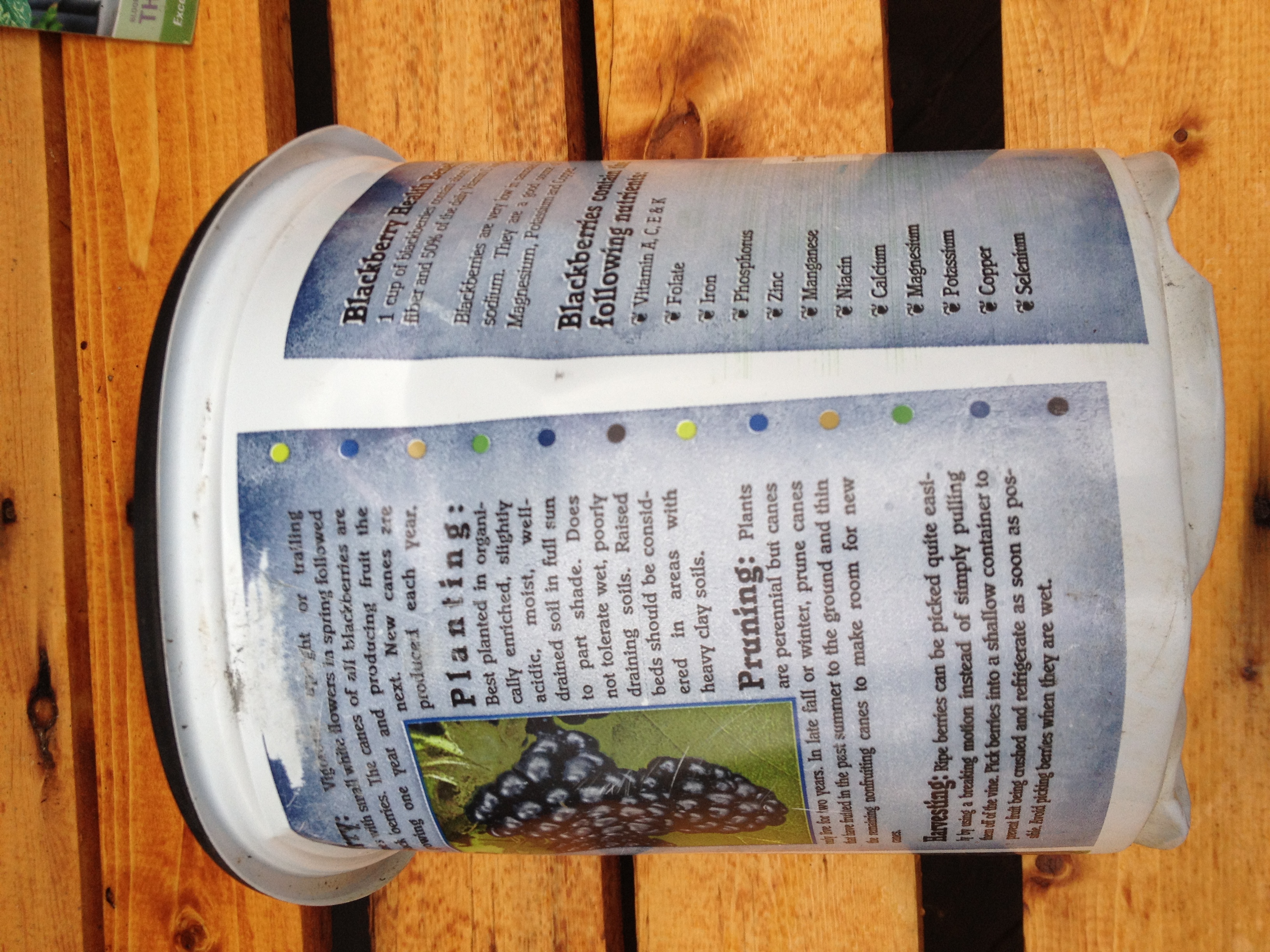
But back to the label, it was actually printed on the outside of the pot with color images.  The pot was the label. Listed is the habit of the plant, how to plant it, when and how to prune it, and the harvesting instructions.  Turning it around to the other side of the pot, it also included a list of “Blackberry Health Benefits.” Did you know?…, “1 cup of blackberries contains about 33% of the daily dietary fiber and 50% of the daily Vitamin C suggested intake.”  And they are “low in saturated fat, cholesterol, and sodium.”  All good.

Next to be listed on the pot was the “nutrients…” such as Iron, Zinc, Niacin, Calcium, etc.  That pot creation with the details on the pot is a job well done by the grower, also stamped on the pot by Berry Family Nurseries of Tahlequah, OK.  In checking the bottom of the pot, I noticed it has excellent drainage holes – 8 to be exact, and a recycle number so it is recyclable. Because all the information was right there on the pot, the information was not lost (as happens with other removable plant tags) and I liked the color image of the berries on it too.

So what do typical labels tell us?  Many will have the exposure (full sun, shade, etc.), the Latin or Botanical name of the plant and its common name, a photo of the plant, and of course the price.  Some labels will offer where to find out more about the plant and many today, probably all, have the QR Codes which you can snap a photo of or scan with QR Reader application to get more detailed information about it.  Usually the care and maintenance is listed along with planting steps.  And a good label should include its planting zone for which the plant is suited to, especially with many zones warming up.  Sometimes if I spot a plant I haven’t seen before at a grower’s or nursery, I’ll look at the zone on the tag…, and yup, it doesn’t happen often, but it may not be for our zone in CT, but if you are like me, that is okay too for I like planting plants in containers and enjoying them anyways.  I don’t limit myself to just my zone for container gardens.  Some labels may include information that it is for your region with words like, “Plants for the Northeast.”  Words handy for those that want to ensure they have a hardy candidate for their plantings in the landscape or gardens.

There are alot of nursery tags and labels in vibrant colors or with little logos or recognizable icons.  Take Jeepers Creepers for example.  They have a cute little lady bug character on the tag next to their brand name.  Proven Winners labels are instantly noticed, not only because of their logo and label but because of their pot too.  Often white with the big PW trademark on the side.  Some labels are cut out in shapes, like Sara’s Super Herbs will have the top of a pepper plant shown with the label in the shape of a pot with a plant on top.  Their labels contain alot of details and I like that.  But again, with the QR Codes, perhaps labels will be reduced, which helps with the recycling issue, less plastic trash and production of paper products, I would imagine.  Lastly, many labels also tell you if their tag and pot is biodegradable.  We are certainly seeing more of those which is a good thing.

Labeling plants can present challenges for the growers.  They must stay attached to the pot, be able to get wet from watering of the plants, and I imagine are a big cost to produce.  But they are a must, for a plant without a label is really not very helpful to the gardener, especially if you want to pick the right plant for the right place and learn the plants details and features.   Cathy T 

MAY UPDATES

Leave a comment

The first day of May has finally arrived.  Hopefully the chilly evenings we have been experiencing lately will pass soon for it is testing my patience.  I want to get rockin’ and rollin’ with my plants outdoors now. 

Here’s some updates of activity coming up on Cathy T’s Calendar – and I hope on your’s too!

ESSENTIAL OILS CLASS

Click on my “DIY and How-To Classes” link on this blog to read about a class coming up in June 2012.  My guest speaker, Laurie Noll, will be showcasing a “Raindrop Technique” and reviewing many oils derived from nature’s offerings.  This get together will be held outdoors (weather permitting) and includes a demonstration and review of the benefits derived from many essential oils.  Give your mind, spirit, and senses a break of relaxation.  Join us if you can.  You will find it renewing.

FARMERS MARKET

In two weeks, I will be making my first apparence at the Ellington Farmer’s Market.  Click on the “Calendar” link on this blog to read more, obtain directions, and see the details.  The market is held on Saturdays from 9:00 am to 12:00 pm.  I will be there on 3 key dates:  The Saturdays of Mother’s Day, Father’s Day, and Memorial Day.  My first date with the market is Saturday, May 12th.  Get ready to “Bling your Spring” with the unique container gardens and plants I will have available for sale.  You won’t regret stopping by as there will be many other vendors with wonderful locally grown or created products.  Plus there’s a band too!

GARDEN TALKS

I’ve been doing some garden talks at various locations on — of course, Container Gardening, with a special focus on “color and texture.”  I have to say, the response has been very positive by the attendees.  One lady told me she knows nothing about gardening and learned things she never knew during my talk.  Another said she went out and bought containers that next day to start practicing the techniques covered.  See the “Calendar” section on my blog for more dates coming up.  This week, I will be at the East Windsor High School, on Thursday evening, May 3rd, to share my career experience of working in the horticultural world with students during their Career Fair.

BMX/SKATE PARK with MASTER GARDENER INTERNS

This is probably the project I’ve been enjoying most, but then again, I’m super excited about the farmer’s market participation as well.  There is a new park in my hometown of East Windsor, CT, on Resevoir Road being built as I type.  It is a park for the young gen and their family to enjoy the extreme sports of skate boarding.  Now, mind you – I have no experience in skateboarding myself – but I do enjoy “fast moving” sports. Yet, I was very inspired by the dedication of the town families, parents, committe, and kids that worked six years to raise funds for this park.  Thus, I decided to offer my help of planting recommendations and design elements for the park.  And I presented the project to the Master Gardener Interns at the Tolland Agricultural Center in Vernon, CT as an “Outreach Project”.  It is all volunteer based, non-profit, and an excellent opportunity to learn about the various design phases.  Next door to the BMX/Skate Park is a new dog park, if you didn’t know.  As I’ve visited the site with interns, I’m impressed to see how many local people use the dog park too.  If you think you’d like to participate on “Planting Day” or drop off some divisions from your gardens as a contribution to the Plant Wish List, please contact me at 860-977-9473.  Thank you in advance! 

LANDSCAPE DESIGNS

I’ve done several designs this spring for homeowners.  To see the latest testimonials, go to “DESIGNING LANDSCAPES” section of my blog.  I have to say, sometimes I think landscape designing is more about creating solutions than plants.  Every client had a unique problem to solve, like how to preventing four very active dogs from digging in garden beds to how to design a front foundation which actually prevented people from going to the main front door.  However, what I love about the digital imaging conceptual designs, it helps the homeowners to see the suggested solutions with the various plant options at the same time.  I’ve added a new feature to my design offeringst his season called ePlans, where I email the images direct to you as a client.  It has been well-received, is fast and functional, and actually quite fun.  Like unveiling the grand stage, and with the iPhones and smart phones out there, this is just a perfect fit.  You can click and carry your design images direct to the nursery or work with me for a “Design and Deliver” as you plant your design concepts.  Interested?  Call me to learn more.  And if you happen to be a landscape installer reading this post – call me – I’m available to do designs for you and your clients.

POTTING UP CANNA RHIZOMES

I’ve begun the process off potting up some Canna rhizomes and elephant ear tubers.  And will be picking up my plant order next week for my upcoming shows, booked container garden parties, and special orders including dressing up a client’s patio for an upcoming special occassion and helping another client with her son’s wedding.  So the days are keeping active.  Just yesterday, I lined up my pots to get them ready on a new potting bench I made out of a nine foot long pallette. 

In summary…as we start our May month – the best kickoff month to gardening, I hope you will come visit me or give me a call if you need a design, some planting advice, a container garden party, or container install at your home or business. 

In the meantime, enjoy the rain we are suppose to get this week – it sure is dry out there.  My plants and your’s are thirsty.  Thank you for visiting my blog, Cathy T


Har-Har-Hardiness Map – What is my new Planting Zone?

Leave a comment

If you are a regular visitor of my blog, you probably have read opening sentences starting with…, “When I went to college…(fill in blank)…”  Not to bore you, but, “When I went to college for hort courses, I never heard the term hardy.”  

Yes, that is correct.  Professors didn’t say hardy, neither did students.  That is not to say we did not learn about planting zones, review the zone map showing our average lowest winter temperatures by geographic location, and learn about the existing 11 zones and why they are important to plant survival.  Probably we didn’t hear the term because we were focused on botany and not selling plants.

However, the reverse happened as soon as I started working in a retail garden nursery center.  Practically everyone, staff and customers, used the term hardy all the time.  Customers would come in and often ask, “Is that hardy?”  And the staff seemed to use alot.  I noticed that word bounce around every day as if you were knowledgeable if you said “hardy.”

So I learned quickly.  While showing customers plants, I would point to this or that, responding, “Yes, this is hardy, that is hardy.  In fact, almost everything is hardy – the store wouldn’t sell it otherwise.  Ah, usually, as there are exceptions, and I’m glad there are.”  Such as the wonderful world of tropical plants, not hardy to our planting zone — but I would tout their benefits anyways. And of course, annuals are not hardy here, but they are elsewhere in the country. Hardiness zones never stopped me from adventuring down the non-hardy path as well.  Thank the Nature Gods. I love seeing new plants and using plants not hardy – otherwise, it would get boring, at least for me.

OK, back to today’s post.  It is not to educate you on what hardiness means or to define planting zones, because I’m guessing most of you know.  Plus with a quick click of the mouse on the web, you can find definitions.

Today’s post is to let you know what you may not have yet discovered.  The “New Plant Hardiness Zone Map” has just been released by the USDA.  Yes, finally an update.  The first since 1990.  And you can find it here:

www.planthardiness.ars.usda.gov

It has a new Zone 12.  Can you locate it on the new map?  Also you may notice zones are divided into “a” and “b” (not technically new, the a and b thing, I mean) but some zone temperatures are shifting a bit… becoming a tad bit warmer or I should say the boundaries are shifting.

Surprised?  I’m sure not after this pleasantly mild winter in Connecticut.  But the changes lead us down to questioning what will happen to our plants this year.

Also, not surprising, there are 13 zones now instead of 11 zones.  You can search them all by zip codes.  Try entering your’s to locate your exact planting zone.  Bear in mind, microclimates around your planting spaces, and of course Mother Nature’s tricky ways, may be factors affecting your plants ability or non-ability to survive, altering your own little zonal world.

As for me, I have to get busy because all these zone warms-up have not provided me the normal winter pause.  In fact, things have sped up.  We are probably three weeks in advance.  So I must sign off for the day to get back to work.

Sincerely yours,

Zone 6a :  -10 to  -5  (F)


Cathy T

Houseplant Revival

Leave a comment
Leaning towards Light

Leaning Light

Now is a good time to give your houseplants a hydration cocktail, rain bath, and root massage.  What do I mean?  Well, if you are like me, even as a plant lover, you may ignore your houseplants during the winter months when light levels are lower and temperatures are cooler in our homes.  But as winter gradually moves away and spring approaches, your plants take notice.  They can sense the warmer temperatures increasing and the brighter light shining through your windows as the sun climbs higher into the sky each day.  Some plants may even begin to lean towards the light in response.

Hydration Cocktail

This is a good time to increase the amount of water given to succulents and cacti.  These plants stay inside in the winter and get moved back outside in the summer as soon as the temperatures are warm enough.  Reducing the watering during the winter to almost nil is fine for these desert dwellers.  They can handle some drought and dry periods because they are naturally adapted to storing moisture.  So once in a while, like every four or even five weeks, they got a little shot of water from me.  And I mean, literally, one or two shot glasses.  That’s it.  But now, as they tend to wake up more, I begin to give bigger gulps to help hydrate their leaves to become plump again.  I say gulp, over a tall glass, because again, if you overwater succulents, they can rot.  Especially if you don’t have the bright light and warm spot most succulents prefers inside a home, or the proper drainage.  Almost every time someone tells me they lost their succulent plant (i.e., it died) – It was due to “over watering,” not under.

Low Light Lover

Rain Bath

Second routine is giving other houseplants a rain bath.  House plants with glossy, thick or waxy cuticle type of leaves, which are not adversely affected by water, go to the shower.  No matter how heavy the pot, I will get it inside the tub and turn on the shower head to provide mildly warm water to rain down upon them.  This process will clean dust particles from the leaves and soak the soil at the same time.  Allow the pot to sit in the tub to drain well for at least an hour.  Once you move it back to its place in the home, take a nice soft cloth to gently wipe away excess droplets on the leaves.  Just imagine those little stomata located on the underside of the leaves.  Those little mouths will be breathing air better after their annual rain bath treatment while the upper sides of the leaves will sparkle in delight.  The plants will feel renewed and whole again. Take a look a day later. I guarantee your houseplant will look revived.  So will the pot because it gets a little spring cleaning at the same time.

Root Massage

This one is probably the most important.  Especially for those of you who managed to totally ignore your houseplants yet they are still surviving, albeit barely.  Typically you should repot your houseplants every two to three years, but so many plants, especially those poor office plants, get neglected on this routine for decades.  If the water you apply to your houseplant runs rapidly out of the container like Niagara Falls, or the soil is crusty and hard, it is time.  The old soil can no longer retain moisture.  Give your houseplant a new environment to be healthy at the toe level.  Imagine wearing the same pair of boots for that long?  Not only would your feet ache – and possibly stink, you couldn’t walk appropriately, ending up looking tattered and tired.  Same gig with houseplants.  They need good healthy soil for the roots to grow freely, take up water, and breathe.  Go to your local nursery to pick up a bag of soilless mix for containers upon your first seasonal visit.  While you are there, check out other houseplants available in their store.  Sometimes this is the only green you see in the greenhouse before April.  When you return home, give your old houseplant a spa repotting day. It is just like giving your plants a root massage.  It feels good and it will show.  Place the new buddy you brought home there with it for company.

Ficus

Ficus

Outdoor Retreat

So as your houseplants awaken from their slumber, perform these routines above, and your houseplants will be fully prepared for their ultimate retreat in early summer — getting vacation to the great outdoors.  They will get their much needed solar powered light directly from the sun so missed during the winter.  Absorbed through their leaves, increasing their growth activity, and making them thrive.  Just remember the rule, transition the plant into low light levels first when moving outdoors – into the shade, to harden off, or transition before moving them to their preferred exposure of full sun or shade.  Otherwise, you risk sunburn to the leaves. This is also the time where you may want to consider giving a feeding to your houseplants.  Check the label first because some are fed in mid-winter.  There are several options for fertilizer types, such as liquid feeds for a quick energy boost, and pellets or sticks inserted into the soil, and my favorite, the slow-release types that function as the temperature increases.  Slow-release is active when your plants are too. Look at the label to determine the best and right time to apply for your specific houseplant.  Don’t delay, now is the time to give your plants a houseplant revival.  When spring is here, you will be too busy doing outdoor gardening.

 Two Low-Level Light Lovers

Aglaonema, known as the Chinese evergreen, with large leaves of green (and some cultivars with silver streaks), is a wonderful houseplant because it can take low light areas, and is often used in office buildings for that reason – plus it is very undemanding.  Same with the Fatsia shrub; it loves shade outdoors and adds a wonderful texture to the garden with leaf blades up to eight inches wide.  In the home, it handles low light areas where temperatures are cool. See the links below for both.

Three Favorite Bright-Light Lovers

Most houseplants prefer bright, indirect sunlight so I try to get the most of that by windows in the house – especially for sun lovers.  My favorites right now in my home, an Agave (Centry Plant), cultivar ‘Kissho Kan’.  Obtained two years ago, it is now sprouting babies out of the side, time for a repotting spa day.  It is Zone 9-10 and grows to 15″ tall with variegated foliage of blue-grey on the edges.  Works well in containers all summer long too.

Echeveria setosa (Mexican Fire Cracker) is Zones 9-11.  I’ve enjoyed the habit and growth of these fuzzy light green rosettes that grow up to 3-6″ side.  I have 3 in self-watering pots, and they get that shot I referred to above, because these pots especially don’t drain.  Each plant has grown slightly different, one is tall, the other is short, and one is just right – the little red riding hood candidates.

And I love Kalanchoes!  I have one in a container garden designed for a garden show last year, with a ornamental grass (now dormant in the pot) and an Aeonium arboreum ‘Zwartkop’ (large purple aeonium or black tree aoenium), Zones 8-11.  Beautiful!  The Kalanchoe has grown quite large and I can’t wait to move this container back outdoors this summer.  I noticed dust and cat fur wisps on the leaves the day the sun was casting bright light onto the pot the other day, which prompted this blog posting.  And someone from out of state contacted me recently, to ask if they could use the photo of my Kalanchoe from my blog on a non-profit site for kids.  Of course!  That made me feel even better about planting up this plant.

Fact sheets for two plants mentioned above:

http://hort.ufl.edu/database/documents/pdf/shrub_fact_sheets/fatjapa.pdf

http://hort.ufl.edu/database/documents/pdf/shrub_fact_sheets/aglcoma.pdf

Echeveria setosa

Echeveria setosa

Some other tips:

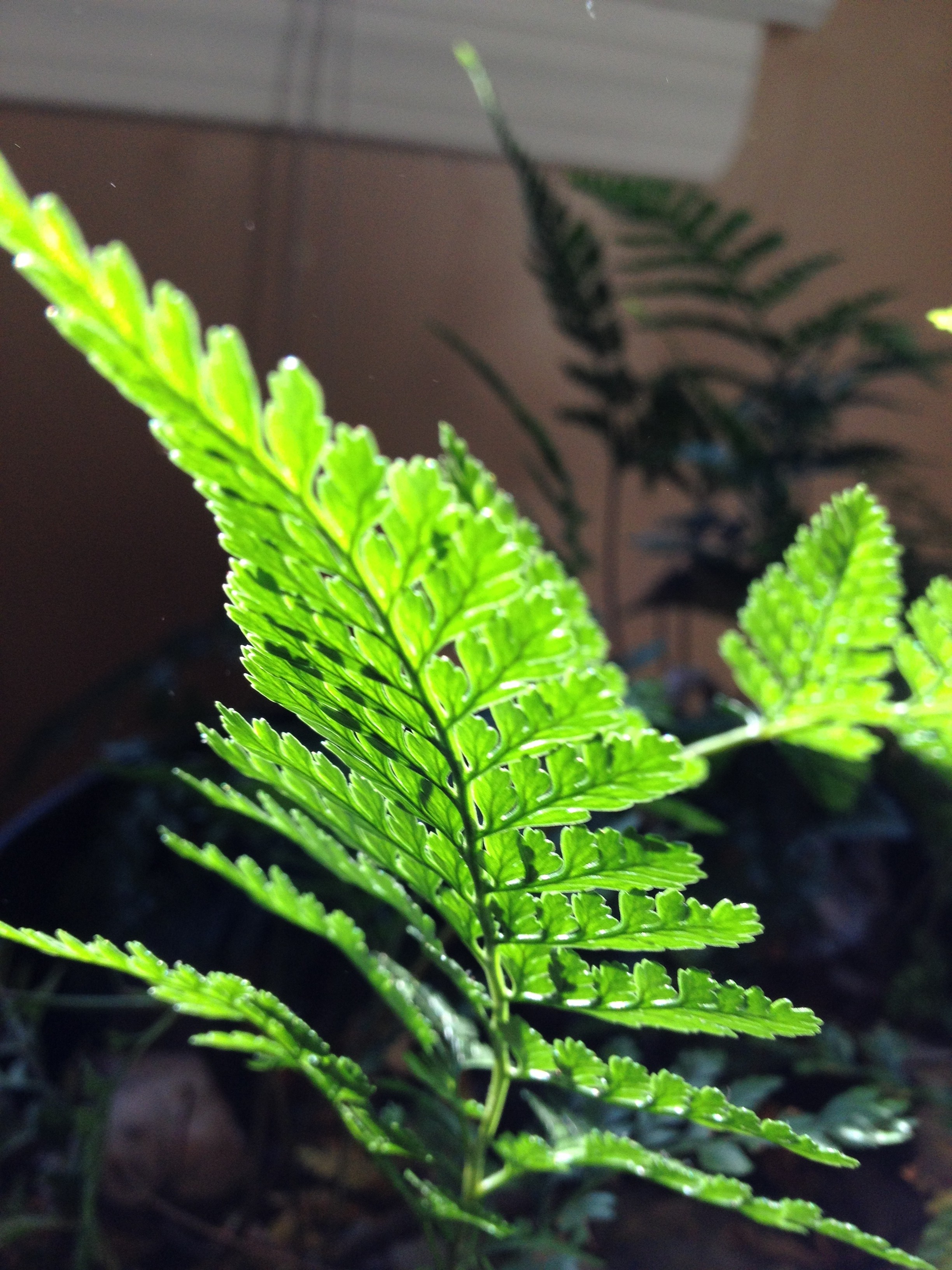
Keep houseplants away from drafty spots in the home for obvious reason.  Keep them out of direct sun, rays can intensify through glass.  Some plants, like my fern, prefer humidity – put those in the bathroom where the mist from your shower will dance around them.  Table lamps can help provide warmth to your houseplants, consider putting them near those.  Water carefully until you get to know your houseplant better, sometimes a little less is more.  Drowning them is not a good idea.  And for the rain bath, make sure it is not a plant that detests wet foliage, read the label.  Water plants in self-watering plants alot less frequently because the moisture stays in the bottom and can’t drain out freely.  I don’t mind self-watering pots for indoors because this prevents spills on your furniture.  Select a pot or container that suits your home’s decor, colors and styles, the list is endless.  Remove any dead or yellow leaves, a good thing to do after a rain bath or a repotting spa day, with a good pair of clean sharp scissors or pruners.  Consider houseplants as part of your selection when you put together a combination planter or container garden for the outdoors.  And more tips, just ask!  Thanks for visiting, Cathy T.

www.cathytesta.com

101 Posts

Leave a comment

Hey Everyone!  I’ve reached 101 posts on my blog since starting it on a November fall day a year ago (I think it was a year, geez, time flys!).  So I thought this would be the appropriate time, seeing as I hit 101 posting, to update the look of my blog.  It needed some color – thus here it is.  What do you think so far?  Let me know.

DIY CLASSES

The next class on my series is called, “Creating an Encaustic Treasure.”  Read all about the details by clicking above on DIY CLASSES.  A full, detailed description is included.  It was suppose to be held last Saturday, but our one and only snowfall this winter came on my first class day of the year – go figure!  However, this weekend is predicted to be in the 40’s and sunny – not that it is held outdoors, but it allows for safer travel for the attendees.  Why don’t you join us?  It is fun, creative, inspiring, and artful while incorporating nature.  Part of my goal is to “combine nature with art”, thus noted on this new blog format. Look out for the February class scheduled, it will give you a wonderful window into how into how flowers are dyed onto silk to creates spectacular works of art.  I can’t even put it into words appropriately how beautiful this guest instructor’s talent is – you have to see it for yourself!  Our talented artist, speaking on this topic, will do that for all the attendees.  Interested?  Click away above on DIY CLASSES and let me know what you think.  Contact me for any questions, interest, and if you are an artist yourself.

CALENDAR

I attend several horticultural related events every year as a guest, helper, volunteer, attendee, or speaker.  See the list which shows the events I like to make sure are on my calendar.  You will see a “Special Tour by Cathy T” via the Calendar menu bar choice for February.  I’m organizing a group to the CT Flower and Garden Show.  Want to ride with a group, have breakfast before we go, and get dropped off and picked up at the door of the convention center in Hartford for the upcoming flower show?  Yes!  Well, e-me or click on the link to read more details.

KIDS CONTAINER GARDEN PARTIES

You know, my hairdresser suggested this idea.  Why didn’t I think of it before?  She’s a mother and said she would love to have my container garden party service offering but as a kid’s birthday party.  Well, that sounds wonderful to me too.  In fact, last summer, I had a booth at a community day in East Windsor. There were lots of kids there.  They came by to see my container of plants at my booth, especially because it happened to be Mother’s Day weekend.  I have to say, kids are the best listeners when it comes to plant facts.  They all were so into the plants and adorable as they selected a special plant for their Mom.  I remember thinking, I have to do more with kids and plants – thus here I go.  See the KIDS CONTAINER GARDEN PARTY menu choice for more details.  Give me a giggle in you are interested.

JANUARY CALL LIST

Some of you may remember that I mentioned I will be calling you if you have requested to hold a date for the regular CONTAINER GARDEN PARTY bookings.  So ring-ring, I will be contacting you next week.  Look over your 2012 calendar for the date you want to hold for your Container Garden Party.  They are precious in season.  I’m so excited to be looking over the grower’s new plants right now this week in preparation for my call to you and for the season’s fun to come.

LANDSCAPE DESIGNS

My two latest landscape designs are underway.  One is for a business in Enfield and the other is a volunteer activity for a skate park in town, which I have mentioned previously – gee, another kids related activity.  There isn’t much snow on the ground right now, so remember, design services are available “right now”…and it is good to consider hiring a designer, Cathy T, before the rush of the season in April or May when everything ramps up rapidly.  Just a reminder.

VIDEOS

I was playing around with videos, but the comical part was it was always when I was dressed, well, like a gardener, with sloppy dirty farmer jeans on – and often in a bit of a rush.  One video was the day before our October storm, it was so cold out, the other video in my basement showing how to do bulbs in containers for the holidays.  They are blooming right now in my house – red tulips – how nice (although a little late)  Anyhow, my point, I’m trying the video thing, will keep adding topics that I hope you enjoy.  Thanks for visiting.  Cathy T

Having Fun while Catching Up

Leave a comment

When Seinfeld, the television series ‘about nothing’ was really popular, I didn’t pay much attention to it.  Same scenario with the show, Sex and the City, and the sitcom, Friends.  When my friends were raving about those shows at the time they were popular, I, for some reason, wasn’t watching them.  However, these wildly popular shows would always capture my attention during their re-run phases.  Glued to the television set, I would watch the reruns, yet to my friends, they were history.  I was always behind the game.

I kind of feel that way right now about the Apple “i” world.  I got an iPad after there was much hype about them.  My husband buying me one two birthdays ago.  As soon as it was in my hands, I couldn’t stop talking about how amazing it was and became totally addicted to tapping that screen, and adored the photo capabilities.  I even wrote a blog about it at the time.  It is not only a fun device, it is very useful in my business.  I love it.

This year, my husband insisted I needed an iPhone.  (I know what you are thinking – what a nice husband).  But I kept telling him, I wanted a tool box with tools.  And I would love for the box and tools to be pink – not too demanding, I thought.

Well, what did he do, as you can guess – he got me both of course, lol.  I’m very excited about my toolbox set, yes, in pink no less, but I haven’t touched it since it was under the Christmas tree.  As for the iPhone, on the other hand, it hasn’t left my grip since the activation process at the store.  I can’t take my eyes off it.

I can see now why my husband was insisting it was time for me to have a modern phone.  My old phone, the flip open type, has cracked keys. I think it must be about, I don’t know – maybe 5-8 years years old.  My text messages were very comical as it would take forever to enter one word.

I had no idea the iPhone was so powerful.  In fact, after experiencing the iPhone’s camera capabilities, I wish I didn’t purchase a new camera about four months ago.  Who needs a camera now?!

Besides the powerful and impressive camera capabilities, it also has become a toy for me.  I’ve begun playing the “games” which I’ve always said I wasn’t very interested in playing.  Again, I’m a little late on being part of what is hot and popular.  I can only imagine the games I’ve been missing.

“Words with Friends” is the first game to capture my attention.  My friend told me about it and she started up our first game.  Well, let’s just say, she has created a monster.  Within my first day of playing, I’m hooked.  I can’t stop thinking about it and anxiously await my turn.  I’m a bit of a amateur, but who cares, I’m having fun – isn’t that the point – to have fun?  I think so.

All of this got me thinking about how anything we do now needs to have that component of “fun” in order to use it – or pay attention to it.  Perhaps that is why my Cathy T DIY Classes are something I so enjoy organizing and doing – because it is “fun” and educational, and includes an element of being creative.  I have fun and so do the attendees.

During the holidays, I rented a movie called, “Midnight in Paris”, written and directed by Woody Allen.  To me, it was a fairy tale about a writer’s imagination as escapes from reality from time to time on his vacation.  In his fantasy world, he ends up meeting and socializing with very famous artists from the past while in Paris.  There was a line it the movie as he discusses art with a collector which struck me – it went something like this…”Art is the antidote to problems in life…”  It wasn’t those exact words, but something along those lines.  Art, which is fun, can be the remedy in life or the distraction to problems or an escape.  Games are escape too in some respects.

If I owned a nursery, I would create a fun cubicle with a very cool computer screen for customers to use when they visit the store.  The walls of this imaginary cubicle would be covered with garden photos – all very colorful and inspiring.  The customer could walk up to the screen, tap on it to get a selection of options.  Shade or Sun?  Tap.  Your favorite colors – Purple, Yellow …tap.  Size you want to deal with, no more than 6 ft, 10 ft, or 15 feet?…, tap. Then a screen of shapes would appear, geometric shapes, squares, round, oval, kidney, half-mooned, whatever – heck throw in a star shape in there.  Tap on the shape which appeals to you.  Don’t bother asking if the new garden bed is north-south-east-or-west.  Most folks with a new home or little gardening experience don’t even consider that question, but they usually know if there is sun or shade in the area they want to plant.  And they often have a budget in mind, perhaps even add a tap for a price range.  Then boom, on the screen, 4 options of garden designs appear, in color, visual, full of life, real, and the customer, presses PRINT.  Out comes a design with a complete plant list, then they go out to the garden center to get the plants listed based on what they like.  The computer deal is not just a print out – it would be interactive, have the bells and dings you often here when playing online games, and have the most importnat element: fun.  (OK, who’s a programmer out there?! Or does this game already exist – and I’m behind the game again?)

If things aren’t fun today, they don’t get much attention – do they?  This concept of fun appeared to me in a store this weekend.  It is a costume jewelry store.  Every display was setup by color and theme.  There was one section with colors of vivid lime greens and ocean blues that spoke to me right away.  It made me want to go to the islands, it had a Carribbean feel, the display attached an emotion to the jewelry that inspired me – me directly.  Perhaps this display would be ugh to someone else, but it made me want to be part of it, to participate, to create an outfit to go with the jewelry selection.  The store had many other color and style combinations in displays, black and white for example – good for New Year’s eve.  A hot red table – Going out for Valentine’s day and want to get sexy?  That table’s items are for you.  My younger sister told me she likes how they setup their store by color and if you had a wedding to go to, you could come here to get your accessories based on the outfit you selected.  It was fun to look at.  It was almost like a game.

This concept of providing that feeling of color and themes can be used in any business.  Imagine that same cubicle in a grocery store.  Tapping that screen, hmmm, tonite, I want to make a chicken dish.  I like onions, peppers, and whatever.  Tap on the added ingredients you tend to enjoy.  Tap on the computer screen to indicate you like it hot spicey or you like it cool.  Tap on the screen to indicate you are a diabetic, or you love fried foods.  Tap, tap, tap – then an recipe spills out with a photo – it has to have that colorful photo too.  Off you go in the isles to pick up your ingredients with the recipe in hand.  Next time you go to the store, you visit the computer screen again to enter what you thought of the recipe, you become a fan, and you participate in the input of the meal’s creation.  I think that sounds way more fun than staring at the food isles and wondering what the heck to make tonite for dinner.

For some people, it is not about creating the most magnificent garden or perfect meal, it is about having fun and ending up with a decent result.  When you have fun, you learn, create, and build your talents and skills.  You don’t have to always win the game, and if you are a little behind – catch up!  Cathy T

The 2012 Year Begins

Leave a comment

Happy New Year Everyone

FIRST e:PUB POSTED

Heads-up:  I’ve posted my e:Pub for this new year, which you can get to by visiting my website, www.cathytesta.com, and clicking on e:Pubs.  There you can see the activities I have planned for 2012 so far – some becoming annnual events.  Perhaps you will join me at some of them. Each is a horticultural learning event and fun to attend, at least in most plant and garden lovers’ eyes.

CATHY T DIY CLASSES

I also recently updated my DIY CLASSES on this blog, featuring the first class of the winter 2012, Encaustic Painting.  See the DIY Class link from the menu bar above to read all about this class, using beeswax to encase your treasured creations.  I’m thinking of making my piece to represent my mother, using her favorite colors, a pressed flower she adores, and words like “twin, mom, sister, mentor” in the artwork along with photos of her as a child, then giving it to her for her birthday later this year.  This class, scheduled on January 21st this month, utilizes items from nature or special items you collect.  Each a piece could represent someone or something you love, then hung on your wall as a painting or lean against a shelf for decor, or presented as a unique hand-crafted gift made by you.  If you have a special event this year (say a wedding, anniversary, special birthday, even upcoming Valentine’s Day gift), and you would like to learn to make a personal craft for someone that will be preserved forever, this is a great class to attend.  See the DIY CLASSES Link above for more.

TAKING DOWN DECOR

As for me, this week kicks off getting ready for 2012, as I noted in my e:Pub, and the task of taking down holiday decorations.  I am going to hate taking down my Boxwood Kissing Ball – it is gorgeous, if I say so myself, but that’s the fun of “changing seasons” – Soon it will be time to get ready for the next set.  I will start two designs on my list, and get the Philadelphia Flower Show booked on my calendar, scheduled in early March (see my latest e:Pub for more information on these types of events).

PHILLY FLOWER SHOW

This year, the Philly show is themed Hawaii style – I can not miss that!  Last year, we booked a package where the hotel and show tickets were combined, so I will look into that.  I loved being able to walk directly from the hotel to the show convention center, it saved time and was super convenient, but you can also take a tour bus via the Connecticut Horticultural Society’s organized tours.  Visit www.cthort.org for information.  As a member, you get a great deal on travel, and if you don’t want to drive yourself – they bring you right to the doors of the hotel, show, and dinners.  You can’t beat that.  Plus you spend time with other plant love enthusiasts, and the show is something to see if you have never gone before.  Be prepared for crowds and wear good shoes.  See my post from 2011 on what else we did when at this show, by clicking on the ARCHIVES-events section at the top of my blog wall.

FIRST BITTER COLD OF THE SEASON

And today, it is finally cold outside – brrr.  In fact, the weather man said it is the coldest day since last February!  This weather is so odd and keeps us guessing.  I’d like to see a bit of the white stuff though – I miss my snowshoe activity outdoors.  The way the sun reflects off the snow when doing the snowshoe gig makes me feel revived.  I think that is why I enjoy it so much and don’t find it difficult.  But until the white stuff arrives, I will be thinking all things gardening and plants – and I suspect you may be doing the same from time to time.

OK, time to get to work.  Have a great day,  Cathy T

Day 9 – The Scariest Day of All

Leave a comment

Day Nine – The Scariest Day of All – Sunday; Nov 6th

Pumpkin

As if adding insult to injury, daylight savings time ends today.  It is already an adjustment dealing with bedtime at seven or eight pm due to no lights in the house and waking up anywhere between two am to six am to load wood in the woodstove, now we have to fall back on our clocks with days getting darker earlier.

And today, is turning out to be one of the scariest days of all during our power outage experience from Snowlloween.  Although the power company insists they will reach their goal of 99% restored with power by midnight tonight, my husband is determined to take down a dead tree in our backyard in case this doesn’t happen.  We are out of fire wood.

This dead tree was not a victim of Snowlloween, but has been dead for two years, standing there by the east side of our yard’s edge.  We did not take care of getting it taken down, like we should have, and were lucky it did not fall down during the storm.

Situated very close to our house and pool, I didn’t want to think about Steve’s attempt to take it down alone.  So at my insistance, he called an expert, my Dad, who worked as a forester in his younger years in Canada. With my younger brother tagging along, the three of them got together to tackle this project together on day nine of our ordeal.

As they discussed the project outside, I was starting to get really worried and began yelling out the door to them to please be careful.  My heart pounded a bit when I saw the tree wobble and finally fall in the correct, intended direction.  After that happened, I could tell the three of them breathed a sigh of relief as well.  They all started laughing and patting each other on the backs.

Dad with Steve

Was this the right thing to do?  Probably not.  It is best to get a professional if you are dealing with a situation like this one, especially during a disaster situation.  I didn’t want to consider another problem during our last planned day of the outage.  Thankfully all went according to their intentions.  And again, with the help of someone, my Dad, that did this in his former career days as a forester.

When seeking a professional, make sure the tree removers are fully insured and ask of their experience.  And ask for a trusted references.  Get more than one estimate if you are not in a hurry, which most of us are right now, and be wary of people doing this job just to make a quick buck due to the devastation.  Unfortunately, they are out there.

And be patient – unlike my husband was that last day without power.  It is those moments when we can make costly mistakes.  Last night, I read a house that blew up in Coventry, CT.  They said the blast could be heard for miles, and people lost their lives.  Things can go wrong.  This storm was and is no joke and the effects and lessons will last a long time.

Steve and Jim

Our power returned at six pm on this day; but we still had no phone, internet or television due to one detached telephone wire.  After the house was clean, laundry done, food stocked in fridge, plants previously stored in basement cared for, and my mother in law cozy on the couch recovering from her own ordeal in her town, the power went out again – briefly, for 45 minutes, three days later.  So we brought out the candles, put on the headlamps once again, and said, ‘Oh-no.’ Fortunately, it was a short down period, and the internet repair guy showed up right after the lights came back on.  He was here for two hours working in the dark.  And we let him.  Cathy T

 For information — see these links:

www.arborday.org     www.isa-arbor.com     www.treesaregood.org    www.americanarboristsCT.org