Leucothoe axillaris – Five Great Reasons to Plant it this Spring

3 Comments

The genus name, Leucothoe (lew-KOE-thoe-ee), is one many folks are usually confused on how to pronounce, and I probably mispronounce it too.  But it’s a great evergreen shrub to use in the landscape or in container gardens.  If you haven’t been introduced to it yet, here are five great reasons to plant it this spring:

#1 – It blooms in spring and can take shade

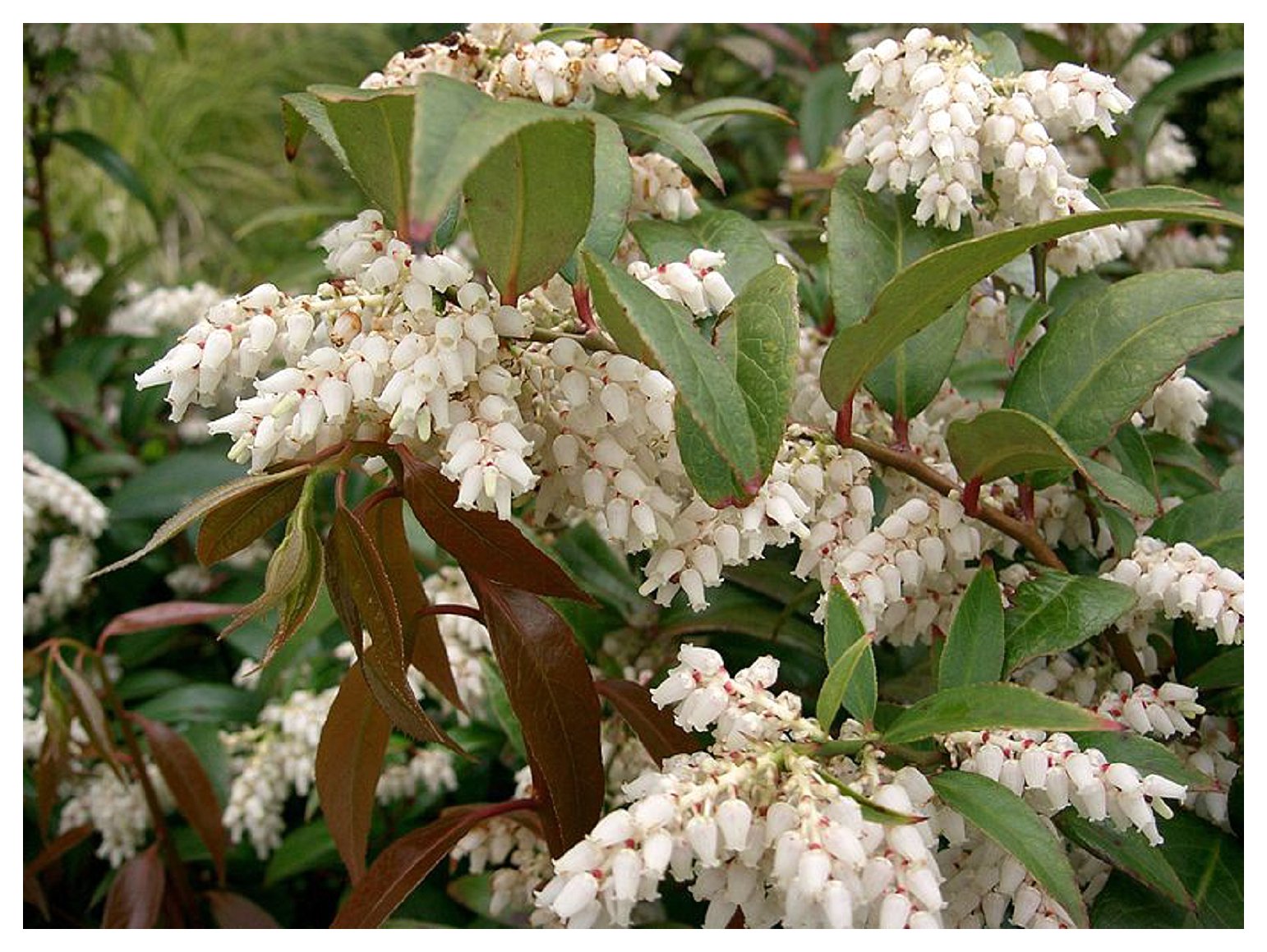
I think this plant’s growing habit is best described as floppy or arching, but its technically spreading and low growing.  The white urn-shaped flowers bloom in clusters along the stems near the base of the leaves in April and May.  They are very pretty, resembling heather or perhaps the blooms of Pieris, and are mildly fragrant.  This evergreen shrub is made for shady locations, preferring partial to full shade, so it is a great solution for shady spots in your yards.

See Photo Attribution Below

See Photo Attribution Below

#2 – It puts on a second show in the fall season

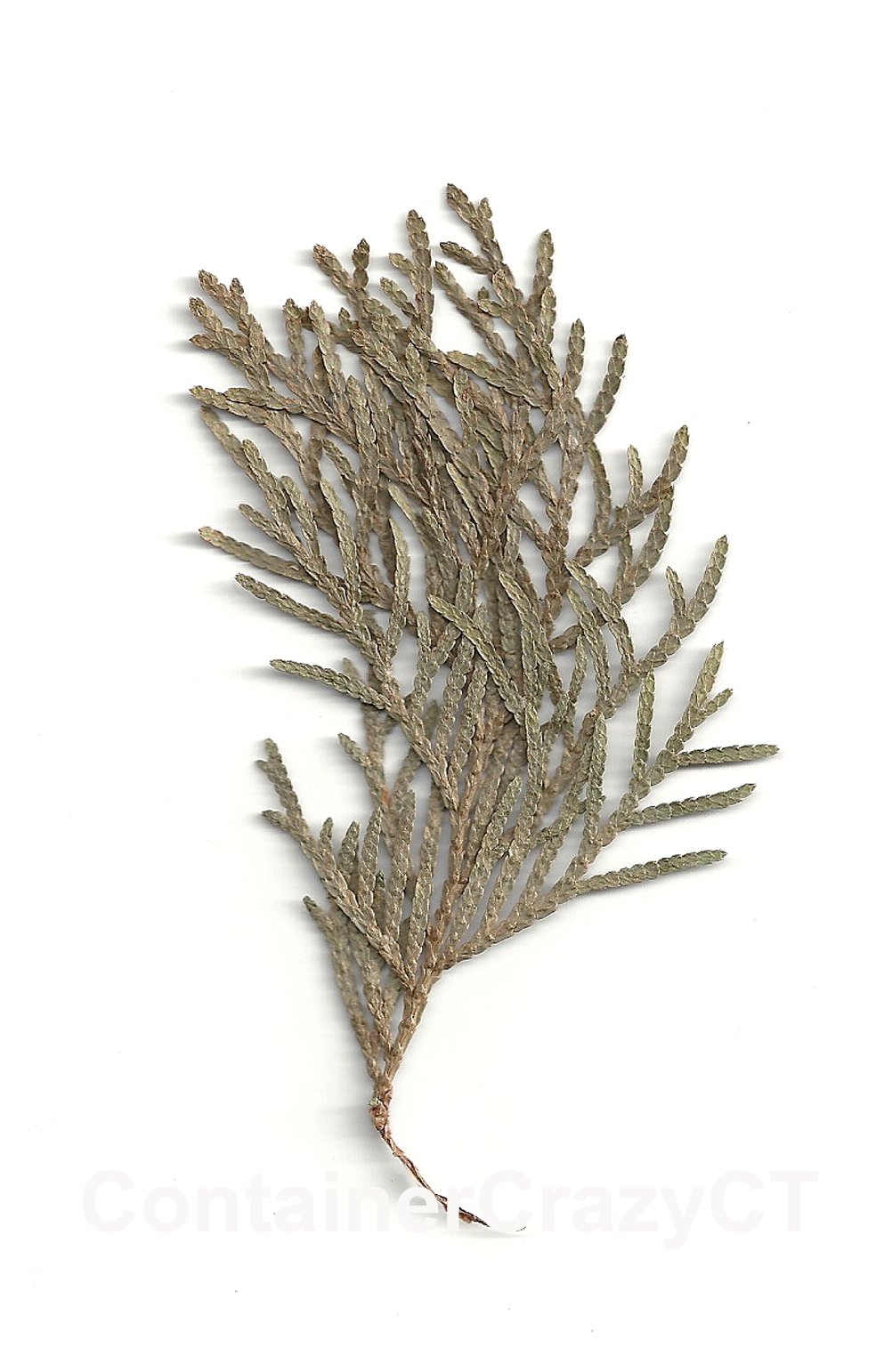
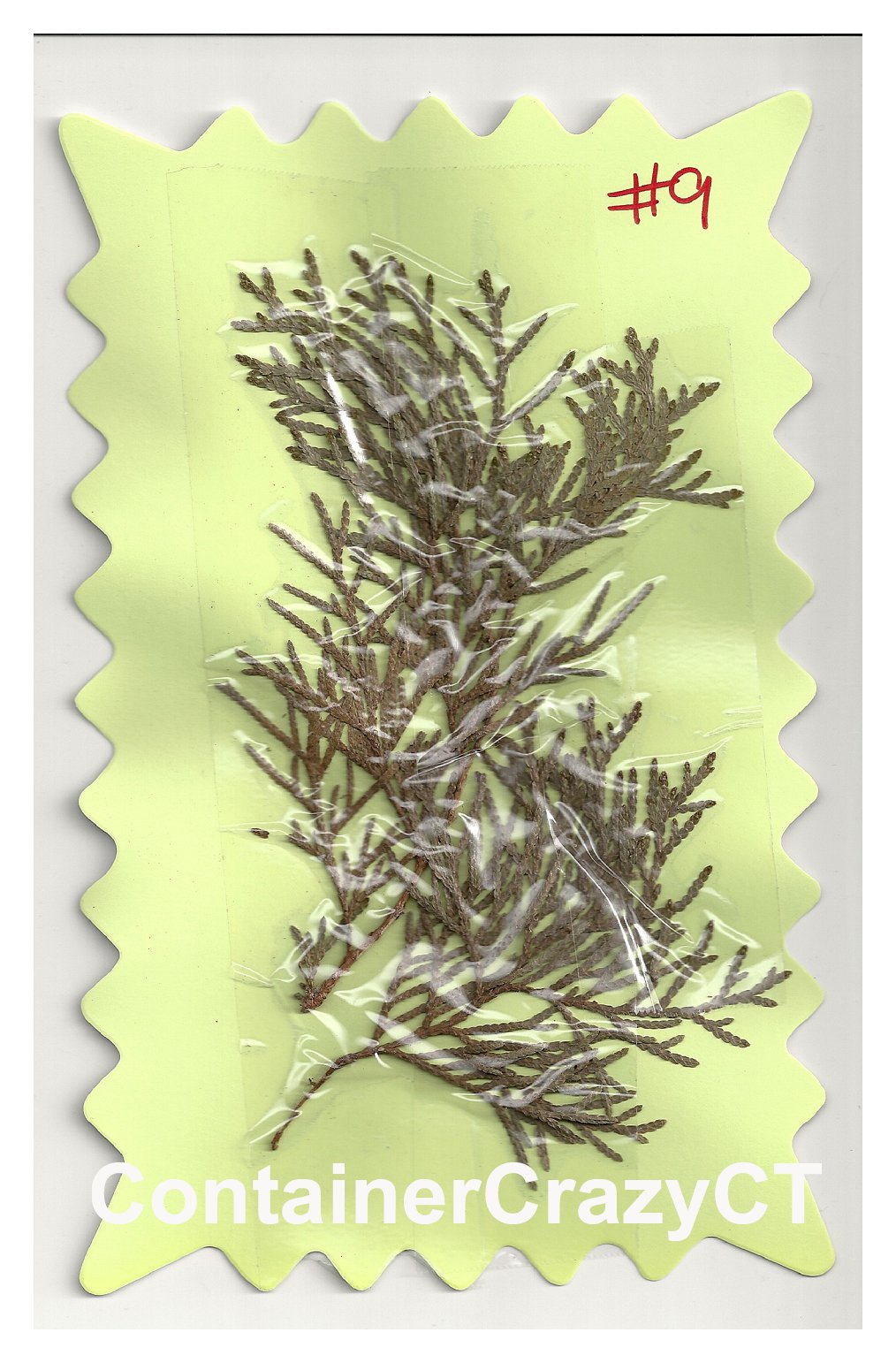
The dark green leaves on this broadleaf evergreen shrub are narrow, pointed, leathery and shiny. In autumn, the leaves turn a wine plum color which is very showy.  The photo below is a scan of a pressed stem of the leaves.  While not very pretty here because the color faded in the pressed sample – it shows you the ovate to oblong shape of the leaves.  This shrub is definitely a beauty in person. The fall plum color is a useful seasonal feature, offering a darker contrasting color next to other evergreen plants in your landscape.  Having alternative colors in the landscape on shrubs during the fall season adds a pop of color when we need it most.

Pressed Sample by C. Testa

Pressed Sample by C. Testa

#3 – It holds onto its leaves in winter and pairs well with Rhodies

This shrub is a nice candidate in rock gardens, borders, or on slopes.  It can also be used as a foundation plant or as a hedge in mass to create a screening. In my opinion, Leucothoe shrubs look more like deciduous cane-like shrubs, but it holds onto its leaves during the winter months.  It is an evergreen to semi-evergreen shrub reaching a height of 2 to 4 feet and spread of 3 to 5 feet with a slow growth rate, so the size is just about right.  It won’t take over a space quickly.  It goes well with other evergreens such as azaleas and rhododendrons, and has a different shape so it makes a nice mix in foundation plantings.  The leaves can look a little less full in the winter months but they still look amazing as their color goes bronze to plum.  In deep shade, the color may be a little less intense.

See Photo Attribution Below, Rhododendron

See Photo Attribution Below, Rhododendron

#4 – It can be used in container gardens and patio pots

Check out my pinboard of evergreens recently started where you can see photos of this plant in the ground and in containers.  This plant looks amazing in container gardens and patio pots.  Imagine the dark plum color being combined with warm fall colored plants and pumpkins or gourds during October.  Because the wine plum coloring transition happens during the fall season, it is a wonderful contrast element in mixed compositions.  By the way, sometimes when you see these shrubs in the nursery in early spring – they still have the plum color on them from the prior season but it will go back to green over the summer, and to plum in the fall.  Using shrubs in containers and patio pots also offers the additional benefit of being reusable each season so you don’t have to spend more on a new plant and many shrubs can stay in the pots outdoors over the winter, unlike annuals or tropical plants.  This shrub’s habit makes a nice spiller because it arches and will drape over the sides of your pots.

#5 – It is deer resistant and doesn’t need pruning

This woodland shrub does not have serious issues in regards to insects or disease problems, and deer rarely dine on them (see Rutger’s link below on Deer Resistant Landscape Plants).  This is a big plus for many gardeners with deer eating issues in their landscapes. Leucothoe axillaris doesn’t require regular pruning either – another plus.  It can be left alone for some time unless there are some weak stems requiring attention, which can be pruned off after the plant is finished blooming for the season.

See Photo Attributions Below

See Photo Attributions Below

Three Side Notes:

About the only three points to consider of importance are:

  1. Leucothoe axillaris prefers acidic (pH 4.5 to 6.0) organic fertile soil.
  2. It is hardy to zone 6 and the “warmer” zone 5 areas, meaning it is best to plant it in a protected location away from winds or cold micro-climate spots in your yard if your planting zone is closer to 5 than 6.
  3. It does not take doughty locations and if in the sun, the soil must stay moist.

Common names:

Coast Leucothoe, Dog-hobble

Cultivars:
‘Compacta’ a dwarf, ‘Dodd’s Variegated’ creamy white leaves, ‘Greensprite’ common, bigger up to 6’, ‘Sarah’s Choice’ low mounded, ‘Rainbow’ molted rosy pink and creamy yellow new leaves.  L. fontanesiana (Drooping Leucothoe) is a similar species. See Leucothoe fontanesiana ‘Girard’s Rainbow’ for a variegated option; ‘Scarlet’ is a dwarf, ‘Rainbow’ has mottled yellow leaves.

Useful Links:
http://njaes.rutgers.edu/deerresistance/ (Rutgers; Landscape Plants Deer Resistance)

Photo Attribution:
GFDL, Creative Commons Attribution Share Alike 2.1 Japan License.  Photo by KENPEI from Wikipedia.
Deer Photo Courtesy of FreeDigitalImages.net, by anankkml, “Sika Deer Fawn”
Rhododendron Photo Courtesy of FreeDigitalImages.net by Tom Curtis

For other shrubs written about on this blog:

Written by Cathy Testa

www.cathytesta.com
ContainerCrazyCT.com
860-977-9473
containercathy@gmail.com

Five Ways to Protect the Tender Plants You Put Outdoors Too Early

Leave a comment
Photo Attribution Below

Photo Attribution Below

You know you should have waited to put out tender plants or seedlings, but you got anxious and planted them outdoors anyways.  Whether in a container garden or a garden of the ground, they are now subject to the upcoming chills expected during the overnight hours this week as predicted by our local forecasters.

It’s not too difficult to understand why you tried to cheat the planting dates – after all, we had temperatures in the 70’s last weekend here in Connecticut.  It got our gardening juices flowing, and you may have impulsively planted tender seedlings in your gardens, such as tomatoes or peppers, or have potted up some summer like annuals in your mixed container gardens and patio pots.  Perhaps you even put a few of your houseplants outdoors for some fresh air and sun exposure for the first time this season.

But as of today, we have rain, strong winds, and a drop in temperatures coming.  It is expected to be in the low 30’ for the next three evenings.

So, you may be wondering what you should do now to protect the tender plants you put outdoors too early.

Here are five suggestions you can try – some may be better than others – due to the rainfall and winds occurring today:

#1 Cover them with a light-weight bed sheet

Protect the plants by carefully placing a light-weight bed sheet over the garden bed where you put them in or over the container garden or patio pot.  Use some stakes to tent the cloth up so the now wet tender plants will not get bent or be pushed down by the weight of the sheet or blanket.  Use rocks or bricks to hold the sheet down if necessary.  However, this may be difficult to do tonight especially because we will have rain overnight, and some areas in Connecticut may get sleet (Litchfield).  Ugh, but this trick does work well to protect tender plants from late spring frosts – so take note, or avoid the situation next time by doing Option #2, setting up temporary plastic tunnels.

#2 Use temporary plastic tunnels

If you planned ahead and ordered, you can use low tunnels made specifically for plant protection like those available from GardenersEdge.com.  They are easy to use, expand like an accordion over your plants, and come with curved hoops made of bamboo used to brace the tunnel in the ground.  Push the hoops into the soil and you should be all set.  This is a great way to protect plants, but you are not going to be enjoying doing this now with the downpours.  Another reminder of why we should wait for the tender plants, or plan ahead.

#3 Roll out floating fabric row covers

Similar to temporary tunnels noted above, fabric cloths or frost blankets specially made to protect plants are available from many garden supply manufacturers or at your local nursery.  They will hold in the warmth and protect any new plants without damaging them.  As with a light blanket, you may need to pin down the edges so it won’t be blown away by the wind.  Again, there’s wind tonight – Sorry!  Such is the way of gardening in the Northeast.  But these are handy in other situations, such as use for the last spring frost.

Photo by C. Testa

Photo by C. Testa

#4 Move the container garden back inside

Move your patio pot or container garden potted up with tender plants inside to a warmer place or sheltered location, such as your garage or shed, for the cold evenings.  A hand-truck works great for this process.  Also, if you put any small seedlings or your houseplants that were kept inside during the winter out on tables because you thought the plants should enjoy the warm weather last weekend, you should have moved those back indoors, especially now with the overnight low temperatures coming.  As noted in my Spring e:Pub, tropical plants, cacti like plants, and many houseplants must wait to go outdoors when things have warmed up after the last spring frost date.

#5 Be patient and wait a little longer

Most reputable nurseries put out only those plants which can take the cooler temperatures of the early spring, while tender plants are kept inside their large greenhouses for warmth and protection until warmer temperatures arrive.  Just watch out for stores that don’t follow the rules – and we tend to know which they are.  Usually their plants look injured a day or two following exposures to low or freezing overnight temperatures.  Wait a bit longer to put out the tender plants, and remember to watch for our last frost date of the spring season.  Otherwise, you risk damaging the plants’ foliage and flowers, or the plant will die and ruin your ambition and expenses.  Be patient and wait a tad bit longer.

Other Interesting Ideas

Christmas Lights on Fruit trees – I’ve heard you can string large styled Christmas lights around apple trees limbs near the buds to help keep them warm.  Buds can get damaged or killed if they freeze, so this is one holiday styled technique. Interesting!

Make a Camp Fire – Just kidding!  But some nursery growers of fruit trees actually light small fires under fruit trees.  Hey, anything to save those buds from frost, right?  However, not recommended or needed in home garden environments typically.

Water Fruit Trees – This may sound contradictory – but growers will water fruit and citrus trees, and some nurseries will water (sprinkle) specific plants, as a shield from the morning’s sun following a frost or freeze.  It serves an insulator for the growing buds and foliage – but it gets more technical which I will not expand on this topic here because of “timing” of this post.  However, if you’re interested, check out the “frost protection fundamentals” by FOA Corporate Document Repository where they explain it isn’t the cold temperatures per say that affect the plants, but how the plant tissue are injured via dehydration.

Water the Soil – Your outdoor plants (including the trees and perennials) are being watered right now by the natural rainfall, which is good for the plant’s roots because dry soil tends to pull moisture from the roots during frost or freeze periods.  Wet foliage however is not a good thing; when the foliage and stems of tender plants get wet and cold, this may lead to rot, flopping over, and general damage.  Antidessicants may be used on evergreens (rhododendrons, azaleas, hollies, boxwood, etc.) to help reduce dehydration of the foliage.  A commonly type is called Wilt Pruf, and it is organic and biodegradable and primarily applied in the fall.

photo (24)

First and Last Freeze/Frost Dates by Zip Codes

Go to Dave’s Garden website to enter your zip code for a first and last freeze/frost dates for your area based on averages.  For Broad Brook, here are the results received via this site:

  • Each winter, on average, your risk of frost is from October 9 through April 26.
  • Almost certainly, however, you will receive frost from October 22 through April 11.
  • You are almost guaranteed that you will not get frost from May 10 through September 26.
  • Your frost-free growing season is around 166 days.

Overall, it is best to plant the cold-tolerant veggies, plants like pansies, and your typical spring bulbs like hyacinths, tulips, and daffodils.  For the rest, hang in there. It won’t be long until we can enjoy all – I promise.

Written by Cathy Testa

Lady's Mantel Leaves Pop Up on April 15th, 2014

Lady’s Mantel Leaves Pop Up on April 15th, 2014

Upcoming Events:

Don’t forget to check out Cathy T’s Container Gardening Class on May 24, 2014 in Broad Brook, CT.  See also Cathy T’s Garden Talks.

Please share or join this blog by entering your email on the sidebar, you will get updates via email and special offers or coupons of upcoming classes as a Cathy T blog follower!

Photo attribution:  “Weather Icon” by bandrat; FreeDigitalPhotos.net

Mites have a Mighty Impact on Roses – and It Ain’t Pretty

Leave a comment

I have been seeing more reports and articles regarding a disease called Rose Rosette Disease (RRD) in my gardening trade magazines, and thought it worthy to note on my blog for those unaware of this disease in roses.

RRD is not new, and mostly affects the weedy multiflora roses (Rosa multiflora) which is particularly susceptible to RRD.  But now RRD is being discovered in production on cultivated roses in more states.  Three confirmed cases were reported in Florida in nurseries located in the counties of Gadsden, Alachua and Levy per a recent article in Nursery Management (see link below).

Roses affected with RRD will exhibit particularly odd growth – you may see excessive thorns along the stems, elongated shoots, deformed blooms, and weird red growth (similar to witches’ brooms) from the growing tips of stems or branches.

It was noted all of the infected plants in the Florida cases belonged to the Knock Out series.  This made me think, “Uh-oh” because Knock Outs usually don’t experience lots of problems, and is a type of rose I’ve recommended to the beginning gardeners interested in having a rose bush in their landscape.  Knockouts tend to be reliable, easy, and disease resistant.

RRD is a virus disease transmitted by a tiny mite.  After the rose starts to look distorted in places on the plant initially, the disease will take over the entire plant and lead to the plant’s death.  The mites can be carried from an infected plant to a healthy plant by wind (and RRD is also transmitted via grafted roses).  While the mite is tiny and a critter (not a true insect) invisible to the naked eye, it has a mighty impact as it transmits the disease from plant to plant.  No one wants to see their treasured roses deformed and if you haven’t heard of RRD yet, you are probably wondering as you read this what you can do if it appears on your roses.

Some references indicate you should cut out the bad canes infected by RRD and toss (destroy) them.  If the problem is prolific in the plant, you should dig it up with the roots, bag it and toss it all together.  This is not a soil born disease, so it should not affect the spot where the rose was growing, but if you happen to have the weedy and noxious multiflora roses near your property, you may want to move those out since RRD can spread from the multiflora roses to your cultivated roses.

I’m not an expert on RRD or roses for that matter, but I felt it worthwhile to give a brief note about RRD on this blog due to the confirmed cases in Florida.  While this disease has been around for a long time (since 1941) and is occurring in several other states, it appears to be creeping into new areas.  Hopefully it won’t show up in your gardens.  Most infections occur in the spring, so this is something to look out for or at least be aware of if you aren’t already with spring fast approaching.

For detailed information, it is best to visit the experts (see links below), or ask your local nursery experts about it when you visit the nursery this season.  You can find a few experts discussing the RRD problem via video links at the AmericanHort website along with detailed information sheets about the rose rosette disease.  Photos of the symptoms caused by RRD can be found via the links listed below as well.

For details, visit:  www.roserosettedisease.com

Useful Links:

https://www.missouribotanicalgarden.org/gardens-gardening/your-garden/
help-for-the-home-gardener/advice-tips-resources/pests-and-problems/diseases/viruses/rose-rosette.aspx

Missouri Botanical Garden

http://msue.anr.msu.edu/news/rose_gardeners_should_learn_the_symptoms_of_rose_rosette_virus
Michigan State University

http://www.khlandscaping.com/files/Rose_Rosetta_Disease.pdf
Virginia Cooperative Extension

http://www.aces.edu/home-garden/lawn-garden/pests/documents/RoseRosetteDisease-Jacobi.pdf
Alabama Cooperative Extension

http://www.nrcs.usda.gov/Internet/FSE_DOCUMENTS/nrcs144p2_014999.pdf
NRCS (Control of Multiflora Rose)

http://extension.usu.edu/files/publications/factsheet/eriophyid-mites2010.pdf
Utah Pests fact sheet (Eriophyid Mites)

http://www.nurserymag.com/nm0214-industry-news.aspx
Nursery Management (Florida cases)

Written by Cathy Testa

Bear’s Breeches – A Beauty and A Beast

3 Comments

It is rare for me to visit a homeowner with a similar gardening style as mine because most folks are seeking traditional gardens or updates to typical foundation plants, but during a client visit in 2012, I met a homeowner who was experimenting with tropical plants and taking risks with some unusual specimens in her landscape.

As I entered her property, first thing I saw on each side of her driveway were two stately urns planted with beautiful ornamental grasses and couple perennials which happen to be some of my favorites, such as Dichondra argentea ‘Silver Falls’ as a spiller plant dripping over the pot’s edge.  Then, I spotted a tall red banana plant (Ensete maurelii) in a large ornamental pot by a border along the side of her home.  I immediately thought to myself, “I’m going to enjoy meeting this woman.”

Because of my love of tropical plants and container gardening, the feeling was an immediate admiration for the touches she had incorporated into her gardening spaces. After quick introductions, she walked me around her property, and this is when I noticed plants which some gardeners may consider a nuisance because they are known to easily take over a garden area or possess aggressive habits.

Aralia elata

Aralia elata

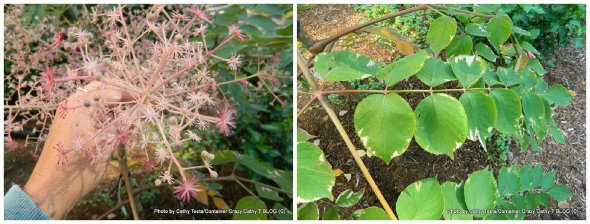
For example, she had an Aralia elata shrub planted in a small area near her front porch entrance.  This plant is not difficult to grow, but is tough to move once established.  It also has sharp prickles on the stems, and its roots will eventually sprout suckers.  However, the variegated leaves and panicle style flowers growing at the top of the plant are rather curious as well as pretty.  Observed up close, you will most likely admire this plant’s features.

bears breeches_0003

Where it was planted on her property was a little tight.  Aralia elata can reach 10-15 feet tall and spread to 8 feet wide.  It looks like a small ornamental tree at maturity with an unusual form.  And it drops its leaves quickly after flowering and fruiting, so it can leave plant remnants later in the season.  However, despite these things, she put it there to enjoy its features up close. I appreciated why she wanted it by the entrance to her front porch.  It is a rare plant.  Because it is not commonly seen, that in of itself, makes it intriguing.

Aralia elata

Aralia elata

Uncommon plants add excitement and wonder to a garden space.  Some plants with defense mechanisms make them more prolific in the garden, but this can also embody them with mysterious traits which make them stand out visually.  And if you are well aware of their growing habits, you may be willing to accept them or work to manage their undesirables over time.

This homeowner seemed to be aware of the nuisances of her specimens, but she didn’t seem to care.  Meaning, she enjoyed the plant’s unusual forms and was willing to use them despite the consequences or potential risks, such as the plant’s ability to spread or leave litter on the lawn.  She also has the benefit of employing a full time garden-maintenance person.  Thus, perhaps, she did not feel the anguish of planting something that would require a higher vigilance in the long run.  Or it could be that she just could not resist the temptations of a beautiful plant even if it has some beastly sides.

Because of her unrestrained style combined with the willingness to listen and understand the caveats of a particular plant as I cautioned its use, I was free to include the unexpected and maybe not so well-tamed specimen plants in her garden design for a perennial bed she was anxious to install.  And bear’s breeches (Acanthus spinosus), also called spiny bear’s breeches, was just one of those plant candidates.

The Beauty

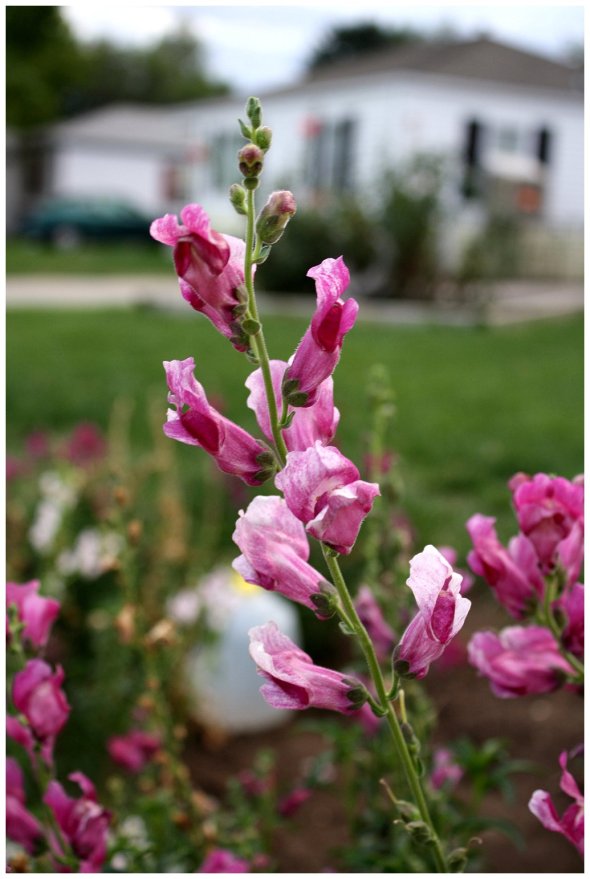
Bear’s breeches has rather interesting looking and showy flowers atop very tall flower stalks.  Each flower spike bears snapdragon like flowers which are vertically positioned.  The flowers are composed of bracts (modified leaves), lobes, and tubes – to put it simply, and their composition makes them almost-alien looking while still remaining beautiful in form.

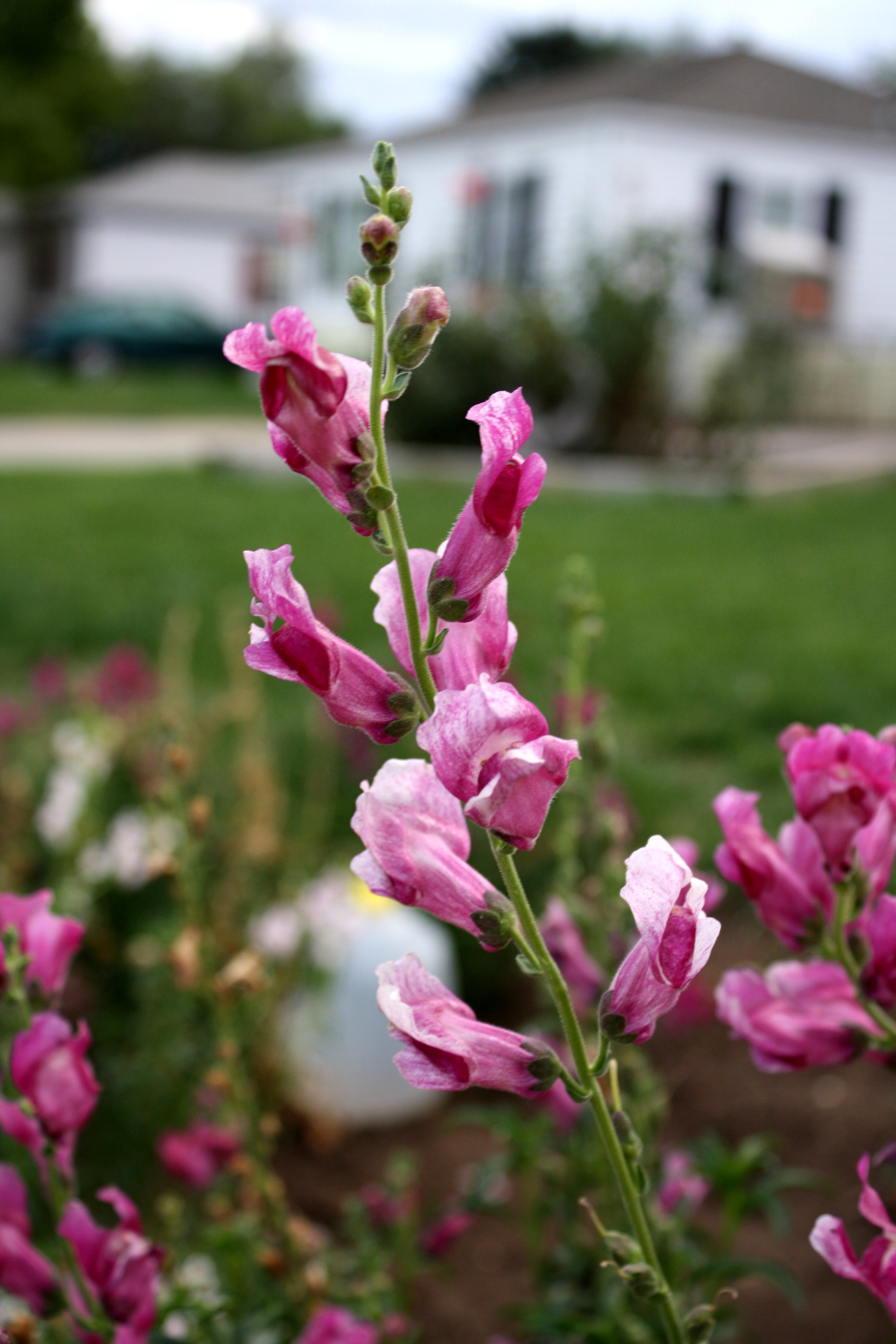
Snapdragon Flowers, Photo by Dreamstime.com

Snapdragon Flowers (similar to bear’s breeches in style), Photo by Dreamstime.com

The top hooded portion of the flower is mauve to purple, and the bottom is white.  Because the plant can reach 3’ to 4’ tall, with a mounded foliage shape on the bottom, it can be rather significant in the garden.  It is extremely visible due to the tall flowers rising above it on strong stalks which do not require staking.

By Magnus Manske, Wikimedia Commons License

Bear’s breeches (Acanthus spinosus).  Photo By Magnus Manske, Wikimedia Commons License

The flowers on this plant are a true beauty, but it is also a bit untypical looking.  In my eyes, the individual flowers seem similar to a fantasized hooded-like orchid with the stature of a foxglove or Baptisia australis (blue false indigo).  The plant provides architecture, texture, and interest and it is a long-performer in the garden even after its flowers pass.

Nursery Management Green Guide article states “Foliage remains attractive after the bold flower spikes have disappeared.”

Although the leaves resemble thistle, which is considered a common roadside weed in Connecticut, the leaves are deeply cut, glossy green and leathery – adding nice texture especially when combined with plants of opposing texture.  If you haven’t seen bear’s breeches before, the combination of the tall showy blooms with prominent foliage will make you pause to take a glance.

Tracy DiSabato-Aust describes bear’s breeches as a “real conversation piece” in her book titled, “50 High-Impact, Low-Care Garden Plants.”  She also writes, “Don’t let its thistle like leaves put you off, as they add amazing shape and textural variety often needed in many “ho-hum” shade designs.”

Another bonus is the purple coloring on the top portion of the flower’s structure.  This is a desirable color by many plant lovers, and it was a specific request by my client, along with the desire to have silver-colored foliage.  Unfortunately, many silver foliaged plant candidates require full sun!  Thus – these are the challenges of a garden designer.

The Beast

Similar to Aralia elata, bear’s breeches (also called spiny bear’s breeches) has prickles and thorns located on the foliage and in the flowers.  Your fingertips or hands may get pricked if you are not careful – and your vehicle could receive damage should you locate bear’s breeches by a driveway’s edge.  Accidentally brush up against it, and it will leave its mark.

Steven M. Still indicates “Acanthus is derived from the Greek word akanthos, meaning thorn or prickle.  It has been called bear’s breeches because of the size and appearance of the leaf of some species which is big, broad, and hairy” in his book titled, “Manual of Herbaceous Ornamental Plants.”

It is not just the prickly nature of the plant which can be off-putting, but it also has the tendency to spread by roots which will pop up new plants in other parts of the garden – once the plant is established. If you desire this look, where the plant repeats itself here and there, and you don’t mind it moving on its own, great.  It can add a naturalistic effect in the garden while providing architecture due to the plant’s form and texture.

http://www.youtube.com/watch?v=tD7ZsPV8Fgc
Viettes Gardening Tips

But there’s another catch, spiny bear’s breeches are also slow to establish.  You must be patient if you desire this spreading habit in your garden, which some folks do, and you also need to pay attention to the preferred cultural conditions because it tends to be flexible and picky at the same time.

Bear’s breeches grows best in full sun to part shade, and some references indicate it is best grown in partial shade.  The top blooming portion of the plant prefers more sun, but it performs better with some afternoon shade, especially if your climate is hot in the summer.  Fortunately for me, my client’s garden bed area had both sun and shade at different parts of the day.

As noted above, bear’s breeches’ aggressive side of spreading by its creeping rootstock easily occurs in loose soils which it prefers (well-drained soils), but it may stay put if you try to plant it in clay soils. However, if planted in heavy clay soils, this plant may get root rot because clay soils tend to remain wet. And slugs and snails will dine on the plant, especially in wet areas.

by Rod Allday, Wikimedia Commons License

Photo by Rod Allday, Wikimedia Commons License (see below attributions)

Although this plant is often recommended for the back of a garden border because it grows large and tall, it also can be placed at an edge for up-close enjoyment.

Garden Gate Specials publication recommends, “Add a bear’s breeches near the edge of a path.  It’s usually planted near the back of the border, but (here) it lifts its flowers to eye level for easy viewing.”

My client loved the look of this plant candidate as much as I did, and wanted to have it included despite its potential maintenance challenges of spreading, spines, prickles, size, repeating, and establishment.  She understood the growth habits without hesitation and was very happy to be introduced to bear’s breeches as part of my design recommendations for a new perennial bed she was planning to install.

As for myself, as a designer, I loved the freedom to use plants which have bold traits and long-lasting attributes despite their need for on-going maintenance and care.  Plant care is often regarded as an undesired chore for many clients demanding low-maintenance plants.  They just don’t want the problems, or they don’t have a full-time gardener to take care of their landscape!

But if you find you are like this homeowner, or desire uniqueness in your outdoor surroundings, despite the potential regret or work later, then you too will find spiny bear’s breeches is a true beauty while accepting it is a beast. Or you can minimize the risk and use this plant as a “Troublemaker turned Star” in a container garden.  This perennial is worth taking notice either way.

Cathy Testa

Plant Details:

Pronunciation:  Acanthus spinosus (a-kan’thus spi-no-sus)
Perennial; USDA Hardiness Planting Zone 5-9
3-4 feet tall and 2-3 feet wide; Sun to partial shade
Blooms late spring to mid-summer; no staking needed
Prefers moist, well-drained soils; Can tolerate dry soils
Protect over winter with straw mulch if in Zone 5 or colder
Related species:  Acanthus mollis

Useful Link:

http://www.missouribotanicalgarden.org/PlantFinder/PlantFinderDetails.aspx?kempercode=a100
Missouri Botanical Garden Plant Finder

Photos:

http://www.photos-public-domain.com/wp-content/uploads/2010/11/pink_snapdragons.jpg
Pink snapdragon photo, dreamstime.com Free Stock Photo

http://commons.wikimedia.org/wiki/File%3AAcanthus_spinosus_(Acanthaceae)_flower.JPGdownloaded image, creative commons license. Attribution: By Magnus Manske (Own work.) [GFDL (http://www.gnu.org/copyleft/fdl.html) or CC-BY-SA-2.5-2.0-1.0 (http://creativecommons.org/licenses/by-sa/2.5-2.0-1.0)%5D, via Wikimedia Commons

Pic of flower in a group along walkway:  Attribution:  Rod Allday [CC-BY-SA-2.0 (http://creativecommons.org/licenses/by-sa/2.0)%5D, via Wikimedia Common.  Page url: http://commons.wikimedia.org/wiki/File%3ALooking_down_into_the_Jungle_at_Heligan_-_geograph.org.uk_-_1401014.jpg

A Fairy, the Castor Bean Plant, and Poison. Can They All Live Happily Together?

16 Comments

Perhaps the only person to definitely know if the castor bean plant and its three little seeds lying within each of its seed capsules has been and continues to be falsely portrayed as a lurking killer is the beautiful and bold imaginary fairy by the name of Ricina, a clever creation by Nancy Farmer, an artist residing in the United Kingdom.

A FAIRY

  • a small imaginary being of human form that has magical powers, esp. a female one.” (source: Google)

Art may be left up to the interpretation of the admirer or defined by its originator but my perception of Nancy Farmer’s creation, the fairy she named Ricina, is of a mature woman seductively perched upon the stalk of a castor bean plant.  With her eyes glanced to the side and a sneaky facial expression, Ricina appears to be ready to protect or serve the possible magical yet deceptive powers of the plant and its seeds. Her bright red lips and finger nail polish flanked by a smart little red bow tie around her neck matching her classic attire provides the admirer a glimpse of her individualistic style. And she looks a little playful too with a suggestive rise in her sexy leg and fashionable but just the right sized heeled shoes. A handsome umbrella dangles from the tips of her fingers and she sports a masculine hat – teasing mementos to remind of past stories and tales regarding the castor bean seeds and its potentially lethal toxin known as ricin.

Copyright Photo, Permission Required by Originator

Image courtesy of Nancy Farmer/www.nancyfarmer.net and nancyfarmer.wordpress.com

If Ricina could buzz by our ears, perhaps she would whisper there is nothing to fear. For only those with harmful and deliberate intentions could possibly use the plant’s powerful little bean-shaped seeds for malice and not joy.  She knows it requires the elements of keen knowledge about the plant’s toxic components and a bit of unrealistic determination by the offender.  Or maybe she would tell us only a fool would pry apart prickly seed capsules designed to keep predators at bay and then chew its seeds obviously marked with suspicious patterns.

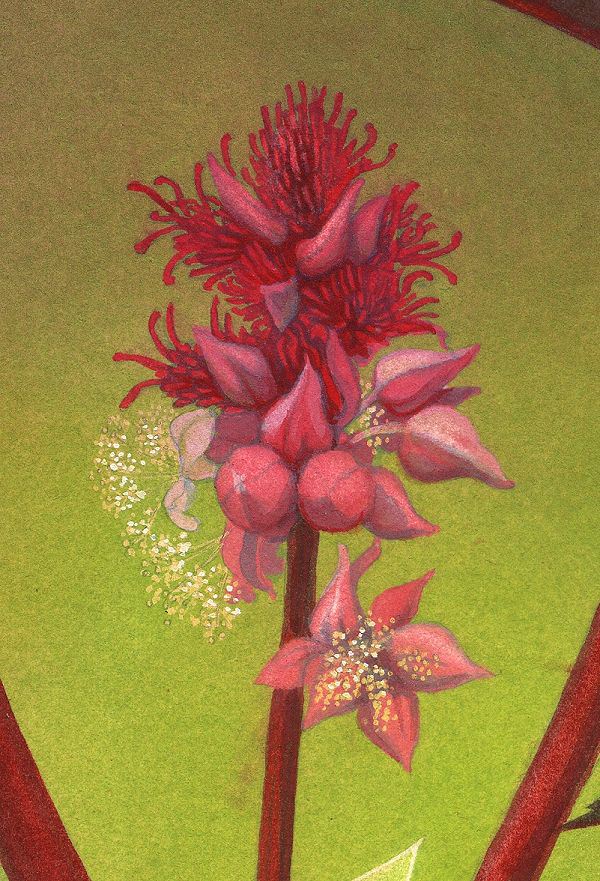
Nancy Farmers artwork of the castor bean flowers (www.nancyfarmer.net and anancyfarmer.wordpress.com)

Nancy Farmers artwork of the castor bean flowers (www.nancyfarmer.net and anancyfarmer.wordpress.com)

She would continue to reveal the beautiful benefits of the plants’ ornamental characteristics and its ability to thrive with little encouragement to provide grandeur in our gardens.  As she continues to deflect our attention from unproven matters of the castor bean plant, she may fly around exclaiming the exceptional as well as unattractive features of the plant from its large showy leaves, a towering height, and flowers with a combination of features as complex as its tales. The key, she should would say, is to admire ‘all of the plant’s’ wonderful virtues along with its adversity.  Because the castor bean plant has its good and bad sides.

Source Permitted by: Nancy Farmer (www.nancyfarmer.net/nancyfarmer.wordpress.com)

Source Permitted by: Nancy Farmer (www.nancyfarmer.net/nancyfarmer.wordpress.com)

Source Permitted by:  Nancy Farmer of www.nancyfarmer.net and nancyfarmer.wordpress.com

Source Permitted by: Nancy Farmer of http://www.nancyfarmer.net and nancyfarmer.wordpress.com

THE CASTOR BEAN PLANT

  • “A large shrub of tropical Africa and Asia having large palmate leaves and spiny capsules containing seeds that are the source of castor oil and ricin; widely naturalized throughout the tropics.”  (source: thefreedictionary.com)
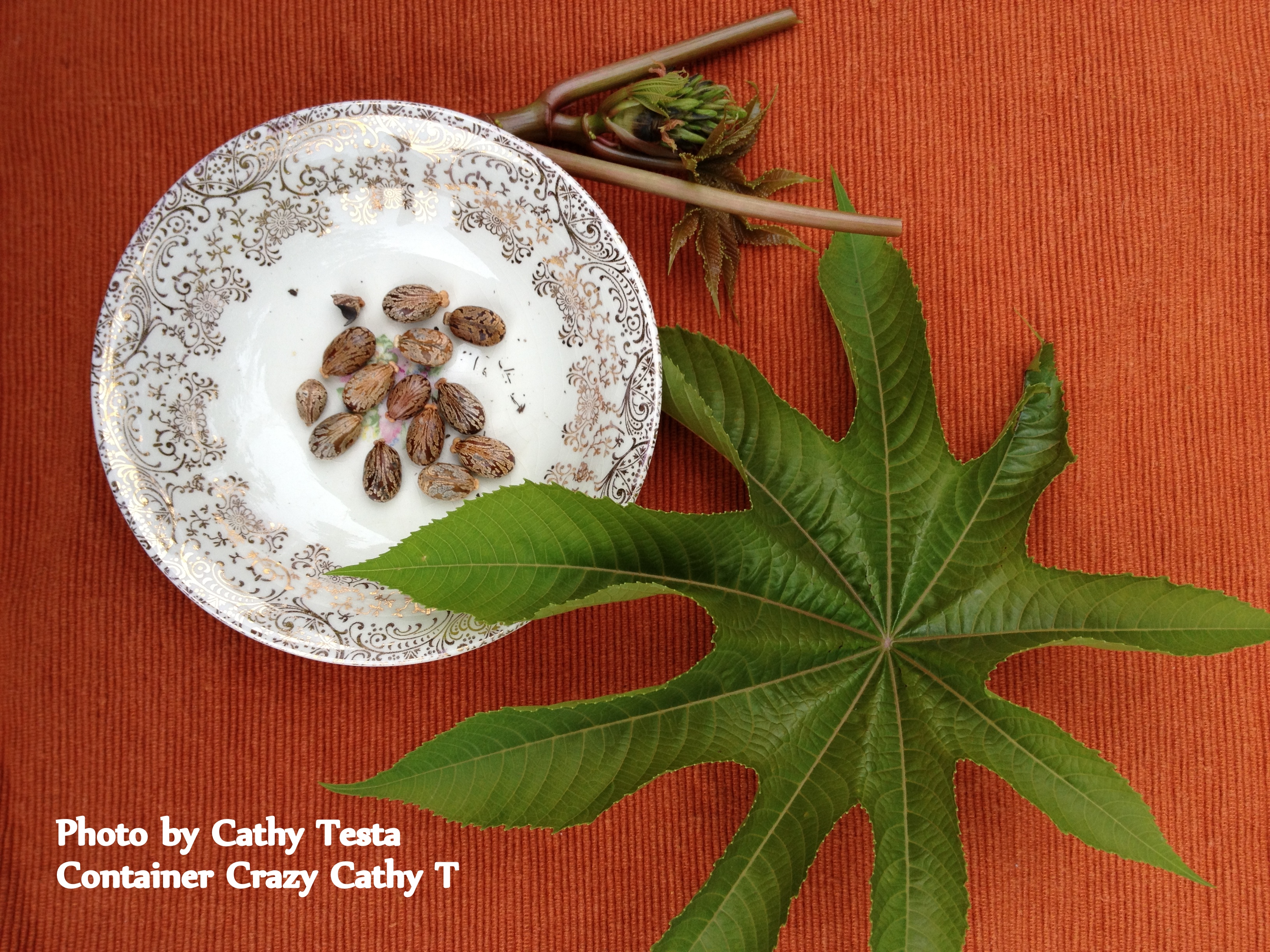
Castor Bean Seeds with a Leaf

Castor Bean Seeds with a Leaf

The castor bean plant or castor oil plant (Ricinus communis) is a tropical shrub or tree hardy in planting zones 10-11.  It is treated as an annual in Connecticut’s planting zones since it will not survive winter temperatures here. The plant grows rapidly from seed when planted in ideal conditions. It can easily reach between ten to twelve feet in a single season. As the stalk increases in diameter, it resembles thick bamboo. Large distinctive green leaves growing from the tips of long petioles are lobed shaped with several pointed star-like tips.  The species is primarily green, but cultivars come in vivid red to maroon colors, including the seed capsules.

Nancy Farmer's artwork of the red seed capsules of a cultivar the castor bean plant

Nancy Farmer’s artwork of the red seed capsules of a cultivar the castor bean plant

Photo Courtsey of Nancy Farmer's Artwork

Photo Courtesy of Nancy Farmer’s Artwork (www.nancyfarmer.net and nancyfarmer.wordpress.com)

The plant’s odd-looking flowers consist of separate male and female flowers on the same plant. When both sexes are on the same plant, this is termed monoecious. The male flowers are white and tiny, situated just below the female flowers.  Red styles, the narrow part of the pistils, are clearly visible on the female parts of the plant.

Female Flowers on a Castor Bean Plant

Female Flowers on a Castor Bean Plant

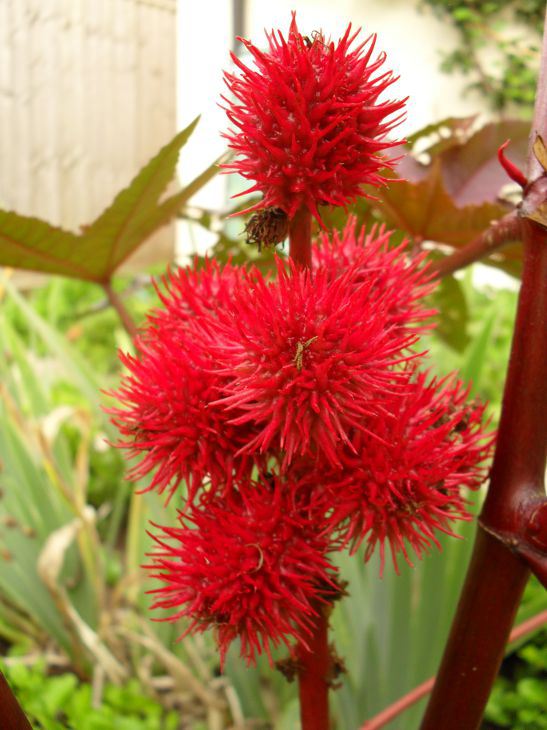
Prickly seed capsules - Ricinus communis

Prickly seed capsules – Ricinus communis

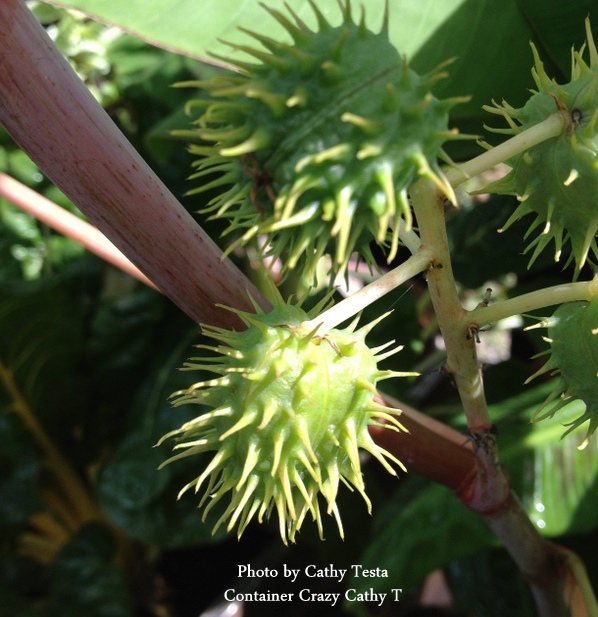
Round seed capsules grow from the female flowers which are rather interesting. They are composed of three joined lobes or hulls covered with soft prickly spines. Inside each prickly capsule are the infamous castor bean seeds, known to be the source of a potentially lethal toxic, known as ricin. Although the castor bean seeds are the size of edible beans, think kidney beans – they are not true beans at all.  And they are not meant for direct consumption, but used for the production of castor oil and other traditional medicines. Some people think the seeds resemble inflated ticks, and the genus name Ricinus is the Latin word for tick.

Mature seeds of the castor bean plant

Mature seeds of the castor bean plant

Immature seeds in the capsule.  Photo by Cathy Testa

Immature seeds in the capsule. Photo by Cathy Testa

A POISON

  • “a substance that, when introduced into or absorbed by a living organism, causes death or injury, esp. one that kills by rapid action even in a small quantity.” (source: Google)
  • “a person, idea, action, or situation that is considered to have a destructive or corrupting effect or influence.” (source: Google)

Relief from the use of castor oil derived from the seeds of the castor bean plant (Ricinus communis) may yield some benefits for people still using this remedy as a laxative, but there are reported sinister sides to the seeds, that when used in a specific fashion and with its toxic substance, will lead to illness and sometimes death of an unsuspecting victim. Some stories or myths shared from past to present about such occurrences, including claims of sneaky murders from administering ricin with a common umbrella as the mode of transmission, to claims of accidental deaths from chewing the seeds without the realization of the disastrous results days later, may be somewhat exaggerated.

In the words of John Robertson who has spent ten years researching, writing and talking about poisonous plants:

Butthough ricin is extremely poisonous it actually does little harm. Around one million tons of castor beans are processed each year for castor oil production leaving the waste pulp with up to 50,000 tons of ricin in it. And, yet, finding instances of ricin poisoning is not an easy task. (source: THE POISON GARDEN website)

Victims are said to suffer from vomiting, diarrhea and dehydration once attacked by the evil person in possession of the ricin.  Others have eaten the castor bean seeds in ignorance with the belief it is a medical solution to their health problem. Yet the more you read regarding the poisoning powers of the infamous castor bean seeds, the more unclear the accusations and exaggerations become regarding the potential for eventual death to occur. Some sources attempt to explain the differences between poisonous and dangerous because a person can do no harm without the right combination of both a lethal toxin and attitude.

In a ten minute video on THE POISON GARDEN website about ricin, John Robertson states, There’s a big difference between poisonous and harmful.  For a poisonous plant to become harmful, there has to be a way to administer the poison.

Leaf of the castor bean plant (Ricinus communis)

Leaf of the castor bean plant (Ricinus communis)

THE HAPPY TOGETHER

Many references will indicate you should keep the castor bean plant and especially its seeds away from children or animals, and should you have either, this may be a needed precaution.  More important, I would say, is to be knowledgeable about the plants before placing one in your gardens. Unlike plant tags listing all the beneficial reasons a plant is successful (a winner, deer-resistant, hummingbird magnet, drought tolerant, etc.), the downsides of plants are not indicated at all.  One is to wonder if plants should have warning tags (e.g., potentially toxic, invasive, aggressive, addictive, etc.) but for obvious reason, they do not.  However, I have grown castor bean plants at my home and so have many others worldwide.  In some parts of the country, the plant grows as a common roadside weed and the population of people near these situations are aware of its hazards. Similar to other things in our society which are dangerous under the wrong circumstances and in the wrong hands, we must just be more educated and not be put in a state of fear.  After all, if the castor bean plant and its potential poison is a killer, why am I not dead?

Racina, the plant, and myself co-exist without any ill effects – and you can too if you admire the castor bean plant’s features.  One way to limit your anxiousness regarding the prickly seed capsules with seeds within is to remove the flowers all together on the plant, or remove the capsules before they mature and potentially crack open to drop seeds on the ground.  Wild animals seem to understand the precautions and warnings provided by the plants as an adaptation to say “don’t eat me, stay away, I’m trying to reproduce.  And if you tempt it, I will make you sick enough so you remember.”  How incredibly wondrous by the plant.  Racina, as I imagine her, understands this.  She, the plant, and the poison all live happily together.

And I think you could too,

Written by Cathy Testa©

White male flowers on the Castor Bean Plant (Ricinus communis)

White male flowers on the Castor Bean Plant (Ricinus communis)

P.S.  A very special thank you to Nancy Farmer, the obviously talented artist capturing the essence of the castor bean plant’s legends with a fairy.  She and her amazing works of combining ‘nature with art’ may be found at:

http://www.nancyfarmer.net/

http://nancyfarmer.wordpress.com/

References and Other Sources:

http://www.uicnmed.org/nabp/database/HTM/PDF/p86.pdf

http://en.wikipedia.org/wiki/Castor_oil_plant

http://www.thepoisongarden.co.uk/atoz/ricinus_communis.htm

http://www.missouribotanicalgarden.org/PlantFinder/PlantFinderDetails.aspx?kempercode=b459

http://www.ct.gov/caes/lib/caes/documents/publications/fact_sheets/plant_pathology_and_ecology/poisonous_plants_06-27-08r.pdf

http://www.ansci.cornell.edu/plants/castorbean.html

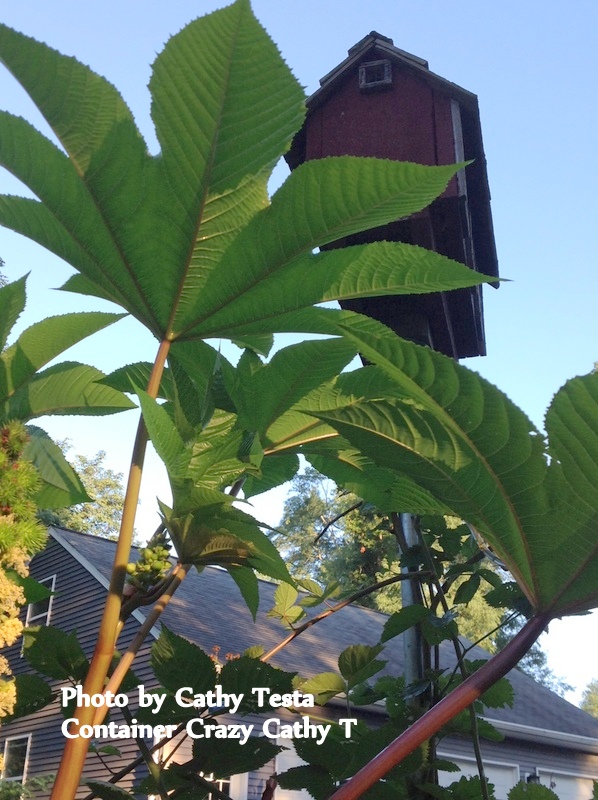
Castor Bean Plant growing at Cathy Testa's home near a birdhouse on a 10 feet high pole.

Castor Bean Plant growing at Cathy Testa’s home near a birdhouse on a 10 feet high pole.

Arts and Crafts at a CT Nursery this Weekend

1 Comment

Sign

The Gledhill nursery in West Hartford, CT is holding an Arts and Crafts fair this weekend on August 2 and 3, 2013 from 10 am to 4 pm. I happened to visit this nursery for the first time yesterday (as part of my goal to visit nurseries listed in the CT Garden & Landscape Trail.)

On my way to this place, I did run into some roadway construction coming from Bloomfield but it moved quickly and perhaps will be done by Saturday. But also be on the lookout for the entrance. It can be tricky to see the enter versus exit road. Look for the street sign. As you drive down it, you will feel as if you are entering a private residence. The driveway into the back parking area is very narrow and lined with beautiful plants and trees. This nursery has an immediate park like feel to it.

RoadA friendly nursery staff person greeted me immediately as I entered the grounds, admiring the small water gardens in particular. She apologized for the mix of plant areas as she explained they were organizing spaces for the 30 vendors participating in a crafts fair this weekend. It is held annually. So I thought I need to post this immediately to let everyone know about it.

The nursery staff person also told me their landscape department has a knack for water gardens as she noticed I was taking photos of them. This garden center has some small greenhouses, a nice gift shop, and displays such as a path leading to an arbor. If I were able to go this weekend to see the crafts show, I would but other commitments prevent it. If you decide to go, let me know what you think. Oh, I also noticed they had some organic products on their shelves for bugs and fertilizers.

Water gardens

The plant areas had little garden decor here and there too. It seems like a fun place to browse, plants very healthy all around, and I’m sure in the height of the season there’s more to enjoy. There’s lots of inspiration for those taking notice of all the details all around the premises.

Organically at Gledhill

The address is 650 Mountain Road, West Hartford, CT 06117. 860-233-5692.

Just be sure to drive carefully into the area. I suspect they will have additional parking during their event this weekend with all the vendors planned.

Decor

Their website is http://www.gledhillnursery.com.

Sign

Overall, park like, tranquil, and secluded. When I commented that folks from my area may not know about Gledhill, she replied, neither do some locals to West Hartford. Perhaps, now, they will.

written by, Cathy Testa

Water garden Gledhill

Forest Floor and Waterfalls at Enders State Park

3 Comments
Entrance

Entrance

Visiting a walking trail in the woods always brings a bit of exercise and exploration of nature’s treats, yet this time when hiking Enders State Forest in Granby, CT last Sunday, there was heartfelt sadness for I recalled the recent reporting of a teen girl falling from the cliffs.  It reminded me how dangerous it can be when walking this place.

I slipped at the top of a cliff there last summer, but caught my balance.  My husband said I practically gave him a heart attack.  It is not a place you want to walk without being extremely careful, and perhaps with some professional experience as a hiker.  I am usually the biggest wimp when it comes to any challenges along hiking trails, so it was a surprise to me too when I slipped, yet that memory plus the news of a loss of life at this park, made us all the more cautious as we took every step down to the slopes to view the waterfalls in several locations.

Enders State Park

Enders State Park

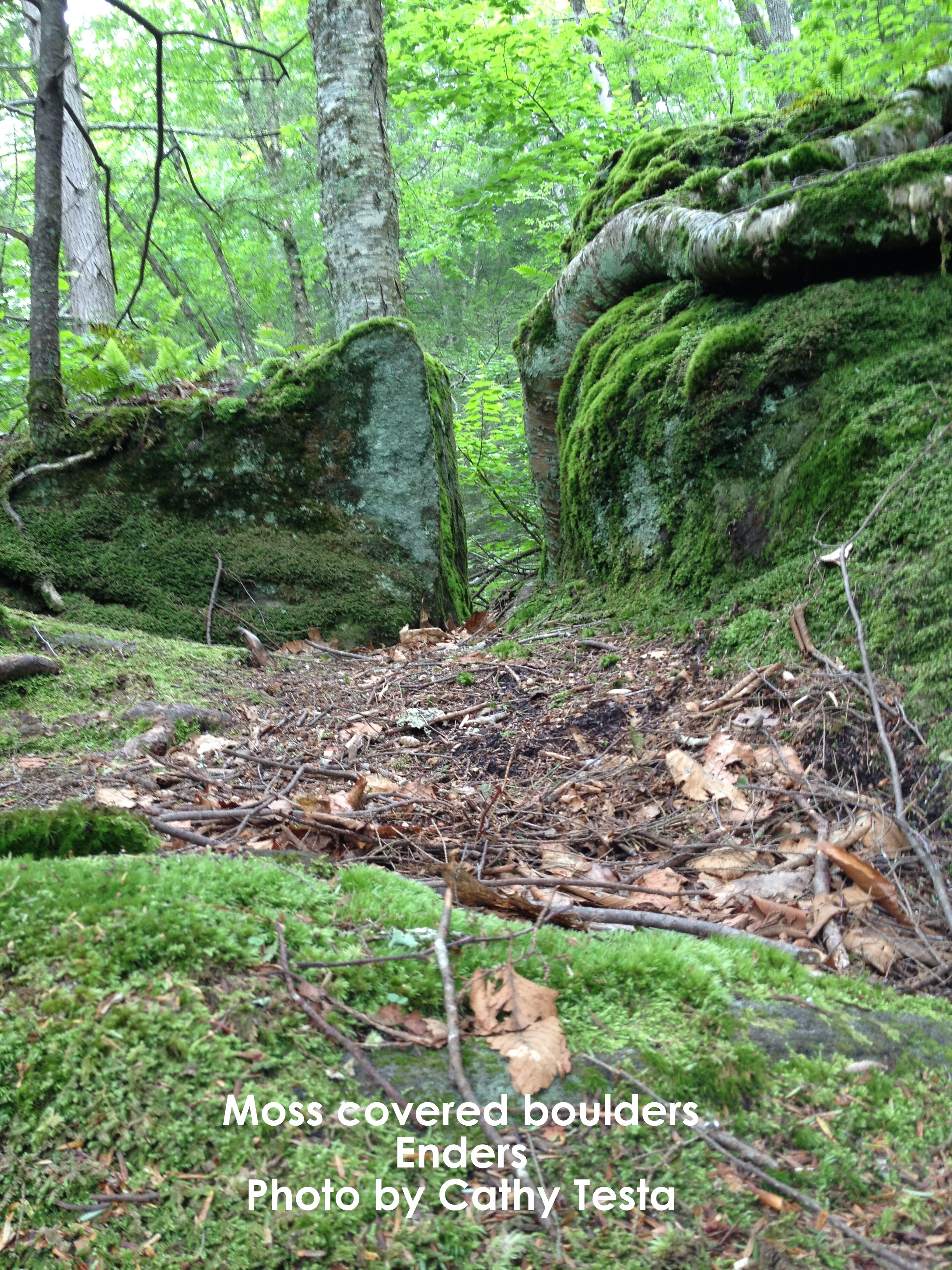
The recent rainfall in Connecticut has created not only roaring waterfalls at Enders, but a lush and full forest floor thriving with healthy ferns, mosses, and lichen clinging to the boulders and trees.  It feels like an air conditioned room as you travel the paths through the tall trees.  The mist from the waterfalls gently nourishes the plant life tucked in everywhere, between rocks, on decomposing bark, and from the ground. Soft cushy moss softens your steps in some locations and the sound of the rushing water is like a meditative force.  In the summer, when the water is low and calm, it is a secret swimming hole too.  And with a blanket and picnic lunch, this place offers tranquility with places to rest on the earth after taking your walk through the woods.

Alive with moss

Alive with moss

Only a few other people were there the morning we went, one apparently a professional photographer with lots of gear and a  helper to assist.  Another was an elderly couple walking the trail, one with a cane.  I wished I had taken a walking stick along myself.  I wondered if they knew about the young lady falling recently, but I didn’t mention it.  I wanted to say, be careful, it can be slick out here – I had a scare myself last year.  I don’t know if I can ever go back “on the cliff” parts again, and certainly this could not be attempted with the rushing waters going over a steep precipice on this day following several heavy rainfalls.

CT's State Flower

CT’s State Flower

It surprised me after we finished our hike, and drove to New Hartford to see the Saville Dam and Barkhamsted Reservoir, a favorite of Steve’s, and had lunch at Chatterley’s in town there, how many locals have never heard of Enders Forest.  Is it a kept secret?  It IS a gem – a miniature Niagara at the moment.  Funny how something literally around the corner, maybe 6 miles or so down the road, is an unknown to locals in New Hartford.

Enders State Forest in Granby, CT offers many treasures.  It is truly an outdoor living room.  To me, the forest’s natural plants, tucked among roots expanding and clinging onto the slopes and surfaces, are a favorite treat.  It is seeing nature in its true form, being served by its surroundings of a natural environment, pretty much untouched. And the native Mt. Laurel, CT’s State Flower, was in bud and bloom which was an additional bonus to going in June.  I’m sure we will return in the heat of summer to cool off as well.  And perhaps during the winter to see the ice on the waterfalls.

Great place for lunch or dinner

Great place for lunch or dinner

Some tips should you decide to venture there:

BRING: Bring a walking stick, good hiking shoes are a must, lunch and a blanket.  It would be nice if benches were in the park, but there are large bounders and places to sit as you watch the falls and enjoy the surroundings.  Bring a suit if the water is low for the pooling areas.  Don’t forget the camera.

MOTORCYCLE: If you are a motorcycle lover, this is a great route for the bikers.  Nice curvy roads, and some are recently paved, so smooth riding for you to enjoy.  Normally we would have taken the Harley, but there was a chance of rain (like I said, I’m a wimp).

GO TO LUNCH:  If you didn’t pack a lunch, go to Chatterley’s Cafe, take a left out of the entrance and head down the road to New Hartford, CT.  It is located at Two Bridge Street, 860-379-2428.  Great martinis and really excellent menu of appetizers, salads, fish, veal, chicken, and meat entrees.  Food is very good.  It was an old hotel apparently, you can see photos in the entrance, some famous people have visited this place – worth a stop.  Right next to this cafe are some small and quaint gift type shops.

SEE THE DAM: Before you go to lunch, of course, stop to view the Saville Dam and Barkhamsted reservoir.  There is a huge wall to view the water from, and across from the building with the big wooden doors, is a round cement map surrounded by a fence, check it out – interesting.  You have to cross the street to see it.  There is a parking area next to the dam that is usually open during the day hours.

USE CAUTION: And please, be super careful; when walking Enders.  The moss on the ground can be slick, and the soft earth is deceiving if near the edge of a slope.  But overall, it is definitely a nice place to visit for nature’s offerings.  A true gift by the land donators – the children of John Ostrom Enders and Harriet Whitmore Enders, donated in 1970.

Cathy Testa

Container Crazy Cathy T
http://www.cathytesta.com
860-977-9473
containercathy@gmail.com

A Nursery in the Country has a Big Draw

1 Comment
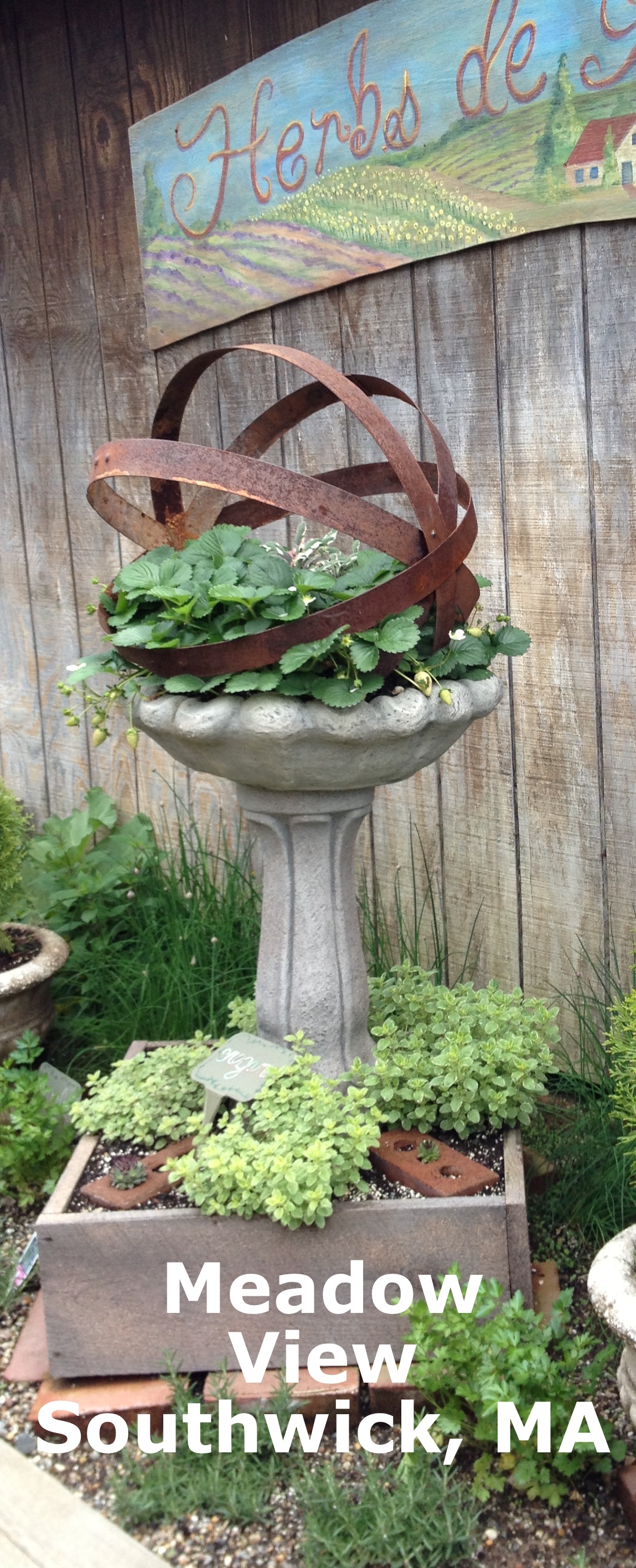
Decor ideas at Meadow View Farms in Southwick, MA

Decor ideas at Meadow View Farms in Southwick, MA

As I mentioned earlier this year, I am making a commitment to visit nurseries this season.  I kind of miss walking a nursery and enjoying it just for me.  As a person in the bz, many times shopping is about the customer, which is also fun – but it was some ‘me’ time.

So today’s post is about Meadow View Farms in Southwick, Massachusettes.  My sister enjoys going to this place and took me there last year, and I remembered liking their herbs and veggies section so my goal was to pick up some of those.

When I arrived to the nursery, there were so many cars and people, I couldn’t believe my eyes – on a Wednesday!  It was a challenge finding an available parking space, especially with my big truck.  When I backed it into the spot, a woman applauded saying she was impressed, and I responded, “Yes, I had people and carts moving around me as I was trying to make it in there.”

As soon as I put the truck into park, a familiar face walked up – a friend by the name of Brian.  I met him at a bar – not what you think – he’s the bartender – and he showed me a book of his garden photos. He is an impressive gardener and has a beautiful greenhouse, so we just started talking plants as my husband sipped his cold brew that day we met.  Brian has a great personality and walked up with a big smile on his face.

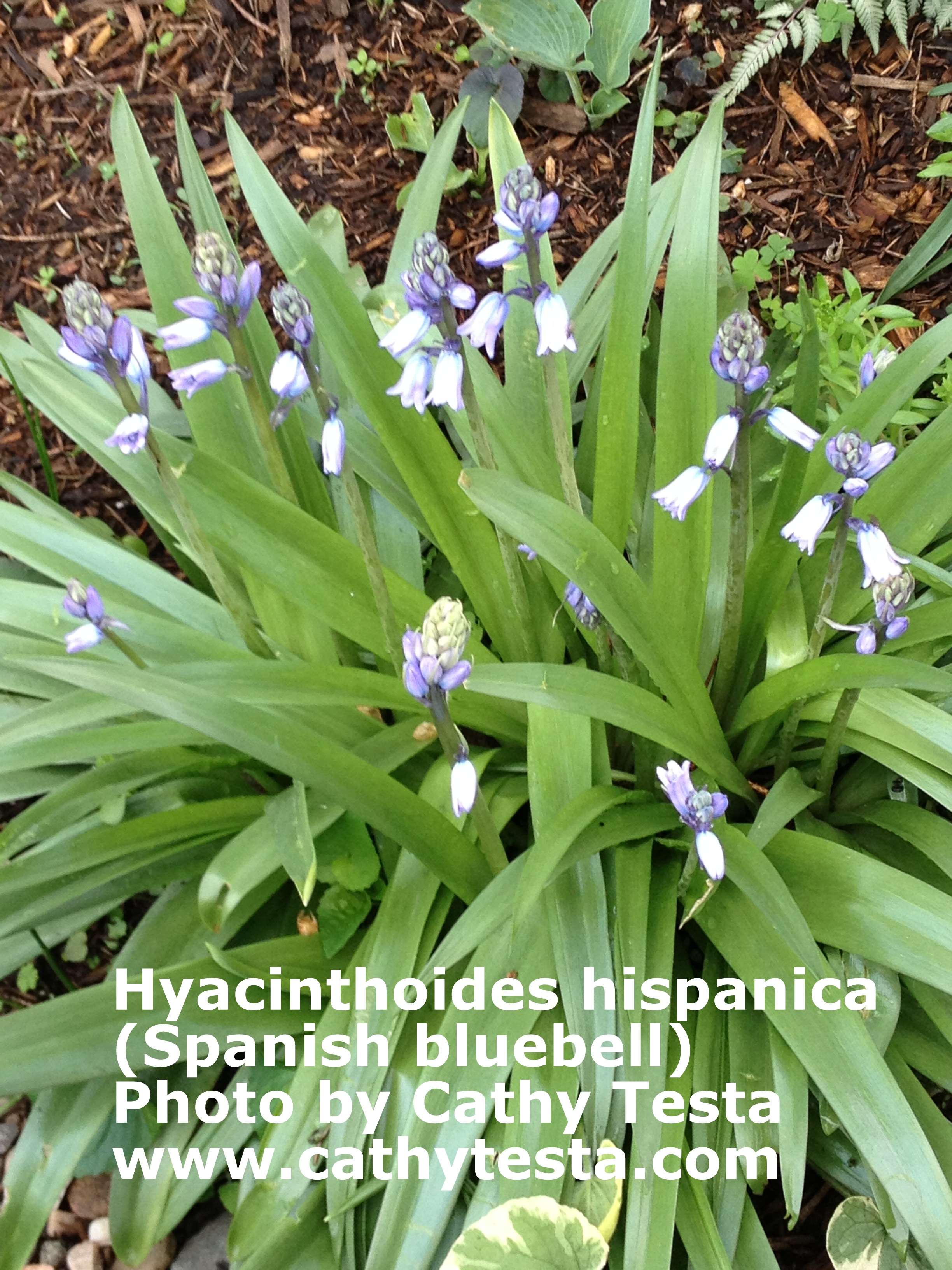
Spanish bluebell

Spanish bluebell

Brian told me he went to several nurseries in search of a plant he saw in the gardens at Meadow View and later discovered he was calling it by the wrong plant name!  So that was a chuckle – especially because he knows plants.

“So show me which plant,” I said.

We walked over to a display area, and there it was –  beautiful blue flowers on sturdy little stems above strap like leaves.

“I don’t know off the top of my head but it is a bulb type plant,” I told Brian.  It looks familiar.

Brian thought it looked a bit like the perennial, Campanula.  “Yes, it does,” I responded.

Of course, of all the plants in the garden displays, this one was not labeled (nor was it for sale at this nursery – at least not on this shopping day).  But a staff person was quick to identify it for us.  However, before we found her, I grabbed my iPhone and said, I’ll just take a photo and post the question on Facebook: “Who knows the name of this plant?”

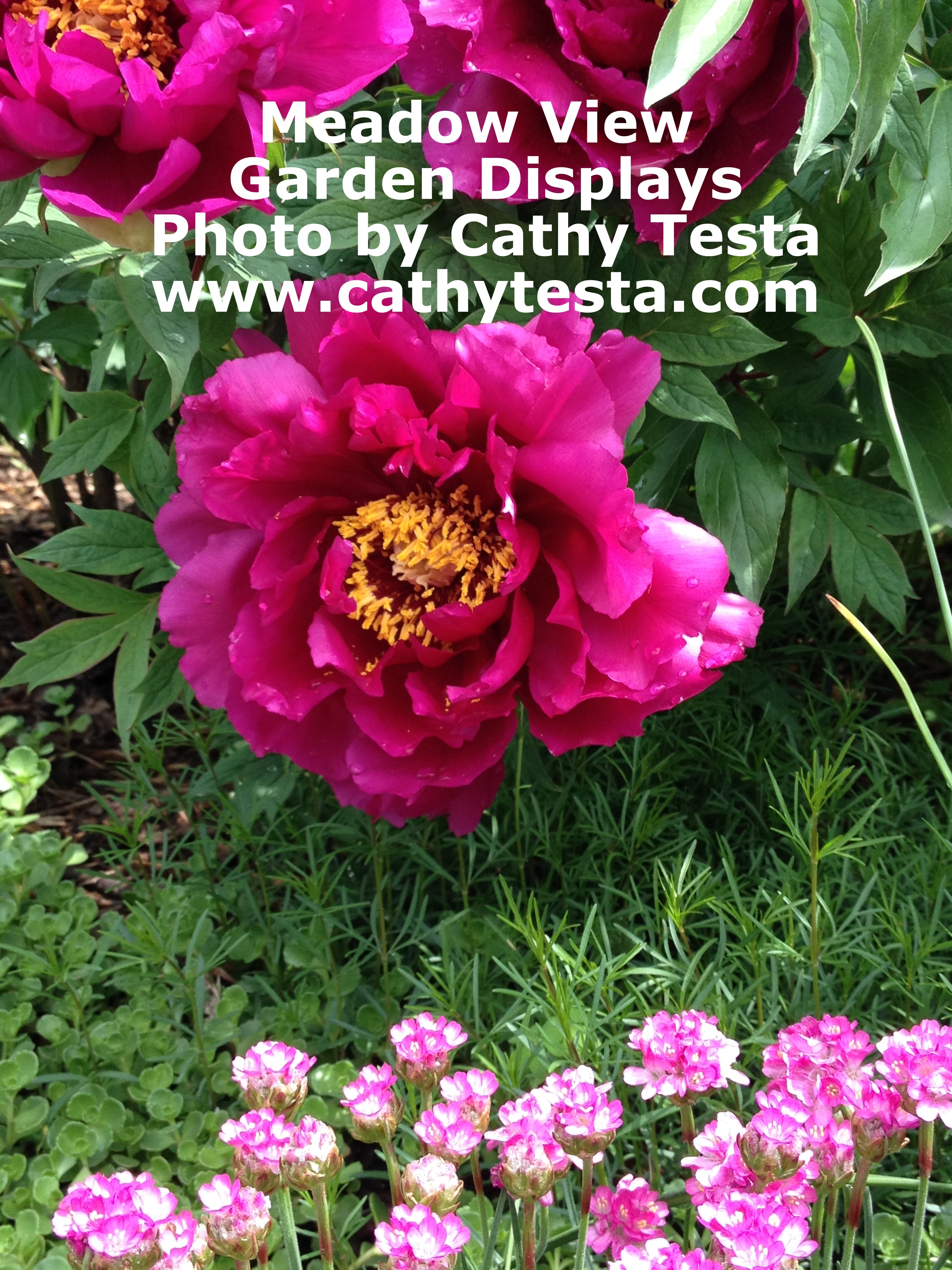
Garden displays

Garden displays

It took literally seconds to get the name, and comments from gardening friends growing this plant in their gardens.  By the way, after coming home, and looking it up, it is called Hyacinthoides hispanica (Spanish bluebell). It was formerly called Scilla campanulata (there you go Brian!), or Scilla hispanica.  This plant blooms from April to May, and goes dormant in summer.  And it grows well under trees, which is where it was located and repeated in the Meadow View display garden.

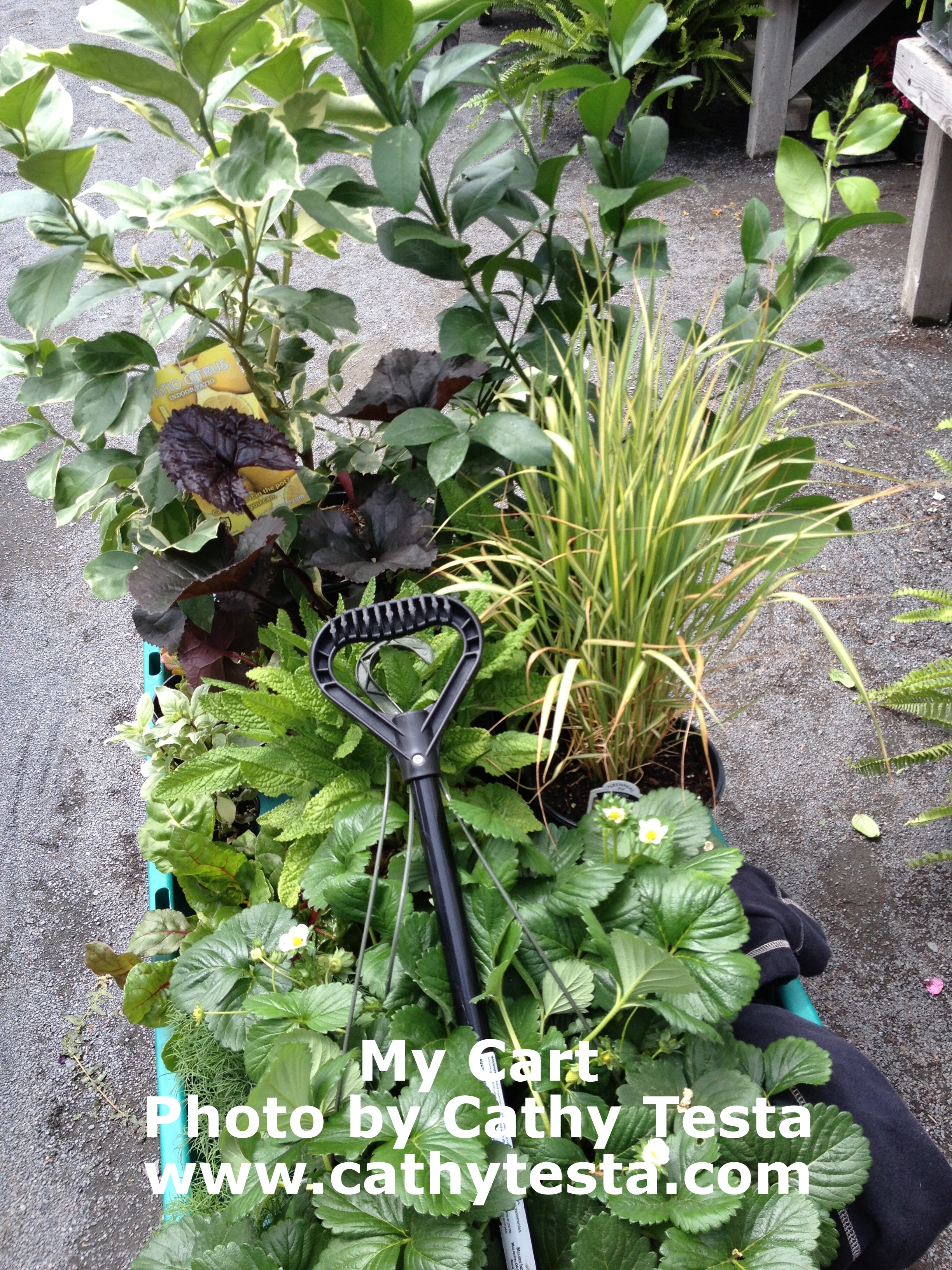
My cart filled

My cart filled

After a quick discussion with Brian on more plants, off he went – and so did I to the veggies section.  I already bought some herbs but I wanted more, and so I looked around, then I spotted a lemon tree.  Ironically, at the last two garden centers I visited, the “male” staff both told me they like lemon trees after we talked about plants like fig trees.  Guys like lemons, I thought.

So spotting one here, I decided I want one too, and to see a variegated form sitting there along side other healthy lemon tree plants, I thought – this is it.  On the cart you go, and the other was for a friend who found my idea of a lemon tree interesting – because lemons with summer cocktails is a good thing. So I texted her the price, and she said yes – get it for me.

The variegated one for me is actually a pink lemon everbearing variety.  These can be placed in the basement to go dormant from what I was told, or even in the garage over the winter.  It appears my theme this year for my container gardens is falling into the herb, fruit, and veggie category because I picked up a pineapple plant and fig tree recently too.  Hope all bear fruit.

Meadow View Farms in Southwick, MA has some nice small display gardens where you can view plants they have for sale.  They also put containers in various places and decor like wagon wheels as trellises for vine plants.  They have a little sitting cafe area, which I didn’t go into to, but I believe they offer water and coffee there.  And they do not have bathrooms, but outhouses which will do for any excited gardener shopping too long requiring a p-break.

They are stocked with great looking perennials, lots of big hanging baskets, annuals, and great veggies and herbs, with shrubs and vine plants too.  I didn’t notice any trees, and the facility is mostly an outdoor place.  There was no “garden decor” for sale, but lots and lots of plants with many enthusiastic shoppers.  A place where you can easily strike up a conversation with a fellow gardener – many would stop to ask about something in my cart, and then comments flourished from there.  My new lemon tree was a hot topic.

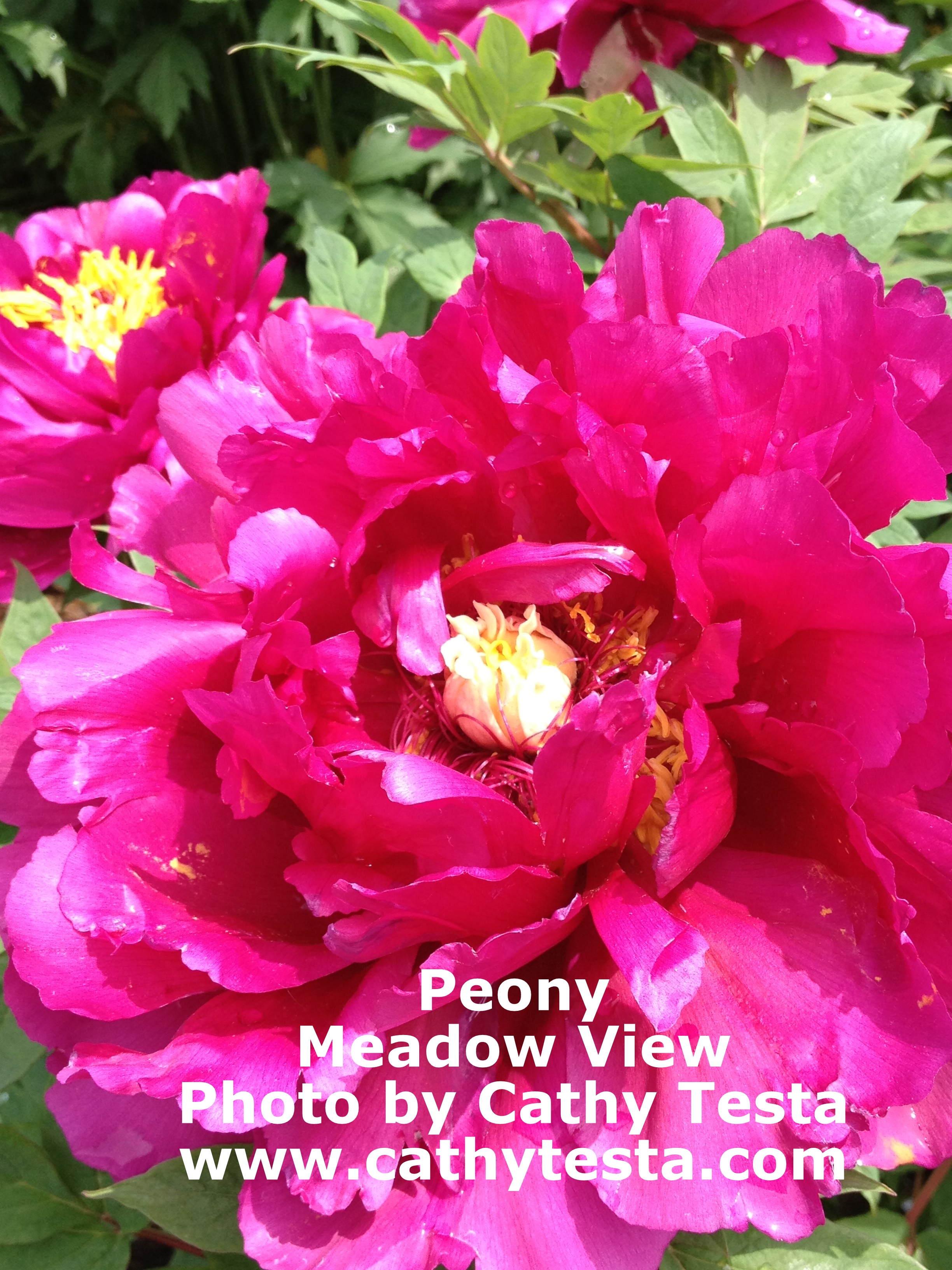
A stunning peony in the garden displays

A stunning peony in the garden displays

And it is very important to know – they do not take credit cards.  So go there with cash or a check with license in hand.  One would be very disappointed indeed if they made the travel there only to discover you can’t use a credit card – especially if you didn’t know while you waiting in the checkout line.  It was at least 12-15 people long at times, but moved very quickly because they have a line of registers with very competent and fast moving staff.

But one guy behind me was just a bit too excited.  As I waited in line, I spotted a bougainvillea plant and passion flower in hangers to my left.  I wondered how much they were, so I quickly ran over looking for the price tag.  Would you believe, he banged the back of my cart as the people in-front of me started moving forward to cash out.  Guess I forgive him for being so impatient cause he had some huge hanging baskets on his cart – I think he just couldn’t wait to get them home.

Cash out line - moves quickly

Cash out line – moves quickly

Meadow View may be out in the country, and a bit of a drive for some folks, but this place has a big draw.  My friend, Brian, told me it is “always like this” when I commented on how busy it was for a week day.  I filled my cart with other plants, checked out, and enjoyed the sandwich I was glad I packed in my truck for lunch.  And off I went anxiously to pot up my new lemon tree for my deck.

By the way, for you locals here thinking about going, I went through Suffield, CT and took Rt 168 for about 8 miles, past Lake Congamond.  It is a beautiful country road, so I enjoyed the ride very much – and thought about how I have to go to that lake for kayaking some day soon too.

Cathy Testa
Container Crazy Cathy T
http://www.cathytesta.com
(860) 977-9473 cell
containercathy@gmail.com

Trucks constantly deliver restocks from the greenhouses to the retail area

Trucks constantly deliver restocks from the greenhouses to the retail area

Crystal Ball Captures More than the Beauty of Flowers

Leave a comment
Class Attendees

Class Attendees

Photography for me is about capturing data at times.  I take photos at clients’ properties during my onsite evaluations for landscape and garden designs.  Sometimes, I will take at least 100 photos of a site while walking around, looking over their desired planting areas.  It is important to me to get every angle, and to record any problem areas – or potential design features spotted on the property or in the space. I also take photos of plants when visiting wholesale and retail nurseries for my plant research.  You can ask the garden center staff.  They will tell you I always have a camera in hand.

But I also enjoy photography as a “non-serious” hobby – what I mean is, I like to take photos of plants because I love them so much, especially up close to see the botanical aspects, from the stamen (male parts) to stigma (female parts) of the flower’s reproductive aspects. And of course, I like to take photos of butterflies, insects, and birds.  Sometimes, I’ll get a comment from a real photographer, a pro, saying a shot is good, but my photos are never anywhere near those taken by pro’s.  Again – I do it for fun – and like to keep it that way, but I should learn the techniques to improve.

DSCN2819

So when I met my class group for a guest speaker on photography yesterday, they found it a bit comical when I mentioned I had not yet taken out the components (like filters and cleaners) for my new camera out of the packages. I’ve owned the camera for a couple years now.  It is not a super fancy camera, but it is a good one.  I’ve played around with it more than taken the time to learn it.

However, yesterday, I got the chance, and what fun did we have.  We had a small group of attendees because the class, called “Capturing the Beauty of Flowers,”  was held in the morning of a weekday at a local garden center, where there were flowers a plenty.  And by the way, I heard loud and clear from my friends and past class attendees – they want a session held in the evenings so they can attend – so we will do that – on May 29th, Wednesday, 5:30 to 7:30 pm (flyer to be posted soon).  Note the date now.

Catherine Cella of Joyful Reflections Photography was my guest speaker.  It was an honor for me to have her show us her tips on how to maximize taking photos of flowers. There were some techniques I had never considered, demonstrated by Catherine, and we practiced as a group.  She then offered us advise on how to improve the shot.  But one of the best parts of the whole day is she taught us how to use a crystal ball to capture photos.  Any my favorite photo of the day is this one, I took, where the greenhouse roof is reflected in the ball.  Later I thought, is the Crystal Ball revealing my future?  I hope so (you know, I’m a dreamer).

My shot - love the greenhouse in it!

My shot – love the greenhouse in it!

Well, let me restate favorite, actually my favorite photos of the day, were those posted by Catherine Cella after class.  You can see them here on her blog at Joyful Reflections Photography Blog.

But before we got to the crystal ball photography part of the class, we practiced on flowers.  This is a shrimp plant, Justicia brandegeana.  A tropical plant I just adore, and so did another attendee in our class with a horticulture background. It is a little too early still to put out tropical types requiring heat and warmth – think of them like summer vegetable gardening — wait until Memorial Day to put them outside, but they can be enjoyed inside in the meantime as a gorgeous house plant.  This one was trained as a topiary – a real beauty and find, I must say.  Hummingbirds truly enjoy this flower on this shrub.  The flower is the white part extending out of the pink bracts.  This would be stunning in an urn with the style of this one being trained as a topiary.

DSCN2814

Trained as a Topiary - Shrimp Plant

Trained as a Topiary – Shrimp Plant

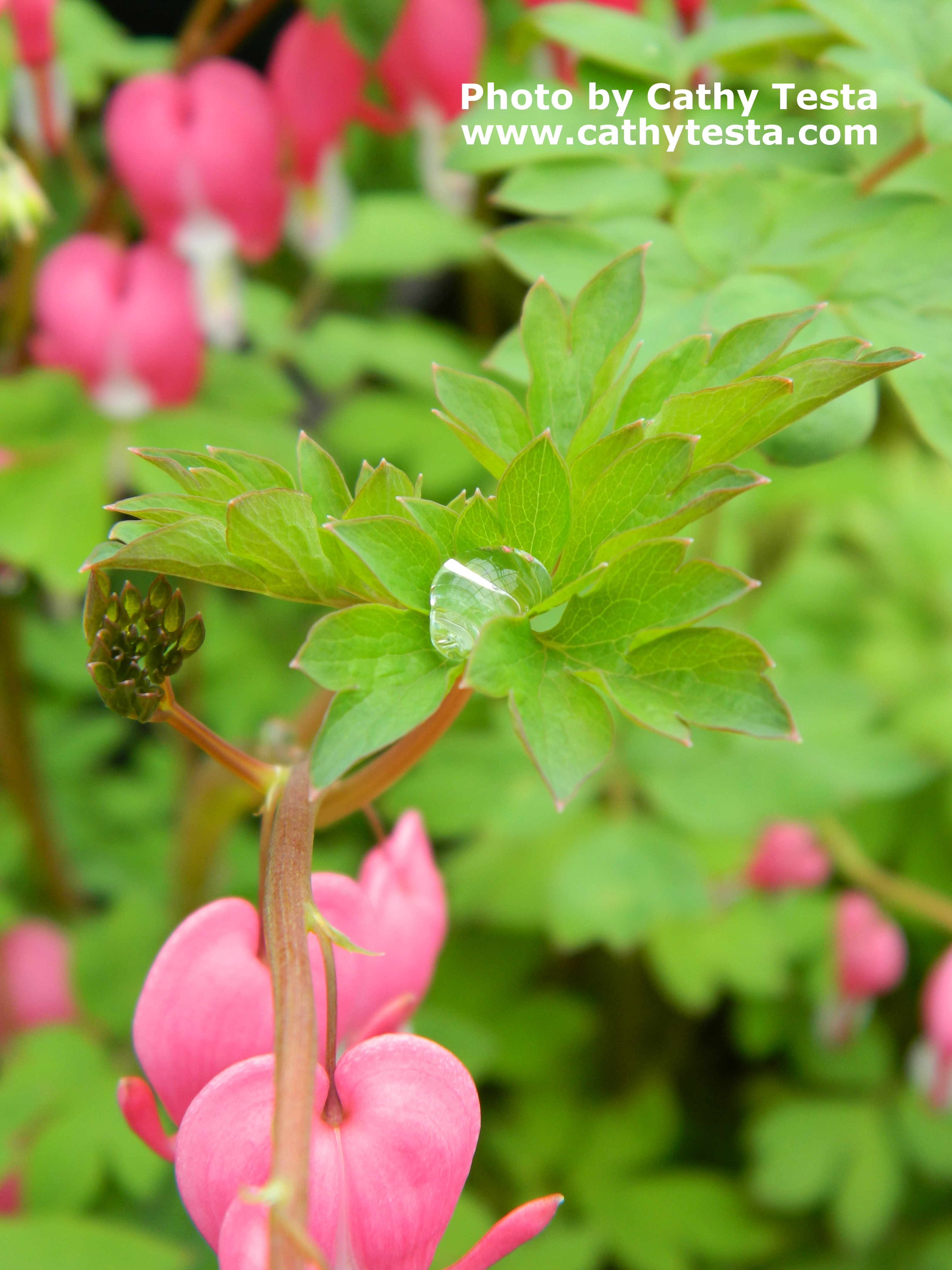
We also took close-ups of water droplets on plants, and here is one I took on a bleeding heart.  It actually worked out the day was cloudy and just a tad bit rainy.  Gosh don’t we all love this plant in the springtime when it flushes out in our gardens?  Whether you love the Old Fashioned Bleeding Hearts or newer types with golden foliage, you can’t disagree with nature’s ability to capture our hearts with the rose-pink flowers on fern-like foliage dangling like charms from its stems in May.  This perennial looks amazing alone in a garden or mixed with other shade candidates like Astilbe, Pulmonaria, Hostas, and ferns – just to name a few.  However, I don’t recommend them in container gardens because they go dormant later in the season and kind of fade away.

Droplet on Bleeding Heart Leaves

Droplet on Bleeding Heart Leaves

The other two attendees had way more background on the camera’s technical aspects that moi, and they were practicing the tips reviewed by Catherine Cella.  My suggestion was to take photos of the flowering trees at our class location – The Garden Barn Nursery and Landscape in Vernon, CT.  There were many breathtaking blooms of magnolias, redbuds, dogwoods, and others in bloom now.

Here’s a photo I had to take of a Redbud tree, Cercis reniformis ‘Oklahoma’.  Talk about an intense purple wine color.  The coloring is more intense than the species on this small ornamental tree, great for smaller spaces.  It blooms in the spring, April to May timeframe, and the buds line the stems before the leaves expand.  It looks Asian to me, and has the most welcoming feeling in a garden space.

Redbud Tree Buds

Redbud Tree Buds

And I had to try to get a cool picture of one of my favorite ornamental grasses called Hakonechloa macra ‘Aureola’.  It can take partial shade and has a bright yellow color with a green stripes on the blades, and it cascades downward, versus growing upright. It is a beautiful plant to use in the front of a border, along pathways or by a terrace situation, or even in a container garden as a spiller to filler type plant.  The plant is a long-season ornamental grass, and won the 2009 Perennial Plant of the Year award. Looks great near Weeping Japanse Maples too – why? because the gold of the grass shows up against the burgundy color of the maple.

Hakon grass 'Aureola'

Hakon grass ‘Aureola’

Early in the day, Catherine joked around with a tiny toy camera hanging from her neck – it even flashes.  But rest assured, her professional camera is quite impressive – and so are her talents –  which you will see and learn from when you sign up for the next session on May 29th, Wednesday, 5:30 to 7:30 pm.  Bring your camera and your dreams – so you too can Capture the Beauty of Flowers and the images you desire in your crystal ball of the future.  The next class is only 2.5 weeks away.

Catherine holding a toy camera - as a joke of course, with attendee Jo-Anne.

Catherine holding a toy camera – as a joke of course, with attendee Jo-Anne.

Looking forward to seeing you there,

Cathy Testa
Container Crazy Cathy T
http://www.cathytesta.com
860-977-9473
containercathy@gmail.com

Capturing the Beauty of Flowers

4 Comments

Look at this stunning photo taken by a local Professional Photographer, Catherine Cella of Joyful Reflections Photography.  Catherine is my next special guest speaker on May 9, 2013 – Thursday.  To read more about this opportunity, click on the CLASSES above and take a look at the “Class Flyer” with all the details.  You don’t want to miss this chance if you love photography, plants, and the beauty of flowers.  You will learn special techniques on how to use natural light, the importance of camera settings, and more. Plus I will share information about the plants as we learn from Catherine.  We will be meeting at a local garden center at 9:00 am for this class.  Sign-up today to join us.  Looking forward to seeing you there.

Magnolia Tree Blooms by Catherine Cella of Joyful Reflections Photography

Magnolia Tree Blooms by Catherine Cella of Joyful Reflections Photography

Cathy Testa
Container Crazy Cathy T
http://www.cathytesta.com
860-977-9473
containercathy@gmail.com