Two-Tiered Container Garden with Portulaca and Elephant Ears on the Side

2 Comments

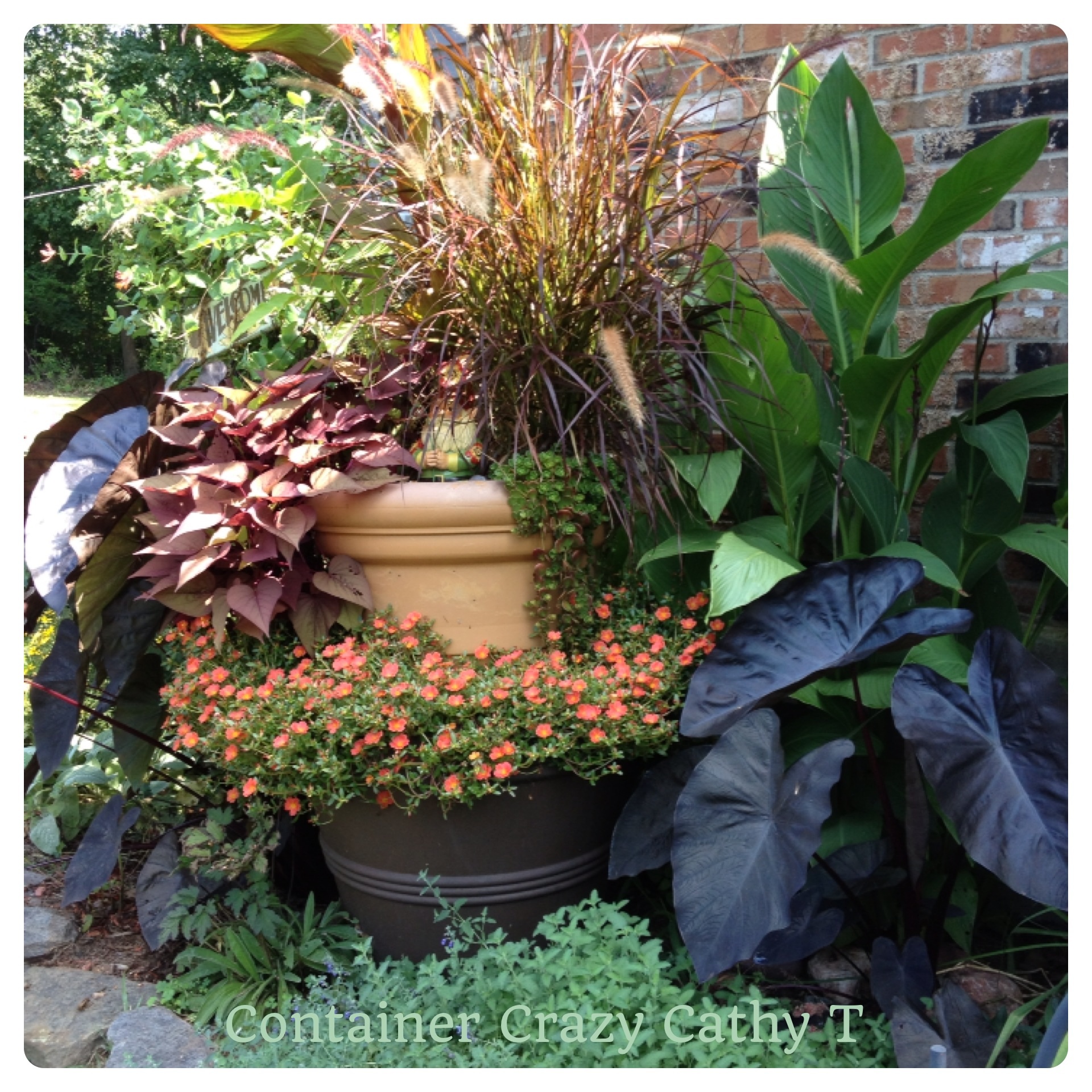
This two-tiered container garden has been impressing me all summer, and received lots of likes on my Facebook page, so I decided to share it here too.

Two Tiered Love

Two Tiered Love

It is two containers stacked, the smaller one sitting on top of the soil of the larger container.  I wasn’t sure what would be planted in the bottom level at first until I spotted some nice looking six packs of Portulaca grandiflora MOJAVE Tangerine Purslane at a local nursery. I could tell the plants were fresh and healthy, so I grabbed two 6 packs and planted them around the base when I got home. They were small sizes and easy to tuck into the soil.

I also knew this annual was a great candidate for the location of the containers, because Portulaca can take hot sun and is drought tolerant. The color of the blooms are a bright to soft orange, and with some Nepeta (catmint) planted in the ground below, the color combo of orange and blue blooms of the Nepeta would be complementary. Portulaca has a spreading habit and grows to 6″ to 8″. It blooms from early summer to frost. Definitely a hard working annual for our CT planting zones.

Orange with yellow centers of Portulaca

Orange with yellow centers of Portulaca

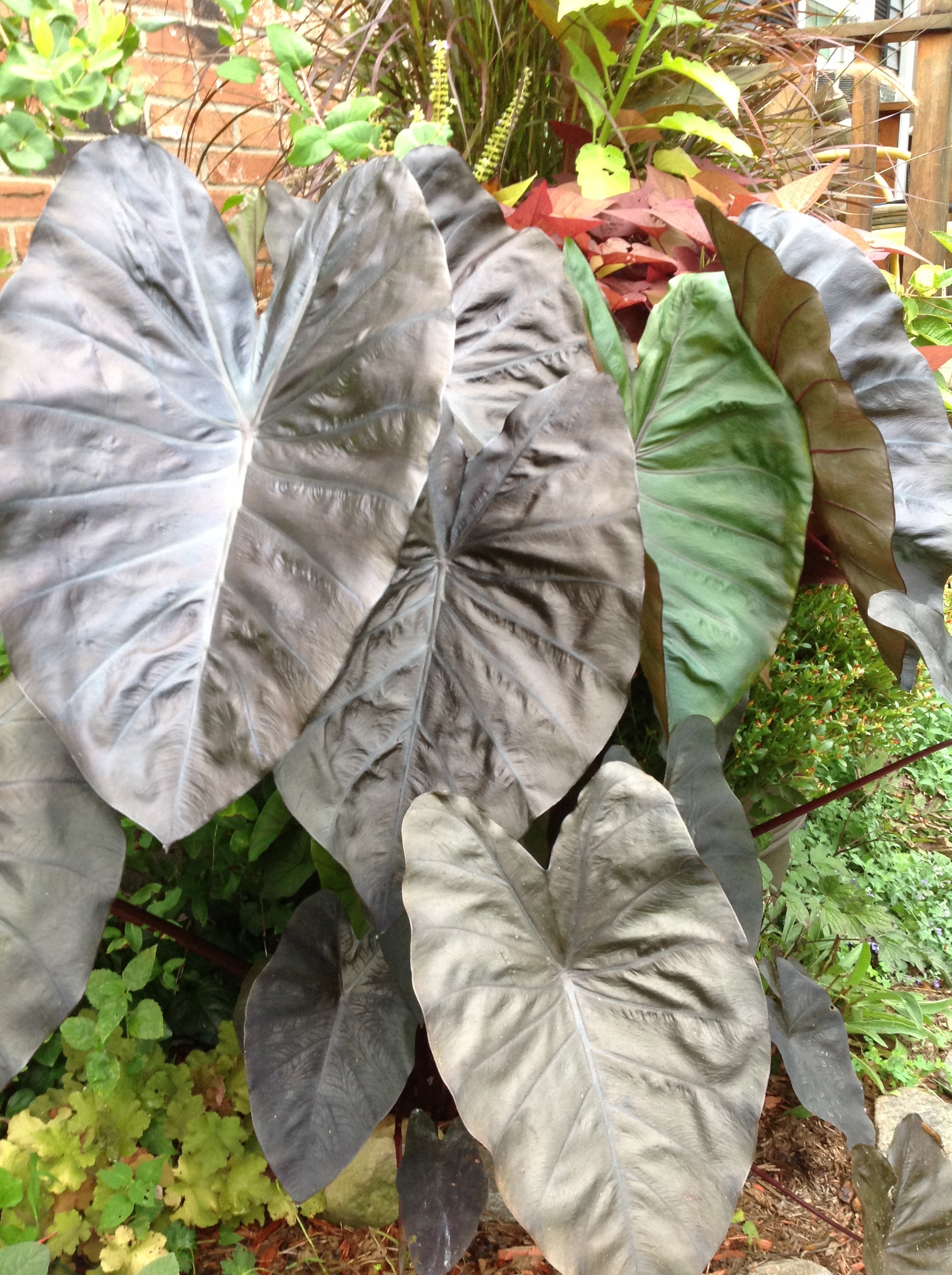
Elephant ears (Colocasia) were planted on each side of the container in the ground.  Using some kept from my overwintered stock, I thought they were Colocasia esculenta ‘Maui Magic’ but the color got so rich and lush, and at the right time of day, the leaves shimmer like a silky black negligee. So I was considering that maybe they were ‘Black Diamond’ but now I’m just not sure because ‘Black Diamond’ has pointy tips to their leaves.  Its possible the color intensified due to the location, which faces west.  I decided this was the case as I watched it grow larger all season and is still showy in fall.

Because it is against my house, it has nice shade in the morning, and the sun gradually warms up the area mid day, but by mid afternoon, it gets hot sun. As long as you water your elephant ears regularly, they can take the sun too. It turned out the rich dark color of the elephant ears look amazing against and near the showy orange of the Portulaca. It made the Portulaca stand out more with the contrast in color plus the leaf textures of both, the Portulaca being fine and Colocasia being coarse, worked.

Colocasia elephant ears, tropical

Colocasia elephant ears, tropical

The only downfall of the Portulaca is the blooms roll up tight for the evening. So, around 3 pm, the bloom show closes for the day.  The disappointment was my guests missed out on how incredibly beautiful they are if they visited later in the day. I had forgotten these flowers do this. In fact, a friend told me recently she has some at her house, and her husband asked her what happened to their plant when he came home one evening to see their’s rolled up tight too.

Closed by mid afternoon

Closed by mid afternoon

The top part of the two-tiered container let me down a tad. I expected the Brugmansia (Angel Trumpet) to grow taller along with the Canna next to it. However, the Pennisetum setaceum ‘Rubrum filled in nicely. Known as Fountain Grass, it is always a great filler or thriller in a container garden.  It is an annual in our region. But the coloring of red blades can’t be beat, and worth replanting every year in containers. It reaches 2-3 feet tall and its fuzzy plumes are showy into the fall season.  It looks great with fall decor for some reason, guess because it has movement and has a nice rich color against the yellows, reds, and oranges of the autumn season.

Planted to the right of the pot were also some Canna plants with red blooms. Sometimes when I was admiring the Portulaca blooms, a buzz from a hummingbird would go by my ears as it visited the Canna. I call the Cannas, my ‘Rene Cannas,’ because my friend, Rene, gave the rhizomes to me last season.

My Rene Cannas with red blooms

My Rene Cannas with red blooms

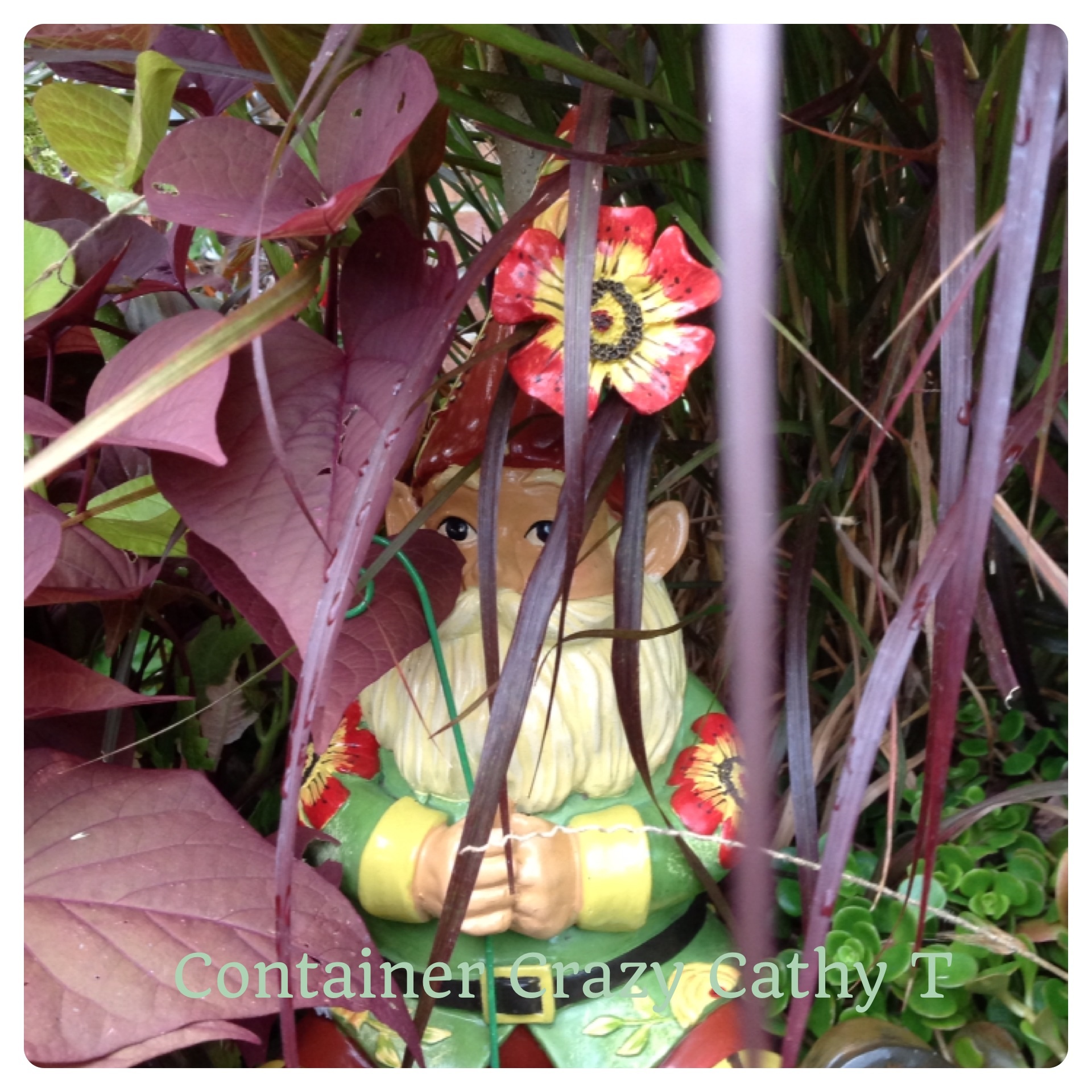
For the spiller, the reliable Ipomoea batatas (sweet potato) vine was planted on the left side.  This one is Sweet Georgia Heart Red.  And on the right side is Sedum makinoi, which is new to me. It has a nice shape to its leaves and dark coloring so it fit in with the rest. Lastly, a little decorative Gnome was tucked in for fun.

Protecting my containers

Protecting my containers

The fact my containers are old and a bit worn did not matter because the plants created a lush and full look hiding the scratches on the pots. As one Facebook friend posted, it is “Beautiful, rich, luscious, heavenly.”  I, of course, agree!

Written by Cathy Testa

One more photo:

On second tiere

PORTULACA LOVE

A Mansion Grand Enough for Topiary Camels in Newport, RI

4 Comments
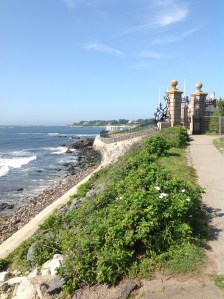
Cliff Walk View

Cliff Walk View

We had no intention of touring a mansion during our visit to Newport, RI this summer, but it ended up falling on our agenda regardless.  The last morning of our weekend, we packed a cooler filled with a picnic lunch, and headed off to the famous Cliff Walk.  Our goal was to sit and watch the rolling waves after we got in some exercise.

But, about 20 minutes into our walk, we discovered a barrier ending the path early. The sign indicated the Cliff Walk was closed “beyond this point” due to storm damage, up to Ledge Road.  Disappointed, yet determined, we backtracked to our car, and drove up Bellevue Avenue to locate the Ledge Road entrance, so we could continue our walk beyond the damaged areas.

Finding Ledge Road was easy, however, we discovered there was no public parking near that entrance, only private street side spaces.  We drove back up the end of Bellevue Avenue considering what to do next.  It was then I noticed beautiful and full Hakonechloa grass by a gated entrance.  I wanted to take a photo of the grasses because it was such a great example of how to use them in the landscape, so I asked Steve to slow down.

That moment lead to us entering the premises, marked “open” by a flag near the entrance gate.  The friendly man at the gate told us a tour of the mansion on the property was about to begin in a half-hour.  With nothing else on our backup plan, we got tickets to join the tour.  This was the last mansion on the famous Bellevue Avenue strip, called Rough Point – and maybe one that is overlooked since it is last on the strip.  I know we wouldn’t have bothered if it wasn’t so convenient as our next adventure of the day.
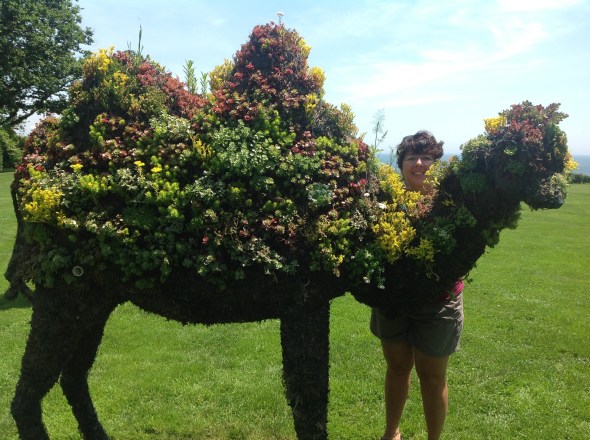
Camels Stuffed With Succulents and Herbs

Camels Stuffed With Succulents and Herbs

As we drove into the parking area, we both noticed topiary camels in the side yard, and thought that was interesting, and a little unusual or unexpected.  This was, after all, a mansion.  Wondering what the story was behind those, and thinking I will take photos of it later, Steve went to get tickets for us.  He exited the mansion with a white pamphlet in his hand, which I began to read.

“Wow,” I said, “This property was designed by Olmsted, … as in the father of landscape architecture.”

So naturally with the white pamphlet in hand, I was excited that we would be touring his home.  What a coincidence – this is something I’m actually very interested in.  Guess those Hakon grasses at the entrance were a sign of sorts.  Followed by the camels – well, this may be worth doing.  So onward we entered, and I couldn’t wait to hear about him and the property.

Front of Mansion facing Ocean n Cliff Walk

Front of Mansion facing Ocean n Cliff Walk

Upon five minutes into the tour guide’s talk, I was confused.  Why was she referring to a woman who owned this mansion, and not a man?  And who is this woman, by the name of Doris Duke?  She obviously was someone rich and famous by the million dollar paintings and art pieces in the house, but was she married to Olmsted, or what?  I turned to Steve holding up the white pamphlet and whispered, “I thought this was about Olmsted?”  He just shrugged his shoulders, and frowned a little when he heard the tour guide say it would be about an hour or so for the tour.

Turns out the fact the outdoor grounds were designed by the “father of landscape architecture and one of the most prolific and renonwed American landscape architects,” was not a major highlight of the tour.  It was just a coincidence, a good one for me, because I was now excited for both the tour and grounds to follow on our own. I figured after hearing the tour would take one hour, the best part would be when it was over when I could see the outdoor landscape and gardens, which they noted we could take our time to enjoy.  And it gives us access to view the ocean on the mansion side, versus the broken and damaged inaccessible Cliff Walk.

As we heard about this woman’s taste in her collections, and about her large dogs allowed to sit on rather valuable furnishings, and about her two camels by the names of Baby and Princess, I was intrigued, and very much interested and enjoying the story of Doris Duke’s life as a philanthropist, world traveler, and collector, while viewing the many treasures in her mansion and home.

Doris Duke, it turns out, inherited an estate estimated at $80 million at the age of 12, from her father.  Her father was an industrialist, and founder of the Duke Power Company.  It was mentioned he also invented the first rolled cigarettes.  She was his only daughter.  Wow, 12 years old and rich, but not without wisdom as we learned more.  She gave so much of her money to worthwhile causes, appreciated art and valued treasures, loved animals, and traveled the world.  I was kind of diggin’ this chick more than the vision of seeing Olmsted’s designed property and grounds outside after the inside mansion tour.

The whole time during our tour, I fantasized about the kind of life she led, filled with supporting charitable foundations (some in the horticulture scene such as the Orchid Society), and wondered how she and her friends dressed during their social events in the mansion’s grand rooms.  But there also seemed to be a tone of loneliness, perhaps, or it was just part of my vivid imagination – but somehow, I sensed she lived somewhat of a solitary life at points.  Maybe it was something about how she would swim for an hour by herself in the ocean facing her grand home, or the fact she was married, twice – but both marriages were brief, and also sadly she lost her only child, 24 hours after delivery.  Or perhaps it was something about her independence – how she would allow her rather large dogs to sleep on extremely expensive furniture, and have two camels roam the property.  To me those were little signs that she was not only elegant but down to earth.  I could be wrong, but I wanted to continue my daydreaming as I looked over every piece being well-described by the tour-guide (who I suspected was a teacher in her former life because she asked us questions about history, and other things, kind of like a mini test).

Whatever the reason I sensed this air of loneliness about Doris Duke, the home itself was a place I felt was cozy as well as grand.  It was filled with amazing carpets and tapestries, furniture, and paintings beyond my artistic knowledge, but the house still had a feeling of a place you could live in without it feeling overwhelming.  The rooms were connected in such a way, it wasn’t over powering, and it included a conservatory, which I couldn’t wait to see.

Once we arrived to it – the conservatory facing the grand lawn and ocean beyond, we heard a comical story of how the camels, named Baby and Princess, were put into the conservatory during a hurricane one year.  Doris had the staff clear out the room and put them in there to protect them. I won’t tell the rest of the story, better to save it for the tour you will attend if you plan to visit Newport, RI. But they did survive, and one camel is still alive today.  This was another piece of Doris that made her feel down to earth and not too pretentious.  After all – who would let camels into a mansion!?!
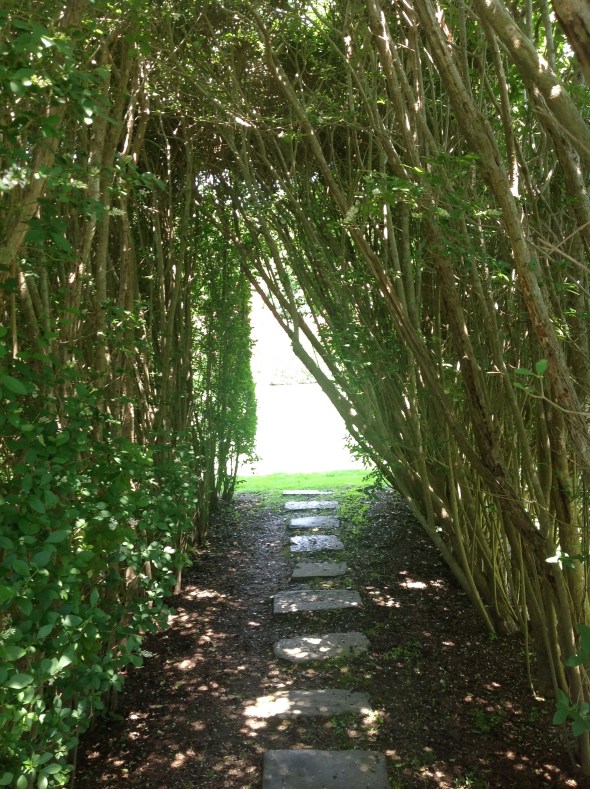
Hedge tunnel path to Secret Gardens

Hedge tunnel path to Secret Gardens

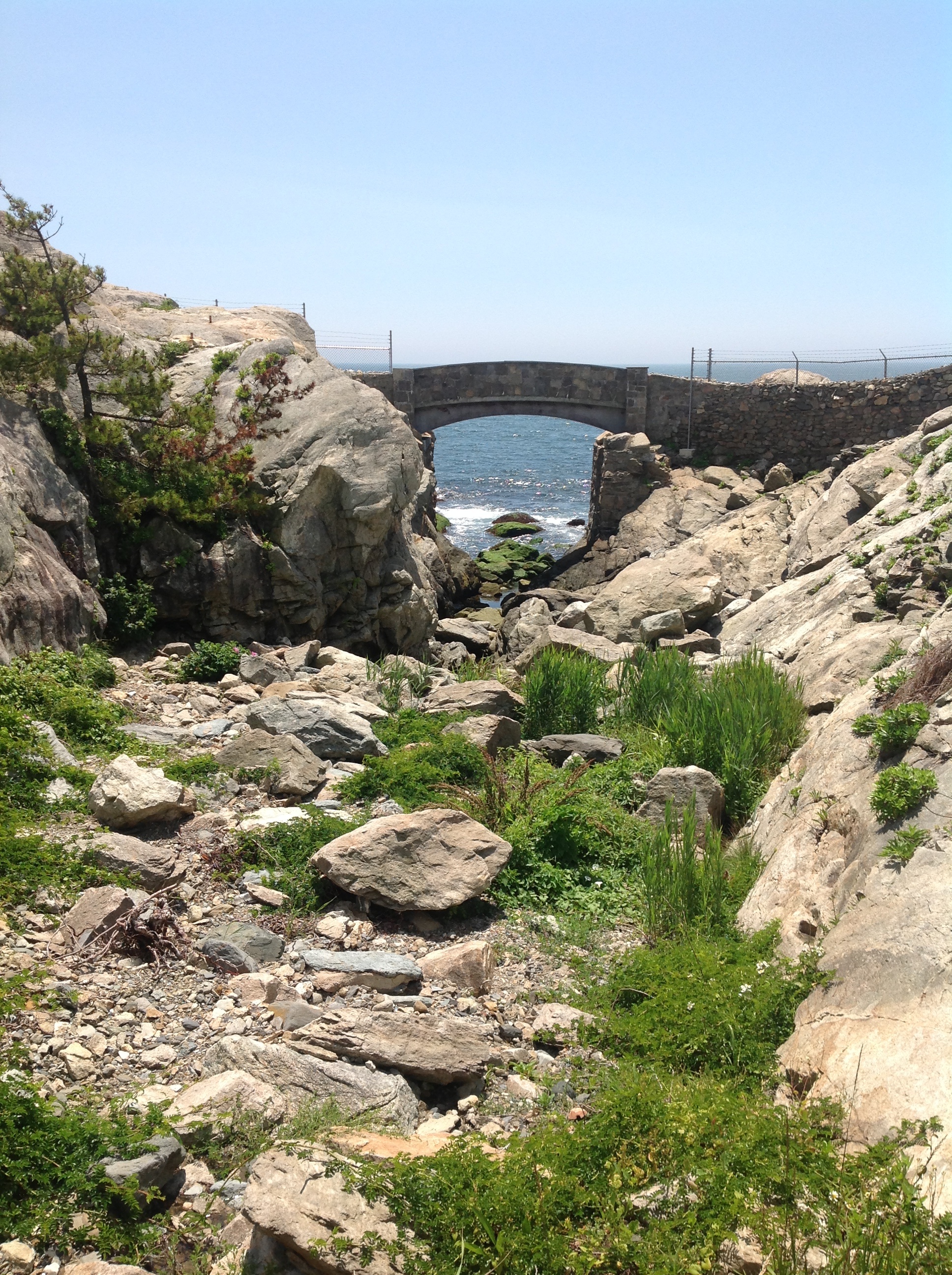
Once our indoor tour was completed, I was eager to visit the secret garden behind the privet hedges briefly mentioned, and the kitchen garden on the opposite side of the 10 acres grounds, which was twice the size when Doris Duke was alive.  But first was to go see the camel topiary structures in the side yard stuffed with drought-tolerant sedums, succulents, and thymes in honor of Baby and Princess, a gift to Doris Duke from a Middle Eastern businessman, as part of an airplane purchase.  Yup, guess the camels make sense now.  They were grand enough for a mansion, or perhaps the mansion was grand enough for them.  This would depend on your point of view.  And the swimming gate where Miss Duke entered the ocean for her daily swims – hard to imagine with the rough waves beyond, or the beautiful stone bridge flanked by rocky outcrops.  I took off my sandals and enjoyed the soft lush lawn under my feet as I began to walk in awe of the place.  Suddendly I realize I wasn’t considering Olmsted at all, and only Doris Duke’s life and vision.  She had a big part in many aspects of the outdoor areas as I read more later.
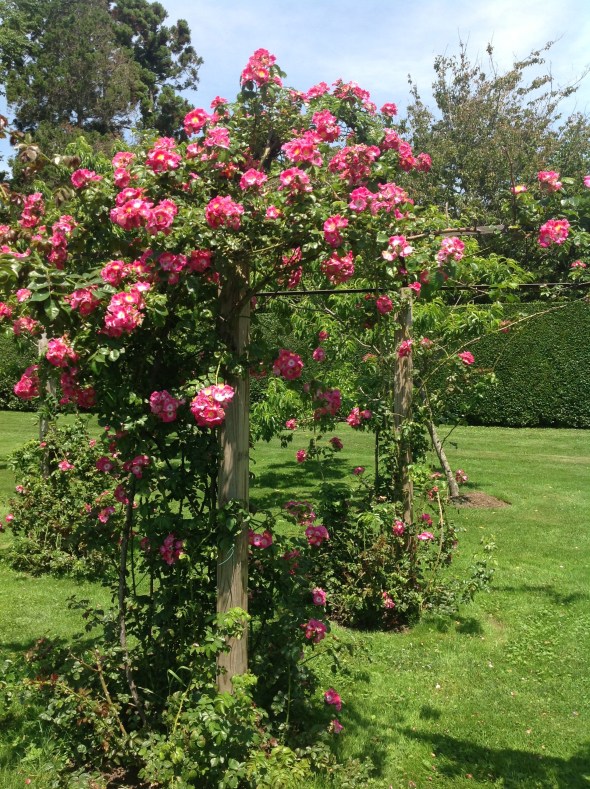
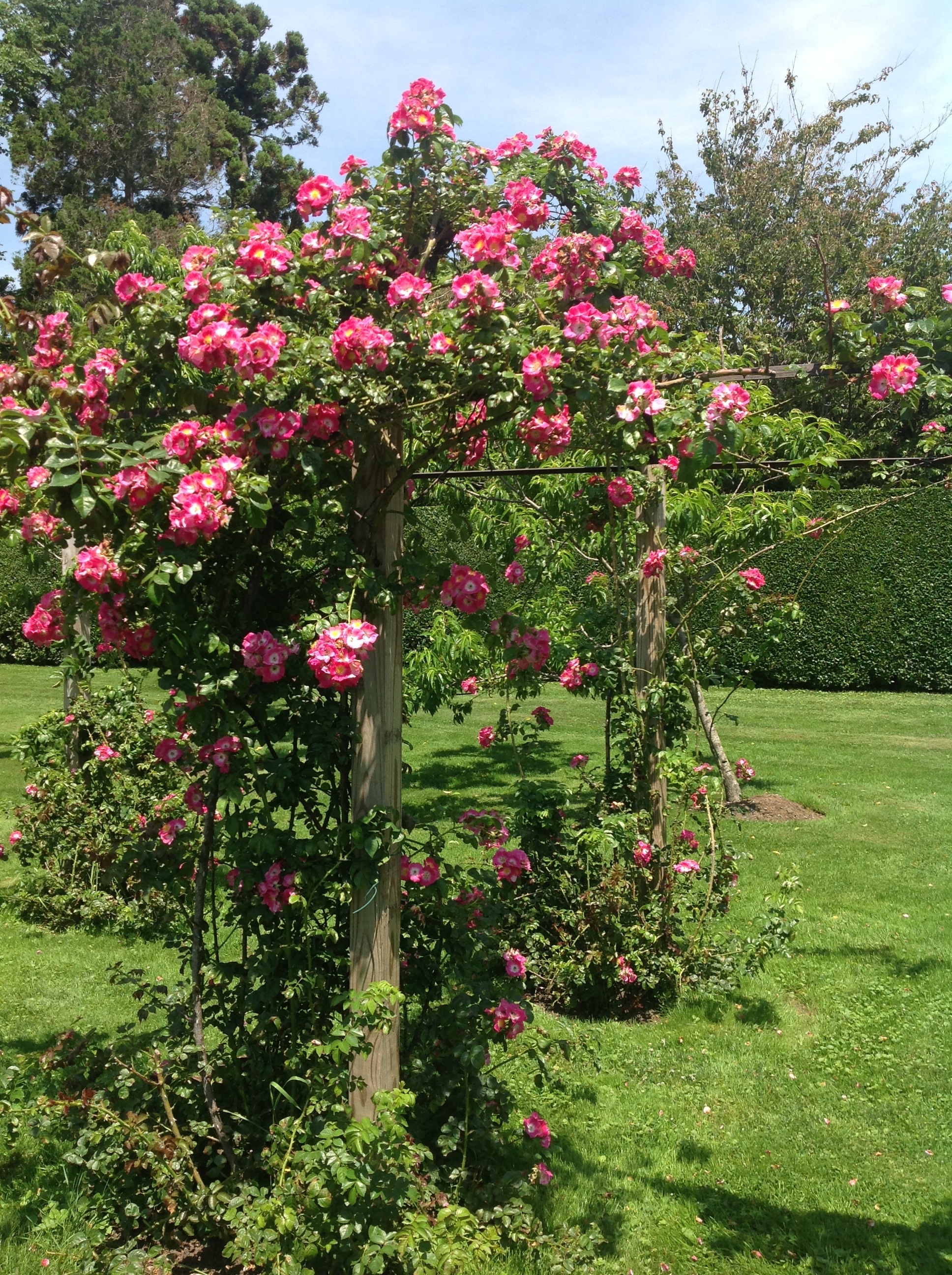
Roses blooming in Gardens

Roses blooming in Gardens

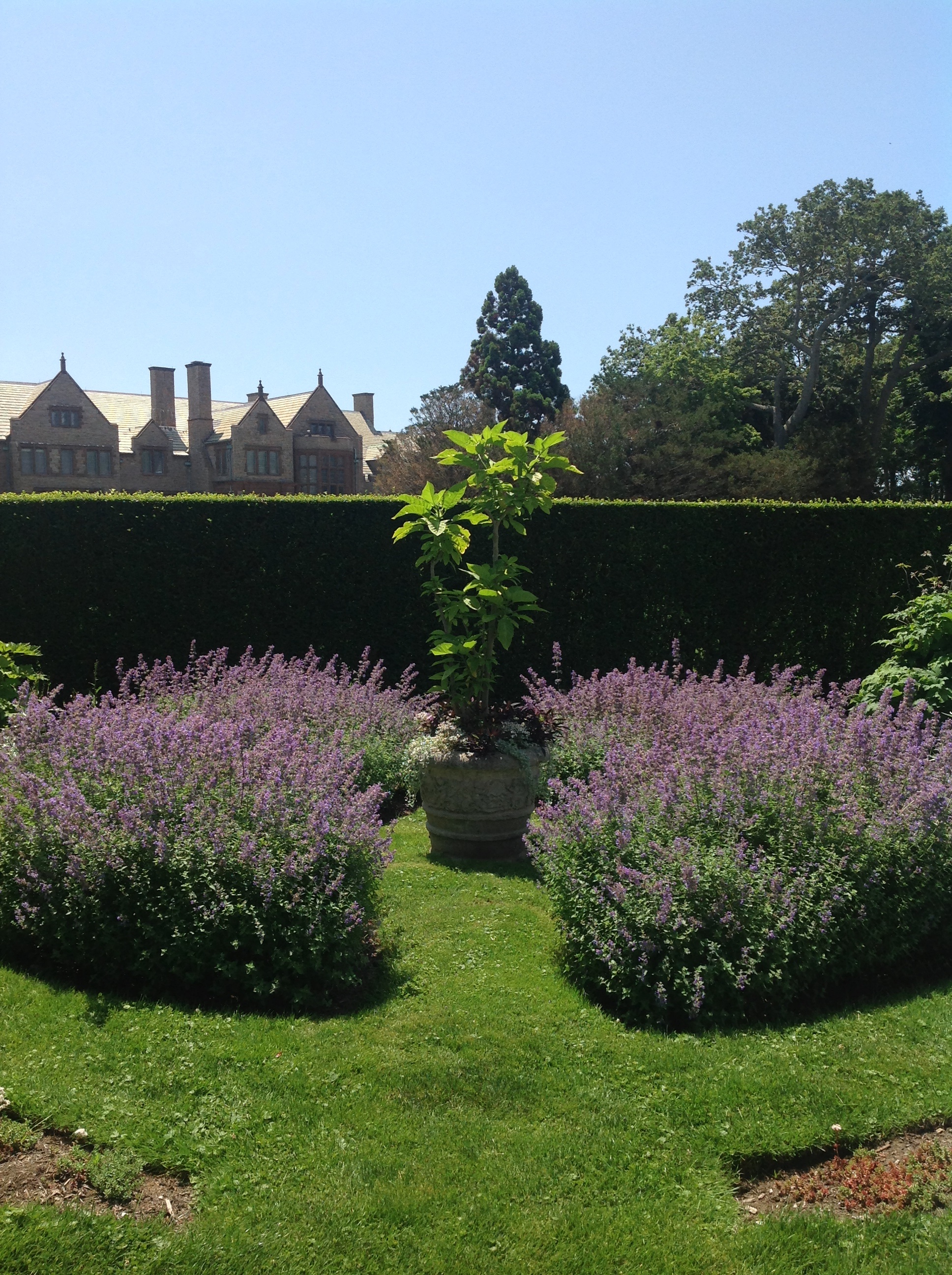
While in the private garden on the property, with a rose arbor was installed and planted at Doris Duke’s direction, planted with ‘American Pillar’ roses, which bloom only once a year, usually around July 4th, which happened to be the weekend of our visit.  The area is surrounded by a privet hedge, and flowers and tropical plants are included in the gardens.  While it doesn’t stand as it did in the same fashion as when Doris Duke directed the plant list, there was much to be enjoyed.  One area surrounded by a hedge of catmint (Nepeta faassenii) with a Brugmansia in a container in the center, was a favorite of mine.  Along with a bed lined with lamb’s ear (Stachys byzantina) and Boxwood.  And to see banana plants, most likely the hardy Bajoo’s, made me feel all the more admiration for the property and home.

lambs ear perennial lines edges of garden

lambs ear perennial lines edges of garden

Banana Plants in the Garden with Perennials

Banana Plants in the Garden with Perennials

While I suspect it was common to put the gardens tucked away in private areas, part of that made me sad, for you can’t see them unless you go adventure there.  Again, dreaming about how I would put gardens throughout the property, rather than leave a wide open lawn, which by the way is maintained by organic methods.

Brugmansia with Catmint

Brugmansia with Catmint

In The Kitchen Garden

In The Kitchen Garden

We discovered, as we toured the kitchen garden on the opposite side of the property, cinnamon and clove, are used as an insecticide.  A staff person, nameless and camera shy, came by to talk to us and told us this.  He said it was part of Miss Duke’s commitment to environmental causes, and the property, all 10 acres, have been maintained using organic practices since 2007.  This is truly amazing.  Removing my sandals as I walked the lawn areas, it was soft and cozy underfoot, and not one pesty insect was spotted in the kitchen garden as I snapped photos.  Our mysterious staff person, dressed in a white chef shirt, took our photo and complimented our chemistry saying he could see we were enjoying touring the grounds.  I kind of figured he was also investigating our investigation – this is a place, obviously is filled inside and out with rare and valuable beauty.

Opening where Doris Duke walked for swims in the ocean

Opening where Doris Duke walked for swims in the ocean

Some Tips:

DATES: Check the tour dates of RoughPoint, The Newport Home of Doris Duke.  It is closed during the winter season.

CAMERA: Bring along your camera – for the outdoor portions.  Indoor photos are not allowed.

LUNCH: Pack a lunch – as we did, for they don’t limit your time on the grounds, so you can enjoy the view with some snacks.

TIME: Give yourself one hour for the indoor tour, and one hour to enjoy and tour the historic grounds.

CLIFF WALK ENTRANCE: Enter the Cliff Walk via side street entrances (versus the beginning point).  There is one on Webster Street and Narragansett Avenue, shaded and free to park street-side.  Or, you can park at the beginning point of the walk, the entrance by the beach off of Memorial Boulevard, but have to walk up a long hill, and in the hot humid sun, we opted for the shaded area starting the walk a bit further along off Narragansette Avenue (connect via Annandale Road).

Cathy Testa
Container Crazy Cathy T
http://www.cathytesta.com
860-977-9473

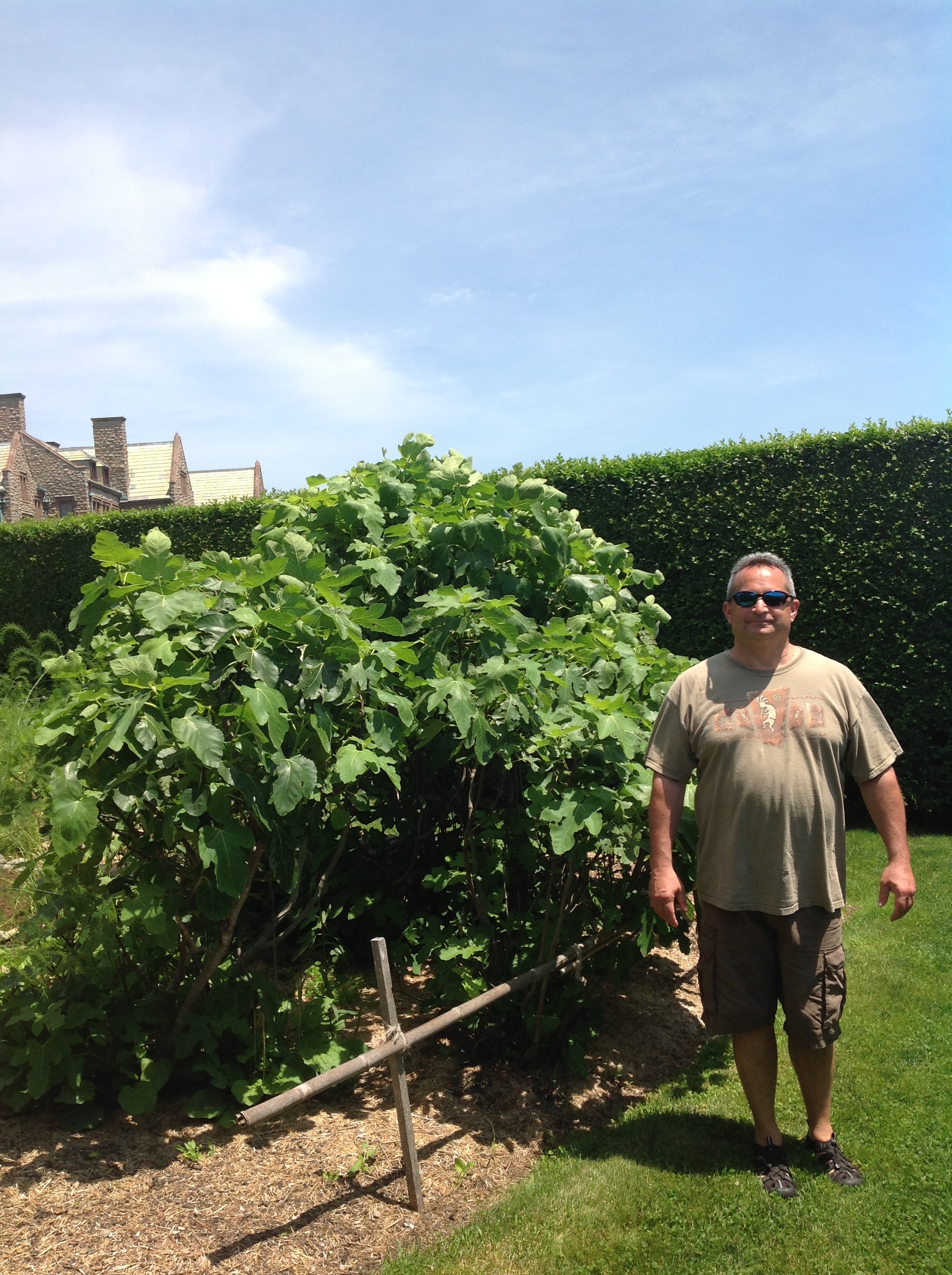
Steve next to Fig Trees in the Kitchen Garden

Steve next to Fig Trees in the Kitchen Garden

Mini Embellishments offer Maximum Inspirations

2 Comments

The first thing I did this morning, even before turning on my coffee maker, was take a photo of my mini creation from last night’s workshop held at my home.  It is themed after the bird houses in my own backyard and kept simple, yet it made me smile and feel inspired. I think I’ll keep it right here by the chair I like to have my morning coffee in, and during the dreary days of winter, it will be a little reminder of warmer sunny days returning when the birds start visiting our birdhouses to build their nests again.

My Birdhouse Themed Mini Garden

My Birdhouse Themed Mini Garden
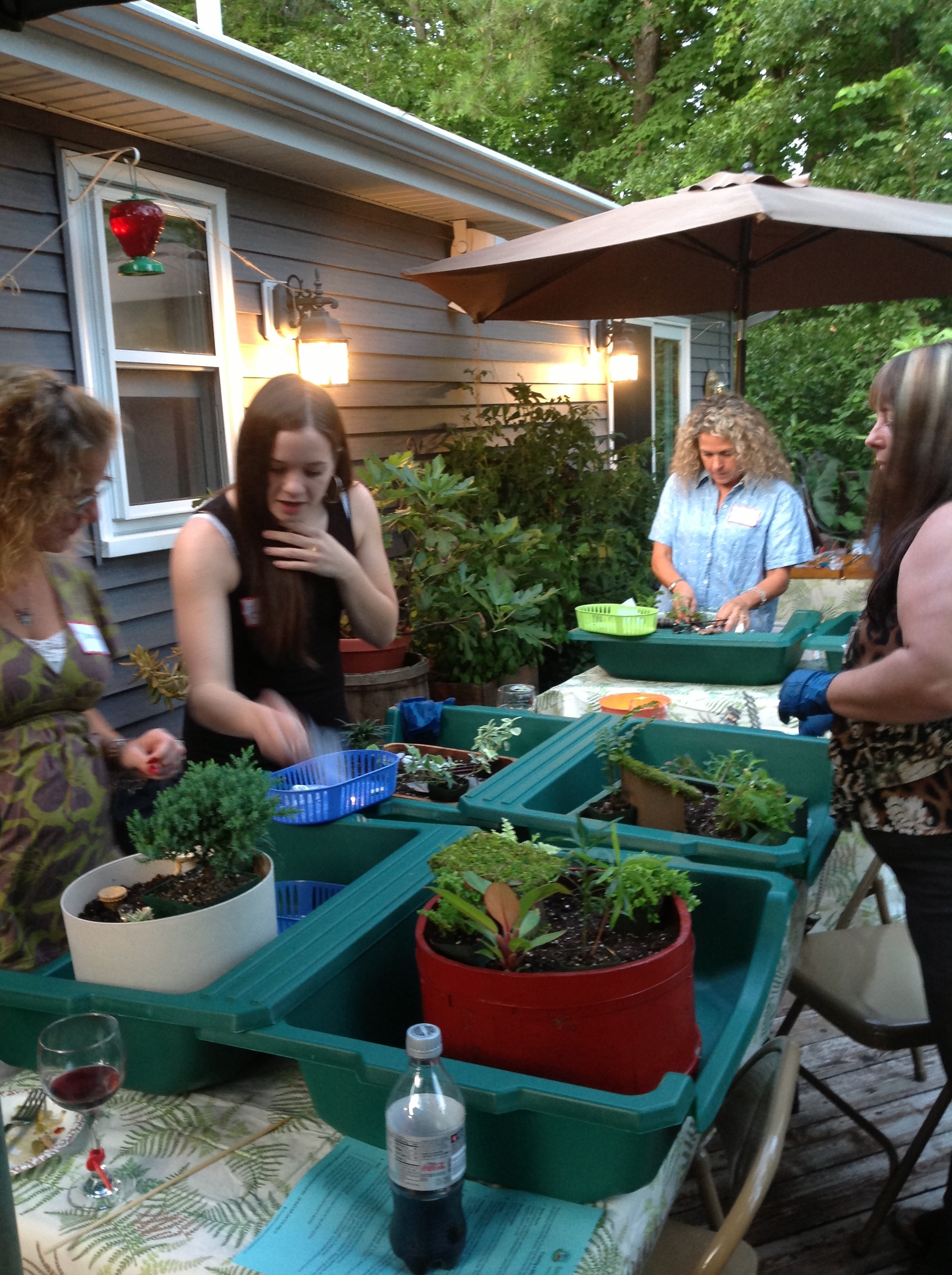
Themes were an important feature discussed by my very special guest instructor, Rhonda Niles, of Gardening Inspirations. She went over the how to’s and the why to’s as she gave a very professional workshop for the attendees.  Many of my good friends, clients, and new faces from local garden clubs were part of the group. Having a mix of people made observation interesting, as each person pondered their theme choice.

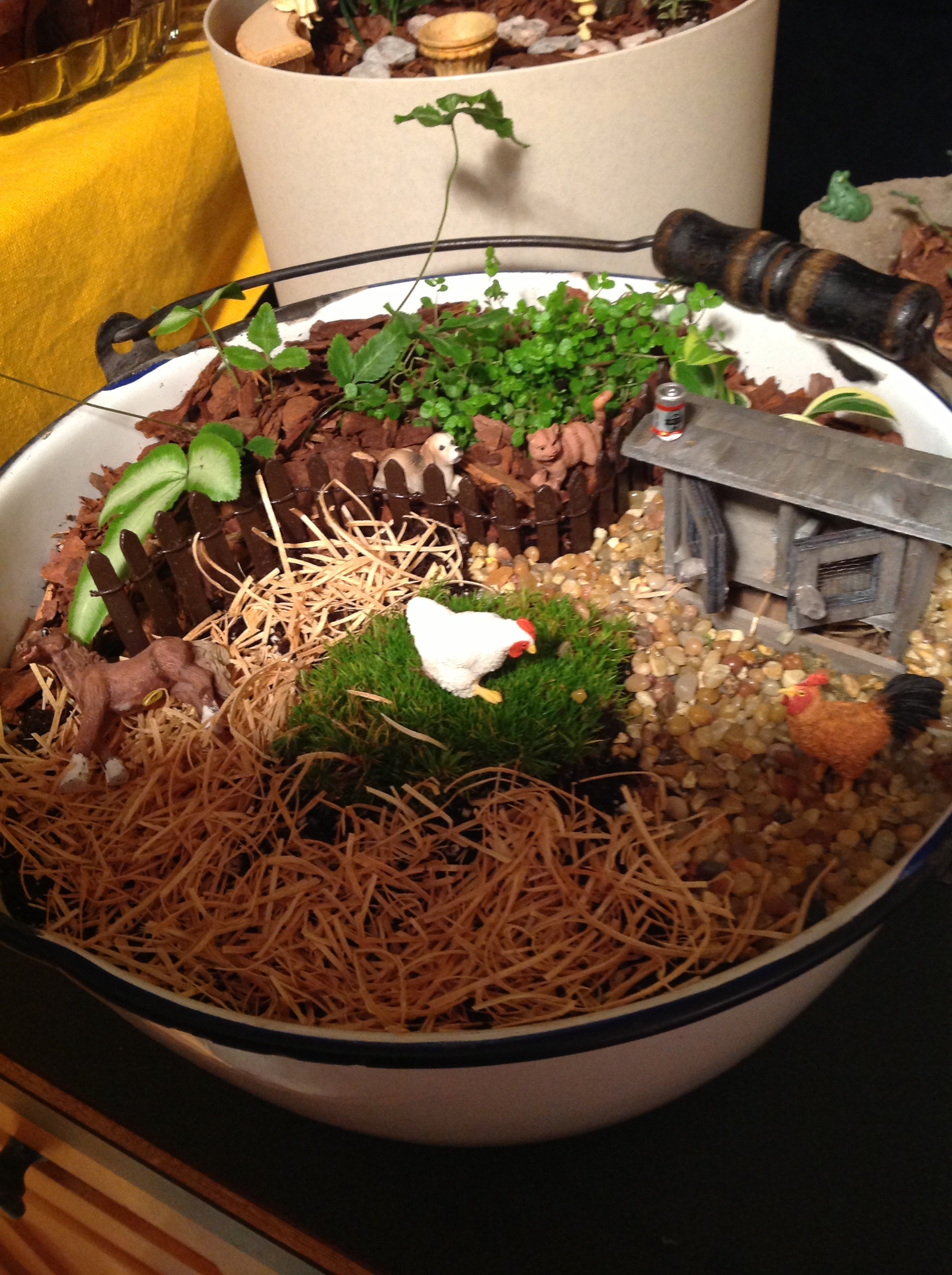
Barn yard themed by an attendee

Barn yard themed by an attendee

One attendee, Dianne, themed her miniature garden on a farm and farm animals. She has a quaint farm herself, and is an avid horse lover.  The charming bowl she brought with a handle was the perfect choice.  She asked her partner to drill holes in it, for she knows the rules about drainage, and in his honor, she included a mini beer can in her scene. Can you see it?

Another themed her creation on a dog park, and there were fantasy themes such as fairy woodland hide aways. One of the fairy gardens scenes was by my cousin, another Diane in the group. She thought about including a wine table but we agreed the vino didn’t seem right in this fairy world. But I just loved how she put a fairy on top of the little house, and the other one on a patch of soft grass.

Fairy land Scene

Fairy land Scene

Each came out very unique and special. I particularly enjoyed themes based on a special place. It is fun to recreate a place in a pot.  Kim, another attendee, created a secret looking scene too.  It came complete with the gazing ball and white bunnies. And her red wooden pot choice was perfect too.

Woods n Treasures by Kim

Woods n Treasures by Kim

We enjoyed some girl time, refreshments, and one of the most pleasant cool evenings of August. Everyone was enjoying creating so much, it started to get dark and we worked by candlelight.  Many attendees had balanced looks to their designs – perhaps a method to practice landscape designs!

I am blessed to have the opportunity to offer these types of classes, and appreciate Rhonda’s efforts to setup, instruct, and provide explanations about the dwarf plants and miniature embellishments. With good care, everyone’s take home Miniature Garden will last a very long time.

Thank you to Rhonda and our guests for a very enjoyable evening!  And…Have a good weekend.

Cathy Testa

workshop

workshop

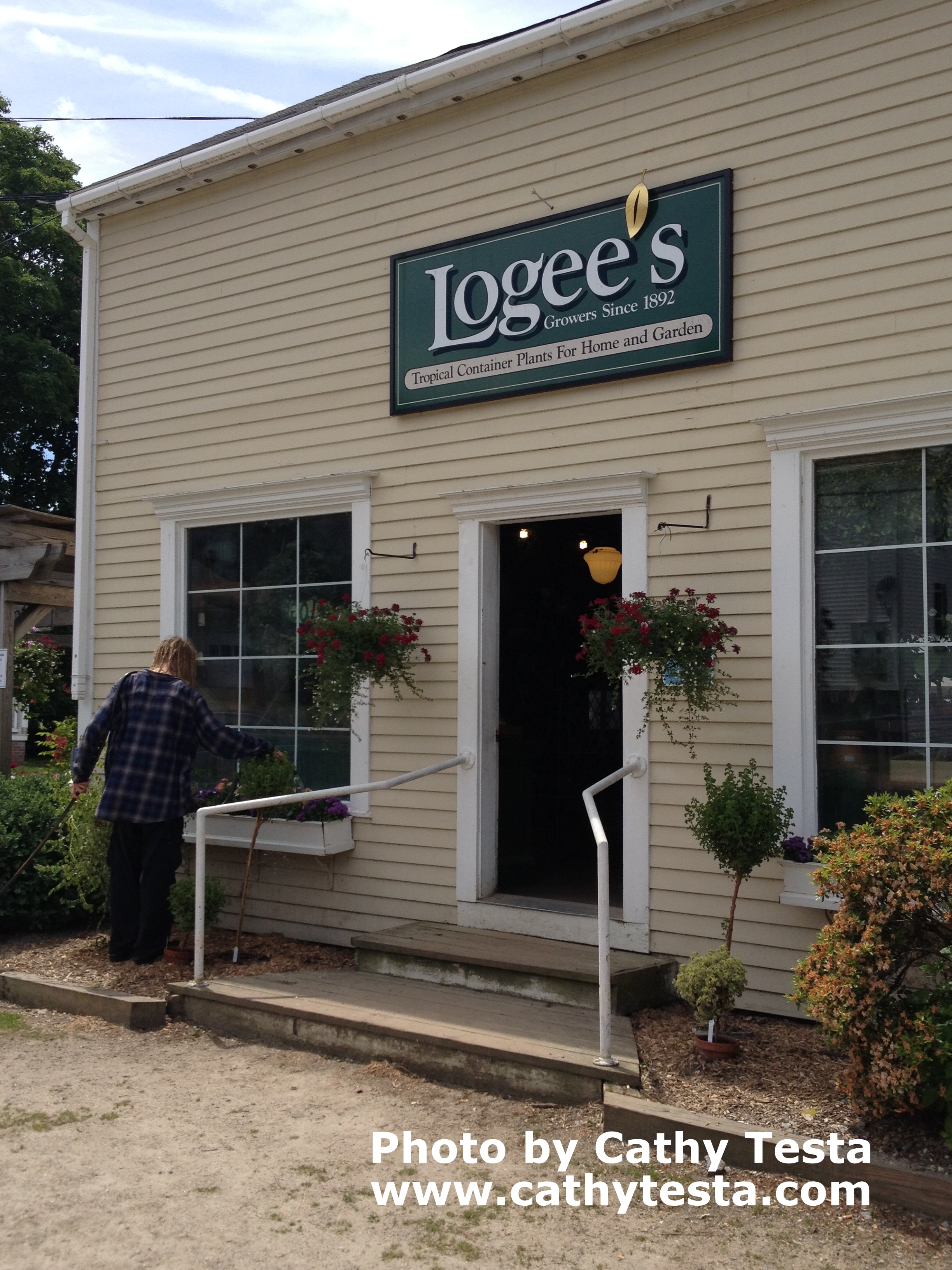
For a mystical and eclectic plant mix, visit Logee’s in Danielson, CT

6 Comments
Logee's Growers, Danielson, CT

Logee’s Growers, Danielson, CT

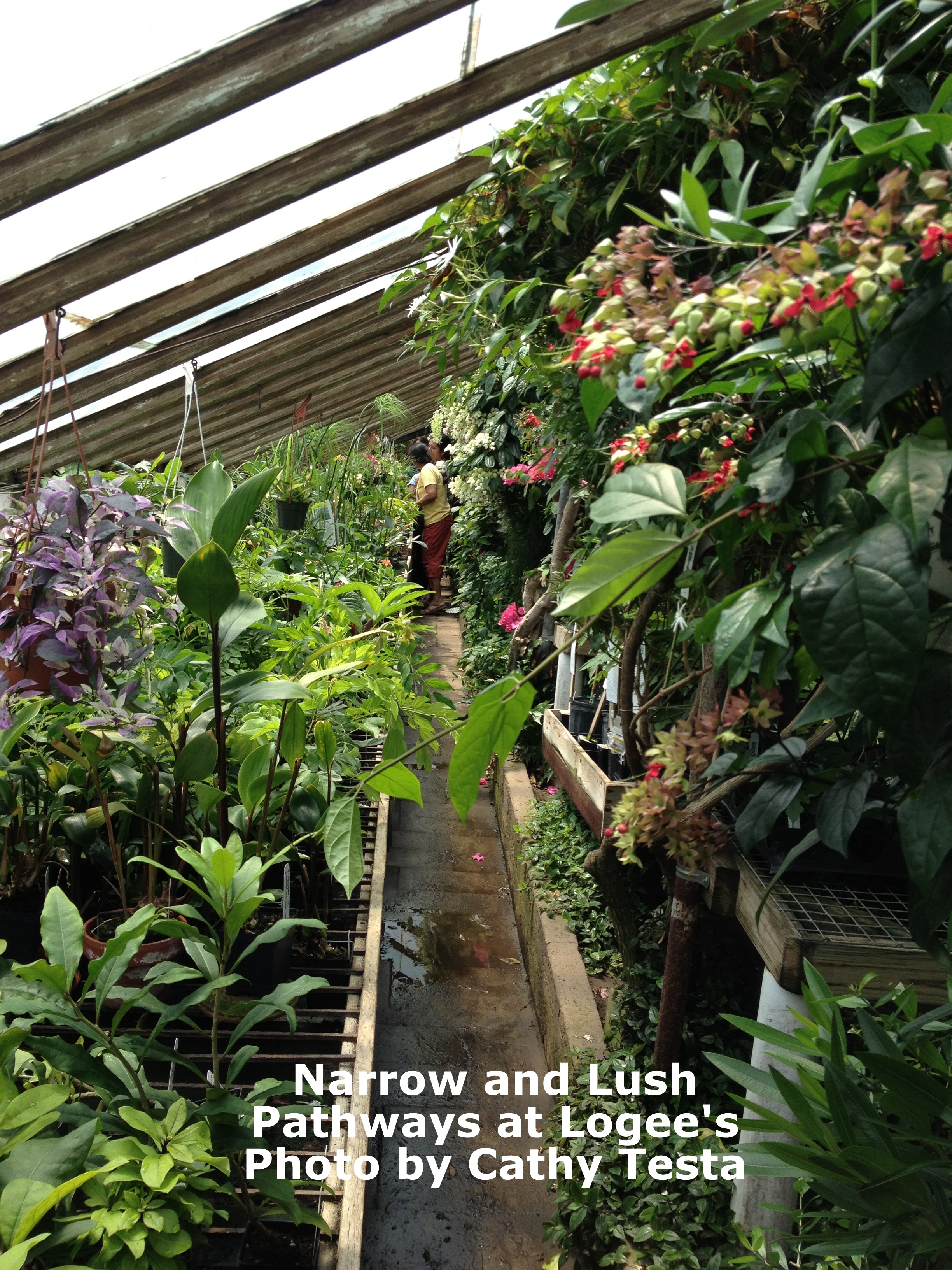
When you enter Logee’s greenhouses in Danielson, CT you may want to make sure you do not suffer from claustrophobia because there is a jungle like atmosphere in this grower’s world unlike the traditional environment of a nursery.

As you enter the first greenhouse down some rickety old steps, you have to decide, do I go left or right?  And depending on what you see down the narrow corridor between plants, you may opt to take a detour.

The aisles are so lush with plantings on all sides and vines are dripping from the greenhouse ceilings above, only one person can pass through at a time.  You sometimes have to take the “high road” as one employee called it by stepping up to a side connecting pathway to allow other plant enthusiasts to pass by.

In my case, a group of very gabby women were coming towards my direction up the pathway, so I took the high road and stepped up to wait for them to go by in single file. They noticed I was admiring a papaya plant, and one lady (apparently the leader of this group) commented the plant has healing powers, where you can take the plants’ leaves and wrap them around your legs to sooth wounds, or something like that.  She had a bit of an accent so I wasn’t sure what exactly she said, but it was obvious her group was super charged about the abundant offerings of fruiting and fragrant tropical plants at this unique plant destination.  And I was too, I couldn’t wait to adventure more.

Logee's Greenhouse

Logee’s Greenhouse

I put the papaya plant back down, and contemplated returning to look at it again later, knowing I would have to browse the entire greenhouse and adjacent house before I would decided on the plants to take home.  And it would be a tough decision.  Logee’s has a large selection of many interesting plants.  And you have to look carefully – as in “up, down, and all around” to make sure you don’t miss something intriguing, plus walking in there can be a little tricky.  Let’s just say, it is not for the dainty feet, for there are some water spots and ruts along the way, all representing the 121 years of service this location has offered for the plant hobbyists falling into the ‘untamed’ category.

Dripping from the Ceilings

Dripping from the Ceilings

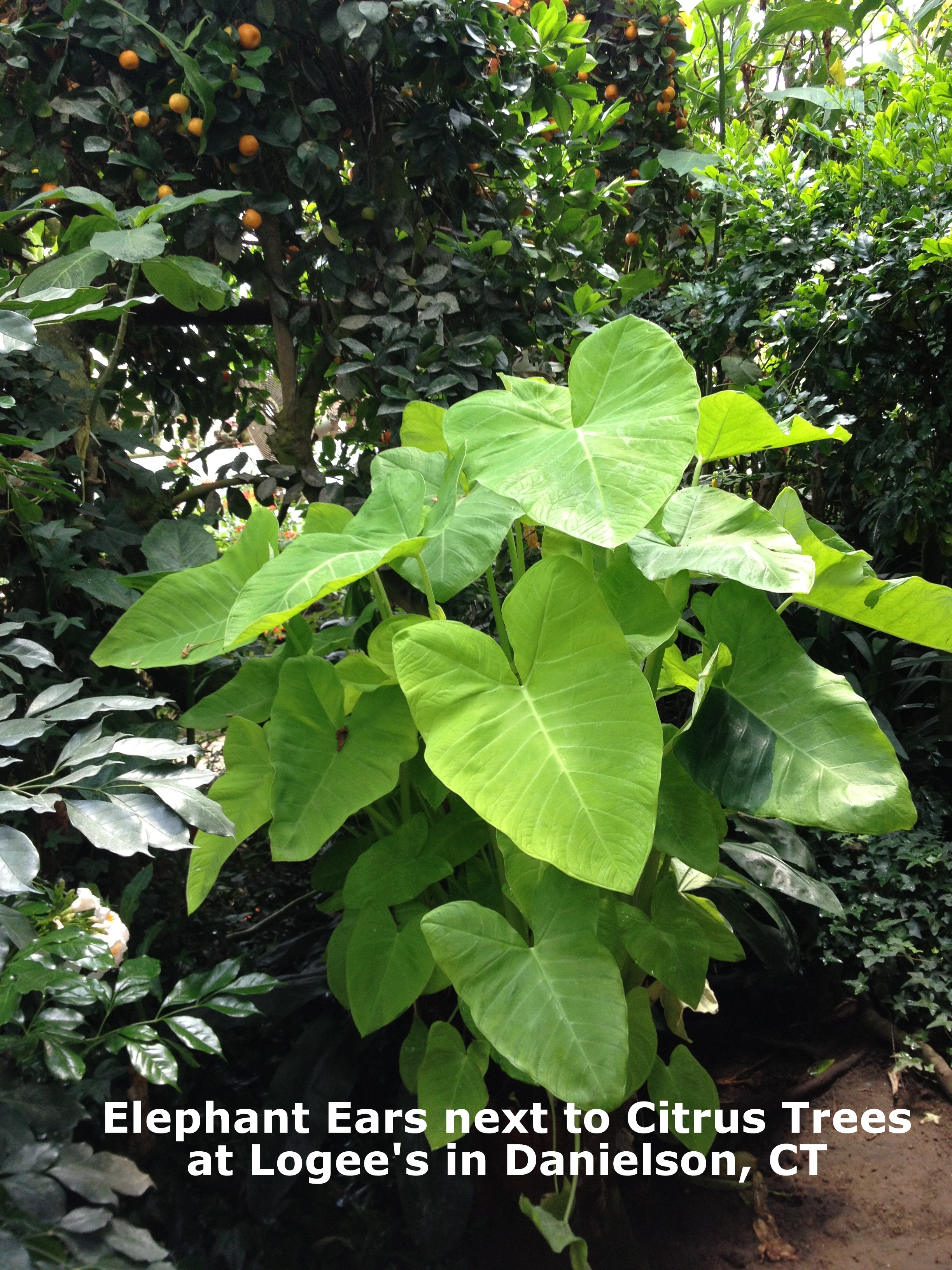
The greenhouses are permanent homes to many large, mature plants growing in and around the shelves of smaller, starter plants for sale.  The mature plants growing there reminds me of plants you see in conservatories, and they give you a sense of what is to come should you buy and grow a plant available at Logee’s. For example, a Golden Trumpet with rich, dark green leaves covered one area of the ceiling and was in full bloom.  There were also Clematis, Bougainvillea, Pink Power Puff, and Chinese Lantern plants suspended all around – plus many more.

Allamanda cathartica in bloom

Allamanda cathartica in bloom

You can feel, smell, see, and sense the history of this long-standing establishment, and the mix of plants – at least to me – represent the mix of the plant passions behind their offerings by a family with apparently as much diversity as their selections at Logee’s. As a large poster will tell you in the check out area, the founder’s son had a passion for begonias, his daughter for herbs and scented geraniums and her son’s passion for fragrant tropicals and fruiting container plants expanded Logee’s world into the full jungle it is today.

Bowiea volubilis

Bowiea volubilis

A comical sight to me was a big Climbing Onion situated right next to an old telephone. The plants here intermingle with the walls, equipment, and surroundings so much, it almost has an eerie feeling to it – as if the place has horticultural ghosts from the past wandering in the spaces and structure’s crevasses. If you are fortunate enough (or unfortunate depending how you look at it) to be alone in the greenhouse, you may get spooked by one of them tapping on your shoulder, but as you turn around, it will be disguised as a vine brushing up against you.  Funny how they can reach out that way.

“There is something mystical about Logee’s. The mix of plants is as eclectic as the diversity of personalities I’m sure grew this place into a destination worth visiting.”

Photo by Cathy Testa

Photo by Cathy Testa

Not only has Logee’s experienced diversity from a chain of generations, it survived a hurricane, blizzard, and energy crisis.  When I read the place was once heated with 50 cord of wood, I said, “wow” out loud.  But somehow, I imagined how enjoyable that may be for a plant lover, perhaps for the short term.  The buildings and plants housed within Logee’s have survived it all.  They have a lemon tree there, a showcase of the facility, at the ripe age of 113.  It’s been there almost as long as the business of 121 years.  I took a picture of the massive tree and its big green lemons, but decided to not post it here – I didn’t want to give away all the treasures – for you should make the trek out there sometime if you haven’t done so already.  This place has lasted a long time – one has to wonder – how many more years will we get to enjoy it?  I’m sure the plants in there will last longer than some of us.

Logee’s is located at 141 North Street, Danielson, CT.  Their website is www.logees.com where you can easily view their plant availability and more information, but going out to the grower’s location is something worth doing.  An adjacent rural town is Pomfret which has some local artisans and quaint shops to visit along the way.  Stop for some good food at “Pizza 101” at 16A Mashamoquet Road, Pomfret Center before or after your trip.  They have great sandwiches, grinders, salads, and yes, pizza there. Make a day trip of it because it is a long drive from at least my location – and perhaps your’s but the country roads are enjoyable if you have the time.

My first papaya plant, 'Red Lady'

My first papaya plant, ‘Red Lady’

And yes, I did buy that papaya plant I first saw when I arrived at Logee’s.  The funny part about this ending is the very nice young lady at the register offered a couple Logee’s magazines to me.  I grabbed three.  As I sat down eating my lunch after this trip, the 2013 issue shows a Babaco Papaya (Vasconceliea x heilbornii) as their featured plant on their latest catalog cover.  It is described as a superb, fruiting container plant that tolerates cool weather much better than the standard papaya.  As the owners Byron Martin and Laurelynn Martin further write on the inside cover, “You can grow this delicious fruit even if you’re a northern gardener.”  So I got a papaya, and they featured a papaya – not exactly the same cultivar, but its ironic, isn’t it?  I ended up with a papaya – to add to my fruiting collection this year. The one that lady told me had healing powers.

Cathy Testa
Container Crazy Cathy T
http://www.cathytesta.com
860-977-9473

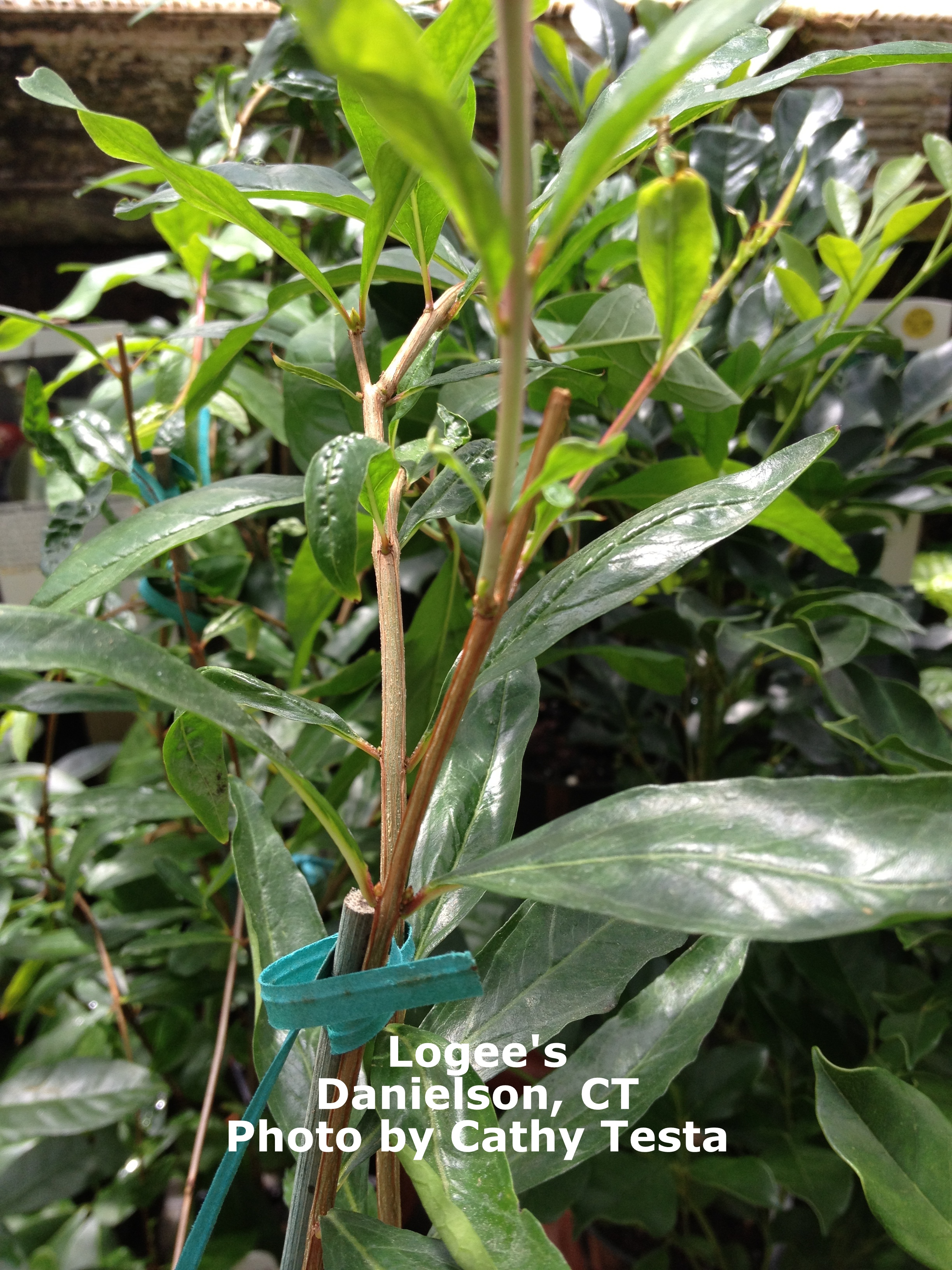
Can u guess what this is?

Can u guess what this is?

Can you guess what this plant is at Logee’s?  A Pomegranate!  (Oh and I bought a Megaskepasma erythrochlamys,…I got to go research that mouth full.  The photo of the bloom attracted me to it.)

Dyckia ‘Burgundy Ice’ is for the non-green thumb gardener

Leave a comment

Julia followed Clara into her kitchen before they were to have dinner with their husbands that evening. “Look, here’s the plant you gave me,” said Clara, as she held up a very sickly looking plant with a smile on her face.  She didn’t realize the plant was hurting.

“I told Mark to re-pot that immediately when I gave it to him for you,” replied Julia.  “This plant really needs well-draining soil.”

It was clear the plant was suffering and had barely grown since last summer when Julia gave it to him to replace a plant Clara had killed. And Mark, Clara’s husband, did not follow Julia’s instructions at all, which surprised Julia because he is an amazing outdoor gardener; he understands the requirements of plants.

But apparently, Mark just placed it on Clara’s windowsill that day to sit beside her many other houseplants.  He knew the fact he didn’t repot it would not be noticed by Clara, or perhaps he felt it was her job.  It is not that Clara does not adore her many houseplants, or that she doesn’t take some time to care for them, but she just doesn’t seem to understand or see the importance of the soil environment.  She overlooks the essential ingredients needed for the plants to thrive.

Clara could tell Julia was irritated by the thought of the plant looking sad, so she told Julia they would repot it after dinner, but she first gave her an enthusiastic tour of her other plants in their dining room.

Julia recognized them all – aloes, jades, African violets, Philodendrons, and Begonias – and every single one of them were growing in dry, poor, overrun soil and in small pots, some without drainage holes.  The white crusty edges on the soil’s surface representing a salt buildup from hard water or fertilizer not leached through was visible in every pot. Many were reaching for light sources and had stretchy growth, but rather than lecture her good friend, Clara, who obviously is a non-green thumb gardener, she took another sip of her Pinot Noir and listened with interest to everything Clara told her about her treasured plants.

Burgundy Ice Dyckia

Burgundy Ice Dyckia

LACKING A GREEN THUMB

Do you lack a green thumb like Clara?  If yes, a succulent, like Dyckia ‘Burgundy Ice,’ is an option for you.  Succulents store moisture in their leaves, one factor which helps the non-green thumb gardener because it enables the plant to withstand drought.  Dyckia is actually in the Bromeliad family, and it doesn’t store moisture in its leaves like typical succulents, but it is tough all the same and you can refer to it as a succulent in general.

It is accustom to growing on rocks or rough rocky soils and in areas lacking rainfall, so naturally it developed the ability to go dormant to survive dry periods of time.  This is the number one reason why it is perfect for non-green thumb gardeners, because of their practice of forgetting to water their plants.  When it finally gets some water, it pops back to life quickly so you will be relieved you didn’t kill it.

Dyckias also have ability to take cold temperatures, so if you keep the heat low in the house during the winter, it will adjust accordingly.

Heat tolerance is another bonus about these plants.  You can put them out in a hot part of your landscape or outdoor sitting area in the summer months, and pretty much ignore them, but you should remember to give them more watering attention (low to moderate), especially deserving after accommodating all your non-green thumb traits during a long winter.

FOLIAGE FEATURES

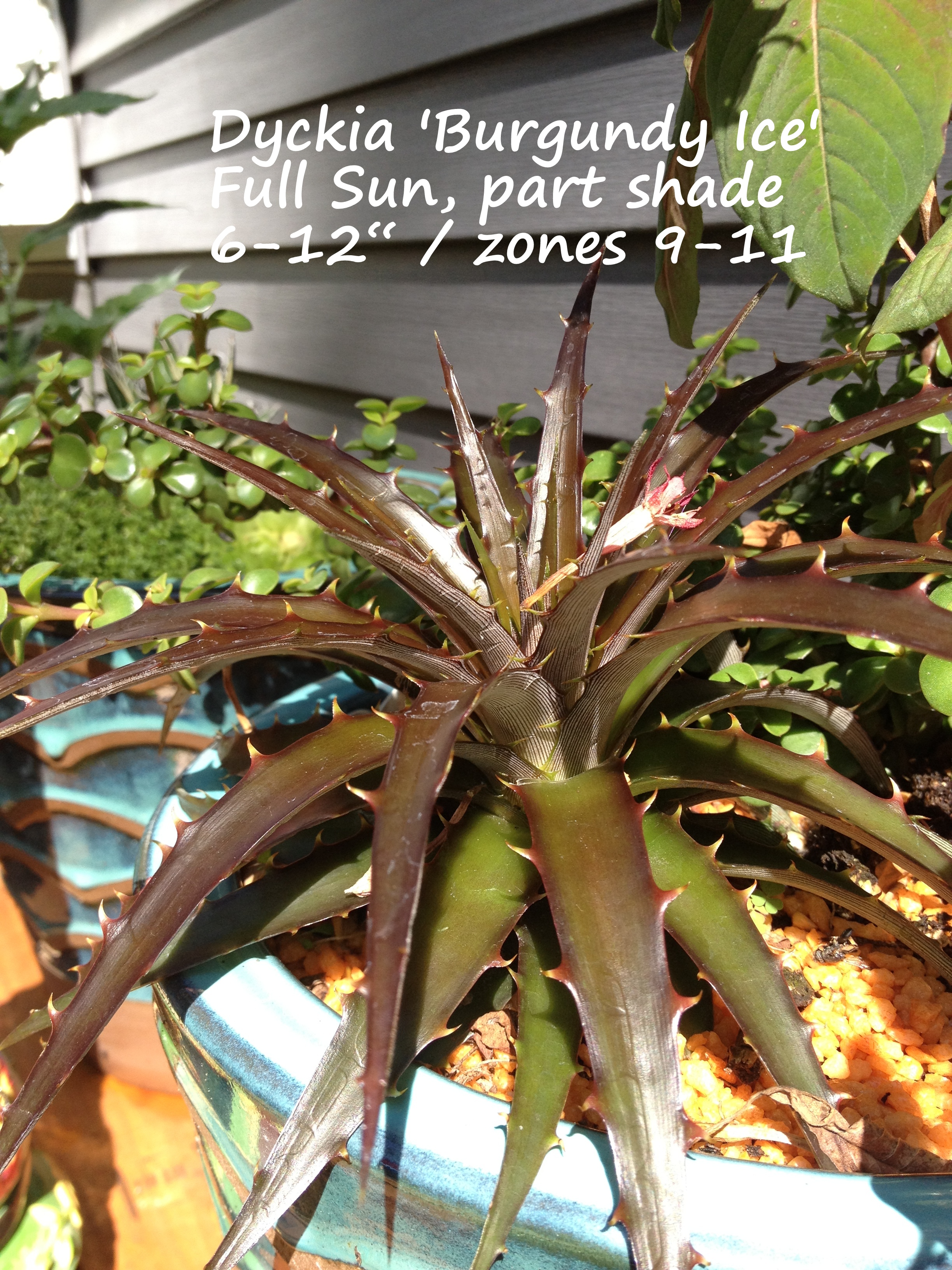
When you look at the rosette style leaves of this Dyckia hybrid, it looks similar to the top of a pineapple (and pineapples are in the Bromeliad family too), but ‘Burgundy Ice’ has a beautiful and useful dark rich burgundy color with white spines, making it a wonderful candidate to contrast with other tough drought-tolerant type plants in container gardens or smaller pots.

You can find lots of succulents or cacti with spines, stripes and patterns, but not many with a rich darker almost black coloring, making it a little more dramatic and alluring. The rosette shape allows the plant to collect moisture and funnel it towards its roots, and this form gives it an architectural interest too.  Its physical attributes contributes to the visual appeal from a design perspective.

Incorporating this plant into a combination of succulents or drought tolerant perennials or annuals with a lighter or brighter color will give you a great visual contrast situation.

In the photo above, it is growing with a Portulacaria afra (dwarf jade plant or elephant bush/food).  If you look closely, the stems of Portulacaria afra are the same color as Dyckia ‘Burgundy Ice,’ so it “echoes” the color of the focal plant in this glazed blue pot. Additionally, P. afra has a spiller-type habit and smaller rounded leaves. This feature helps to soften the edge of the pot and provides a textural difference in this combination. Always think about mixing the textures; the softer texture will make the bolder texture even more noticeable.

The Dyckia leaves tend to rise up a bit and curve downward at the tips.  Notice the tips sitting above the Portulacaria afra.  This makes the burgundy color more apparent because the lighter color is filled in behind it. Another spiller plant that would work well with this is something like the temperennial called, Dichondra argentea ‘Silver Falls’.  It grows long thin stems with soft silvery fuzzy leaves; a silver contrast to the ‘Burgundy Ice’, or try something like, Helichrysum petiolare (Licorice Plant) with similar coloring, both cascading downward.  Delosperma cooperi or D. floribundum (Ice Plants), a perennial with fleshy shiny leaves is another example of smaller foliage with characteristics to make ‘Burgundy Falls’ stand out.  It has a trailing habit and produces daisy like flowers in midsummer.  Pick a Delosperma cultivar that has a flower color that will pop against the burgundy color of ‘Burgundy Ice.’

Dyckia‘ Burgundy Ice’ is a full sun to part shade plant, so when used outdoors in your container gardens, a full sun location is best because the rosette’s color will intensify. When you move it inside for the winter months, it can take a reduction in light but it will green up more.  Because we tend to get dreary, cloudy days during the winter, placing them by the sunniest window in your home is recommended, so they at least get some sun on the good days.

For the non-green thumb gardener

For the non-green thumb gardener

HOW TO SAY IT

DY-kee-uh, DIK ee uh, or DICK’ea are three ways.  Just let it roll off your tongue, it doesn’t really matter how perfectly you pronounce it.  If you are a non-green thumb gardener, say it quickly and with confidence and no one will know the difference.  You can just call it ‘my tough succulent’ too if you want.  But because this plant was named after a Prince, you may want to give it a nickname, the “Prince”.  Whatever you name it doesn’t really matter, as long as you continue to enjoy it.

THE TECHNICAL STUFF

Habit: Clumping.  Blooms:  Mostly for foliage.  Size: 6-12″.  Hardiness/Zones 9-11:  It is treated as an annual here in CT.  Water:  Dry to normal, okay to let go through some periods of drought.  Light:  Full sun to part shade; okay to have low-light in house during winter. Care Level:  Easy – Perfect for the non-green thumb gardener.  Offered by:  Proven Selections.

GREAT REFERENCE INFORMATION

Container Crazy Cathy T
http://www.cathytesta.com
(860) 977-9473

P.S.  Clara did take Julia into her basement after an amazing dinner, where her potting bench and many broken pots were laid out.  Julia’s face had to be kept straight as Clara pulled out old dusty bags of potting soil, none filled with soil able to hold water anymore – they were very old and dried out.  Julia told her, “Those won’t do.”  So Clara held up a bag of African violet mix, and said, ‘How about this?”  Julia took another sip of wine, and replied with a sigh, “What the heck, give it to me.” 🙂