Colorful Balcony Plants for Extreme Weather

Leave a comment

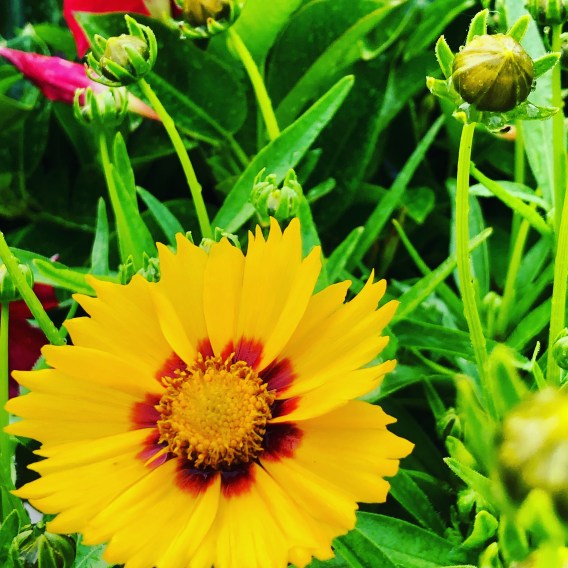
These are photos of vivid reds and yellow blooms in large patio pots showcased on a high-rise balcony. As you can see, the yellows and reds of the flowers on these plants stand out. They are also very drought tolerant. And full sun lovers.
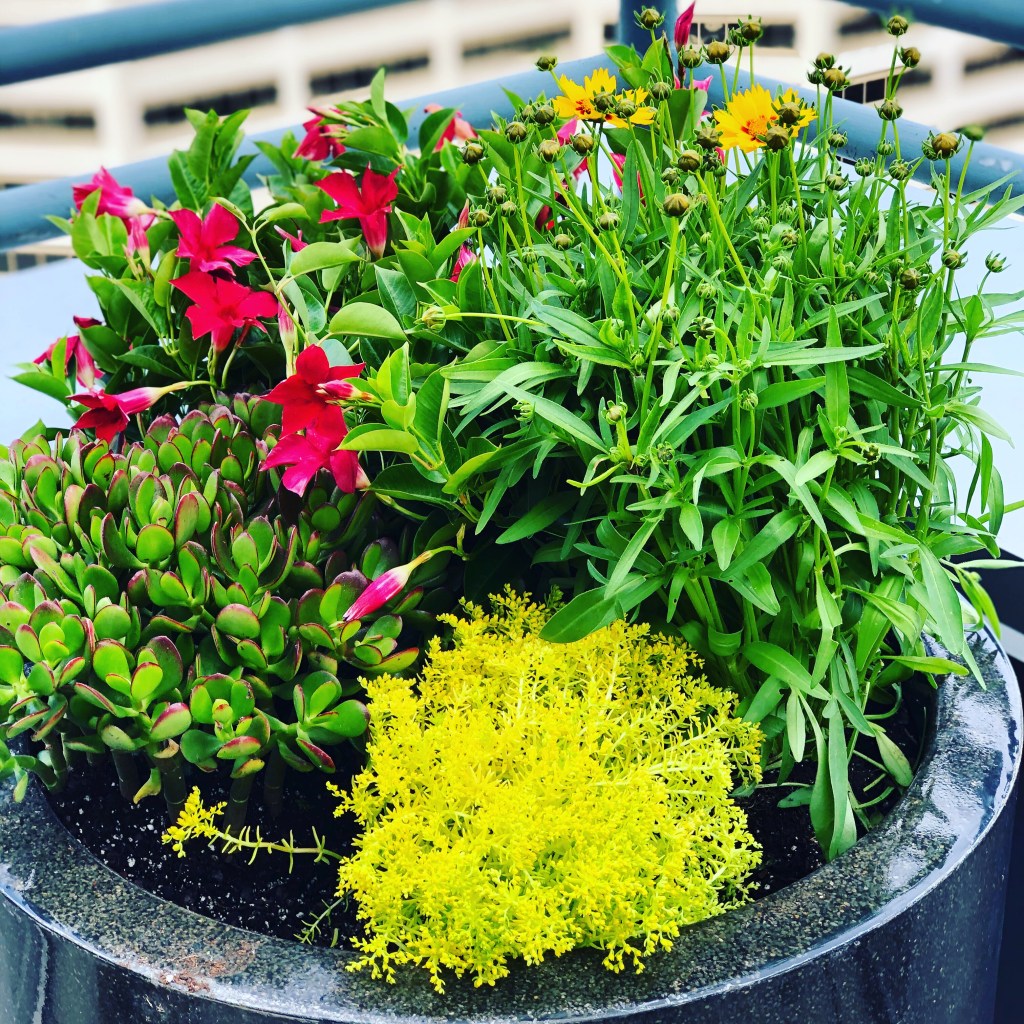
I planted this combination on a high-rise balcony many years ago. The conditions up there were brutal in the summers at times. It was very sunny and hot for the first half of the day. The second part of the day was shaded due to the height of the building’s walls and the sun’s movement. But it also was extremely windy at times, and as hot as a very hot beach summer day. Notice in the next photo how much the blooms opened up.
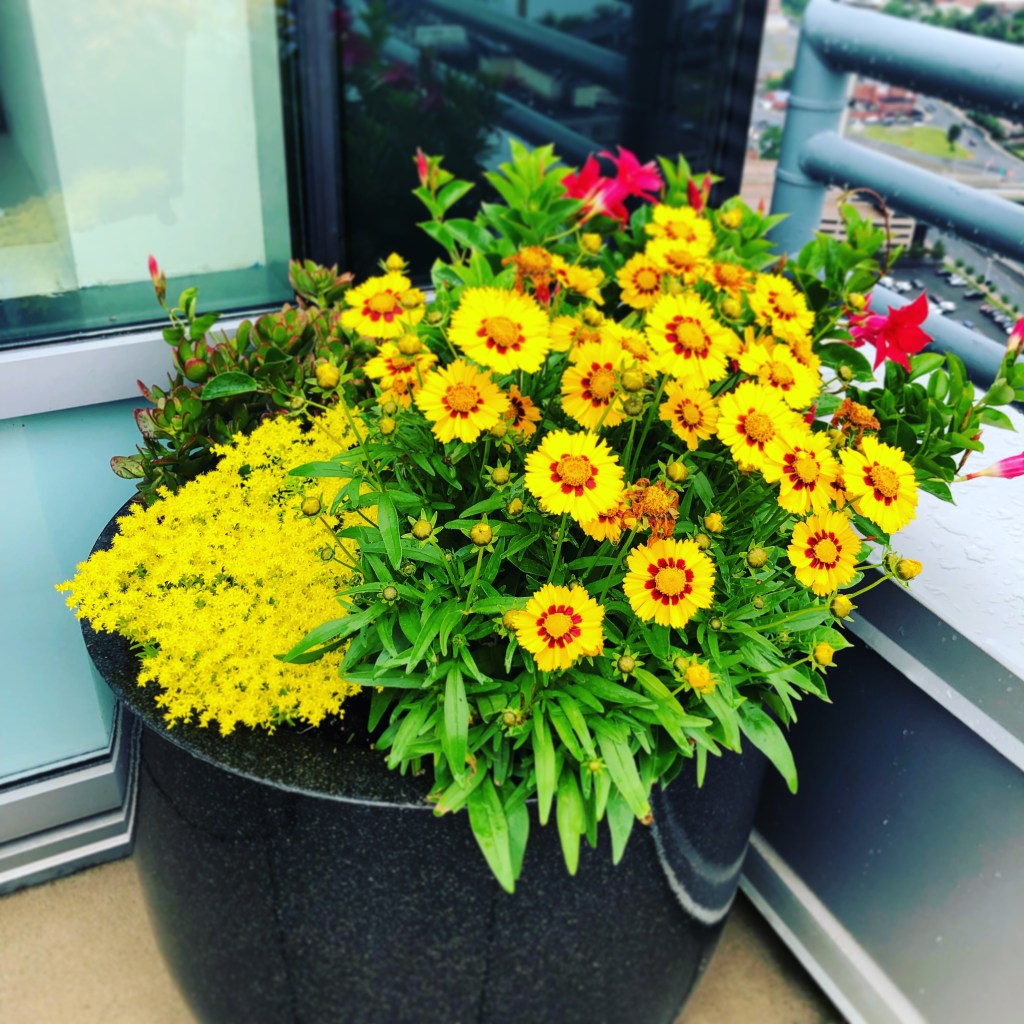
The pots shown here were quite large. Plenty of quality potting soil was used. Some soil moist was added to help manage moisture levels. I also added slow-release fertilizer into the soil. But it was key to find plants which would survive the high-rise conditions. They must get water too. It was imperative to find plants with strong abilities to survive in the sun, wind, and heat. These plants did this well. These also did not need lots of clean up. The faded flowers of the Coreopsis are easy clipped off (deadheaded) if needed. All the other plants held onto the flowers in this combination.
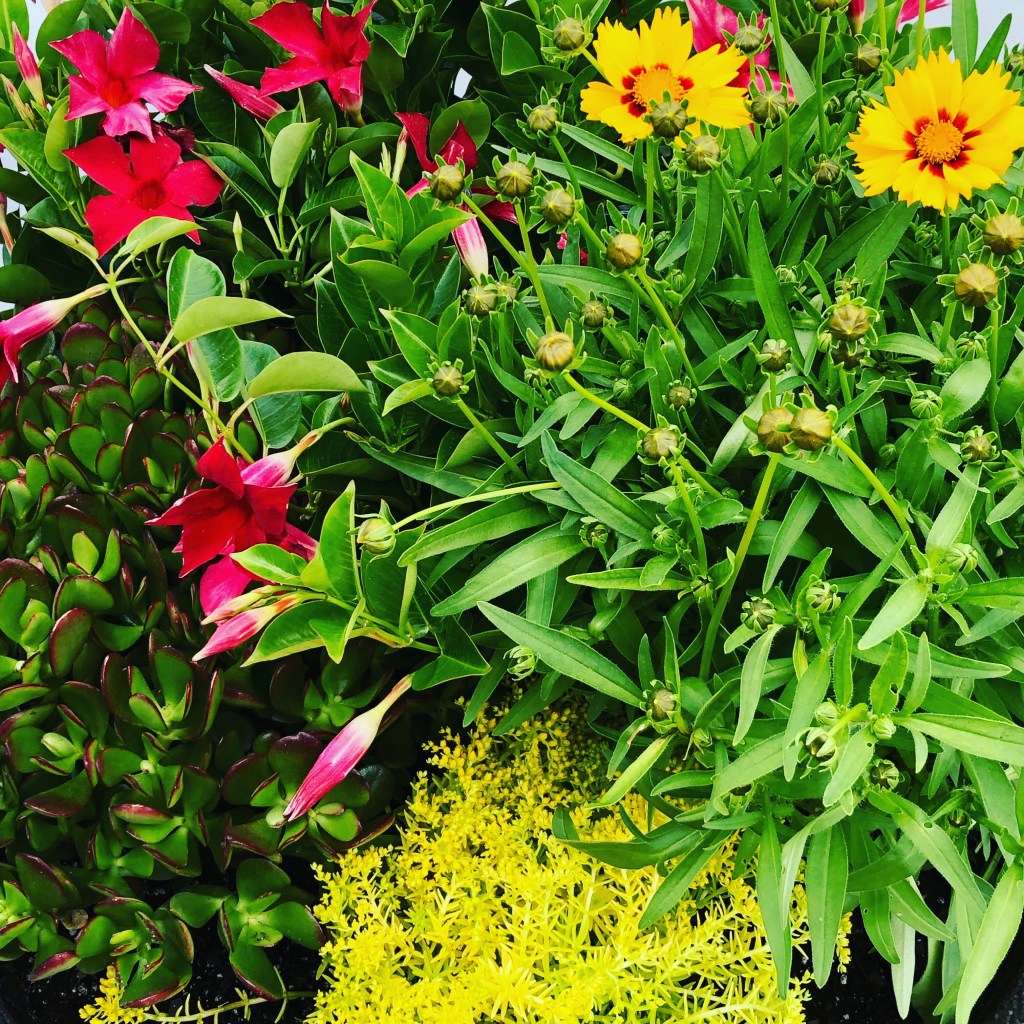
As the summer progressed, the plants became full and offered super bright colors seen from afar. This was good. The view from the balcony owners’ large living room allowed them to see the reds and yellows. I also focus on different textures too. You can see the fine texture of the yellow Sedum. The larger oval leaves of the red edged Jade plant are also visible. Yes, a Jade (as in a houseplant). I never overlooked using houseplant candidates as well as perennials and tropical plants. Just like in a garden, textures add the drama and flow needed to please the admiring eye. I often held up plants next to each other. I did this to look them over and see if they seemed to work together. I was just like that with my eyes. I would figure out if they played well together visually. I also needed to know the plants’ overall habits and culture needs.
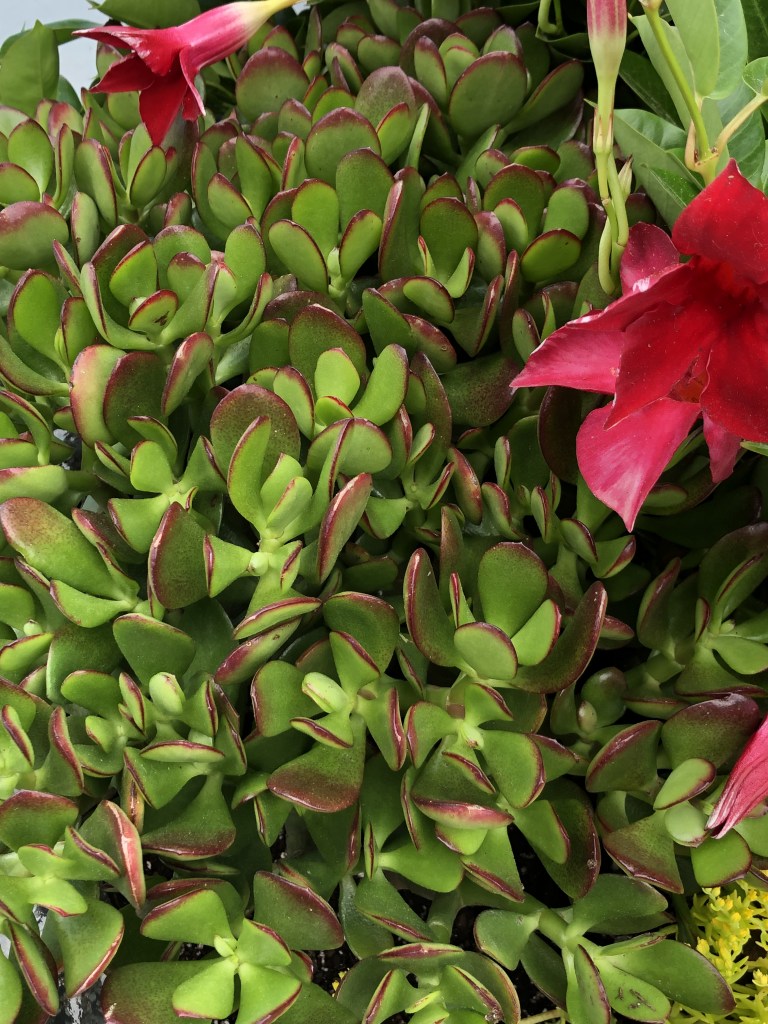
This is a Jade. It was a rather large plant. I loved the red edges. The red color only intensified in the patio pots with the full sun conditions. There was lots of warmth and heat on sunny days. These were able to withstand drought like conditions. I always emphasized that the owners should water every day. Plants need water. The soils dry out rather quickly up there on the top of a building in the city. And the owners were fantastic. They did water the plants as often as possible. They got an A+ on that as it wasn’t always easy, there were no faucets or hoses outside. All water was carried from the inside to the outside in buckets! When it rained, that was a bonus.
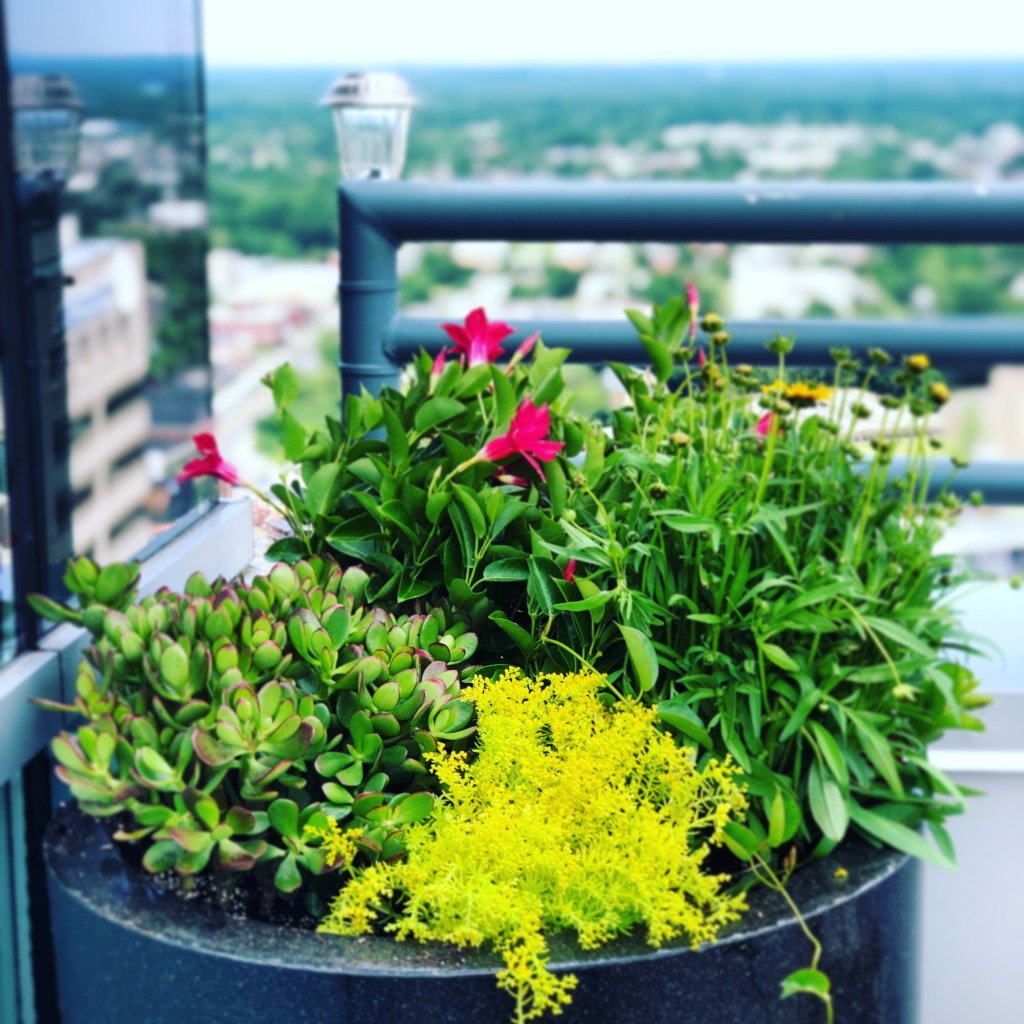
The yellow plant in the front is a Sedum. It is called, Lemon Ball Stonecrop Sedum. A perennial. Talk about an intensely bright yellow! Really pops. It was perfect for the front of the patio pot, tucked in nicely. That plant in this combination was a little more delicate. But, its vivid yellow was unbeatable.
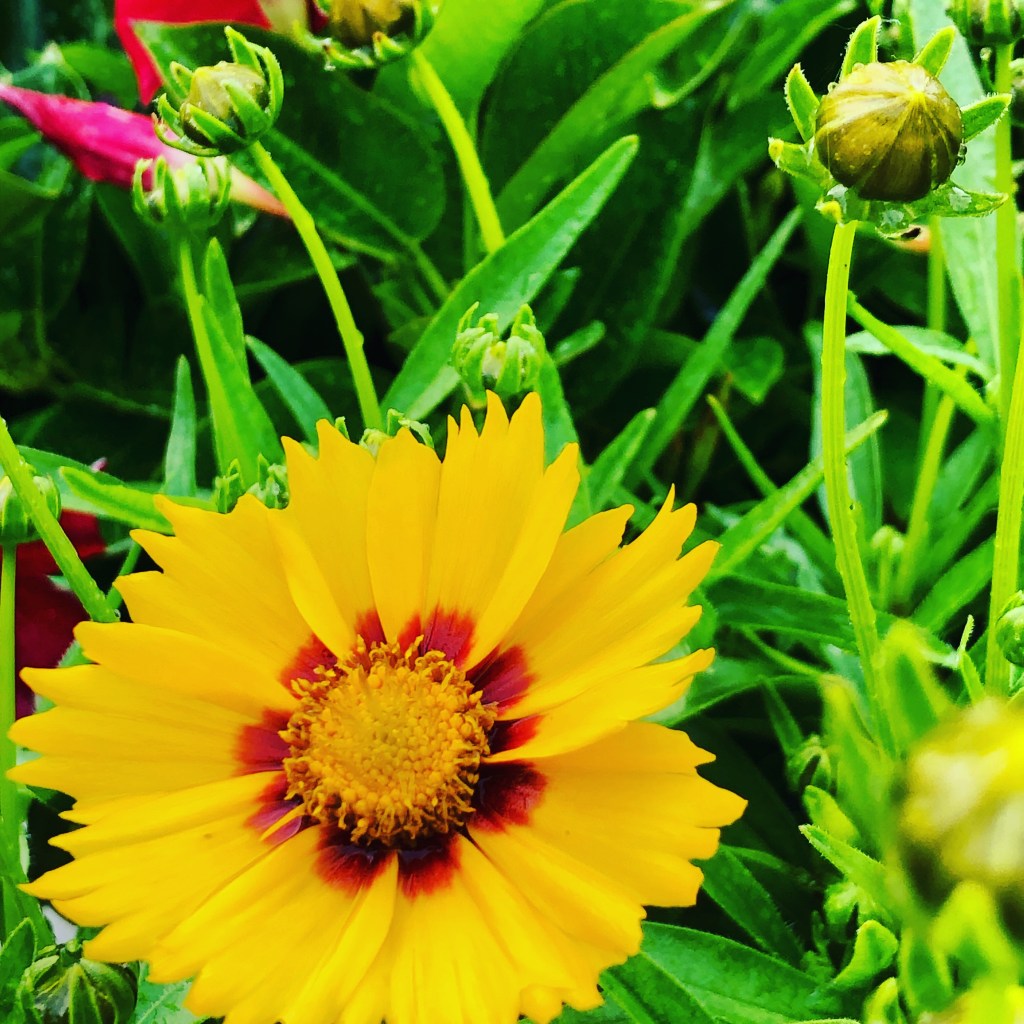
And a must on everyone’s list is flowers which bloom most of the summer. I added these Coreopsis because of their beautiful yellow coloring with red centers. They also handled the drought conditions quite well. This one is called, ‘Baby Seed’ Tickseed Coreopsis. These are butterfly magnets and work well in rock gardens too. It was always a treat to see a bee or two. I enjoyed seeing a bee come by up there when I put flowers into the customer’s containers. Way up there. I think it was 26 floors high, or was it 28? I can’t remember, but it was up high. If you couldn’t handle heights, you would not be capable of work up there on their open balcony. It didn’t bother me to look over the railing to the city streets below. It was a unique planting experience and a great learning one too due to the high-rise location.
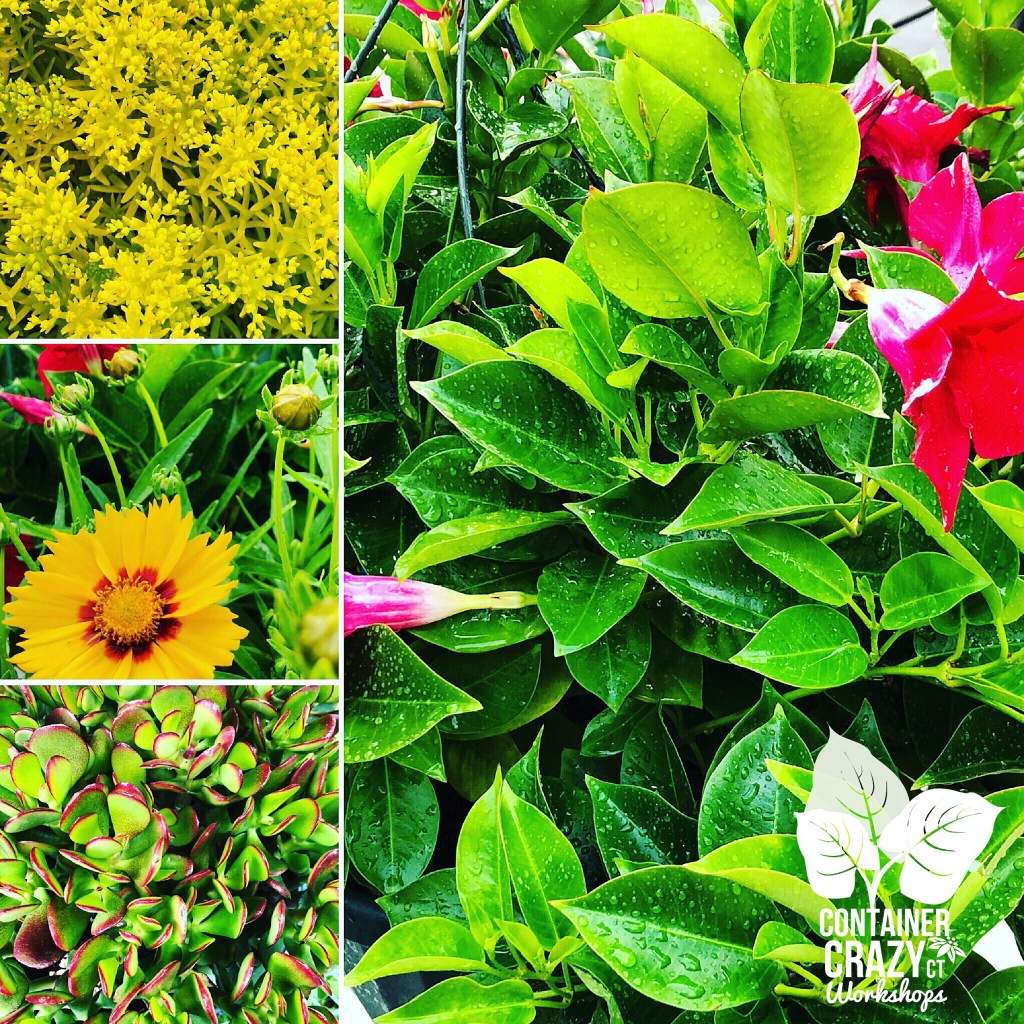
And there are of course the Mandevillas or Dipladenias. Big pretty blooms. Red on these and a vine-like habit. This one did not vine as much as others, but it was a staple for my balcony garden working days. They tolerate the winds, hold onto the flowers despite winds strong enough to move heavy furniture on the balcony. Furniture which had to be chained down appropriately always. Tropical plants they are.

Experiencing working on a high-rise balcony was one of my ultimate pleasures of having my former small plant related business. I only felt disappointed that they (the penthouse owner’s) did not discover me sooner. I wish I had worked up there when I was younger. I would have been able to handle more of the physical aspects. I was a solo worker. It was sometimes a challenge to figure out how to get all the soil bags, plants, and more up there. Because I am organized, I found ways to maximize my trips up the service elevator. I used wagons and a hand truck. I used the appropriate boxes and bins. I did it and I loved every minute of being up there. Well, maybe on those super-hot days, not so much. But I loved the plants and expansive balcony views enough to keep on working up there. It was an honor.

Cathy Testa
Date if this post: 1/29/2026

In this patio Pot:


Hot Pinks for Full Sun in Containers

Leave a comment

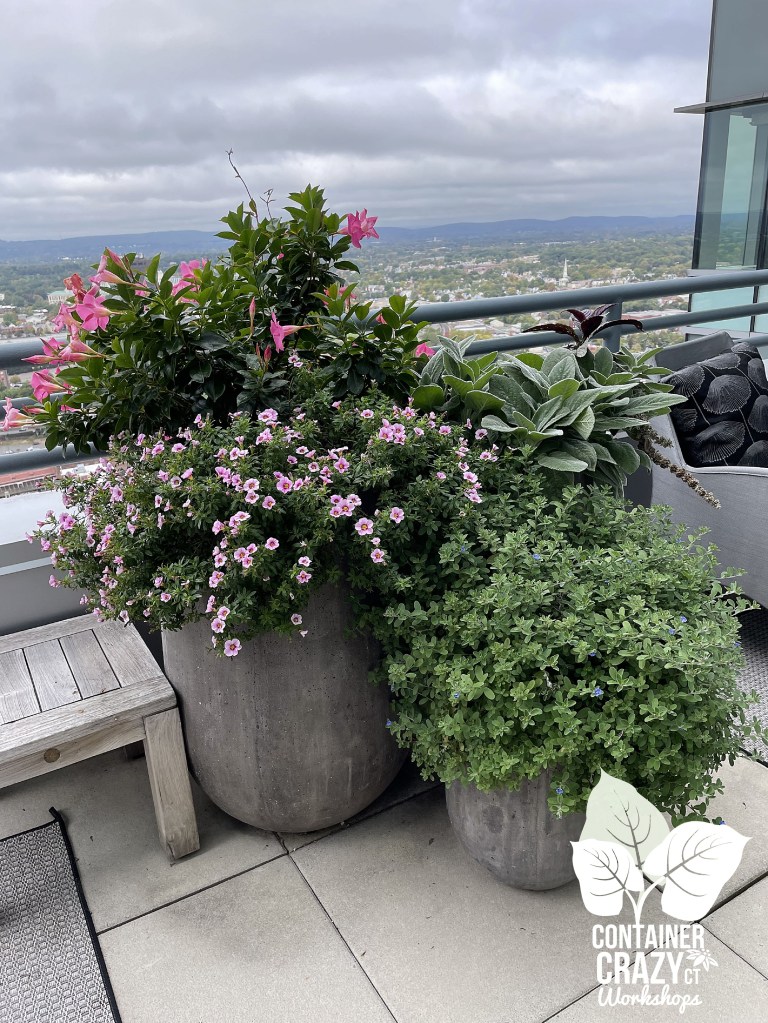
Here’s a combination I created last summer for a client. I loved the way these plants thrived. Despite some troubling weather set-backs we had in 2021 at the start of the container season, they performed beautifully all summer into early fall. These plants tolerate full sun, drought, and wind fairly well.

Hot Pinks For Full Sun – Upon Planting Photo of Dipladenia, Calibrachoa, and Sedum stonecrop

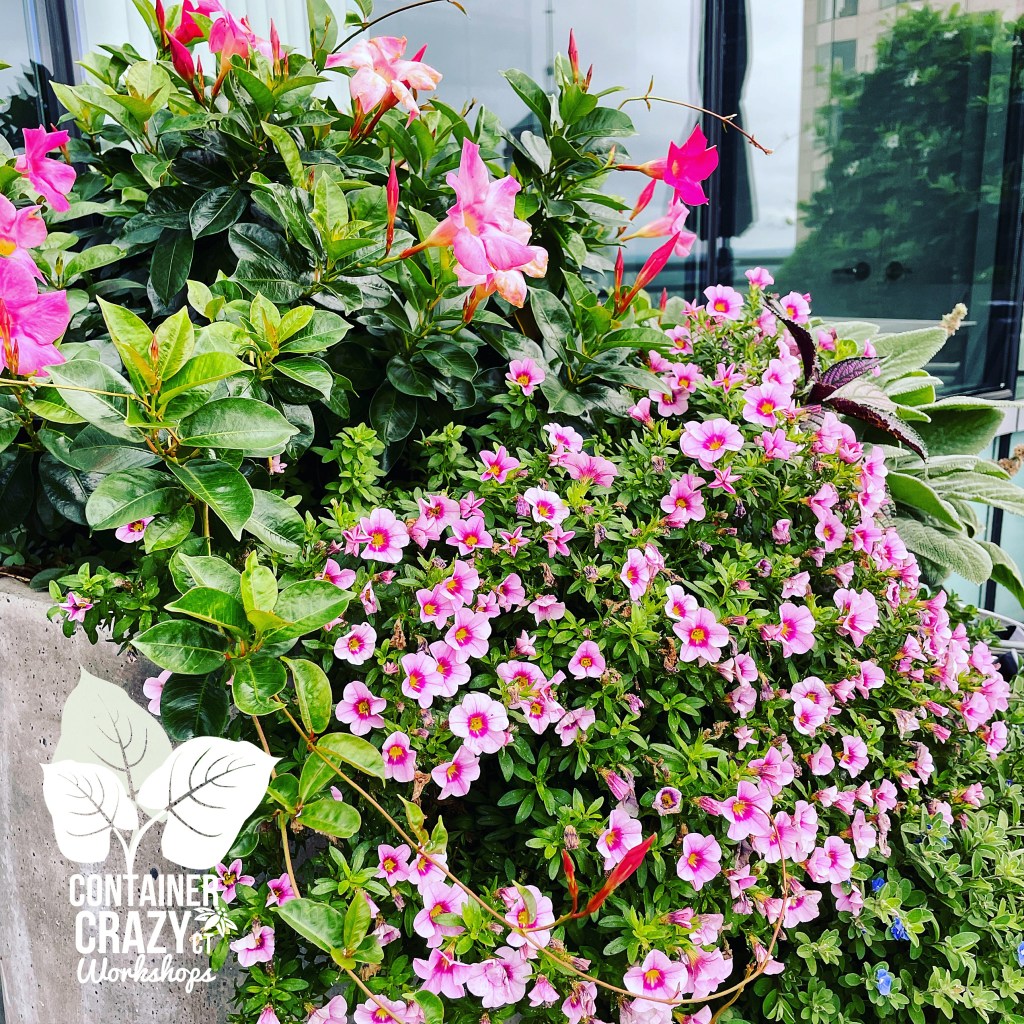
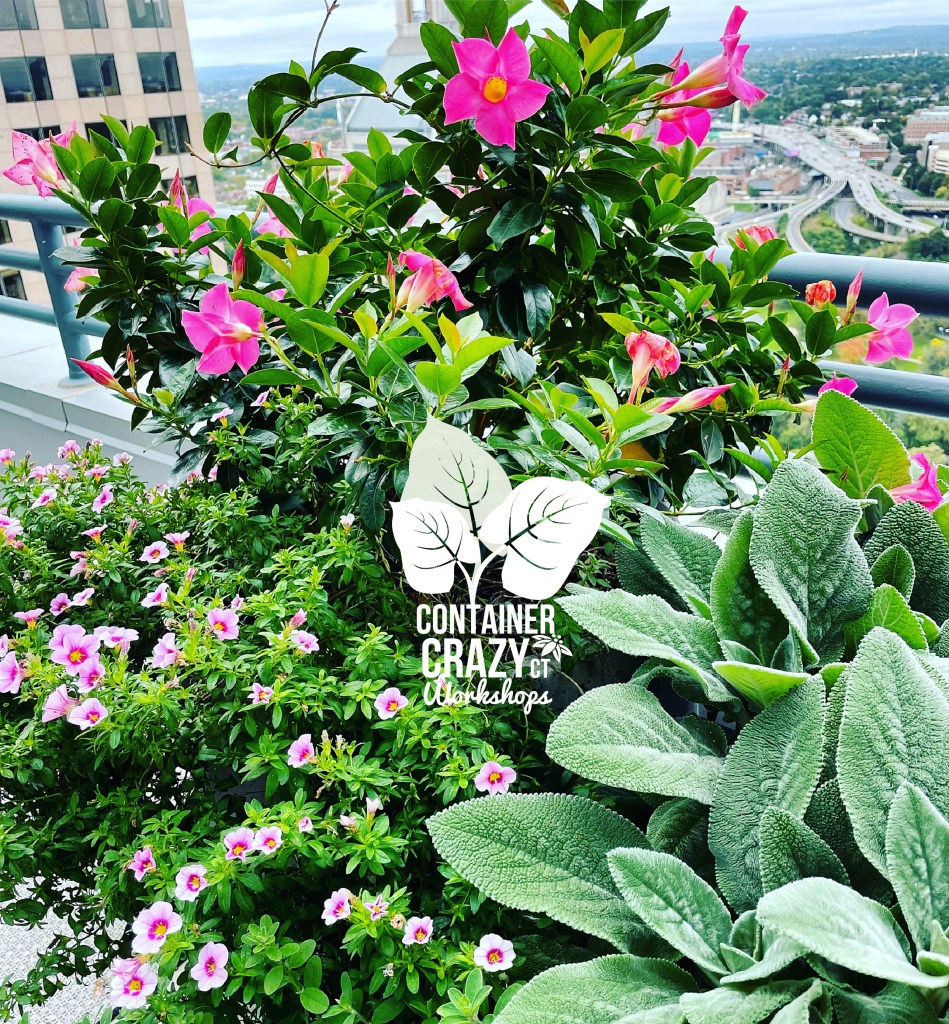
The beautiful fluted hot pink flowers of the tropical plant in the center, called Dipladenia vine, was a perfect candidate. These plants continuously bloom and hold on to their blooms pretty well in windy conditions. It does not vine upwards, like Mandevilla vines do, but spread out more as it grows. The flowers are just gorgeous, and sometimes towards the end of the summer, they may fade a bit to a softer pink but overall they retain their form and color beautifully in containers.

Paired with Calibrachoa (left lower plant) – An annual in CT

I paired up the Dipladenia (thriller plant in the center) with a annual plant, Calibrachoa. The Calibrachoa has small Petunia like blooms on trailing stems which would eventually cascade over the rim of the pot (serving as a spiller) in this combination. It also is a sun lover and prefers well-drained soil kept evenly moist. The reason I selected the Calibrachoa, an annual plant here in Connecticut, is because of the coloring and form of the flowers. It has an outer pink to lavender color with a ring of a darker toned pink in the centers of its blooms. It was one color I had not see before for this annual, and thought of how well it would pair with the hot pink Dipladenia. It repeats the form of the larger hot pink flowers of the Dipladenia, and shares the same coloring in the pink hues.

Calibrachoa spilled over the edges

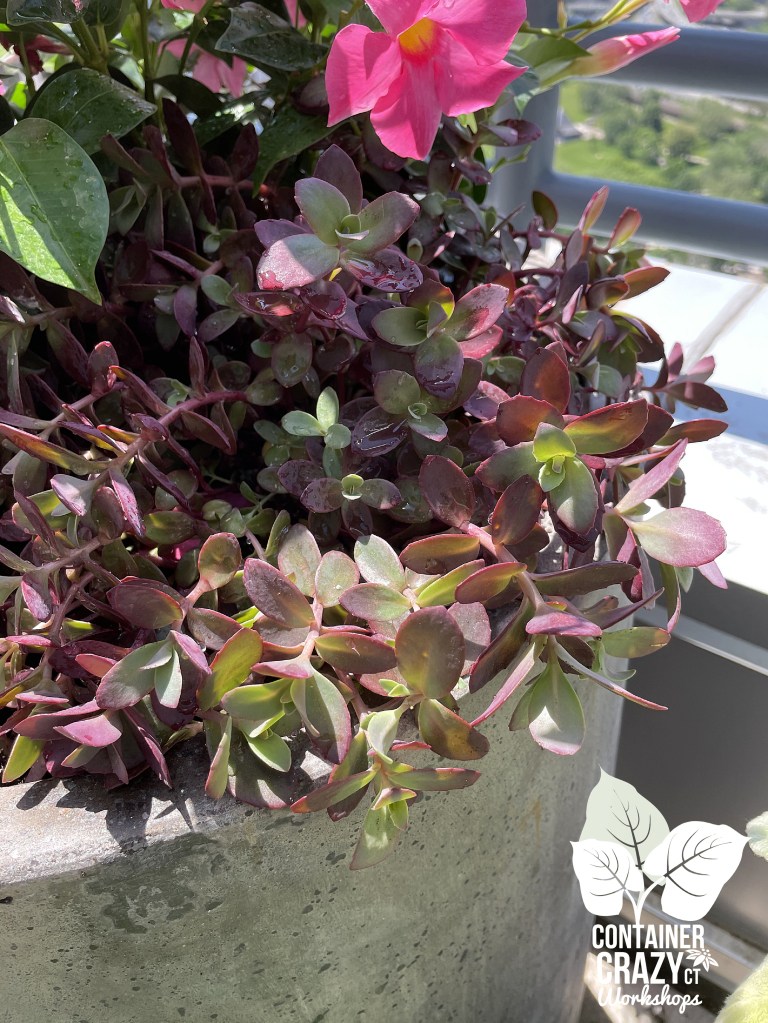
Also tucked in the corner is a Sedum (stonecrop) (see top photo on right) which is a perennial. It is called ‘Firecracker’ of the Sunsparkler series. Again, using another sun lover which tolerates periods of drought. The Sedum is hardy in Connecticut as a zone 4-9 plant, and blooms from late summer into early fall, however, it ended up getting hidden by the plants next to it by the end of the season. You couldn’t see it later in the season which is unfortunate, because I loved how the burgundy shiny succulent foliage gave a darker contrasting color to the hot and soft pinks in the combination. Sedum stonecrop plants makes nice groundcover in hot full sun landscapes, and again, I tend to use perennials in pots here and there as the anchors or foliage (filler) plants. They are good performers and easy care plants in either situation.

Full by mid-Summer into Fall

To the right of the planter with the hot pinks, I planted a large leaved perennial, a Lamb’s Ears perennial plant with a hardiness up to Zone 4. It is a hardy plant in Connecticut, typically used in sunny landscape beds, but I enjoy using perennials in my container gardens as well for adding the foliage power. I knew the soft, silvery, woolly leaves would look beautiful with the hot and soft pinks nearby. These plants are very easy care and again, love the hot sun, and can take drought. This Lamb’s Ears is called ‘Big Ears’ (Stachyz byzantina) because the leaves are huge, and the plant caught my attention right away. Bigger than the typical varieties of this plant, it was a perfect candidate for the tall planters. Another benefit of this plant is it is not preferred by deer, which is not an concern at this location but good to know for use in landscape beds. I also find, if planted in full sun, it doesn’t get any insect issues. If you try to plant it in shade or part sun, it won’t perform as well, and may even rot if in a damp location. And of course, it is soft and fluffy, and one of those plants you like to touch which makes it a fun candidate in outdoor areas on patios, decks, and wherever you may reach out to touch it. It grew at least two times bigger by the end of the summer season in its planter.

Stachys byzantina ‘Big Ears’ (Perennial, Hot Full Sun, Zone 4 Plant)
Evolvulus pilosus ‘Blue Daze’ annual

In the smallest of the trio of tall planters, I planted a plant with soft blue flowers which are also sun lovers, or part sun. These bloom all season and tolerated the conditions at this site well (hot sun, windy, periods of drought). However, by the end of the year, while the plant grew huge, it didn’t have as many flowers as I expected, but the foliage stayed lovely. I had written about this plant before. I used it in wedding container gardens for a client. Blues is a tough color to find in blooms and thus, this is one of the blues available. It doesn’t drop its flowers nor require deadheading, which was a bonus. And no insect issues encountered. I only wished it was more prolific with blooms. I loved the way it looked with the other two planters, soft delicate foliage, and easy care. And as noted in my prior blog post about using these years ago, I learned the blooms close during cloudy conditions and or in the evenings, as you can see in this photo below.

Late Summer

But what you may also see is all the plants were extremely full, lush, and healthy all the way into early fall as shown in the photo above. You can even see a bloom that formed on the Lamb’s Ears on the far right. It was a shame to take all the plants out when I replanted for the fall season, but at the same time, it was a pleasure to know this combination performed well. The perennials may be salvaged at the end of the season by replanting them in your landscape beds. See more photos below. And, thank you for visiting my blog!

Cathy Testa
Container Garden Designer
See also:
www.WorkshopsCT.com
www.ContainerGardensCT.com
http://www.ContainerCrazyCT.com
Located in Broad Brook section of E. Windsor, CT
860-977-9473
containercathy at gmail.com

Upon planting – before Memorial Day
‘Big Ears’ Stachys byzantina – Perennial
Sedum stonecrop – perennial
Mid Summer Photo