Liquidambar styraciflua – Sweetgum tree

Leave a comment

For this week’s “Photo Friday” by Cathy T, here are couple photos of a sweetgum tree.  Latin name noted above.

Sweetgum Leaves

I came across this tree during a nature walk in Cape May, NJ last weekend.  My husband and I went to the Cape May area for the first time.  In search of some exercise, and the fact it was a cloudy day, we decided to hit up the Cape May lighthouse first, going up 199 steps to the top for some views.  After, we discovered a nature trail nearby at the state park.  Once our leg cramps subsided, we entered the path.

The wooden laid walkways lead you through pine canopies and continue through marshes and swamp like areas.  Well-maintained but still with its natural presence, this nature trail was peaceful and the right pace for us.

We walked about a mile along various terrain experiencing shade, sun, water, sea breezes – and many birds, wildflowers, and unique trees.  By the way, Cape May is known as a place to be for birdwatchers. Many bird enthusiasts were standing on a deck with binoculars in hand and facing the sky as they were taking counts where we began the walk.  And on the trail, we would come upon a quiet bird spectator here or there.  See www.BirdCapeMay.org about their observatory and bird species.  The bird factor made the journey more pleasant and calming.

Sweetgum Tree

As for myself, I wasn’t looking up – but out and around on the trail.  I was surprised to come upon sweetgum trees.  I just didn’t expect it although they are known to grow near swamps and in lowlands, such as the place we were experiencing.  And along the path, there it was.  The big star-shaped leaves I’ve recognized before.  I stepped off the path to take a closer look and a photo.  For some reason, I felt like I may be breaking a rule by going off the wooden trail to venture into the woods, but I couldn’t help myself to take a closer look (and some photos of course).

Later, as I continued further, I came across a stand of them.  They were aligned in rows in open areas and  being protected.  I’m not sure why, but they were surely being grown and tended by a specialist for some reason.  This tree is used for timber production and valued for its ornamental qualities.  It is possible they took seedlings or root sprouts to keep them growing in the area since they were abundant and naturally occurring.

Back to the leaves of the sweetgum.  It is the feature which made me stop long enough to lose track of my husband who was far ahead of me now on the trail.  The leaves on sweetgum trees are rather large – a nice hand size and star-shape.  This is the reason I like them – their foliage power.  Although the leaf color is a basic green in season, the fall color is very pretty – turning shades of pale yellow, soft red, deep wine, and perhaps some bronzed highlights too.

Seeing the leaves made me recall a mature, very large sweetgum tree situated on a hill at the UCONN campus in Storrs, CT.  It took a couple of minutes for me to remember the tree as I was taking photos of the one on this Cape May trail, then it hit me – I remembered collecting the fruit seed cases from the ground at the campus that fell from the tree.  They are round (as big as gum balls), hard, prickly or spiked, with a little stem attached.  The balls (fruit seed cases) are woody and useful for winter decorations. Some folks may find them a nuisance on the lawn because they create litter so to speak, but to me they are a natural resource useful holiday decorating, plus they are interesting.  Spray them with some glitter gold paint, and they are perfect for wreaths and container gardens stuffed evergreens in the winter months.

The sweet gum tree gets its common name because – as you may guess – the resin/sap from its bark smells and tastes like gum!  To experience this, you have to cut or wound the tree’s bark which I do not recommend, nor have I tried, but legend has it this was used like chewing gum.  Also, this tree has been found in fossils – so it is a dinosaur, so to speak.  And, it can get as large as a dinosaur.  It grows to between 60 to 70 feet tall.  The one at campus is huge, stately, and worth remembering.  It needs lots of space because it grows a wide and spreading root system.  It is not for tight spots, or shade, but can handle flooding, seaside breezes (if protected) as these were on the trail.  To read more specifics about this tree, visit this line:http://plants.usda.gov/factsheet/pdf/fs_list2.pdf.

This large, deciduous tree with ornamental qualities and useful craft offerings, great star-shaped leaf configuration, and fall coloring later in the season, is available for our climate.  A zone 5 tree, you can find cultivars like ‘Frosty’ which has marbled and speckled variegation on the leaves, or ‘Silver King’ with white-edged leaves, and even ‘Slender Silhouette’ with a tall pillar shape, at tree farms such as www.brokenarrownursery.com in Hamden, CT.  Or ask your local nursery contact if they would order one for you if possible.

Acer griseum – Photo Friday

2 Comments

Here’s a photo I took last week when checking out a stock of trees with my sister.  She lost her cherished magnolia tree during tropical storm Irene, so we spent the afternoon browsing potential replacements.  As we walked around various trees during our magnolia hunt, we came across this showy paperbark maple!

Acer griseum

The bark on this maple, Acer griseum, developes at a young age, and as you can see on this photo is just amazing “as the tree matures” too.  I love that cinnamon brown coloring and the layers of the bark peeling.  The leaves are dark bluish to green and turn bronzy red in the fall with hints of orange.  Usually the leaves stay on the tree into late fall – so this tree has fall and winter beauty!  To me, the bark character is often more important than leaves when it comes to tree characteristics.

Hardy to zones 5-7(8), reaching a height of about 10-15 feet, and taking sun to part shade, if you spot a paperbark maple on sale this fall season, don’t pass it up!

Oh – and the leaf shape is different too, 3 lobed with serrated edges.  So the bark a-peal, the different leaves, and the coloring from top to bottom make it worthy for this Photo Friday post!  Cathy T

P.S. My sister is still on her magnolia hunt – I plan to post about this story later!

Photo Friday – Nature’s Superhighway

Leave a comment

This slideshow requires JavaScript.

Capturing nature’s superhighway as the afternoon sun passes through this elephant ear leaf.  Beautiful, isn’t it?  You can almost see the path of travel.  Each vein providing a safe passage to all which supports its growth and life.  I just love taking closeup’s like this one, and especially enjoyed that splash of light direct at the midrib point where the leave spans outward more.  Truly amazing, those leaves.  And truly special when you get to witness them enjoying the sun!  Have a great weekend everyone – and enjoy the sun as much as the plants do…Cathy T 

Mandevilla Sighting

Leave a comment

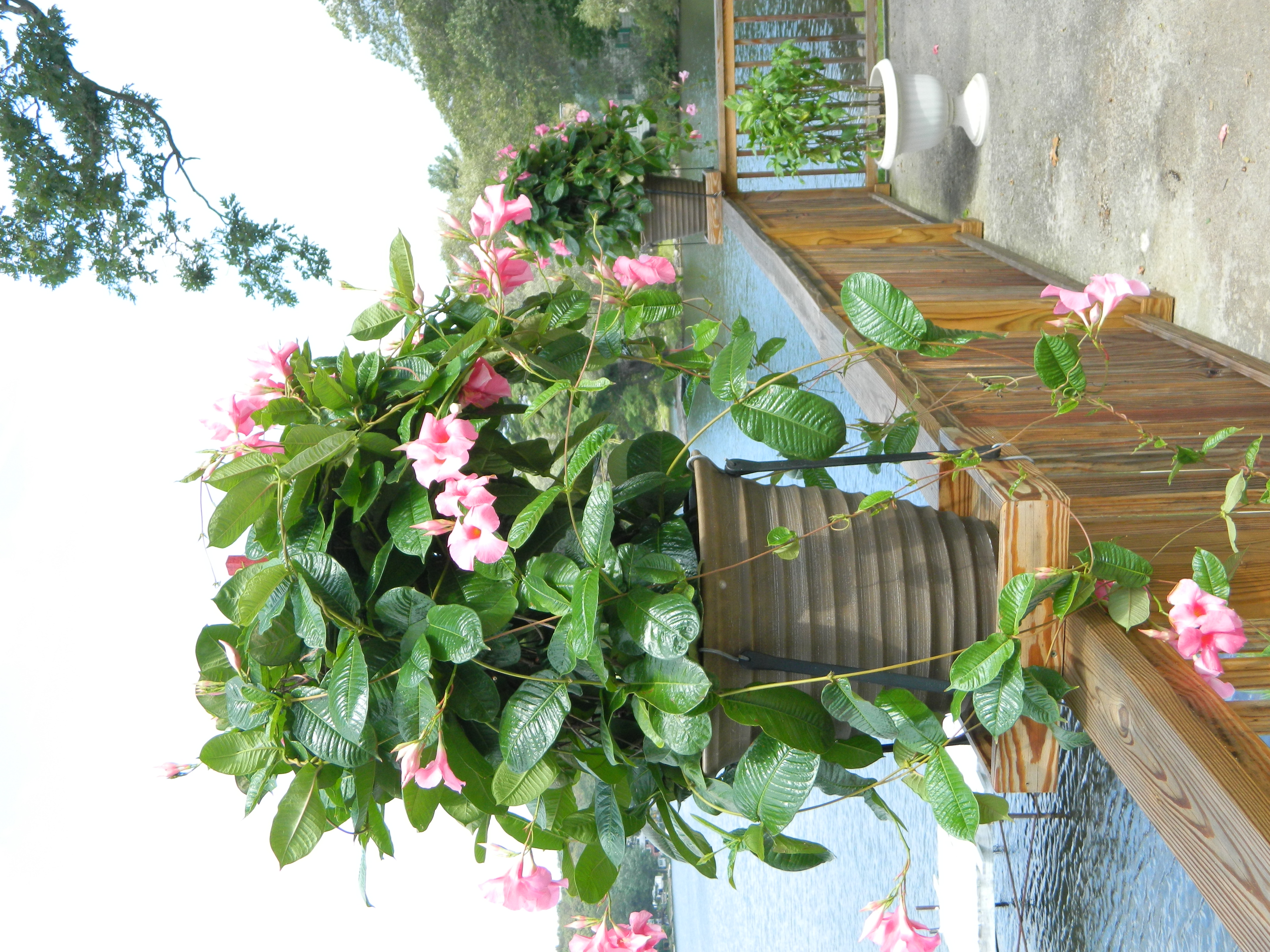
Check out these beauties!  I spotted these beautiful Mandevilla plants in containers along a deck next door to my mother-in-law’s lakeside cottage in Ashford, CT.  She told me the neighbor keeps them in his shed over the winter. I thought, that can’t be.  It is very cold by Lake Chaffee in the winter, especially when the lake winds blow over the property and against the cottages.  These tropical plants would not survive in a shed.  So I interrupted the homeowner while he was mowing his lawn to ask about how he tends to these beauties and if okay to take some photos to share on my blog.

Staged to perfection

His face lit up at the question.  He said a friend lets him store these containers in their basement over the winter, since his lakeside cottage doesn’t have a basement.  He cuts all the plants back, strips any bad leaves, and reduces the watering to barely nothing.  His plants keep growing very slowly and look spindly, but they are still alive.  Basically he is transitioning the plants to a dormant state, which is something you can do with Mandevillas after the container season is over in our regions.

The ideal temperature in a basement for storing these types of tropical plants is about 35 to 40 degrees F.  Place the containers of Mandevilla plants in a dark place.  Water lightly.  Don’t let it completely dry out – and watch for insects when you first bring them in.  The tuberous roots will go to sleep so to speak, kind of like a bear in the winter months, resting – awaiting for warm temperatures to return the following spring.  Some references indicate that you should allow the tops of the plants to be touched by frost before you store them in the basement, but I find – as this homeowner does, transitioning them when temps cool down later in the fall is fine.  Sometimes waiting until frost can result in rot on the plant, especially if cold, moist soil touches those leaves too long.

My mother-in-law told me that every year when he takes them out most of the leaves are brown. Yet the plant is indeed still alive, awakening slowly.  After the plants have been exposed to the outdoors for a while and show signs of growth, he gives them a shot of 10-10-10.  Then, he said, the growth will take off.  The plants are fully awake, ready to receive their place of honor again on his deck.  He will give them a liquid quick release fertilizer, like MiracleGro, about a month or so later.  By July, he said they look like this!  Stunning! And look at them in September, they are beauties.

By the way, during any inside plant to outside plant transition process, it is best to transition them into shade or part-shade before full on sun.  Mandevillas are sun-lovers, but going straight from dark to sun can result in bleaching or sunburn of the leaves.

On corner

The photos speak for themselves.  Breaktaking, especially staged on the posts of his deck along the lake.  Lucky for my mother-in-law, she gets to enjoy them – or should I say scold them.  She is a bit jealous of the beauty around his home.  I guess I don’t blame her!  I would be envious too!

This neighbor of her’s is an avid outdoors type person, constantly tending and updating every inch of his property.  Not only are his Mandevilla containers amazing, he has many other hanging baskets and container gardens around his deck and along his patio.  When he bought the property, he brought in sod for the lawn, not a weed in sight!  So you get the idea.  He is meticulous about care.

Mandevilla vines or sprawling shrubs can grow anywhere from3 feet to 20 feet high – if you are successful at overwintering them here in CT to this size over time!  They are hardy to zones 10-11 and die to the ground in warmer regions, but as for us CT folks, do as this gentlemen did and overwinter them in the basement.

On angle

Mandevillas love humus-rich, moist soils.  Soon, these beauties will require new container/potting soil, as the existing soil will soon tire out and won’t be able to hold water as well, especially against the windy conditions by the lake.  That was about the only tip I could offer the neighbor, as he already has a green thumb and has been achieving success with his Mandevilla plants.  Cathy T

Farmer Market Madness

Leave a comment

There are tons of farmers markets booming right now in our local areas.  Last week, the Journal Inquirer newspaper listed 15 different area farmers markets running through October.  Many homeowners are putting out their home-grown garden prizes in mini-roadside stands on their front lawns too.  Plus garden nurseries have joined the bandwagon by adding temporary farmers markets at their stores.  Just take a drive down the road, and it won’t be long before you spot a farmers market, a sign for a market, or a roadside stand offering the best of the harvest right now.  It is farmer market madness out there.

For those located in my neighborhood, did you know the East Windsor Trolley Museum is holding a farmers market every Saturday from 10 am to 1 pm through mid October?  I think I will go for the first time this weekend.  Why don’t you join me?  If you have kids, what better way to start your morning?  Get some locally grown goodies and take a ride on a historic trolley with your kids  – how many towns can offer that combination?!   Located at 58 North Road in East Windsor, CT.   http://ceraonline.org/visit/admission.php.  UPDATE:  There is no Farmers Market at the EW Trolley Museum – What a shame!  It would be a great place to do so.  The volunteers said some local farmers approached them on the subject, but didn’t proceed.  😦

But farmers markets are not just popping up at untraditional places like trolley museums — try visiting one at a college campus – as I did this past Wednesday at the Manchester Community College Farmers Market.  Yup, college campuses seem to be joining the farmers’ market craze too.  And what a great idea, don’t’ you think?  Imagine being a student with the choice to get fresh fruits or vegetables between classes versus a bag of chips out of a vending machine. I’m sure the professors don’t miss this opportunity either.

MCC Welcome

The Manchester Community College Farmers Market, like so many others, has great produce, yummy cheeses, honey, crafts, and more to enjoy – all made by regional and local producers, growers, and artists.  It is held near the MCC Band Shell in an open field adjacent to the campus buildings with plenty of parking available.  Sometimes they have a band playing and even pony rides for kids!  So after browsing the vendors, you can sit in a comfy chair to listen to some great music or take the kids on a ride.  And on the first Wednesday of September, I will be there selling Cathy T’s fall selections for Container Gardens.  Hope you will visit me if your schedule allows – and please pass the word!  Directions: www.manchesterbandshell.com/directions.asp.  Address is 60 Bidwell Street, Manchester, CT.  Time:  1:30-5:30 pm, every Wednesday, through October 19.

If you enjoy eating while reading, try the East Hartford Farmers Market market being held today at the Raymond Memorial Library in East Harford, CT.  This is an early one, opens up at 9 am and goes until 1 pm.  Why not hit it up on your way to work so you have a healthy snack or two during your day?  For directions, see http://www.ehtfdlib.info/DIRECTIONS.htm.  Available every Friday through October.  A great way to TGIF!  And for today – a great way to stock up before the storm expected on Sunday – make some stews, can some tomatoes, or cook some sauce using the freshest herbs and veggies from places like this market.  It will warm you up and fill your tummy while you watch a movie inside on Sunday.

Locally Grown!

Farmers markets are not just popping up everywhere, they are held every day of the week somewhere and of course, on the weekends.  Mark your calendars now!

Other towns where you can find markets:

Andover (Saturdays, Andover Historical Society, 12:30 to 3:30 pm), Coventry (a big popular one at Nathan Hale Homestead, 2299 South Street, Sundays), E. Hartford and E. Windsor (as mentioned above), Ellington (in a quaint park, Saturday mornings, 35 Main Street, Rt 286, Arbor Park), Enfield, (Wednesday afternoons, 3-6 pm, Back of Town Hall, weather permitting only), Hebron (Saturday mornings, 1 Main Street, Grounds of Church of Hope and the Red Barn), Manchester (as noted above – Wednesday afternoons– come see me on the first Wednesday of September), Somers (Saturday mornings, Main and Battle corner streets), Stafford Springs (Good bike or motorcycle ride, Monday and Thursdays, Mocko’s Lot, Rts 32 and 190), Suffield (Saturdays, 9 am to noon, Town Green), Tolland (Saturday mornings, Tolland Green), Union (Sunday mornings, 771 Main Street), and Windsor (Thursday, 3:30-6:30 pm, 240 Broad Street).

So if you don’t grow your own or have a friend or family member offering some from their gardens, take out your calendar, mark the day of the week you can visit a market, and treat your taste buds before the onset of fall in late September.  Be part of the movement while it lasts.  And remember to visit me, Cathy T, on Wednesday, September 7, at MCC’s Market.  The days to partake are numbered!  Cathy T

Mailbox Plantings

6 Comments

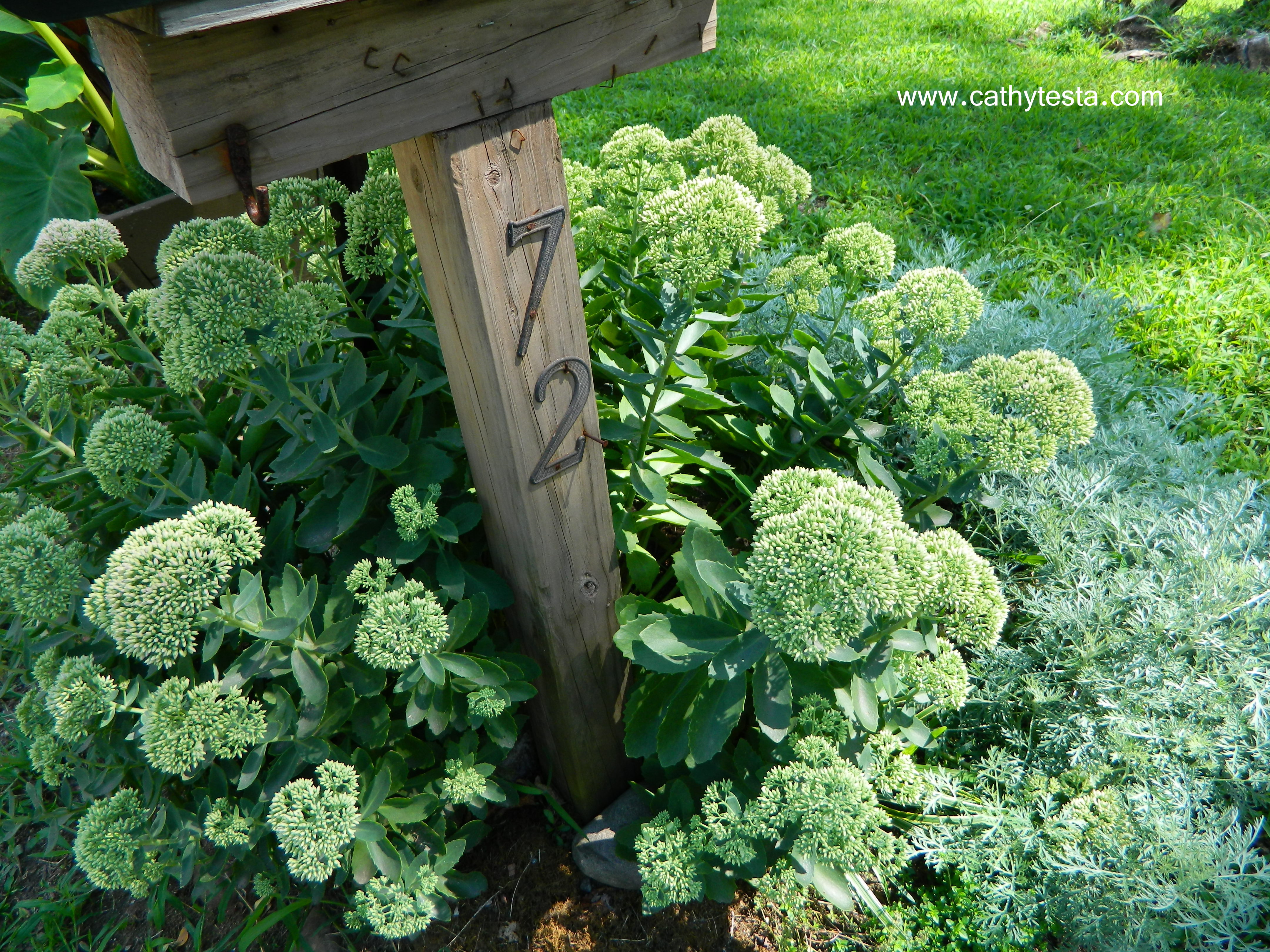
Every year, my Sedum ‘Autumn Joy’ under my mailbox goes gangbusters. I know it is a tough, drought tolerant perennial, but I literally do nothing to this perennial, yet every year, it expands bigger and blooms profusely in the fall. It is quite amazing considering the location where it is growing under my two mailboxes, adjacent to the road side and in full sun most of the day. I sometimes wonder if there is a magic spring deep below in the soil, because I don’t water it at all. My husband says he feels the grass grows a tad bit greener in that area compared to the rest of the lawn in the front yard. So who knows where the magic comes from but I swear the only thing I do to this Sedum is break off the old stems in the early spring from previous season’s growth. I leave it standing there in dry form all winter after the bloom heads turns a coppery color in late fall.

Last year, I added an Artemisia arborescens ‘Powis Castle’ (wormwood) next to this perennial. This perennial is zoned for 6-9, so it is considered a tender perennial in colder climates. A worker in a nursery told me that it wouldn’t come back when I commented that I had planted it with my Sedum, but the plant proved her opinion wrong. It came back in full force this year, and rather than growing into a nice globe or mound shape, it formed a soft, half-moon pattern around the base of my Sedum. Perfect, I think.

A mailbox planting area is similar to planting in a container…without the pot that is. What I mean is it is a small manageable space that can use the ‘thriller-filler-spiller’ method of design, as often used in container gardening. Mailbox areas are often an overlooked space yet it has the potential for dressing up without too much effort – just as containers dress up areas around your home or patio. In fact, any time I complete a design for a landscape client, I throw in a few designs for plantings around their mailbox as a freebie, and it always surprises them.

Behind

Because your mailbox is at the entrance of your driveway, it is often the first thing your guests see. Rather than having an eye-sore greet them, you can incorporate a few plants by using some simple design tips to welcome their arrival.

First, for safety, two tips. Try to not incorporate the super-bee loving flowering plants – for the mailman’s safety and yours. And second, don’t select plants that will overpower or block views as you enter or exit your driveway.

For staying power, remember to select the tougher types of plants – those that can take roadside conditions, perhaps some drought tolerant ones since you probably won’t drag your hose out there. Consider the winter too when road salts or plows can damage the area. Although your perennials are underground in the winter, the soil takes a beating around mailbox areas.

As for design tips, it is important to remember to use different foliage textures, as I did with my Sedum and Artemisia. The Sedum is coarse texture compared to the silvery soft thin foliage texture of the Artemisia plant, for example. And with no blooms at time, the foliage will carry the interest and not harm your mailman.

At this time, a design element missing by my mailbox is something tall. The thriller so to speak – just like in container gardening. Consider planting something that would run up the mailbox post itself as your thriller. Your obvious choices are a perennial or annual vine type plant. If you don’t mind replanting every year, something like a Mandevilla is amazing (and technically a tropical plant), or a black-eyed susan vine (annual), both will flower all summer and grow quickly. You may need to put a mini trellis or some anchors on the post to help it vine up, but it will grow fast and be showy.

If a vine doesn’t suit your style, another option is to add a tall ornamental grass right behind the post, or adjacent to it. Look for the upright,vertical ornamental grasses. Some are very showy up thru the fall season, and some can stay through the winter as a little feature by your mailbox if you so desire. Just make sure it is one that doesn’t grow too large for it will outgrow the area probably. Or use a tall spikey or sword like perennial to add height too to your bed. You want the heights to vary amongst the plantings, just as you do with containers. So the fillers below offer the lower heights with the tall candidate by the post balancing the area, plus can hide the post if it is a older post in need of some disguise.

Then perhaps add more fillers below your mailbox at the base if needed. Choose some low growing plants that hug the ground. This will help reduce any chance of weeds popping into the space, plus this helps to balance the other fillers. One option to consider is Thyme. It is a great low growing, ground-covering herb that is drought tolerant and easy to care for. Many gardeners are using herbs and veggies more in mixed planting beds – it is becoming super popular, heck put a veggie plant by your mailbox and give your mailman a daily snack! LOL.

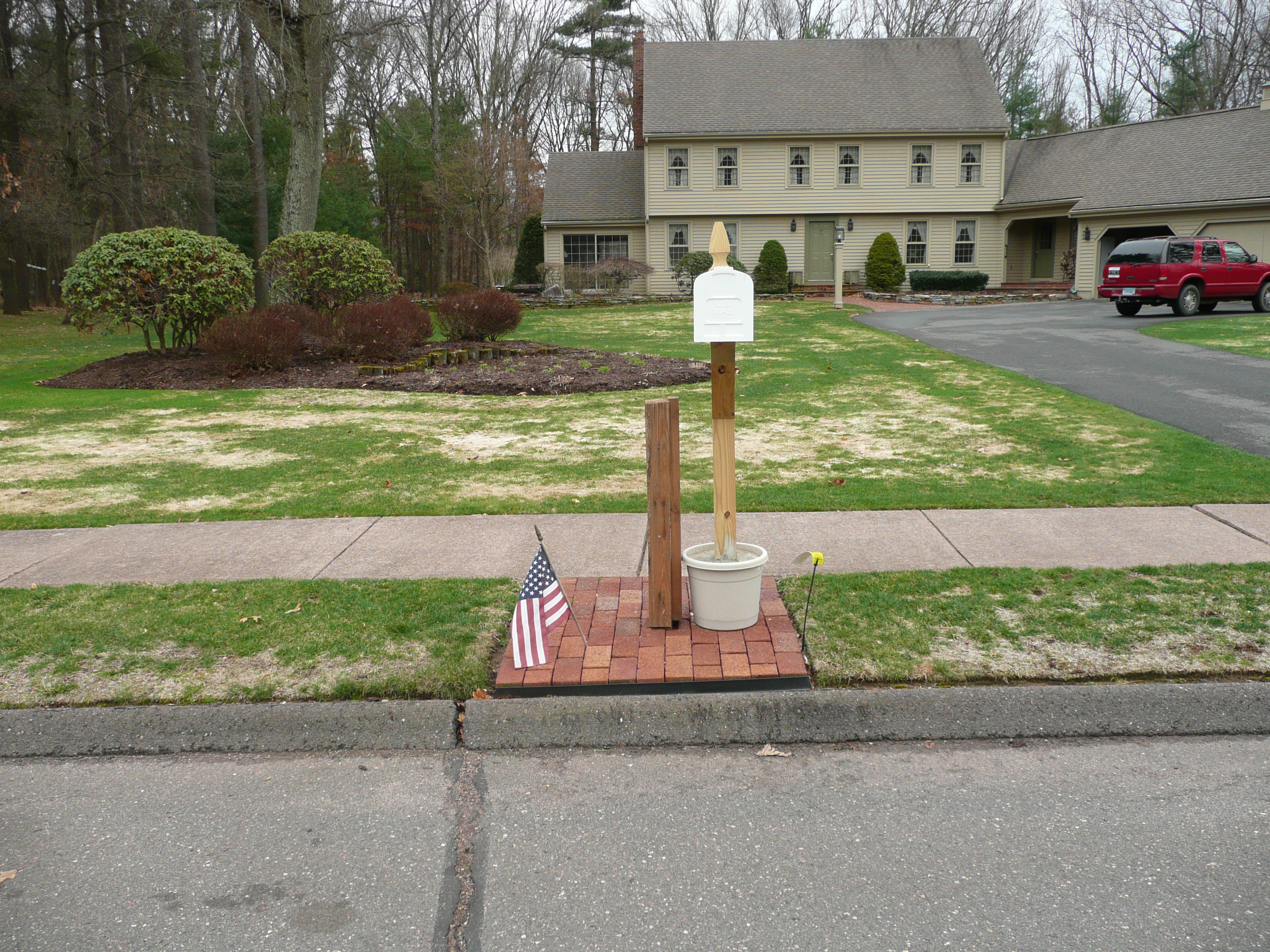
A before shot

And as for size of the planting area, consider the height and size of your mailbox. Measure the height of the post and make the bed the same length. Sometimes the width is limited based on how close your bed is to the street or a sidewalk. However a single plant or two is better than a boring mailbox in my opinion, so try to work with what you have. Again, the soil type is harsh usually so go for those tough type of plants. If your mailbox area is in the shade, there are tough shade candidates too. Please don’t use fake flowers – one of my pet peeves!

By adding 3 to 5 plants in the right proportion, with various textures and colors, and perennials with staying power that can handle roadside elements, or a super blooming annual vine, you will add just the right touch so that your mailbox is now a welcoming element to your home landscape with minimal maintenance involved. For larger areas around a mailbox area, a few boulders can be useful to balance and ward off any chances of someone crashing into your mailbox.

After mailbox

As for myself, I will just keep enjoying my returning Sedum that hasn’t failed me yet until the day I build a stone planter box around new mailboxes to replace my old ones.  That plan will include incorporating a more showy display around my mailbox planting area. But for now, when I pickup my mail from my mailbox, I’ll look at the plants currently distracting me from the bills in my hand as I walk back to my house. Cathy T

Its Canna Time – Photo Fri

Leave a comment
Peach Bloom

It is Canna Lily blooming time on my deck right now.  For this Photo Friday shot – here is a peach bloom that is just lovely and delicate, but I have others from speckled yellow blooms to bright oranges and reds of other varieties too.  This one reminds me of a gladiolus or orchid but on a larger scale – and the foliage is a soft blue green which is different!  Canna lilies, to me, are just wonderful repeat visitors and with the proper overwintering storage, you save tons of money by using them every year.  They combine well with other tropical plants like the bananas on my deck this year.  I like to cluster containers at various heights to create rooms and drama.  Some are set ontop of a second container turned upside down to elevate them even higher, or you can use small tables, wooden boxes or crates.  And if your container doesn’t have a drain hole (your-bad!), it will be okay for Canna lilies because they can sit in water too!  In fact, I have one in a water container and two tree frogs spent their first few weeks of life inside the container.  I could see them clinging on the inside facing up until they moved out.  Cuties!  If you have used Canna Lilies for the first time and need a lesson on how to properly store them this fall, feel free to contact me for a personal lesson. This is a service I provide to my clients and anyone in need of help.  I’ll come to your house by appointment with the supplies and show you how to do it right!  Happy Photo Friday —- Cathy T  www.cathytesta.com

Plant Science Day Delivers

Leave a comment

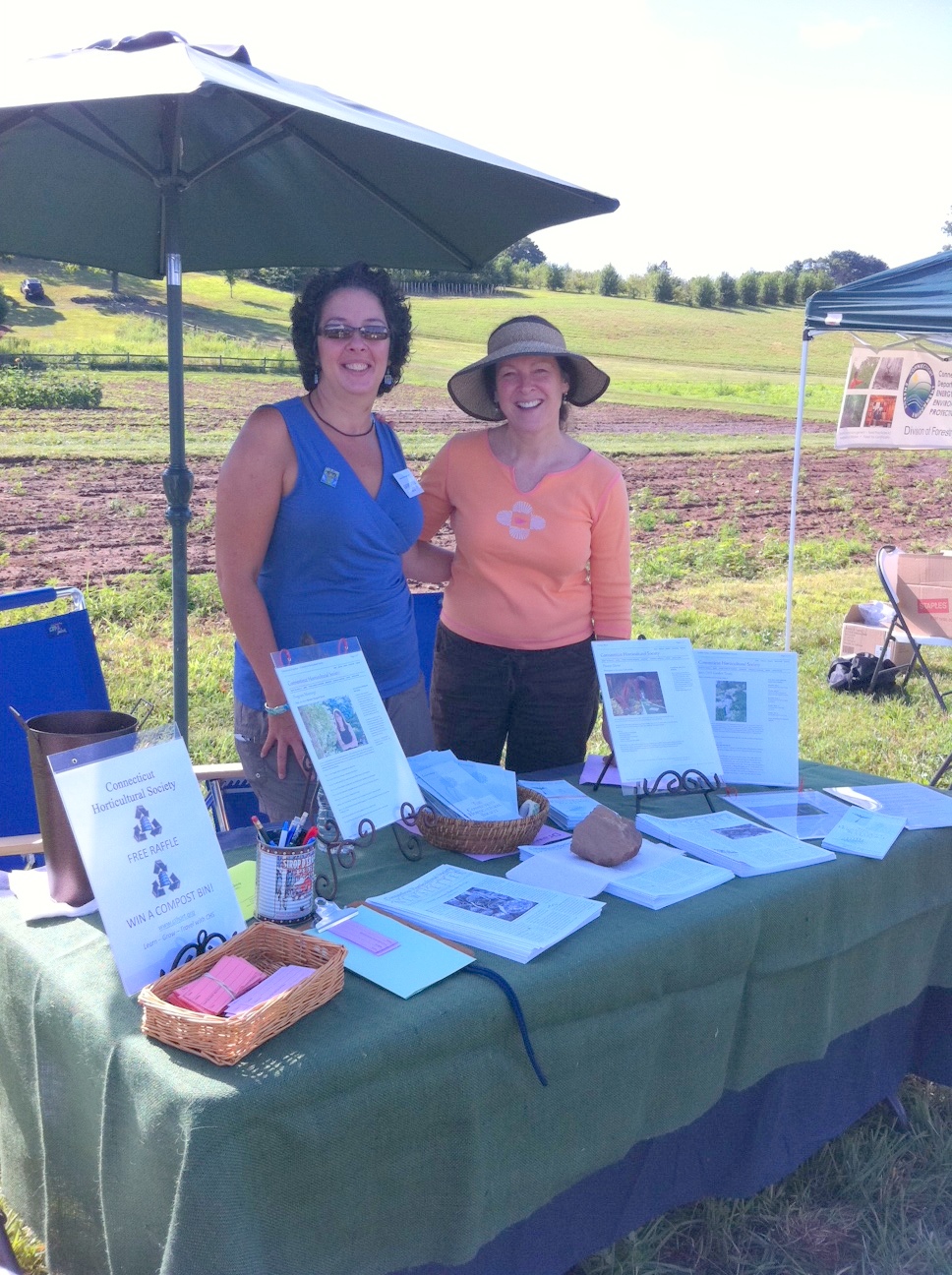
Last week, I attended Plant Science Day in Hamden, CT as a representative of the CT Horticultural Society (www.cthort.org).  This event is held on Lockwood Farm, a property serving as a research facility for the CT Agricultural Experiment Station (www.ct.gov/caes).  Station scientists and staff conduct field laboratory experiments on many different plants at this farm to learn how to control pathogens and insects.  Large test plots of various herbs and vegetables sit on the property consisting of about 75 acres, some grown with the goal to choose the best varieties for CT. Fruit trees line the fields and there are a couple old barns on the property as well.  A well-maintained beautiful bird and butterfly garden is onsite for anyone wishing to browse it.  All of this is surrounded by rolling hills seen in the distance.

I remembered this farm can be a very hot location in early August from when I attended Plant Science Day several years ago as an attendee, so I packed my large patio umbrella for the CHS display table, a cooler with lots of ice for my water bottles and snacks, and hit the highway around 7 am, making it there in 40 minutes.   Luckily, I missed the morning rush hour traffic.  Setup was easy alongside the other varied vendors from NOFA (www.organiclandcare.net) to OSHA (www.osha.gov), and the attendees quickly started arriving for the days educational and research based presentations. Soon the seats began to fill under the big white tents as the speakers began.  And eventually people came to the vendor area to check out our offerings and information packets.

You may wonder what type of people would attend this event held mid-week, on a Wednesday, in the midst of summer.  You would also be surprised to see how many people attend.  (FYI, last year, over 1,000 people were there).  It was quite active throughout the day, yet someone mentioned they thought the turnout may have been a bit lower this year.  There were visitors of all ages, or perhaps better said, from one end of the age spectrum to the other.  In fact, when I arrived home at the end of the day, I told my father that there were many attendees of his age, some that had run agricultural businesses for years, or were former farmers, and even a couple retired scientists. He replied with, “Of course, there ‘are’ no young farmers today – there’s only us.”

I thought, well, maybe on some level this is probably true.  On the back of a bumper sticker I picked up during the day which reads, “No Farms No Food ®” by the American Farmland Trust, it states that “American loses two acres of farm and ranch land to sprawling development every minute.” (See www.farmland.org).  In fact, my Dad, at the healthy age of 80, still owns 100 acres of land, which no longer has his cows roaming upon, but is now used to grow hay.  He was picking up bales of hay that very day.  He tried to sell his property with no luck – so far.  Perhaps due to the economy woes – or perhaps there are not many young interested farmers these days.  However, it seems to me not selling it has worked out for him as he still enjoys every second on tending to his land.  And selling bales of hay has become quite profitable.

However, I did not talk with only the retired agricultural types or farmers at Plant Science Day.  There were many young students around as well and young kids of the 6-8 years of age range too.  I also met two young teachers, guessing in their early 20’s, from regional Agriscience Programs of local schools.  A few students were tagging along with them.  And an occassional college students on their summer break attended with their parents.  I started to wonder, how did attendees hear of Plant Science Day?  What lead them here?  How did the older generation know about it – versus the young?

When I asked the older generation this question, all of them responded with, “I’ve been coming to this for years.”  One gentleman told me he sold the farm equipment used on this very farm when he ran a business.  Another told me he is a scientist, and scolded me for saying I only had a two year degree as a response. Like a good educational champion, he strongly insisted every learning experience is one to be proud of – even if you don’t end up as a scientist! I also had a comical fellow tell me that I would never find what he has in his backyard in any yard in CT.  So, of course, I had to ask.  Well, low-and-behold, he has been building volcanoes – yes, volcanoes on his property amongst his gardens.  Odd or interesting?  You decide!  Yet, I have to admit, I did find his story entertaining, and his motivation different from any other gardener I’ve encountered!  And there were also a few other retired folks that were the garden-traveler types.  They enjoy learning about hort, and visiting gardens or events like this one throughout the year, thus they were very interested in hearing about the travel programs offered via the CHS.  But in general, all of them were very happy to be attending the day’s activities.

And as for the younger visitors to my booth, I asked them if they were a student?…and then asked, “high school or college?”  High-school students were flattered.  But I wanted to find out why they were there.  Many are in that phase of just starting to be interested in agriculture, plants or horticulture in general.  So when I let them know, for the first time ever, the CHS is offering free memberships to students, they immediately perked up with interest – especially the college students. I informed them, they would receive the CHS monthly newsletter packed with horticulture information, tours dates, and interesting plant related articles as a member – and perhaps they could eventually make it to one of CHS’s program meetings, held monthly in West Hartford when in town.  Every month, CHS offers amazing, regionally known speakers of varied gardening and horticulture topics.  Our focus is also on education. (www.cthort.org)

As for the even smaller, younger children attending, they were running around with chaperones, stopping at several educational booths offering kids a challenge where they received a stamp once completing a specific task.  If they received all stamps in their book, they won a prize at the end of the day.  It gave the youngest generation a window into the future career of agricultural studies.  Check out www.soundschool.com, also featured at Plant Science Day.

It was nice to see the mix of people attending presentations which included everything from Beekeeping Basics (with free honey samples included) to the Mosquitoes and Transmission of West Nile and Eastern Equine Viruses in CT, and many more.  There were talks on the Brown Marmorated Stink Bug and Bed Bugs, and many guided walking tours by pathologists and entomologists of selected field plots reviewing their studies, and other technical demonstrations.  In the old barns, technical displays of various studies to view and learn – one about the functions of charcoal in soil, which I found interesting, by Dr. Joseph J. Piganatello and Dr. Charisma Lattao. I’ve used charcoal on top of some of my container gardens, so I had to read about this one.  And in the vendor area, where I was hanging out, lots of packed resources on things like invasive plants, arborists licensing, soil tests, farm programs, timber producers, energy and environment protection, forestry, organic farming, plant health inspection, farm related products, and more. The gist of this event is it is very research based, technical, and educationally focused.

Cathy T with Nancy Brennick

As for me, Plant Science Day offered me a chance to recharge my fuel and share what the CT Horticultural Society (www.cthort.org) has to offer interested members of all ages and interests.  From monthly speakers to garden related travel, I was enjoying, very much, sharing the information and letting visitors know it is out there as a resource and a way to learn and network with other enthusiastic plant people.  Sure I would have liked to attend the Plant Science Day presentations or go on their wonderful guided tours, but you know, I didn’t mind one bit staying at my post all day to talk to the people who came to ask about the society.  Many enjoyed entering CHS’s free raffle for a compost bin.  62 people entered – and the winner was very happy at the end of the day!

On my breaks from my table, which were short and fleeting, I picked up information on the Census of Agriculture Lesson Plans (www.nass.usda.gov), Honeybee Pollinator Information (www.nrcs.usda.gov/pollinators), a pamphlet on the Experiment Station Association (www.ct.gov/ caes), Web Soil Survey (http://websoilsurvey.nrcs.usda.gov), Arborist License Information (www.CTPA.org), Bulletin on Invasive Plants in CT Lakes (www.ct.gov/caes), and a book on CT’s Land Use Value for landowners – just to name a few items.  The last item, landowner land use value assessment book, is to share with my Dad. Cathy T

  • As noted on their website, the CT Horticultural Society is an educational organization dedicated to encouraging and improving the practice of gardening and the dissemination of  horticultural information to its members and the public.  In 2011, Bill Cullina, Lee May, Michele Owens, Stefan Cover, Charlie Nardozzi, Doug Tallamy and many more were in the CHS line up of their presentations!  Check us out!  Grow-Learn-Travel with CHS.  www.cthort.org
  • What is the CT Agricultural Experiment Station?  They make critical scientific discoveries and their scientists do a lot for CT!  See www.ct.gov/caes for details about all they do. Click on Experiment Station Associates. 

Photo Friday

Leave a comment

For this week’s Photo Friday, I took a photo of my sister-in-law’s hanging basket last nite.  Ever year Vicky gets a medium sized basket from a local nusery, usually The Garden Barn in Vernon, CT and hangs it in this sheltered spot by her front door.  Then she carefully waters, prunes, and feeds it with a water-soluable liquid fertilizer every 4 or 5 weeks.  And every year, she is successful with growing a huge and amazing display!  As you can see when my husband took this photo with his iPhone last nite, my purple shirt and clear-blue earrings matched perfectly with the purple Petunias and bright lime-green of the trailing sweet potatoe vine (Ipomoea batatas).  Even their front door is purple; it happens to be Vicky’s favorite color!  Vicky is wonderful with her plants, especially her annual showy hanger at this spot, and her window boxes on her shed.  I always tell her if I ever had a little store of my own, I would hire her – she has a knack with plants too.  My brother, Sylvain, and my husband, Steve, both insisted I stand infront of Vicky’s hanging basket for this photo -because it would show the scale of how large it has grown.  Thus, I did – and here it is for this week’s Photo Friday!

Do you have an amazing hanger, planter or container garden you would like featured on my blog?  If you are local to my area, please let me know – I’d love to take a photo of it and share your talent or story!  I can be reached at 860-977-9473 or via my email: ctesta@sbcglobal.net!  Cathy T

Moonstruck by Acer shirasawanum

Leave a comment

Back in May, my husband, Steve, took a day off from work to go with me to go pick up my plant order from a wholesale business.  I told him that I would like to stop at a particular nursery on the route back to see what they have on display.  I do not visit this nursery often because it is not in my neck of the woods but they usually have some unique ornamental trees and evergreen topiaries.  Steve was happy to oblige as long as we had lunch and he could enjoy a couple cold brews before heading there.  No problem.  We hit up a new restaurant called “Fat and Happy” in the area because the name caught our attention.  The food was excellent.  Our day’s agenda was working out perfectly!

Sure enough, upon arriving to the nursery’s small section of unique trees, I spotted a small maple tree labeled as Acer shirasawanum ‘Microphlylla’ standing among some Japanese maples trees and evergreen specimens. The minute I saw it, I said to Steve, “Oh, I saw a tree like this one in  a book by Tracy Disabato-Aust.  The fall colors of the leaves are wonderful!  I’d love to have this.”  Steve didn’t care much about the book reference (because he is not a plant addict).  He just quickly responded with, “Get it.”  I then joked to the nursery guy helping us that going for ‘brewskies’ before stopping here was starting to pay off.

When I got home and referenced Tracy’s book, “50 High-Impact, Low-Care Garden Plants,” I realized the small maple tree I had admired in her book was a fernleaf fullmoon maple (Acer japonicum ‘Aconitifolium’).  It has deeply cut leaves, resembling a fern with serrated edges – and the photo of its orange-yellow-red fall colors is really stunning.  Plus she notes it is “long-lived, heat and humidity tolerant, cold-hardy, deer-resistant, insect and disease resistant,” and more.   She also lists the paperbark maple (Acer griseum) as a high-impact, low-care plant, which I also love because its cinnamon colored exfoliating bark is quite attractive.  I regret I didn’t purchase one I spotted during a late season sale a couple years back.  I really regret it actually.

  • FYI: If you spot an unusual, healthy, and “on-sale” tree in late summer to early fall, go for it!  Tree planting in the fall is just fine – and you get a deal. It is time to be on the look-out for good sales of trees and perennials at your local nurseries – many are in mark-down mode!).

But back to when I spotted my new Acer shirasawanum ‘Microphylla’ in May.  It wasn’t on sale, but I was glad we got it anyways.  Acer shirasawanum are commonly called fullmoon maples (or full moon maples) and are similar to Acer japonium in looks.  It gets confusing sometimes if you are a non-hort person, and sometimes if you are a hort-person, and sometimes cultivar are misspelled or abbreviated on the tag, such as mine was.  I’ve seen the cultivar name as ‘Microphyllum’ which means small leaved.  Anyhow, it is classified as a shrub in some sources, or some referred to it as a small upright deciduous tree.  To me, it is a small but elegant tree candidate with bright green rounded leaves, joined to present the shape of the moon.  Thus – perhaps – the common naming of it as fullmoon maple!

Whatever the reason for its naming, this small tree is a perfect candidate for a container garden on my deck at home or yours too!  It is small enough for a pot – not too overwhelming, has very attractive leaves, and pretty winged fruit known as samaras with red tinged edges that hang on for a long time as a nice feature, plus fullmoon maples (the straight species, Acer japonicum) are known to be a bit more cold-hardy than Japanese maples, per some references.  Mine is also similar to Acer shirasawanum ‘Aureum’, known as the golden fullmoon maple. ‘Aureum’ has golden yellow leaves that turn orange in the fall.  Everyone is pretty much familiar with Japanese maples, but fullmoon maples, at least from my experience, are not as commonly sold at my local nurseries but they should be – they are just lovely!

Having this small ornament tree on a patio in a container can create a little bit of elevation, adding some structure, or a sense of dimension to your space.  Mine is situated near a low lounge style chair, and as the morning sun hits the leaves, shade patterns are cast on the chair.

When I brought it home, I actually said, aloud, “Welcome to your new home” as I removed it from the worn out nursery pot that day, and replanted into a much larger home, a faux stone container.  I could imagine the tree’s roots awakening to moist, well drained, organic soil in its new dwellings.  It wasn’t long before I could see the leaves perking up in response in a few days, and the stems looking healthier and greener in a few weeks.  These moments of revival made me appreciate nature and the tree more.

A patio umbrella near it provided some shade, as it prefers sun to part-shade conditions. And, as of this writing, in August, the trunk is so much larger.  It has expanded and I can just tell this plant took off and loves its new home.  I was so pleased to give it a new lease on life.  And to have a different candidate among my other container gardens on my deck!  Trees are candidates for container gardening too, don’t overlook them!  Adding trees can really create a new feeling to an area.

I am moonstruck by fullmoon cultivars now, yet the best part is to come in the fall.  The leaves will transform from a bright green to amazing yellow (and maybe some orange and red hues too).  I can’t wait to see this and take a photo.  After that phase, I will have the choice of overwintering it inside (doubtful as I lack space), or placing it into a dormant state in a protected environment, or transplanting into my yard (most probable).  This plant is hardy to USDA zone 5.  Be on the look out for them or other related ornamental maples, and for more information, see these links:

http://www.stonehedgelandscapingco.com/

Recently voted Best Garden Center by New Britain Herald, 2011.  I like their tree offerings, limited supply but usually those I don’t see commonly elsewhere.  I didn’t know they got that vote until I wrote this blog!  How cool!

http://www.tracylive.com/

“50 High-Impact, Low-Care Garden Plants” by Tracy Disabato-Aust, a favorite author and professional designer.  All of the plants in this book I enjoy – and hopefully will acquire those I don’t have yet as I have some of them already – plus the fullmoon now!

http://www.facebook.com/pages/Fat-Happy-Bar-Restaurant/201142036576472

A great new restaurant and bar in Newington, CT.  Check out their offerings!  The funny part of this story is we didn’t realize one of my distant relatives owns this great new restaurant and bar!  Imagine our surprise when we discovered that.  It is lovely inside with lots of tv’s for sports lovers (in case you are not into plants!)

Envied by us all
The leaves of maple
turn so
Beautiful, then fall
—Shiko

Thanks!  Cathy T (www.cathytesta.c0m) of Cathy T’s Landscape Designs – specializing in container gardening, designs of landscapes for DIY’ers, located in Broad Brook, CT.  Comments are welcome!