Where can I find rare or unusual plants in Connecticut?

Leave a comment
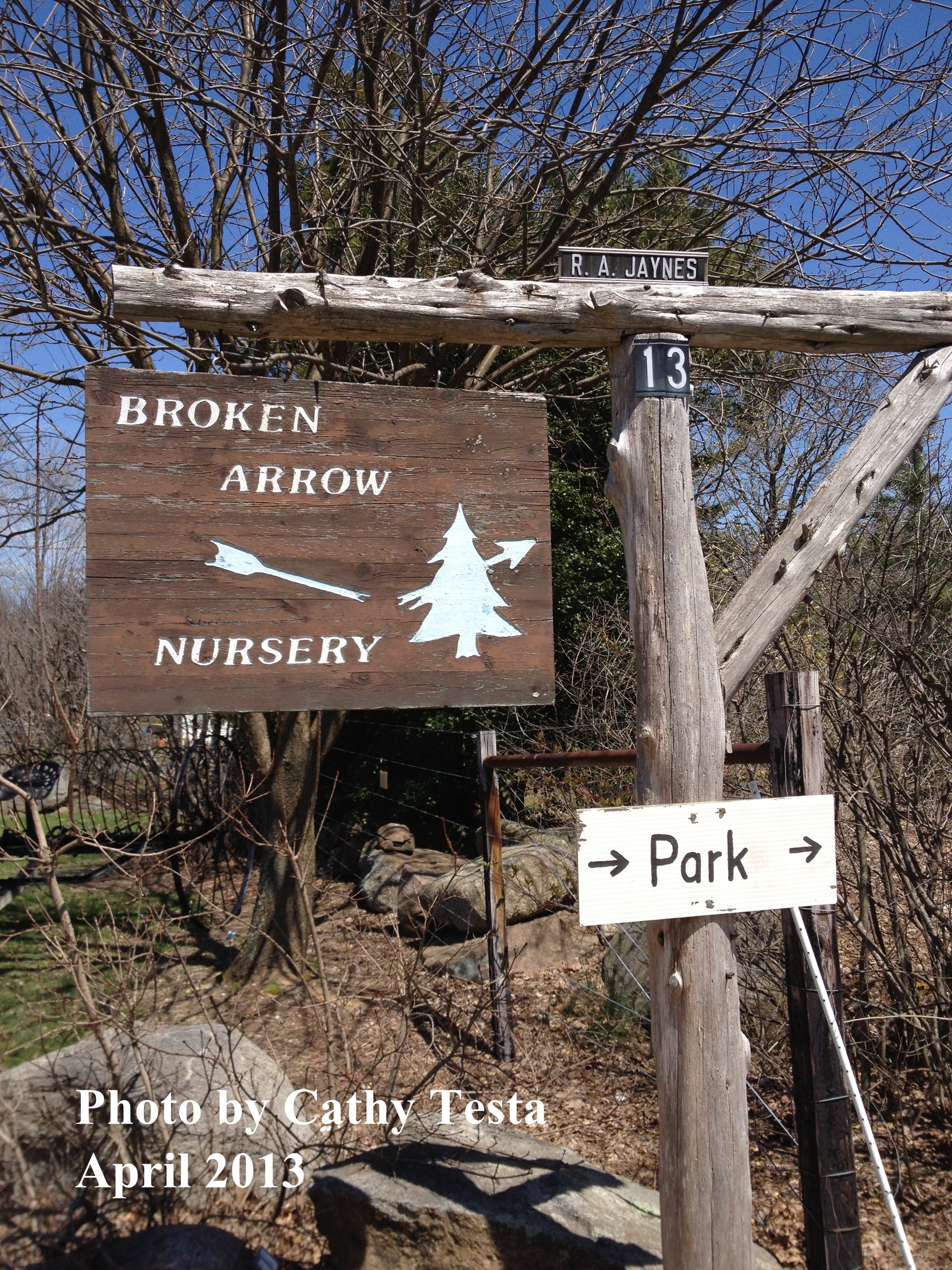
The Entrance Sign

The Entrance Sign

One of my goals this year is to visit nurseries I usually don’t have the time to do, but I’m making time.  Last Friday, I picked up a tube leaf Ginkgo tree from Broken Arrow Nursery in Hamden, CT. I’ve always wanted a Ginkgo, and this one has unusual leaves where some are fused, so they look a bit rolled up.  Latin name is Ginkgo biloba ‘Tubiformis’ and it will be fun to see once the leaves begin to expand.

This nursery, located about an hour from my home town, has some of the more rare or unusual plants that you won’t find in traditional nurseries. Many plants are propagated by the nursery. So if you are a plant collector, or looking for unique varieties or cultivars, an hour’s drive makes the visit to Broken Arrow worth it.  Unique conifers, trees, and shrubs are available at their site and via their well organized mail-order website.

As I drove down the winding roads lined with old stone walls to their retail location, it reminded me of trips to another nursery, a wholesale one, called Sunny Border in Kensington, CT.  Like Sunny Border, this place, Broken Arrow, is tucked within a nicely woodland landscaped area in a private section, where you get the sense it may have been started right out of the home.  It is not on a main highway or roadway, and you would not really even know it was there unless someone told you.

Upon my arrival, I recognized their symbol of a broken arrow with an tree.  This is the place, I thought.  And I knew right away, I was going to enjoy my visit when I saw deciduous and evergreen trees dug into the soil where you could see how they were growing here, rather than lined up in a field.  However, they had plenty of plants lined up for sale too, with good signage detailing the important information about the plants.

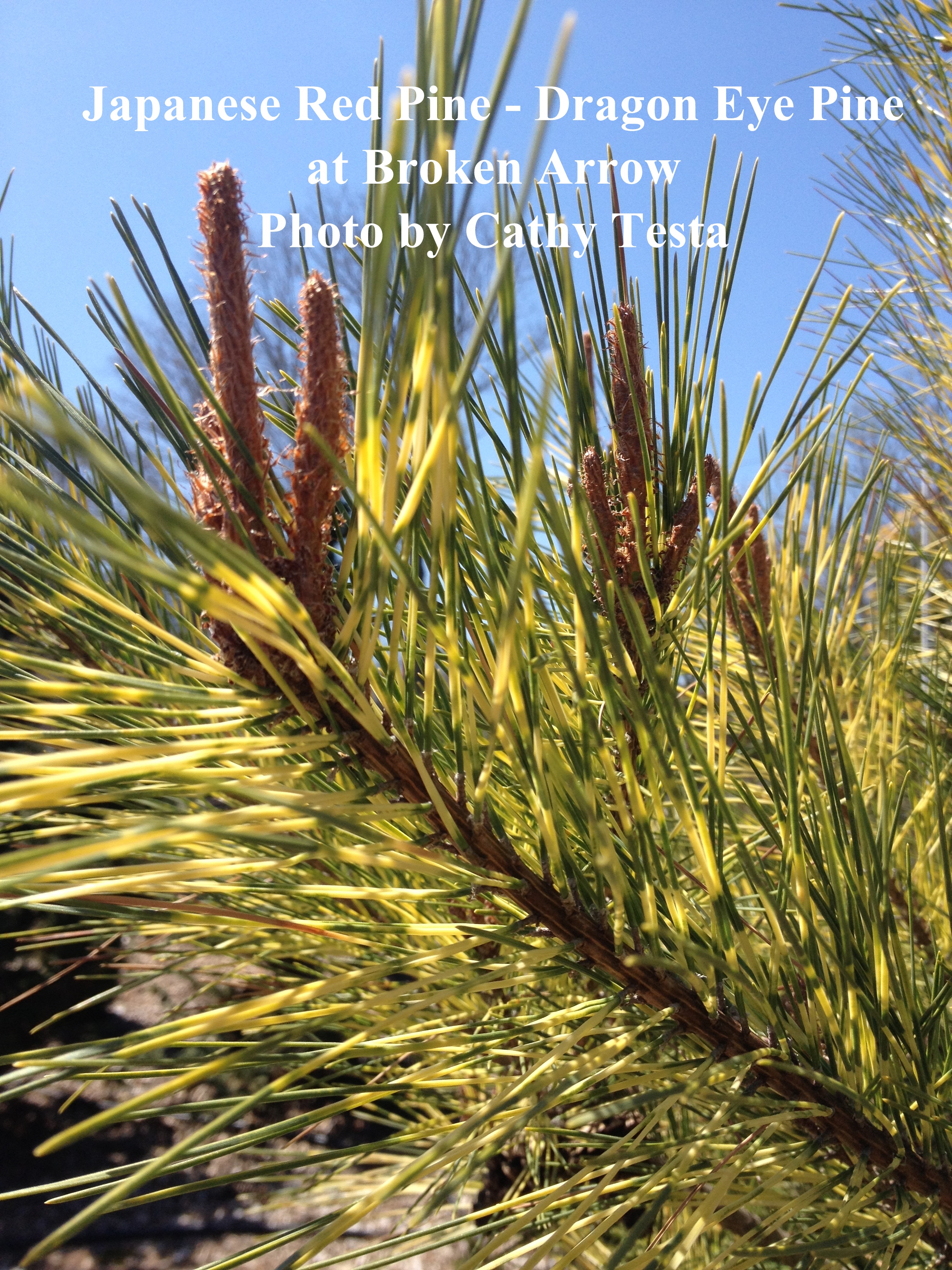
Pinus densiflora 'Oculus Draconis'

Pinus densiflora ‘Oculus Draconis’

They have unusual conifers, such as this one called Dragon’s Eye.  It is a variegated form of Japanese Red Pine.  Latin name is Pinus densiflora ‘Oculus Draconis.” Yellow bands across the long needles give it a little something different to look at.  It would be stunning in a garden of perhaps bright yellows as a theme, and you just don’t commonly see these in typical landscapes.

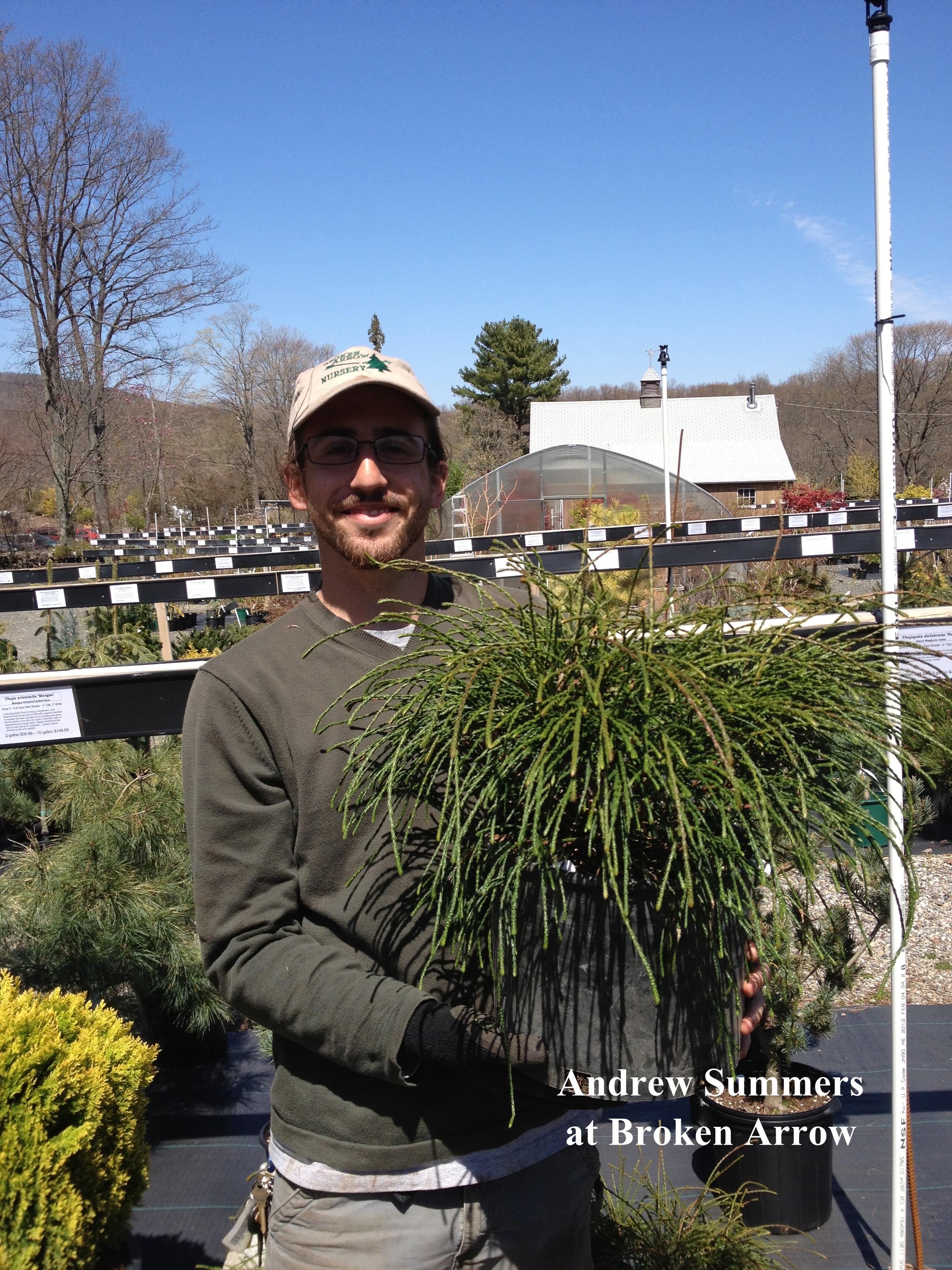
A happy and helpful staff member

A happy and helpful staff member

Or how about this Whip Cord Western Arborvitae (Thuja plicata ‘Whipcord’).  Andrew Summers, one of the welcoming staff members, took the time to discuss this plant with me along with other unique plants on the premises.  His energy was inviting and he didn’t mind at all when I asked him to hold the plant for a quick photo for my blog.  This plant is interesting looking and would look great in a rock garden or in a container garden.  First thing that comes to mind is a big “face” pot, so the whipcord acts like hair!

We discussed how it must be so difficult to work at Broken Arrow because of the temptation to buy many of the plants available. One could go broke here, especially if you have a passion for the rare.  Andrew was quick to explain key features of several plants, which I truly appreciated.  It is not often you find two people “ooohing” over the shape of a leaf, but we both were – it is just one of those plant geek things I guess – or for plant enthusiasts.

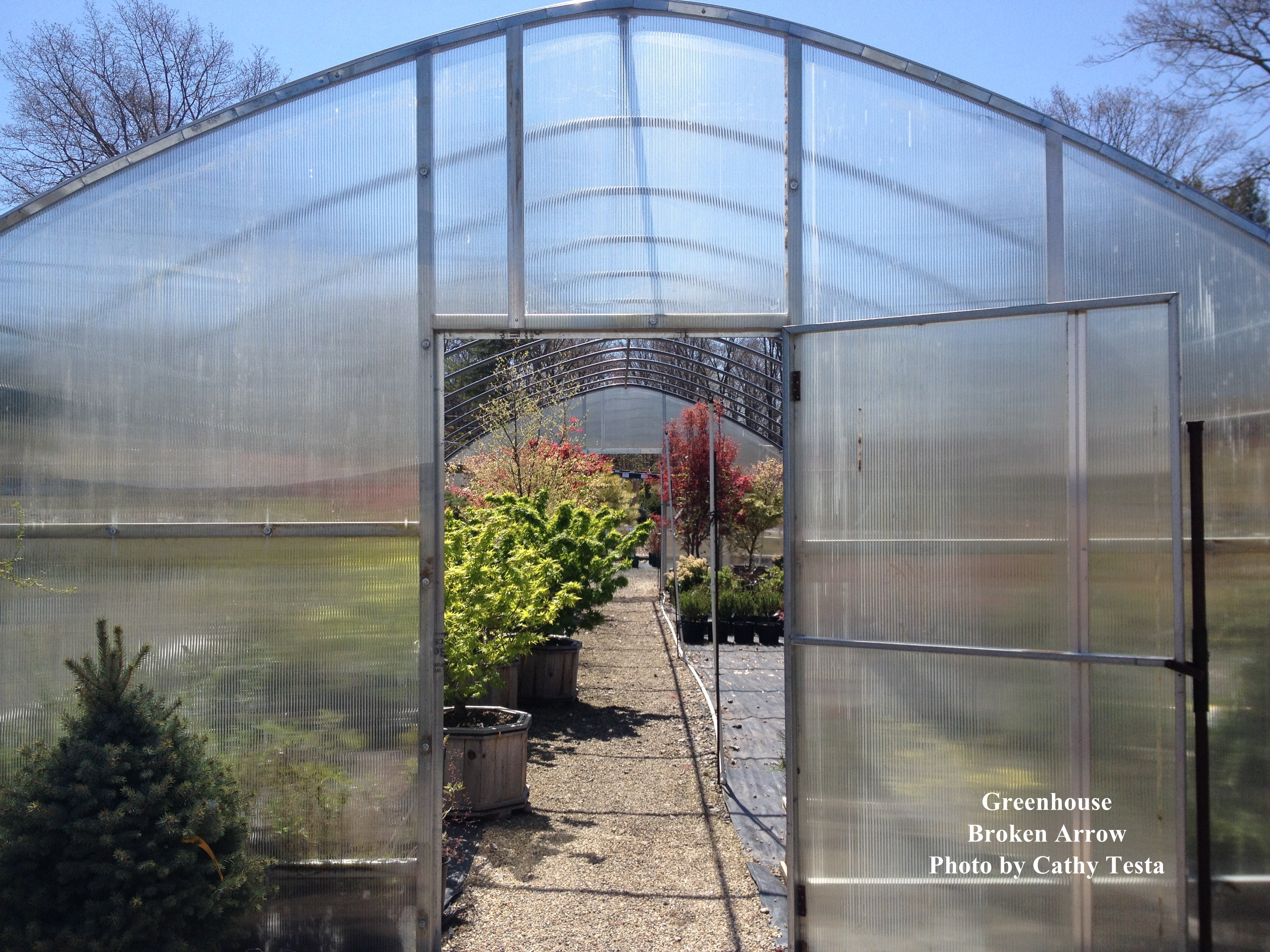
One of the greenhouses on the Broken Arrow Site

One of the greenhouses on the Broken Arrow Site

As I continued through the nursery, I took a lot of photos for my research of plant materials – especially because this location is a bit far for me, I wanted to remember the plants I saw in person.

Sparkling Arrows

Sparkling Arrows

Take for example a form of an Alaskan Cedar with creamy white coloring with the green.  Darn, I thought. I just bought one of these last week, and I like this one better – because it is different.

Magnolias at Broken Arrow

Magnolias at Broken Arrow

There were some perennials, but not a huge amount (at least not yet).  This place is a destination for trees, shrubs, and conifers.  If you like Magnolias, they had at least nine different cultivars to pick from on the premises, and offer many more via their website and catalog.

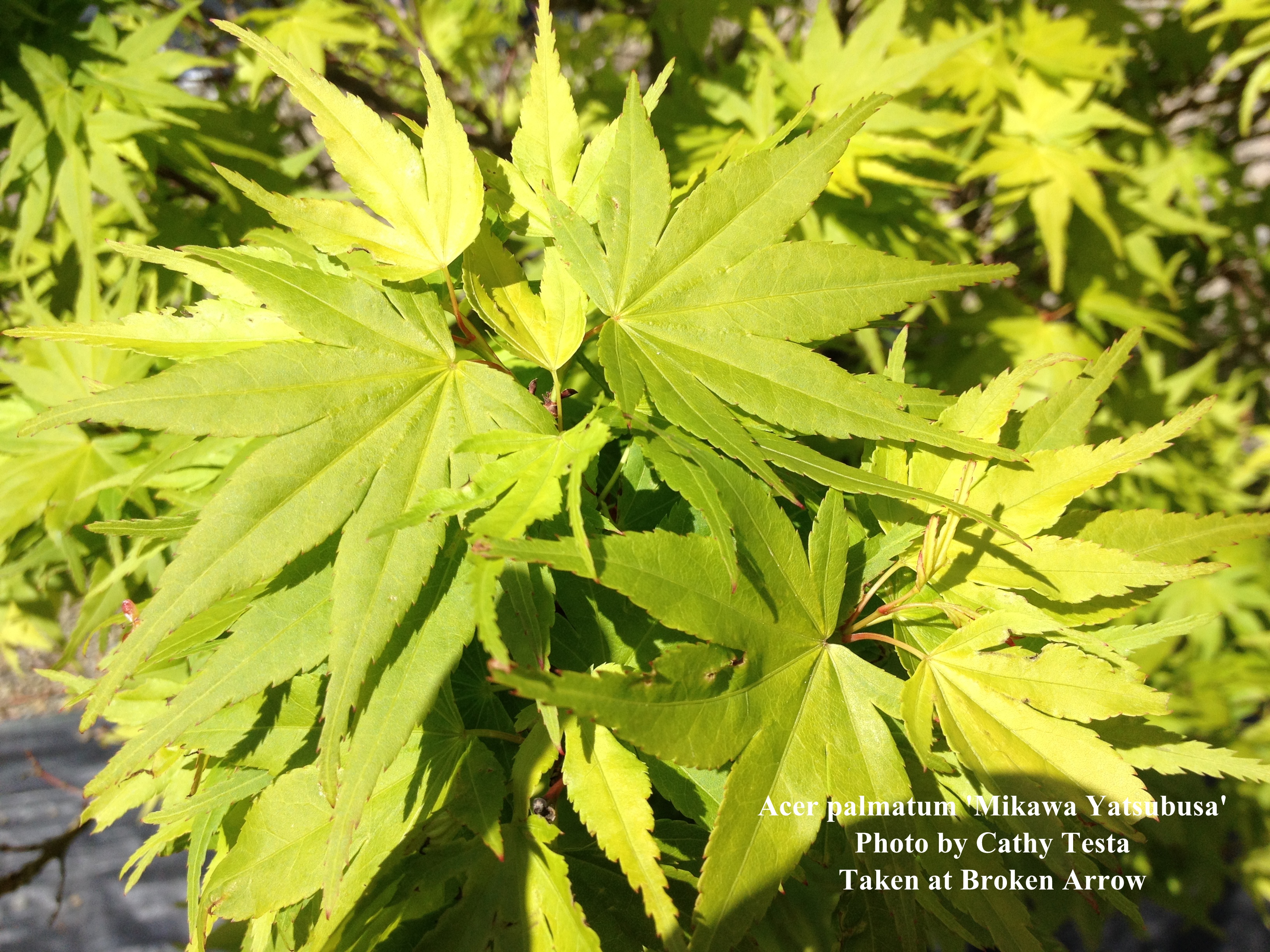
There were many full sized weeping Japanese maple trees and some compact dwarf sizes.  For example, take a look at the yellow foliage of a Japanese Maple Tree shown below of a dwarf type.  The foliage greens up in summer on ‘Mikawa Yatsubusa’. The leaves are packed tightly on its branches, and it is just stunning in a container or perhaps in a Japanese garden.  It caught my eye immediately.

Many evergreen and deciduous shrubs, some really pretty Viburnums, Stewartias, Dogwoods, Witch Hazel, and more.  Many of the plants are just beginning to awaken to the spring air and sun so flowers were not out, but I can imagine how this place looks when a bit warmer out.

Many beautiful Japanese maple trees at Broken Arrow

Many beautiful Japanese maple trees at Broken Arrow

Broken Arrow is located 13 Broken Arrow Road in Hamden, Connecticut and is also listed in the new “Passport” being made available by CT’s Garden and Landscape Trail organization (see http://www.CTGardenTrail.com).  You can get your Passport book stamped as you visit sites, and when you reach 10 sites, you can enter to win a $10,000 dream landscape – so I made sure to remember to bring my Passport with me.  And by the way, Broken Arrow offers some really nice classes, and has a “thing for shade-loving perennials” per their catalog too.  I didn’t make it to their tree farm section at another location nearby, perhaps I will save that for a fall or winter trip.

Bee busy on a winterhazel

Bee busy on a winterhazel

Container Crazy Cathy T
860-977-9473
http://www.cathytesta.com
containercathy@gmail.com

Beautiful day, beautiful plants, and beautiful people

1 Comment

IMG_6341Yesterday was the perfect sunny day for my guided tour with the East Haddam Garden Club at the The Garden Barn Nursery and Landscape in Vernon, CT.

As I drove to the nursery to meet my group, I felt very cheerful because the sun was shining, there was no wind, and the birds were chirping.

When I arrived, my group was waiting for me in the garden center with big smiles.  I immediately felt their excitement of getting their planned insider’s tour of the Garden Barn for their first time.

Many times, when I do my design reviews with clients, they will ask me where to shop for the plants.  I always answer this question by telling them what I think are the best attributes of the local nurseries in our areas.  And, I have to say, one of the big benefits of The Garden Barn is they have it all.  What I mean is they have the “Greenhouses + Garden Center + Nursery + Growing Facilities + A Pond Garden + Gift Shop.”  This equals to me, everything you’d expect, which is one of their mottos at The Garden Barn.

We started our tour by taking a look at their gift shop – I like that they have a gift shop where many centers do not.  It was filled with bird features, seeds, and dried florals, and much more.  One of the garden club members walking this tour noticed a beautiful glass bird bath, and at the end of the tour, she carried it right to the register. It is nice when you are out shopping for plants to have the option to buy a gift at the same time if needed for yourself – or for someone else.
Bird on Tree

Bird on Tree

As part of this tour – this group got a bit of the “insider’s info” as I told them about my experiences working there in 2006.  And the owners, Kathy and Dennis, shared their history, experience, and talked about the new areas of The Garden Barn with the tour group as well.

We walked through the back warehouse, not visible to regular customers, and as I was walking and talking, Kathy came to greet us.  Her name is Kathy too (with a K).  This prompted me to tell the group the reason I called my business Cathy “T’s” Landscape Designs is because when I worked there – my name was confusing at times.  If someone called out Cathy on the walkie-talkie, they may have meant Kathy, the owner, not Cathy the staff member, so we decided to use Cathy T and it just stuck with me.

The Garden Barn

The Garden Barn

Kathy shared her experience, history and details about the operations at their nursery.  And then we continued through the greenhouse looking at the annuals being put out on the tables.  There were some beautiful, healthy new guinea impatiens sitting there just waiting for their new owners.  These are not infected with the blight experienced last year, which many people encountered.  Kathy gave advice on what do it “if” they had the blight on their plants, but the good news is their new stock is free from it.

The Garden Barn was established in 1980, and it started as a small “road-side stand.”  It is incredible to see how much they have grown into a 13 acre facility, with a new addition in 2010-2011 of an open-air pavilion of 11,000 square feet.

As I walked the group outside to see the new addition, I told them the old one was wooden and made a lot of noise on windy days when I worked there.  Sometimes people would look up and wonder – will a panel fall off?!  Now it is a beautiful structure filled below with shrubs and trees.

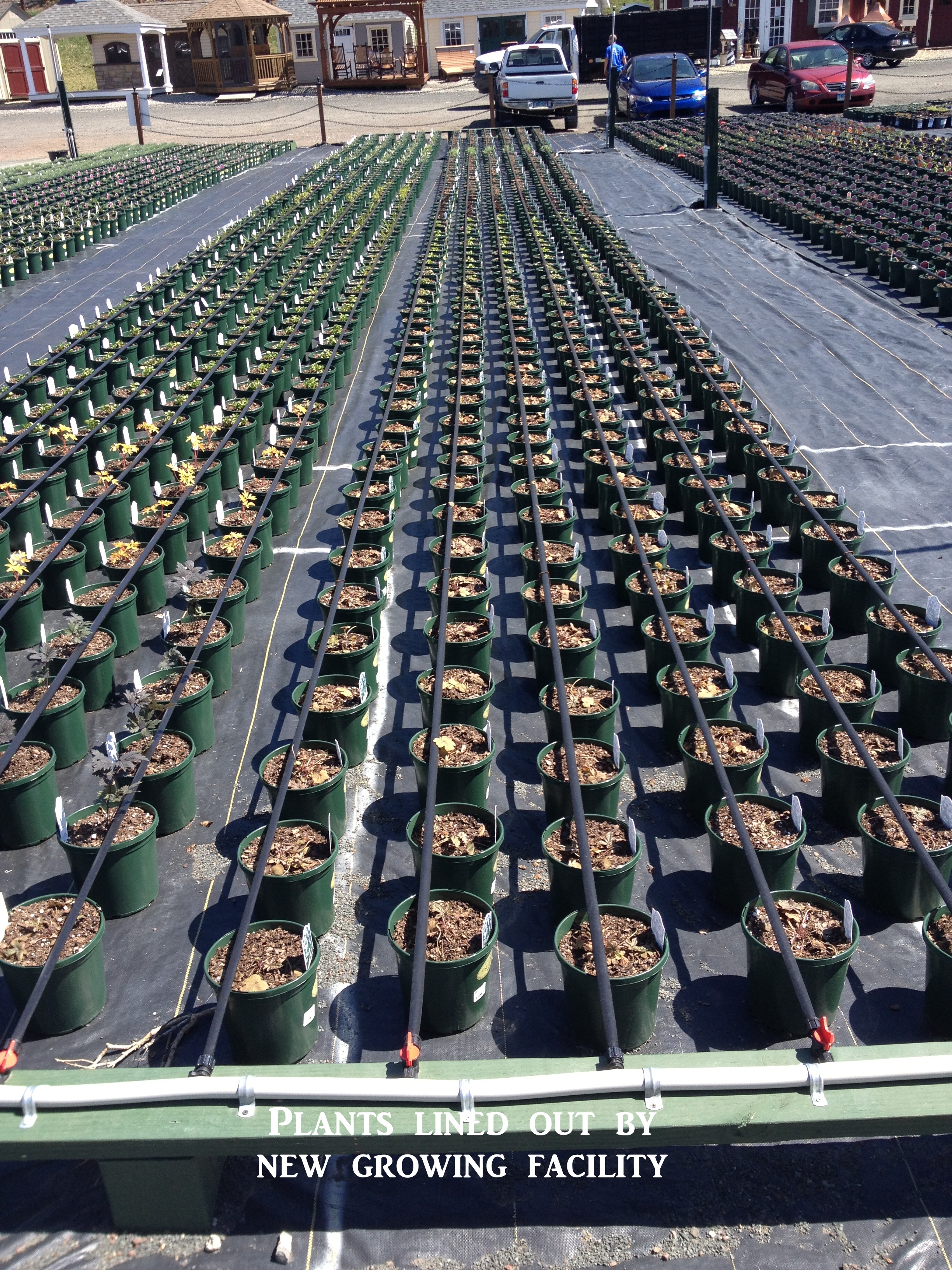
There are several new growing facilities now too.  A head-house and poly houses, along the back side of the property.  Kathy told us to go visit Dennis, that he was expecting us.  She referred to the new facility as his retirement home, cause he always in there.

But when we arrived, Dennis told us his name for the new dwellings – The Rehab.  I can see why; it is warm, beautiful, quiet and relaxing – and FILLED CHUCK FULL with beautiful plants and hanging baskets.  It was a special treat to enter an “employee’s only” section of the nursery – which you didn’t want to leave because it is tranquil in there and just has a certain feel – at least for plant lovers!  Dennis told us anytime he calls out on the speaker, “Who wants to work in the Rehab today?” he is not short on volunteers from his crew and staff.  They run at the chance.
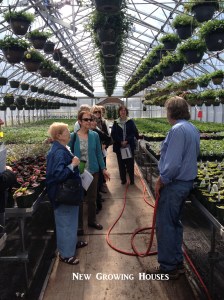
New Facilities

New Facilities

The new facility is on 3 quarters of an acre, but you know what? Dennis said, he would have bought more property if he could.  I joked, “Hey how about a Garden Barn restaurant?!” He replied with, “More like growing grapes.” Hmmm, even better I thought. Either way – there would be wine (hee-hee).

After we toured the new growing areas, we went back to the large areas of trees, shrubs, perennials, ornamental grasses, and more.  I’m just in awe of how a couple and their children have made The Garden Barn a show-stopper, and worth a trip – even all the way from East Haddam.  This garden club did not regret hitting the road for the day to see a nursery outside of their town.

The best part of the day was seeing the abundant plants lined out and being hardened off for spring – and the sizes and quality, in my plant eyes, are outstanding (as usual for The Garden Barn).  This is another benefit about The Garden Barn – they have full plants and they stand behind their plant warranties.  They are also part of CNLA, the Connecticut Garden Trail (ask them about this), ANLA, and the Tolland Chamber of Commerce.

The Garden Barn in Vernon, CT was a great place for me to learn when I started in my career change several years back.  It takes hard work and a true passion to maintain and grow a place like The Garden Barn.  Overall, the day was beautiful, filled with beautiful plants (and I’m not kidding about the birds, they were chirping around us as we walked), and the group from East Haddam was a beautiful group of ladies who truly enjoyed the special treatment and guided tour.

And P.S.: I made it out of there without buying anything – but I really wanted one tree in particular I saw there – and I’m thinking of calling today to order it.  I can’t stop thinking about it.

Container Crazy Cathy T
http://www.cathytesta.com
860-977-9473
containercathy@gmail.com

New Line Out Area

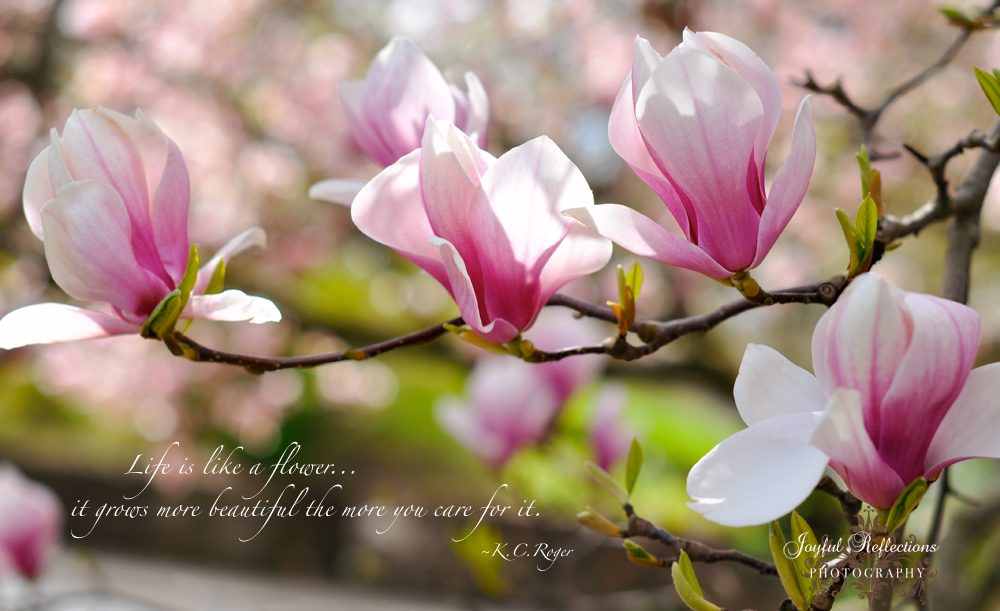
New Line Out Area
How should I transport my plant from the garden center to my home?

8 Comments

My sister called me yesterday afternoon to ask about a new magnolia she purchased at a nursery.  She was planning to pick it up today, and wanted to know how to handle the transportation in her mini-van.  This was an excellent question to ask.  The last thing you want to do is damage your new plant purchase, so here are a few tips and reminders on what to do when you move your plant from the garden center to your home.

Balled and Burlapped B&B) tree example

Balled and Burlapped B&B) tree example

GET OUT THE BED LINENS

It may sound funny, but you may want to grab a couple old pillows and a thick blanket, or a tarp along with some bungee cords or rope, before you head to the garden center. The main thing you want to do for trees is protect its bark and foliage during travel. Bark is like your skin, overlaying the veins in your body.  On trees, bark protects the cambium layer responsible for transporting water and nutrients in the tree, much like how veins move blood in our bodies.

If the bark gets rubbed, broken, bruised, or nicked, it can prohibit the passage of nutrients and create a perfect place for insects and diseases to settle into your tree. When you place or lay your tree in a van, car (which I’ve seen done for small trees), or inside the back of your pickup truck, be careful to not nick the bark.  Don’t allow the tree to roll around in the vehicle, hitting something like tools, or your seats.  Damage on the bark, or the trunk for that matter, is a leading cause of death in trees.  Sometimes wounds will heal but it can make the tree’s appearance not as lovely as you had imagined.

GIVE THE FOLIAGE A HAIR NET

As for the foliage on the top of the tree, it should not be exposed to wind as you drive home.  If you put the tree in the back of your pickup truck, be sure to protect the foliage somehow.  A light bed sheet works well, wrapped like a hair net – or the nursery may have some type of light material to offer you to protect the foliage.  Wind will shred the leaves and dry them out.  Even if you drive carefully and slowly like Grandma.  This is also true with evergreen shrubs susceptible to drying winds.  It is best to cover the foliage on its journey to your home in a vehicle if exposed.

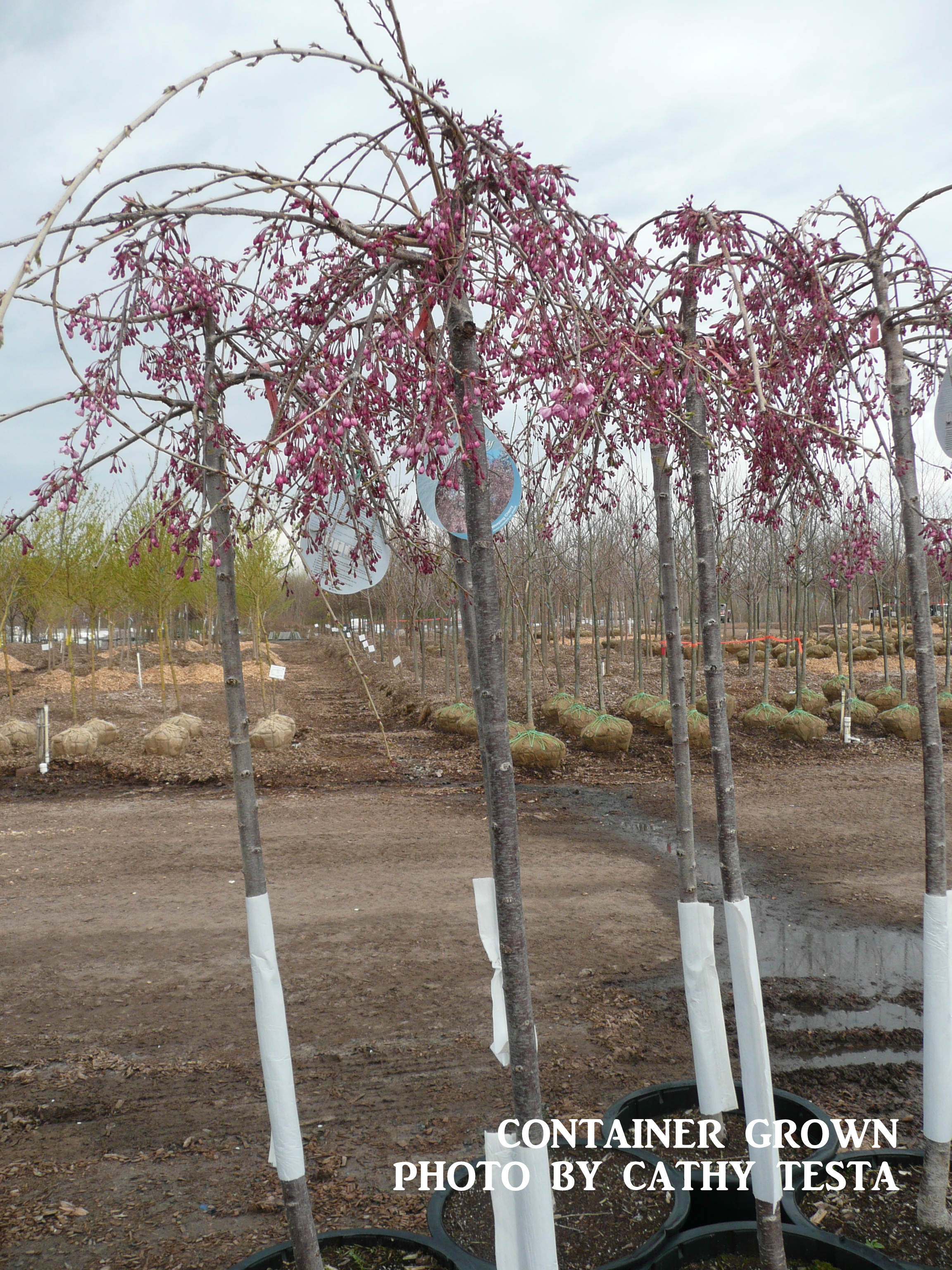
Container Grown Tree Example

Container Grown Tree Example

PERENNIALS IN POTS

If you are bringing home perennials or annuals in pots, grab a cardboard box or plastic milk crate to insert the pots into your vehicle as you travel so they won’t topple over in your car.  Most nurseries offer a plastic liner to protect your car seats from the wet base of pots, but you may want to bring along a sheet as well if you have one on hand.  They can be handy.  Inside the vehicle, perennials and annuals are protected from strong winds, unless you drive a convertible, so they will be okay.  And in the back of a pickup truck, sometimes this is okay because they are lower than the top of the pickup truck’s bed.  But if you stop somewhere on your travels, and plants are inside your vehicle, don’t let them sit in the heat for too long.

VENTILATE YOUR CAR IF YOU STOP SOMEWHERE

Mostly likely, if you are out and about shopping for plants, you will also be stopping somewhere for another errand or to have  lunch.  If you have your tree, perennials, or annuals “in the car” – and plan to stop for a while, open up your windows slightly to allow some ventilation in the car.  Although many plants like the warmth, scolding hot temperatures will stress out the plants, and dry out the soil in the pot.  Overheating your plants is like overheating a dog in the car, it can lead to suffering and even death! Remember this for plants you may have put in the trunk of your car too.  If stopping for more than 15 minutes on a hot day, I wouldn’t leave them baking in the car’s trunk like an oven.  They will get weak and withered, and potentially at a permanent wilting point – unable to recover.  You may not either, once you learned you fried your investment.

Pick it up

Pick it up

USE A HAND TRUCK OR WHEEL BARREL TO MOVE YOUR PLANTS

You should not lift a tree by its trunk at the base or mid-way on the trunk.  You might not only hurt the tree, but hurt yourself too, especially if the tree is balled and burlapped.  B&B trees are dug up from the field with the soil base around the roots. They are very heavy compared to container grown trees.  With a B&B tree, you probably will need help to load and transport the tree, and unload it at home.  Big B&B trees are often better planted by an expert – and many nurseries offer this service.

If a container grown tree, it is much better to lift it by the container, and then place it carefully on a hand truck or in a wheel barrel to move the tree to its holding location or planting location in your yard.  Don’t leave your new tree or perennials in the wrong place if you don’t plan to plant it in the ground right away.  There are two things you must remember.  Some trees and shrubs will be top heavy if grown in a container, and the wind can topple it over.  And the second thing, is they can dry out in pots, so you must also remember to water them.

Last year, one of my clients took home two beautiful Kwanzan cherry trees for a park installation.  She placed the trees by her picnic table to wait until she could go plant them.  The next day happened to be a very windy day.  While she was at work, the wind had tossed one of the trees against the table repeatedly, rubbing away the bark and creating a good sized wound.  We decided to plant the tree anyways, and hope for the best.  Looking it over this spring, the wound is healing nicely, but you can visibly see the damage done, plus the tree doesn’t match the other one as a result.

A good tip is to insert the container into another bigger and heavier empty pot or box at home to stabilize the tree until you are ready to plant it in the ground.  Or put some weighted object, like large rocks or cement blocks around the outside of the pot base to keep it in place in the event of a windy gust.  Also, put the plant where there is a bit of shade to protect it from harsh sun until you are ready to plant it.  And also very important – don’t forget to water it from time to time if you don’t plant it right away, especially if you placed it on pavement where the pot can get hot quickly.

On your planting day, if you have several trees or plants to plant, line them out into their permanent positions in your landscape, but don’t remove them from their pots until you are ready to place them into the planting holes.  Leaving exposed roots could potentially dry out the roots too.

Once planted, another good reminder is to be careful when mowing your lawn or weed whacking nearby so you don’t nick the bark once you have successfully planted it in your landscape.  Something I have to remind my husband every year when he breaks out the mower!

So follow these guidelines, turn up the tunes while traveling home from the nursery, and rest assured all will be safe when you arrive home!

Container Crazy Cathy T
http://www.cathytesta.com
860-977-9473 (cell)
containercathy@gmail.com

Is it too early to plant?

2 Comments
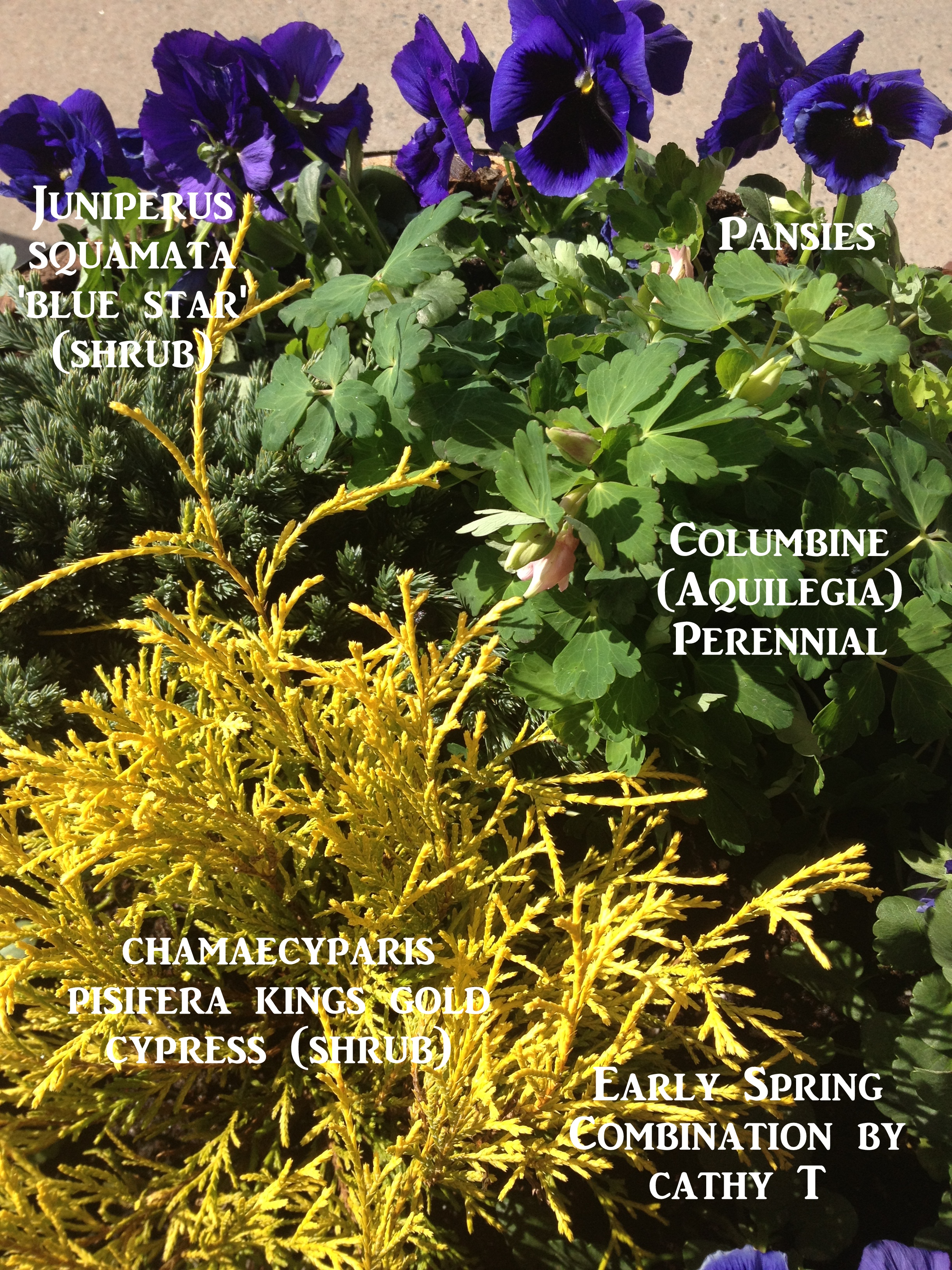
Early spring container combination

Early spring container combination

The overly-chilly temperatures experienced during early April this year has made us more than anxious for warmer weather so we can get outside to begin gardening.  And it has also prompted many of us to ask if it is too early to plant?  But the rules still remain the same.  In fact, they may be more applicable.

LAST SPRING FROST DATE

To be safe, for plants sensitive to cold, you should wait until after we get our last spring frost, expected around April 26th based on averages.  Otherwise, you risk damaging the foliage and potential flower buds, or the total loss of your new plant.  “It’s just a tad bit too early for some plants, even though we are ready to get out there.”

Pansies

Pansies

COLD-TOLERANT PLANTS

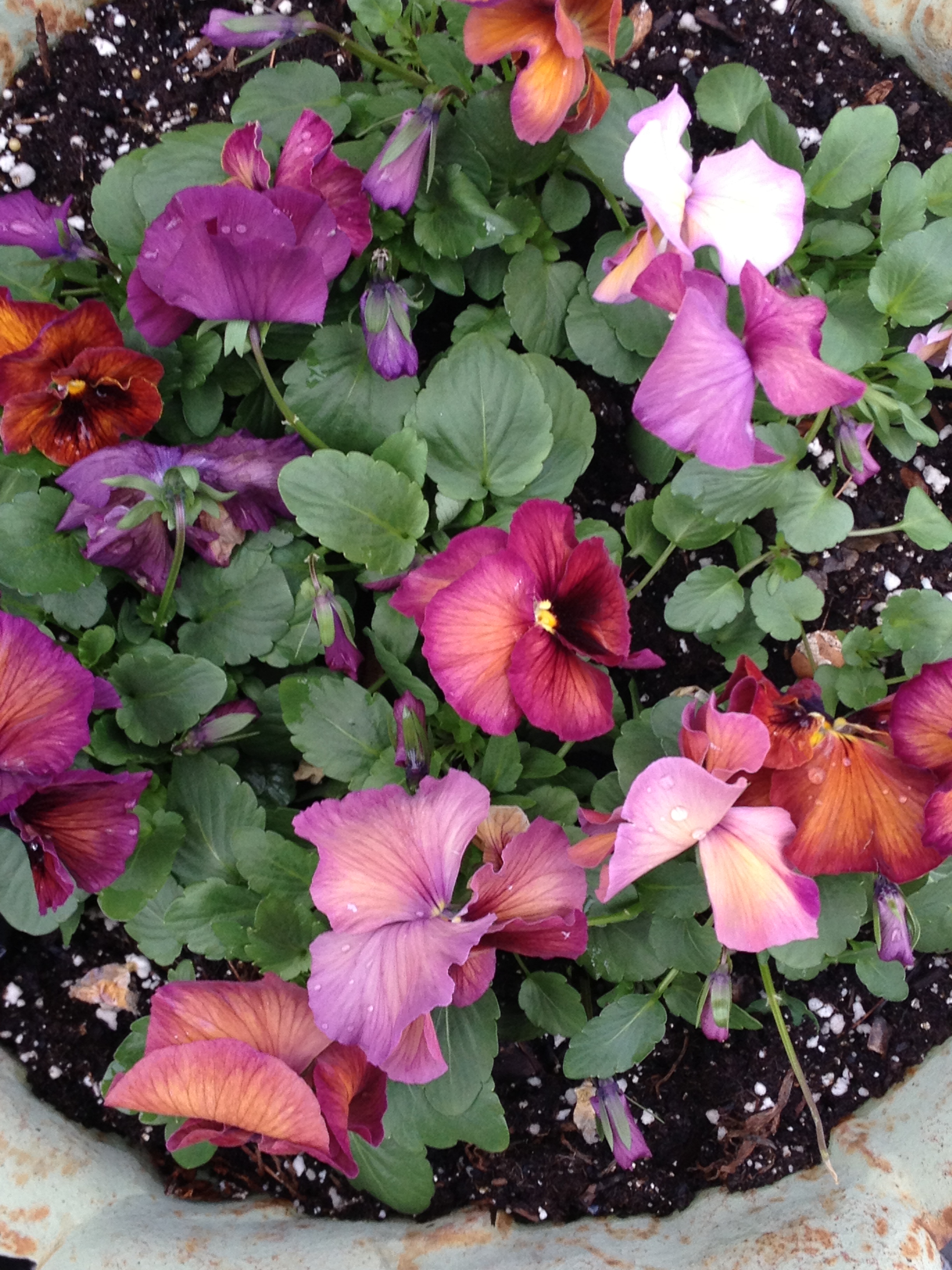
By now, you have probably put out some pansies, tulips, daffodils or other spring-like bulb plants, such as hyacinth.  These can take the chill.  There are some other cold-tolerant plants you can plant now as well.

You will see evergreen and deciduous shrubs and trees, early spring perennials, and other plants hardening off outside at the nursery.  Hardening off is a process where plants are transitioned from the growers’ greenhouse to outdoor temperatures.  These plants are safe to plant.  If you are not sure, ask your nursery person.

But beware; I saw a store that put orchids outside on a table last week.  A little chill to orchids may not harm them, but frost will damage them, resulting in a bad start.  Use a little common sense and consider the type of plant you are exposing to the new environment outside before proceeding.  It may be best to wait until mid-to-late May for the cold sensitive plants.

COLD-SENSITIVE PLANTS

Houseplants, cacti, tropical plants, summer annuals, and summer-blooming bulb-like plants want warmth and can’t take cold soils.  So if you stored your canna rhizomes in the fall, or caladium and elephant’s ears tubers, you should not put them in the ground yet.  Plant them in pots indoors and place them near heat sources or by a sunny window to get them started early.  When the soil warms up outside (60 degrees F-70 degrees F), move them into the ground.  Or pot them up in your container gardens around late-May.

If you kept your tropical plants in the basement to go dormant in their pot or container over the winter, now is a good time to transition them to a room inside your home to start greening up.  Start a watering routine slowly.  When the warmer days arrive, cold-sensitive plants can be put outside.  And if you just can’t wait, cover your plants with a light sheet or bring them inside when the weatherman indicates an overnight frost.  It is best to be cautious.

IMG_6170THINGS YOU CAN DO NOW WHILE YOU WAIT

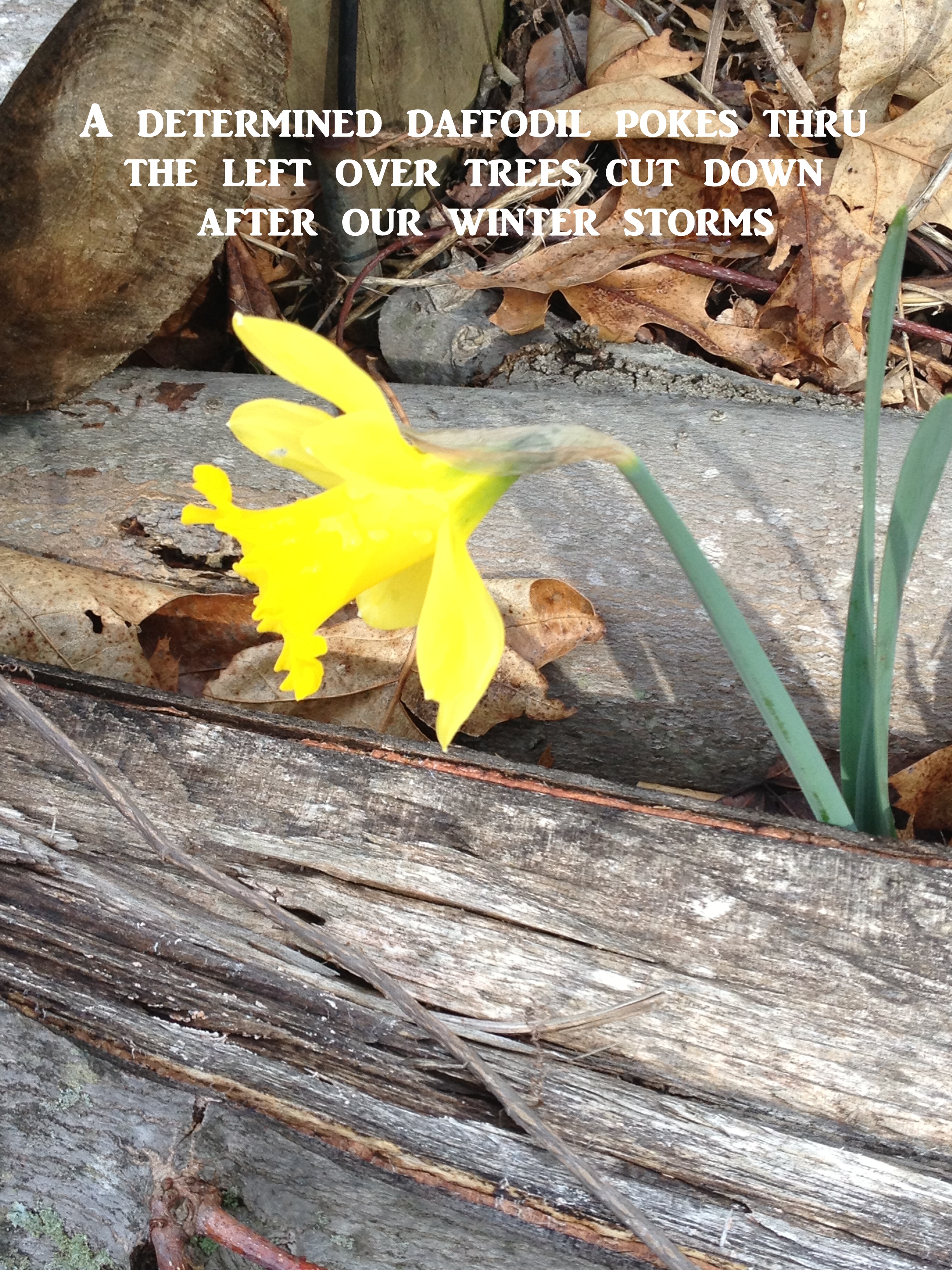
This time of year, however, is a great time to get other tasks done or set-up so when it finally warms up, you will be ready to take action.  Get your containers and patio pots out, clean them up with a bit of light soapy water, place them in your favorite places, and fill them up with potting mix so when you bring your plants home from the garden nurseries, all will be ready for you.  It is also a good time to clean up any perennials with damaged or worn foliage.  Clean up your garden beds of debris, add some organic matter and/or mulch if needed, prune summer-flowering shrubs blooming on new wood before growth starts.  Edge your beds, get out your bird baths, cut back your ornamental grasses, and sharpen your garden tools.  And of course, clean up any left over tree and branches fallen from our past winter storms.  There’s plenty to keep us busy while we wait.

Container Crazy Cathy T
http://www.cathytesta.com
containercathy@gmail.com
860-977-9473 (cell)

Fall color of Heptacodium miconioides, Seven-son Flower

Leave a comment

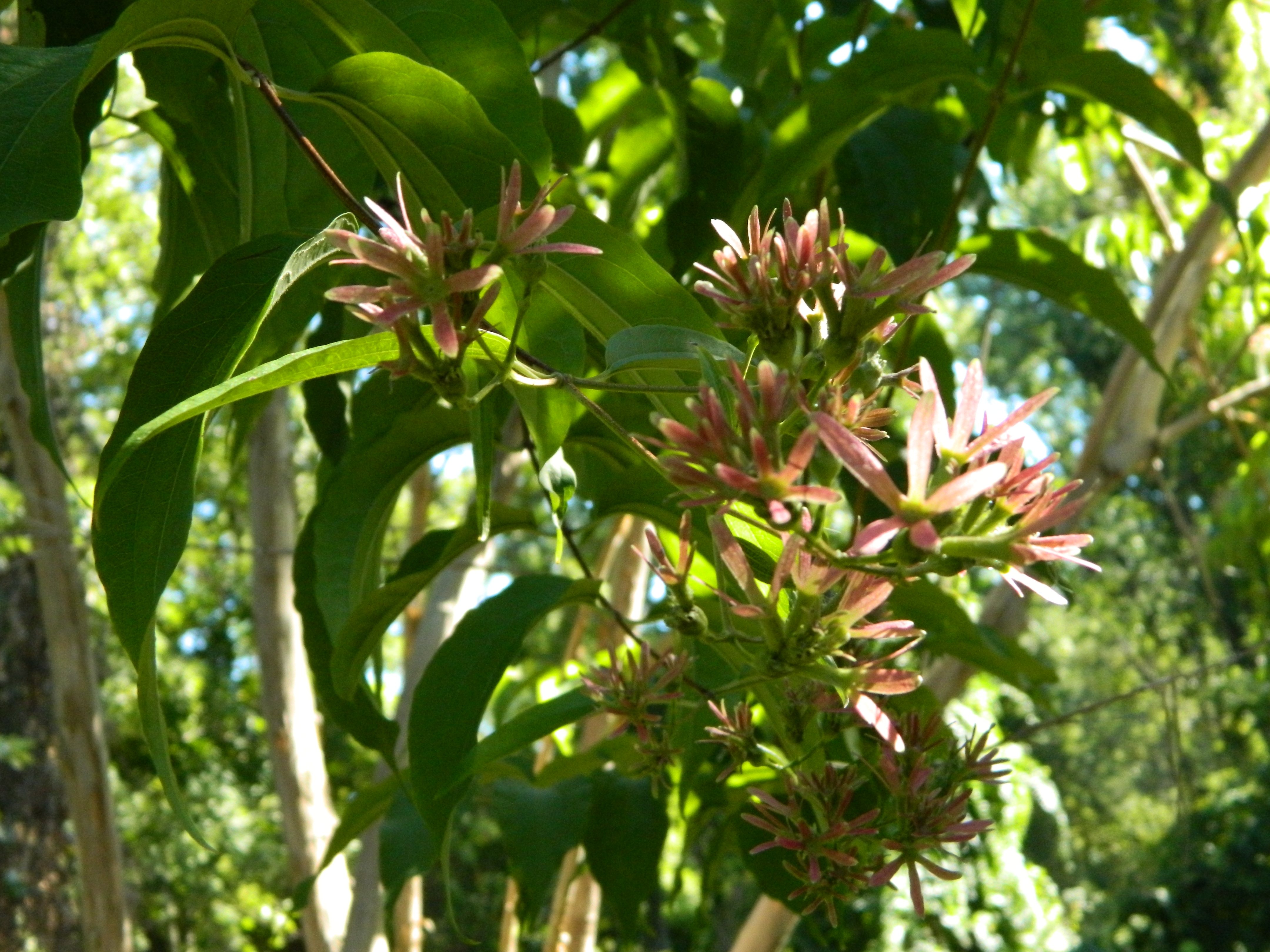
As an update to my September 20th post, below is a photo of the rose colored fruit capsule with sepals on a Heptacodium miconioides.  After the flowers dropped, the change from green to this color occurs.  This early fall feature adds another layer of interest to this shrub/tree.  So besides the six tiered airy flowers, it has seven great benefits in the garden:  1) attractive green leaves emerging in spring, 2) fragrant white flowers in mid summer, 3) butterflies visiting,  4) grayish stems exfoliating for year round interest, 5) rosey-red coloring after flowers drop for fall interest, 6) a medium growth rate, and 7) its unusual and different.  To learn more, read the post prior to this one.  Cathy T

Rosy sepals in fall

Heptacodium miconioides, Seven-son Flower

3 Comments

Exfoliating Bark

There are not many times I have a “hear the angels sing moment” during an onsite evaluation at a homeowner’s property, but it happened to me just last week.

There it was, around the corner, by a moss-covered gazebo, a beautiful Heptacodium miconioides.

Later, upon my return to their property, I took a closer look and photos.  I confirmed…, “Yes, it is a Heptacodium — and lucky me, it is in full bloom right now.”

This plant, native to China and a deciduous shrub, can grow or be trained into the size of a small tree.  It can reach 15-20 feet tall with a spread of 8 to 10 feet.  The specimen I was adoring at that moment is the size of a glorious mature tree.  It has been here for a while, I thought.

Heptacodium’s common name, Seven-son Flower, comes from the feature of seven flowers being born in clusters.  Tiny and white, they are positioned at tips of wirey pedicels. If you look closely at this photo, you can see seven closed flower buds on one, while others are open. Delicate and fragrant, the flowers are simply elegant due to how they are positioned and carried above nice, new looking foliage.

Seven-son Flower

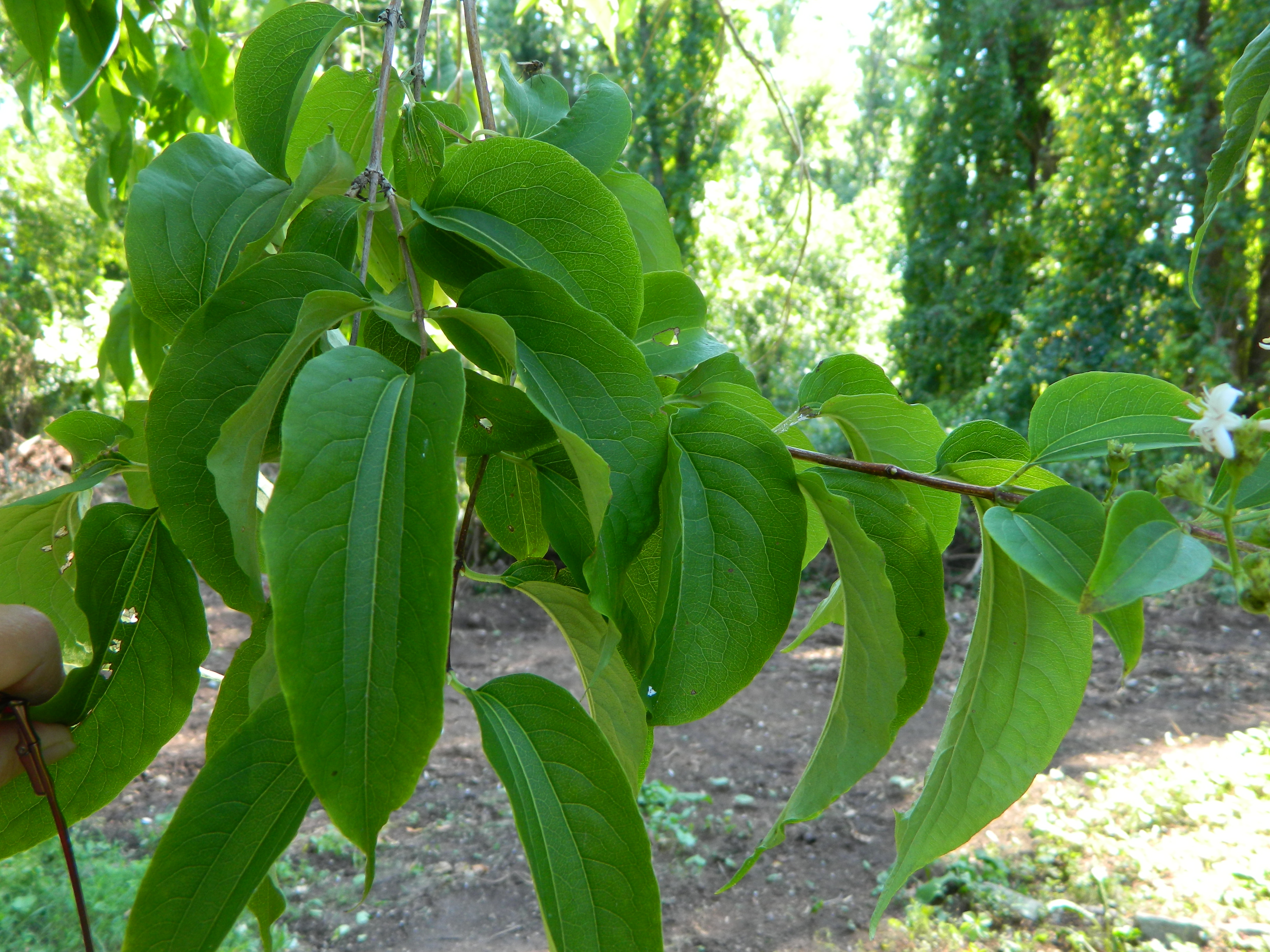
Heptacodium’s foliage expands early in spring, is soft to dark green, shaped ovate and long, reaching a slight pointy tip.  The veins in the center run down while the side veins run out causing a cupped effect on some.  Handsome, fresh and clean, the foliage makes a perfect partner to the elegant, white, late season blooming flowers.

Then comes the bark supporting it all above.  It exfoliates.  The peeling of the bark on this is layered in strips on multi-branched stems, showing a lighter toned inner bark.  The strips remind me of something, but I can’t place what – almost like a raffia or ribbon.  You almost want to take a piece and peel it away, but of course, I certainly would not.  At least not at a client’s site!

This plant is hardy to Zones 5 to 8, and I have seen it at a local nursery near their pond gardens, a perfect location for it appreciates moist to well-drained soils.  In fact, it was when I was very new to the job, and a customer visiting the store asked me what it was.  I remember, I rushed everywhere trying to find out – and ran up to the landscape manager who finally id’ed it for me.  He later told me the customer was extremely impressed that I made every effort to find out what it was.  At the time, I had never seen it before.

My excitement for this shrub is just as intense now as it was over five years ago when I saw it that first time.  And I know it will continue to intrique me, for in the fall, more features will appear – the sepals turn reddish.  This tree, rare and often difficult to find in nurseries, also attracts butterflies.

Handsome Leaves

It enjoys sunny locations, but will tolerate some shade – as this one did.  It “was” located in a shady location with some dappled sun, but this season, it has been receiving the sunlight it has yearned for, due to the removal of several broken trees from last year’s October snowstorm.  In some ways, the storm last year provided improvements to gardens – and it certainly did for this Heptacodium!

Some more information:

Family:  Caprifoliaceae

Habit:  Upright, loose, …as Dirr says, “Almost artistic”

Texture:  To me, coarse on bark, bold on leaves, soft on flowers

Value:  Rare, Elegant, and Classic (Coincidentally, this my client’s preferred style too)

Season of Interest:  You know if you read this blog, spring to winter!  All year-round.

Thank you for visiting, Cathy T.

The Berry Police

1 Comment

Yesterday I made a faux pas.  I took cuttings of a wild winterberry shrub, growing along a desolate roadside which looked like nothing but swamp land.  As I got to this native multi-branched deciduous shrub, I was excited it was covered with red berries – perfect for holiday decorations.  I just couldn’t resist taking cuttings.  I also noticed there were other previous cuts on the shrub, so someone else was there doing the same exact thing recently.

When driving through this rural town on Monday, there were tons of these shrubs growing in the wetland areas everywhere.  The bright red fruit of the female plants are so vivid this time of year – they are somewhat irresistible.  The temptation to take some for my holiday decorations and for embellishments in my container gardens of evergreens was overpowering.  So overpowering I drove all the way from my town, after an a.m. walk, to this town about twenty miles away to get some of what I thought was nature’s free offerings.

A few minutes into cutting some branches, a car comes barreling past me and pulls in right behind my vehicle.  With a steno notepad in his hand, the driver was jotting down my license plate.  I started to wonder if I was breaking the law.  “Uh-oh, the berry police are here,” I thought.  He was a local resident that owned property nearby, and apparently, he doesn’t like anyone messing with these shrubs.  I knew I was in trouble.

The shrubs, native to our areas and growing freely by suckering, were right along the road, so I figured this was not a private residence.  And yes, perhaps if there was a house on the land, I could have walked up, knocked on the door and asked, do you mind if I take some cuttings?  But I didn’t see a house anywhere there.  But as it turned out, it was near a private residence, I think.

I profusely apologized to this guy saying — You are right, I should have asked first.  He was absolutely right – that is the considerate thing to do and maybe – perhaps – even required by law (?).

But to be honest, I was so disappointed I couldn’t just enjoy my moment under clear blue skies of taking nature’s gifts without a confrontation.  I just wasn’t in the mood.  I had a bad week, or should I say bad month, and I just wanted to enjoy this morning.  But lesson learned; guess this is not the area to take cuttings from.  And my temptations overruled my moral compass.

After I explained my purpose for taking them – when he asked me to explain why I was taking them, he seemed to calm down.  I told him I’m putting on a class this weekend, and I’m a designer of landscapes, and we will be discussing different evergreens and deciduous shrubs used in holiday arrangements, etc.  But the whole time, I have to admit, I was nervous.

Then he said, “Well, you certainly seem to appreciate these and nature, and plants – so take what you have and that is fine, and please remember to seek permission first in the future.”  And I assured him, next time, I would be more selective on my decision to feed my addictions and ask if I can find anyone near the property – by the roadside – I certainly will seek that permission first.

Because he seemed so irritated, I never got a clear answer if he actually owned the property along the roadside.  I believe he owned the property way in the back somewhere, but I wasn’t even sure and I just wanted out of there by that point.  I was so sure the shrubs, which are everywhere around this area along the roads and some hard to get to with the wetlands, were not privately owned.  These were so close to the roadside that, in fact, I parked my car further down as to not be close to the cars traveling by, where it could be dangerous.

Sometimes our love of nature, enjoyment of wildlife, and addictions to plants leads us to make spontaneous moves that are not considerate.  Taking these berries, to this gentleman, meant taking away some beauty in his neighborhood.  And he is absolutely right –permission is important.  I let the desire to have those darn red berries get in the way of my judgment and professionalism as a horticulturist.  And, I’m sorry for that.  But I can assure him, the beauty will be enjoyed ten-fold as I share my story tomorrow afternoon during my class with the ladies.  I am sure we will all have a laugh and learn a lesson too.

By the way, I was searching for answers on this topic.  Here’s an interesting link I found from a gardening forum.  http://www.helpfulgardener.com/phpBB2/viewtopic.php?t=28157

Enjoy your weekends, and if you get tempted like me, take my advice, seek permission first if you can find it.  And if you see a bird, you may want to ask it too.  They may mind just as much as a local resident or property owner.

Liquidambar styraciflua – Sweetgum tree

Leave a comment

For this week’s “Photo Friday” by Cathy T, here are couple photos of a sweetgum tree.  Latin name noted above.

Sweetgum Leaves

I came across this tree during a nature walk in Cape May, NJ last weekend.  My husband and I went to the Cape May area for the first time.  In search of some exercise, and the fact it was a cloudy day, we decided to hit up the Cape May lighthouse first, going up 199 steps to the top for some views.  After, we discovered a nature trail nearby at the state park.  Once our leg cramps subsided, we entered the path.

The wooden laid walkways lead you through pine canopies and continue through marshes and swamp like areas.  Well-maintained but still with its natural presence, this nature trail was peaceful and the right pace for us.

We walked about a mile along various terrain experiencing shade, sun, water, sea breezes – and many birds, wildflowers, and unique trees.  By the way, Cape May is known as a place to be for birdwatchers. Many bird enthusiasts were standing on a deck with binoculars in hand and facing the sky as they were taking counts where we began the walk.  And on the trail, we would come upon a quiet bird spectator here or there.  See www.BirdCapeMay.org about their observatory and bird species.  The bird factor made the journey more pleasant and calming.

Sweetgum Tree

As for myself, I wasn’t looking up – but out and around on the trail.  I was surprised to come upon sweetgum trees.  I just didn’t expect it although they are known to grow near swamps and in lowlands, such as the place we were experiencing.  And along the path, there it was.  The big star-shaped leaves I’ve recognized before.  I stepped off the path to take a closer look and a photo.  For some reason, I felt like I may be breaking a rule by going off the wooden trail to venture into the woods, but I couldn’t help myself to take a closer look (and some photos of course).

Later, as I continued further, I came across a stand of them.  They were aligned in rows in open areas and  being protected.  I’m not sure why, but they were surely being grown and tended by a specialist for some reason.  This tree is used for timber production and valued for its ornamental qualities.  It is possible they took seedlings or root sprouts to keep them growing in the area since they were abundant and naturally occurring.

Back to the leaves of the sweetgum.  It is the feature which made me stop long enough to lose track of my husband who was far ahead of me now on the trail.  The leaves on sweetgum trees are rather large – a nice hand size and star-shape.  This is the reason I like them – their foliage power.  Although the leaf color is a basic green in season, the fall color is very pretty – turning shades of pale yellow, soft red, deep wine, and perhaps some bronzed highlights too.

Seeing the leaves made me recall a mature, very large sweetgum tree situated on a hill at the UCONN campus in Storrs, CT.  It took a couple of minutes for me to remember the tree as I was taking photos of the one on this Cape May trail, then it hit me – I remembered collecting the fruit seed cases from the ground at the campus that fell from the tree.  They are round (as big as gum balls), hard, prickly or spiked, with a little stem attached.  The balls (fruit seed cases) are woody and useful for winter decorations. Some folks may find them a nuisance on the lawn because they create litter so to speak, but to me they are a natural resource useful holiday decorating, plus they are interesting.  Spray them with some glitter gold paint, and they are perfect for wreaths and container gardens stuffed evergreens in the winter months.

The sweet gum tree gets its common name because – as you may guess – the resin/sap from its bark smells and tastes like gum!  To experience this, you have to cut or wound the tree’s bark which I do not recommend, nor have I tried, but legend has it this was used like chewing gum.  Also, this tree has been found in fossils – so it is a dinosaur, so to speak.  And, it can get as large as a dinosaur.  It grows to between 60 to 70 feet tall.  The one at campus is huge, stately, and worth remembering.  It needs lots of space because it grows a wide and spreading root system.  It is not for tight spots, or shade, but can handle flooding, seaside breezes (if protected) as these were on the trail.  To read more specifics about this tree, visit this line:http://plants.usda.gov/factsheet/pdf/fs_list2.pdf.

This large, deciduous tree with ornamental qualities and useful craft offerings, great star-shaped leaf configuration, and fall coloring later in the season, is available for our climate.  A zone 5 tree, you can find cultivars like ‘Frosty’ which has marbled and speckled variegation on the leaves, or ‘Silver King’ with white-edged leaves, and even ‘Slender Silhouette’ with a tall pillar shape, at tree farms such as www.brokenarrownursery.com in Hamden, CT.  Or ask your local nursery contact if they would order one for you if possible.

Acer griseum – Photo Friday

2 Comments

Here’s a photo I took last week when checking out a stock of trees with my sister.  She lost her cherished magnolia tree during tropical storm Irene, so we spent the afternoon browsing potential replacements.  As we walked around various trees during our magnolia hunt, we came across this showy paperbark maple!

Acer griseum

The bark on this maple, Acer griseum, developes at a young age, and as you can see on this photo is just amazing “as the tree matures” too.  I love that cinnamon brown coloring and the layers of the bark peeling.  The leaves are dark bluish to green and turn bronzy red in the fall with hints of orange.  Usually the leaves stay on the tree into late fall – so this tree has fall and winter beauty!  To me, the bark character is often more important than leaves when it comes to tree characteristics.

Hardy to zones 5-7(8), reaching a height of about 10-15 feet, and taking sun to part shade, if you spot a paperbark maple on sale this fall season, don’t pass it up!

Oh – and the leaf shape is different too, 3 lobed with serrated edges.  So the bark a-peal, the different leaves, and the coloring from top to bottom make it worthy for this Photo Friday post!  Cathy T

P.S. My sister is still on her magnolia hunt – I plan to post about this story later!

Moonstruck by Acer shirasawanum

Leave a comment

Back in May, my husband, Steve, took a day off from work to go with me to go pick up my plant order from a wholesale business.  I told him that I would like to stop at a particular nursery on the route back to see what they have on display.  I do not visit this nursery often because it is not in my neck of the woods but they usually have some unique ornamental trees and evergreen topiaries.  Steve was happy to oblige as long as we had lunch and he could enjoy a couple cold brews before heading there.  No problem.  We hit up a new restaurant called “Fat and Happy” in the area because the name caught our attention.  The food was excellent.  Our day’s agenda was working out perfectly!

Sure enough, upon arriving to the nursery’s small section of unique trees, I spotted a small maple tree labeled as Acer shirasawanum ‘Microphlylla’ standing among some Japanese maples trees and evergreen specimens. The minute I saw it, I said to Steve, “Oh, I saw a tree like this one in  a book by Tracy Disabato-Aust.  The fall colors of the leaves are wonderful!  I’d love to have this.”  Steve didn’t care much about the book reference (because he is not a plant addict).  He just quickly responded with, “Get it.”  I then joked to the nursery guy helping us that going for ‘brewskies’ before stopping here was starting to pay off.

When I got home and referenced Tracy’s book, “50 High-Impact, Low-Care Garden Plants,” I realized the small maple tree I had admired in her book was a fernleaf fullmoon maple (Acer japonicum ‘Aconitifolium’).  It has deeply cut leaves, resembling a fern with serrated edges – and the photo of its orange-yellow-red fall colors is really stunning.  Plus she notes it is “long-lived, heat and humidity tolerant, cold-hardy, deer-resistant, insect and disease resistant,” and more.   She also lists the paperbark maple (Acer griseum) as a high-impact, low-care plant, which I also love because its cinnamon colored exfoliating bark is quite attractive.  I regret I didn’t purchase one I spotted during a late season sale a couple years back.  I really regret it actually.

  • FYI: If you spot an unusual, healthy, and “on-sale” tree in late summer to early fall, go for it!  Tree planting in the fall is just fine – and you get a deal. It is time to be on the look-out for good sales of trees and perennials at your local nurseries – many are in mark-down mode!).

But back to when I spotted my new Acer shirasawanum ‘Microphylla’ in May.  It wasn’t on sale, but I was glad we got it anyways.  Acer shirasawanum are commonly called fullmoon maples (or full moon maples) and are similar to Acer japonium in looks.  It gets confusing sometimes if you are a non-hort person, and sometimes if you are a hort-person, and sometimes cultivar are misspelled or abbreviated on the tag, such as mine was.  I’ve seen the cultivar name as ‘Microphyllum’ which means small leaved.  Anyhow, it is classified as a shrub in some sources, or some referred to it as a small upright deciduous tree.  To me, it is a small but elegant tree candidate with bright green rounded leaves, joined to present the shape of the moon.  Thus – perhaps – the common naming of it as fullmoon maple!

Whatever the reason for its naming, this small tree is a perfect candidate for a container garden on my deck at home or yours too!  It is small enough for a pot – not too overwhelming, has very attractive leaves, and pretty winged fruit known as samaras with red tinged edges that hang on for a long time as a nice feature, plus fullmoon maples (the straight species, Acer japonicum) are known to be a bit more cold-hardy than Japanese maples, per some references.  Mine is also similar to Acer shirasawanum ‘Aureum’, known as the golden fullmoon maple. ‘Aureum’ has golden yellow leaves that turn orange in the fall.  Everyone is pretty much familiar with Japanese maples, but fullmoon maples, at least from my experience, are not as commonly sold at my local nurseries but they should be – they are just lovely!

Having this small ornament tree on a patio in a container can create a little bit of elevation, adding some structure, or a sense of dimension to your space.  Mine is situated near a low lounge style chair, and as the morning sun hits the leaves, shade patterns are cast on the chair.

When I brought it home, I actually said, aloud, “Welcome to your new home” as I removed it from the worn out nursery pot that day, and replanted into a much larger home, a faux stone container.  I could imagine the tree’s roots awakening to moist, well drained, organic soil in its new dwellings.  It wasn’t long before I could see the leaves perking up in response in a few days, and the stems looking healthier and greener in a few weeks.  These moments of revival made me appreciate nature and the tree more.

A patio umbrella near it provided some shade, as it prefers sun to part-shade conditions. And, as of this writing, in August, the trunk is so much larger.  It has expanded and I can just tell this plant took off and loves its new home.  I was so pleased to give it a new lease on life.  And to have a different candidate among my other container gardens on my deck!  Trees are candidates for container gardening too, don’t overlook them!  Adding trees can really create a new feeling to an area.

I am moonstruck by fullmoon cultivars now, yet the best part is to come in the fall.  The leaves will transform from a bright green to amazing yellow (and maybe some orange and red hues too).  I can’t wait to see this and take a photo.  After that phase, I will have the choice of overwintering it inside (doubtful as I lack space), or placing it into a dormant state in a protected environment, or transplanting into my yard (most probable).  This plant is hardy to USDA zone 5.  Be on the look out for them or other related ornamental maples, and for more information, see these links:

http://www.stonehedgelandscapingco.com/

Recently voted Best Garden Center by New Britain Herald, 2011.  I like their tree offerings, limited supply but usually those I don’t see commonly elsewhere.  I didn’t know they got that vote until I wrote this blog!  How cool!

http://www.tracylive.com/

“50 High-Impact, Low-Care Garden Plants” by Tracy Disabato-Aust, a favorite author and professional designer.  All of the plants in this book I enjoy – and hopefully will acquire those I don’t have yet as I have some of them already – plus the fullmoon now!

http://www.facebook.com/pages/Fat-Happy-Bar-Restaurant/201142036576472

A great new restaurant and bar in Newington, CT.  Check out their offerings!  The funny part of this story is we didn’t realize one of my distant relatives owns this great new restaurant and bar!  Imagine our surprise when we discovered that.  It is lovely inside with lots of tv’s for sports lovers (in case you are not into plants!)

Envied by us all
The leaves of maple
turn so
Beautiful, then fall
—Shiko

Thanks!  Cathy T (www.cathytesta.c0m) of Cathy T’s Landscape Designs – specializing in container gardening, designs of landscapes for DIY’ers, located in Broad Brook, CT.  Comments are welcome!