Dyckia ‘Burgundy Ice’ is for the non-green thumb gardener

Leave a comment

Julia followed Clara into her kitchen before they were to have dinner with their husbands that evening. “Look, here’s the plant you gave me,” said Clara, as she held up a very sickly looking plant with a smile on her face.  She didn’t realize the plant was hurting.

“I told Mark to re-pot that immediately when I gave it to him for you,” replied Julia.  “This plant really needs well-draining soil.”

It was clear the plant was suffering and had barely grown since last summer when Julia gave it to him to replace a plant Clara had killed. And Mark, Clara’s husband, did not follow Julia’s instructions at all, which surprised Julia because he is an amazing outdoor gardener; he understands the requirements of plants.

But apparently, Mark just placed it on Clara’s windowsill that day to sit beside her many other houseplants.  He knew the fact he didn’t repot it would not be noticed by Clara, or perhaps he felt it was her job.  It is not that Clara does not adore her many houseplants, or that she doesn’t take some time to care for them, but she just doesn’t seem to understand or see the importance of the soil environment.  She overlooks the essential ingredients needed for the plants to thrive.

Clara could tell Julia was irritated by the thought of the plant looking sad, so she told Julia they would repot it after dinner, but she first gave her an enthusiastic tour of her other plants in their dining room.

Julia recognized them all – aloes, jades, African violets, Philodendrons, and Begonias – and every single one of them were growing in dry, poor, overrun soil and in small pots, some without drainage holes.  The white crusty edges on the soil’s surface representing a salt buildup from hard water or fertilizer not leached through was visible in every pot. Many were reaching for light sources and had stretchy growth, but rather than lecture her good friend, Clara, who obviously is a non-green thumb gardener, she took another sip of her Pinot Noir and listened with interest to everything Clara told her about her treasured plants.

Burgundy Ice Dyckia

Burgundy Ice Dyckia

LACKING A GREEN THUMB

Do you lack a green thumb like Clara?  If yes, a succulent, like Dyckia ‘Burgundy Ice,’ is an option for you.  Succulents store moisture in their leaves, one factor which helps the non-green thumb gardener because it enables the plant to withstand drought.  Dyckia is actually in the Bromeliad family, and it doesn’t store moisture in its leaves like typical succulents, but it is tough all the same and you can refer to it as a succulent in general.

It is accustom to growing on rocks or rough rocky soils and in areas lacking rainfall, so naturally it developed the ability to go dormant to survive dry periods of time.  This is the number one reason why it is perfect for non-green thumb gardeners, because of their practice of forgetting to water their plants.  When it finally gets some water, it pops back to life quickly so you will be relieved you didn’t kill it.

Dyckias also have ability to take cold temperatures, so if you keep the heat low in the house during the winter, it will adjust accordingly.

Heat tolerance is another bonus about these plants.  You can put them out in a hot part of your landscape or outdoor sitting area in the summer months, and pretty much ignore them, but you should remember to give them more watering attention (low to moderate), especially deserving after accommodating all your non-green thumb traits during a long winter.

FOLIAGE FEATURES

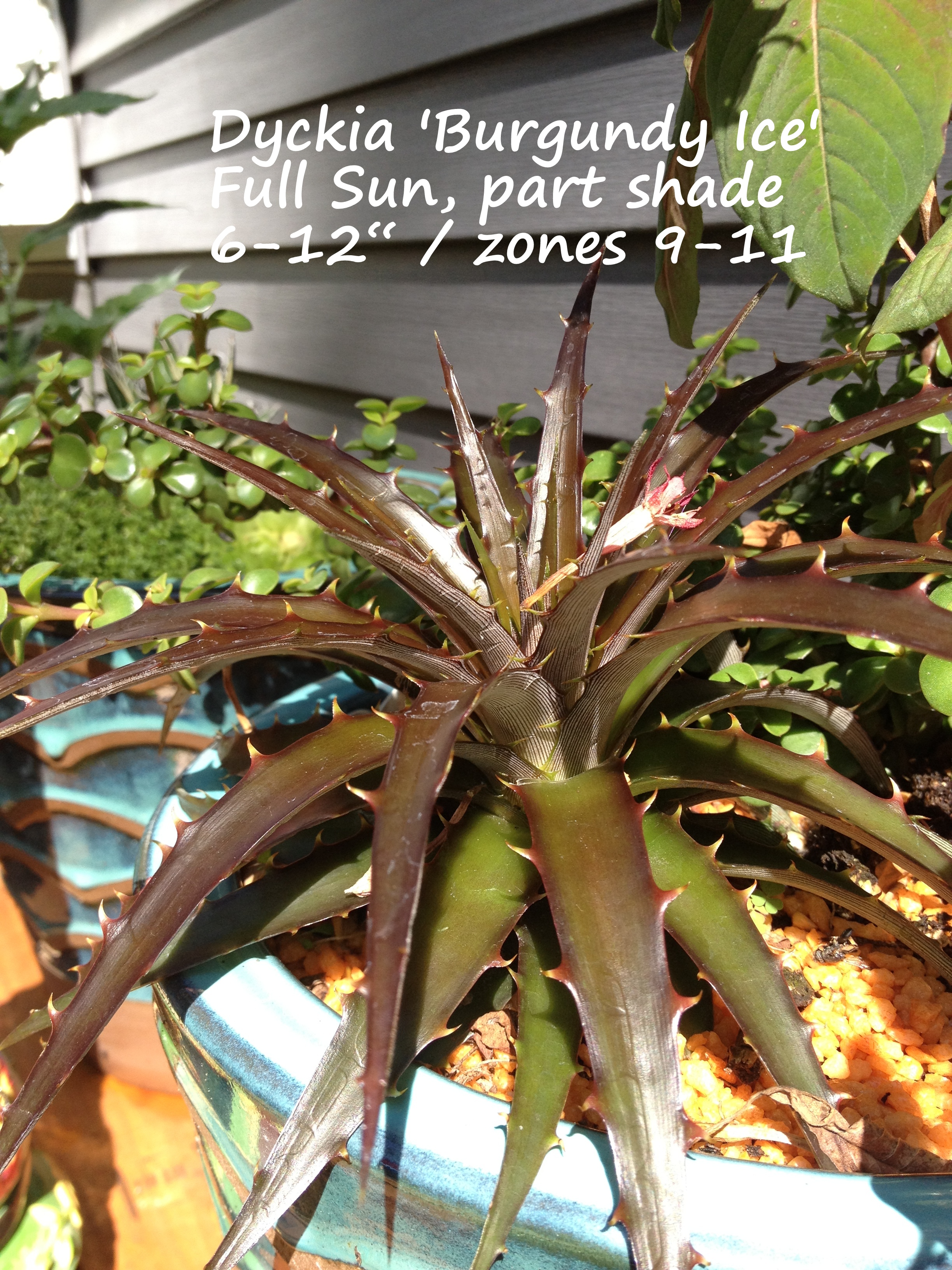
When you look at the rosette style leaves of this Dyckia hybrid, it looks similar to the top of a pineapple (and pineapples are in the Bromeliad family too), but ‘Burgundy Ice’ has a beautiful and useful dark rich burgundy color with white spines, making it a wonderful candidate to contrast with other tough drought-tolerant type plants in container gardens or smaller pots.

You can find lots of succulents or cacti with spines, stripes and patterns, but not many with a rich darker almost black coloring, making it a little more dramatic and alluring. The rosette shape allows the plant to collect moisture and funnel it towards its roots, and this form gives it an architectural interest too.  Its physical attributes contributes to the visual appeal from a design perspective.

Incorporating this plant into a combination of succulents or drought tolerant perennials or annuals with a lighter or brighter color will give you a great visual contrast situation.

In the photo above, it is growing with a Portulacaria afra (dwarf jade plant or elephant bush/food).  If you look closely, the stems of Portulacaria afra are the same color as Dyckia ‘Burgundy Ice,’ so it “echoes” the color of the focal plant in this glazed blue pot. Additionally, P. afra has a spiller-type habit and smaller rounded leaves. This feature helps to soften the edge of the pot and provides a textural difference in this combination. Always think about mixing the textures; the softer texture will make the bolder texture even more noticeable.

The Dyckia leaves tend to rise up a bit and curve downward at the tips.  Notice the tips sitting above the Portulacaria afra.  This makes the burgundy color more apparent because the lighter color is filled in behind it. Another spiller plant that would work well with this is something like the temperennial called, Dichondra argentea ‘Silver Falls’.  It grows long thin stems with soft silvery fuzzy leaves; a silver contrast to the ‘Burgundy Ice’, or try something like, Helichrysum petiolare (Licorice Plant) with similar coloring, both cascading downward.  Delosperma cooperi or D. floribundum (Ice Plants), a perennial with fleshy shiny leaves is another example of smaller foliage with characteristics to make ‘Burgundy Falls’ stand out.  It has a trailing habit and produces daisy like flowers in midsummer.  Pick a Delosperma cultivar that has a flower color that will pop against the burgundy color of ‘Burgundy Ice.’

Dyckia‘ Burgundy Ice’ is a full sun to part shade plant, so when used outdoors in your container gardens, a full sun location is best because the rosette’s color will intensify. When you move it inside for the winter months, it can take a reduction in light but it will green up more.  Because we tend to get dreary, cloudy days during the winter, placing them by the sunniest window in your home is recommended, so they at least get some sun on the good days.
For the non-green thumb gardener

For the non-green thumb gardener

HOW TO SAY IT

DY-kee-uh, DIK ee uh, or DICK’ea are three ways.  Just let it roll off your tongue, it doesn’t really matter how perfectly you pronounce it.  If you are a non-green thumb gardener, say it quickly and with confidence and no one will know the difference.  You can just call it ‘my tough succulent’ too if you want.  But because this plant was named after a Prince, you may want to give it a nickname, the “Prince”.  Whatever you name it doesn’t really matter, as long as you continue to enjoy it.

THE TECHNICAL STUFF

Habit: Clumping.  Blooms:  Mostly for foliage.  Size: 6-12″.  Hardiness/Zones 9-11:  It is treated as an annual here in CT.  Water:  Dry to normal, okay to let go through some periods of drought.  Light:  Full sun to part shade; okay to have low-light in house during winter. Care Level:  Easy – Perfect for the non-green thumb gardener.  Offered by:  Proven Selections.

GREAT REFERENCE INFORMATION

Container Crazy Cathy T
http://www.cathytesta.com
(860) 977-9473

P.S.  Clara did take Julia into her basement after an amazing dinner, where her potting bench and many broken pots were laid out.  Julia’s face had to be kept straight as Clara pulled out old dusty bags of potting soil, none filled with soil able to hold water anymore – they were very old and dried out.  Julia told her, “Those won’t do.”  So Clara held up a bag of African violet mix, and said, ‘How about this?”  Julia took another sip of wine, and replied with a sigh, “What the heck, give it to me.” 🙂


Sunsational Buttonwood Farm

Leave a comment
Sunsational

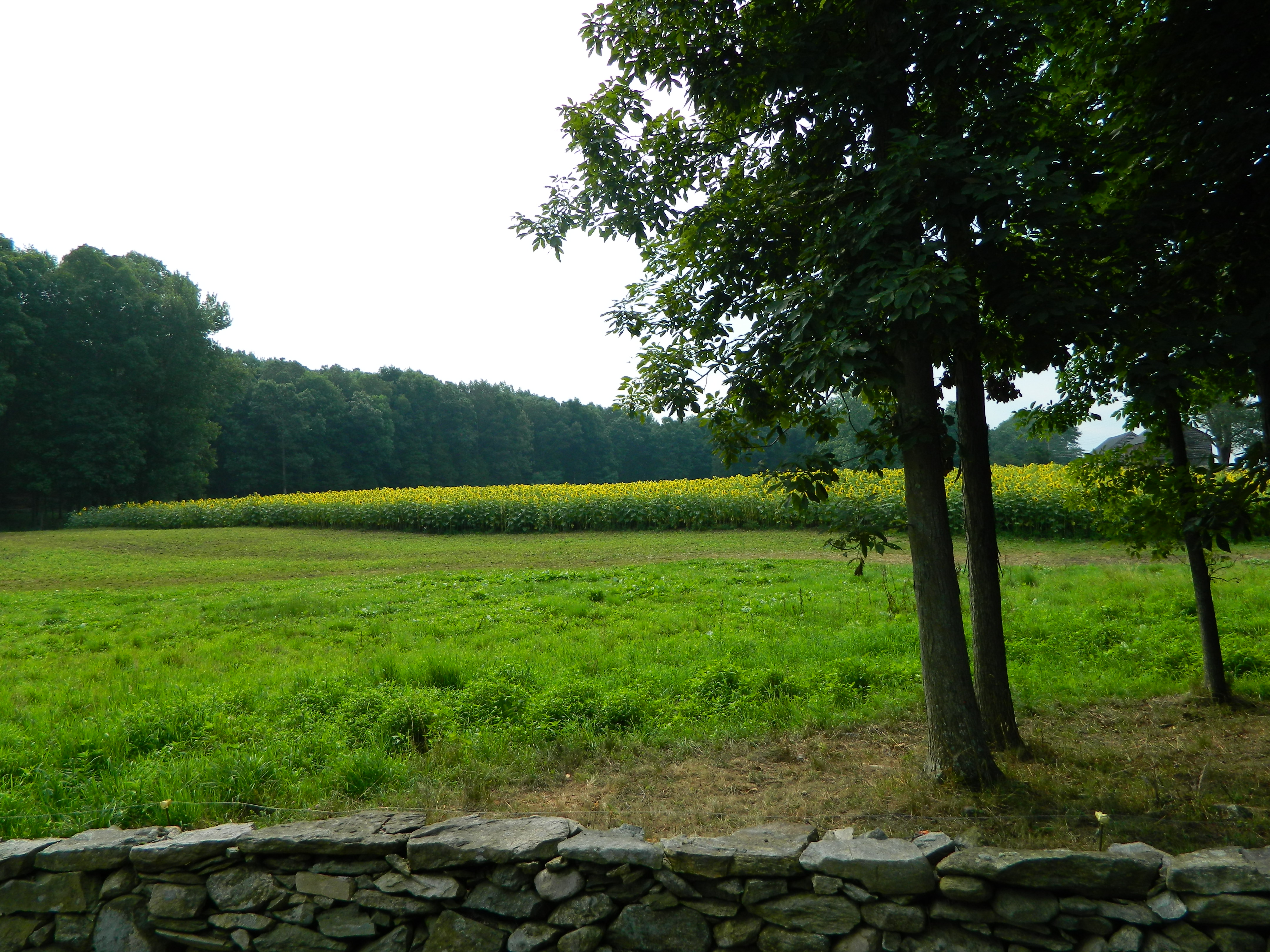
Fields at Buttonwood Farm…Sunsational

Last week I felt like I needed a little sunny inspiration, so I asked Louise, my sister, if she would like to tag along with me to go see the sunflower fields at Buttonwood Farm in Griswold, Connecticut.

I heard about this farm via a photographer friend who posted her wonderful sunflower photos taken at this site on Facebook.  She posted pictures from her visit last year too, and I had promised myself to not miss the opportunity to go see these fields of sunflowers this year.

The night before our planned visit, a television news station said they would be previewing Buttonwood Farms after the next commercial.  I asked my husband to quickly change the channel because I didn’t want to see a preview of something I planned to go see live.  Savoring the moment in person was my plan, and we left early the very next morning on July 24th to do so.

Buttonwood Farm is located at the junction of Routes 201 and 165.  The fields of sunflowers are situationed in a wide open area of 4 acres framed by a few old barns, stone walls, and trees along the backside.  Across the street are fields of evergreen trees.  It was about an hour’s drive from my home and worth the trip upon the first moment we arrived.

Cow rides

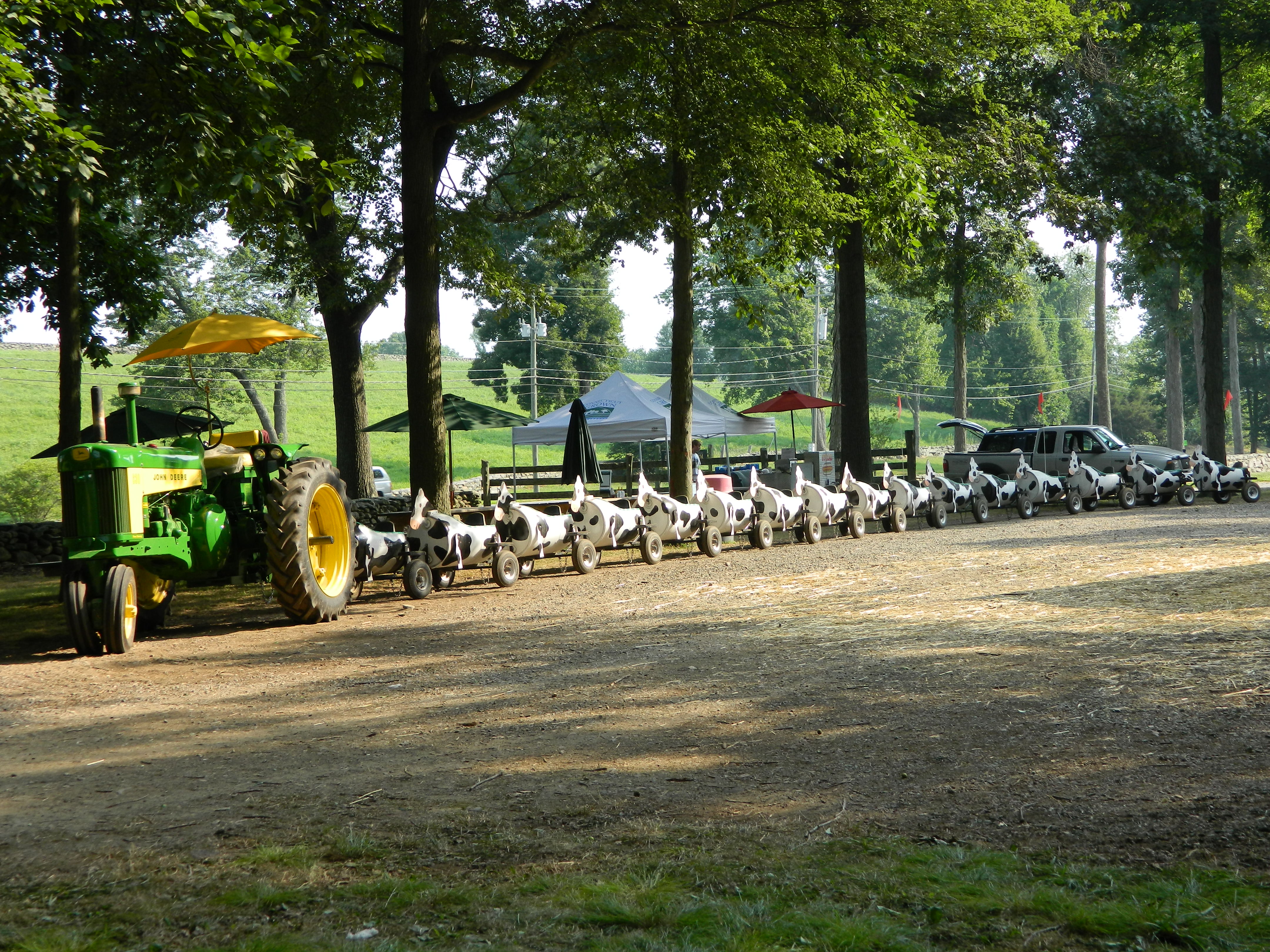
Tractor drawn rides at Buttonwood Farm

As we approached the fields, we spotted the farm tractor with a train of attached cow carts awaiting the children to arrive that day.  At that moment, I felt a tad bit guilty for not inviting my niece along, my sister’s daughter, but I also knew our objective of taking photos of the sunflowers would be more productive without a five year old in tow.  “Next year,” I thought, “We’ll take her here.”

Buttonwood Farm holds a Sunflower for Wishes fundraiser every year when their sunflowers are peak for picking.  Buckets of cut sunflowers are offered for sale, $5 a batch, to benefit the proceeds.  I definitely wanted to check out those cut sunflowers, but first, our objective was to walk through the fields and just have fun taking photos with our cameras.

For this visit, I decided to not use my trusty iPhone, and take out a new digital camera I bought last winter.  My sister used her old fashioned camera; the type that still uses film.  We started clicking away as we walked past a couple of artists painting the scene beyond on their canvases.  It was one of those moment that I felt a tranquilty and excitement at the same time.  Yup – from sunflowers, because there were so many!

Louise quickly whisked away, taking photos from different angles and elevations.  I have always believed she is an amazing photographer, with a natural talent, although she has debated that with me at times.  However, a few years back, a book company contacted her regarding a photo she took in Italy, and it “almost” made it as their front cover.  She remembered that photo as we continued to take photos here and there at the farm.

Louise

Louise, my sis, finds amazing photo elevations.

Back of Head

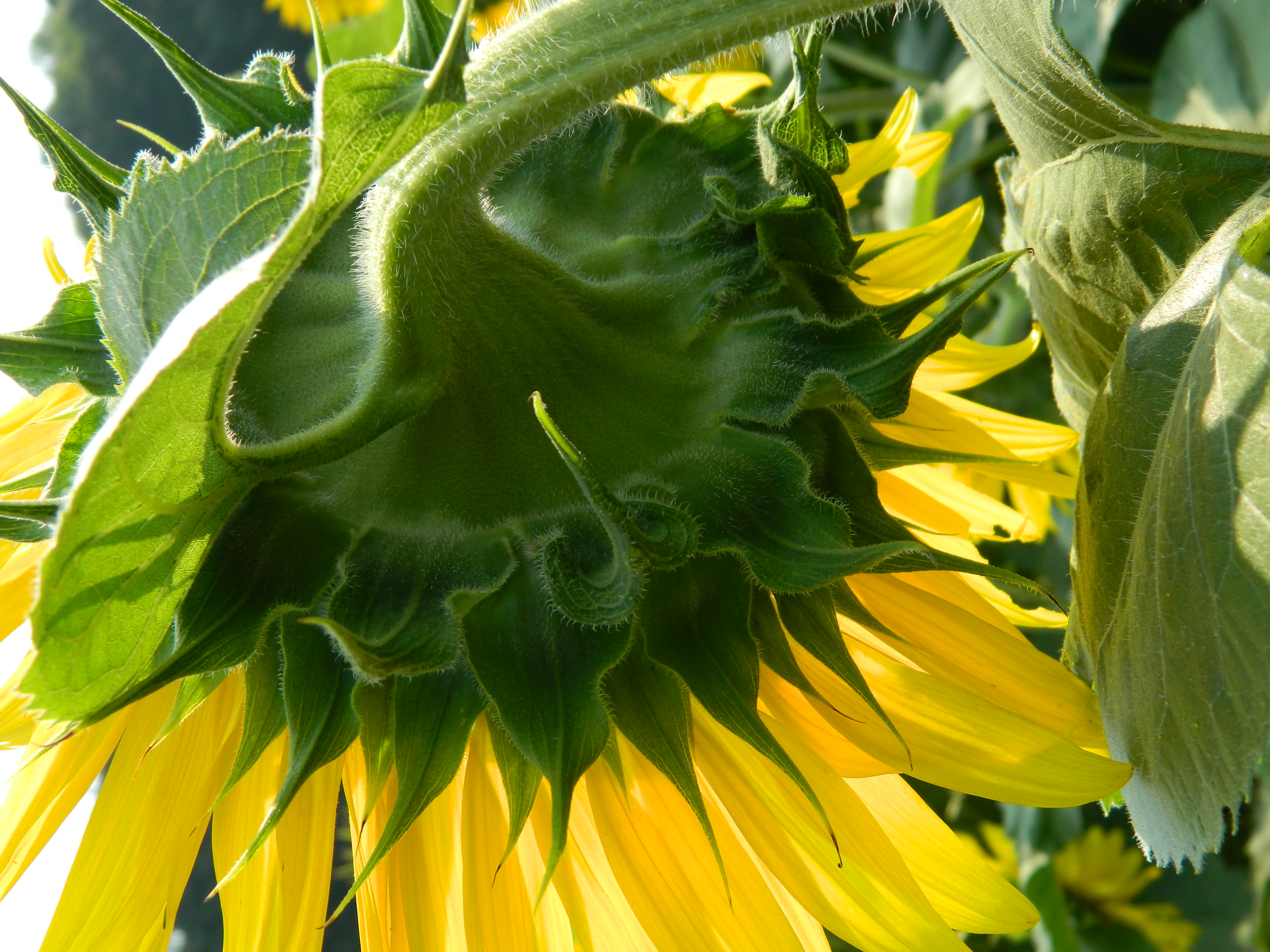
Back side of sunflower at Buttonwood Farm. Photo by Cathy Testa.

The field of sunflowers faced the rising sun and as we winded through the path, I was facing the back of the sunflowers’ heads.  It was kind of a comical feeling, like a bunch of people having their backs turned to me, then at that moment, I thought, “Hmm, I’ll take some shots of the back of the sunflower heads for fun.”  We always take the face of the flower usually.

During our walk and shots, birds bopped in and out of the fields, a hummingbird buzzed in-front of my face, and we saw dragonflies too.  Soon we were done though taking photos and felt like we had our sun buckets full of yellow cherry inspiration.  We decided it was too early for icecream made fresh at the farm, so we checked out the cut sunflowers for sale at $5 a bunch for the fundraiser, and then headed back home.  This visit was just the right amount of sunny inspiration I needed.

For your visit next year, remember Buttonwood’s Sunflowers for Wishes fundraiser to support the Make-A-Wish Foundation of Connecticut. This year’s event was held from July 21st through July 29th, and I’m glad we didn’t miss it.  They run it for 10 days every year, and the farm is open from March to October also for their hayrides and other events.  Backwide of the flowers

To learn more about Buttonwood Farm, visit their website at www.buttonwoodfarmicecream.com, or www.ct.wish.org.  You will find it sunsational, I’m sure.  Cathy T

Photo Friday – Purple Passion Mum

Leave a comment

How about this combo?  This mum, called Purple Passion, blooms later than the earlier season mums.  It began opening up its buds late last week for me.  Now, as of today, it is fully flushed with purple power (P.S.: The photo shows a bit more pink, but it is more purple in person).  Very pretty combined with the soft silver blue coloring of its partner.  The center of its partner plant has transitioned to a darker pink purple in its center recently.  These two fall container plants are working well together due to their splendid coloring and texture.  Enjoy it as today’s Photo Friday.  Cathy T

Photo Friday

Leave a comment

For this week’s Photo Friday, I took a photo of my sister-in-law’s hanging basket last nite.  Ever year Vicky gets a medium sized basket from a local nusery, usually The Garden Barn in Vernon, CT and hangs it in this sheltered spot by her front door.  Then she carefully waters, prunes, and feeds it with a water-soluable liquid fertilizer every 4 or 5 weeks.  And every year, she is successful with growing a huge and amazing display!  As you can see when my husband took this photo with his iPhone last nite, my purple shirt and clear-blue earrings matched perfectly with the purple Petunias and bright lime-green of the trailing sweet potatoe vine (Ipomoea batatas).  Even their front door is purple; it happens to be Vicky’s favorite color!  Vicky is wonderful with her plants, especially her annual showy hanger at this spot, and her window boxes on her shed.  I always tell her if I ever had a little store of my own, I would hire her – she has a knack with plants too.  My brother, Sylvain, and my husband, Steve, both insisted I stand infront of Vicky’s hanging basket for this photo -because it would show the scale of how large it has grown.  Thus, I did – and here it is for this week’s Photo Friday!

Do you have an amazing hanger, planter or container garden you would like featured on my blog?  If you are local to my area, please let me know – I’d love to take a photo of it and share your talent or story!  I can be reached at 860-977-9473 or via my email: ctesta@sbcglobal.netCathy T

Right Plant, Right Person, Right Time

Leave a comment

Coming back from my Tuesday walk this week, my cat, Hunter, was under my car meowing away like he typically does, but his meow this time caught the attention of my friend, Donna, my routine walking partner. 

“OMG! He is bleeding! Yuck, his nose!”  She exclaimed so loud I jumped back from my door to come see.  Hunter had obtained a very bad slash of his nose and the blood was dripping profusely.  After we managed to coach him into the house, it took a struggle to get him quickly into my cat carrier.  He fought it big time and thankfully Donna was with me to get him in there.

As I called the vet on the way to the vet hospital, I told them this was my first cat emergency.  I think I was as nervous as the cat, but not in nearly as much pain.  Hunter was crying like a baby the whole way.  As soon as I arrived, we went into the examination room.  When he got out of the cat carrier, he moved very slowly with lots of hesitation and, he stopped meowing.  He jumped off the table and checked out the vet’s examination room like he always does upon a vet visit.  The blood stopped dripping from his nose, and then he cuddled next to my thigh as we both sat, waiting calmly for the vet, Dr. Mac.

As Dr. Mac entered the room, Hunter immediately went into a cat growl.  (How does Hunter know he’s the vet?  Geez, he has only met him twice before during routine checkups!)  After a look by Dr. Mac and his assistant, off Hunter went into surgery.  Everything was handled quickly and efficiently with lots of reassurance that Hunter will be okay.  I returned home.

As I drove back to my house, I started considering, what plant can I give the vet as a thank you?  I mean, the vet and staff at the hospital do more than just tend to animals’ routine needs and unexpected injuries, they love animals wholeheartedly – probably more than we do.  After all, they studied this stuff and are heroes in situations like this.  I had this overwhelming sense of wanting to express how much it meant to me, and Hunter, that they were readily available and capable to take care of his nasty injury. 

I got out of my car at home and browsed my plant stock, I started thinking about what type of plant Dr. Mac may like…, hmmm, I’ve met him a few times before during my routine cats’ check-ups.  Dr. Mac is male, loves to share stories about his cats and dogs, and is all around nice guy.  He has a very nice and gentle demeanor.  Sometimes during my prior visits, we can’t stop sharing stories about cats, his dogs, and wildlife in general.  So I considered his personality some more.  And then I thought, I bet he would go for one of my unusual hot pepper plants or my red banana plants.  But truly, I didn’t know if he was a plant guy at all.  A plain old typical perennial would not do however, I knew that by instinct.  And something like a veggie with a unusual fruit, even if you are not a plant person, is interesting – plus edible, for those that like it hot.

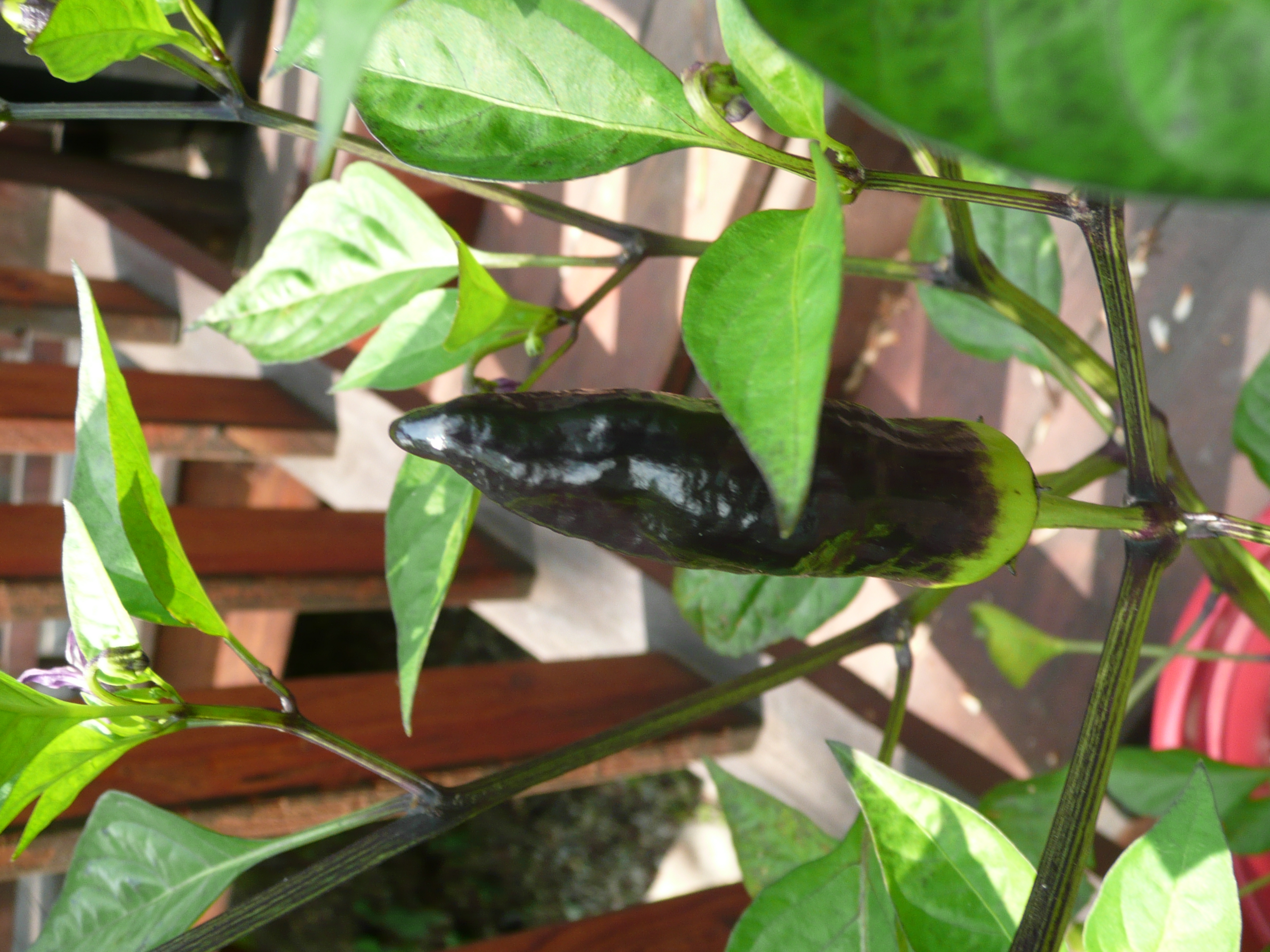
I looked over my remaining ‘Comstock’s Purple’ pepper plants in stock.  This pepper is cool because the peppers are black and upright with their tips facing the sky as they grow.  The peppers are not only non-typical looking, at least I’ve never seen them in garden centers, they are hot tasting.  A cross of the Tasmanian and Jwalal peppers, they gives off a heat rating of about the same as cayenne peppers.  I grabbed one that had many little purple blooms and at least 3 black peppers growing on it.  This is a good conversation piece even if you aren’t into plants, I thought.

Comstock Purple

Shiny Hot Black Pepper

About 3 hours later, I received the call that Hunter’s nose injury was worse than anticipated but he looks fine now.

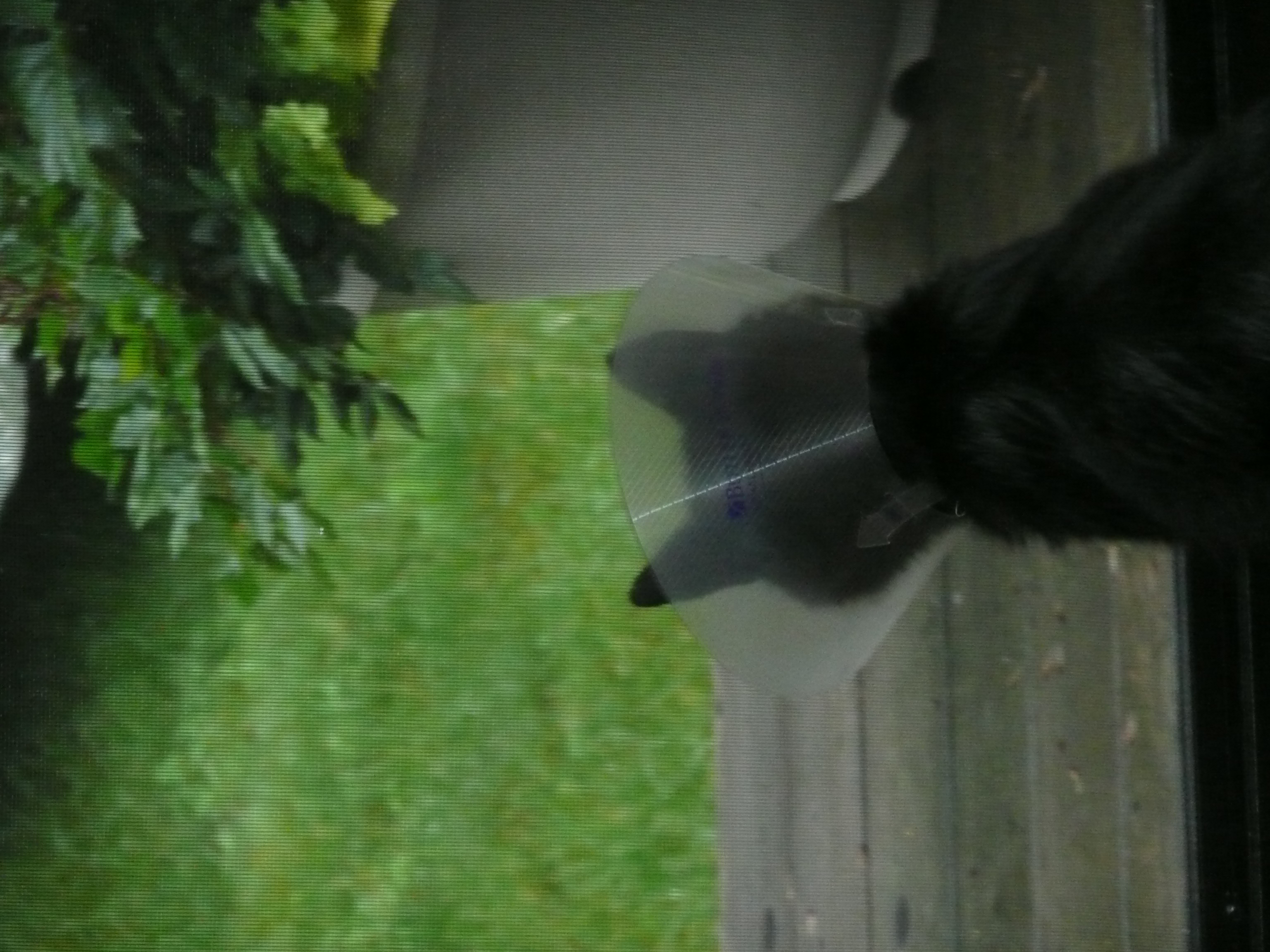
“What can I do to thank you, Dr. Mac?” I asked. He replied; keep him indoors with his protective covering on his head while he heals so our good work will succeed.  I promised him I would. 

Well, you cannot imagine the reaction of the staff at the desk upon my return trip as I walked in with my pepper plant in hand.  A card attached, burlap wrapped around the pot, and the plant standing sturdy, upright and showing off black shiny peppers.  One of the other veterinarians happened to be in the entrance area as well, and she said, “Wow, is that for Dr. Mac?  He is going to LOVE that!”    

It was amazing to me to see everyone’s reactions.   Dr. Mac, turns out, is a veggie lover. This plant, and the fact it was presented with appreciation for their efforts, was a burst of happiness to their day.  Other staff members came out to check out the black peppers, and each kept repeating how much he would really like this.  Unfortunately, Dr. Mac was with another pet patient so I couldn’t speak with him yet, but I said I’d see them in a week and to please warn Dr. Mac of the hotness of this pepper in particular.

This was a perfect case of “Right Plant, Right Person, and Right Time.”  Sometimes in the gardening world, it is not only “Right Plant, Right Place”…It is more.  It is selecting the right plant to the right person and delivering at the “right time.”  When that happens, magic happens for plant lovers in particular — or those “becoming plant lovers.”

For me, despite the unexplained horrible injury to Hunter, we got lucky that day.  Donna helped me to get Hunter into the carrier, Dr. Mac saved my kitty’s nose, and I got to share a plant as a token of appreciation with more than just Dr. Mac, but with his whole office staff. 

Hunter Awaits

Hunter views Outside

And as for Hunter, now into his second day recovering, he is starting to complain that he can’t go outside, pacing the floor until he gives up and takes another nap. 

I’m keeping my promise to keep him safe.  “No outdoors for you for a while until you’re thoroughly back to normal, Hunter!”…And as for me, I hope to keep matching plants to people, especially in times of need. 🙂

To meet Dr. Mac:  visit:  http://www.vcahospitals.com/valley/our-team/veterinarians.html

Cathy T

The Fashionable and Hot Capsicum ‘Super Chili’ Pepper

Leave a comment
Hot and Fashionable

Pepper Power

Last year, at the “Gardens, Gallery and Gifts” event held in Broad Brook, CT, I included an annual pepper plant in an intense purple container mixed with portulaca, variegated basil, and a dwarf canna.  It was one of the first to sell, and the person who bought it was Lisa, my older sister.  She and my other 2 sisters attended the event which included displays of my container garden designs and other artisan works by Connecticut women artists.

The pepper plant is what caught Lisa’s attention first.  She often cooks up hot and spicy meals, such as her famous jambalaya, red beans and rice, or shrimp etouffee stew.  For several years, she lived in New Orleans thus she knows how to do up these dishes up right, always starting with a roux, and making shrimp stock from scratch.  And, of course, adding a variety of very hot spices.  In the summer months, she uses my father’s fresh garden grown tomatoes.  But whether served up in season or during the winter months, we always enjoy the huge steaming portions from her large Dutch ovens at our family gatherings.  It is excellent every time.

Capsicum ‘Super Chili’ by Sara’s Superb Herbs (www.superbherbs.net) was the pepper in the container she selected that day.  Lisa planned to replace her normally dry ingredient of cayenne in her Cajun creations with the peppers as soon as they were ready.  She is the type of shopper that always wants a value driven product, and this container’s plants had their fringe benefits to suit her cooking style while offering ornamental blooms as it sat outdoors during the summer on her patio. 

The upright basil in the container, Ocimum x citriodorum ‘Pesto Perpetuo’, was another herb she likes to use, plus she said she enjoyed its variegated light green foliage edged with white creamy coloring.  This basil culinary herb grows up to 4’ high and doesn’t flower.  It can be taken indoors at the end of the summer season to continue using as needed for recipes.  And the canna rhizomes can be stored in the fall for reuse in her containers the next year.  Fashionable and hot, her purchase provided sustainability in the kitchen and beauty on the patio.

The ‘Super Chili’ pepper had long slender green fruits of about 1” long when she took the container home that afternoon in June.  As noted on the plant’s tag, you can pick some of the first few chili peppers when they are still green to encourage a longer fruiting season and heavier set.  This plant grows to 24” tall and wide and appreciates well drained, rich soil in the full sun for best growth. Lisa placed her container on the corner of her back patio.  Her backyard has a western exposure and receives lots of wind since it is situated on a big hill facing a wonderful view.  Because ‘Super Chili’ Pepper likes it hot and sunny with good air circulation, it thrived in this location.  It received full sun most of the afternoon but the shade was also appreciated from the overhang of her deck above.  

As for me, the characteristic I enjoy most about using pepper plants in container arrangements is how the peppers will ripen to brilliant colors as they mature.  Many will start off green and change to red, yellow, purple, orange, and even black!  The ‘Super Chili’ ripens to a brilliant red and grows to about 2.5” long.  Peppers don’t get bothered by pests usually.  No maintenance worries, you don’t need to check it for insects, or groundhogs that sometimes visit container gardens.  Other than warning anyone wanting to temp a bite of the raw pepper, this type of vegetable is worth including in mixed arrangements with other sun-loving annuals, perennials, and tropical plants. 

For this year’s show, I decided to place orders of a pepper that matures to a purplish black color.  It is Pepper ‘Comstock’s Purple’, a cross of the Tasmanian and Jwala peppers.  The habit is a strong and erect with the elongated purplish fruit pointing upwards toward the sky from the tips of the stems.  As the fruit grows larger, it will hang down from its weight against the dark green foliage.  Comstock’s Purple has the same heat as cayenne peppers and grows to about 24-26” tall, also appreciating full sun.  If you want to see them, come to the show in June this year where they will be available for sale.  For more on that, see www.facebook.com/gardensgallerygifts.

Lisa told me she collected the remaining branches from her pepper plant in early fall and kept them for use later.  Would you believe at Christmas time?  She put the dried branches with their bright red peppers still dangling on into vases with other evergreens.   She said it was fun to have them displayed during the winter, and again, being a frugal minded person, she was very pleased to reuse her peppers a third time for decor purposes, now indoors!  She enjoyed informing her dinner guests about how the showy vibrant red peppers in the vases are those also used in the meal providing a warm and comforting feeling so needed on cold winter nights.  

So when mixing up your container selections this season, don’t overlook hot peppers for their ornamental value and edible appeal!   Cathy T

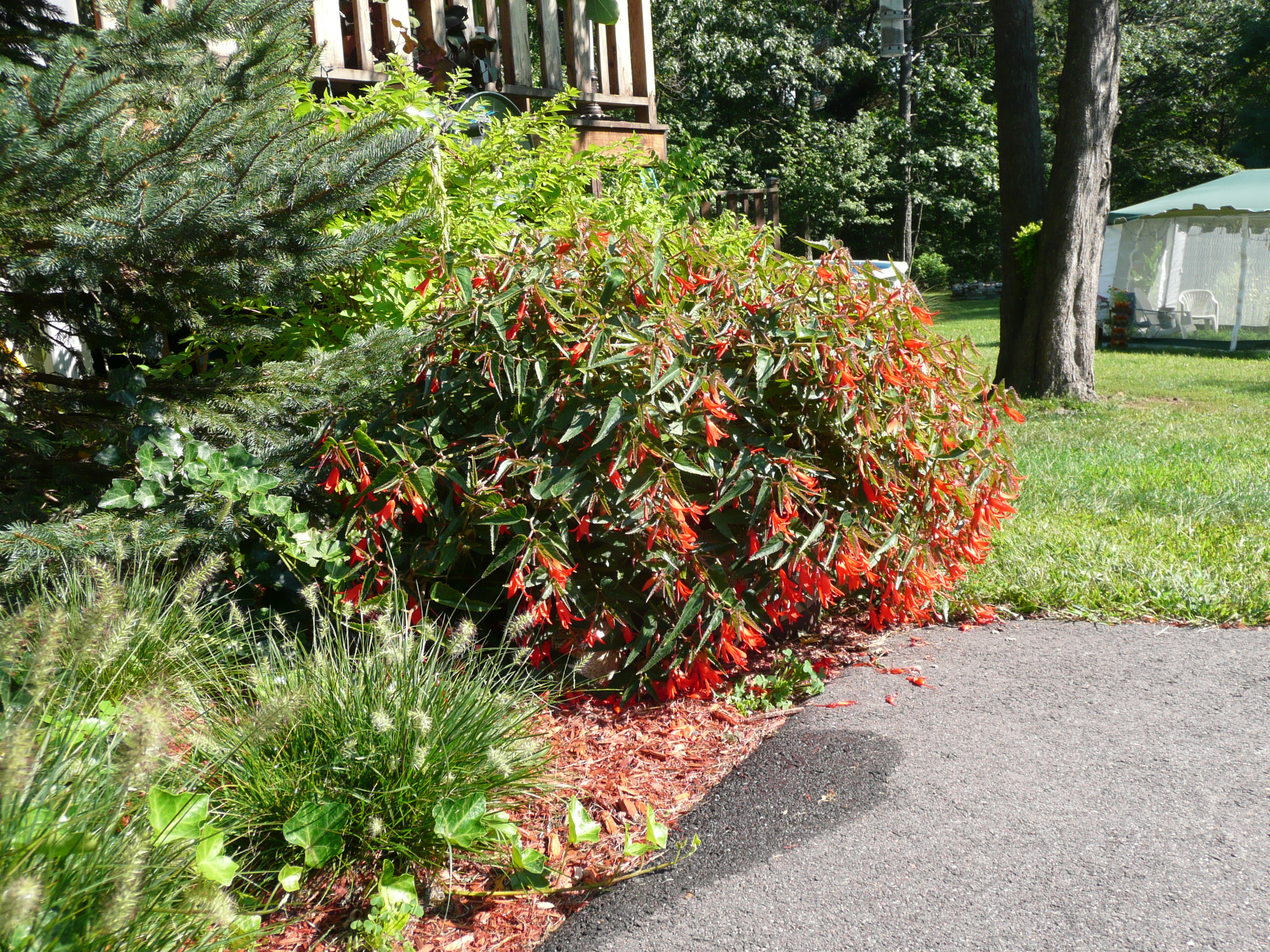
Begonia Belief ‘Bonfire Choc Pink’

Leave a comment

A recent client commented how she really enjoyed her Begonias this year in her various container gardens on her front porch.  She doesn’t have much experience with plants and selected one just by chance.  She loved how it didn’t need a great deal of attention and lasted all through the summer to fall.  What I could hear in her comments was that it was an easy plant that offered a lot of showy appeal to a beginning gardener.   She wants to make sure her next candidates this planting season are of similar character – and I am here to help her!

Bonfire in Whiskey Barrel

The Bonfire® series is one of my personal favorites when it comes to Begonias.  I planted one in a whiskey barrel a couple of years back and that plant rocked all season long, and with little attention – as my client indicated about her’s.  There are several new introductions of this series coming from one of my favorite growers this year. 

Begonia ‘Bonfire® Choc Pink’, hardy to zones 8-11, has chocolate plum foliage.  Darker foliage is one of the keys to providing contrast in container gardens so you should not pass them up as you find them in your nursery, or attend one of Cathy T’s Container Garden Parties.  ‘Bonfire® Choc Pink’ has a more mounding habit and blooms blush pink flowers that have a structure of long skinny petals that tend to dangle a bit down.  I like this style of flower’s shape better than the typical Begonia blooms.  We can see why they are referred to as Bonfire.  The petals look like flames!  The pink color of Choc Pink is soft and really shows up against its darker foliage.

‘Bonfire® Choc Pink’ will grow up to 20″ tall and wide, so it is very dramatic in a large container garden.  It can take the full sun to part sun/part shade, thus it is a versatile plant as well.  This very low maintenance plant with impressive performance is already on my plant order list for 2011 spring.  Yet, if you prefer a bit more intensity to flower color, the other new candidate is ‘Bonfire® Choc Red’, with red bloom and also dark-leaved but with a more upright habit.  The serrated foliage has red margins.  Look for both as you shop!  Cathy T

Coleus ‘Gay’s Delight’

Leave a comment

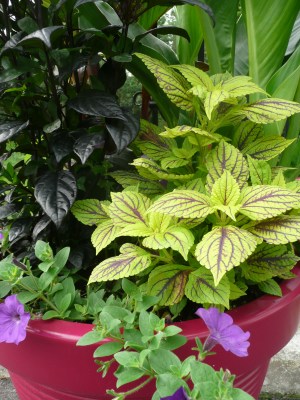
This coleus with its purple viens looked wonderful adjacent to the dark purple/black leaves of the ornamental pepper plant.  This is one of my fav designs this year where I mixed it with two varieties of Canna and purple petunias!

Chartreuse leaves with purple viens

Chartreuse leaves with purple viens

Annual Begonias rock into fall

Leave a comment

Taken at the Big E in Springfield, MA in late Sept.  Just look at the amazing flush of red from this annual winged Begonias.  I really found this plant to be long-lasting, easy, and colorful in my container mix gardens as well this year!  Look for Bonfire variety which I love.  Begonias at Big E

Flower of a Giant

Leave a comment

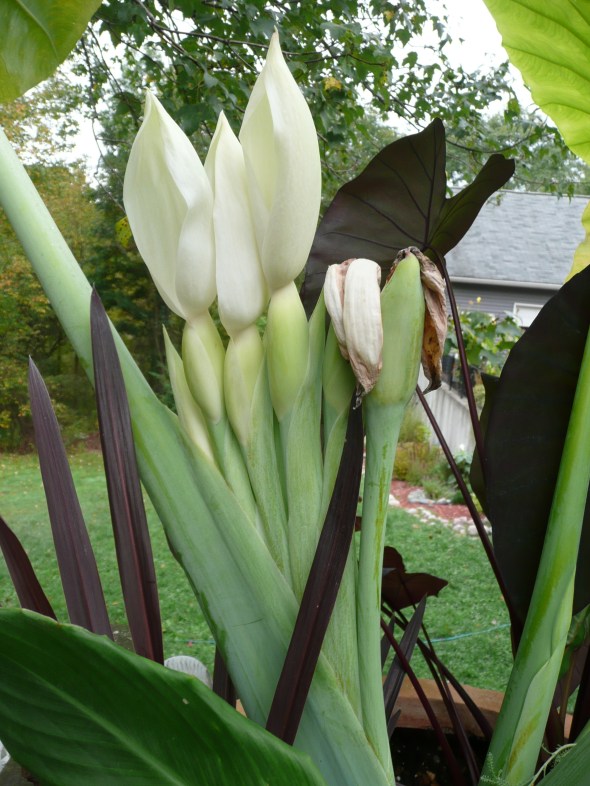
Colocasia gigantea Thailand Giant Strain Elephant Ear blooms blow me away this fall as they expand in a shape fan, on individual stalks, embedded within one stalk of the giant 4′ wide leaf!  I special ordered this plant in the spring from Plant Delights Nursery online!

Giant Ele Ear Flowers